


I’ve found that river rock flower beds create the kind of gentle curves in landscaping that make a yard feel established from day one.
Gardeners often spot those smooth, flowing lines first, drawing the eye along paths and borders instead of straight hard edges.
They help structure plantings so everything grows together naturally over time, without constant weeding or trimming.
A couple summers back, I edged my front beds with larger river stones, and they still look settled in after rain and frost.
These examples give practical ways to scale the look for sloped yards or tight spaces worth tweaking in your own setup.
River Rock Path Through Sloped Beds
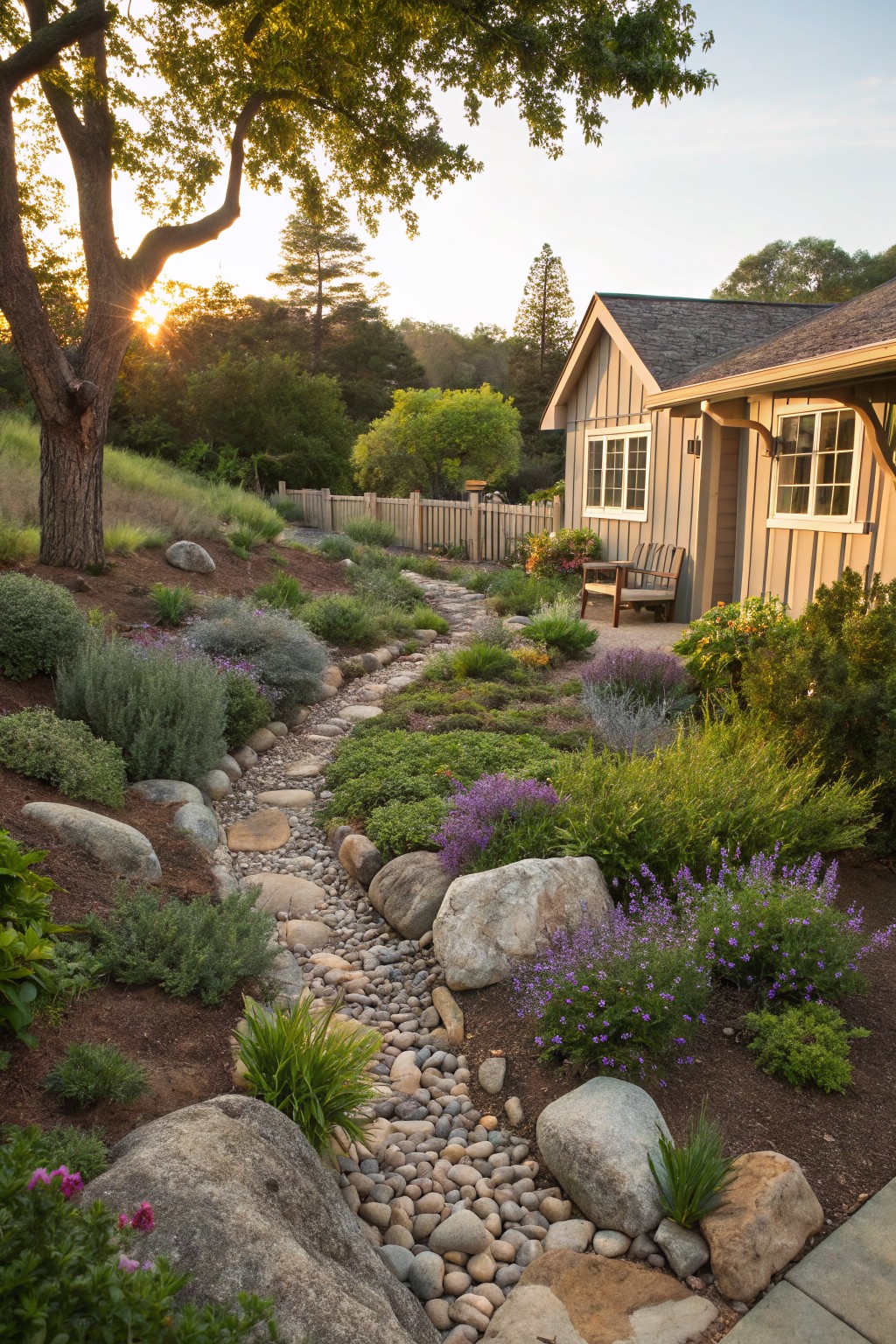
A dry riverbed path made with smooth river rocks and flat stepping stones winds gently through thick flower beds on a hillside. Big boulders anchor the edges, while low plants like lavender and grasses fill in around them. It pulls your eye along without feeling forced, and keeps things looking natural even on uneven ground.
This works best in yards with some slope, where it handles runoff and stops erosion. Plant drought-tolerant stuff along the sides for easy care, and let it lead right up to your house or patio. Skip it on flat spots, though. It needs that hill to really flow.
Winding River Rock Path

A simple way to add flow to your backyard is with a winding path made from smooth river rocks. It looks just like a dry stream bed snaking through gravel and low grasses. What makes it work so well is how it softens the straight lines of fences and patios. Plus those dark stone edges keep the rocks neatly in place while letting the path curve naturally toward a seating spot.
You can pull this off in smaller yards too. Just dig a shallow trench outline the shape you want then fill with pebbles and add a few boulders for interest. It’s low water use which suits dry climates. Skip it if your soil washes out easy though. Pair with drought tough plants along the sides for that full river look.
River Rock Edging for Winding Paths
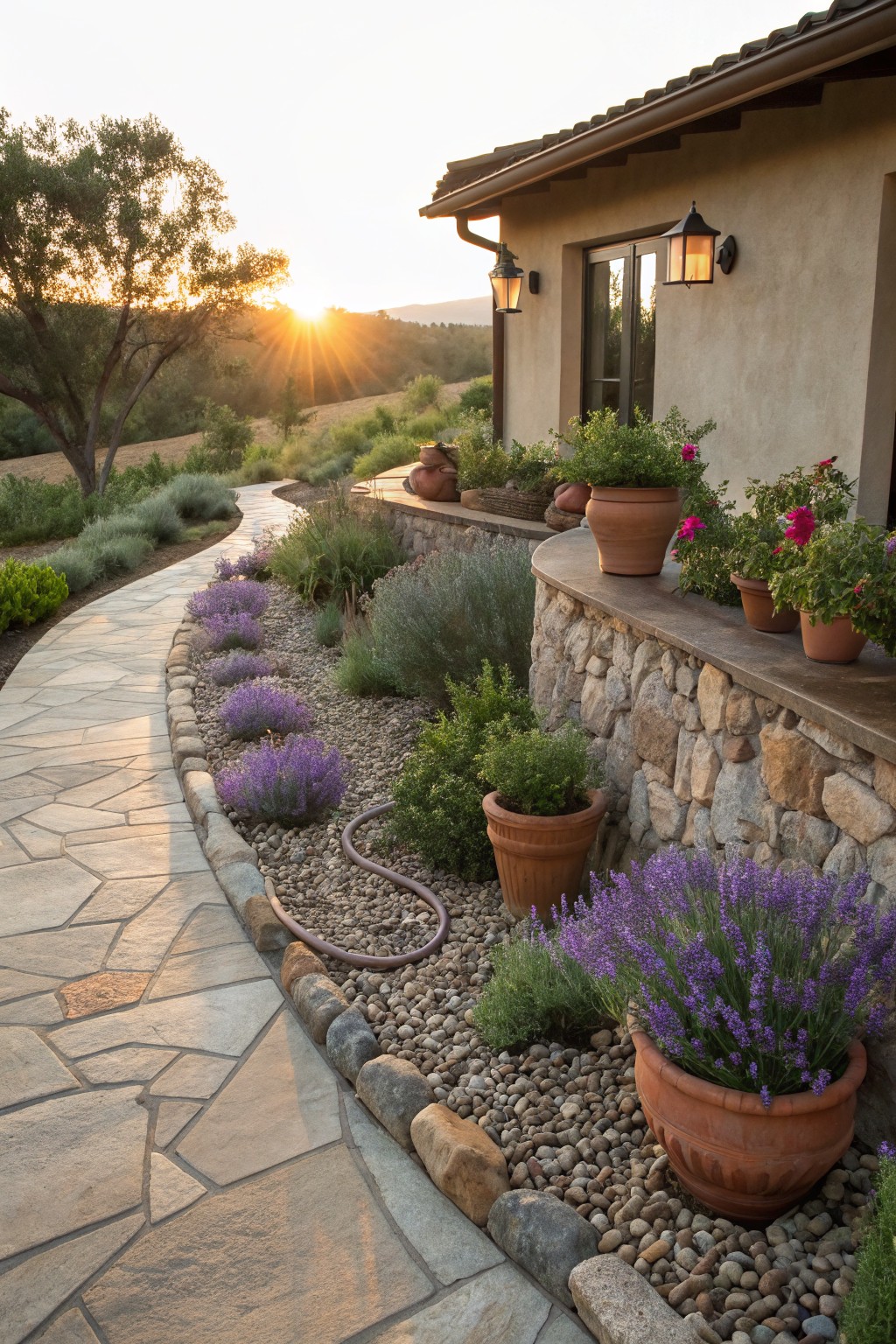
One simple way to make a garden path feel more natural is to border it with river rocks. Here the stones curve right along with the flagstone walkway, filling in around low lavender plants and filling gaps without looking forced. It keeps things tidy but loose, and those smooth pebbles pick up the sunset light nicely without any extra work.
This setup works best in front yards where you want to guide people to the door without hard lines everywhere. Pair it with drought-tough plants like lavender or rosemary along drier slopes or Mediterranean-style homes. Just make sure the rocks don’t shift by setting them into a shallow trench first… keeps the whole thing stable over time.
River Rock Edging Along Pool Curves

One simple way to make a pool feel part of the yard is to edge it with river rocks and pebbles. Here, smooth stones and larger boulders line the curve, mixed in with low plants like grasses and succulents. It turns a straight pool edge into something that flows like a natural stream. The turquoise water reflects it all at dusk… pretty calming effect.
This works best around freeform pools in sloped or dry yards. Layer bigger rocks at the base, then smaller pebbles and plants on top. Pair it with a wood deck path for easy access. Skip it if your space is super flat or formal. Low water needs too, since river rocks let drainage happen fast.
River Rock Edging for Driveway Paths
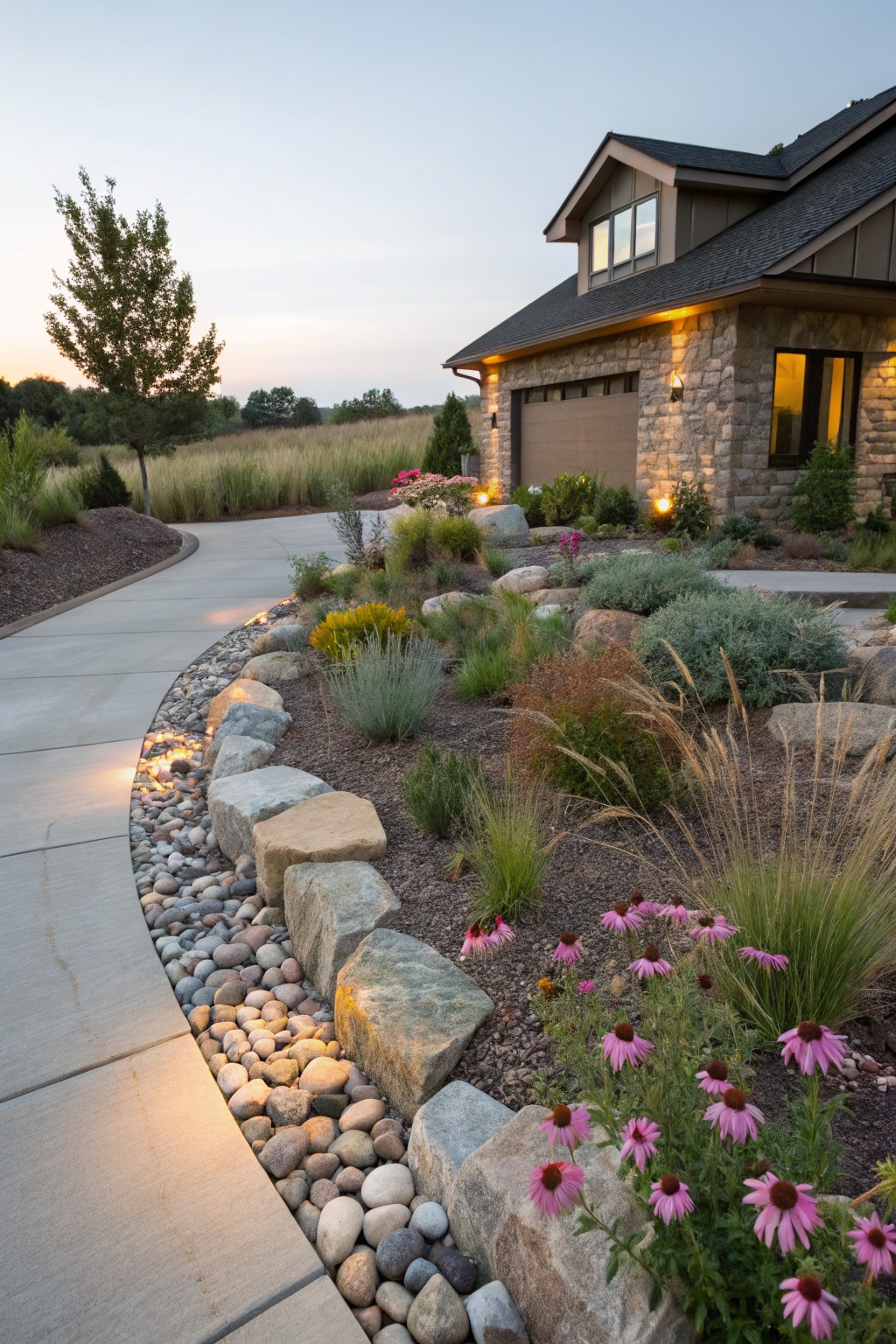
A simple way to soften a plain concrete driveway is to line it with smooth river rocks and larger boulders. This creates a gentle border that flows right into flower beds filled with tall grasses and coneflowers. The rocks catch the low evening light nicely, and they keep mulch or soil from spilling onto the path. It just looks natural, like the yard grew up around the driveway.
You can do this along any curved or straight path leading to your garage or front door. Pick rounded pebbles in mixed sizes for easy drainage, then tuck in low-water plants that won’t flop over the edge. It suits modern homes with stone accents… or older ones needing a refresh. Skip sharp-edged stone if you want that softer river feel.
River Rock Path Through Coastal Beds
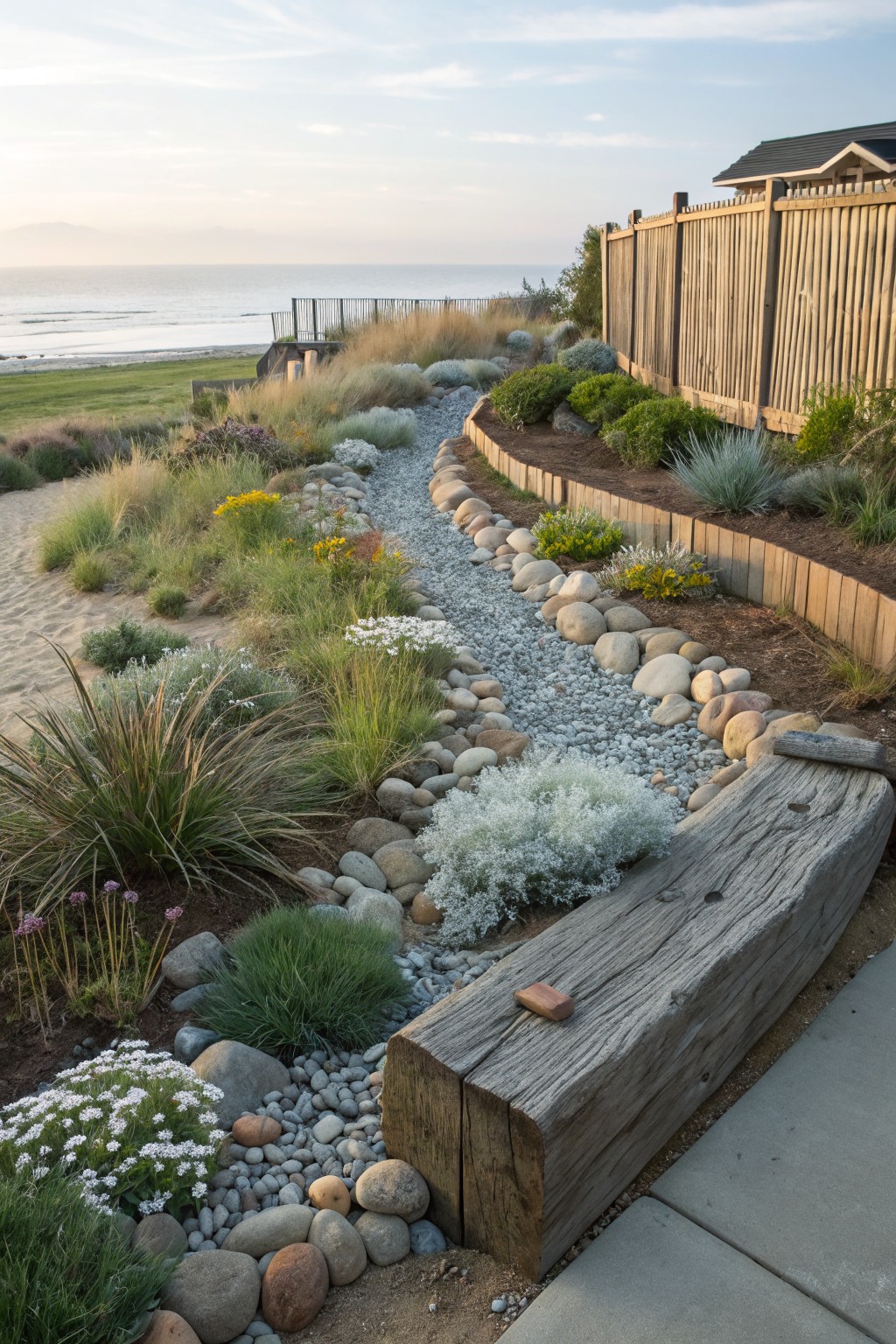
A river rock path like this winds gently through layered flower beds, using smooth stones and gravel to mimic a natural stream. It pulls the eye along without feeling too formal, and pairs nicely with tough coastal plants like beach grasses and white flowers. The wood edging keeps everything in place simple and sturdy.
You can add one in your yard for easy walking to the back gate or seating spot. It suits sloped lots or dry spots best, since the rocks drain well and plants like these need little water. Just line the edges with scrap wood or logs to hold the soil back.
River Rock Winding Path

A simple way to add flow to your garden beds is a stone path with river rocks packed into the joints. Here it curves gently from a stone fountain through low plantings, making the whole courtyard feel like it has a little stream running through. That natural river look pulls your eye along without much effort, and it fits right in with the rough stucco walls.
You can do this in any side yard or entry path where you want low upkeep. Line it along flower beds with drought plants like these olives and succulents. Just make sure the base drains well so rocks don’t shift over time.
River Rocks Around Stepping Stones
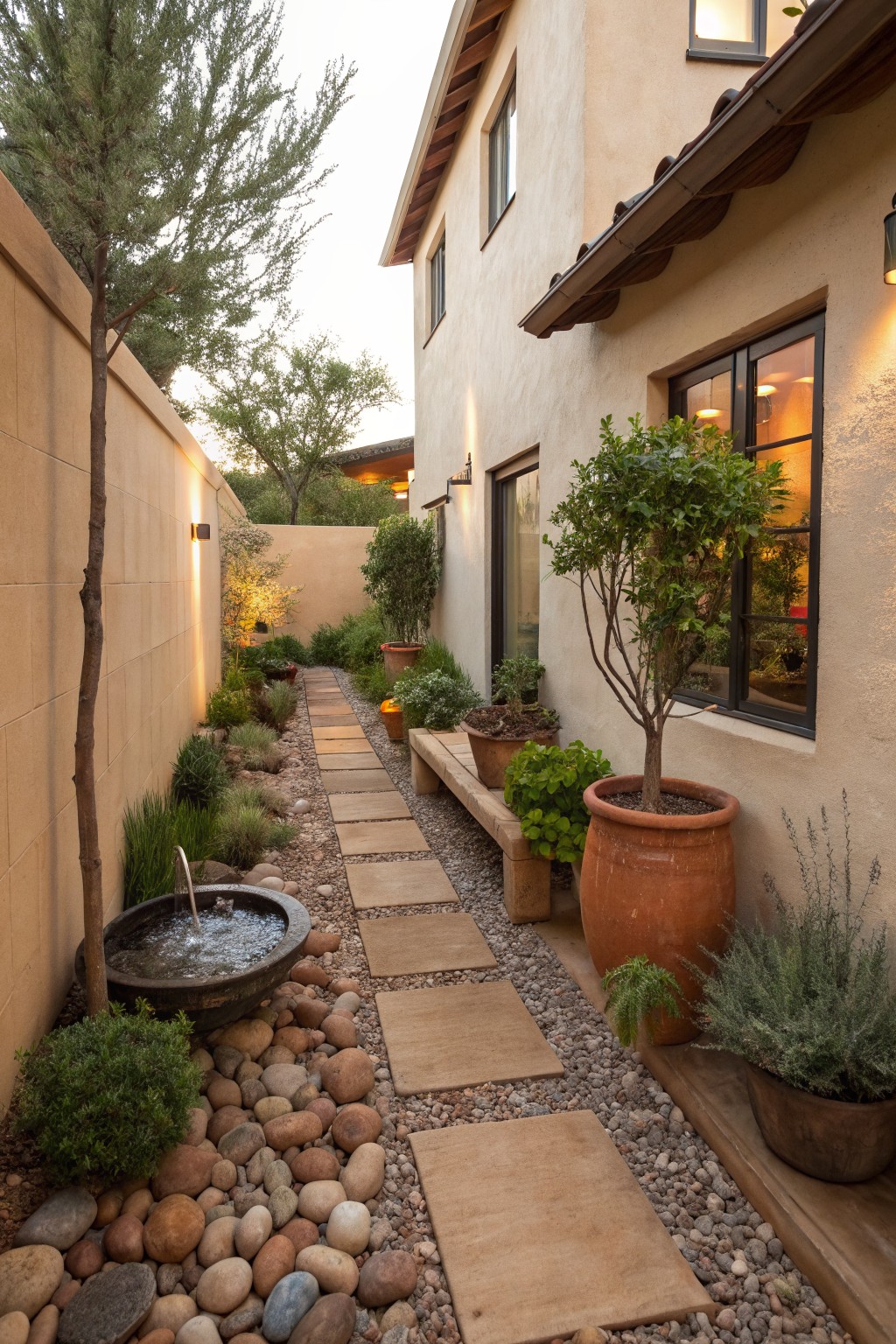
River rocks scattered around big square stepping stones make a path that looks like a dry riverbed. It pulls the eye along without much fuss. A few pots with grasses and a simple fountain add just enough green and sound, but the rocks do most of the work keeping it tidy and natural.
Try this in skinny side yards or between the house and fence. It fits dry spots where you want low upkeep. Go for mixed sizes of rocks for texture, and space the stones wide enough to step comfortably. Watch the edges so rocks don’t spill onto the path.
River Rock Paths on Sloped Ground
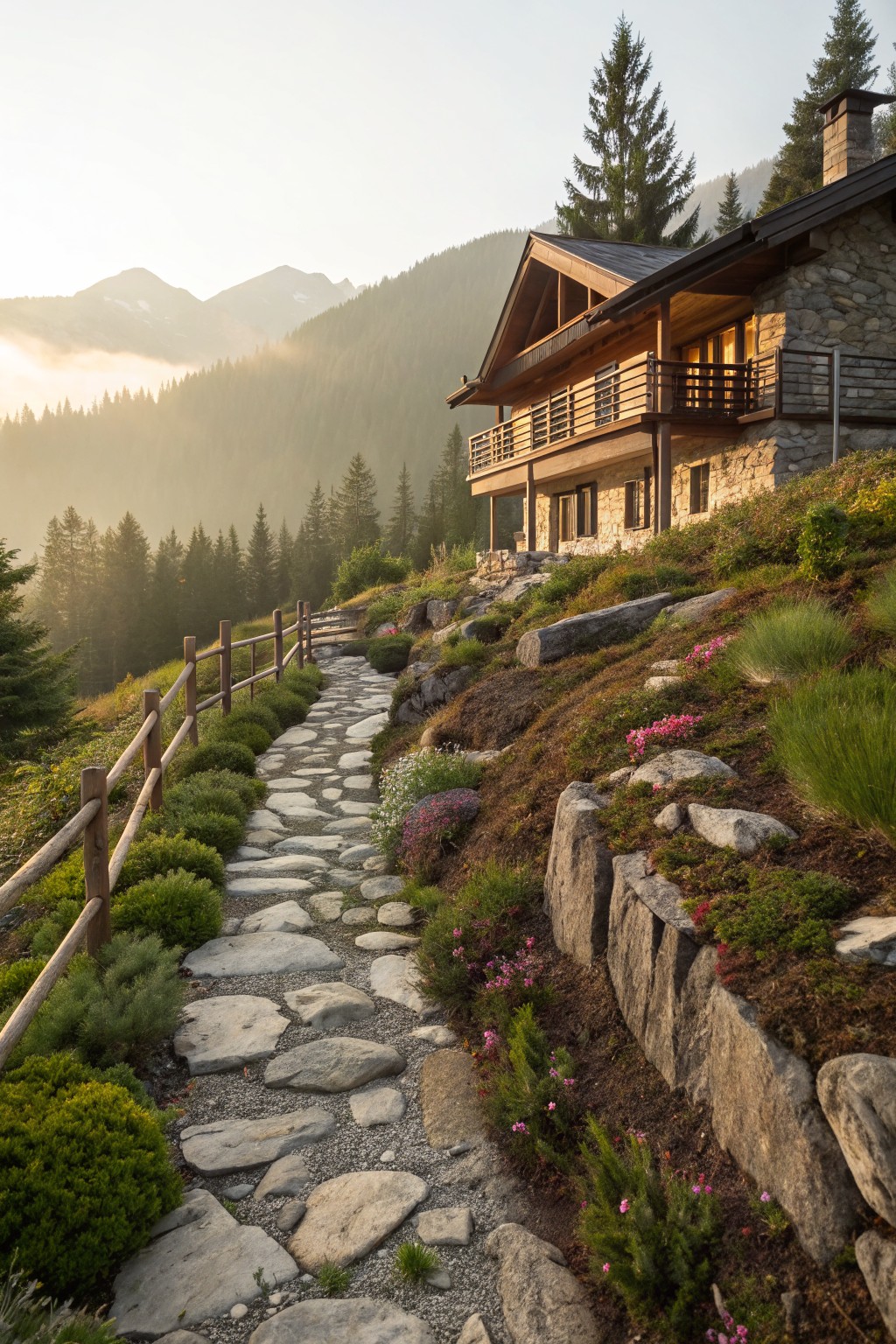
Big flat river rocks laid out as irregular steps make a path that climbs a hill without looking forced. Tucked between low plants and edged by simple wooden rails, it pulls the yard right up to the house door. Folks like how it blends with the rocks and dirt already there. No straight lines. Just easy walking that fits the land.
Try this on any yard with a rise to the entry. Space the stones where your feet naturally fall, gravel in the cracks for drainage. Add tough flowers like sedum along the sides. It suits cabins or homes in hilly spots. Skip it on flat ground, though. Too much work for nothing.
Flowing River Rock Borders for Pathways
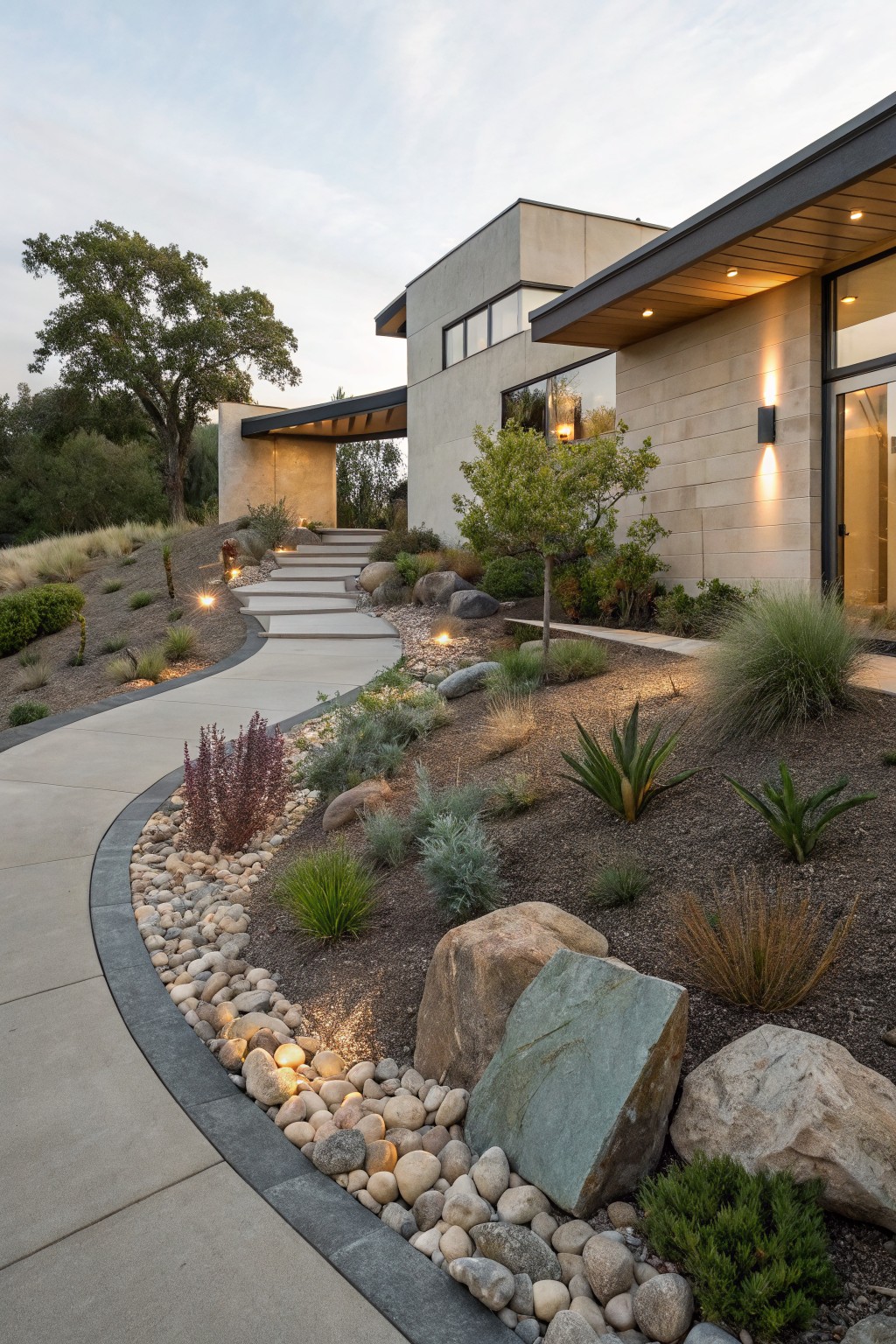
One simple way to give your walkway a natural flow is to edge it with smooth river rocks. They curve gently alongside the concrete path here, mixed in with tough plants like agaves and grasses. This setup looks like a dry riverbed come to life. It softens the hard lines of the path and pulls your eye right up to the house without any fuss.
You can pull this off in most front yards, especially drier spots where low-water plants thrive. Just lay down the pebbles in a wide band next to pavers or stone steps, then tuck in a few boulders for scale. Skip fussy flowers. It stays neat with little upkeep… perfect for modern homes blending into the landscape.
River Rock Edges for Raised Planters
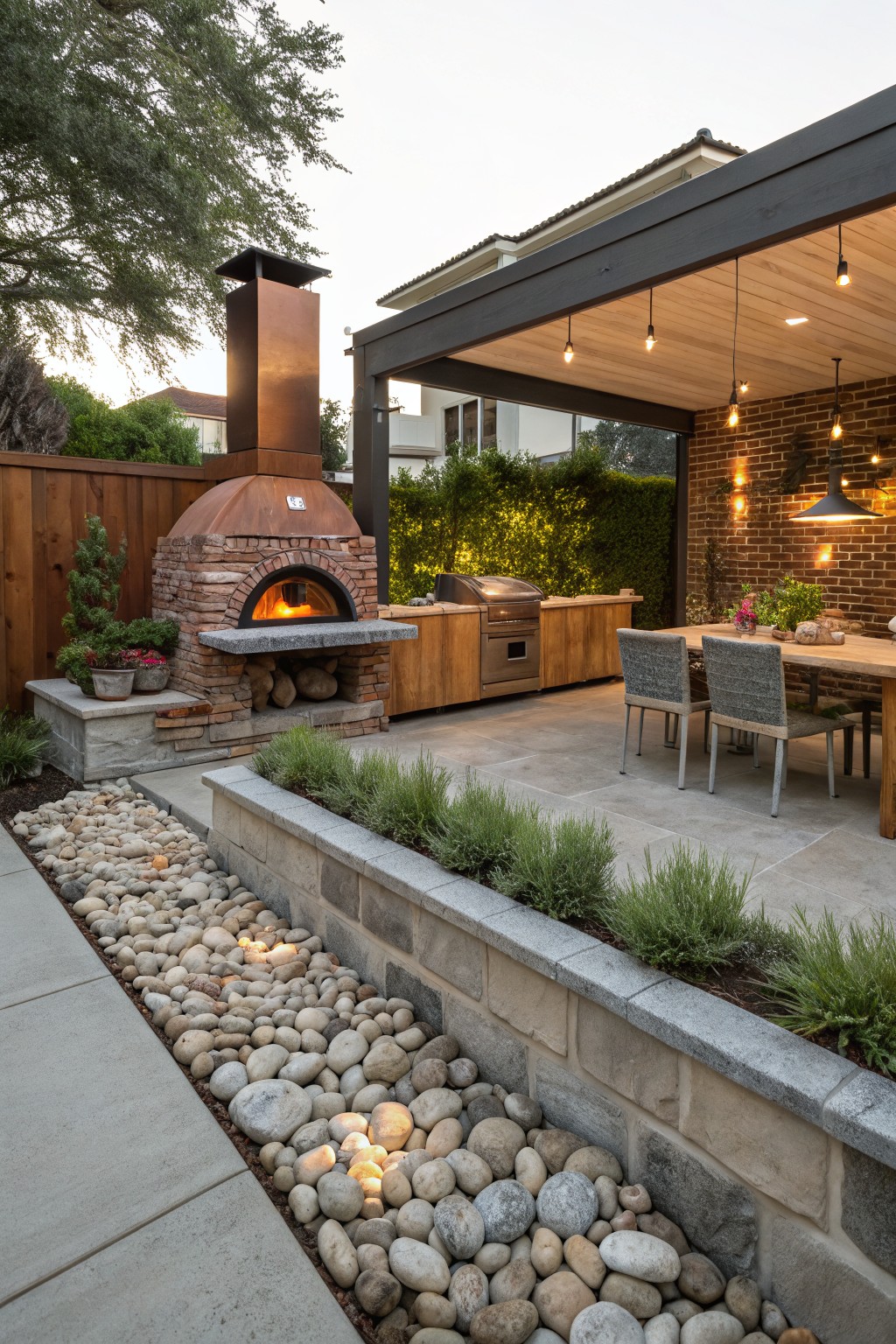
One simple way to add a natural feel to your yard is lining raised planters with river rocks. In this setup, smooth white pebbles form a gentle stream-like border right along the edge of a low stone wall planted with grasses. It keeps soil in place while looking like water has carved out a little path over time. That soft curve breaks up straight lines from the patio nearby.
You can pull this off in any backyard with a patio or walkway. Just dig a shallow trench, layer in larger rocks at the base, then fill with smaller pebbles. Add low plants like lavender that spill over a bit. It works great on sloped spots or transitions to hardscape. Skip it if your yard floods, since rocks shift easy.
River Rock Edging for Winding Paths
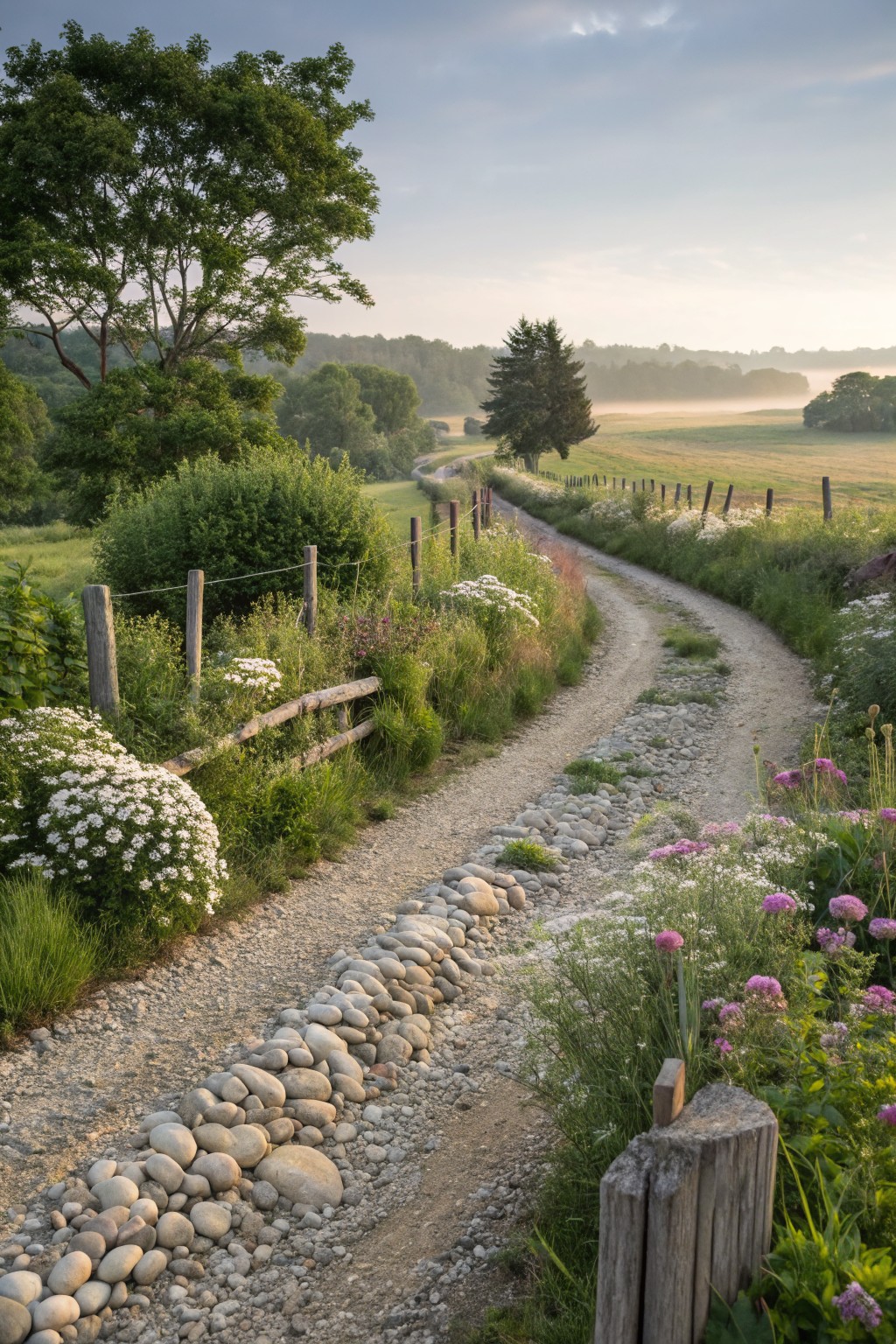
Smooth river rocks laid along the edge of a gravel path make a simple border for flower beds. They follow the curve naturally, with plants like white clusters and pink blooms spilling right over. This keeps everything looking soft and tied together, without straight lines that feel too planned.
Put this to work on paths that meander through a backyard or side yard. It suits casual gardens around older homes, especially where you want low upkeep. Just dig a shallow trench, drop in the rocks, and let weeds stay out. One thing… size the stones so they don’t shift too much in rain.
Raised Beds with River Rock Mulch
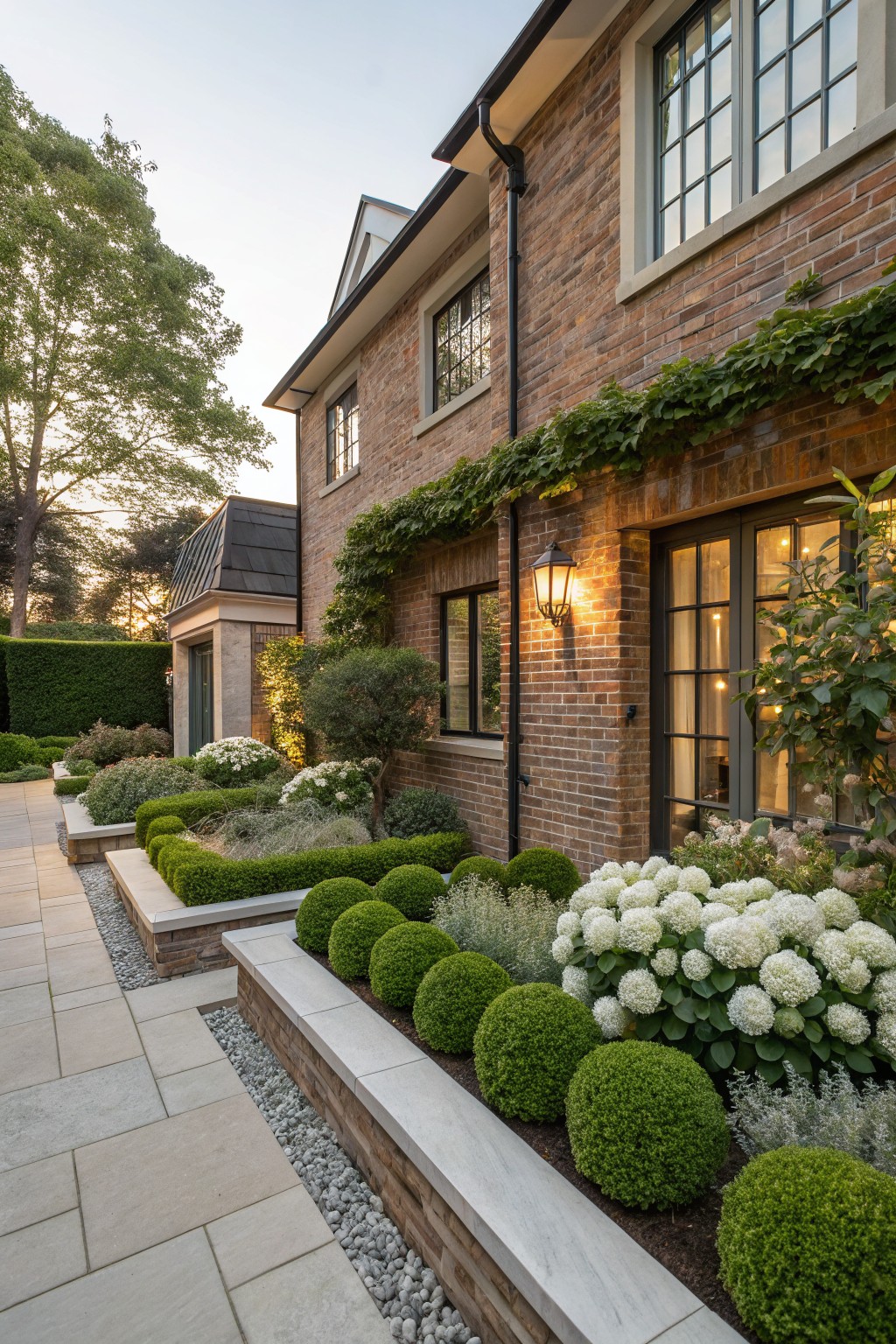
One simple way to get a natural garden look is filling raised beds with river rock mulch. Here the beds sit right along a stone path leading to the house. Gravel covers the soil between structured plants like round boxwoods and big white hydrangea blooms. It keeps things tidy without looking too fussy. The pebbles add that soft flow against the hard path and brick wall.
You can pull this off in a side yard or entry walk where space is narrow. Use it around formal clipped shrubs for contrast or looser perennials if you want wilder. Just make sure the beds are edged firm so gravel stays put. Works best on homes with clean lines. Low water needs too once plants fill in.
River Rock Beds Edged in Stone
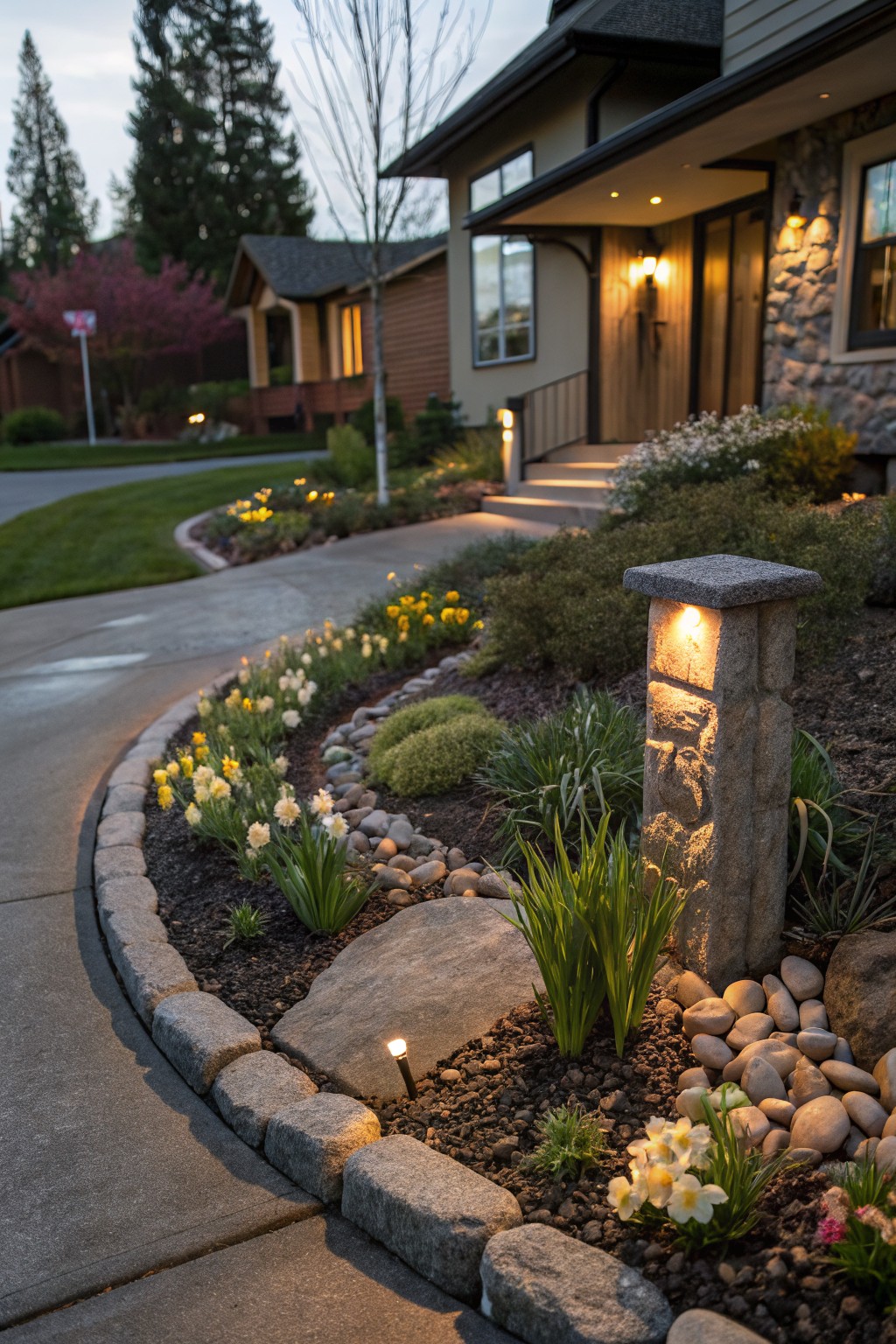
One simple way to make a driveway feel less stark is to curve in some river rock beds right along the edge. Here you see smooth stones filling the base of the bed, edged neatly with cobblestones, and topped with low flowers and grasses. A few bigger boulders add shape. And that stone pillar with its soft light ties it right to the house entry. It keeps things natural without much upkeep.
These beds work great where you want to soften a straight path or hide plain concrete. They suit homes with stone or wood siding, like this one. Just make sure the rocks drain well so water doesn’t pool. Mix in spring bulbs for color that comes back each year. Easy to start small and expand.
River Rocks Around Potted Grasses

River rocks make a simple, natural base for potted plants like the tall grasses you see here next to a stone bar. They fill in around the pot with a loose, flowing texture that looks like it’s always been part of the yard. No fussy edging needed, and it keeps weeds down while letting water drain right through.
This works great in poolside spots or along patios where you want some green without constant trimming. Suits casual backyards on sloped lots too, as long as you layer them a couple inches deep over soil or fabric. Skip it in super wet areas though, or they’ll shift around.
River Rock Stepping Stones in Flower Beds
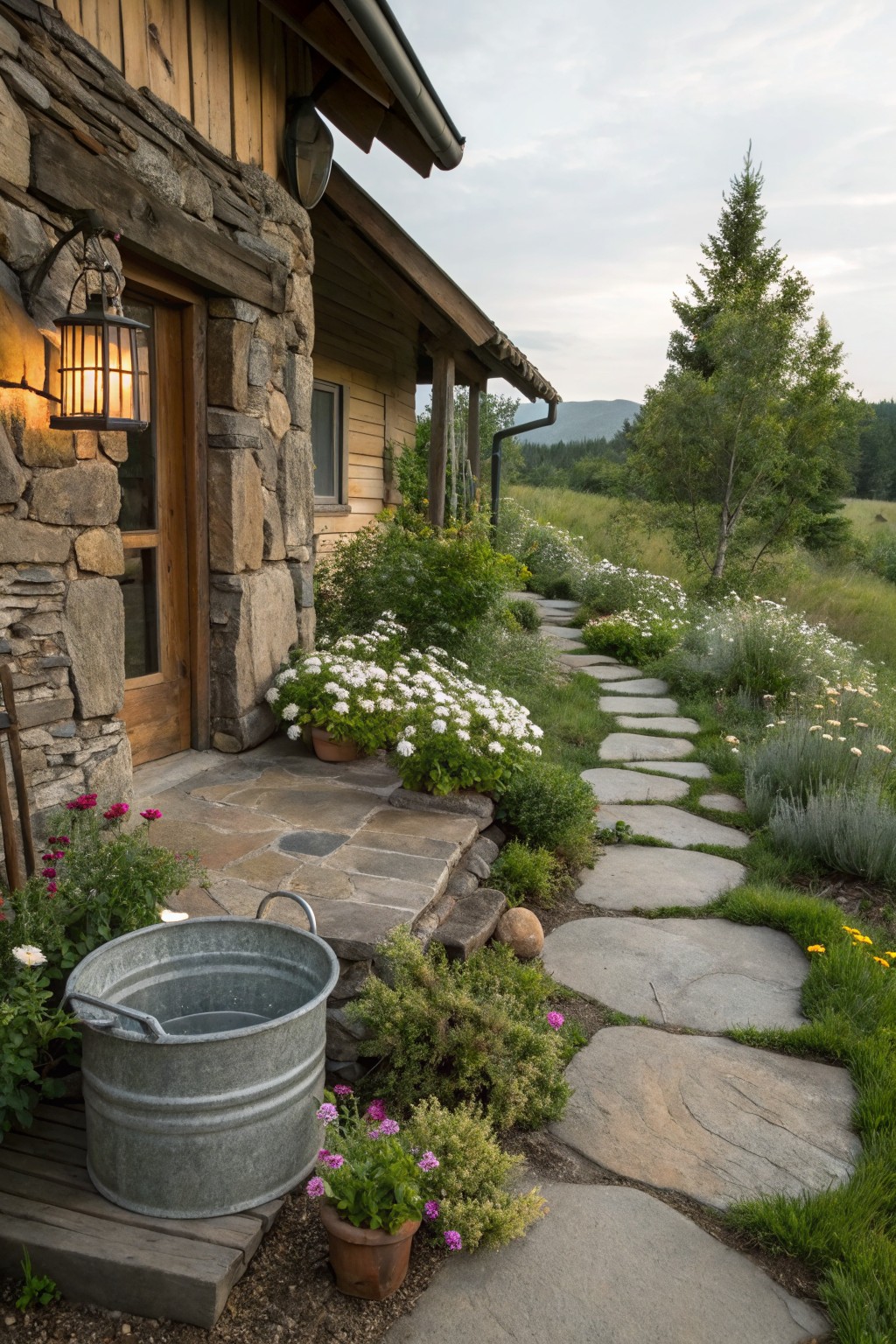
One simple way to guide people through your yard is with flat river rocks set into soft flower beds. These stepping stones create a natural path that winds just right, without looking too planned out. In this setup, the stones sit low amid white blooms and green shrubs, making the walk feel easy and part of the garden.
You can use this in any side yard or entry approach where you want low upkeep. Pick rounded or irregular flagstones for that river rock feel, space them about two feet apart, and fill gaps with mulch or groundcover. It suits cabin-style homes or casual country spots best. Just keep plants trimmed back so the path stays clear.
Frequently Asked Questions
Q: How do I get the rocks to flow like a real river around the flower beds?
A: Rake the rocks in long, sweeping curves instead of straight lines.
Tuck smaller stones along the edges to soften the shape. Step back often to check the flow from different angles.
Q: What goes under the river rocks to stop weeds?
A: Roll out heavy landscape fabric over the soil first. Pin it down well so rocks stay on top.
Cut holes only where plants poke through.
Q: Will different rock sizes mess up the natural look?
A: Mix medium and small ones for depth, but skip the huge boulders.
They add that gentle current feel without overwhelming the flowers. And grab smooth, rounded river rocks every time.
Q: How deep should I pile the rocks?
A: Go for two to four inches deep.
That keeps weeds buried and lets water drain right through to the roots.
