

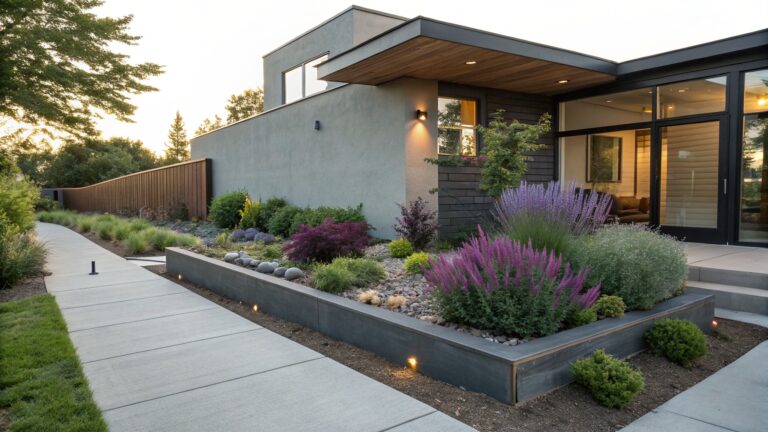
I’ve always noticed how yard corners sit empty, begging for some kind of shape to pull them into the garden layout.
An L-shaped flower bed fixes that by hugging the angles just right, creating a tidy planting structure that guides the eye naturally.
I tried one years back next to my walkway, and solid edging kept it from spilling over as the perennials filled in over time.
What stands out first is usually the way the layout frames a path or softens a fence line.
A few of these ideas are worth sketching out for your own spot, tweaking the plants to match what grows well there.
L-Shaped Raised Bed Along the Walkway
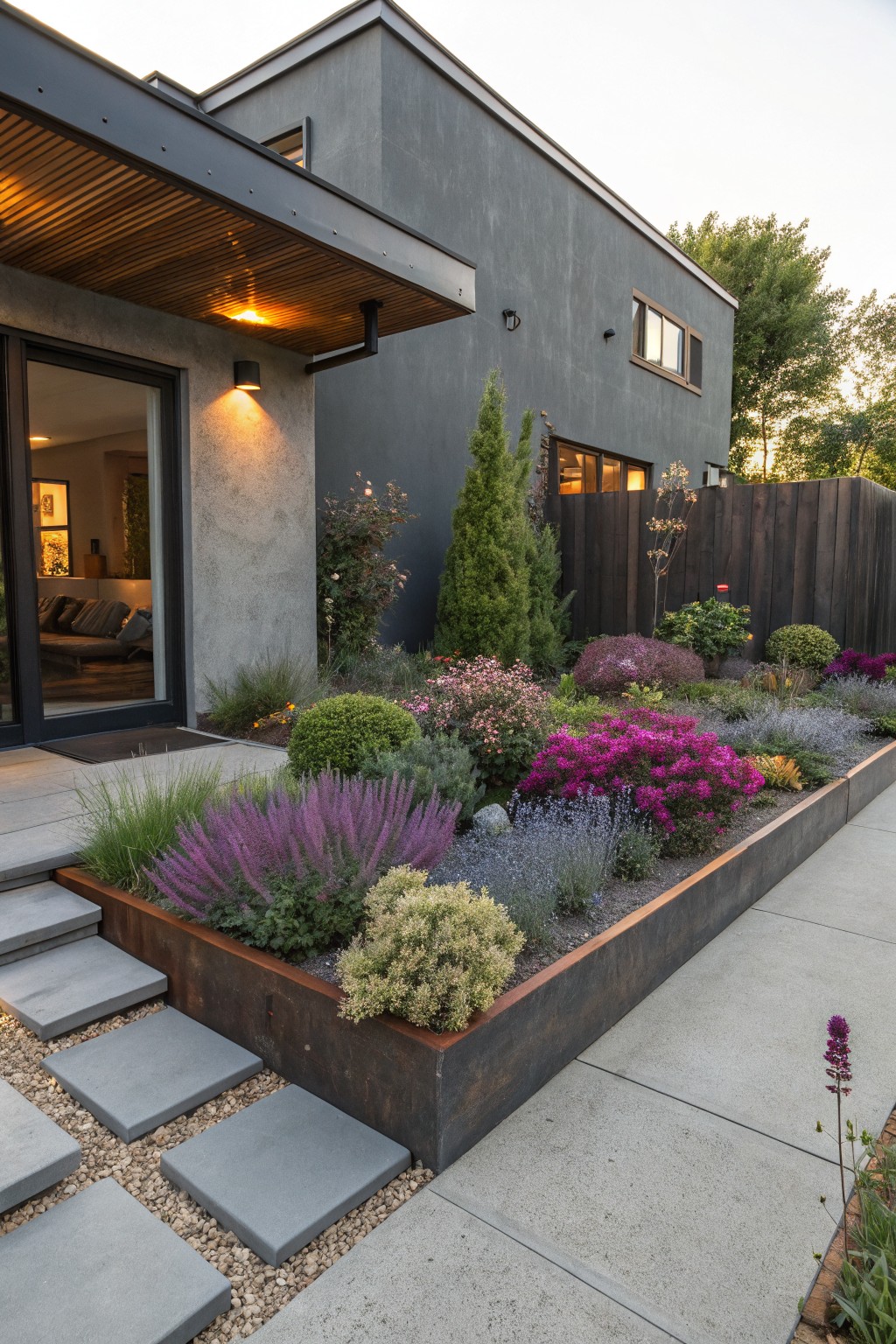
One straightforward way to handle a tight spot next to your entry path is with an L-shaped raised bed like this one. Built from corten steel that develops a rusty patina over time, it hugs the concrete steps and sidewalk perfectly. The mix of purple lavender, pink sedums, and grasses fills it out densely, softening the hard lines of the modern house without crowding the walk.
This works best in modern or contemporary homes where you want clean edges but some color. Tuck it into corners by doors or gates, pick tough perennials that handle dry spells, and let the metal weather naturally. Just keep the plants from spilling over the path, or trim them back now and then.
L-Shaped Beds with Climbing Roses
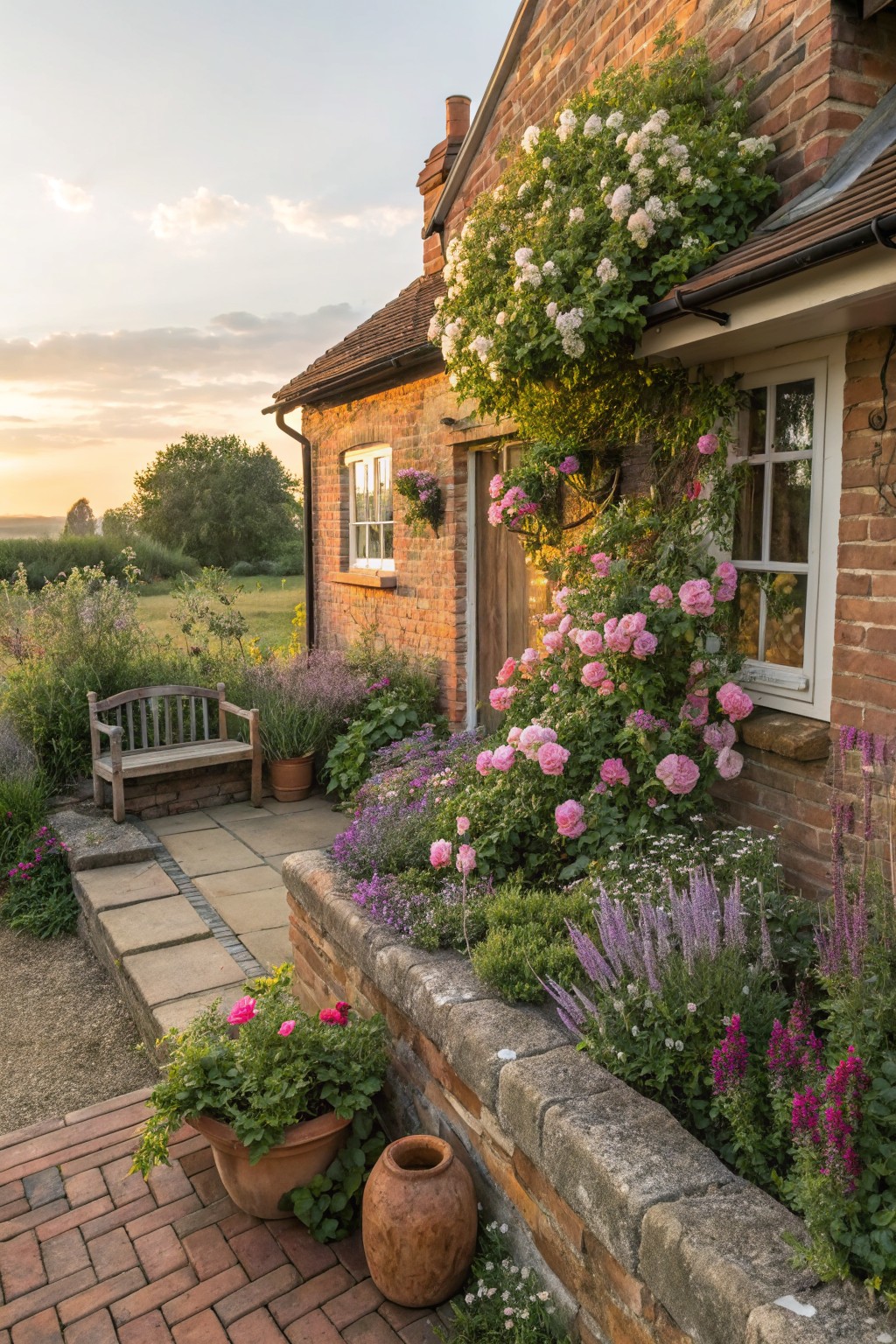
Climbing roses make a natural fit for L-shaped flower beds that hug house corners. Here they cover the brick wall in soft pink blooms, spilling down and mixing with lower plants like lavender along the path. A bench tucked in draws you to sit. The vines follow the building’s lines, turning a plain corner into something alive and layered.
This works best on older homes with sunny exposures. Pick disease-resistant climbers, train them up wires or trellises, and fill the base with tough perennials. It suits small lots. Just plan to prune once a year so it stays tidy.
L-Shaped Lavender Beds Line a Curved Path
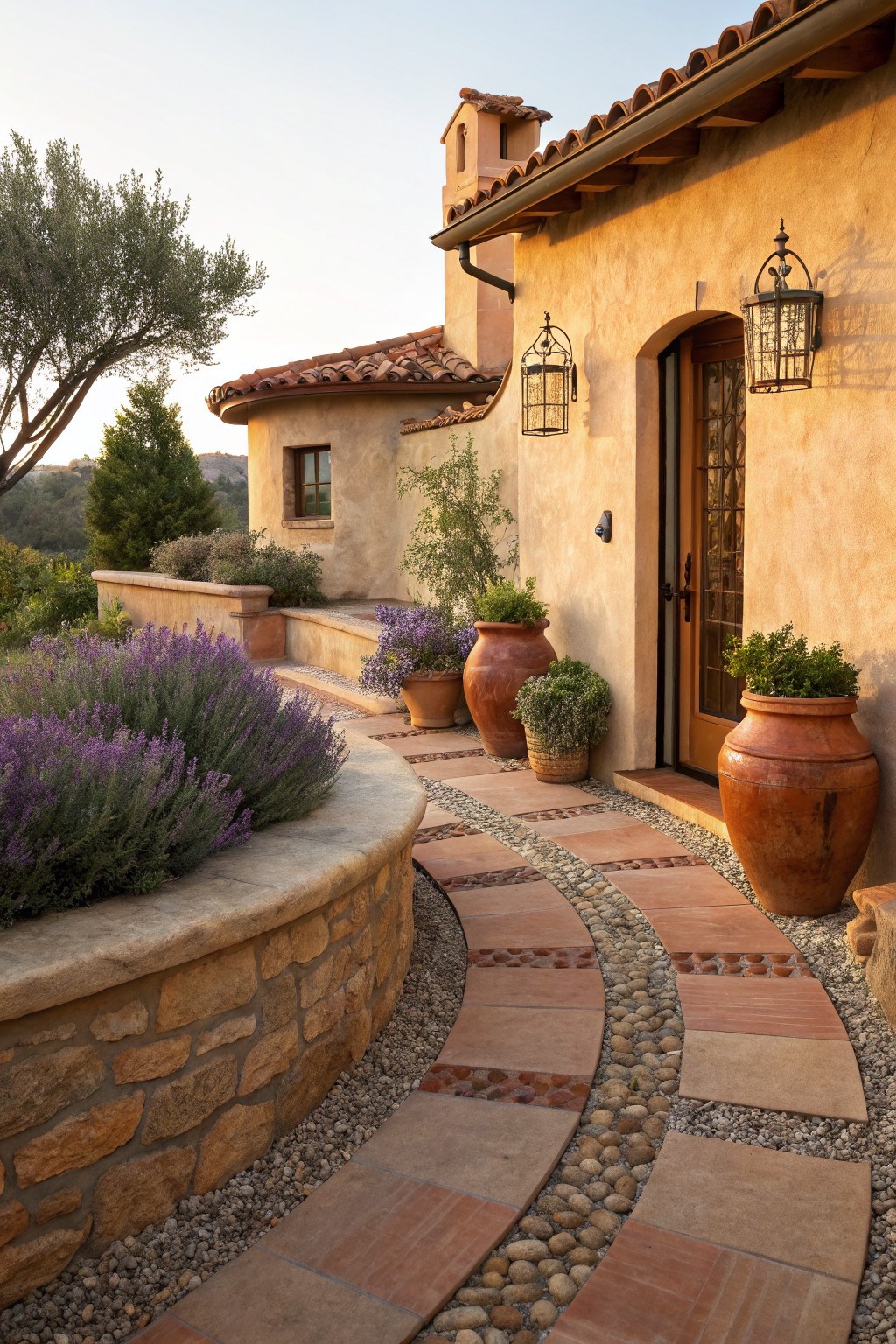
One nice landscaping touch here is the L-shaped bed of lavender that runs along a curving stone wall right up to the house entry. It follows the path’s bend perfectly, filling that corner space with soft purple blooms and green foliage. This keeps the area from looking bare while tying the garden into the walkway.
You can pull this off in any yard with a wall or fence corner near a door or patio. Lavender grows easy, smells good, and stays tidy with a trim now and then. Add a couple big terracotta pots nearby for taller plants, and it fits homes from ranch styles to stucco ones without much work.
L-Shaped Succulent Beds with Steel Edging
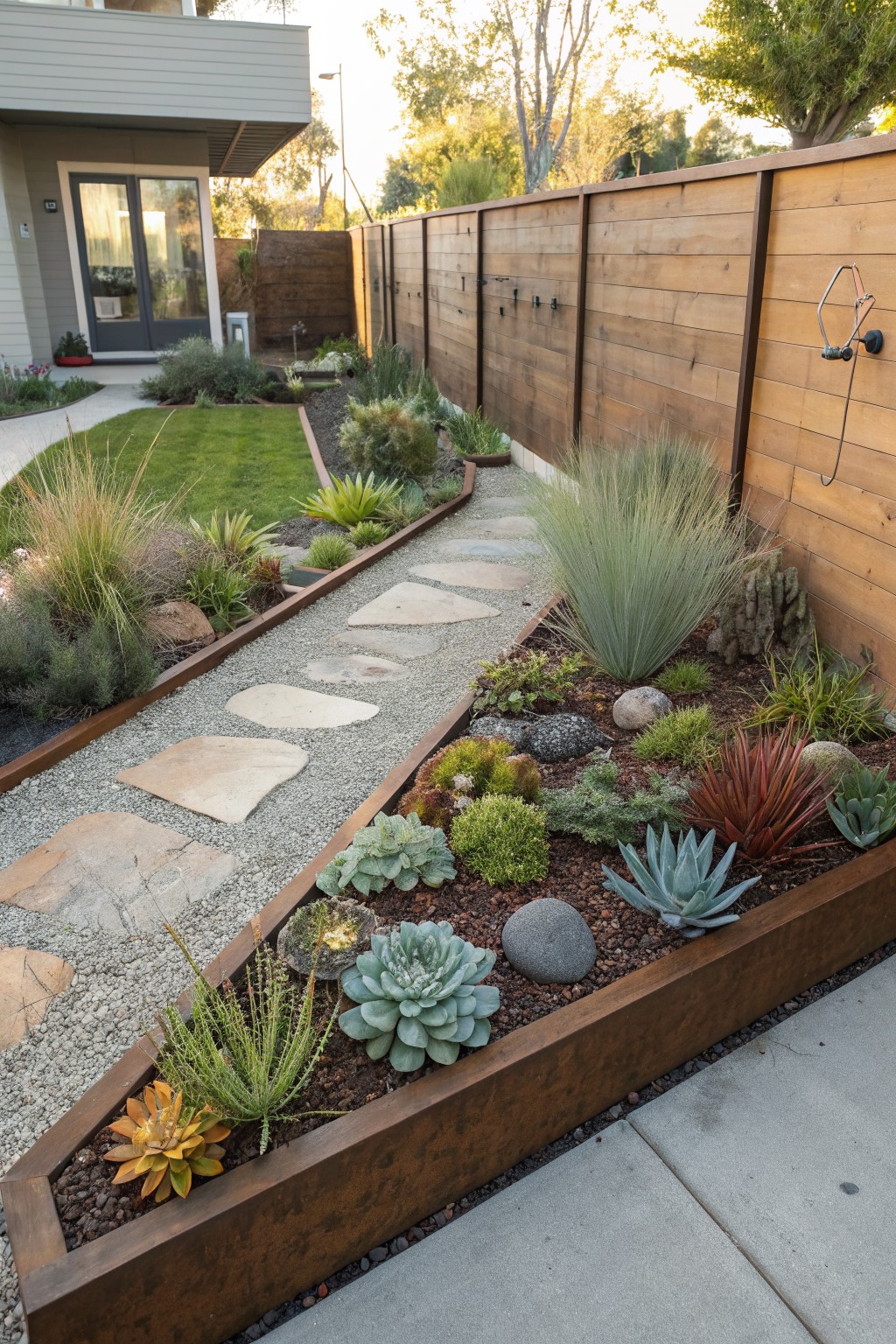
Tucked into a corner along a gravel path, this L-shaped bed uses corten steel edging to hold in succulents and rocks. The angled shape fits tight spaces perfectly, and the weathered metal adds a rugged touch that blends with fences or house walls. Low-water plants like echeverias and agaves thrive here without much fuss.
Put one of these in sunny side yards or back corners where grass won’t grow. Line it with gravel mulch for drainage, and step stones lead right up to it. Suits modern homes or dry climates best… watch for rust stains on nearby concrete.
L-Shaped Raised Planters Along Pool Edges
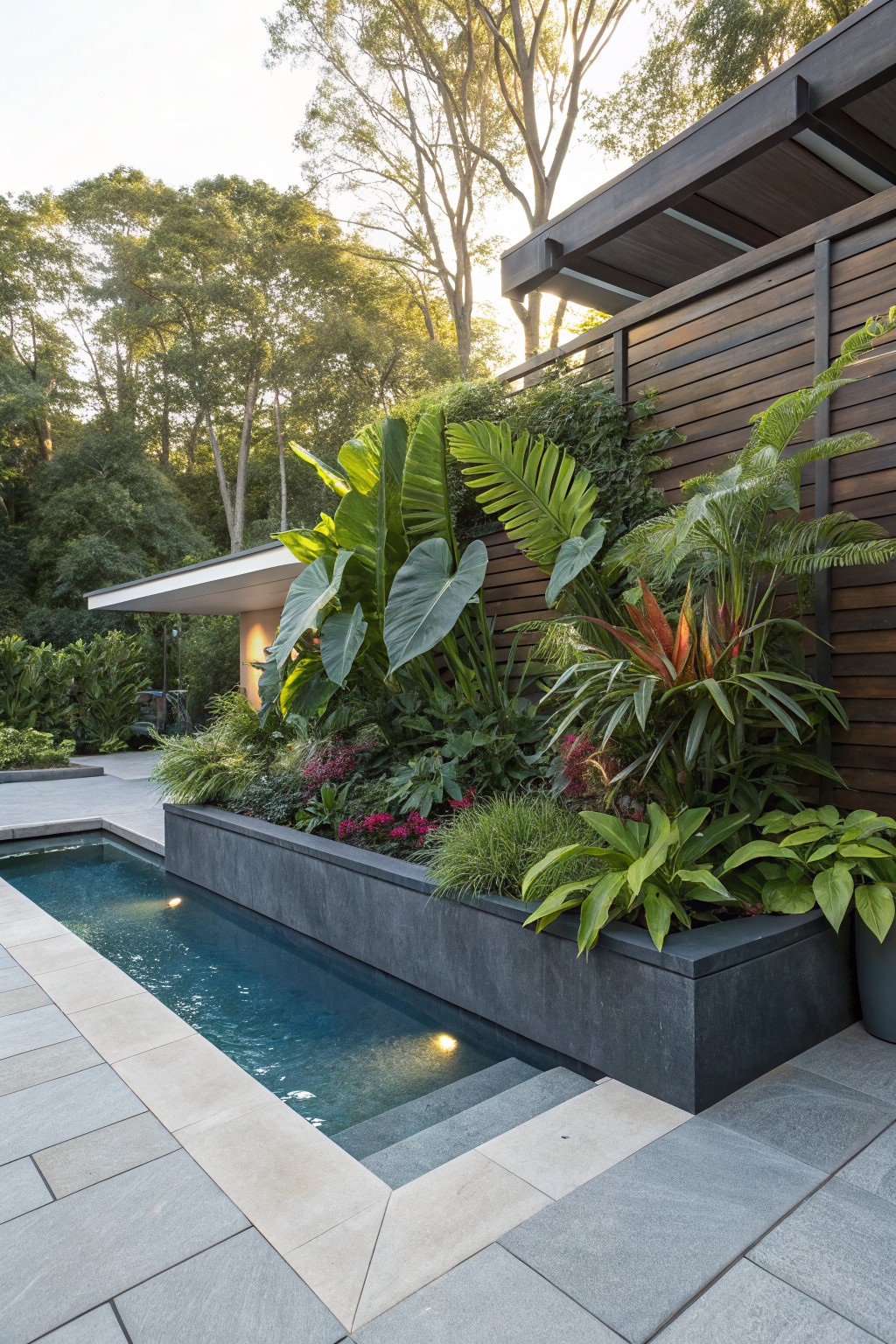
A simple L-shaped raised planter works great right next to a pool. Here it’s a dark concrete box hugging the corner, packed with big tropical plants like banana leaves and ferns. That softens the hard pool lines and adds green without crowding the deck space. It pulls the landscaping in close to the water.
This idea fits modern backyards or any spot with a tight pool layout. Go for tough plants that take pool chlorine and splash okay. Keep the bed low enough for easy reach, maybe 18 inches high. Watch the roots though, they shouldn’t creep into the pool plumbing.
L-Shaped Boxwood Beds Frame a Corner Path
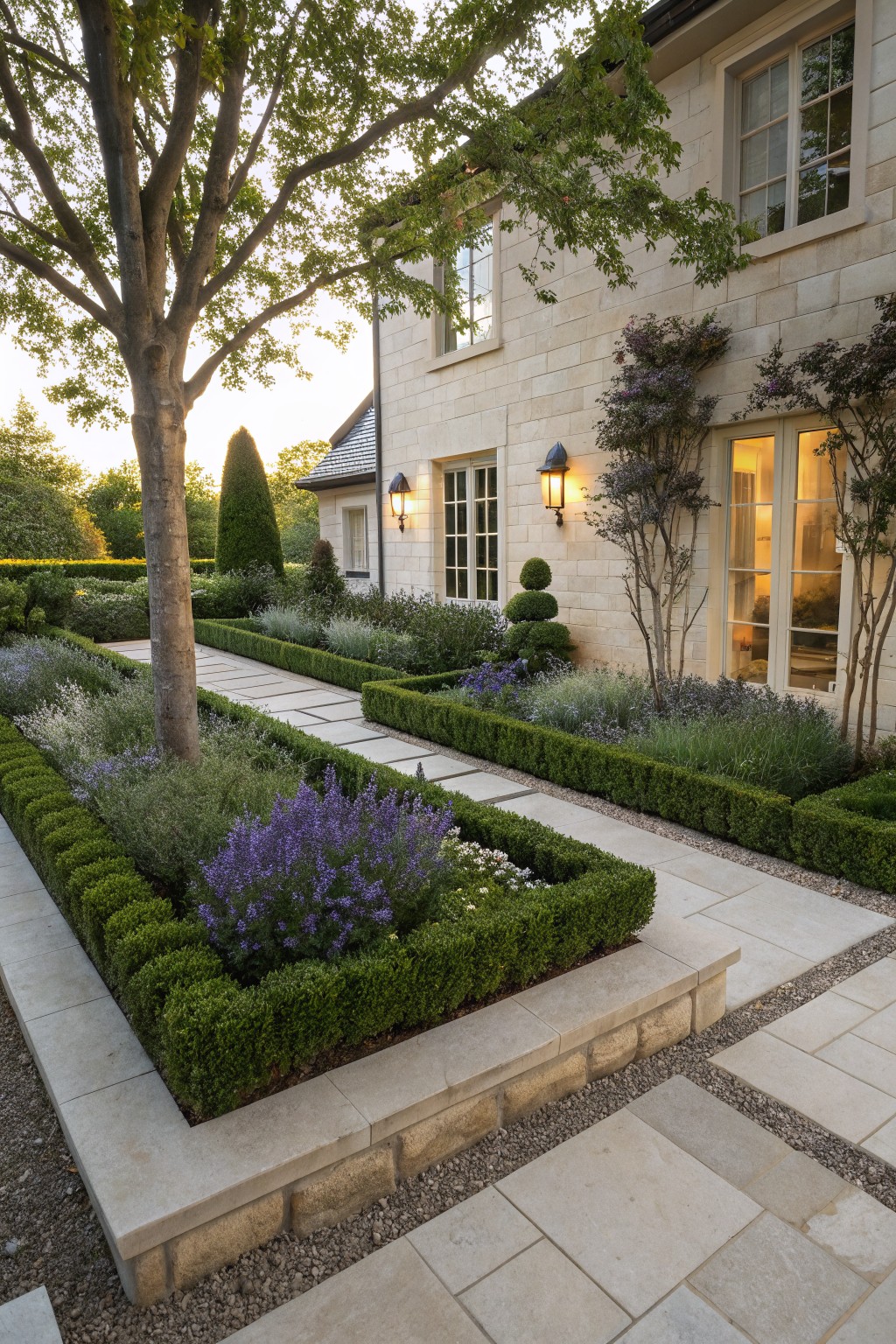
Boxwood hedges make a clean edge for L-shaped flower beds like these. They’re clipped low and tight around purple lavender blooms and soft grasses. That setup guides your eye right along the stone walkway to the house door. It keeps things neat without much fuss, and the green shapes echo the stone walls nearby.
You can pull this off in any side yard or entry corner. Pick a spot where the path turns, plant boxwoods along the beds, then fill in with tough perennials that match your sun. Works best on homes with clean lines, traditional or not too modern. Just trim the hedges a couple times a year… easy enough.
Formal L-Shaped Boxwood Flower Beds
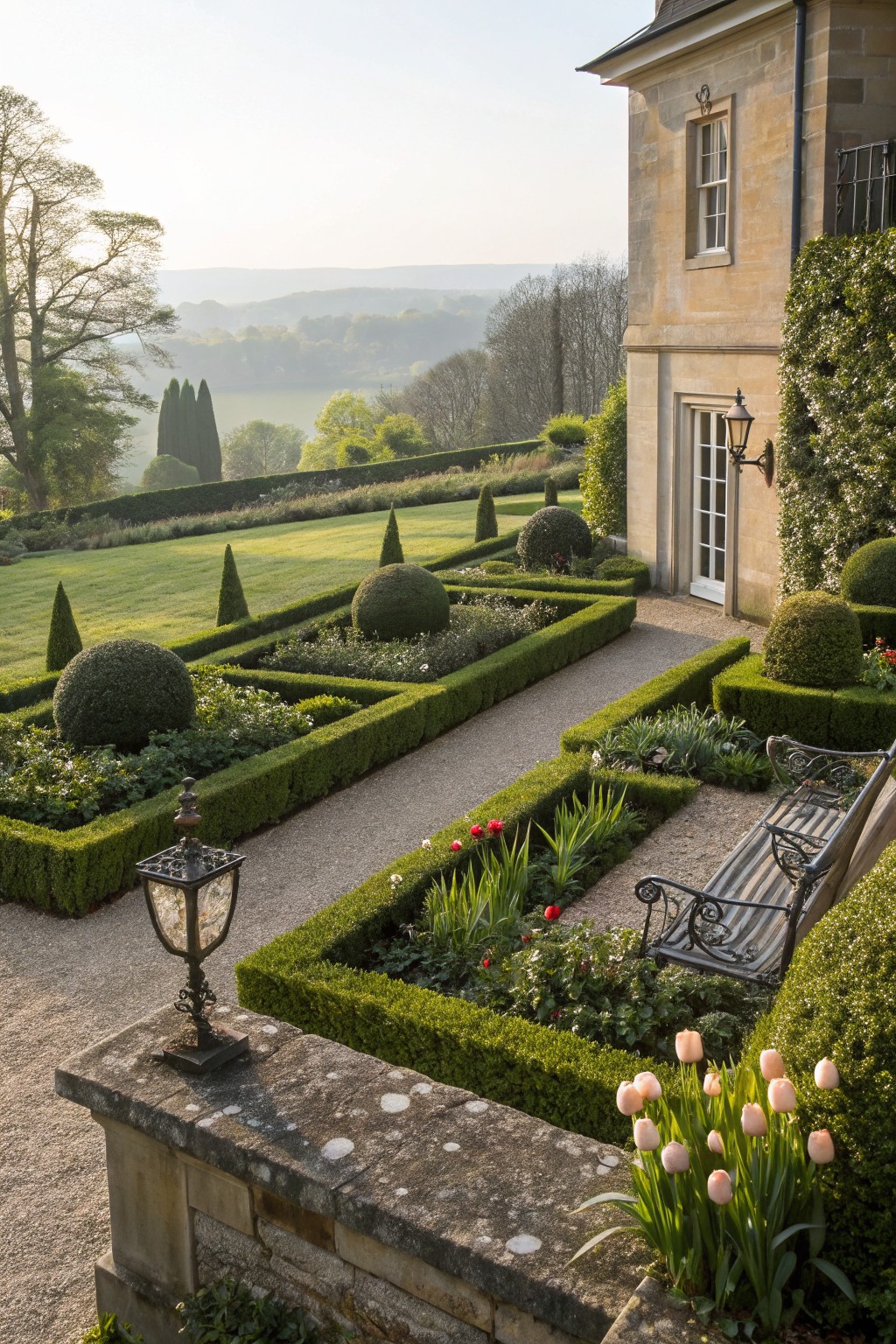
Boxwood hedges trimmed into neat L-shapes make flower beds that hug corners perfectly. You see them here outlining spots for tulips and other blooms, with gravel paths running alongside. This setup gives a tidy, old-world garden look without taking up much room. It keeps everything structured and easy on the eyes.
Try this where your house meets a walkway or patio edge. It suits traditional homes best, or any place needing some order in the yard. Just keep the boxwoods clipped regular, or they lose that crisp line. Works year-round too, since the greens stay put.
L-Shaped Tropical Border Along a Path
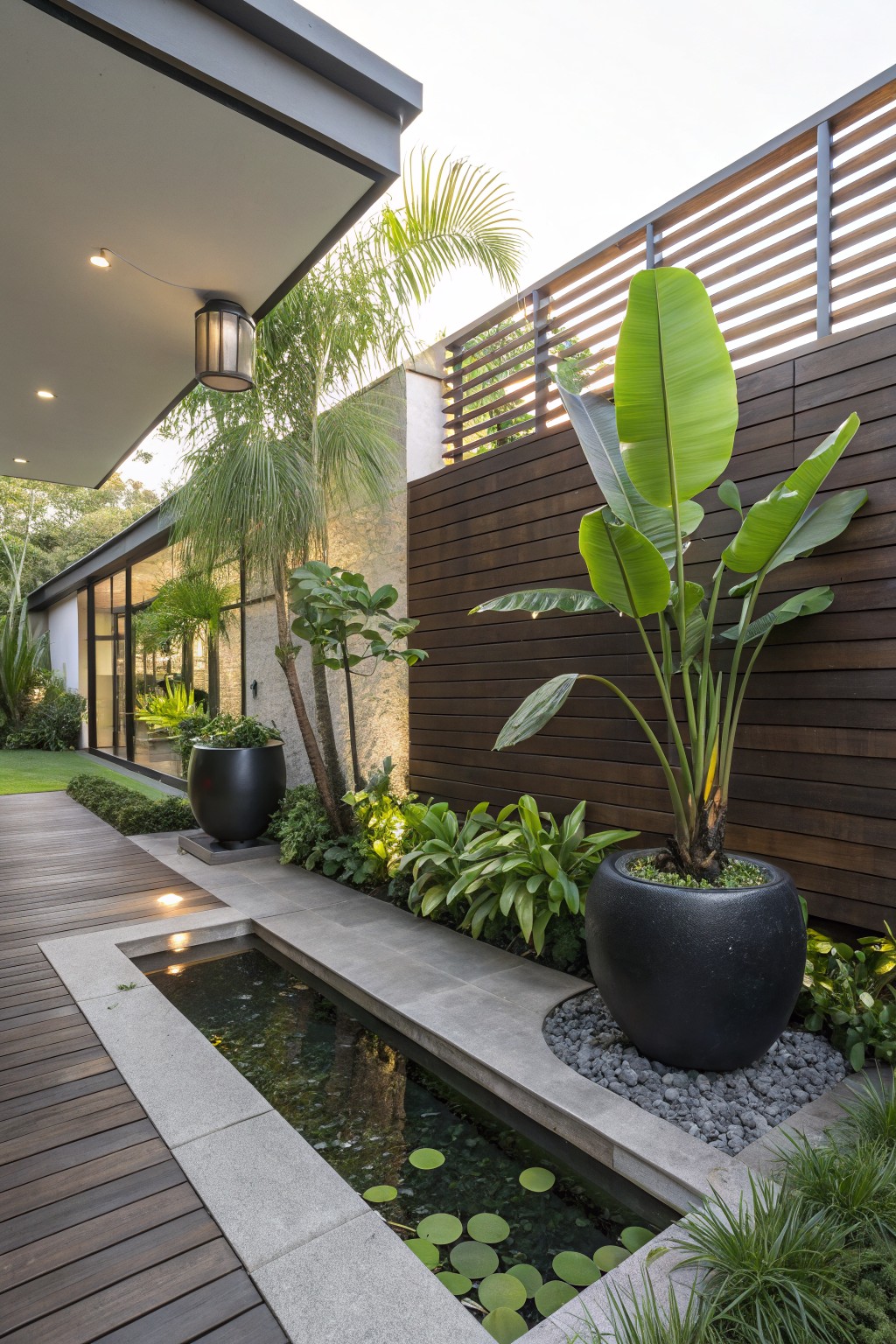
This setup uses a simple L-shaped path with a narrow pond running beside it, edged in lush tropical plants like banana trees and big leafy greens. The black pots with tall specimens add height without crowding the walk, and the lily pads in the water give it a calm, natural feel. It pulls the eye toward the house while keeping things open and easy to move through.
You can try this in a side yard or corner spot where you want to connect your deck to the entry. Go for low-water tropicals if you’re in a dry area, and use gravel or stone around the pots to keep it neat. It works best on modern homes with clean lines, but watch the scale, bigger pots suit wider paths.
L-Shaped Stone Wall Flower Bed
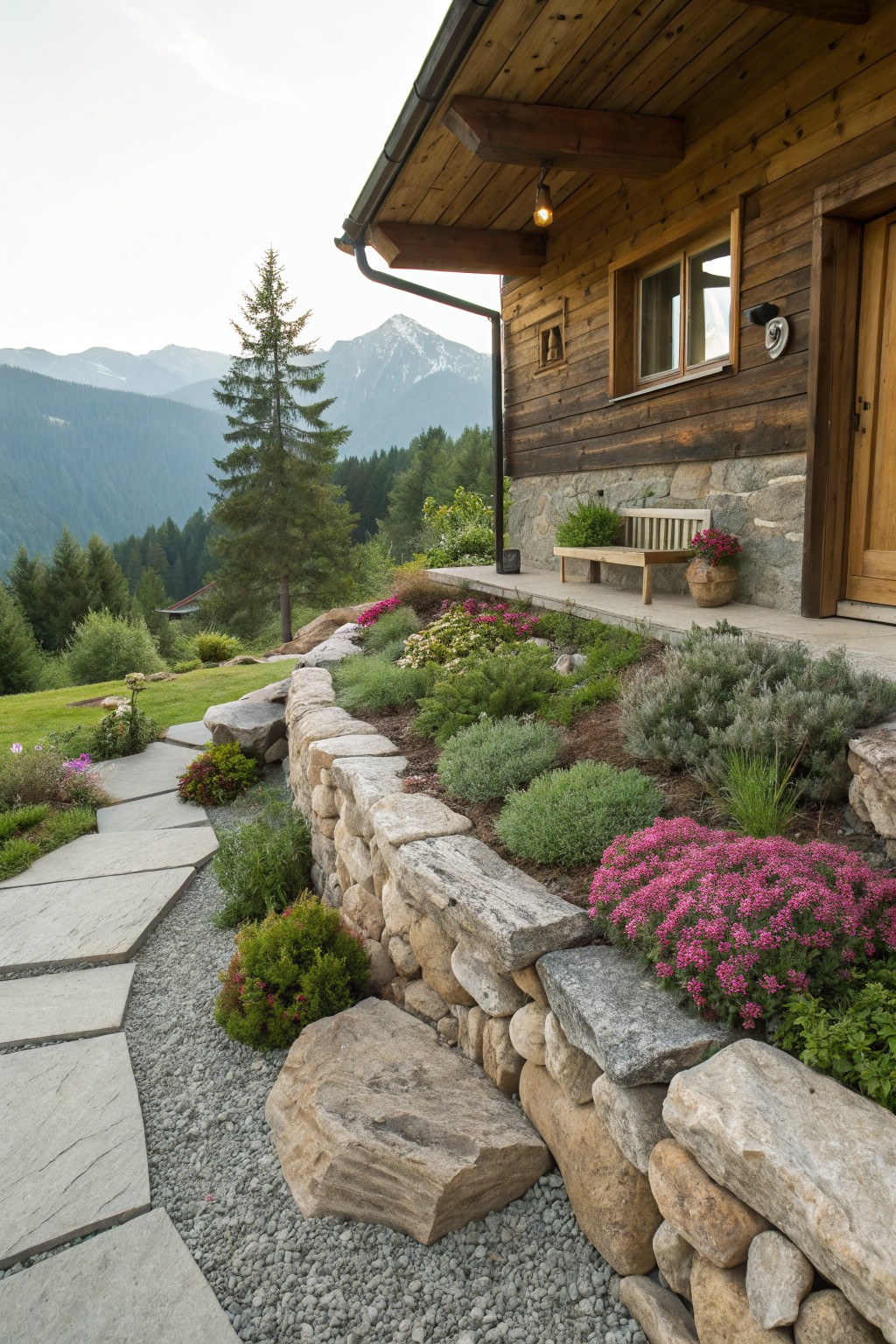
A dry-stacked stone retaining wall shapes this L-shaped flower bed right along the house corner. It holds back the slope while letting plants spill over the edges in a natural way. Tough alpines like pink sedums and gray shrubs fill it out, keeping things low and tidy next to the entry.
This works best on uneven ground near a cabin or hillside home. Stack local stones for good drainage, then add gravel mulch and stepping stones for a path. Skip tall plants here so they don’t crowd the door… just enough color to welcome guests without much upkeep.
L-Shaped Gravel Garden with Stepping Stones
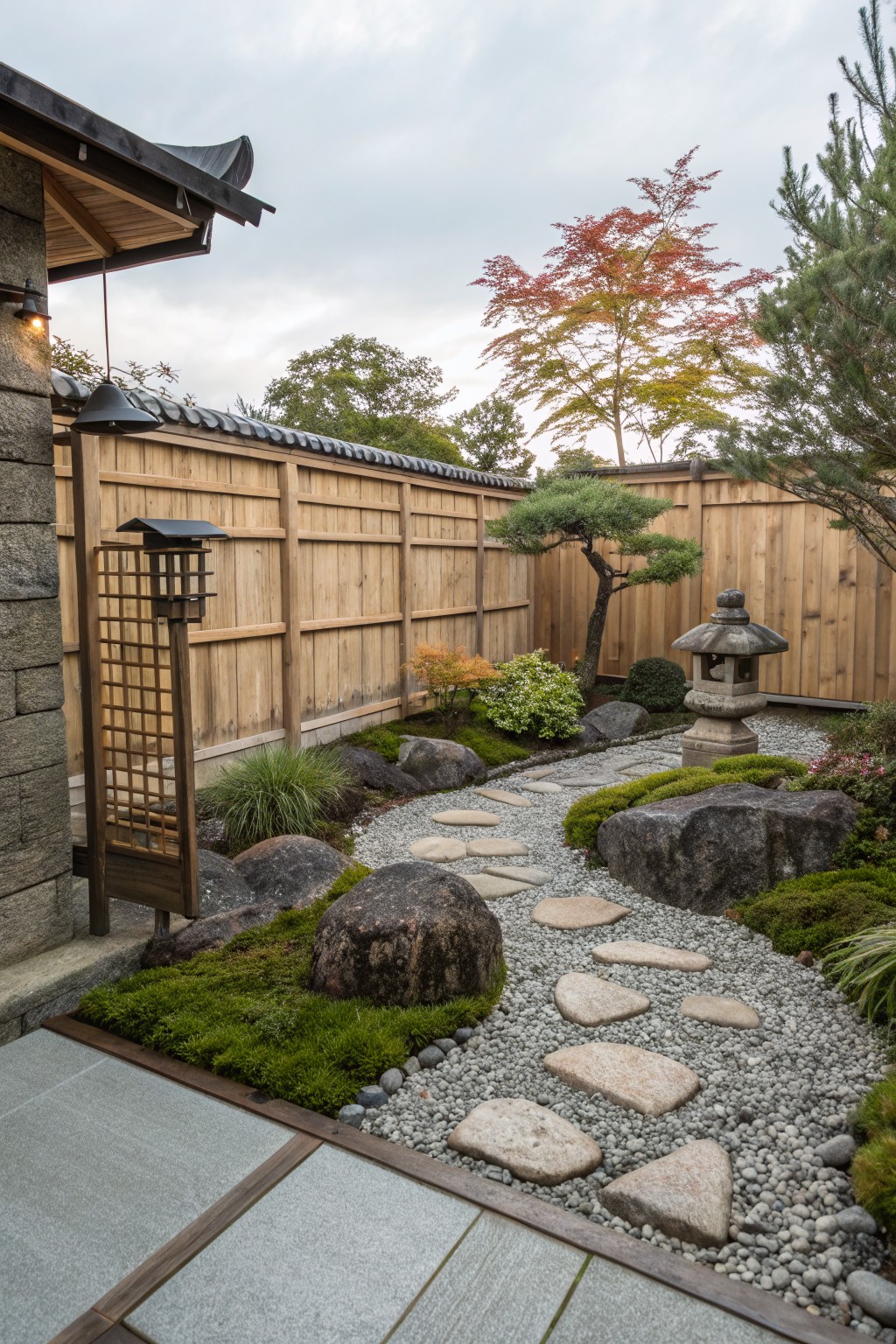
Stepping stones laid in a gravel bed make a quiet path that fits right into tight corners. Here they wind along two walls, turning the corner smoothly with big boulders placed nearby for weight. Low moss and grasses fill in the edges, keeping it all low fuss and natural looking.
You can pull this off in any side yard or backyard nook under 200 square feet. Use flat fieldstones on pea gravel for drainage, and add a few larger rocks to break up the path. It suits modern homes or older ones wanting less mowing. Just keep plants trimmed back so you don’t trip.
L-Shaped Planter Beds with Built-In Bench
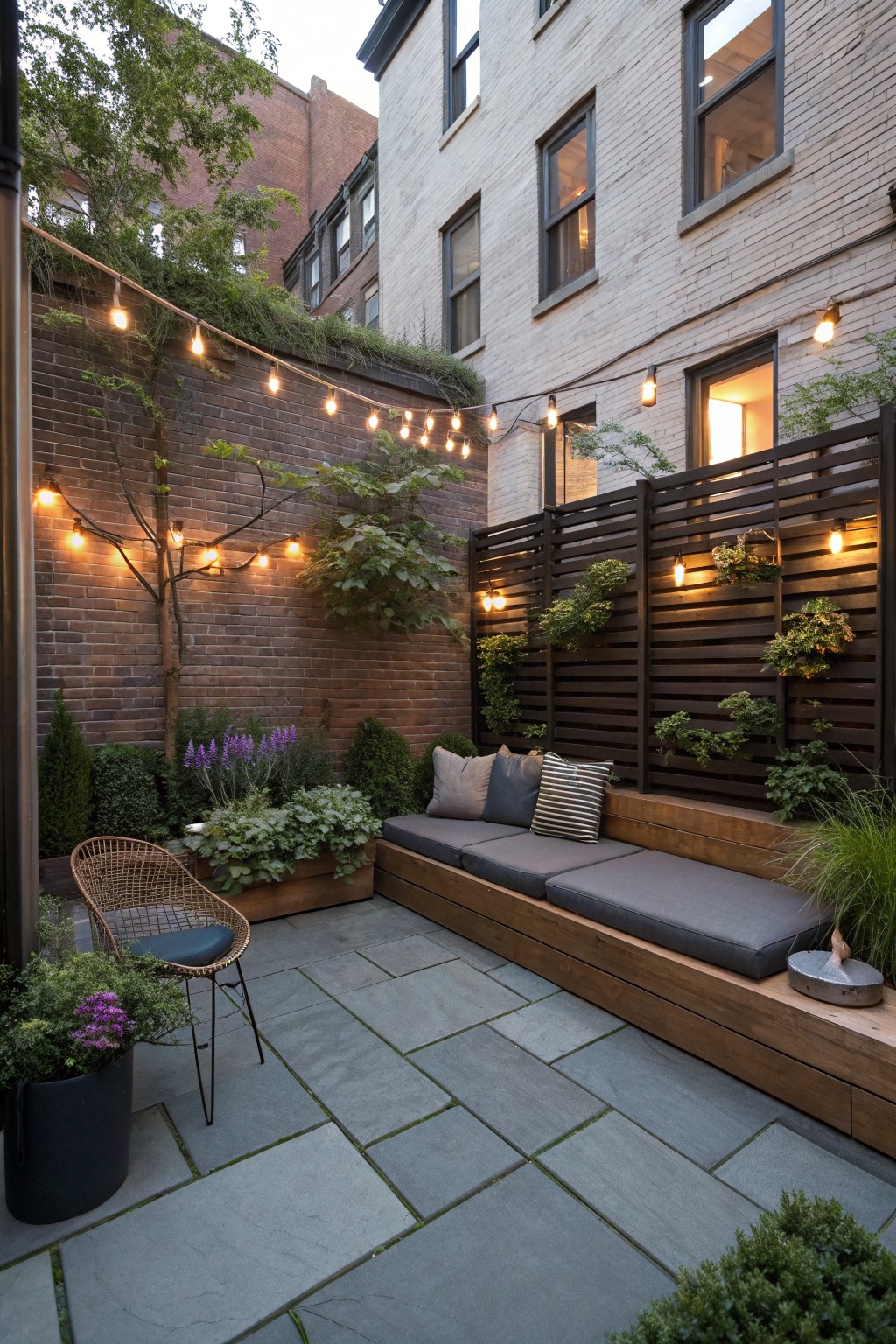
Small corner spaces like this urban courtyard work great with L-shaped planter beds that hug the walls. Here the raised wooden beds hold grasses, lavender, and small shrubs right up against the brick, while the bench sits on top along the curve. It turns a tight spot into a real hangout area without wasting any room.
Build something like this in backyards or side yards where you need seating but don’t have much flat space. Use rot-resistant wood for the beds and bench, add simple cushions, and tuck in low plants that won’t flop over the seat. String lights overhead make it usable at night, but keep maintenance easy by picking drought-tolerant stuff.
Raised L-Shaped Planter Beds Defining Patio Edges
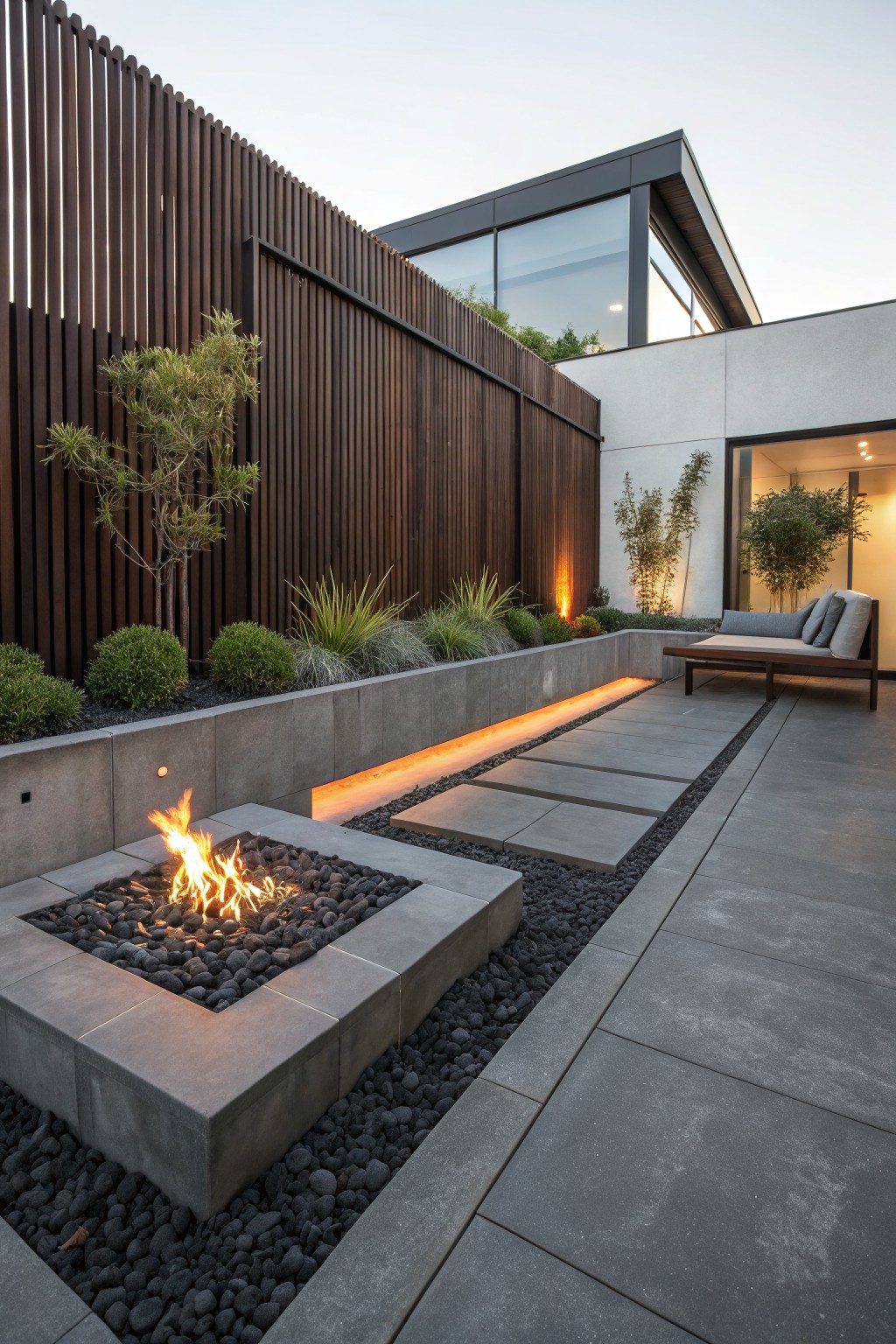
Raised beds like these hug the fence and wall in a clean L-shape, using concrete that’s low enough to sit on if you want. Filled with grasses, small shrubs, and boxwoods, they add green without crowding the patio. The strip lighting tucked underneath lights them up softly at dusk, making the whole area feel pulled together.
This setup works best in modern backyards or courtyards where space is tight. Line the beds with black pebbles outside for drainage, and stick to tough plants that don’t need much water. It keeps the look sharp year-round… just avoid tall stuff that blocks the fence views.
L-Shaped Tropical Beds Along Pool Edges

Tucking an L-shaped flower bed right up to the pool keeps hard surfaces from feeling too stark. Here tall bird of paradise and broad banana leaves mix with lower ferns and colorful accents, softening the corner where deck meets water. It builds that resort vibe without taking up lounging room.
This works best in corner pool setups or any tight yard spot. Layer plants by height for depth, starting with big statement leaves at the back. Add a few pots like those terracotta ones for easy swaps, and pick tough tropicals that handle pool splash. Skip it if your space gets heavy foot traffic, though.
L-Shaped Planting Beds Along Entry Steps
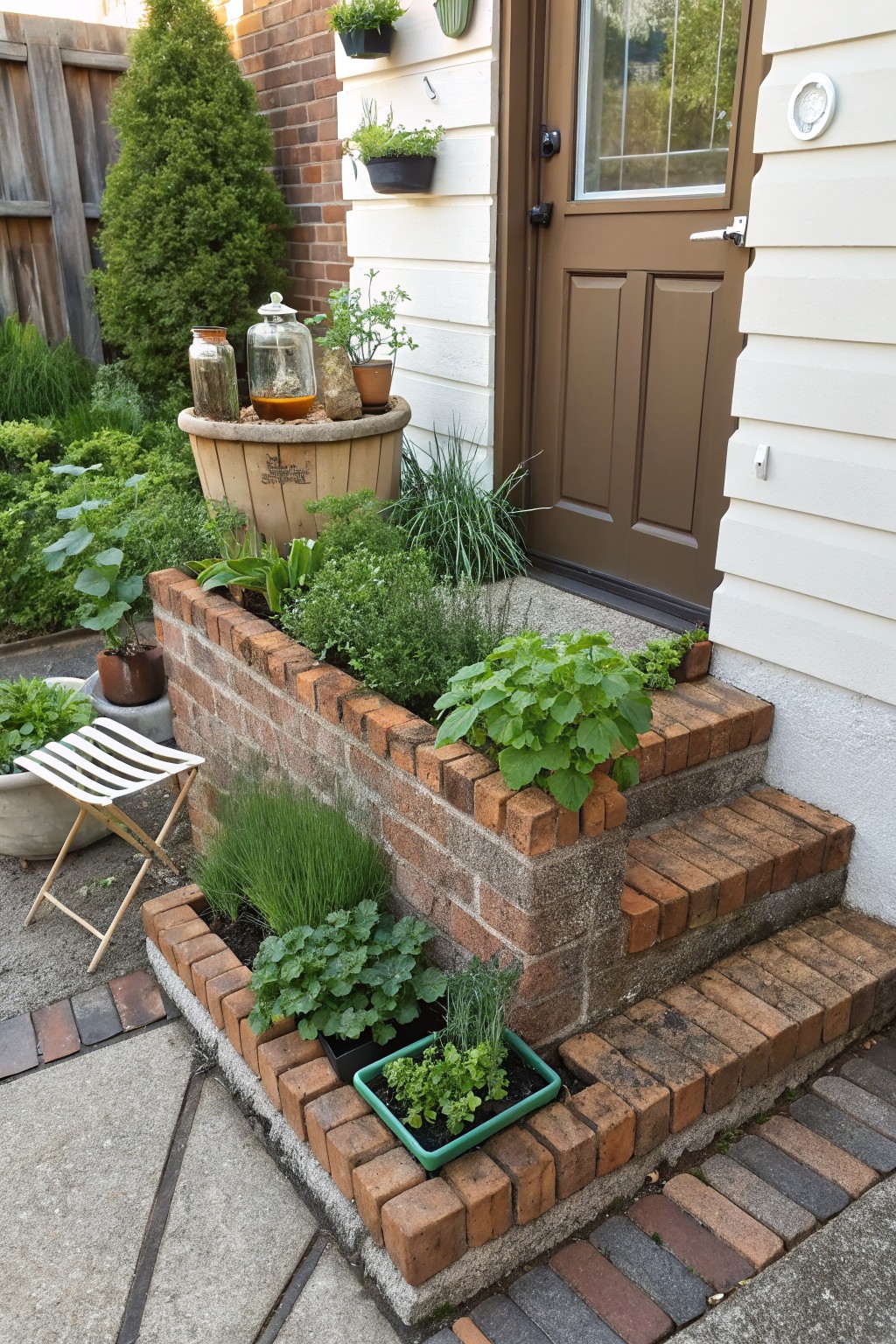
One simple way to work with a corner by your front door is to build L-shaped flower beds right into the steps. Here, brick steps turn into raised beds filled with herbs like basil and chives, plus some greens. It keeps everything tidy and close at hand. The plants spill over just enough to soften the hard edges without getting in the way.
This works best in small entry areas where you want low upkeep and easy picking. Go for tough herbs that handle foot traffic and partial sun. Brick or stone holds up well year-round… just make sure good drainage so roots don’t rot. Fits older homes or rentals with basic steps.
L-Shaped Planter Beds Framing a Plunge Pool
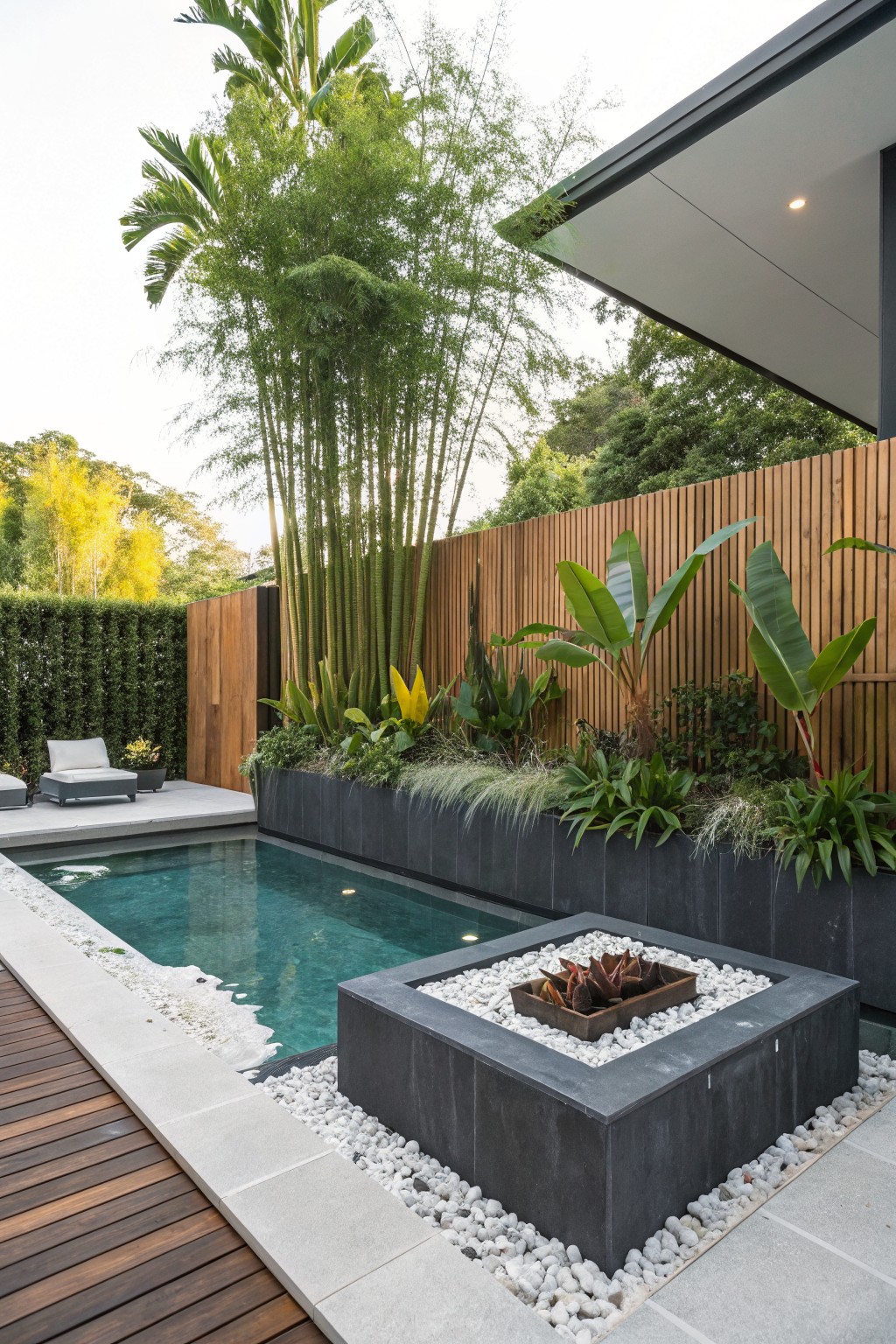
One simple way to handle a tight corner in the yard is with long, low L-shaped planter beds like these black stone troughs running right along the pool edge. They hold grasses and tropical plants that soften the hard lines of the water and decking without crowding the space. The dark material picks up on the fire pit nearby, keeping everything tied together.
These beds work best in small backyards where you want some green but not a full garden. Plant them with upright stuff like fountain grass or low palms that won’t flop over the pool. Skip anything too thirsty since they’re close to the water. They suit modern homes with clean lines, and you can copy the look even without a pool, just along a patio corner.
Stacked Wooden Cubes for L-Shaped Planters
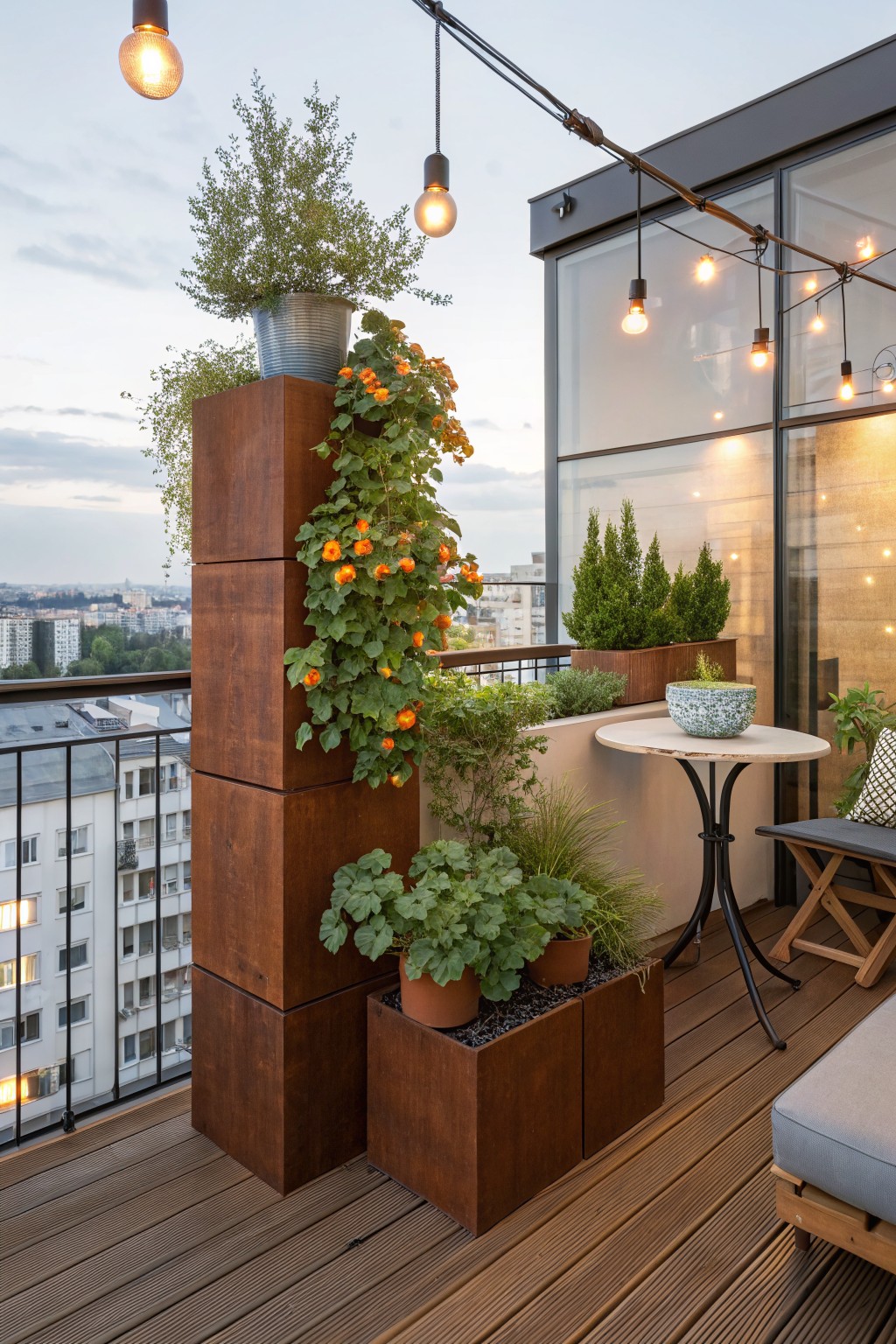
One smart way to fit a flower bed into a tight corner is stacking simple wooden cubes into an L-shape. You see it here on a balcony, where the cubes rise up along the railing and turn inward, holding soil for trailing plants and compact greens. It builds height fast without crowding the floor space, and the wood tone blends right into the deck.
Try this on rooftops, patios, or yard edges where you want planting but not sprawl. Start with cubes about two feet square, stack three or four high on the long arm and fewer on the short. Add climbers like nasturtiums for color, and keep soil light. It suits city spots best, adding green without much upkeep.
L-Shaped Boulder Beds Around a Path
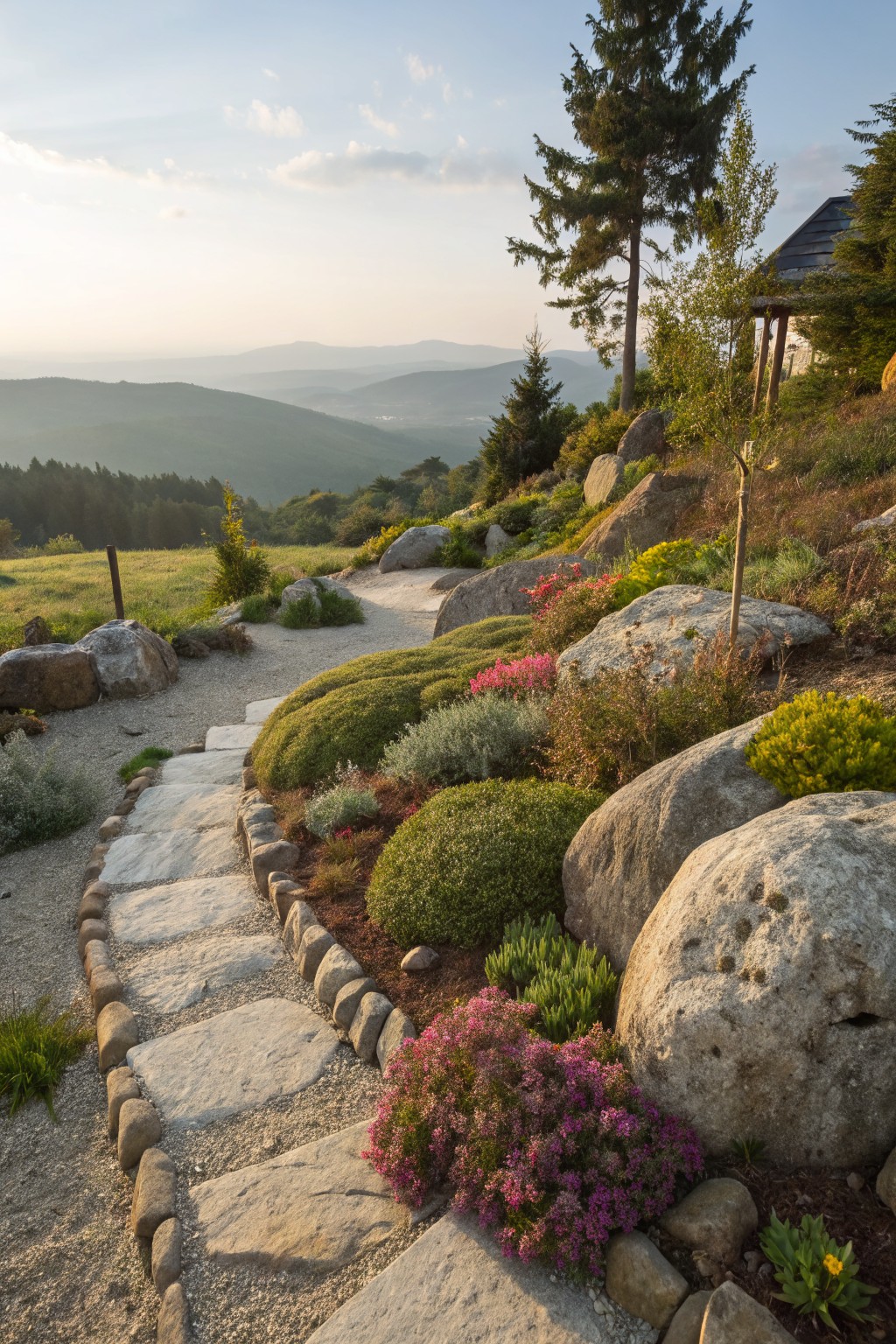
One simple way to handle a sloped corner in your yard is to place large boulders to shape L-shaped flower beds right along a path. The rocks form natural edges that hug the stepping stones, and you fill in with tough low plants like heathers and sedums. It keeps everything contained and makes the walk up the hill feel purposeful, not just a scramble.
This works best on hillsides where straight beds would wash out. Pick rounded boulders that match your local stone, add gravel between the steps for drainage, and choose plants that spill over without much fuss. Skip it on flat ground, though. It needs that slope to really settle in.
L-Shaped Flower Beds Along Stone Walls
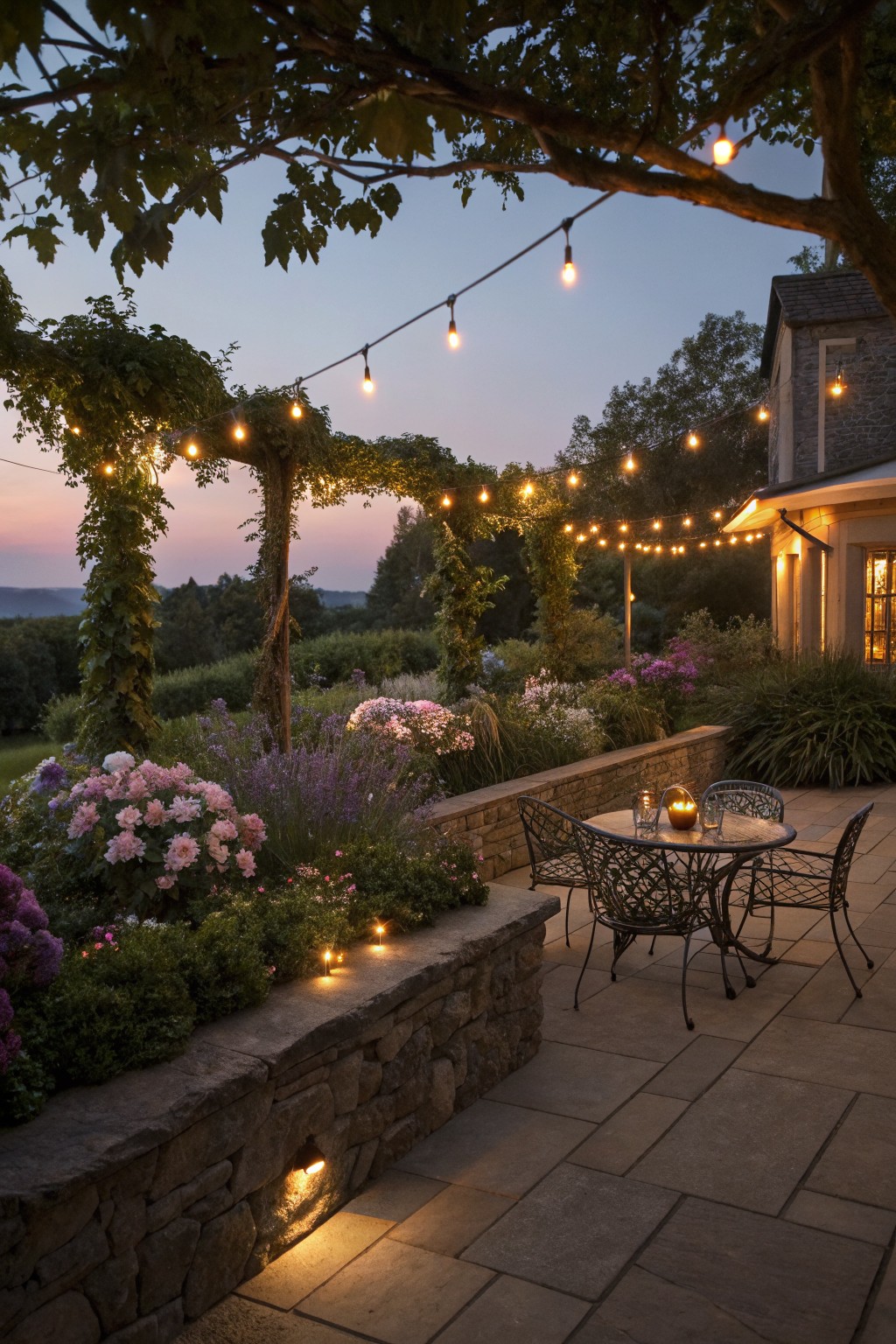
One straightforward way to handle a corner in your yard is with L-shaped flower beds tucked right up against a low stone retaining wall. This setup turns a plain hardscape edge into something softer and more alive. The beds follow the wall’s shape perfectly, filling in with blooms like pink hydrangeas and lavender that spill over just enough without getting messy.
It works best where you have a patio or seating spot meeting a slope or raised bed area. Build the wall first to about two feet high, then plant densely along the L to hold soil in place and add color year-round. Stone keeps it low-maintenance, and the shape fits tight spaces without wasting room. Skip super tall plants here so they don’t block the view from your chairs.
L-Shaped Flower Beds Along a Driveway Edge
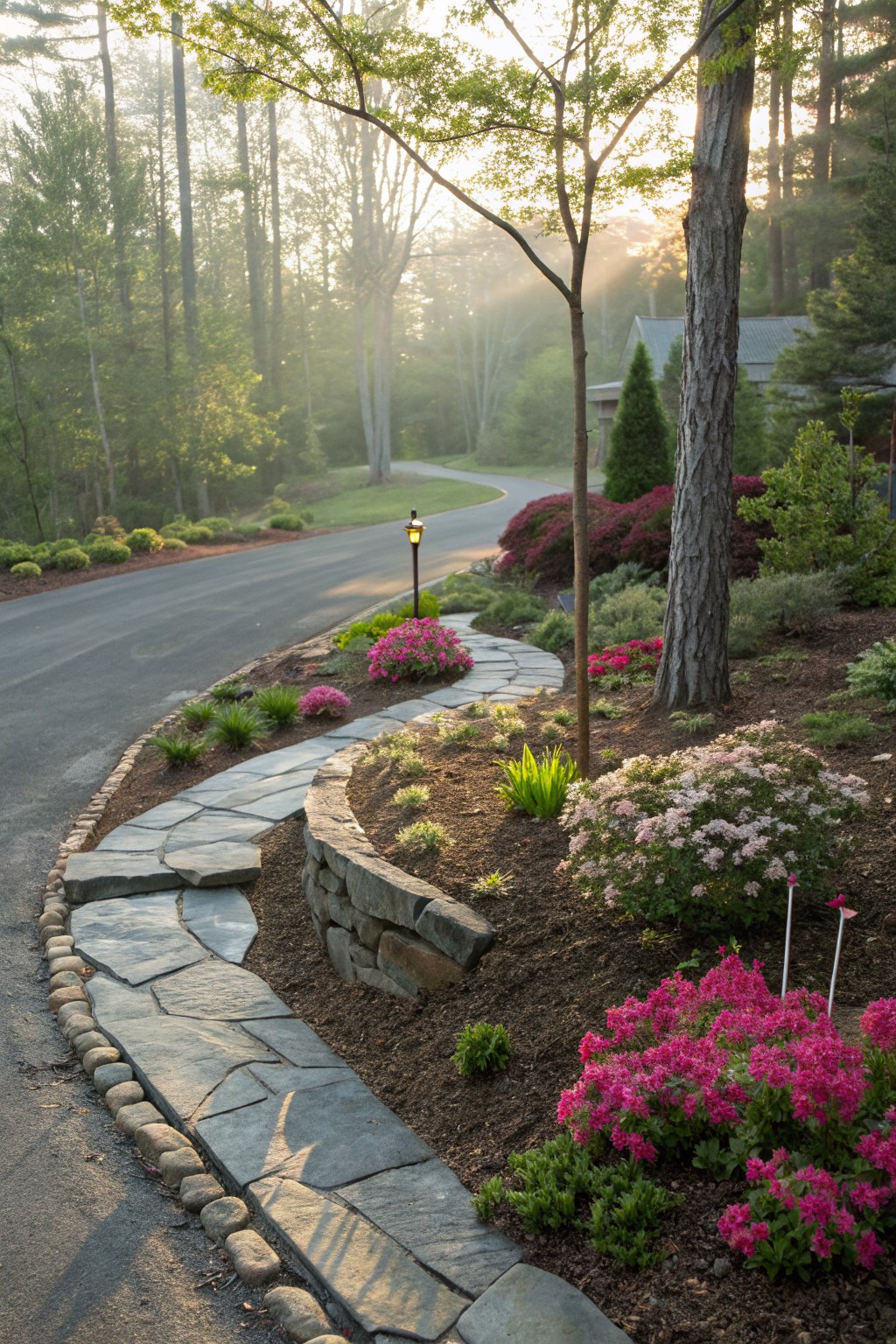
One simple way to handle a tricky driveway curve is with L-shaped flower beds that tuck right along the edge. Here a low stone wall and flagstone path shape the beds neatly, letting plants spill over just enough. Those pink azaleas add reliable color without much fuss, and it all ties into the wooded lot without overpowering things.
This works best on sloped spots or where the road bends, keeping the area tidy while softening hard edges. Pick tough, shade-tolerant plants for spots like this. Stone from nearby quarries blends right in… and watch for deer if you’re in the woods.
Tall Grasses in L-Shaped Flower Beds
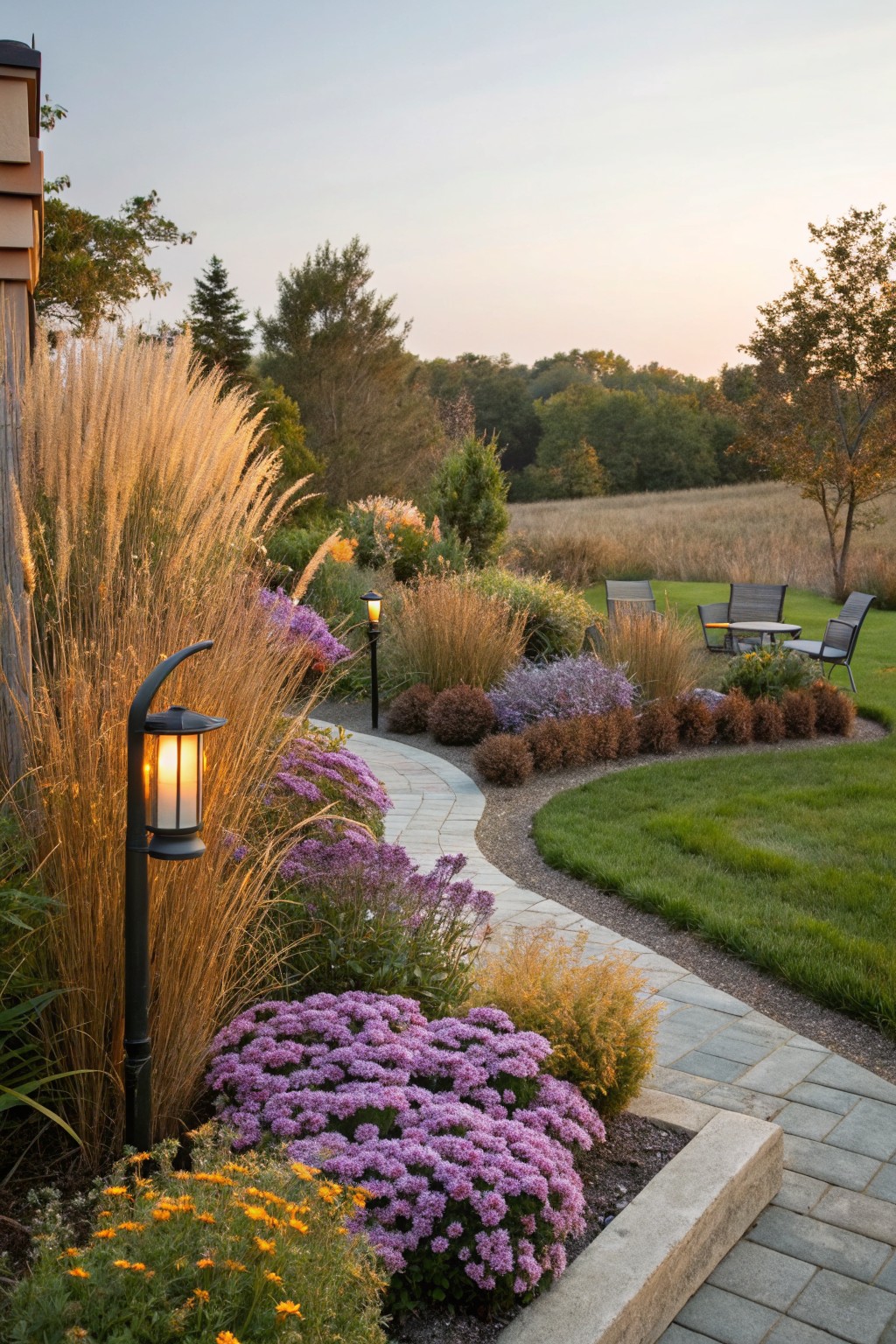
One simple way to fill an L-shaped bed is with tall ornamental grasses. They give height right away and help shape the space without much fuss. In this setup, the golden pampas grasses stand tall against the house corner, mixed with purple asters and low shrubs for color through fall. It keeps things looking full even as other plants fade.
These beds work best along a walkway or patio edge, where the grasses sway in the breeze and soften hard lines. Plant them in back for structure, then layer shorter blooms in front. Go for easy-care varieties that handle sun and some drought. Just trim them back in spring, and they’ll bounce right back for years.
L-Shaped Raised Beds with Pebble Edging
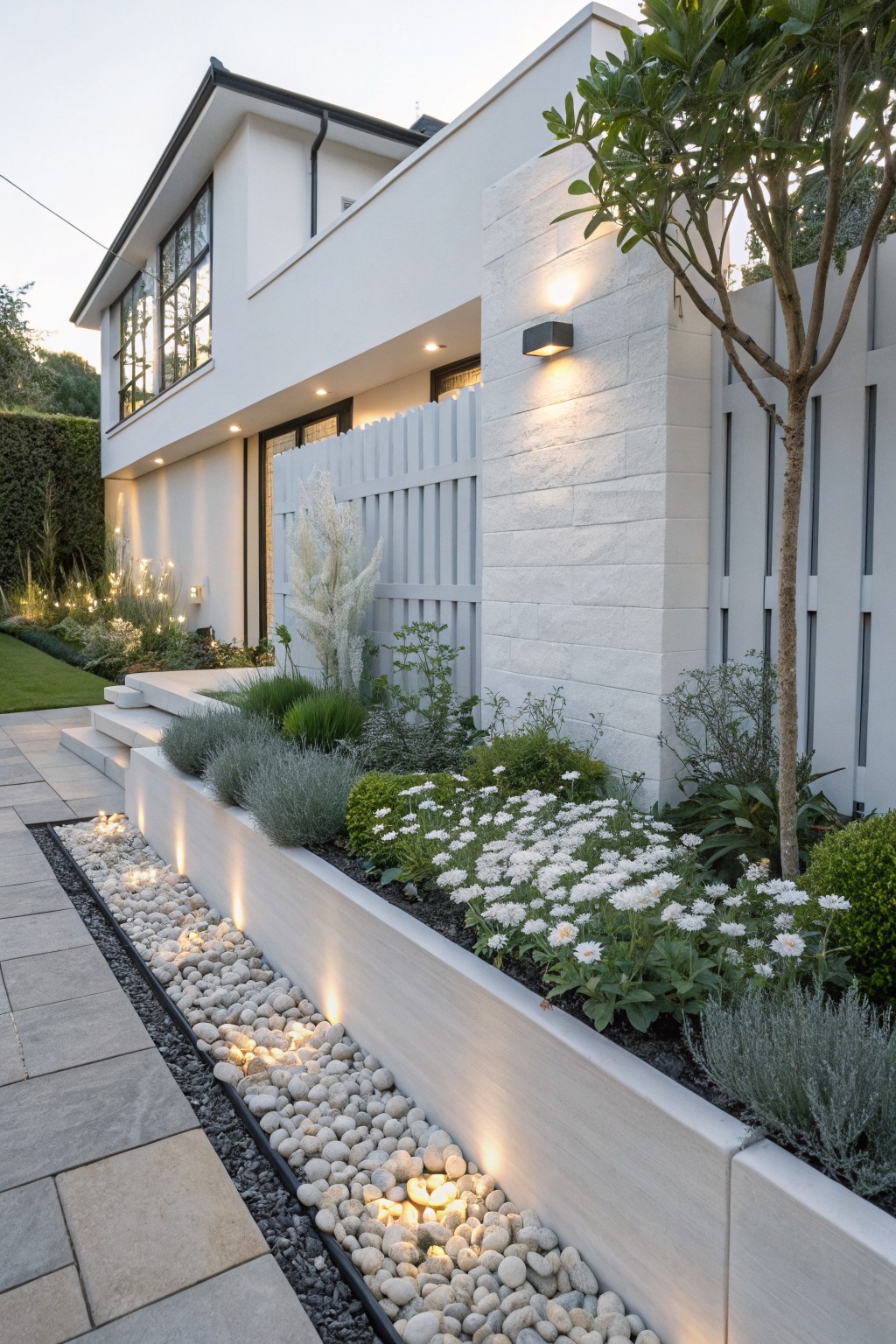
One clean way to handle a corner by your entry is an L-shaped raised bed that runs right along the path. Here the white beds pick up on the house’s stone look, packed with daisies and silvery shrubs that stay low. White pebbles fill the base around the plants, and built-in lights tucked into the rocks give a soft glow come evening. It pulls the yard into the architecture without any fuss.
This idea fits modern homes or any spot where you want tidy lines near the door. Build the beds from concrete or light stone blocks, about a foot high, and line the path edge with pebbles for good drainage. Plant whites and grays to keep it simple, especially in full sun. Just watch the bed doesn’t block steps, and refresh the mulch yearly to hold the shape.
L-Shaped Trellis for Balcony Corners
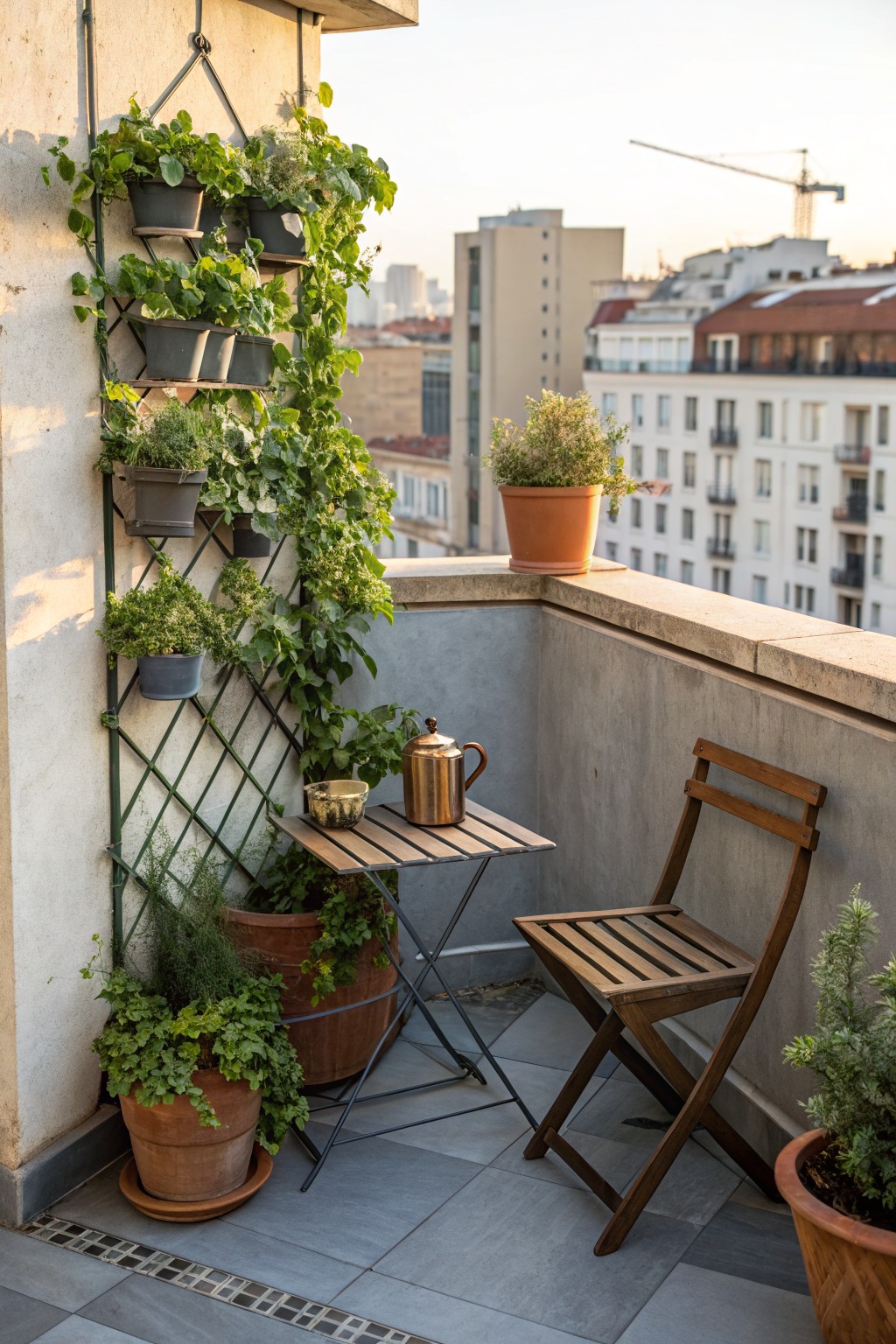
A simple L-shaped trellis mounted right on the walls turns a boring balcony corner into a green pocket garden. Climbing vines and hanging pots fill it out fast, so you get lots of plants without taking up the floor. It fits tight spots perfectly and softens that plain concrete look.
Try this on any apartment balcony or small terrace where space is short. Use sturdy metal lattice, add trailing ivy or herbs in gray pots, and keep a little table nearby for your morning tea. Just check it holds weight from wind, especially up high.
Frequently Asked Questions
Q: How do I mark out the L-shape without messing it up?
A: Pound stakes into the ground at the corner and ends of each arm. Stretch string tight between them. Step back often and adjust for a clean look.
Q: What’s quick soil prep for a corner bed?
A: Rip out grass and weeds by hand or with a shovel. Dig 8 to 12 inches deep across the whole L. Mix in compost, then rake smooth.
Q: What plants work in a shady L-bed?
A: Hostas cover the ground thickly. Ferns add texture up front. Impatiens bring bright blooms all season.
Q: How do I edge it to stop grass invasion?
A: Lay bricks or stones along the outline. Bury half underground and pack soil tight behind. And refresh mulch yearly to seal gaps.
