


I’ve noticed that sheds often dominate a backyard until you surround them with thoughtful landscaping that ties everything together. Functional flower beds around the base create that balanced look we all want, while keeping paths clear for easy access and wheelbarrows. You have to plan the layout carefully from the start, thinking about how plants will fill in over time without overwhelming the structure or edging. What catches the eye first is usually how the beds frame the shed, softening its edges and drawing the space into the garden flow. I’d save the ones that mix heights and colors simply, since they adapt well to real yards without much fuss.
Simple Stone Path to the Shed
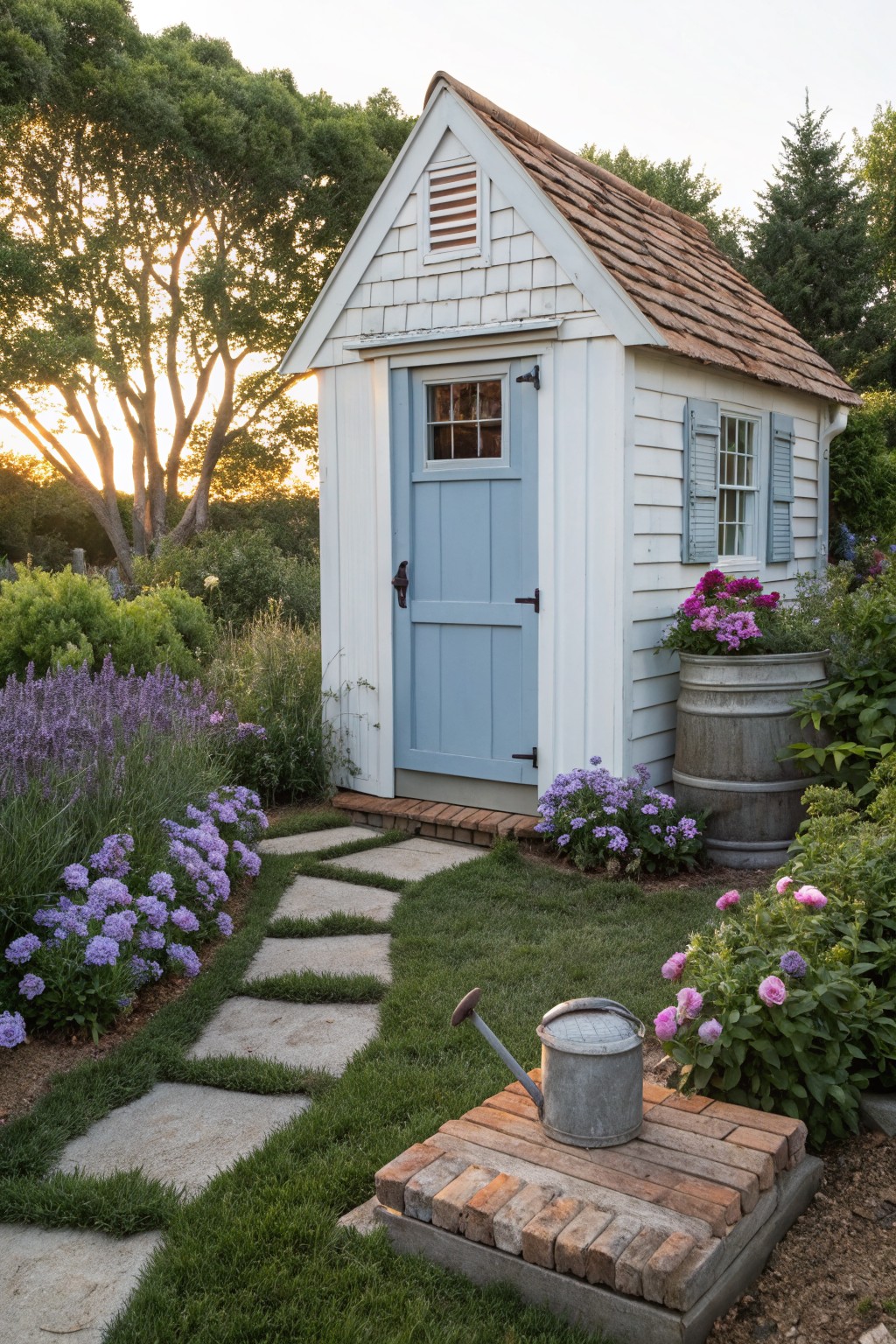
A straightforward stone path like this one makes getting to your shed easy without cutting up the whole yard. It winds gently from the lawn right up to the blue door, with flower beds full of lavender and hydrangeas tucked along both sides. That setup keeps the shed from sticking out awkwardly. Instead it blends right into the garden, and the path gives a clear route even after rain.
You can pull this off in any backyard with a little open grass near the shed. Use flat pavers or flagstones set into the soil, spaced just right for stepping. Keep the bordering beds low and colorful so they don’t block the way. Works best on smaller properties where you want function without too much hardscaping. Just watch the spacing, or feet will slip on muddy days.
Raised Beds Next to the Garden Shed

One straightforward way to landscape around a shed is with raised wooden beds placed right alongside it. These beds hold herbs, greens, and colorful flowers like pink blooms, making the spot both pretty and useful. The shed becomes part of the garden instead of just sitting there. A stone path runs between the beds, guiding you straight to the door without mud.
This works best in a backyard with decent sun. Build the beds from untreated cedar to last longer, and keep them about two feet high for easy reaching. Line them up parallel to the shed for that clean flow. It suits older homes or cottages… just watch the drainage so roots don’t drown after rain.
Stone Retaining Walls with Lavender Beds Around a Shed
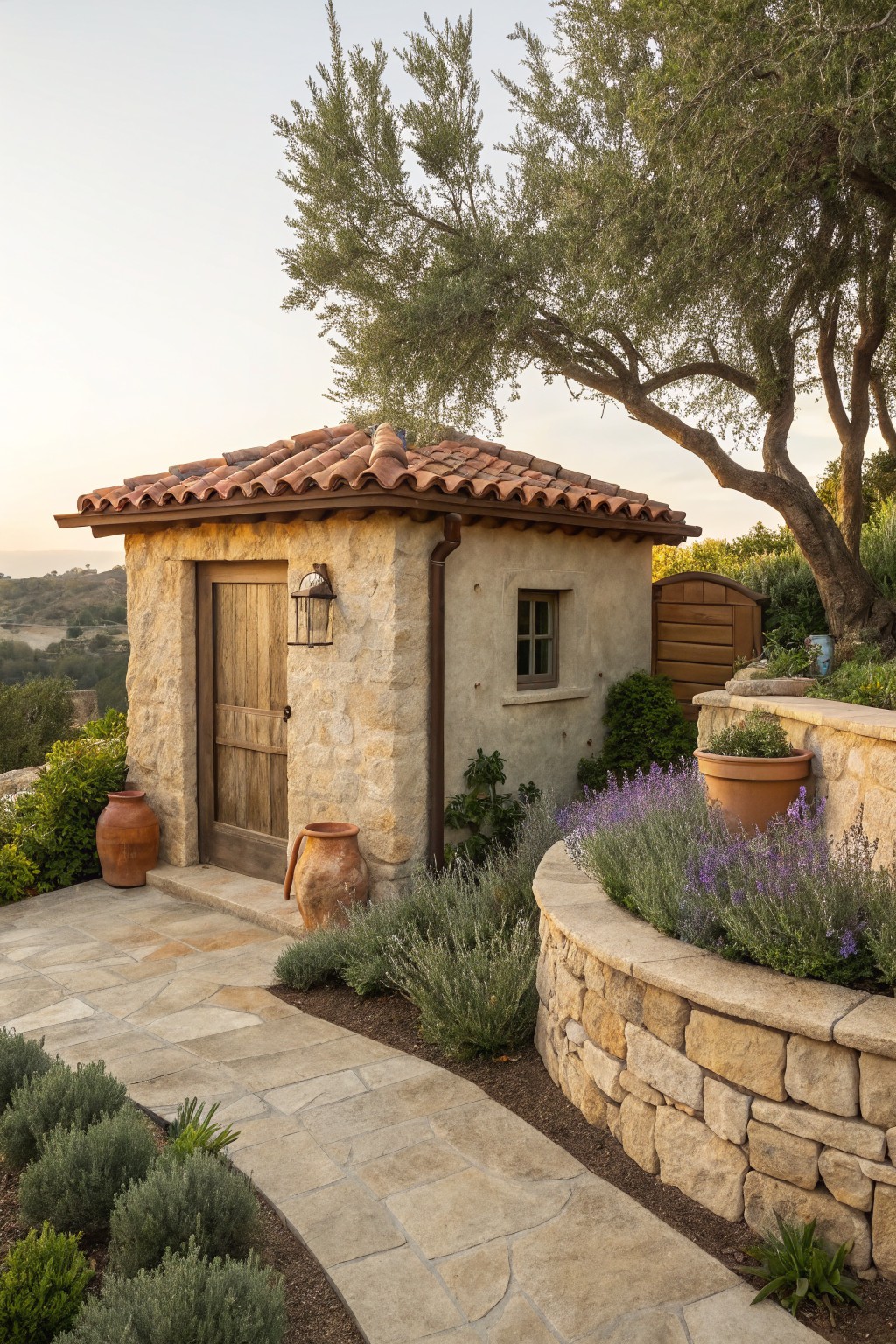
A simple way to landscape around a garden shed is with curved stone retaining walls that hold back soil for flower beds. Here the walls support beds full of lavender, which spills over softly and keeps things low-maintenance. A couple of terracotta pots sit nearby for extra color and scale. This setup ties the shed into the yard without much fuss.
It works best on sloped spots where you need to manage levels anyway. Pick stone that matches your house, like the local limestone type shown. Plant lavender or similar drought-tough stuff in the beds. Add a flagstone path like this one to make it easy to reach the shed door. Just keep the curves gentle so it doesn’t feel too busy.
Wooden Boardwalk Path Around a Coastal Shed
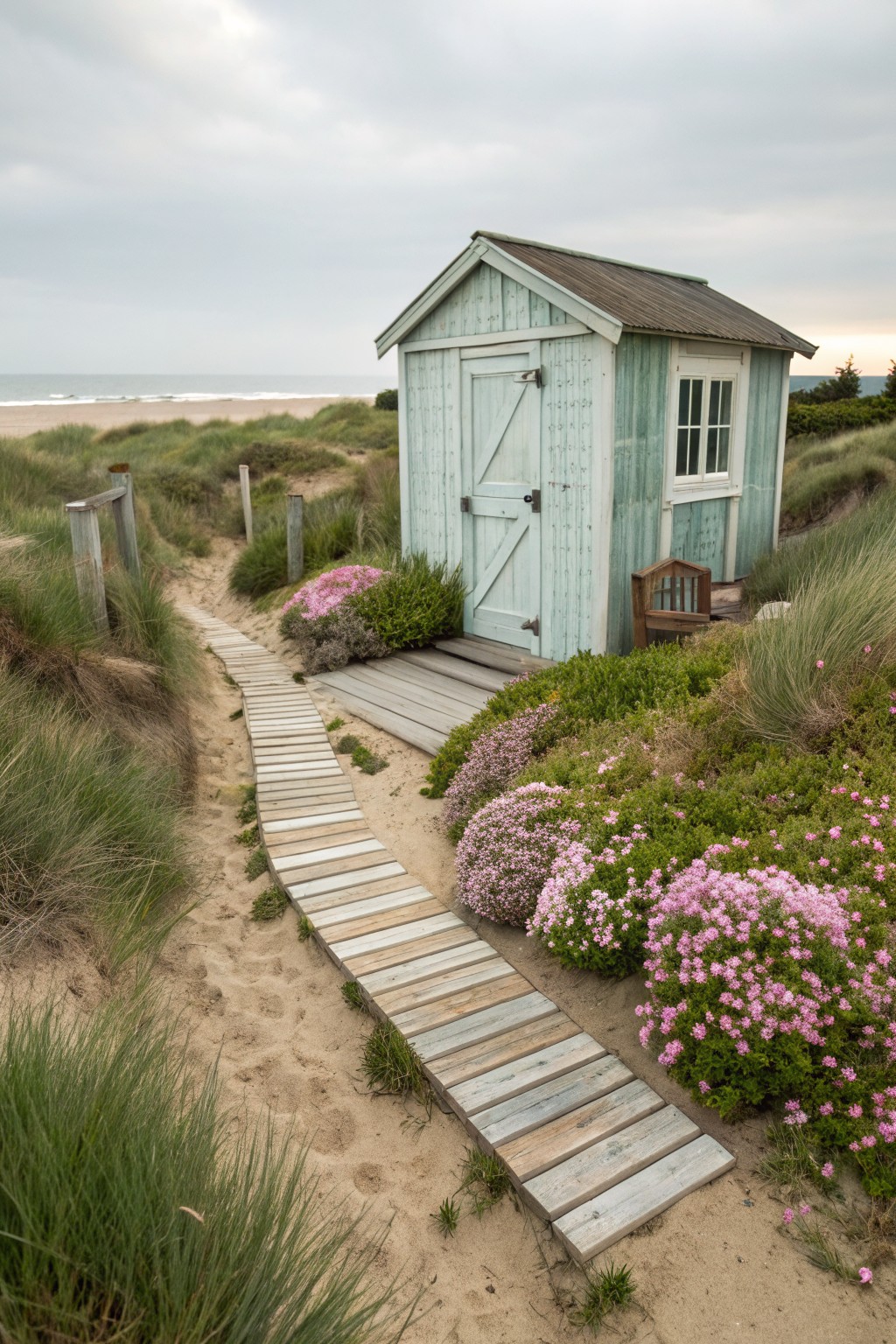
A simple wooden boardwalk snakes through sand dunes right up to this little shed. It makes getting to the door easy without trampling the grass or flowers. Those pink blooms tucked into low beds along the edges add just enough color to tie everything together nicely. Keeps the whole spot feeling natural and not too fussy.
This works best for sheds in beachy yards or anywhere with loose sand or soft ground. Lay down pressure-treated boards for the path. Plant tough stuff like sea pinks or armeria in the beds. They handle salt air and wind fine. Watch the scale though. Don’t let beds get too big or they crowd the walkway.
Stone Steps Leading to the Shed

A set of rough stone steps climbs the slope right up to this backyard shed. The steps use flat fieldstone that blends with the rocks around it, and low stone walls hold back the soil on both sides. Plants like hostas and ferns fill those beds, softening the hard edges while keeping the path clear for foot traffic.
This works well on any uneven lot where the shed sits higher up. Pick stones from a local quarry to save money and fit the site. Go for shade plants since trees overhead limit sun. Tuck in a few path lights too. It’s a straightforward fix that makes the shed feel like part of the yard.
Green Roof Shed Blends with the Garden

A living green roof on a garden shed like this one makes the whole structure feel like it’s part of the landscape. The grass and sedum top blends right into the surrounding beds and paths, so the shed doesn’t stick out as some plain box. Flower pots and raised veggie beds at the base add to that natural tie-in, keeping things looking balanced and lived-in.
This works best in a cottage-style yard or anywhere you want low-key storage that doesn’t fight the plants. Pick roof plants suited to your area, like sedum for dry spots. It stays cooler inside too, which is handy for tools on hot days.
Boxwood Hedges for Defined Garden Beds
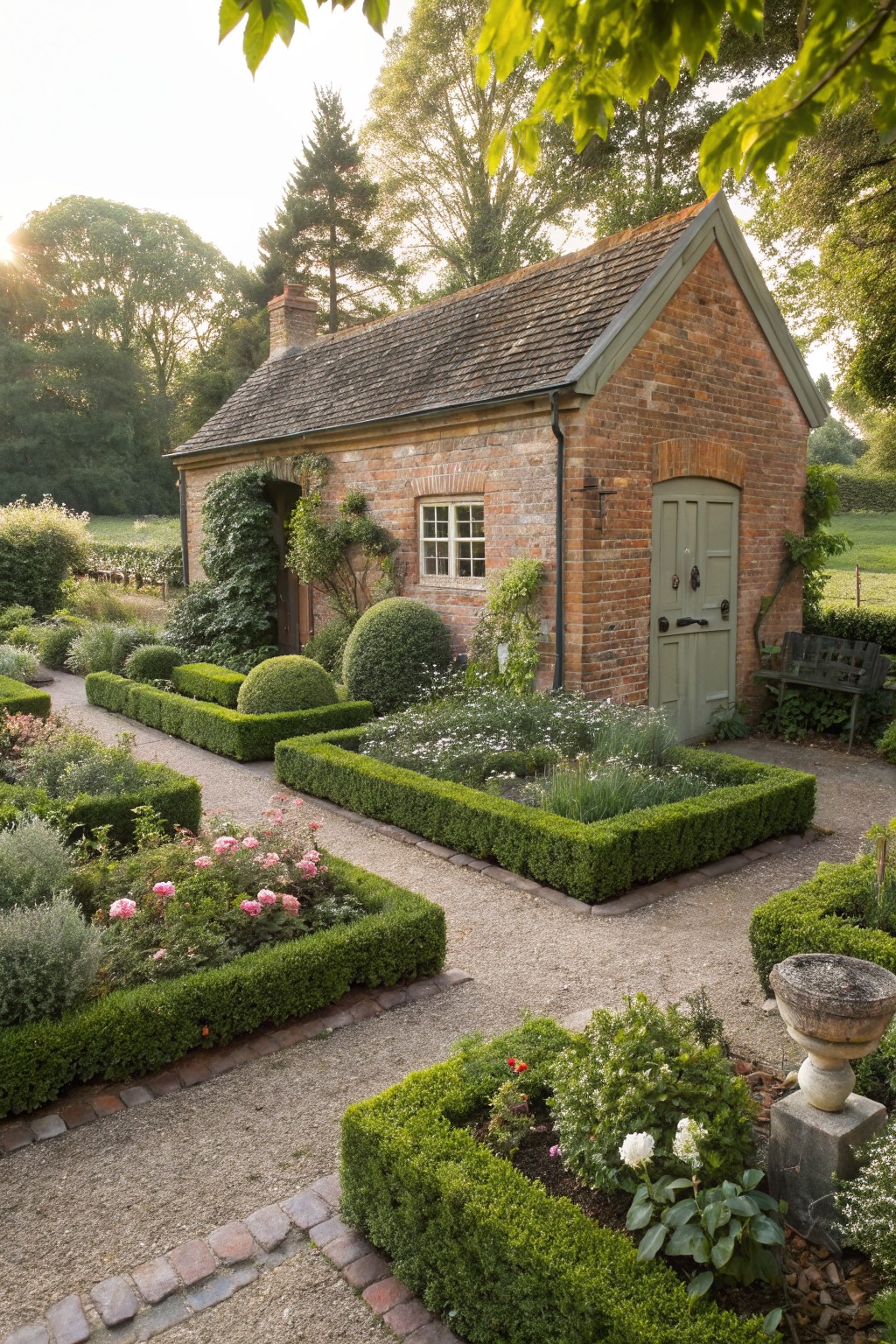
One straightforward way to landscape around a shed is with low boxwood hedges that outline the flower beds. They create clean edges that make the whole area feel organized and balanced. In this setup, the hedges frame spots for roses and softer perennials, while gravel paths run between them. It ties the little brick shed right into the garden without overwhelming the space.
This works well in cottage gardens or smaller backyards where you want structure but not a lot of upkeep. Plant low-growing flowers inside the beds to keep sightlines open to the shed door. Boxwoods stay tidy with just occasional trimming… suits traditional homes best, though you could adapt it for a modern twist by loosening the clips a bit.
Terraced Beds Around a Hillside Shed

Slopes can make it tough to garden around a backyard shed. But terraced beds built with stone walls solve that. They hold back soil and create flat spots for plants. In this setup, colorful flowers and low shrubs fill the levels, leading right up to a simple wooden shed. The steps between terraces make it easy to walk up without slipping. It turns a tricky hill into something useful and pretty.
This works best on moderate slopes behind a house, where you want low upkeep but still some color. Use rounded stones for the walls to keep it natural looking. Plant perennials like lavender and sedum that don’t need much water. Keep paths wide enough for tools. Avoid super steep spots unless you add more walls. It fits most sheds without overpowering them.
Curved Path Through Flower Beds
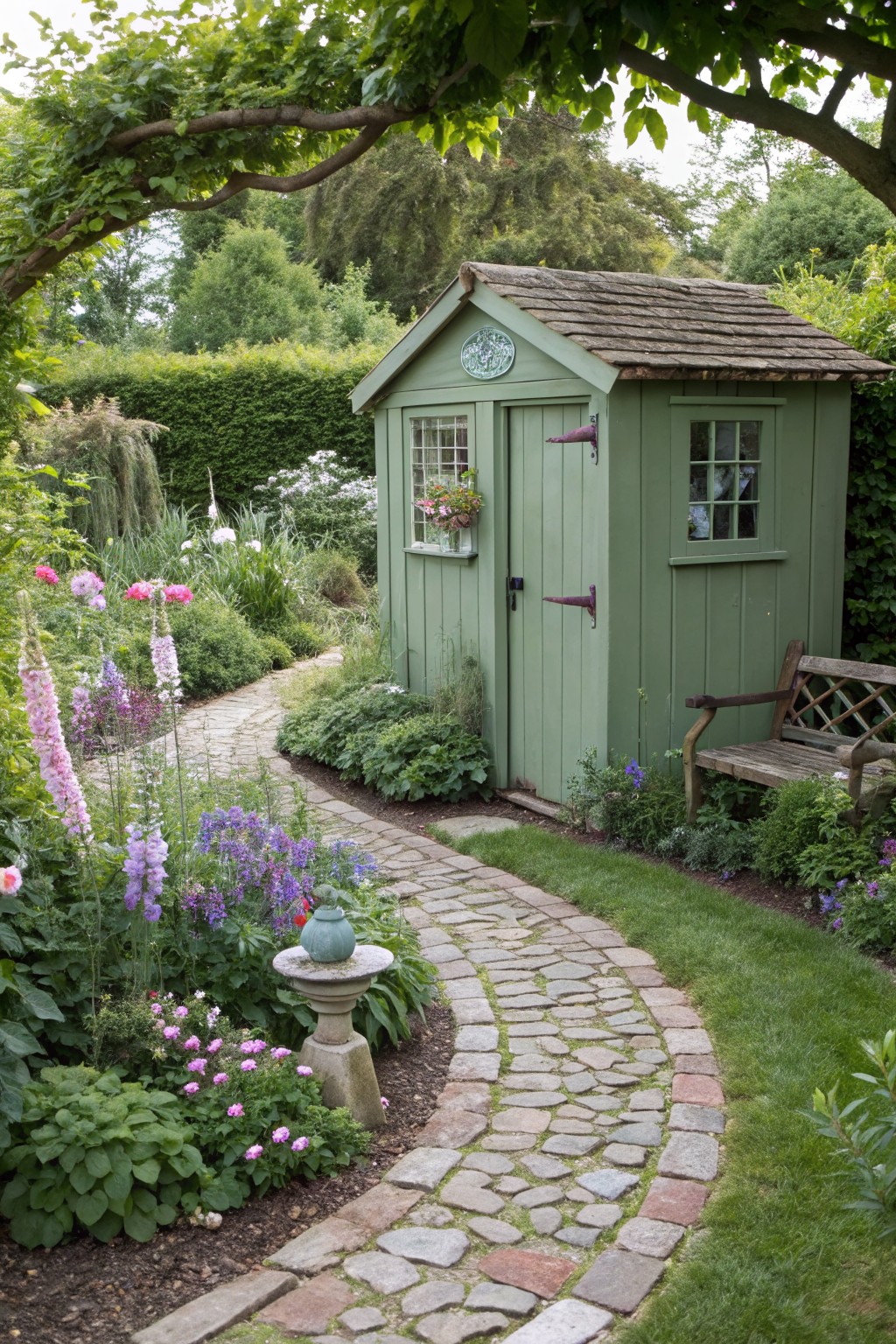
A simple curved path like this makes practical sense around a garden shed. Made from mixed cobblestones, it winds gently from the lawn straight to the door, keeping foot traffic easy without cutting harsh lines through the yard. Flower beds packed with tall pink foxgloves and delphiniums line both sides, so the walk feels planted in rather than paved over.
You can pull this off in most back gardens, especially if the shed sits off to one side. Keep the path about three feet wide for tools or carts. Pick perennials that won’t flop onto the stones much. It balances function and looks without much upkeep.
Raised Beds Along a Shed Path
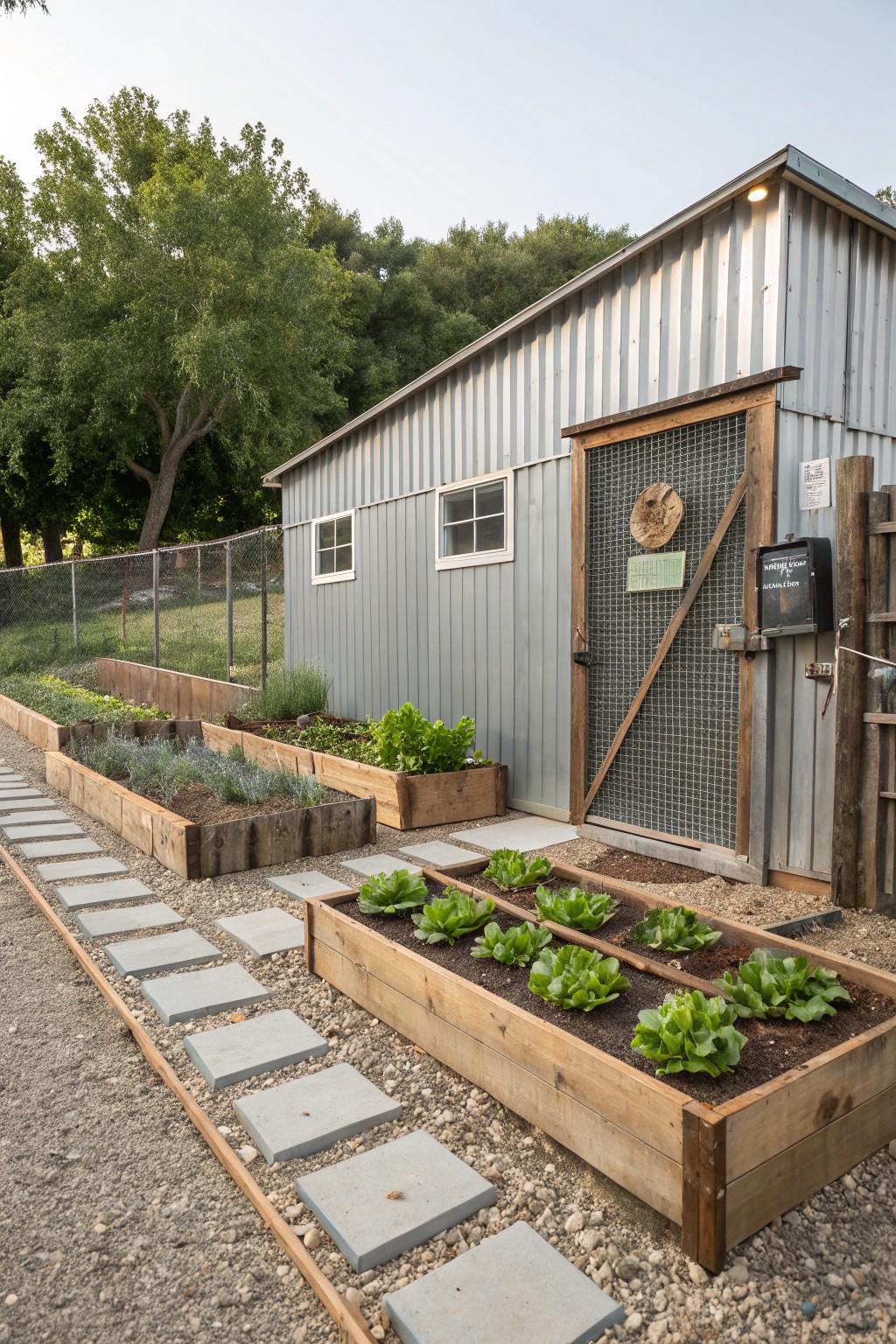
Raised wooden beds like these make great use of the space right around a shed. They’re lined up along a gravel path with simple concrete stepping stones, filled with easy greens like lettuce and bok choy. This keeps everything tidy and turns a plain backyard spot into something that actually grows food. The beds follow the slope nicely, so no extra grading needed.
Try this in a side yard or behind the house where the shed sits. Pick rot-resistant wood, keep beds about knee-high for easy picking, and space them to match your path width. It suits casual homes with a veggie patch in mind… just watch for rabbits if you’re not fencing it all in.
Flower Beds Edging the Path to a Shed
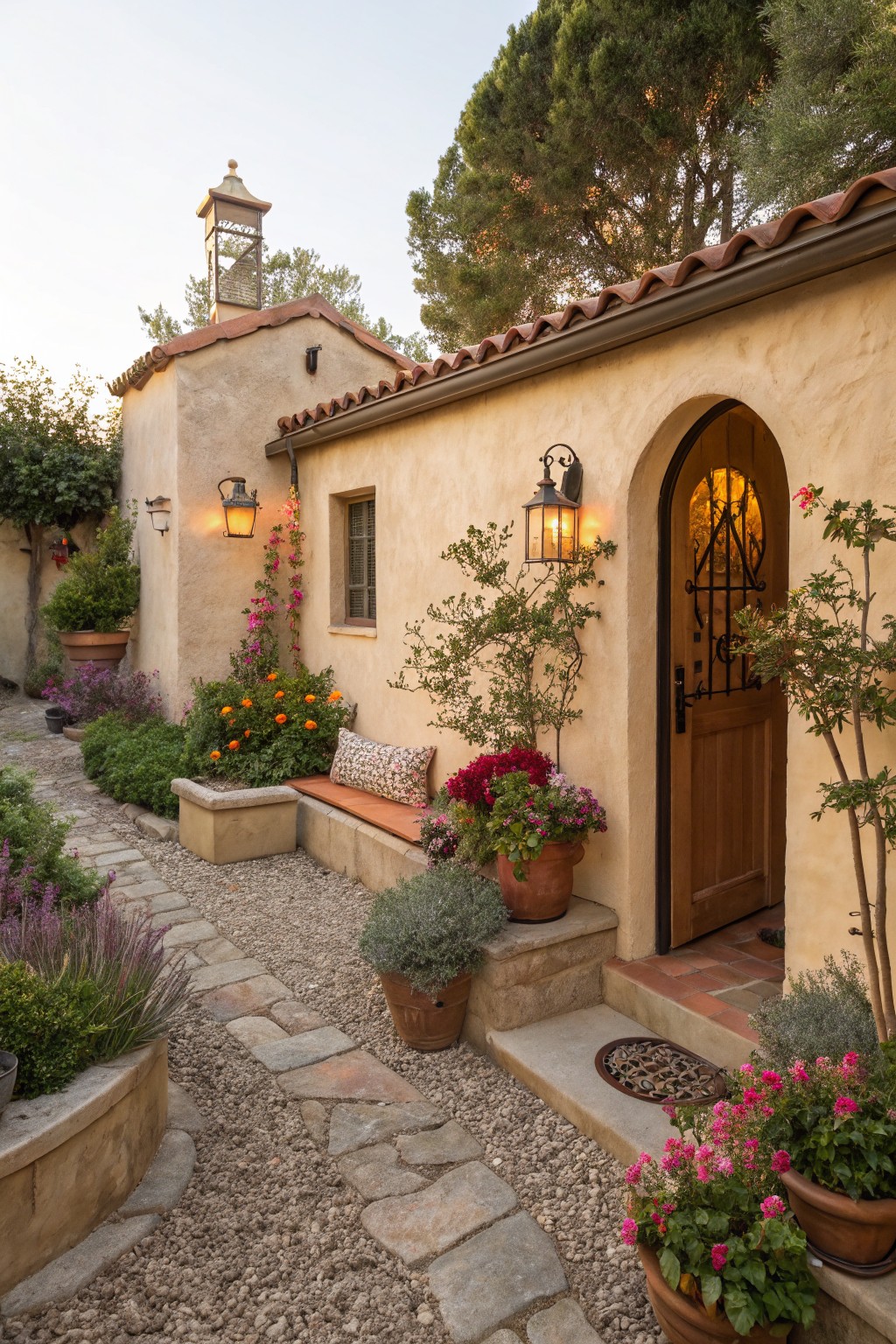
A winding stone path through gravel, lined on both sides with raised beds and terracotta pots overflowing with flowers, turns the walk to your shed into something pleasant. It softens the plain walls of the little building and pulls everything together without much fuss.
You can pull this off in a side yard or tucked-away spot, especially if the shed has an arched door like this one. Stick to tough plants like lavender, bougainvillea climbers, and those orange marigolds that handle sun well. Just make sure the path stays practical… wide enough for a mower or cart.
Curved Path to the Shed
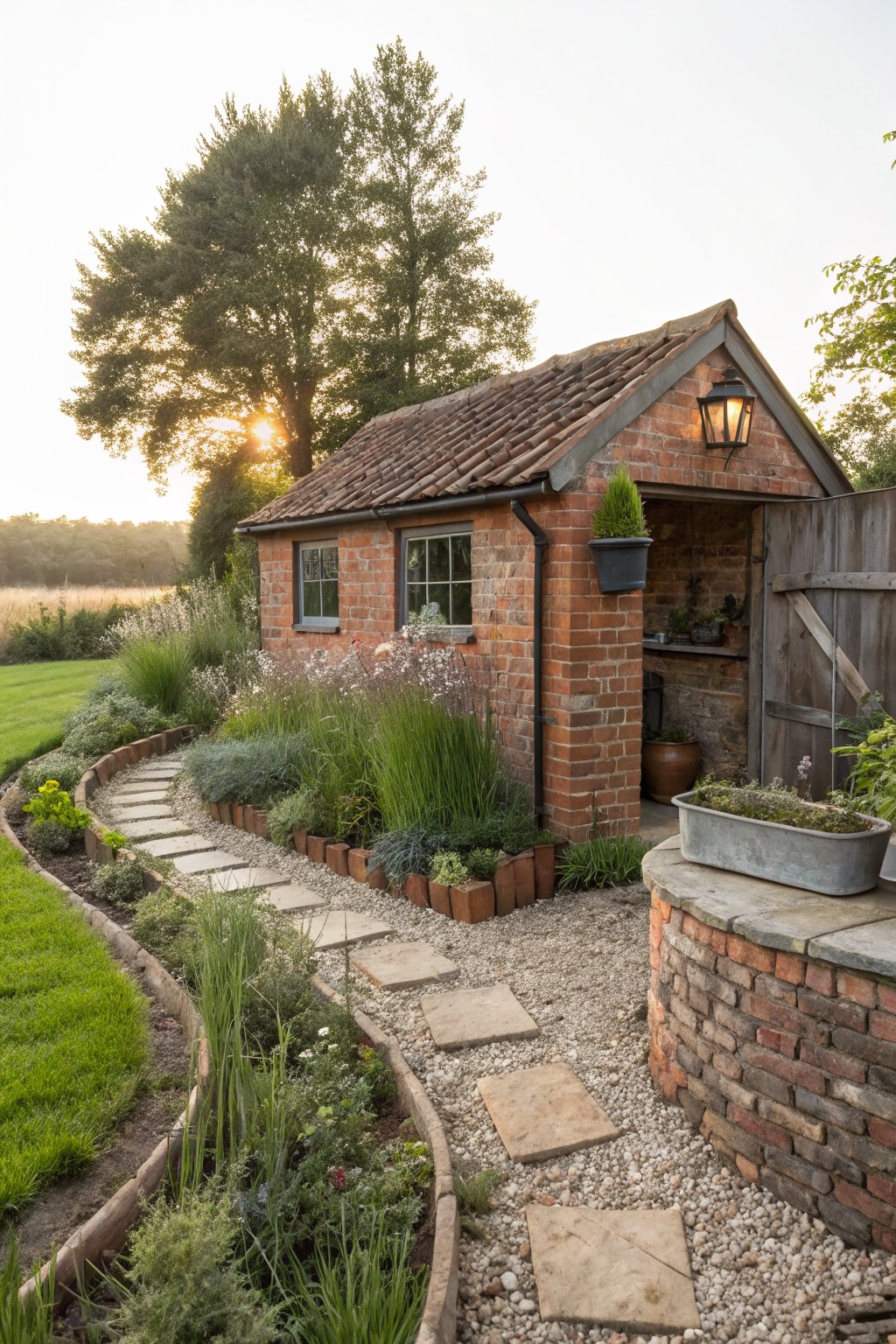
A simple curved path like this one makes a shed feel part of the garden instead of stuck on the edge. Stone slabs set into gravel wind gently toward the brick shed, with flower beds tucked along both sides full of tall grasses and low plants. It guides you right to the door without feeling forced, and the plants hide any rough spots on the structure.
You can pull this off in most backyards, especially if you want easy access without mowing right up to the shed. Pick flat stones that match your local area, edge the beds with bricks or wood to hold soil in place, and fill with tough perennials that don’t need much fuss. Keeps things practical on uneven ground too. Just watch the gravel doesn’t scatter too far.
Stone Paths Around a Shed Garden
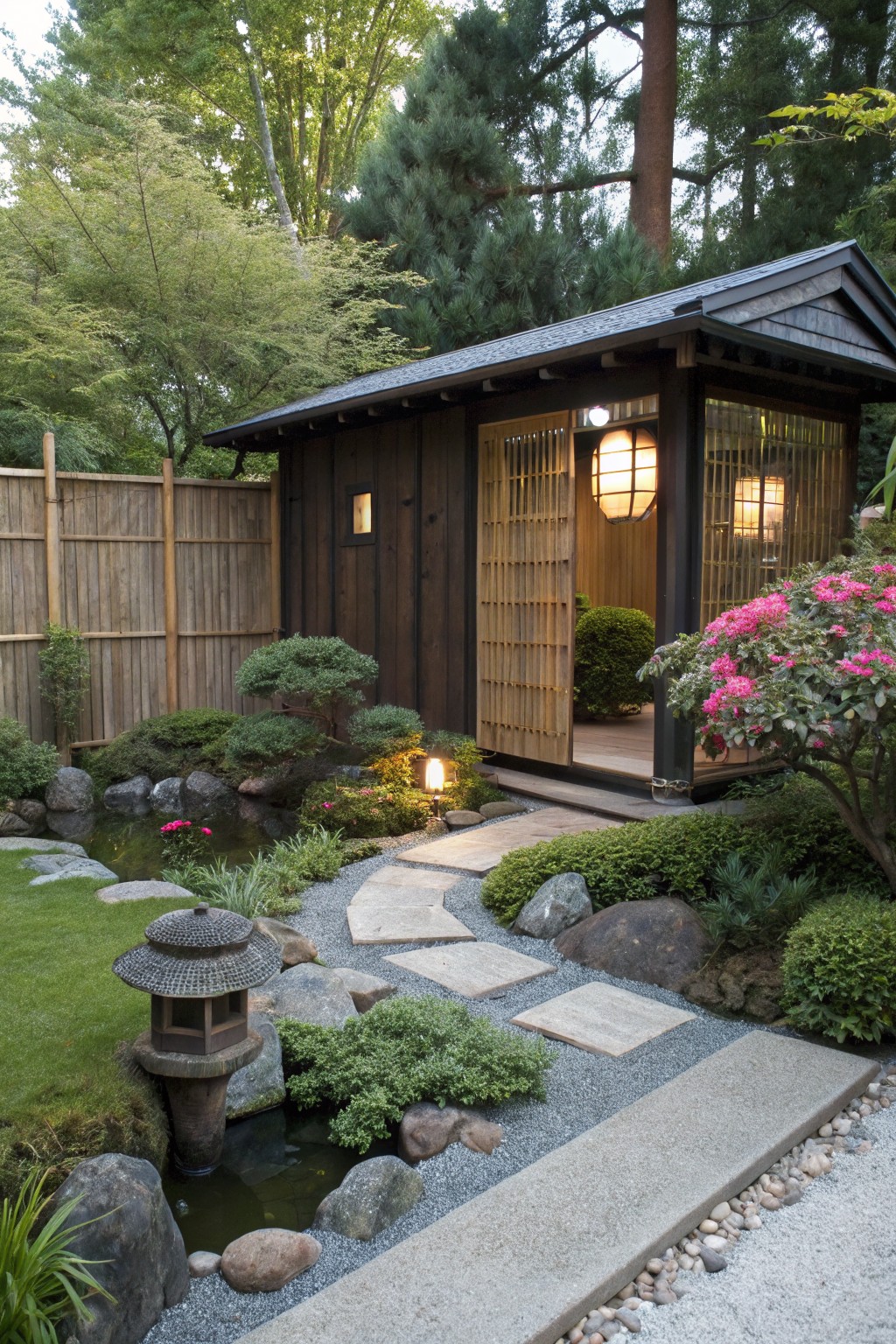
A simple stone path like this winds gently from the yard toward the shed door. Set into gravel with larger rocks nearby, it pulls in a small pond and low plants along the edges. This keeps foot traffic clear while making the whole area feel put together and calm. No mud after rain, and it draws your eye right to the shed without feeling stark.
You can set this up in most backyards, especially if space is tight. Pick flat stones that match your region to save money, then tuck in hostas or azaleas for some flower beds. It suits sheds with a clean wood look best, but watch the path slope so water drains away from the building.
Tall Grasses Framing a Garden Shed
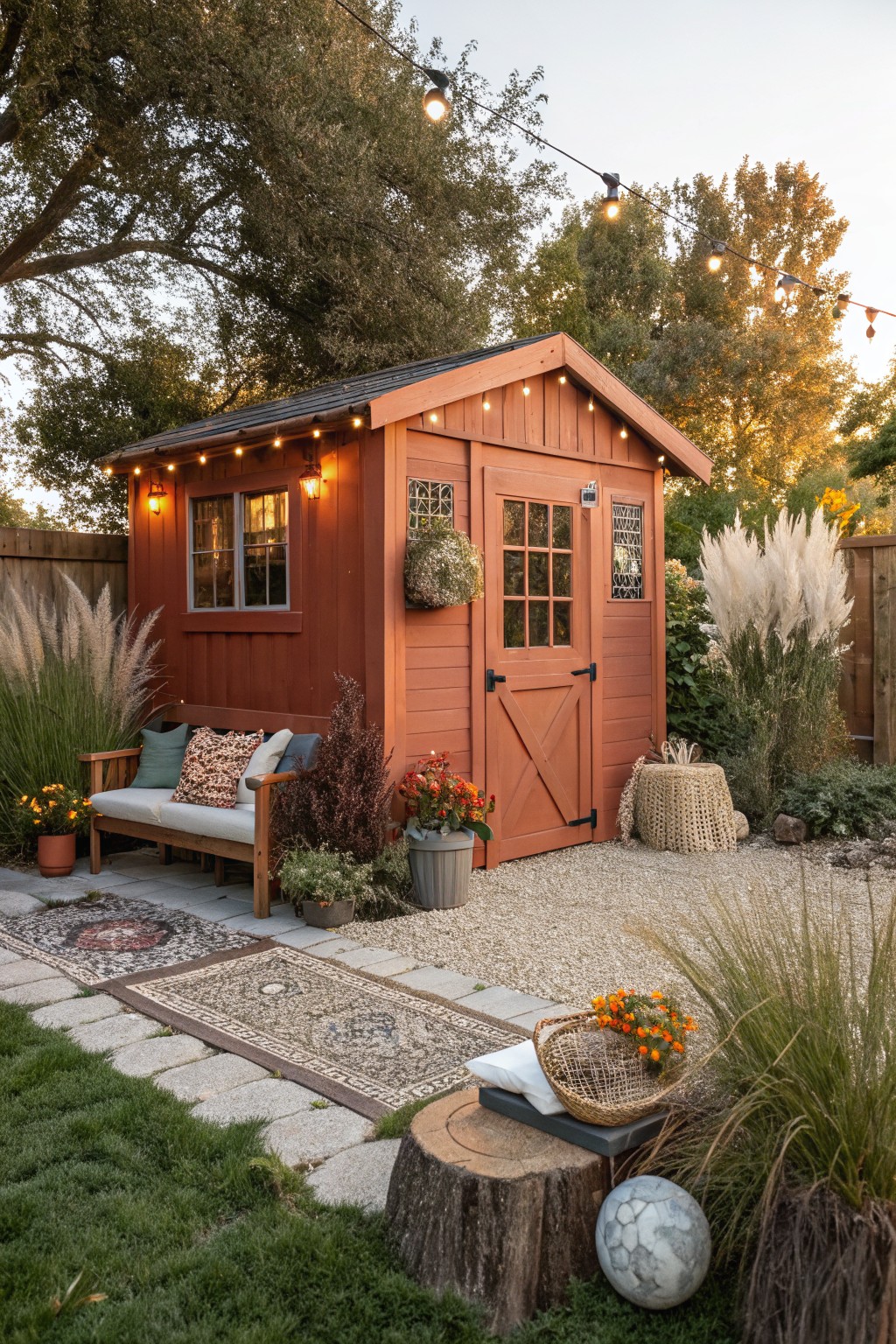
Tall grasses like pampas work well around a shed. They add height right away and make the structure blend into the yard. In this setup, the fluffy white plumes stand tall on both sides of the red shed. That softens the hard lines. Plus they give some privacy without blocking light.
Try this in a side yard or backyard corner. Plant them in beds along the sides and front. Pair with gravel for the ground cover and a simple bench nearby. It suits smaller spaces. Keep the grasses trimmed once a year so they stay neat.
Stepping Stone Path to the Shed

A simple stepping stone path like this makes getting to your shed easy and keeps the garden looking natural. The flat stones set into the grass guide you right to the door without needing a full walkway. Flowers and tall grasses fill in around them, so it feels more like a garden stroll than a utility route. That wheelbarrow nearby shows how practical it stays.
Use this in a backyard or side yard where the shed sits among plants. Lay the stones in a gentle curve for better flow, and edge them with easy bloomers like sunflowers or coreopsis. It suits cottage-style yards best, but watch the spacing so you don’t trip carrying tools. Keeps mud down too.
Vertical Planters on Shed Walls
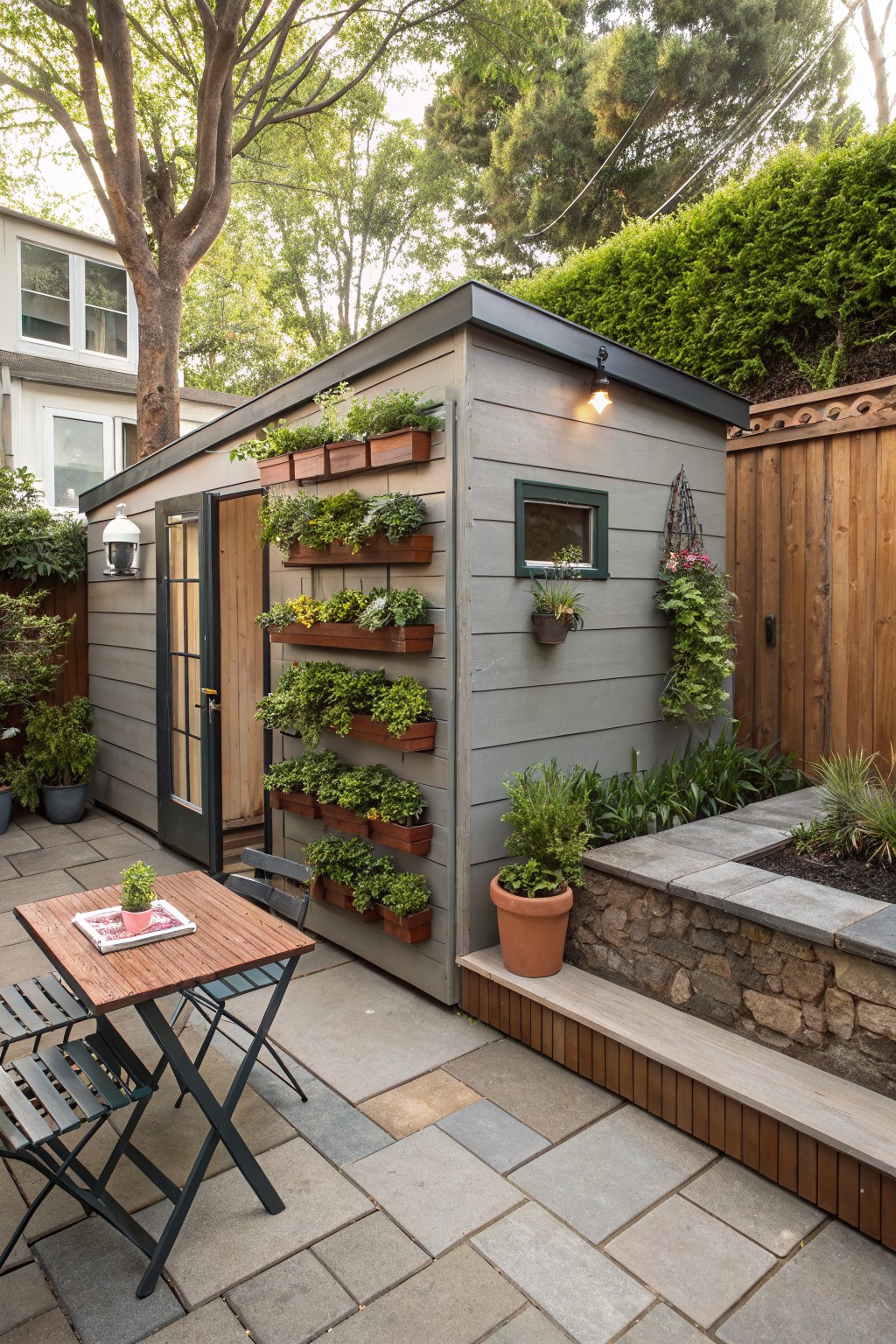
One simple way to make a backyard shed feel less like a box and more like part of the garden is to add vertical planters right on its walls. These wooden boxes stacked up the side here are packed with green plants, softening the gray siding and pulling the eye toward the greenery instead. It creates balance without taking up ground space.
Mount them with brackets strong enough for soil and water weight, and choose tough plants like herbs or succulents that trail a bit. This works well around smaller patios or patios next to fences… just make sure good drainage so the shed stays dry inside. Fits most backyards nicely.
Formal Boxwood Edging Around a Shed

One simple way to make landscaping around a shed look pulled together is with low boxwood edging and clipped spheres. Here the wooden shed sits right in a neat layout of round boxwoods and straight lavender borders. That structure keeps things from getting messy and gives the whole yard a calm, garden-like feel without too much work.
You can pull this off in smaller backyards where you want the shed to blend in instead of stand out. Plant boxwoods along paths or beds for year-round shape, then tuck in lavender or similar plants for color in summer. Keep the gravel or stone paths clean to let the plants do their job. It suits traditional homes best, but watch the scale so it doesn’t overwhelm a tiny spot.
Labeled Beds for Easy Gardening by the Shed

One straightforward way to make landscaping around a shed more useful is adding labeled beds for edibles right up against it. Here you see simple wood signs spelling out “Asparagus” and “Rhubarb” on the doors of a green shed, with raised planters nearby holding young shoots and greens. It keeps everything organized and handy, so you grab what you need without hunting around the yard. Plus it turns the shed area into a real working garden spot.
Try this in a backyard with decent sun, especially if you like growing your own veggies or herbs. Use scrap wood for the signs and basic raised beds to start small. It suits older homes or cottages best, where you want practical over fancy. Just keep the paths clear like the stone one here, so it’s easy to reach in.
Tiered Stone Walls with Flower Beds Around a Shed
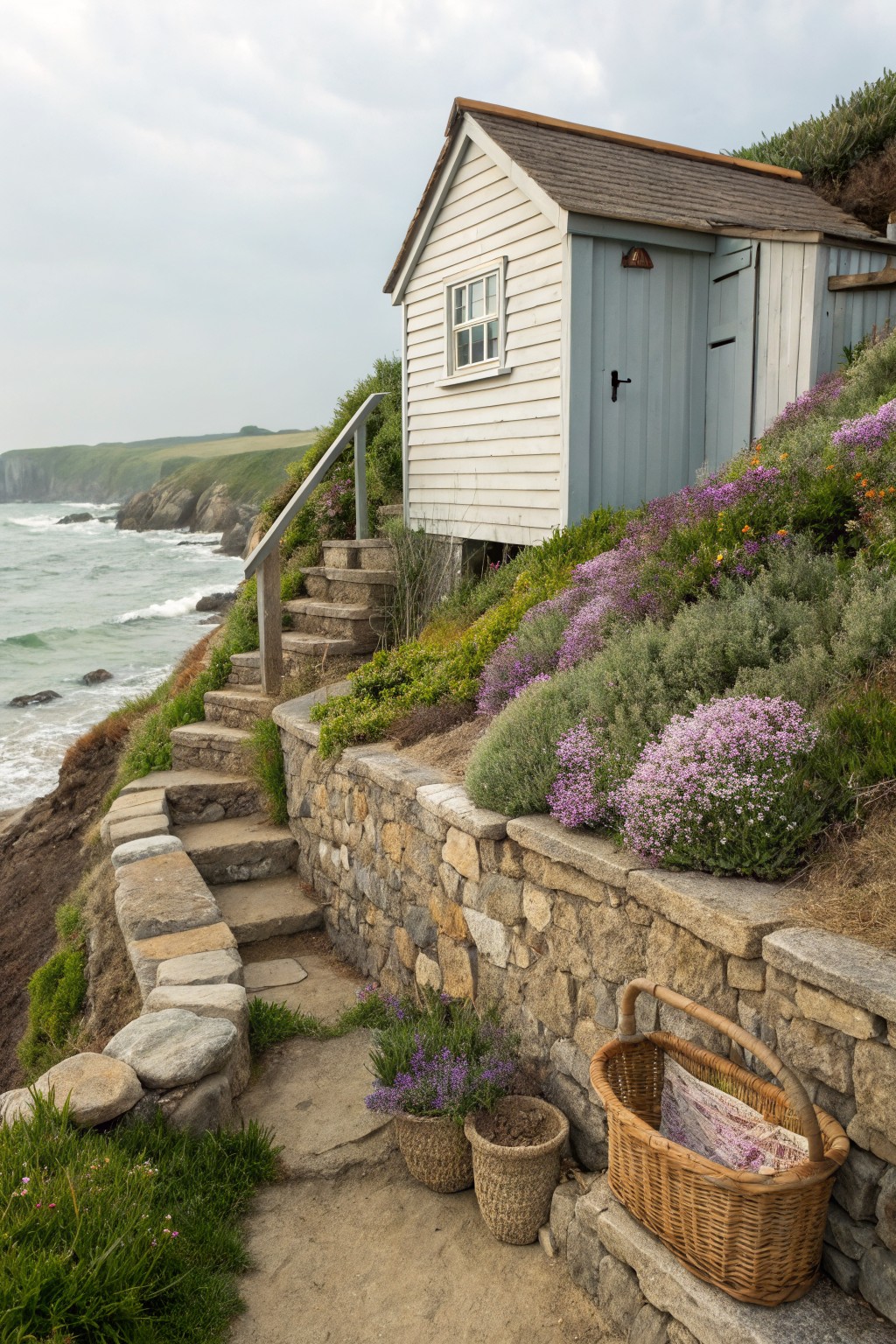
A simple way to tame a steep slope near a shed is building tiered stone walls that double as steps and planters. The rough stones fit right into a natural hillside setting, holding soil in place while the pockets get filled with tough flowers like sea thrift and lavender. That mix gives you solid footing to reach the shed door plus pockets of color that feel easy and not fussy.
This works best on coastal hills or any spot with poor soil and wind where you want low upkeep. Stack local stones for the walls to blend in, then tuck in drought-tough plants that spill over the edges. Just keep the main path steps swept clear so it’s practical for carrying tools or garden stuff up to the shed.
Stepping Stone Path to the Shed

A stepping stone path like this one makes practical sense around a backyard shed. It curves gently from the lawn toward the door, with flat stones set in gravel or mulch. Right beside it runs a narrow stream lined with smooth rocks and a bit of flowing water. Grasses and low plants edge both sides, filling out flower beds without crowding the way. The whole thing pulls the shed into the garden instead of letting it stick out.
This works best in a side yard or tucked corner where you need clear access but want some garden feel. Lay the stones where people naturally walk first, then dig a shallow channel for the stream and add a recirculating pump if you like the sound. Skip fussy flowers here. Go for tough natives that handle shade or dry spots. Keeps foot traffic easy and the look settled in.
Frequently Asked Questions
Q: What if my shed sits in full shade? Can flower beds still look good there?
A: Go for shade-lovers like impatiens or ferns that thrive without direct sun. Layer taller ones in the back and spillers up front to draw the eye upward. They soften the shed edges nicely.
Q: How do I edge the flower beds so they stay neat around the shed?
A: Dig a simple trench with an edging tool and line it with flat stones or bricks. This keeps grass from creeping in and gives a clean frame. Refresh the edge once a year to keep it sharp.
Q: Won’t mulch make everything look sloppy next to the shed?
A: Choose fine-textured bark mulch in a neutral color that blends with your shed. Spread it two inches deep but pull it back a few inches from the base. It locks in moisture and looks polished.
Q: How do I add instant color without waiting for plants to grow? And pots work great. Tuck colorful annuals like petunias into gaps along the bed edges. Swap them out seasonally for nonstop pop.
