

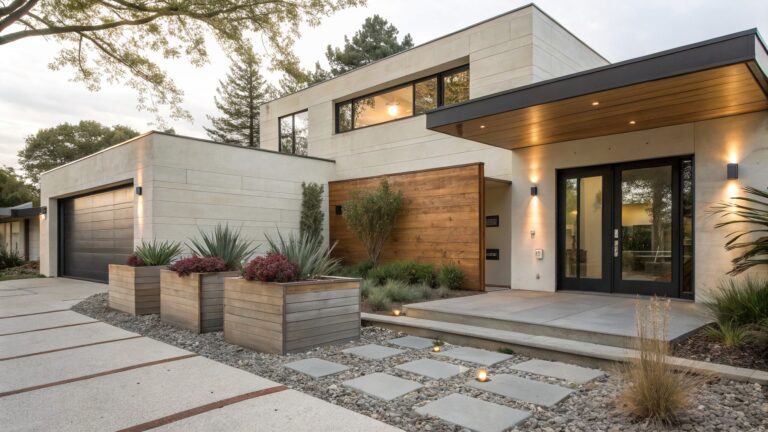
I’ve started paying more attention to gardens that weave succulents into rose beds because the textures create such natural contrast.
You get the best results when spiky succulents frame softer rose foliage without crowding the space.
I lean toward plantings that use low-growing succulents to anchor taller roses, keeping everything balanced.
Those mixes usually flop in tight spots where the bold forms fight for attention.
A few stand out enough to try in your own setup.
Raised Planters Along the Walkway
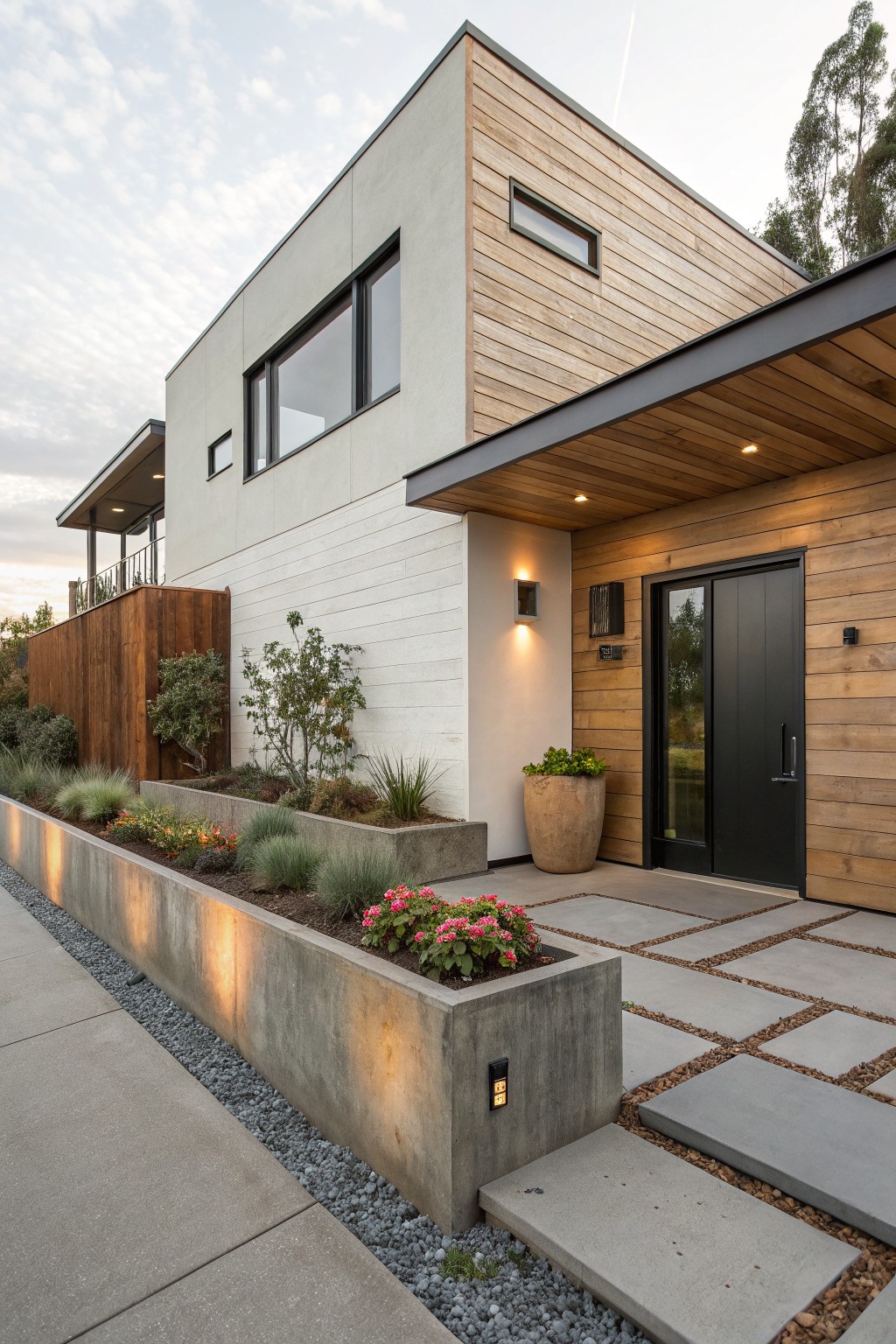
Raised concrete planters like these make a clean line right next to the path leading to your door. Filled with grasses, succulents, and those bright little flowers, they mix rough textures and color in a simple way. It keeps things low fuss but gives the entry a finished look that stands out.
This works best in front of modern homes or anywhere the yard runs narrow. Go for plants that handle dry spells, and build the beds with good drainage underneath. Skip it if your path gets heavy foot traffic… the edges might chip over time.
Garden Path with Roses and Succulents
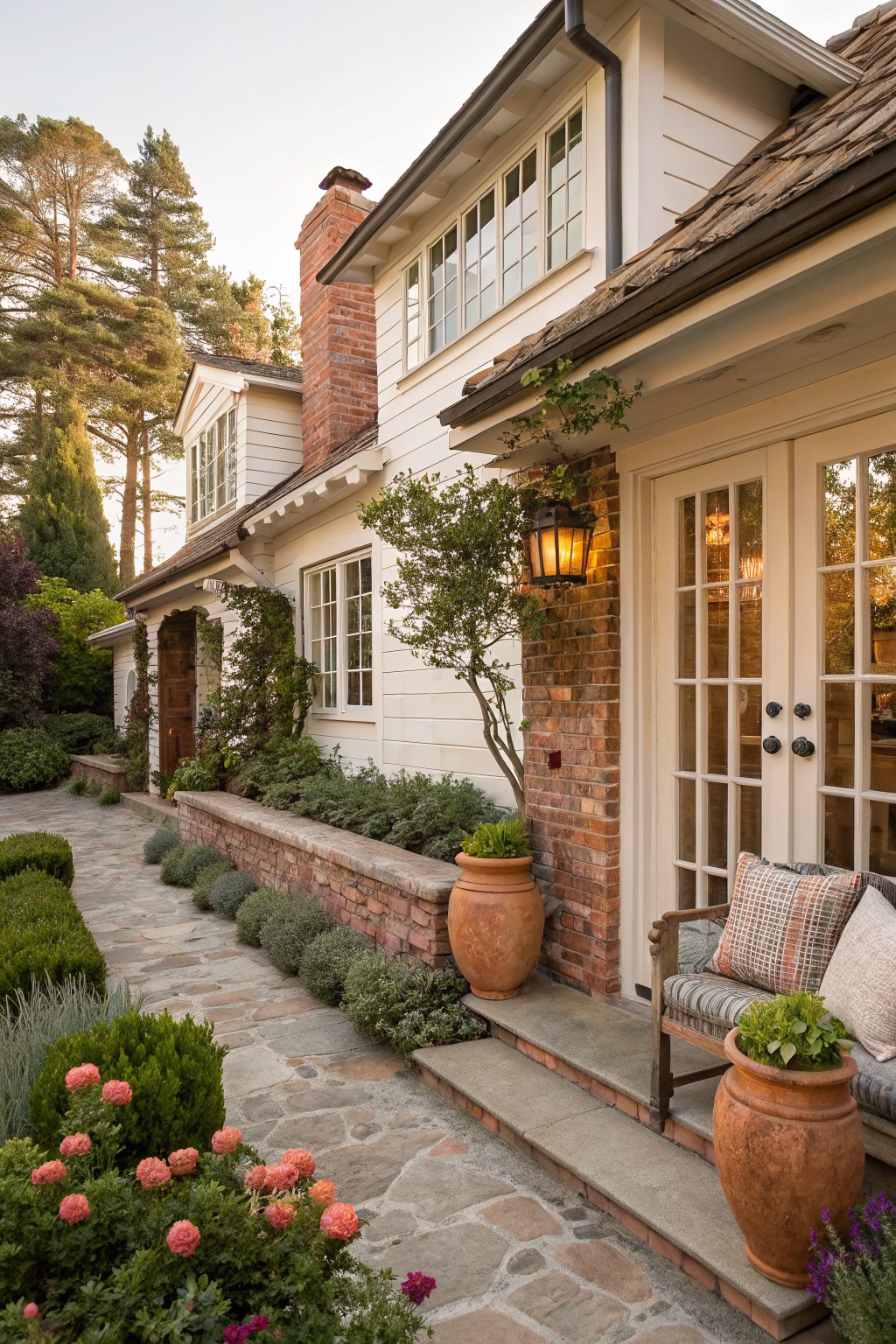
A stone path like this one winds gently through low plantings of roses and succulents right up to the house patio. The roses bring color bursts while the succulents in terracotta pots add rough texture that holds up year round. It pulls the eye along without much fuss.
Try it leading to a side door or back entry on a cottage style home. Plant the roses in loose clusters along one edge and tuck succulents into pots or beds opposite. Go for varieties that take sun and need little water. Just keep plants trimmed back from the path stones.
Stone Pathways Lined with Succulents and Roses
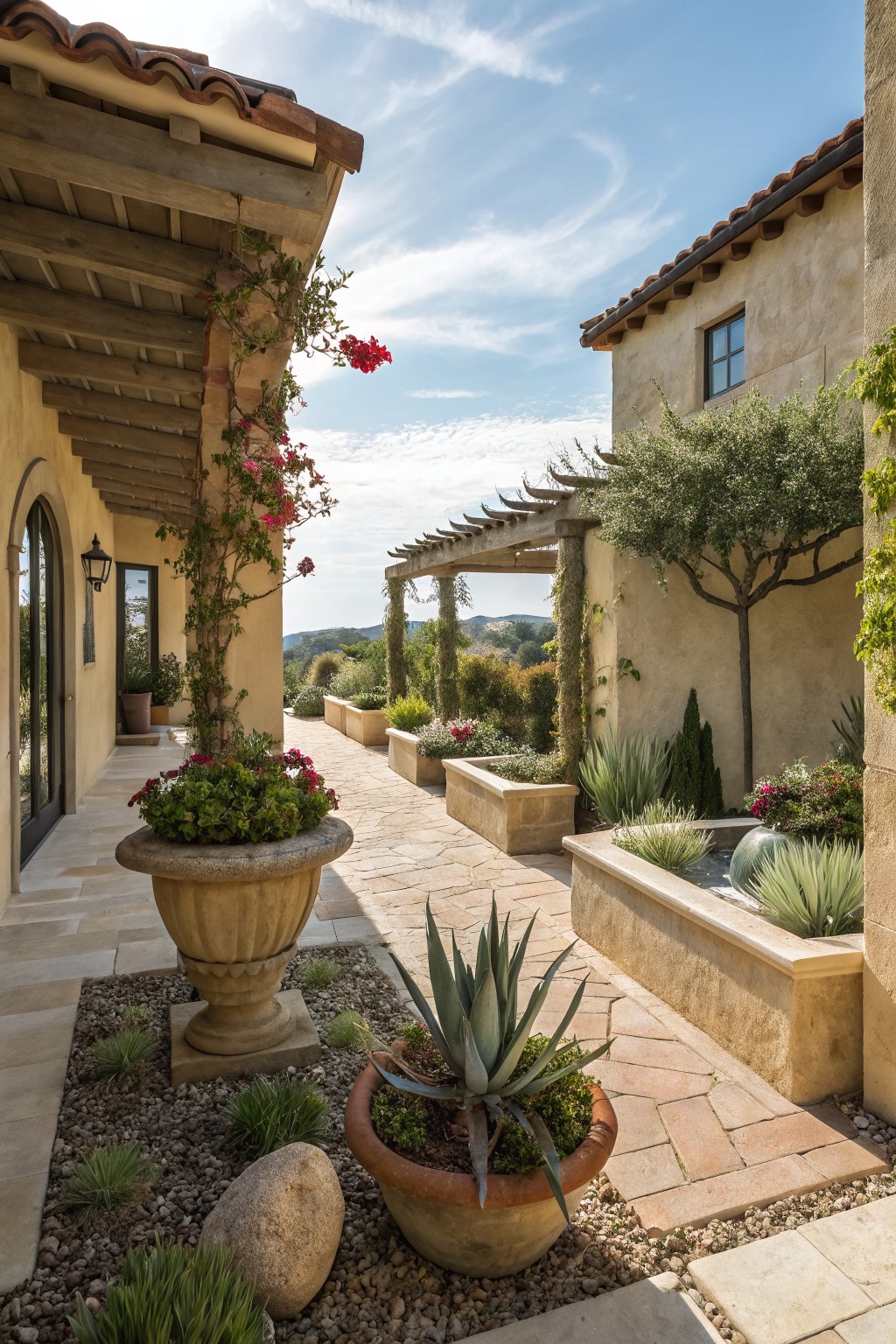
A simple stone pathway like this one gets a lot from succulents and roses planted right along the edges. Big agave in terracotta pots anchors the start, their spiky leaves mixing with the softer blooms in urns nearby. Climbing roses trail up the walls too, blending those textures without much fuss.
You can pull this off in a side yard or leading to a back patio, especially where space is narrow. It fits homes with stucco or tile roofs best, in full sun of course. Keep the gravel mulch around the pots to cut weeds, and watch that the roses don’t crowd the walking area.
Vertical Rose Trellis for Narrow Yards
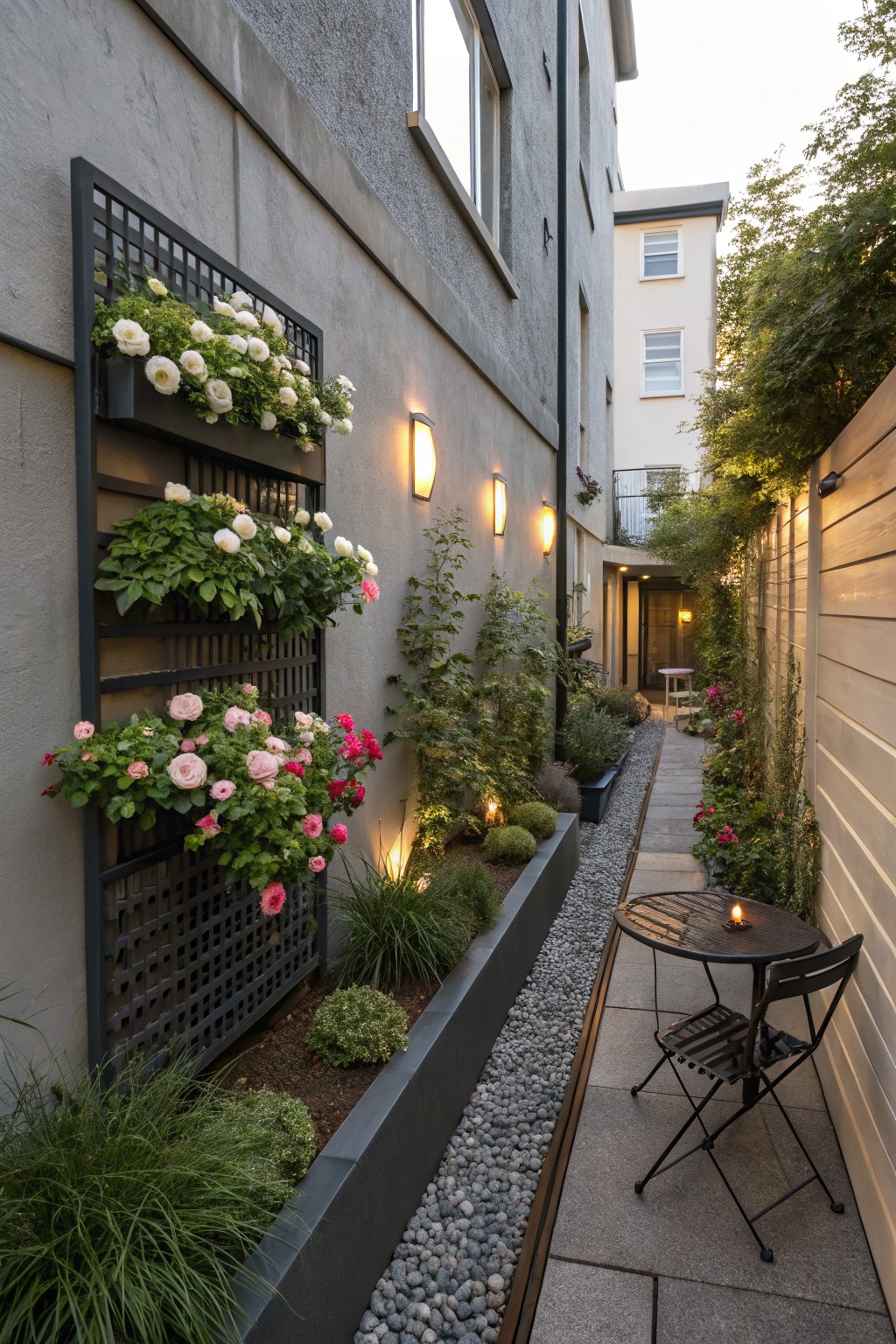
A tall black metal trellis mounted right on the concrete wall lets roses climb and spill over in white and pink clusters. It fills a tight space with green without crowding the ground. Folks notice how it softens hard surfaces and adds that layered look with the leaves and blooms.
This works best in side alleys or between buildings where you want privacy and a bit of romance on a walkway. Pick tough climbing roses for your zone, secure the trellis well, and run some low lights along the base. Skip it on weak walls… or add supports first.
Stone-Edged Succulent and Rose Beds
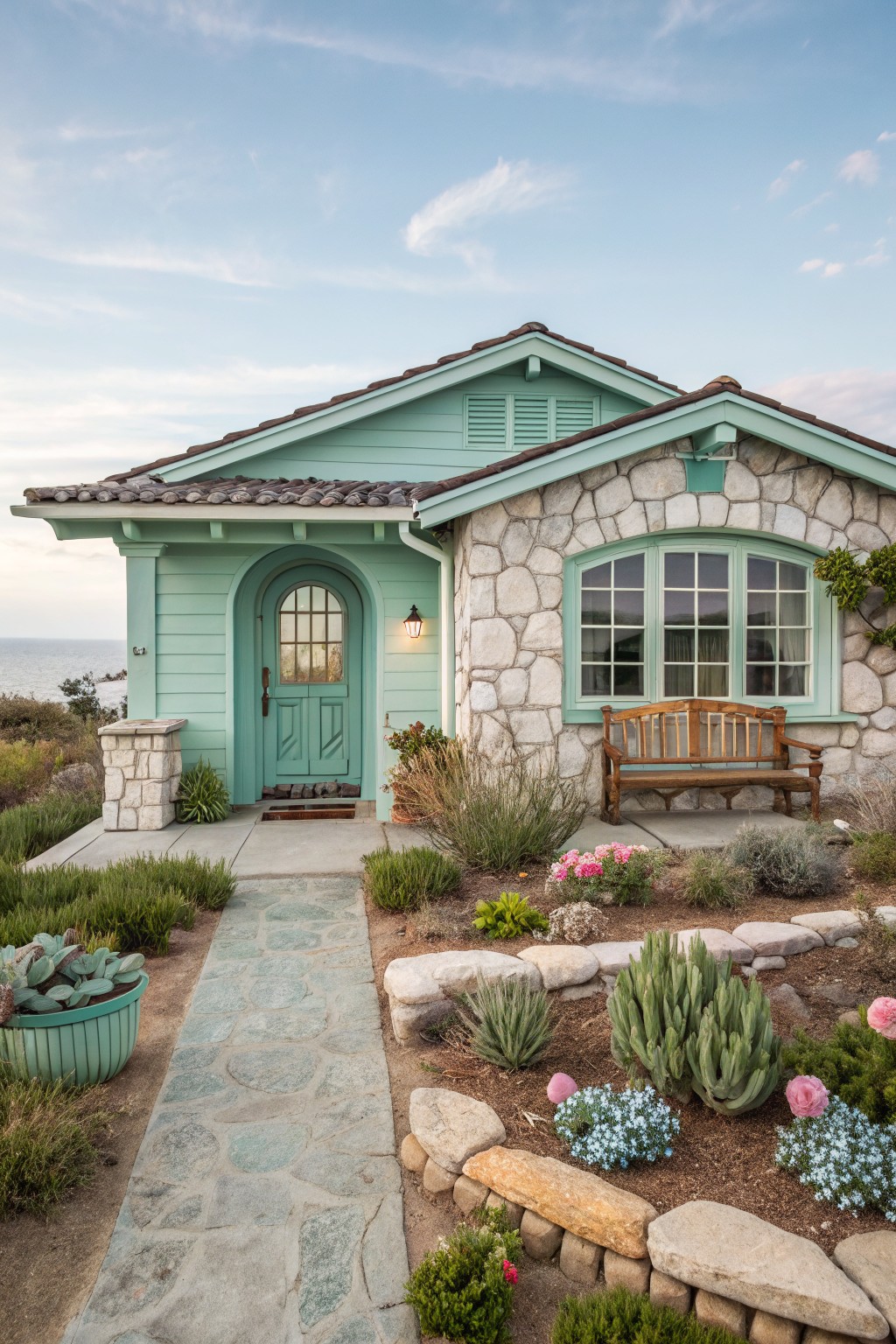
One simple way to add texture around your front entry is stone-edged beds filled with succulents and roses. The rough stones hold back the soil while letting plants spill over a bit. Succulents like those spiky agaves bring sharp edges. Roses and softer blooms add color pops. Together they make the path to your door feel alive without looking messy.
These beds work best in sunny spots with decent drainage. They suit cottage homes or any place with a casual yard. Line up rocks from your property if you can. Plant low-growers near the path edge. Keep it to drought-tough varieties… saves water and time. Just trim back anything crowding the walk.
Roses in Wooden Planters on Stone Patios
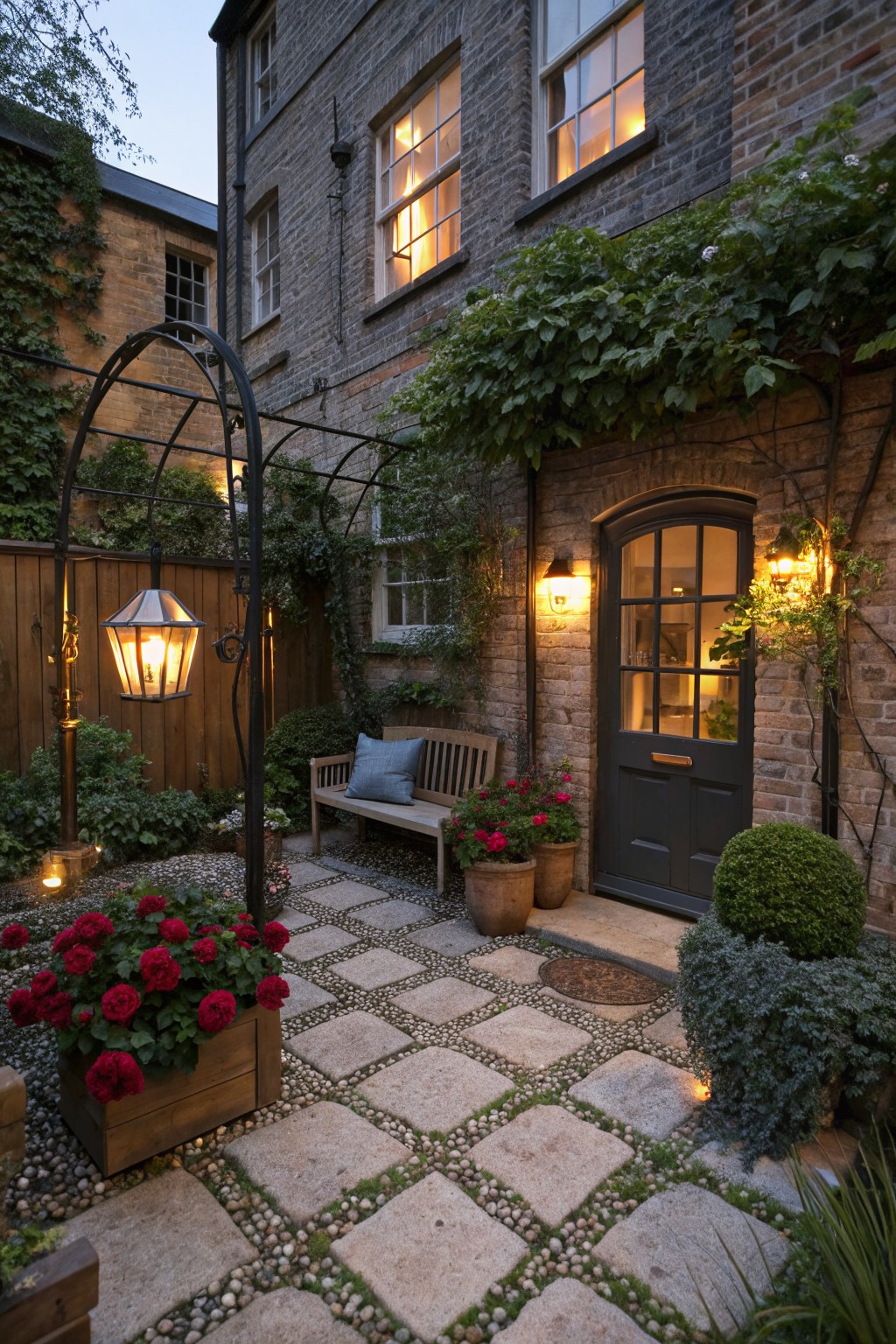
A simple wooden planter box stuffed full of red roses makes a strong focal point in a small paved patio like this one. The lush blooms spill over the edges, mixing soft flower texture with the hard stone underneath and brick around it. It’s a natural way to add color without taking up walkway space.
This works best in walled courtyards or narrow side yards next to older brick homes. Set the planter right by the edge of the pavers, pair it with a wood bench across the way, and hang a lantern nearby for nights. Pick a deep box to hold the roots, and go for repeat bloomers so it stays full through summer. Skip it if your spot gets too much full sun, though. Roses need some afternoon shade.
Driveway Succulent Borders
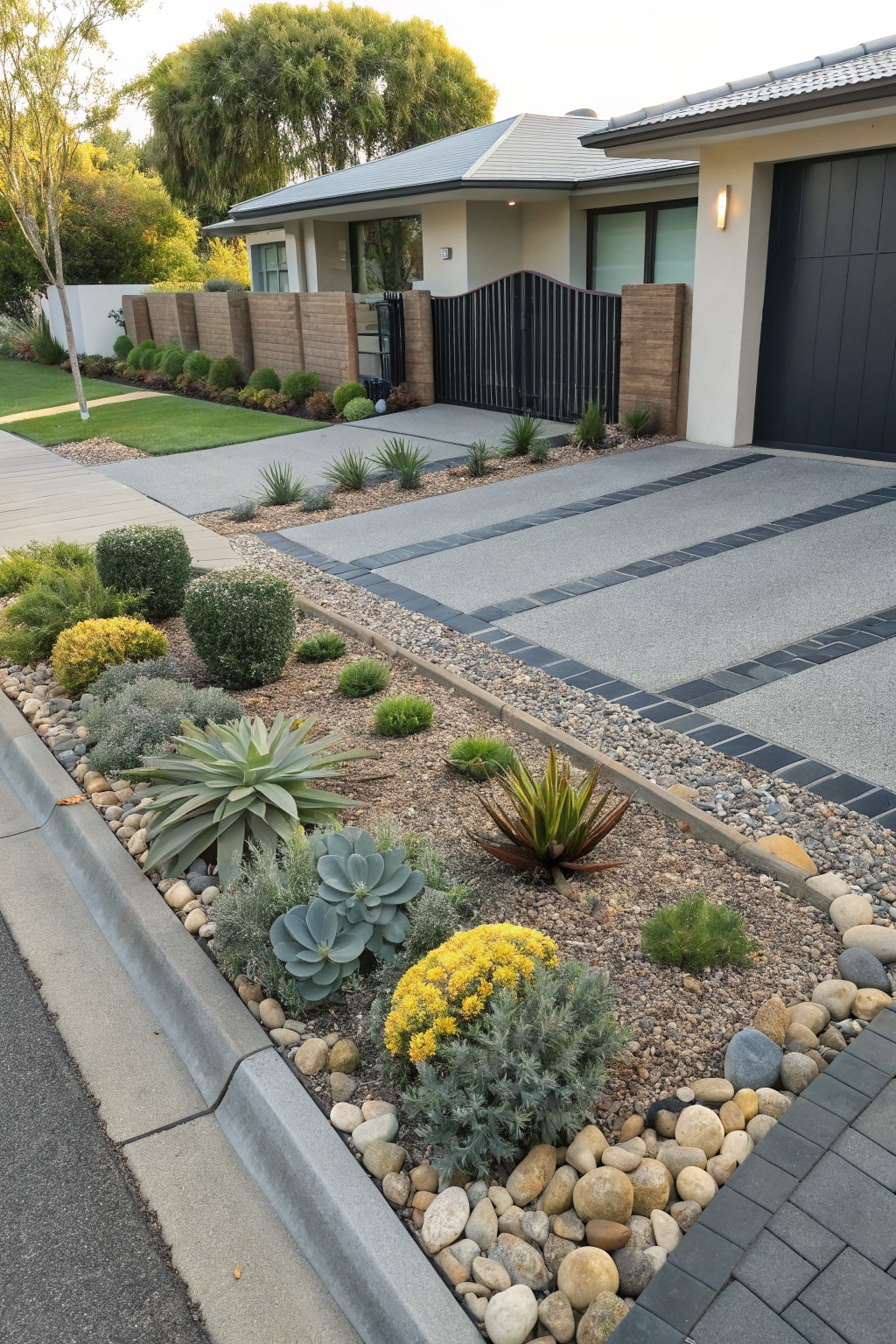
A simple gravel bed packed with succulents runs right along this driveway. Big agaves and spiky aloes stand out against the smooth pebbles and concrete pavers. The mix gives good texture without grass to mow. Homeowners go for it because it’s tough in dry areas and looks sharp year round.
Use this on any home with space between the driveway and street. Sunny front yards suit it best. Pick drought hardy plants and larger pebbles to hold soil in place. Skip it if your spot stays wet.
Terraced Stone Walls with Succulents
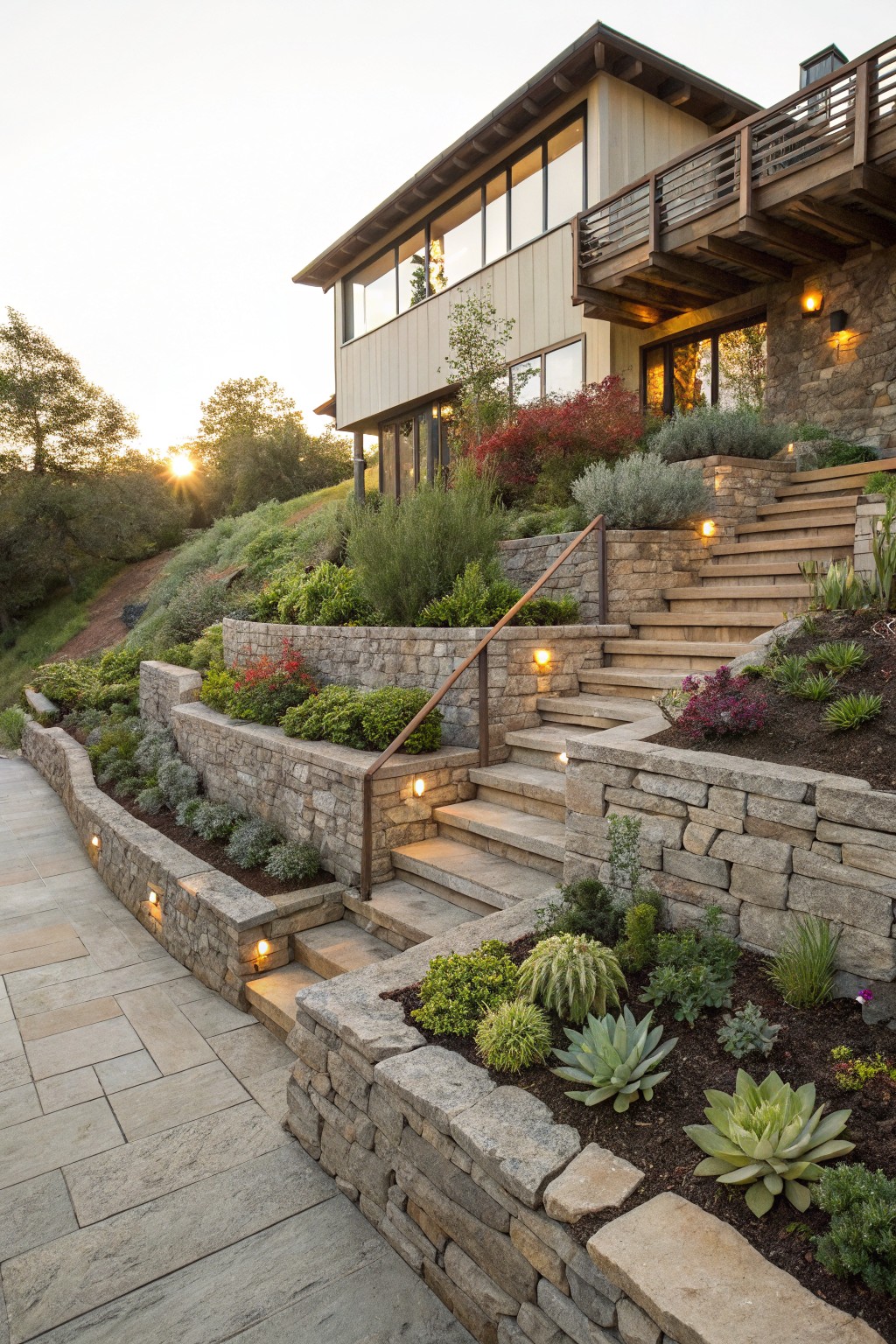
Slopes can be tricky around a house but terraced stone walls planted full of succulents make them work. The walls hold soil back while the plants tuck into crevices and beds along the edges. You get levels for steps and paths plus low-care greenery that adds texture without fuss.
Put this idea to use on any hillside lot where erosion is an issue or you want usable yard space. Dry stone fits older homes or natural settings best, and drought-tough succulents like agaves hold up year round. Just make sure the walls are sturdy before planting.
Balcony Succulents in Large Terracotta Pots
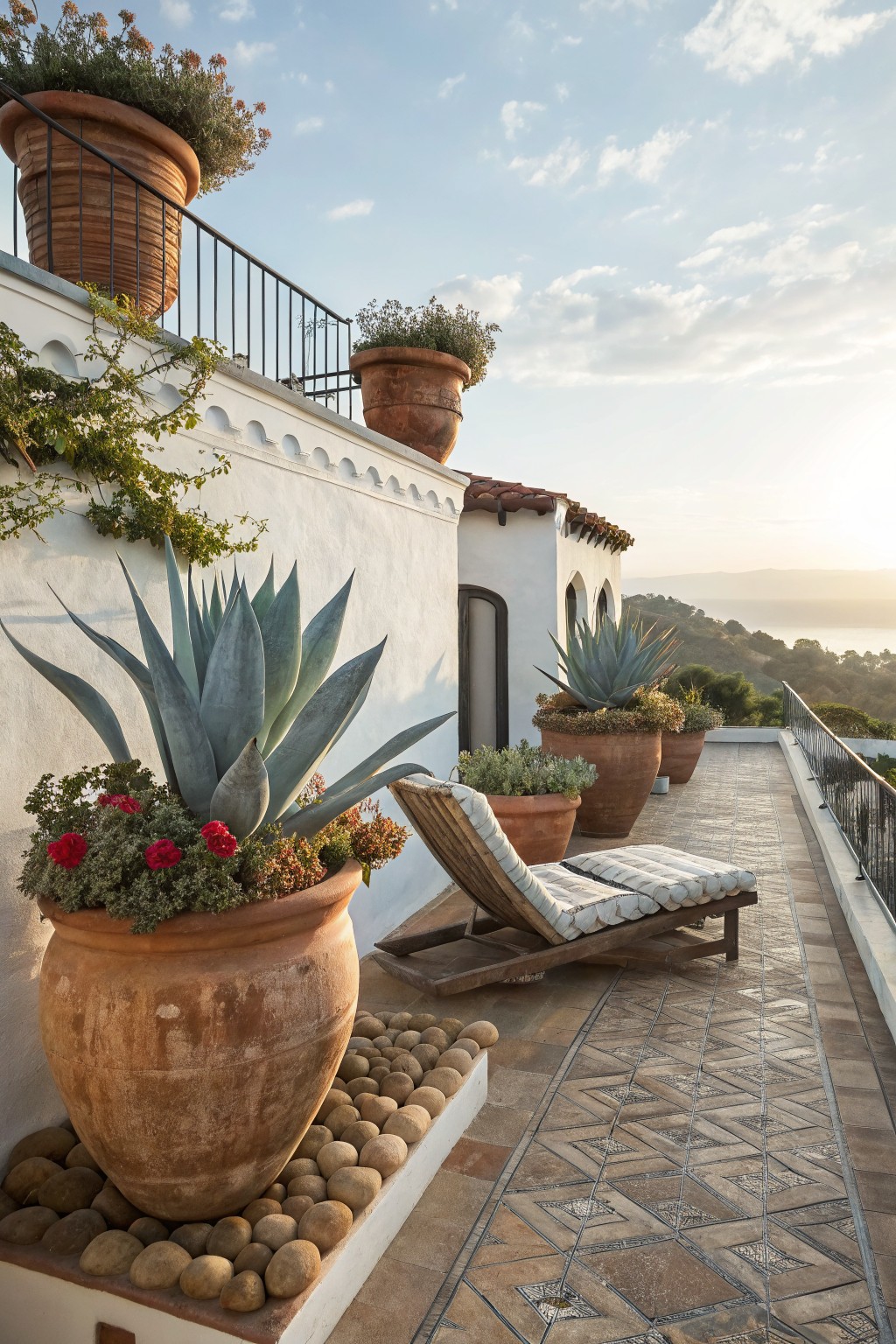
Big terracotta pots packed with agaves and a touch of roses make a balcony feel full and textured without much fuss. The bold shapes of the succulents pop against plain white walls, and those earthy pots tie right into the tile floor. It’s a low-water setup that looks established fast.
Try this on sunny terraces or upper patios where space is tight. Group three or four pots near a lounge chair for easy lounging spots. It fits stucco homes with a view best, but watch for wind up high, might tip smaller pots.
Desert Walkway Lined with Succulents and Roses
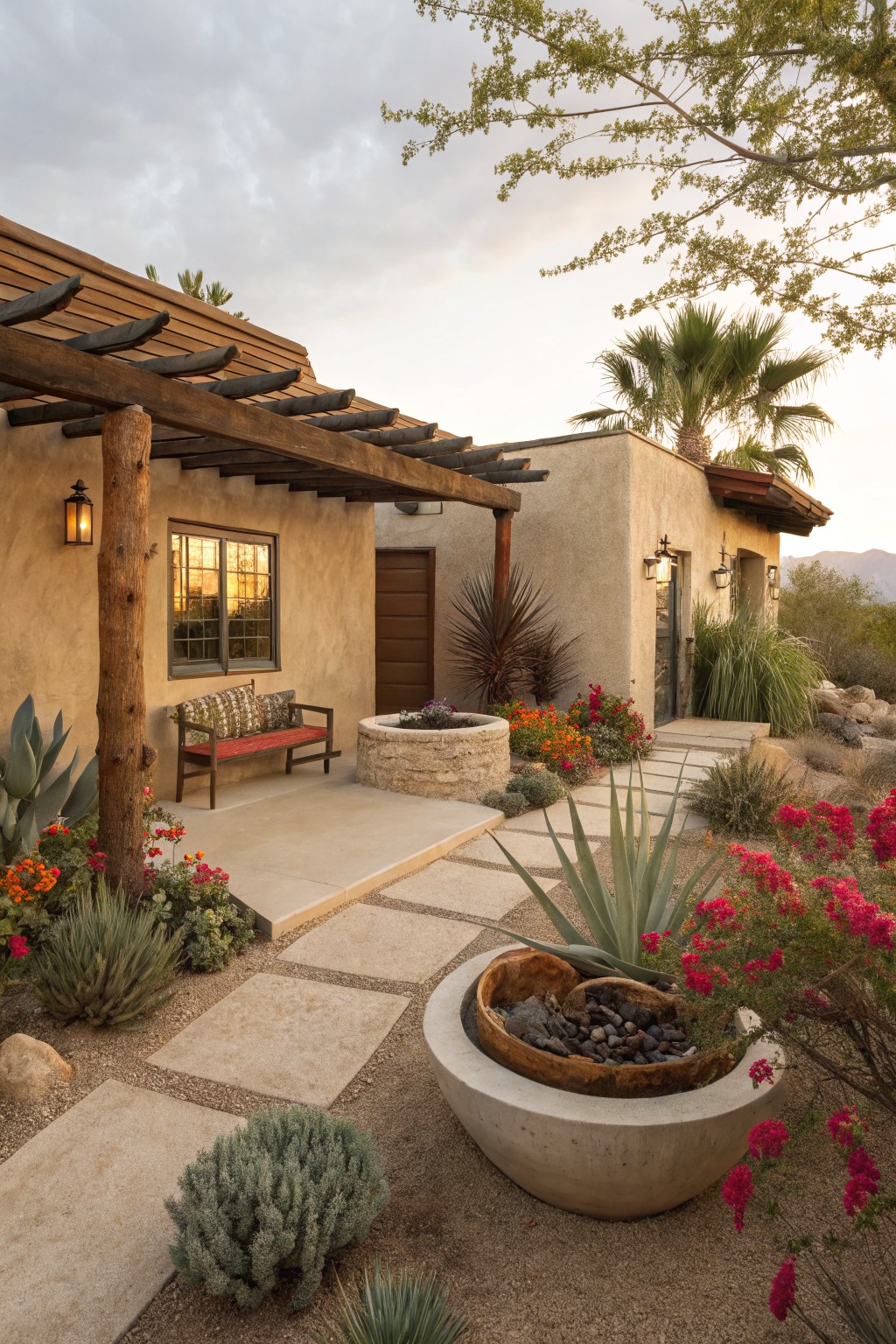
One straightforward way to build curb appeal in dry areas is a simple stone walkway like this one. It winds through gravel and low plantings, using chunky pavers set right in the dirt. Succulents such as agave give it that bold, upright texture, while clusters of roses add pink blooms for color without much fuss. The mix keeps things interesting visually, and it fits right into the desert feel around the house.
This setup works best for homes with a patio or porch entry, especially in hot, sunny spots where you want low-water plants. Line the path with a few big agaves for structure, then tuck in roses along the edges, maybe every few feet. Just make sure the roses get a bit more water than the succulents. Avoid overcrowding, or it starts looking messy after a season.
Balcony Racks Filled with Succulents
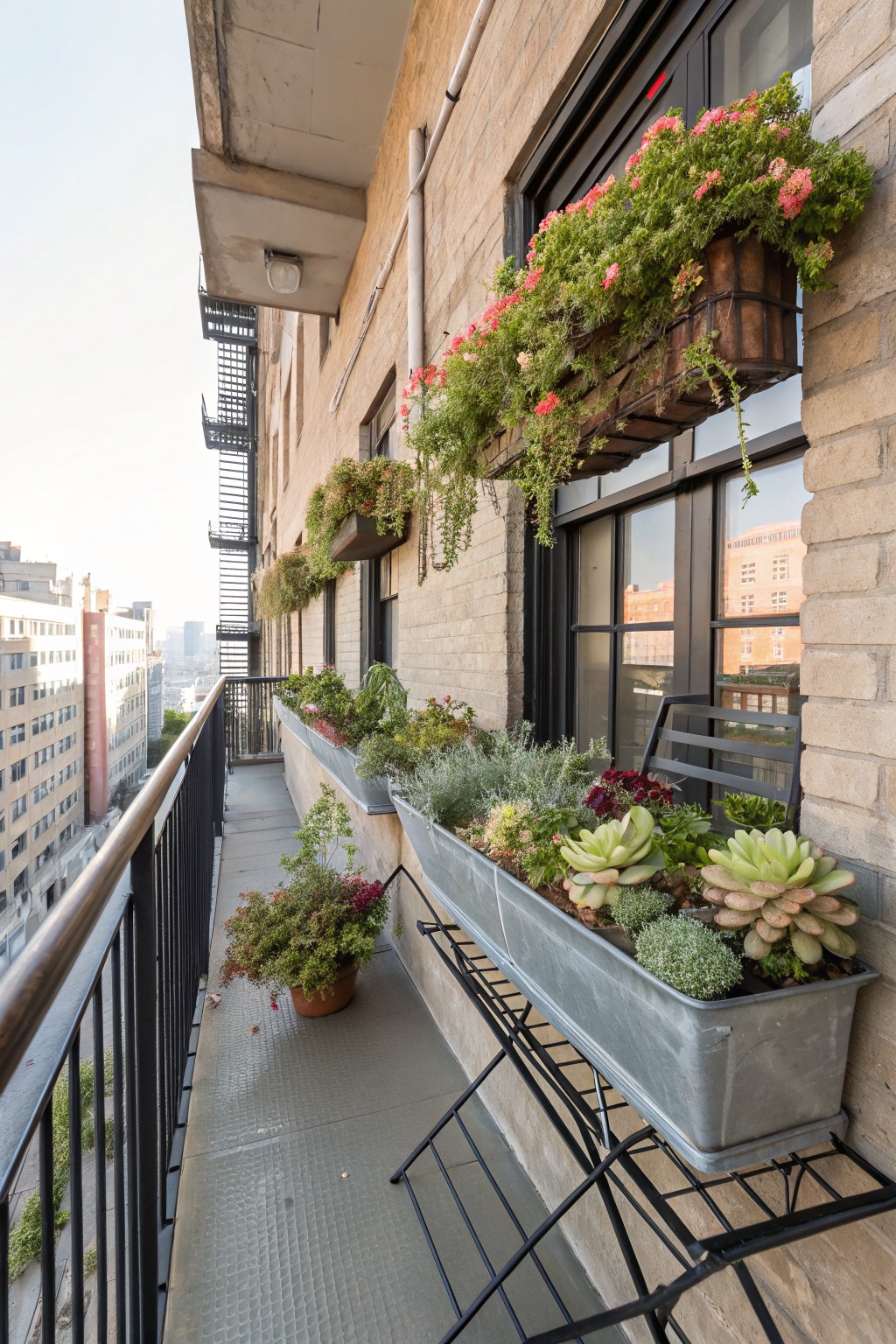
A simple black metal rack holds a couple of long galvanized troughs overflowing with all kinds of succulents. Fat echeverias mix with spiky varieties and soft rosettes. This keeps the plants up off the floor. It leaves room to walk and adds green right at eye level where you see it most.
Put one on a narrow balcony or apartment patio. It suits older urban buildings with brick walls. Choose troughs with good drainage. Group plants that need similar water. Skip it if your spot gets too much afternoon sun… succulents can scorch.
Large Boulders in Pool Landscaping
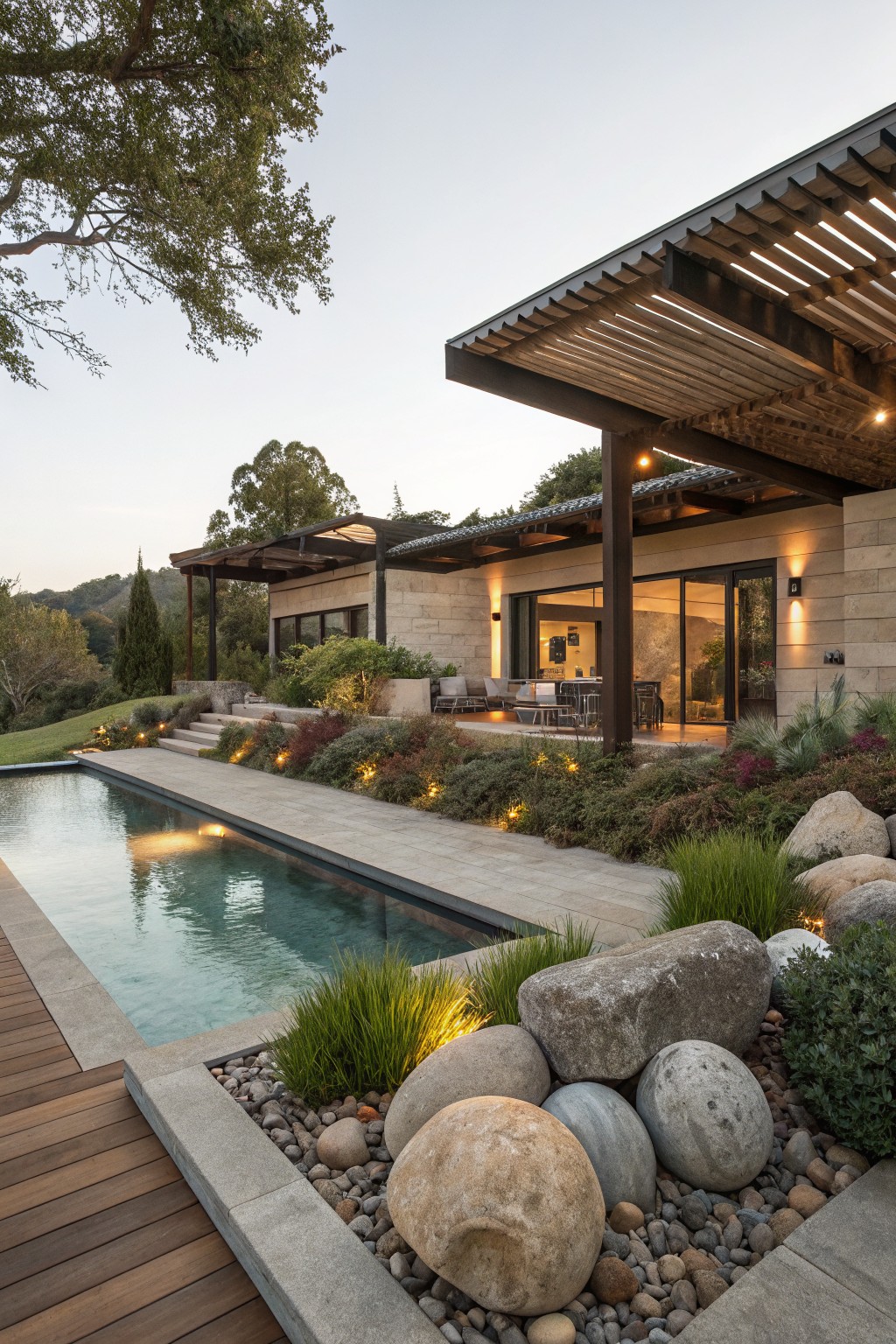
Big boulders clustered near the pool make a yard feel more natural and rugged. You see them here at the shallow end, paired with clumps of grass and pebbles for easy texture that holds up year round. Folks like how it ties the water right into the ground.
This setup fits modern homes on a slope or with some hill views. Go for rounded ones about the size of a big beach ball or larger. Keep plants simple so the rocks stay the focus, and it won’t take much watering.
Frequently Asked Questions
Q: Can succulents and roses really share the same garden bed without one crowding out the other?
A: Plant roses first in the center or back, then tuck succulents around the edges where they get room to spread low. Roses grow tall, so they won’t shade out the succulents much. Just trim back rose canes in spring to keep paths clear.
Q: How do I handle watering since succulents hate soggy roots but roses need steady moisture?
A: Water roses deeply once a week, but let the soil dry out between sessions for the succulents. Group them so succulents sit higher or in rockier spots that drain fast. Mulch with gravel around succulents to cut down on splash-up.
Q: What’s a simple way to start this in a small yard?
A: Pick three rose bushes and five chunky succulents like echeverias. Arrange in a loose cluster against a fence or wall. Add a few boulders for that instant texture pop.
Q: Do pests hit these mixes harder than regular gardens?
A: Aphids love roses, so check leaves weekly and blast them off with a hose. Succulents shrug off most bugs, but watch for mealybugs in humid spots—dab with rubbing alcohol. Healthy plants fend off trouble best.
