

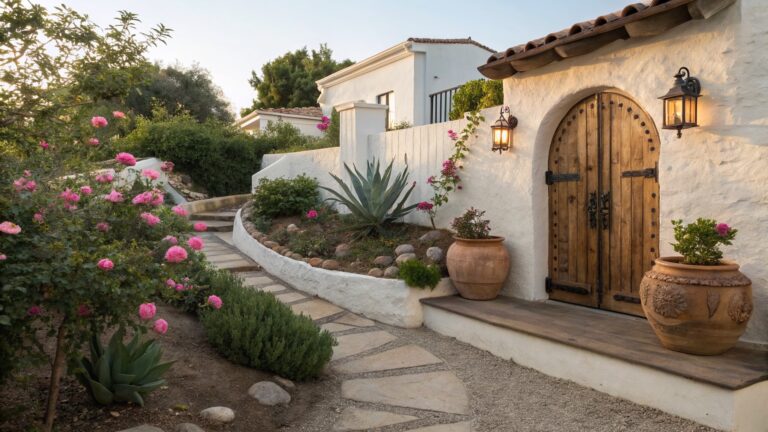
Gardens start to feel purposeful when you layer tough agave with the softer curves of roses. That sharp contrast builds lasting structure around beds and paths, holding up through dry spells and blooms alike. I added a few agaves to my rose border last spring, and it finally gave the layout edges that make sense from every angle. Structure catches the eye first. These pairings shape outdoor spaces in ways worth adapting to your own yard over a season or two.
Agaves and Roses Edging a Stone Entry Path
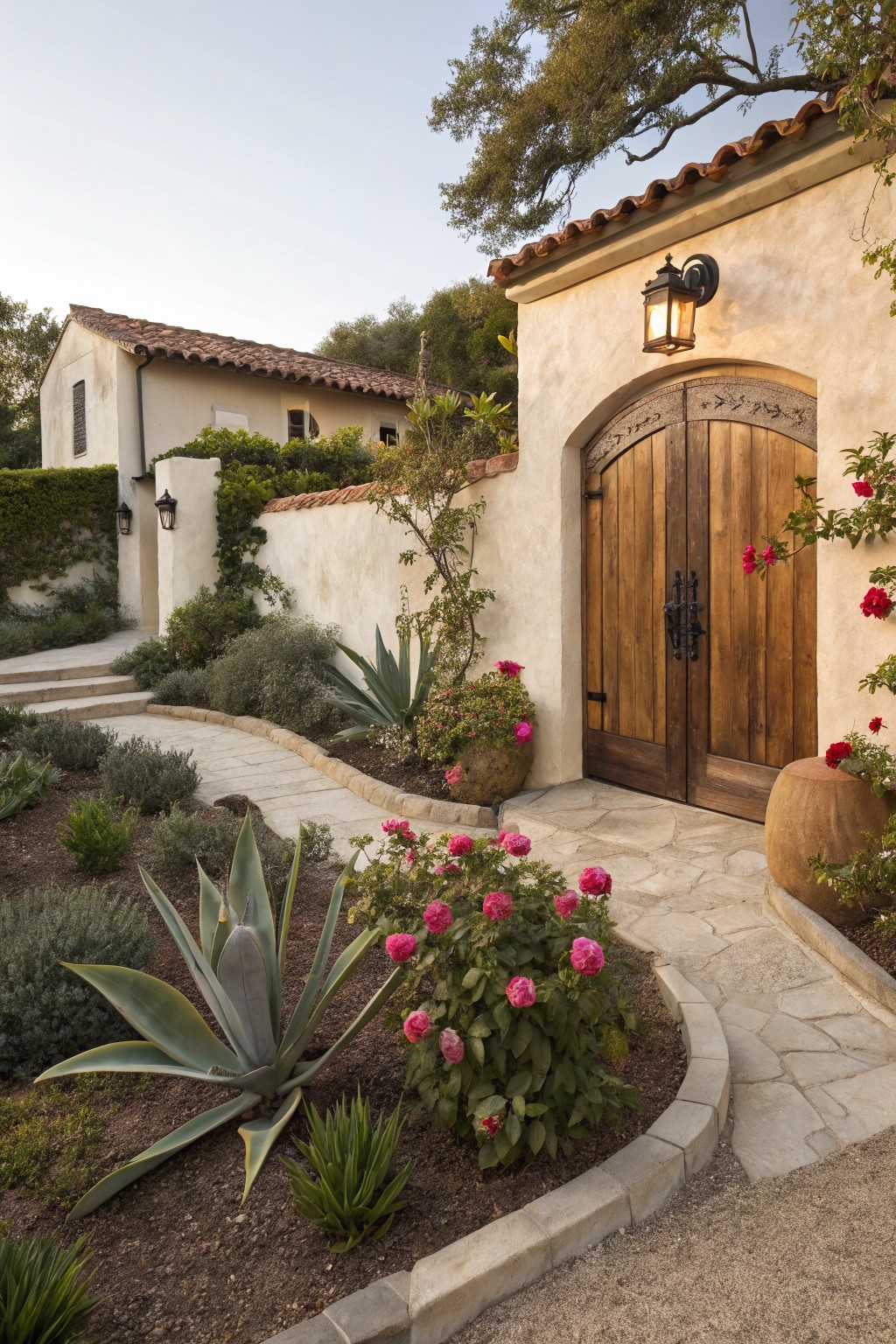
A simple stone path like this one gets its appeal from big agaves planted right along the edge for that strong, upright shape. Then roses in soft pinks fill in with blooms that soften things up a bit. The mix gives you structure without feeling stiff, and it pulls your eye right to the gate.
This works best in front yards where you want a low fuss walk to the door. Plant the agaves in groups for weight, tuck roses nearby for color through spring and summer. It suits dry spots or California style gardens. Just keep the path wide enough to walk comfortably.
Agave Pots Frame a Simple Garden Path
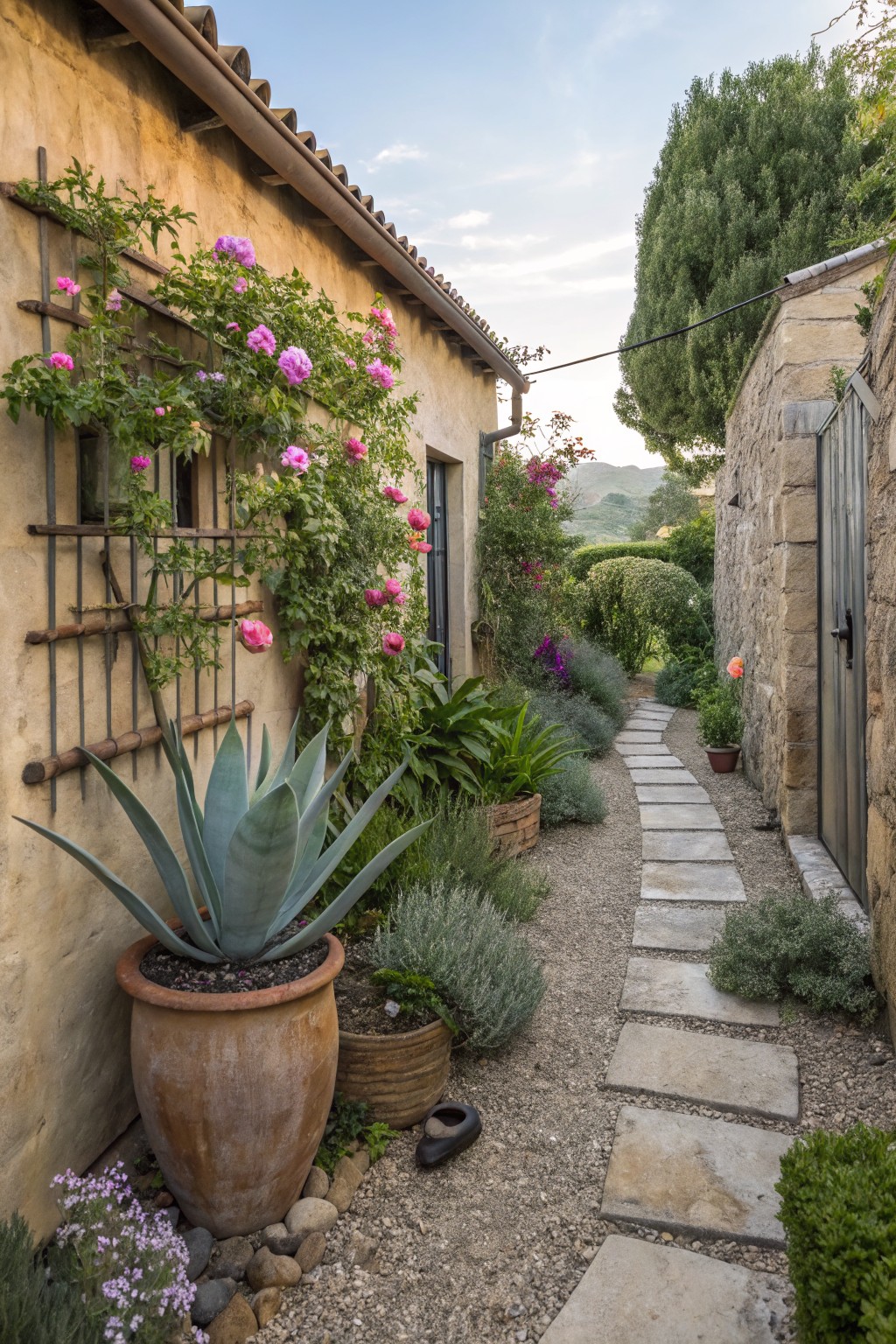
One straightforward way to build structure in a small side garden is planting a big agave in a terracotta pot right along the path. It stands out against the climbing roses on the wall trellis. The spiky leaves give a strong vertical line that pulls the eye down the walkway. Roses soften things up with their pink blooms and trailing growth. Together they make the space feel put together without much fuss.
This setup works great next to a house wall or in a narrow spot where you want definition. Use it for side yards or entry paths on warmer homes like stucco or stone ones. Pick a hefty pot so the agave doesn’t tip. Keep the path gravel edged for easy care… and watch that the roses don’t crowd it out over time.
Stone Pathway Lined with Agaves and Roses
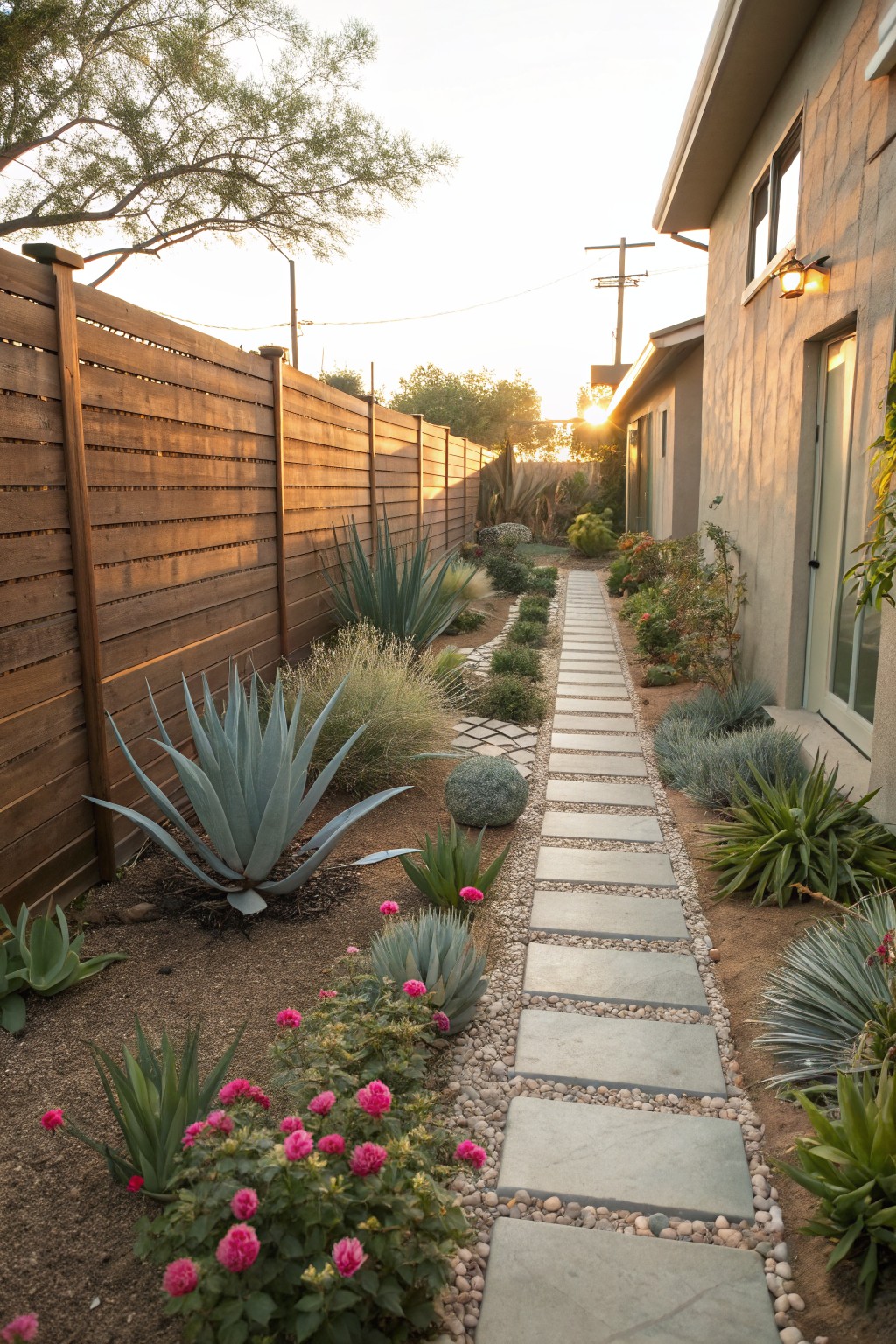
A straight stone path cuts through a narrow bed of agaves and pink roses, giving shape to a simple side yard. The big blue-green leaves of the agaves stand tall and structured next to the smaller, flowery rose bushes. That mix of spiky forms and softer blooms adds real contrast without much fuss.
This works best in dry spots or along a house wall where you want low-water plants that still look full. Lay flat stones with gravel in between for easy walking, then plant agaves for backbone and roses for color pops. Keep it to one row deep if space is tight… it stays neat that way.
Entry Path Lined with Roses and Agaves
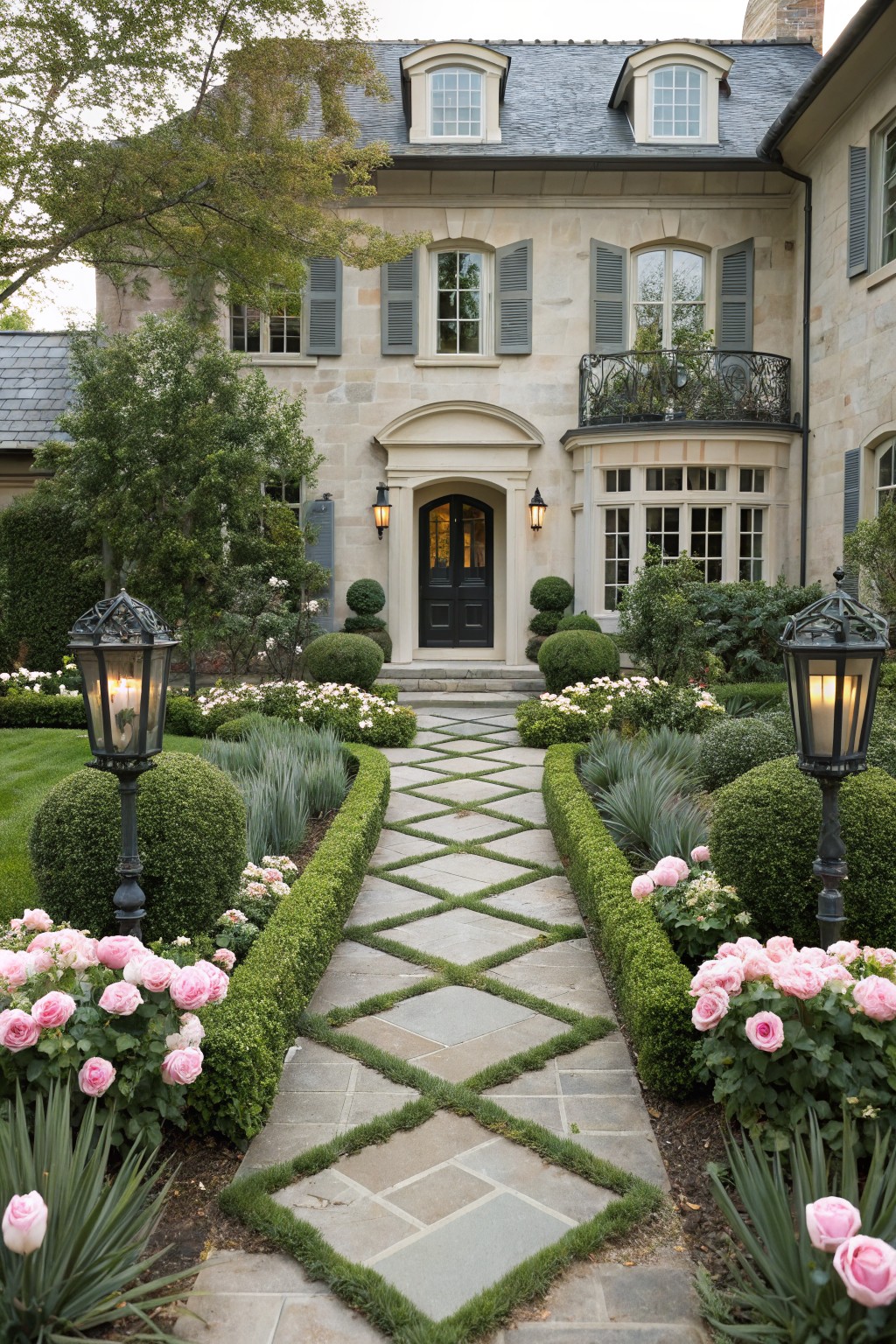
A diamond-patterned stone walkway like this one pulls everything together in the front yard. The pavers with grass between them give a clean, formal line that softens just enough. Then you have the pink roses spilling over the edges next to those sharp agave leaves. That mix of fluffy blooms and spiky shapes adds real contrast without much fuss.
It works best leading right up to your front door, especially on homes with some classic stone or stucco detail. Plant the roses for color pops in season and agaves for tough, year-round punch. Boxwoods along the sides keep the beds neat. Just make sure the path stays level for easy walking, and watch that agaves don’t crowd the way.
Layered Stone Terraces with Agave Plantings
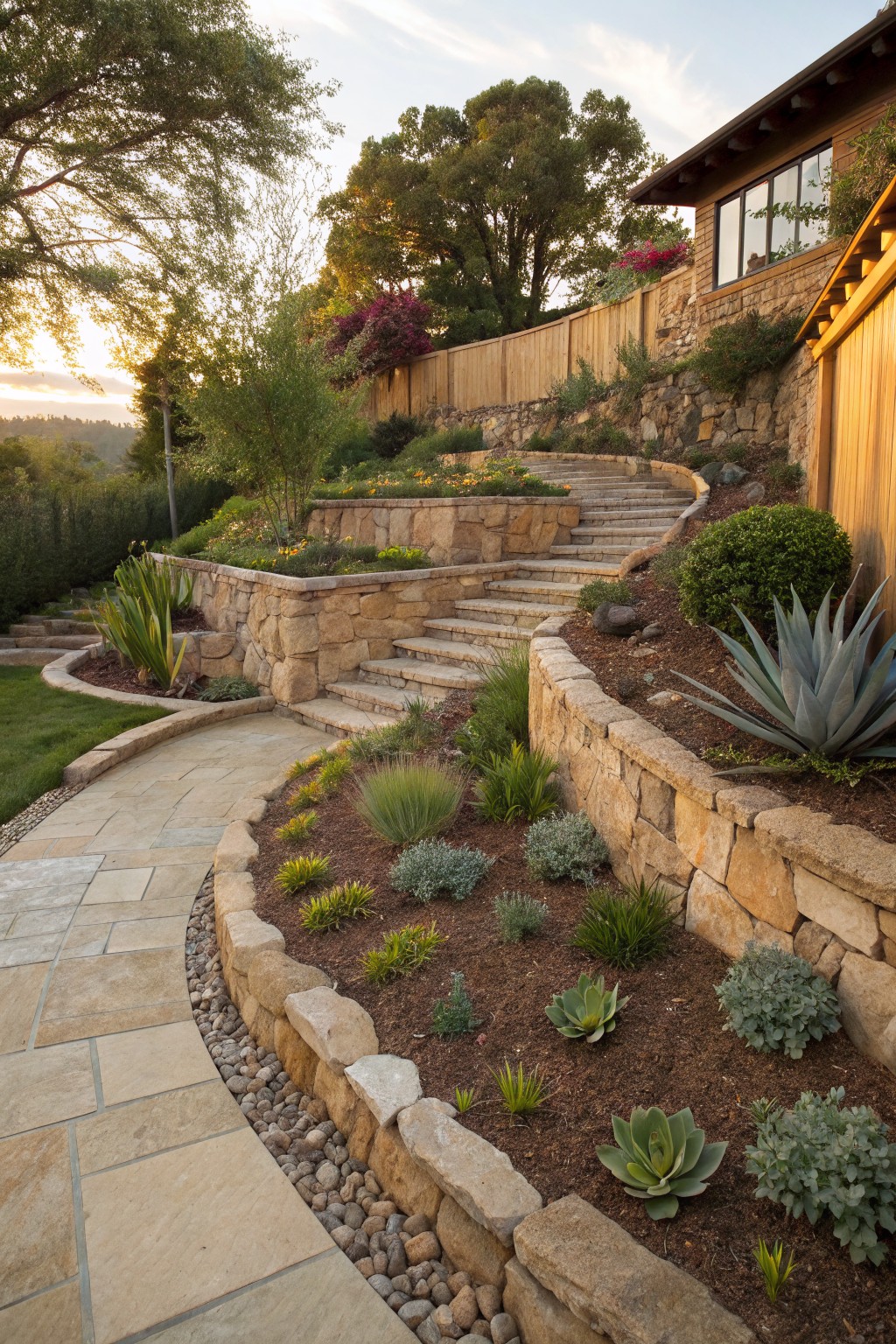
One solid way to handle a sloped yard is with terraced stone walls that step down the hill. Here, rough-cut stone holds back the soil while agaves and tough grasses fill the beds along the edges. The plants give some softness against the hard stone, and the levels make the space feel organized instead of running wild. It pulls your eye up toward the house without much fuss.
You can pull this off on any hillside lot, especially where you want low-water plants that don’t need constant care. Start with wide steps or a curving path like the flagstone one shown, then tuck agaves into the pockets right at the wall bases. Keep the beds mulched and sparse so the structure shows through. Works great for modern or rustic homes, just make sure the stone matches your local vibe to avoid looking out of place.
Tall Potted Plants Line the Balcony

A row of tall woven pots runs right along the balcony edge here. They’re filled with white flowering shrubs that give some height and a clean look. Climbing pink roses nearby add a softer touch. This setup works well because it uses pots to build structure without taking up much floor space. The plants stand out against the city buildings in back.
Try this on any urban balcony or terrace where you want privacy and a bit of green. Pick pots around 3 feet tall so they don’t block the view completely. White blooms keep it simple year round, and add roses for color in season. It suits apartments or townhomes with limited outdoor room. Just make sure the pots drain well to avoid root issues.
Agaves Edging a Gravel Path
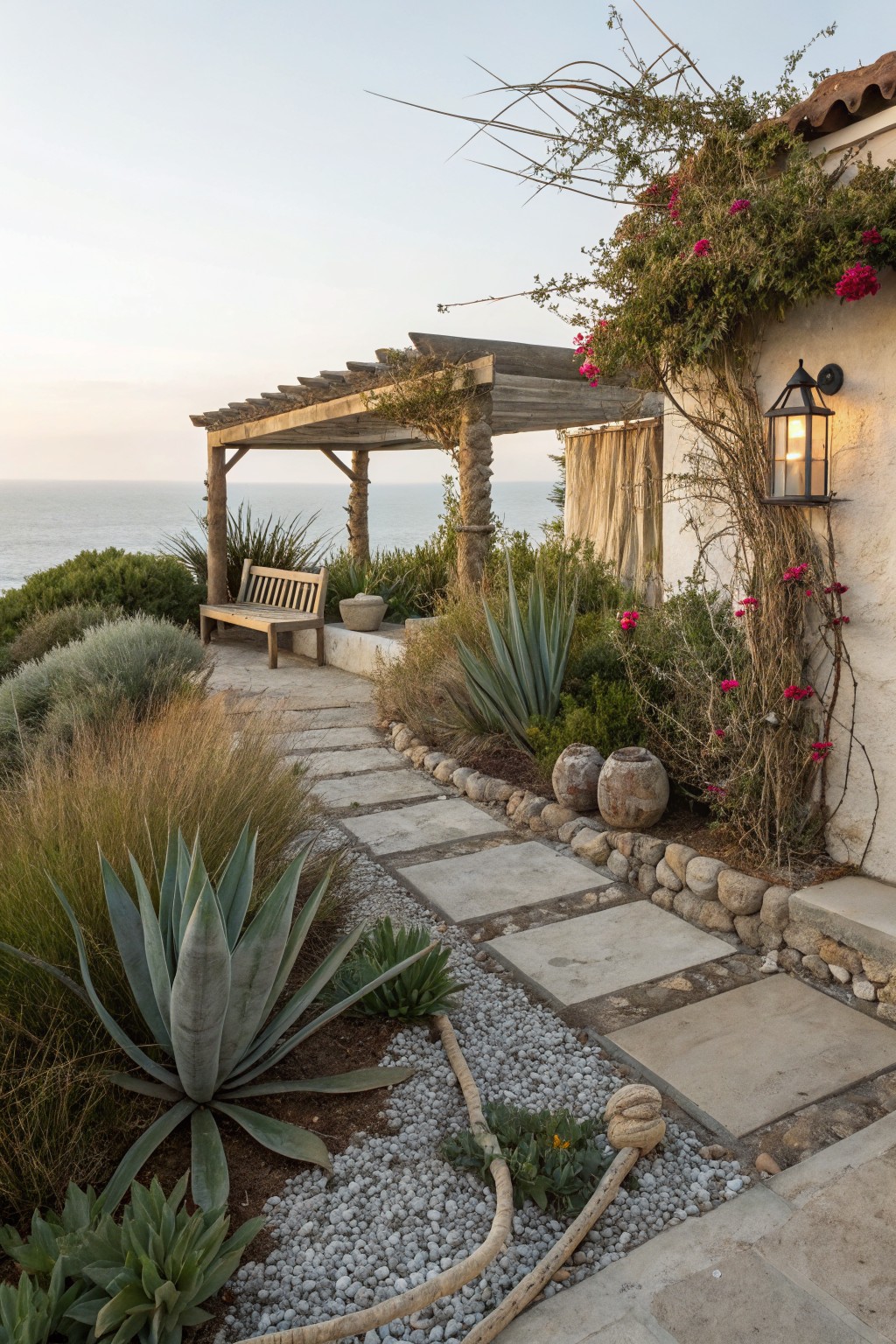
Large agaves planted right along a gravel path like this give your garden some real backbone. The spiky leaves stand out against the loose gravel and those pink flowers climbing the wall nearby. It pulls everything together without much fuss, especially when the path leads to a shady spot like that pergola bench.
You can pull this off in sunny, dry yards where low-water plants make sense. Space the agaves a few feet apart so they don’t crowd the walk, and mix in some grasses or small pots for filler. Works best on a slope or coastal edge… keeps it practical and not too busy.
Stone-Edged Circular Agave Beds
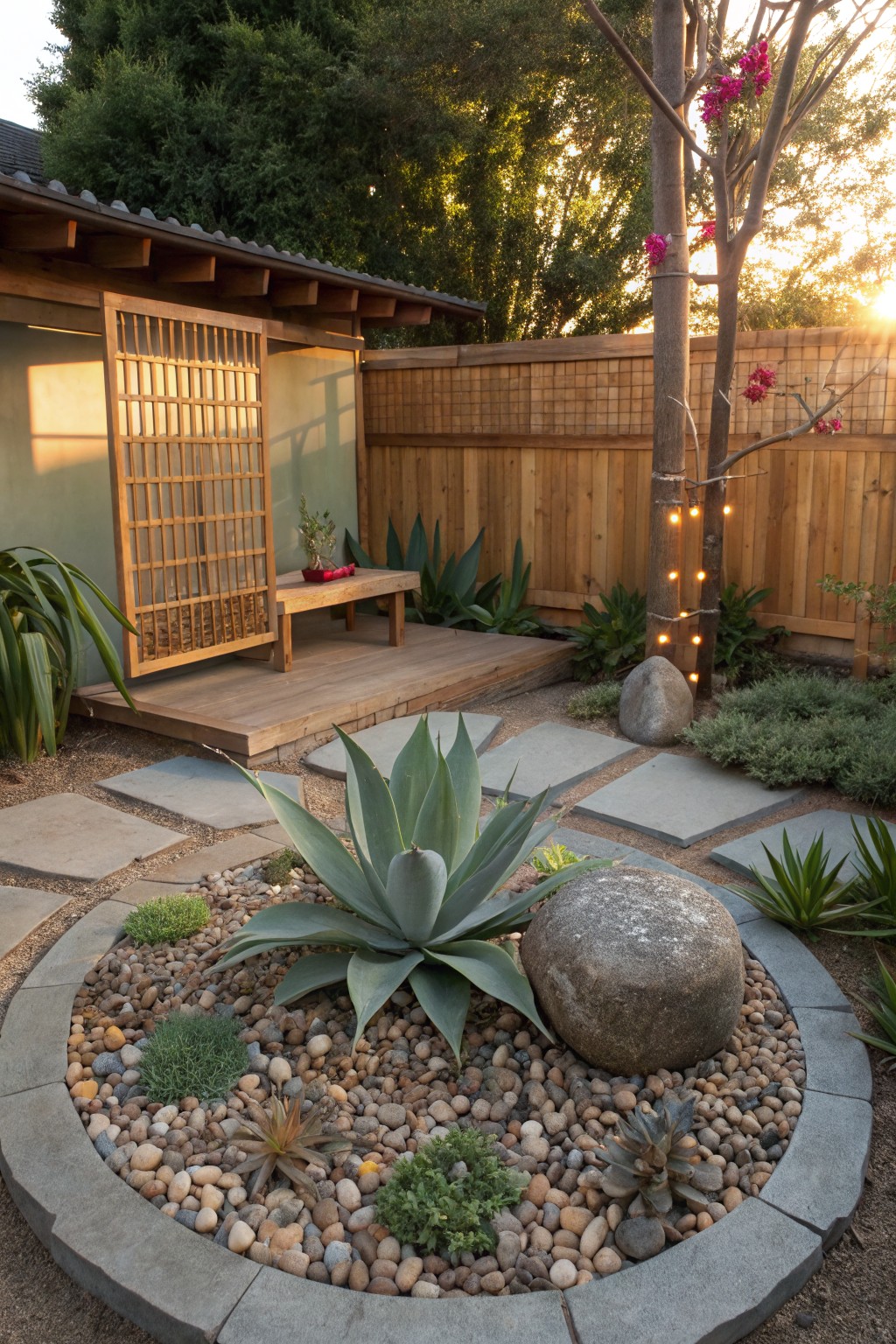
One simple way to add structure to a yard is with circular planting beds edged in stone. Fill them with gravel mulch and a few bold agaves, then tuck in rocks for weight. This setup stands out because it keeps things low-maintenance while giving the garden a clean, organized feel. The agaves’ sharp leaves pop against the smooth stones and pebbles.
These beds work best in sunny spots near patios or decks, where you want definition without much upkeep. Pair them with stone paths to lead the eye around. They’re great for modern or drought-tolerant yards… just make sure the edging is sturdy enough for foot traffic. Skip overcrowding. Let the circles breathe.
Terraced Beds on a Steep Slope
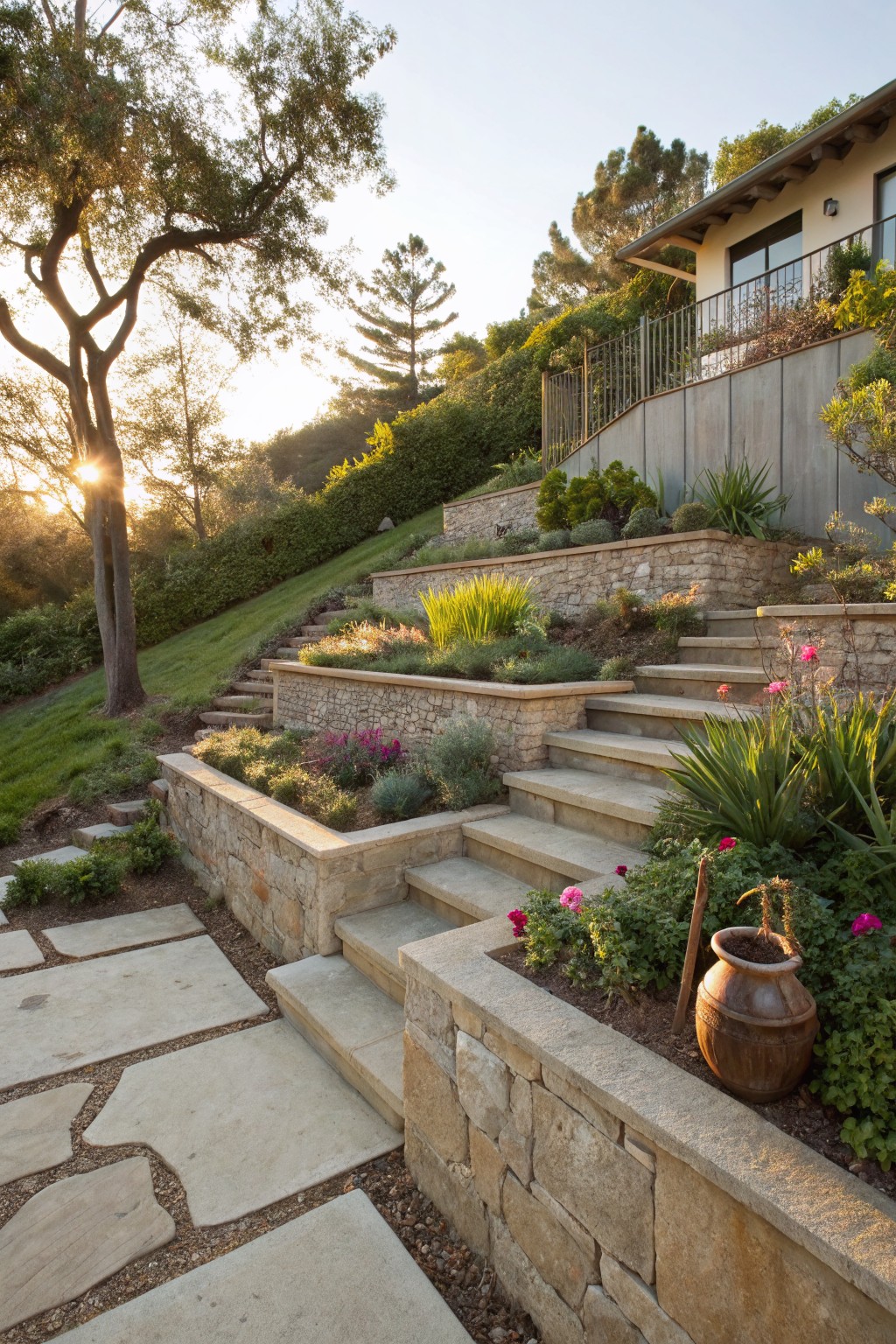
One smart way to handle a hillside yard is terracing with stone walls and wide steps. You end up with level spots for plants that would otherwise slide away. Here agaves stand tall for that strong shape, and roses bring in pink blooms for some color against the green grasses and low shrubs. It keeps the whole area looking organized without feeling too stiff.
This works best on sloped lots near a house, tying the yard right into the back door. Pick rugged stone that matches your place, and go for tough plants like these that handle dry spells. Just make sure the steps are wide enough to walk comfortably, and add gravel paths if the ground gets slippery after rain.
Winding Stone Path with Agave Borders
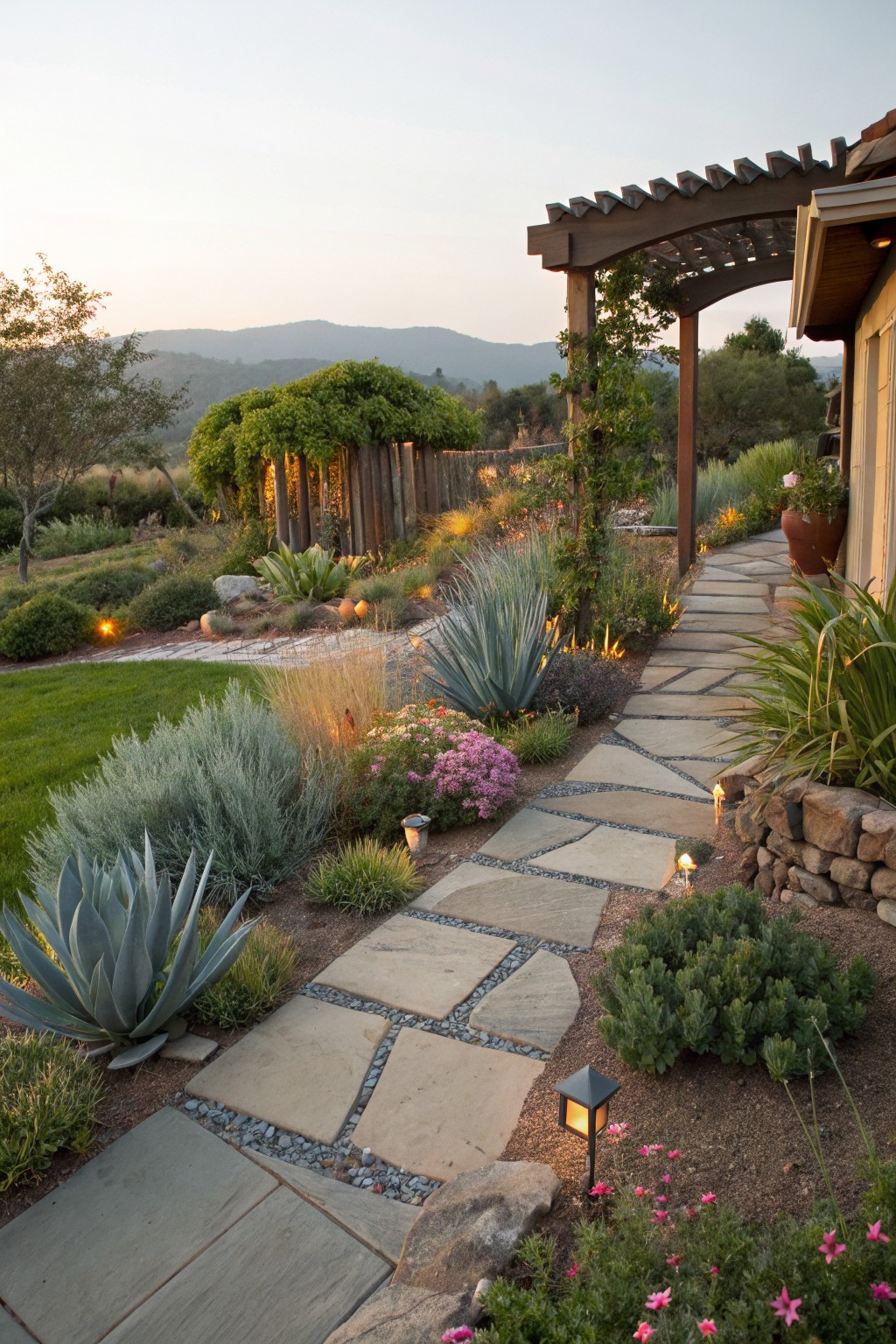
A simple flagstone path like this winds gently through the garden, edged by bold agave plants that stand out for their sharp structure. Pink rose clusters tuck in nearby, softening things up without taking over. It’s a straightforward way to move people from yard to house while showing off plant contrast. Those low path lights kick in at evening too, marking the way nicely.
This works best in sunny, dry spots where agaves thrive on little water. Lay irregular stones with gravel between for easy drainage, then plant agaves every few feet for rhythm. Add roses in pockets for color… suits modern or ranch homes with some slope. Keep paths wide enough to walk two across, and watch that agaves don’t crowd the edges as they grow.
Outdoor Dining with Large Agave Pots
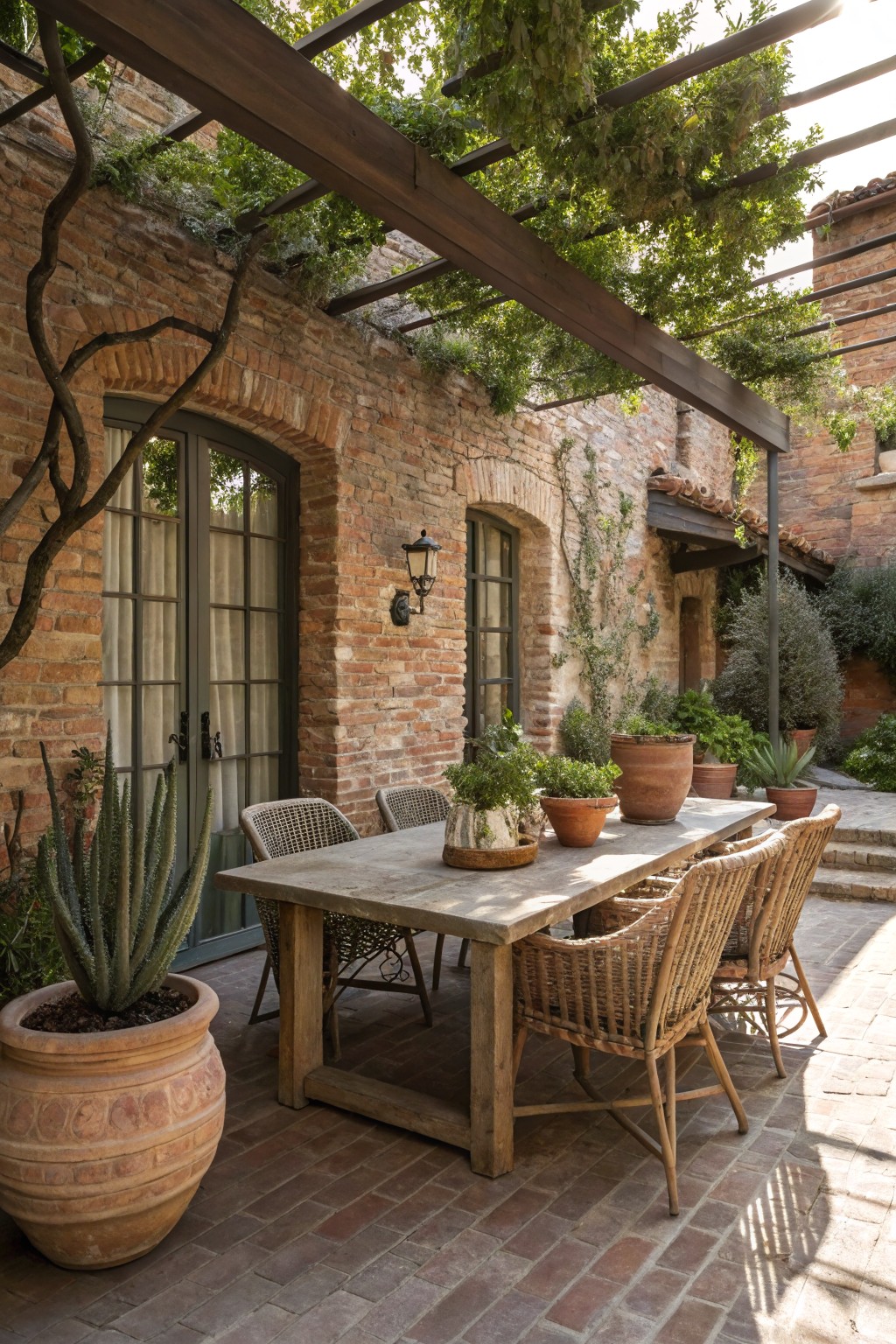
Big agave plants in terracotta pots make a strong statement around this simple wooden dining table. Set on a brick patio under a vine-covered pergola, the spiky agaves add height and shape that pulls the casual setup together. They stand out against the relaxed rattan chairs and greenery without feeling crowded.
Try this in a courtyard or terrace where you want some backbone in the planting. Mature agaves give quick structure, especially near walls or doorways. It fits older homes or spaces with a bit of rustic charm, but keep the pots big enough so the plants don’t tip over in wind.
Agaves Line the Entry Path
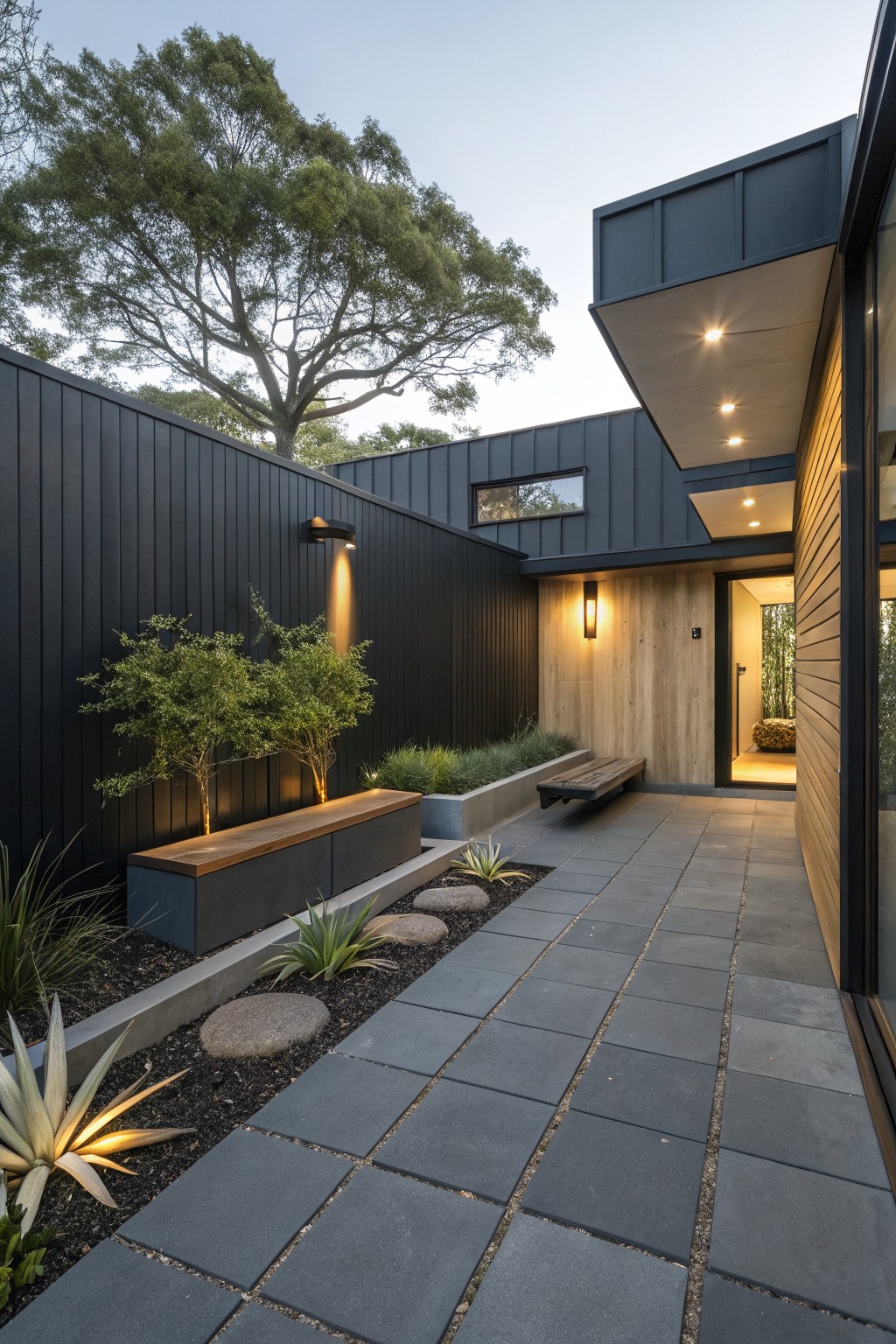
Agaves work great along a walkway like this one. Their spiky shapes give the path a strong edge and some height without needing constant care. Here they stand out against dark pavers and black walls, keeping the look clean and modern.
Plant them in gravel or mulch beds right along the path edges for homes with a simple front approach. They suit narrow yards or spots near the house. Add grasses nearby for a bit more texture, and some low lights to highlight them after dark. Just make sure they get good drainage.
Agaves Framing a Narrow Reflecting Pool
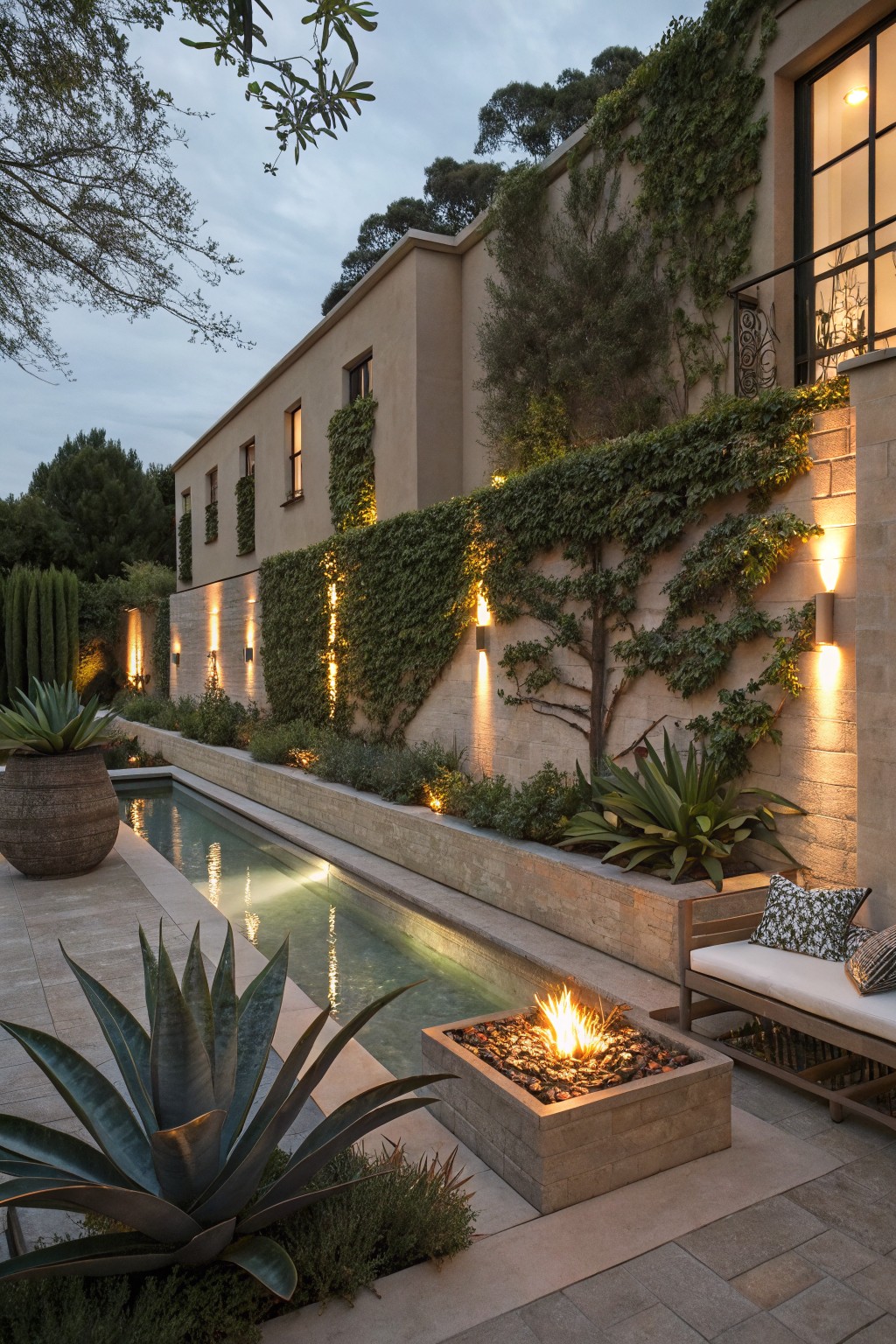
A narrow reflecting pool like this runs right along the house wall. It picks up the glow from wall lights and nearby fire pit. Large agaves sit at the end, giving the whole setup some real structure. They stand out against the climbing ivy on the stone and stucco. That contrast keeps things from looking too soft everywhere.
You can pull this off in a side yard or courtyard where space is tight. Plant the agaves bold and upright to bookend the pool. Go for low-water succulents overall so it stays simple to maintain. Works best on modern or Mediterranean style homes. Just make sure the pool edge matches your patio stone.
Winding Stone Path Edged with Agaves
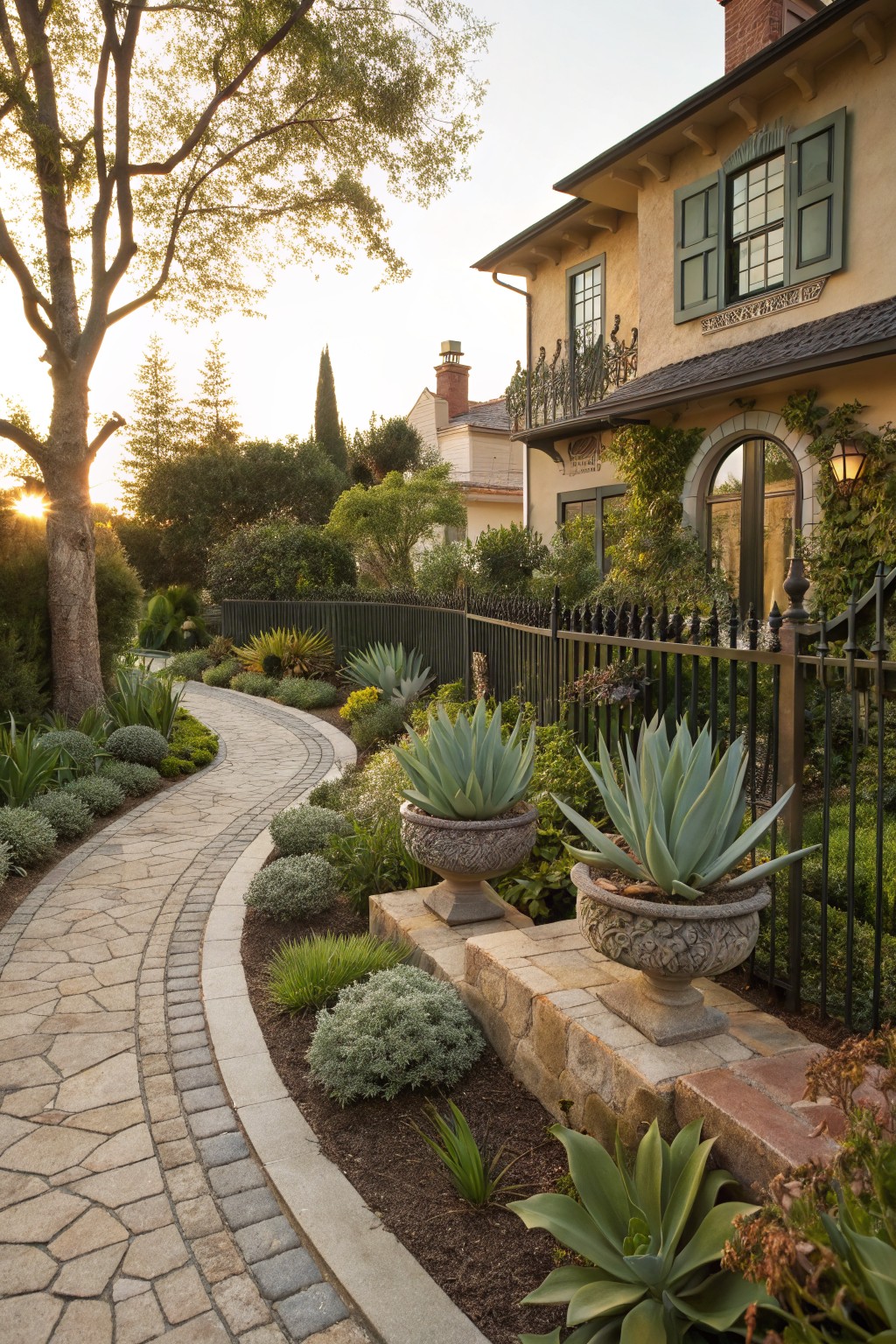
One simple way to give your garden path some real structure is to line it with big agave plants. Here the path curves gently through low plants and succulents, with those chunky agaves sitting right along the edge in pots and beds. They add height and a bit of weight without crowding the walk, and the mix keeps things from feeling too busy.
This setup works great leading up to a house entry, especially where you want low upkeep but strong lines. Plant the agaves a few feet apart so they have room to spread, and pair them with gravel or pebbles for easy drainage. It suits drier spots or front yards aiming for that clean, California look… just keep them away from high-traffic areas since the leaves can be sharp.
Terraced Stone Walls on Slopes
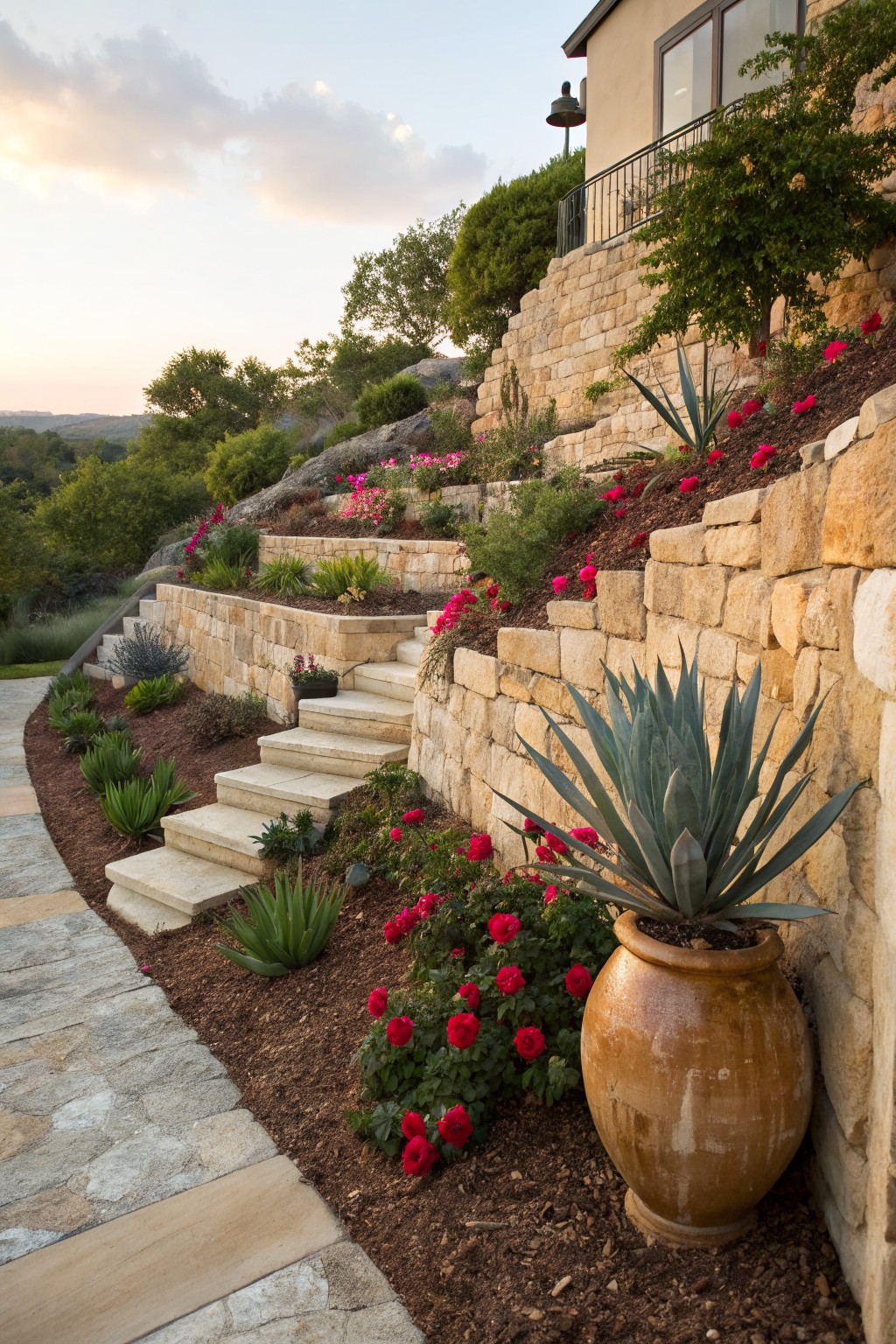
Sloped yards can be tough to work with. Terraced stone walls turn that challenge into neat planting levels. Large agave plants anchor each tier with their bold, upright shape. Red roses fill in around them, spilling softly over the edges for easy color.
This idea fits homes on hills in dry areas. Match the wall stone to your house for a smooth look. Plant agave at key spots for height and structure. Add roses where you want pops of bloom. Just make sure the terraces drain well to hold up over time.
Wooden Raised Planters Line a Rooftop Terrace

Raised wooden planters work well on plain concrete terraces like this rooftop setup. They hold agaves, herbs, and small pots in neat rows along the wall, turning a bare surface into something organized and green. The wood softens the hard concrete, and the plants fill out the boxes without spilling over. It’s a straightforward way to add planting without messing up the edges.
You can set these up on any flat rooftop or balcony where soil depth is limited. Go for sturdy untreated wood that ages nicely, and pick tough plants like agaves that handle wind and sun. Keep the path clear with gravel for easy walking. This fits small urban spots best, but watch for too much weight on the structure.
Sloped Stone Steps with Boulders and Agaves

One solid way to handle a steep hillside is wide stone steps tucked right into the slope. Big boulders hold everything in place while agaves and grasses fill in around them. It makes the climb feel natural and steady, not like you’re fighting the terrain. Plus in dry areas, plants like these take care of themselves.
This setup works best where you need to connect the street or driveway to your entry without a lot of upkeep. Try it on homes with a modern edge, especially if the yard slopes away fast. Just make sure the steps drain well so water doesn’t pool. Keeps the path clear year round.
Raised Beds Along a Stone Path
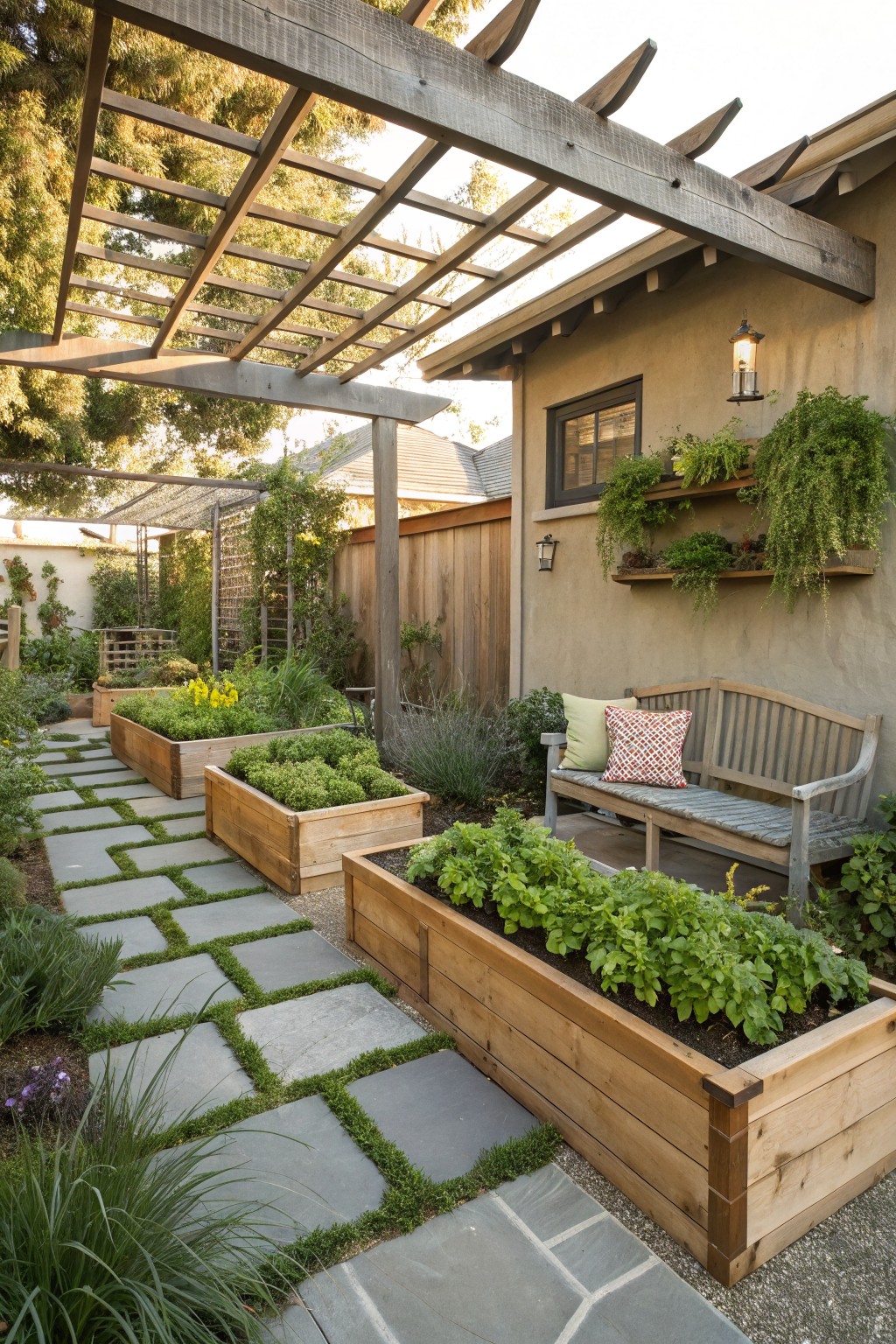
One straightforward way to turn a side yard into a working garden is lining it with matching wooden raised beds. These beds, filled with herbs like basil and greens, run right alongside a simple stone walkway. It keeps everything neat and reachable, no bending or kneeling needed. The path draws you through without crowding the plants, and a nearby bench gives a spot to sit and check on things.
This setup works great in narrow spaces next to a house or fence, where you want fresh produce without taking up lawn area. Use cedar or redwood for the beds to hold up outdoors, and keep them about knee-high for easy tending. Pair with gravel or stepping stones if full pavers feel too heavy. Just space them so you can walk between without brushing leaves everywhere.
Rose Arbors Over a Brick Entry Path
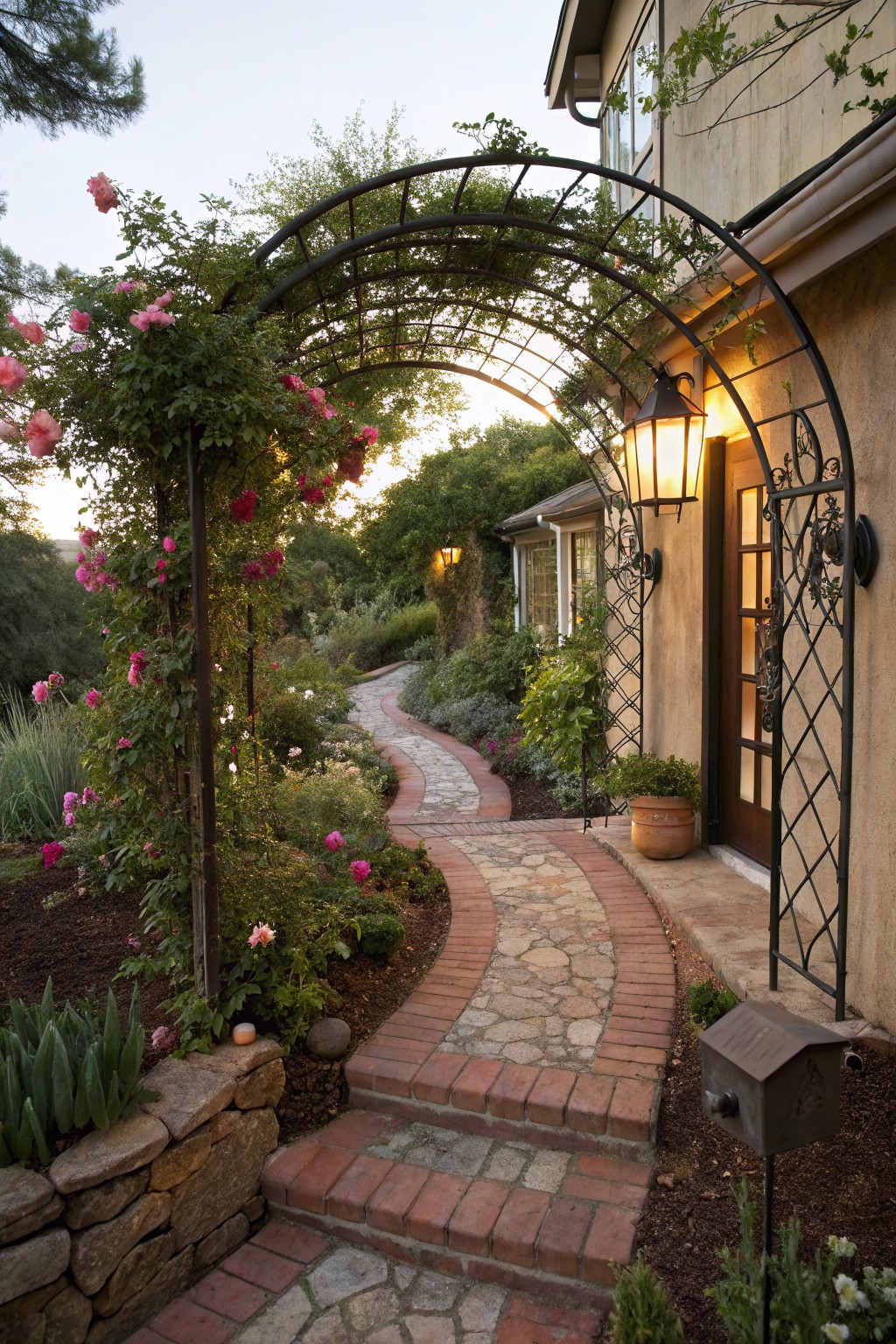
One simple way to add structure to your front garden is with metal arbors draped in climbing roses. They create a natural tunnel effect over the path, like in this setup where pink roses spill over black iron frames. The arches give height and repeat along the way, making the walk to the door feel guided and pretty without much upkeep once the plants take hold.
This works best in a side yard or along a driveway where you want some romance but need clear access. Pair the roses with tough ground plants like agaves at the base for contrast. Keep the path wide enough for two people, and prune the roses yearly so they don’t block the way. It’s great for cottage-style homes or anywhere the house sits back from the street.
Frequently Asked Questions
Q: Do agave and roses need the same watering routine?
A: Roses drink more regularly, especially during blooms, so soak them deeply once or twice a week.
Agave prefers drought, so wait until the soil dries out fully between drinks to dodge root rot.
Run a hose slowly at the base of each to keep it simple.
Q: How do I pick spots in my yard for the best contrast?
A: Tuck spiky agaves in front or along edges to frame fluffy rose bushes.
This setup draws the eye right to their shapes against each other.
Play with heights, too, for that structured punch.
Q: Can these plants handle my zone 7 winters?
A: Choose cold-hardy agave like ‘Joe’s Reverie’ and tough roses such as Rugosas.
Pile mulch around bases come fall.
They bounce back strong.
Q: What if pests show up on my agave-rose combo?
A: Check undersides of rose leaves for aphids weekly, and hose them away fast.
Agave scale bugs hate a soapy spray.
Strong sun and good air flow stop most trouble.
