

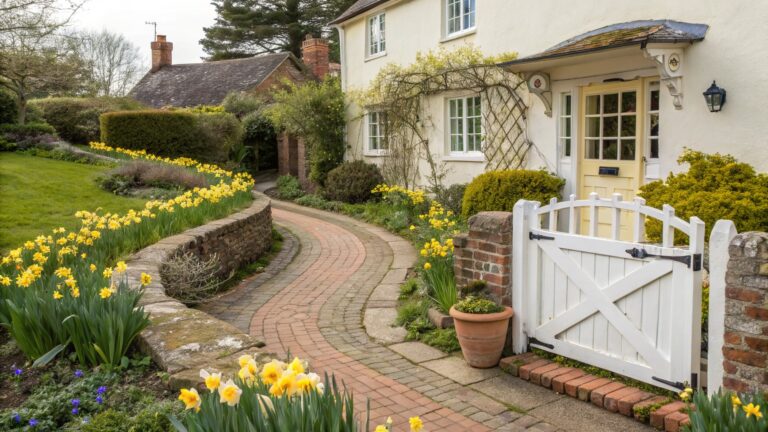
I plant daffodils every fall in loose drifts that follow the gentle slopes and pathways of my yard, so they lead the eye through the space as they bloom.
That structure helps them naturalize over years without looking messy, turning a simple bed into something reliably cheerful.
The bold yellow stands out first against low hedges or gravel walks, grabbing attention from the windows or driveway.
I once tried a straight row along the fence, but it felt too rigid until I softened it with curving edges.
These setups remind me which plantings hold up best through wet springs.
Line a Winding Path with Daffodils
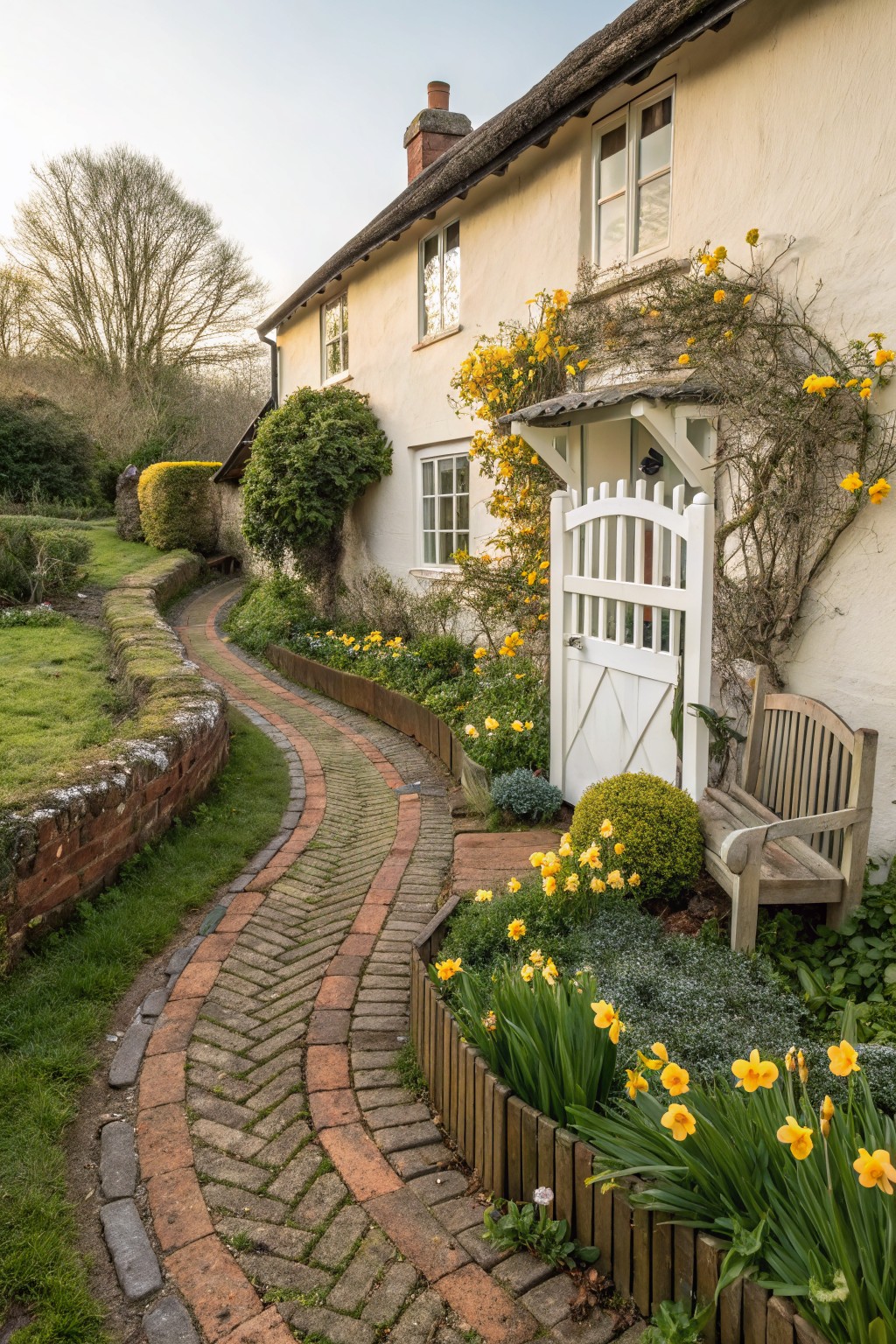
A curved brick path like this one, edged with simple wooden borders stuffed with daffodils, makes a gentle lead-in to your front door. The yellow blooms stand out against the green grass and that soft cottage wall, turning what could be a plain walkway into something cheerful that says spring has arrived. It’s straightforward but gets the garden feeling welcoming right away.
This works best in smaller front yards or cottage-style setups where you want color without a lot of fuss. Plant the bulbs close along the path in fall so they fill out by spring, and mix in a few low shrubs for year-round shape. Watch the scale though… too wide a path might lose that cozy tuck-in feel.
Gravel Path Lined with Daffodils and Boxwood Hedges

One straightforward way to welcome spring is planting daffodils right along a gravel path, edged with neat rows of boxwood hedges. It pulls the eye straight to your front door and gives that cheerful yellow glow when the bulbs come up. The low green hedges keep everything tidy, while the flowers spill over just enough to feel lively.
This setup works great in front of older homes or cottage-style places with some garden room. Plant the daffodil bulbs in fall along the path edge, then clip the boxwoods once or twice a year to hold the shape. It stays pretty simple to maintain, and those big stone urns with box balls at the ends add a bit more formality without much fuss.
Patio Dining Framed by Daffodil Planters
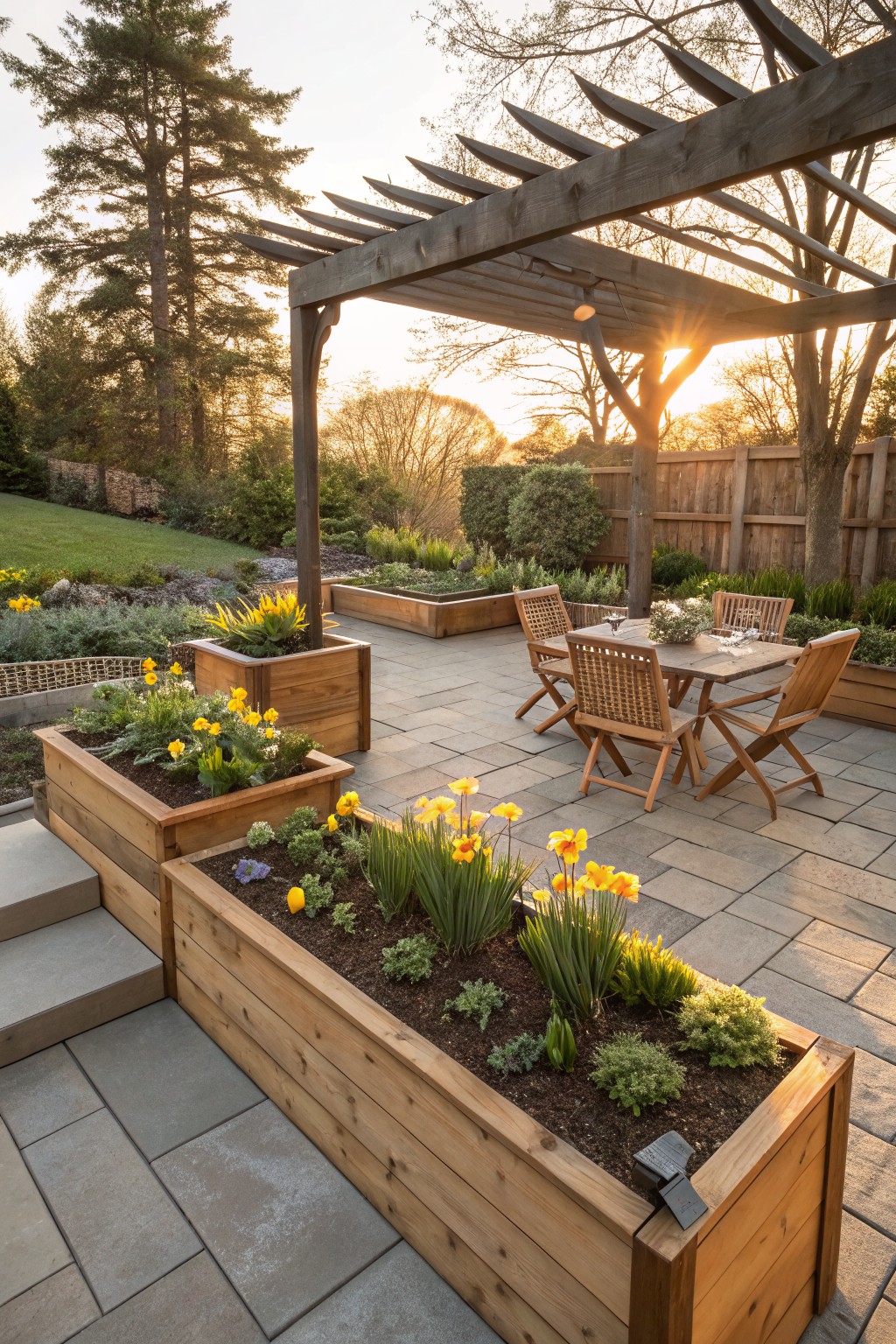
One easy way to make your patio feel more like its own little spot is to line the edges with tall wooden planters full of daffodils. The bright yellow blooms pop against the gray pavers and wooden dining setup, giving everything a cheerful spring lift without much fuss. It pulls the seating area together nicely.
This setup suits casual backyards, especially where space is tight. Build or buy simple cedar boxes, plant daffodil bulbs in fall, and tuck in some low greens for filler. Keep drainage good so the roots don’t rot… and you’ll have that sunny border back every year.
Gravel Path Lined with Daffodils and Birches

One easy way to brighten up a spring garden is planting daffodils along a simple gravel path under tall birch trees. The white bark of the birches stands out against the yellow blooms, and it pulls your eye right down the path to that old wooden bench waiting at the turn. It’s a quiet spot that feels cheerful without much work once the bulbs come up.
This setup works best in a woodland edge or cottage garden where you have some natural tree cover. Plant the bulbs in fall right along the path edges, mixing in a few white narcissus for contrast. Keep the gravel path narrow to make the flowers feel closer, and add the bench for sitting. It suits sloped yards too, since birches handle partial shade fine.
Daffodils in Balcony Rail Planters
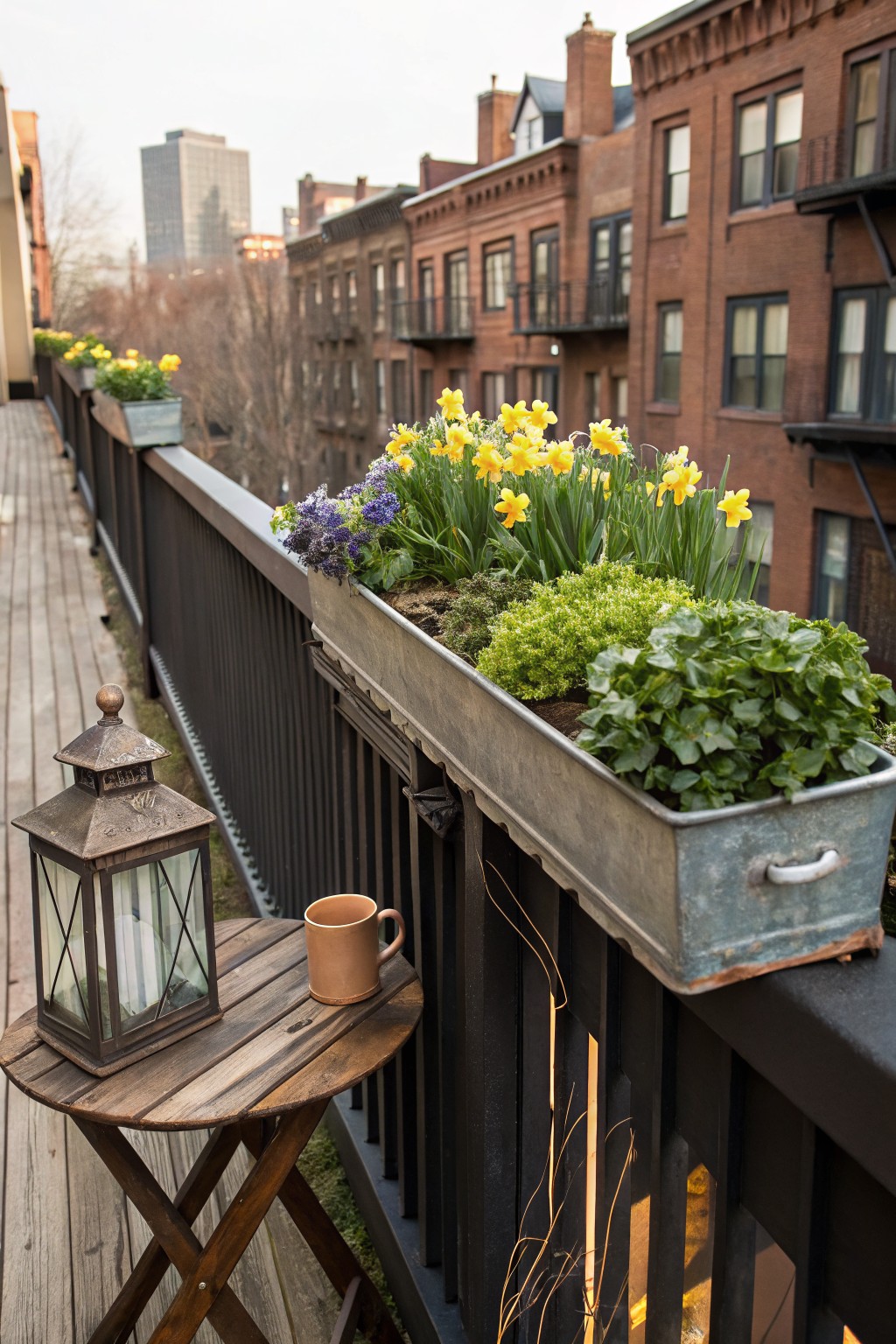
Nothing beats seeing daffodils right at eye level on a balcony. This idea uses a long metal trough mounted along the railing, packed with sunny yellow blooms mixed in with some purple flowers and green herbs. It turns a plain railing into a cheerful spring edge that fits tight city spaces, and those bright petals stand out against brick buildings and dark metal.
Try this on any balcony or porch railing three feet high or so. Secure a galvanized trough or window box, plant daffodils in the back with trailing greens up front to soften it. It works best where you want color without taking floor space… just watch the weight on older rails.
Daffodils Edging a Gravel Path

A gravel path like this one works so well when you edge it with clumps of bright daffodils. They line the walkway right up to the house door, filling that front approach with yellow cheer just as spring gets going. The simple raised bed keeps the flowers contained and neat against the loose stones.
This idea fits cottage gardens or any spot with a bit of slope, like near a seaside wall. Plant the bulbs in fall along the path edge, maybe in a wooden bed for easy upkeep. It pulls the eye to the entry without much fuss, and the yellow holds up even on gray days.
Daffodils Lining a Simple Gravel Path

One straightforward way to brighten a walkway is planting yellow daffodils in low raised concrete beds right along the edges. Here, they pop against white gravel and lead straight to the house door, with a wooden bench tucked nearby for a rest spot. The clean lines keep it modern and tidy, while the flowers add that spring cheer without overwhelming the space.
This works best on entry paths or side yards next to a plain exterior wall. Go for concrete edging about a foot high, fill with bulbs in fall, and mulch with gravel to cut down on weeding. It suits smaller properties or modern homes where you want color but not fuss… just watch that the beds drain well to keep bulbs happy year after year.
Daffodils in Stone Retaining Walls

Planting bright yellow daffodils right into pockets of natural stone retaining walls gives a garden that rugged, built-to-last feel while adding spring cheer. In this setup, the flowers tuck into the gaps and spill over the edges, softening the hard stone lines without much effort. It works because the yellow pops against the beige tones, and the bulbs come back each year on their own.
Try this on sloped yards or anywhere you have tiered walls leading to a patio or deck. Go for mid-sized daffodils that won’t flop over the edges too much. Just make sure the soil in those pockets drains well, or the bulbs might rot after rain.
Daffodils Lining Driveway Edges
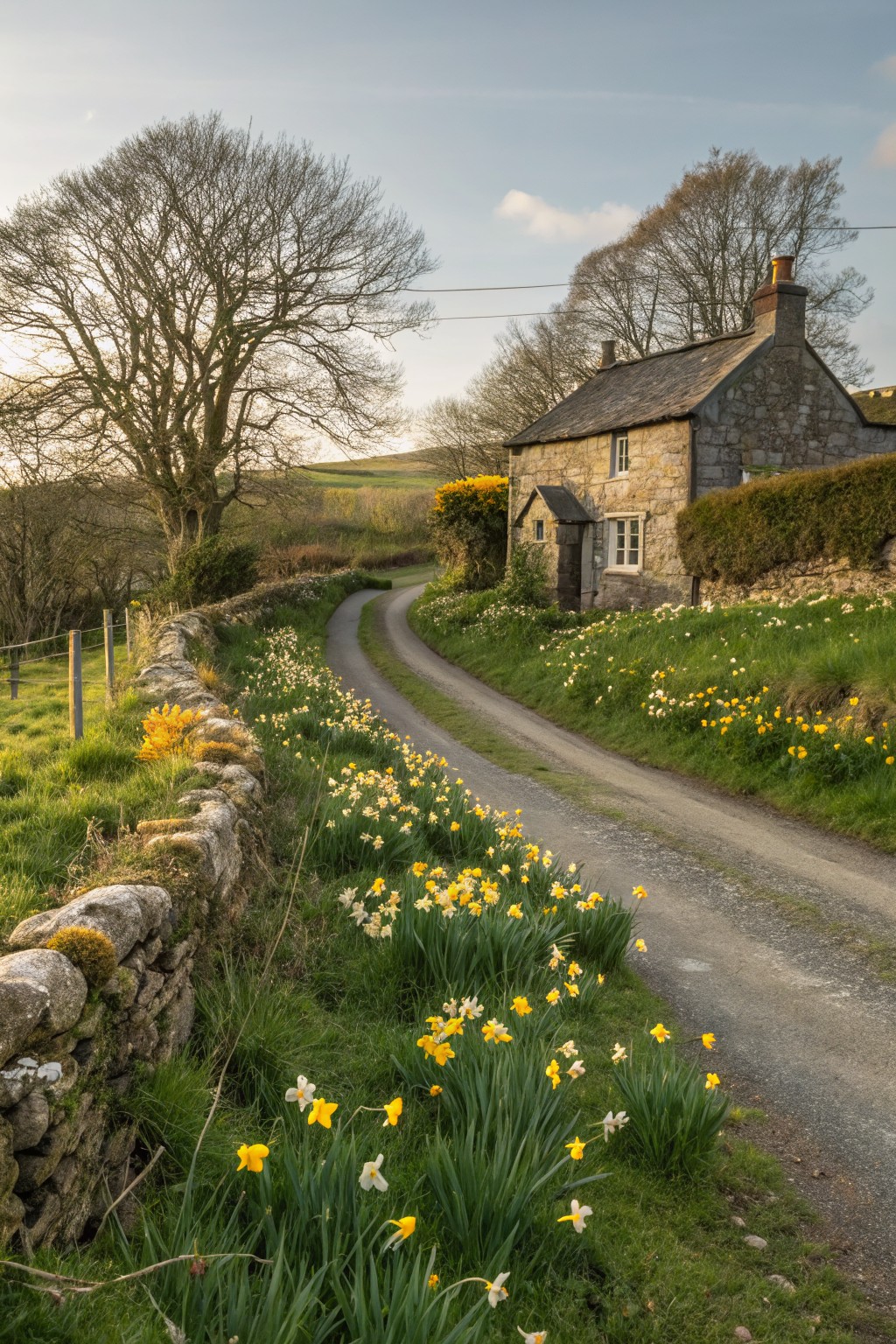
One simple way to welcome spring is planting daffodils right along your driveway edges. Here they fill in thickly beside a low stone wall, leading the eye up a gentle curve to the house. The yellow blooms stand out against the gray stones and fresh grass. It makes the whole approach feel alive and happy without much effort.
This works best on country lanes or rural driveways where you have room for natural borders. Plant the bulbs in fall along walls or fences, letting them naturalize over time. They come back stronger each year. Skip this if your drive is too narrow or formal, though. It suits older stone homes like this cottage.
Daffodils Along Sloped Stone Steps
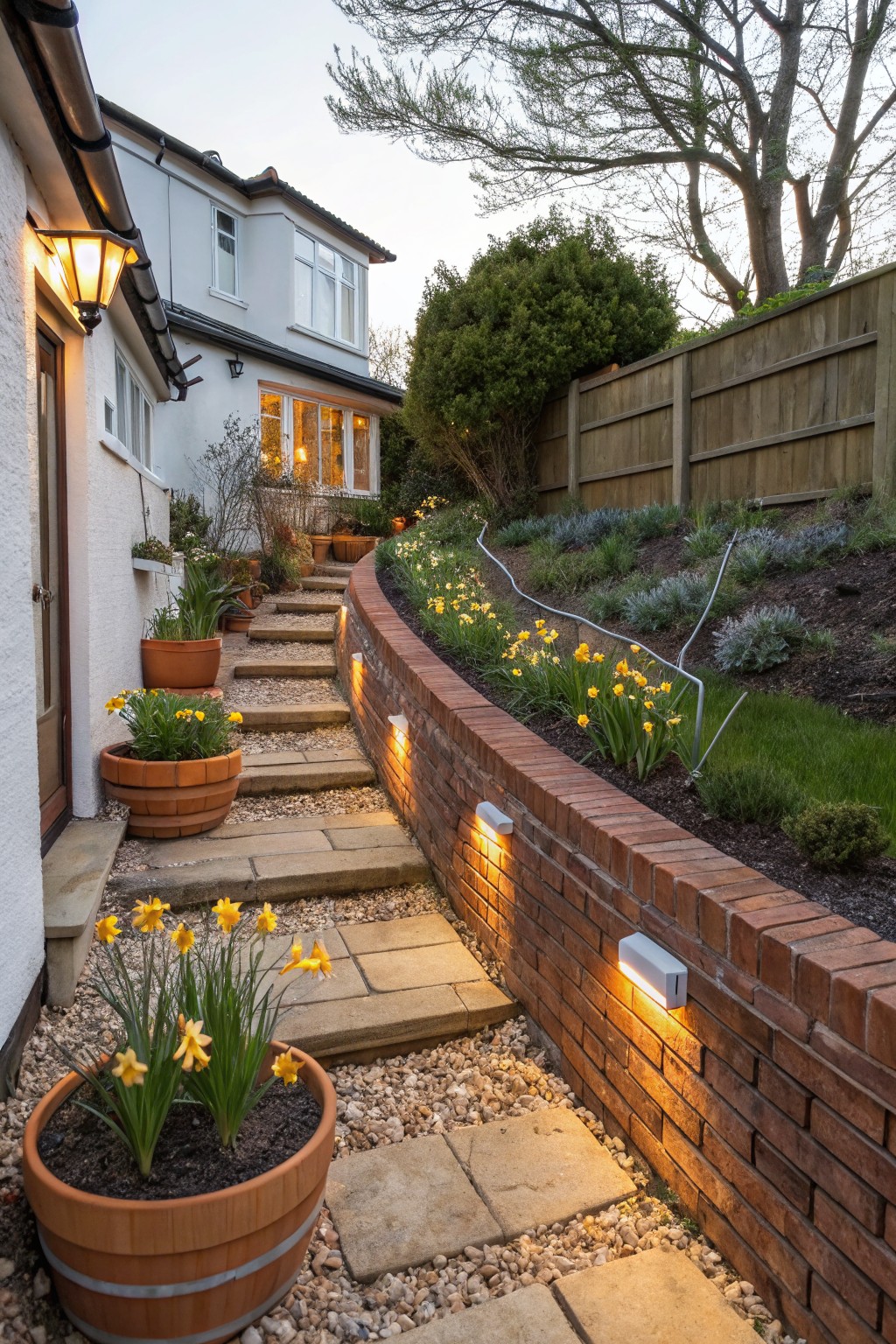
One simple way to brighten a tricky slope is lining stone steps with daffodils. Here the path curves gently up to the house door, with yellow blooms tucked into the brick retaining wall and spilling over the edges. It turns what could be a plain climb into something cheerful, especially in early spring when the flowers are at their peak.
This works best in side yards or where you have a rise to the entry. Plant the bulbs in fall along both sides of the steps, maybe add a few pots at the base for extra color. Low wall lights help at night too. Just keep the gravel or mulch tidy around them so the path stays clear.
Raised Beds for Daffodil Plantings
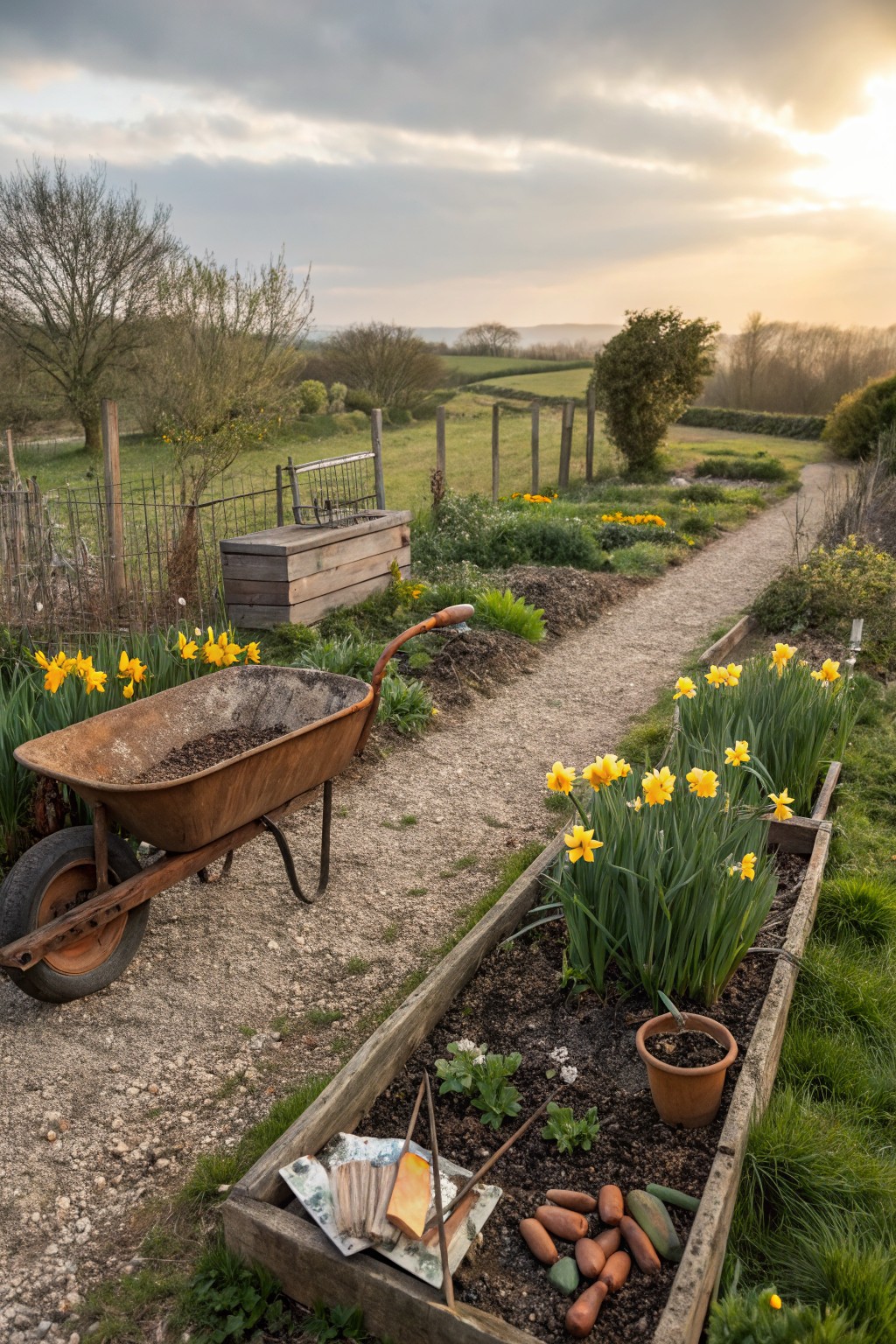
Raised beds make it easy to grow daffodils right alongside your veggies and herbs. In this setup, the wooden frames hold back soil nicely and let those bright yellow blooms stand out against the green shoots coming up. The gravel path keeps everything accessible without getting muddy, and you can see practical touches like a wheelbarrow parked nearby for hauling dirt or tools.
These work great in smaller yards or sloped spots where ground level planting gets tricky. Build them from scrap wood or buy kits, plant bulbs in fall for spring color, and mix in things like potatoes or greens underneath. Just keep the beds under three feet wide so you can reach across easily. They suit cottage gardens or practical plots… low fuss, big cheer.
Formal Parterre Gardens with Daffodils

A formal parterre garden uses clipped boxwood hedges to form neat geometric shapes around flower beds. In spring, fill those beds with bright daffodils for a cheerful pop of yellow. The gravel paths and central fountain keep everything looking crisp and organized. This setup turns a plain yard into something structured and pretty without much color overload.
It works best around older homes with stone facades or in sunny side yards where you want definition. Plant the daffodils in fall so they come up strong come spring. Boxwoods need trimming a couple times a year, but they hold the shape well. Skip it if your space is too shady or small, since the patterns need room to breathe.
Daffodils Along a Curved Gravel Path
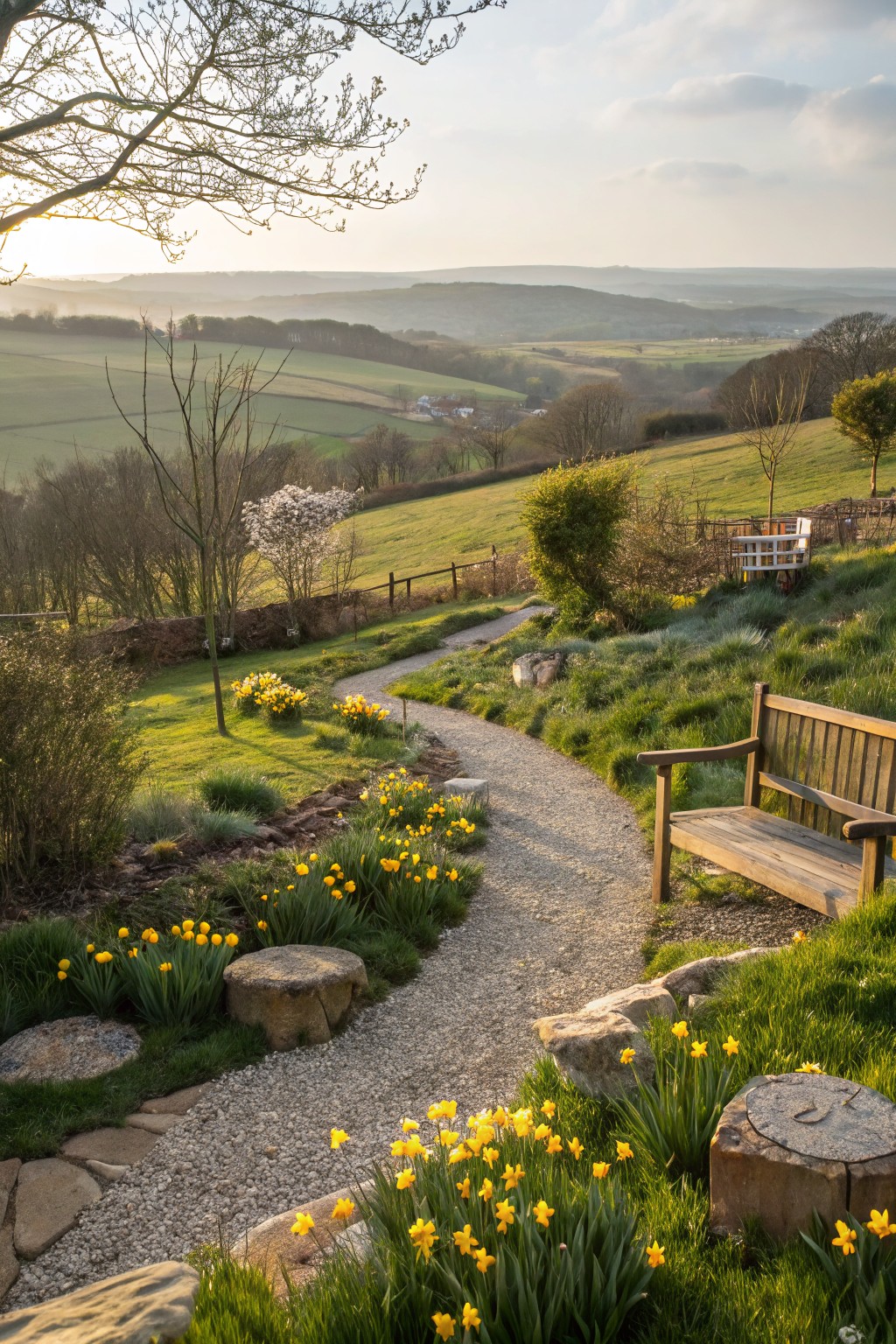
A gravel path that winds through the garden makes for an easy spring stroll, and planting daffodils right along the edges turns it into something special. Those yellow blooms pop against the gray stones and green grass, guiding your eye around bends and up to a bench with a nice view. It’s a straightforward way to add cheer without much fuss.
You can do this in any backyard with room for a path, maybe leading from the house to a patio or viewpoint. Use mulch or pea gravel for the base, tuck daffodil bulbs into the soil on both sides in fall, and add a few boulders or log slices for seats. It suits sloped yards well, keeps things low maintenance after the blooms fade.
Daffodils Along a Narrow Garden Path

A simple way to brighten up a skinny walkway is to edge it with clumps of daffodils. Here the yellow blooms fill raised beds and pots right next to the stone path. They stand out against the brick walls and make that short stroll feel cheerful and full of life come spring.
This works great in tight urban yards or side alleys where you can’t plant much. Bulbs go in during fall, then pop up early without much fuss. Pair them with low greens that fill in later so the path stays neat year round. Just keep the pots heavy to avoid tipping on a walkway.
Potted Daffodils Along the Entry Path

Nothing says spring like clusters of daffodils spilling out of big clay pots. Here they line a simple curved path right up to the door, mixing in with olive trees and other plants for an easy cheerful look. The yellow blooms stand out against plain white walls and warm tile without much fuss.
You can pull this off in any sunny courtyard or side yard near the house. Go for those rough terracotta pots in different sizes, tuck a few dozen bulbs in each come fall, and let them brighten things up come March. It suits older stucco homes or places with a bit of rustic style. Just keep the pots watered through dry spells so the flowers last.
Daffodils Along a Garden Fence

A simple row of daffodils tucked against a fence base can turn a plain front edge into something cheerful. These yellow blooms fill out a narrow bed right along black iron railings, spilling just a bit over mossy stones. It keeps things tidy yet lively, especially on a small lot where space is tight.
Try this along any boundary fence or low wall near the street or path. It suits older homes with classic details, like painted siding or slate roofs. Plant in fall for best roots, and pair with low shrubs behind to hold soil in place. They pop early spring, then fade without much cleanup.
Line Garden Paths with Daffodil Raised Beds

Long wooden raised beds filled with daffodils make a simple way to edge a path. Here they run right alongside a gravel walkway, putting those yellow blooms at walking height for an easy pop of cheer. The straight lines keep it neat, and the wood fits a casual garden shed setup without much fuss.
This works best in narrow spots next to sheds or fences where you want color without taking up yard space. Plant the bulbs in fall for spring show, mix in lettuce or greens underneath for year-round use. Keep the beds raised a foot or so to help with drainage, especially in wet spots.
Daffodil Lined Stone Steps
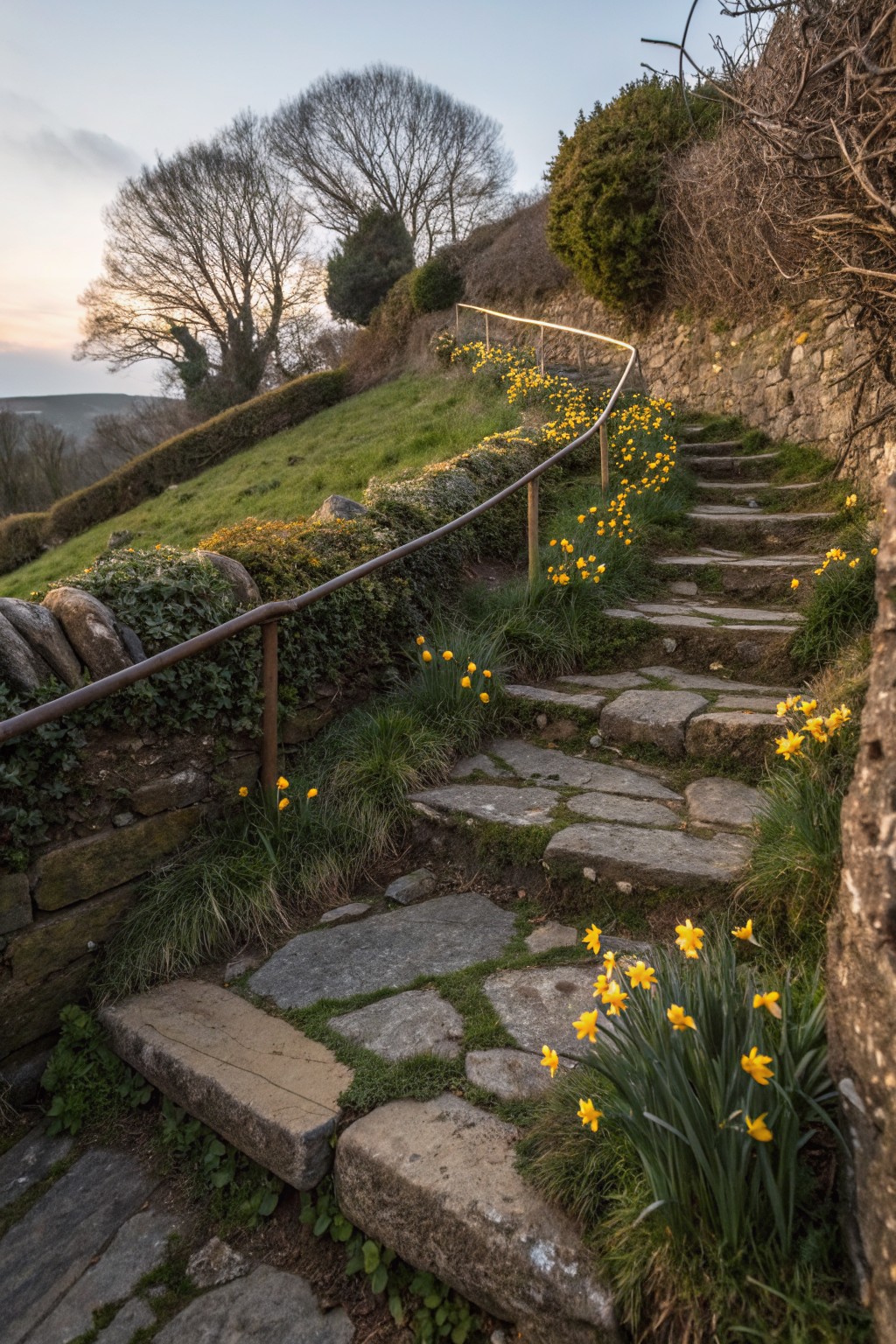
One simple way to brighten a garden path is planting daffodils right along stone steps. The yellow flowers pop against the gray stones and make the climb feel cheerful, especially in early spring. Here the steps wind up a hillside with handrails for safety, and the daffodils fill in the edges without much fuss.
These work best on sloped yards where you need practical access to higher spots. Plant the bulbs in fall along both sides, and they’ll come up reliably each year. Stone steps like these suit cottage style homes or rural spots… just keep the path clear of taller plants so it stays walkable.
Daffodils Edging a Stone Patio
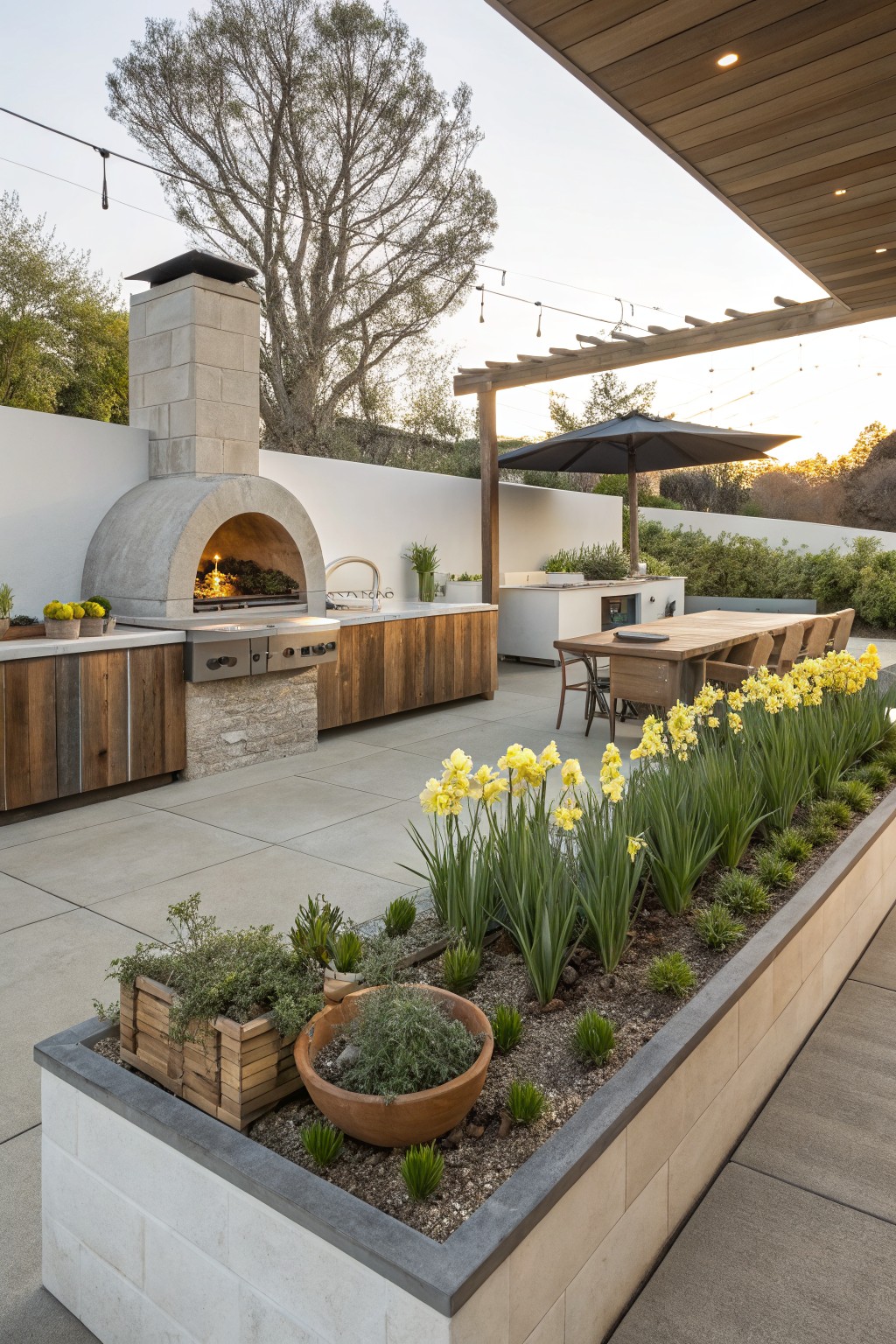
A simple row of yellow daffodils tucked into a low raised bed makes this patio feel more alive. The bed runs right along the paver edge, so the bright blooms sit close to the outdoor kitchen and dining table without crowding the space. It’s a clean way to add spring cheer where you spend time outside.
This works best in full sun next to hardscaped areas like patios or paths. Pick a sturdy material for the bed, like concrete blocks, to hold soil and let bulbs naturalize over time. It suits modern yards or any spot that needs a pop of color against neutral stone.
Frequently Asked Questions
Q: When’s the best time to plant daffodil bulbs for a spring show?
A: Plant them in early fall, about six weeks before your first frost. This lets roots settle in over winter so shoots pop up right on time.
Q: How do I make sure my daffodils return strong next year?
A: Leave the green leaves alone after blooms fade. They pull nutrients back to the bulb. And chop them only when they turn fully yellow.
Q: Can I grow daffodils in containers on my deck?
A: Sure, pick deep pots at least 12 inches across. Pack in several bulbs close together for a clustered effect. Water regularly until shoots appear, then ease off.
Q: What if some daffodils flop over when they bloom?
A: Stake them loosely with thin branches or pea sticks early in the season. Plant next time in a spot with better drainage to toughen stems. Quick fix keeps that cheerful vibe intact.
