

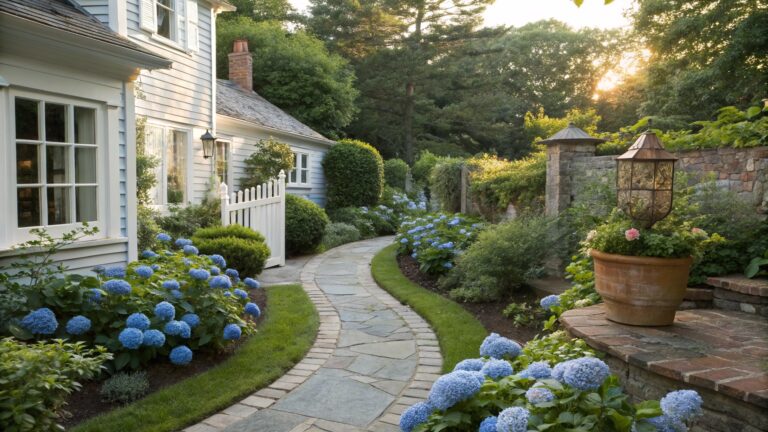
I’ve spent years tweaking garden beds and found that blue flowers work best when layered from tall spires in the back to low mounds along the edges. That structure creates a natural flow through the space, guiding your eye along winding paths without any sharp breaks. Blues fade into the distance just right. In my yard, starting with simple repeats of salvia and lobelia along borders changed how the whole plot settled over time. These approaches catch your attention from the end of the driveway first, and several are practical enough to try and refine in your own setup.
Winding Path Lined with Hydrangeas
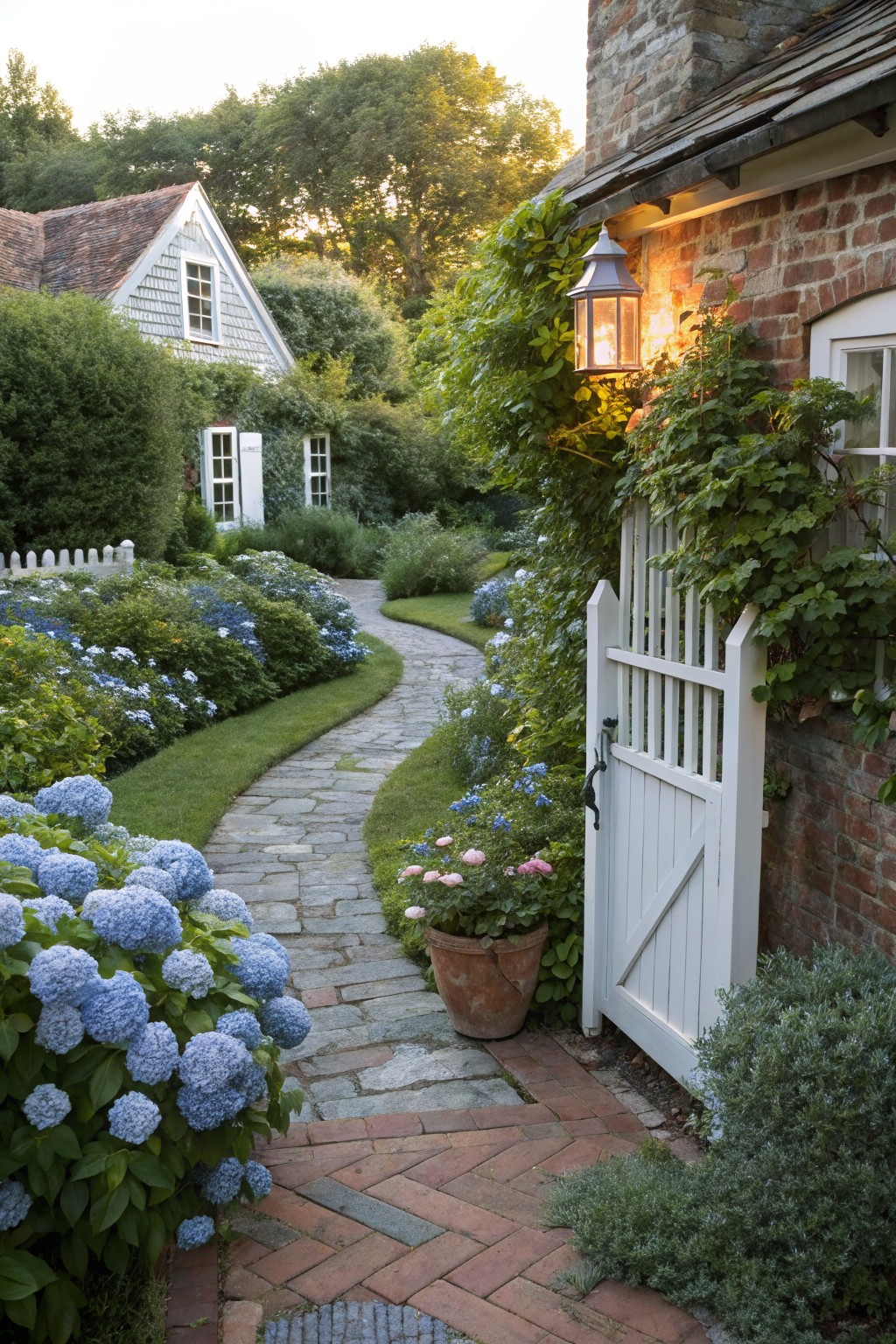
A simple curving path like this one makes a garden walk feel longer and more relaxed. Stone pavers wind gently between tall hydrangea bushes heavy with blue blooms. That setup pulls your eye forward to the white gate at the end. It turns a plain walkway into something you actually want to stroll along.
You can add this in a side yard or toward a back door. Line both sides with hydrangeas for balance. They do well in partial shade near a house wall. Keep the path three feet wide so two people can walk side by side. On brick or stone homes it looks right at home.
Stepping Stone Path with Blue Flowers
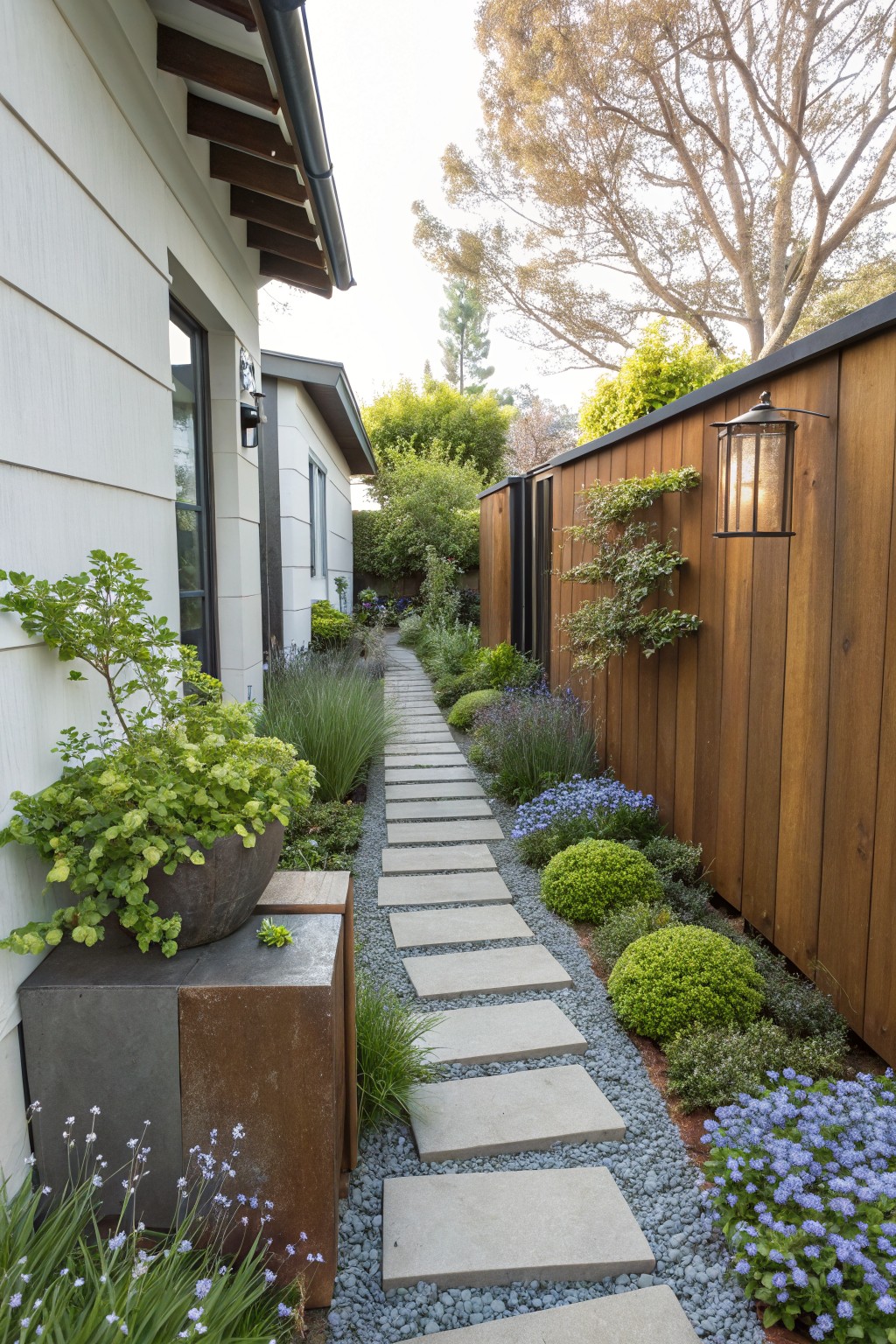
A narrow walkway like this uses big concrete stepping stones laid right into gravel. Blue flowers hug the edges, mixed with low shrubs and grasses. It makes a tight side yard feel open and calm. No fuss, just a gentle path that draws you along without crowding the space.
Try it where you need access between the house and fence. Go for tough blue bloomers like lobelia or speedwell that handle dry spots. Keeps maintenance low… suits modern homes or cottages. Just space the stones for natural steps, about two feet apart.
Built-In Fire Pit in a Curved Stone Wall
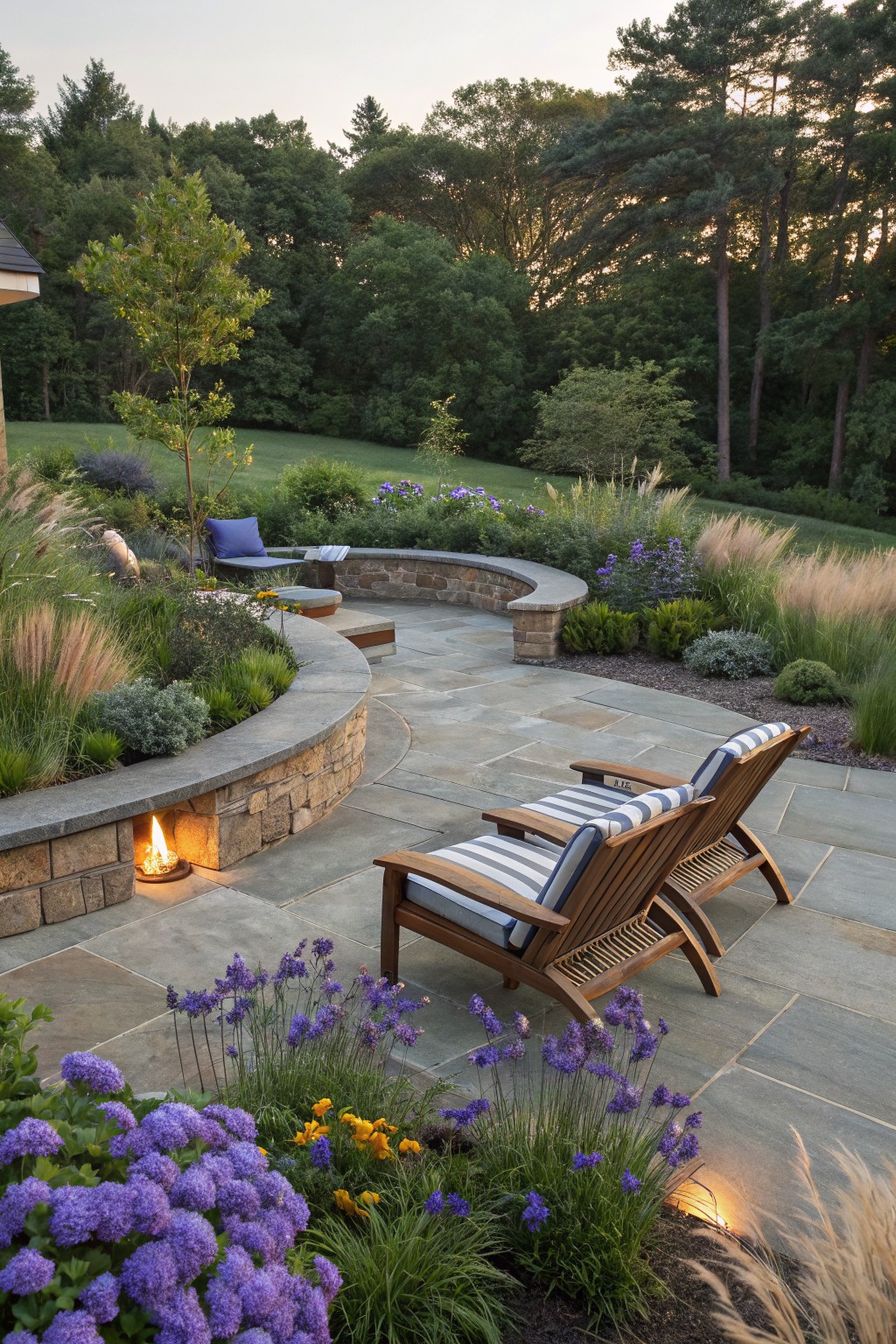
This curved stone wall does a lot. It retains soil for the garden above, acts as a bench, and has a small fire pit built right into its base. Lounge chairs face it directly on the paver patio, making a simple spot to sit and watch the flames. Blue flowers like plump clusters of ageratum fill the edges, softening everything up.
Try it where you have a slope to manage anyway. Stack the stone to curve gently, leave space for the fire insert, and plant tough perennials at the front. It fits relaxed backyards best, keeps seating close without crowding the lawn. Just make sure good drainage around the fire.
Lining Side Paths with Tall Blue Delphiniums
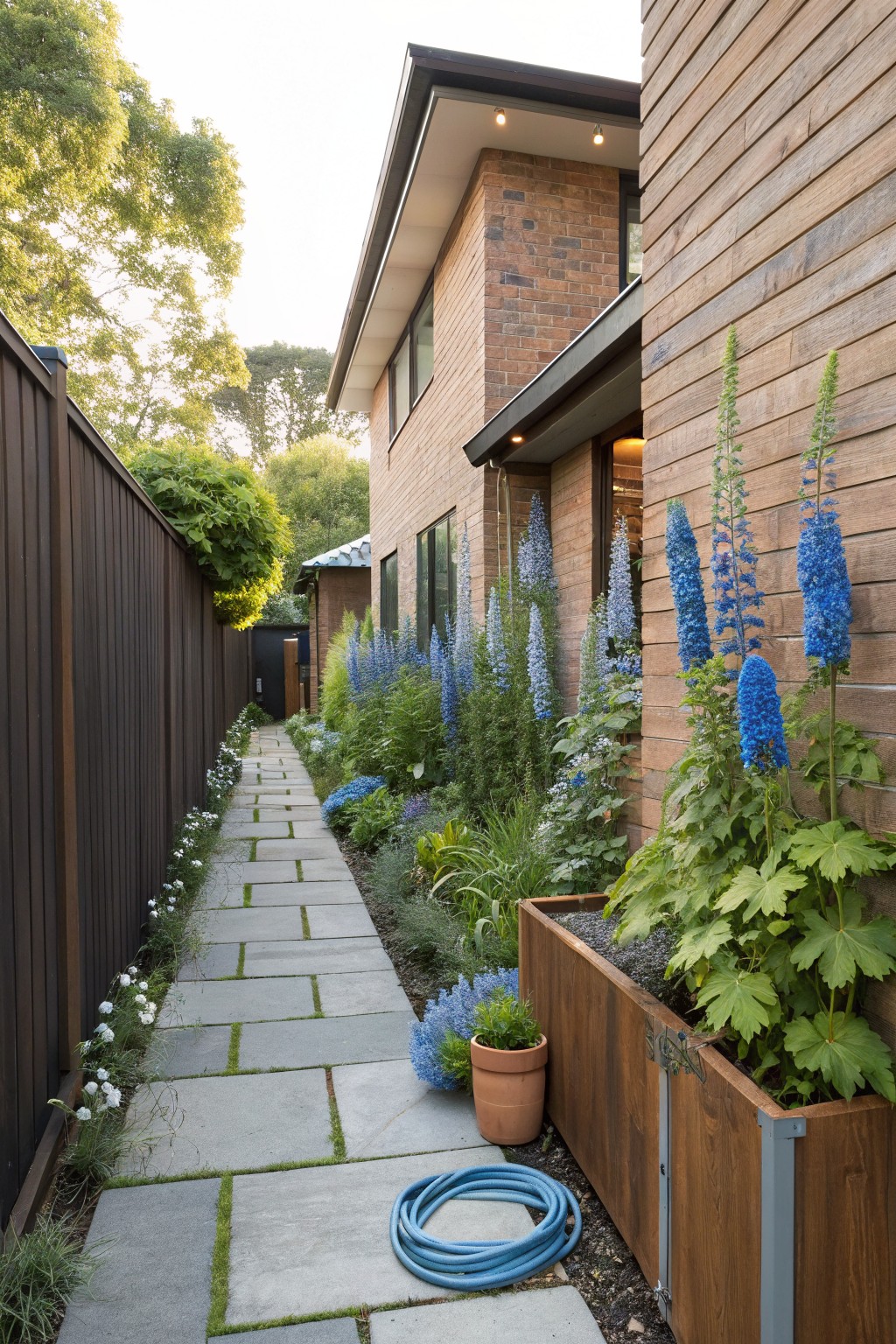
Tall blue delphiniums work well to frame a narrow garden path like this one. They bring vertical lines and a cool blue repeat that feels calm and pulls the eye along without overwhelming the space. Here the spikes stand out against the wood siding and fence, mixing nicely with lower plants for easy layers.
Try this in side yards where room is tight. Space the delphiniums in drifts for rhythm, then tuck in ground covers or pots at the base. It suits homes with clean lines, like midcentury styles. Just pick a sunny spot… they need it to bloom right.
Blue Flowers Along Entry Steps
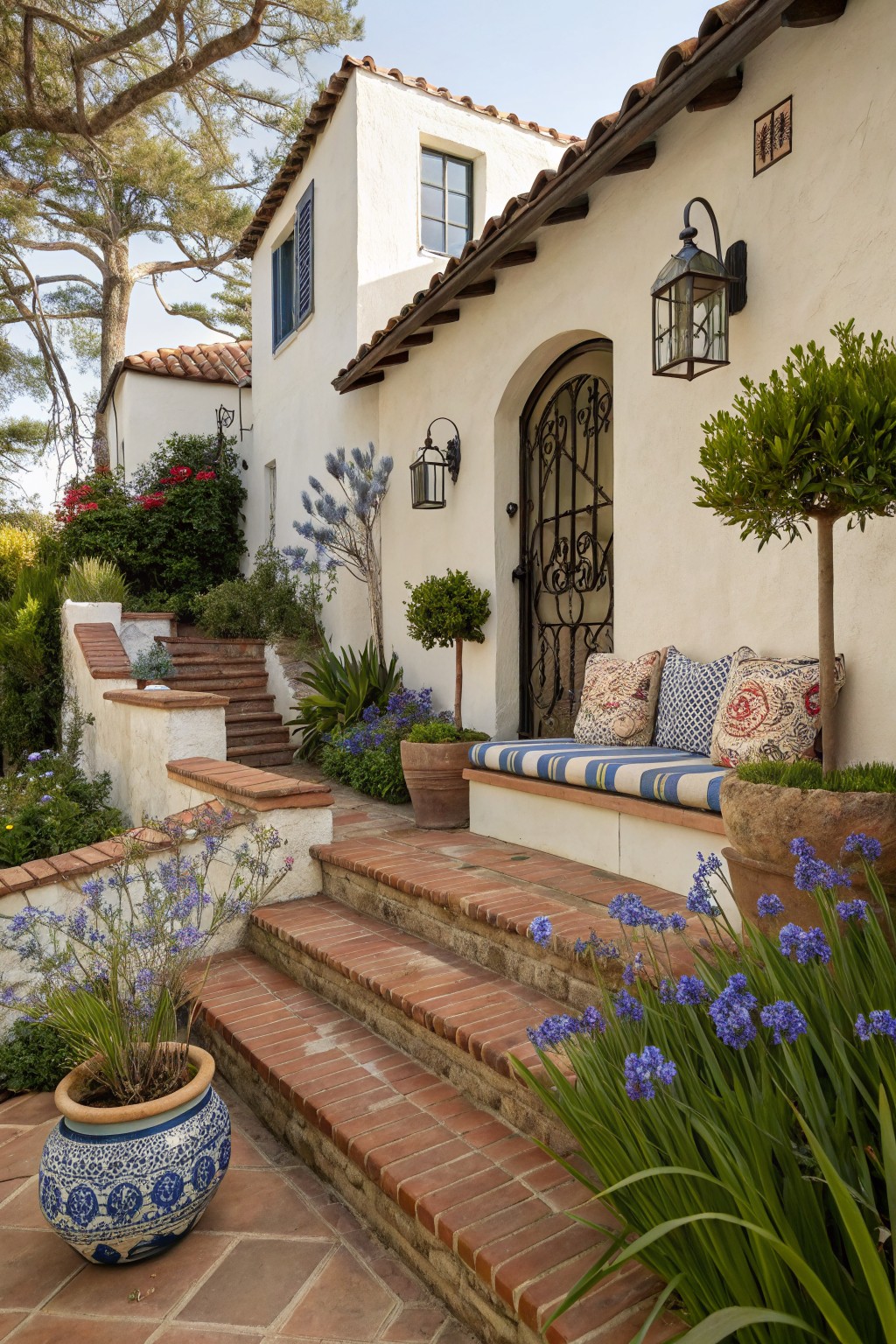
One simple way to make your front entry more welcoming is to plant blue flowers right along the steps. Here you see drifts of agapanthus hugging the brick risers, with their purple-blue blooms repeating up toward the door. It softens those hard edges and draws your eye in a calm, natural rhythm. The mix with grasses and a big blue-and-white pot at the base keeps it from looking too fussy.
This works best on homes with clean lines or stucco facades, like older bungalows or Mediterranean styles. Space the plants in loose groups rather than straight lines, and pick tough bloomers that handle foot traffic. Watch for spots where steps meet walls. A bench nearby lets folks pause and enjoy it.
Lavender Parterre Garden Paths
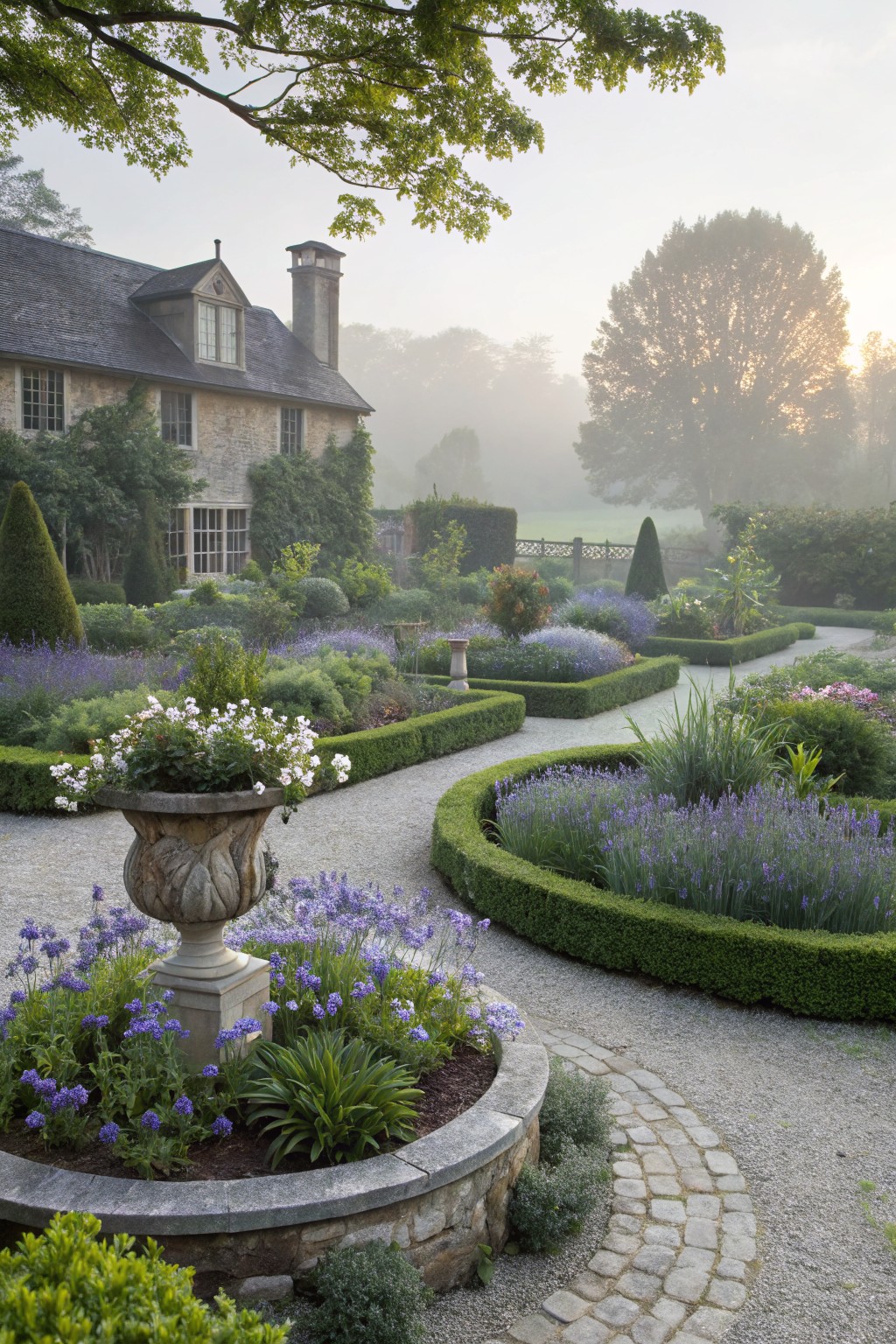
A simple parterre layout like this uses gravel paths winding through boxwood-edged beds full of lavender. The repeating blue-purple flowers give the garden a quiet rhythm that feels restful, especially with the soft morning light filtering through. That stone urn planted up adds a nice focal point without overdoing it.
You can pull this off in a side yard or front approach to an older home. Stick lavender along the path edges for low upkeep and scent, then clip the boxwoods a couple times a year. It suits temperate spots where lavender thrives… just avoid super wet soil.
Terraced Stone Walls Filled with Blue Flowers

Slopes can be tricky in a garden. But terraced walls made from local stone turn that challenge into something beautiful. Here you see levels of planting beds packed with blue lavender and similar flowers. The curves keep it from feeling stiff. And that winding path invites a slow walk up. Blues against the gray stone just settle the eye.
Try this on any hillside yard. Stack the stones dry, no mortar if you can, for that natural look. Fill beds with low growers like lavender or catmint that spill over edges. It suits cottage style homes best. Watch the drainage though. Wet soil behind walls can push them out over time.
Blue Flower Beds Edging Driveway Paths
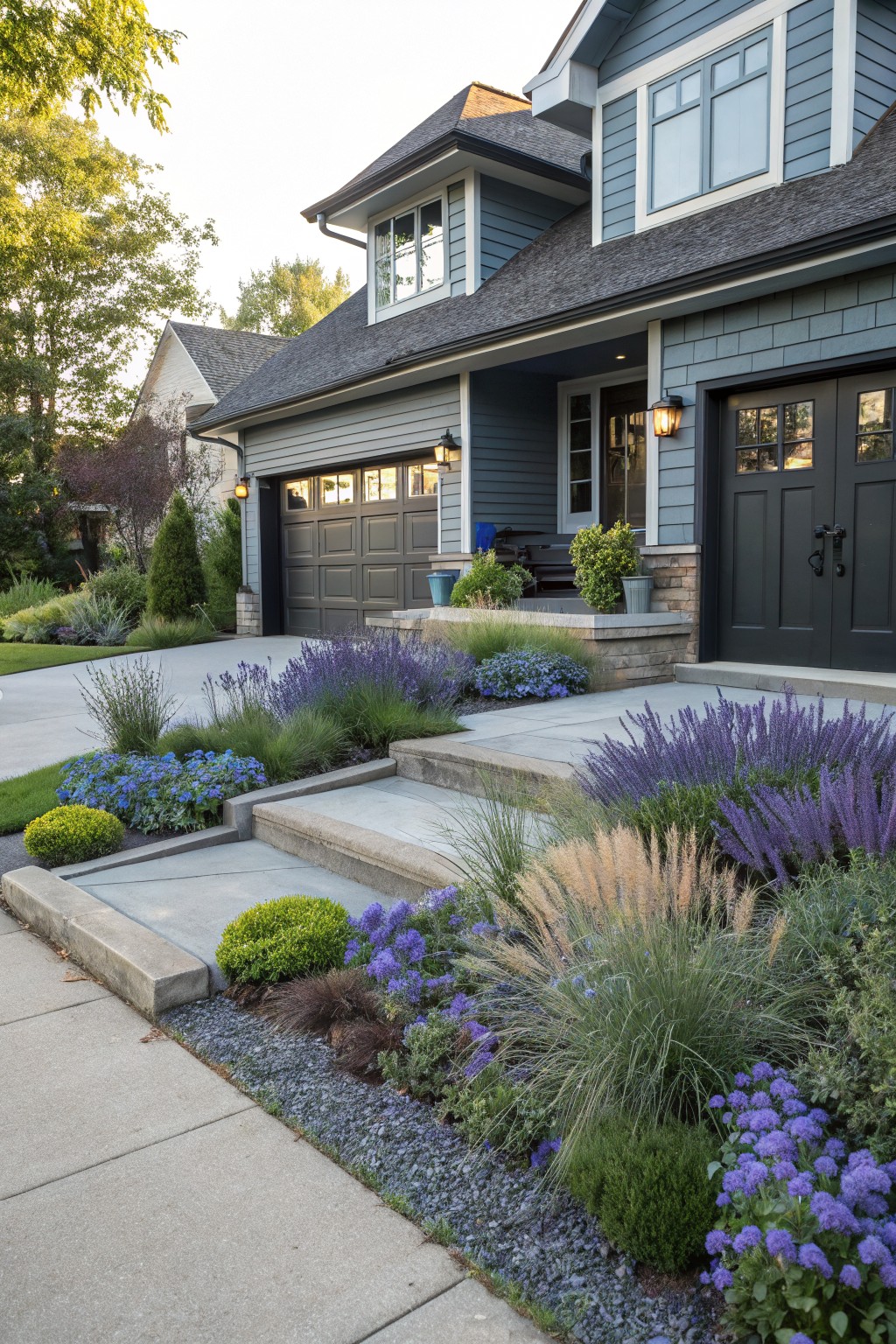
One simple way to make a driveway feel less stark is to tuck in beds of blue and purple flowers right along the edges. Here you see lavender spilling over concrete steps and paths, mixed with those fluffy grasses and little blue blooms. It softens everything up without taking over. The colors stay cool and calm, which fits right into a serene garden look.
These beds work best where you have straight hardscaping like a driveway or walkway. Plant the taller lavender toward the back, shorter flowers up front, and mulch with gravel to keep weeds down. It’s low fuss once established, great for modern houses with clean lines. Just make sure the spot gets full sun… lavender won’t thrive in shade.
Terrace Dining Framed by Blue Hydrangea Beds
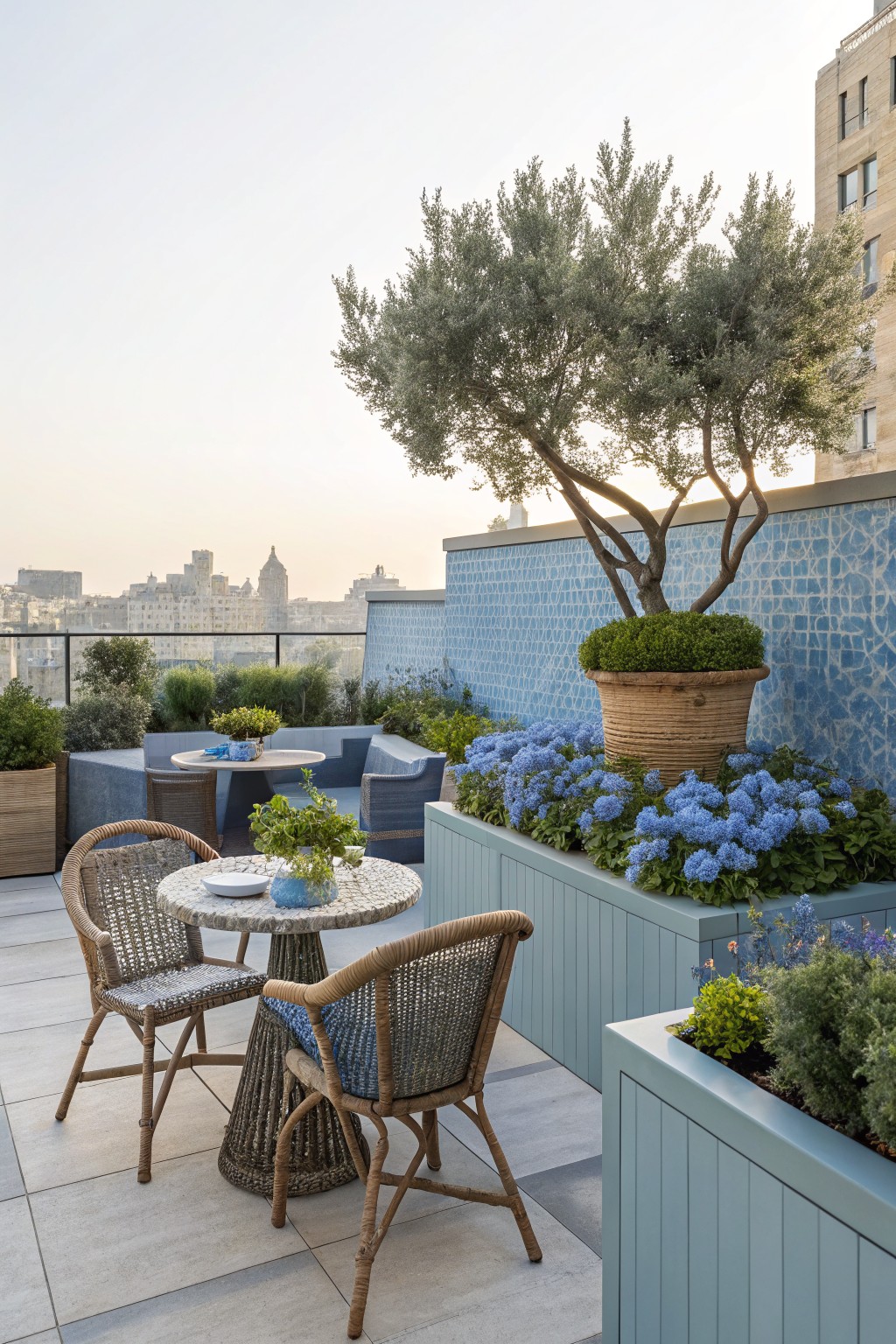
A simple round table and rattan chairs sit right in the middle of this rooftop terrace, but what makes the spot feel so calm are the raised beds along the edge packed with blue hydrangeas. Those low wooden planters, painted a soft blue, hold back the flowers just enough to keep the seating open while adding that lush, full look. The blue ties into a tiled wall nearby, and it all works because the flowers stay low enough not to block the view.
You can pull this off on any balcony or flat roof with decent sun. Pick a compact hydrangea variety that blooms reliably, then build or buy raised beds about two feet high to hug the perimeter. Skip tall plants in the center so the table stays the focal point. It suits urban spots best, where you want color without crowding the floor space.
Winding Stone Path Edged in Blue
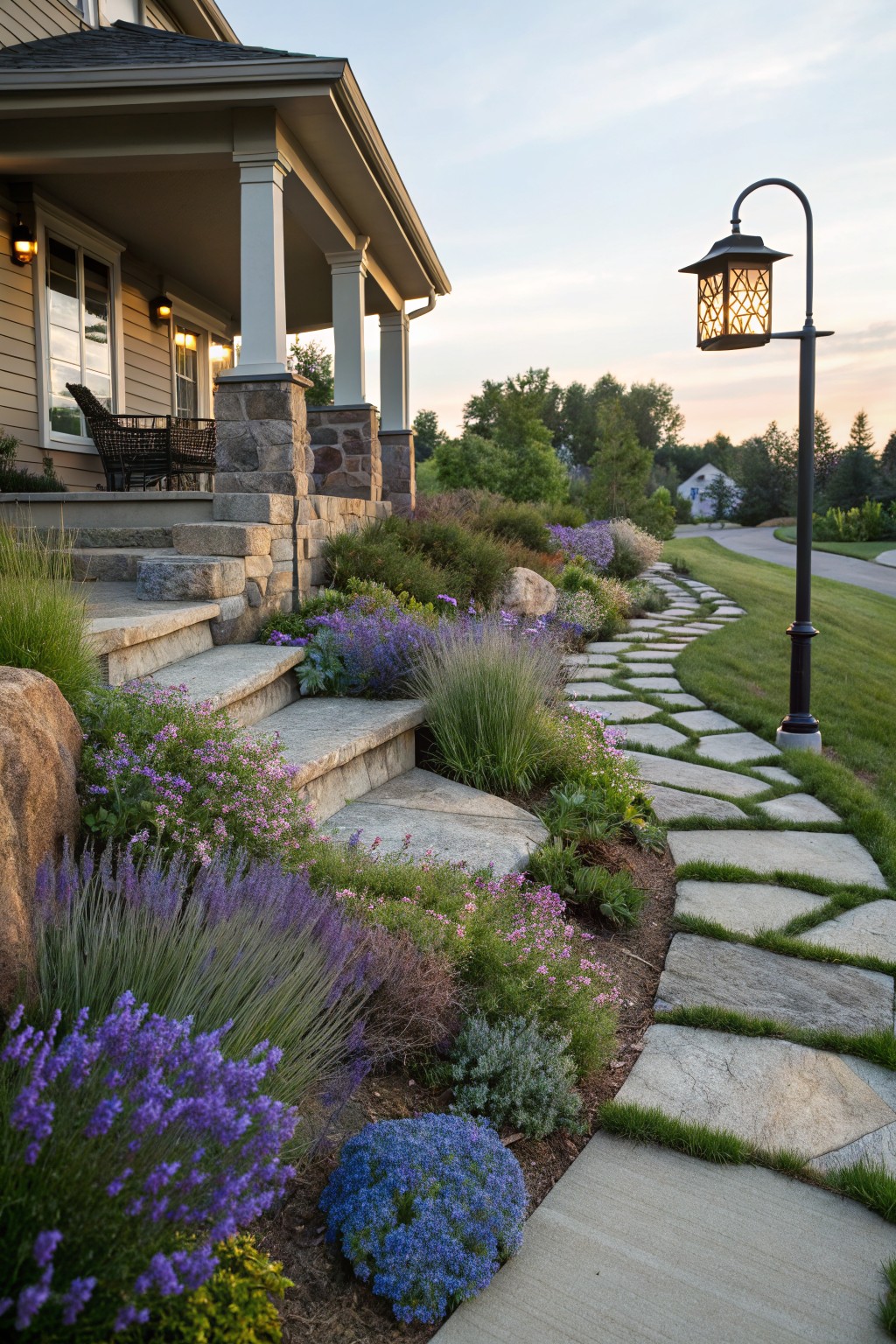
A simple flagstone path that curves gently through layered garden beds makes for an easy walk to the front door. Here, tall lavender spikes and low blue cushions fill the edges, mixing with grasses and rocks for a natural look. It pulls your eye up the steps without feeling too busy, and those blues keep things calm even as the sun sets.
This works best in a side yard or along an entry approach where you want low upkeep but steady color. Plant the blues in drifts for rhythm, tuck in a few boulders for scale, and let grass fill gaps. Suits most homes, just keep the path wide enough to stroll two across.
Terraced Stone Steps with Blue Flowers
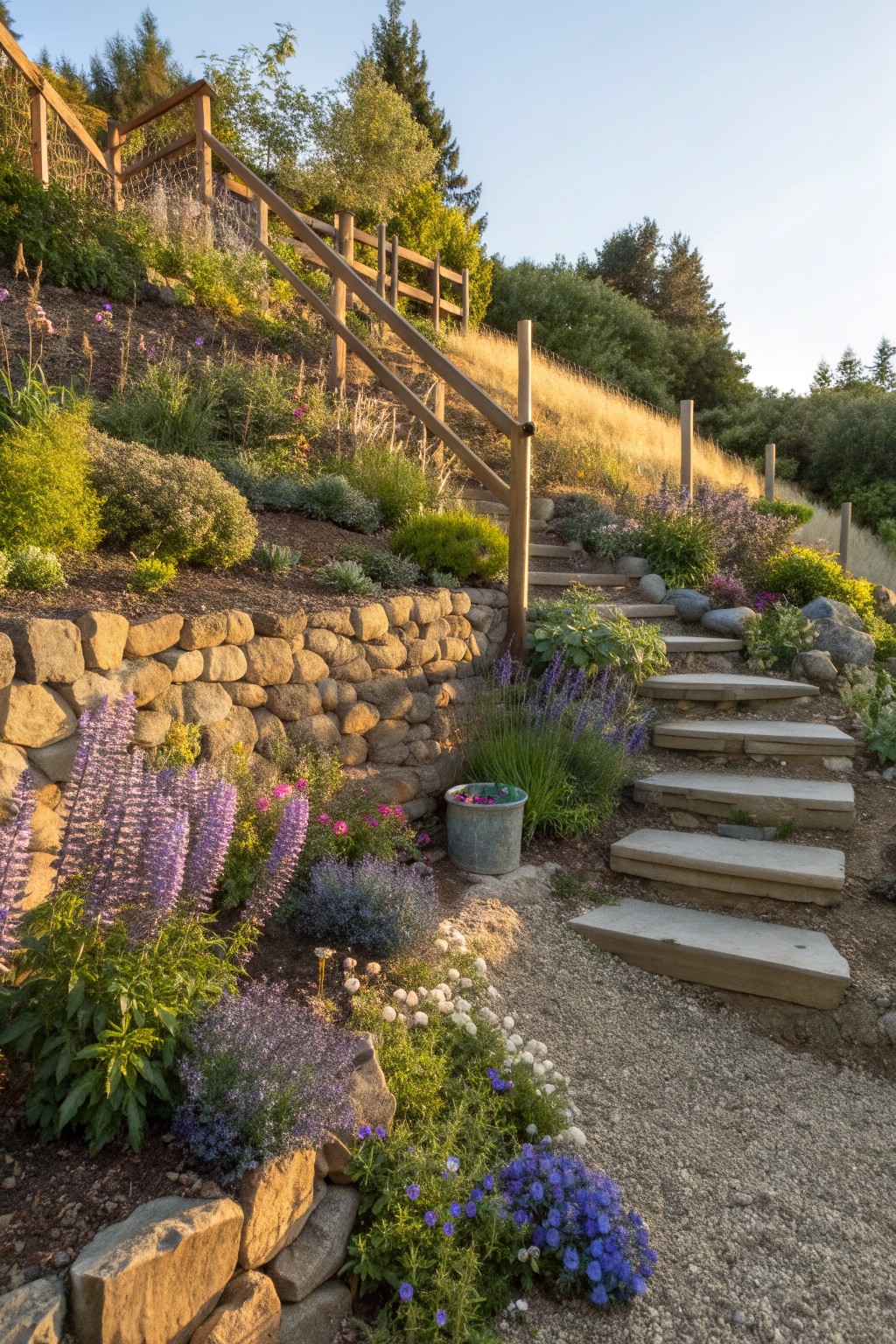
A terraced path like this turns a steep hillside into something you actually want to climb. Broad stone steps wind up between rugged rock walls, with clumps of blue and purple flowers spilling over the edges. Lupines and similar bloomers soften the hard lines, and it all catches that late light just right. The whole thing feels steady and calm, not fussy.
It works best on slopes where you need both access and planting room. Stack local stone for the walls and steps to blend in, then add drought-tough perennials like salvia or catmint along the base and landings. Skip anything too delicate… it has to handle foot traffic and weather. Your yard gets beauty without the upkeep hassle.
Blue Agapanthus Edging a Gravel Path
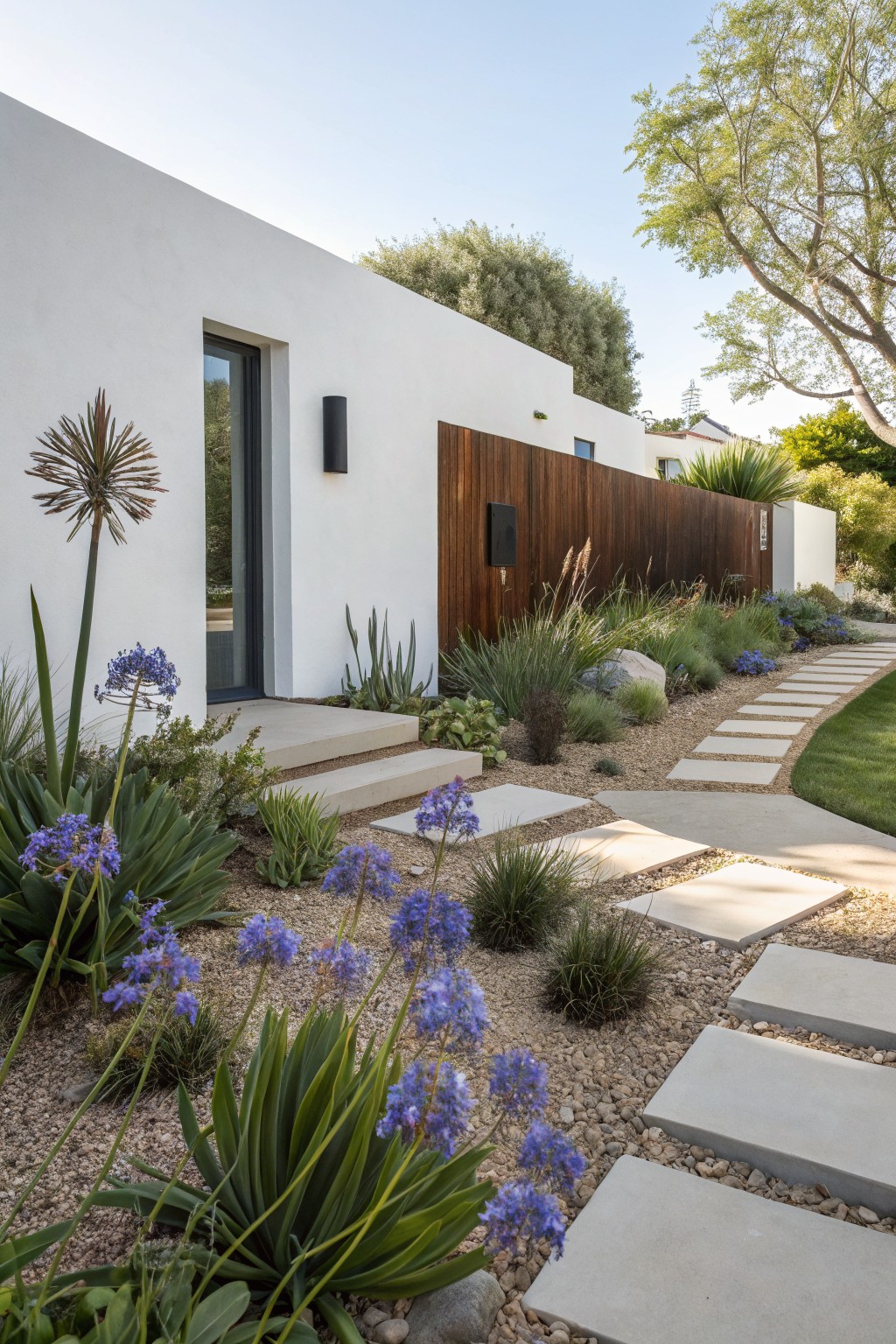
A gravel path lined with clusters of blue agapanthus makes for an easy, serene walk to the front door. The flowers sit right in the loose stone bed, mixed with agave leaves and tall grasses. It keeps things low fuss while that soft blue color draws the eye just enough.
This works best in sunny spots with well-drained soil, like a side yard or entry approach on a modern house. Space the agapanthus about two feet apart so they fill in over time. Skip heavy watering once they’re established… perfect if you’re after drought-tolerant landscaping that still feels alive.
Balcony Rail Planters with Blue Flowers
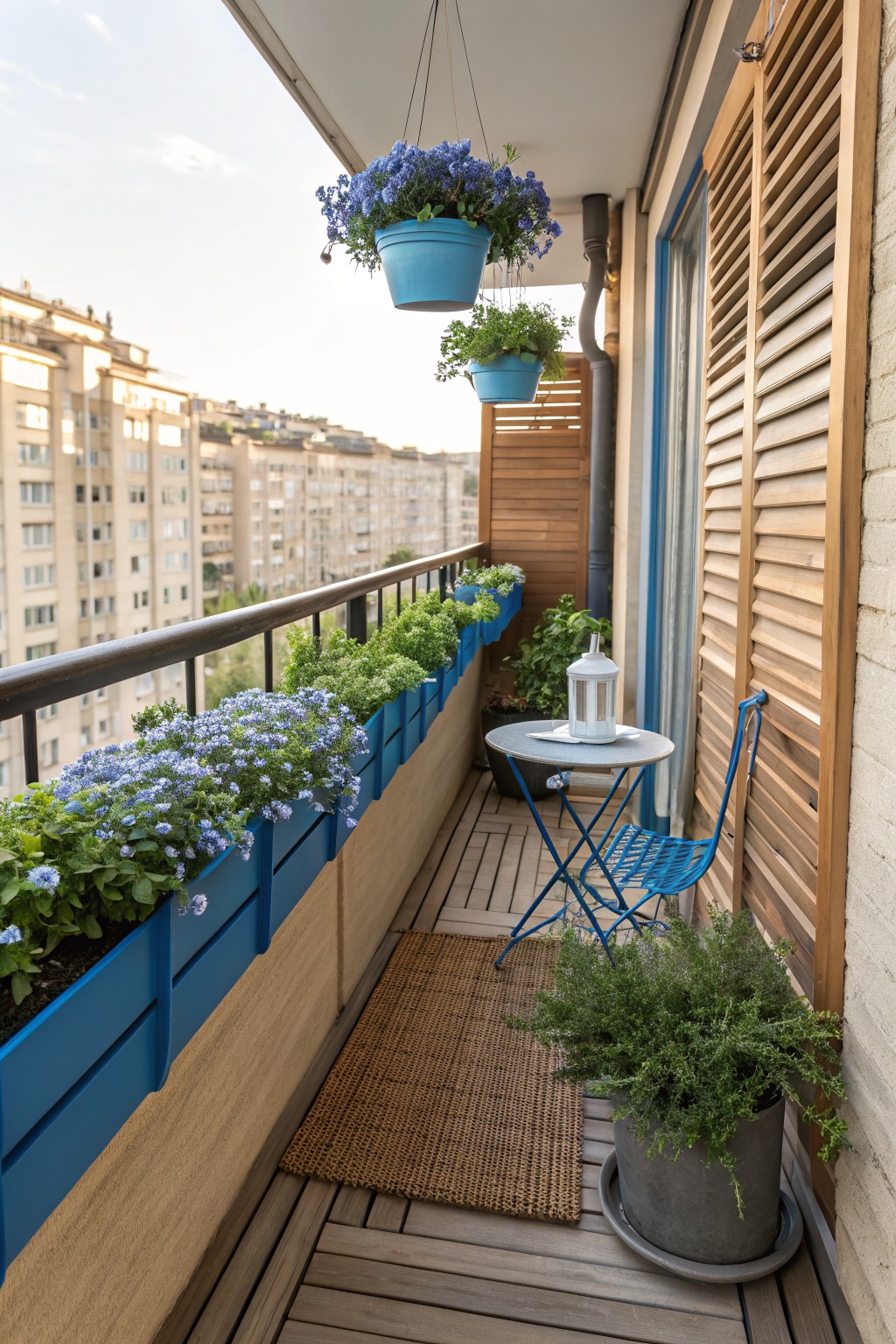
Those blue planters clamped right onto the balcony rail make a small space feel full of life. Packed with soft blue flowers like lobelia, they spill over just enough to soften the edges without crowding the floor. It’s a smart way to add garden color where you have limited room, and the matching blue ties everything together nicely.
This works best on narrow balconies in apartments or city homes. Pick weatherproof planters and trailing plants that handle sun or shade. Pair with a simple table and chairs for morning coffee spots. Just check your rail strength first, and water regularly to keep the blooms going strong.
Blue Pots Around a Courtyard Fountain
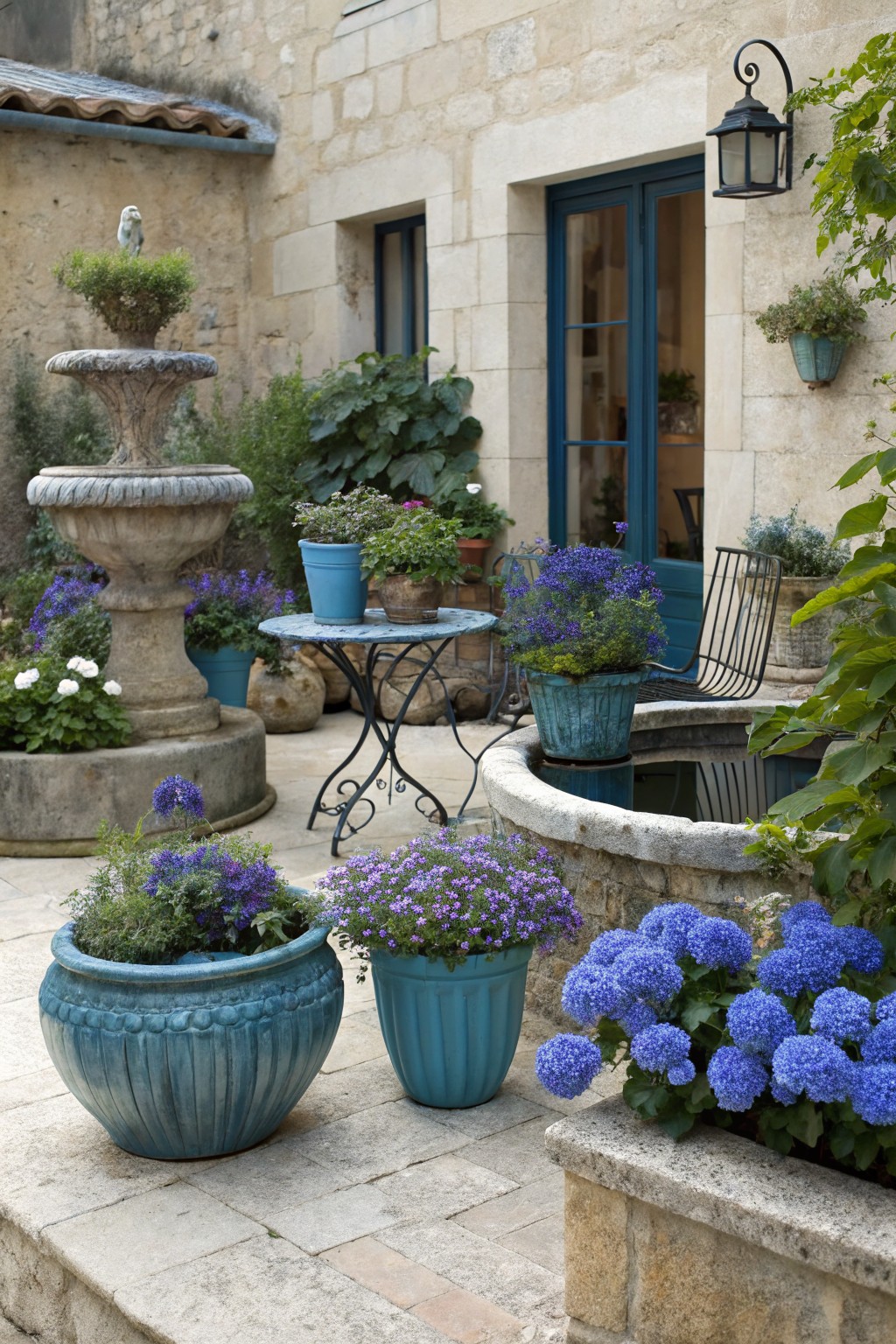
One simple way to pull together a small courtyard is with matching blue pots filled with blue flowers. Here, large glazed pots hold hydrangeas and other blooms that echo the blue doors and repeat around a stone fountain. It makes the space feel calm and put-together without much effort. The stone walls and fountain stay neutral so the blues can shine.
Try this in a walled garden or patio off the house. It works best with older stone or stucco homes where you want low-key color. Just group three or four pots near a water feature and add smaller ones on tables. Keep soil right for the flowers, since blues like hydrangeas need steady moisture.
Cozy Patio Seating with Blue Flowers
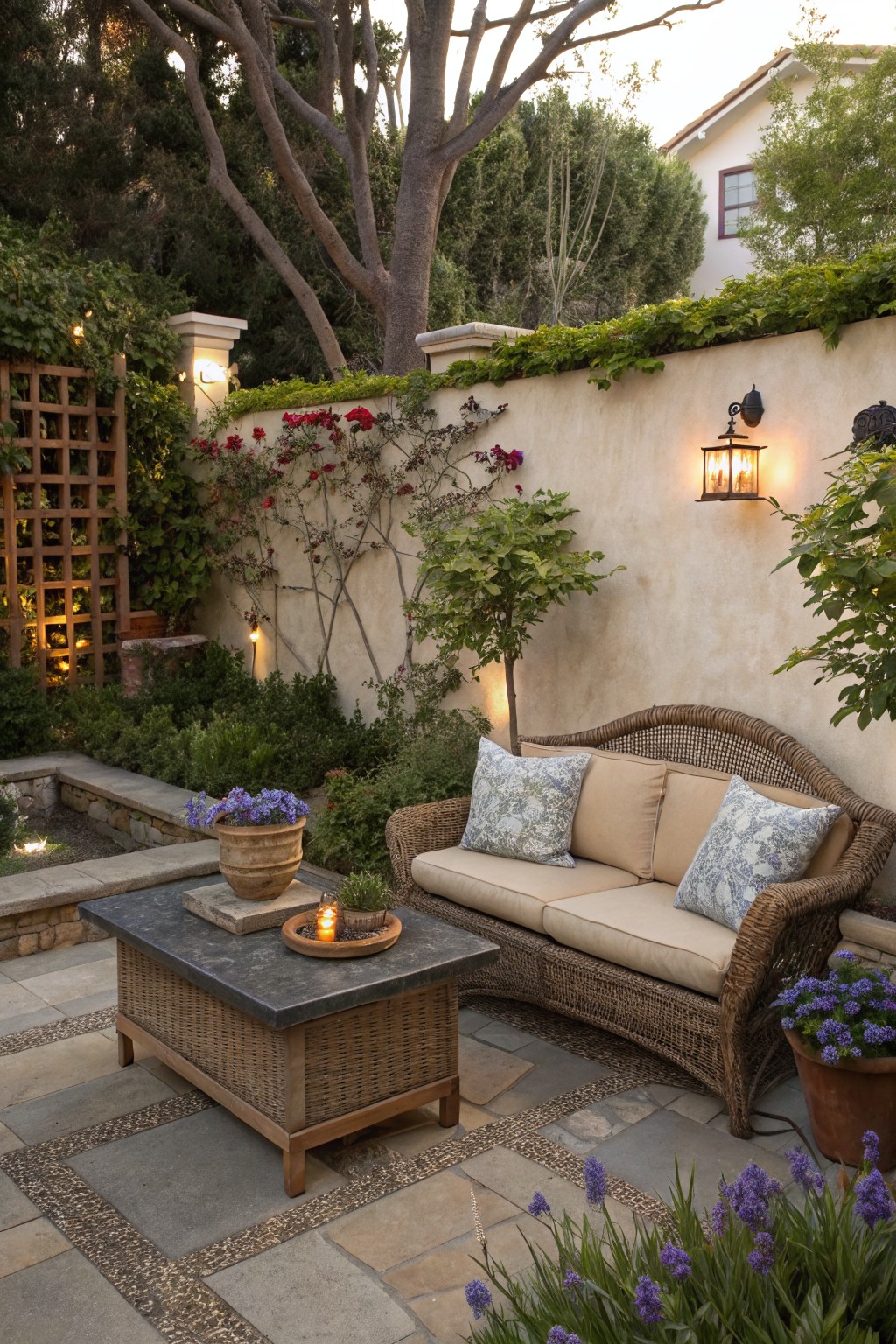
One easy way to make an outdoor spot feel calm and lived-in is setting up simple wicker seating right in the garden. Here, a curved loveseat faces a low coffee table on textured stone pavers, with blue flower clusters like agapanthus spilling nearby. The flowers add just enough color without overwhelming things, and they pull your eye gently around the space. It keeps everything relaxed, especially as the light fades.
This setup works great in a small courtyard or side yard where you want a quiet place to sit. Pair neutral wicker with those blue blooms against stucco walls or greenery, and add candles on the table for evenings. It suits milder climates with room for potted plants too. Skip fussy furniture, though. Stick to pieces that weather well.
Frequently Asked Questions
Q: What’s the best time to plant these blue flowers for a serene garden?
A: Spring works wonders once the soil warms up. Roots get cozy before summer heat arrives. Fall planting suits milder spots too.
Q: Do blue flowers like full sun or can they handle some shade?
A: Full sun makes most of them bloom their hearts out. Choose lobelia or forget-me-nots for shadier corners. They add that soft blue glow without fuss.
Q: How do I mix in other plants without losing the dreamy blue vibe?
A: Pair blues with whites like baby’s breath. The combo drifts like a hazy sky. Skip bold reds, they clash.
Q: How much water do these gardens really need?
A: Soak new plants weekly until they’re settled. Cut back as they grow, letting top soil dry out… strong roots follow.
