

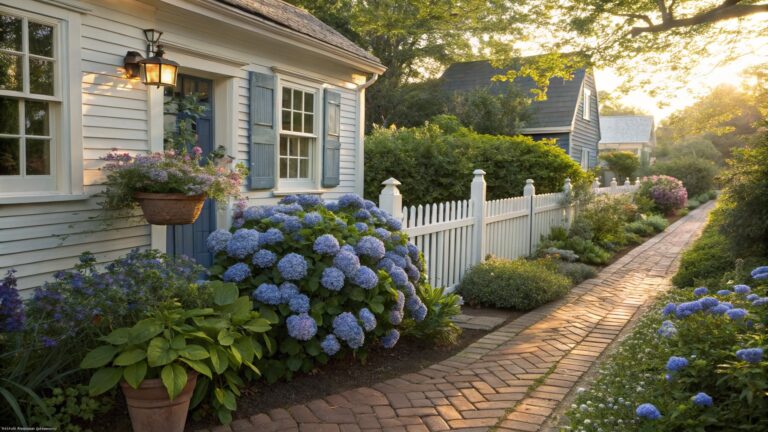
I’ve noticed that a plain fence often makes a yard feel boxed in until plants like hydrangeas start softening the edges and filling out the base.
A couple summers back, I planted some along my own fence line, and they transformed the layout by creating natural layers that guide the eye without overwhelming the paths.
What works best is spacing them thoughtfully so they mature into a structured backdrop rather than a wild tangle.
People usually spot those lush blooms first popping against the fence, adding instant depth to the whole garden.
A handful of these setups feel worth sketching out for my next planting round.
Hydrangeas Along White Picket Fences
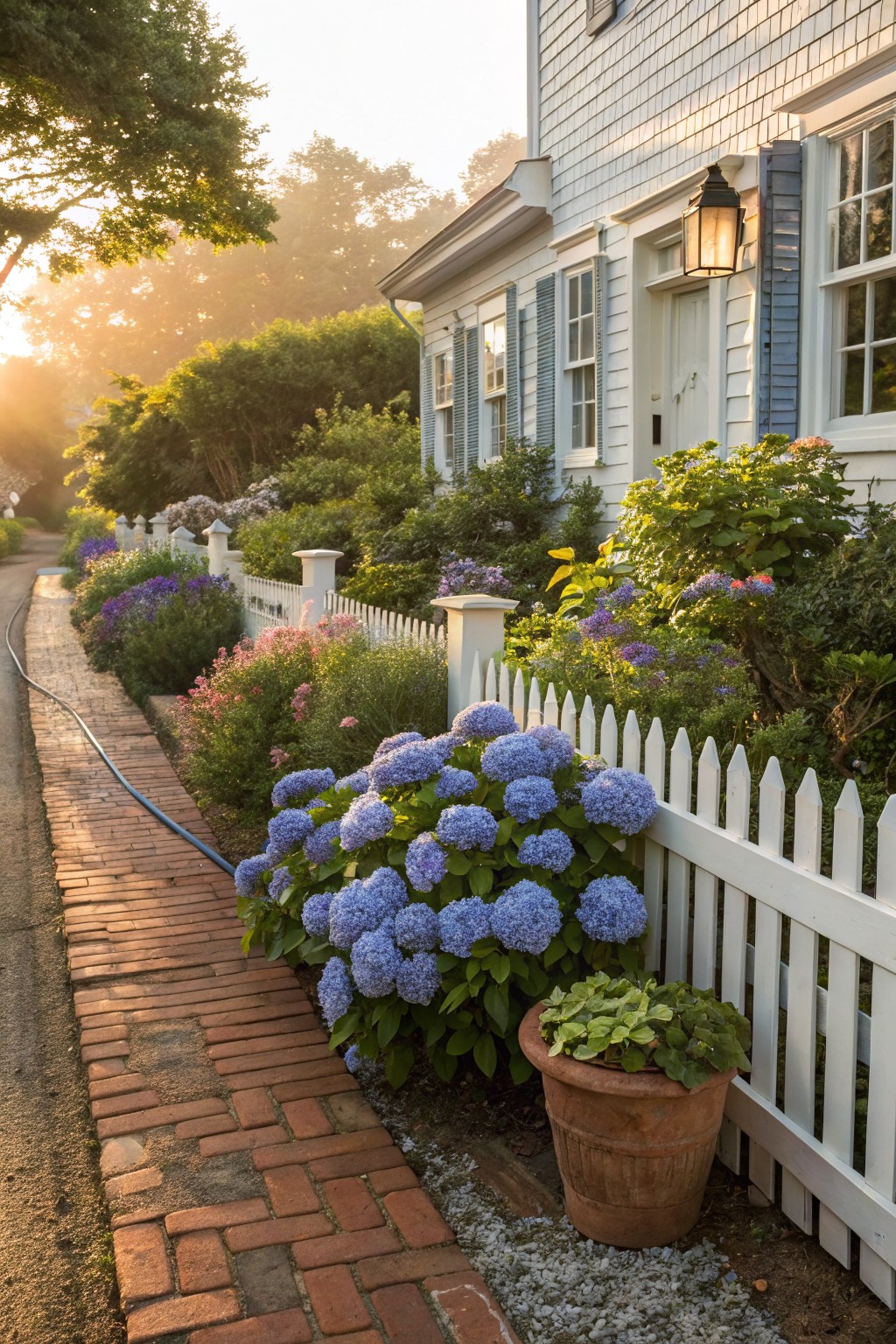
One simple way to fill out a fence line is to plant big hydrangea bushes right up against it. Those full blue blooms spilling over the white picket fence here make the whole edge look lush and full without much extra work. It ties the fence to the garden nicely and gives that classic cottage feel along the path.
This setup works best in front yards where you want curb appeal on a budget. Go for larger varieties that mound up quick, and plant them about three feet apart so they touch as they grow. It suits older homes or coastal spots with some afternoon sun, but watch the soil drainage or the roots might struggle.
White Hydrangeas Filling Fence Lines
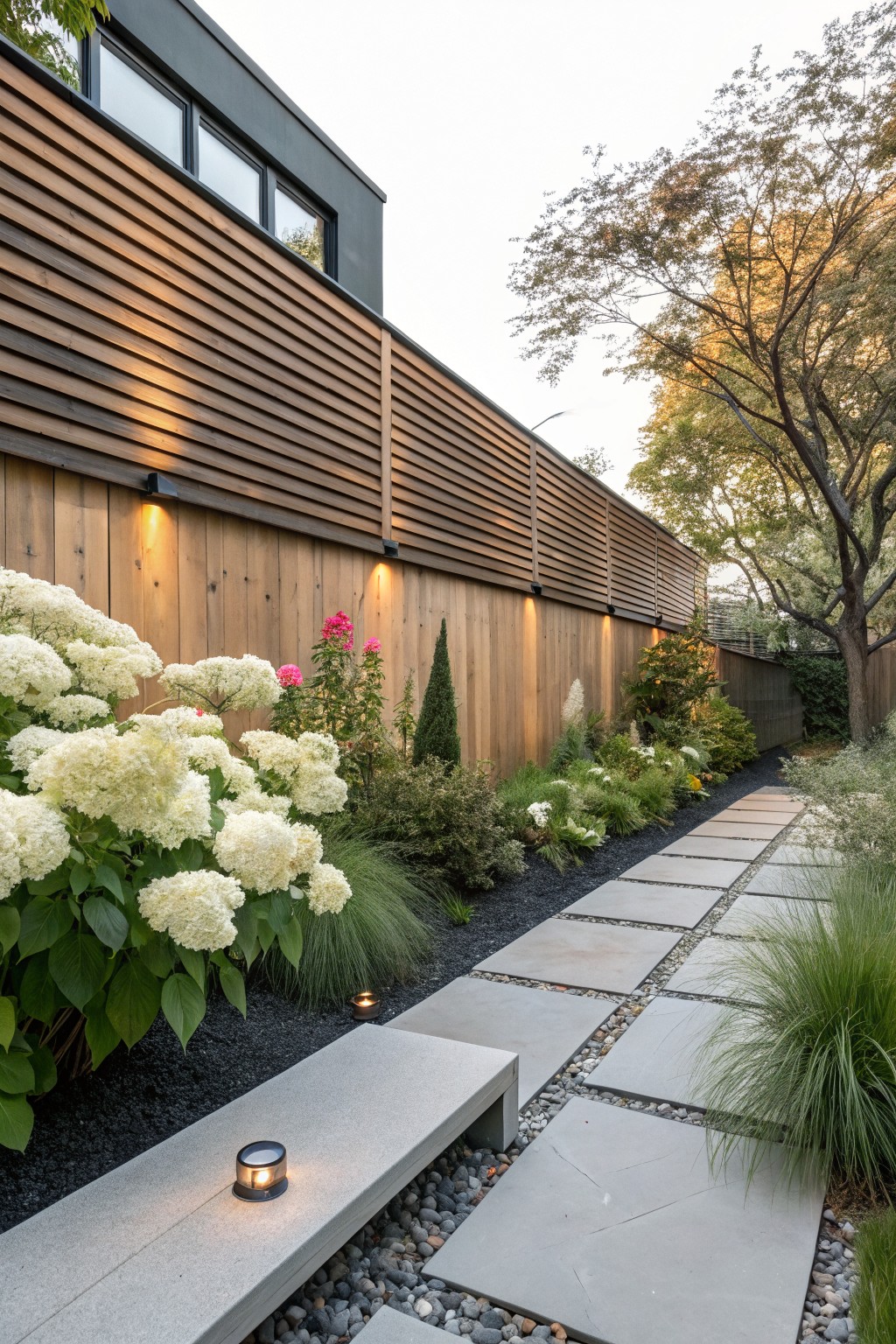
Big white hydrangeas work great tucked right up against a fence like this. They grow full and bushy, so they fill in that empty space fast and hide most of the fence behind soft blooms. The slatted wood peeks through just enough to keep things from feeling too crowded. Paired with a simple stone path, it turns a plain fence border into something pretty without much work.
Plant these in a narrow spot next to your backyard fence, especially if you want low upkeep. They do well in partial shade and come back bigger each year. Keep the path clear with gravel mulch underneath, and add a bench if there’s room. This setup suits smaller yards or side paths best. Just trim them back in late winter to keep the shape tidy.
Hydrangeas Lining a Simple Path Fence
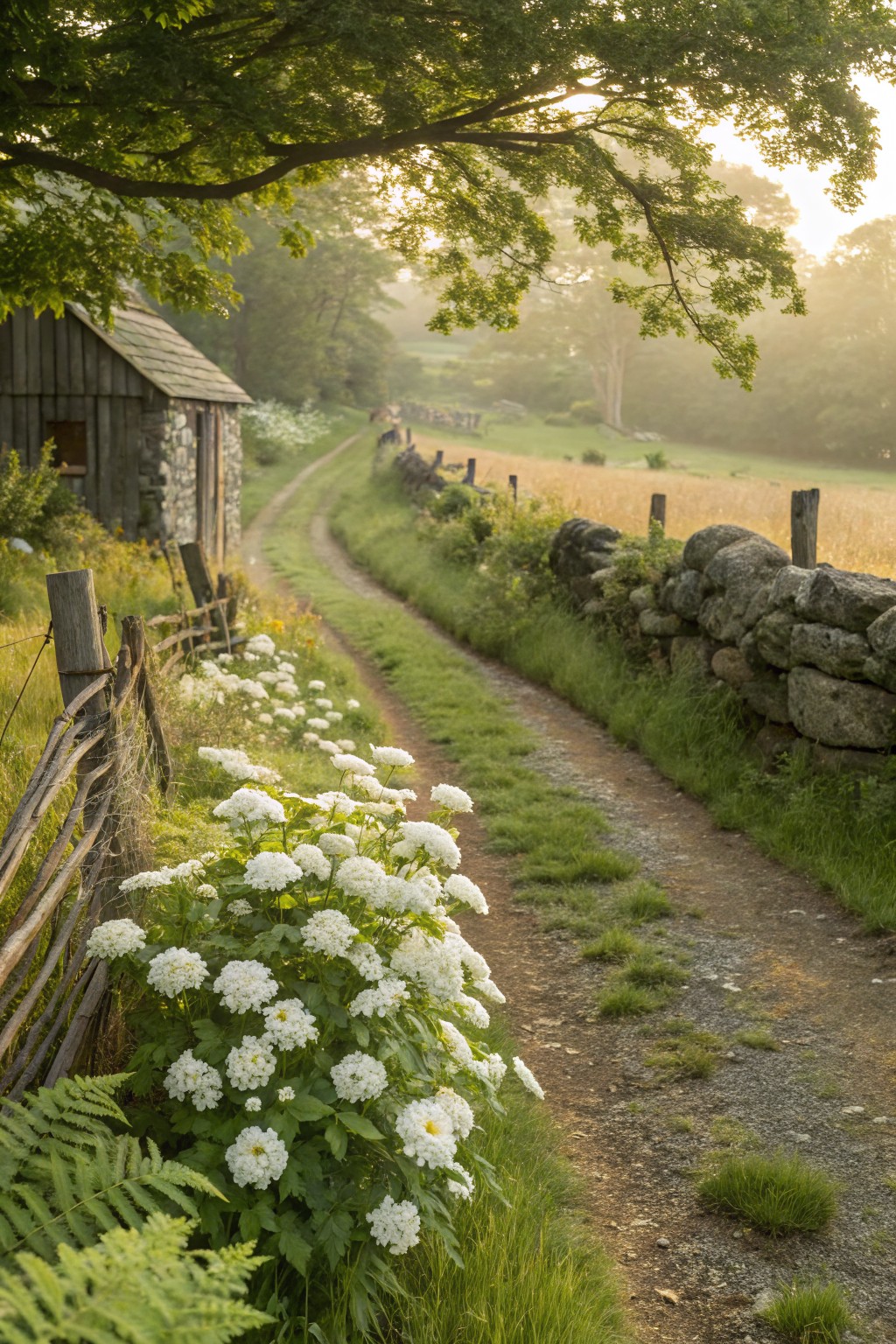
One easy way to fill out a fence line is planting big white hydrangeas right along the edge, like they do here next to a dirt path. The fluffy blooms spill over the wooden rails just enough to soften things without crowding the walk. It keeps the fence from looking bare and ties the path into the garden nicely.
This works best in country-style yards or along back paths where you want low fuss color through summer. Pick a spot with some afternoon shade so the whites stay bright. Just keep the plants trimmed back from the path, and they’ll hold up year after year.
Hydrangeas Lining a Fence Path
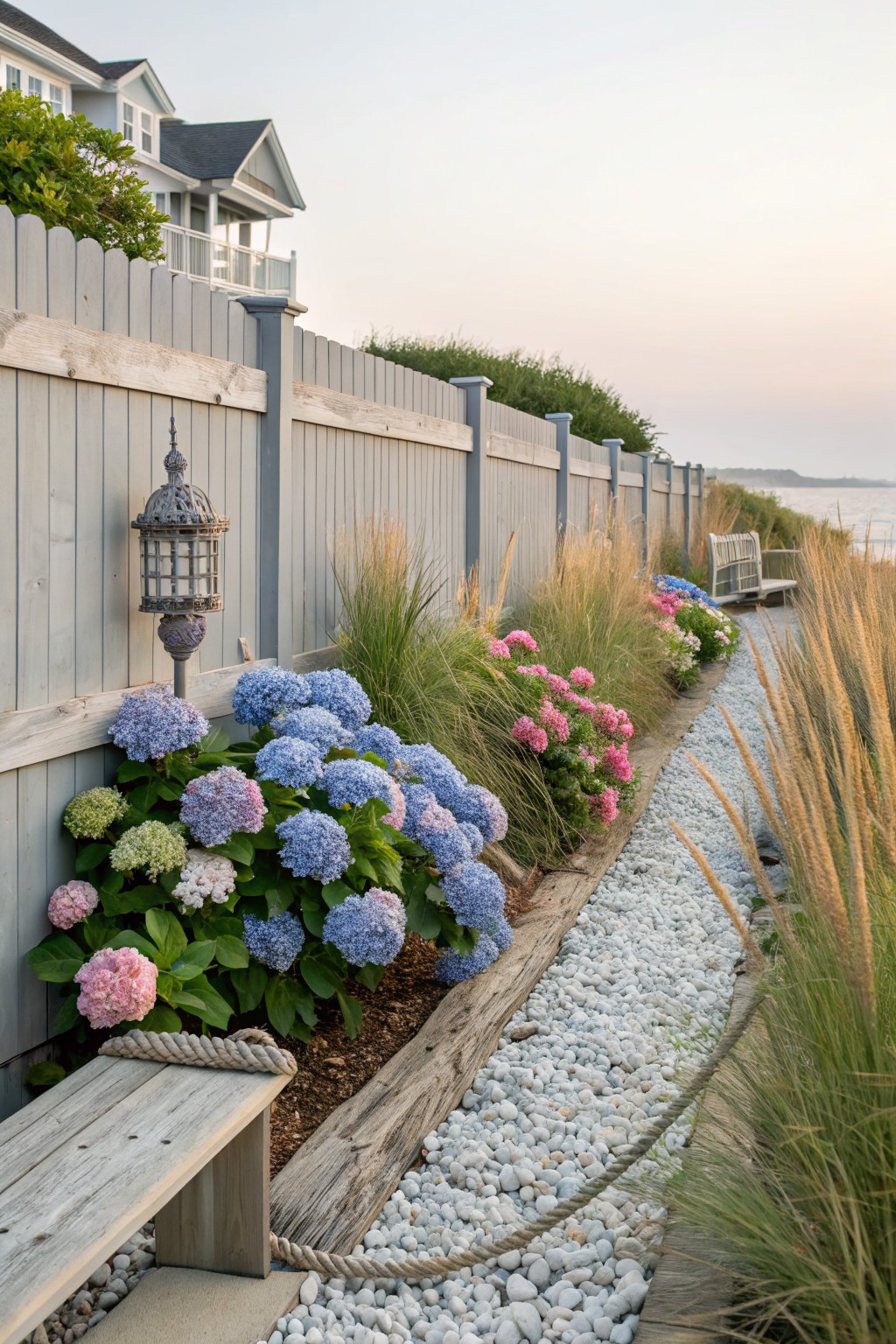
One simple way to use the narrow strip along a fence is to plant hydrangeas in a row. Here the bushes fill right up to the gray picket fence with big blue and pink blooms that stand out nicely. It turns that awkward edge into something full and colorful without taking much room.
Try this in side yards or along property lines where you want privacy and flowers. Edge the beds with wood and pebbles like shown, then add tall grasses at the end for movement. It suits coastal homes or shady spots that get morning sun. Just keep the path clear for walking.
Raised Concrete Planters with Hydrangeas by the Fence
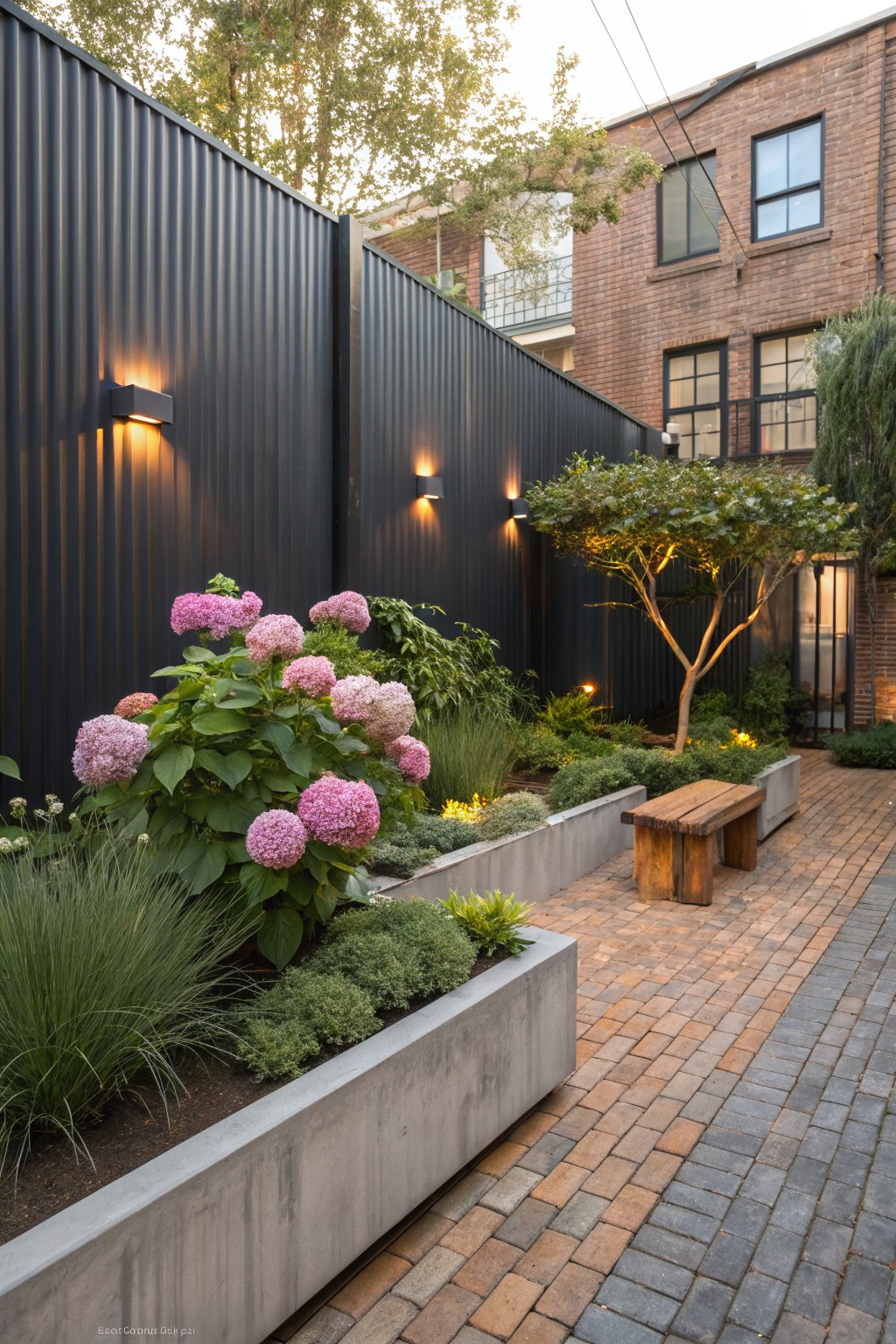
Big concrete planters like these make a solid base for hydrangeas right along a tall fence. The pink blooms spill out and cover the hard edges of the dark corrugated metal, turning a plain boundary into a full, lush planting zone. It fills the vertical space without needing to dig into the ground much.
This works best in side yards or tight backyards where you want quick privacy and color. Line up a few planters with low grasses and add a bench at the end for sitting. Pair it with brick paths and fence lights to keep things practical and lit up at night. Skip it if your fence is super low, though. It needs height to really show off.
Large Hydrangeas Against Bamboo Fences
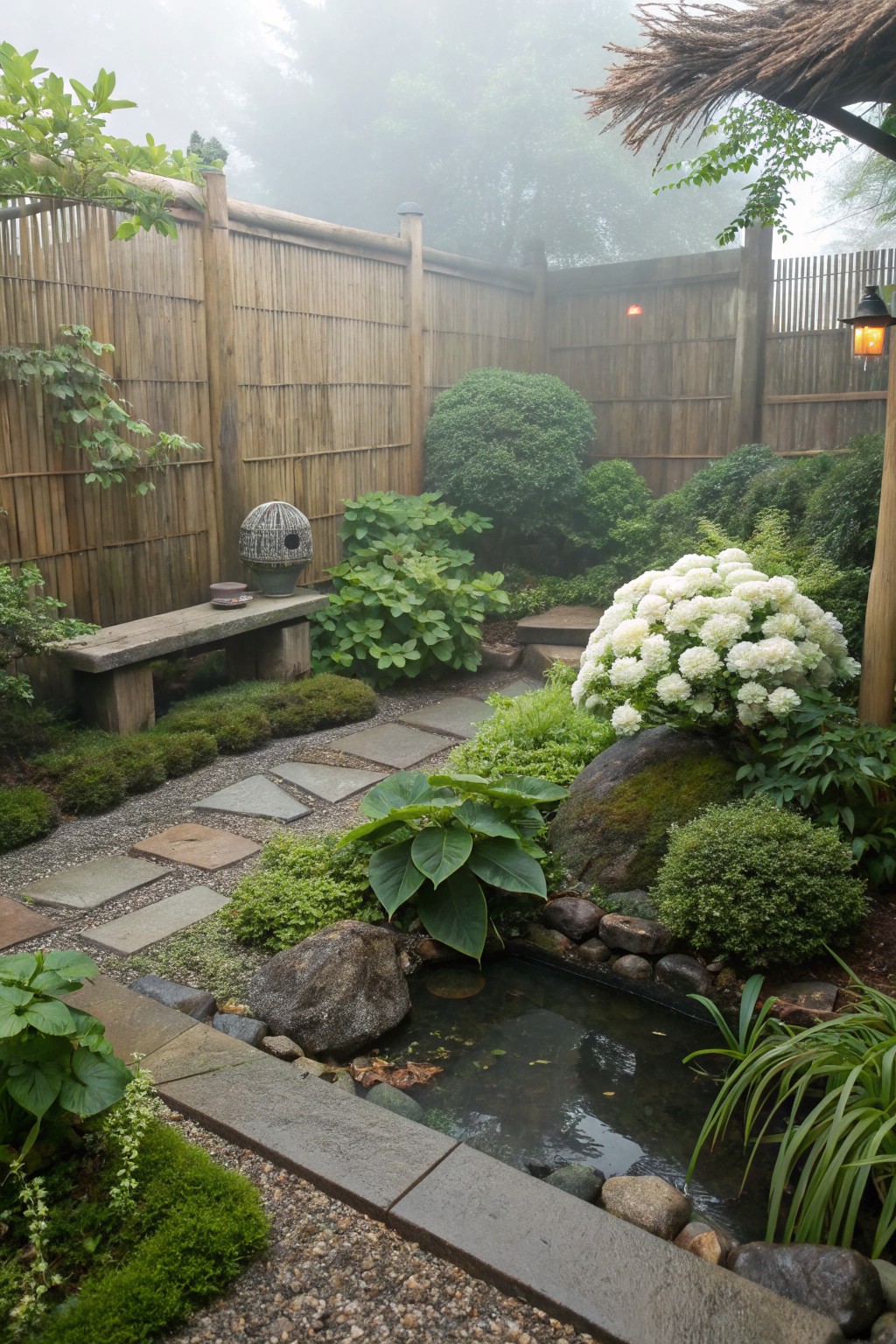
Big white hydrangea bushes planted tight against a tall bamboo fence make the whole area feel full and lush. The flowers mound up and soften the fence line so it blends right into the garden. You get that layered green look without much empty space showing through.
This works best in a small backyard spot or courtyard where you want privacy that still lets in light. Plant them at the base of the fence and let them grow wide. Keep soil moist since hydrangeas like it that way… and trim back in spring to keep the shape tidy.
Large Potted Hydrangeas Frame the Entry
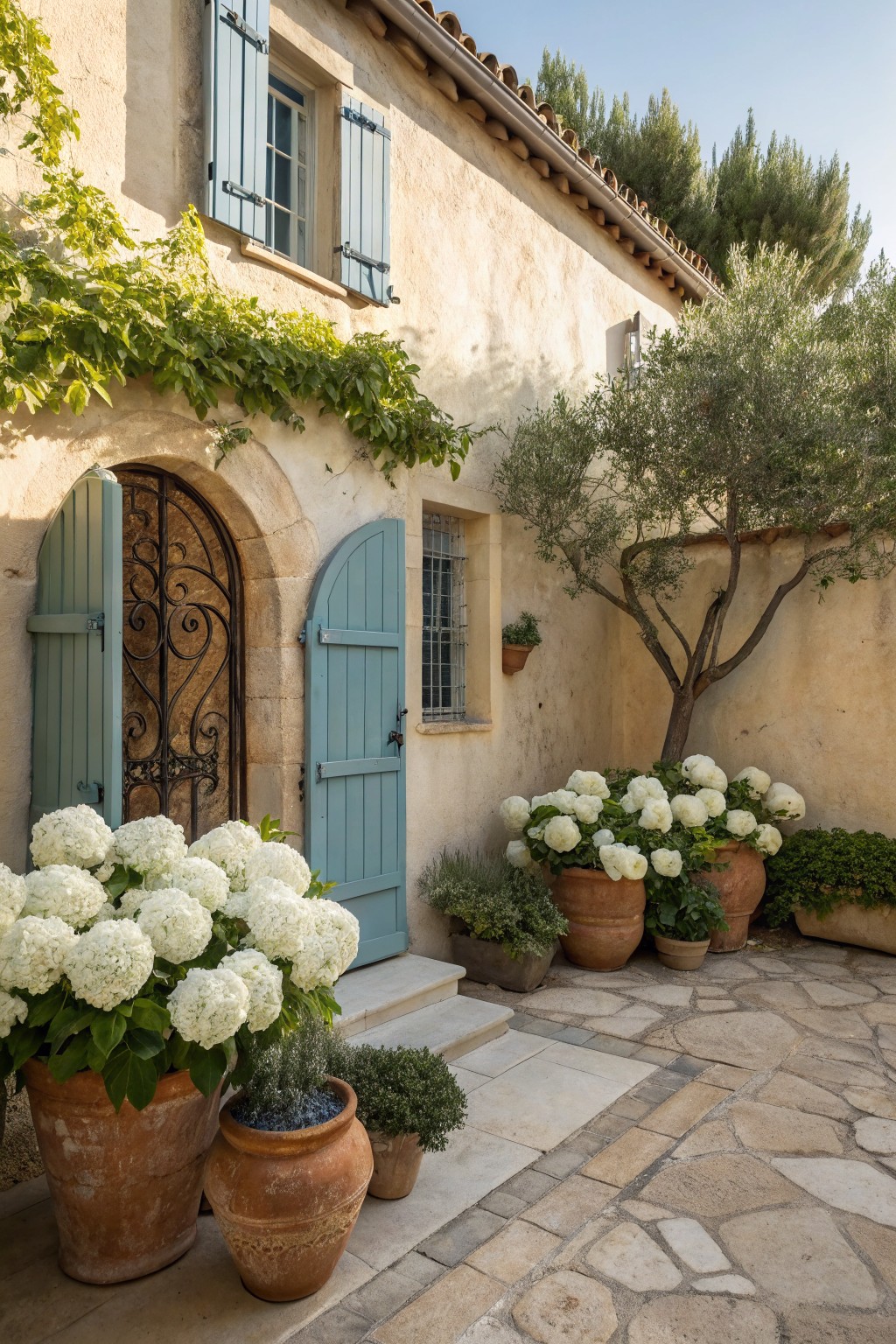
Big white hydrangeas in tall terracotta pots work well to bookend a doorway like this one. They add soft volume right where people approach, making the space feel fuller without crowding the path. The blooms pick up on the stone walls and tie into the rustic arched gate nicely.
Put these pots along steps or beside an iron gate on a patio entry. It fits older stucco homes or courtyards best, especially in mild climates where hydrangeas thrive. Go for earthy pots to blend with your hardscape, and group two or three for impact. Watch the watering though, they need it steady.
Hydrangeas Filling the Fence Line
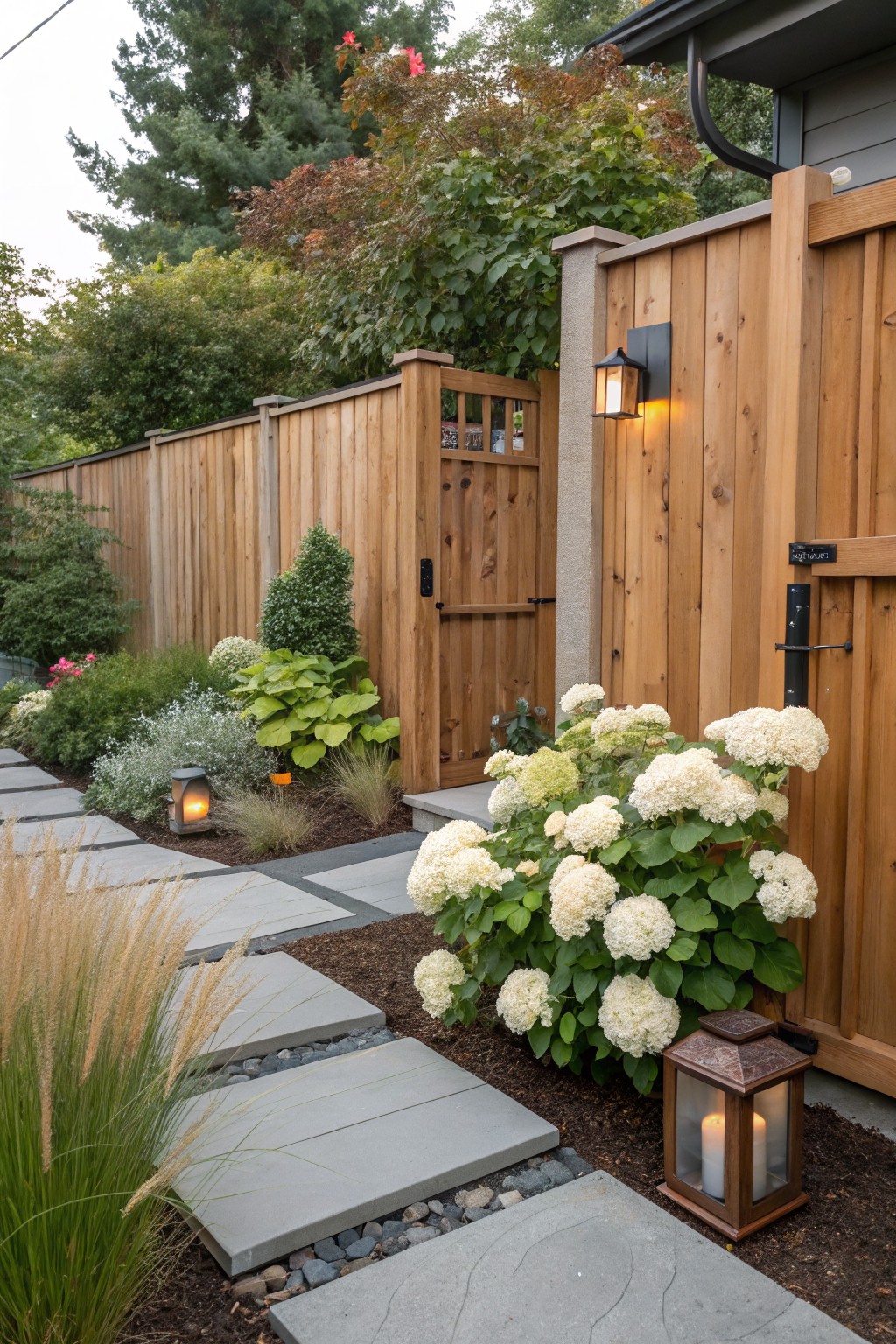
Big hydrangea bushes planted tight against a wooden fence make the yard feel full and finished. The fluffy white blooms spill over the base of the cedar panels here, hiding any gaps and softening those tall straight lines. A simple stone path runs alongside, keeping things neat without taking over.
This works great in narrow side yards or along backyard borders where you need quick coverage. Pair the hydrangeas with low grasses and a few lanterns for path light, and it stays low fuss. Suits homes with clean modern fences, but watch the shade, since hydrangeas like some morning sun.
Hydrangeas Lining a Balcony Railing
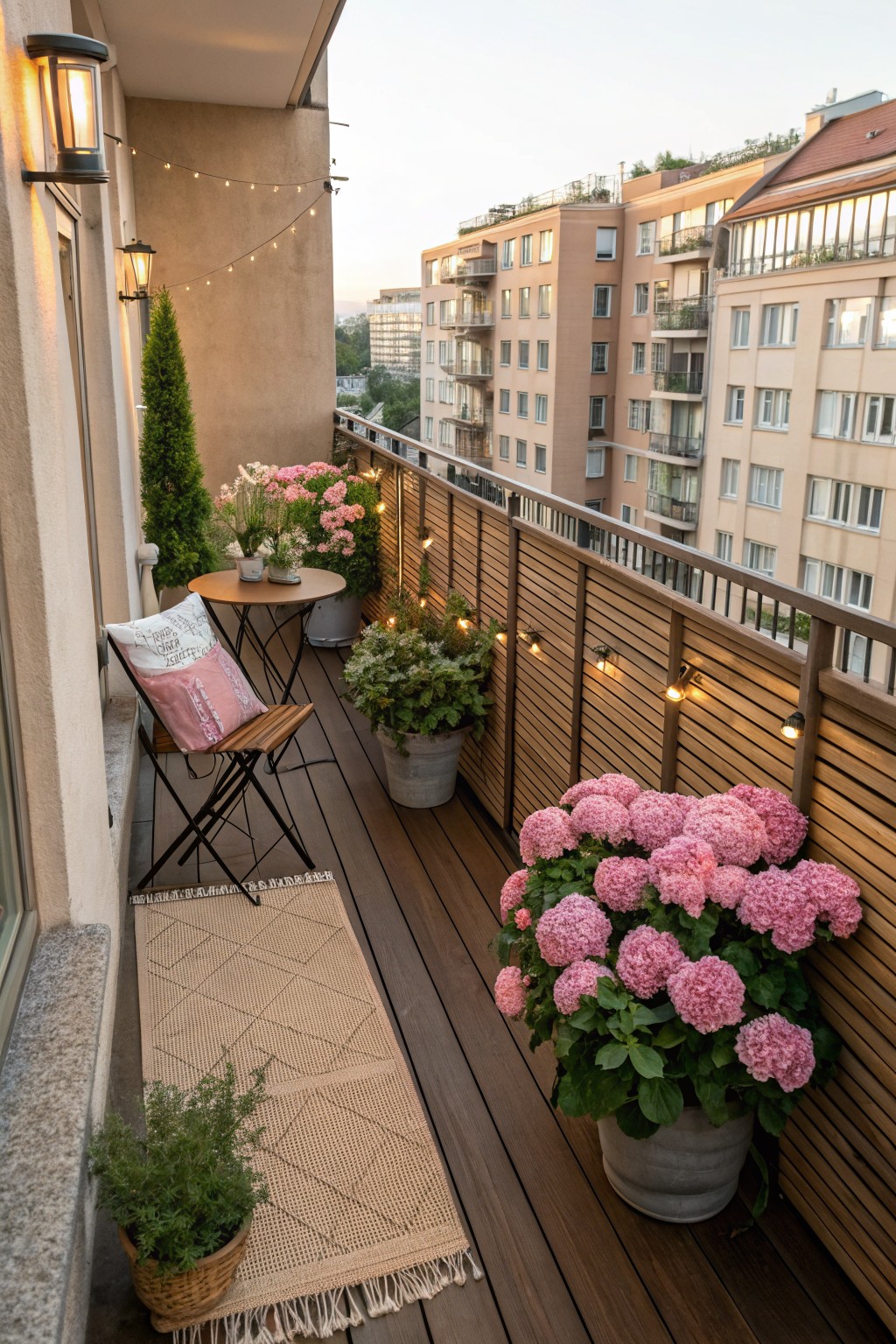
One easy way to fill out a balcony edge is with large pots of hydrangeas tucked right up against the railing. The big pink blooms here spill over the wooden slats, giving some privacy without blocking light or views completely. They make the whole spot feel softer too.
This setup suits narrow urban balconies best, where you want color and height fast. Go for sturdy galvanized pots to handle the weight, and pick a sunny corner for the plants. Just trim them back in fall so they don’t get too wild.
Poolside Hydrangea Beds by the Fence
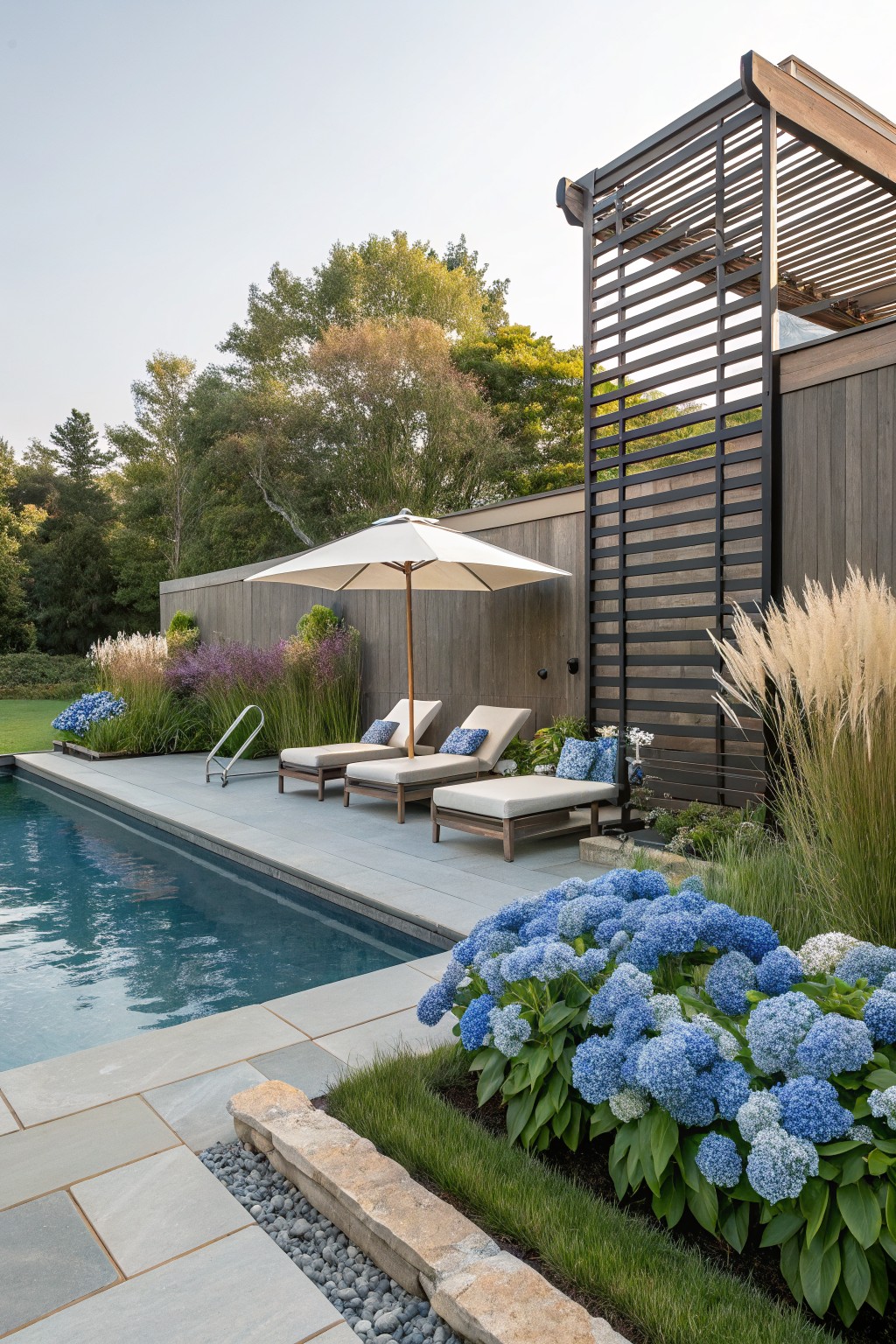
Big clumps of blue hydrangeas work nicely here to fill out the bed running along the fence and pool edge. They give a full, colorful look that softens the clean lines of the deck and slatted screen without taking over. Paired with some tall grasses, it keeps things layered and easy on the eyes.
You can pull this off in any backyard pool setup where you have a fence or wall nearby. Go for mass planting so the hydrangeas really stand out, and tuck in a few perennials for texture. It suits modern or simple yards best. Just check your soil stays moist, since these plants like that.
Hydrangeas Lining Picket Fences
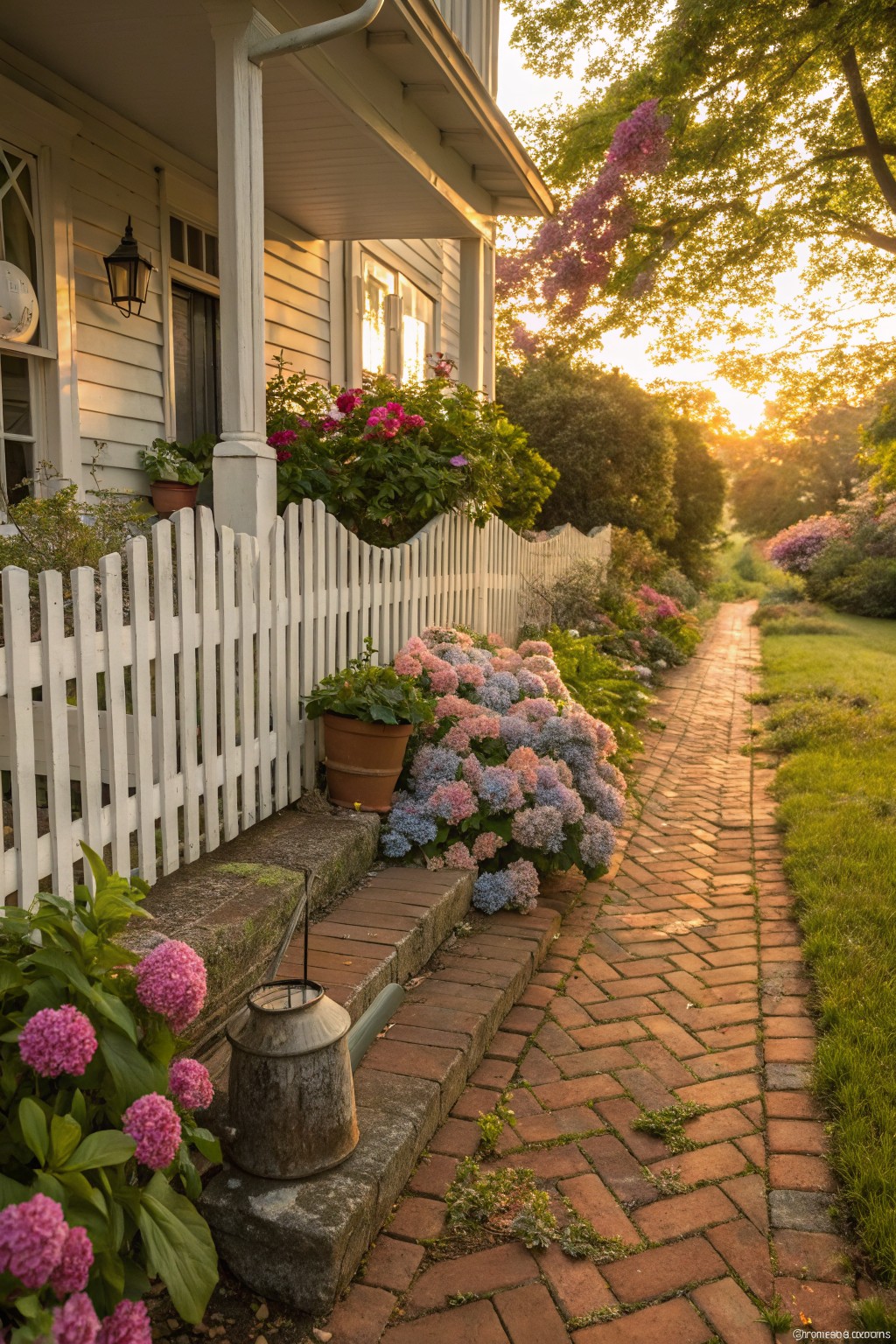
One simple way to fill space along a fence is to plant hydrangeas right at its base. Those big puffy blooms in pinks and blues hug the white picket slats perfectly. They turn a plain fence line into something full and colorful, especially when the path starts right there too.
This works best in front yards with some afternoon sun. Tuck the plants in close, maybe mix a few colors like this, and let them mound up over time. Cottage homes love it… just keep the soil moist since hydrangeas drink a lot.
Hydrangeas Along a Country Fence
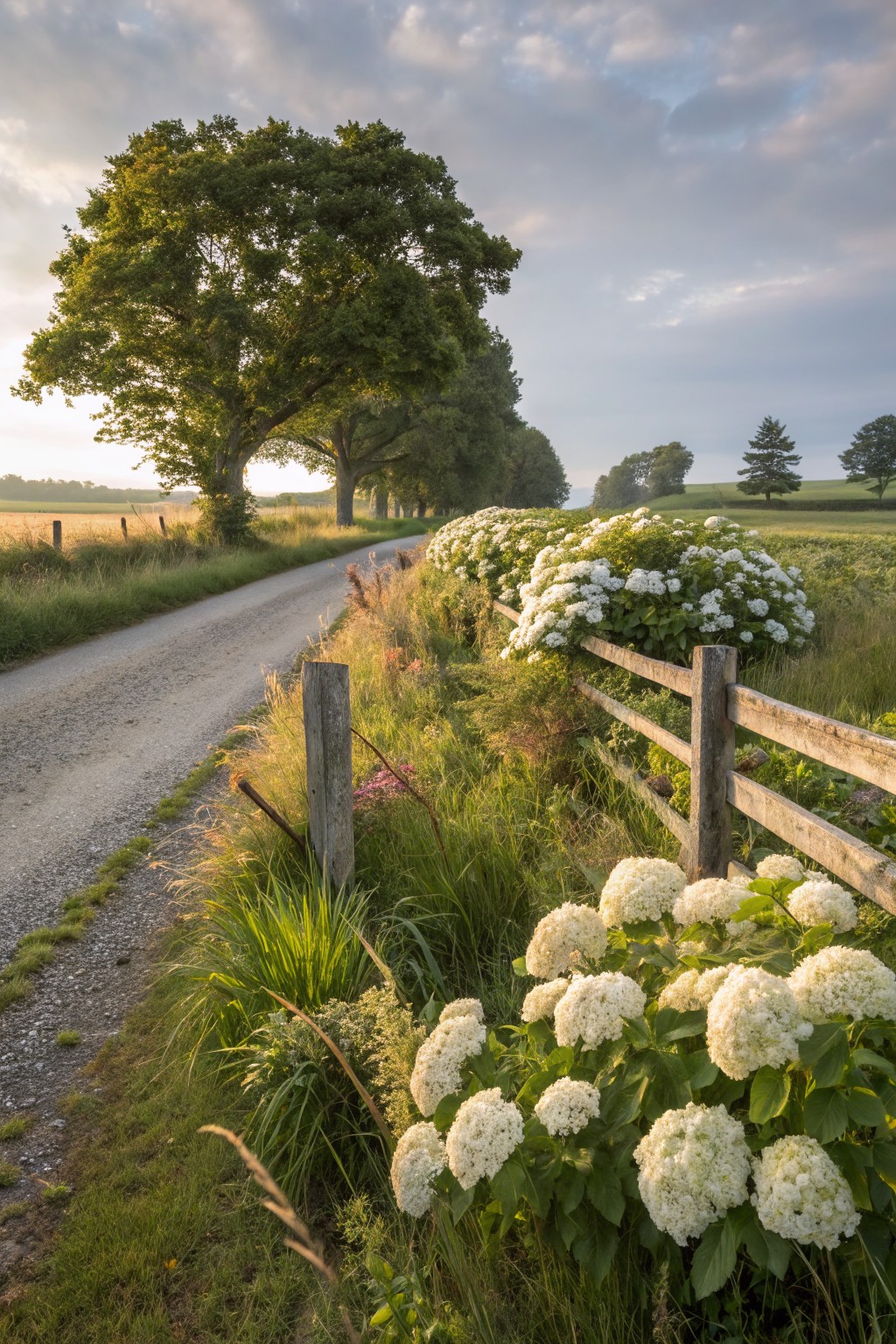
Planting hydrangeas right up against a fence turns a basic wood rail into a full border of white blooms. They grow bushy and mound up, hiding most of the fence while softening the yard’s edge. That simple move adds height and color through summer without needing much else.
It fits well along paths or property lines in rural or cottage-style yards. Go for spots with morning sun and afternoon shade. They handle average soil fine, just keep them watered. Older farmhouses or casual gardens take to this easy.
Hydrangeas Lining a Narrow Garden Path
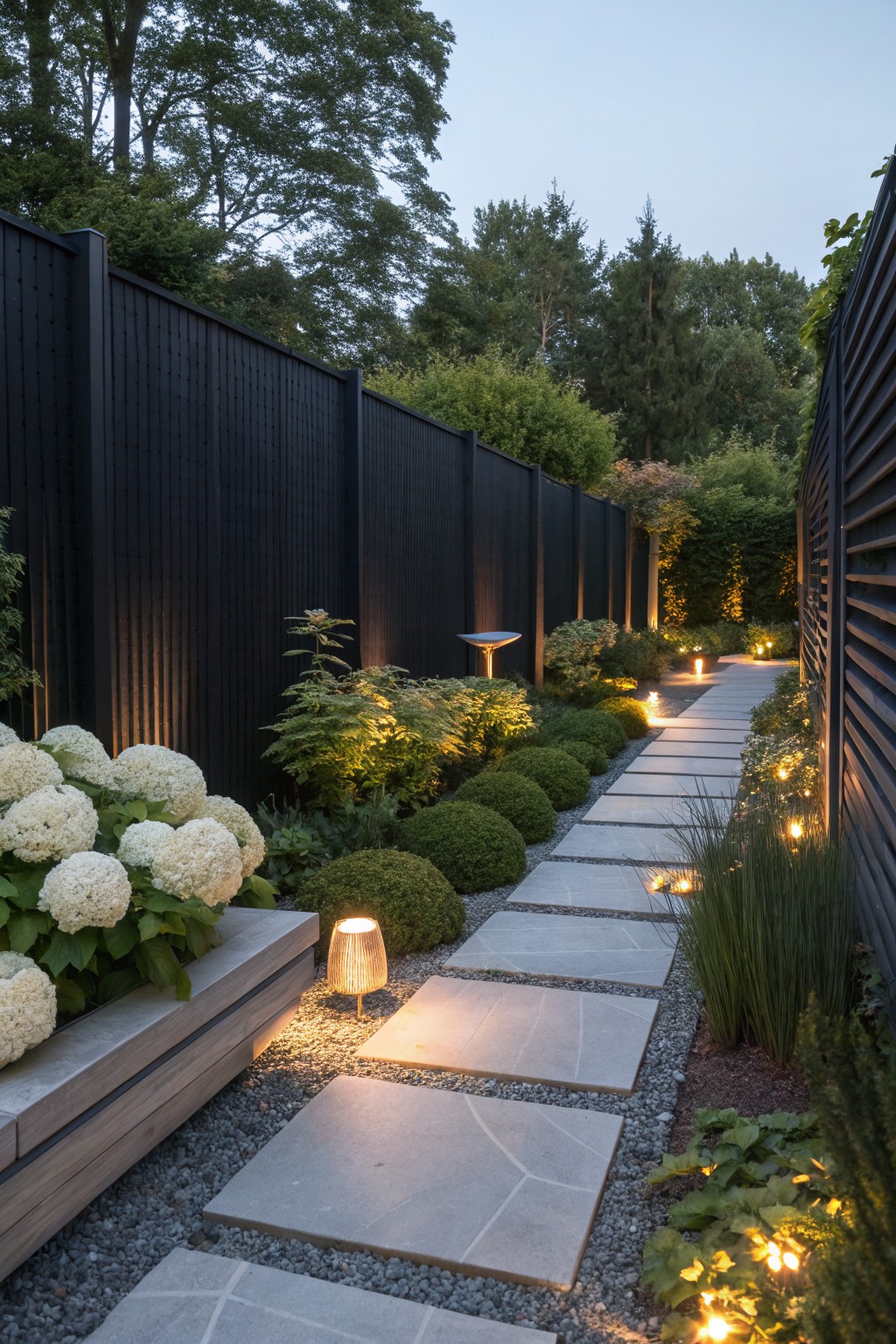
Big white hydrangea blooms work great along a tall black fence like this. They fill out the space nicely and stand out against the dark wood. The path keeps it from feeling crowded, and those round boxwoods add some neat shape down the line.
Try this in a skinny side yard or walkway where you want privacy without it closing in. Plant the hydrangeas close to the fence base, mix in low plants for ground cover, and add path lights for evenings. It suits modern yards… just make sure the fence stays dark to let the flowers pop.
Fence-Mounted Hydrangea Planters
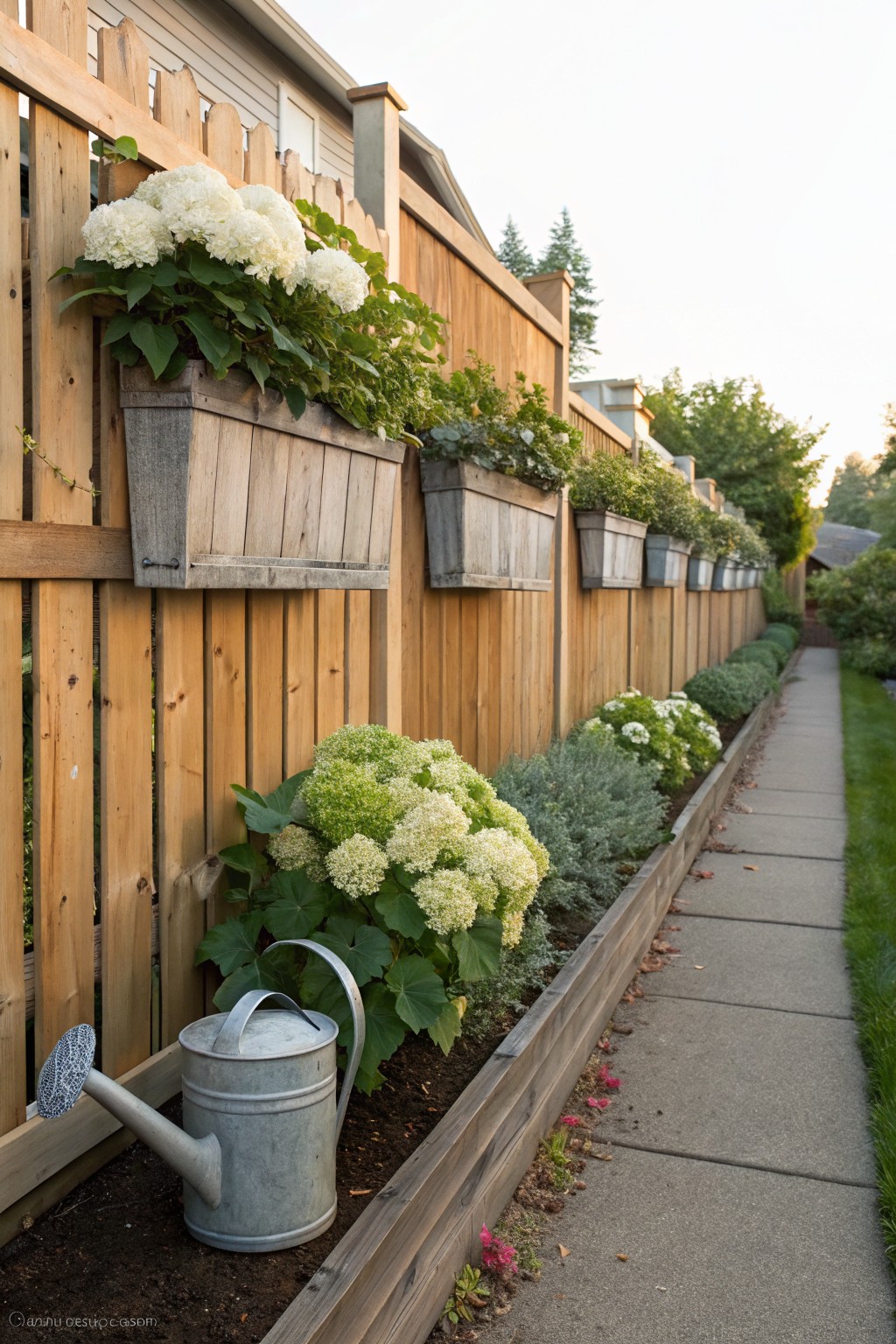
One simple way to pack more flowers along a fence is to mount wooden planters right on the boards. Here, rustic boxes hold big clusters of white hydrangeas that tumble over the edges, turning the fence itself into a blooming feature. It fills vertical space fast and keeps the ground open for paths or lawns.
This works best in side yards or along property lines where room is tight. Use weathered wood to blend with a cedar fence, then add low plants in a bed at the base for layers. Keep soil moist. A classic watering can nearby makes tending easy.
White Picket Fence with Hydrangea Beds
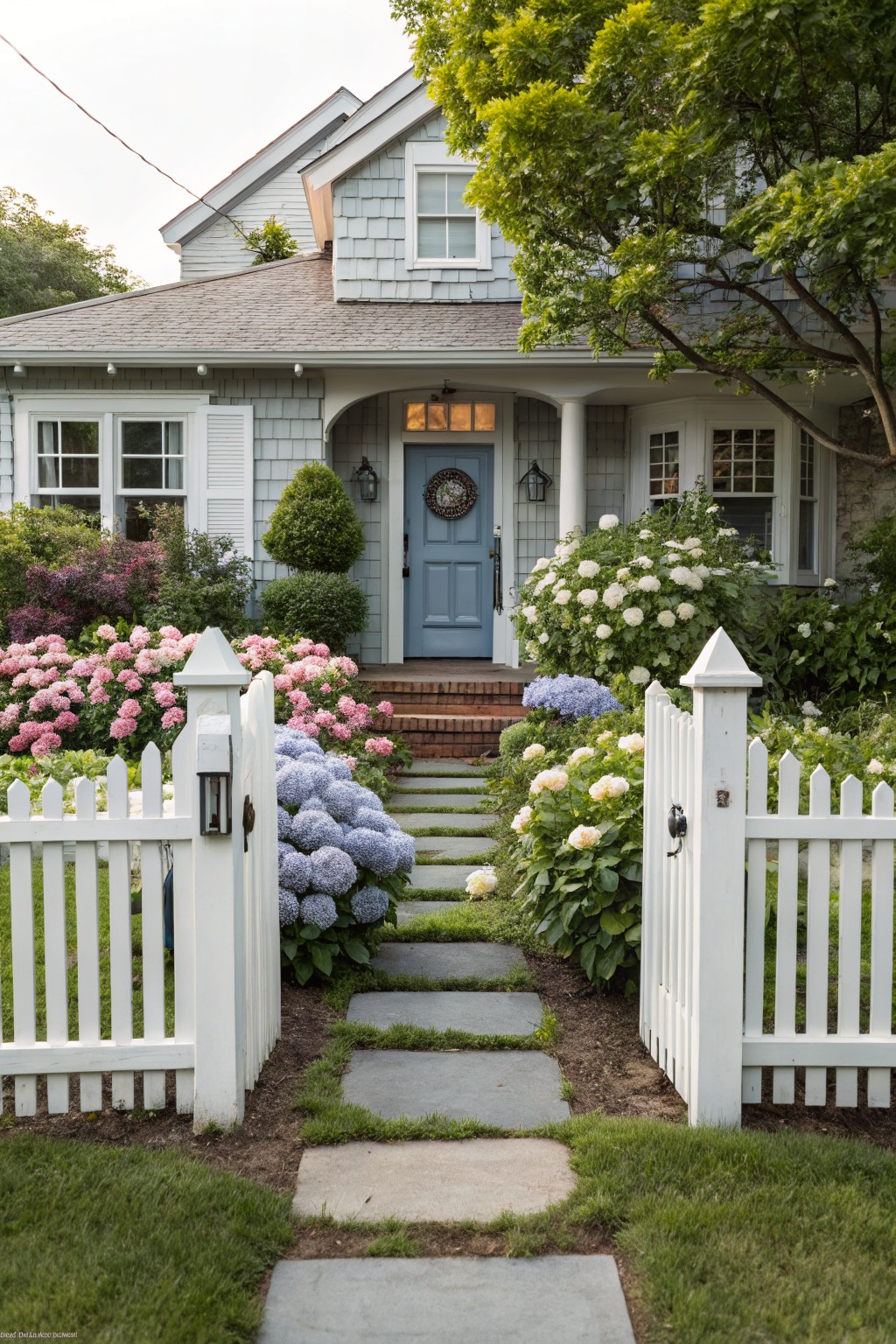
A white picket fence pairs nicely with big clusters of hydrangeas planted right alongside it. Here the fence gates a stone path lined with pink, white, and blue blooms that lead straight to the house entry. That setup fills the front yard edges without crowding the walk, and the colors pop against the fence and green grass.
This works best for cottage homes or older places with some yard space up front. Plant the hydrangeas in groups close to the fence posts for density, maybe two or three varieties for interest. It keeps things low fuss once established. Just make sure the path stays open… no blocking that first step inside.
Filling Fences with Hydrangea Blooms
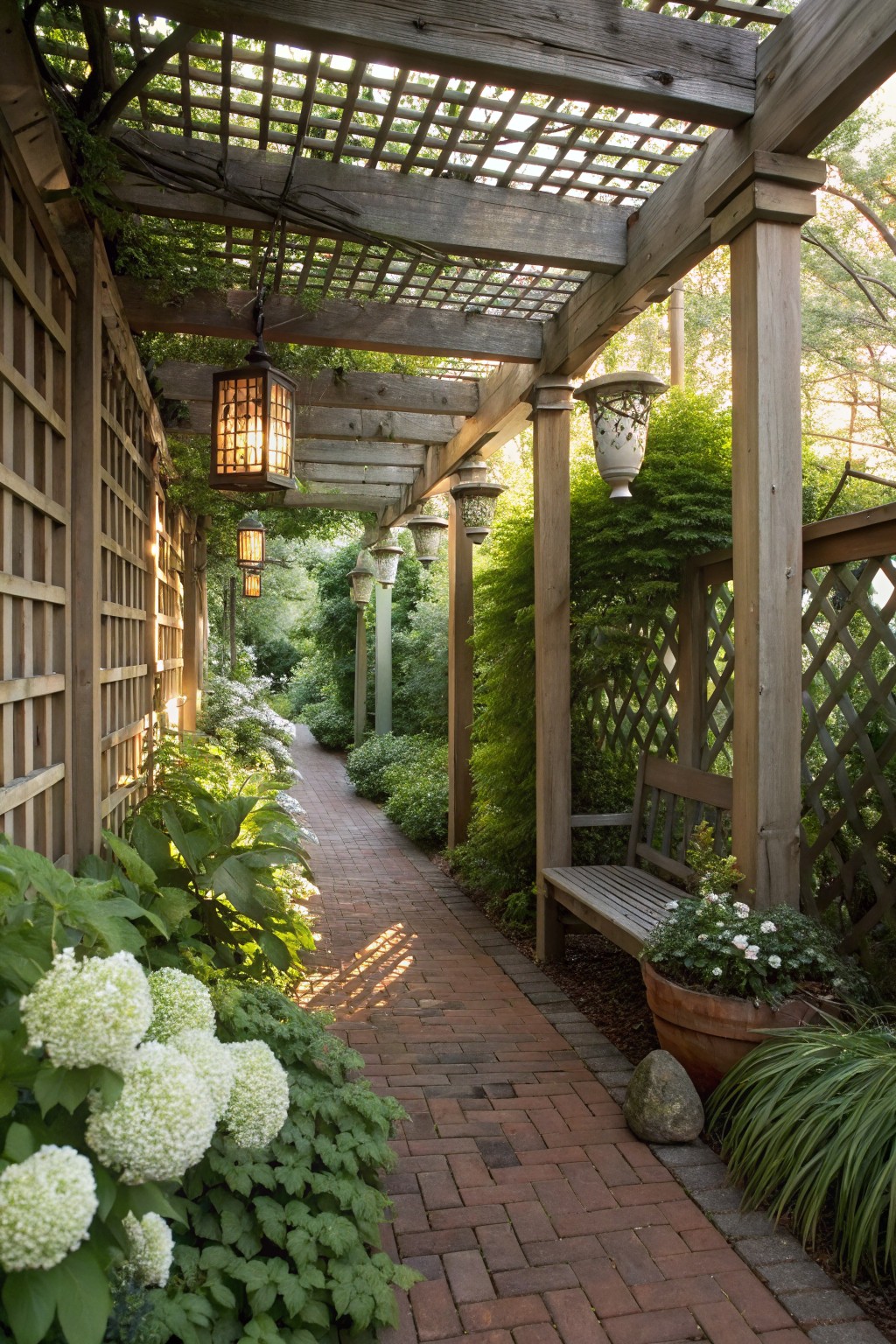
Big white hydrangea heads like these do a nice job of filling out the bottom of a wooden fence. They push right up against the lattice and create that full, bushy look without leaving bare spots. It softens the fence too, blending it into the garden instead of standing out.
Try this along a walkway or side path where the fence runs parallel. The brick path here keeps it practical for walking, and a pergola overhead adds nice dappled light for the plants. It suits cottage-style yards or narrow spaces that need some green volume. Keep the soil moist, though… hydrangeas drop if they dry out.
Hydrangea Planters Along Brick Fences
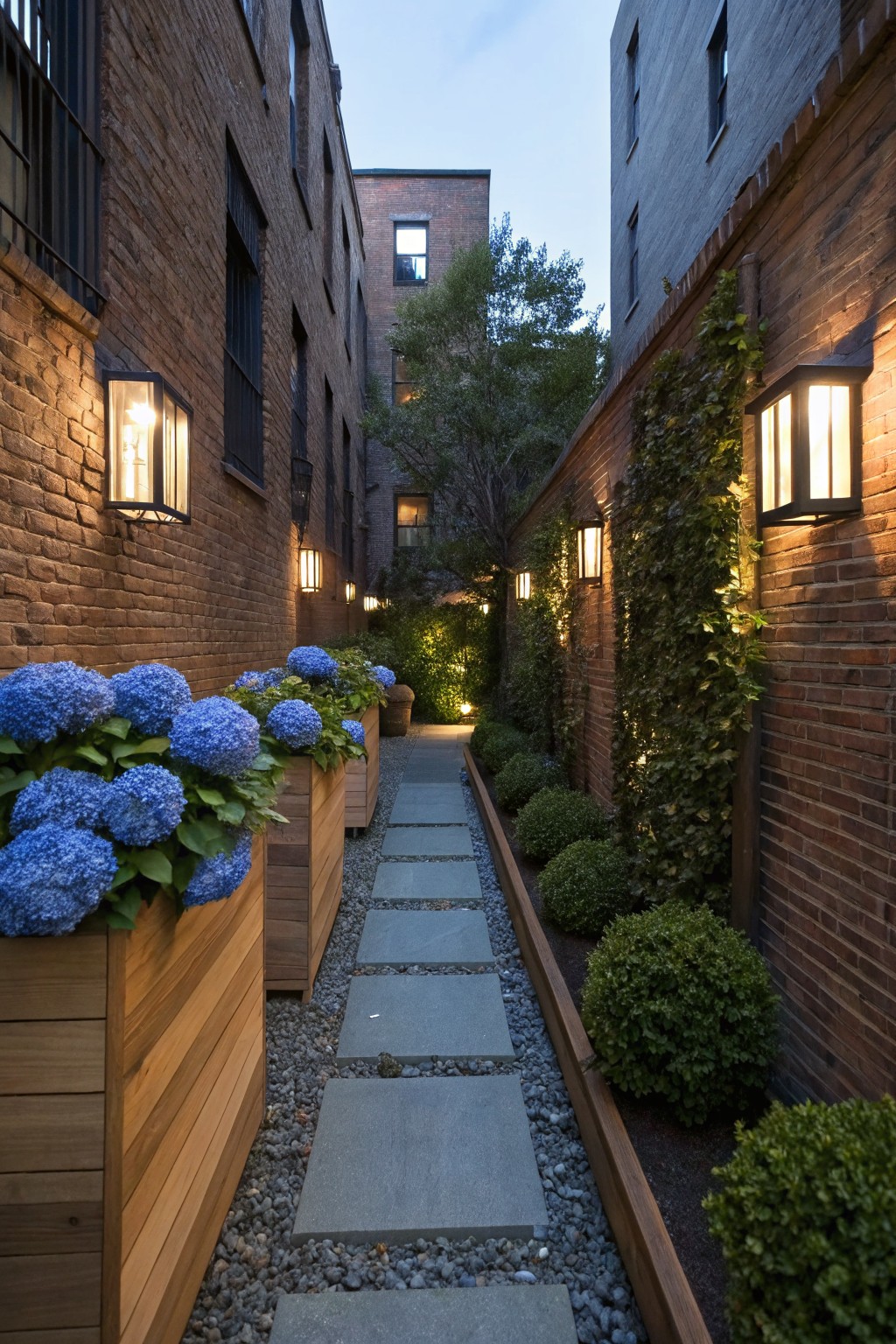
Tall wooden planters stuffed with big blue hydrangeas make a narrow path feel full and welcoming. Placed right up against the brick fences, they soften those hard walls and add a pop of color without crowding the walkway. The blooms hang over the edges a bit, drawing your eye down the space.
This works best in tight side yards or between buildings where ground planting won’t fit. Line up a few planters along one side, keep the path in simple stone pavers with gravel fill. Add wall lanterns for evening walks. It’s practical for city homes… low fuss once established.
Massed Hydrangeas Flanking Front Steps
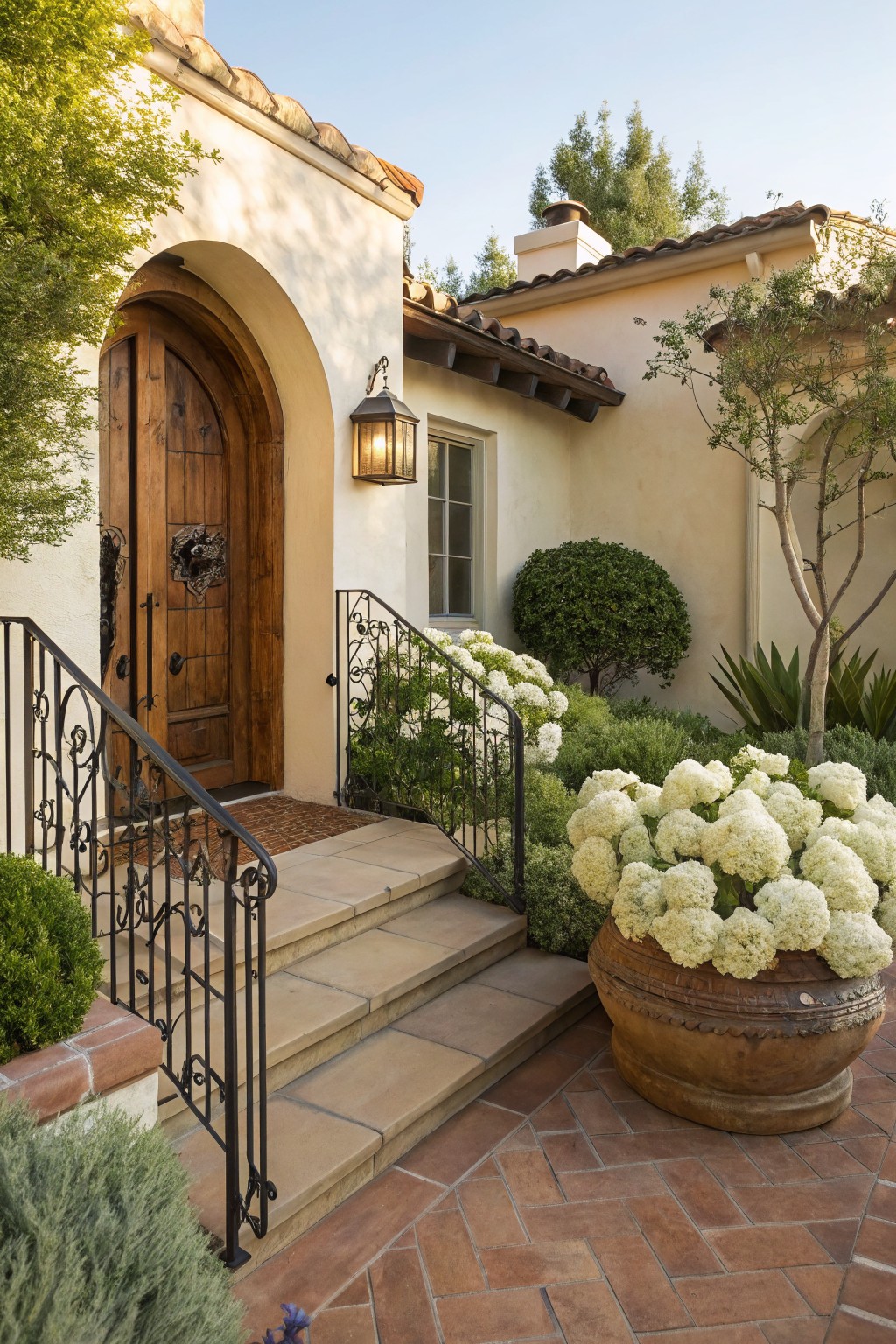
One simple way to make a front entry feel more welcoming is to plant big clusters of hydrangeas right along the base of your steps. Here, fluffy white blooms fill in the beds on both sides, mixing with lower greens to create that full, layered look without much fuss. It ties right into the house architecture too, softening those iron railings and stone steps.
This works best on homes with a bit of elevation at the entrance, like craftsman or Mediterranean styles. Plant the hydrangeas in partial shade where they get morning sun, and keep the beds mulched to hold moisture. Add one big pot nearby if you want extra punch. Just trim back in late winter to keep the shape tidy.
Hydrangeas in a Raised Fence Planter
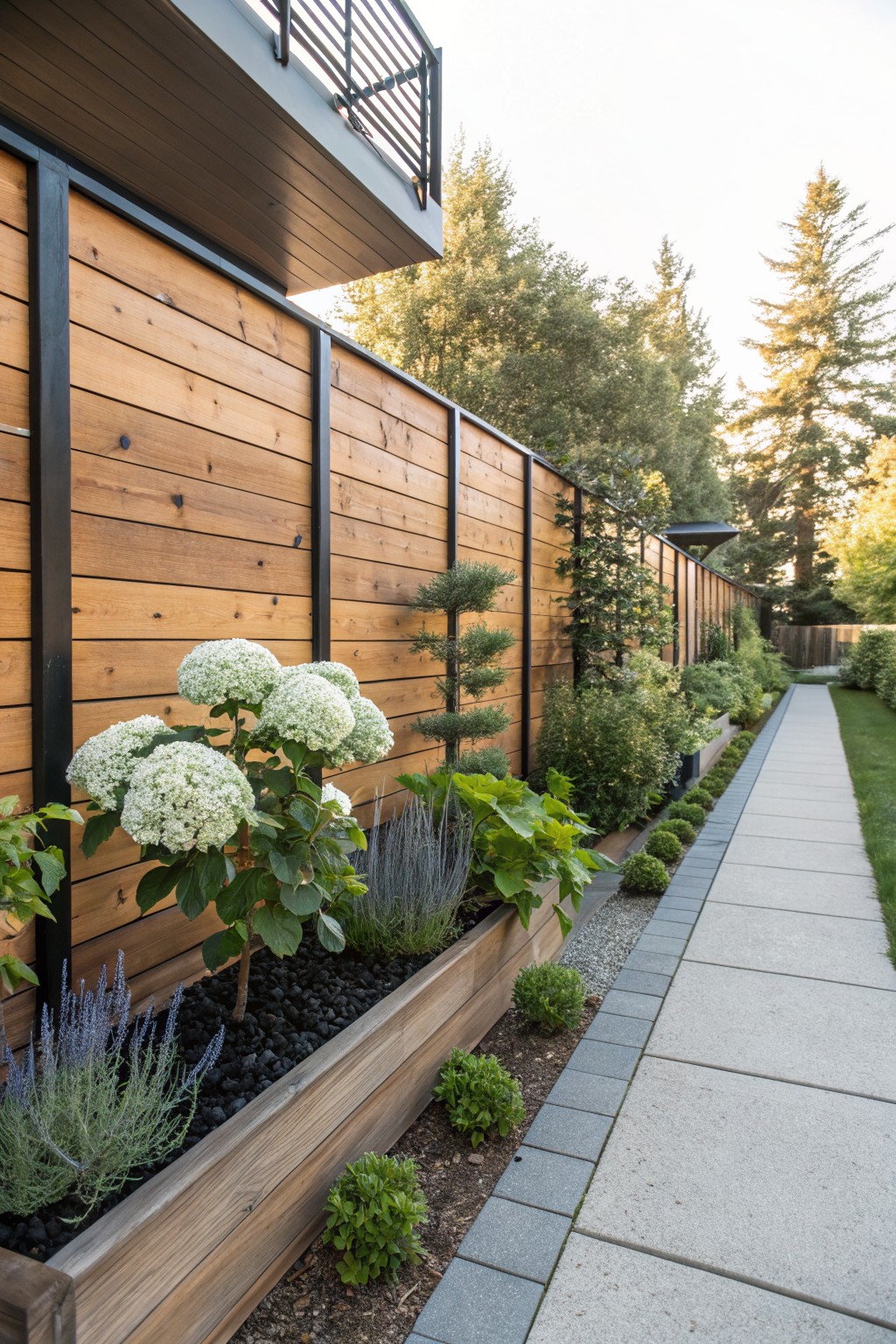
Big white hydrangea bushes planted in a wooden raised bed make a strong showing against this horizontal cedar fence with black metal frames. The full blooms fill the space right up to the fence line, softening the modern look while adding plenty of summer color. A few lower plants like lavender tuck in below for extra texture without crowding things.
This works well in narrow side yards or backyard borders where you need to maximize a tight spot. Build the planter from the same wood as your fence to keep it simple, drop in hydrangeas for height and impact, then edge with gravel or concrete pavers along a path. It suits modern homes with clean lines… just watch soil drainage in the bed.
Hydrangeas Against a Picket Fence
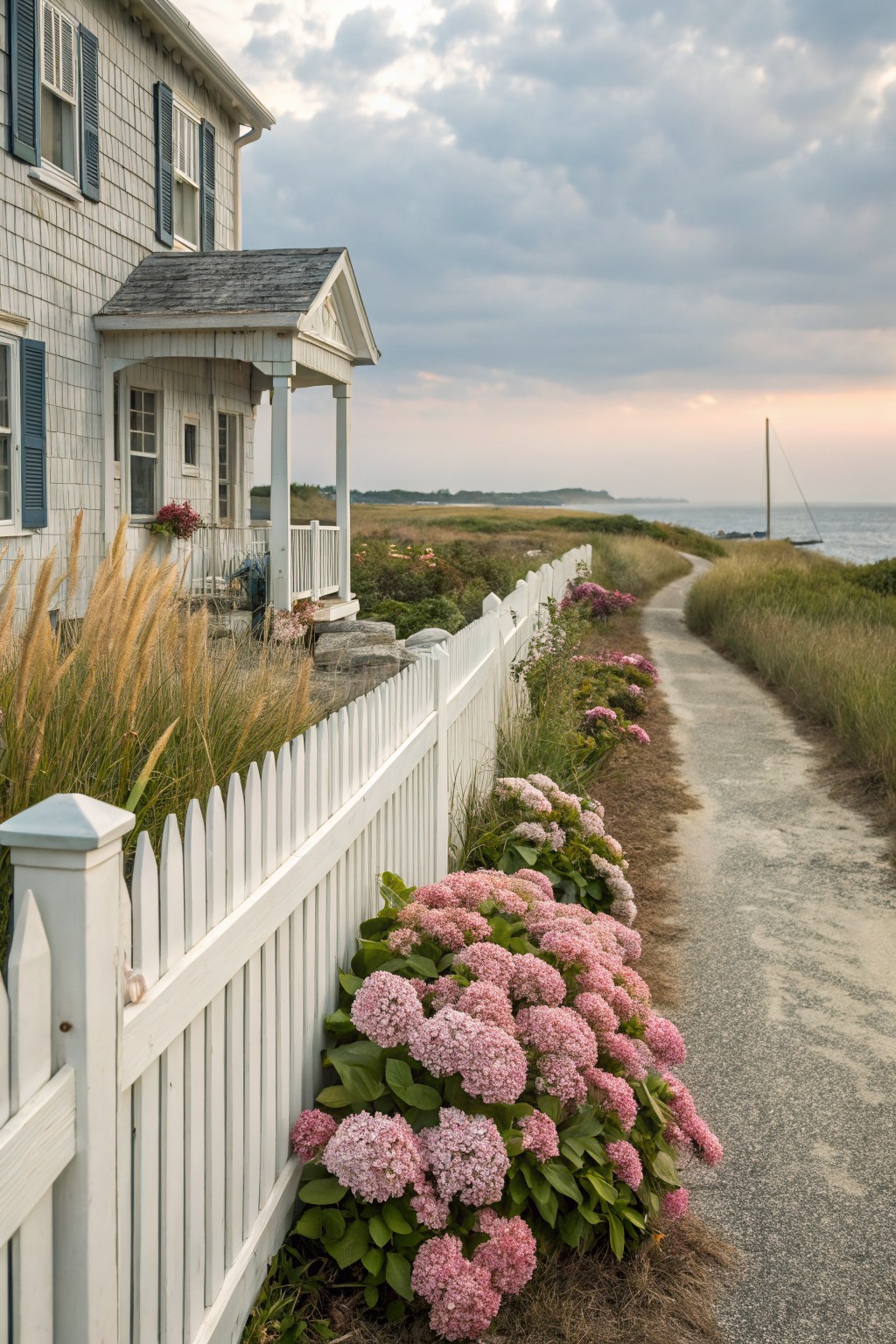
Planting hydrangeas right up against a white picket fence fills the border space in a simple, full way. The big pink blooms push out over the fence line, making it look softer and more alive without much hard work. Tall grasses nearby add some height, but the hydrangeas do most of the filling.
This idea suits cottage gardens or coastal spots with sandy soil. Mass a few big bushes along the fence base, and they will spread to cover gaps over time. Keep them watered in dry spells, and trim back in late winter to keep the shape tidy.
Massing Hydrangeas Along a Picket Fence
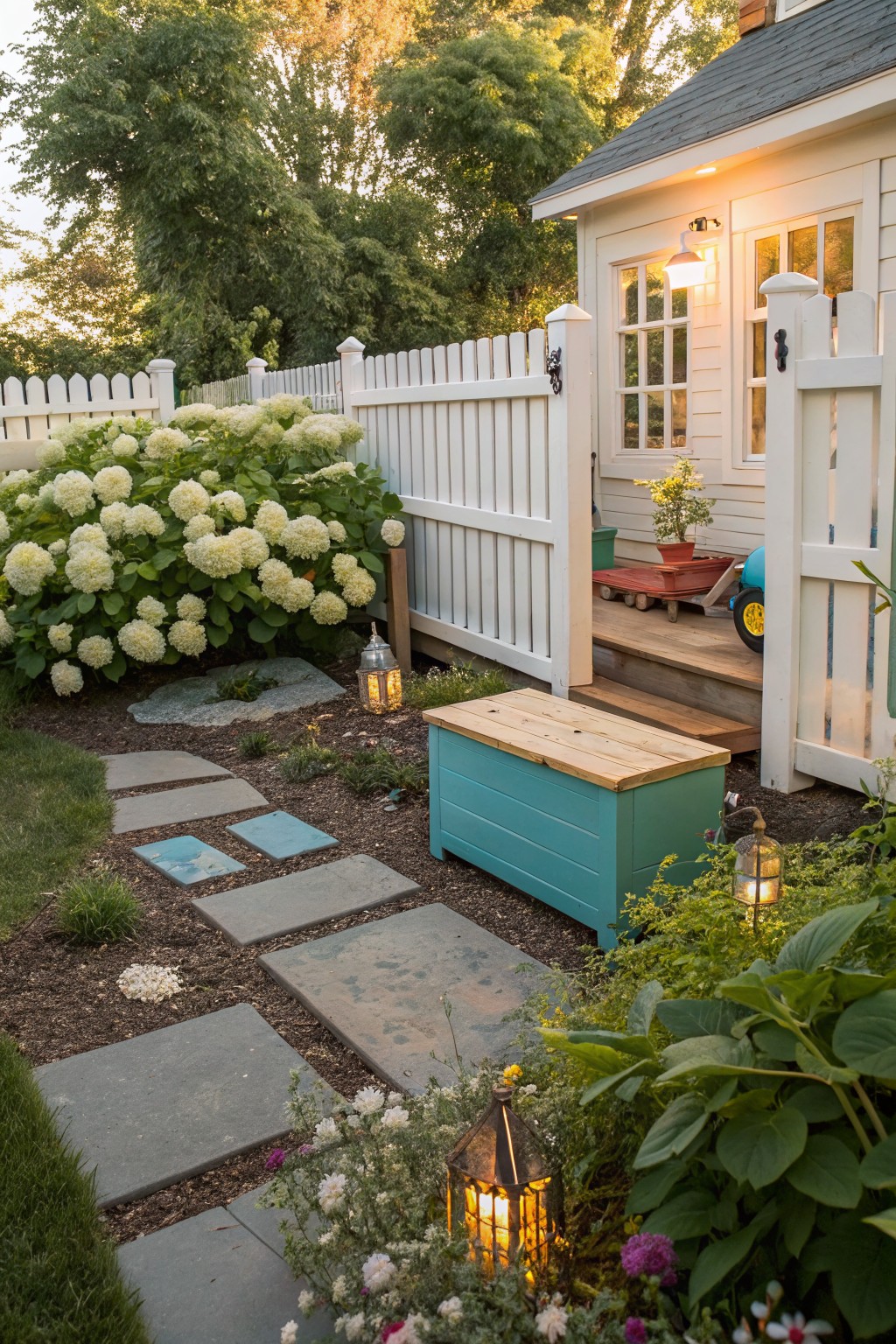
Big fluffy white hydrangeas planted right up against a white picket fence make the whole edge feel full and soft. The bushes grow thick and tall enough to peek over the fence top, turning a plain boundary into something cottage-like and welcoming. That massed planting fills empty spots without much effort once they’re established.
Try this in narrow side yards or backyard borders where you need quick coverage. It suits sunny to partly shaded spots with decent soil. Just keep the path clear with stepping stones, like the slate ones here leading to a shed. Watch for too much shade though. They’ll still grow but blooms might thin out.
Frequently Asked Questions
Q: How far from the fence should I plant hydrangeas?
A: Plant them 3 to 4 feet out from the fence base. They spread wide with big roots, so this spacing lets air flow and keeps things healthy. They’ll hug the fence just right over a couple years.
Q: What if my fence creates a shady spot?
A: Hydrangeas love morning sun and afternoon shade, which fences often provide. Pick partial-shade lovers and they’ll still burst with blooms. Shift pots around first to test the light.
Q: Do hydrangeas need tying or staking by the fence?
A: Nope. Most bush out sturdy on their own and lean naturally. Stake floppy new plants for a season, then let them go.
Q: When do I prune them to stay full and bushy?
A: And trim right after they finish blooming each summer. Cut spent flowers back to a healthy bud. This sets them up for thicker growth and more flowers next year.
