

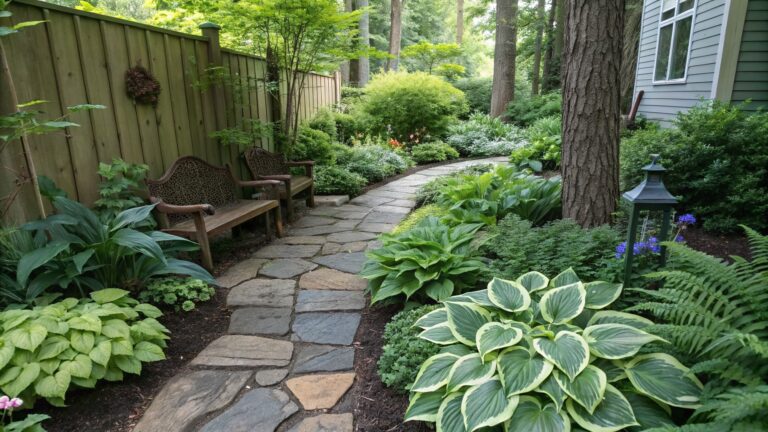
I’ve spent years tweaking the shady beds in my backyard, where hostas have become the backbone for creating depth and flow without much sun. They work best when you layer them thoughtfully around pathways or against fences, letting their leaves mound up to frame the space over time. Walkers through the garden often comment first on how the bold variegations draw the eye forward, guiding movement naturally. I keep coming back to one arrangement with stone edging that lets the plants spill just enough to feel alive but contained. A few of these ideas are the kind I’d screenshot and adapt next season, since they handle real soil and weather so well.
Irregular Stone Path Through Hosta Plantings
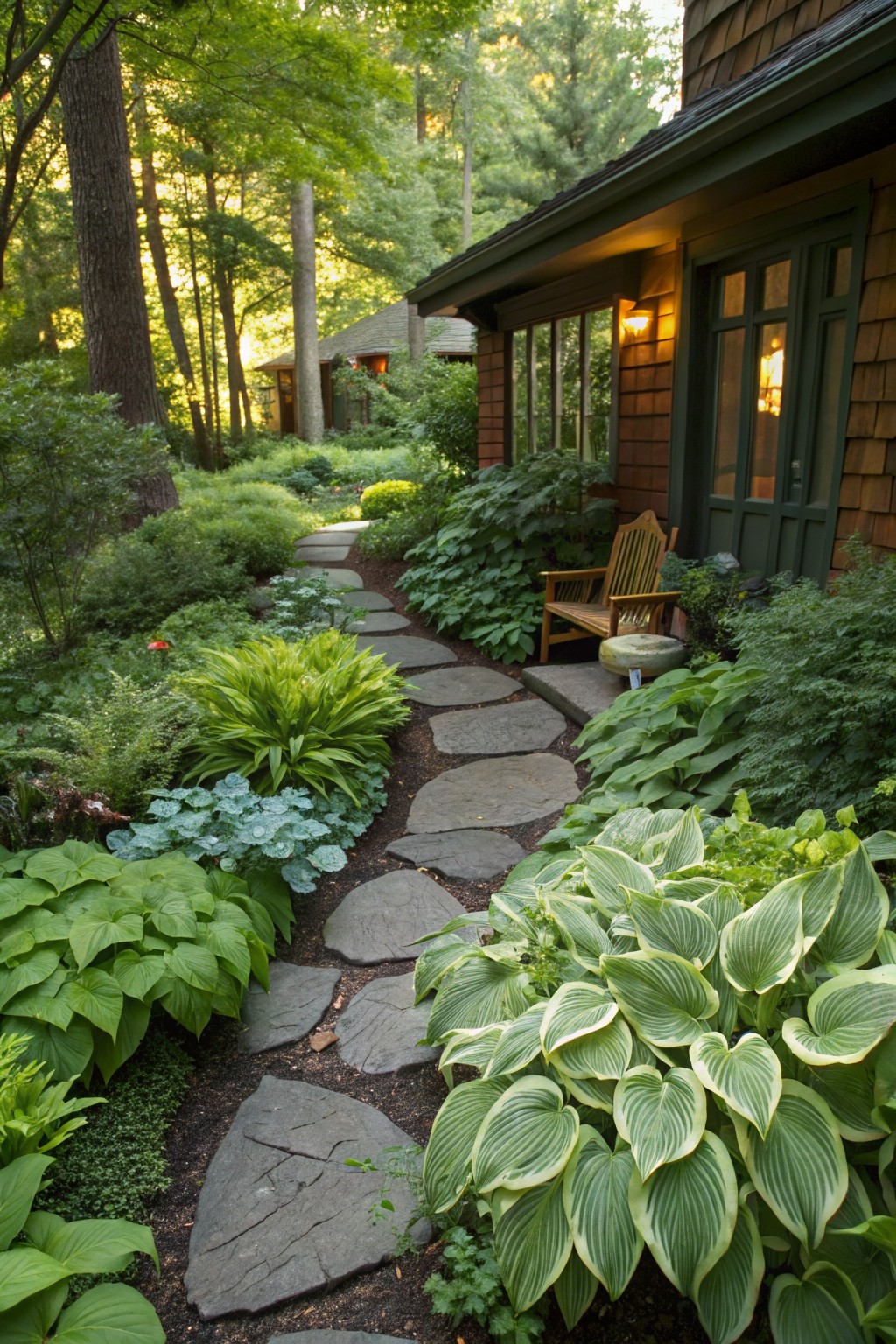
A simple path made from rough-cut stone slabs winds gently through thick groupings of hostas. This keeps foot traffic off the soil while letting the plants spill right up to the edges. In a shady garden like this, it pulls everything together without much fuss.
Lay the stones in a loose curve to guide people toward the house door or a seating spot. Mass the hostas shoulder to shoulder on either side, mixing leaf sizes for interest. It suits wooded backyards or cottage-style homes where you want low upkeep and a tucked-away feel. Just mulch between the stones to cut down on weeds.
Variegated Hostas Edging Stone Paths
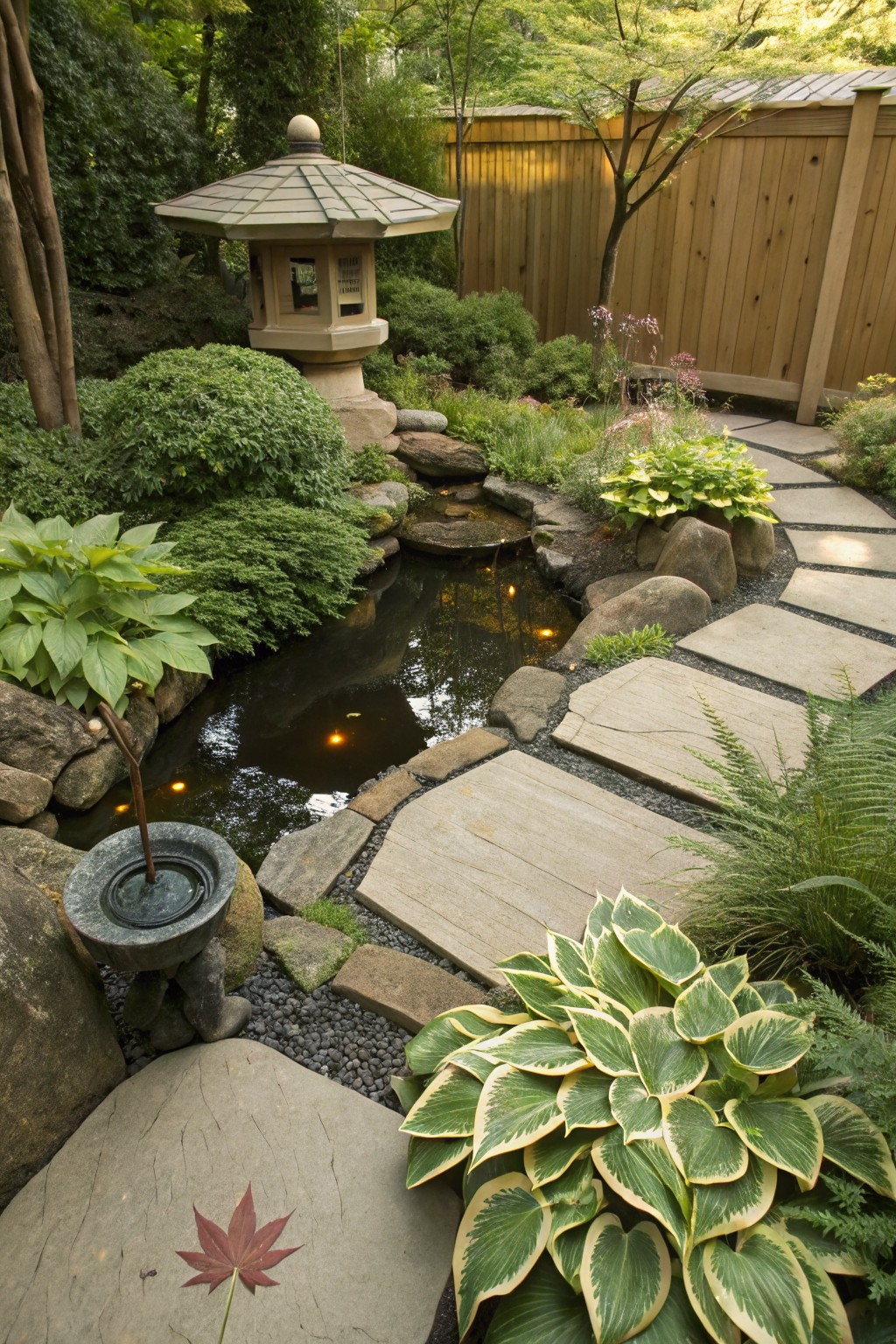
Variegated hostas work really well along stone paths in shaded spots. Their broad leaves with green and cream edges pick up the light filtering through trees, and they fill in nicely without much fuss. In this setup, they sit right next to the rough slabs, softening the hard edges while the path leads your eye toward the pond.
You can plant them like this anywhere with dappled shade, especially around water features or in backyard nooks. They handle moist soil from pond edges just fine, and the variegation adds interest without needing sun. Keep them mulched to stay neat, and they’ll frame walks year after year.
Shaded Lounge Area with Hosta Accents
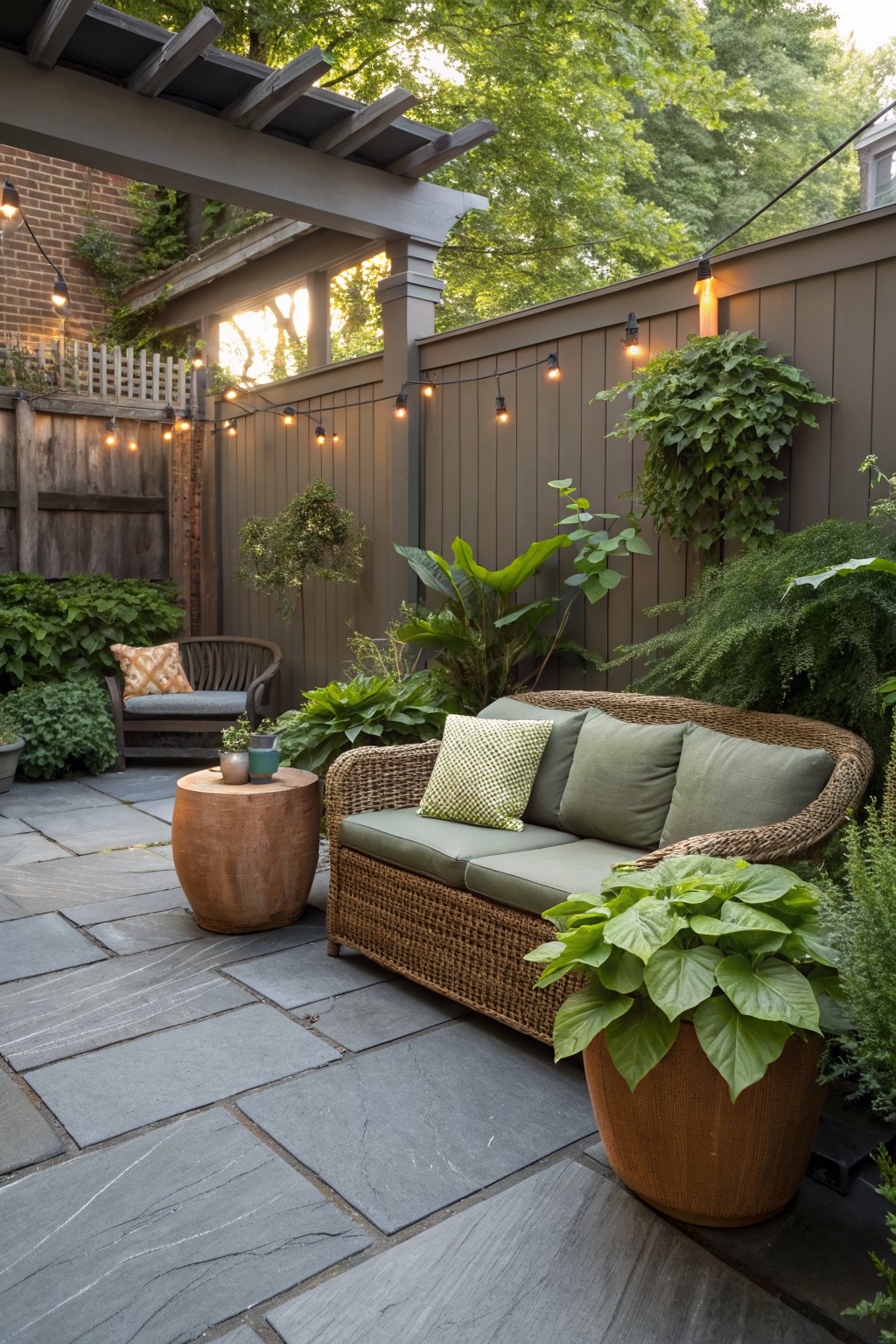
A simple patio setup like this turns a plain backyard corner into a quiet spot to sit. The wicker sofa and matching chair face each other across a wood stool table, all on slate pavers under a pergola. Pots of hostas and ferns hug the edges, filling the space with green without crowding the seats.
This works best in partly shaded yards where hostas thrive naturally. Tuck large pots along fences or walls to screen views and add layers. Keep a few smaller ones near the furniture for balance… just water them steady and they’ll handle low light fine.
Raised Hosta Planters Along Side Paths
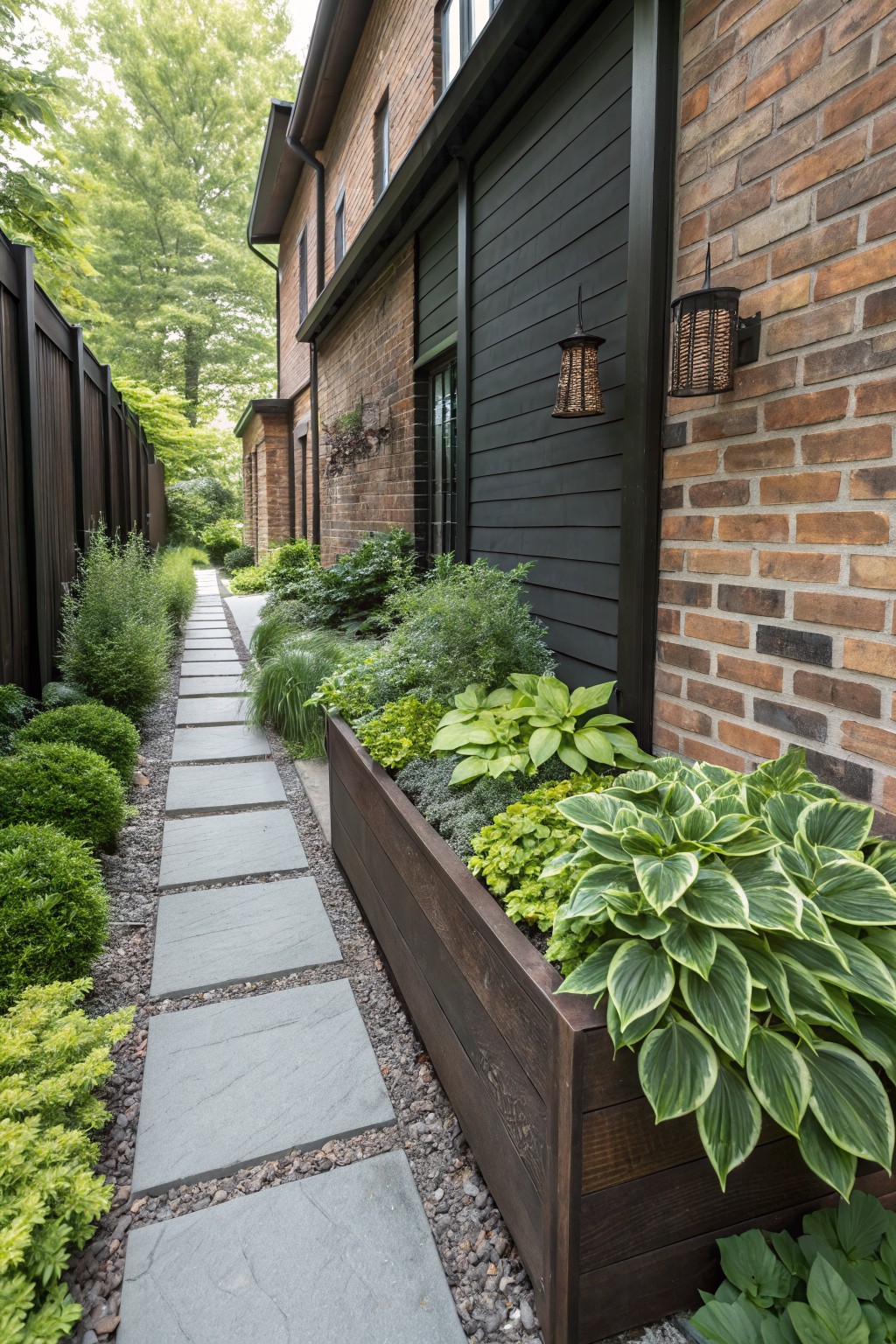
A raised wooden planter box packed with hostas makes a narrow walkway feel full and green. Here the box sits right against the house wall, with big leaves tumbling over the edge onto the gravel and stone path. It hides the wall’s base nicely and adds that soft texture hostas are good for in shade.
This works best in tight side yards or between the house and a fence, where you want low upkeep but some color. Build the box from cedar or treated wood to last, plant hostas close together for quick fill, and edge the path with gravel. They handle low light well… just keep soil moist.
Hostas Along Rustic Wooden Steps
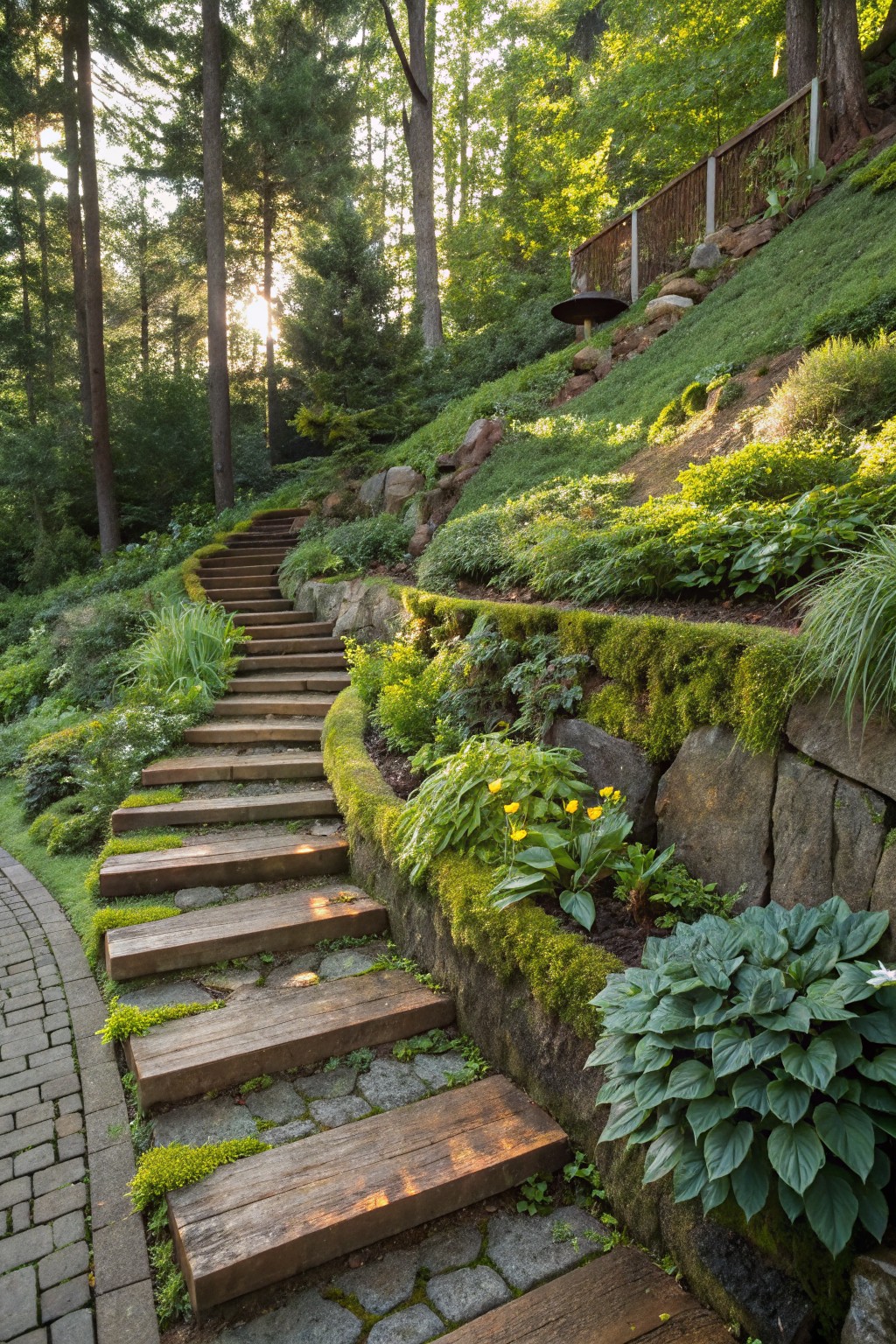
Wide wooden steps like these make a steep slope feel easy to climb. They sit right into stone retaining walls covered in moss, with hostas tucked in along the edges. The hostas add that soft green look without much fuss, and they thrive in the shade from all those trees. It’s a simple way to turn a tricky hill into part of the garden.
You can do this in any shady backyard with a drop. Use pressure-treated timber for the steps so they last, and pick hosta varieties that spread a bit to fill in the beds. Keep the stone walls low enough to step over if needed. Just watch for wet spots after rain… the wood can get slippery.
Hosta Layers Softening Entry Steps
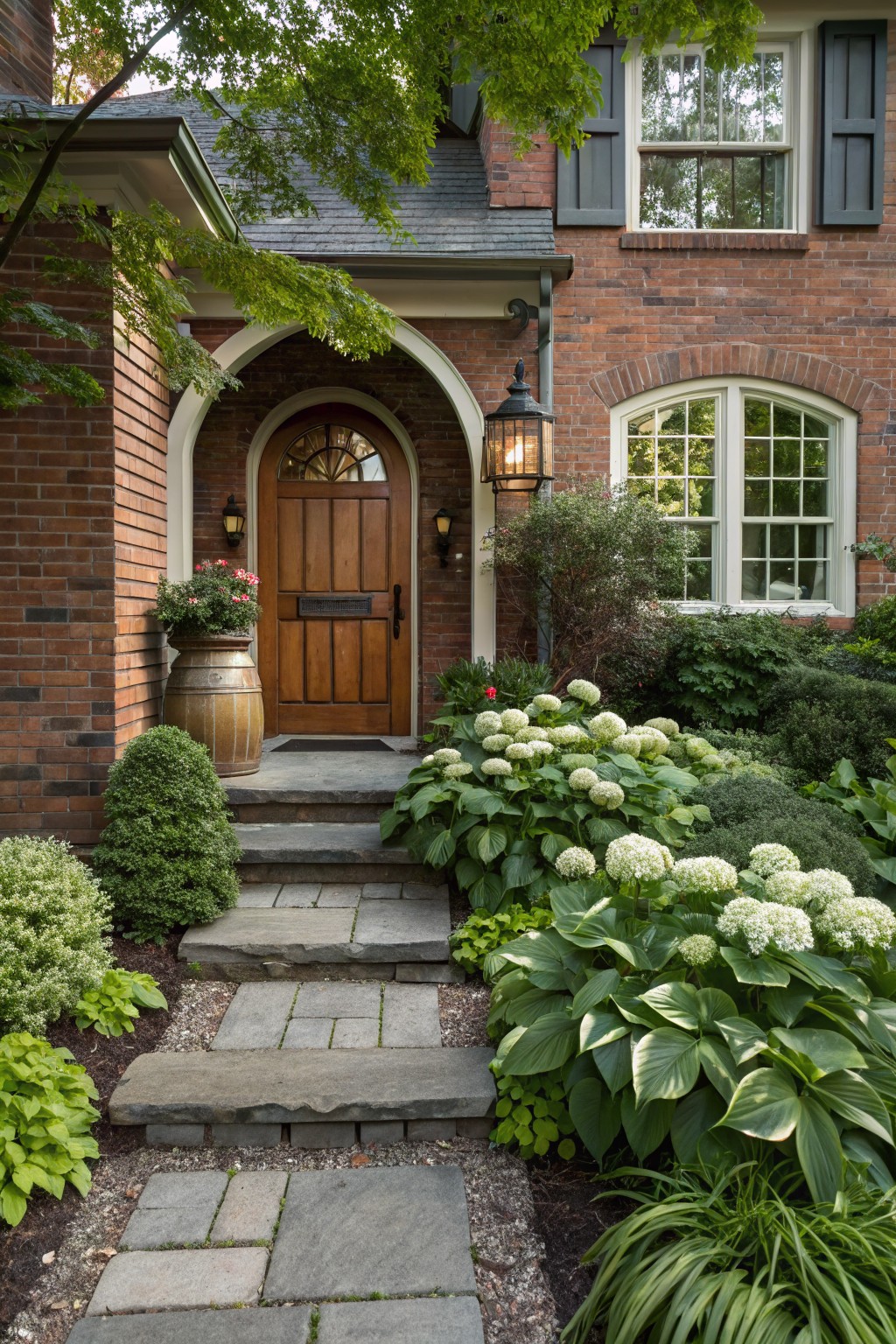
One simple way to welcome guests is planting hostas right along your front steps. Here, big clumps of white-flowered hostas fill the beds on either side, making those stone steps feel less stark against the brick house. The leaves create a soft green edge that draws the eye up without overwhelming the arched door.
This works best in shaded spots near the house, where hostas thrive anyway. Plant them in groups for that full look, maybe mix in a few boxwoods for structure. Keep the beds mulched to hold moisture. It suits older homes with formal entries, turning a plain approach into something lush and low-fuss.
Hosta Plantings Along a Stepping Stone Path
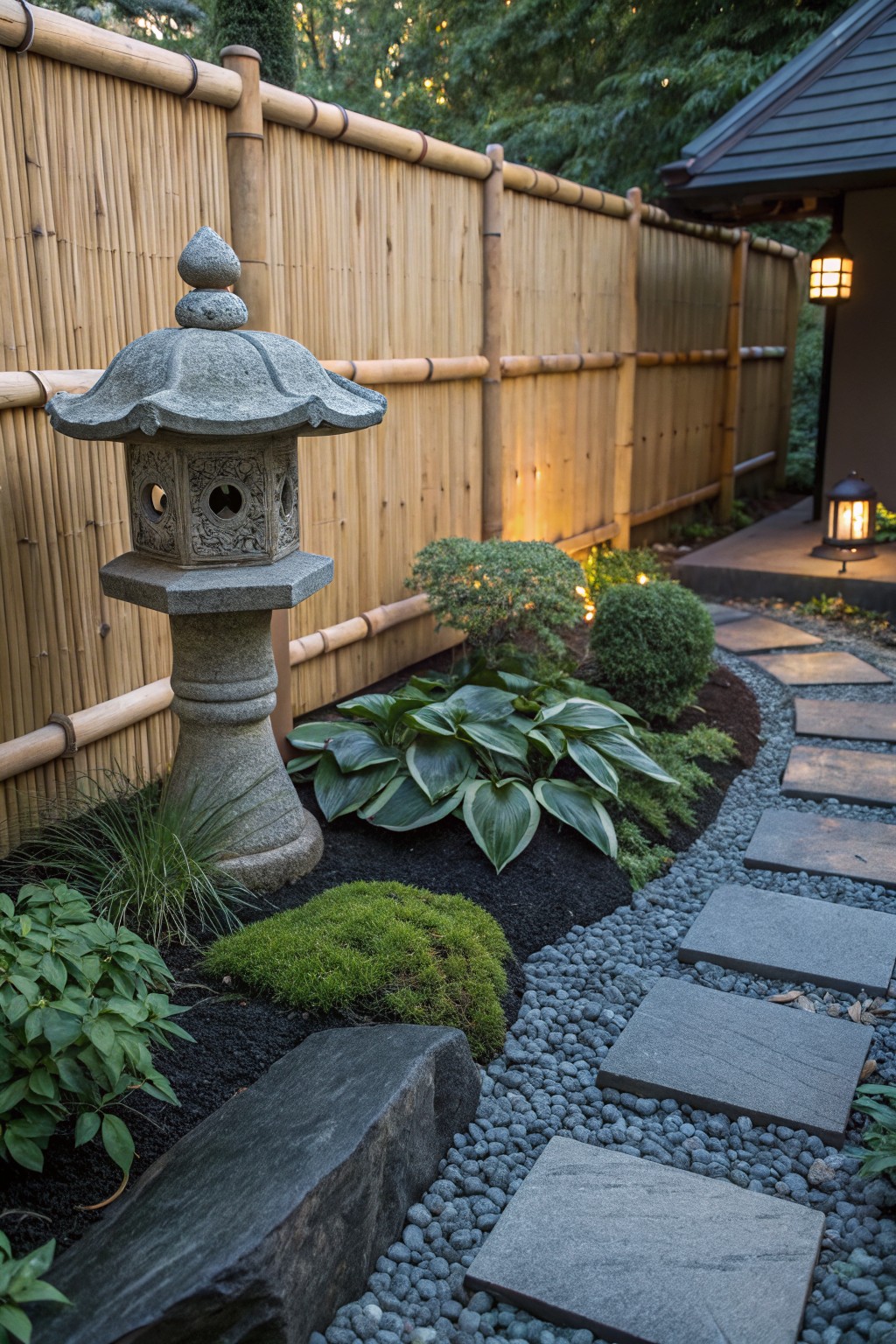
One simple way to use hostas in a shaded garden is to plant them right along the edges of a stepping stone path. Here, big leaves of hostas mix with low grasses and moss, filling in around flat stones and gravel. That lantern nearby adds a touch of old garden style without taking over. It keeps the path feeling natural and easy to walk, even in low light.
This setup works best in narrow side yards or back paths where shade from trees or fences is heavy. Go for bold hosta varieties that hold up to damp spots. Keep the stones spaced for a stroll, and add mulch or gravel between to cut down on weeds. Watch the lantern scale, though. Too big and it crowds the plants.
Hostas Edging Entry Steps
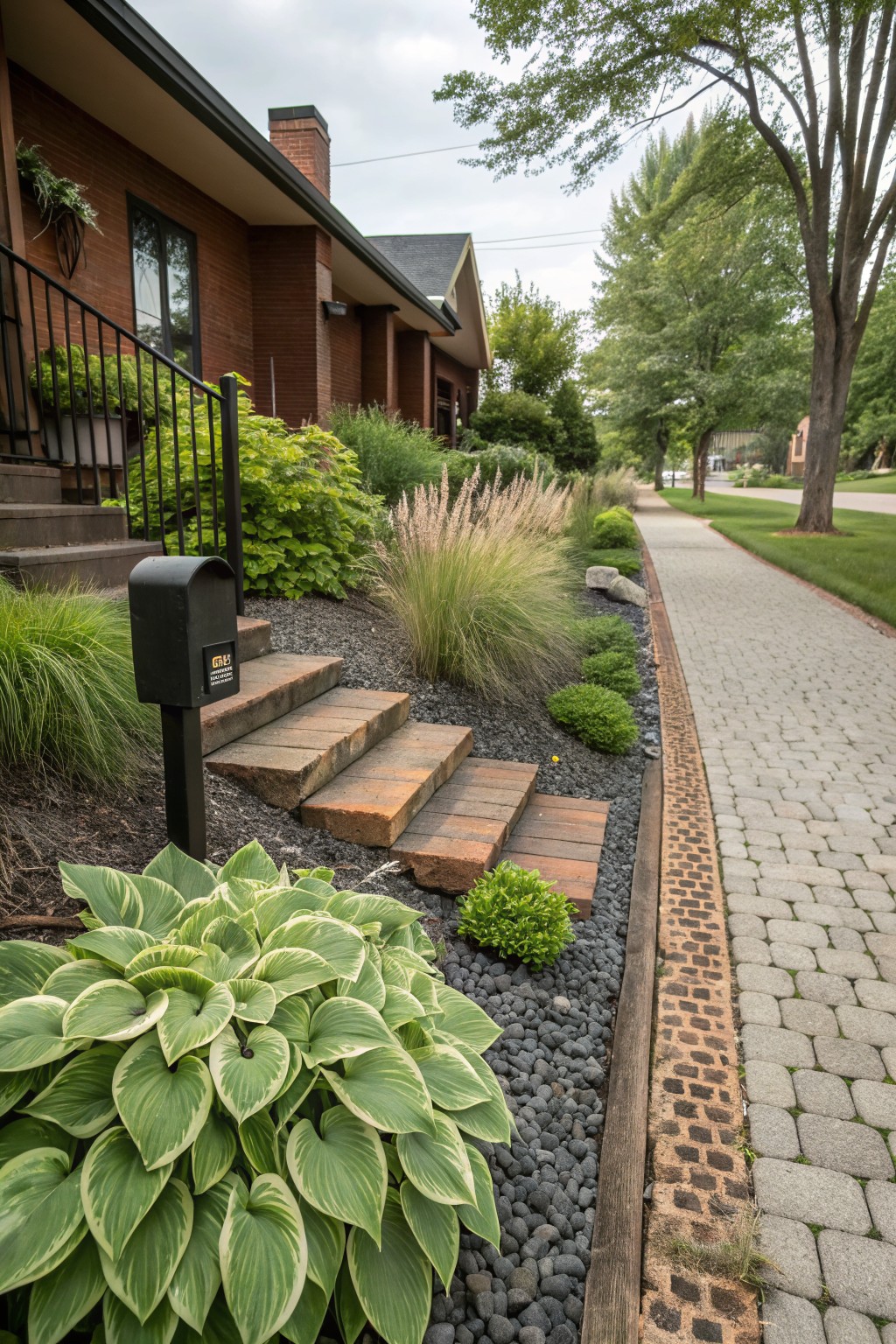
One simple way to welcome guests is planting hostas right at the base of your front steps. These big leafy plants fill out shaded spots nicely and add that soft green touch against hard stone or brick. In this setup, they’re tucked into beds with black gravel mulch, which keeps things neat and low fuss.
Pair hostas like this with taller grasses and a few rocks for some height and texture. It works best in partly shaded front yards where the path meets the house. Just make sure the soil stays moist… hostas don’t like drying out. This look fits most homes without much upkeep.
Hosta Borders Along Winding Paths
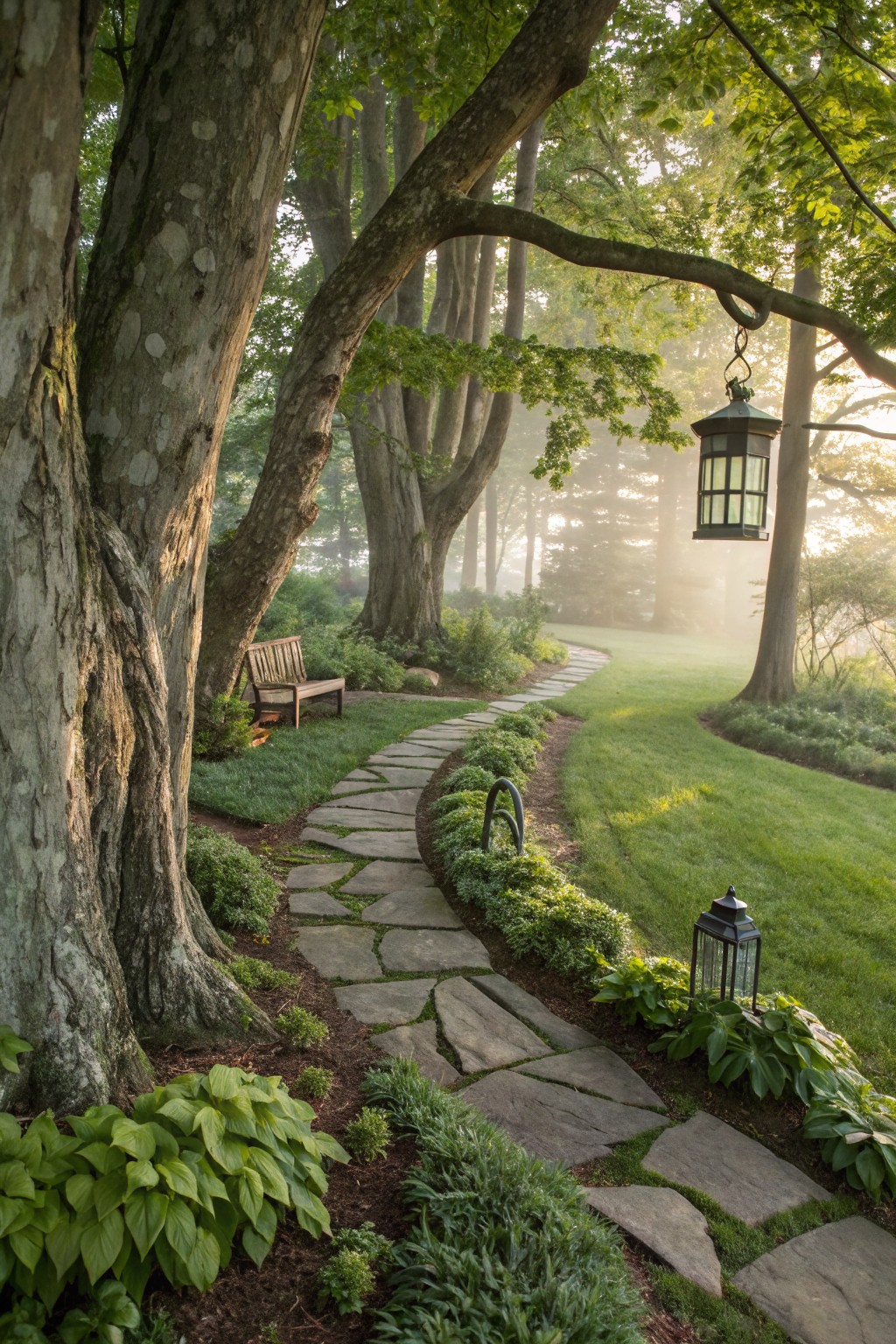
A winding stone path like this one shows how hostas can frame a garden walkway just right in shady spots. The broad leaves hug the path edges without spilling over, and they hold up well under tree canopies where grass might struggle. That soft green edging pulls your eye along the curve, making the whole yard feel more connected.
Tuck hostas in along paths in wooded backyards or side yards. Keep the beds mulched to hold moisture, and space the plants so they touch as they grow. A bench midway and low lanterns hanging from branches turn it into a spot you’ll actually use… day or evening.
Hosta Planters Beside a Linear Water Feature
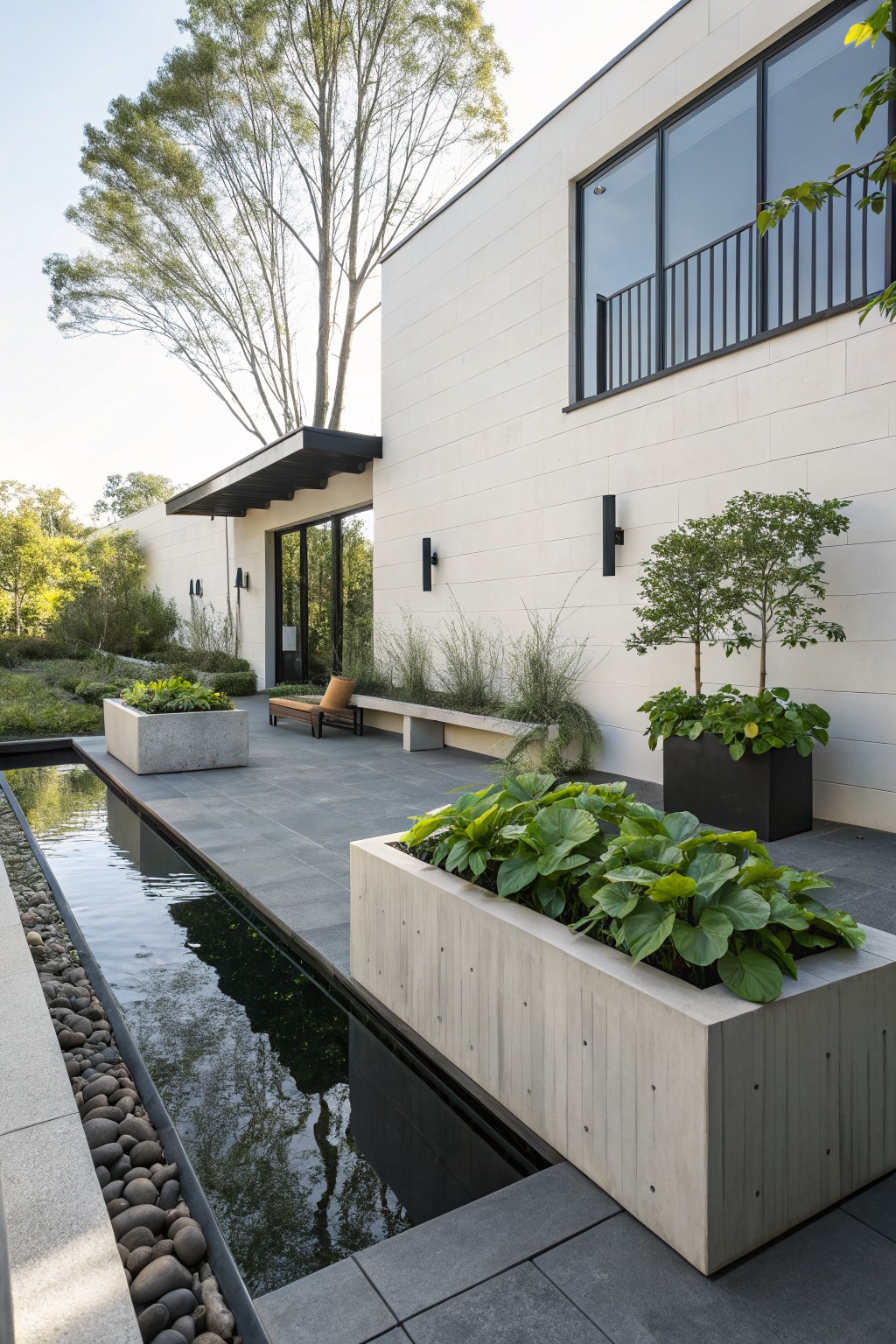
Large concrete planters stuffed with hostas make a simple statement in this setup. The rectangular boxes sit right along a narrow reflecting pool, their broad leaves spilling over the edges a bit. It keeps things clean and modern while the hostas add that lush green texture without much fuss. Hostas do well in the shade from the nearby trees, and the water nearby helps with humidity too.
Try this along a patio or walkway where you want some calm flow. Pick rough concrete planters to match stone or stucco walls, and keep the water feature long and shallow lined with pebbles. It suits shaded spots next to a house, but watch the scale, bigger planters work best so the hostas don’t look skimpy.
Hosta-Lined Steps in a Shady Woodland Garden

One simple way to handle a sloped shady spot is with rough stone steps like these, edged in big leafy hostas. The hostas fill in around the edges and give that soft green look without much fuss. They mix right in with the moss and ferns already there, making the path feel like it belongs in the woods.
You can try this on any hillside or bank where sun barely hits. Plant the hostas close to the steps so they spill over a bit. Keep the stones natural, no fancy cutting needed. It works best in bigger gardens… smaller yards might feel crowded. Just watch for slugs if it’s damp.
Hostas in Urns Along Front Steps
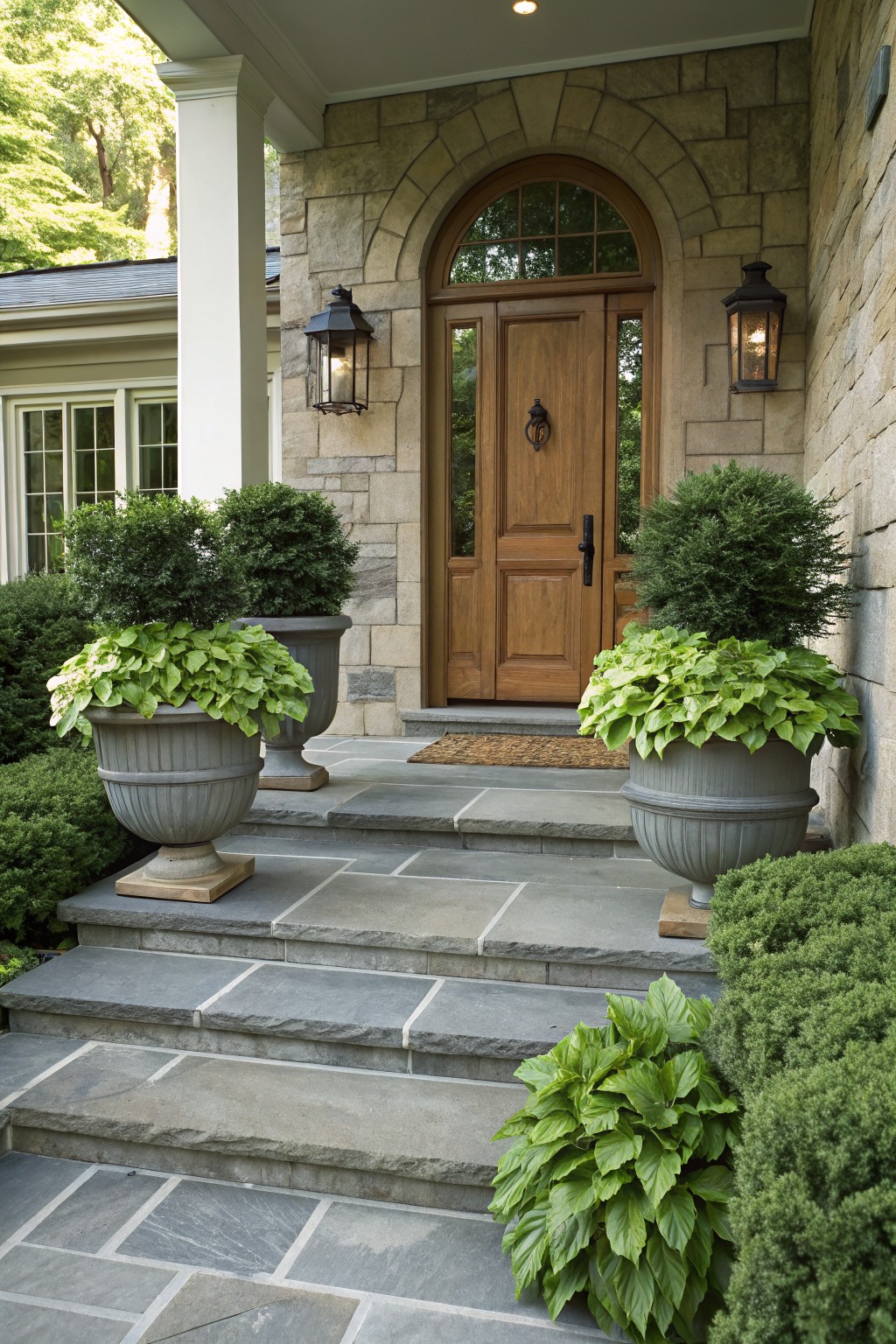
Large hostas spilling out of stone urns make a simple statement at this front entry. Placed right on the steps, they add soft green layers without crowding the stone path. The variegated leaves catch light even in shade, and they pair well with the low boxwood shrubs nearby. It’s a clean look that feels established but easy to pull off.
Try this where you have a few steps leading to the door, especially under a porch roof that keeps things shady. Go for bigger urns on pedestals to lift the hostas up a bit. Pick varieties like ‘Sum and Substance’ for bold size. Just make sure the pots drain well so the roots stay happy through wet spells.
Hostas Edging a Stone Pool Deck
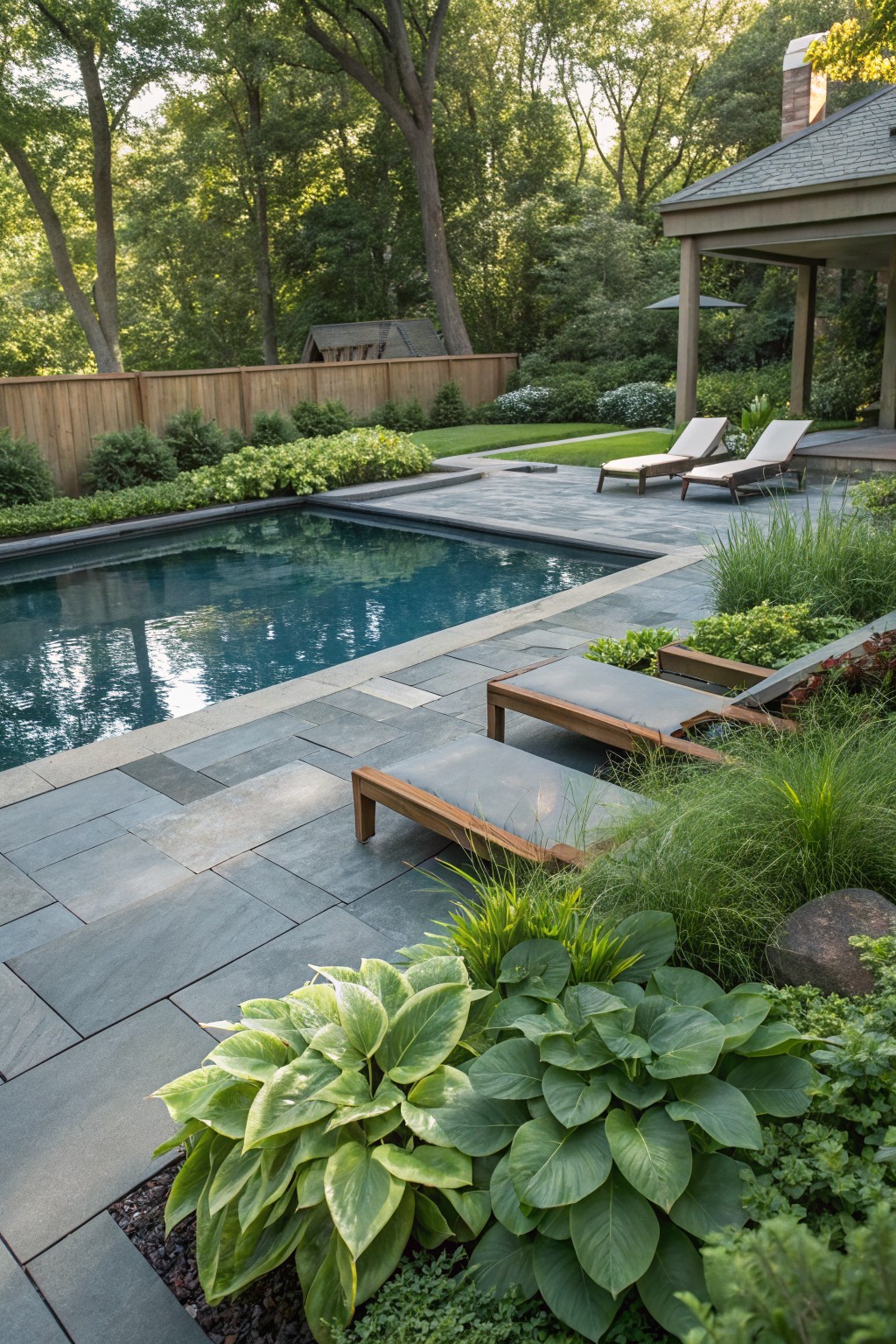
One simple way to use hostas in a shaded yard is to plant them right along the edge of a stone pool deck. You see these big, broad-leaved clumps tucked into curved beds next to the pavers, filling in with their fresh green color. They stand out against the dark slate tiles and blue water, giving the whole area a fuller, more finished look without much fuss. It’s a natural fit for spots under trees where other plants might struggle.
Try this around any hardscaped patio or pool that gets afternoon shade. The hostas handle low light well and stay tidy through summer. Just keep the beds mulched to hold moisture, and pair them with a few taller grasses for some height. Works best on modern or clean-lined homes… adds that garden feel without overwhelming the setup.
Lantern-Lit Paths in Hosta Gardens
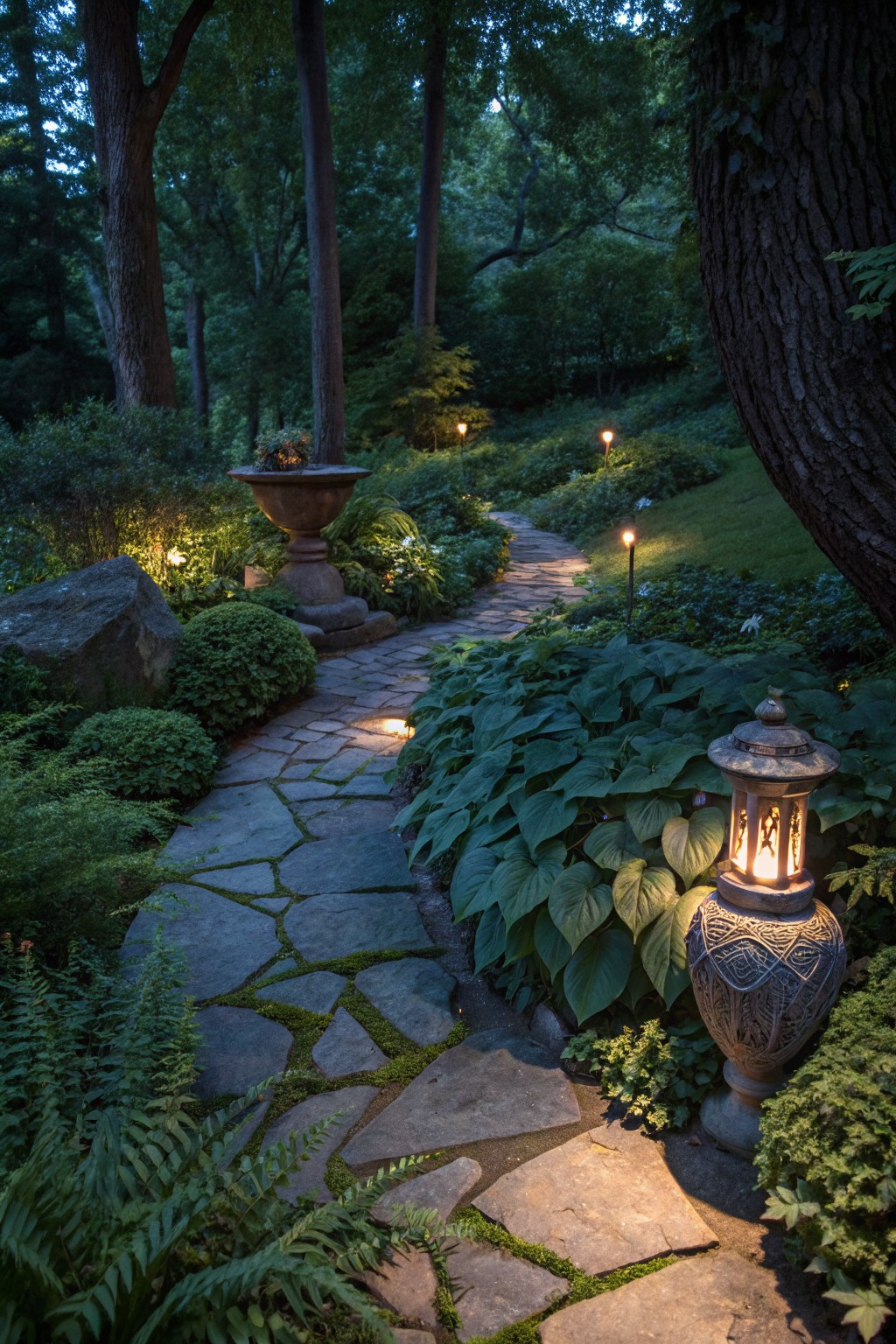
A winding flagstone path like this one turns a shady spot into something you actually want to walk through after dark. The lanterns cast a soft glow on the mossy stones and the big hosta leaves nearby, making the garden feel safe and a little mysterious without much effort. It’s a practical way to enjoy hostas beyond daytime.
These paths work best in wooded yards or along the side of a house where shade rules. Lay irregular flagstones with gaps for moss or creeping plants, then tuck hostas along the edges for that full, green look. Add simple lanterns on stakes or pots, wired low-voltage for easy setup. Skip straight lines, though. The curve keeps it interesting.
Frequently Asked Questions
Q: When’s the best time to plant hostas from the ideas in your article?
A: Plant them in spring right after the last frost passes. They root quickly before summer heat arrives. Water them deeply once a week the first season.
Q: My hostas get holes in the leaves every year. How do I stop slugs?
A: Slugs munch hostas at night, so check plants then and pick them off by hand. Scatter crushed eggshells around the base as a sharp barrier. Beer traps work great too, just sink shallow dishes at dusk.
Q: What soil do hostas really need for those shaded spots?
A: Mix in plenty of compost to make soil rich and moist. Hostas hate soggy feet, so ensure good drainage. Top with two inches of mulch to hold in moisture.
Q: Can I split big hostas to spread them around my garden?
A: Dig up the clump in early spring. Cut through the roots with a sharp spade for new pieces. Replant immediately and water well.
