

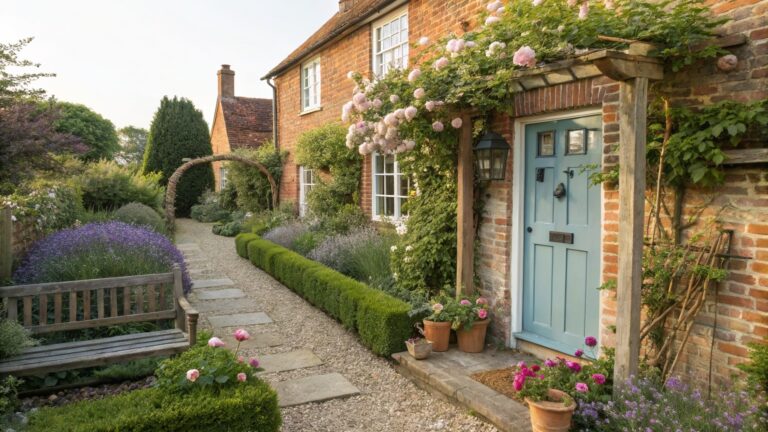
I’ve found that flower landscaping around the house works best when the layout follows the natural lines of the foundation and walkways, creating a frame that evolves with the seasons. In my yard, I once planted a simple border that quickly showed me how poor edging lets weeds creep in and muddle the whole look over time. Folks driving by usually spot the front planting beds first, so getting their structure right with layered heights makes the biggest difference. You can shape these outdoor spaces to feel grounded and charming by mixing perennials with annuals along pathways, letting the garden mature without swallowing the house. A few of these ideas are worth sketching out for your own lot.
Planting Flowers Along the Front Path
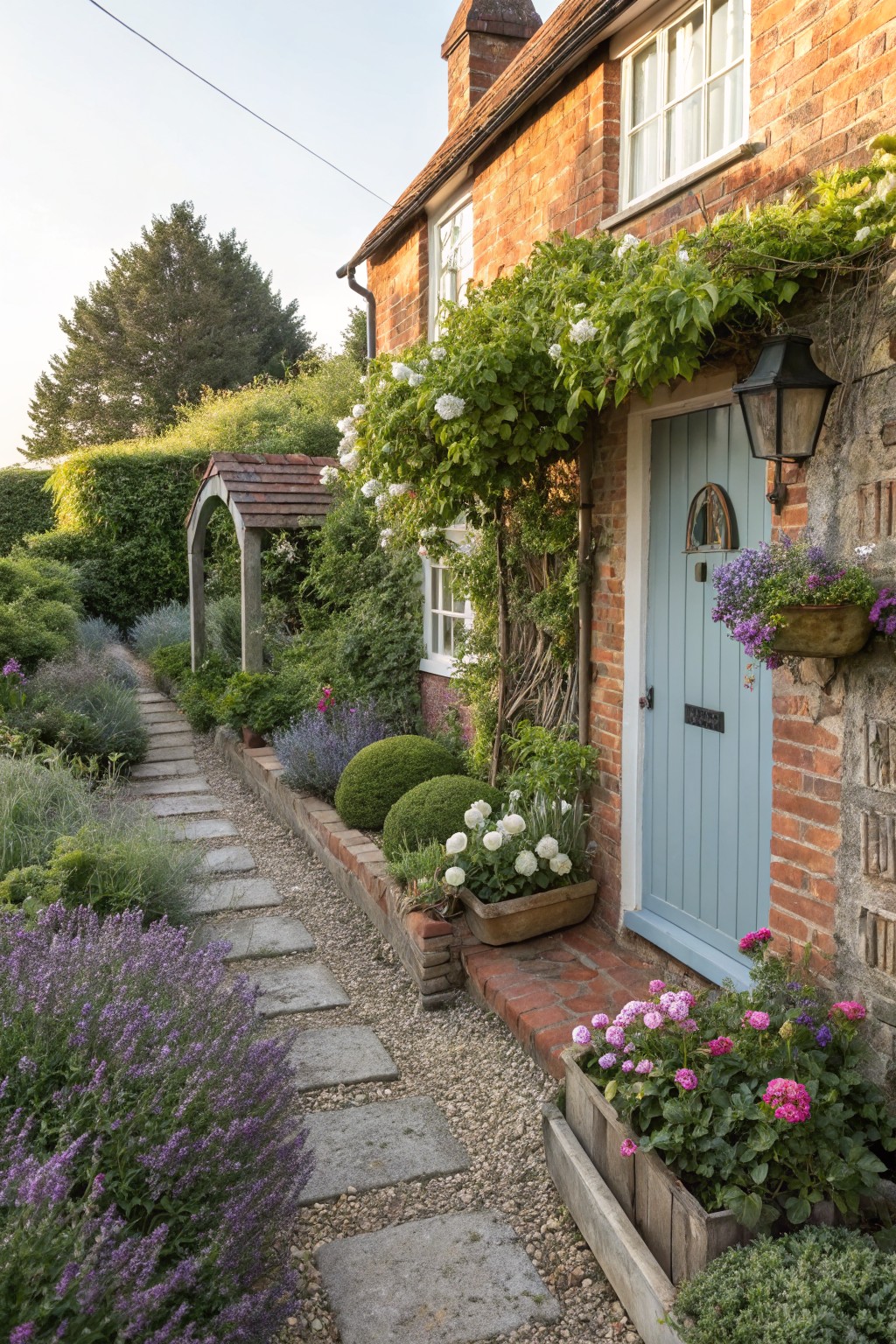
One easy way to add charm around your house is planting flowers right along the path to the door. Lavender lines one side here, with white clusters and pink blooms filling in the edges. It guides folks straight to the entry while softening the brick walls with all that green and color.
This setup fits older homes or cottages best, especially where you have room for a few feet of border on either side. Go for tough plants like lavender that come back each year, and mix in some boxwood balls for shape. Just keep taller stuff back from the stones so no one trips.
Flagstone Path with Boxwood Borders
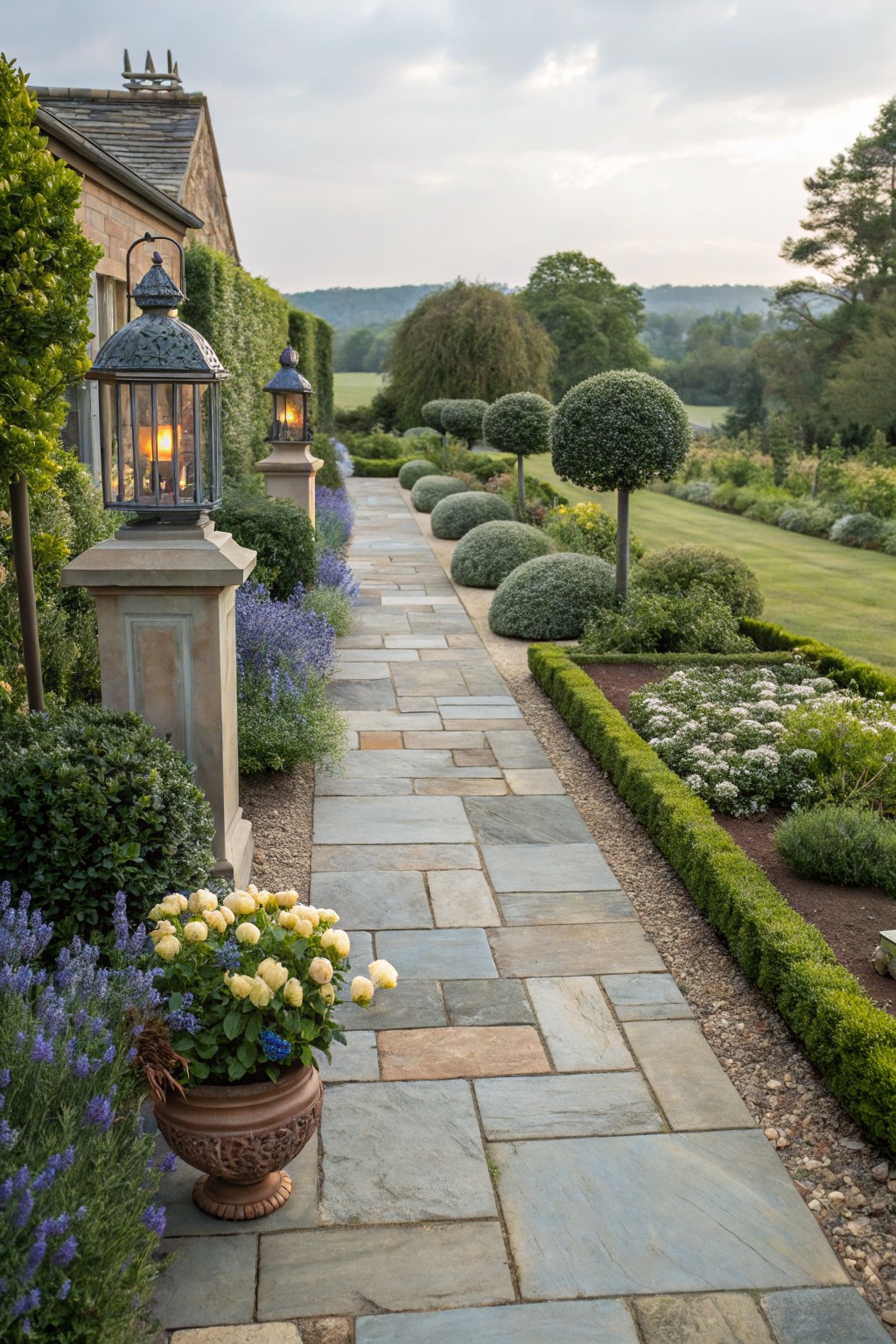
A flagstone path like this runs straight through the garden, edged close with low boxwood hedges and lavender plants. The clipped shapes keep everything in line and make the walk feel purposeful. Stone lanterns on pedestals add just enough height without crowding the way.
You can pull this off in any front yard that gets decent sun. Boxwoods take shearing well and stay green year round. Pair them with tough perennials like lavender for color and smell. Skip it if your soil stays too wet… box needs good drainage.
Flowers and Grasses Flanking Coastal Steps
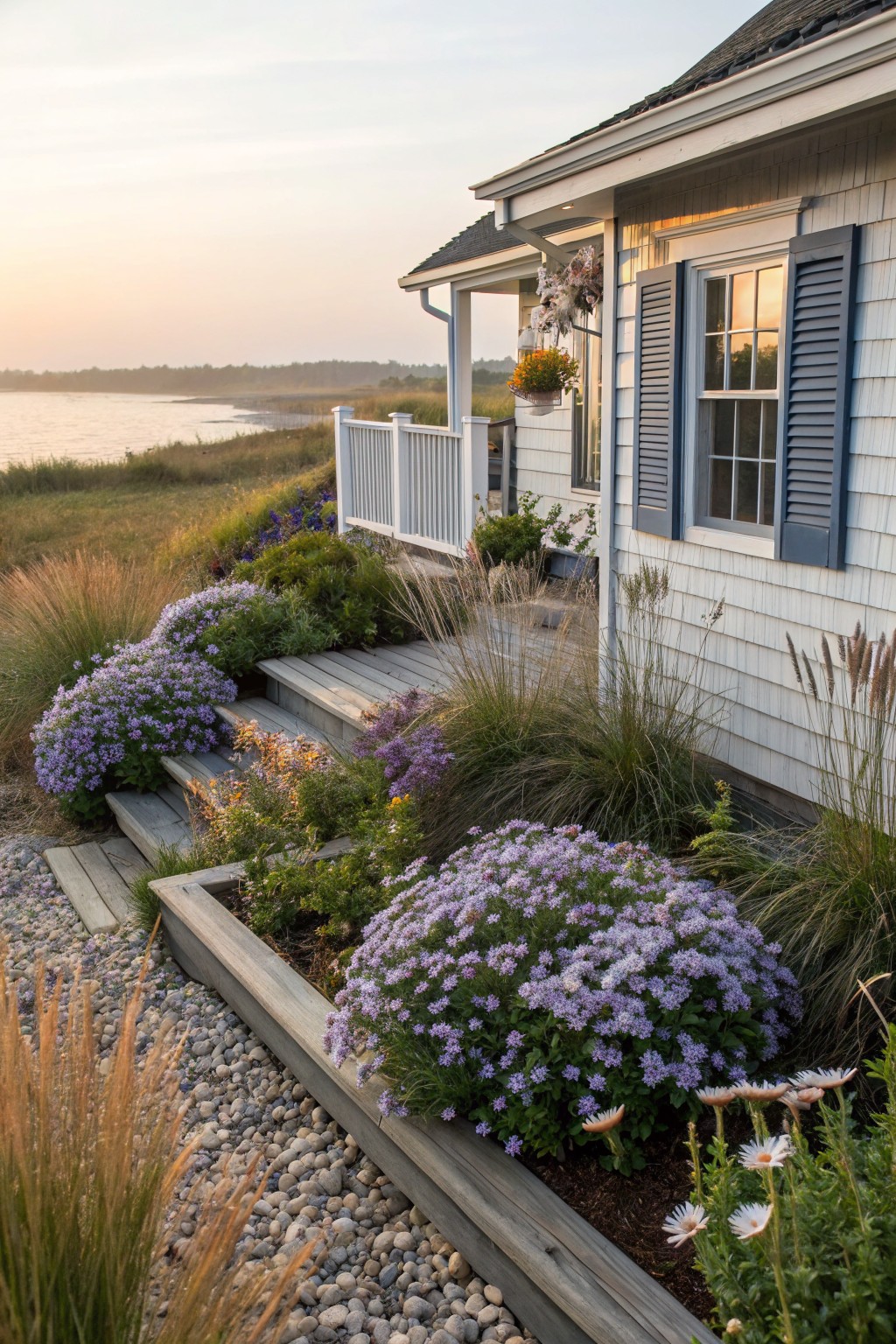
One simple way to add charm around your house is planting big drifts of purple flowers like asters alongside tall ornamental grasses right next to the entry steps. Here, those soft purple clusters mix with feathery grasses to ease the shift from the shingled house down to the waterfront path. It keeps things natural looking without much fuss, and the late-summer blooms give a fresh pop when everything else fades.
This works best on beach houses or spots with sandy soil, where drought-tough plants like these handle wind and salt just fine. Line the beds with wood edging for a clean edge, then fill in lower spots with a few white daisies for contrast. Skip fussy annuals; stick to perennials that come back year after year.
Large Pots Flank the Entry Path
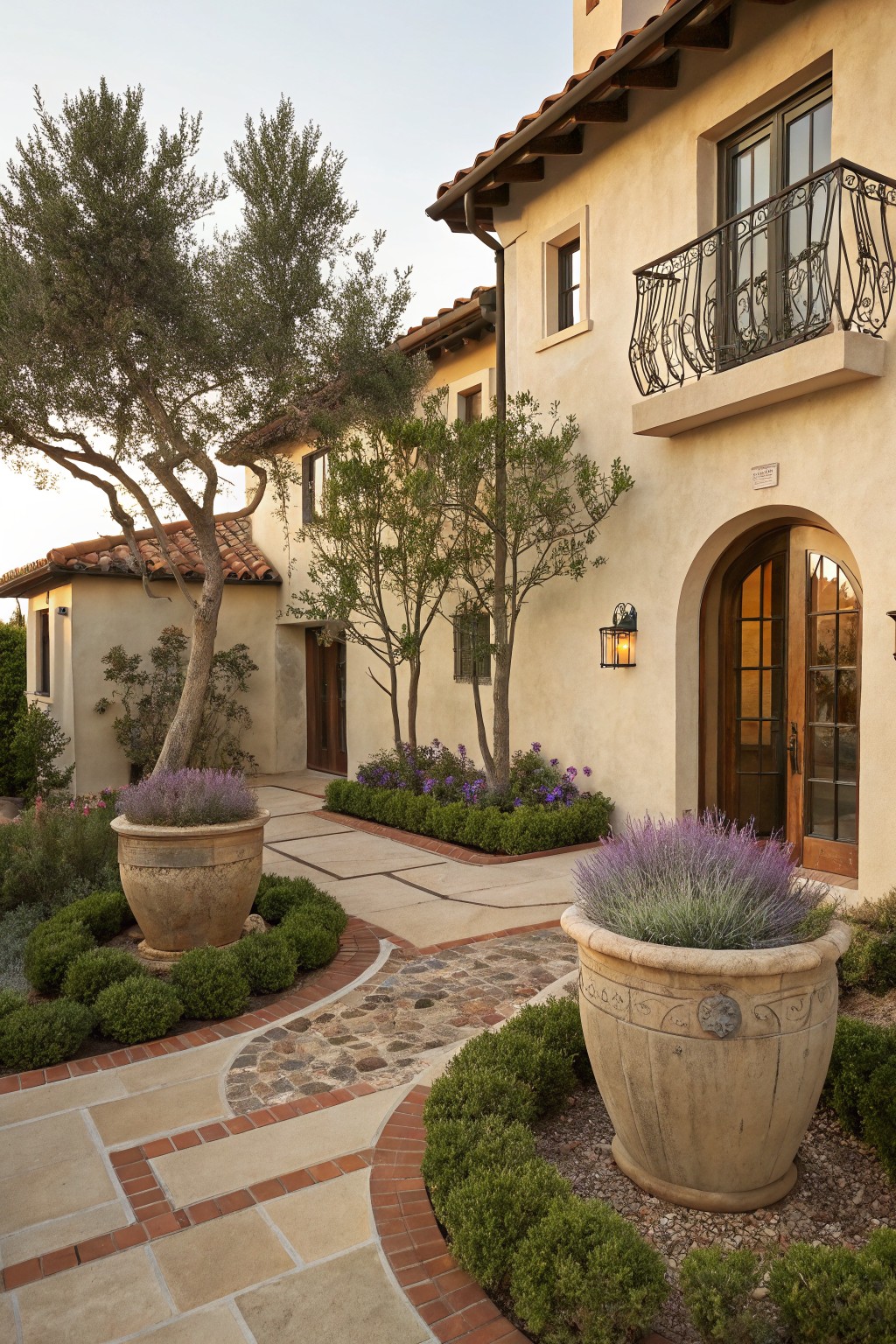
Big terracotta pots like these, stuffed with lush lavender, sit right at the edges of the walkway. They pull your eye straight to the front door and make the whole approach feel put-together. Paired with low boxwoods along the curve, it keeps things simple but polished, especially against a stucco house.
This works best on smaller front yards or where you want low upkeep. Plant lavender for that silvery green pop and easy care, then edge the path with bricks or stones to match. Skip it if your space is too narrow… the pots need room to stand out.
Raised Stone Flower Beds Along the Foundation
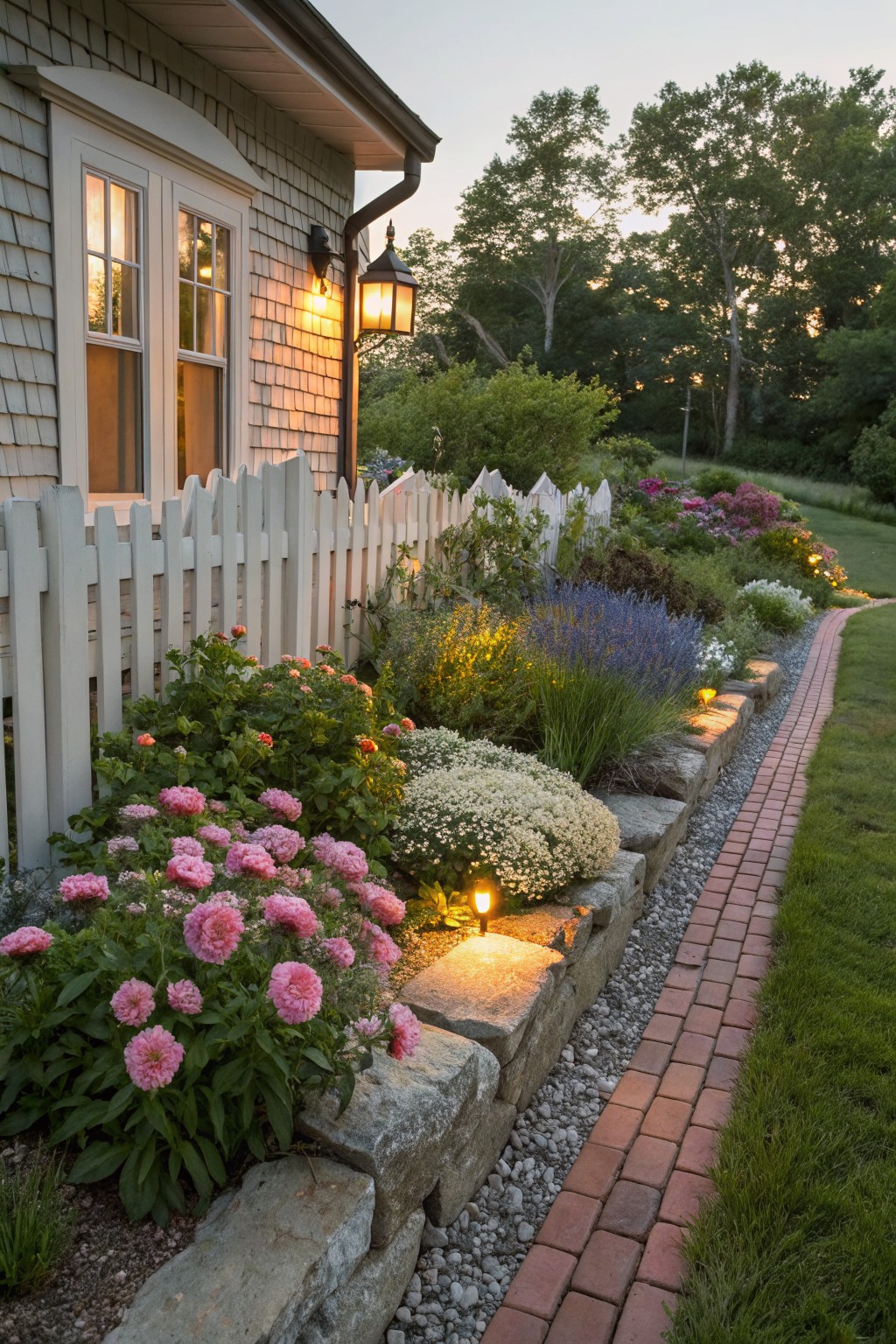
One simple way to add charm around your house is with raised flower beds built right against the foundation using local stone. These beds let you layer in colorful perennials like soft pink blooms and lavender that spill over the edges. The stone gives a natural, sturdy look that ties into the house siding without feeling fussy, and it keeps soil away from the walls.
You can do this on a side yard or along the back where you want low upkeep but steady color through summer. Pick stones that match your area’s rocks for an easy fit, and add low lights along the path to enjoy it at night. It works best on sloped lots… just make sure the wall drains well to avoid water issues.
Curved Stone Path with Flower Beds
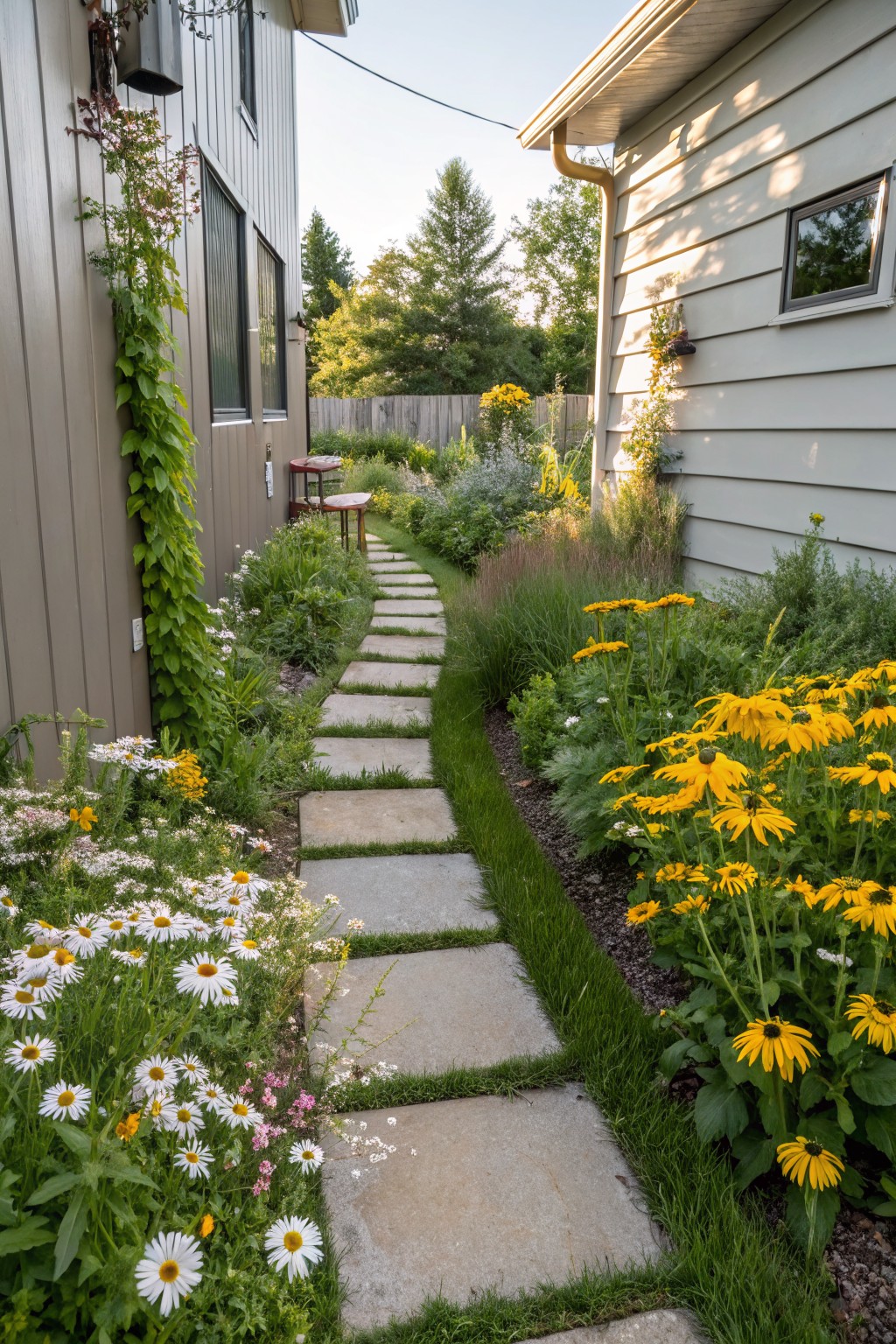
One easy way to add charm around your house is a simple curved stone path like this one. It winds along the side, edged by thick beds of daisies and black-eyed Susans that spill right over the pavers. The path pulls you through the garden without feeling too formal, and those massed flowers make the space feel full and welcoming even on a basic yard.
You can set this up in narrow side yards or along a back walk where you want low-key beauty. Use flat stones for easy stepping, and plant tough perennials that bloom summer long. Keep the beds mulched to cut down on weeding. It works best on homes with plain siding, softening the edges without much fuss.
Raised Black Planters Filled with White Blooms

One simple way to add charm around a modern house is to use raised beds that match the siding color. Here, dark brick planters hug the black wall, packed with tall white alliums and waving grasses. The white flowers pop right against the dark backdrop, especially with those low lights kicking in at dusk. It makes the entry area feel welcoming without much fuss.
These beds work great on a slope or next to steps, keeping soil in place and plants tidy. Pick tough bloomers like alliums that come back year after year… low water needs too. They suit sleek homes best, but scale them down for smaller yards. Just keep the bed height around two feet so it’s easy to tend.
Terraced Retaining Walls with Flowers

Sloped yards can be tricky, but terraced stone retaining walls turn them into something pretty useful. These stacked levels hold back soil while giving spots for flowers to grow. Purple lavender bushes and similar perennials tuck right into the edges, softening the stone and adding color without much fuss.
Put them along the side of the house or down a hill where you want low upkeep. Pick rugged plants that take sun and good drainage. Local fieldstone fits most places naturally. Throw in steps and a railing for getting around easy. It stops erosion and makes the yard feel bigger… layered.
Window Boxes Boost Stone House Charm
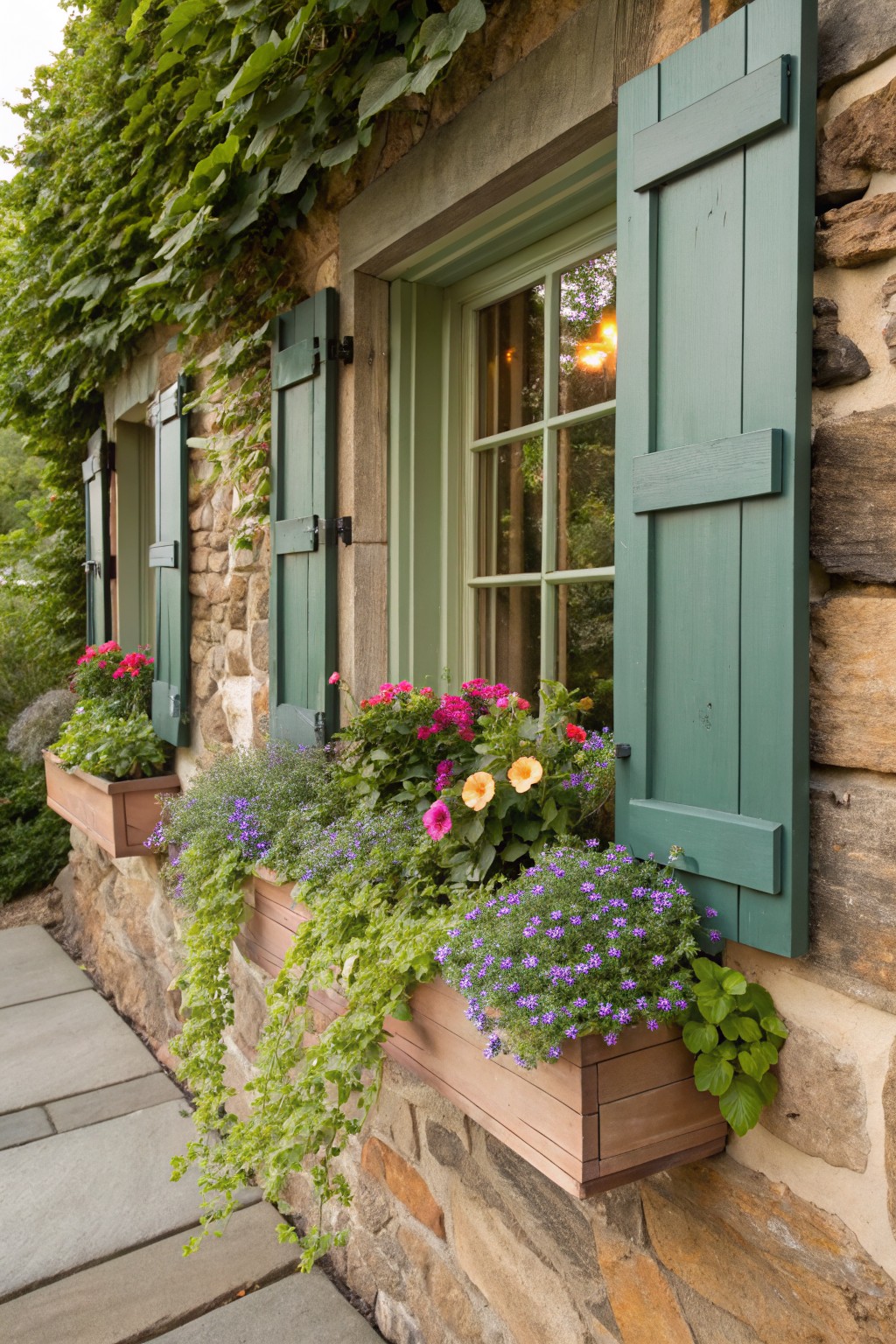
Flower boxes tucked under windows do a lot for a simple stone house. They soften those rugged walls and add pops of color right where people notice. In this setup, the boxes overflow with pinks, purples, and trailing greens that match the green shutters perfectly. It pulls the whole front together without much effort.
You can pull this off on any traditional home, especially cottages or farmhouses. Go for mix of upright blooms like geraniums and trailers like lobelia to get that full, spilling look. Mount them securely on wood or stone ledges, and water regularly since they dry out fast. Works best in mild climates where flowers thrive year-round.
Winding Stream Paths with Flowers
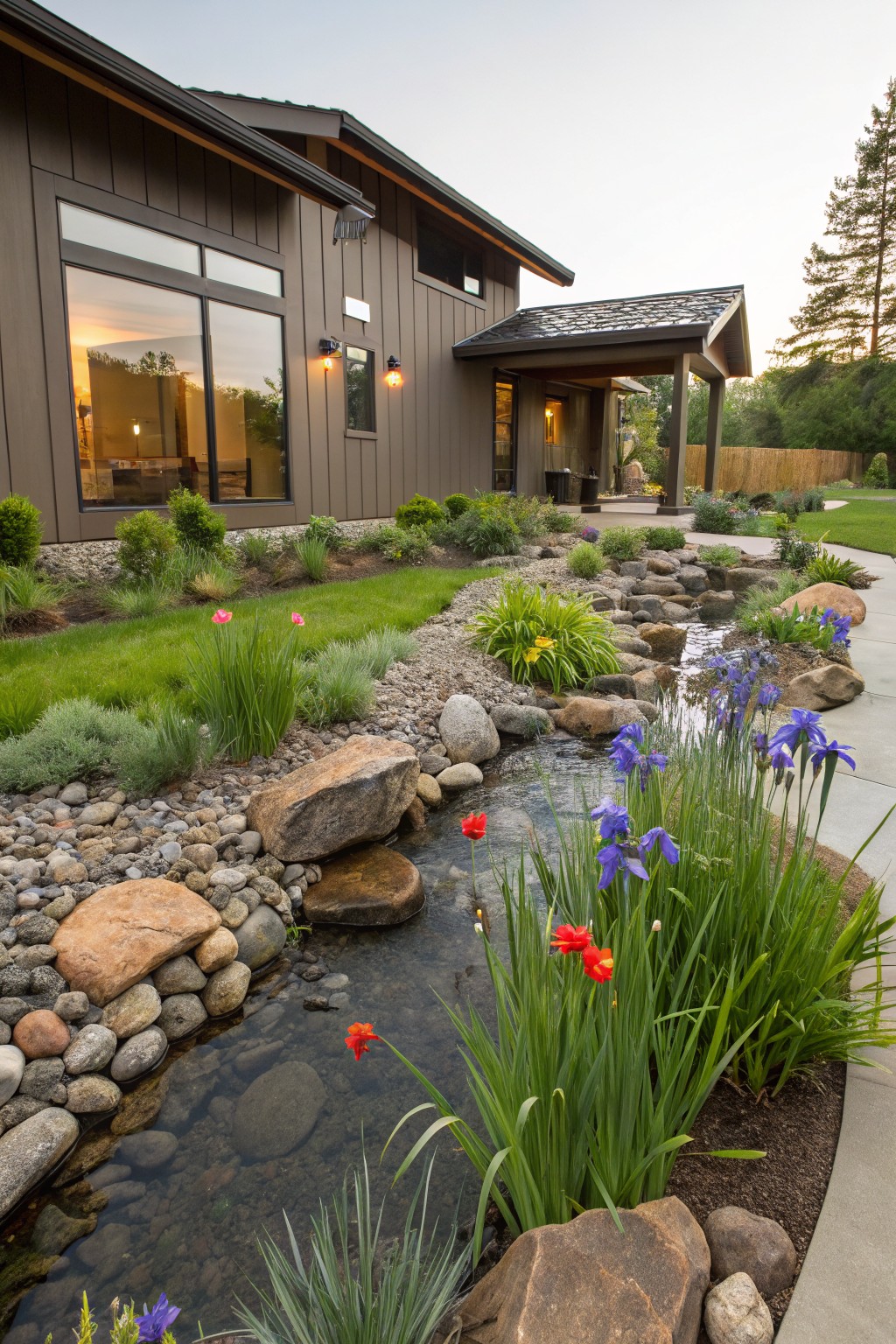
One simple way to add charm around your house is a winding stream path like this. It uses flat rocks and river stones to line a gentle flow of water, with purple irises and red daylilies popping up along the edges, mixed in with tall grasses. The movement of the water draws your eye right to the house entry, making the yard feel alive and welcoming without much fuss.
You can set this up along a side yard or leading to the back door, especially if you have a spot for a recirculating pump to keep the water moving. It works great on homes with clean lines like cedar siding, and sticks to low-water plants once established. Just watch the scale, so it doesn’t overwhelm a small lot.
A Stone Path Leading to the Garden Shed

A narrow stone path like this one winds gently through raised beds full of greens and strawberries, ending at the open door of a simple wooden shed. It turns a basic backyard into something you want to explore step by step. The path keeps things practical while the plants add that lived-in garden feel.
This works best in small or narrow yards where you want to connect the house area to a work spot without taking up much room. Lay flat stones with gravel between for easy walking and drainage. Plant low edibles right along the edges so they’re handy when you head to the shed. Skip it if your space is too shady for the plants to thrive.
Pool Terrace Edged with Tall Grasses
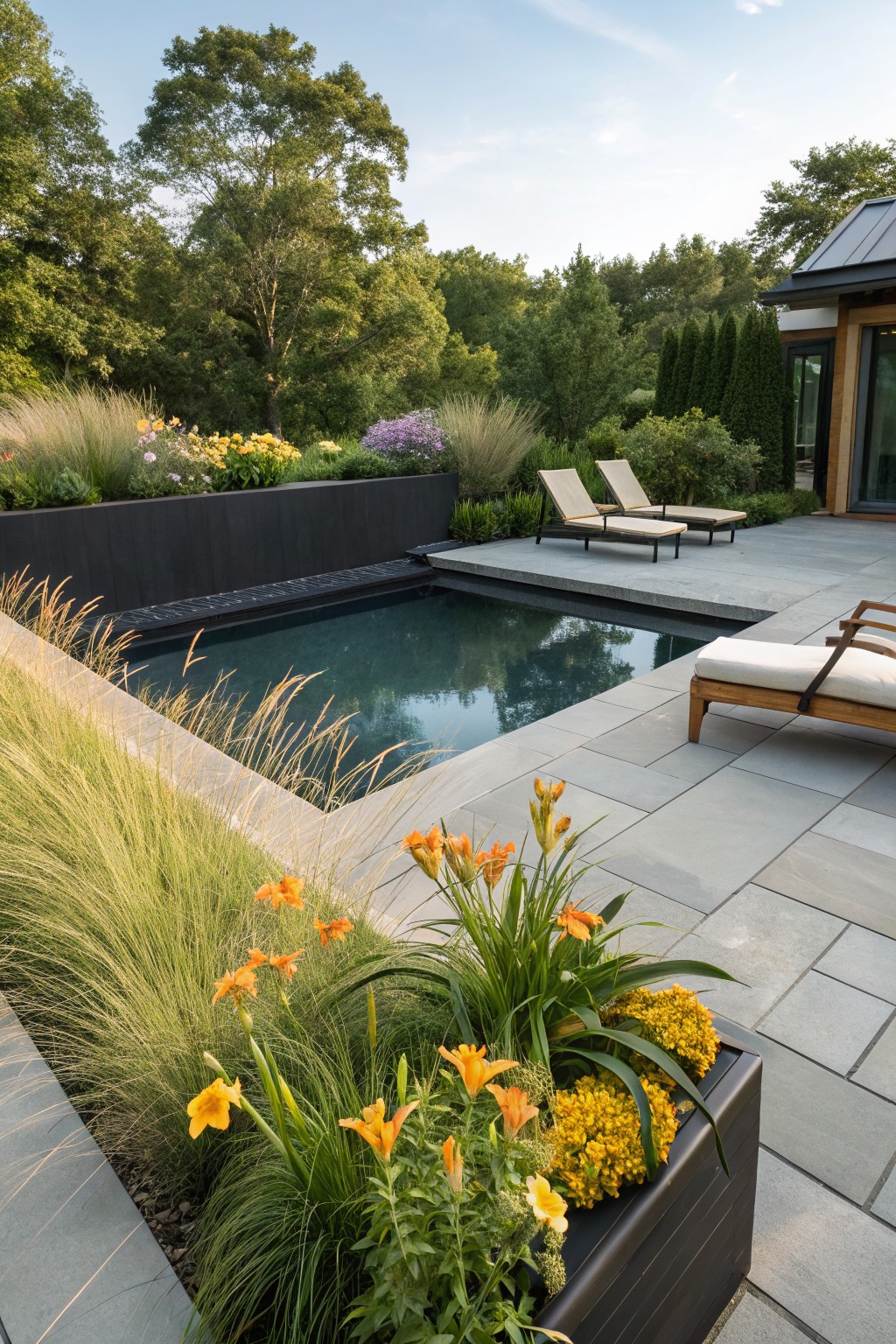
A small plunge pool sits right on the terrace here, with its dark liner giving a modern edge. Tall ornamental grasses line the sides, swaying a bit and making the whole area feel more natural and enclosed. Lounge chairs on the gray stone pavers invite you to sit back, and a few bright orange daylilies in a black planter nearby keep things from looking too plain.
This setup works great for smaller yards or spots next to the house. Pick grasses like miscanthus that stay tidy and don’t need much water once established. It suits modern homes best, where you want some green without a full garden. Watch that roots don’t creep toward the pool edge.
Winding Path Through Lavender Beds
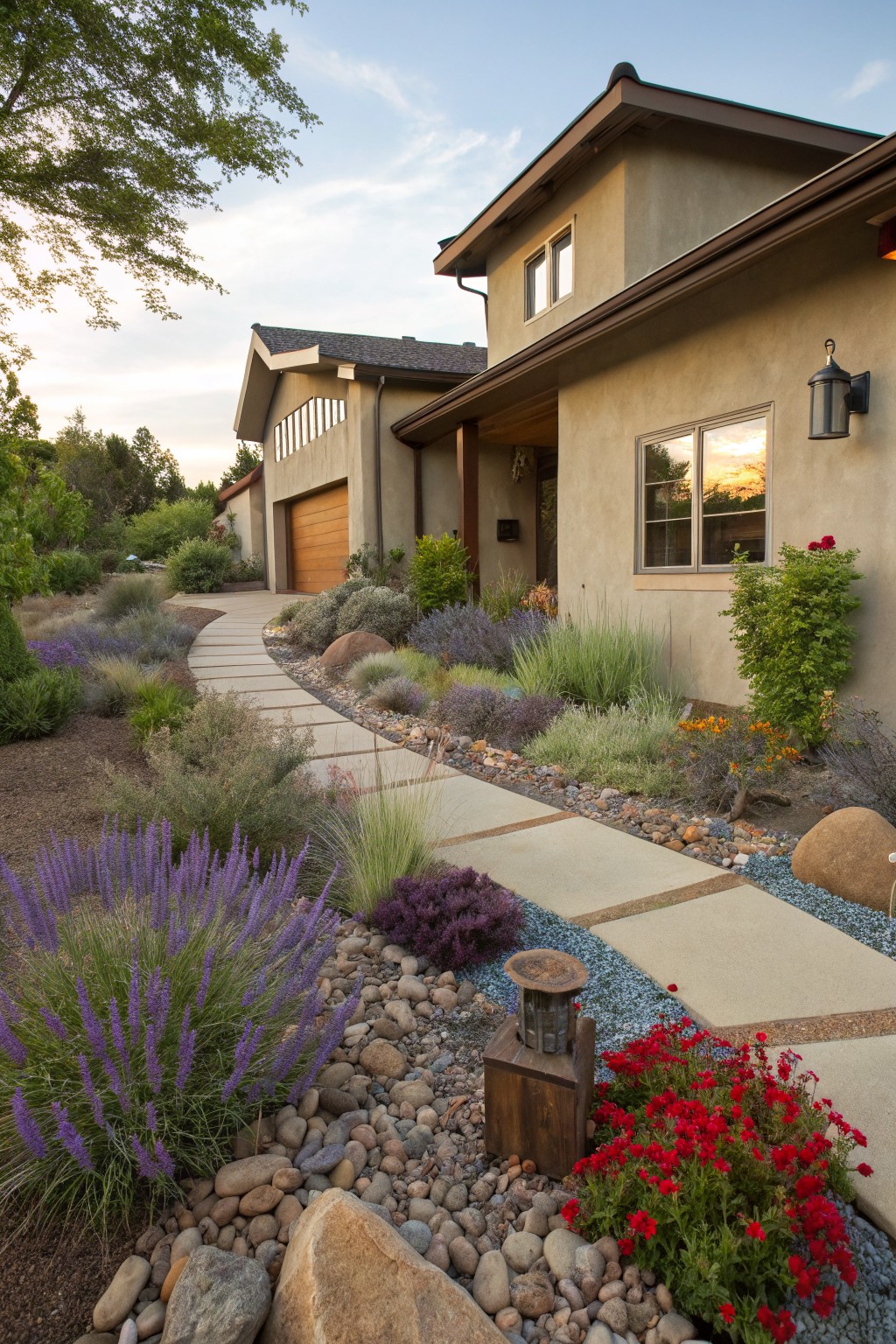
A simple winding path like this makes the walk up to your front door feel like a little journey. Concrete pavers curve gently through beds of lavender and grasses, with boulders and gravel filling in around them. It’s low-water and easy to keep up, but still looks full and welcoming. The plants hug the edges without spilling over, keeping things neat.
This setup works great for homes in dry areas or anyone wanting less mowing. Line your path with tall lavender for that purple pop, add a few big rocks for weight, and tuck in some red flowers at the end. It suits modern or ranch-style houses with stucco siding. Just make sure the path is wide enough for two people… about four feet does it.
Climbing Roses Frame Porch Entries

Climbing roses work wonders on a simple porch like this one. They drape over posts and walls, turning a plain white facade into something soft and full of life. The mix of pink and red blooms adds color without overwhelming the space, and they pull the eye right to the entry.
Train easy climbers like ‘New Dawn’ or ‘Zephirine Drouhin’ up sturdy supports near your front steps. They suit older homes or cottages best, especially with light walls or shutters. Add a few pots nearby for filler, but prune yearly to keep things tidy.
Winding Stone Path in a Gravel Garden
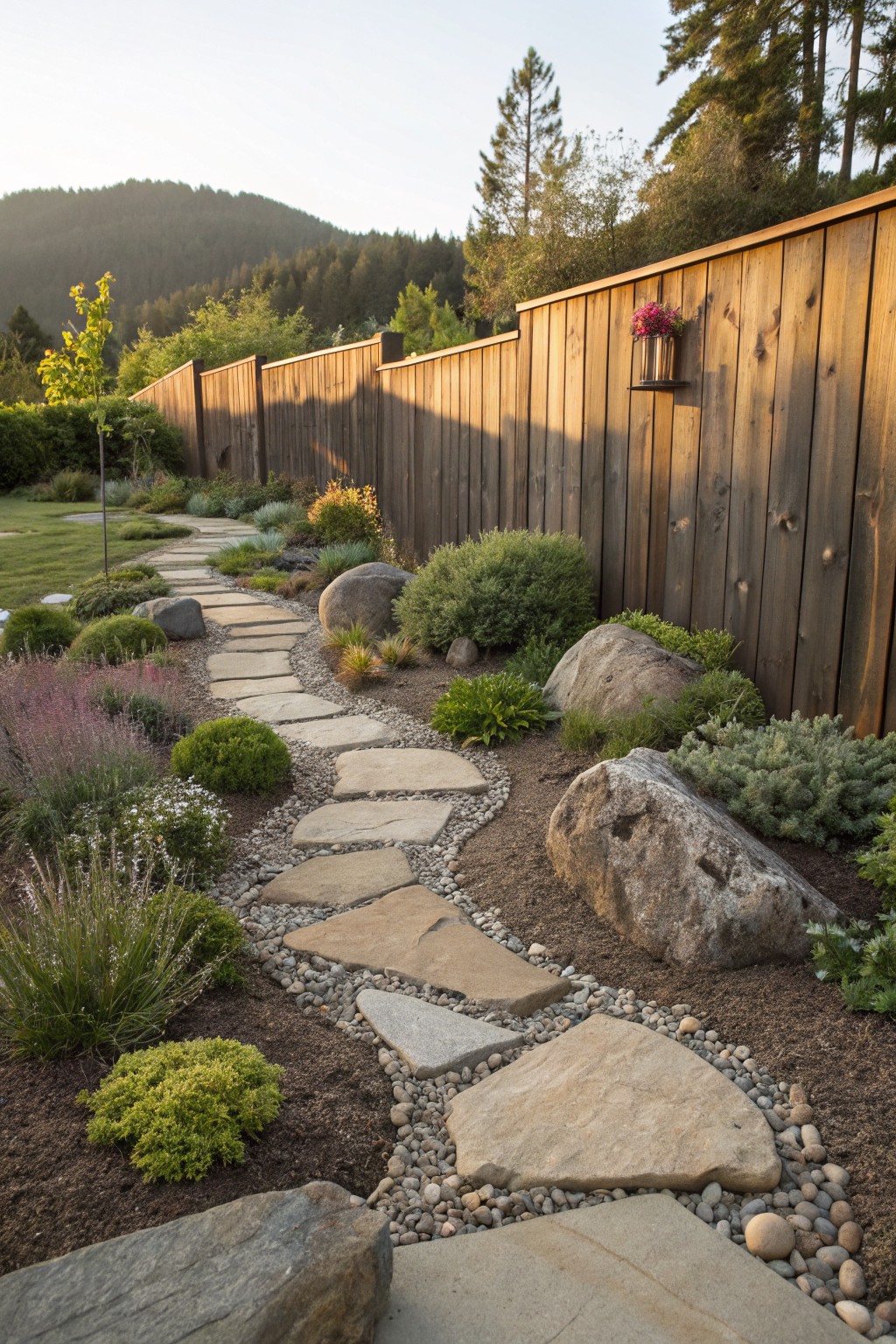
A winding path made from irregular stone slabs works so well in a casual garden setup. It meanders gently through gravel mulch and big boulders, with low plants tucked in along the edges. This keeps things feeling natural and easy to walk, without looking too fussy. The gravel fills the gaps nicely, and those boulders add some weight to the whole thing.
You can pull this off in a side yard or along a fence line, especially where you want low upkeep. Pick flat stones that fit your hand, lay them loose on a gravel base, and plant drought-tolerant stuff like grasses or sedums around them. It suits sloped spots or narrow areas… just watch the spacing so it doesn’t feel cramped.
Circular Boxwood Garden with Central Tree
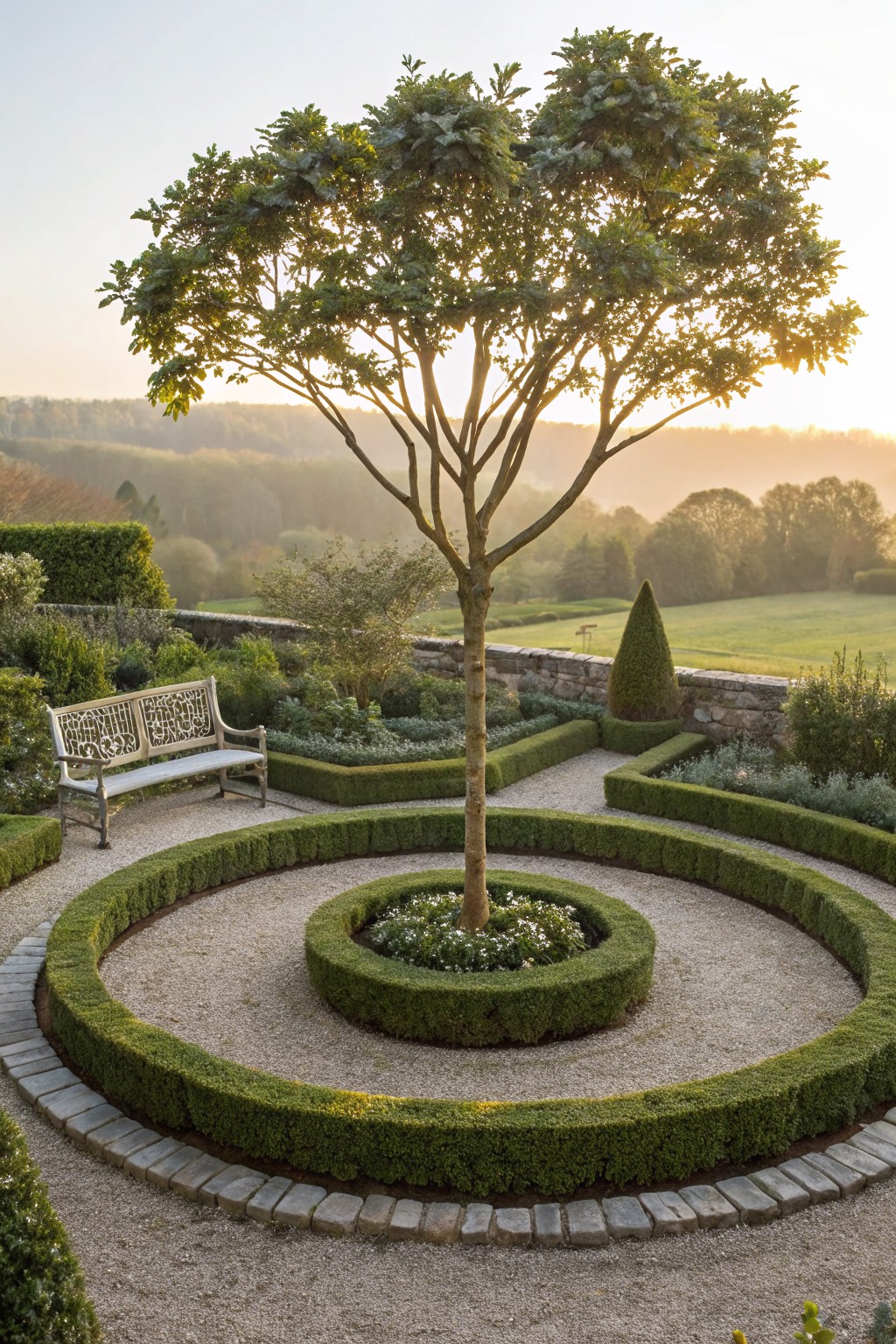
A simple circle of gravel edged by low boxwood hedges makes a clean spot for a single tree right in the middle. That central tree draws the eye without much fuss, and the whole thing feels put together yet easy to keep up. The gravel keeps weeds down, and the clipped hedges stay neat with just a trim now and then.
This works best in a side yard or near the house entry where you want some structure but not a lot of color fuss. Plant a tree that grows upright like this one, maybe something evergreen for year-round shape. Skip it if your spot gets too much shade… the hedges might thin out. Add a bench nearby for sitting, and you’ve got a quiet garden spot.
Large Pots Frame Poolside Gardens
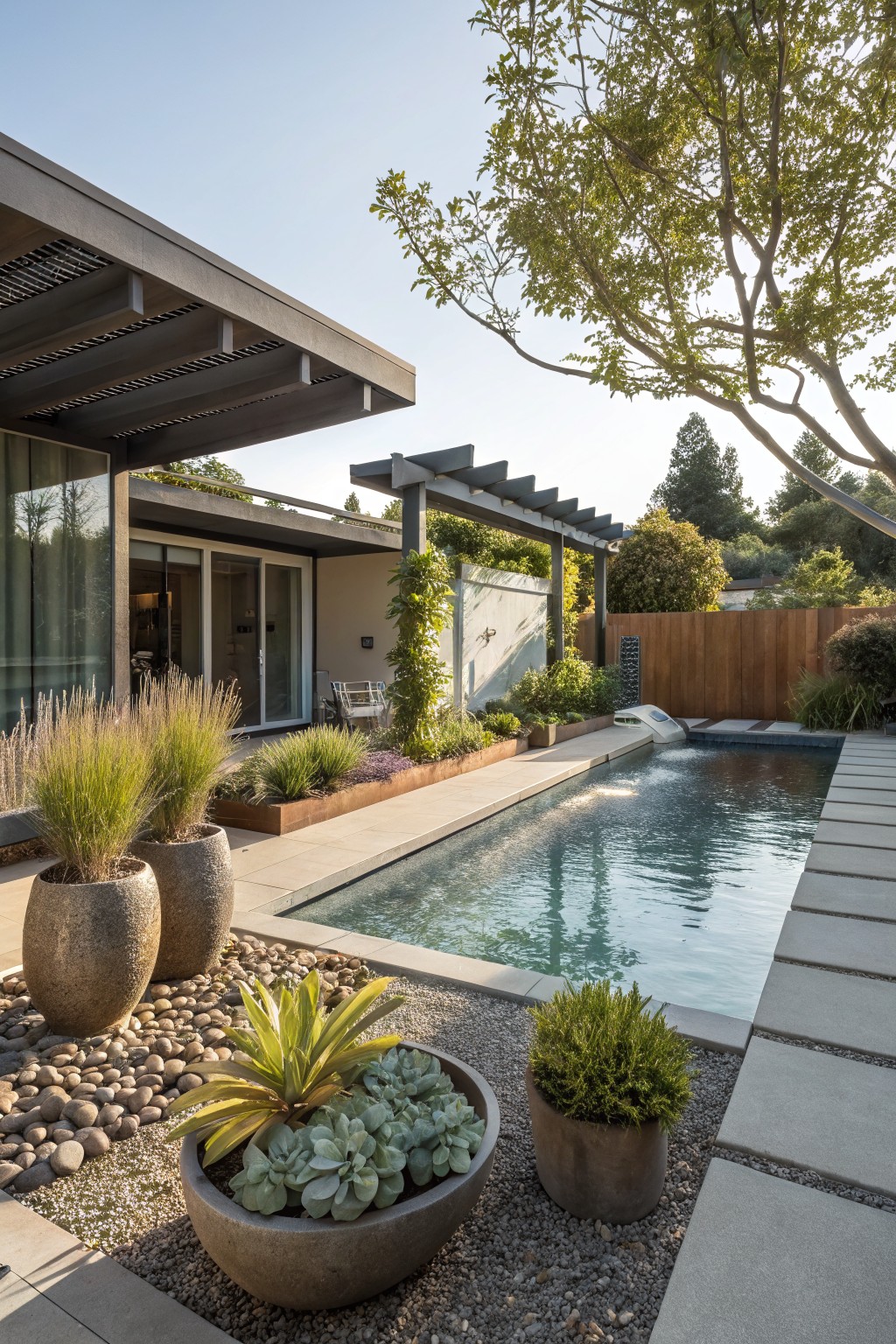
Big stone pots like the ones shown here make a simple statement around a pool. They hold sculptural plants such as succulents and spiky agaves that catch the light without much upkeep. The rough texture of the pots picks up on the modern house lines nearby, and they keep the look clean instead of crowded.
Place a few oversized pots right along pool edges or on gravel patches for easy definition. This works best in sunny spots on midcentury or contemporary homes where you want low-water plants. Skip small pots, though. They get lost fast.
Rooftop Patio Built-In Benches
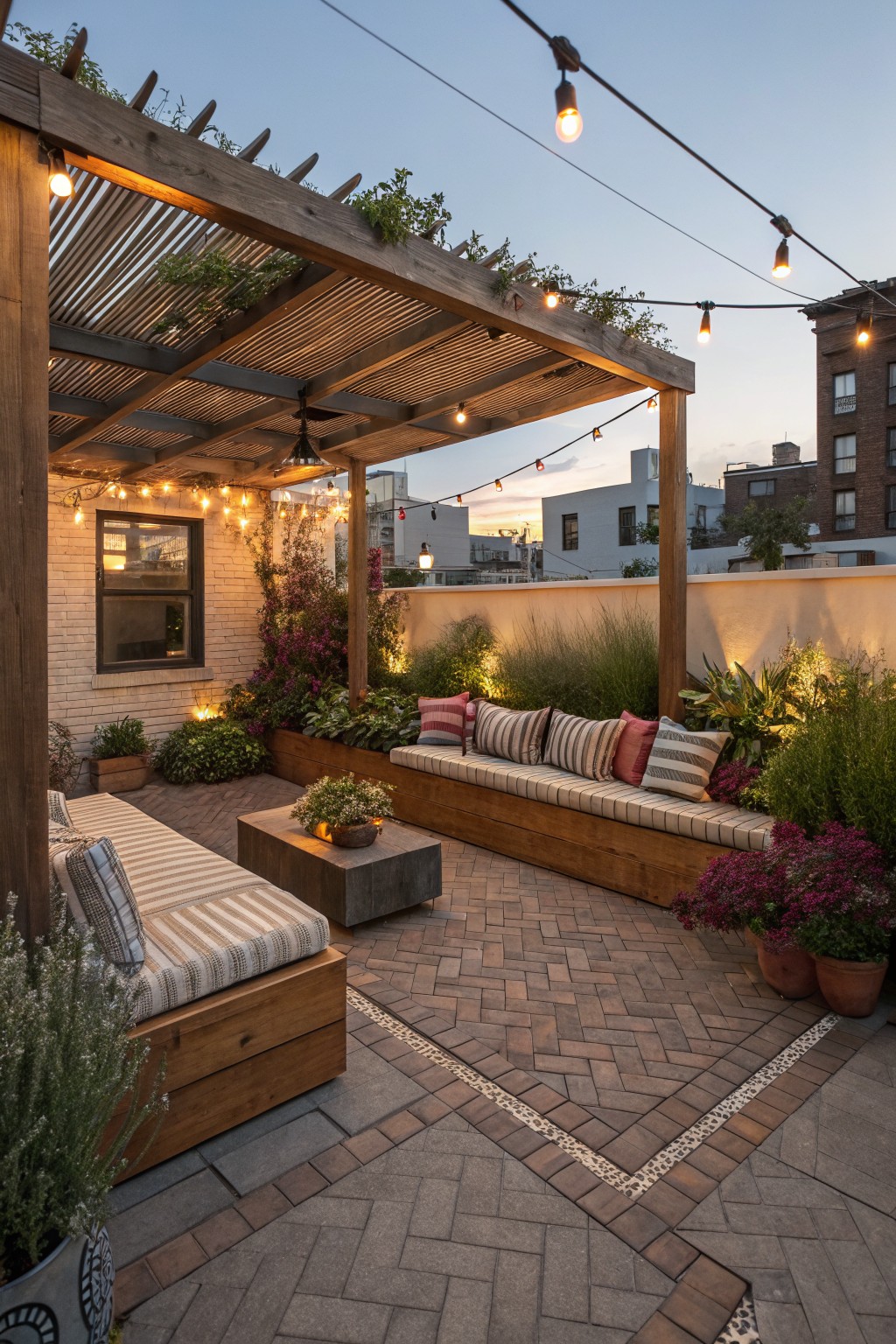
One straightforward way to turn a rooftop into a hangout spot is with built-in wooden benches along the edges. Here they hug a simple low table in the center, keeping the seating close and easy. The benches blend right into planter boxes filled with grasses and pink flowers, which softens the space and adds that lived-in feel without crowding things.
These work best on smaller terraces or decks where freestanding furniture might feel bulky. Build them low to the ground on sturdy frames, add weatherproof cushions, and fill the adjacent beds with low-growing blooms for color. String lights overhead help extend the evenings… just make sure the structure can handle the weight.
Massed Hydrangeas Beside Entry Steps
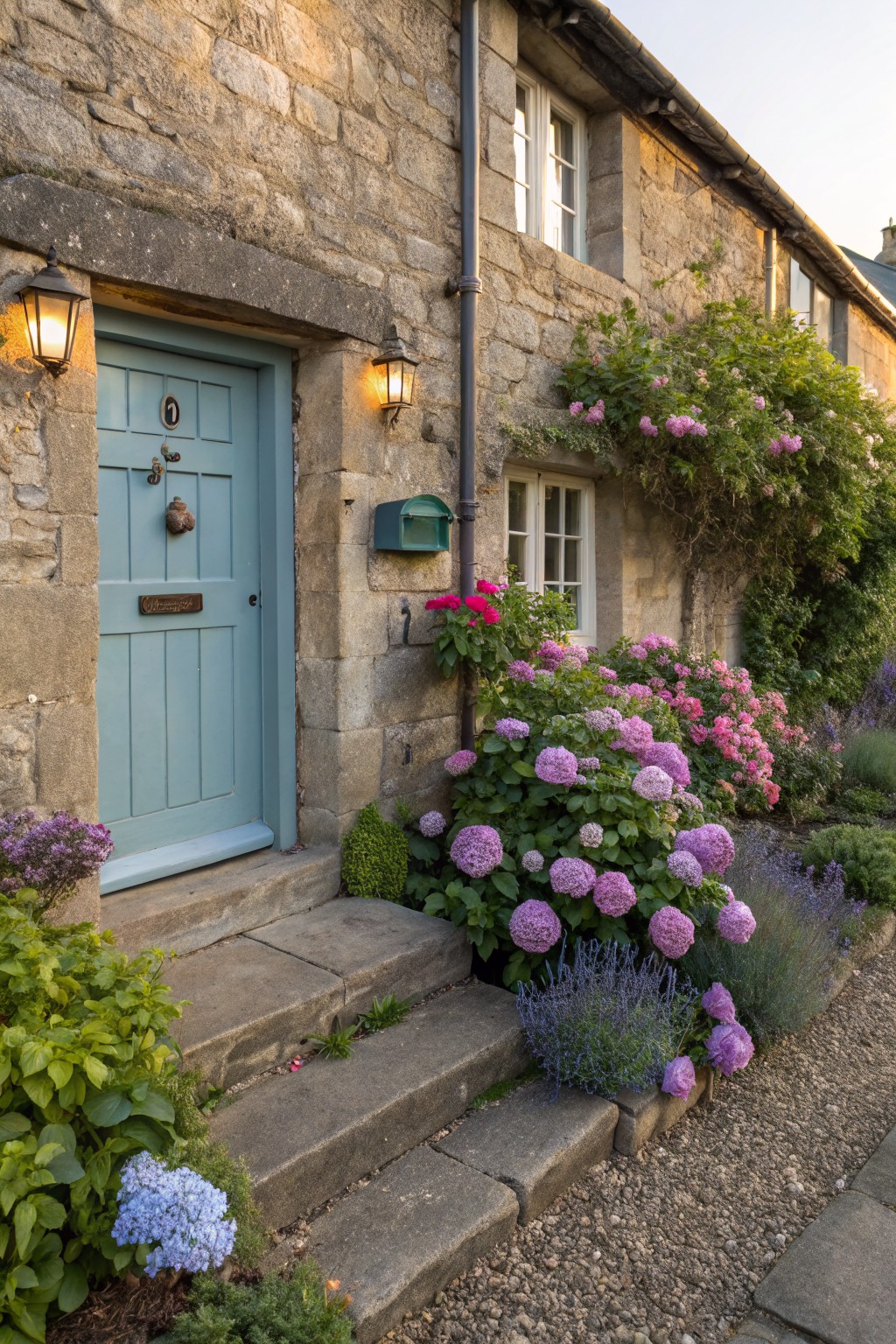
Big clusters of pink and blue hydrangeas planted right along the stone steps to the door do a lot for this cottage look. They fill out the space without much fuss, softening the hard stone walls and pulling eyes straight to the entry. That blue door pops even more against the blooms, and it all feels settled in, like the plants have been there forever.
You can pull this off on any front path or stoop with decent sun. Go for mophead types that mound up nicely. They work best on older homes or simple builds, but watch the water needs… they drink a lot in summer. Tuck in some lavender nearby for scent and to draw bees.
Frequently Asked Questions
Q: Can I use these flower ideas if my yard gets mostly shade?
A: Shade-lovers like hostas, ferns, and impatiens hug the house foundation perfectly and build that welcoming vibe. Plant them in rich, moist soil under porches or along north walls. They spread gently without much fuss.
Q: How close should flowers sit to the house without causing problems?
A: Leave at least a foot of space from the siding so water doesn’t wick up and rot things. Add gravel or mulch in that gap to block splashes during rain. Your beds will still frame the entryway like a pro.
Q: What’s a quick way to fill out new beds for instant charm?
A: Toss in fast-growing annuals like petunias or zinnias mixed with your perennials. They’ll bloom hard all summer while slower plants catch up. Water them in well right after planting.
Q: How do I pick flowers that match my house color?
A: Go opposite on the color wheel—purples next to yellow siding, or whites against anything bold. Test with potted blooms first to see the pop. This simple contrast makes everything feel pulled together.
