

Living in a hot, dry spot teaches you quick that most flowers fade fast under relentless sun. I started focusing on heat-tough desert bloomers after watching too many beds go bare by midsummer, and they reshape how your yard holds together through the seasons. Folks walking up usually spot the way those plants frame pathways or soften gravel edges first, giving the layout a steady backbone. Pairing low sprawlers with upright clusters builds that structure naturally over time, without fighting the climate. A couple patterns I adapted last year still anchor my front strip perfectly.
Winding Flagstone Paths in Desert Gardens
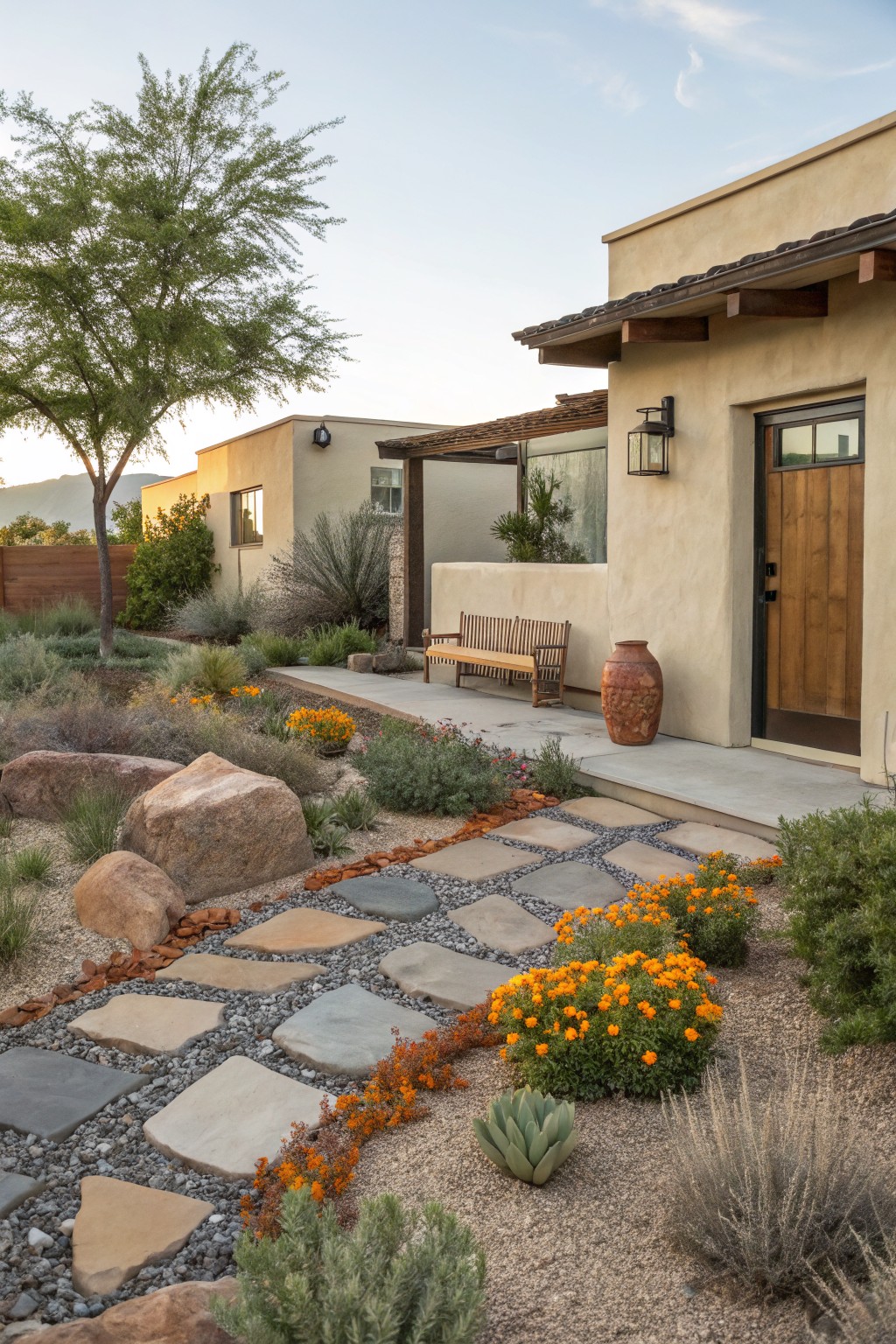
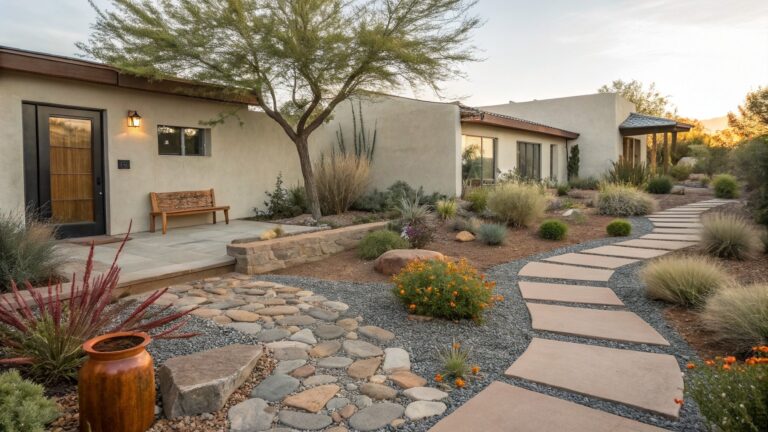
One simple way to make a desert yard feel put together is a winding path of irregular flagstone set right into gravel. It pulls your eye from the street to the front door without much fuss. Here those warm orange flowers hug the edges, popping against the stones and rocks. Boulders nearby add some weight. Folks like this because it stays neat even in heat, and the gravel keeps weeds down.
You can do this along a side yard or right up to the entry. Pick flagstones in soft grays and beiges to match adobe houses. Plant tough bloomers like calendula or gazanias along the sides for color that lasts. Just make sure the gravel base drains well so water doesn’t pool. Works best where you want low upkeep but still some life.
Curved Paths Through Gravel-Planted Beds
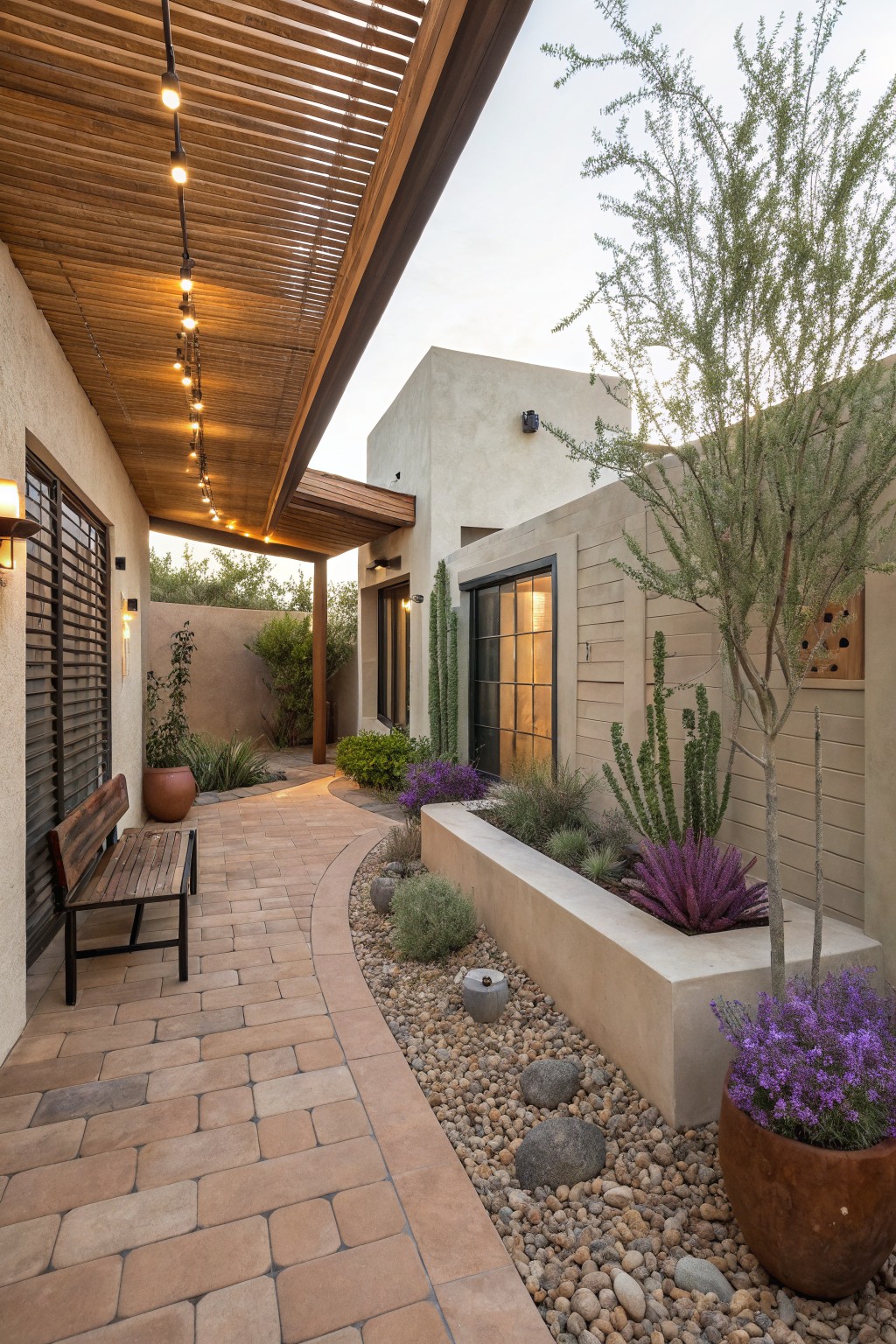
One simple way to make a desert yard feel more like a stroll is a curving path like this one. It uses brick pavers that wind gently past raised beds filled with gravel mulch and tough plants such as purple agaves and lavender. The gravel keeps weeds down and lets the colorful blooms stand out without much water or upkeep. That low curve draws your eye along without feeling too straight or boring.
You can add this in entryways or side yards where you want some color but not a lot of mowing. It suits stucco homes in hot spots like Arizona. Just pick heat-loving flowers that match your soil, and keep the beds edged clean. One thing… go easy on the path width if space is tight.
Poolside Gravel Beds with Desert Plants
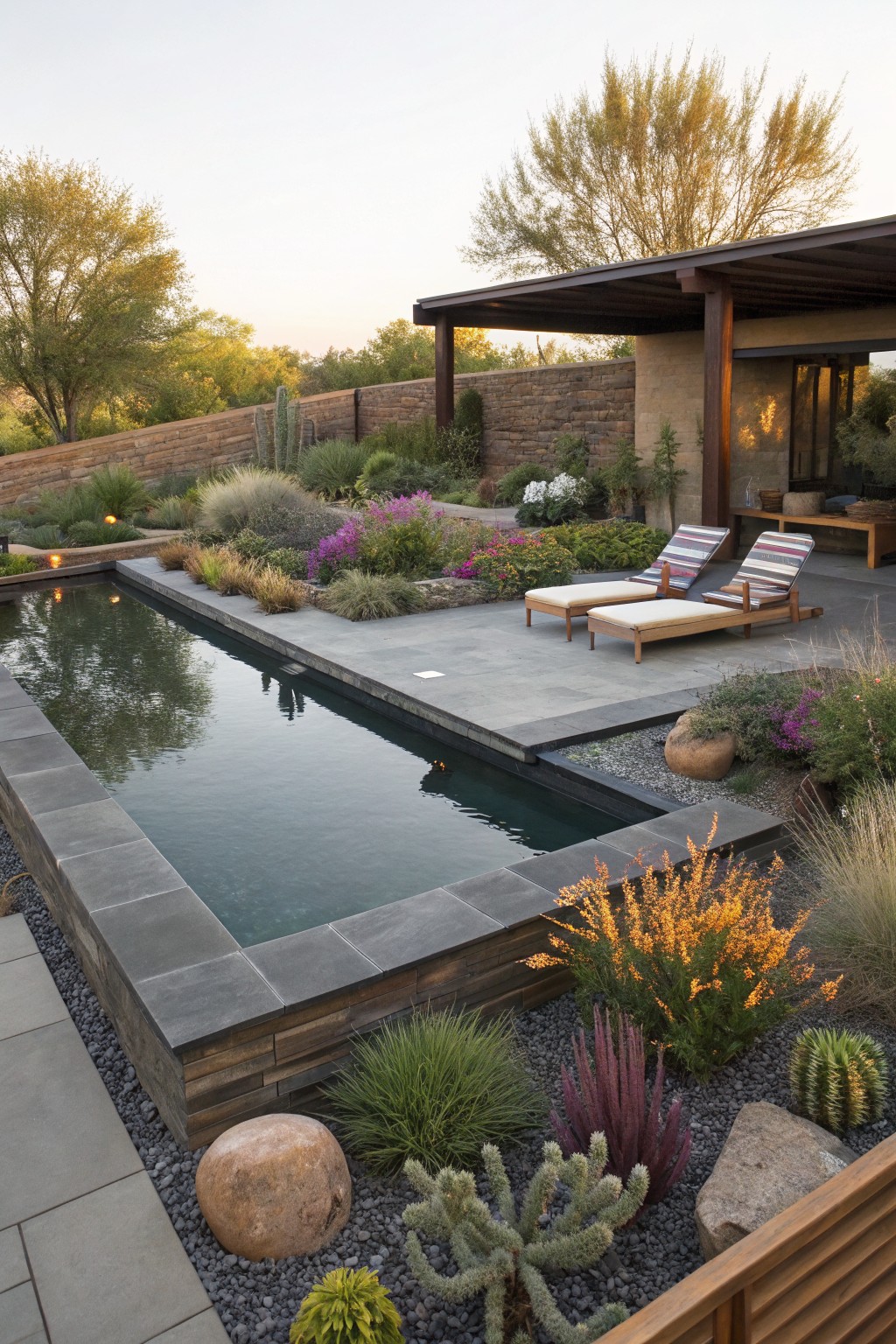
Dark gravel mulch works great around pools in hot desert spots. It lets heat-resistant plants like spiky cacti, wavy grasses, and those bright purple and orange flowers stand out without needing constant watering. The gravel keeps weeds down and gives a clean, modern edge that ties right into the black stone pool surround.
Try this in any sunny yard with a pool or water feature. It fits modern homes best, especially where water is precious. Group plants in loose clusters for natural flow, and add a few big boulders for scale. Just pick natives that match your zone to keep it low fuss.
Terraced Stone Walls with Massed Yellow Flowers
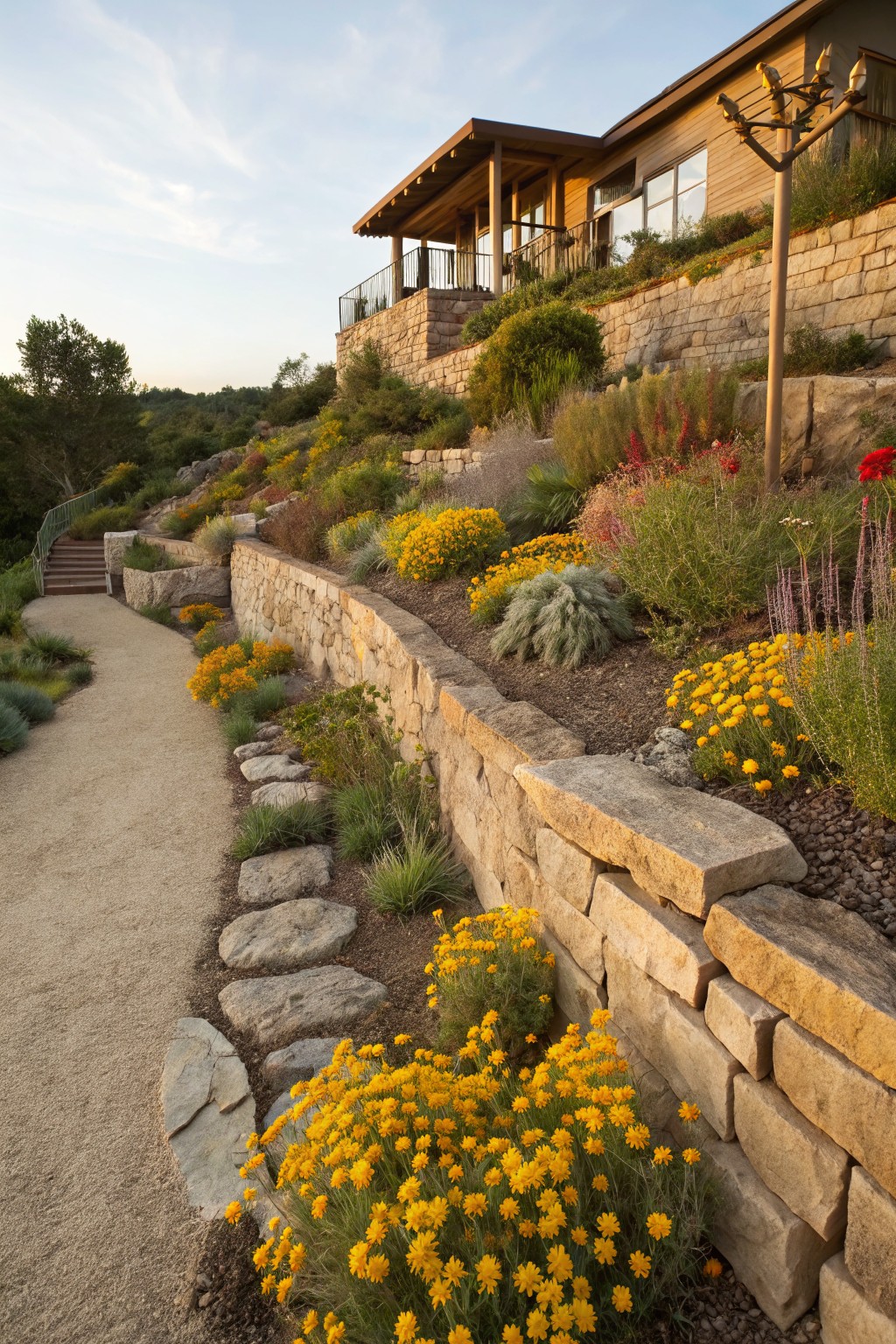
Slopes can be tricky in desert yards, but terraced stone walls make them workable and pretty. Here, rough limestone walls hold back soil in neat layers, with clumps of yellow flowers spilling right over the edges. Those bright blooms, like coreopsis or something similar, take the heat and need little water, turning the whole path into a cheerful climb without feeling forced.
You can pull this off on any dry hillside leading to your house or patio. Stack local stone for walls about two to three feet high, then pack the tops and fronts with tough perennials that rebloom all summer. Keep paths gravel for drainage. It suits modern or rustic homes alike, and the repetition of yellow keeps it simple to maintain.
Terraced Stone Walls with Desert Succulents

Sloped yards can be tricky in hot, dry areas but terraced stone walls make them workable and pretty. Here, rough natural stone builds sturdy retaining walls that hold back soil while steps lead up the hill. Tough plants like agaves, yuccas, and clusters of yellow flowers tuck right into the pockets, thriving in full sun with little water. The setup looks rugged yet neat, and it stops erosion cold.
This works best on hillsides where you need both structure and planting. Pick stone that matches your local area for a natural fit, then fill with heat-loving succulents and perennials that don’t need much fuss. It suits homes in arid spots like the Southwest. Just make sure the walls drain well to avoid any washout after rare rains.
Poolside Succulent Beds in Gravel

One straightforward way to add life around a pool in hot desert spots is to line the deck edges with gravel beds full of succulents. These setups use tough plants like prickly pear cactus and agaves that handle full sun and low water without much fuss. The gravel mulch keeps weeds down and lets the plants’ shapes and colors stand out, giving that clean desert look without overwhelming the hardscape.
You can pull this off on any modern concrete pool terrace facing south or west. Plant shorter succulents near the edge and taller ones back a bit for some layering, then toss in gravel over the soil. It works best where you want low upkeep… just watch out for spines if kids or pets play close. Fits right into the heat-resistant landscaping trend.
Balcony Daybed Nook with Potted Desert Plants
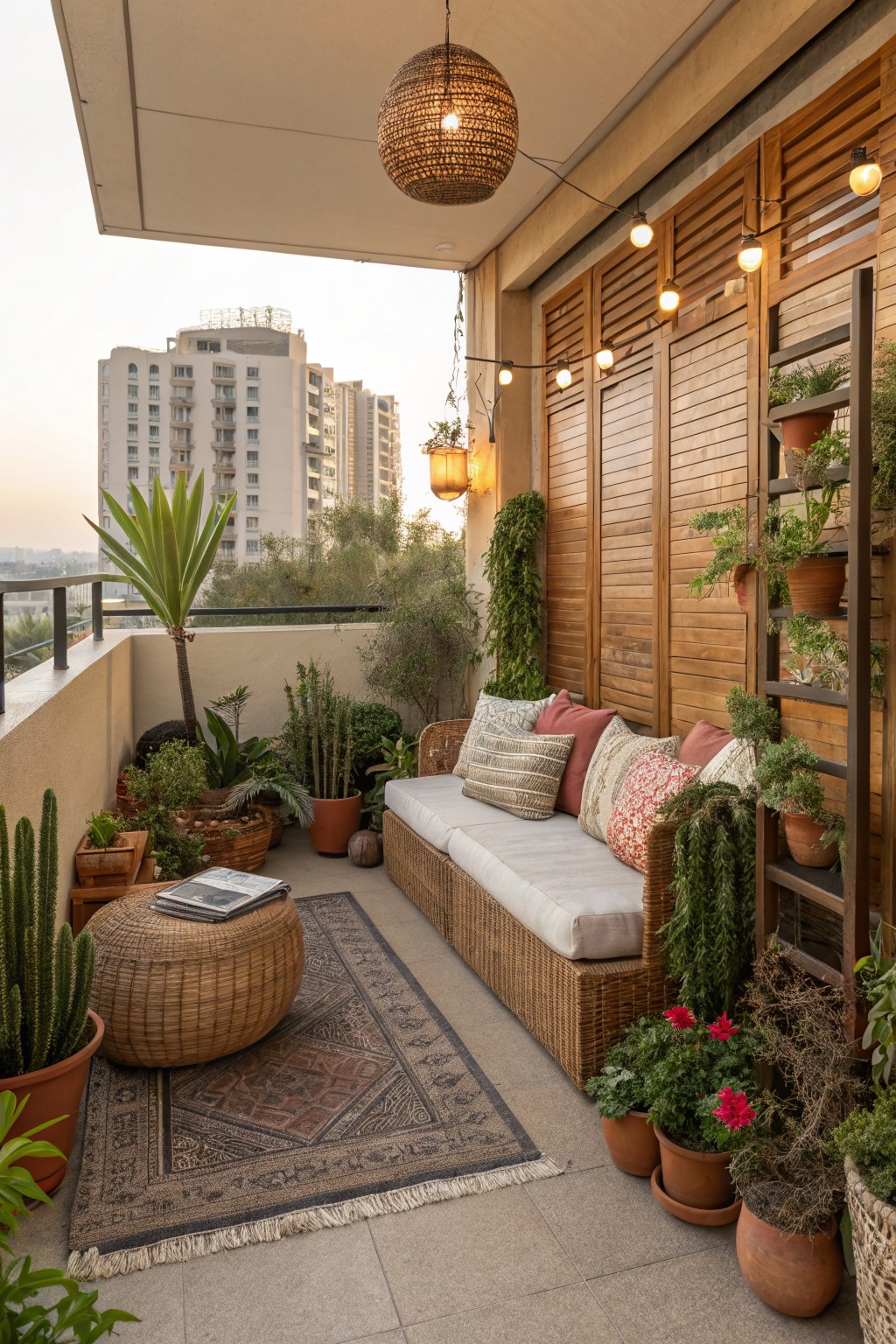
A simple daybed tucked against the wall makes for easy outdoor lounging on a balcony. What stands out here is how potted succulents and cacti fill the space around it. Those terracotta pots on wooden shelves and ladders add green without taking floor room. In hot dry areas, plants like these hold up fine and make the spot feel private and full.
This setup works best on small balconies in apartments or condos where you want shade and color. Pick tough ones such as agave, yucca or sedum that need little water. Group them at different heights for that layered look. Just keep pots grouped loosely so air moves and they don’t crowd the seating.
Balcony Gardens in Large Terracotta Pots
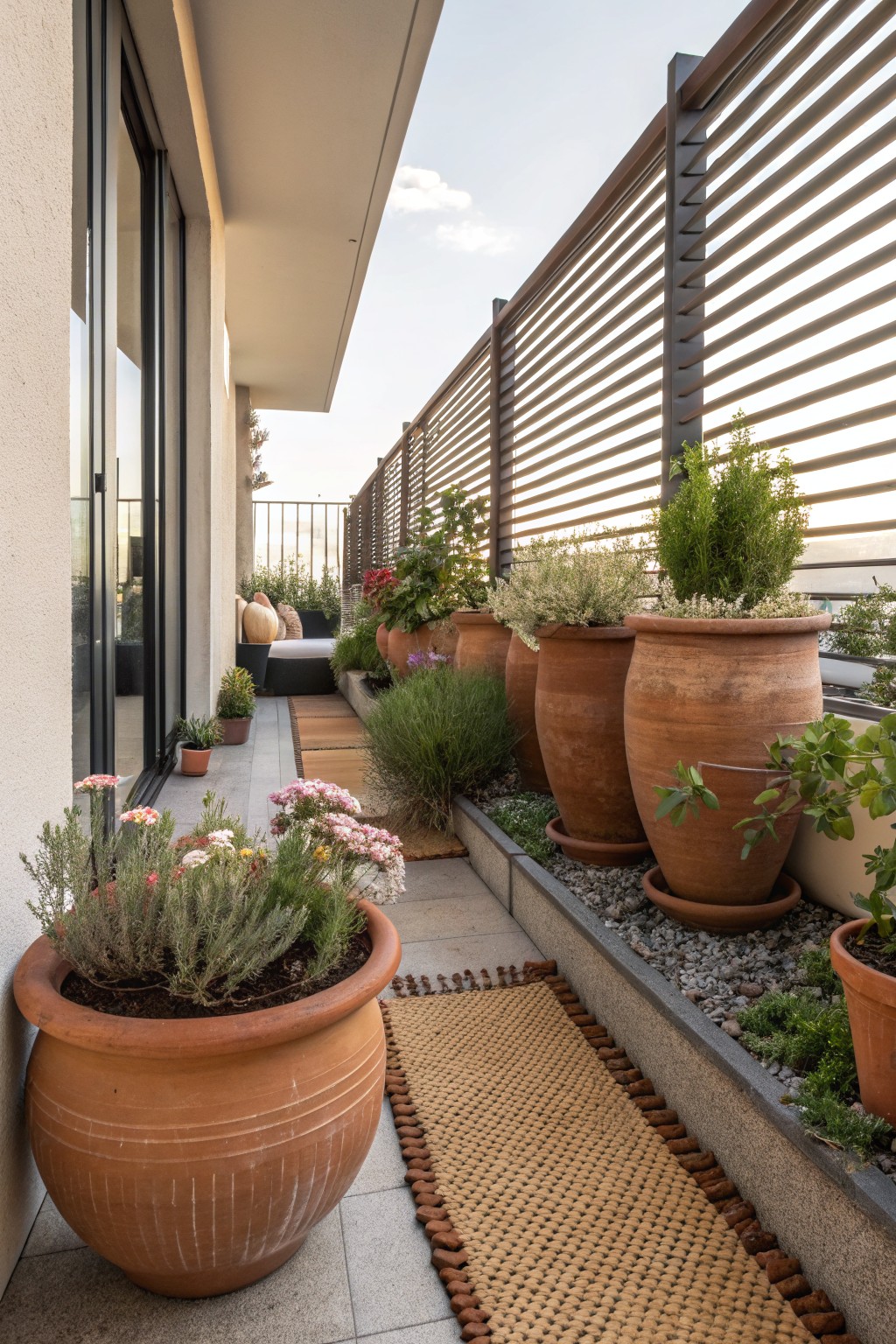
Big terracotta pots make it easy to grow heat-resistant desert plants right on your balcony. You see them lined up here with lavender bushes, soft grasses, and little flowers spilling over. These pots hold soil well and let roots breathe in hot sun, turning a plain walkway into something green and full of life without needing a yard.
They’re great for apartments or small terraces where ground planting isn’t an option. Group a few tall ones for privacy, add gravel mulch at the base to cut watering, and pick tough varieties like rosemary or helichrysum. Just make sure to group them so wind doesn’t tip them over… simple upkeep for all summer color.
Massed Purple Flowers Along Garden Paths
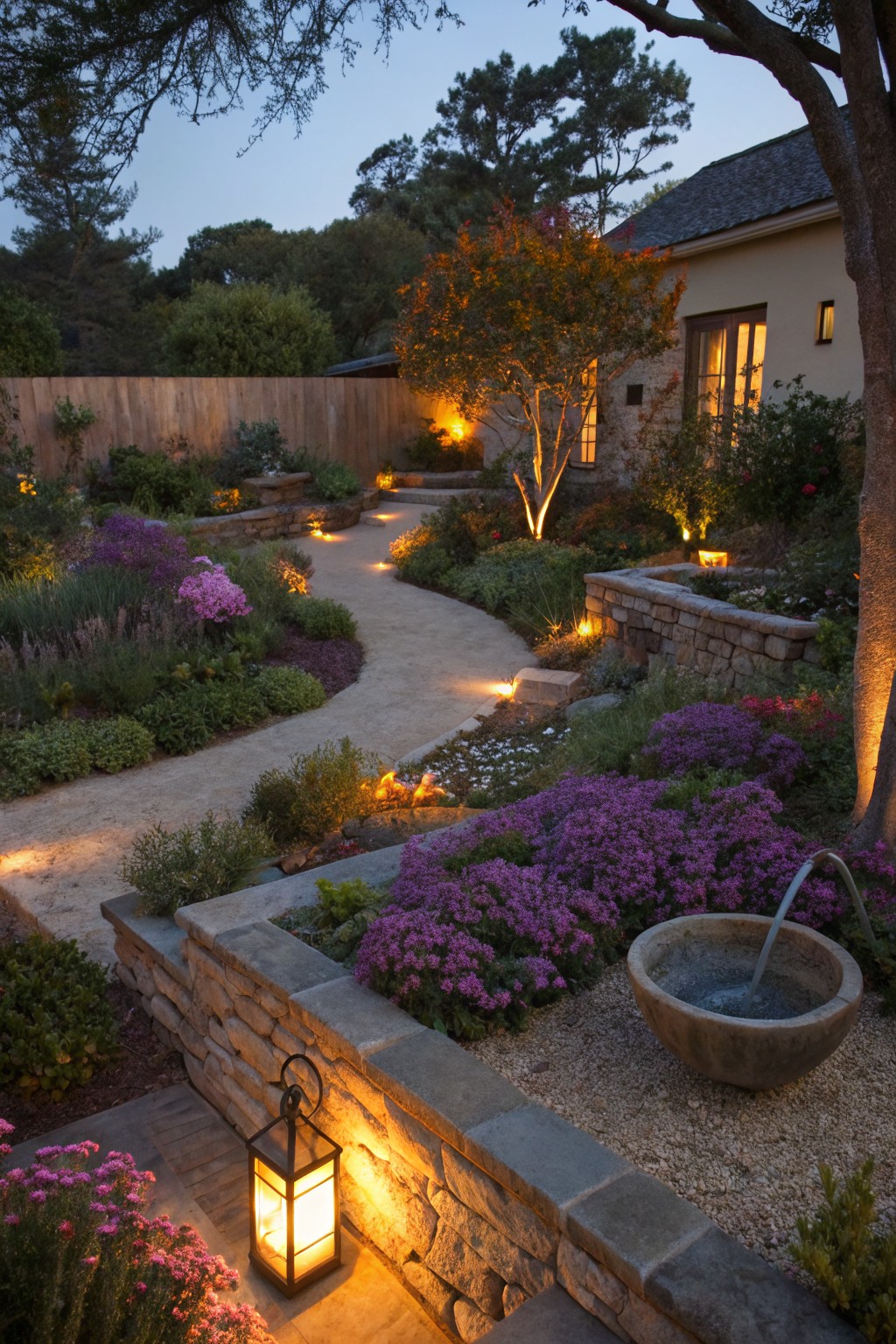
One easy way to make a garden feel put-together is to plant big clumps of purple heat-lovers like lavender, thyme, and sedum right along the edges of a path. These tough little bloomers hug the ground, fill in fast, and keep their color through hot dry summers without much water or care. The winding gravel path here shows how they soften the edges and draw your eye forward.
Just curve the path where you want and mound up some soil or low walls to hold the plants back. Tuck in ground lights along the way for safe steps at night. This setup fits sloped yards or narrow side areas, giving structure without crowding the walk. Skip anything too tall so the path stays the main route.
Terracotta Pots on Entry Steps

Nothing beats a cluster of big terracotta pots right on your front steps for instant color in a dry yard. These earthy pots filled with tough desert flowers like lavender and daisies hold up in the heat and make the entry feel welcoming. The simple grouping ties into the house without overwhelming the space.
Group three or four pots in varying sizes for a casual look that fits most homes. They work best on concrete or stone steps where drainage is easy. Skip fancy arrangements… just plant low-water bloomers and let them shine through summer.
Desert Flowers in Oversized Terracotta Pots
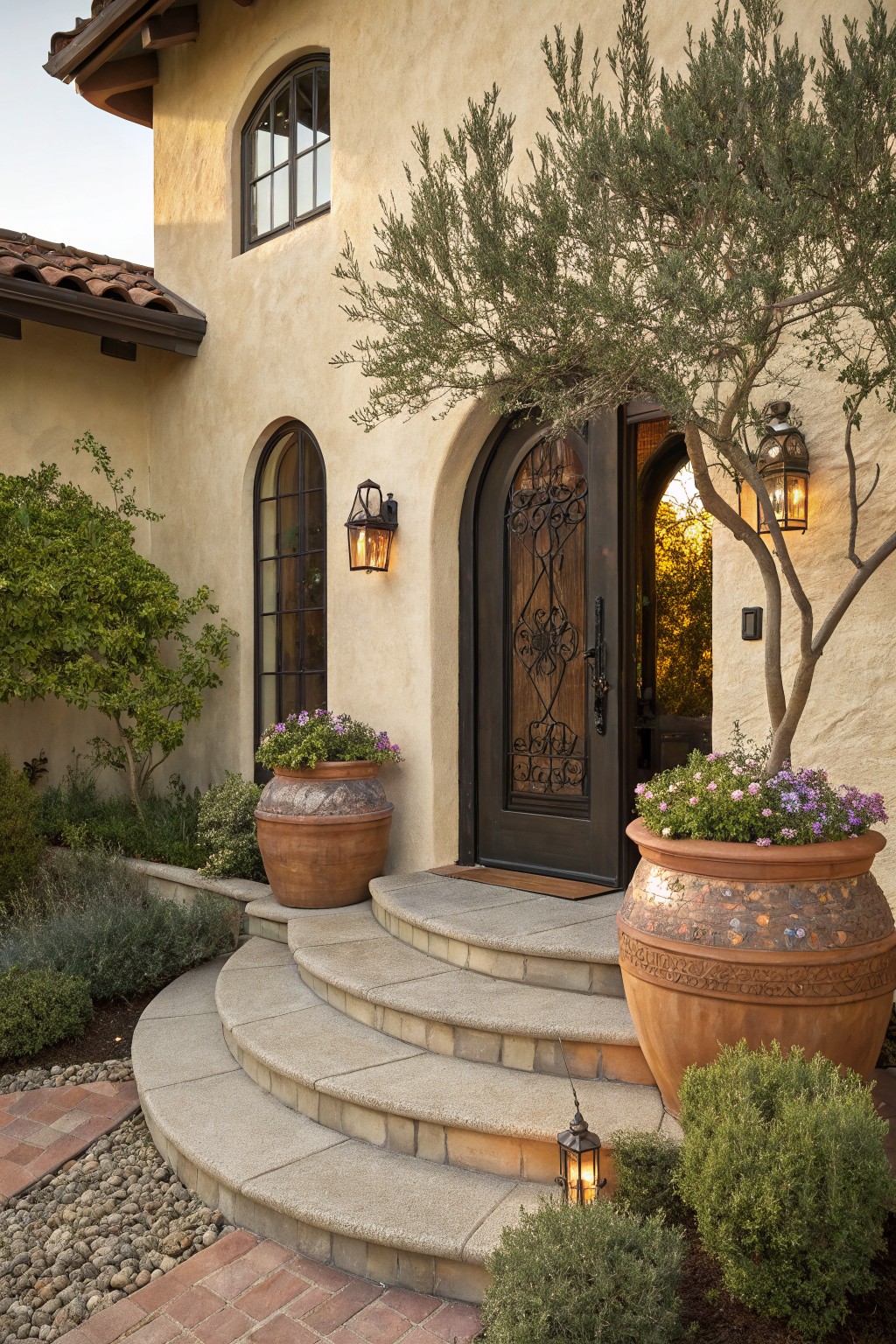
Big terracotta pots overflowing with heat-loving purple flowers make a simple statement right at the front door. They sit on the entry steps, one on each side, softening that plain stucco wall and arched door. These plants hold up in full sun and dry spells. No fuss, just reliable color where you see it first.
Put them where steps meet the door for the best effect. They suit any low-water yard, especially around Mediterranean-style houses. Pick pots with drainage holes and tough bloomers like lavender or trailing verbena. Skip tiny pots. They get lost.
Winding Wooden Boardwalks in Dry Gardens

A wooden boardwalk like this one curves smoothly through tall grasses and low shrubs, pulling you along without straight lines or hard edges. It works so well in hot spots because the path feels like part of the land, not imposed on it. Those weathered planks blend right in with the dry plants around them.
You can use this in any backyard that gets full sun and little rain. Lay it over gravel or dirt for good drainage, then flank it with heat-tough stuff like feather grass or lavender. It suits sloped yards best…keeps things stable and fun to explore. Just make sure the wood is treated for outdoors.
Raised Beds for Desert Flower Displays

Raised beds work so well in hot desert yards because they let you pack in color from heat-loving flowers like marigolds without messing up the ground too much. You see them here along the walls, filled with those bright orange blooms and tough succulents, edged neatly against gravel paths. It keeps everything contained and looking sharp, even in full sun.
Put these beds near patios or entry steps to frame your outdoor space without high water use. They suit adobe-style homes or any dry-climate setup. Go for low-water plants, and line the bottoms with gravel for extra drainage… simple as that.
Poolside Raised Beds of Purple Flowers
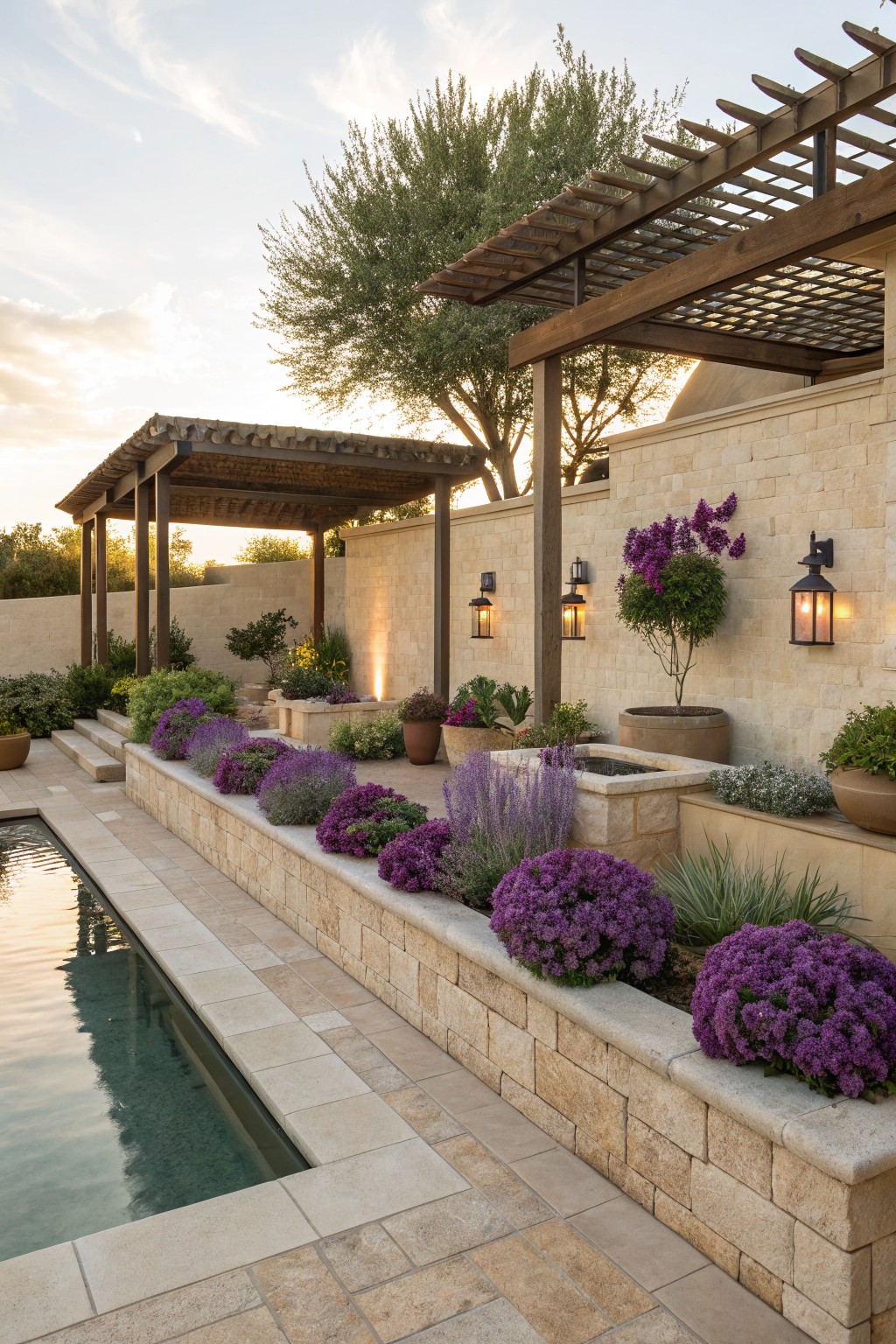
Raised beds along the pool edge make a simple way to add color in desert yards. Here, they’re packed with bushy purple blooms and lavender spikes that hug the beige stone walls. These plants take the heat without much fuss, and the mass planting gives a full, lively look that softens the hard edges around the water.
This works best on sloped lots or anywhere you have retaining walls near a pool or patio. Pick tough varieties like lavender or purple salvia, plant them close together for that bold effect, and keep the beds low-maintenance with gravel mulch. It suits modern or Southwestern homes… just watch for overwatering, since these thrive on dry.
Winding Stone Path Through Desert Wildflowers
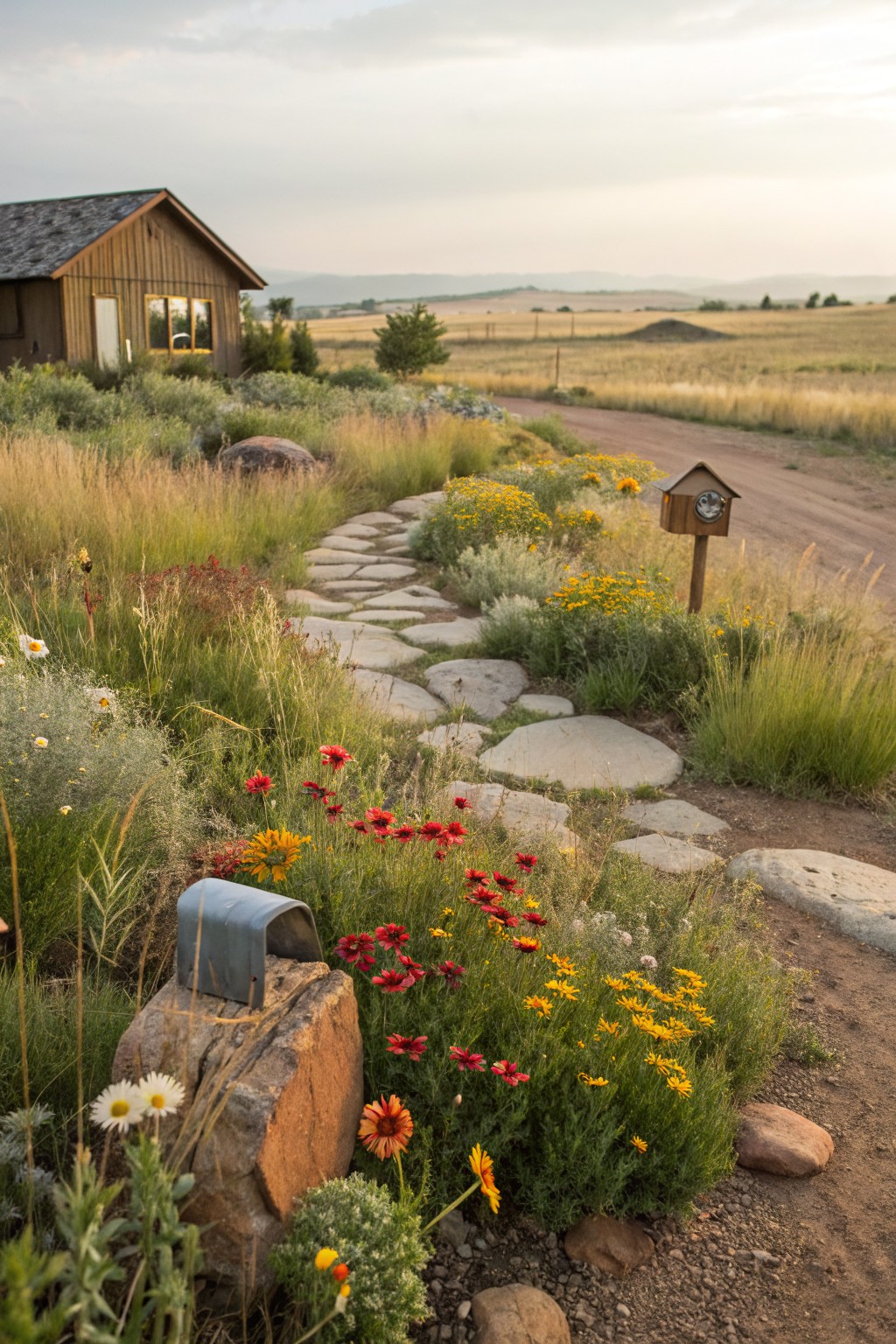
A simple way to tie your home to the landscape is a meandering path of flat stones set right into the earth. Here it winds gently past tall grasses and bursts of heat-loving flowers like red daisies and yellow black-eyed Susans. It pulls the eye toward the house without any fussy edging. These plants handle hot sun and dry soil just fine, so the whole thing stays pretty with almost no upkeep.
Try this in front of a cabin or ranch-style place where you want a welcoming feel that matches the open land around it. Pick stones that are local if you can, for that grounded look, and space them about two feet apart so it’s comfy to walk. Keep the flower beds loose and let the grasses grow tall. Just make sure the path drains well after rain.
Potted Lavender Around Entry Seating
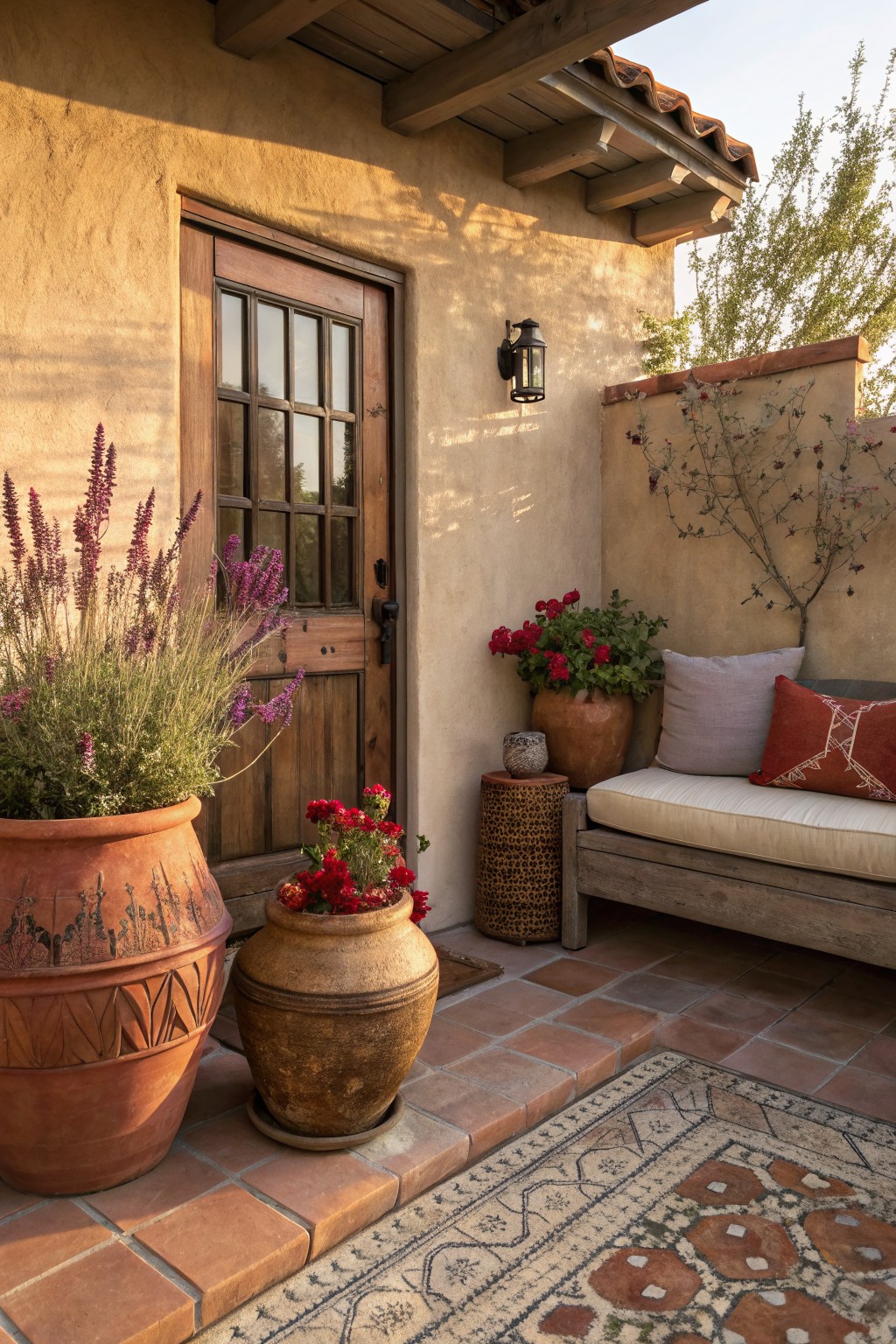
Large terracotta pots filled with lavender make a simple way to add life to a small patio or courtyard spot. The purple spikes stand out against adobe walls and tile floors, and lavender handles heat and dry spells without much fuss. It gives that fresh desert look while keeping things low-maintenance.
Put a couple pots on either side of a bench near the door, like this one tucked by the house. It works best in sunny, walled entries where you want color but not a full garden. Pair with geraniums for more bloom, and stick to well-draining soil to avoid root rot.
Lavender-Lined Stone Pathways

One easy way to add structure to a dry garden is a simple stone path edged with lavender bushes. The tall purple spikes stand out against the gray slabs and give off that nice scent when you brush by. In hot spots, lavender holds up without extra watering, and a few orange flowers nearby keep things colorful without fuss.
This works best in sunny side yards or leading to a back gate. Lay down uneven flagstones for a natural feel, then plant lavender right along the edges where it can spread a bit. Skip fancy edging. It suits older homes or cottages, stays neat through summer heat, and draws pollinators too.
Terraced Stone Walls for Sloped Yards

Slopes can be tricky in desert areas. These terraced stone walls turn that challenge into something useful. Built with natural stone blocks, they hold back soil while letting heat-resistant plants like tall grasses and low flowers spill over the edges. The curves follow the hill nicely, and those small lights tucked into the walls add a soft glow at night without much fuss.
You can use this setup on any hillside lot where you want low-maintenance planting. Pair it with a simple winding path for access. It works best around modern or rustic homes, keeping erosion in check while the plants handle the sun and dry spells. Just make sure the walls are sturdy enough for your slope.
Vertical Cacti Lining Narrow Pathways

One simple way to make a desert walkway feel special is planting tall cacti right up against the edges. These vertical plants like the ones hugging these concrete walls give height without taking up walkway space. They thrive in hot sun with little water, and the repetition along the path creates a nice rhythm that guides you through.
Try this in side yards or between buildings where you want definition but not clutter. Use raised beds to keep soil contained and roots happy. Pair with gravel or stone pavers for easy drainage. It suits modern homes best, but watch the scale, smaller cacti work if your path is tight.
Raised Concrete Beds for Lavender and Herbs
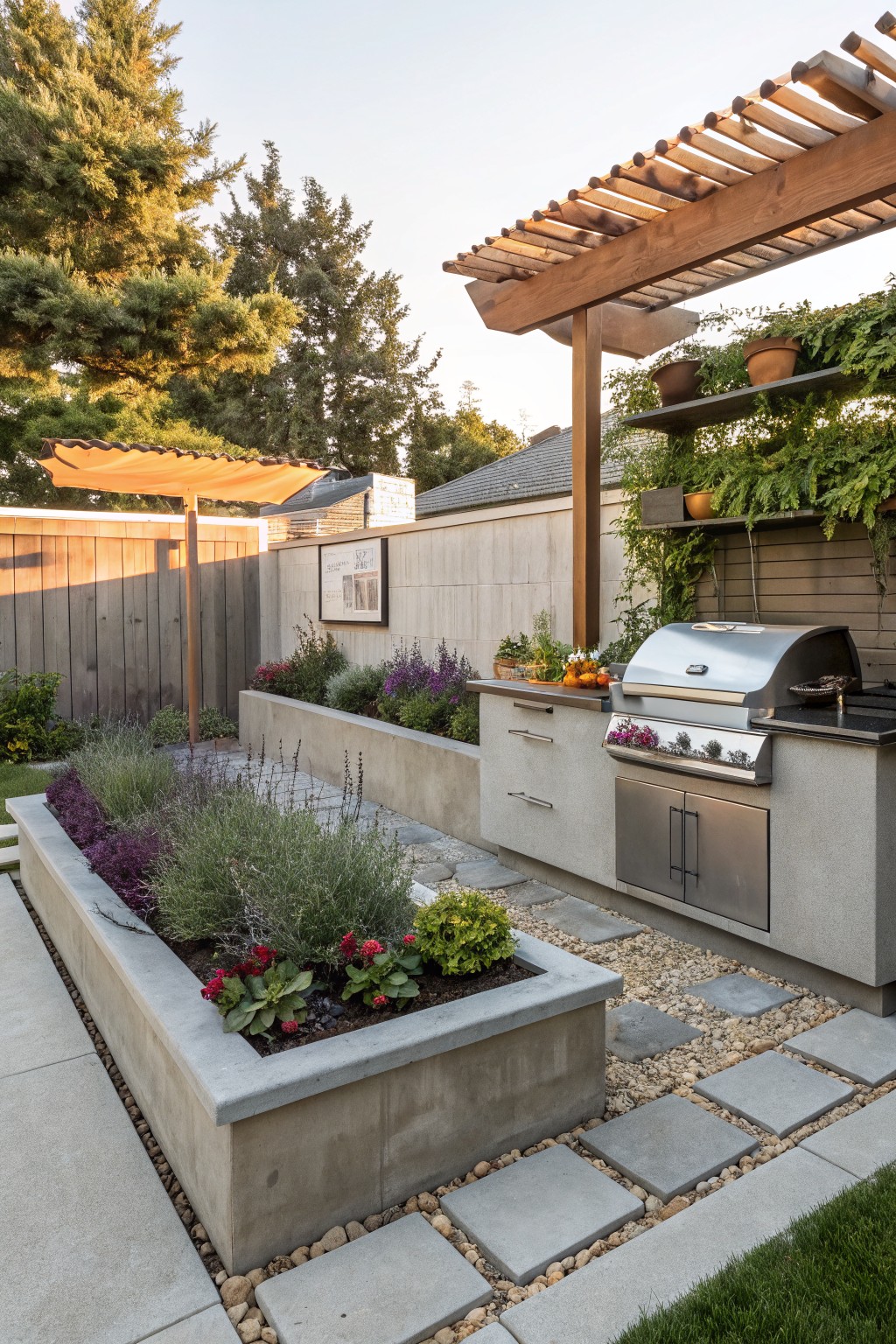
Raised concrete beds like these work great for packing in heat-resistant plants right where you use your yard most. You see lavender, salvia, and a few herbs tucked into L-shaped planters that hug the BBQ area. The clean lines keep it looking sharp, and these plants handle full sun and dry soil without much fuss.
Put them along patios or next to seating zones in hot climates. Build with poured concrete or blocks for that solid feel, fill with well-draining soil, and choose tough varieties that bloom all summer. They suit modern backyards, add structure without taking over, and edge out messier ground plantings.
Roadside Desert Beds with Tall Agave Spikes
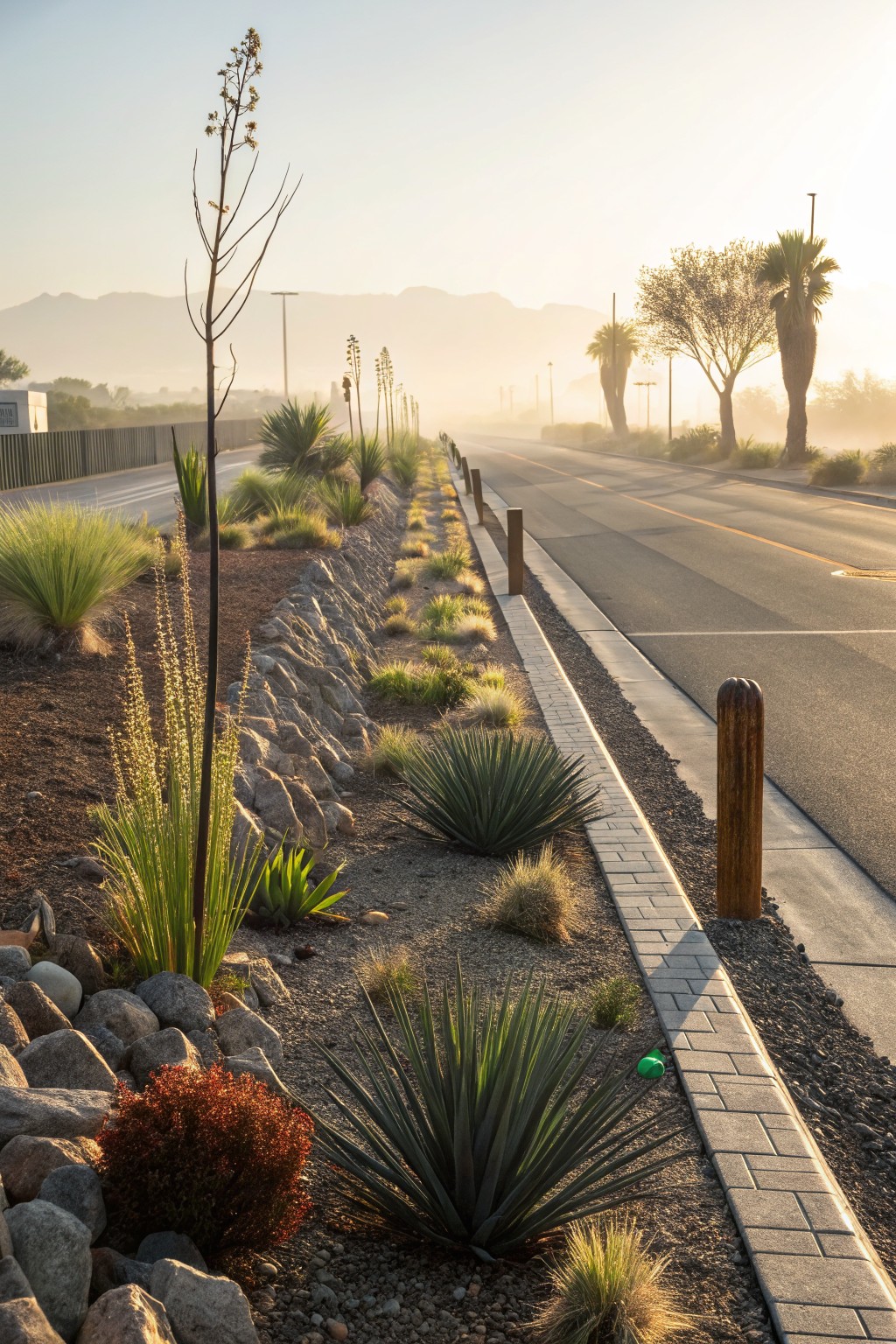
Tall agave spikes rising up from low plants and rocks make a simple way to add height to desert landscaping. You see those skinny flower stalks shooting up maybe ten feet, with clusters of blooms at the top. They stand out against the shorter agaves, grasses, and gravel mulch. This look holds up in full sun and dry heat without much fuss. The plants are tough natives that don’t need extra water once settled.
Put this along driveways or property edges where you want definition without mowing or trimming all the time. Mix in a few yucca or dasylirion for more spikes if you like. Rocks keep weeds down and let water soak in fast. It fits hot spots like Arizona yards. Just space the tall ones apart so they don’t crowd as they grow.
Tiered Stone Steps with Desert Plants
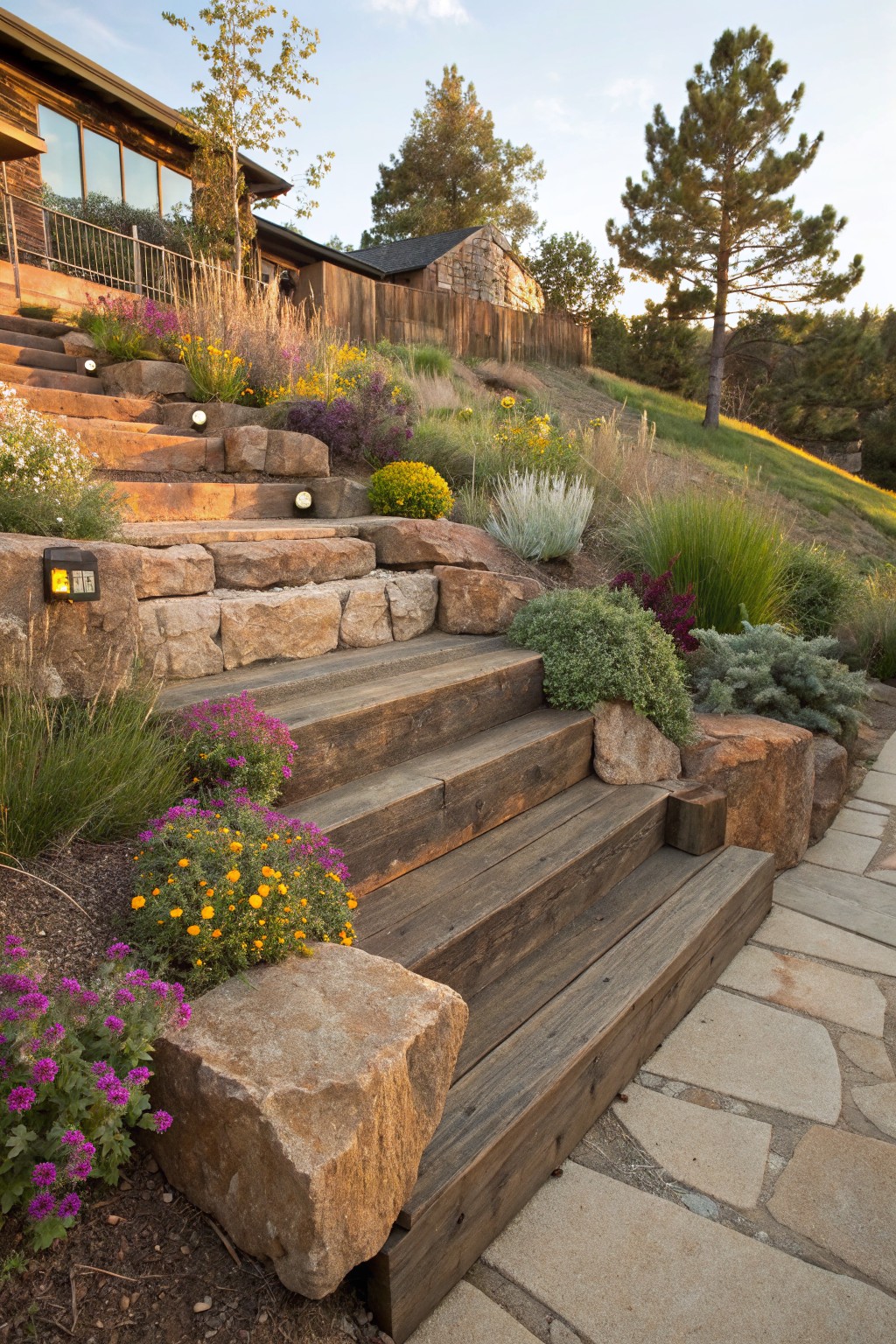
These steps climb a hillside using chunky stone risers and weathered wood treads, with boulders holding everything in place. Around them sit heat-loving plants like pink asters, yellow coreopsis, and feathery grasses that fill in the gaps without fuss. The whole thing feels rugged and right at home in dry spots, stabilizing the slope while adding color that lasts through hot summers.
Put this on any embankment leading to your house or patio. It suits arid yards where you want easy access without constant upkeep. Go for natives in your area to keep water low, and space plants so they don’t crowd the path. One thing: make sure the wood is treated for weather.
Linear Pathway Edged with Desert Blooms
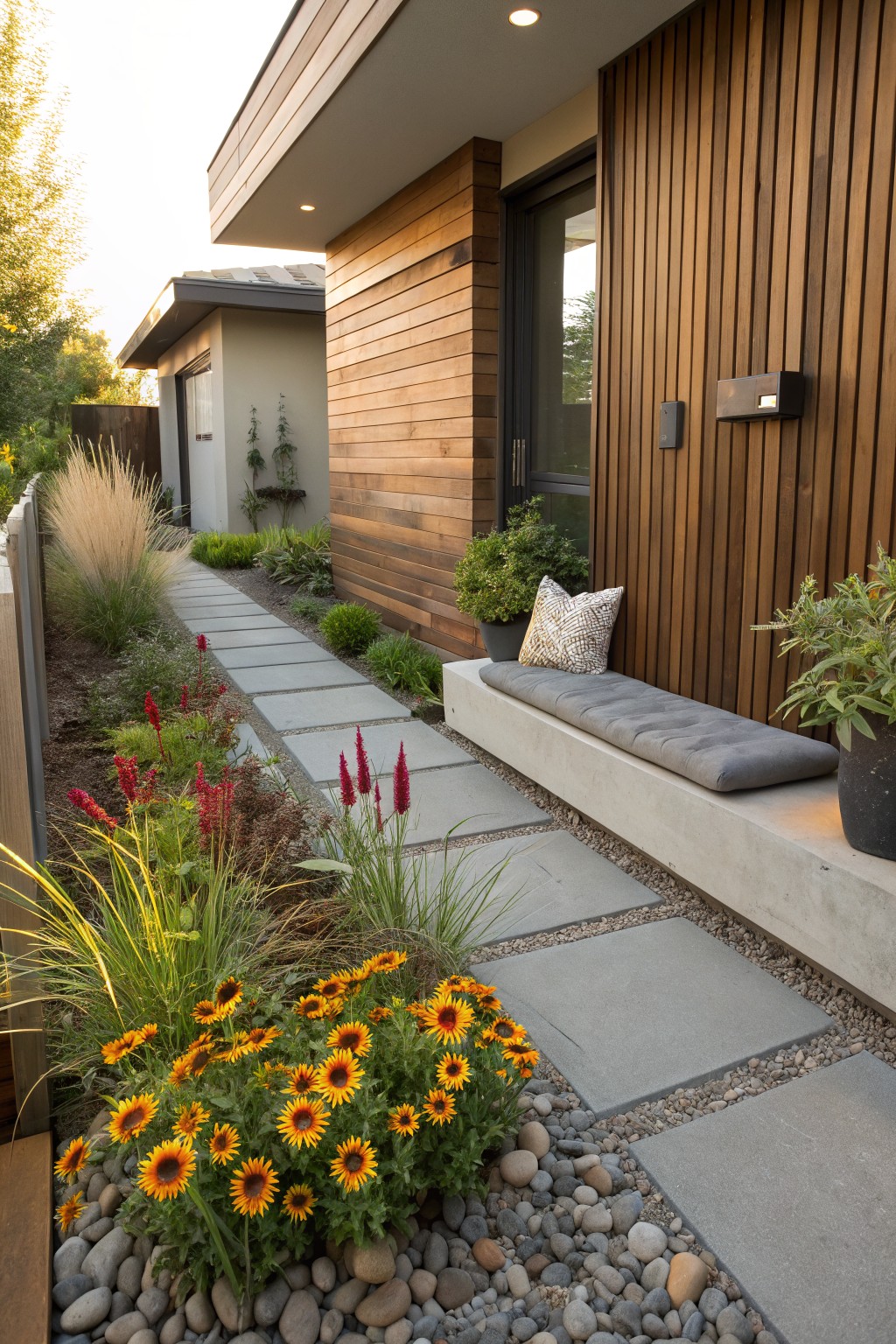
A straight path like this makes a narrow side yard feel purposeful. Large concrete pavers set in gravel keep it simple and sturdy. Along the edges, heat-loving plants such as red salvia spikes, fluffy fountain grasses, and clusters of yellow coreopsis add pops of color that last through hot summers. It’s low fuss but looks full and alive.
Use this idea for guiding guests from street to entry or along a driveway edge. It fits modern homes with wood or concrete siding best. Plant in drifts for rhythm, and mulch with pebbles to cut down on weeds. Just give the grasses room to sway.
Frequently Asked Questions
Q: How much water do these desert flowers need after they’re established?
A: Water them deeply once every two weeks during the hottest months. Let the soil dry out completely between waterings to build strong roots. They store water like pros and bounce back fast from dry spells.
Q: What’s the best time to plant these heat-tough flowers?
A: Plant in early spring or fall when temps dip below 90 degrees. Give them a couple months to settle before summer blasts hit. Roots dig in quick that way.
Q: Can I mix these flowers with rocks and gravel in my yard?
A: Go for it. Rocks hold heat and keep weeds down while letting flowers pop against the texture… And they cut your mulching chores way back.
Q: Will these survive if I forget to water for a month?
A: Most shrug off a month without water once established. But hit them with a good soak right after to perk them up. Newbies wilt faster, so ease up on skipping.
