

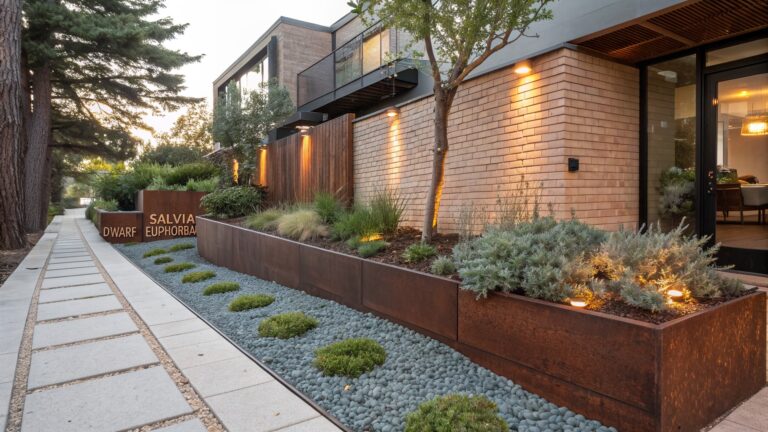
Those narrow strips along the side of the house usually end up as afterthoughts, overgrown with weeds or left bare.
I learned the hard way on my own property that good edging and layered plantings make all the difference in keeping them neat as they mature.
What draws the eye first tends to be a clean pathway edged by flowers that rise without crowding the walk.
These setups work best when you pick varieties that hug the foundation and soften the fence line over time.
A few here feel right for tweaking in tight spots like mine.
Narrow Path with Purple Perennials
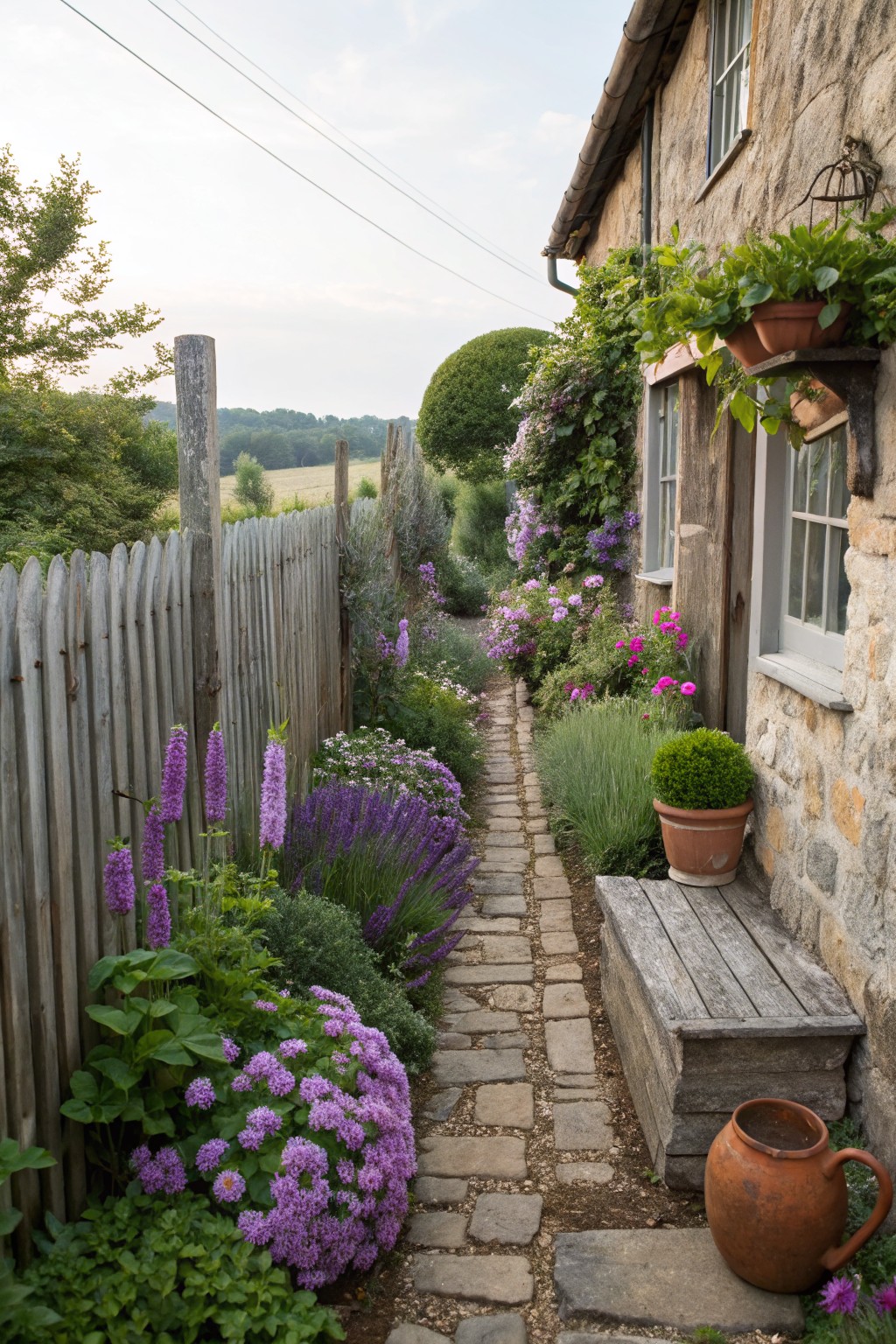
A simple stone walkway runs right up against the house wall, edged tight with layers of purple flowers like lavender spikes and bushy blooms. It turns what could be a wasted skinny space into something you actually want to walk through. The plants fill it out without spilling over, keeping the path clear while hiding the fence behind.
This works well in older stone or cottage homes where side yards are too narrow for much else. Go for tough perennials that handle some shade and come back yearly. Tuck in a bench near the house for sitting. Just keep taller plants from blocking windows.
Brick-Edged Beds for Narrow Side Gardens
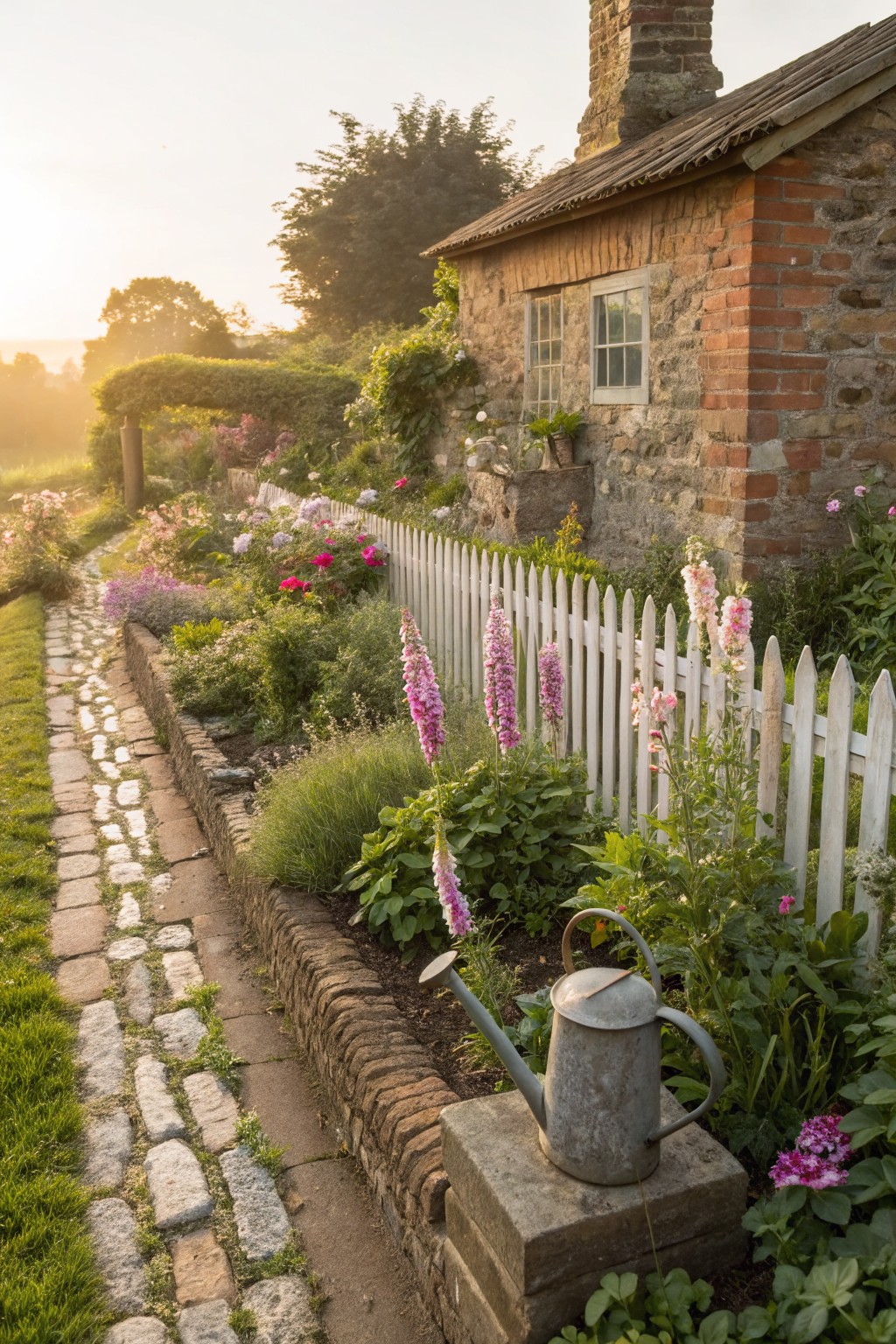
One simple way to make a skinny side yard feel full is with low raised brick beds hugging the house wall. They keep soil in place and give plants a neat edge. Here, a stone path runs alongside, letting you walk through without stepping on flowers. Pink foxgloves stand tall for height, while lower plants fill in front.
This works best next to a fence or neighbor’s line, where space is tight. Pick tough perennials that don’t spread wild. Brick ties into older homes nicely… just make sure it drains well or roots rot. Easy to copy on a budget.
Narrow Metal-Edged Succulent Beds

One smart way to handle a skinny side yard is with a long, linear bed edged in corten steel. That rusted metal look gives it a sturdy, modern edge without taking up much room. Here, it’s packed with low-growing succulents like agaves and echeverias, plus gravel mulch and a few rocks for texture. It runs right along the sidewalk and fence, turning dead space into something clean and alive.
These beds work best in tight spots next to paths or driveways, especially if you want low maintenance. Go for drought-tolerant plants that don’t flop over the edge. They’re ideal for modern homes or anywhere water is an issue… just keep the soil well-drained, and it’ll hold up year-round.
Stone Paver Path for Narrow Side Yards
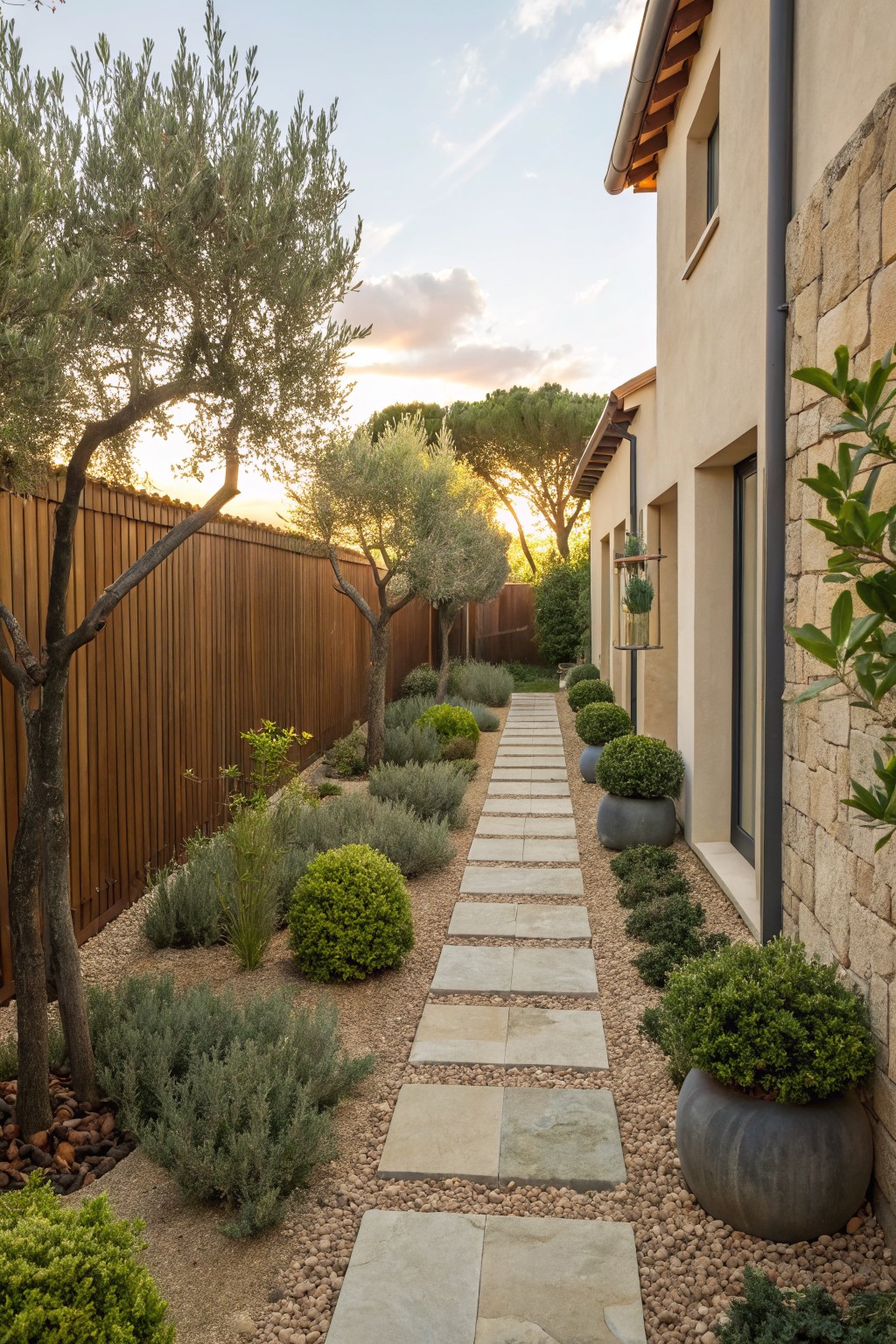
A straightforward stone paver walkway like this turns a skinny side yard into something usable and pretty. The irregular slabs set into gravel create a clean line that doesn’t crowd the space. Low shrubs and olive trees along the edges add structure without overwhelming the path. It’s practical for getting from front to back yard, and the gravel mulch keeps weeds down.
This idea fits best along modern or rustic homes with limited side access. Lay the pavers loosely for drainage, then fill gaps with gravel. Stick to tough plants like lavender or boxwood that handle dry spots. Watch the scale. too many big pots can make it feel cramped.
Tiered Stone Walls Boost Narrow Side Beds
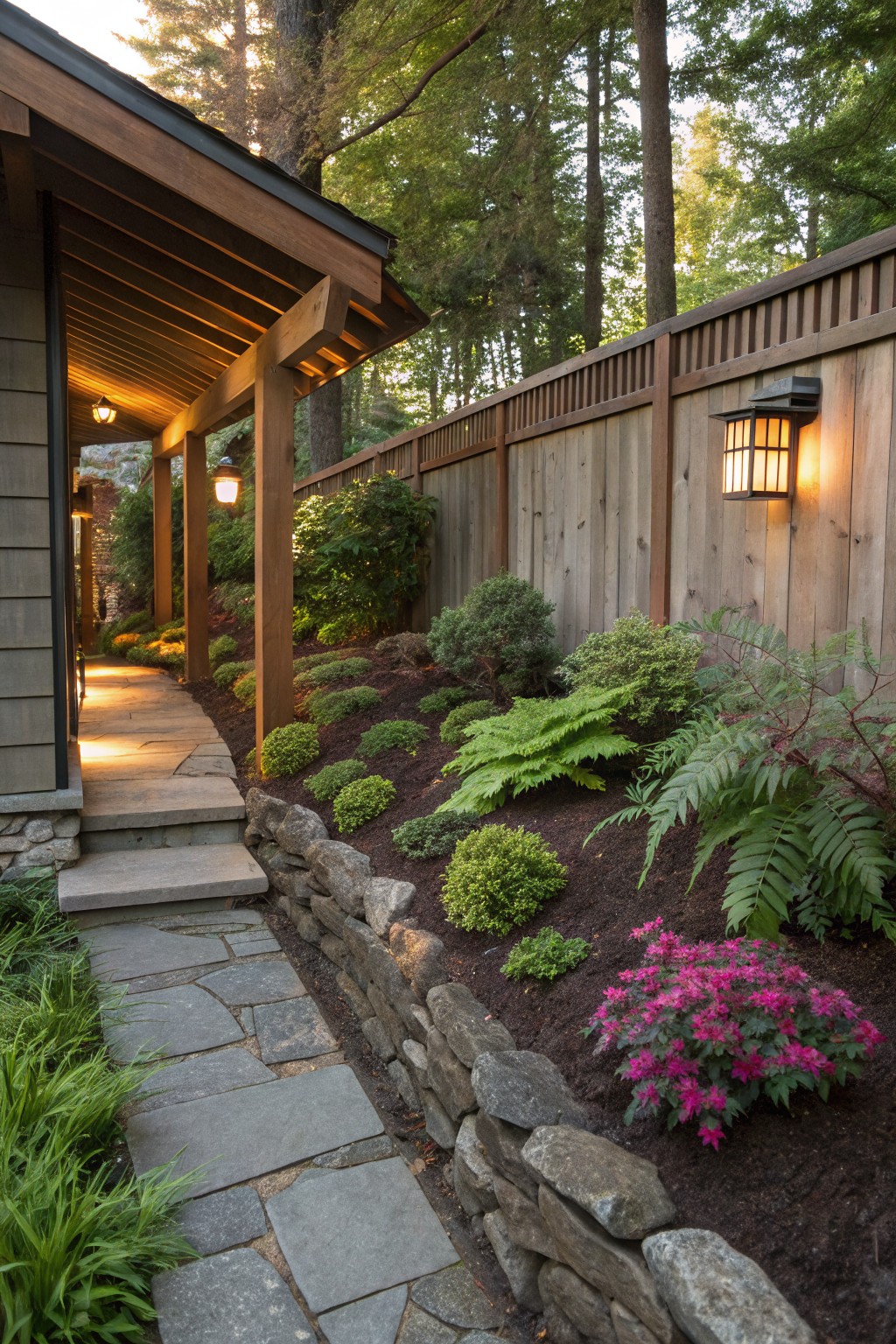
One smart way to make the most of a skinny side yard is stacking low stone retaining walls to create raised planting beds right along the house. This setup turns wasted space into layers of greenery, like the ferns and boxwood mounds tucked in here, plus those pink azalea clusters for a pop of color. It keeps everything neat and gives plants better root room without crowding the flagstone path.
These walls work best in shady, wooded spots where the ground slopes a bit. Pick rugged fieldstone that matches your area’s look, and fill with low-water plants that handle partial shade. They’re practical for erosion control too… just add gravel behind for drainage. Fits ranch homes or cabins with tight lots.
Vertical Pallet Planters for Narrow Side Yards
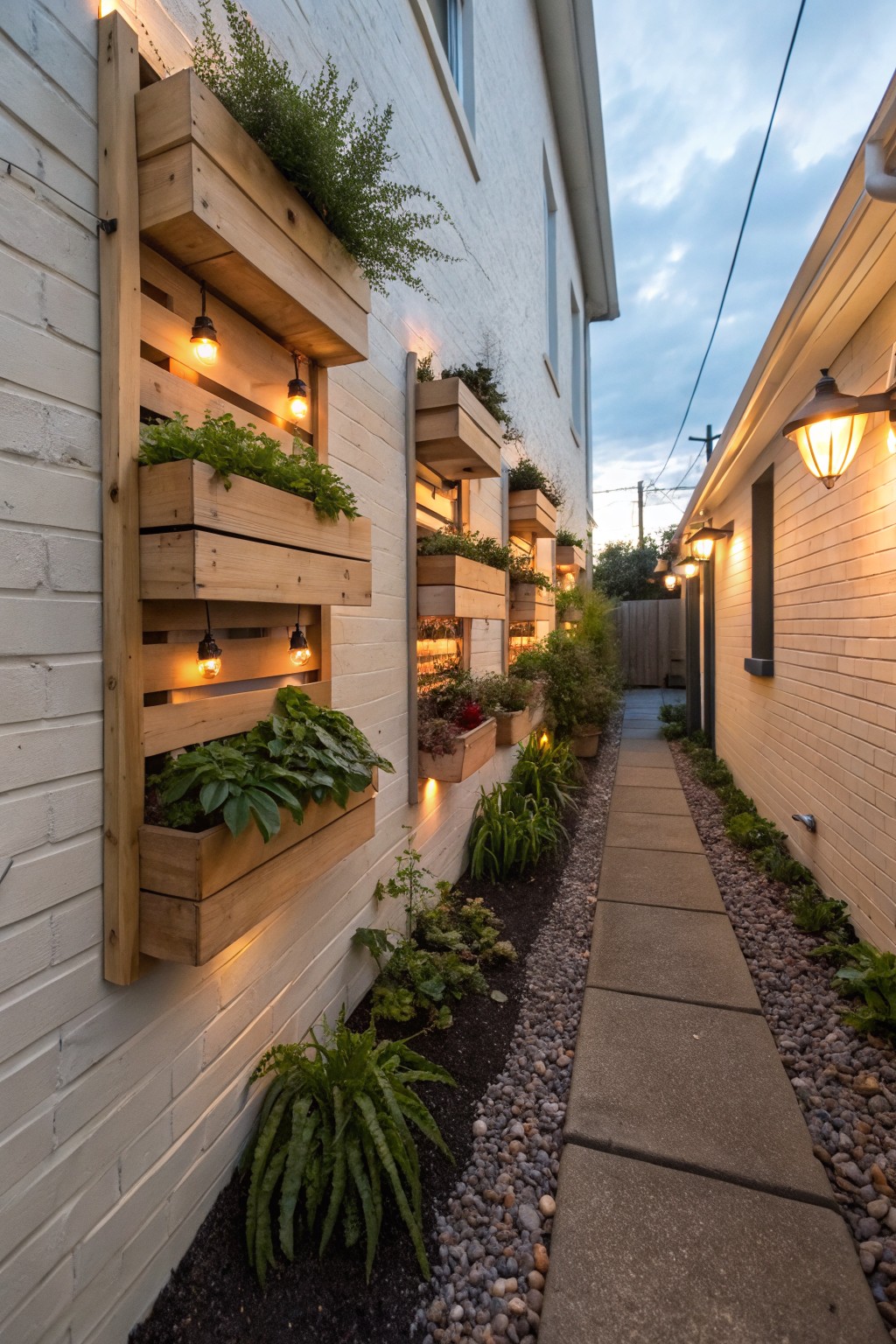
One smart way to green up a skinny side path is stacking wooden pallet planters right on the house wall. These recycled wood boxes hold all sorts of plants, from herbs to trailing greens, and they fit tight spaces without eating into the walkway. The warm wood tone picks up nicely against white brick, and built-in spots for string lights add a soft glow at night.
You can build these yourself from cheap pallets, just secure them firmly to the wall and line with plastic for drainage. They work great next to a house or fence where ground space is limited… think urban lots or older homes with alleys. Keep soil light and plants not too heavy, and trim back overgrowth to stay practical.
Stepping Stone Path in Narrow Side Yards

A simple way to make a narrow side yard useful is laying irregular stepping stones right into a gravel bed. Big boulders line the edges to hold everything in place, and you tuck in low plants like lavender or agave around them. Large terracotta pots add some height without crowding the path. It turns a plain walkway into something that feels natural and easy to walk.
This works best where space is tight, like between the house and a fence, maybe on a slight slope. Pick smooth flagstones for footing and gravel that drains well. Keep plants drought-tolerant so you aren’t weeding all the time. It’s low upkeep… and leads right to a back door or gate without feeling squeezed.
Winding Stone Paths for Narrow Side Yards

A simple winding path made from irregular stone slabs set right into gravel turns a tight side yard into a real walkway. It snakes gently along the edge, giving space for low plants tucked against the wall. That curve makes the area feel longer and more interesting without taking up extra room.
This works best where you’ve got just a few feet between the house and fence. Go for tough, drought-friendly stuff like grasses and sedums in the beds to keep it easy. Drop in some path lights, and it’s good for evening strolls too… no big install needed.
Raised Planters Along Narrow Side Paths
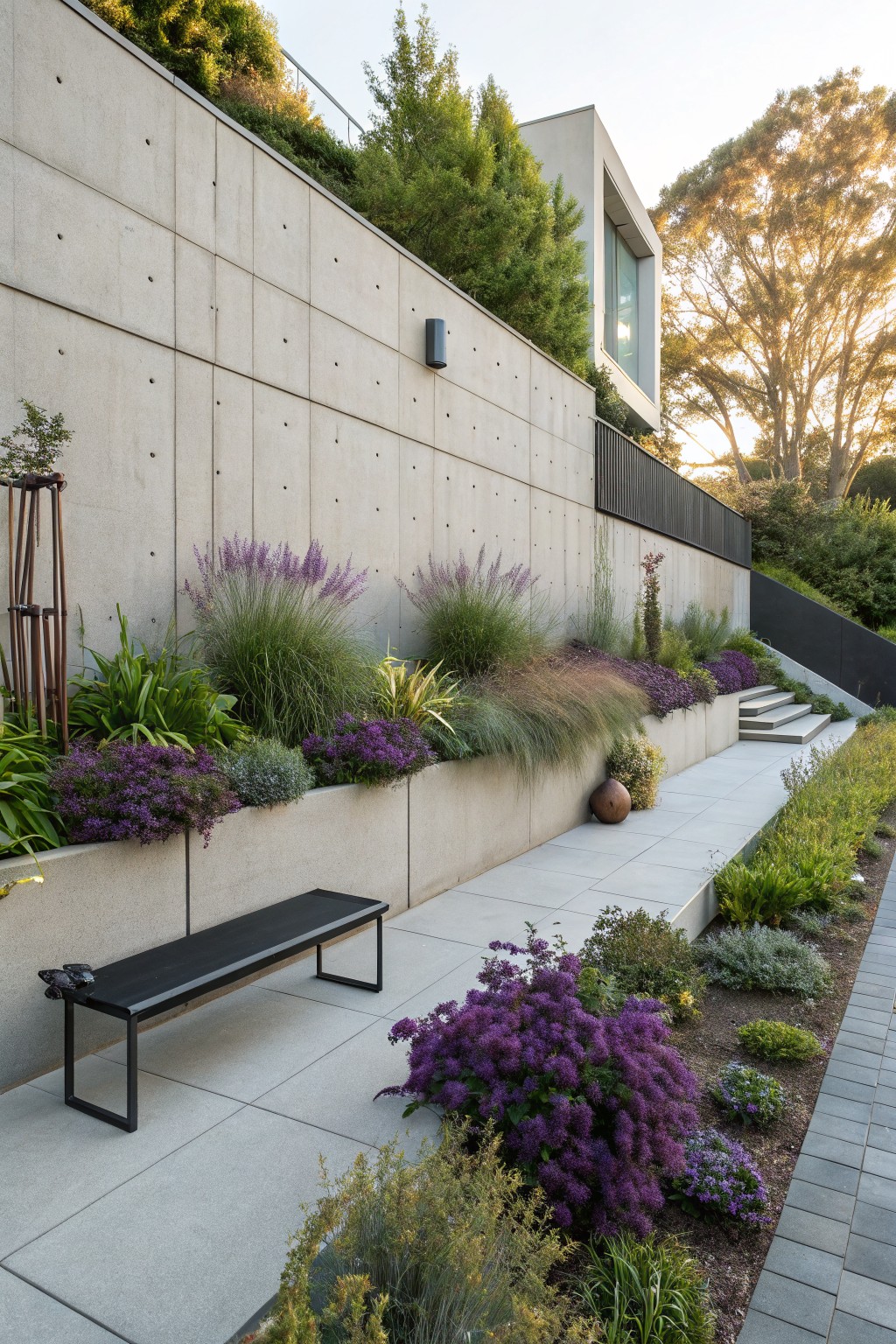
One smart way to handle a skinny side yard is building raised concrete planters right into the retaining wall. You get pockets of color and texture from grasses, lavender, and low shrubs without eating into the walking space. That plain concrete turns into a backdrop that lets the plants pop, and it keeps everything neat.
This works best on sloped lots where you need to hold back soil anyway. Pick tough, drought-friendly plants so you aren’t out there watering every day. Add a simple bench for a rest spot, and you’ve got a low-key stroll from yard to street.
Winding Path in a Narrow Flower Bed
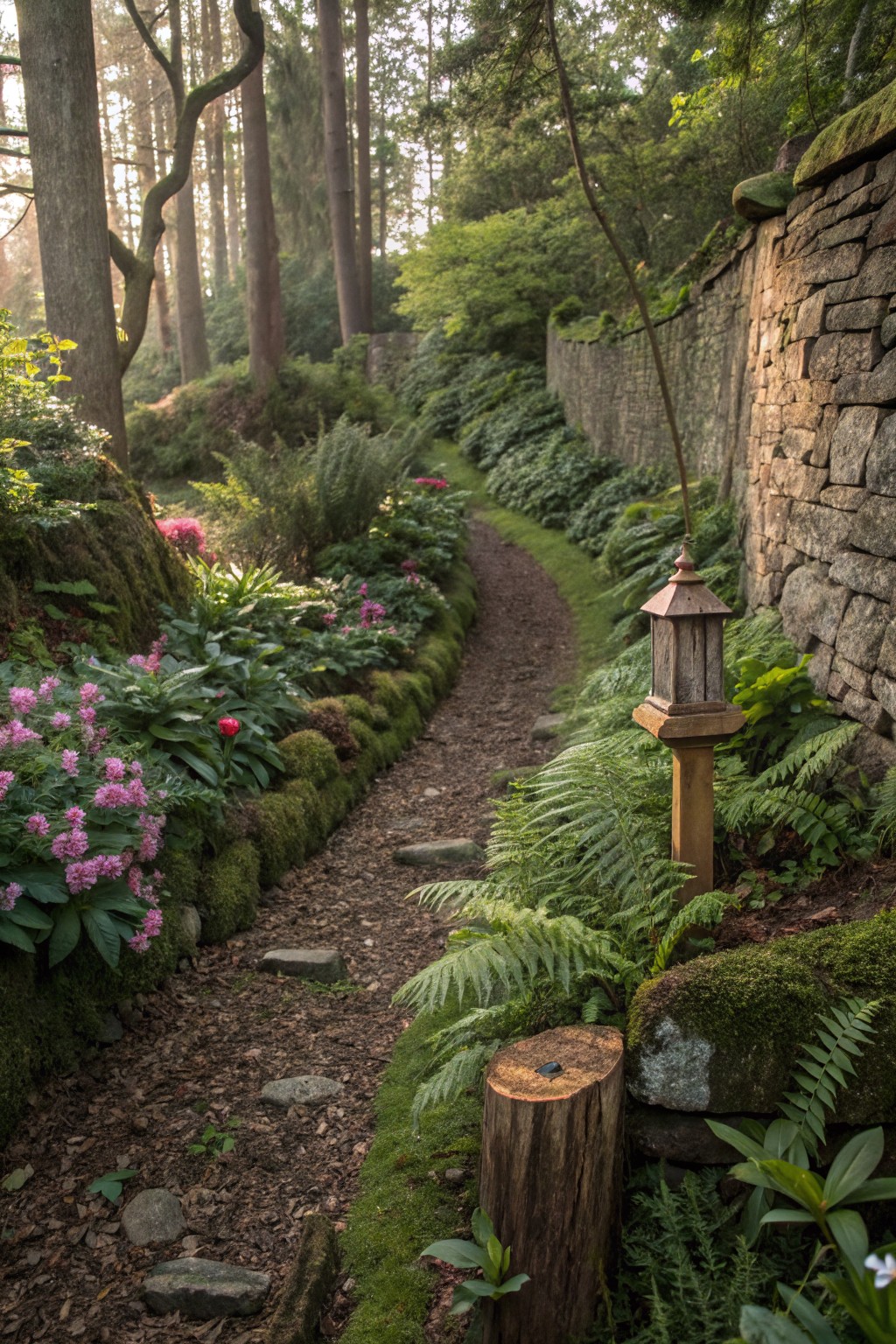
Narrow side yards can feel squeezed and boring. But a simple winding path like this one changes that. It snakes through dense plantings of pink flowers, ferns, and hostas, edged with soft moss. That curve draws the eye back into the space. Makes even a tight strip feel deeper and more alive.
Use this in any skinny spot along the house. Lay down gravel or mulch for the path, then pack the beds tight with low growers and perennials that spill over the edges. Keep the curve gentle so it fits without wasting room. Works best where you want low upkeep… just trim back once a year.
Lavender-Lined Paths for Narrow Side Gardens
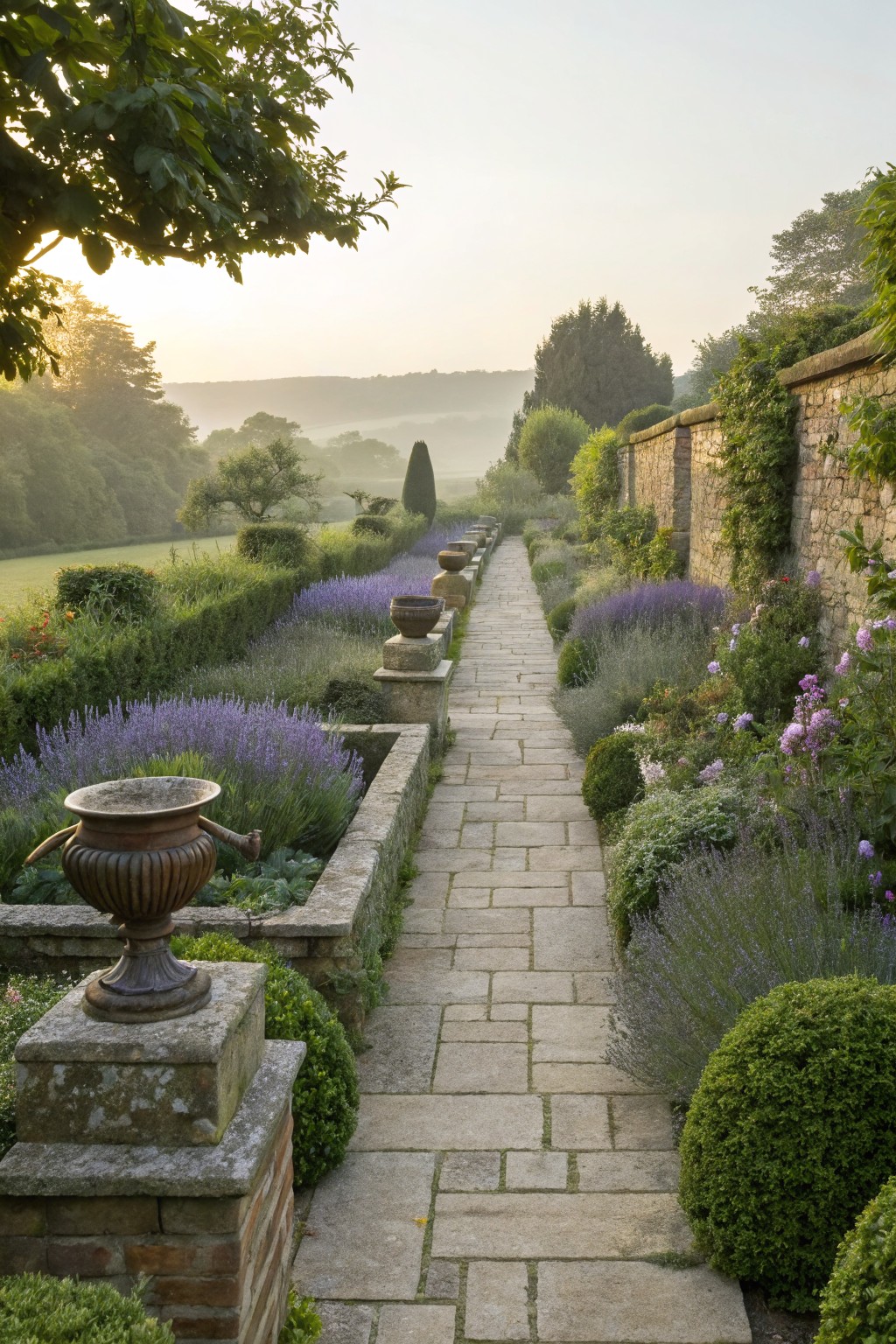
A straight stone path running through a narrow bed of lavender plants turns a tight side yard into an easy walkway. The tall purple spikes line both sides, giving structure without crowding the space. Those repeating borders make the area feel longer and more put-together, plus the plants come back year after year with little fuss.
Plant this along the side of your house or next to a fence where room is short. Mix in boxwood balls at the ends for neat edges, and set a couple urns on low walls for interest. It suits older homes or any spot needing a simple garden feel… just keep the path wide enough to walk.
Raised Concrete Planters Along Side Paths
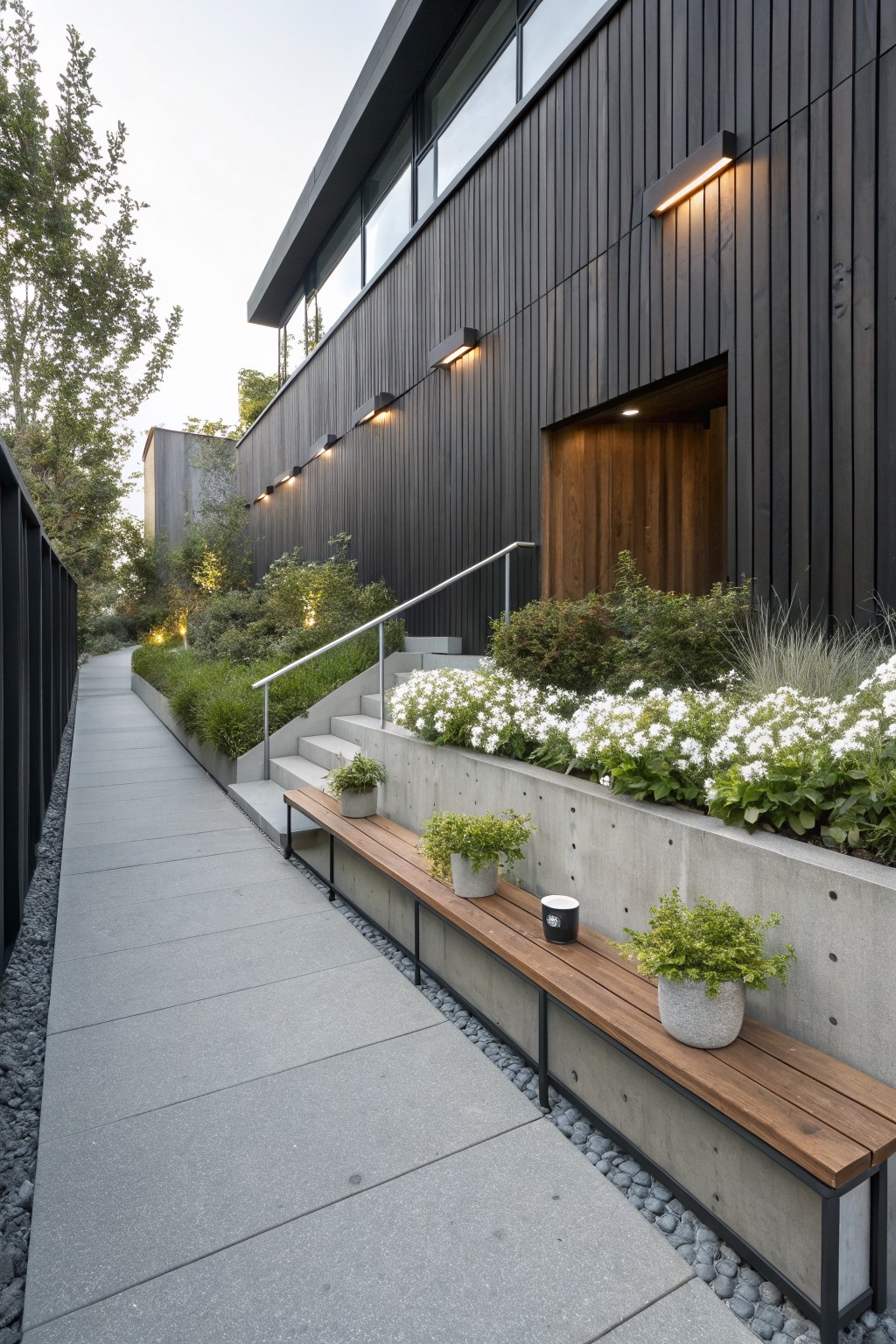
Narrow side yards can feel like dead space, but raised concrete planters turn them into something useful. Here, they’re lined up right against the house wall, holding back soil for white flowering plants that spill over nicely. The concrete keeps everything neat and low-maintenance, and it matches the modern look without eating into the walking area.
These work best on paths leading to a side door or garage. Pick tough plants like alyssum for the flowers and boxwood for green accents. Add a simple bench halfway along if there’s room. Skip this if your side is super shaded, since the plants need some sun.
Tiered Planters for Narrow Side Yards
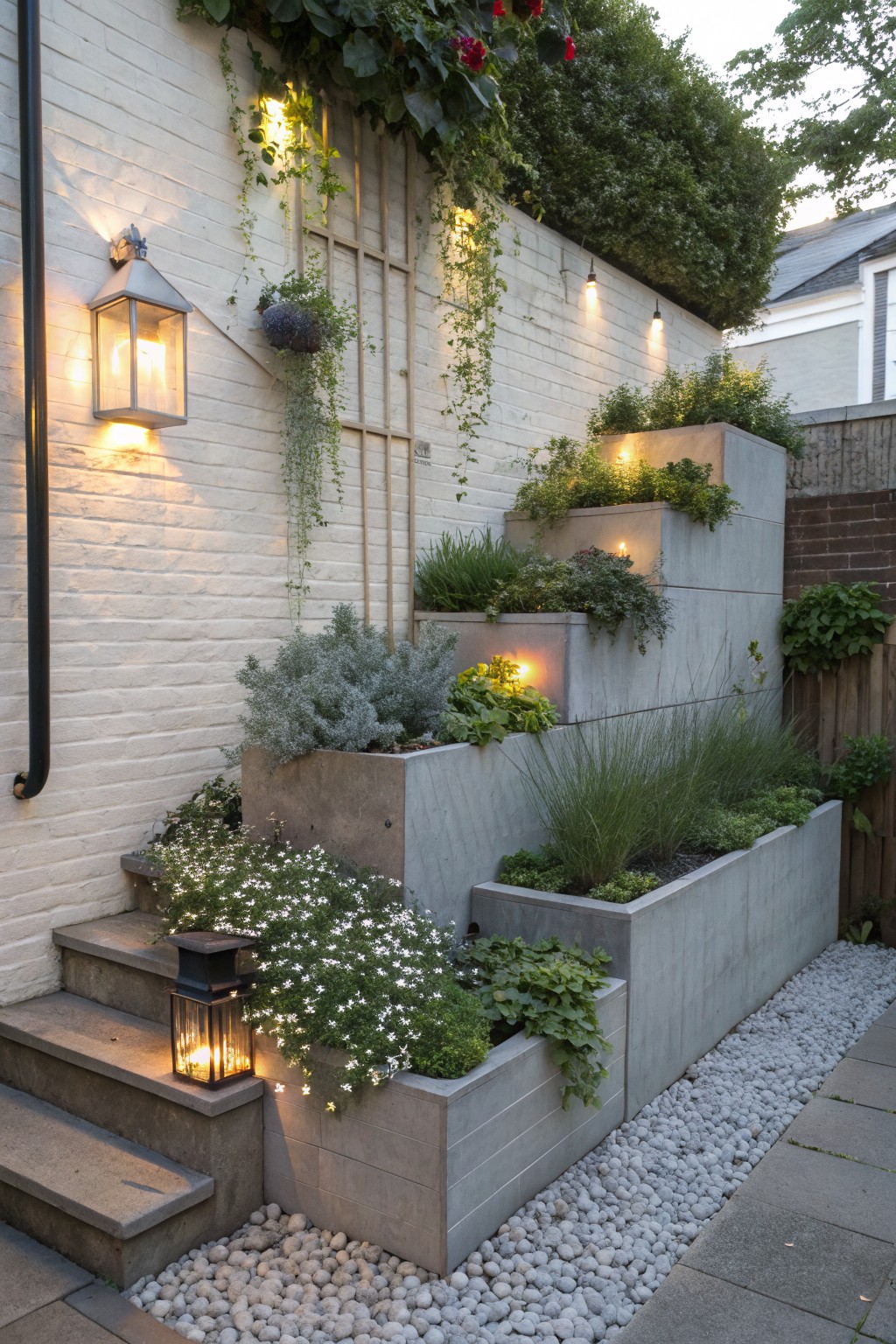
Stacking concrete planters like stairs turns a tight side strip into a real garden. The boxes hold all kinds of plants, from silvery bushes to trailing flowers, and they hug the wall without wasting any floor space. Built-in lights tucked into the levels make it usable after dark. It’s a simple way to add green where there’s barely room to walk.
This works best along a fence or house wall in small lots or city homes. Pick tough, drought-friendly plants that won’t flop over the path. Gravel on the ground keeps it neat and lets water drain fast. Just make sure the boxes are level so they don’t tip.
Frequently Asked Questions
Q: My side yard stays shady all day. What flowers work best there?
A: Plant impatiens or begonias. They bloom bright even in low light and stay compact for tight spots. Tuck ferns around them for filler that spills nicely.
Q: Drainage sucks in my narrow bed. How do I fix it fast?
A: Dig in gravel at the base when you plant. It lets water escape quick so roots don’t drown. Build the bed up a few inches higher than ground level too.
Q: Weeds keep popping up. Any simple way to fight them?
A: Smother them with wet newspaper topped by mulch. Skip the fabric, it clogs the soil. Refresh the mulch yearly, and you’ll weed way less.
Q: How do I edge the bed without it looking messy?
A: Bend some plastic lawn edging along the sides. Pound it in shallow, and it hugs the curves perfect. Trim grass back once a month to keep the line sharp.
