

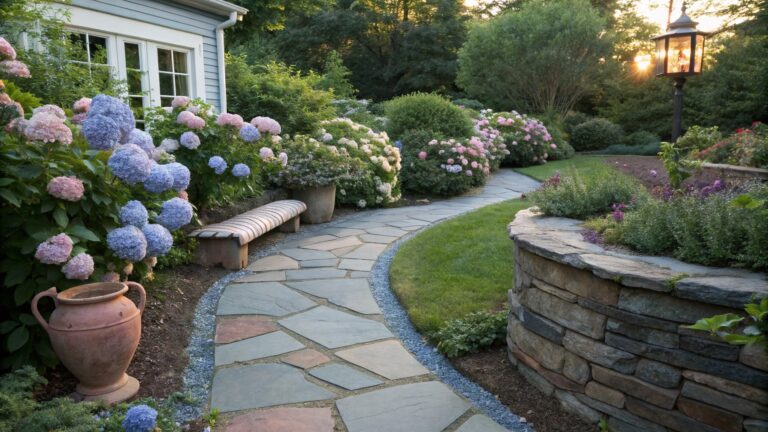
I’ve noticed that hydrangeas bring the calmest vibe to backyard landscaping when you layer them thoughtfully around pathways and low borders. They mature into soft, billowing shapes that frame seating spots and draw your eye through the space without crowding it. A few years back, I tucked some along my fence to soften the edges, and now they quietly anchor the whole layout as seasons shift. Those repeating blooms hit you first from across the yard, pulling everything together year after year. The idea with staggered heights along slopes is one I’d adapt right away.
Winding Stone Path Through Hydrangea Beds
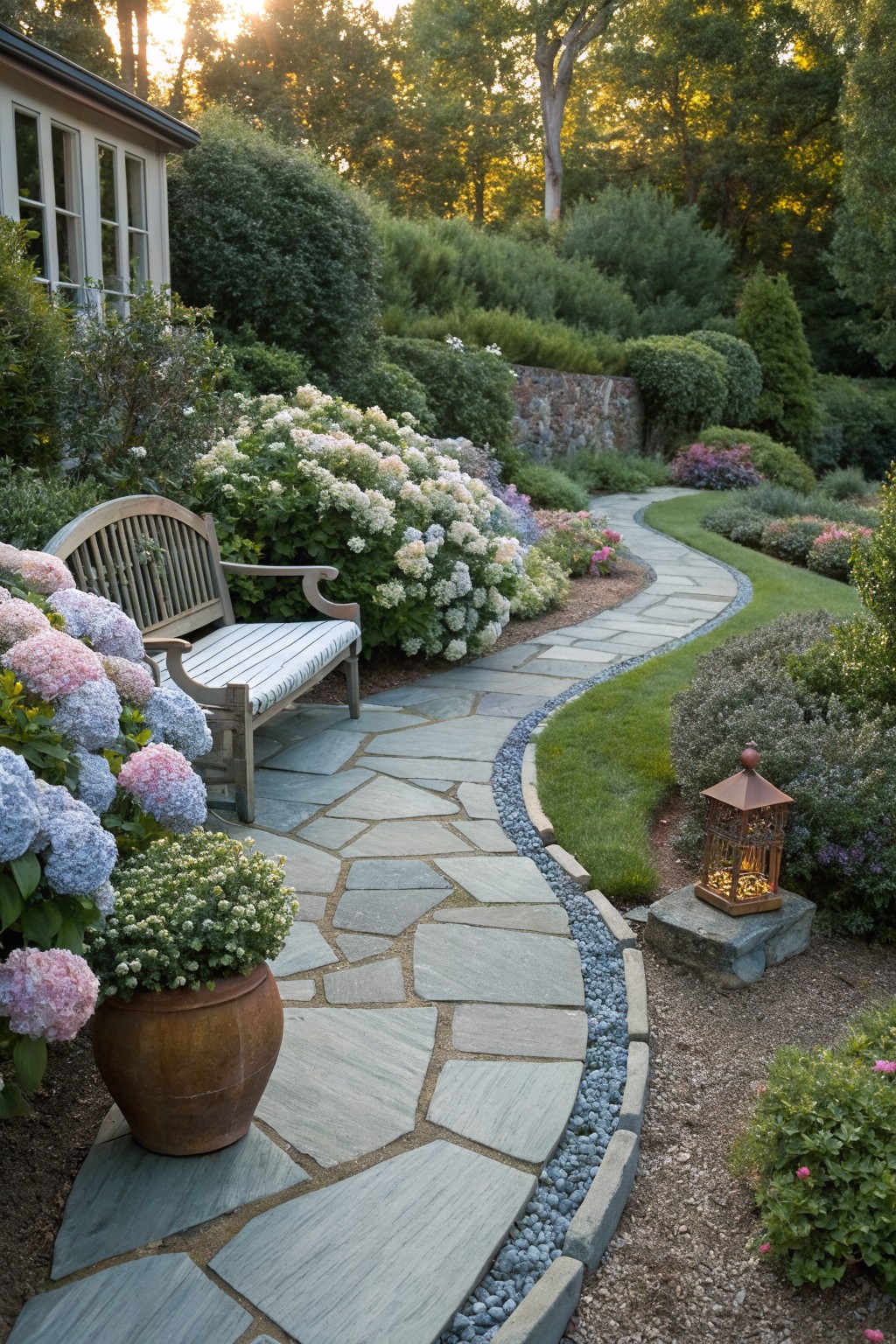
A simple winding path like this one turns a backyard into a quiet stroll spot. Made from irregular gray flagstones with gravel edges, it curves gently past big clusters of pink and blue hydrangeas. That soft meander slows you down. It feels natural, not forced.
Put this in a side yard or along the house where you want low-key beauty. Line both sides with hydrangeas for that full, calming effect… just make sure they get morning sun and afternoon shade. Add a bench halfway for resting. It suits older homes with wooded edges.
Hydrangeas Along Curved Retaining Walls
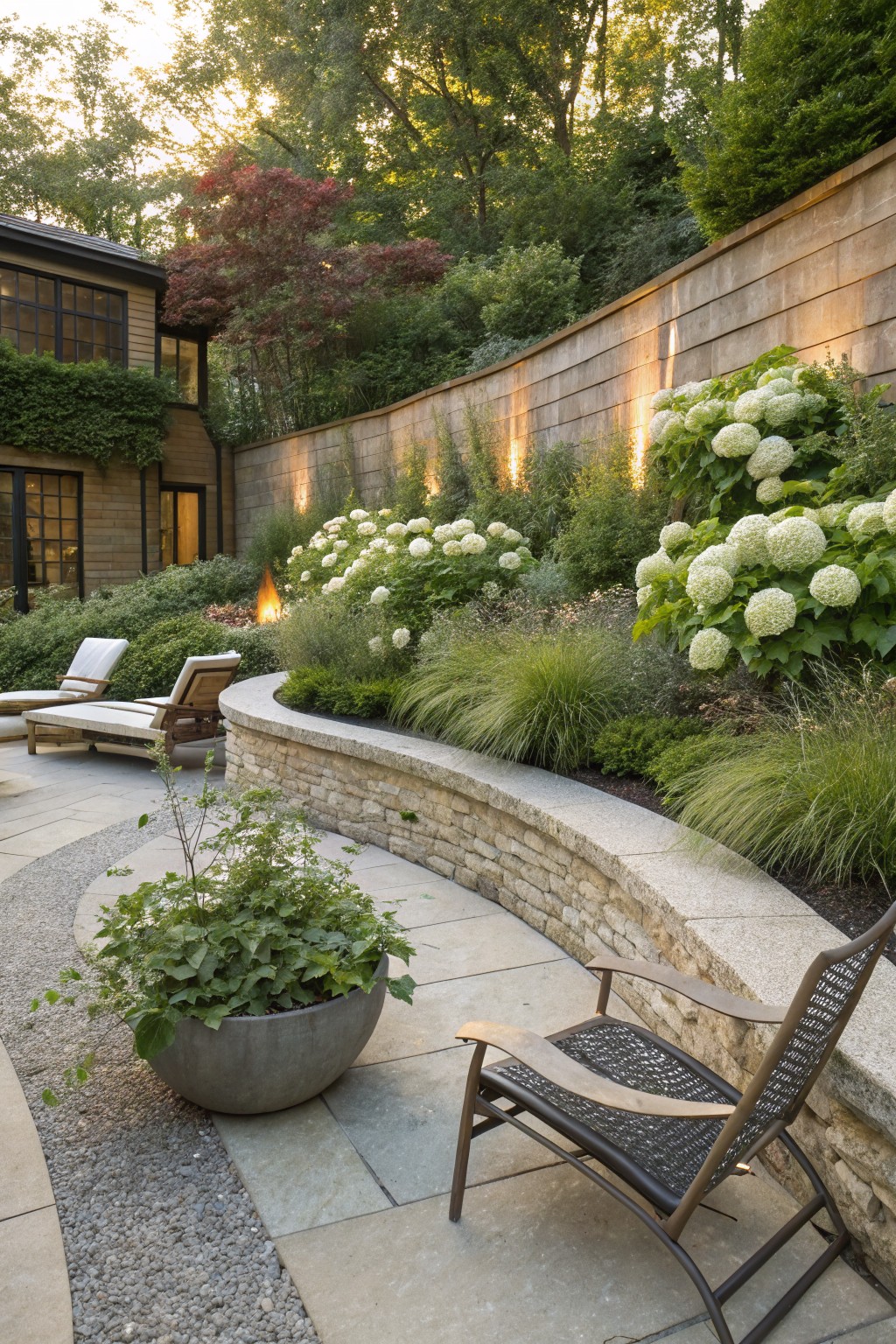
Big clumps of white hydrangeas planted right up to a curved stone retaining wall make a sloped yard feel smooth and settled. The blooms hang over the limestone edge just enough to hide any hard lines. Tall grasses tucked in nearby add some sway without crowding things out. It’s a quiet way to cover ground and tie the patio to the hill behind.
This idea fits wooded backyards with some shade. Build the wall low enough to sit against, maybe two feet high. Space hydrangeas close for that full look, and run path lights up through the joints. Skip it on full sun slopes, though. Roots need moisture to hold up the show.
Hydrangeas in Poolside Planters
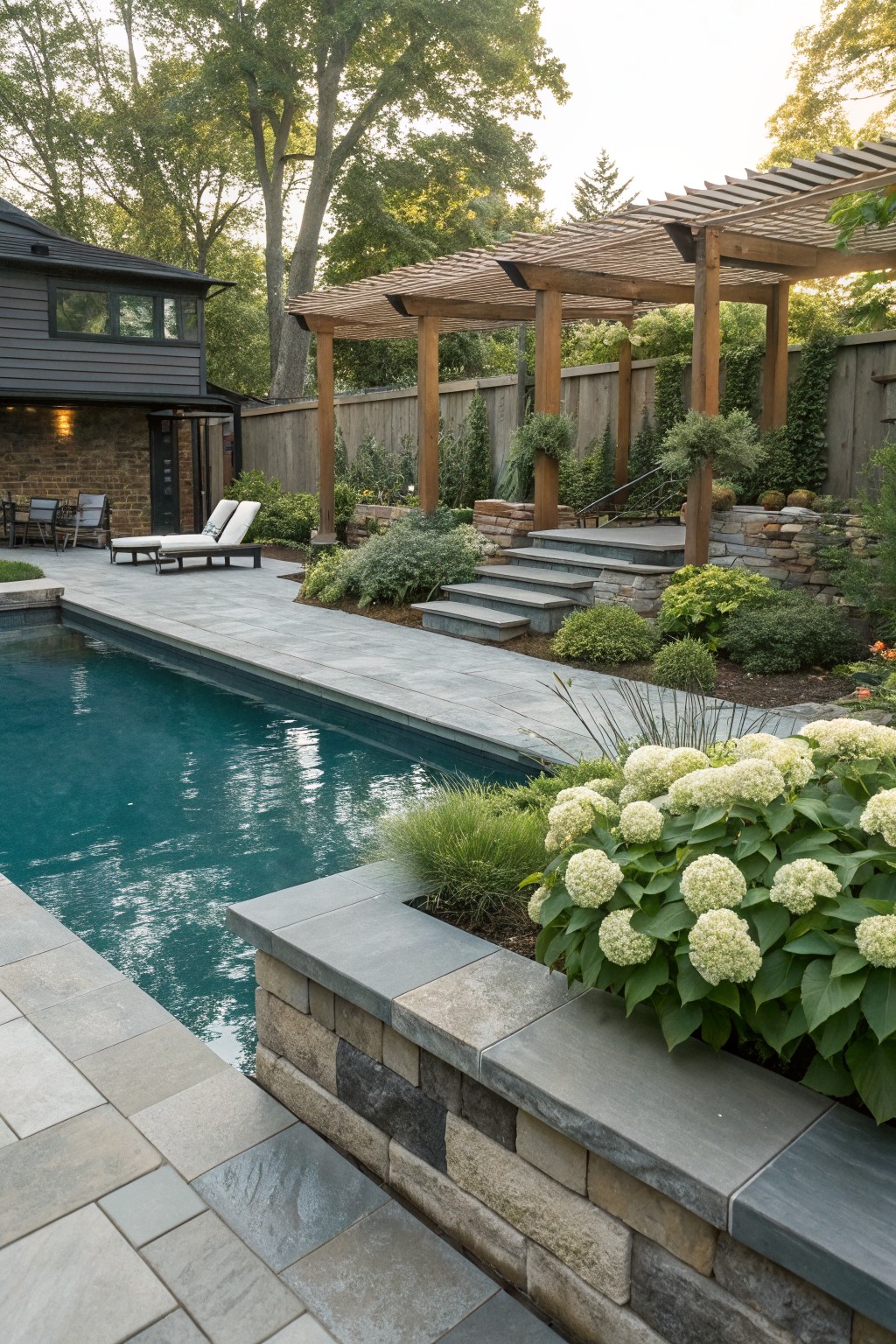
One simple way to calm down a pool area is planting big hydrangeas right into raised stone planters along the edge. Those fluffy white blooms spill over the wall here, softening the straight lines of the slate deck and pool coping. It pulls your eye to the flowers instead of the hard surfaces, and keeps things looking full without much fuss.
This works best around a sleek pool in a backyard with some afternoon shade, since hydrangeas do well there. Build the planters to match your coping stone, then tuck in a few grasses nearby for filler. Just keep them watered in summer… they bulk up quick and hide any wall gaps nicely.
Poolside Potted Hydrangeas
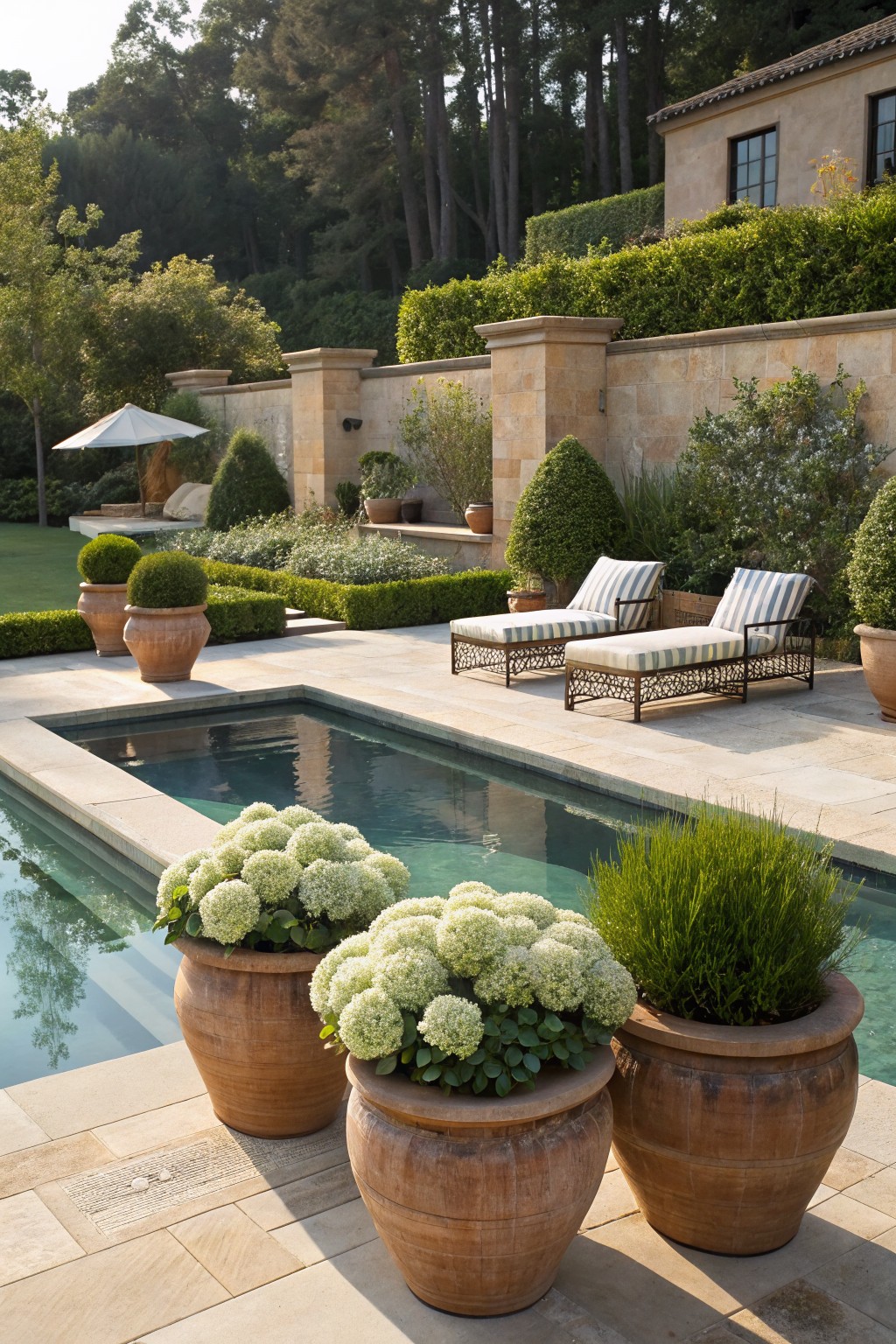
Large terracotta pots filled with fluffy white hydrangeas work nicely right along the edge of a pool. They bring a soft, rounded look that cuts the sharpness of stone paving and water. In this setup, the plants sit close without crowding the loungers nearby. It’s a quiet way to add green and bloom where you spend time relaxing.
You can try this in smaller backyards too, as long as the pots are big enough to hold their own. Pick mature hydrangeas for instant fullness. They suit sunny spots with some afternoon shade. Just keep soil moist and watch for root crowding in pots over time.
Pergola Dining Spot with Hydrangea Edges
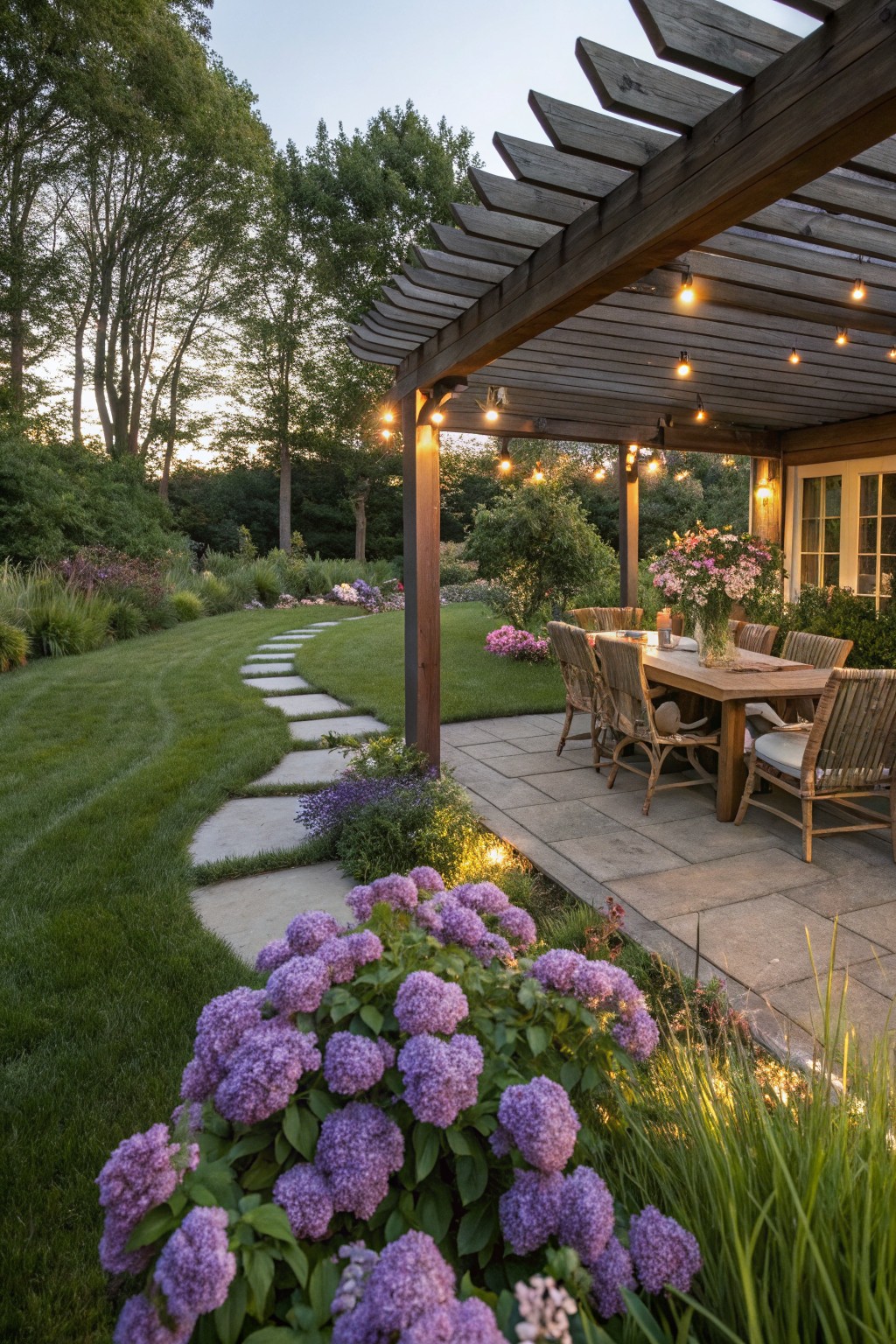
A wooden pergola shelters a long dining table and chairs on a stone patio. Purple hydrangea bushes hug one side, spilling soft color right up to the pavers. Those string lights draped overhead hint at easy evenings outside. It’s a straightforward way to turn a backyard corner into something calm and ready for meals.
This works best where you have a flat lawn area next to the house. Plant the hydrangeas close but not too tight, so they bloom without blocking the table. Suits most family yards, especially if you want shade without a full roof. Just keep the path mowed for easy access.
Hydrangea Planter by the Outdoor Kitchen
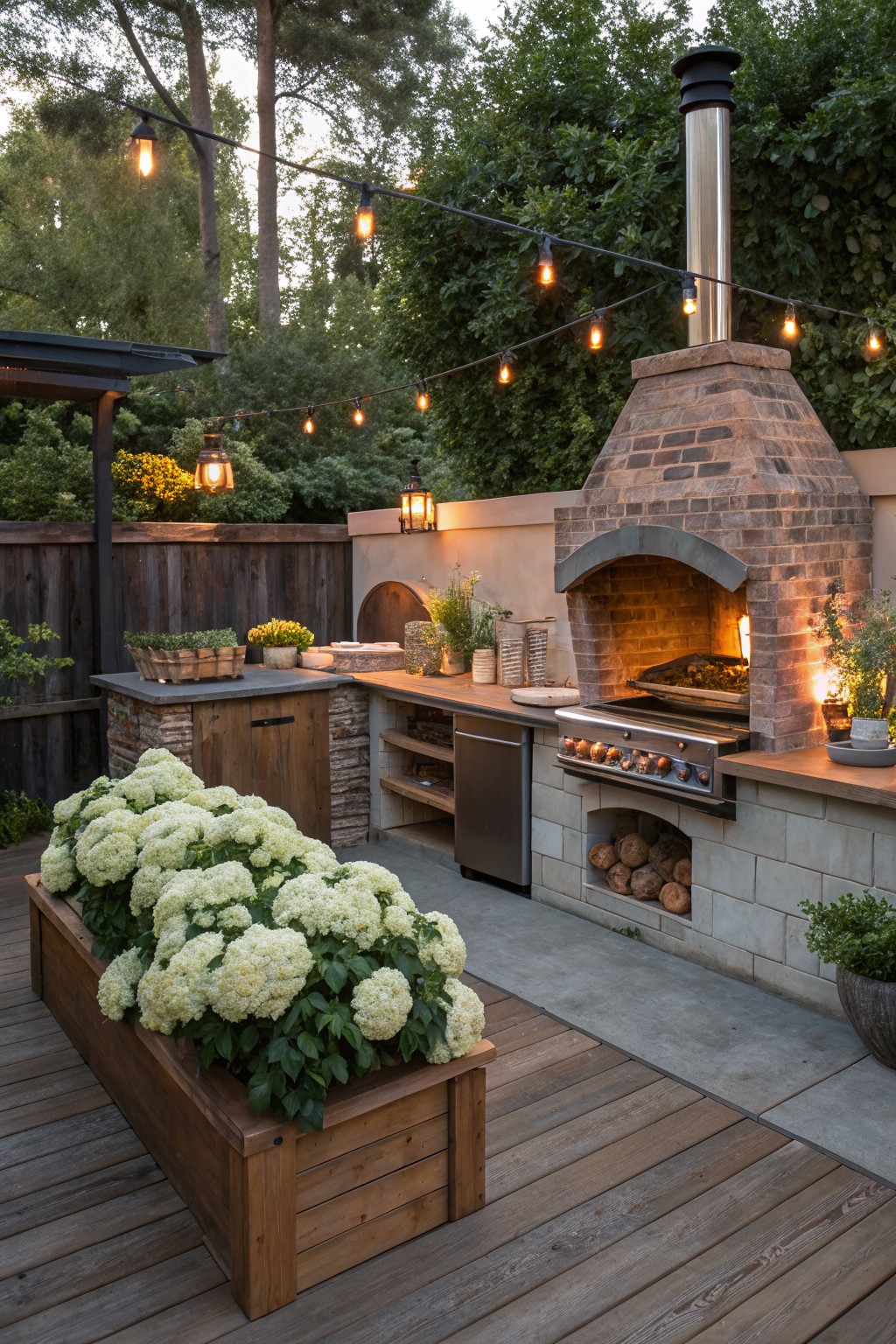
A simple wooden planter box stuffed with big white hydrangea blooms sits tight against this brick outdoor kitchen. The fluffy flowers ease the look of the heavy stone counters and oven. It pulls a bit of garden calm right into the cooking zone without taking up extra space.
This setup works well on decks or patios with built-in grills. Line up a long rectangular box along one side, fill it with mophead hydrangeas for that full, rounded effect. It suits most backyards. Just keep the planter low so it doesn’t block the workspace.
Hydrangea Beds Edging a Lap Pool
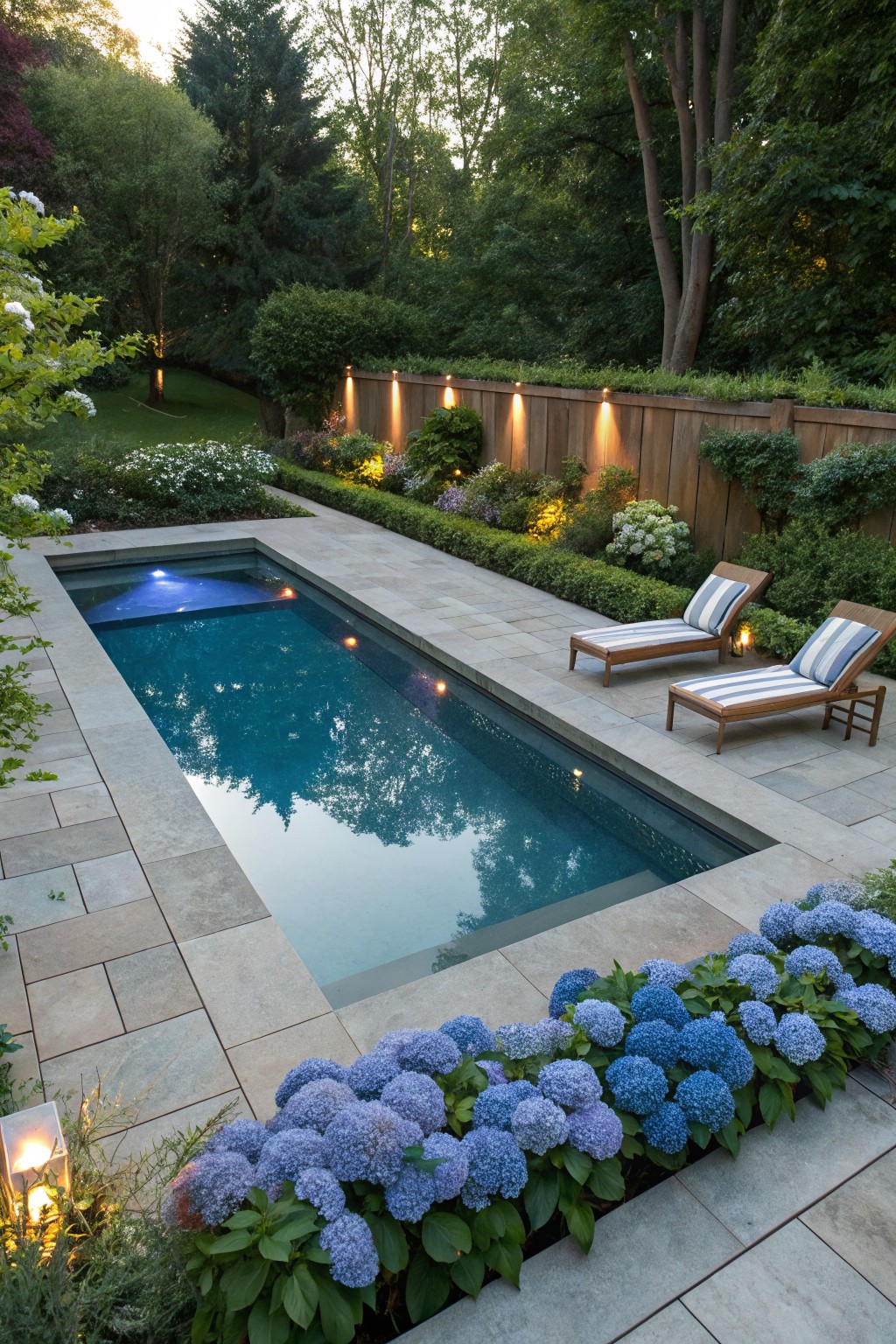
One nice way to work hydrangeas into a backyard is right along the edge of a lap pool like this. The big clusters of blue blooms sit in low raised beds next to the stone deck, picking up on the pool water’s color for a calm, matching look. It pulls the garden in close without crowding the lounging space.
This idea fits narrow yards where you want a pool but still some planting room. Keep the beds simple and mass the hydrangeas for impact. They do well with afternoon shade from a fence or trees. Just make sure the roots stay back from the pool edge to avoid any plumbing trouble.
Stone Walls Edged with Hydrangea Beds
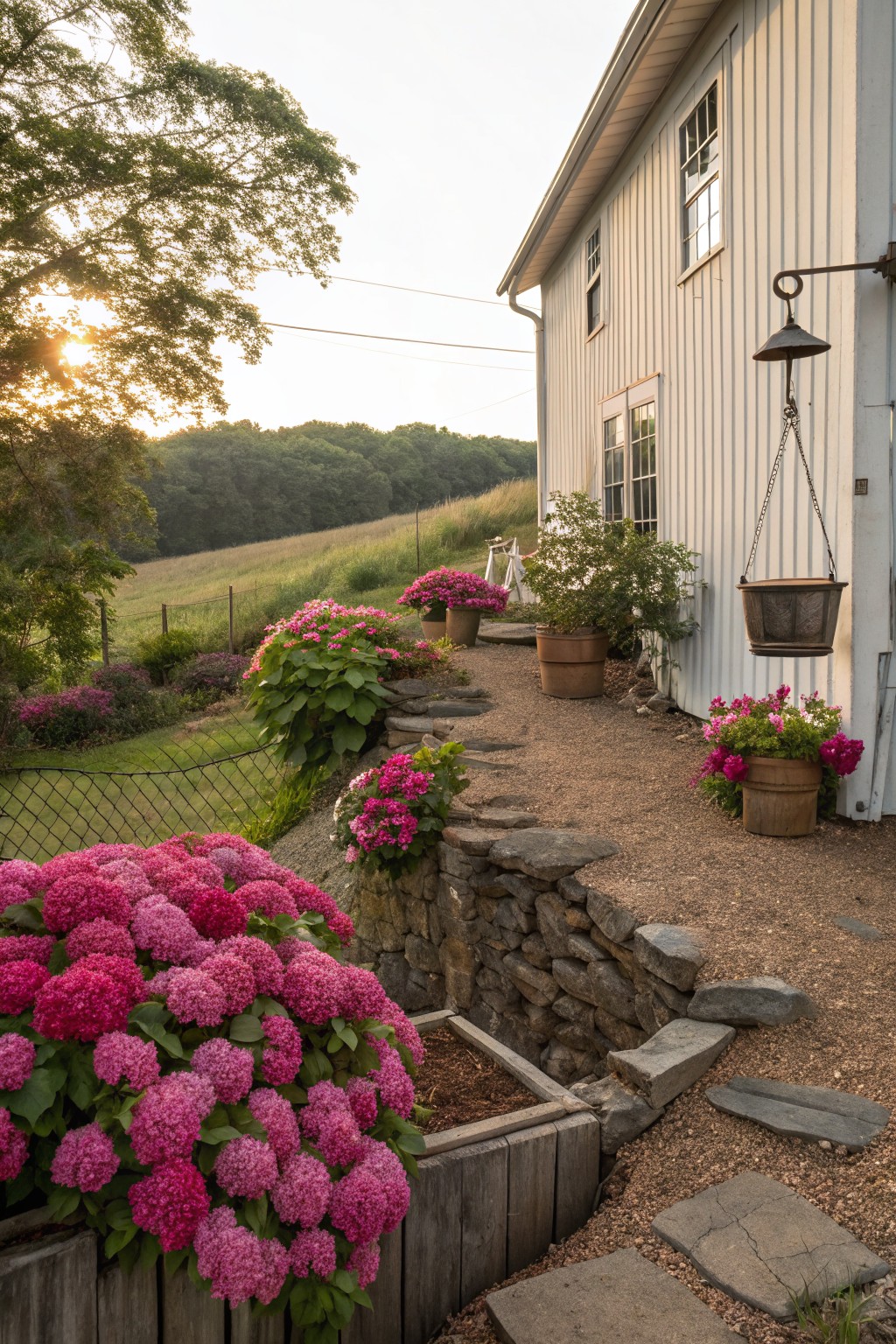
Big clusters of pink hydrangeas tucked along a low stone wall make this path to the house feel gentle and welcoming. The soft blooms spill over the rough stones just right. It turns a simple walkway into something that draws you along without trying too hard.
Try this on sloped spots leading to a backyard door. Build the wall to hold back soil then plant hydrangeas behind it in beds or wood boxes. Partial sun works best for the pinks to stay full. Suits older homes with that cottage feel… keeps things low fuss once established.
Poolside Hydrangea Borders
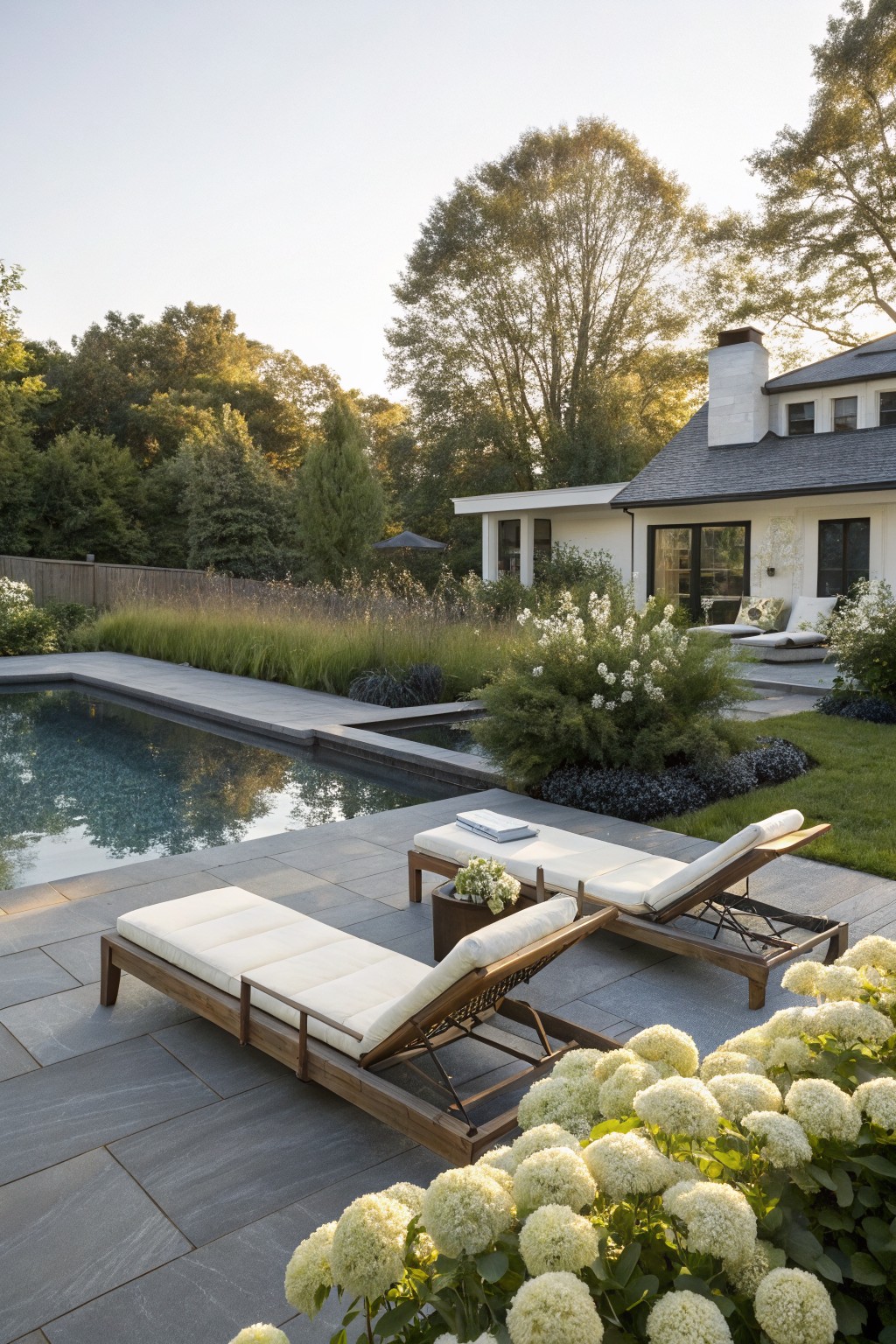
One simple way to calm down a backyard pool area is to plant hydrangeas right along the deck edge. Here, big clusters of white blooms sit next to the slate pavers, softening the hard lines of the pool and lounge chairs. It turns a basic spot into something restful, especially with the grasses and shrubs filling in behind.
This works best around sleek modern pools or any clean outdoor setup. Go for low-growing varieties that won’t flop into the water, and plant them thick for that full look. It suits sunny spots with good drainage, and once established, they mostly just need water and a little prune in spring.
Stepping Stone Path Through Hydrangeas
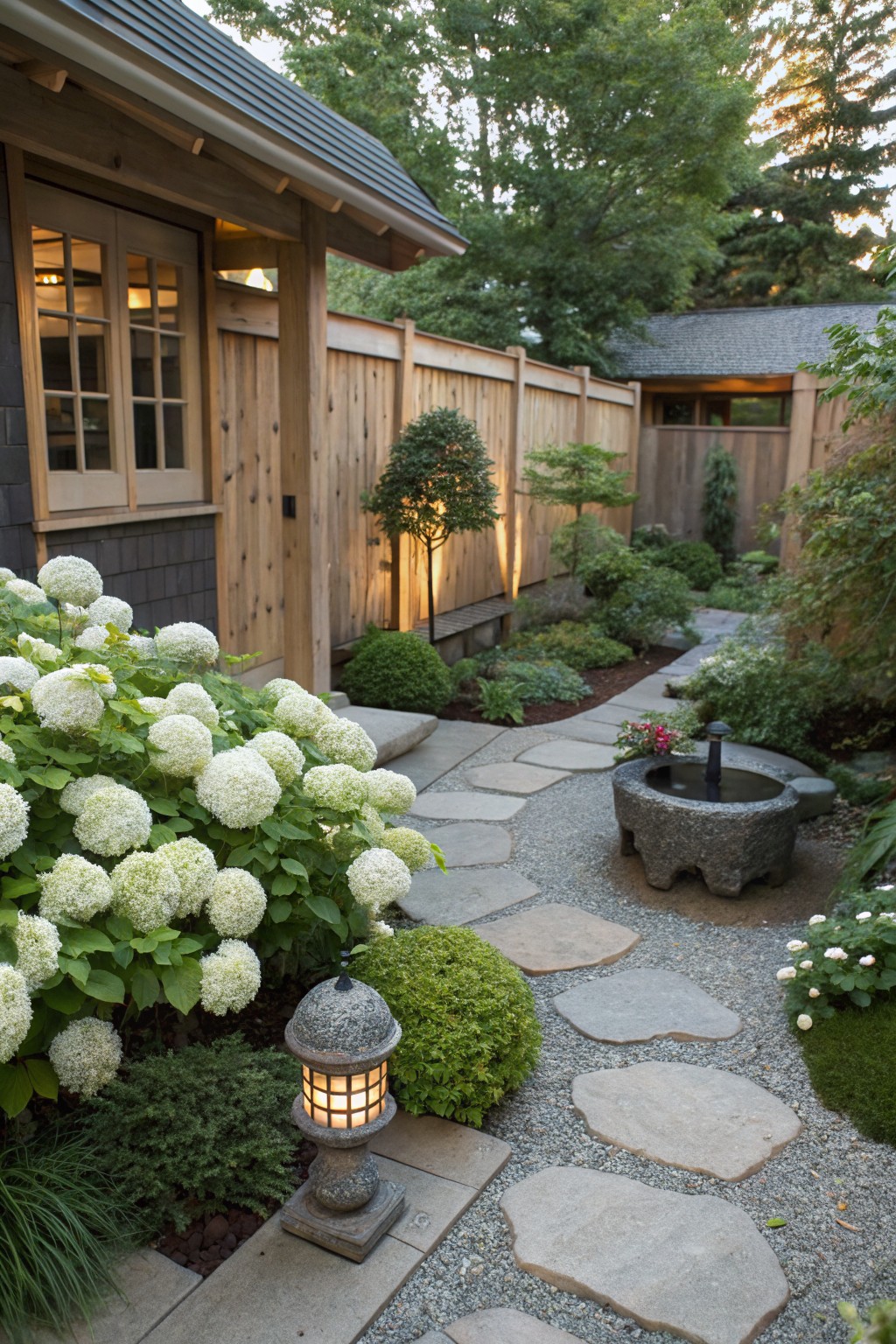
A simple stepping stone path winding through big white hydrangea bushes makes for one of the calmest backyard walks you can imagine. Those fluffy blooms soften the edges of the rough stone slabs and gravel, pulling your eye gently along without any rush. It’s that easy rhythm between the flowers and the path that quiets things down right away.
You can pull this off in smaller yards too, just plant hydrangeas along one side or both to frame the steps leading to a door or seating spot. Go for light-colored stones to keep it bright, and add a lantern or fountain nearby for extra peace… works best where you want low fuss but steady color all summer. Skip tight spacing if deer roam your area.
Deck Pathway Leading to a Pond
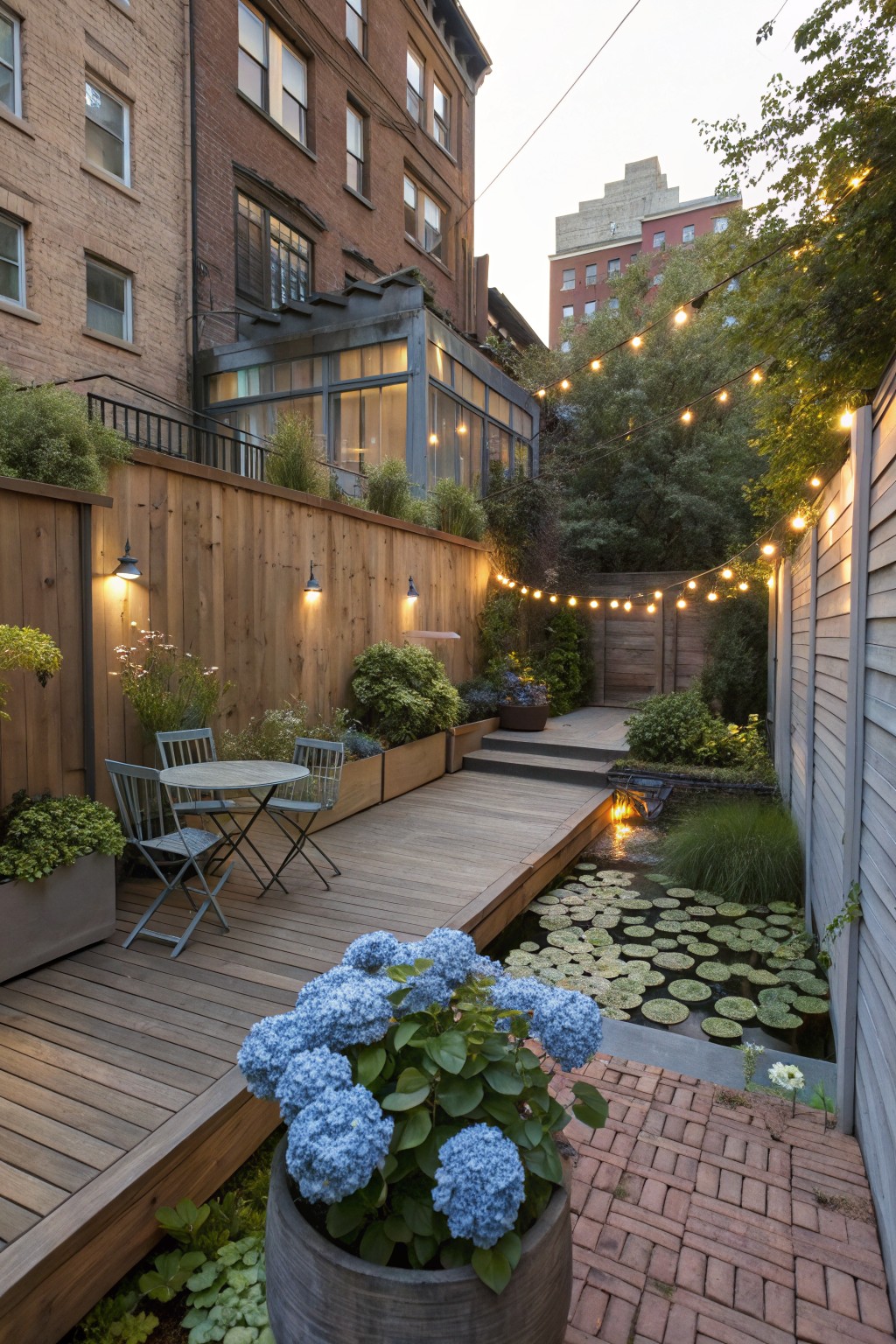
In tight urban backyards like this one, a straightforward wooden deck path draws you through the space and ends at a small pond with lily pads. The big blue hydrangea in a simple pot sits right there by the water, repeating the cool tones and keeping things calm. It turns a skinny alley into something that feels deeper and more restful without taking up much room.
This works best behind row houses or brownstones where you have just a few feet to play with. Lay down cedar or composite decking for the path, drop in a shallow liner pond at the end, and tuck hydrangeas or similar low shrubs along the edges. Skip anything fussy. Just make sure the deck steps down gently to the water so it flows easy.
Patio Dining Bordered by Hydrangeas
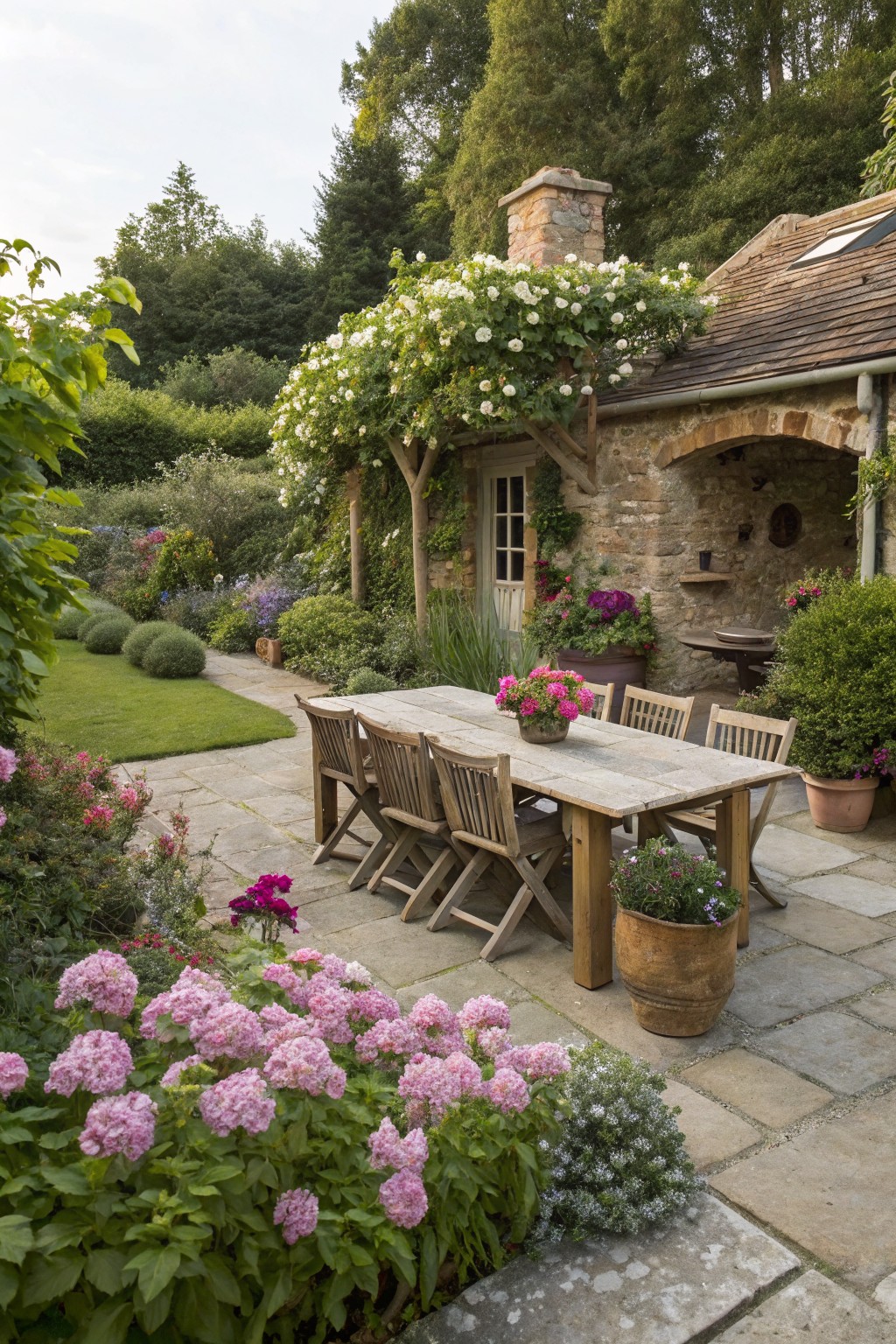
One easy way to make your backyard feel special is to set a plain wooden table right on stone pavers, then let big clusters of hydrangeas grow up along the edge. In this spot, the soft pink blooms sit low and full, framing the seating without crowding it. That keeps the table handy for meals but adds a calm, garden feel that pulls you outside more often.
This works best where you have a bit of flat space next to the house, maybe under some tree shade to keep the flowers happy. Go for mophead hydrangeas like these, they’re tough and bloom steady. Pair them with a few pots on the table for color, but skip anything too matchy. It suits older homes or simple yards… just make sure the stone drains well after rain.
Hydrangeas Edging Stone Patios
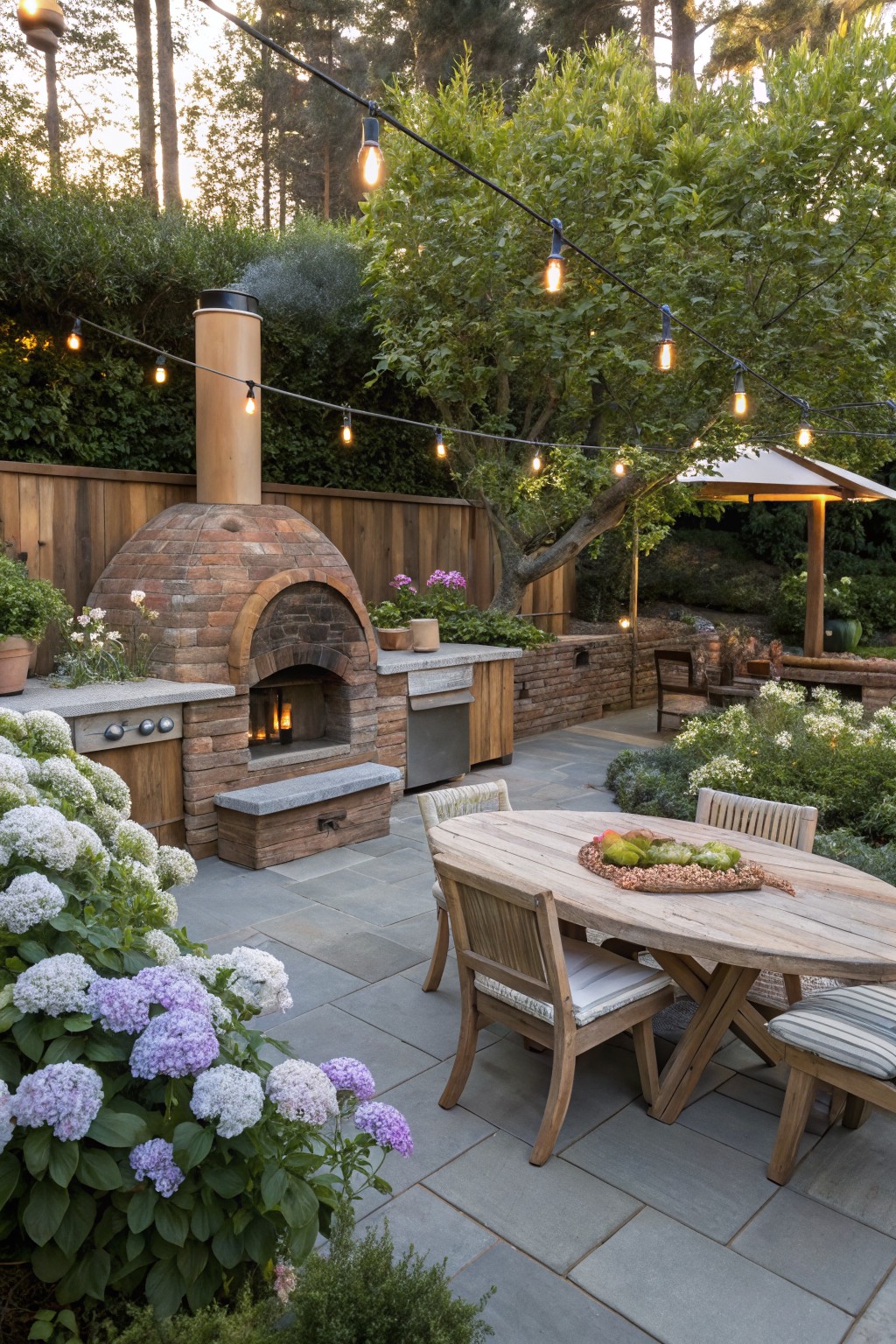
Big clusters of hydrangeas planted right along patio edges do a nice job of softening hard surfaces. In this backyard setup, the white and lavender blooms spill over toward the bluestone pavers and brick oven, adding a gentle touch that calms the whole area. It keeps things from feeling too rigid, especially around spots where people gather.
This works best in yards with some tree cover for afternoon shade. Go for massed plantings instead of singles to get that full, lush look. It’s practical for casual outdoor dining zones… just keep the soil evenly moist and mulch well to hold in water.
Fire Pit with Hydrangea Borders
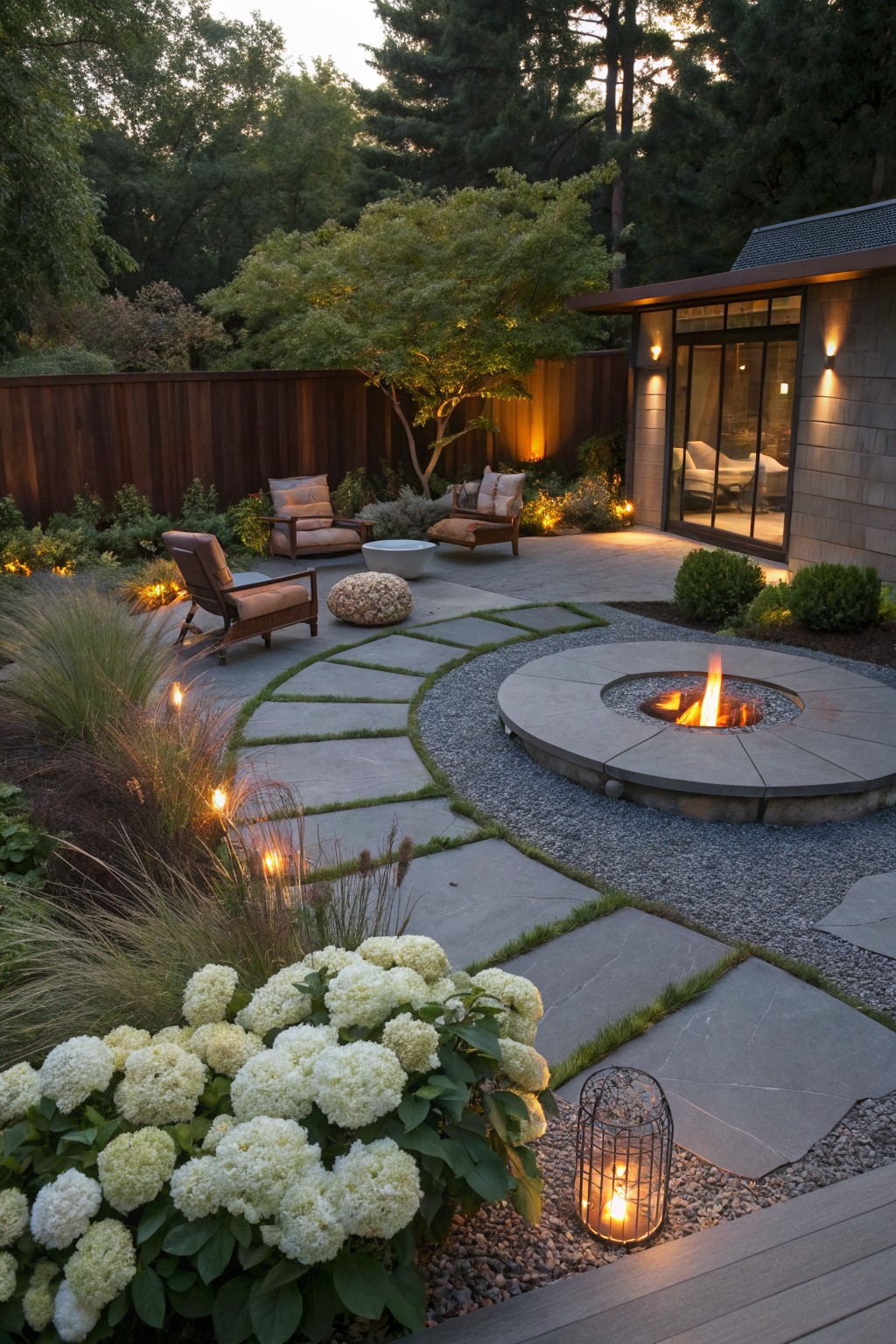
A round stone fire pit sits at the heart of this backyard patio, with a curved slate path looping around it on a gravel base. White hydrangea bushes grow right alongside, their full blooms giving a gentle touch to the clean lines of the stone and gravel. Tall grasses fill in between, making the space feel layered and easy on the eyes.
Put something like this in a backyard that gets partial shade. The hydrangeas do well there and keep the look fresh through summer. Use low chairs nearby for sitting, add lanterns for nights. It suits fenced yards or ones next to a house, keeps things practical with gravel for drainage.
Curved Path Lined with Hydrangeas
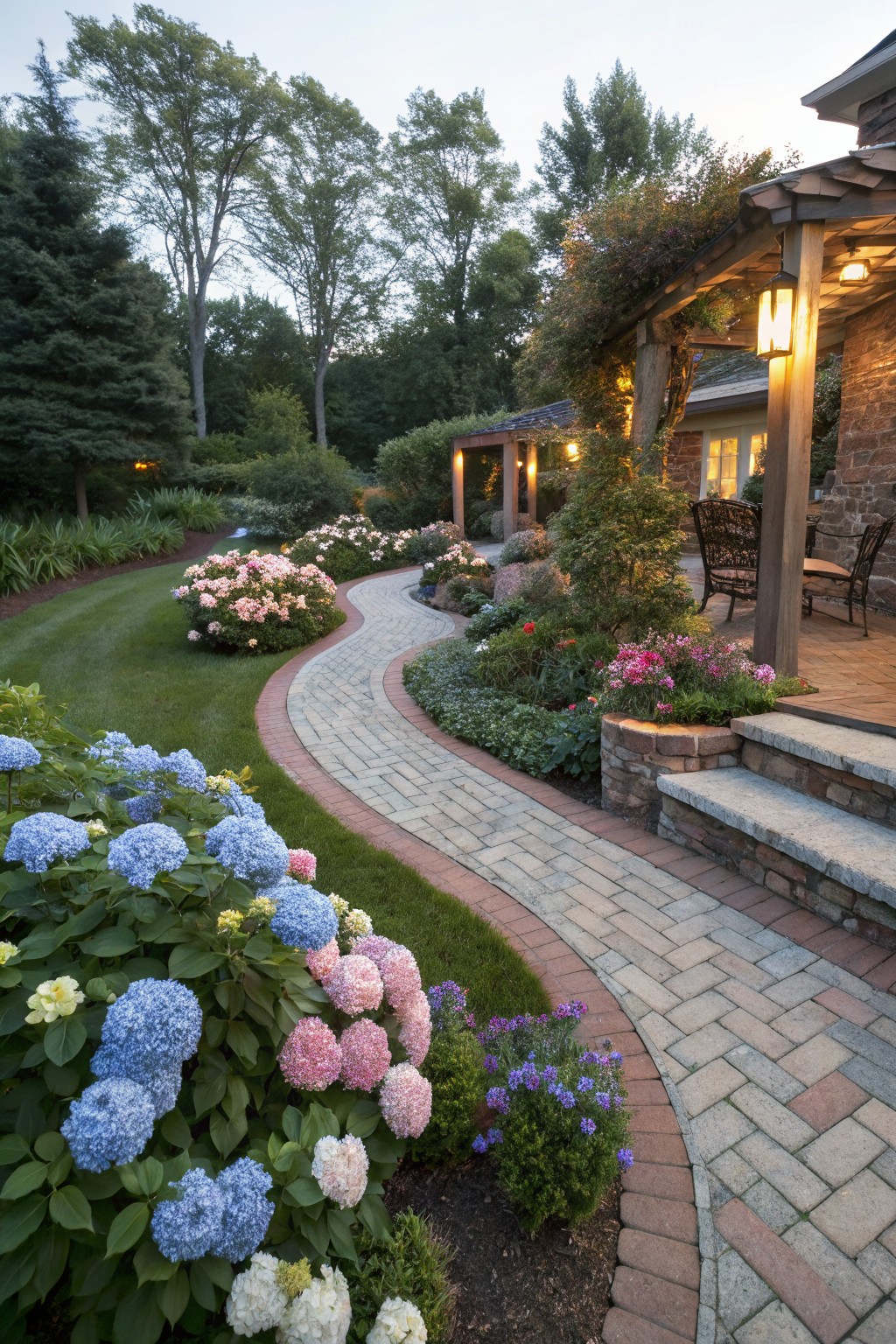
A simple curved brick path like this one, edged tight with hydrangea bushes, turns a plain backyard walk into something peaceful. The big blue and pink blooms soften the hard edges of the bricks and draw your eye gently toward the patio without rushing. It’s that easy flow that makes it calming, especially with the colors popping against the green grass.
You can pull this off in most backyards that have room for a meandering route to an outdoor seating spot. Stick hydrangeas along both sides for that full, lush look, and pick varieties that match your soil’s pH for the best blues or pinks. It suits homes with a bit of stone or brick already, like this setup… just keep the path at least four feet wide so two people can stroll side by side.
Frequently Asked Questions
Q: How much sun do hydrangeas need to thrive without burning out?
A: Give them partial shade, especially in the afternoon during hot summers. Morning light keeps blooms vibrant and leaves healthy. Full sun often wilts them fast.
Q: What’s the best soil setup for planting these backyard beauties?
A: Work plenty of compost into loamy soil that drains well but stays moist.
Aim for a pH around 5.5 to 6.5. Test your dirt first and adjust with lime if needed.
Q: When should I prune hydrangeas to keep the calming vibe going?
A: Snip right after summer blooms fade on most varieties. Remove only dead wood and spent flowers. This sets you up for next year’s show without cutting future buds.
Q: How do I water new hydrangeas so they settle in quick?
A: Soak the soil deeply once or twice a week their first season. Check an inch down; water if dry. Skip shallow sprinkles that just wet the surface.
