


I’ve spent years tweaking my backyard beds, and nothing beats a garden where vegetables and flowers share space without one overwhelming the other.
The layout matters most at first glance, with clear pathways and sturdy edging that keep everything feeling intentional as plants fill in over time.
In one of my earlier attempts, I crammed in too many tall blooms that shaded the tomatoes, a mistake that showed me how planting heights need to layer just right.
These balanced designs often repeat veggie rows with flowering edges, so the whole plot evolves together through seasons.
A few from here are simple enough to test in raised beds or along fences, adapting to whatever sun and soil your yard offers.
Concrete Raised Beds for Veggie Gardens
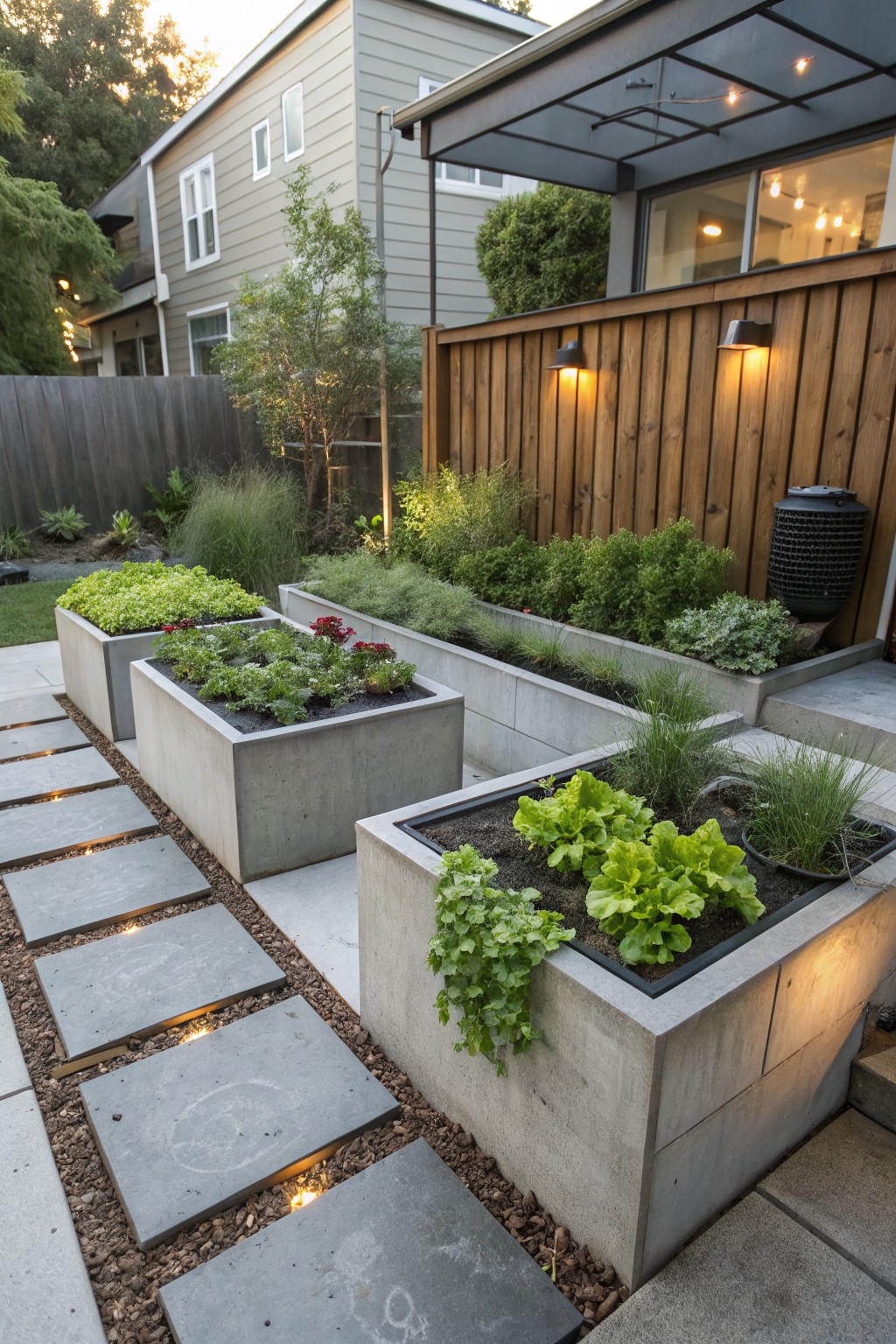
Raised beds like these concrete ones keep things neat and modern while letting you grow fresh veggies right outside your door. You see lettuce, herbs, and little flowers tucked into the boxes, all lined up along a simple path. It mixes eating and looking good without much fuss, and the gray concrete fits any backyard style.
Put them in a row near the house or fence for easy picking. They work best in sunny spots with decent soil underneath. Just watch the weight on soft ground, and go for lighter mixes if needed. Folks with small lots love how they save space and cut down on bending over.
Vertical Pallet Planters for Veggies and Flowers
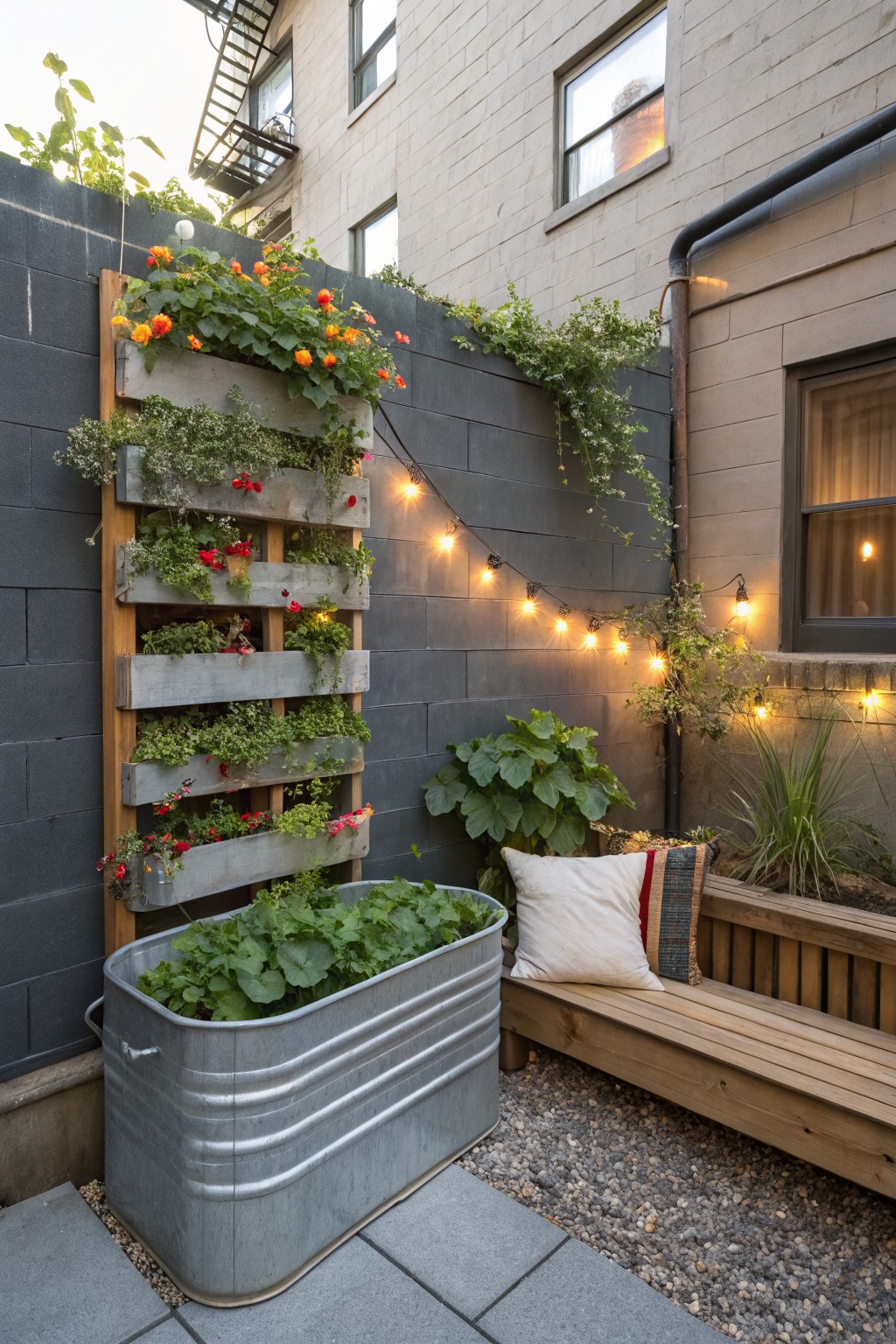
Old pallets make a smart base for a tall vertical garden. Stack them into shelves, line with soil, and plant a mix of trailing flowers like those orange nasturtiums and greens or herbs below. It packs function into a small spot, letting you grow food and color up a plain wall without taking yard space.
This works best in tight urban backyards or along fences where ground is limited. Add a big metal tub at the base for bushier plants, toss in string lights for evenings. Just make sure good drainage holes keep things from getting soggy.
Winding Brick Paths Through Raised Beds
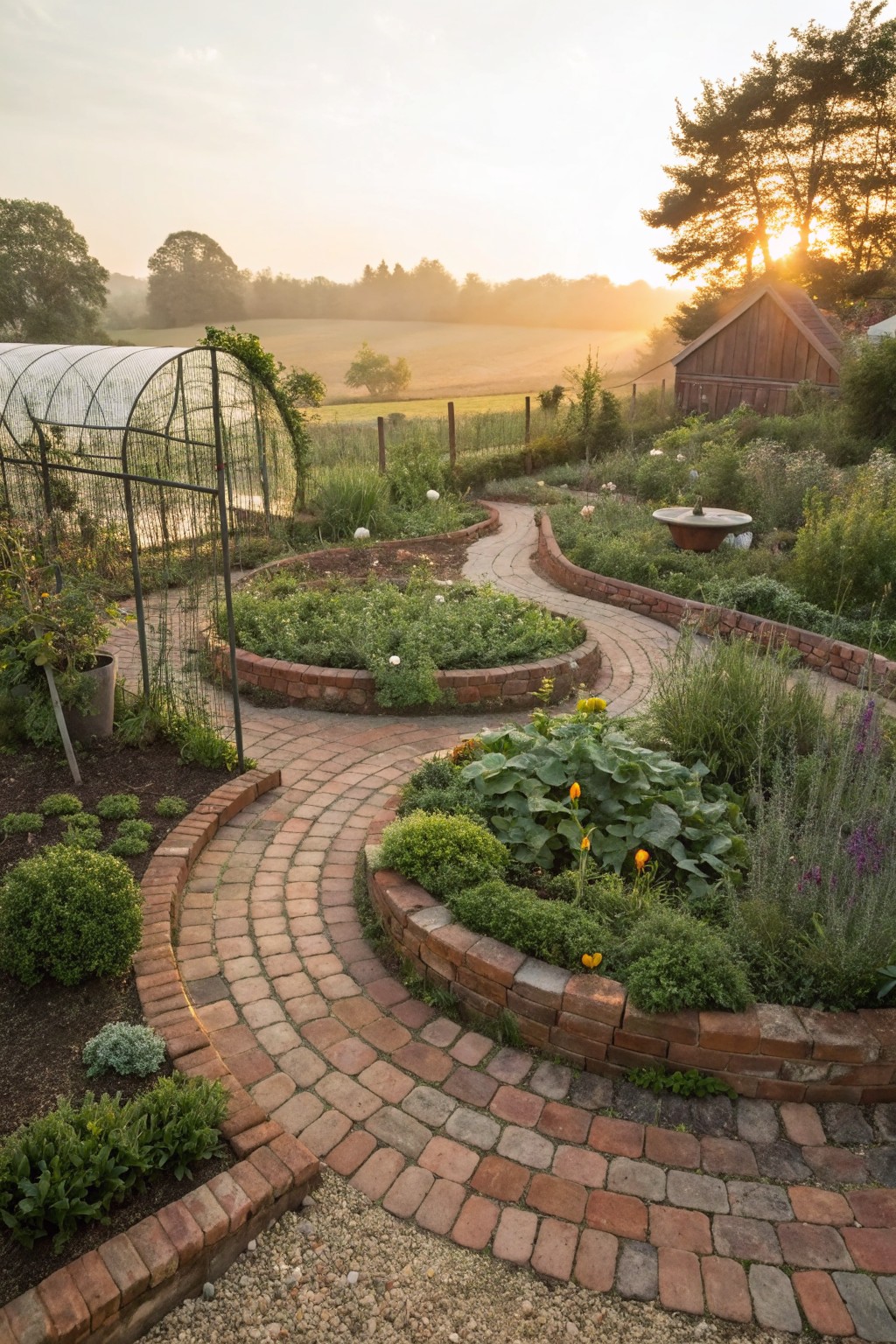
This setup takes a simple winding path of old bricks and pairs it with curved raised beds to create a garden that’s both pretty and easy to work in. You see veggies like pumpkins and herbs tucked right next to flowers and shrubs, all edged neatly in brick. The curves keep things from feeling too stiff. It pulls you along naturally while mixing food plants with bloomers for that balanced look.
Try this in a side yard or along a fence where space is tight. Start with low brick walls about a foot high, fill with good soil, and plant edibles in the centers surrounded by tougher flowers at the edges. It suits cottage-style homes best. Watch the path width, though. Make it at least two feet so you can push a wheelbarrow.
Vertical Rack Gardens for Balconies

A metal wall rack packed with pots is a smart way to grow vegetables and flowers on a balcony. You get tomatoes, herbs, and greens right next to geraniums and trailing plants, all without crowding the floor. It keeps things practical for fresh picking while the mix of leaves and blooms makes the spot look full and alive.
This works best on urban balconies or small patios where space is tight. Bolt a sturdy rack to the wall, choose pots that fit snugly, and group edibles with flowers for easy care. Watch the weight so it stays secure, and toss in string lights for evenings. Simple setup like this fits rentals too.
Circular Raised Beds with Winding Stone Steps
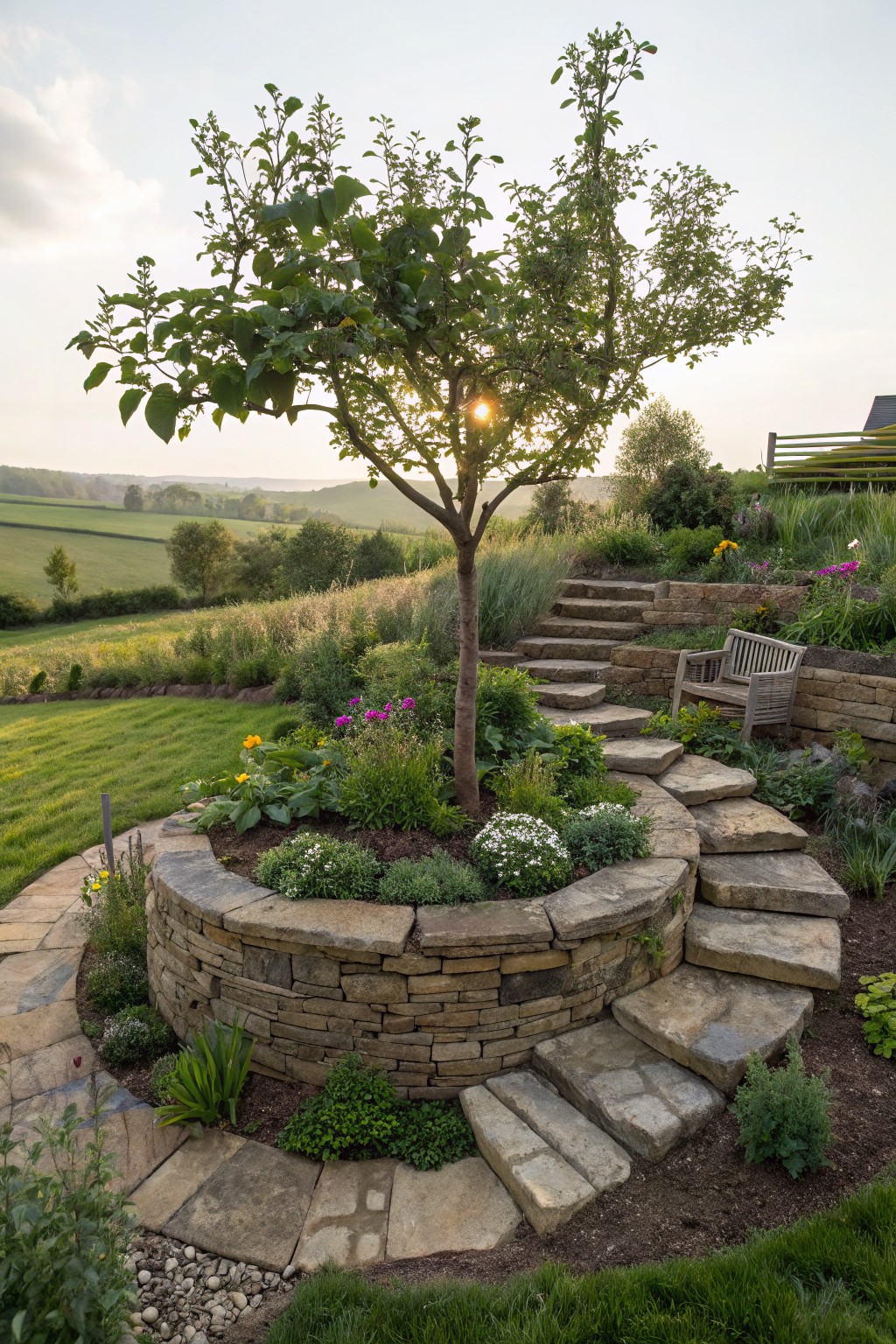
One smart way to mix flowers and vegetables starts with a round raised bed made from local stone. Here the bed holds a young apple tree right in the middle, with herbs and blooms tucked around the edges. Steps curve right into the design, so you move easily from one level to the next without feeling boxed in. It pulls the garden together on a slope and makes tending plants feel natural.
This works best in yards with some hill, where you need to terrace anyway. Stack the stones dry or with minimal mortar for that aged look, then fill with deep soil for roots. Keep the center for a fruit tree or tall veggie like corn, edges for flowers and low herbs. Just make sure water drains well… soggy roots won’t thank you.
Vertical Fence Planters Maximize Tight Spaces
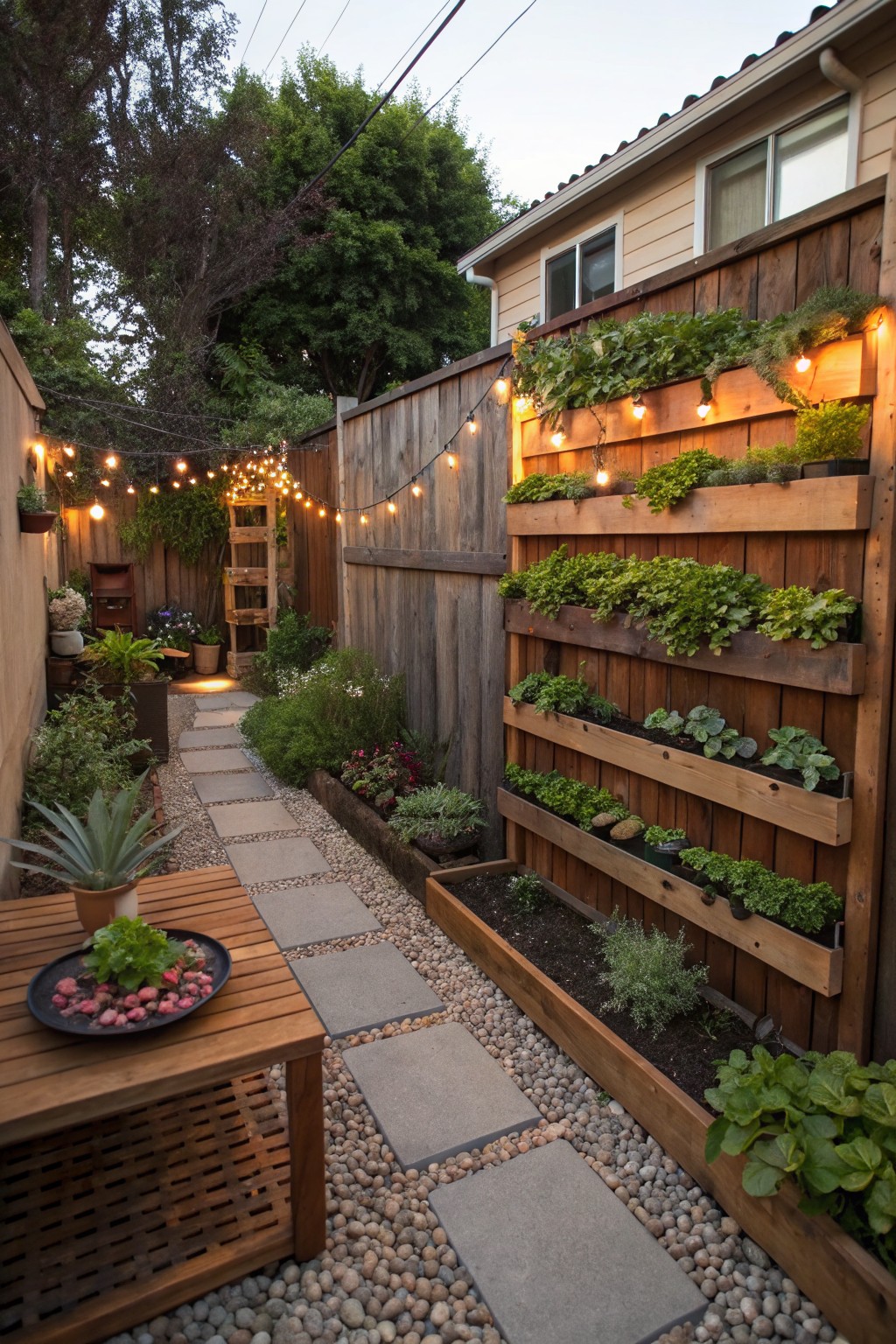
In narrow yards or side alleys, stacking wooden planters right on the fence turns bare walls into growing spots for herbs, lettuces, and strawberries. It mixes veggies with a few flowers for color, so the garden feels full and useful without taking floor space. The gravel edges and stone path keep it neat.
These work best in urban lots or between houses where ground room is short. Use cedar or treated wood for the boxes, add drainage holes, and pick shallow-rooted plants. Watch the fence strength if you’re loading it up. String lights at dusk make it a nice evening spot too.
Central Fountain with Mixed Plantings

One smart way to blend beauty and function in a small garden space is to turn a fountain into a raised planting bed. Here, the stone fountain sits at the center, with its basin edged in brick and filled with low herbs, bright flowers, and greens all around. It draws the eye right away and makes every inch useful, since you can snip fresh bits for the kitchen while enjoying the splash and color.
This works best in a courtyard or patio where space is tight. Go for drought-tolerant herbs like rosemary or basil mixed with flowers such as lavender around the edges, keeping taller stuff toward the middle so water reaches everywhere. Sunny spots suit it fine… just watch for too much shade on one side.
City Rooftop Raised Bed Gardens
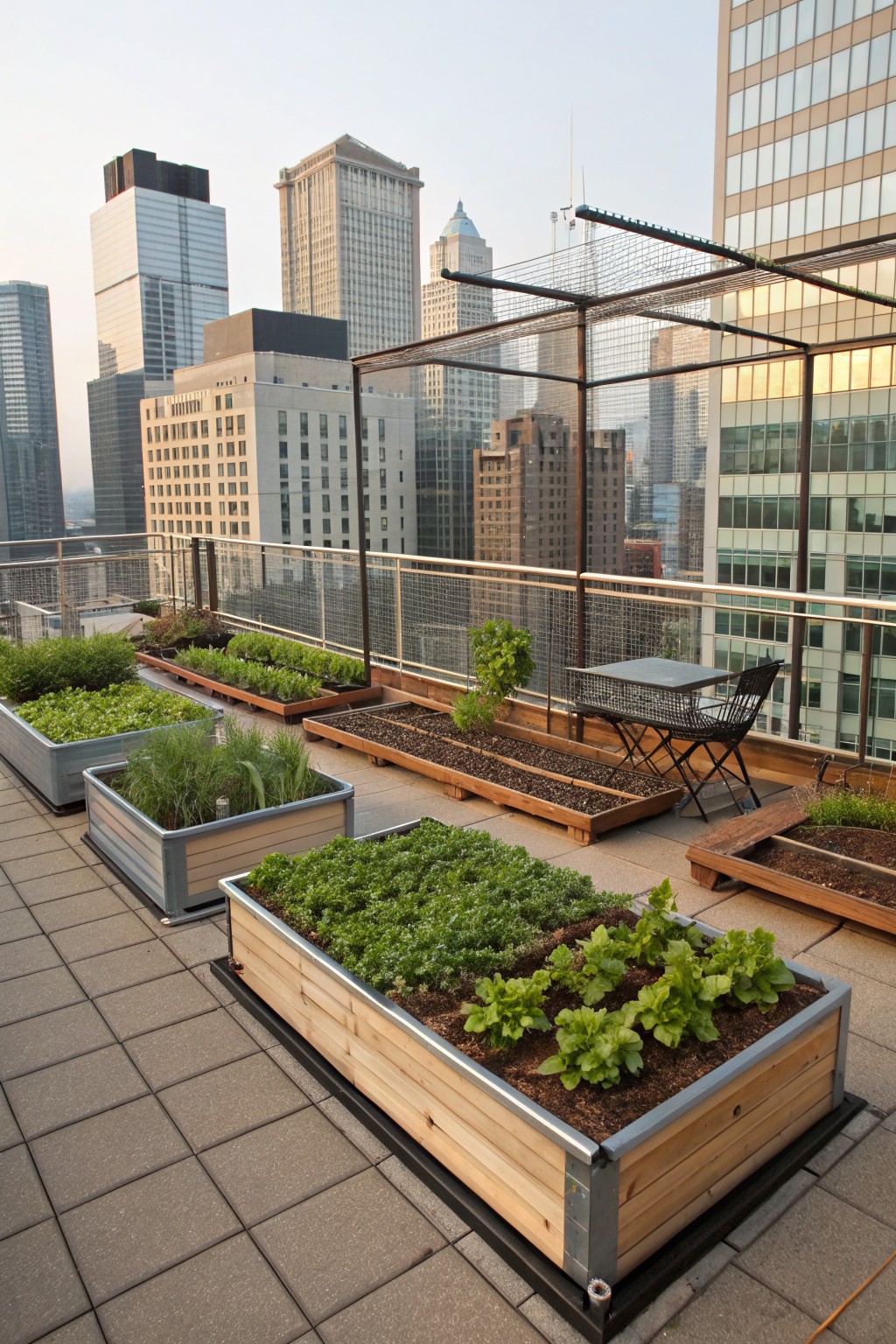
Raised beds make rooftop gardening straightforward in tight urban spots. You see wooden frames holding lettuce, herbs, and greens, all neat and contained. The city skyline in back adds a nice touch without taking over. It keeps soil from spilling on the deck and makes tending easy from ground level.
These work best on flat roofs with some wind protection, like near a railing or under a simple frame. Go for rot-resistant wood or metal edges, fill with good veggie mix soil, and plant compact varieties. Suits apartments or condos where yard space is zero, but check building rules for weight first.
Raised Beds Along a Garden Path
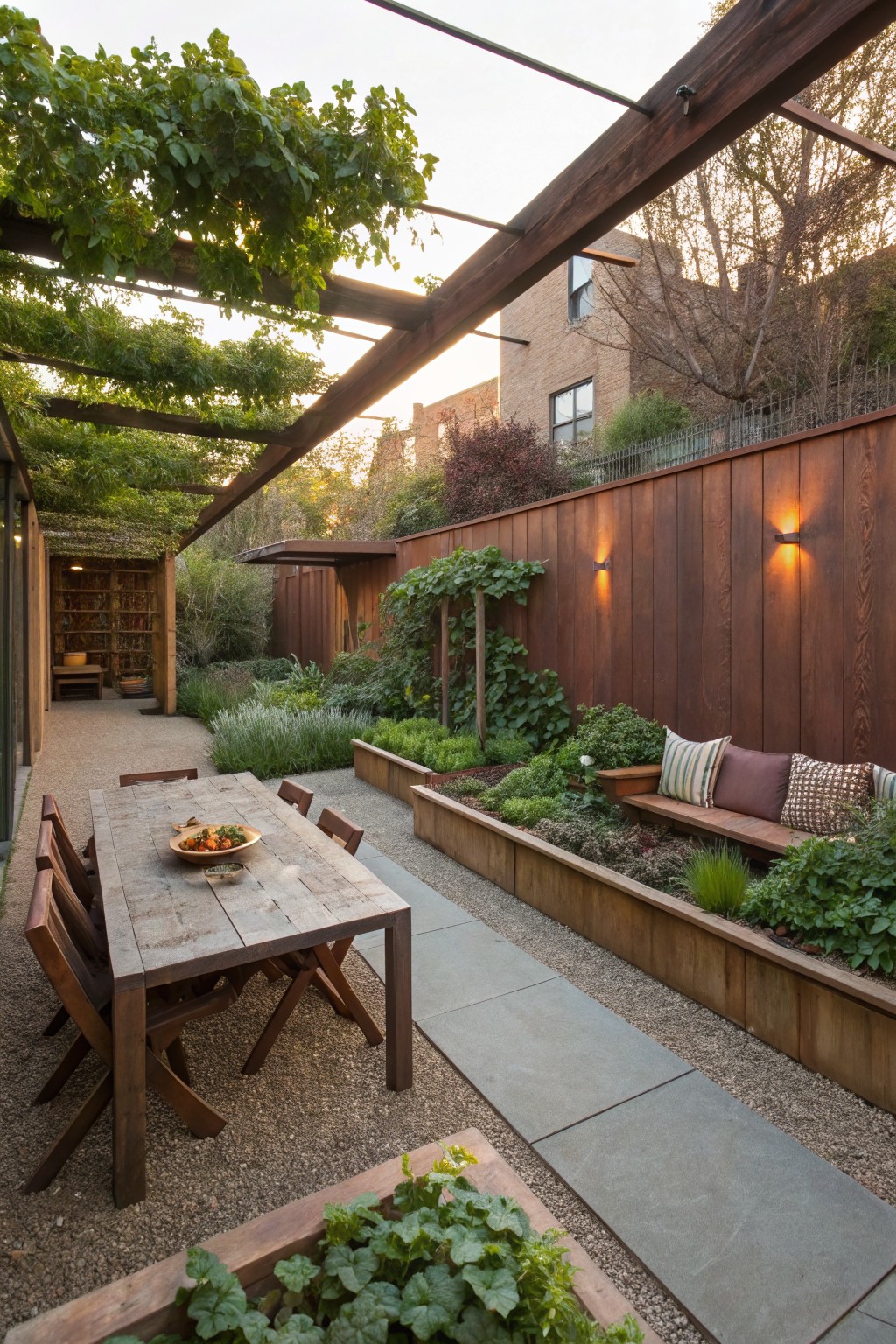
One straightforward way to fit a vegetable garden into a tight backyard is lining the sides of a walkway with raised wooden beds. You get easy access for picking herbs and greens without stepping into the soil, and it keeps everything neat. Here, beds full of veggies like tomatoes and leafy plants run right next to a simple stone path, with gravel filling the edges for that clean look.
This setup shines in narrow urban lots where space is at a premium. Start with cedar or redwood beds about two feet high, plant edibles mixed with a few flowers for pollinators, and add a table or bench at the end for meals straight from the garden. Just make sure good drainage so roots don’t drown… and pick spots with at least six hours of sun.
Raised Brick Beds with Winding Paths
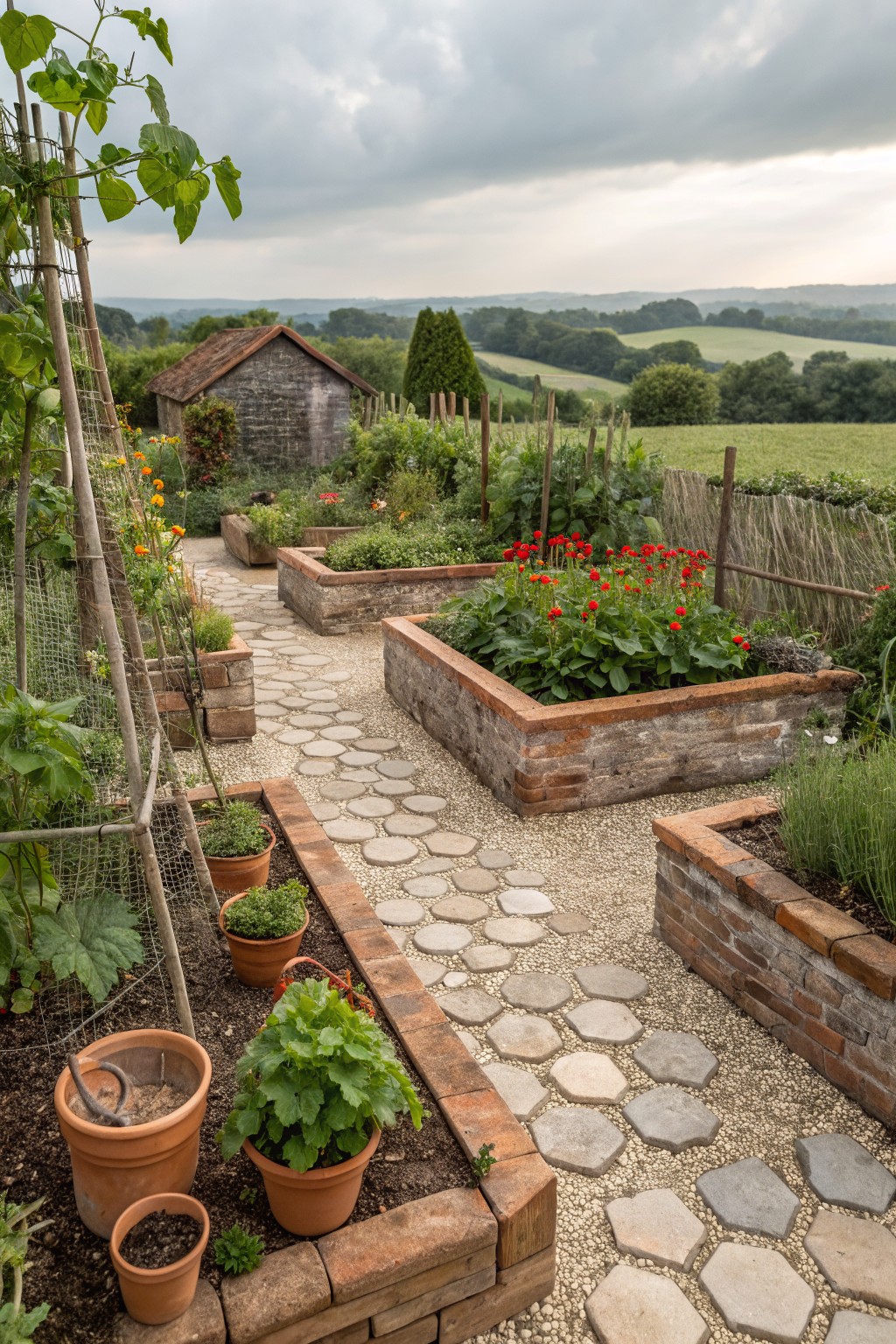
Raised brick beds make a garden both practical and good-looking. They hold soil in place, keep plants organized, and let you mix vegetables like tomatoes with flowers such as nasturtiums and herbs. The bricks give a solid, rustic feel that fits right into a country yard. Weeds stay out easier, and everything’s at waist height for less bending.
Lay down a simple path of flat stones set in gravel between the beds. It drains well and leads you straight to what you need without stepping on plants. This setup suits sloped spots or smaller plots. Just make sure the bricks match your soil type so they last.
Terraced Stone Beds for Sloped Yards
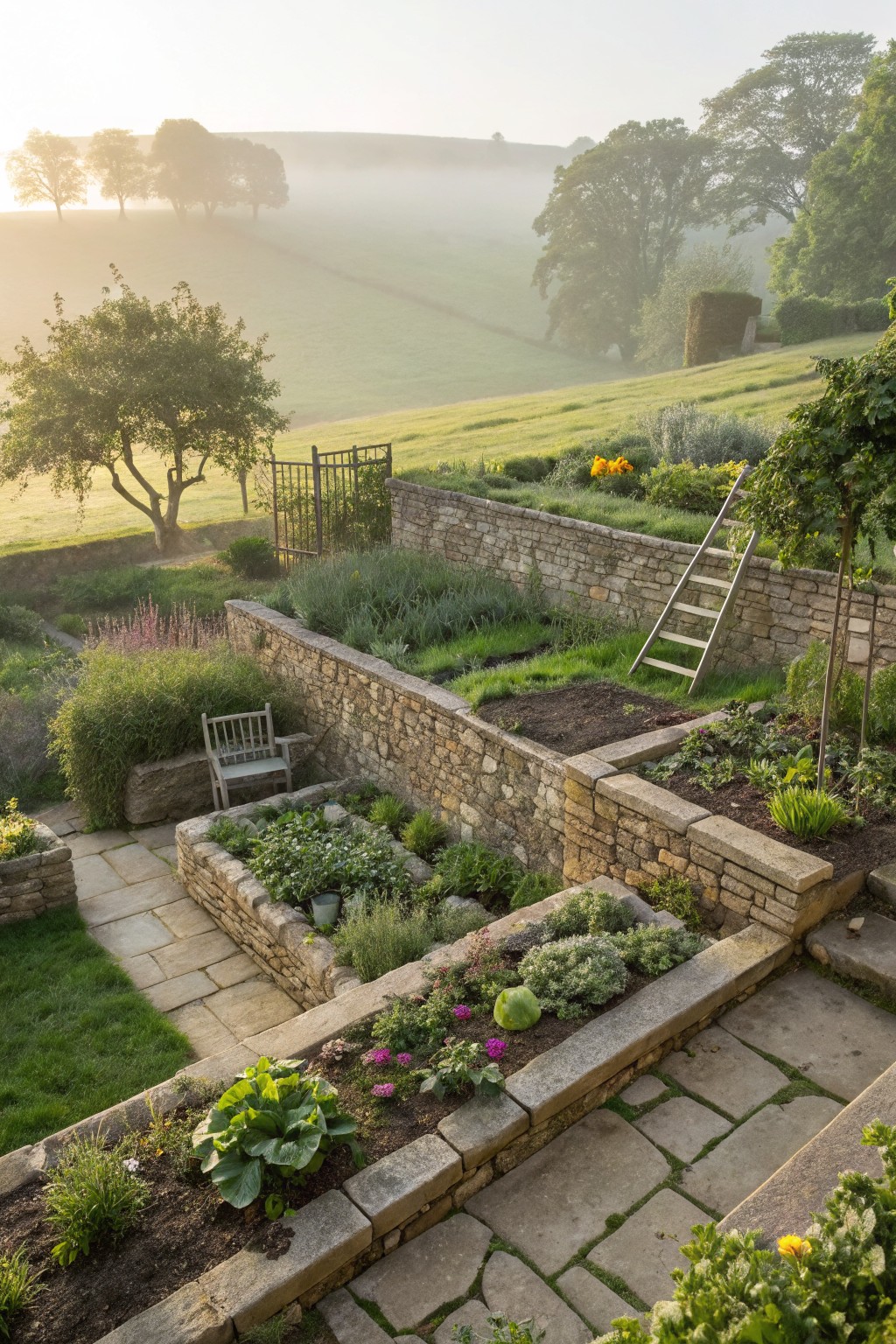
Slopes often go to waste in gardens, but building them into terraces with stone walls changes that. These raised beds let you grow vegetables right next to flowers and herbs, like the pumpkins and lavender you see here. The stone keeps soil in place and gives a sturdy, natural look that fits right into the landscape.
This setup works best on hillsides where flat ground is limited. Pick local stone so it blends with your property, and add simple paths or a bench for access. Just make sure the beds drain well to avoid soggy roots.
Vertical Barrel Planter Saves Balcony Space
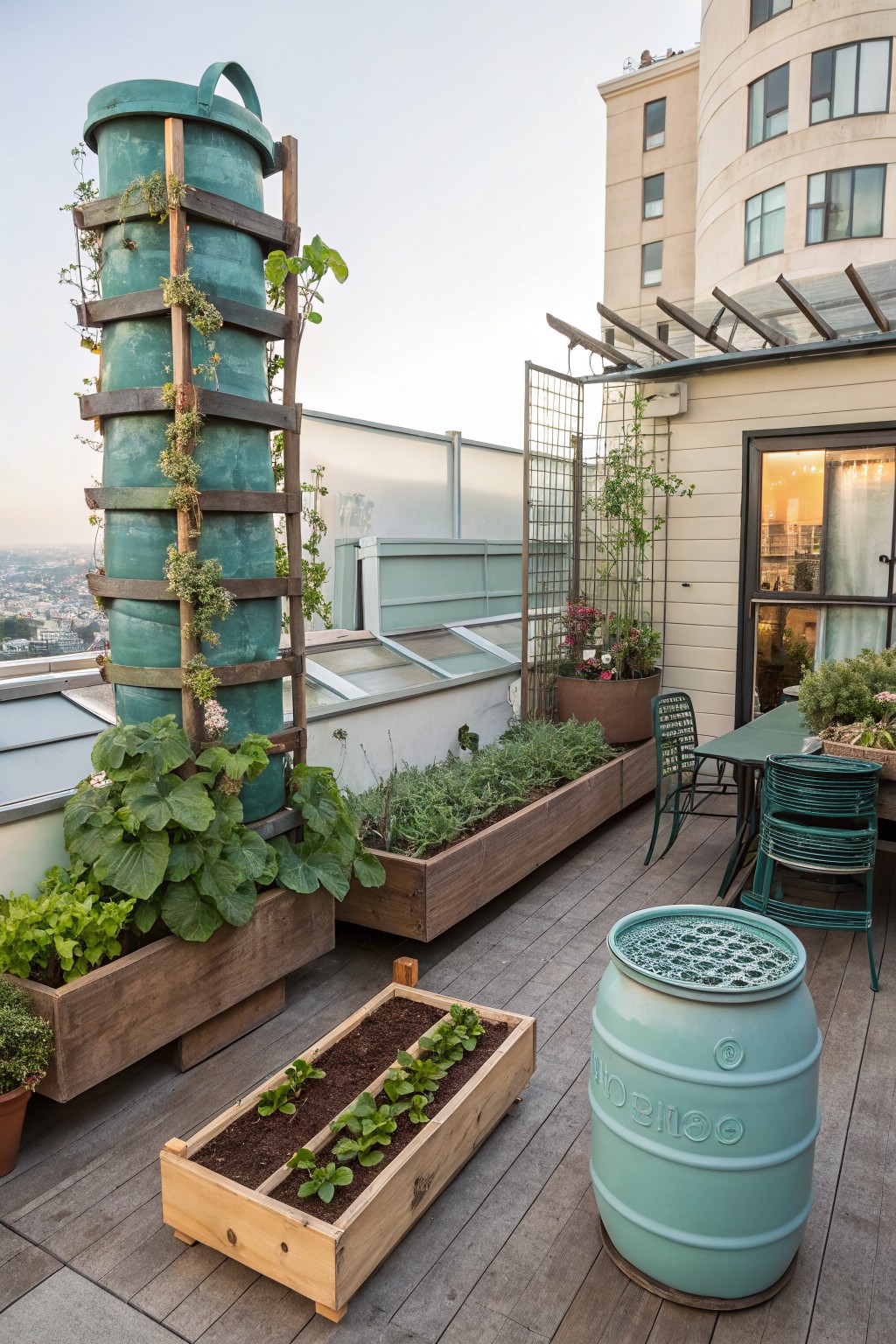
One smart way to fit a garden into tight spots like a rooftop terrace is turning a big barrel into a vertical planter. This teal one stands tall with wooden shelves holding soil pockets, letting pumpkins and vines climb right up the sides. It mixes edibles with trailing greens for that balance of food and pretty foliage without taking up the deck.
Try it on any urban balcony or patio where ground space runs short. Drill drainage holes, secure the barrel well since it’s heavy when full, and plant fast climbers like squash or beans. Add nearby raised beds for roots veggies to round things out. Works best in full sun spots.
Raised Beds Mix Vegetables and Flowers
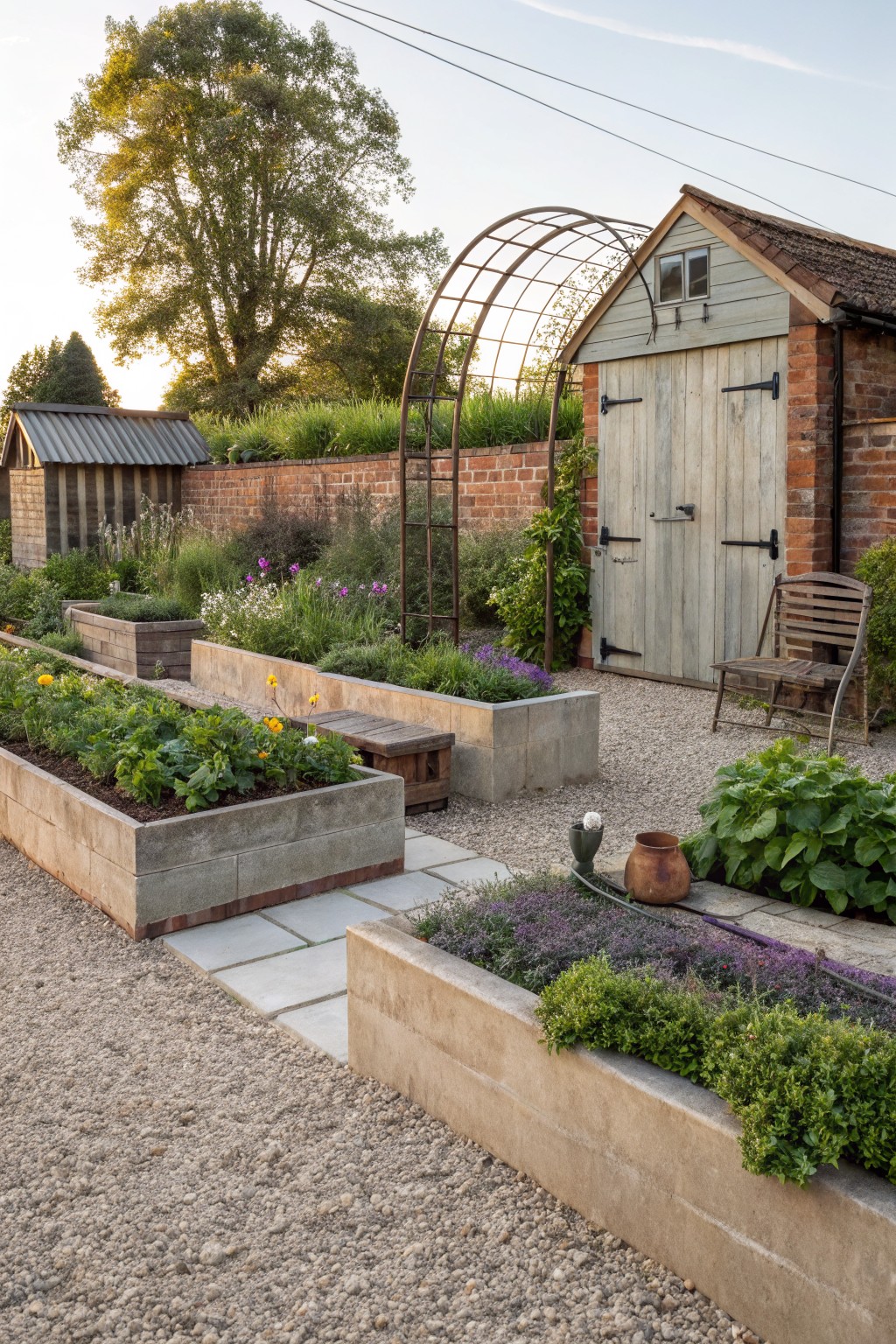
Raised beds like these make it simple to grow your own veggies right alongside flowers and herbs. The concrete ones here hold greens, brassicas, and marigolds neatly, with gravel paths keeping mud at bay. That mix gives you fresh produce plus pretty color without much fuss.
Put them against a wall or near a shed for easy access, and they suit most backyards, even sloped ones. Just fill with good soil, space plants for air flow, and add a bench nearby. Watch the height though, so bending isn’t an issue.
Stone Path Through Flower Beds

A straightforward stone path like this one works great in a busy garden. It cuts right through the thick planting beds without messing up the plants. You step from slab to slab, and all around are pops of color from pink flowers and those sunny black-eyed Susans. Keeps things practical for walking to the house or gate, but still feels like a pretty stroll.
Put this setup along a side yard or backyard entry where you need access but want to enjoy the garden. Lay irregular concrete or natural stone pavers with some grass or mulch in between for a casual look. Border it with low-growing perennials and maybe a few herbs or veggies for that mix of beauty and use. Watch the path width, though. Too narrow and it gets tricky with wheelbarrows.
Frequently Asked Questions
Q: Can I plant tomatoes right next to my favorite flowers without messing up the look?
A: Tuck tomatoes behind bushy flowers like salvia or zinnias to hide their stakes and keep the bed tidy.
Q: What if my yard is tiny—will these ideas still work?
A: Scale down to pots and vertical trellises. Grow cherry tomatoes up a frame with morning glories trailing around it for instant color and zero sprawl.
Q: How do I stop pests from ruining my veggie-flower mix?
A: Scatter nasturtiums everywhere. They lure aphids away from beans and brassicas so you spray less.
Q: And when should I start seeds for these combos?
A: Kick off cool-season flowers and greens like kale indoors six weeks before your last frost. Transplant them out together for a head start on harmony.
