


I’ve found that sturdy retaining walls make the biggest difference in yards with slopes, where they quietly organize the layout and keep soil from shifting year after year. Adding flower beds along them brings in layers of planting that soften those hard lines while helping water drain and roots stabilize everything. What catches my eye first in a good setup is how the wall’s clean edges frame the blooms without competing for attention. In one yard I worked on, switching to a low wall with cascading flowers turned a muddy hillside into a path-lined terrace that actually gets used. These ideas balance function and growth in ways that hold up over time.
Stone Retaining Walls on Slopes
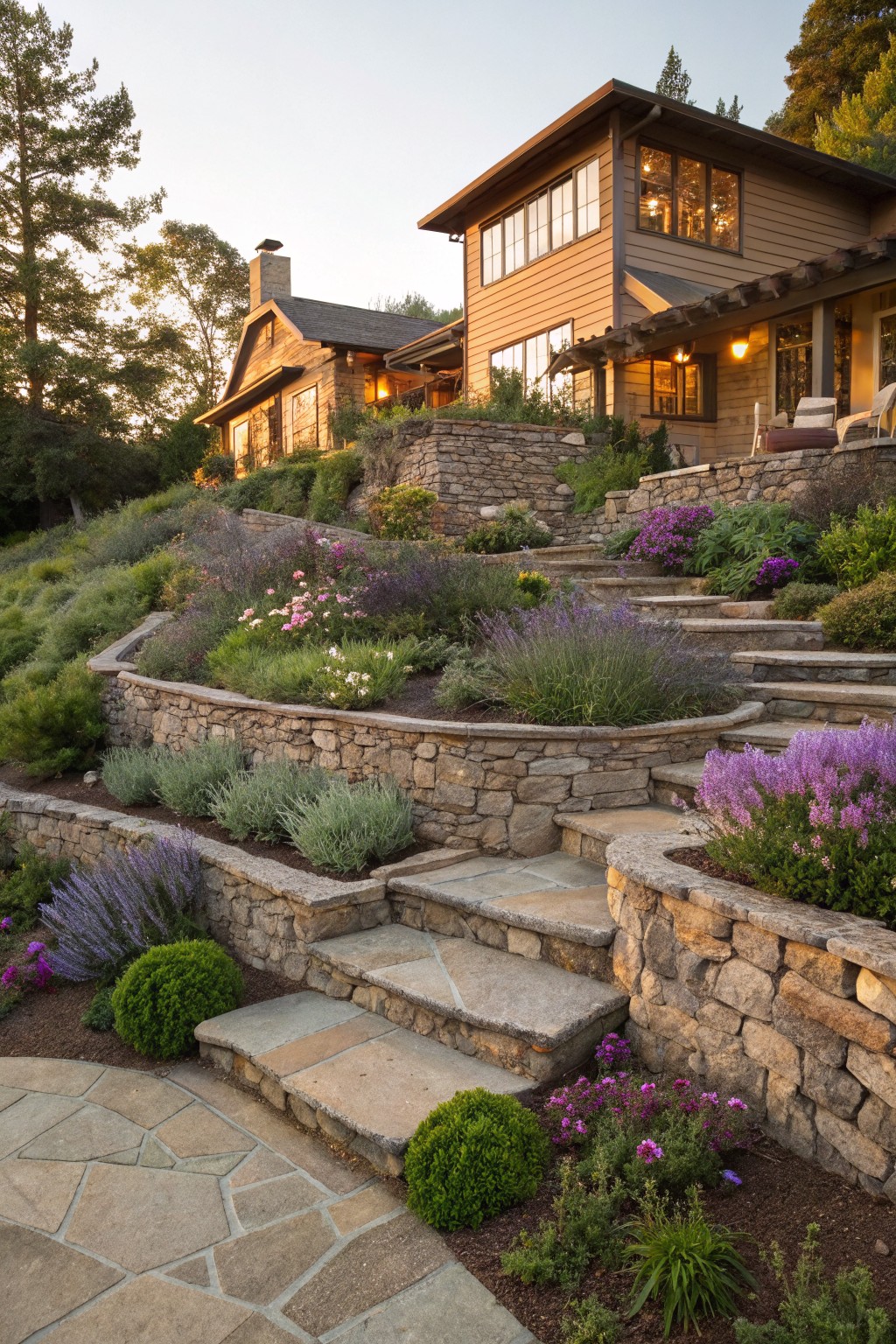
Steep yards can be tough to use, but these stone retaining walls turn the problem into a feature. Built from rugged local stone, they hold soil in place while carving out flat beds for plants. Lavender and other perennials tuck right into the edges, softening the hard lines and adding color that flows up the hill.
This setup works best where you need both function and looks. Pair wide steps between walls for easy walking, and pick low-water plants to keep maintenance simple. It suits homes on hillsides, especially in dry areas, but check local rules for wall heights.
Sturdy Metal Retaining Walls with Succulent Beds
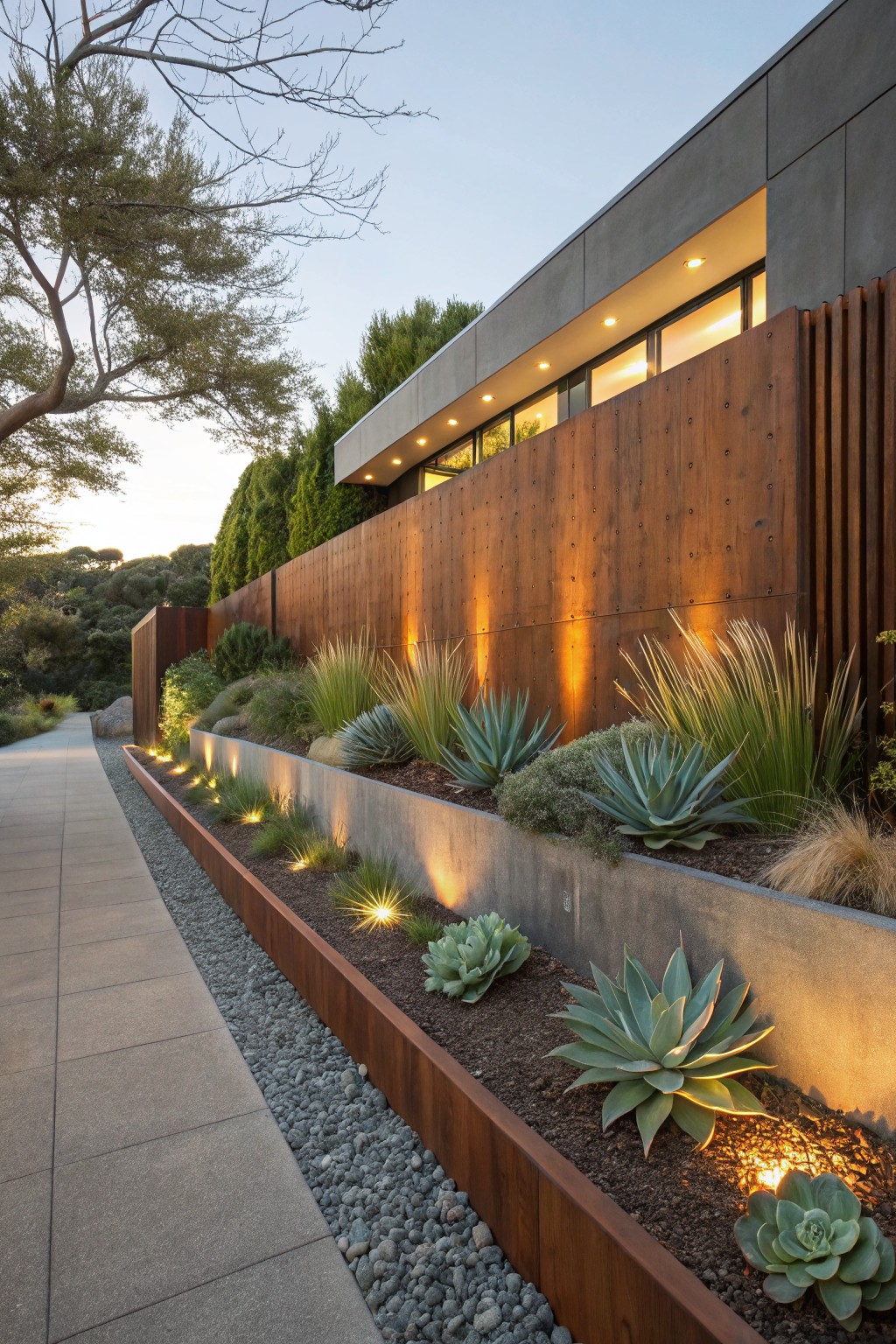
These walls mix concrete bases with corten steel edging to create sturdy raised beds right along a walkway. Filled with agaves and other succulents, they handle slopes without much upkeep. The built-in low lights add a nice glow in the evening, making the path easy to follow.
You can use this setup in any yard with a grade change, especially where space is tight. It suits modern homes best, but the simple lines work elsewhere too. Just go for tough, low-water plants… and check local codes on metal for rust runoff.
Sturdy Raised Beds as Retaining Walls
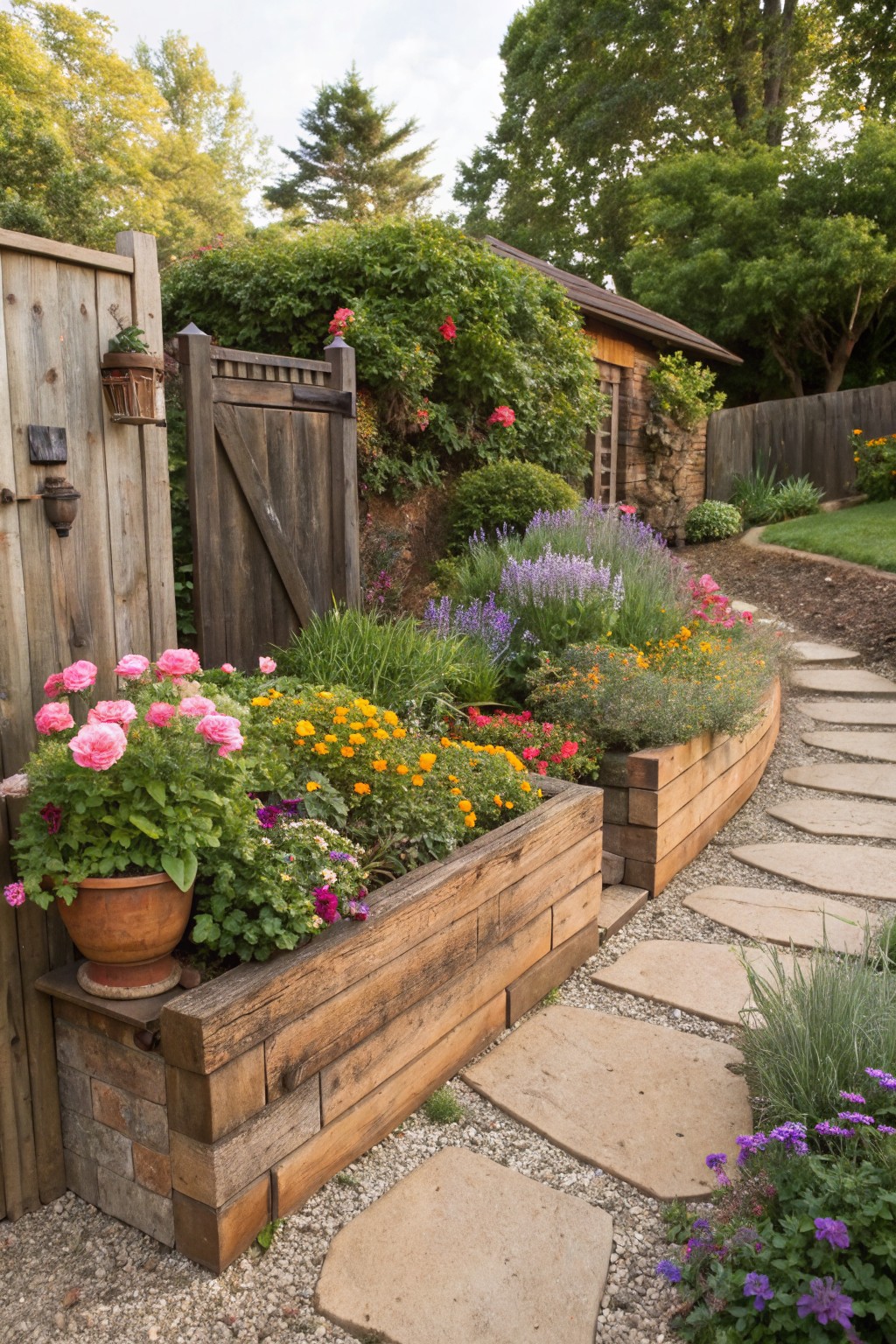
Raised wooden beds like these make solid retaining walls for sloped spots in the yard. They hold back the soil while giving plants a good home, packed with pink roses, marigolds, and lavender here. The sturdy build keeps everything in place, and the wood ages nicely over time for a natural look.
You can use them along paths or edges where the ground drops off. They suit average backyards, especially if you want low upkeep and color in one go. Go for thick planks to last longer, and add gravel underneath for drainage… otherwise roots might rot in wet spells.
Sturdy Stone Retaining Wall with Flower Beds
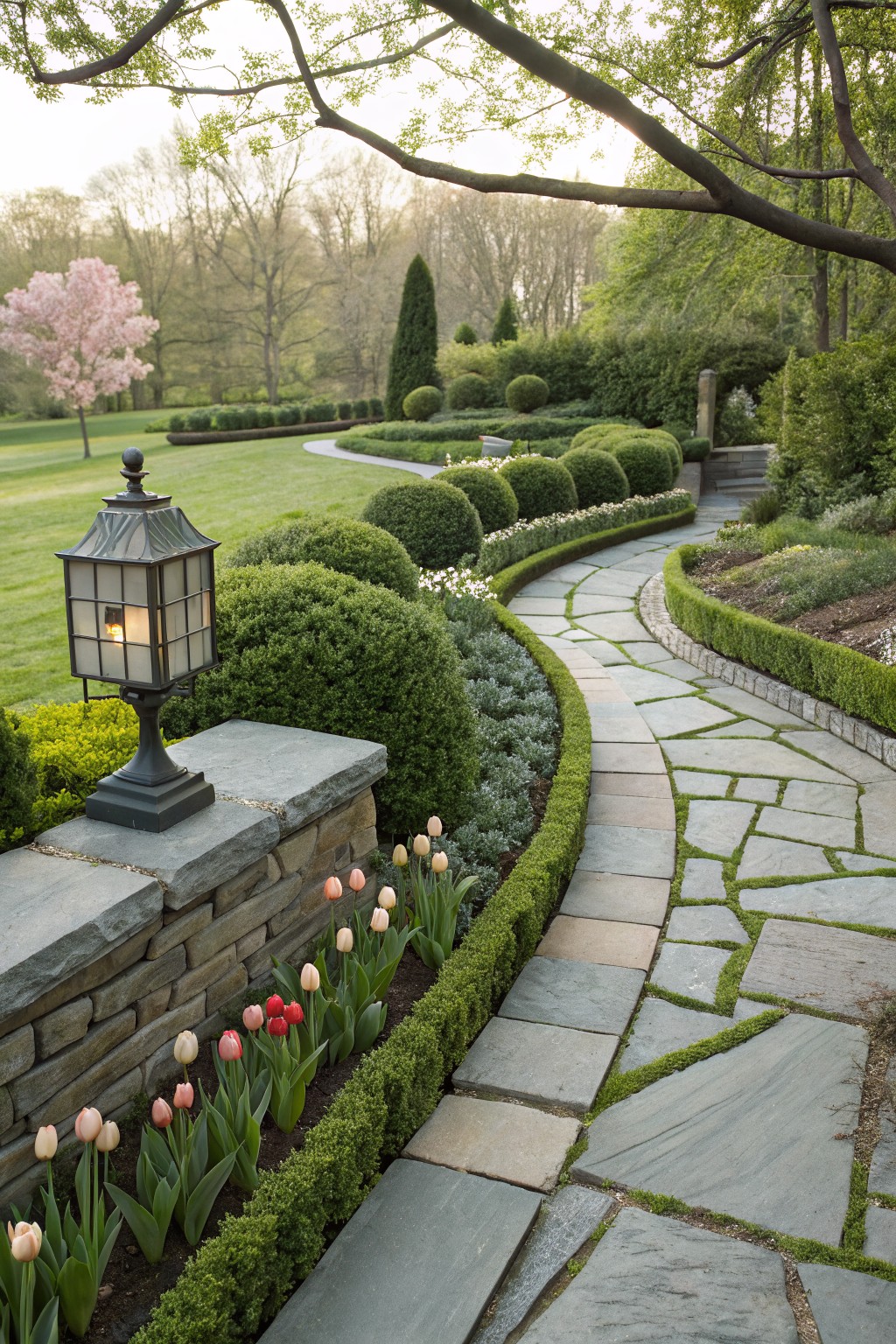
A low stone retaining wall like this one does a solid job of holding back soil while giving you space for flower beds right at the base. Tulips planted along the edge pop with color in spring, and the boxwood hedges keep everything trimmed and tidy. It adds function to a sloped spot without looking forced.
This works best in yards with some grade changes, where you want to terrace things gently. Stone holds up year after year, and the beds suit perennials or bulbs that come back easy. Keep the wall under three feet high for simple DIY, and run a path alongside to connect it to the rest of the garden.
Retaining Wall Bench with Planting Beds
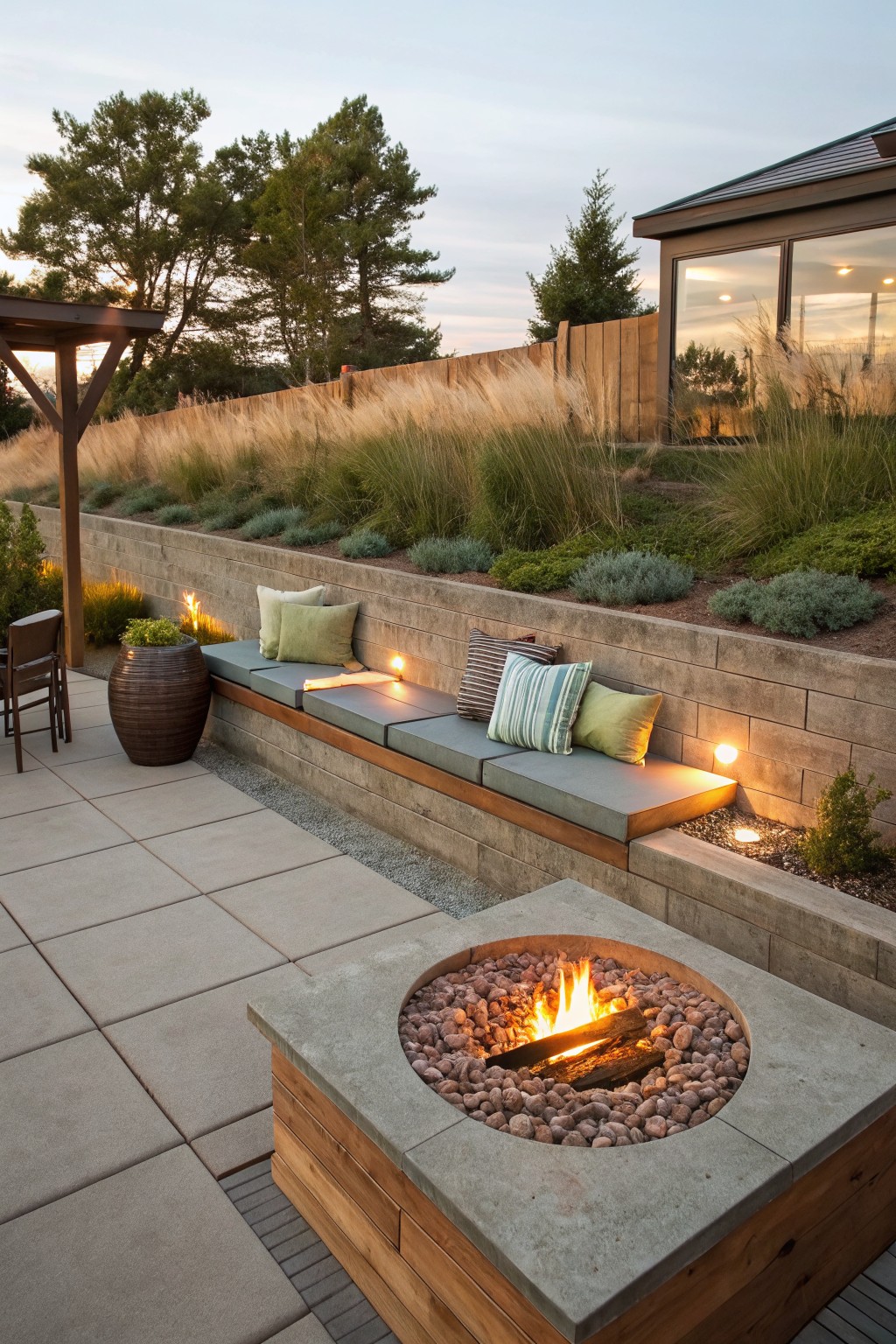
One smart way to make a sloped yard more usable is to build a sturdy retaining wall that turns into a bench. Here the concrete wall holds back the hill while providing a long seat with cushions for comfort. Small flower beds along the top and sides soften the look with low plants, and built-in lights add evening glow. It keeps soil in place and gives you a spot to sit right where you need it.
This setup works best on moderate slopes near a patio or fire pit area. Use concrete blocks or poured concrete for strength, then cap it with wood for the bench frame. Add gravel mulch in the beds for easy care, and pick drought-tolerant plants like lavender or grasses. Watch the scale so the bench fits your group size, and check local codes for wall height.
Sturdy Stone Retaining Walls with Flower Beds
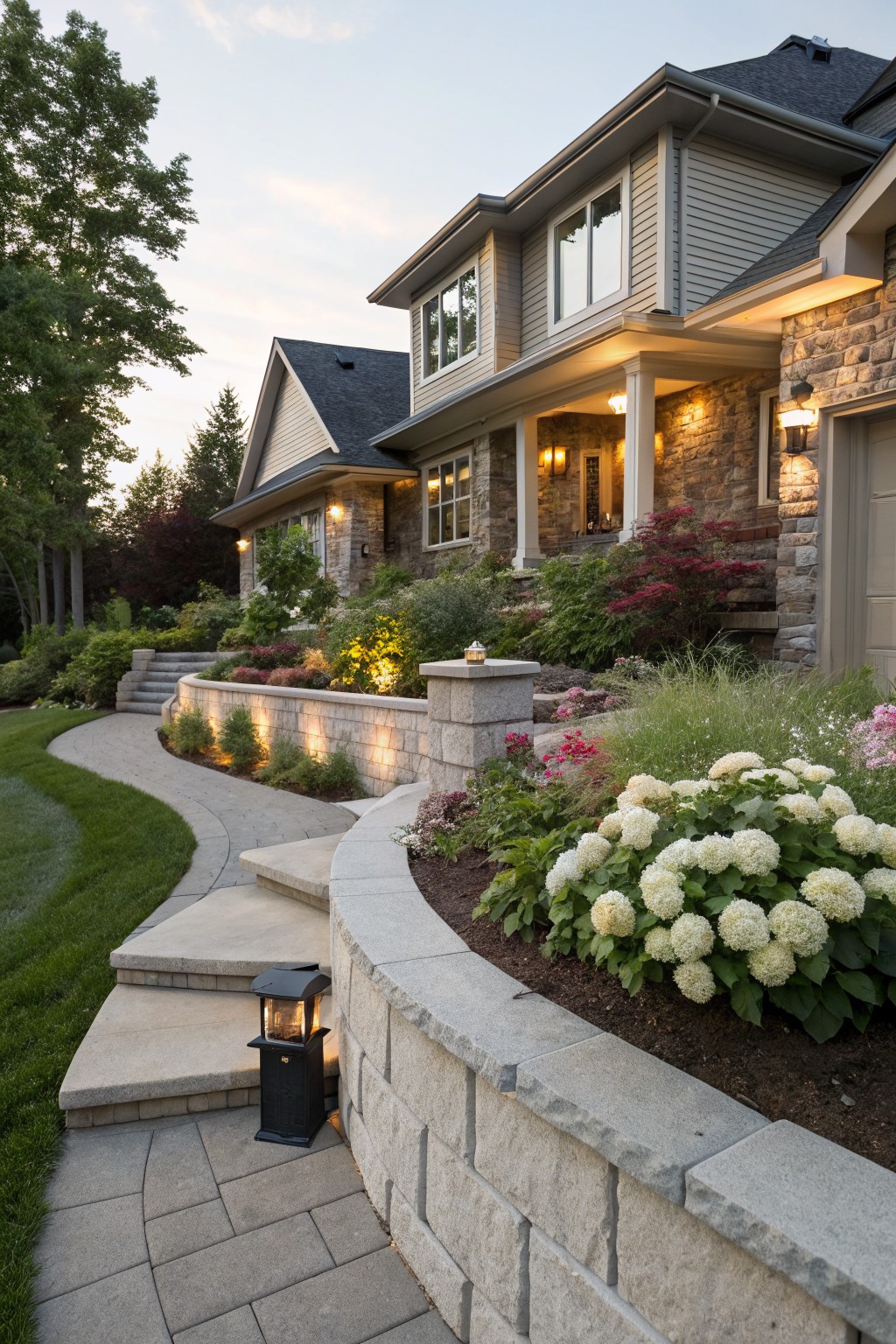
Sloped yards need something solid to hold back the soil, and these stone retaining walls do the job while turning the whole area into a planting zone. You see the gray stone curving along with a path, topped by beds full of white hydrangeas and other low plants that soften the hard edges. The low lights built into the wall add a practical glow at dusk… simple but effective.
This works best where you have a gentle hill leading to the house entry or garage. Use local stone for a natural tie-in, fill the tops with perennials that won’t overwhelm the structure, and curve the path to follow the wall. It suits most homes, especially ones with some modern or craftsman vibe, and keeps erosion in check year-round.
Terraced Wooden Retaining Walls with Flower Beds
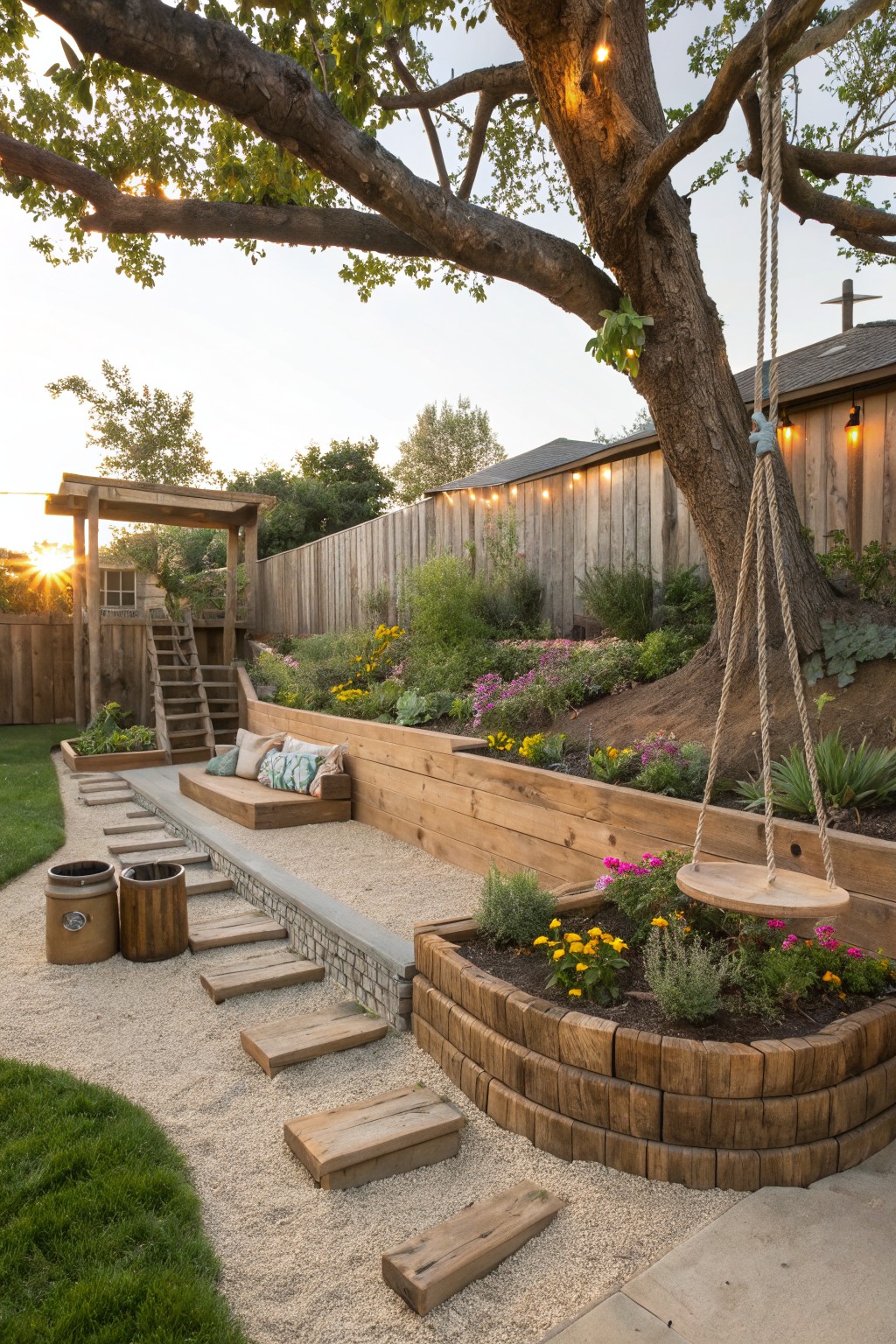
Sloped backyards often feel wasted space. But sturdy wooden retaining walls like these fix that by carving out flat terraces. Each level holds back soil and gets planted with low flowers, herbs, and bushes. It keeps everything neat and adds color without much flat ground needed. The gravel path and simple bench make the spot usable right away.
This idea shines in hilly yards where you want low upkeep. Go for thick timber posts and boards treated for outdoors. Build in spots for drainage gravel behind the walls to avoid rot. It suits family homes best. Kids love the tree swing up top. Just check local rules on wall height.
Tiered Retaining Walls with Flower Beds
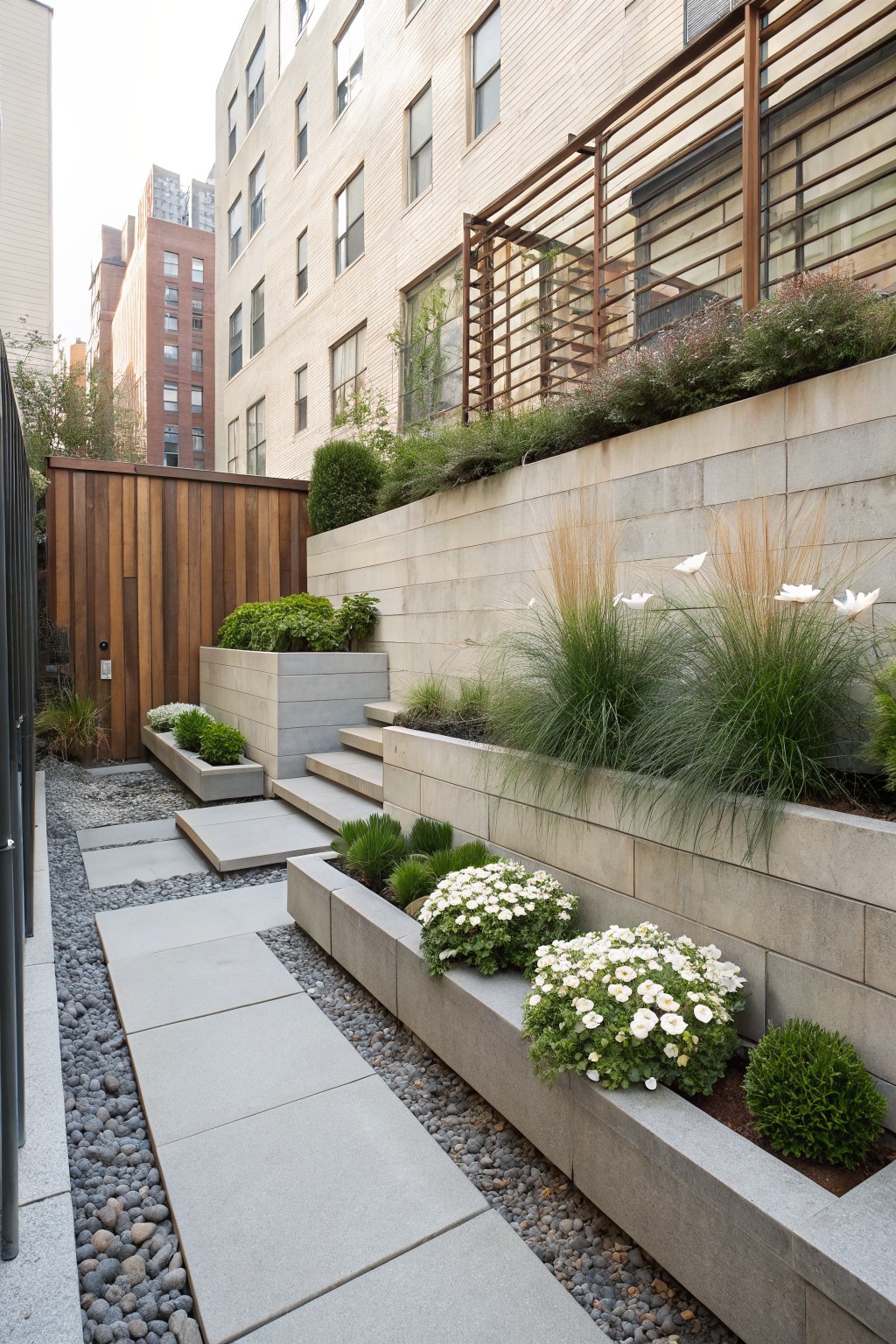
Sloped yards can be tough to work with, but these tiered concrete retaining walls make them useful. The walls stack up neatly, holding back soil while built-in planters overflow with white flowers and tall grasses. A simple gravel path runs alongside, tying it all into an easy walkway. It keeps everything sturdy and contained without feeling boxy.
This works best in narrow urban spots where space is tight and you need levels for planting. Go for light stone blocks like these to blend with city buildings, and pick tough plants that don’t need much fuss. Just make sure good drainage is in place so the beds stay healthy.
Stone Retaining Walls with Lush Flower Beds
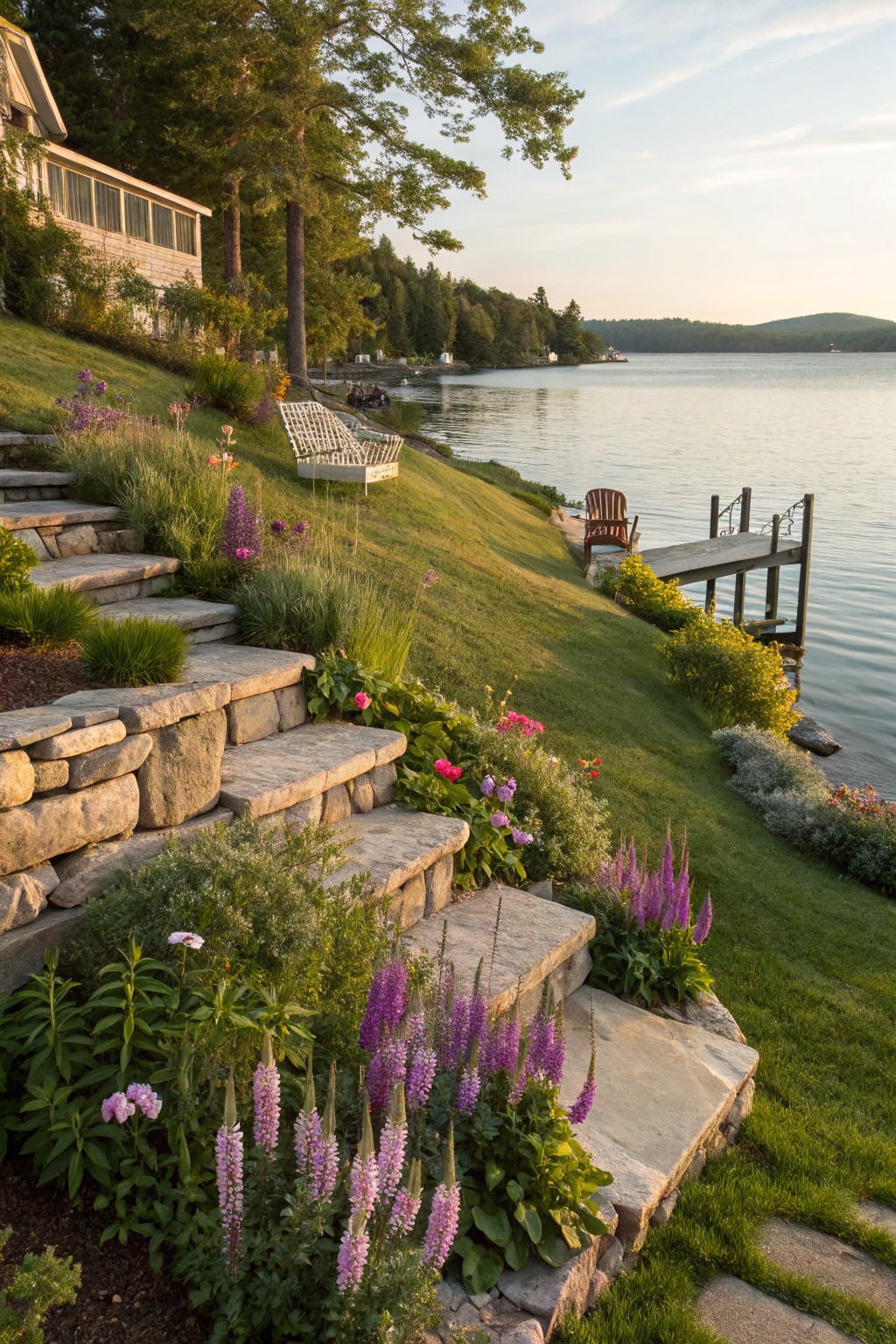
One solid way to handle a steep slope is with these rough stone retaining walls. They create flat terraces for planting while keeping soil in place. Purple lupines and other perennials tuck right into the edges, softening the stone and adding easy color through summer. It’s practical for yards that drop off toward water or a view.
Build them from local fieldstone for a sturdy, natural fit that blends with the landscape. Stack the stones dry or with minimal mortar so plants can root in the gaps. This setup works best on hillsides near lakes or woods, where you want steps down to a dock but no mudslides. Just pick tough flowers that handle sun and drainage.
Stone Retaining Walls with Built-In Steps
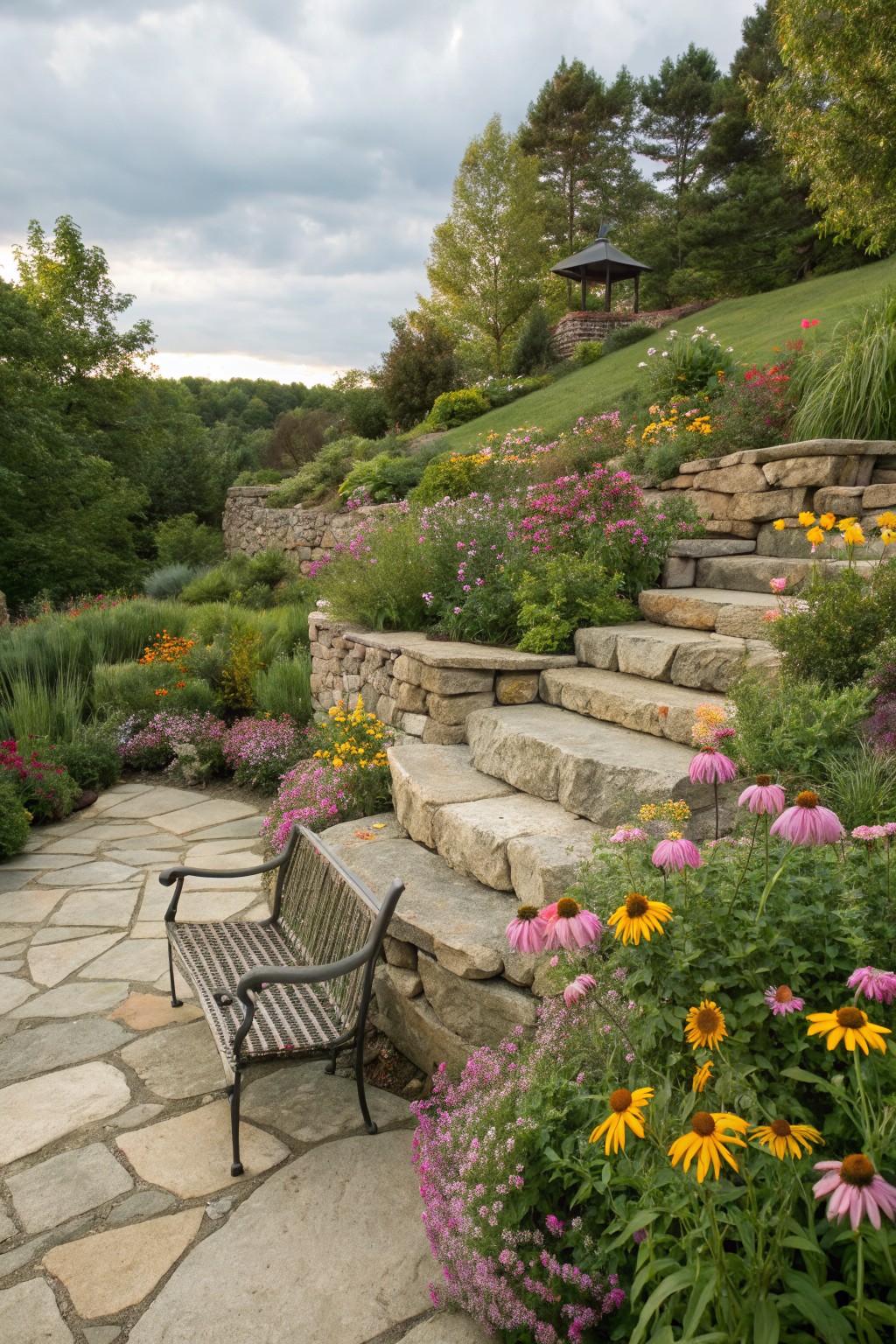
These walls use rough natural stone stacked up a slope to create level spots for flower beds. Wide steps cut right into the stone make climbing easy, and perennials like coneflowers tumble over the edges for color. A simple bench sits nearby on flagstone, turning the whole thing into a spot you actually use.
It works well on moderate hills where you fight erosion anyway. Go for dry-stacked local stone to keep costs down and the look natural. Suits casual gardens… just build solid so the beds don’t shift over time.
Raised Wood Retainers Filled with Plants
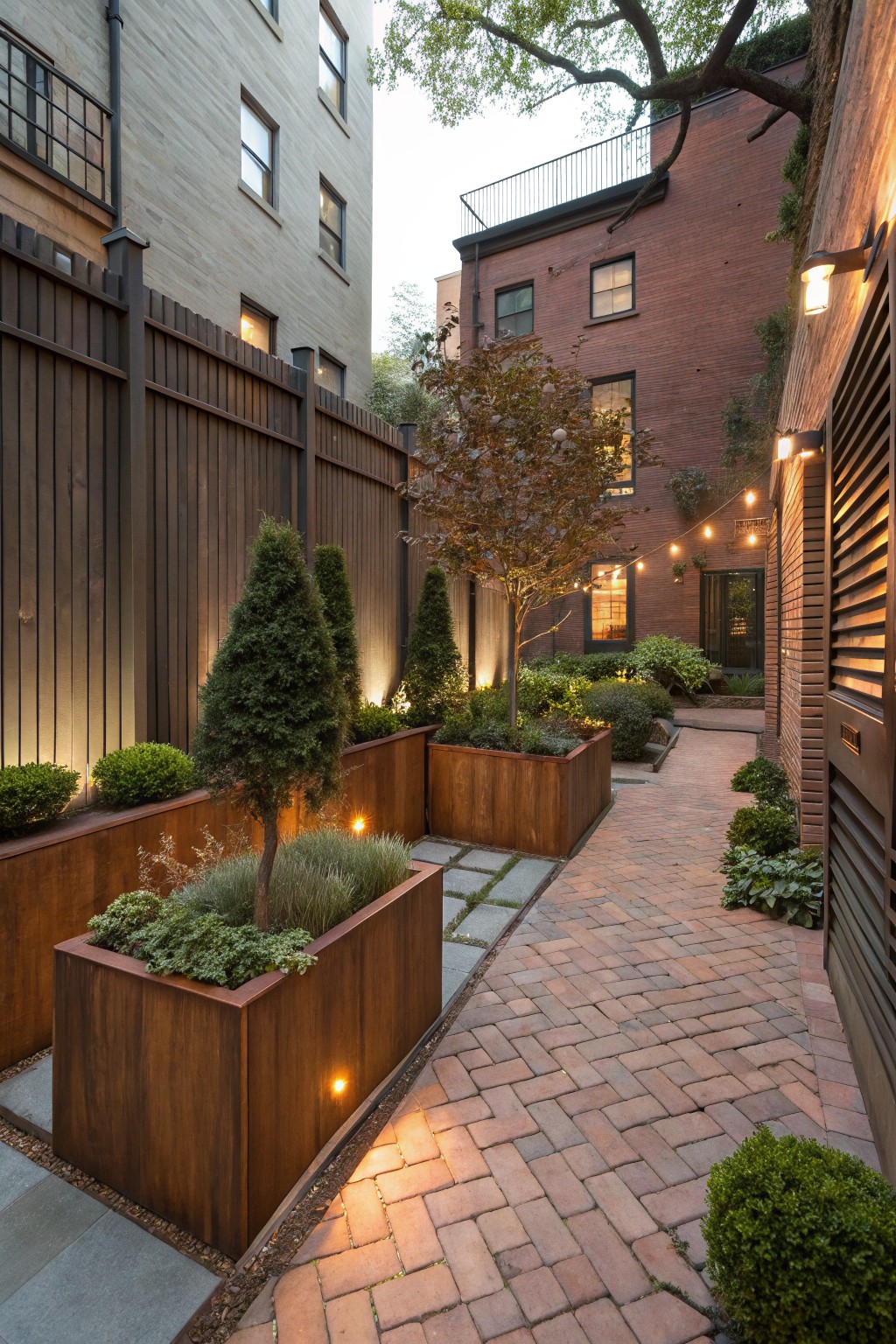
These raised wooden walls do double duty in a small city yard. They hold back the soil to create flat planting spots while looking like natural planters. You see grasses and small trees tucked right into them, which softens the hard edges and gives the space some height without crowding things out. The brick path runs alongside, making it all feel pulled together.
Try this in tight backyards or where the ground slopes a bit. Go for rot-resistant wood like cedar, and pick tough plants that won’t need much fussing. It works best next to a house or fence, adding privacy and a spot to linger on the path at dusk.
Tiered Stone Retaining Walls with Flower Beds
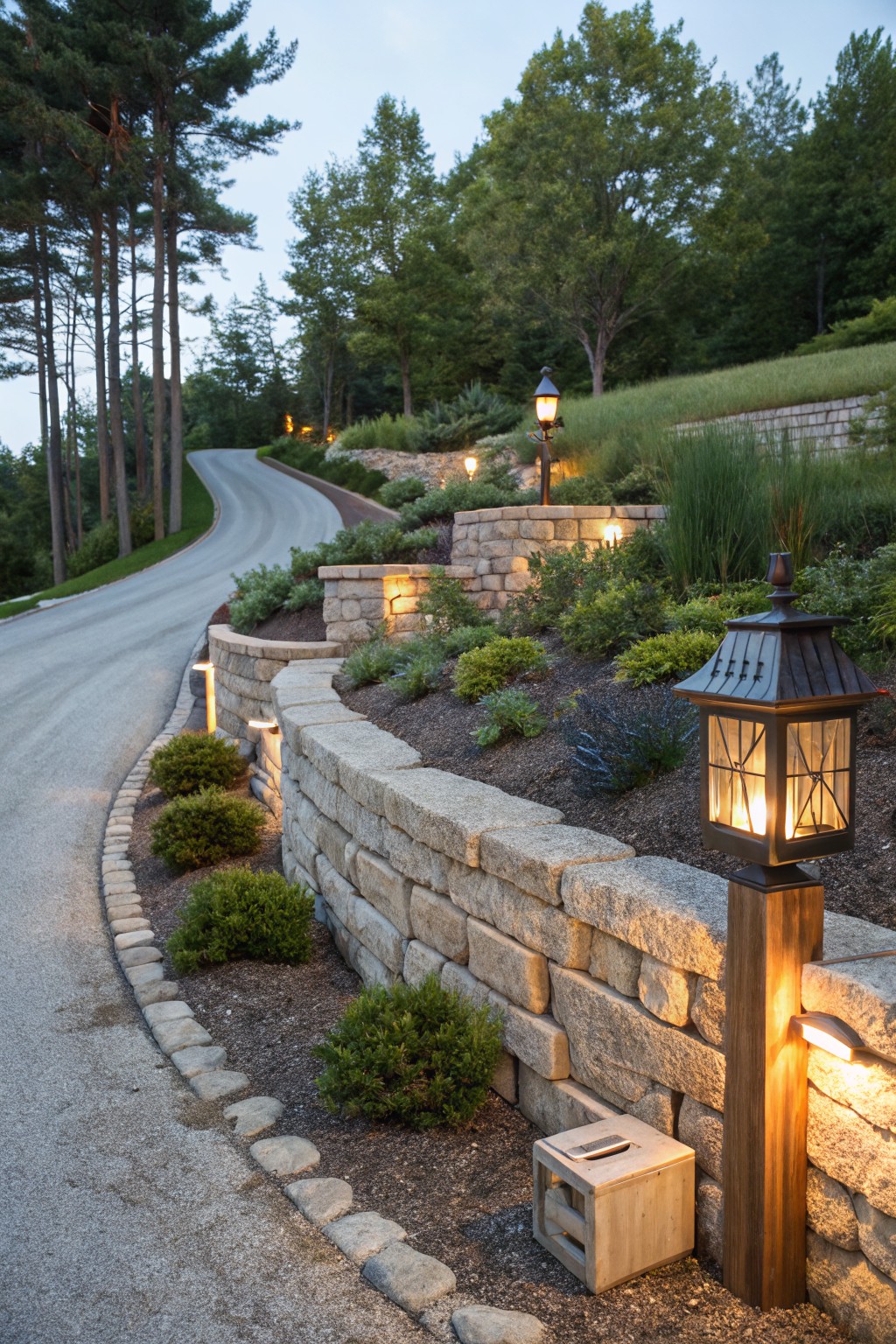
One solid way to handle a sloped yard is with tiered stone retaining walls like these. They hold back the hill while creating flat spots for flower beds full of low shrubs and grasses. The dry-stacked look gives it a natural feel, and those lantern lights tucked along the walls make it practical at night. It turns a tricky slope into something useful and good-looking.
This setup works best along driveways or paths where you need both structure and planting space. Use it on homes with wooded lots or hilly terrain. Go for sturdy fieldstone or similar, and pick tough plants that won’t overwhelm the beds. Keep the tiers not too high, maybe two or three levels, so it stays walkable and low-maintenance.
Sturdy Stone Retaining Wall with Flower Beds
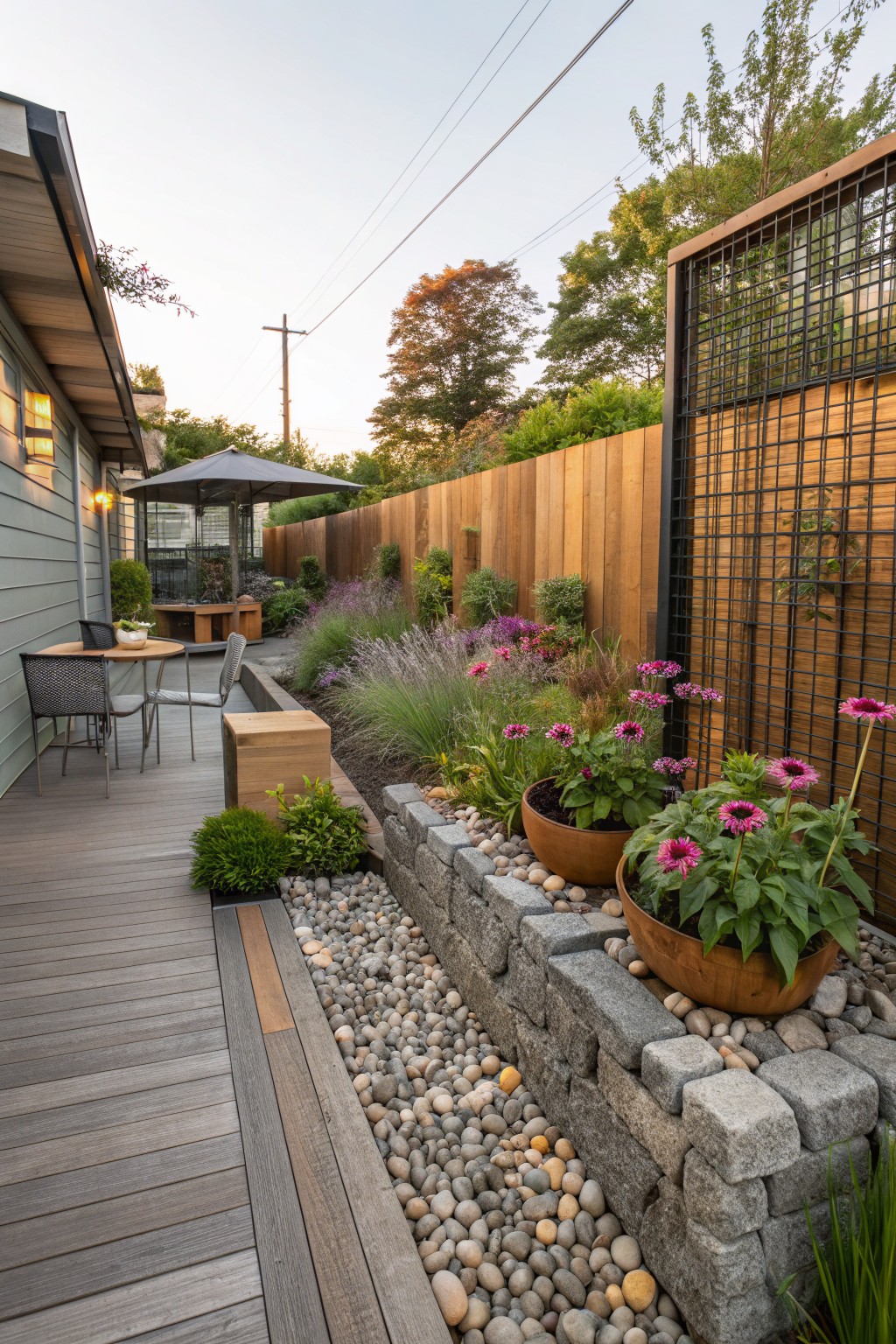
A low retaining wall like this one, built from rough gray stone blocks, does a solid job of holding back soil while creating space for plants right on top. The gravel fill between the stones drains well and gives roots room to spread. Pink flowers and lavender tuck in nicely, softening the hard edges without much upkeep.
This works best in side yards or next to decks where you have a gentle slope. Stack the stones dry or with minimal mortar for that natural feel, then add gravel and low-growing perennials. It suits smaller properties… just make sure the wall isn’t too high without engineering help.
Curved Retaining Wall with Flower Beds
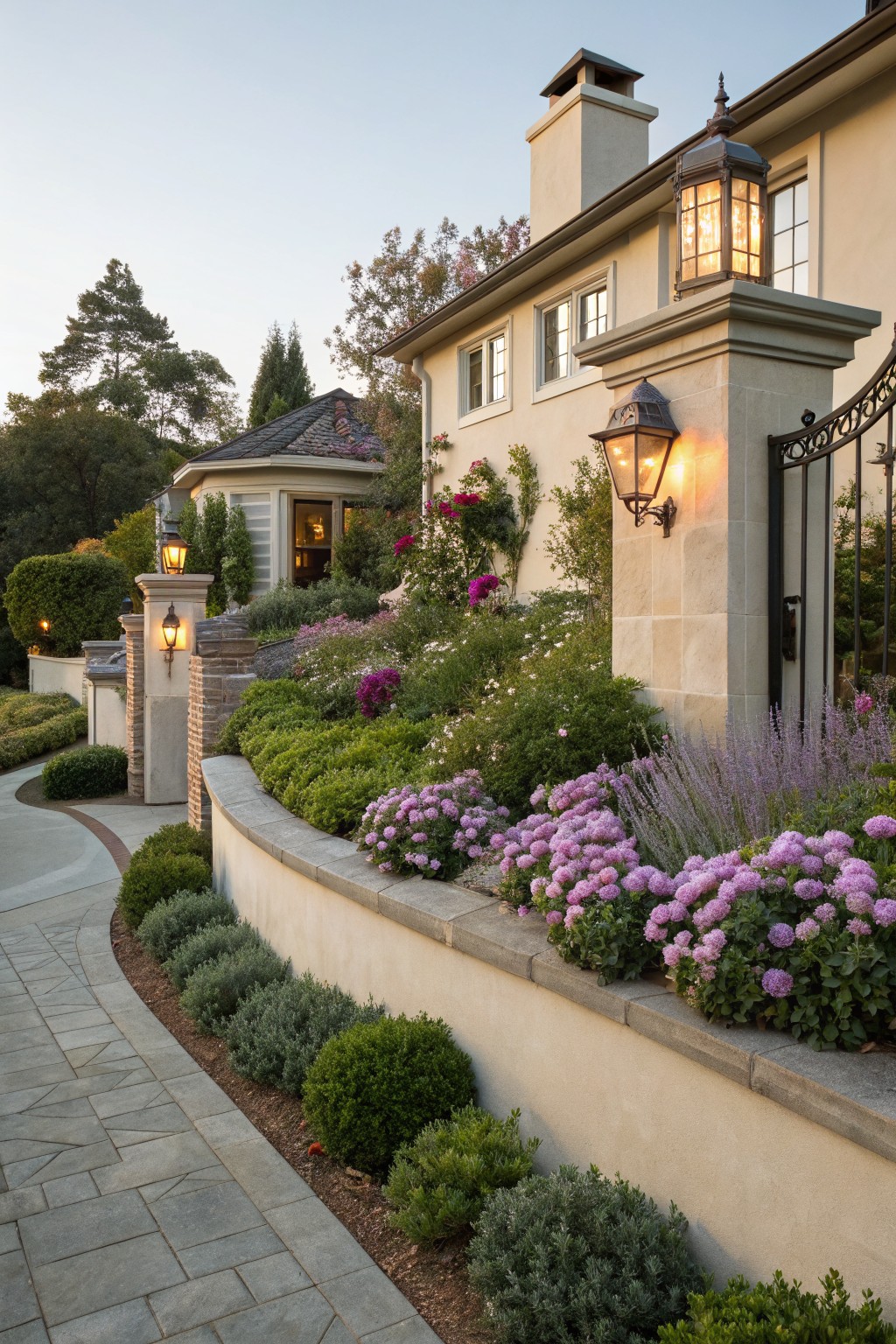
A retaining wall like this follows the natural curve of the path, built sturdy from stone blocks that hold back the slope without overpowering the yard. Flowers in pinks and purples tumble over the edge, mixed with shrubs and lavender for a full, easy look. It turns a basic grade change into something that pulls you along the walkway.
This works best on gentle slopes around the side or front of a house, where you want to add planting without flat beds. Keep the wall low to medium height so plants stay healthy, and pick tough bloomers that handle some shade. Fits older homes with stucco or stone that need a softer yard edge.
Tiered Raised Beds for Sloped Yards
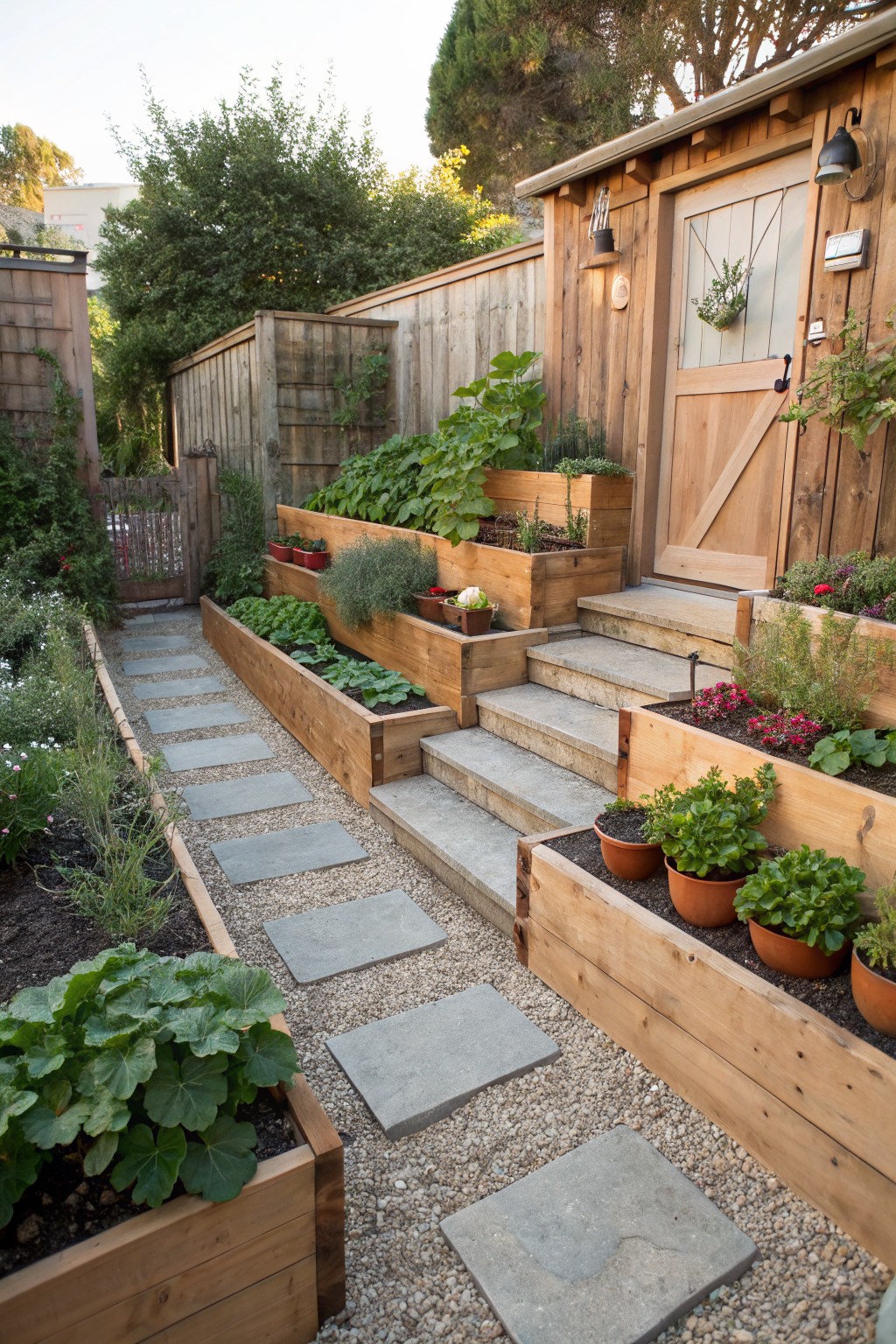
Raised beds like these turn a tricky slope into usable garden space. Built from sturdy wood, they stack up to hold soil in place and create flat planting areas for herbs, veggies, and flowers. The natural wood blends right in with the fence and shed, and it feels solid enough for years of growing.
Put them along any backyard hill where you want to garden without digging into slopes. Pair with simple gravel paths and steps for easy access. They suit smaller yards best, especially if you pick rot-resistant wood and keep beds no taller than three feet.
Sturdy Stone Retaining Walls with Planted Grasses
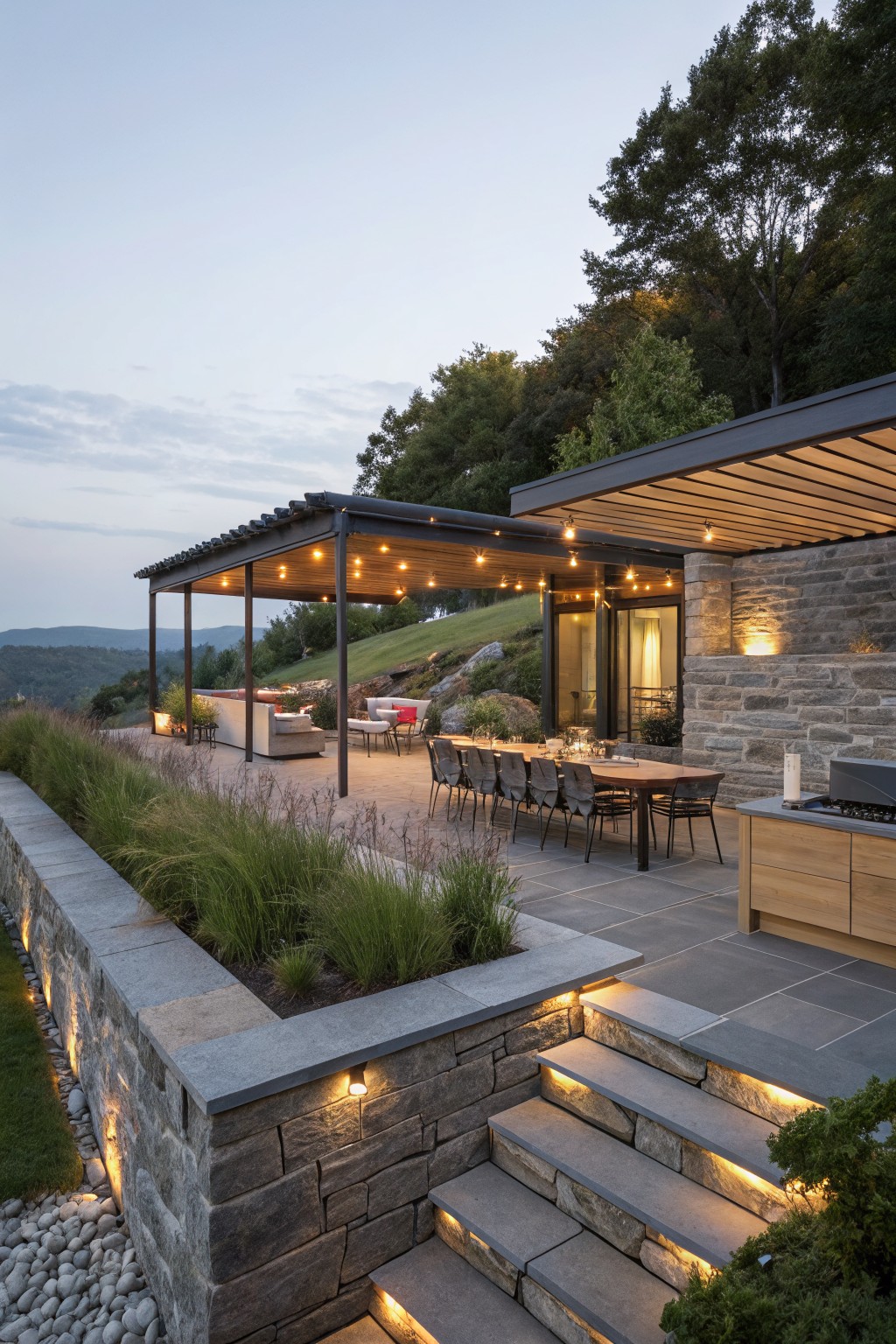
One solid way to handle a sloped yard is with a tall stone retaining wall like this one. It keeps the hill in check while the top edge turns into a flower bed full of tall grasses. That mix gives you function plus a bit of green that softens the hard stone. Low lights tucked into the wall make it useful come evening.
These walls work best around patios or terraces on hillsides where you want to create flat usable space. Go for drought-tolerant grasses that won’t need much fuss. Stone holds up year after year, and the plants add privacy from below without blocking views.
Curved Brick Retaining Walls with Flower Beds
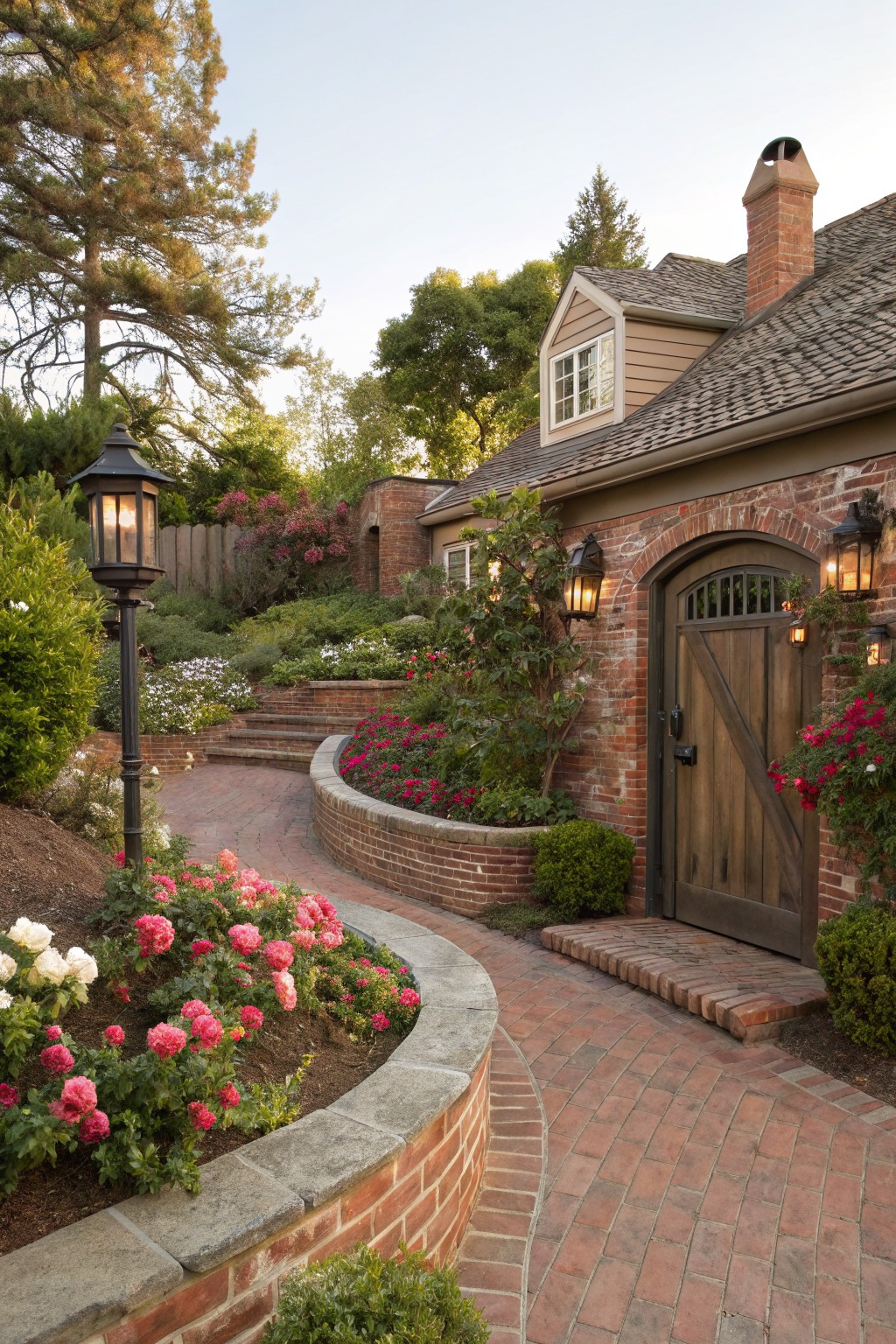
Brick retaining walls like these curve right along a matching path, holding back the slope while keeping flowers tucked in tight. Planted with roses in pink and white, they add color and soften the hard edges without taking up yard space. The setup guides you straight to the door, making a sloped spot useful and easy on the eyes.
This works best where you’ve got a hill to manage near the house entry. Use sturdy brick for the walls and path so everything ties together, then fill the tops with tough bloomers like roses that trail over nicely. Skip anything too tall up there, or it’ll flop onto the walkway. Lanterns along the way help it feel finished at night.
Frequently Asked Questions
Q: Can I build one of these retaining walls myself if I’ve never done landscaping before?
A: Start small with a low wall under three feet to get your feet wet. Grab concrete blocks or natural stone kits from a garden center, they stack easy and lock together without fancy tools. Rent a compactor for the base gravel, that keeps everything rock solid from day one.
Q: What flowers should I plant in the beds to make them pop without a ton of work?
A: Go for tough perennials like lavender or coreopsis, they come back year after year and handle wall edges fine. Tuck in some trailing sedum along the front to soften the look and spill over nicely. Water them deep once a week at first, then they mostly fend for themselves.
Q: How do I stop soil from spilling out between the wall stones?
A: Line the back with landscape fabric before you backfill, it lets water drain but traps the dirt. Top the flower beds with two inches of mulch, that locks everything in place through rain or wind.
Q: And how tall can I go before calling in pros?
A: Keep it under four feet if your yard slopes gently. Anything taller needs an engineer to check the load, or it might shift.
