

Marigolds can handle the heat, but a sunny bed still needs a thoughtful layout to keep its color from feeling crowded or scattered.
I like pairing their bright blooms with plants that offer a different height or leaf texture, so the whole planting has shape even when flowers fade.
Edging and pathways matter too, since they help define the bed and make it easier to tend through a long, hot summer.
Some combinations work best in broad drifts, while others suit small borders or containers tucked beside a walkway.
I’d save the ideas that match your light, space, and watering routine, then adapt them to the way your garden grows.
Shape Marigold Beds Along a Garden Path

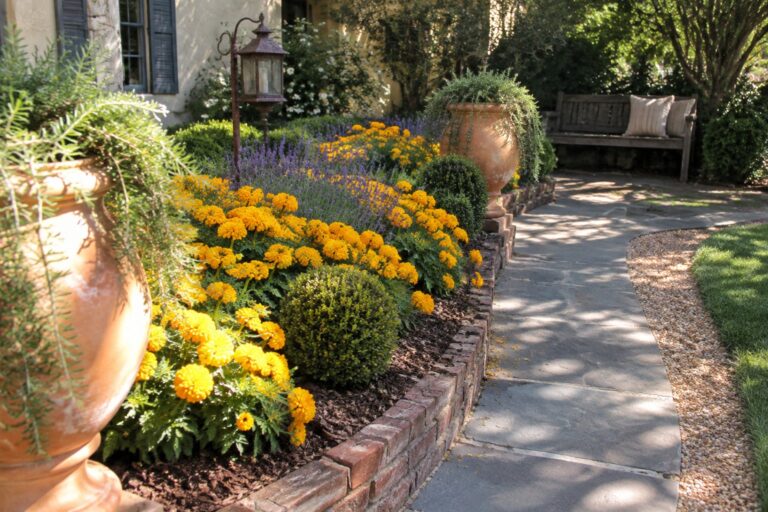
A curved flower bed can make a garden path feel more settled and give marigolds room to grow in a sunny spot. The gentle bend also makes the planting feel less rigid than a straight row along the walkway.
Use a low brick edge to keep soil and mulch in place, and plant marigolds in groups so their color reads clearly from the path. Leave enough space for mature plants and avoid letting the flowers spill onto the walking surface.
Use a Curved Bed to Guide the Garden Path
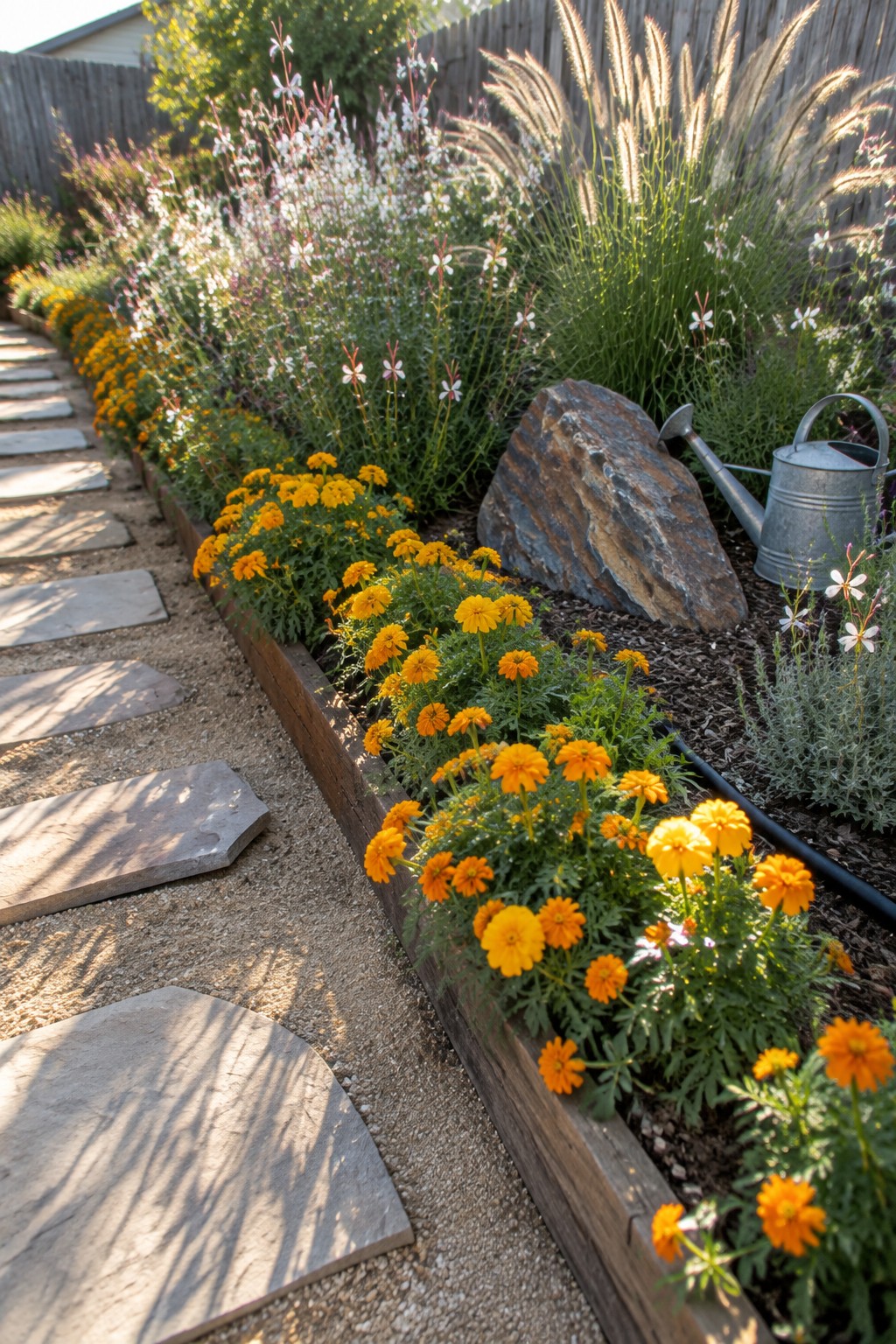
A flower bed that follows the path makes a narrow garden feel more connected. Here, orange marigolds mark the edge, while taller plants behind them add a softer, layered planting pattern.
Try this approach along a gravel or stepping-stone path where a straight border might feel too rigid. Keep the marigolds near the front so they’re easy to see and tend, and leave enough room for the path to stay comfortable to walk on.
Use Marigolds Along a Rock Garden Border
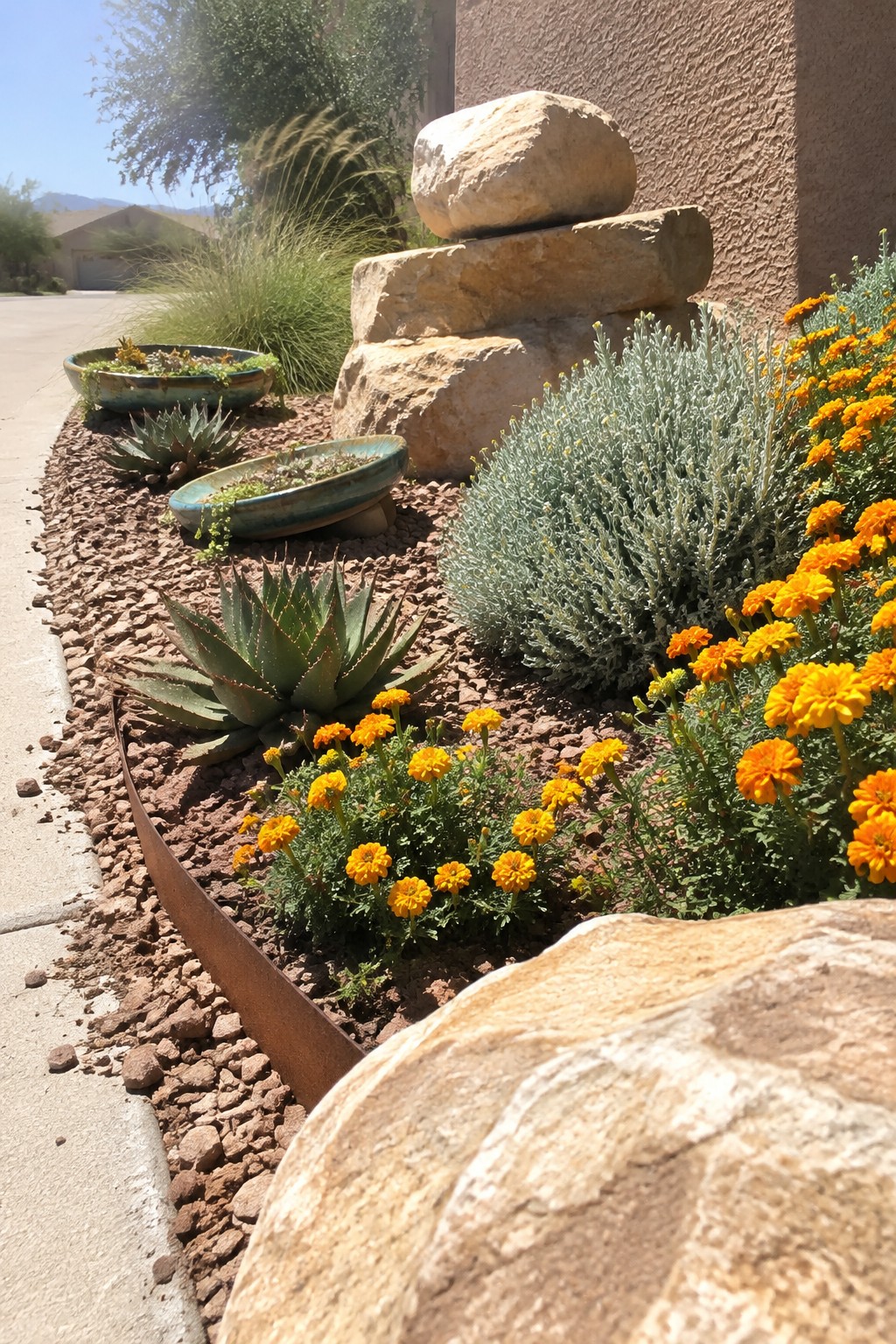
Marigolds bring bright color to a sunny rock garden, while gravel and stone give the planting bed a simple structure. Their flowers stand out against the muted ground cover, making this a practical way to add color without filling the whole bed with blooms.
Plant marigolds in groups along the front edge, leaving enough room for succulents or other drought-tolerant plants behind them. This approach suits hot, sunny areas, but check the soil regularly and water when it dries out.
Use Raised Beds To Give Marigolds A Clear Edge
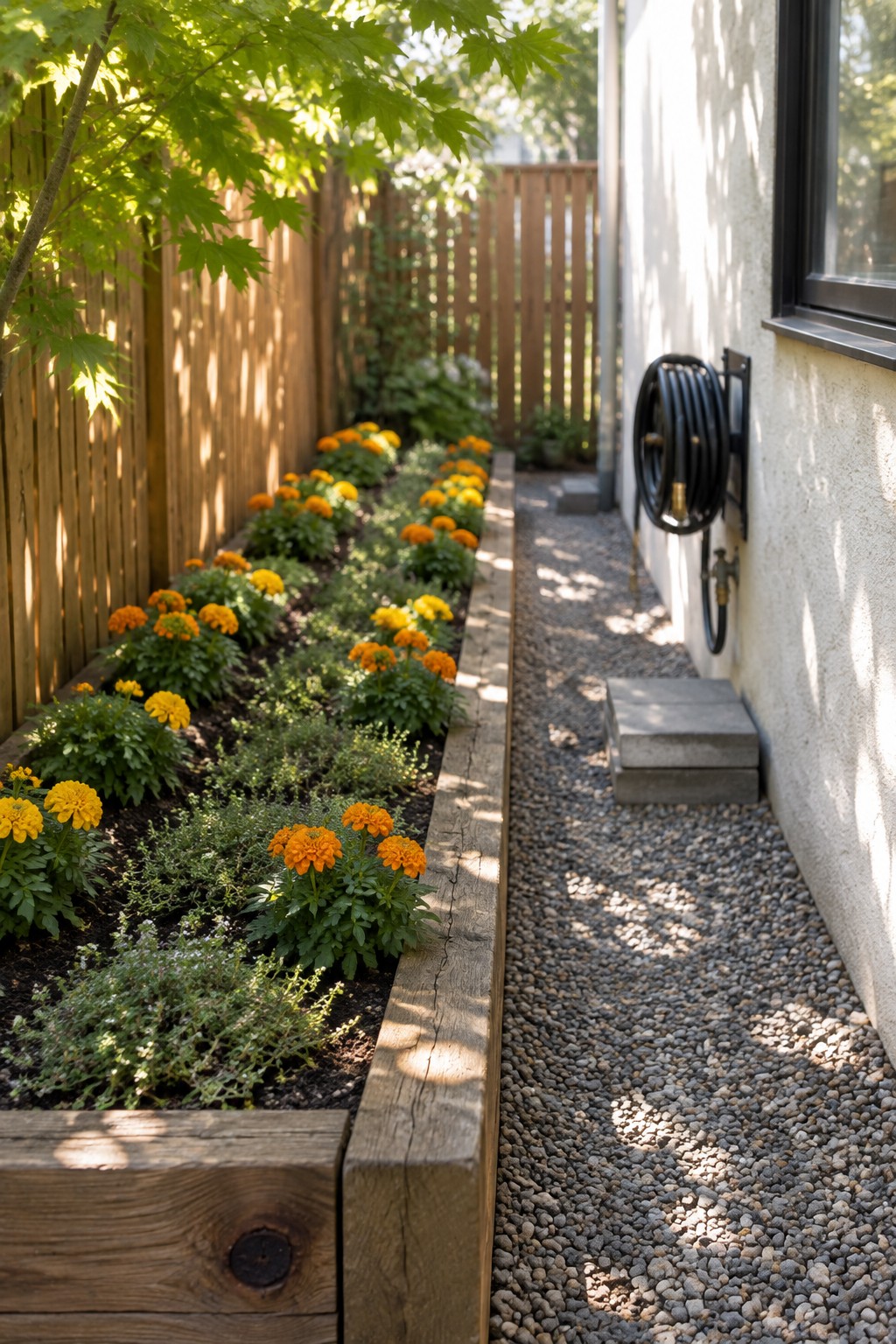
A raised flower bed makes it easier to keep marigolds grouped and gives a narrow garden a tidy shape. The timber edging also separates the flowers from the gravel path, so the bed stays easy to see and tend.
This approach works well along a fence or beside a house where space is limited. Plant marigolds in clusters, and leave enough room between the bed and path to reach in for watering and deadheading.
Plant Marigolds Along a Stepping-Stone Path
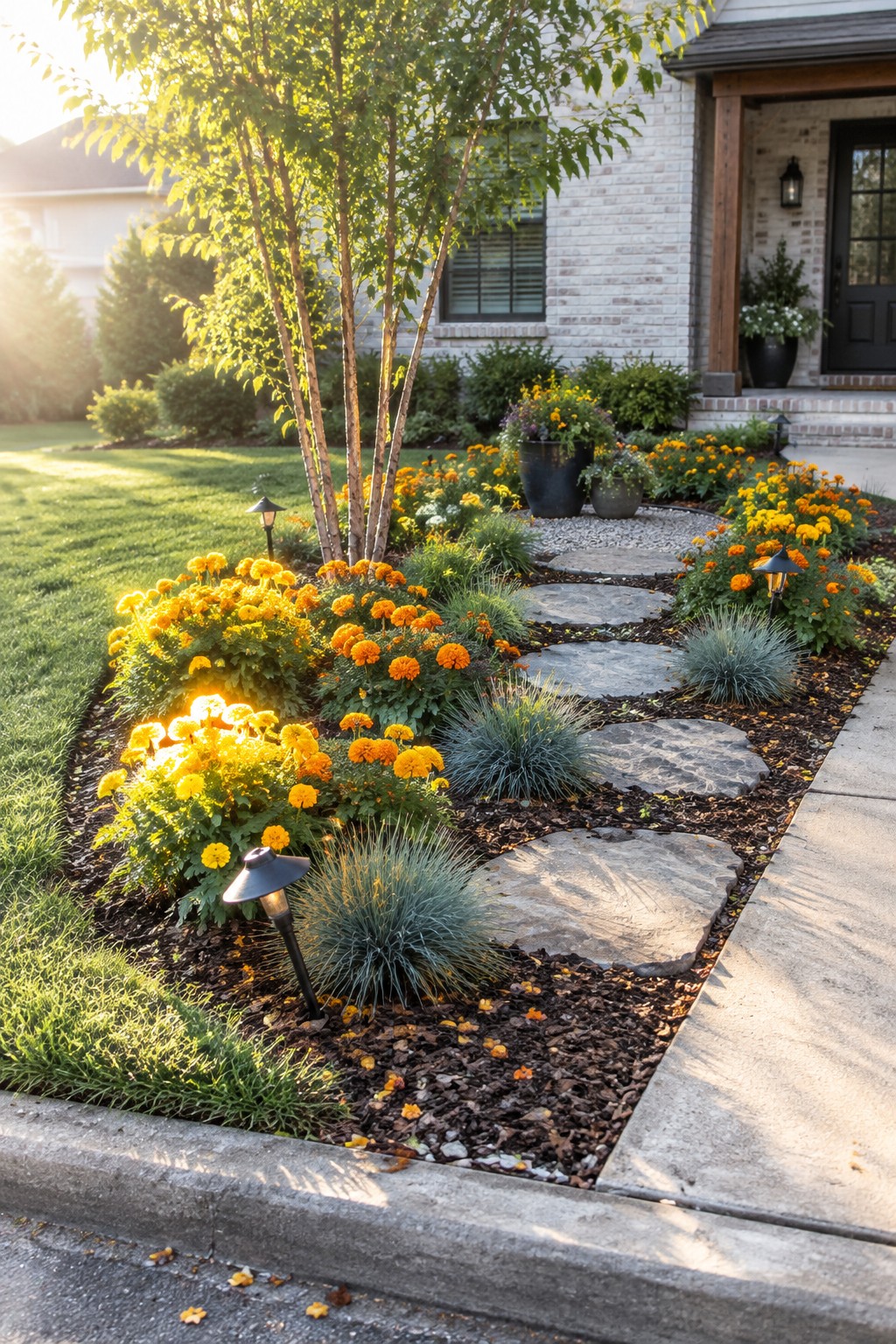
Marigolds can give a garden path a clear, colorful border without making the route feel crowded. Their rounded blooms stand out against dark mulch, while low grasses break up the flowers and add a different texture.
Use stepping stones through a sunny bed, leaving enough room for marigolds to spread without spilling onto the walking surface. This works well near an entry where you want a casual garden path, but keep the stones level and easy to walk on.
Plant Marigolds in Repeating Garden Beds
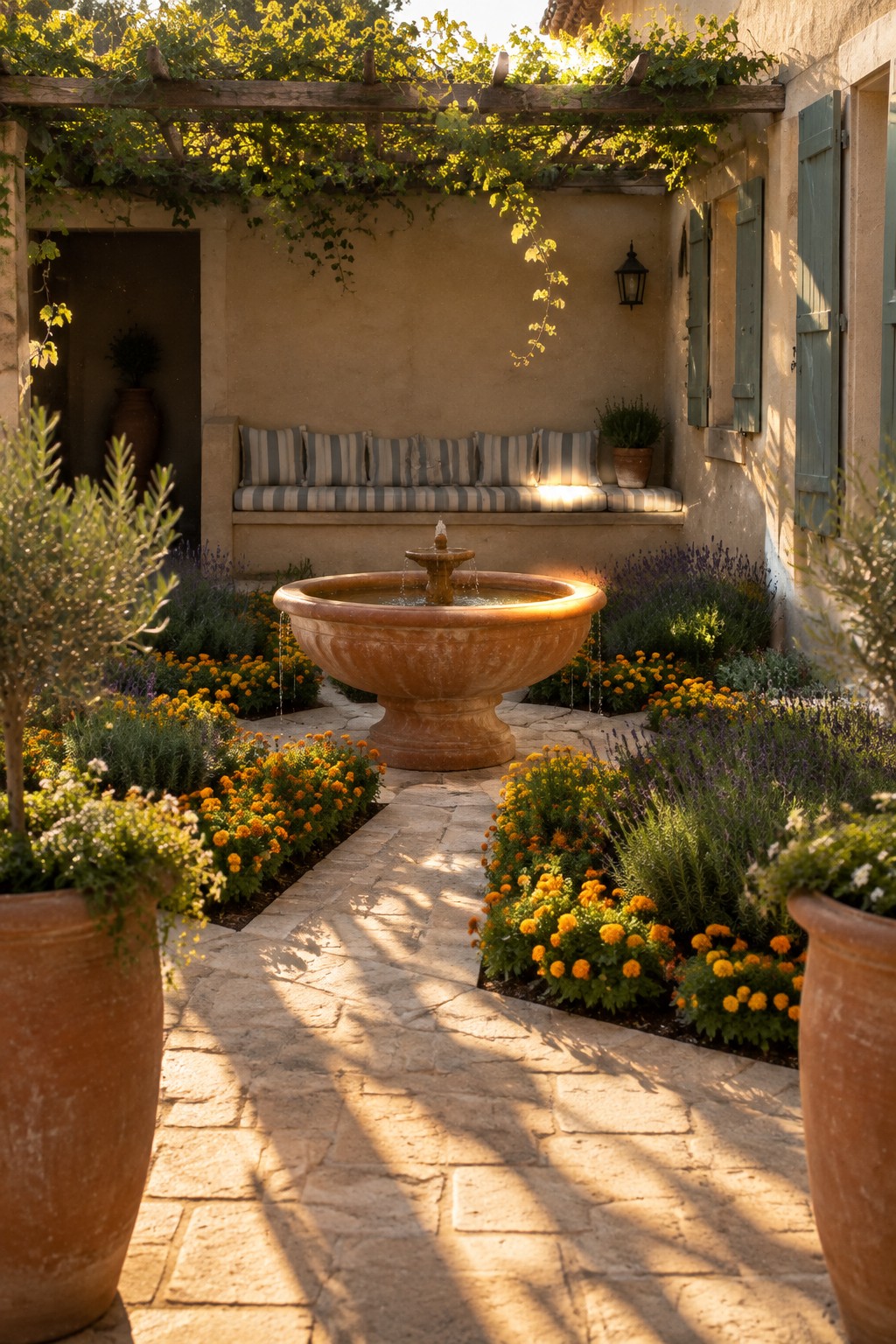
Repeating marigold beds give a sunny garden a clear, tidy rhythm. The clusters of orange flowers stand out against the stone path, while keeping the planting grouped makes a larger courtyard easier to manage.
Use the same bed shape on both sides of a path or fountain, and leave enough space between plants for air to circulate in hot weather. Marigolds do well in sunny spots, but they still need regular water while getting established.
Plant Marigolds Along a Sunny Terrace Bed

Marigolds can bring a bright band of color to a narrow terrace bed without taking up space needed for walking or sitting. Their compact growth makes them a practical choice along a low brick planter, where the flowers can be enjoyed up close.
Plant them in a sunny spot and leave enough room between the bed and the walkway for comfortable passage. Water regularly during hot spells, especially when the bed is shallow or exposed.
Plant Marigolds Along the Pool Edge
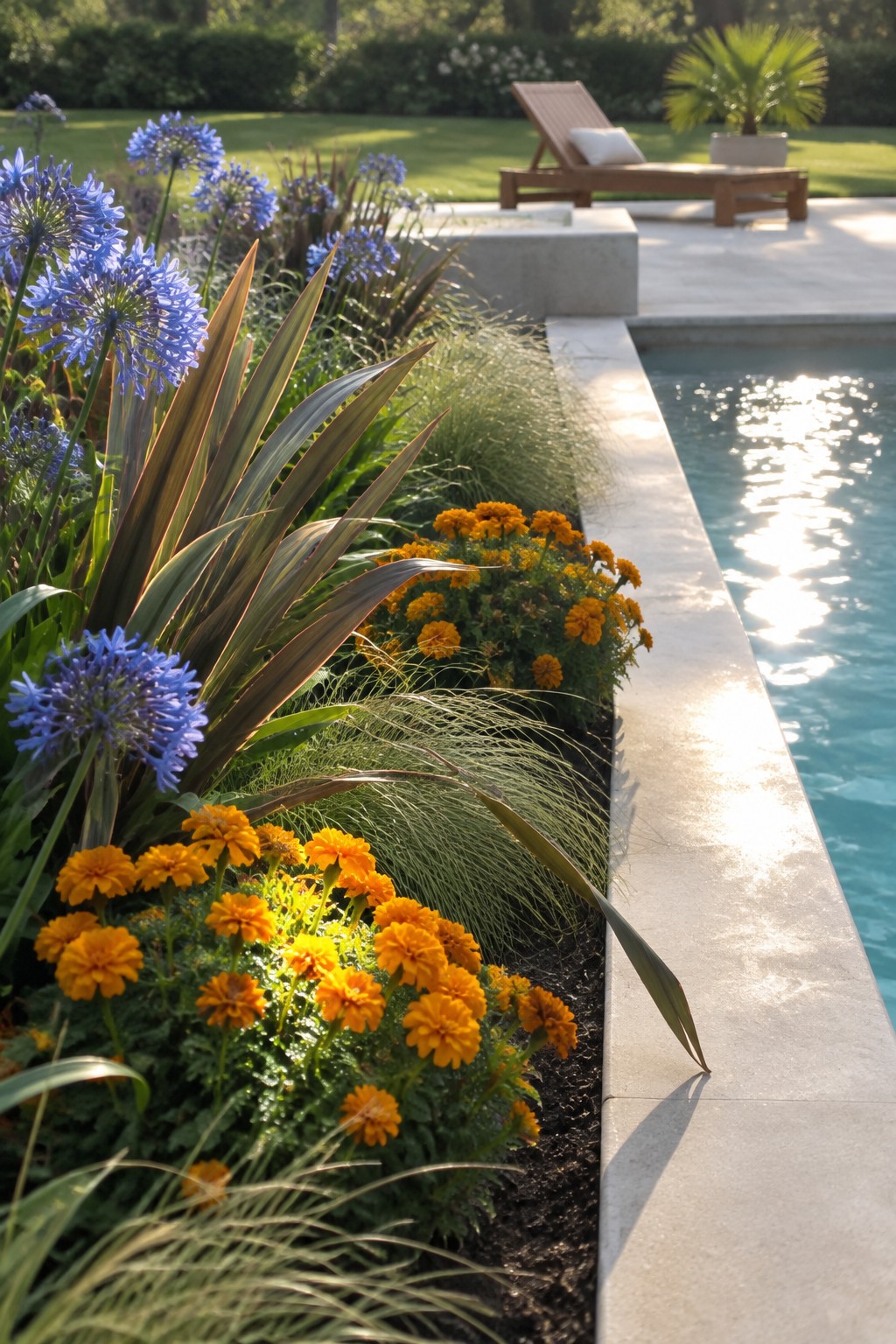
A narrow flower bed beside a pool can bring color right up to the hardscape without taking over the seating area. Marigolds work well here because their bright blooms stand out against pale paving and give a clean pool edge a more garden-like feel.
Keep the bed wide enough for plants to fill in, but leave room for them to stay clear of the paving. Marigolds suit sunny poolside spots, though you’ll want to choose compact varieties and trim them back if they start leaning over the walkway.
Use Marigolds Along a Gravel Garden Path
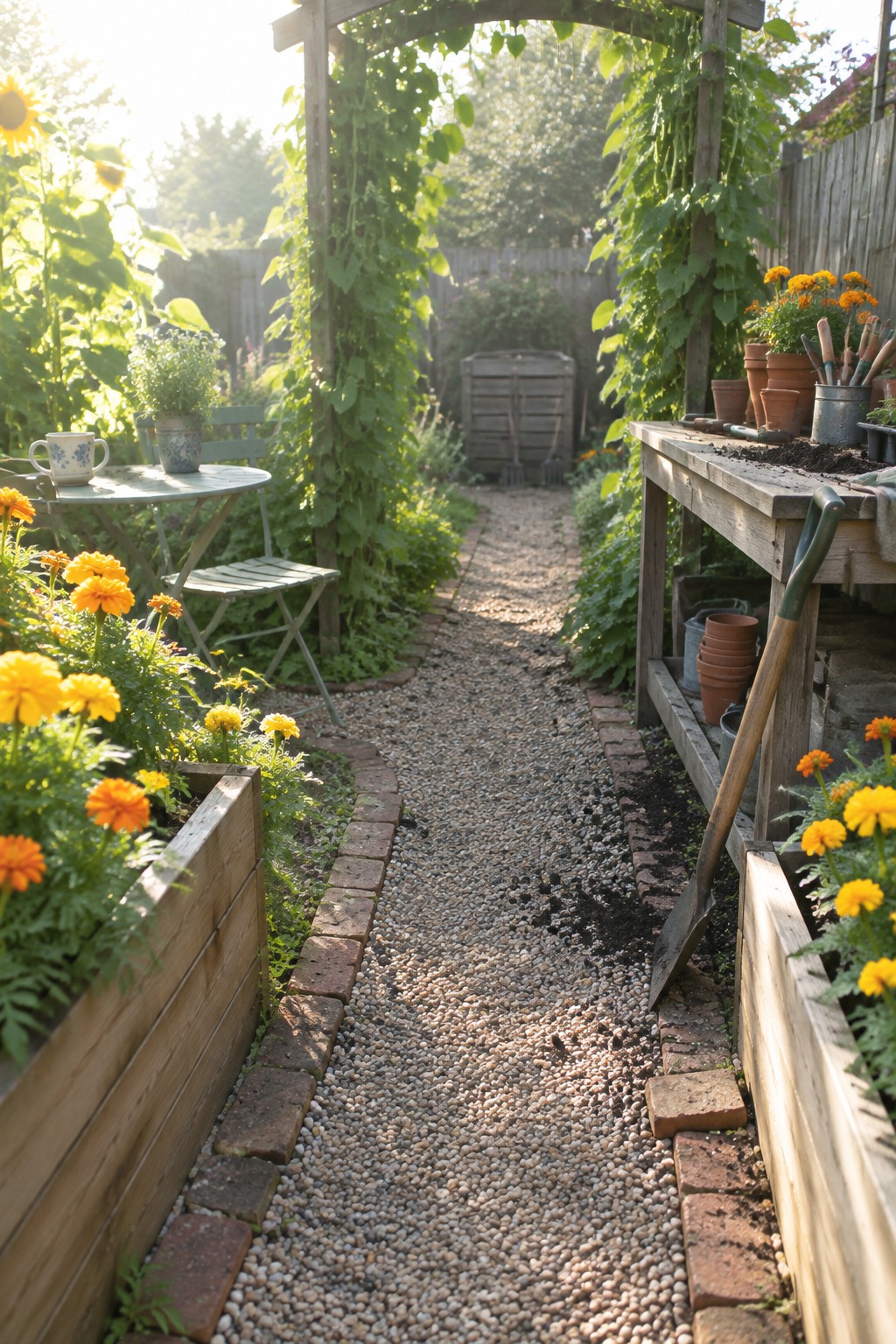
A gravel path gives a sunny flower bed a practical shape and keeps the garden easy to walk through. Marigolds can line the edges, adding bright color while the brick edging helps keep gravel from spilling into the planting areas.
This approach suits a narrow side garden or a small backyard where a clear route matters. Leave enough room for comfortable passage, and plant marigolds in loose groups along the sunny sections rather than crowding every stretch.
Grow Marigolds in a Balcony Planter
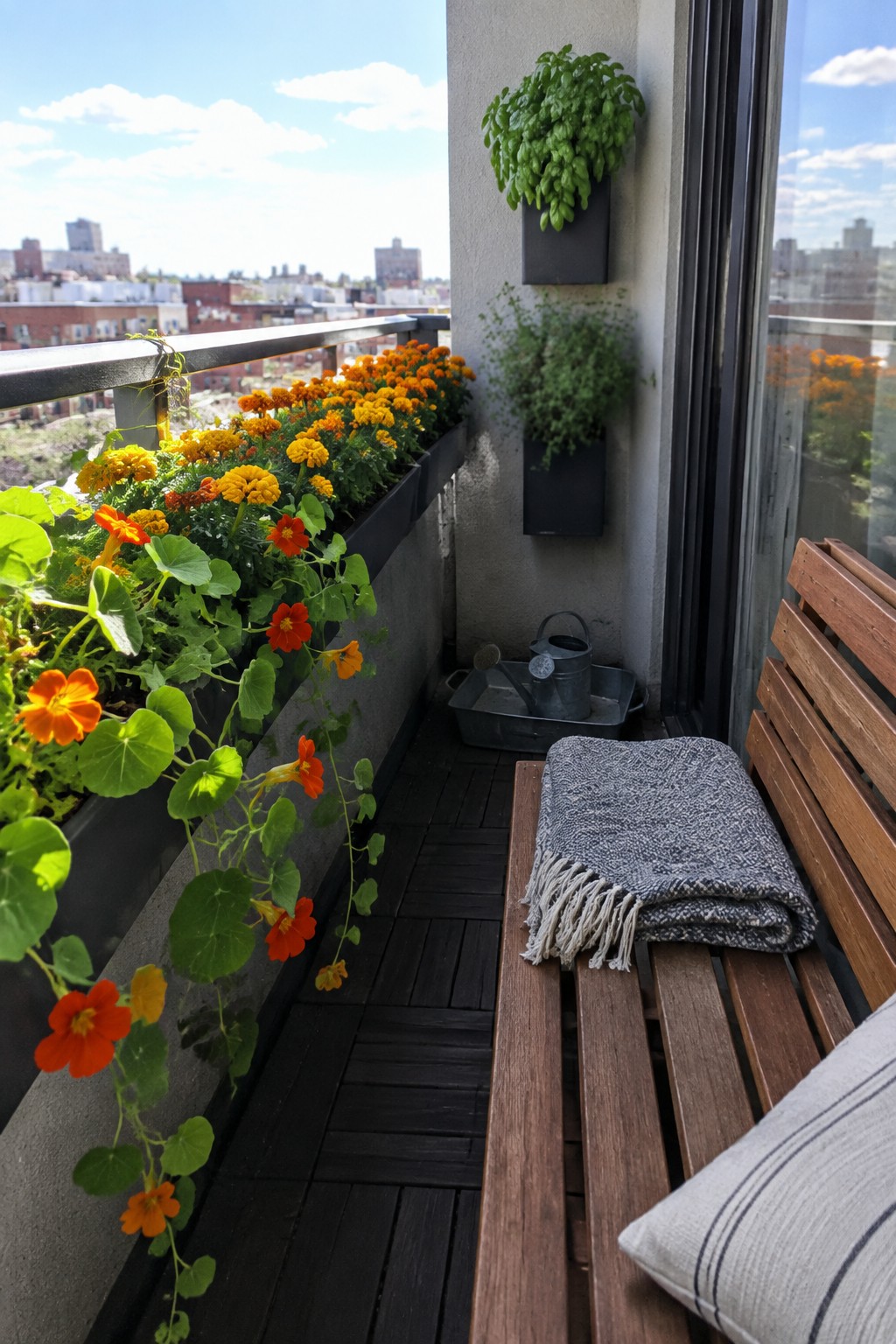
Marigolds can bring a long run of color to a small balcony without taking up floor space. Planting them in a narrow railing box keeps the flowers together and lets them spill a little over the edge.
Choose a sunny spot and use a planter with drainage holes. Marigolds do well in the heat, but a slim container can dry out quickly, so check the soil regularly during hot spells.
Use Marigolds to Mark a Garden Gate
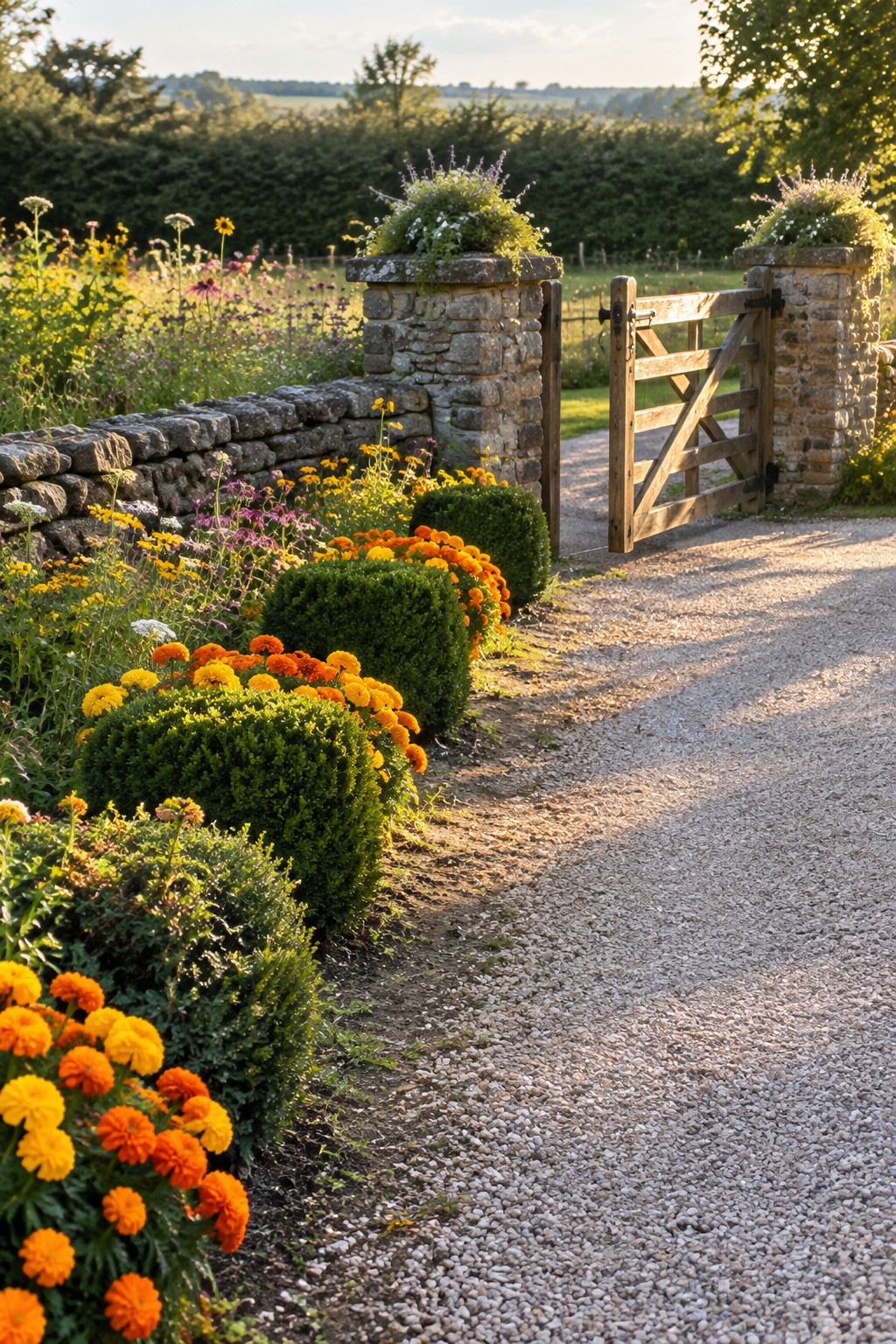
Marigolds can make a garden entrance feel clear and welcoming without needing a formal sign or a tall hedge. Planting them along the path near a gate gives the entrance a cheerful burst of color and helps guide visitors toward the opening.
For a sunny spot, tuck marigolds into the front of the border where they are easy to see and tend. Keep the path edge open enough for comfortable walking, and use low plants near the gate so they do not crowd the entry.
Grow Marigolds in Long Raised Planters
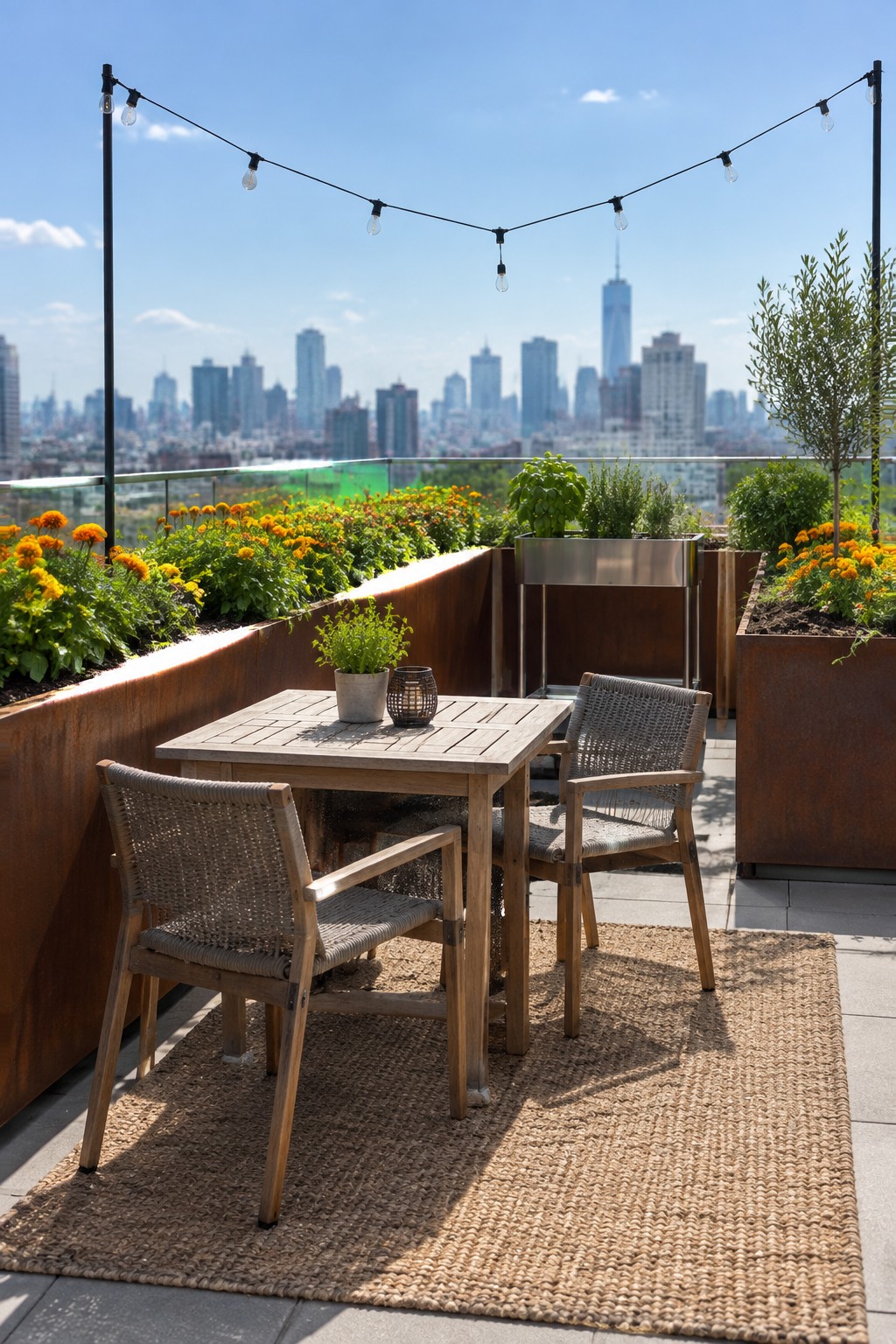
Raised planters make it easy to give sun-loving marigolds a defined place on a terrace. A long bed keeps the flowers together in a bright, continuous band, and its clear edge helps separate planting from the seating area.
Use sturdy planters where the ground is paved or garden soil is limited. Make sure they have drainage holes, and leave enough room for plants to spread without crowding the walkway.
Layer Marigolds Along a Curved Garden Border
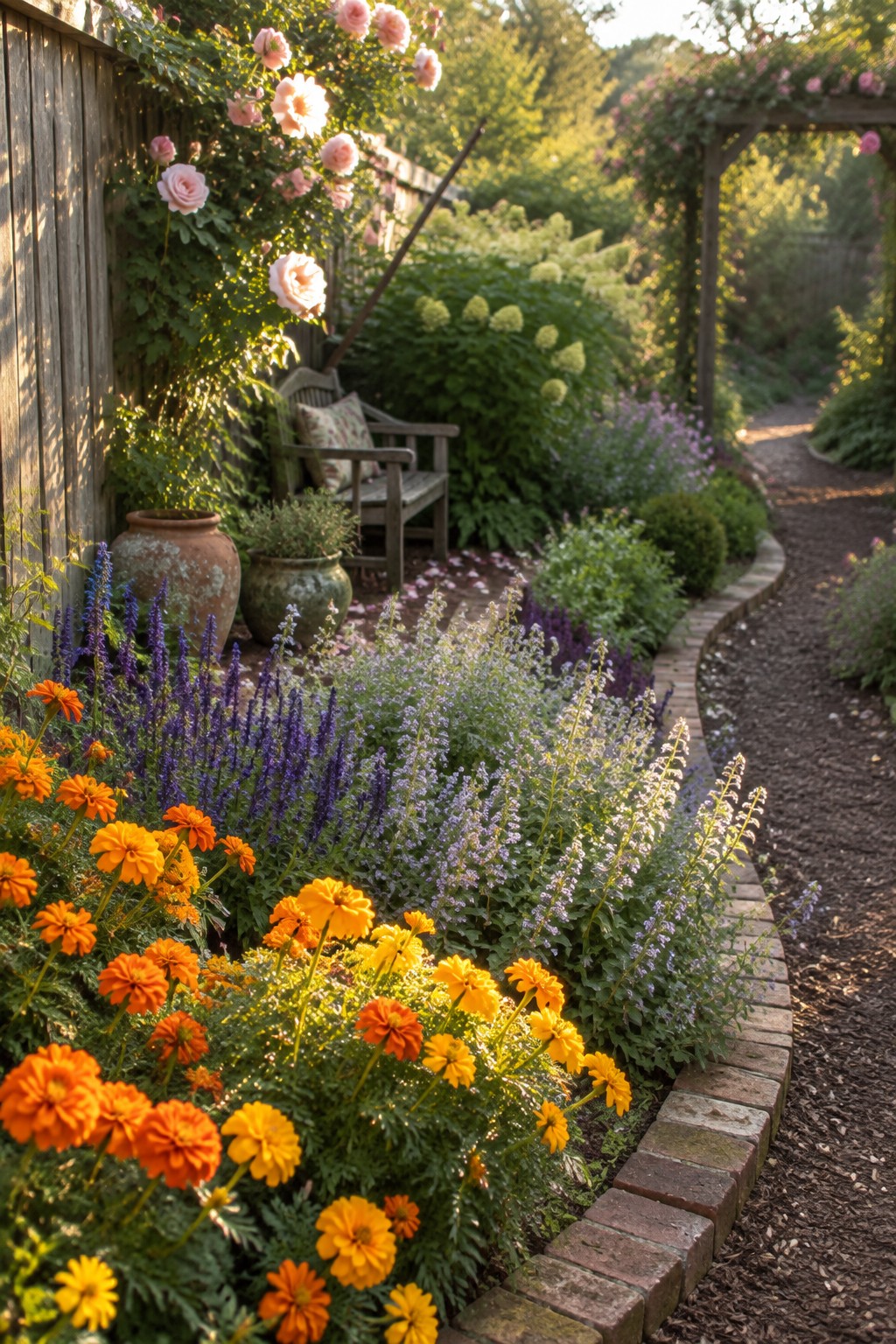
A curved bed gives a garden path an easy, natural shape, and marigolds can bring a bright band of color along its edge. The brick border here makes the curve clear without making the planting feel too formal.
Use this idea beside a mulch or gravel path where the bed has room to bend gently. Plant marigolds near the front so they stay visible, and leave enough space for them to spread without spilling onto the walkway.
Use Marigolds in a Mixed Border
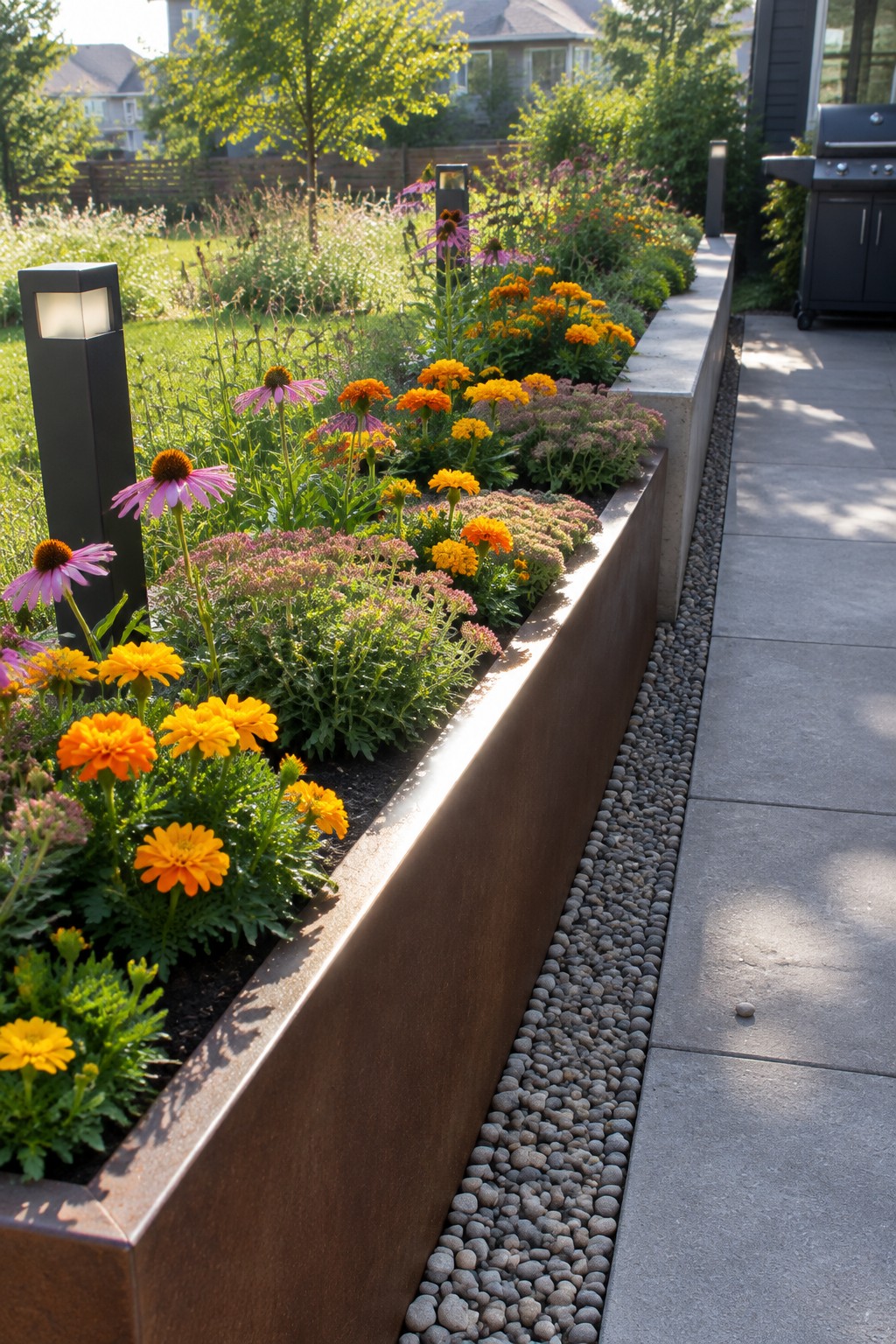
Marigolds fit naturally into a layered flower bed, where their bright blooms can sit among other plants instead of growing in a single row. This kind of planting feels full and varied, and the marigolds still stand out.
In a sunny raised bed, tuck marigolds between taller flowers and lower, spreading plants. Leave enough room for air to move between them, and check the bed regularly so the mix does not become crowded.
Use Marigolds to Step Up a Sloped Garden
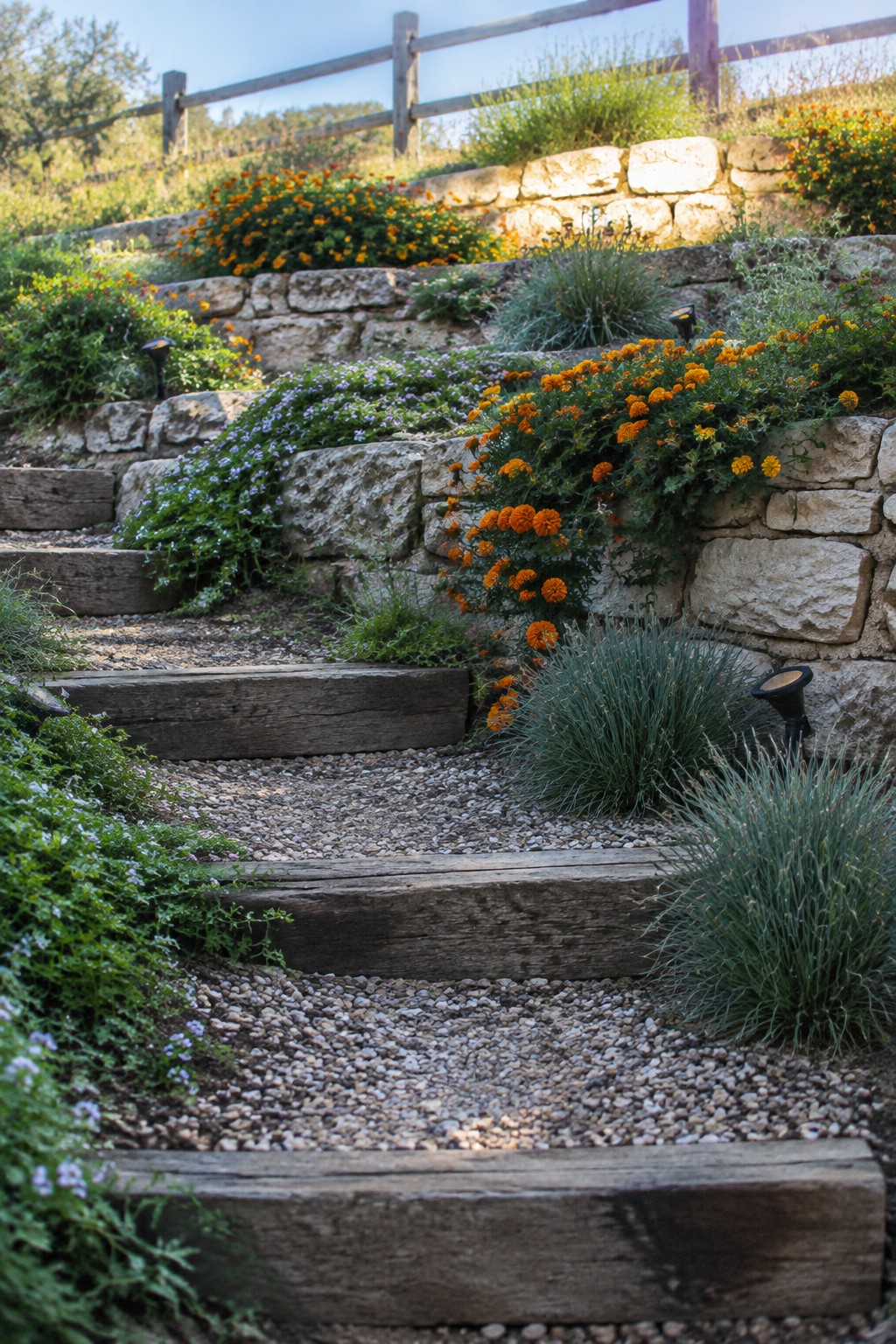
Wooden risers can turn a steep garden path into a series of manageable gravel steps. Marigolds planted along the stone retaining walls bring color to the slope without taking over the walkway.
This approach works well where a flat path would be hard to fit. Keep the steps wide enough to walk comfortably, and leave room beside them for flowers to spread without spilling onto the treads.
Use Marigolds to Edge an Entry Garden
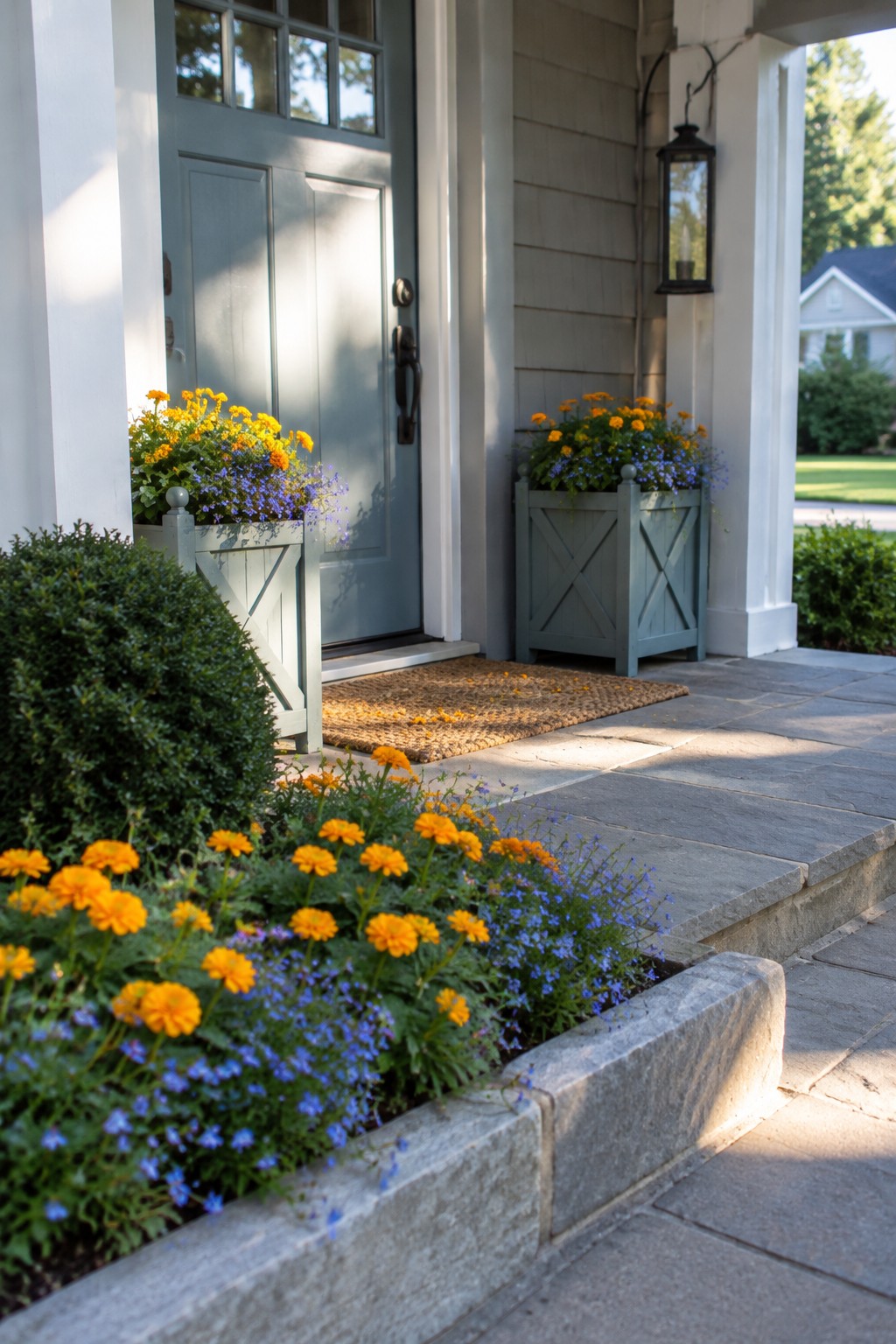
A defined flower bed can make an entry feel cared for without needing a complicated layout. Marigolds work well along a sunny edge, where their bright blooms bring color close to the walkway and help the planting read as one clear border.
Use them in a front garden bed beside stone paving, and repeat the same planting near the door for a connected look. Leave enough room for the flowers to spread, and keep taller plants farther back so the edge stays tidy.
Use Marigolds to Fill Sunny Courtyard Planters
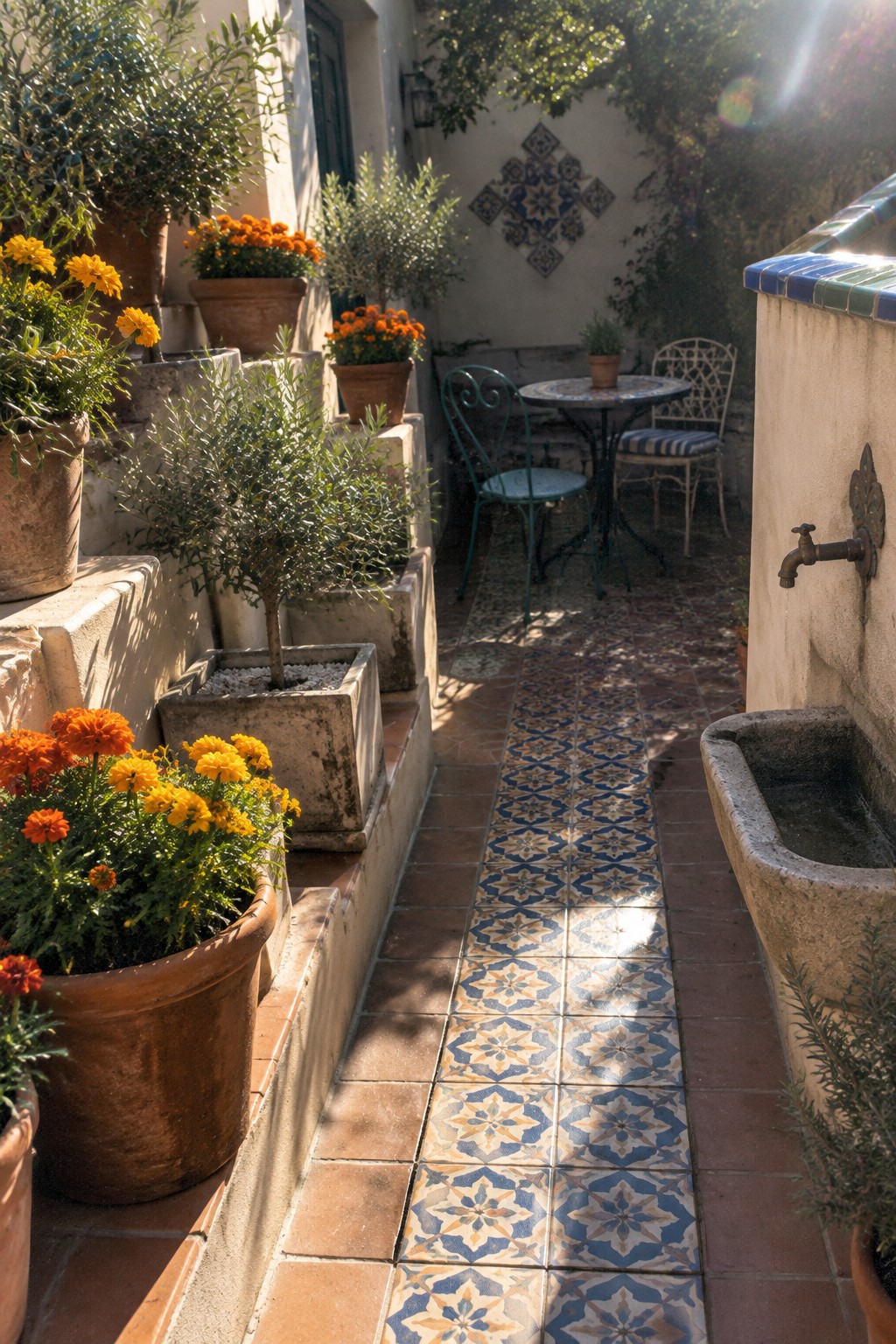
Marigolds are a good fit for a sunny courtyard where planting space is limited. Grouping them in pots along the edge keeps the flowers close to the path and adds color without taking over the walking area.
Use sturdy containers that drain well, and choose a spot with several hours of direct sun. Terracotta pots suit this kind of setting, but they dry out quickly, so check the soil often during hot weather.
Use Marigolds in a Narrow Sunny Border
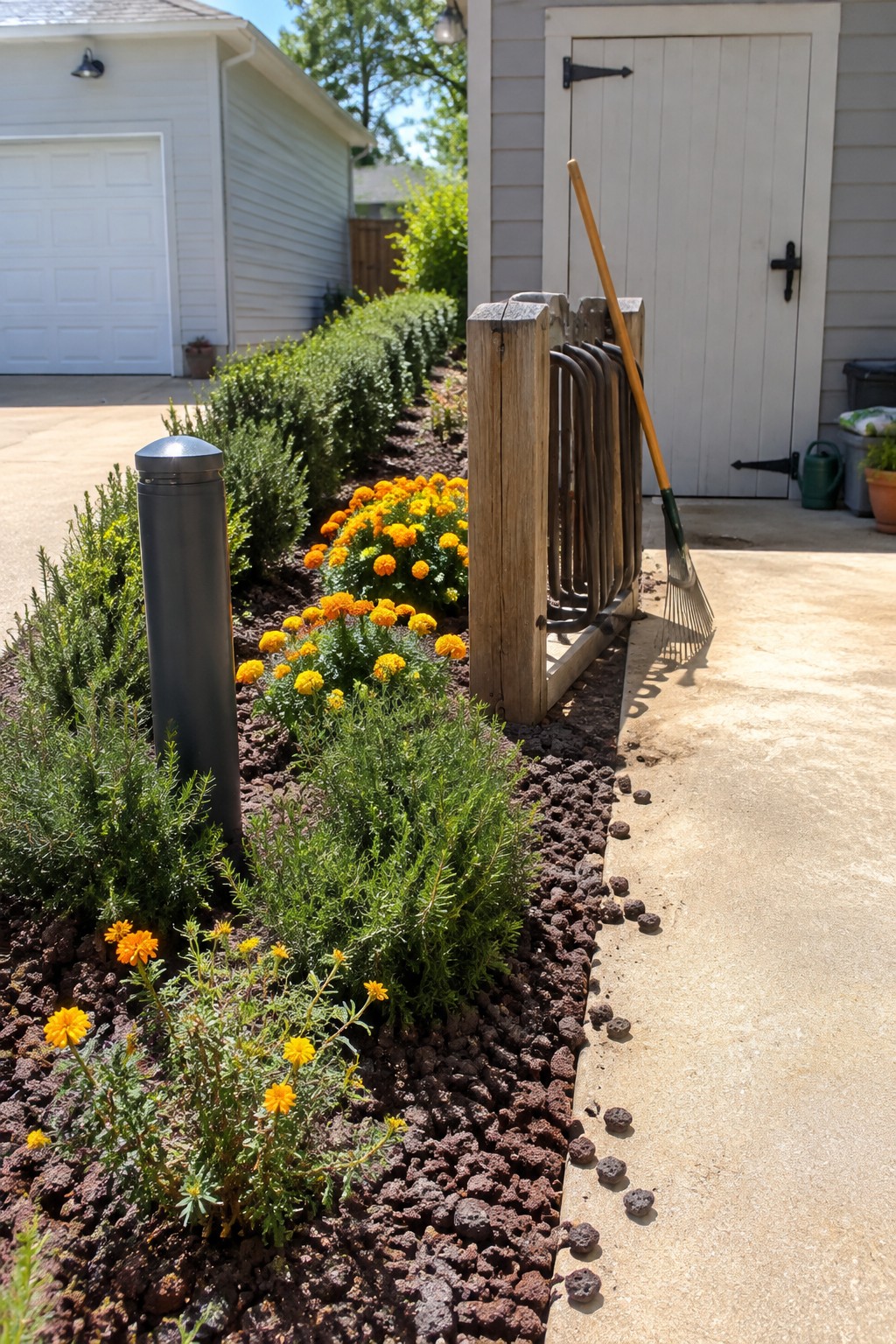
A narrow flower bed can bring color to a driveway or walkway without taking up much room. Marigolds fit well along the front edge, where their bright blooms are easy to enjoy and the planting stays close to the path.
Leave enough space for plants to spread, and keep the bed’s edge clear so it does not spill onto the pavement. Dark gravel or lava rock can cover bare soil, though it will get hot in a sunny spot, so water the plants as needed.
Frequently Asked Questions
Q: How often should I water marigolds in a hot, sunny bed?
A: Water deeply when the top inch of soil feels dry, especially during the first few weeks after planting. Once established, marigolds handle heat well, but they still need a drink during long dry spells.
Q: Can I plant marigolds in poor soil?
A: Yes. They bloom in ordinary, well-drained soil and don’t need a rich bed. Too much fertilizer can encourage leafy growth at the expense of flowers.
Q: How do I keep marigolds blooming through summer?
A: Snip off faded flowers every few days to encourage fresh blooms. If the plants start looking leggy, trim them back lightly.
Q: Will marigolds grow well in pots on a sunny patio?
A: Absolutely. Choose a pot with drainage holes and check it often, since containers dry out faster than garden beds.
