

Dahlias can bring a front yard to life just as summer color elsewhere starts to fade, but their placement matters as much as the blooms themselves.
I find they look best when their height and color work with the path, edging, and plants around them rather than crowding the entry.
A simple border can feel orderly, while a loose mix of dahlias and grasses gives the garden a softer shape that changes through the season.
I’d look for ideas that suit the amount of sun and space in the yard, since a planting that looks balanced in a photo may need adjusting near a real walkway or porch.
These designs offer useful ways to add late-summer color while keeping the front garden welcoming and easy to navigate.
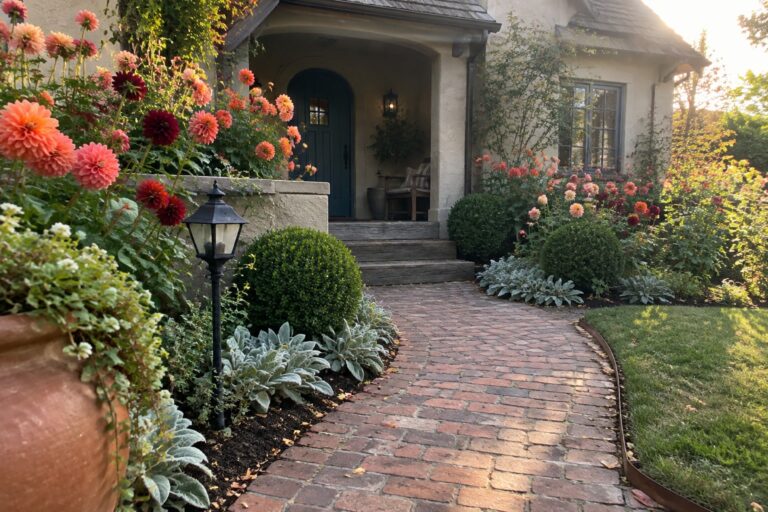
Use a Brick Path to Lead Through the Dahlia Beds

A brick path gives a dahlia garden a clear route to the front door while keeping the planting beds easy to enjoy from close up. The slightly irregular paving suits a cottage-style yard, and tall dahlias along the edges bring late-summer color right to the walk.
Keep the path wide enough for everyday use and leave room beside it for plants to spread. A gentle curve can work well in a smaller front yard, but avoid letting the flowers crowd the paving.
Use a Stepping-Stone Path to Lead Through the Dahlia Beds

A simple stepping-stone path gives a dahlia garden a clear route while leaving room for flowers to fill out along the edges. The repeated slabs make the walk feel planned, and the gravel between them helps keep the path practical.
This layout suits a narrow side yard or front garden where you want to enjoy the flowers up close. Set the stones firmly and leave enough space between them for a comfortable stride. A raised bed edge can help keep gravel from spilling into the planting area.
Use a Curving Path Through The Dahlia Beds
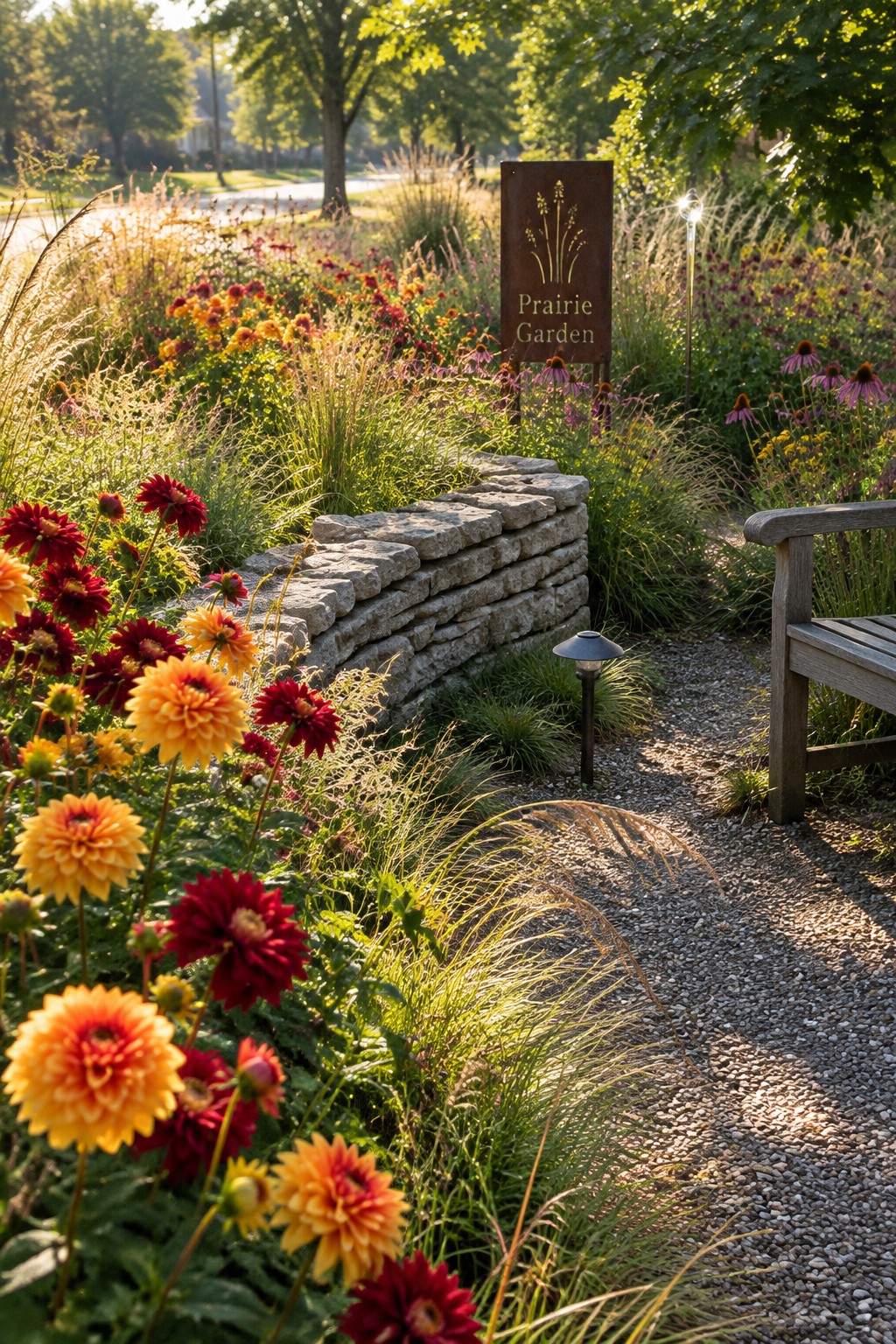
A gently curving path lets you enjoy a dahlia bed from close up instead of viewing it all from the lawn. The bend also makes a small front garden feel like a place to explore, while keeping the flowers from spreading across the walkway.
For a similar layout, set the path through the bed and leave enough room for dahlias to grow without leaning into the walking space. A gravel path and a low stone edge can help define the route, but keep the surface firm and easy to walk on.
Add a Narrow Flower Bed Along the Front Steps

A slim planting strip can make a front walkway feel more connected to the garden without taking over the steps. Here, blue flowers fill the narrow bed between the brick stairs, while dahlias add late-summer color along the sides.
This idea works well on a raised entry where a wide garden bed would block the path. Keep the center planting low enough to leave the steps easy to use, and place taller flowers where they won’t crowd the walkway.
Use a Pebble Path to Guide the Front Garden

A narrow pebble path gives a front garden a clear route to the entrance without taking up much space. Its informal surface suits a cottage-style home, and it lets flowers and grasses grow close along the edges.
Use a low stone border to keep the path from spreading into the planting beds. Dahlias can bring late-summer color beside it, but leave enough room to walk comfortably and tend the flowers.
Use Large Pots to Bring Dahlias Near the Entry

Oversized pots make it easy to bring late-summer color right up to a front door. Dahlias planted in terracotta containers stand out beside the stone steps, and you can move the pots as the season changes.
This works well when there isn’t room for a full flower bed near the entrance. Choose pots with drainage holes, and leave enough space on the steps for people to walk comfortably.
Add Dahlias Along a Front Garden Path
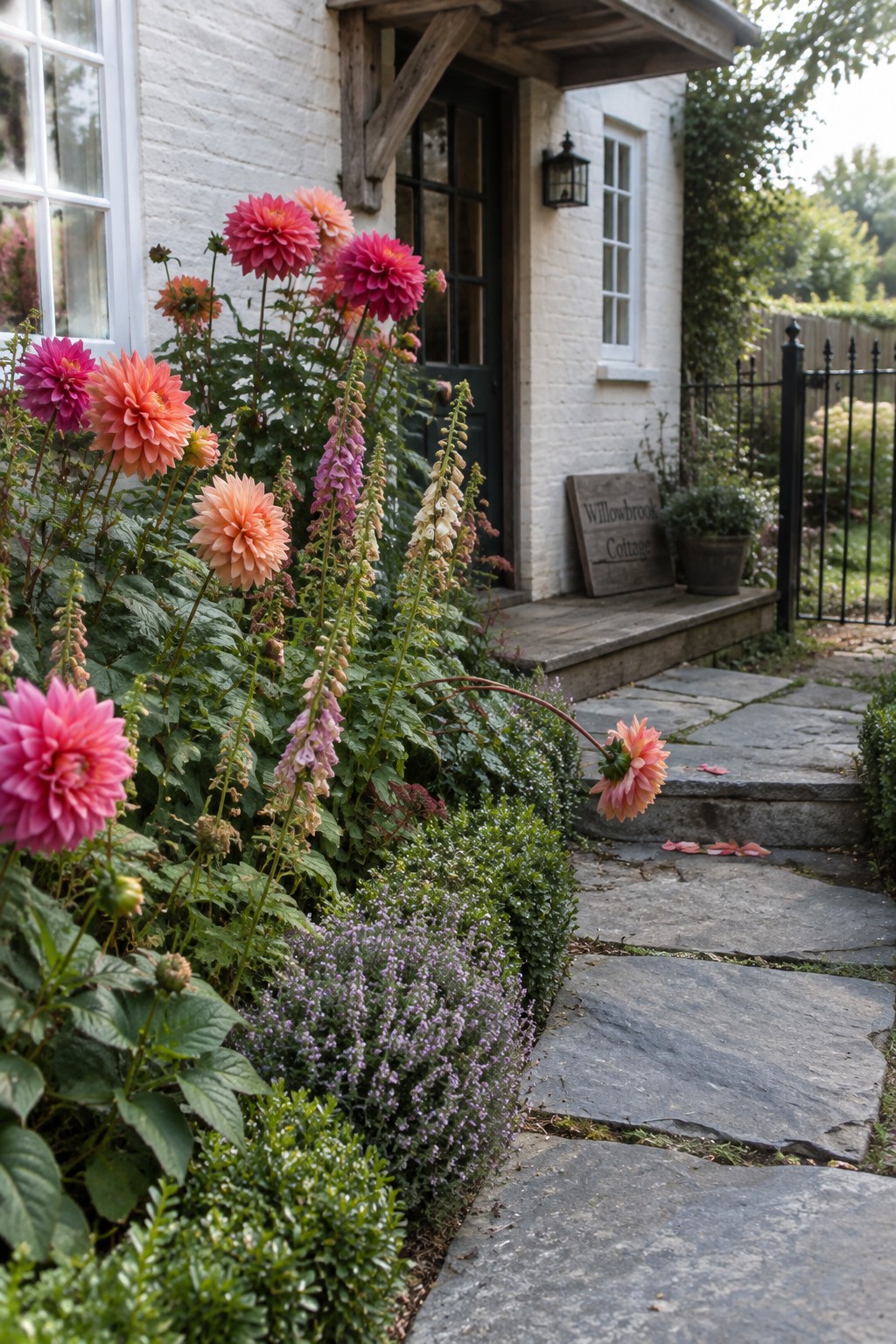
Dahlias planted beside a front path bring late-summer color right up to the entrance. The flowers make the walkway feel part of the garden, rather than a route that simply cuts through it.
For a similar look, plant dahlias along one edge of a stone path and leave enough room for people to walk comfortably. Mix in lower flowers near the stones, and check the mature height of taller dahlias so they do not spill across the route.
Grow Dahlias in Raised Front-Yard Beds

Raised beds make it easier to give dahlias a defined place near the front entry, while keeping their colorful blooms close to the path. A galvanized trough is one simple option, and the extra soil depth gives roots room to grow.
Use a bed like this where you have a narrow strip beside a walkway or fence. Leave enough room to pass comfortably, and keep taller dahlias toward the back so they do not crowd the path.
Plant Dahlias Along a Curved Front Garden Bed

A curved flower bed can make a front yard feel more natural than a straight strip beside the walkway. Dahlias fit well into this kind of border, where their late-summer blooms can stand out among lower flowers and grasses.
Use a low stone edge to keep the bed’s shape tidy, and leave enough room for dahlias to spread without crowding the path. This approach works well beside a front walk or porch, especially when the house has a simple entry.
Mark the Front Garden Entry With Dahlia Beds

A simple path through the front garden gives dahlias a clear place to shine without making the yard feel crowded. Here, the gravel walkway passes between low stone edging and flower beds, making the entrance easy to follow.
Use this idea beside a front walk or gate, keeping the path wide enough for everyday use. Plant dahlias in clusters along the edge, and leave room between them so the beds stay tidy as the flowers grow.
Let Dahlias Edge a Garden Path

A stone path can make a front garden feel easy to walk through while giving the planting a clear shape. Dahlias along the edge add late-summer color right where it can be enjoyed up close.
Leave enough room for the flowers so they don’t spill across the walking surface, and choose varieties that suit the path’s width. This approach works especially well for a winding entry path, where a few well-placed plants can guide the way to the door.
Plant Dahlias Along Front Steps

Stone steps can feel more connected to the front garden when dahlias grow right beside them. The flowers add late-summer color along a route people use every day, while the stone provides a simple edge for the planting.
Leave enough room for the steps and handrails, and choose a spot with good sun. A mix of burgundy and coral dahlias keeps the bed lively, but avoid letting tall stems lean into the walking space.
Use Raised Beds to Organize Front-Yard Dahlias
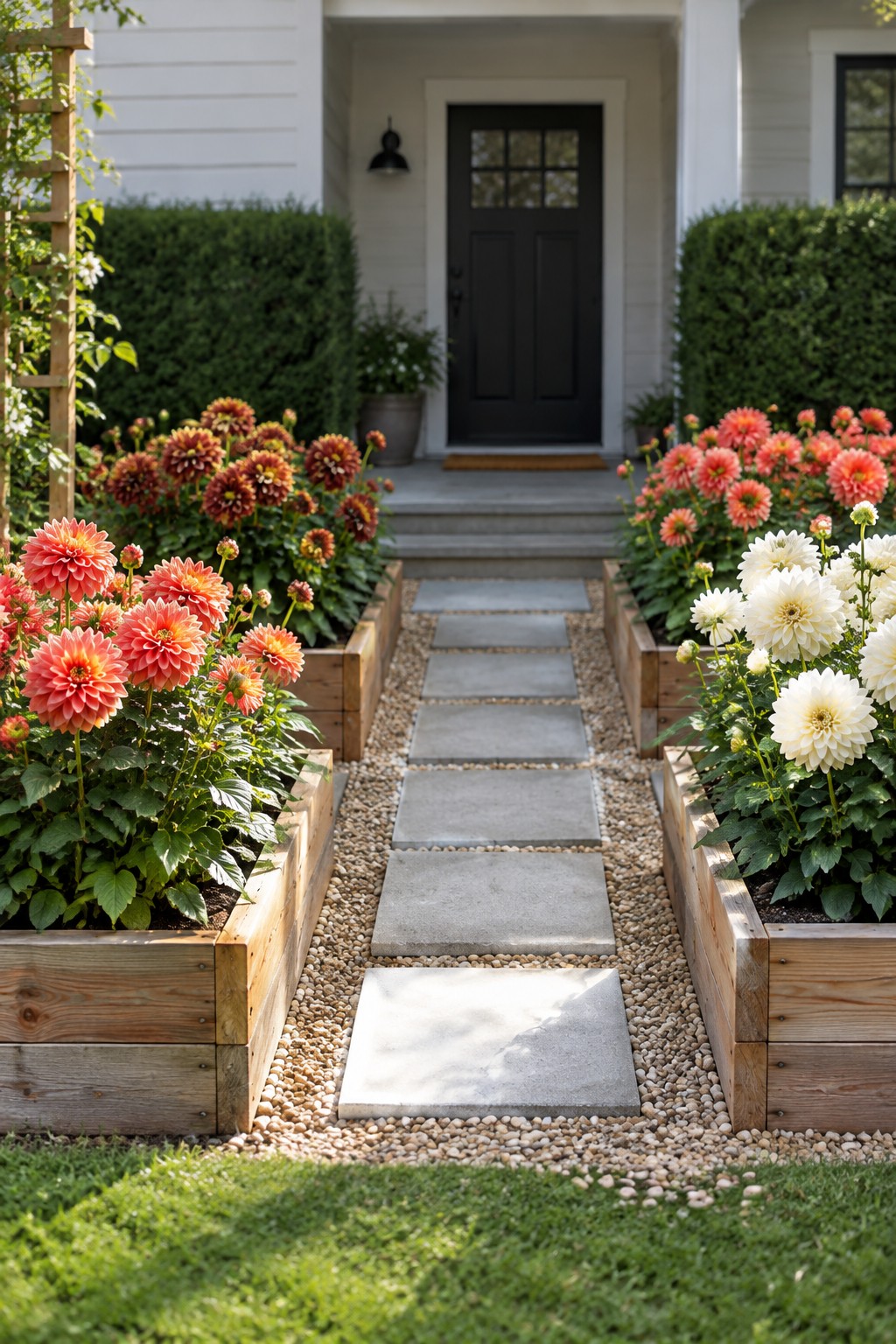
Raised beds give a front-yard flower garden a clear shape and keep the planting neatly contained. Here, timber beds hold colorful dahlias on either side of a stepping-stone path, making the route to the door easy to follow.
This setup works well when you want a defined garden without planting directly into the lawn. Leave enough room for dahlias to spread and for people to walk comfortably between the beds. Keep the path and bed edges easy to maintain, especially near the front steps.
Use Dahlia Pots to Brighten the Front Entry

Large pots make it easy to bring dahlias right up to the front door, where their late-summer color is hard to miss. They also add flowers to a small entry without needing a full garden bed.
Place one or two sturdy containers beside the steps, leaving a clear path to the door. Choose pots with good drainage, and keep the dahlias watered as the soil can dry out quickly in containers.
Use a Gravel Path to Guide the Front Garden

A gravel path with stepping stones gives a front garden a clear route to the door without taking up much planting space. Dahlias can grow along the edges, where their late-summer color is easy to enjoy as you walk up.
This layout suits a small or informal front yard. Keep the stones wide and steady underfoot, and leave enough room between the plants and path so dahlias do not spill across it as they grow.
Layer Dahlias Along a Narrow Garden Path

A narrow path can make a small front garden feel like a place to wander, rather than just a strip beside the house. Dahlias planted along its edge bring late-summer color close to the entry without taking up the walking space.
Use compact varieties near the paving, with taller plants set farther back so the path stays clear. This idea works well in a side yard or narrow front garden, but leave enough room for dahlias to spread and for people to pass comfortably.
Add a Stone Path Through the Dahlia Garden
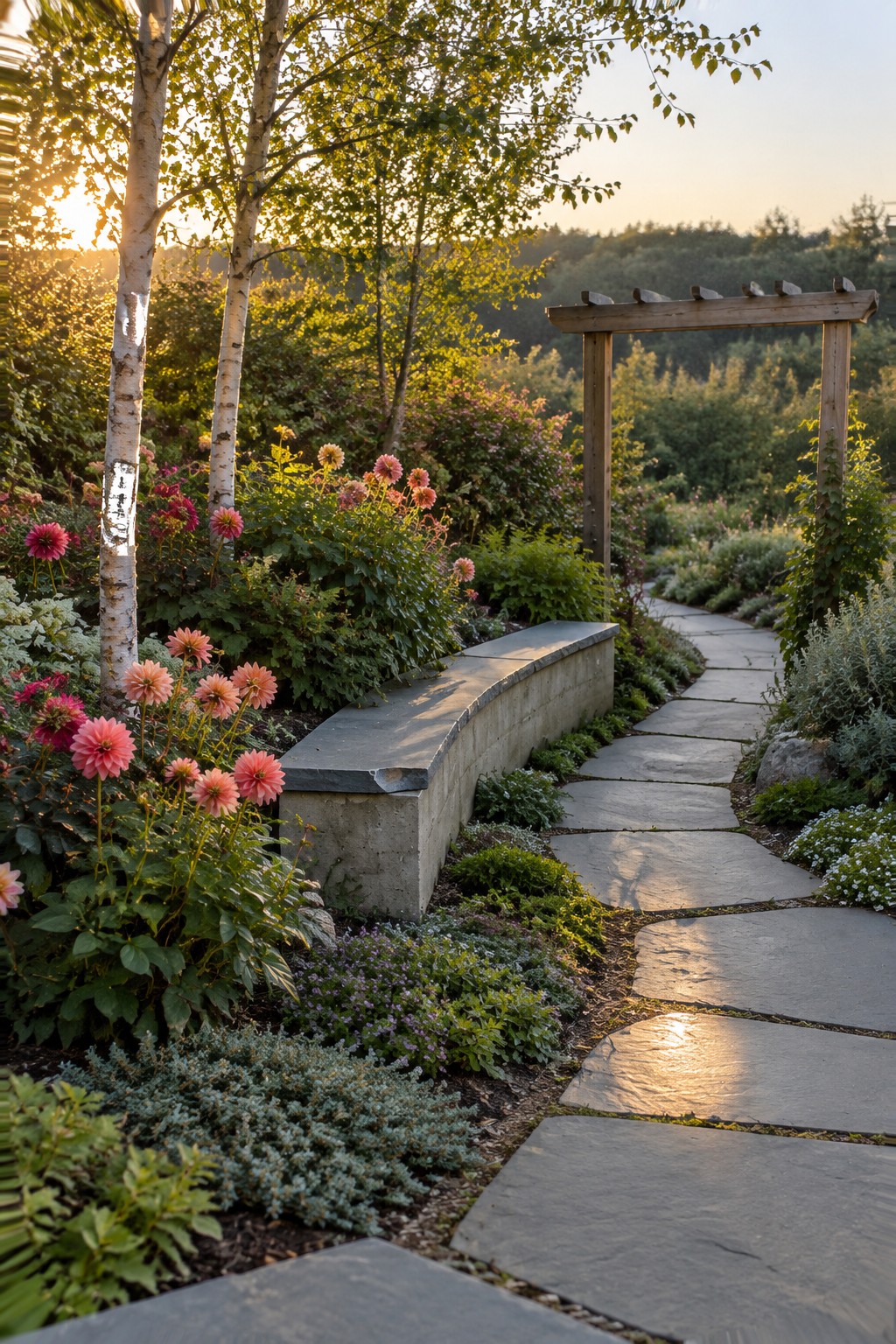
A stone path gives a front garden a clear route through the planting, rather than leaving flowers as a bed you only view from the edge. Dahlias beside the path can bring late-summer color close to the walk while the stones keep the route easy to follow.
Use broad, stable pavers and leave enough room for plants to grow without spilling across the walking surface. This works well in a garden with a natural, informal feel; a simple curve can help the path fit around existing beds.
Use Dahlias to Bring Color to the Front Entry

A front-yard flower bed can make a simple entry feel more personal. Dahlias in pink and deep burgundy bring late-summer color close to the door, while a low stone edge gives the planting a clear shape.
This idea works well beside a narrow walkway or a small porch where there isn’t room for a wide garden. Leave enough space for the plants to spread without spilling onto the path, and choose varieties suited to the amount of sun the bed receives.
Frequently Asked Questions
Q: When should I plant dahlias for late-summer color?
A: Plant tubers outdoors after the last frost, once the soil has warmed. In cooler areas, starting them in pots a few weeks earlier can give them a head start.
Q: How can I keep front-yard dahlias from flopping over?
A: Set a sturdy stake beside each tuber at planting time, so you can tie the stems in as they grow without disturbing the roots. Tall varieties especially need support after a windy day or heavy rain.
Q: What can I plant with dahlias to keep the front yard colorful earlier in the season?
A: Pair them with spring bulbs or low-growing annuals that bloom before the dahlias hit their stride. Choose companions that won’t crowd the dahlia stems or block their sunlight.
Q: Can dahlias grow in a front-yard container?
A: Yes, as long as the pot has drainage holes and room for the variety’s roots. Check the soil often in hot weather, since containers dry out faster than garden beds.
