


In a hot, sunny yard, lavender can bring color and fragrance without demanding constant watering, but the planting layout still matters.
I find it works best when the plants have room to spread and sit in well-drained soil, with paths or edging that keep the garden from feeling untidy.
A mix of heights and textures can make a dry garden feel considered, while gravel or stone helps define the spaces between plants.
Some designs look lovely at first but become hard to maintain, so I’d pay attention to mature plant size and how each area will be watered.
The ideas ahead offer practical ways to shape a lavender garden that suits your yard and holds up through the heat.
Use Stone Paths to Guide the Garden

A simple stepping-stone path gives a garden a clear route without covering the whole yard in paving. Here, the stones sit among gravel and lavender, so the path feels connected to the planting rather than separate from it.
This approach works well in sunny, dry gardens where gravel helps keep the ground tidy and suits drought-tolerant plants. Leave enough room between stones for comfortable steps, and choose a route that stays easy to follow as the plants fill in.
Build A Patio Around Lavender Beds

Lavender beds can make a sunny patio feel connected to the garden without taking over the seating area. Here, low stone edging keeps the planting in its own border, while the paved center leaves room to sit and move around.
Use this layout where you want an easy path through a hot, sunny yard. Choose a free-draining spot for lavender, and leave enough space between plants for air to circulate as they mature.
Use Gravel Joints to Keep Garden Paths Practical
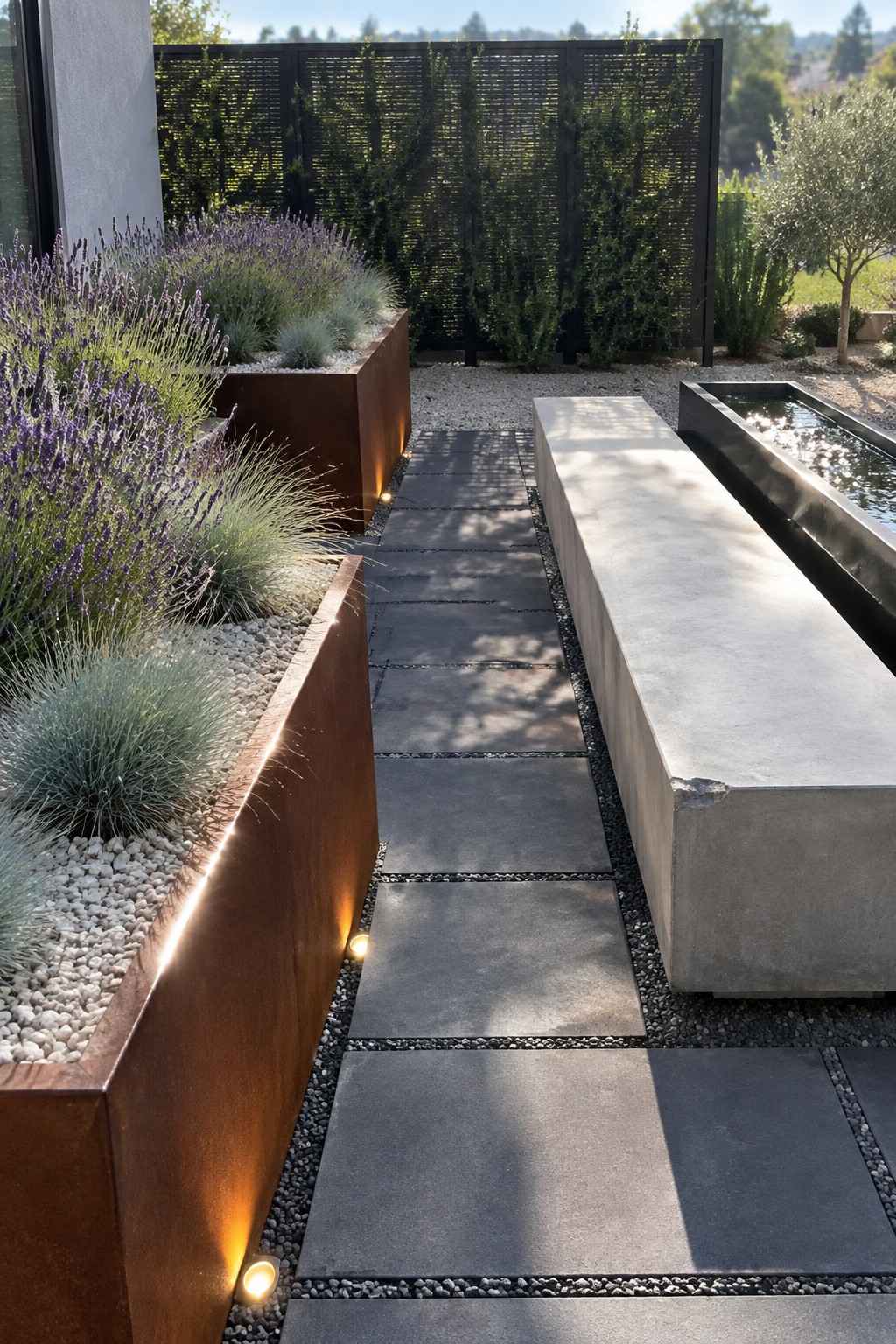
A path of large pavers with gravel between them is a simple choice for a sunny, dry garden. The gravel helps water drain away, while broad stepping stones make the route easy to walk.
Use this layout to connect planting beds or lead through a narrow side yard. Lavender and ornamental grasses suit the gravel edges well, but leave enough space around the pavers to keep them stable and easy to maintain.
Use Stone Steps To Connect Garden Beds
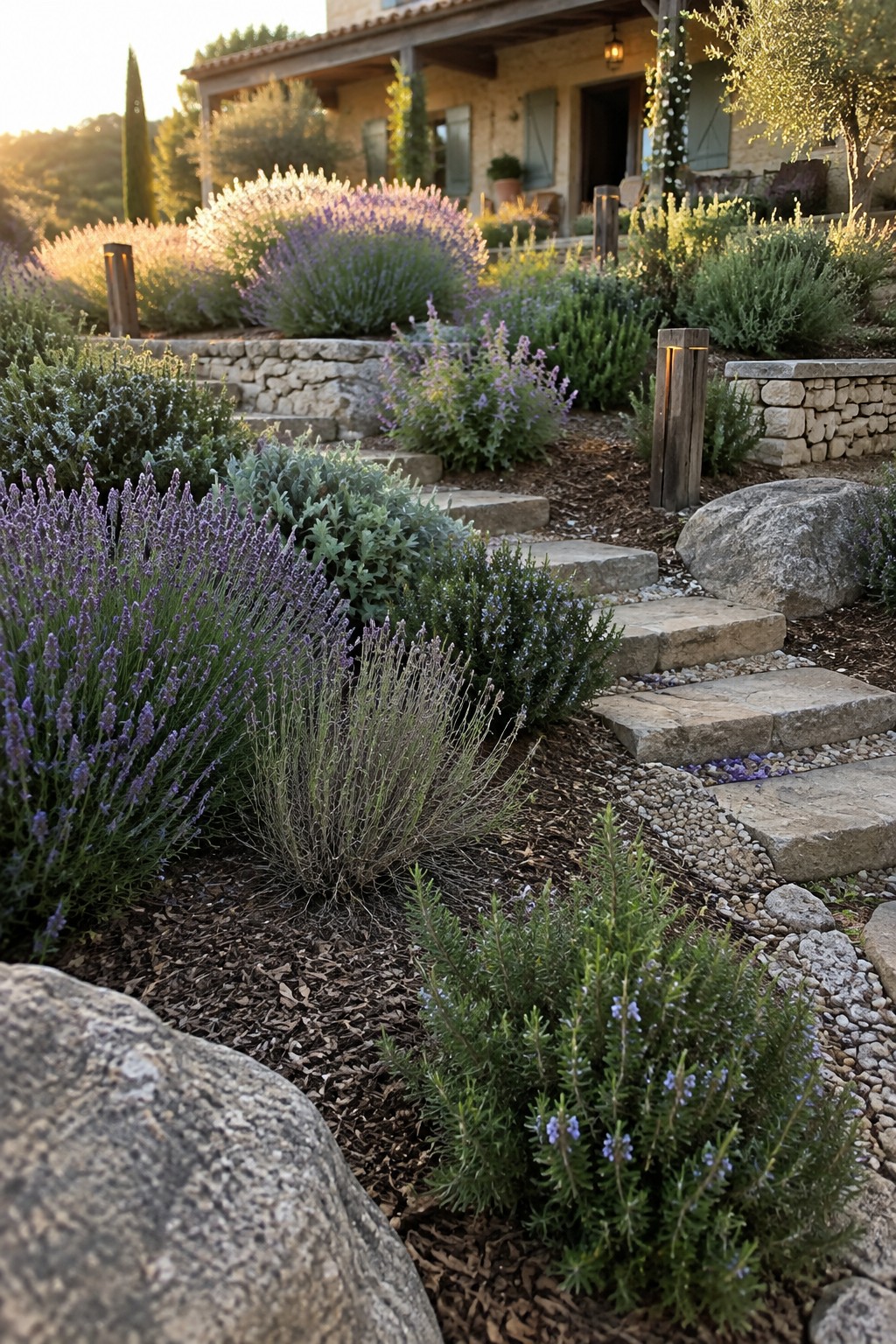
A stepping-stone path can make a sloped lavender garden easier to walk through while giving the planting beds a clear shape. The stone steps here follow the grade instead of forcing the yard into one flat surface.
For a similar layout, set the stones at a comfortable stride and leave small gaps for gravel to drain rainwater. Lavender and other drought-tolerant plants can fill the beds along the route, but keep them trimmed back from the walking surface.
Use Lavender Beds to Edge a Pool Patio
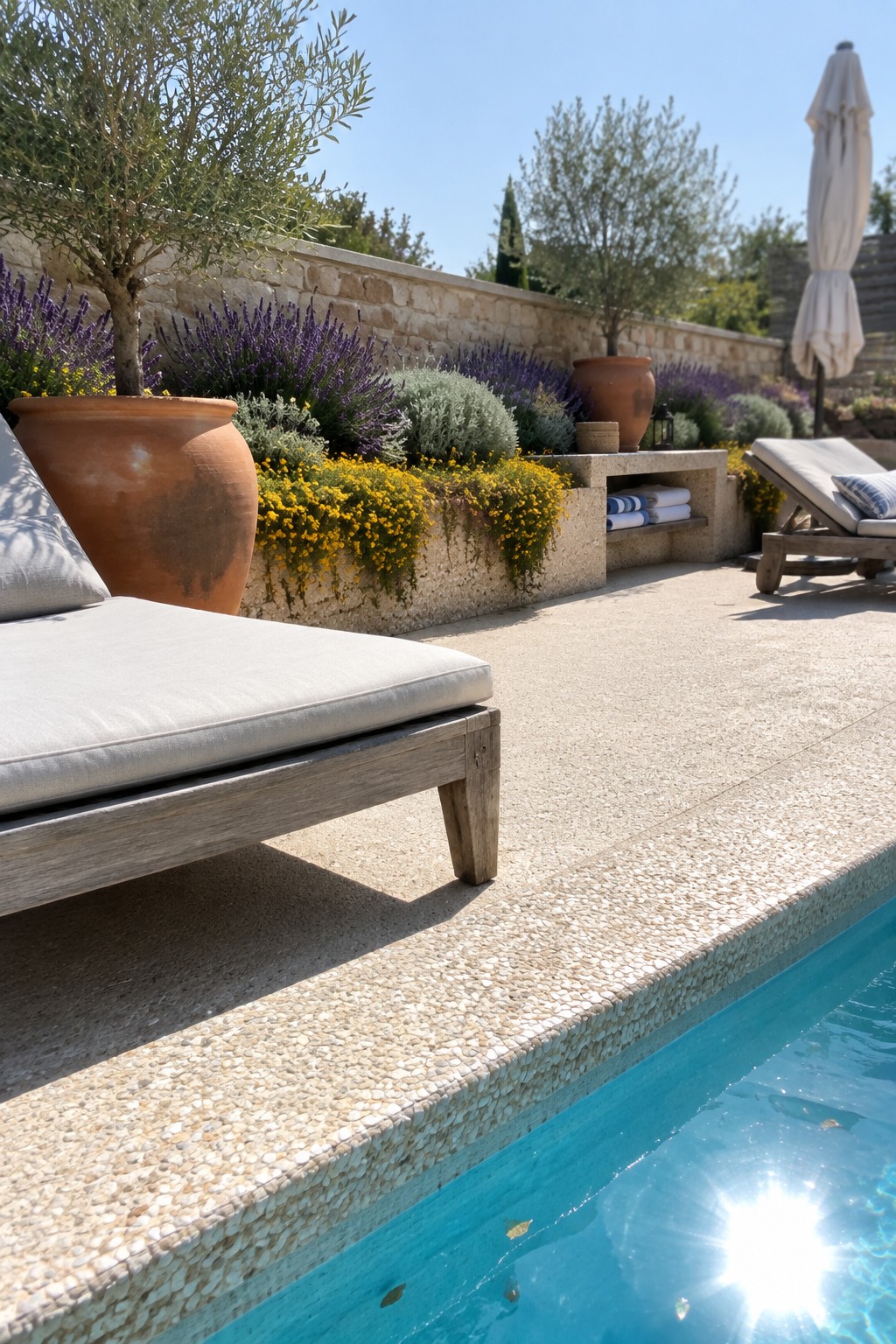
Lavender can make a sunny pool patio feel like part of the garden instead of a separate paved area. Planting it in a low border along the patio gives the seating area a clear edge, while leaving the center open for lounging and walking.
Use a gravelly, well-drained bed where the plants will get plenty of sun, and leave room for lavender to spread. A low stone planter can help define the border, but keep plants back from pool edges and walkways so they do not crowd the space.
Use a Curving Path to Shape the Lavender Bed
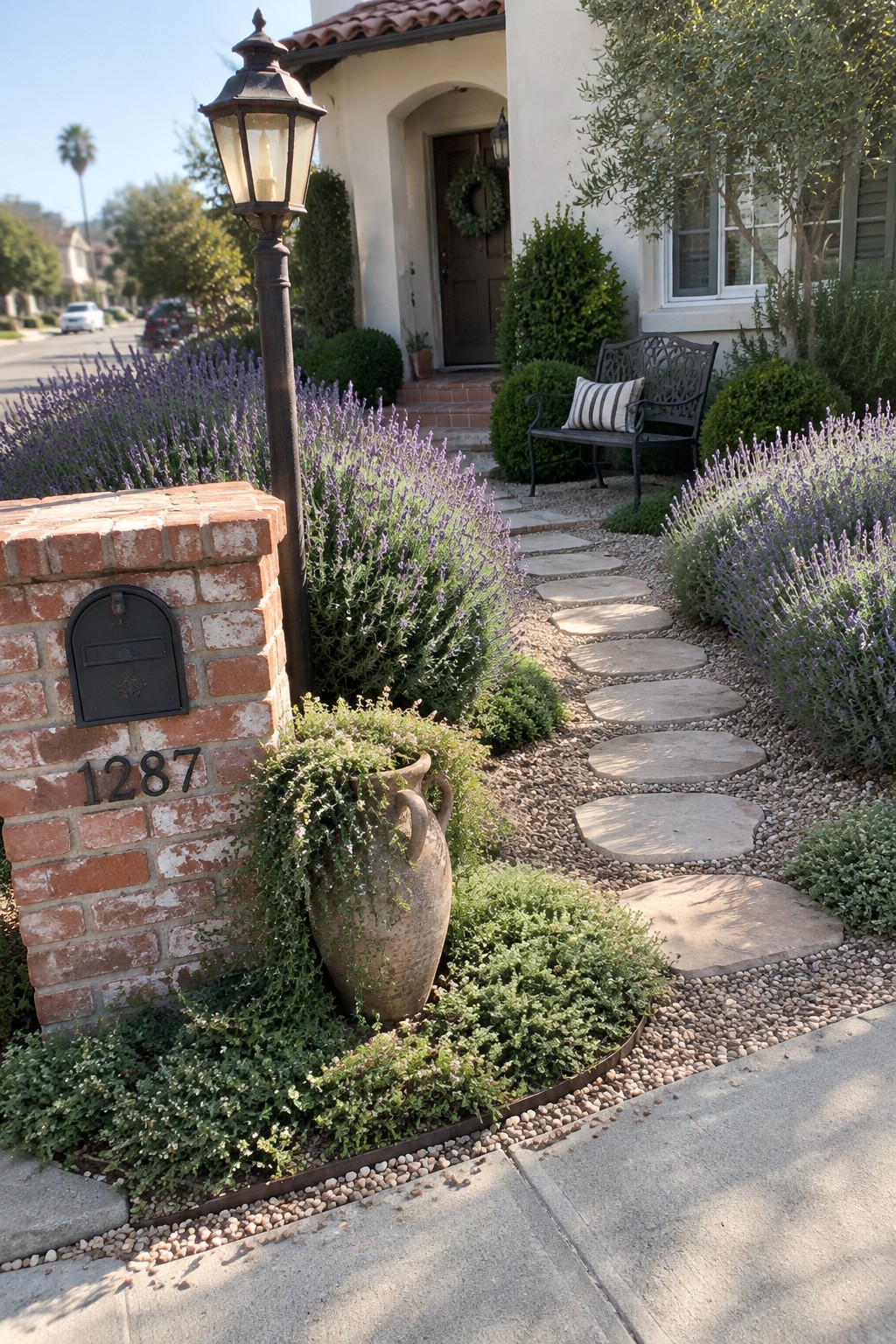
A curving stone path gives a lavender garden a clear route while letting the planting beds feel relaxed rather than rigid. The pale stepping stones stand out against the gravel, and the lavender along the edges makes the path feel settled into the garden.
This layout works well in a sunny front yard where you want a simple, dry surface between the sidewalk and the entry. Leave enough room between plants and stones for lavender to spread, and use gravel that drains freely.
Create a Shaded Garden Path
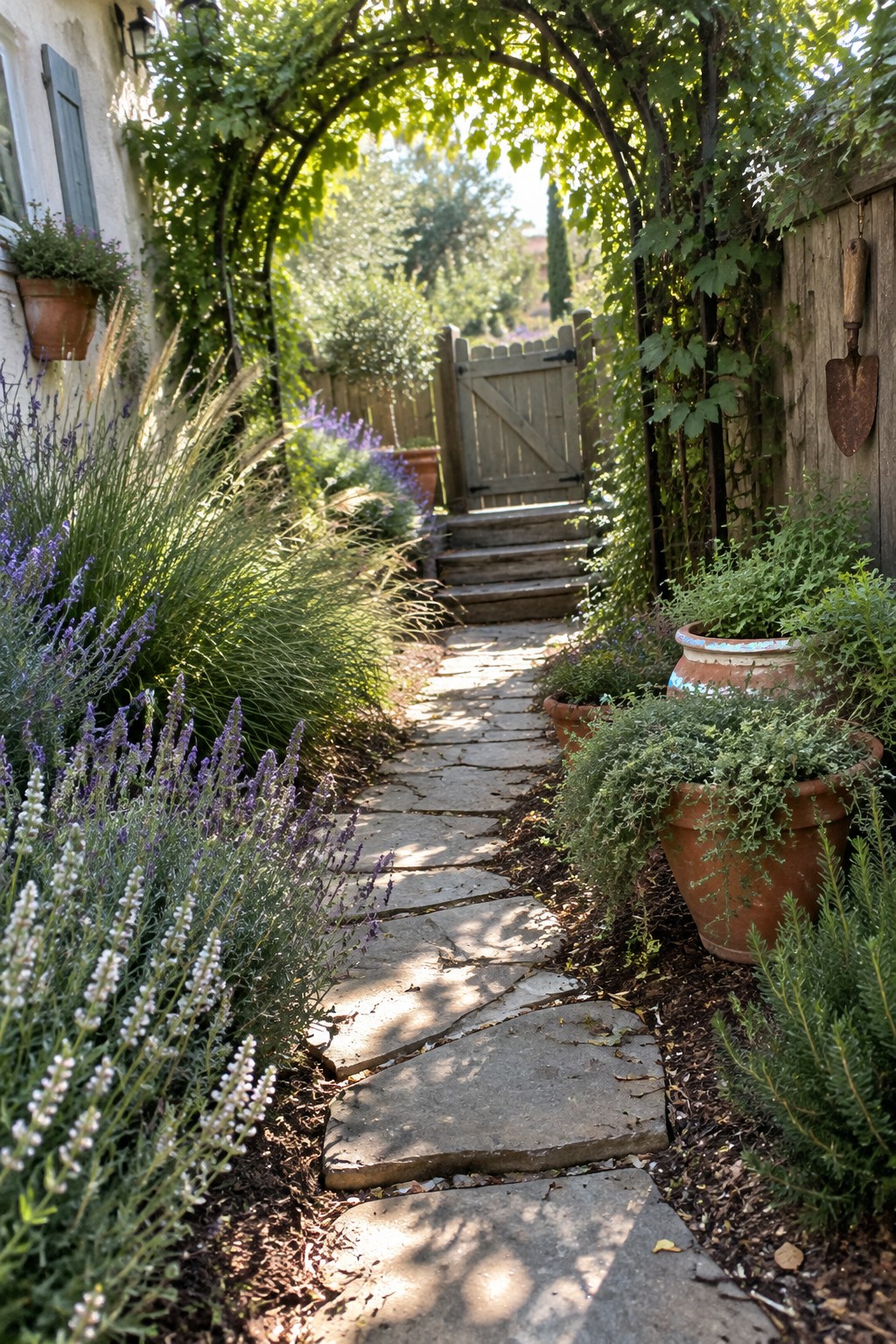
A stone path can make a narrow garden easier to walk through while giving the planting beds a clear shape. Here, broad stepping stones lead toward a wooden gate, and the route feels settled into the garden rather than laid across it.
For a similar look, set stones with enough room to step comfortably and let low plants fill the edges. This works well in a side yard or other tight space, but keep the path clear enough that plants do not spill over the walking surface.
Use Lavender Along a Gravel Garden Path

A gravel path can make a lavender border easier to maintain while giving the planting a clear edge. Lavender suits this layout because it grows well in sunny, well-drained spots, and the path leaves room to tend the plants without stepping into the bed.
Use compact gravel or small rounded stones around the plants, and leave enough space for mature lavender to spread. This works well beside an entry or along a driveway, but avoid crowding the path with plants that will spill across it.
Use a Fountain as a Garden Focal Point

A small fountain gives a lavender planting bed a clear center and makes the garden feel planned without needing much hardscape. Lavender around the basin keeps the feature connected to the rest of the planting.
This idea works well in a sunny courtyard or compact yard where you want a focal point without adding a large paved area. Leave enough space around the fountain for access, and choose a basin that can handle full sun and regular outdoor use.
Plant Lavender Along a Garden Path
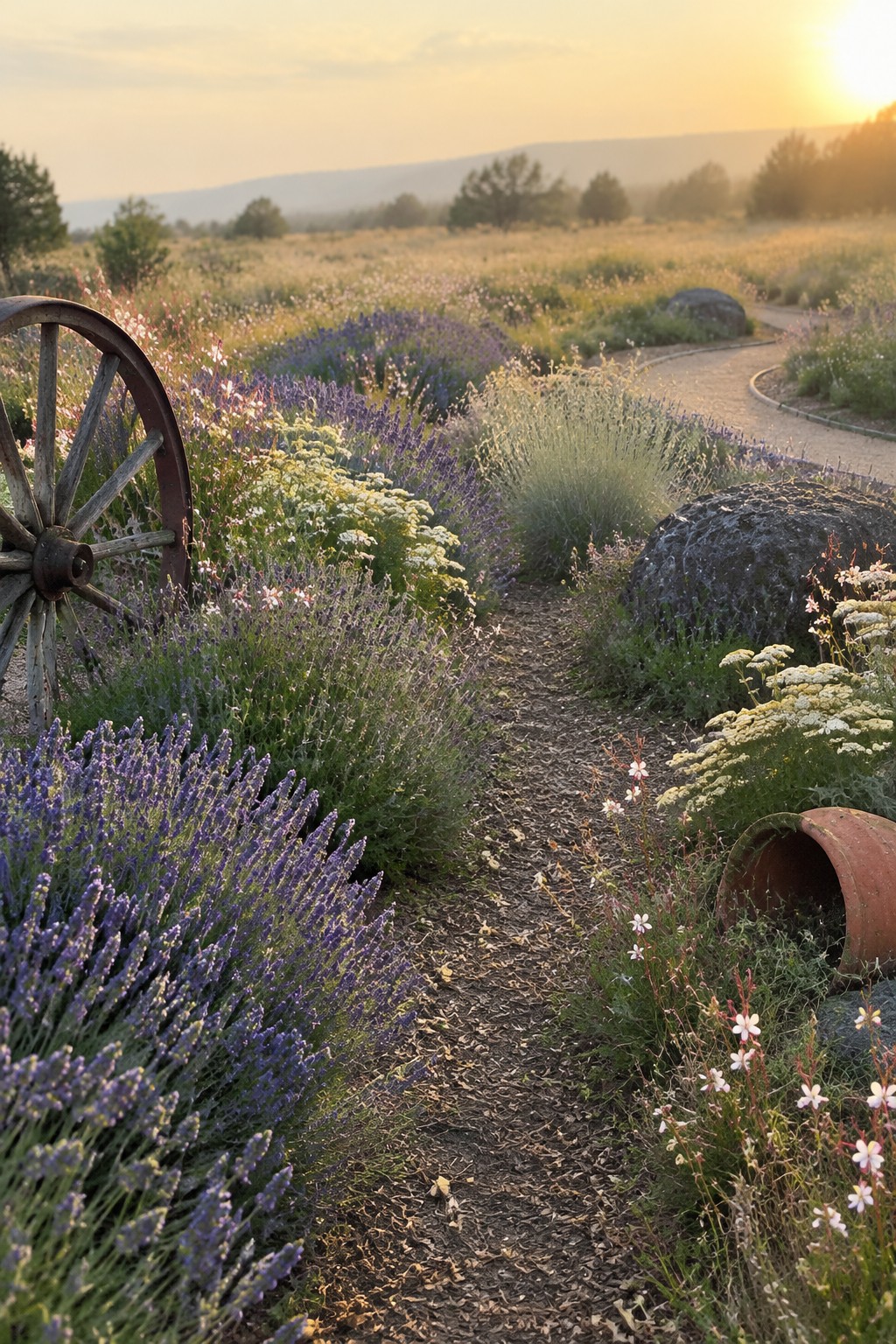
A narrow path through lavender makes a sunny yard feel easy to explore, while keeping the planting in clear beds instead of letting it spread across the whole garden. The dense purple flowers give the route a distinct edge.
Use this idea where the path gets plenty of sun and the soil drains well. Leave enough room for mature lavender on either side, and mix in a few drought-tolerant flowers for variety without crowding the walkway.
Build Stone Steps Into a Sloped Garden
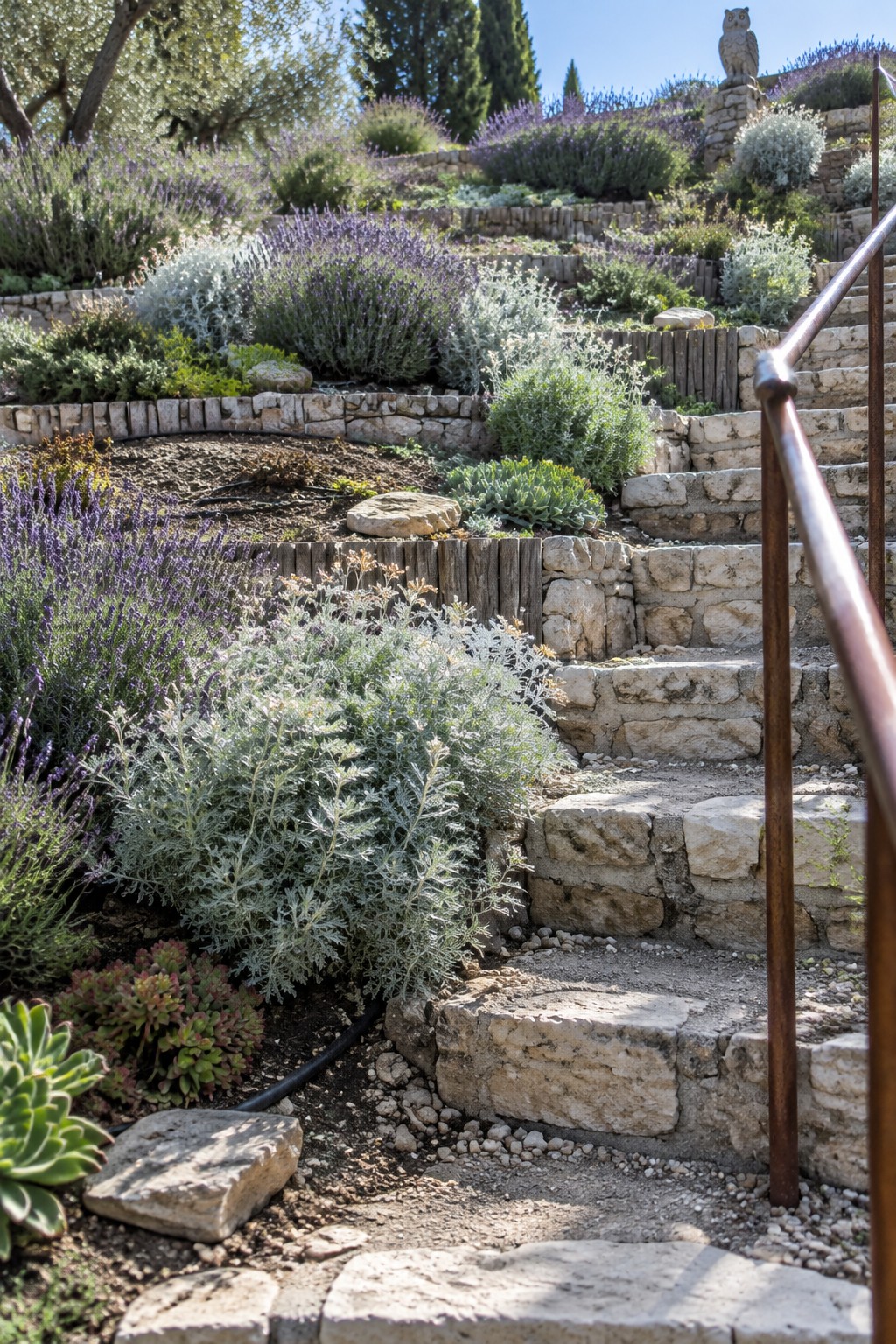
Stone steps make a steep garden easier to walk through while giving the planting beds a clear shape. Here, retaining walls hold the hillside in separate levels, so the stairs feel like part of the garden rather than an afterthought.
For a similar layout, use sturdy, nonslip stone and keep each step comfortable to climb. Lavender can grow along the edges, where it gets plenty of sun, but leave enough room for plants to spread without crowding the steps.
Grow Lavender in Raised Planters on a Balcony

Raised planters make it easier to grow lavender when you have limited outdoor space. They give the plants a defined bed and keep them close to a small seating area, so you can enjoy the flowers without needing a full garden.
Choose a sunny spot and use a free-draining potting mix, since lavender does not like soggy roots. A long planter along a balcony edge can hold several plants, but leave enough room for air to circulate and avoid crowding them.
Use a Gravel Path to Divide Lavender Beds
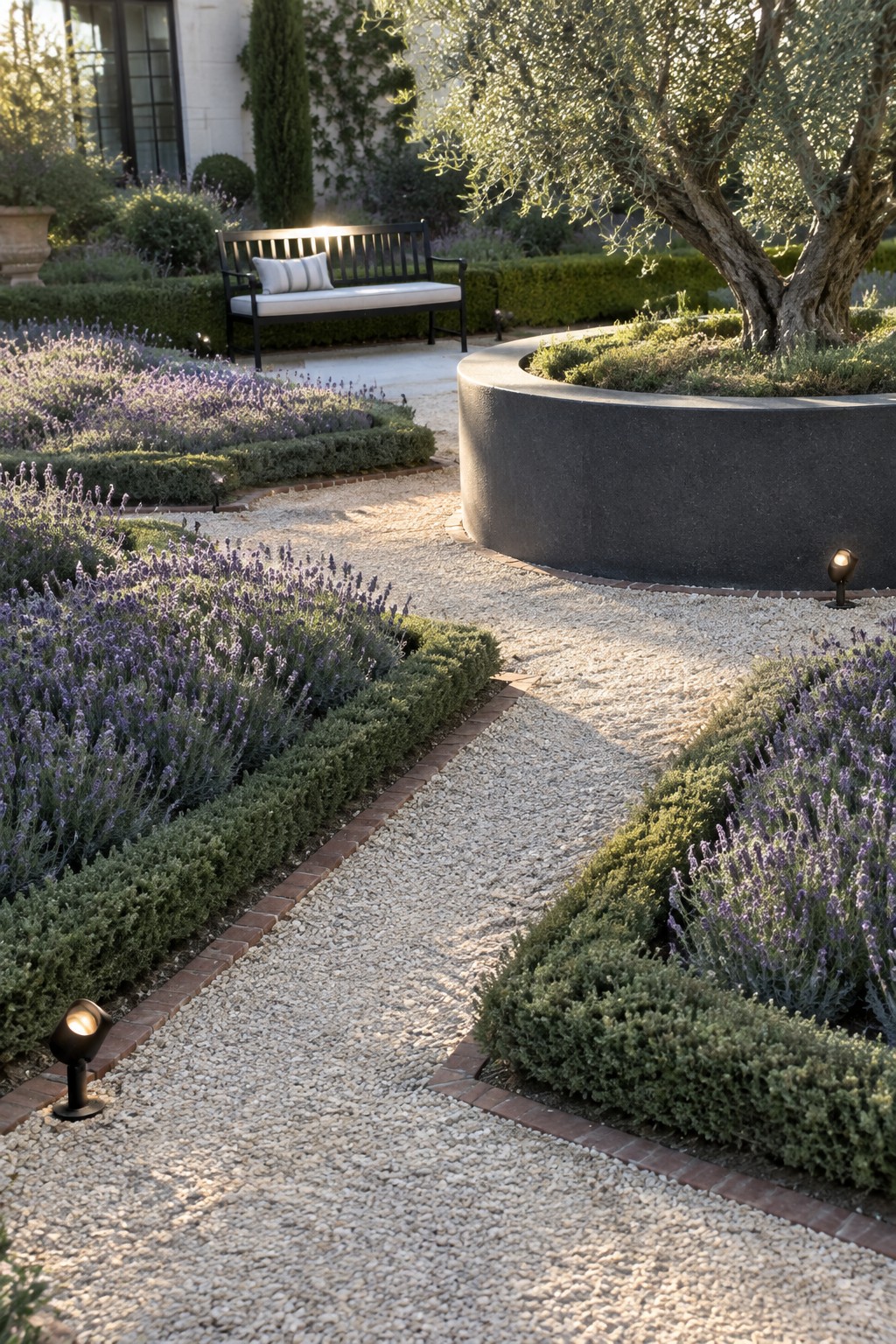
A gravel path can give lavender beds a clear shape without making the garden feel too formal. Here, the pale path curves around a raised tree planter, while low brick edging keeps the lavender and other plantings in neat borders.
This layout works well in a sunny yard where you want easy access for pruning and watering. Use compacted gravel and a firm edge to help limit loose stones, and leave enough width to walk comfortably between the beds.
Use Lavender to Edge a Stone Patio

Lavender planted along a stone path is a simple way to bring color right up to a patio. The low, spreading flowers soften the edge of the paving without making the walkway feel crowded.
This works especially well in a sunny yard with well-drained soil. Leave enough room for plants to grow outward, and trim them back if they start to spill into the path.
Use Lavender to Edge a Stone Entry Path
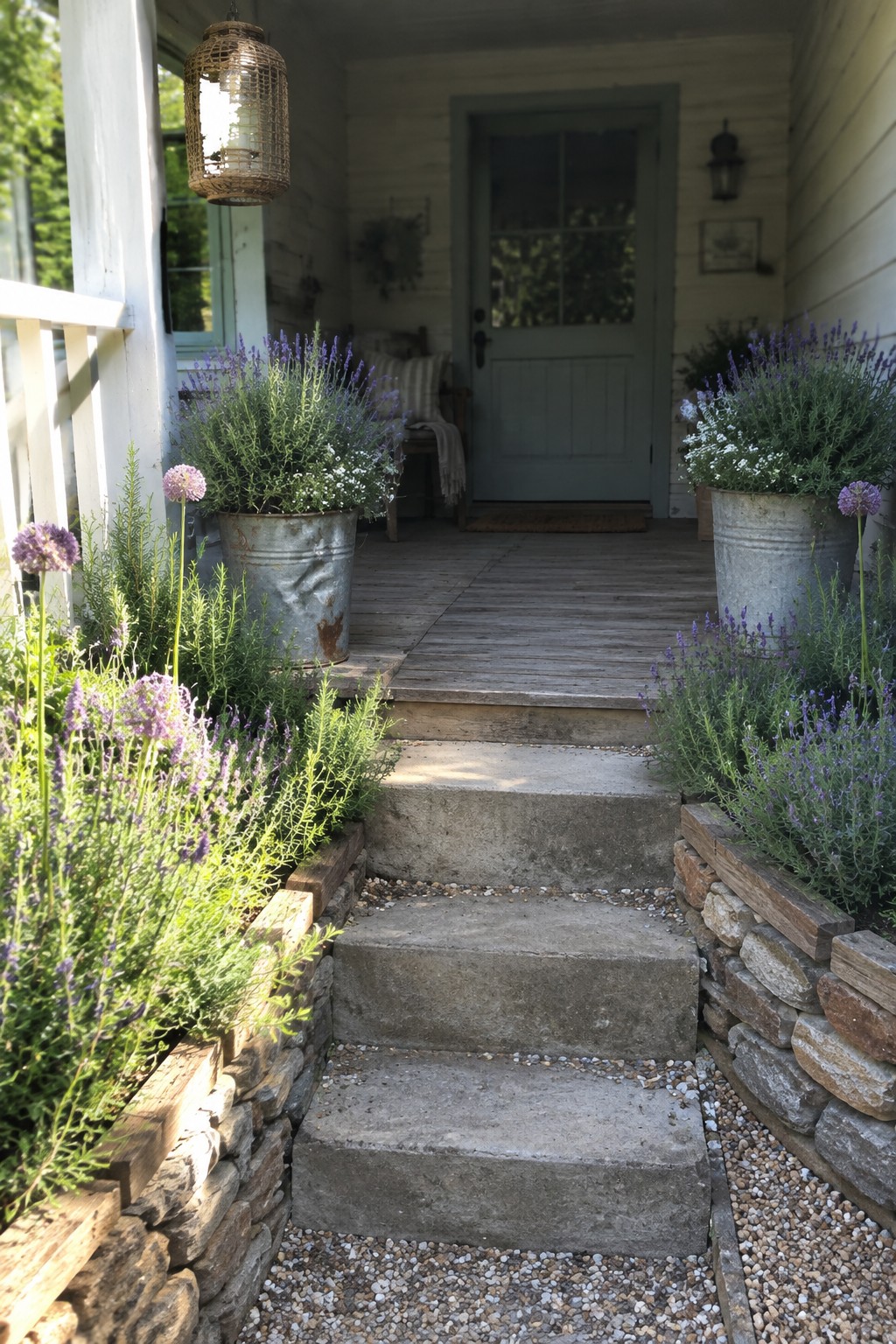
Low stone edging helps keep a garden path tidy while giving lavender a clear place to grow. The plants can spill slightly toward the steps, making a simple route to the door feel like part of the garden.
This approach works well beside a porch or along a sunny entry walk. Choose a well-drained spot, and leave enough room for the lavender to spread without crowding the steps.
Use a Gravel Path to Organize Lavender Beds

A gravel path gives a sunny garden a clear route while keeping planting beds easy to reach. Lavender works well along its edges, where the informal planting softens the path without crowding it.
Use compacted gravel for a stable walking surface, and edge it with brick or stone to keep the stones from spreading into the beds. Leave enough room for lavender to mature, since crowded plants can be harder to maintain.
Use Lavender to Line a Garden Path
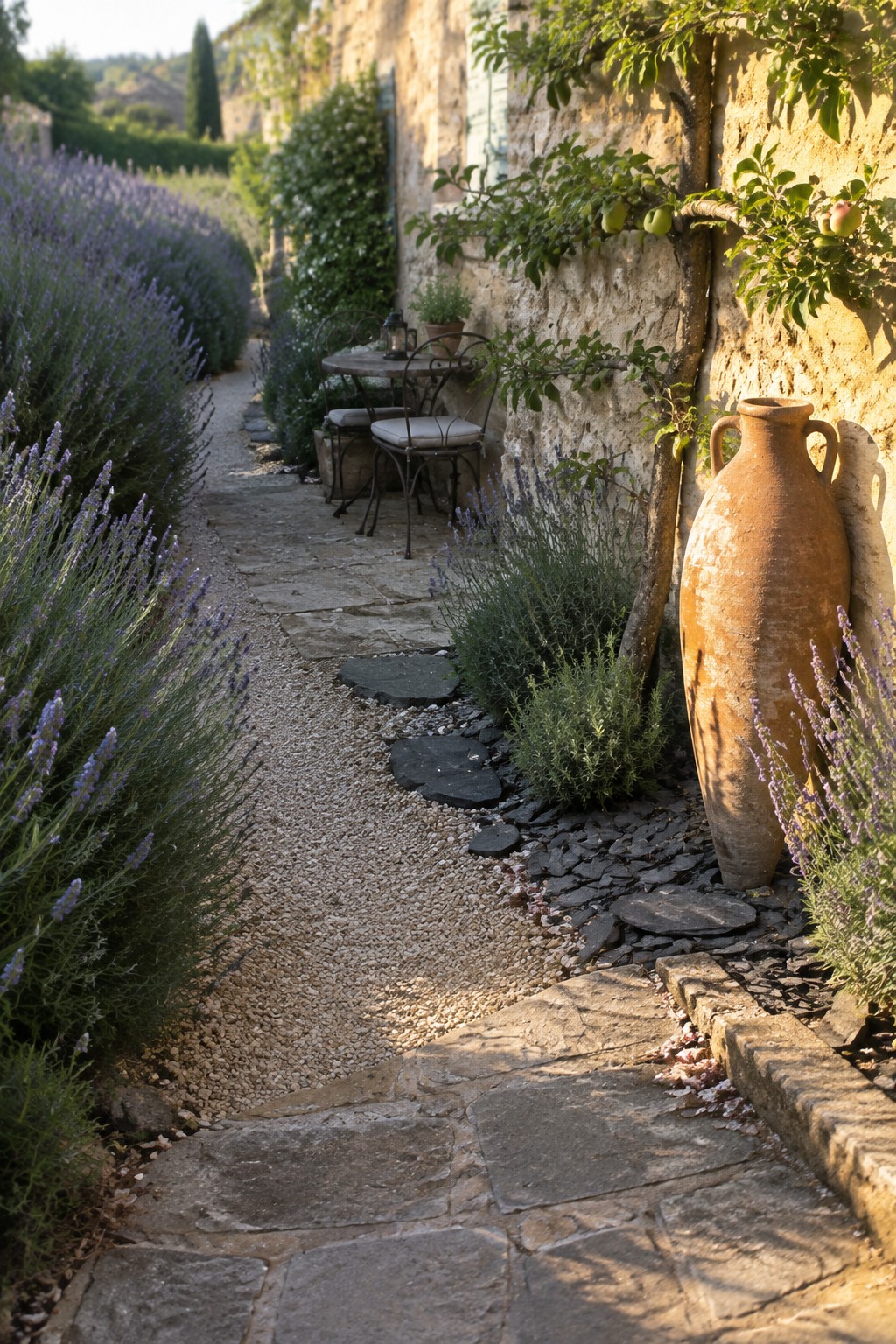
A gravel path edged with lavender gives a sunny garden a clear route without needing a formal border. The plants define the walkway, while gaps between the stone steps keep the layout relaxed and easy to adjust.
Use this approach where the path gets plenty of sun and the soil drains well. Leave enough room for lavender to spread without crowding the walking surface, and trim it back when it starts to spill across the gravel.
Use Raised Planters to Organize Lavender Beds
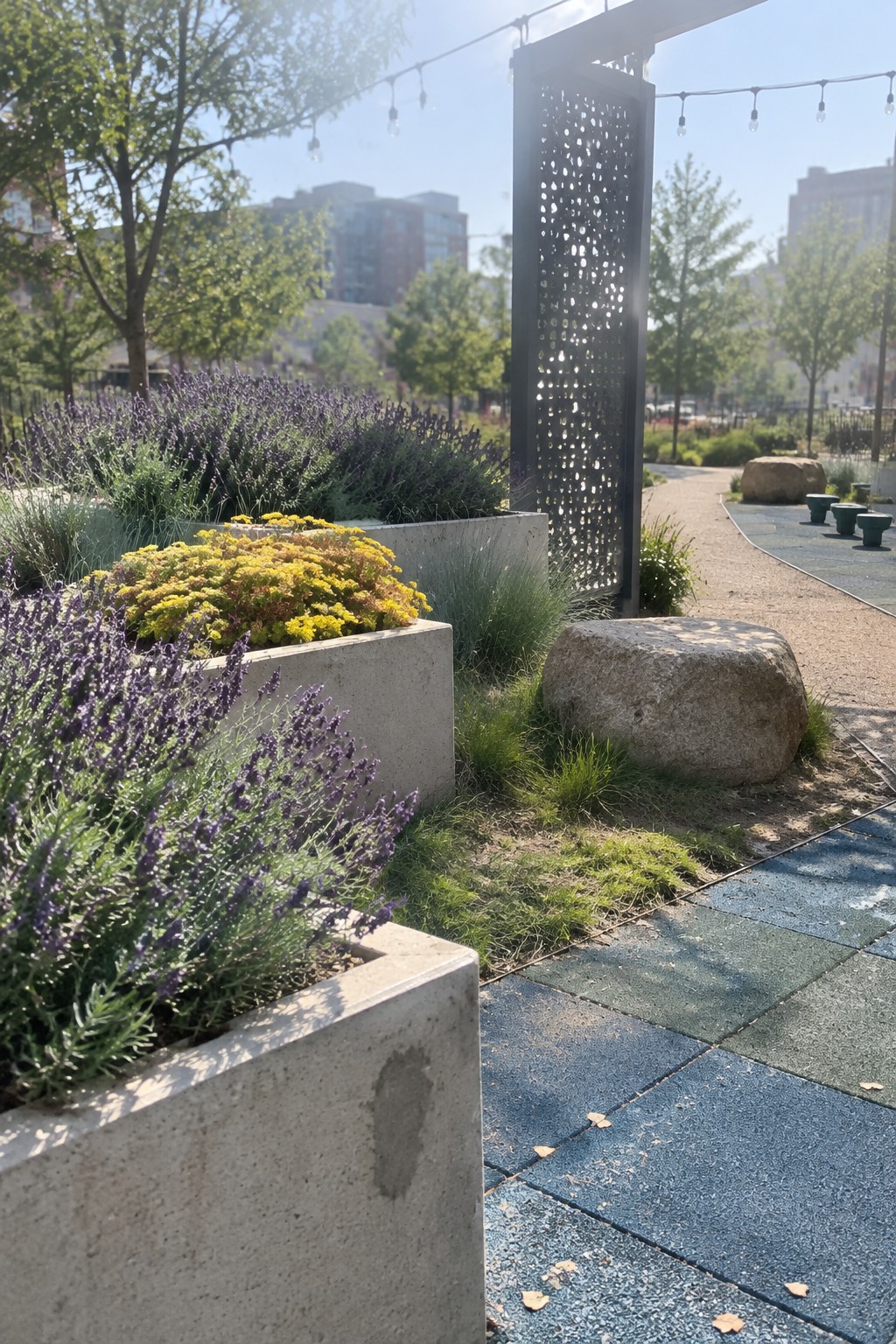
Raised concrete planters give lavender a clear place to grow and help keep a garden bed tidy. Their height also makes the planting easier to see and maintain, without needing a complicated layout.
This approach works well in sunny courtyards or along a path where you want defined planting areas. Choose sturdy planters with good drainage, and leave enough room for lavender to spread and for air to move around the plants.
Let Lavender Follow a Curving Garden Path
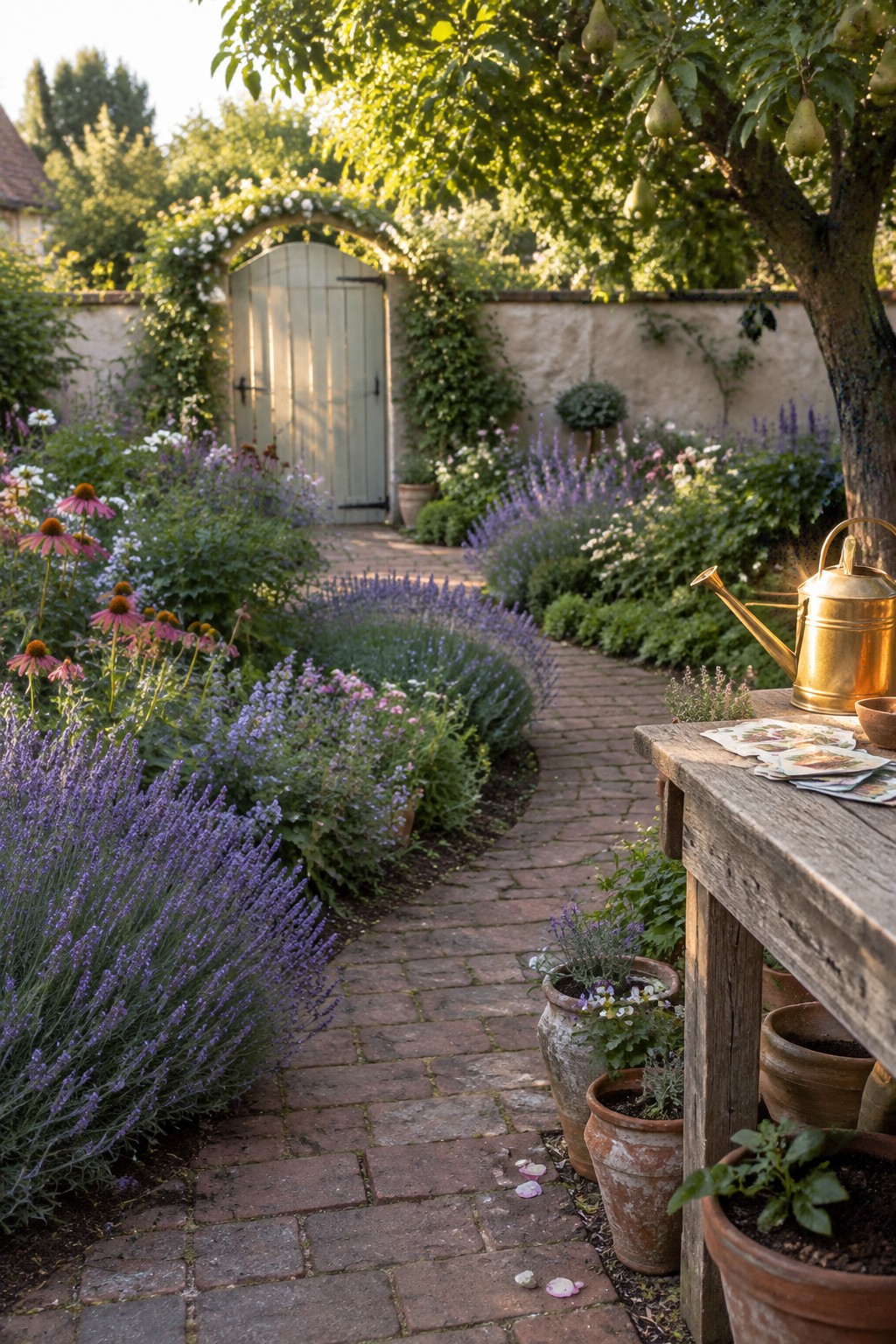
A gently curving path gives a lavender garden an easy, natural shape. The bend slows the walk through the beds and lets the planting feel settled into the yard rather than laid out in a straight strip.
Use brick or stone pavers to make a clear route, then plant lavender along the edges where it gets plenty of sun and has room to spread. Keep the path wide enough to walk comfortably, and avoid crowding the lavender against other plants.
Use Lavender Beds to Define a Garden Path

A straight stone walkway can feel more settled when lavender runs along its edges. The planting gives the path a clear boundary without making a sunny, gravel-based garden feel crowded.
Use this approach beside a patio or through a narrow side yard, leaving enough room for lavender to spread without spilling across the walking surface. A simple concrete bench nearby offers a place to pause, but keep the path wide enough for easy passage.
Use Stepping Stones to Make a Garden Path
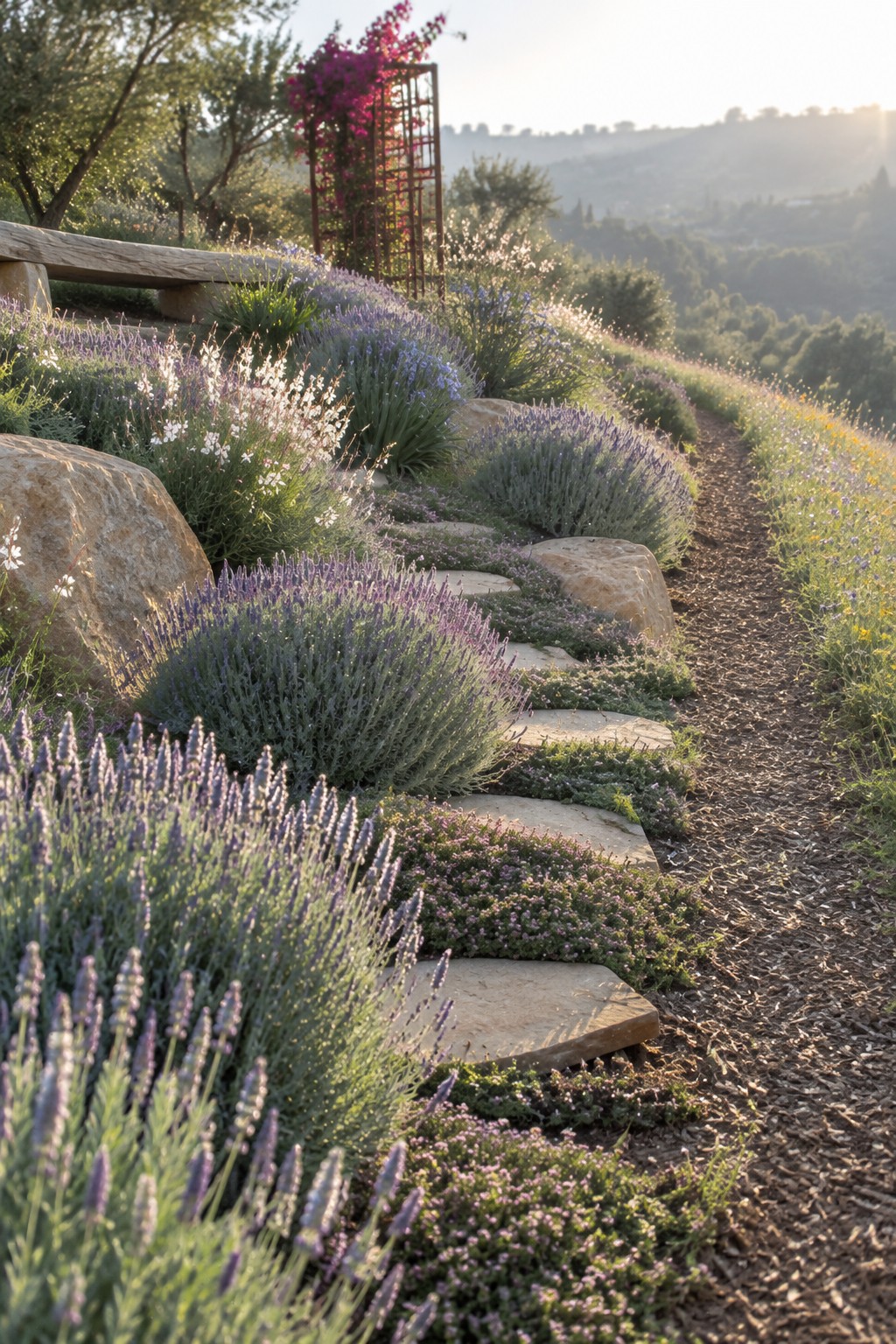
A line of flat stepping stones gives a garden path a clear route without covering the whole area in hardscape. It suits a loose planting style, where lavender and small flowers can grow close to the edges.
Set the stones firmly and leave enough room for a comfortable stride. This approach works especially well on a gentle slope, but keep the walking surface even and avoid placing plants where they will spill over the stones.
Frequently Asked Questions
Q: How often should I water newly planted lavender in a hot, sunny yard?
A: Water it deeply after planting, then check the soil every few days during its first few weeks. Once the roots settle in, let the soil dry between waterings. Established lavender usually needs far less help.
Q: Can lavender grow in heavy clay soil?
A: It can struggle if clay stays wet, especially through winter. Plant it in a raised bed or mound, and mix in coarse grit to improve drainage. Avoid adding rich compost that holds extra moisture.
Q: What can I plant around lavender without giving it too much water?
A: Choose other sun-loving plants that prefer dry soil, such as rosemary, thyme, or yarrow. Give each plant enough space for air to move around it, and water new companions separately while they get established.
Q: Why is my lavender growing leaves but barely flowering?
A: Too much shade or rich soil can encourage leafy growth at the expense of blooms. Make sure it gets plenty of direct sun, and prune lightly after flowering rather than cutting into old, woody stems.
