

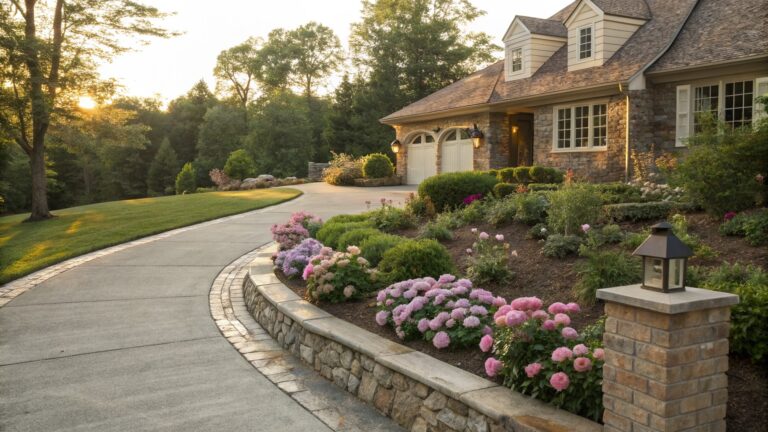
Those flower beds along the driveway shape your whole approach to the house, turning a plain concrete strip into a welcoming lead-in.
They hold together best with thoughtful layout that mirrors the drive’s curves, plus edging strong enough to stand up to winter salt and foot traffic.
I added repeating perennials to frame mine a few seasons ago, and they finally give the entry that steady backbone it lacked.
People spot uneven borders or sparse spots first, the kind that make the front feel unfinished even from the street.
A handful here adapt well to everyday yards worth trying next spring.
Stone Wall Beds Along the Driveway
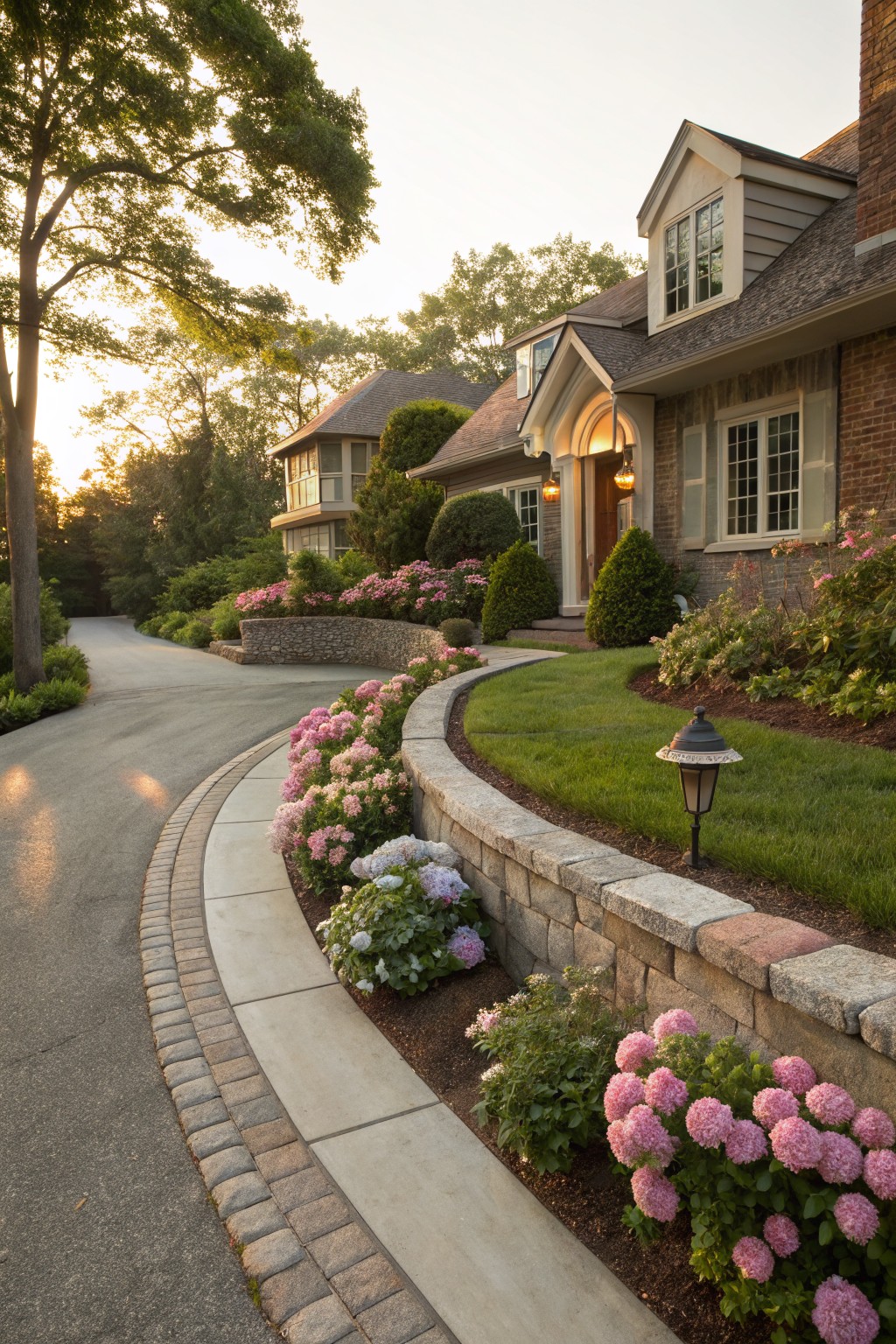
Low stone retaining walls make great flower beds when you build them right into the driveway edge. Here they curve gently with the path, filled with big pink and white hydrangeas that spill over just enough. It frames the entry nicely, keeps the look tidy, and adds some height without blocking the view of the house.
This works best on properties with a winding drive or slight slope, where the walls can follow the land naturally. Pick stone that matches your home’s style, like these rough fieldstones, and plant tough bloomers that come back each year. Watch the watering at first…they’ll settle in and give you color from spring through fall.
Stone-Edged Beds Along the Driveway
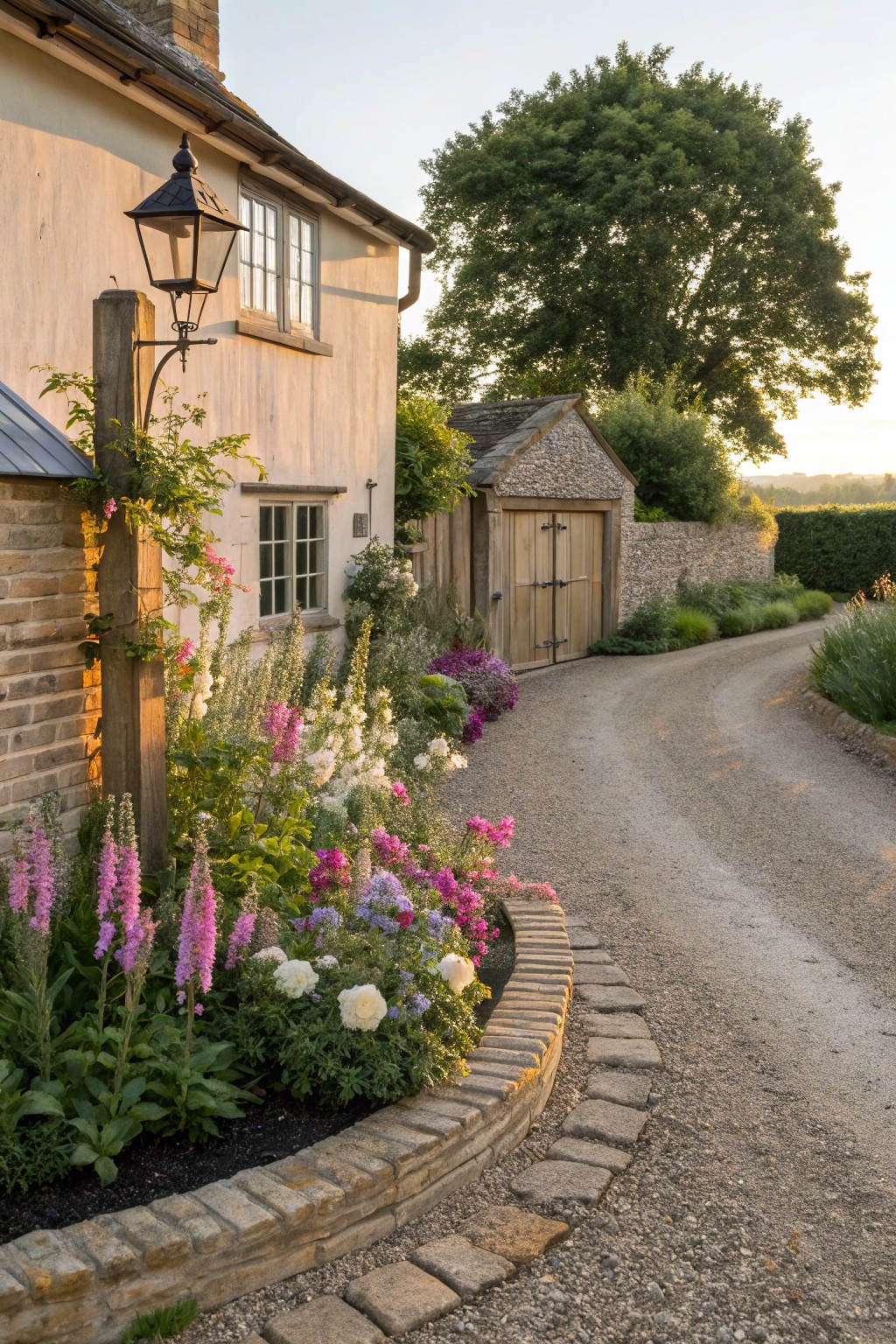
One simple way to dress up a plain driveway is with low stone edging that holds back flower beds. Here, a gentle curve of brick-like stones runs right beside the gravel path, packed with tall pink foxgloves and white roses that add height and color. It keeps the bed neat but lets plants lean out just enough to soften the edge. Folks like this because it frames the entry without feeling fussy.
Try it on country homes or older places with gravel drives, where it ties the house to the garden. Plant the tallest flowers against the wall, then shorter ones in front for layers. It works best in full sun… just pull weeds regular from the gravel side to keep it sharp.
Coastal Gravel Path Edged in Native Grasses
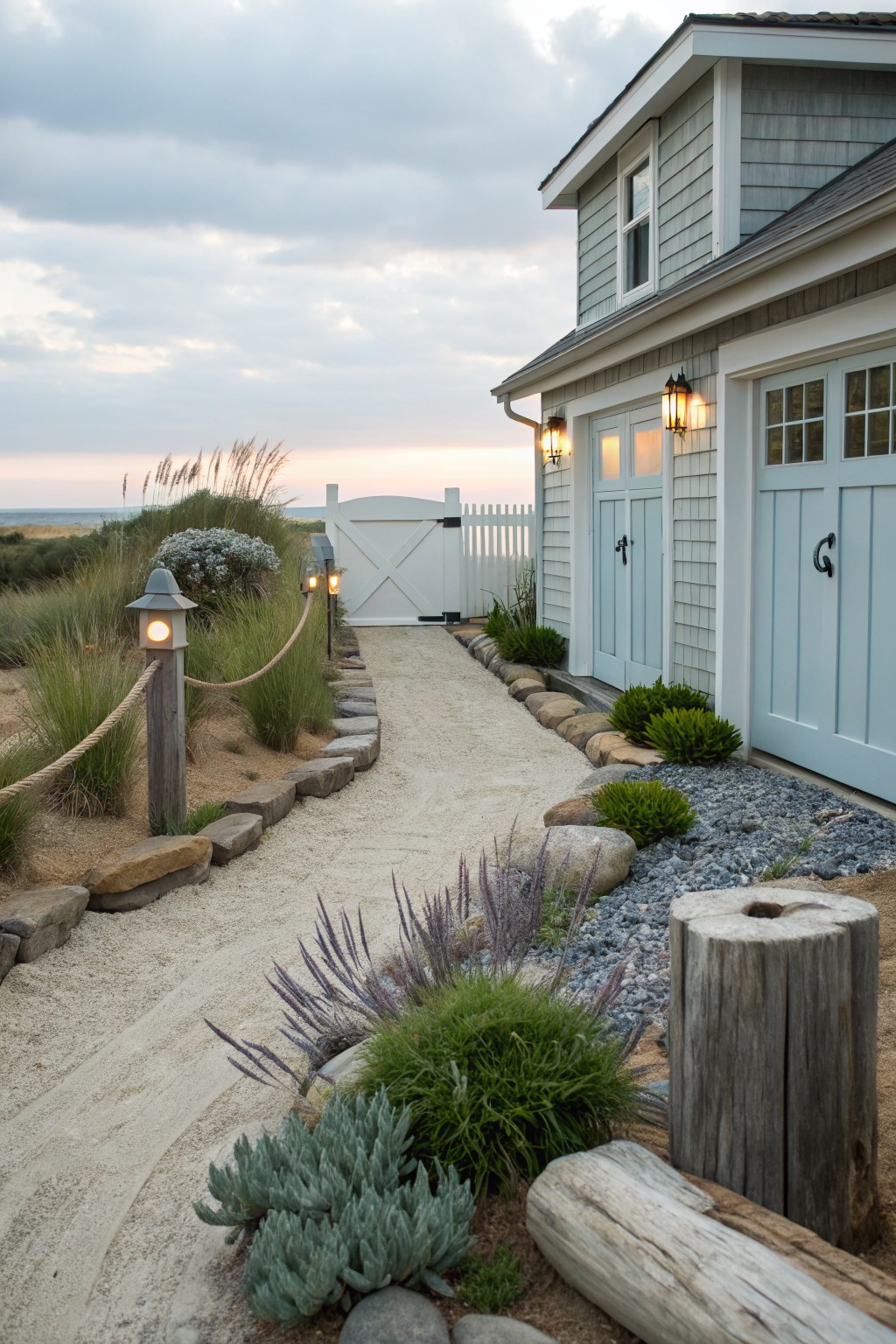
A gravel path like this makes a clean line from the street to your garage. Tall beach grasses, lavender clumps, and succulents fill the beds along one side, mixed with rocks and driftwood chunks. Rope strung between wooden posts with lanterns keeps it casual and beachy. It pulls the house into the landscape without looking forced.
This works best for coastal homes or dry spots where you want low upkeep. Use drought-tolerant plants so you aren’t watering all summer. Gravel drains fast, too. Just keep the path clear of weeds, and it stays sharp year-round.
Stone Edging for Driveway Beds
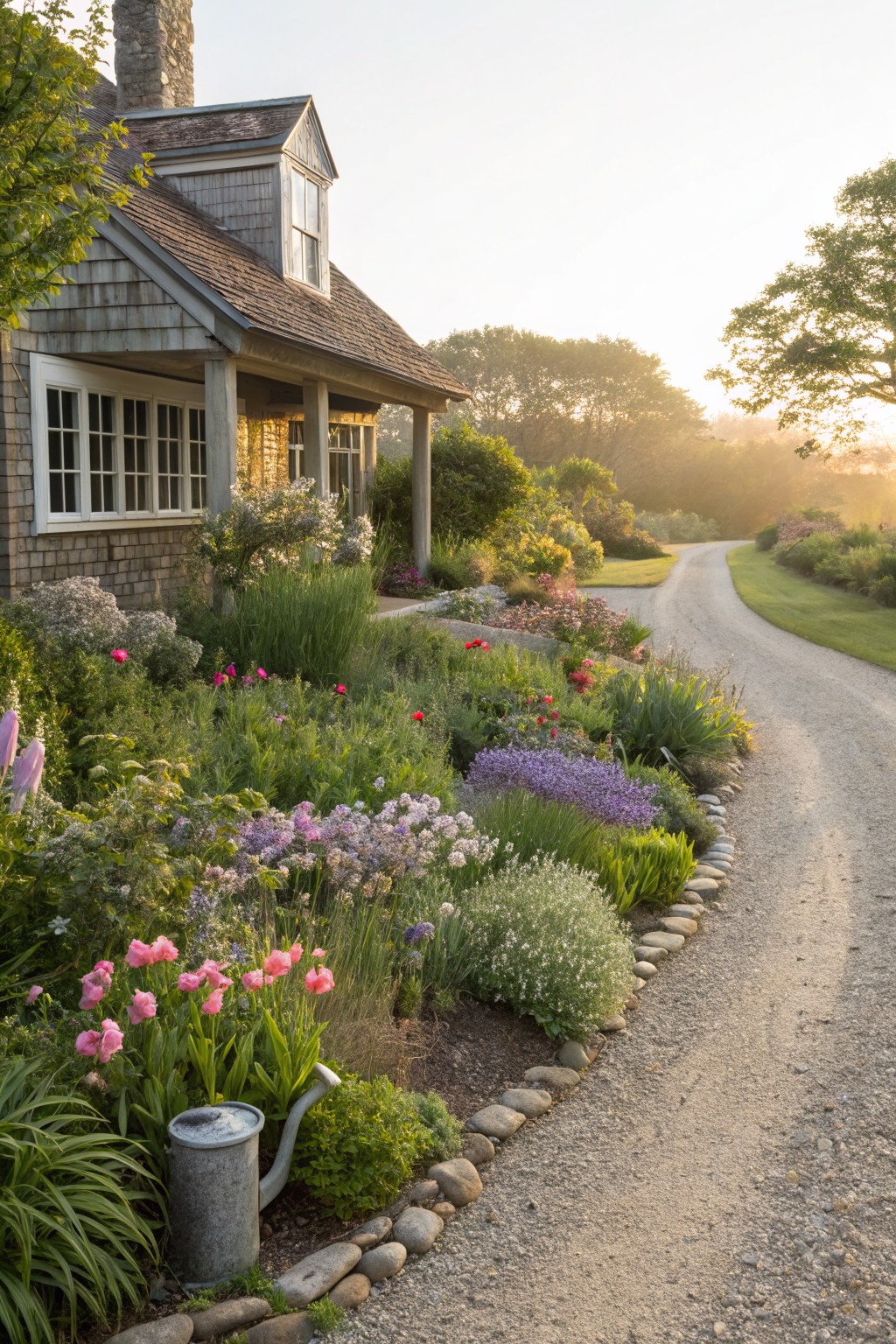
One straightforward way to tidy up your driveway entrance is with rounded stone borders around flower beds. Here the gravel path curves gently, and the stones hold back a mix of blooming perennials like tulips and salvia. It gives everything a natural edge without looking too fussy, and the plants spill over just enough to soften the line.
This works well on rural properties or older homes where you want low upkeep but steady color through spring and summer. Pick stones that match your local gravel or fieldstone for an easy fit. Layer short plants near the path and taller grasses behind, but keep the bed depths to about three feet so you can reach everything without stepping in.
Driveway Flower Beds with a Central Reflecting Pool

One clean way to make a driveway more interesting is to run flower beds along both sides with a narrow reflecting pool right in the middle. Here, big clusters of blue hydrangeas fill the beds, and the pool picks up the glow from entry lanterns at dusk. It pulls everything together into a straight shot toward the front door. Simple. Effective.
This works best on wider driveways leading to a formal entry, especially traditional homes like stone or brick ones. Keep the beds low and the water feature slim so cars still fit easy. Hydrangeas bloom a long time, but trim them back if they get too bushy. Avoid on steep slopes, though. Water could run off funny.
Terracotta Pots Line the Entry Path
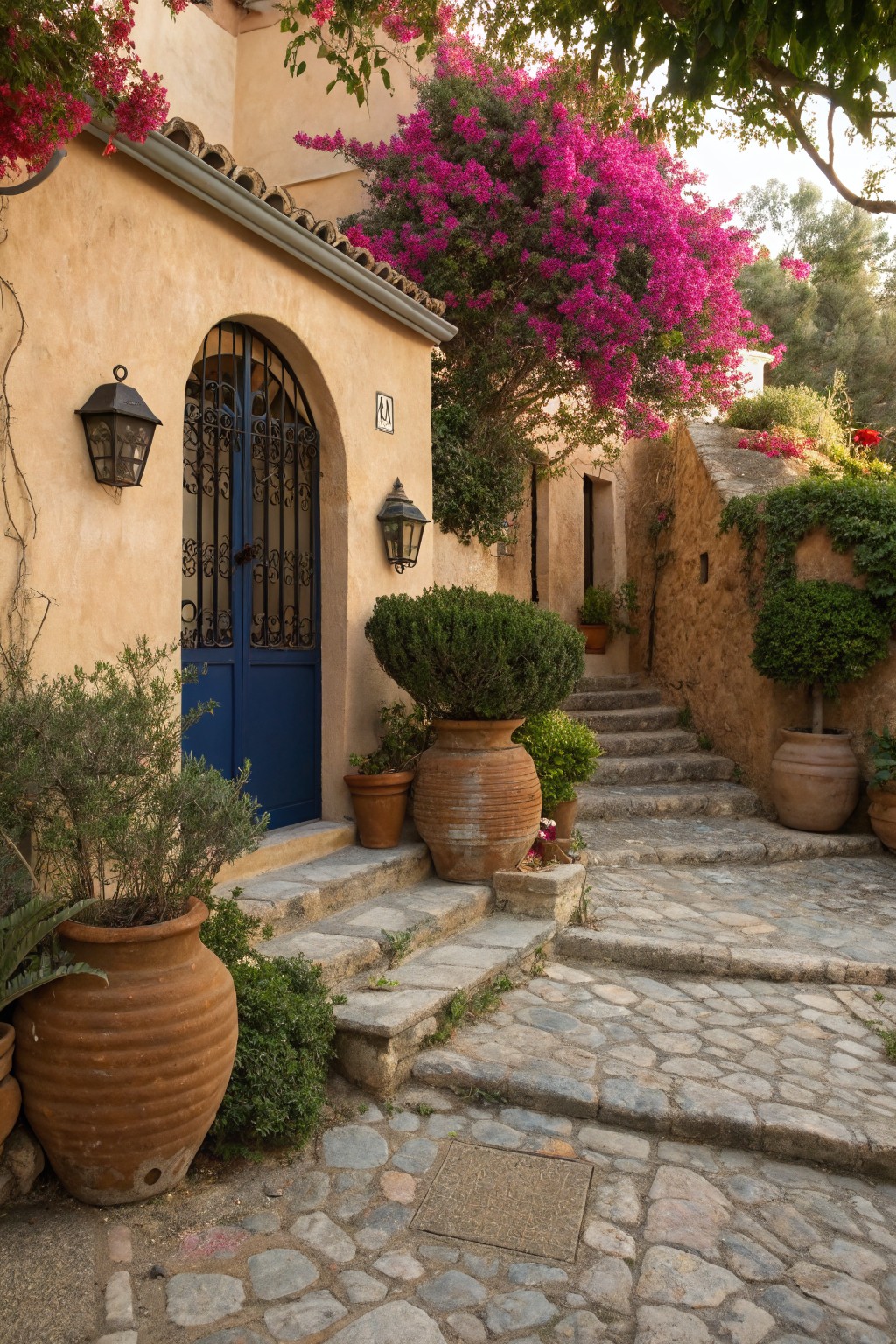
Big terracotta pots work well here to mark the way up stone steps to the door. They’re placed along both sides with simple plants inside, and the pink bougainvillea draping overhead ties it all together. This keeps the path clear but feels planted and welcoming, especially against plain stucco walls.
You can pull this off on most any entry with steps or a walkway. Go for matching pots in a couple sizes to avoid looking too matchy. It suits older homes or ones with a bit of Mediterranean style. One thing, pick pots with good drainage or add some gravel at the bottom.
Raised Succulent Beds Frame the Driveway
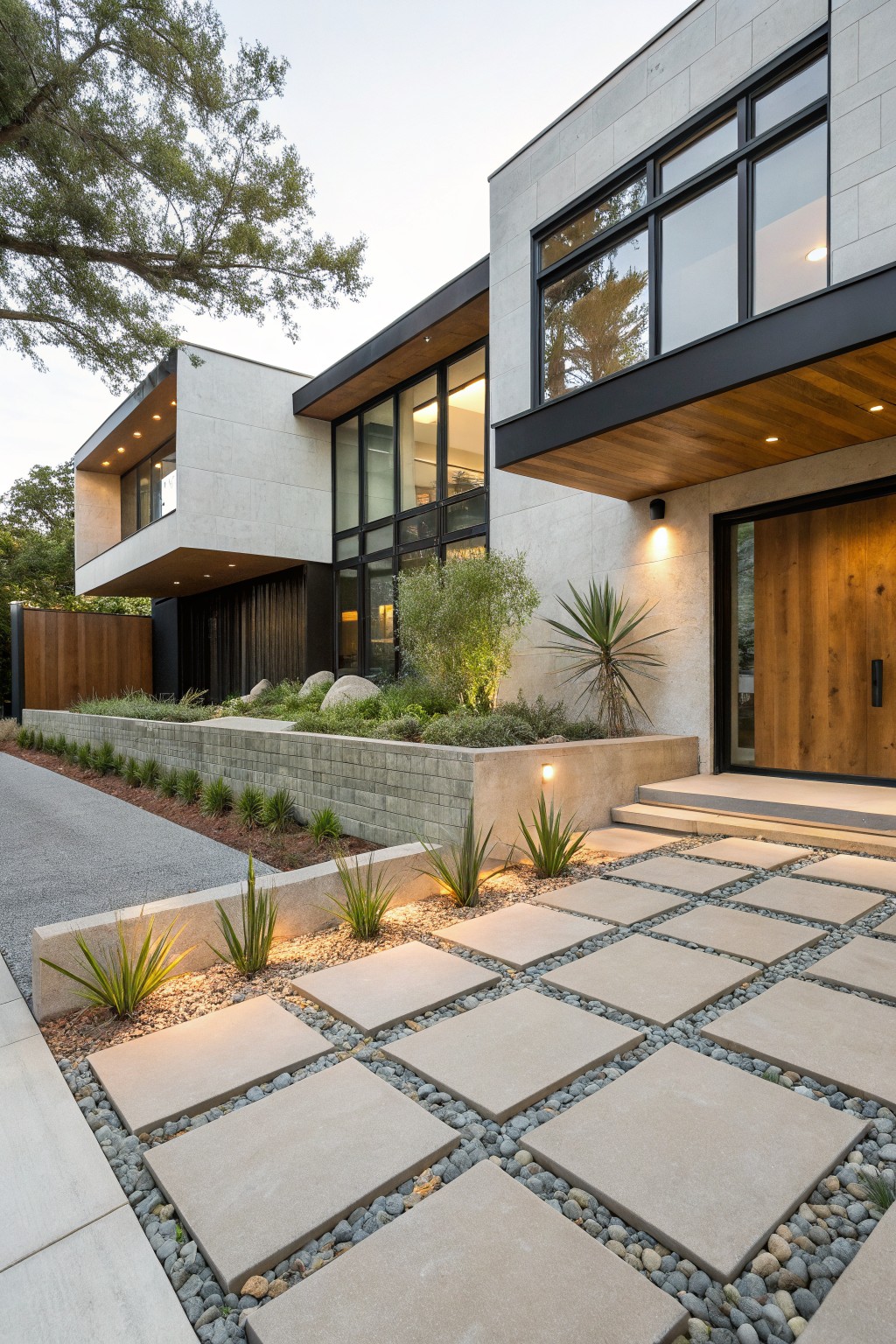
One straightforward way to tidy up your driveway area is with raised beds built right along the edge. Here, low-growing succulents and grasses fill these simple stone walls, keeping things neat without much upkeep. The plants stay compact, so they won’t spill over onto the drive, and they add some green interest without overwhelming the space.
This setup works great for modern homes or any place with a clean entry path like the large pavers set in pebbles shown here. Plant drought-tolerant varieties like agaves or flax in zones four and up. Just make sure the beds drain well to avoid root rot, and keep them low enough for easy mowing nearby.
Lush Flower Beds Along a Winding Path
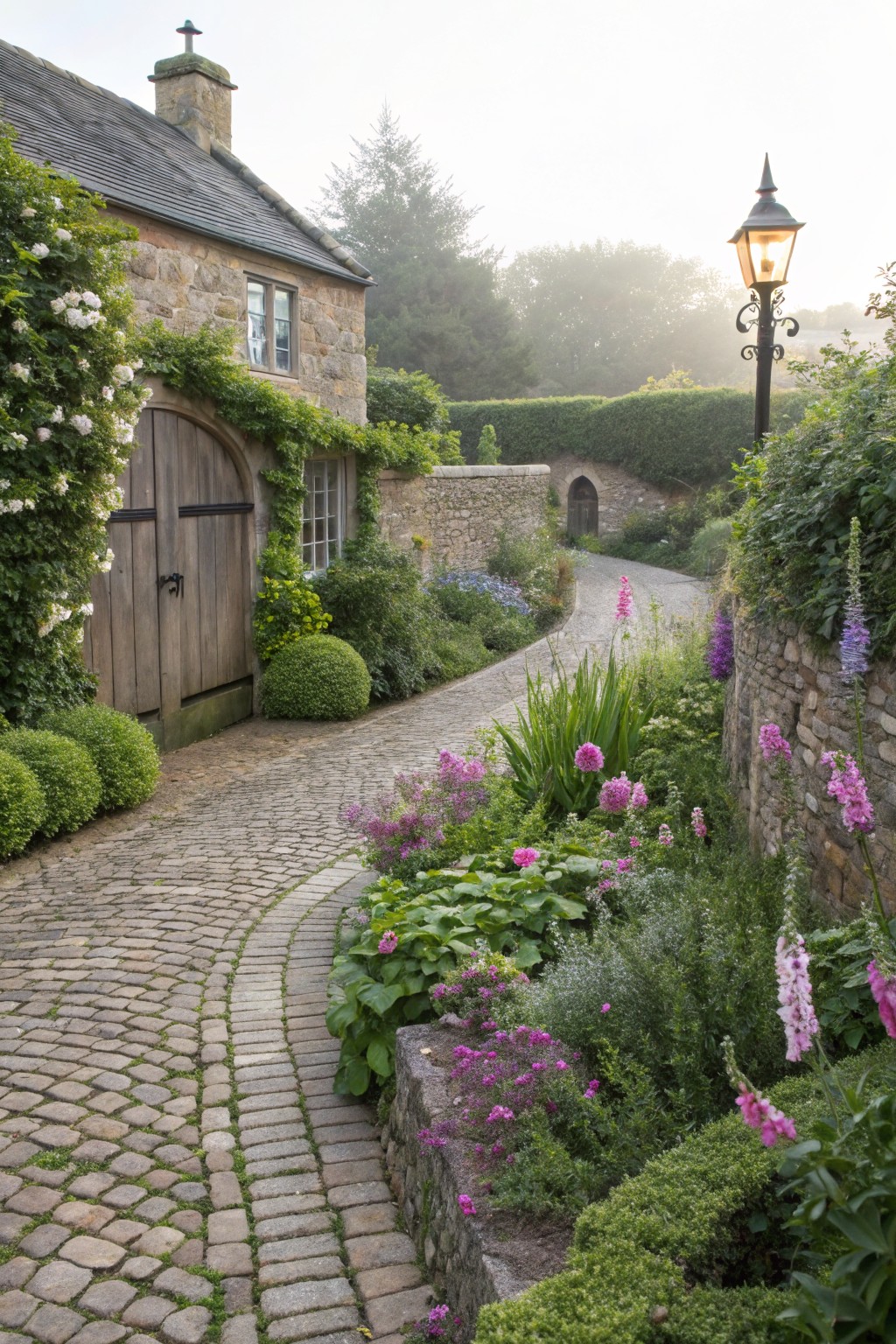
A simple way to frame your driveway is with flower beds that hug a curved stone path. Tall perennials like foxgloves and delphiniums fill the beds, mixed with lower shrubs and climbers on the walls. It gives that soft cottage feel without much fuss, drawing the eye right up to the house.
This works best on narrower driveways or garden paths where you want some movement. Layer your plants with the tallest at the back, and keep the path clear for cars or walking. Stone edging holds it together. Skip it if your space is too sunny and dry, though. Those spots need tougher plants.
Winding Path Through Gravel Beds

A simple winding path like this cuts through gravel beds packed with tall grasses and a few big boulders. It pulls your eye right to the house without much fuss. Those low path lights kick in at night too. Keeps things practical and easy on the water bill.
Try it where your driveway meets the entry. Decomposed granite works fine for the path surface. Edge it with pebbles and fill beds with native stuff like feather grass or yucca. Suits hillside lots or dry spots best. Just keep plants trimmed back from the path.
Winding Stone Path Edged in Lush Greens
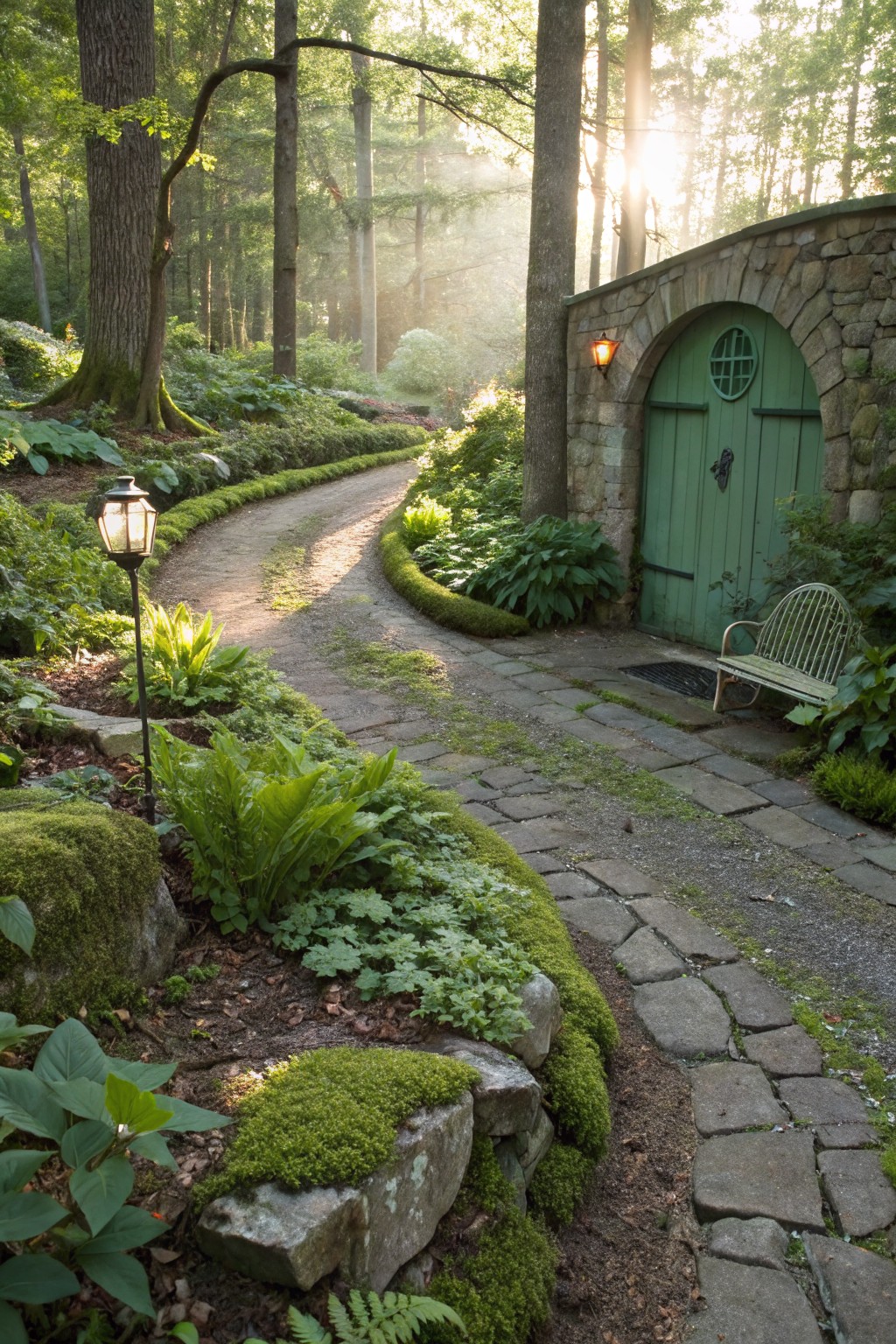
A simple curved path made from rough stone pavers winds gently through thick borders of ferns, hostas, and mossy rocks. It draws the eye right to that round-topped green door set in a stone arch. What works here is how the plants spill over the edges just enough to soften the path without blocking it. The layers add texture and make walking up feel like a little adventure.
This kind of path fits best along a driveway or side entry where you want to slow folks down and make the approach more welcoming. Pick stones in different sizes for a natural look, then plant low moss or sedges right at the edge and taller greens behind. Keep it to shade-loving plants if you’re under trees. Avoid straight lines. They kill the charm.
Line Your Driveway Path with Flower Beds
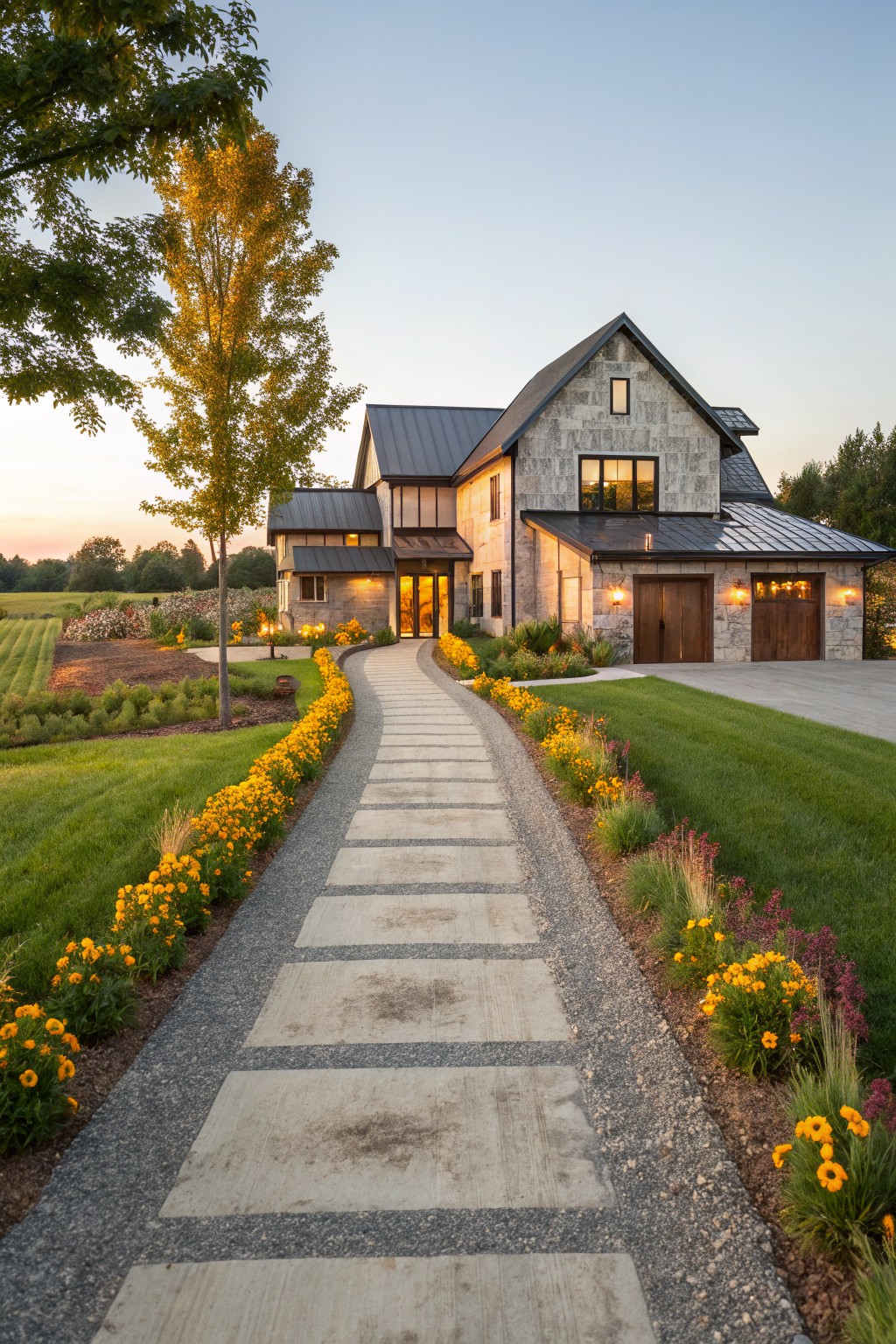
A curved path made from wide concrete pavers runs right up to the house entry, with beds of yellow flowers planted tight along both edges. That simple lining turns a plain walkway into something that actually guides folks in, especially when the blooms are thick and bright like these marigolds. It keeps the look clean too, since the path gravel edge holds everything back from spilling over.
This works best on driveways with some length, where you want that welcoming pull from the street. Go for low-growing flowers that handle foot traffic nearby, and pick one color to repeat so it feels put together. On a smaller lot… just scale down the bed width.
Curved Path Edged in White Flowers
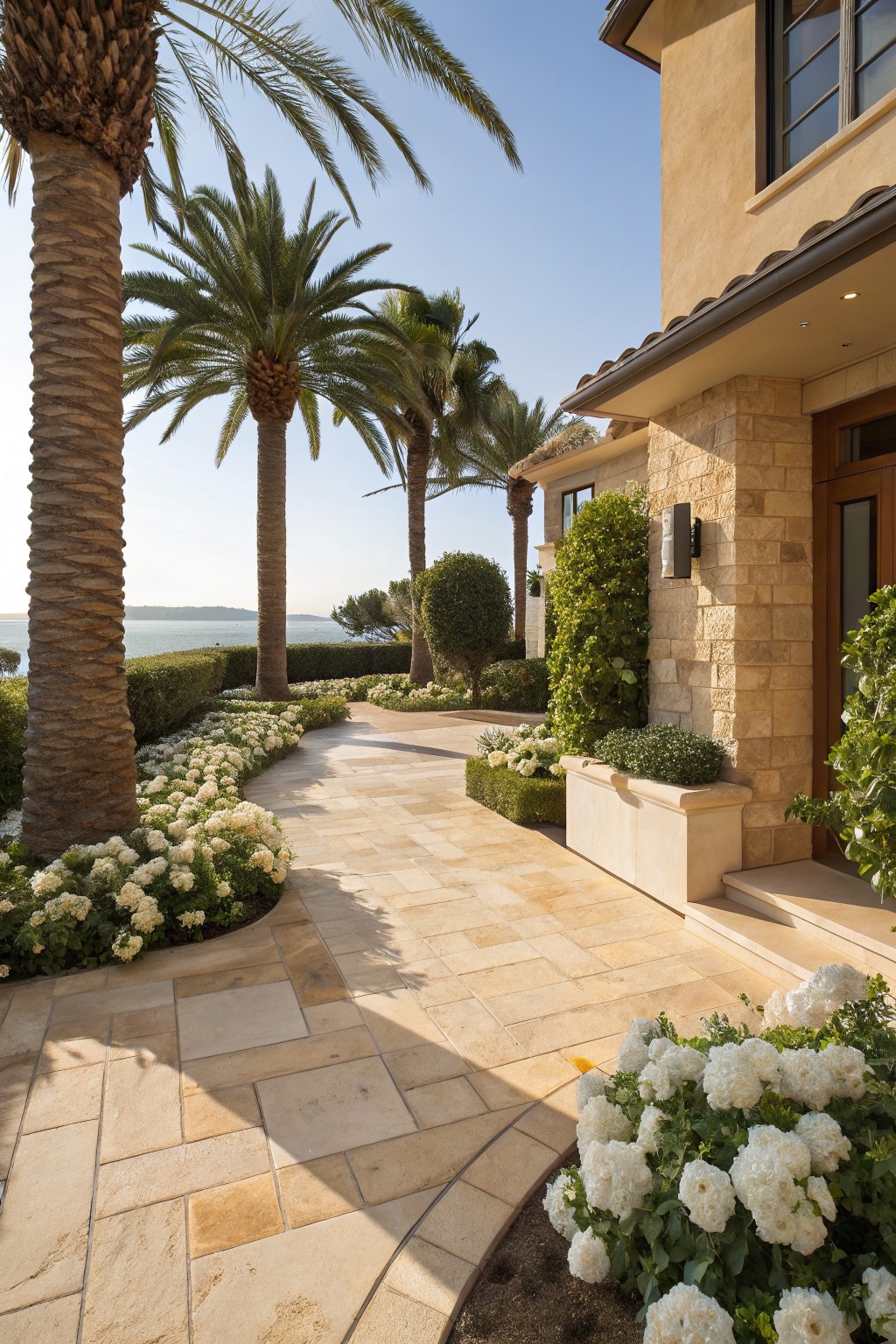
A simple curved stone path like this one, lined on both sides with low beds of white blooms, turns the walk to your front door into something pleasant. The white flowers keep things light and open, especially against a light-colored house, and they repeat along the curve without overwhelming the space. Palms and hedges in the background add height, but the flowers do the steady work of guiding folks right to the entry.
You can pull this off in front yards with room for a driveway turnaround or along a side approach. Go for tough white shrubs like hydrangeas or gardenias that bloom a long time, and tuck them into mulched beds next to the pavers. It suits warmer climates best, but scale it down for smaller lots… just keep the path at least four feet wide so it feels welcoming.
Curved Path Edged with Flower Beds
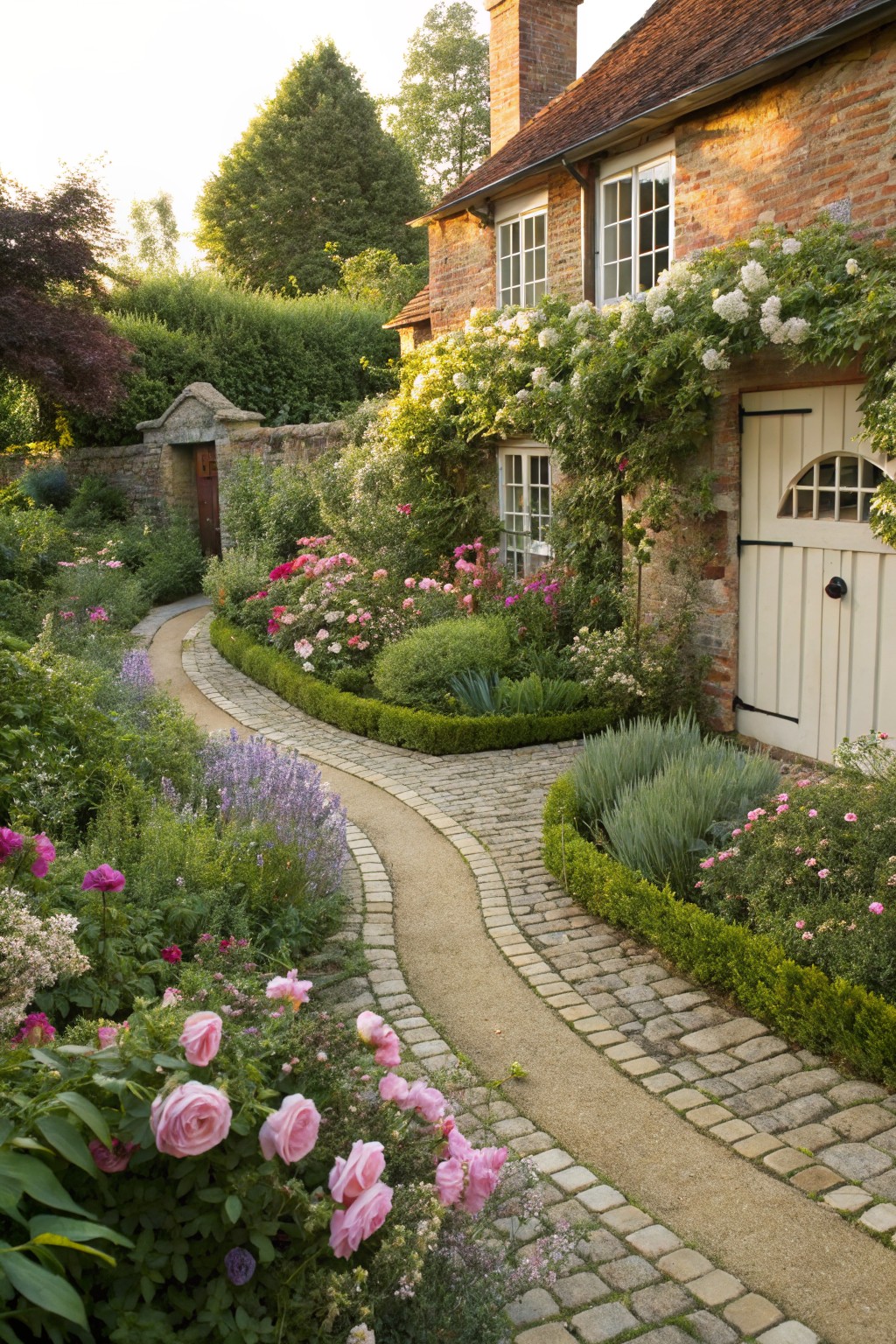
A simple winding path like this makes the walk to your front door feel special. Cobblestones set in gravel give it a soft, country look, while low boxwood hedges keep the edges crisp. Then roses and lavender spill over just enough to add color without blocking the way. It’s a nice change from straight sidewalks. Feels like you’re strolling through your own little garden.
This works best in front yards with some space, especially older homes or cottages. Plant the beds deep enough for layers, taller stuff in back. Go for repeat bloomers to keep it going all season. Watch the path width, though. Make it at least four feet so two people can walk side by side.
Stone-Edged Beds Line the Driveway
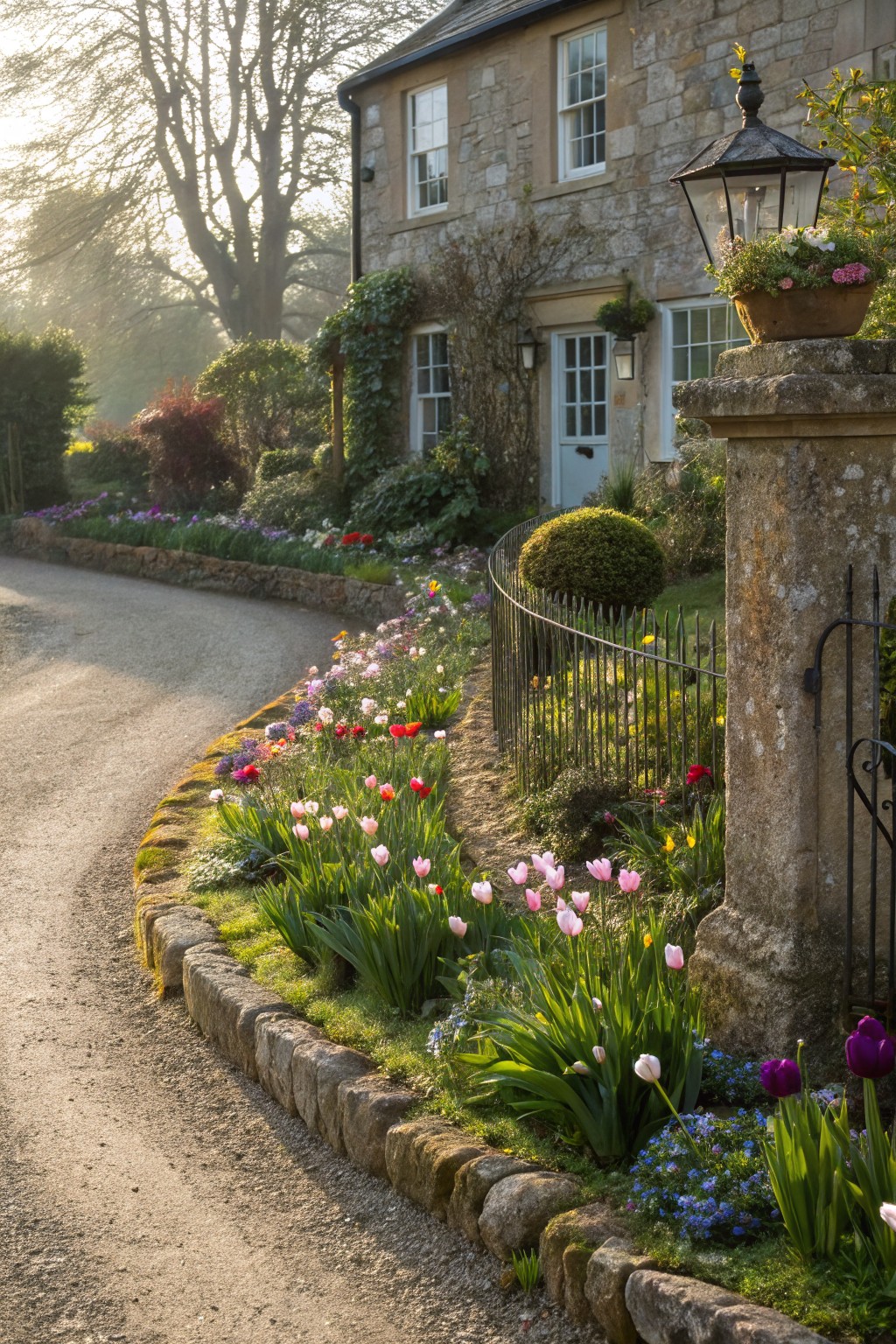
A simple low stone wall runs right along this gravel driveway, holding back beds packed with tulips in every color. The rough stones fit the old house perfectly and keep the flowers neatly in place as the path curves toward the entry. It’s a straightforward way to add color where you see it first.
This works well on homes with a bit of a slope or uneven ground. Plant spring bulbs like tulips along the edge in fall, and they’ll come up just right. Add a matching iron fence if you want more definition. Suits cottages or farmhouses best. Keep it weeded to stay sharp.
Tiered Stone Beds Line Driveway Steps
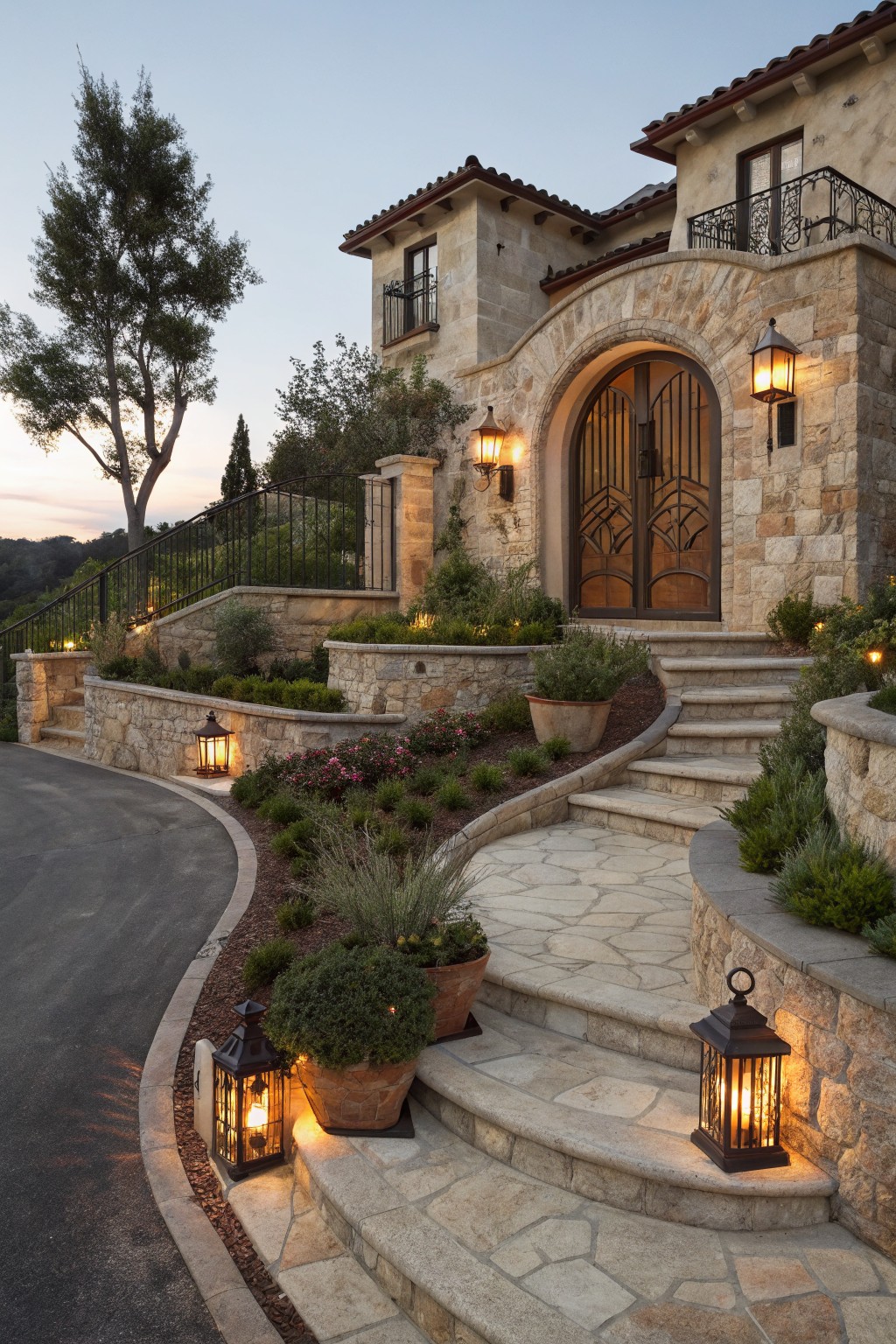
One simple way to make your driveway feel more special is to build tiered stone beds right along the steps. You see it here with low walls holding back soil and plants, curving gently from the pavement up to the door. Those beds keep everything neat and add some green right where people arrive. The lanterns tucked into the edges make it work day or night.
This setup fits homes on a slope or with any rise to the entry. Use local stone to blend in, fill with tough plants like shrubs and grasses, and add pots for color. Skip anything too fussy that needs constant trimming. It pulls the eye up without overwhelming the path.
Frequently Asked Questions
Q: What’s a simple way to edge my driveway flower bed so it stays sharp-looking?
A: Dig a clean trench around the bed with a flat-edged shovel. Line it with plastic or metal edging strips pounded into the soil. Refresh the edge each spring to keep grass from creeping in.
Q: Which plants hold up best to car fumes and occasional tire bumps?
A: Pick tough perennials like lavender or daylilies. They shrug off pollution and light traffic. Add some ornamental grasses for filler that bounces back fast.
Q: How do I get my flower bed ready without breaking the bank?
A: Clear weeds and till the soil lightly, then mix in compost from your yard waste. Skip pricey soil amendments at first. Let nature build fertility over time as plants grow.
Q: Can these ideas work if my driveway area gets mostly shade?
A: Go for hostas, ferns, or astilbe that thrive in low light. They add texture without needing full sun. And toss in a few impatiens for pops of color.
