


I remember glancing at my neighbor’s front flower bed one summer and realizing how a basic layered planting made their whole yard feel put-together.
The ones that last start with a solid layout, edging that holds the shape, and plants chosen for how they fill in over time.
People driving by notice those neat borders and the way colors repeat without clashing.
I’ve tested a few low-maintenance setups myself, and the key is grouping by height so nothing blocks the path to the door.
They’re practical enough to tweak for any yard size.
Stone Path Edged with Flowers
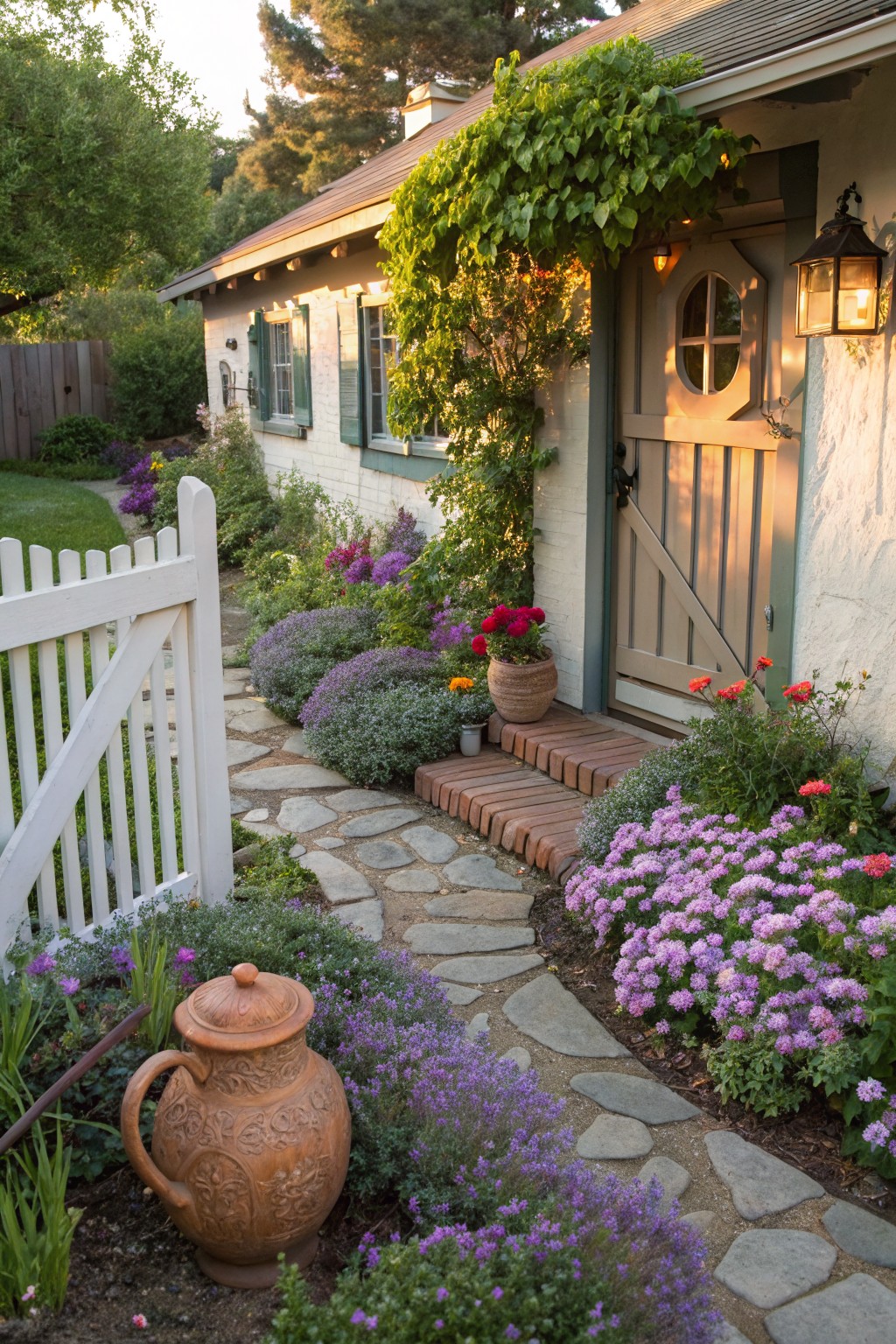
A casual stone path like this winds right through the front flower beds to the door. It pulls your eye along without feeling too rigid. Those low clumps of purple lavender and pink asters fill in the edges nicely and come back each year on their own.
This works best in a small yard where you want some charm up close. Set the stones in sand or soil for drainage, then tuck in perennials that match your sun. A white picket gate at the start keeps it tidy. Just don’t overcrowd the path itself.
Raised Succulent Beds with Wood Edging

One easy way to dress up a front yard is with raised beds full of succulents. You see them here along the sidewalk, edged in simple wood and filled with dark gravel mulch. The mix of chunky aeoniums, agaves, and grasses gives a clean, modern look without much upkeep. It pulls the eye right to the house entry too.
These beds work great next to a walkway or driveway on any size lot. Pick tough, local succulents that handle your sun and soil. Keep the wood edging low, about six inches high, and top with gravel to cut down on weeding. Suits modern homes best… or even older ones wanting a fresh feel. Just water sparingly once established.
Raised Beds Along the House Wall

Raised beds built right against the house foundation make for a clean, contained front yard garden. You see them here hugging the stucco base, filled with tidy lavender plants and clipped boxwoods that stay in line without spilling over. The stone edging keeps soil away from the walls, and gravel mulch cuts down on weeding. It’s a simple way to add color and green without the mess.
These work best in sunny, dry spots where drought-tough plants like lavender thrive on little water. Build them 12 to 18 inches high with matching stone for a built-in look. Suits most homes, from ranch to craftsman… just keep plant heights low near doors. Skip it if your foundation has drainage issues.
Natural Wood Edging for Flower Beds
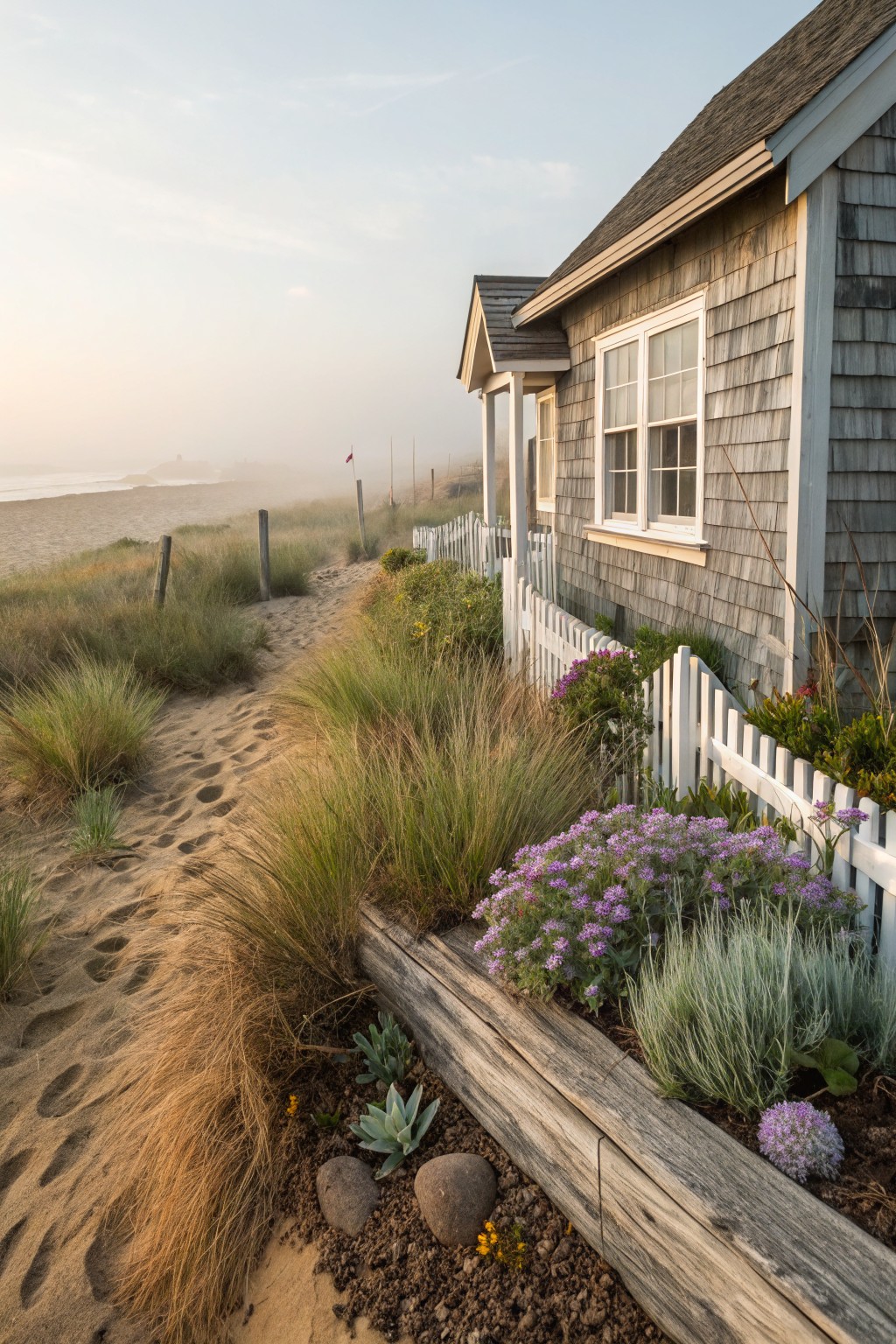
One easy way to edge a front yard flower bed is with old wooden beams or logs. You see it here along a sandy path, where rough-cut wood holds back the soil and plants without looking too fussy. It fits right into beachy spots, blending with the dunes and grasses. The weathered look keeps things natural and low-key.
Try this in cottage yards or anywhere with loose sandy soil. Stack the beams to make a raised bed, then tuck in tough plants like sea lavender, succulents, and beach grasses. It works best near the house entry or along paths. Just make sure the wood is untreated so it lasts in damp spots… and refresh the plants yearly to keep it tidy.
Line Your Walkway with Large Urn Planters
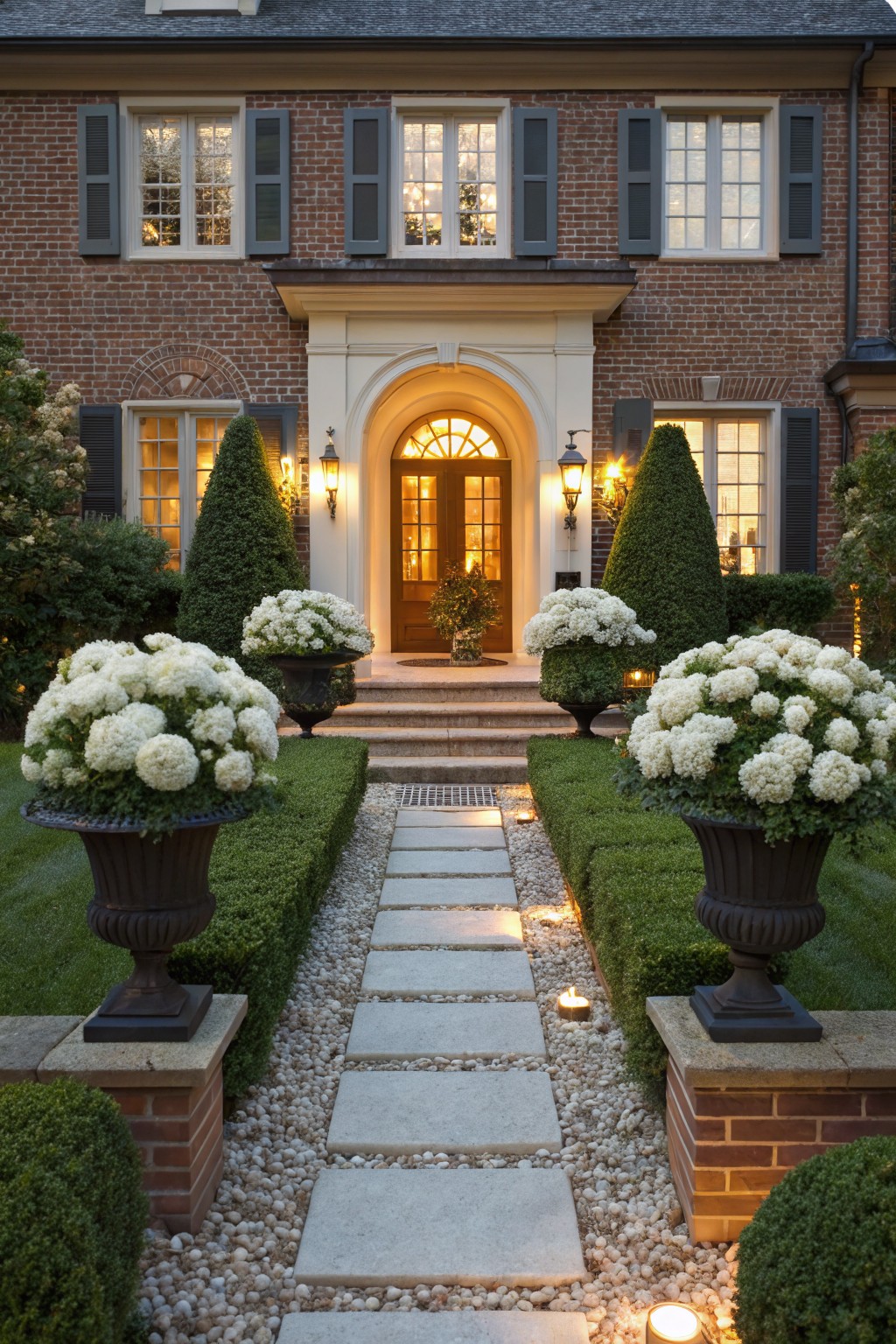
Big urns packed with white hydrangeas make this front path stand out. They sit at the start and end of the walkway, repeating the shape and color to pull your eye right to the door. It’s a clean way to add height and softness without much planting work. The fluffy blooms look full and formal, but they mostly just sit there looking good.
Put these on homes with straight paths or steps up to the entry. Go for dark urns against light stone or gravel to keep it sharp. Hydrangeas come back easy each year, or swap in annuals if you want color changes. Skip tiny pots, though. They get lost. This setup fits most yards and takes little upkeep.
Picket Fence Edges for Flower Beds

A picket fence makes a clean, easy edge for flower beds along a path. Here, the white slats and blue gate hold back sand and plants without fuss. It keeps things tidy in loose soil, and the rustic wood fits right into casual yards. No need for fancy stone or bricks.
Use this in front yards with sandy or gravel paths. Go for tough plants like pink sea thrift and dune grasses that don’t mind dry spots. It works best where you want low upkeep… just paint or seal the wood now and then to last longer.
Terraced Stone Walls for Sloped Yards

One smart way to handle a sloped front yard is with terraced stone retaining walls. They turn a tricky hill into flat spots for flower beds and paths. In this setup, the dry-stacked stone looks natural against the greenery, and built-in steps make it easy to get around. Those small wall lights add a nice glow for evenings without much fuss.
You can pull this off on smaller slopes too, starting with low walls about two feet high. Pick rugged local stone to blend in, then fill the beds with tough plants like lavender or grasses that don’t need constant water. It works best on homes with a woodsy feel, but watch the drainage so water doesn’t pool behind the walls.
Raised Beds Along the Front Path
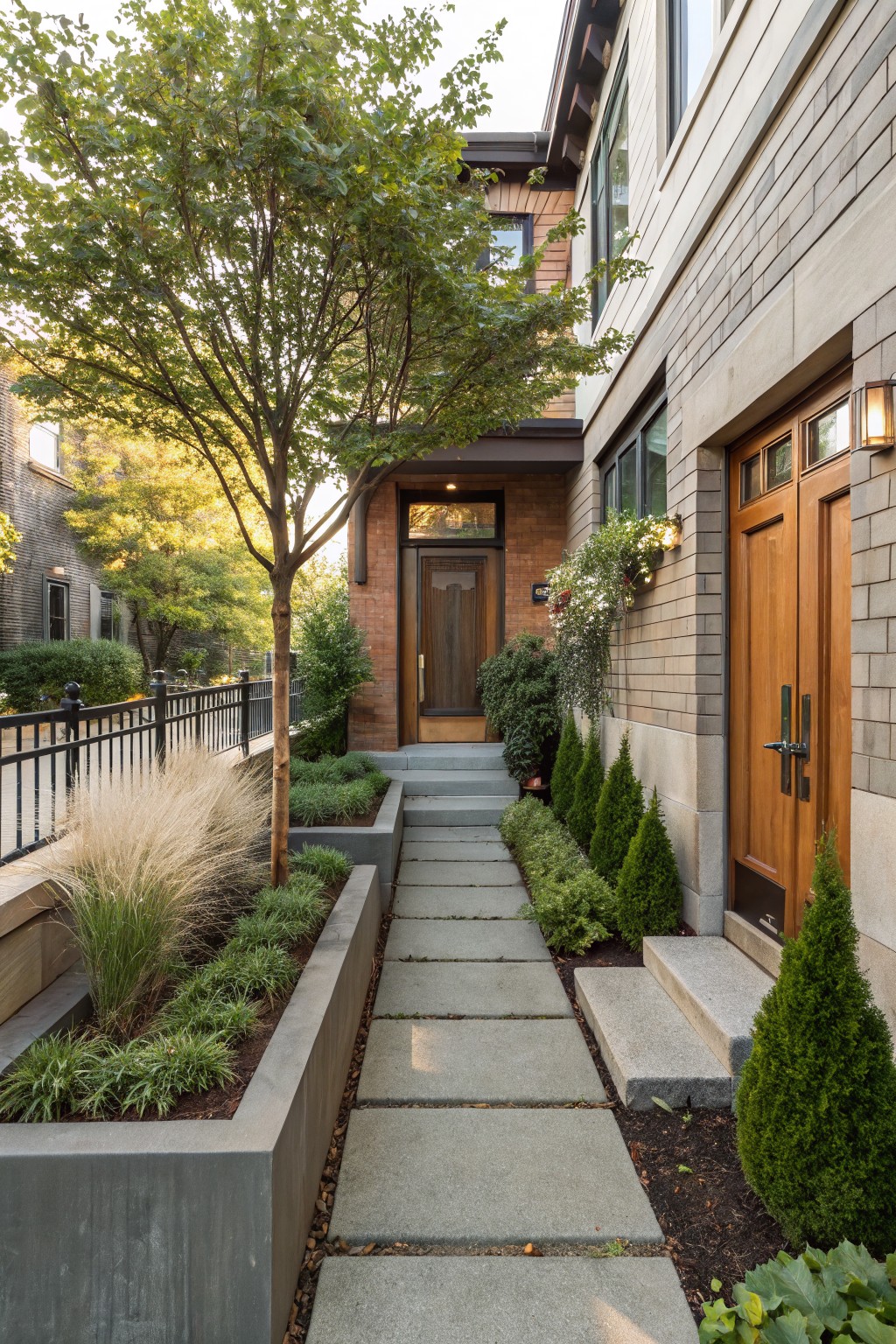
One straightforward way to tidy up your front yard is lining the walkway with raised concrete beds. You see tall grasses swaying next to low boxwood shrubs, all held in by simple gray blocks. It pulls the eye right to the door without weeds spilling over, and the hard edges make everything look put together even if you skip trimming for a bit.
These work best in narrow side yards or tight urban lots where space is short. Go with drought-tough plants like fountain grass and evergreens that don’t need much water or fuss. Just build the beds level with the path, fill with decent soil, and let them frame your steps. Keeps mud off the stones too.
Cube Planters Line the Front Walk
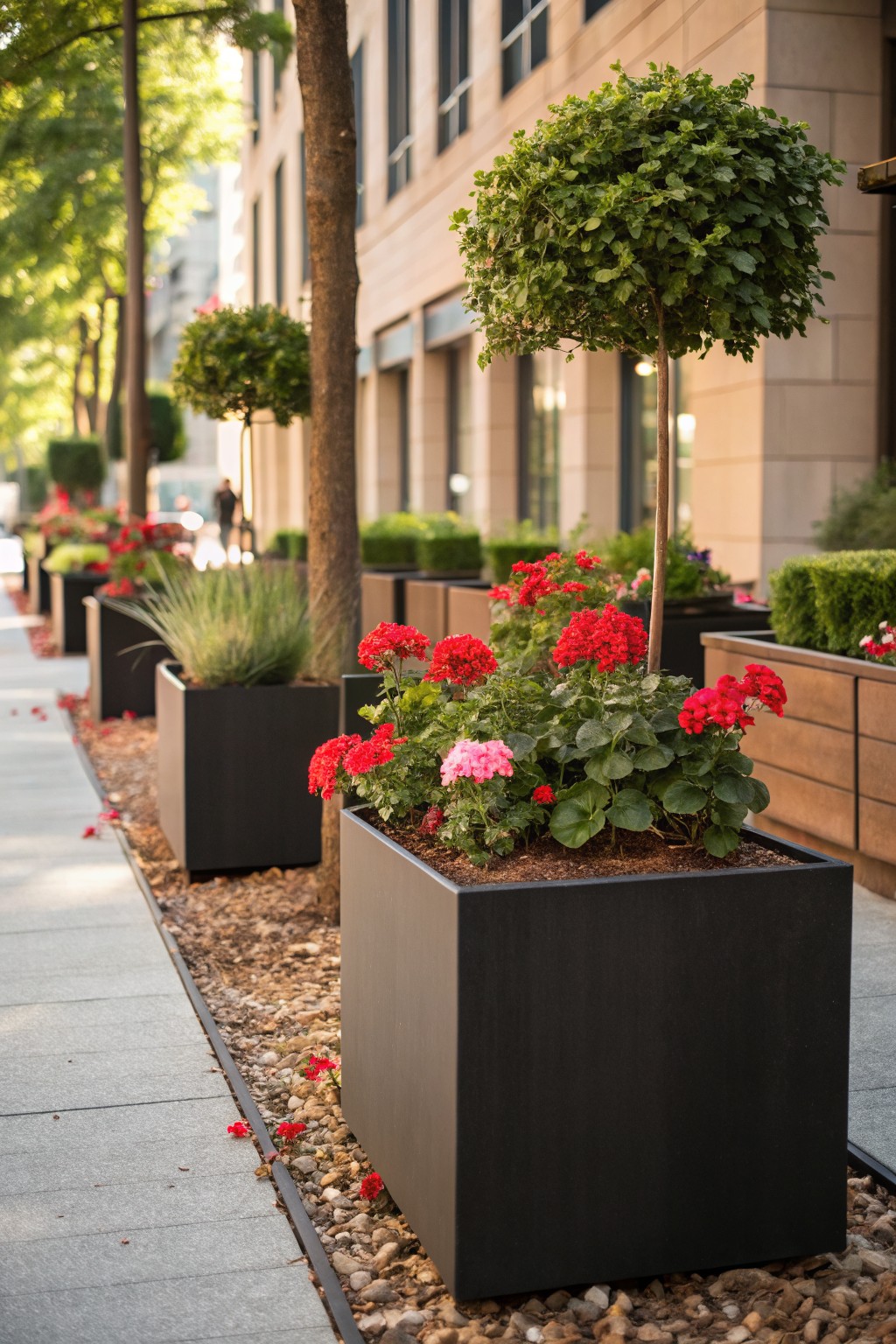
Big black cube planters like these work great for edging a front walkway. They give your flower beds a clean, modern shape without much fuss. Filled with red geraniums and some grasses, they pop against the gravel strip and stone path. The setup keeps everything tidy and lets plants do the color work.
Try this in a narrow yard or along a city sidewalk. Go for tough bloomers like geraniums that handle sun and don’t need daily water. Space the cubes evenly, maybe one every few feet. It suits most homes, especially where you want low upkeep but still some punch… just mulch around the base to cut weeds.
Lighted Stone Path Through Flower Beds
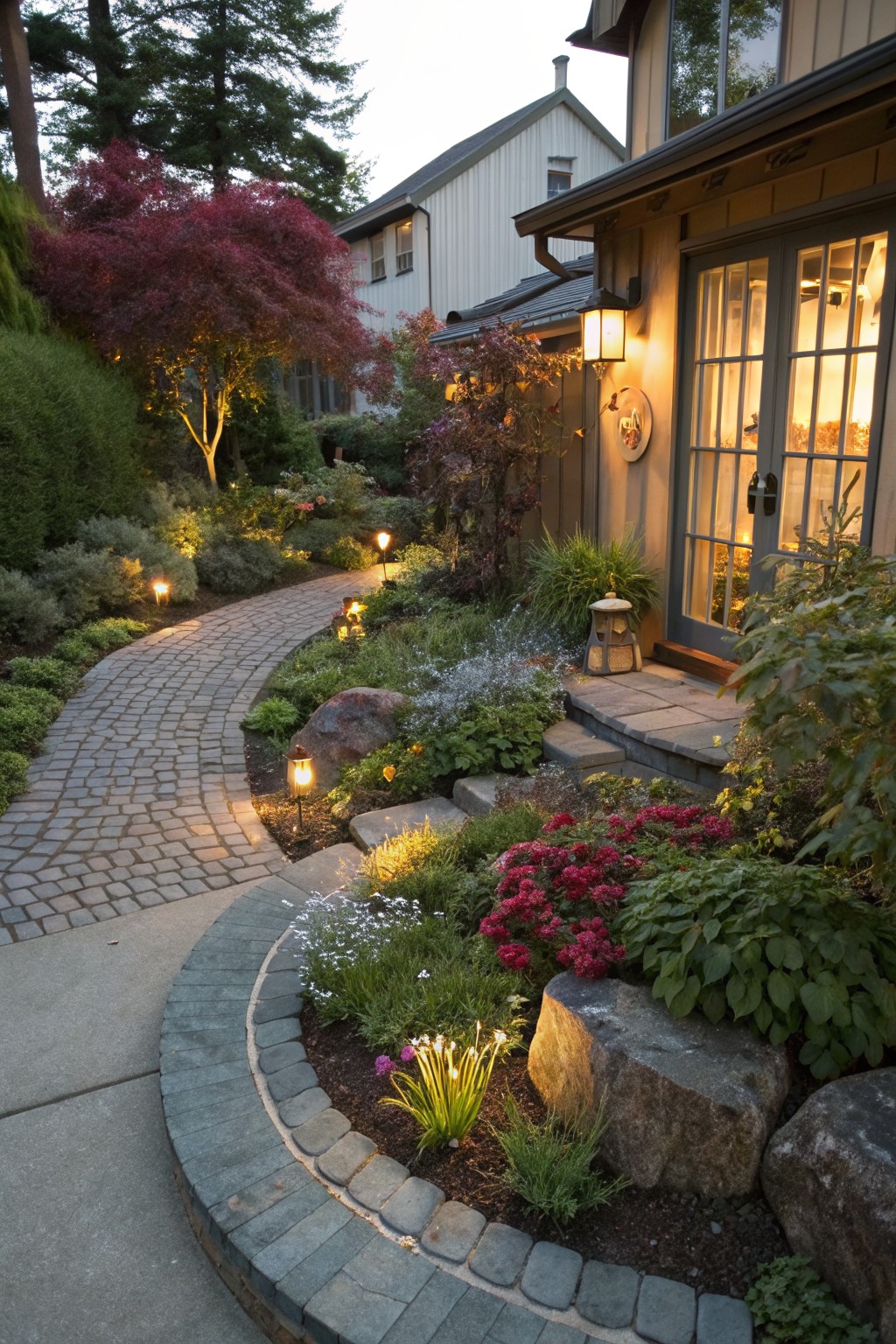
A curving path made from cobblestones runs right through the front flower beds here. Small lights along the edges light it up at dusk, and that makes the whole yard feel longer and more welcoming. Boulders and low plants fill in around it without crowding the way.
This works great where you have room for a driveway edge or side yard entry. Lay the stones loose over gravel for easy install, then plant spilling flowers like sedum right up to the edges. Skip it if your yard is too narrow. Keeps things neat and safe to walk too.
Layered Plants Around Entry Steps
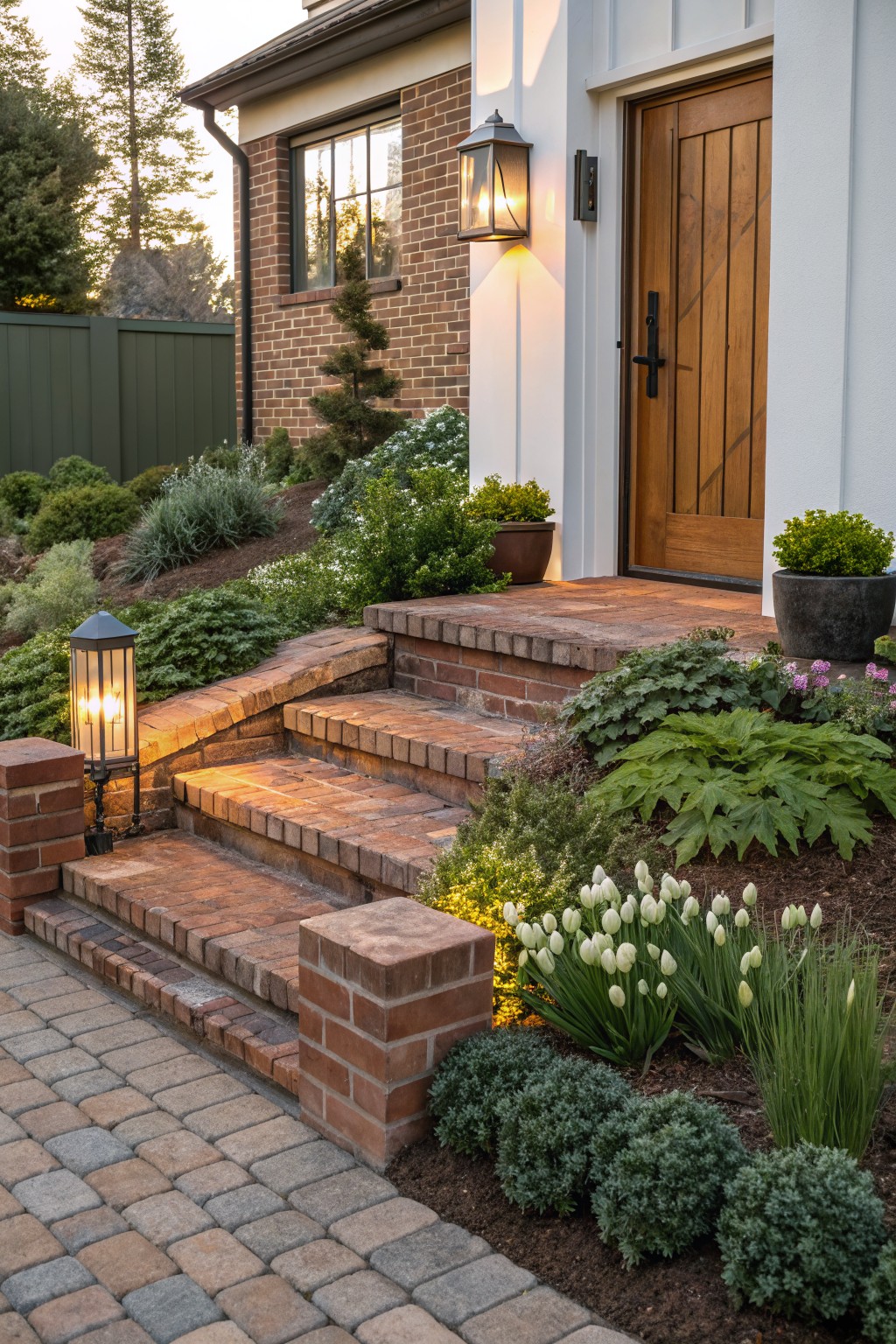
One easy way to boost curb appeal is layering low plants and flowers right around your front steps. Here you see brick steps with curved beds packed with tulips, green shrubs, and some taller greens. It pulls the eye up to the door without much fuss, and the mix of heights keeps things from looking flat.
This works best on a sloped spot or any entry with a little drop. Pick tough plants like hostas or boxwoods that don’t need constant care, then add spring bulbs for color. Keep the beds curved to soften the hard brick, and it fits most homes from craftsman to modern farmhouses.
Stepping Stone Path in Gravel Beds

One straightforward path idea for front yard flower beds sets wide concrete slabs into a bed of gravel. The stones guide you along without taking up much space. White daisies and tufts of grass fill in around them, keeping the look full but simple. Gravel handles drainage well, and it cuts down on weeding since plants stay clumped.
This works best in narrow side yards or along a fence like the dark wood one here. Go for tough, low plants that don’t spread wild. Tamp the stones firm so they don’t shift. It fits modern homes or tighter lots, and stays neat year round with little fuss.
Curved Beds Line the Entry Steps
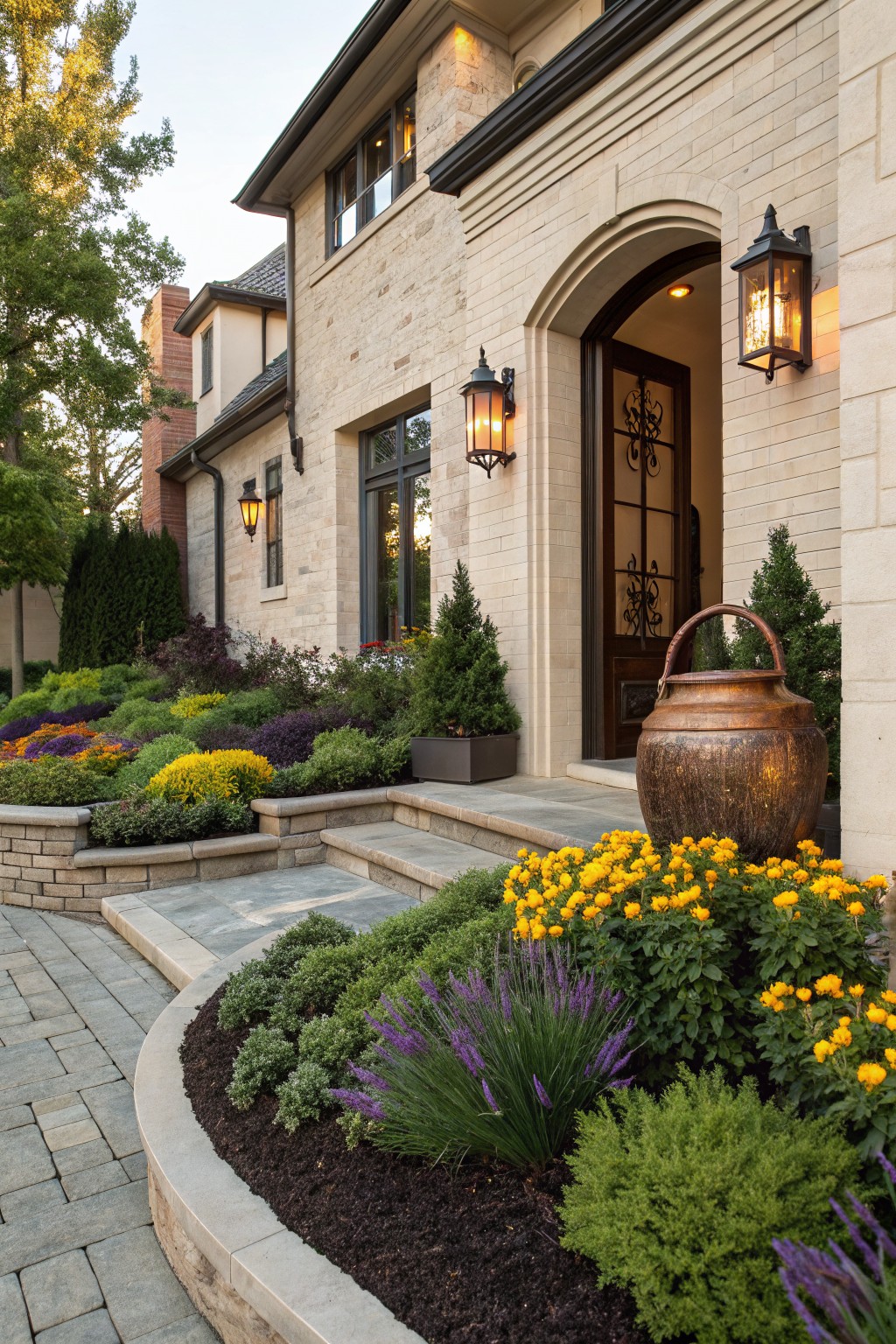
One easy way to boost curb appeal is curving raised beds right along your front steps. These beds hug the path and fill the space with low shrubs, mid-height blooms like yellow coresopsis and purple lavender, plus taller accents. It draws the eye up to the door without much fuss, and the stone edging keeps everything neat year-round.
You’ll want this setup on homes with a few steps to the door, especially if the yard slopes a bit. Pick tough perennials that come back each spring, add mulch to cut weeding, and toss in a big pot like that copper one for extra punch. Works fine in sun or part shade, just match plants to your spot.
Winding Stone Path in Flower Beds

A simple curving path like this turns a basic front yard into something you actually want to walk through. Those irregular flagstone slabs fit right into the ground and let plants tuck in close around the edges. It keeps things natural, not stiff, and the layers of green and pink flowers make it feel full without much fuss.
This works best on a gentle slope, where you can add a low stone wall to edge the beds and hold everything in place. Plant hostas and taller blooms along it for year-round interest. Start small, just lay a few stones and fill in around them. Watch the scale though, too wide and it loses that cozy path feel.
Color-Blocked Succulent Beds

One easy way to make front yard flower beds stand out is with big blocks of color using tough succulents like sedum. Here, chartreuse and deep red varieties line the path, set off by dark gravel mulch. The contrast grabs attention right away and keeps things neat through dry spells or busy seasons.
These beds work best along walkways or driveways where you want curb appeal without daily fuss. Pick low-water plants that clump nicely, mix two bold shades, and fill gaps with pebbles or small rocks. Suits modern houses or simpler setups, but skip if your yard gets too much shade.
Frequently Asked Questions
Q: Do I really need to test my soil first? A: Grab a cheap kit from any garden store and check pH plus nutrients. Most flowers thrive in slightly acidic soil around 6 to 7, so add lime if it’s too sour or sulfur if too sweet. Skip this and your plants might flop from the start.
Q: What if my front yard is mostly shady? A: Pick shade-lovers like hostas, impatiens, or astilbe that pop with color without full sun. Plant them closer together for a fuller look since they grow slower there. They handle partial shade just fine and need less water too.
Q: How do I edge the bed to keep it neat? A: Dig a simple trench with a half-moon edger or even a flat shovel along your flower bed line. Fill it with mulch to hold the shape and block grass creep. Refresh the edge once a year in spring.
Q: Can kids or pets mess this up easily? A: Choose tough bloomers like marigolds or zinnias that bounce back from a little trampling. Mulch thickly around them to protect roots. And plant backups in pots nearby just in case.
