

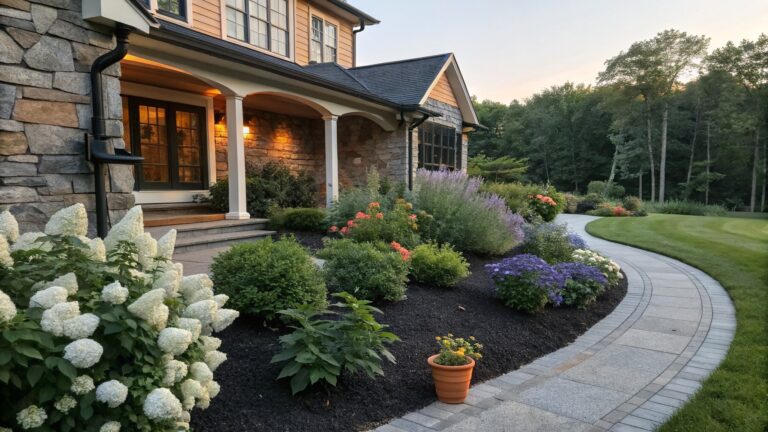
I’ve found that rich black mulch works wonders in flower beds because it sets off plant colors so sharply against its deep tone. It also sharpens the overall layout, defining edges and pathways while letting perennials and shrubs mature without a messy understory. That dramatic contrast hits people right away from the street or patio. When I edged a front bed with it last spring, the salvia and daylilies suddenly looked twice as vibrant amid the green lawn. These setups mix heights and textures in ways you can tweak for your soil and sun, worth noting down for next season.
Black Mulch Beds with White Hydrangeas
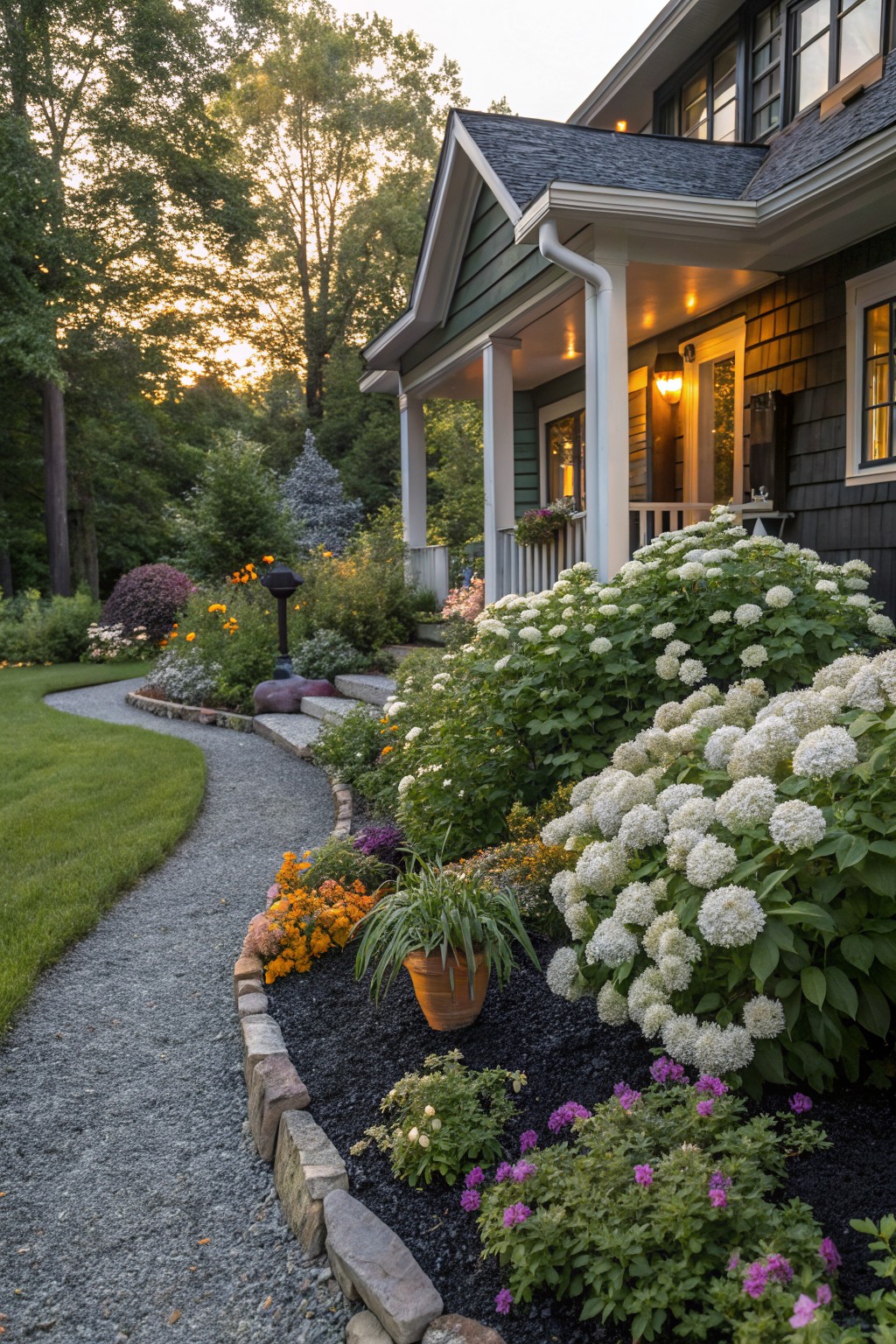
Black mulch works great in flower beds when you pair it with big white hydrangea blooms. The dark mulch makes those fluffy white flowers stand right out, especially along a path like this one. You get that clean contrast without much fuss, and it pulls the eye toward the house entry.
Try this setup where you want low upkeep but high impact, like in a front yard bed near the porch. Use stone edging to keep everything neat, add a few orange or purple flowers for pops of color, and let the hydrangeas do most of the work. It suits most homes, just make sure the mulch stays topped up each spring.
White Hydrangeas in Black Mulch Beds
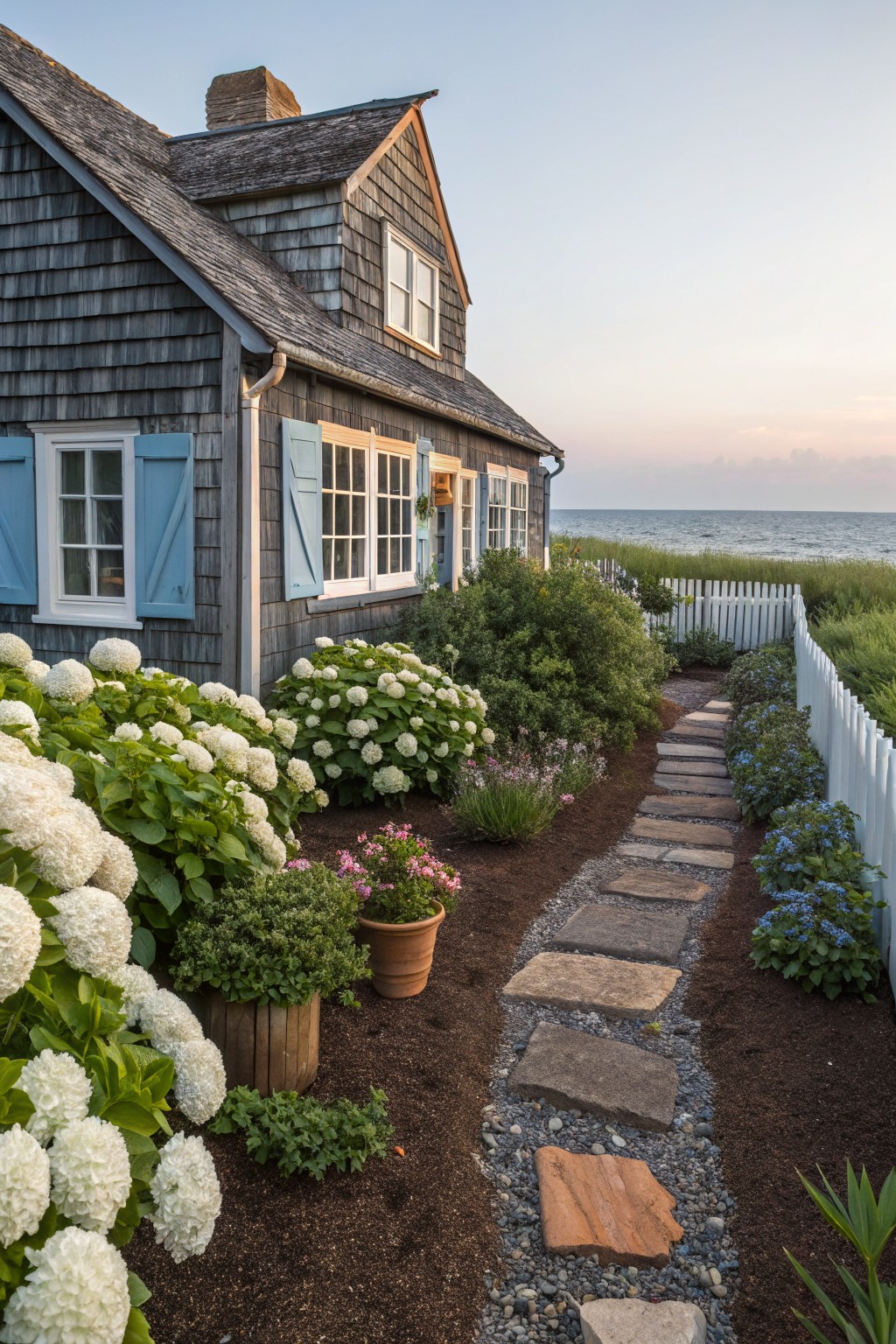
Big white hydrangeas planted right in beds of rich black mulch make a strong simple statement. The dark mulch sets off the blooms so they stand out clear and bright. You see it here along a stone path next to a shingled house. That contrast feels fresh and pulls the garden together without extra color.
Try this in a front yard or side path where you want low upkeep. It suits older cottages or beach places best. Keep the beds edged neat and refresh the mulch each spring. One thing. Pick hydrangeas that handle your sun okay.
Black Mulch in Succulent Side Yard Beds
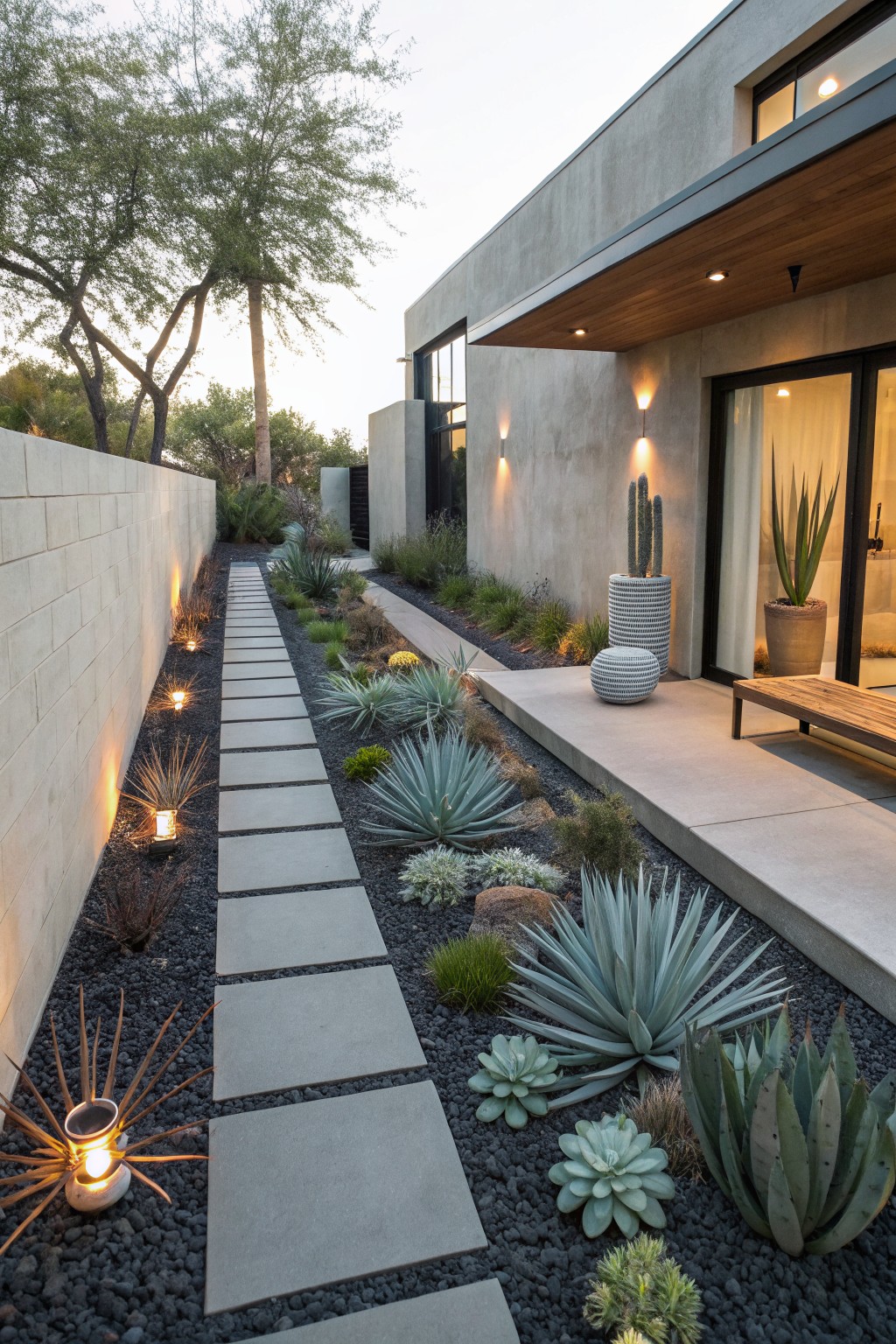
One simple way to get that rich contrast is lining a walkway with black gravel mulch around tough succulents like agave. The dark mulch pops against light stone pavers and stucco walls. It keeps things low maintenance too since these plants don’t need much water. That setup makes a narrow side yard feel put together without much fuss.
Try this in tight spaces next to the house where grass won’t grow anyway. It works best in sunny spots with modern or desert style homes. Just space the plants so they have room to spread and add low lights along the path for evenings. Skip it if your soil stays too wet.
Black Mulch Edges a Winding Gravel Path
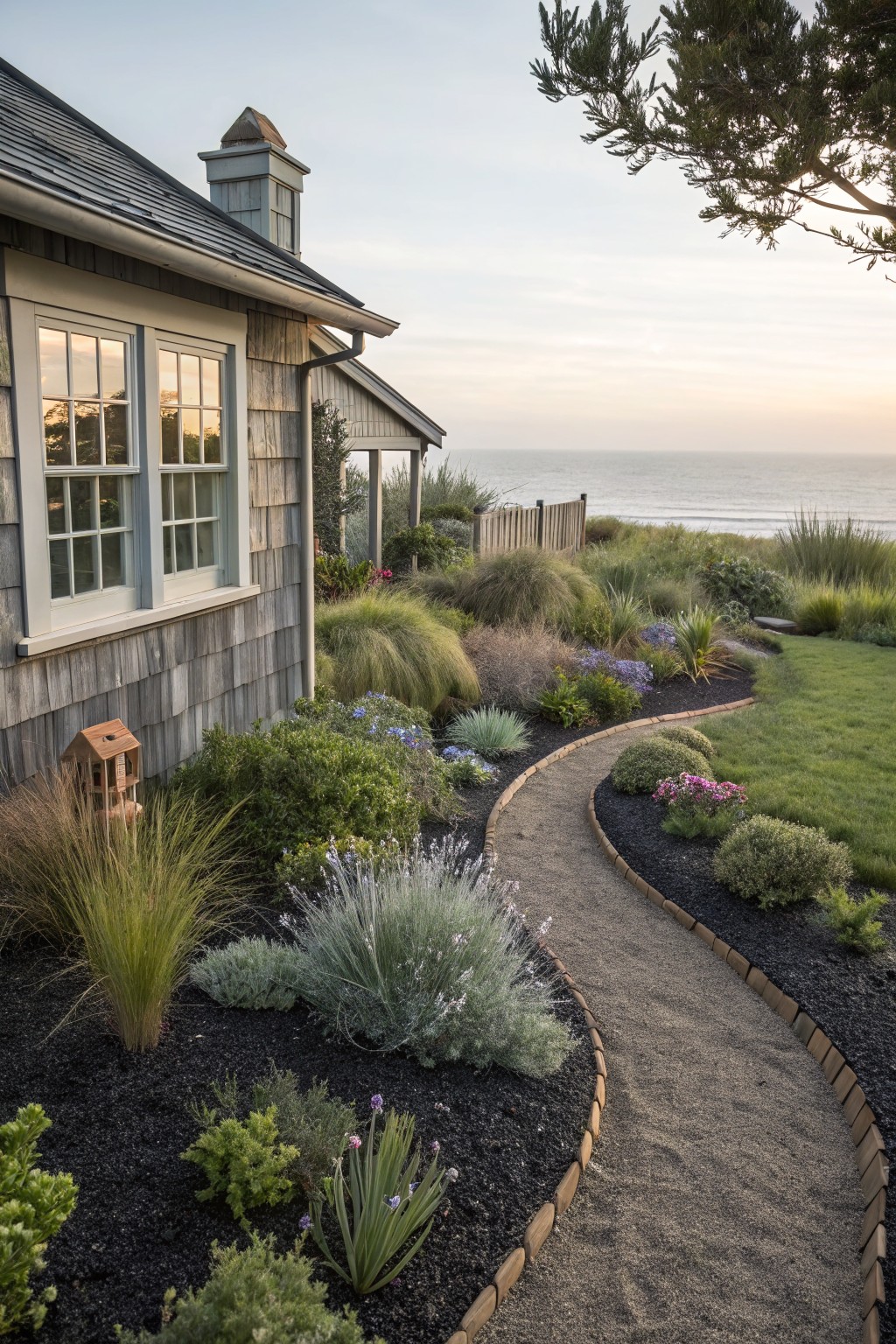
One simple way to add flow to a side yard is with a curving gravel path edged by black mulch beds. The dark mulch sets off the pale gravel nicely and makes the plants pop, like those tall grasses and low succulents. It pulls everything together without much fuss.
This works best in coastal spots or dry gardens where you want low upkeep. Line the path to a gate or side door, and pick tough plants that handle salt air. Just keep the beds neat so the curve stays clear… no overplanting.
Black Mulch Beds Around a Fountain
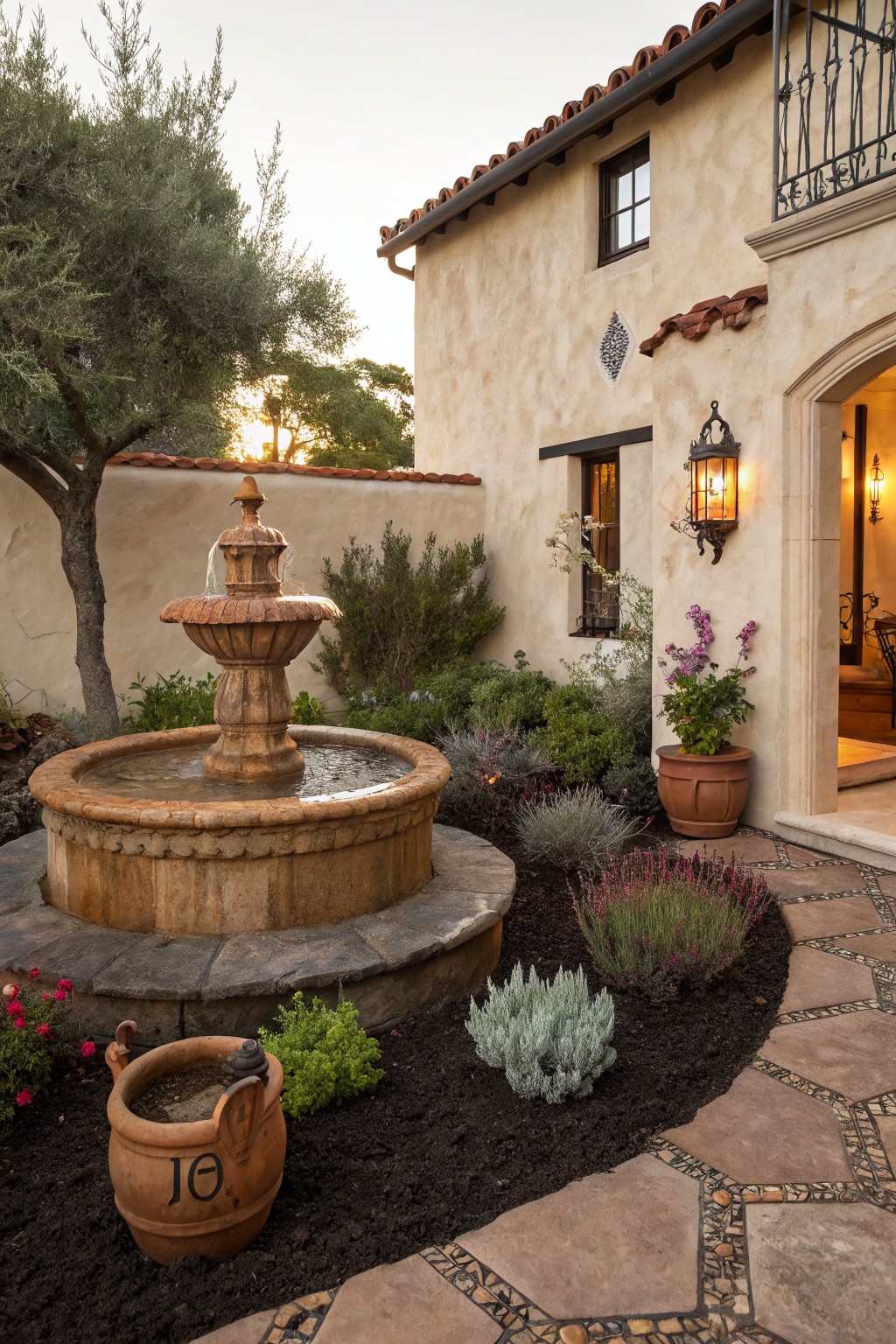
Rich black mulch fills the curved flower beds here, circling a stone fountain right in a courtyard spot. That dark bedding makes all the green plants and colorful blooms stand out sharp against the pale stucco walls and tan stone path. It’s a simple way to add punch without much fuss.
You can pull this off in any snug outdoor area next to the house, like a side yard or entry patio. Plant some lavender, low shrubs, and a few perennials in the beds, then top with fresh black mulch every year or so. It suits warmer spots best, where the contrast wakes up plain architecture.
Black Mulch Beds Edged with Natural Stones
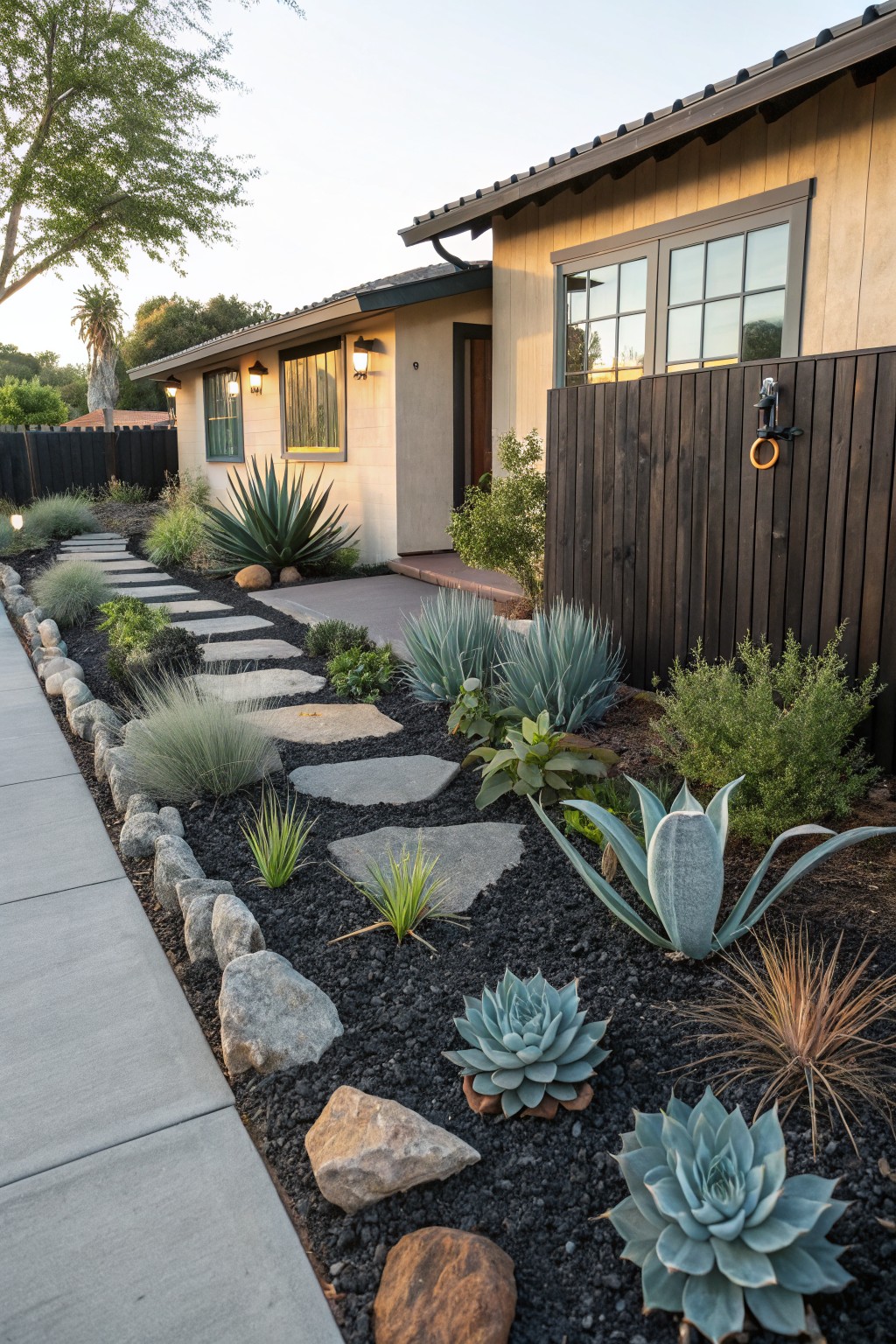
One simple way to add punch to a side yard is black mulch in narrow planting beds. Here it lines a stone path with tough succulents like agaves and echeverias popping against the dark gravel. The mulch makes those blue-green leaves stand out sharp, and the big rocks along the edge keep it all neat without much fuss. It’s low water and pulls the modern house right into the yard.
This setup works best in sunny spots with poor soil, like along a walkway to the back gate. Use it on midcentury or contemporary homes where you want clean lines but some texture. Just make sure the rocks drain well so the plants don’t sit wet. Skip it in shady areas, those succulents need full sun to thrive.
Black Mulch Beds Around a Stone Fountain
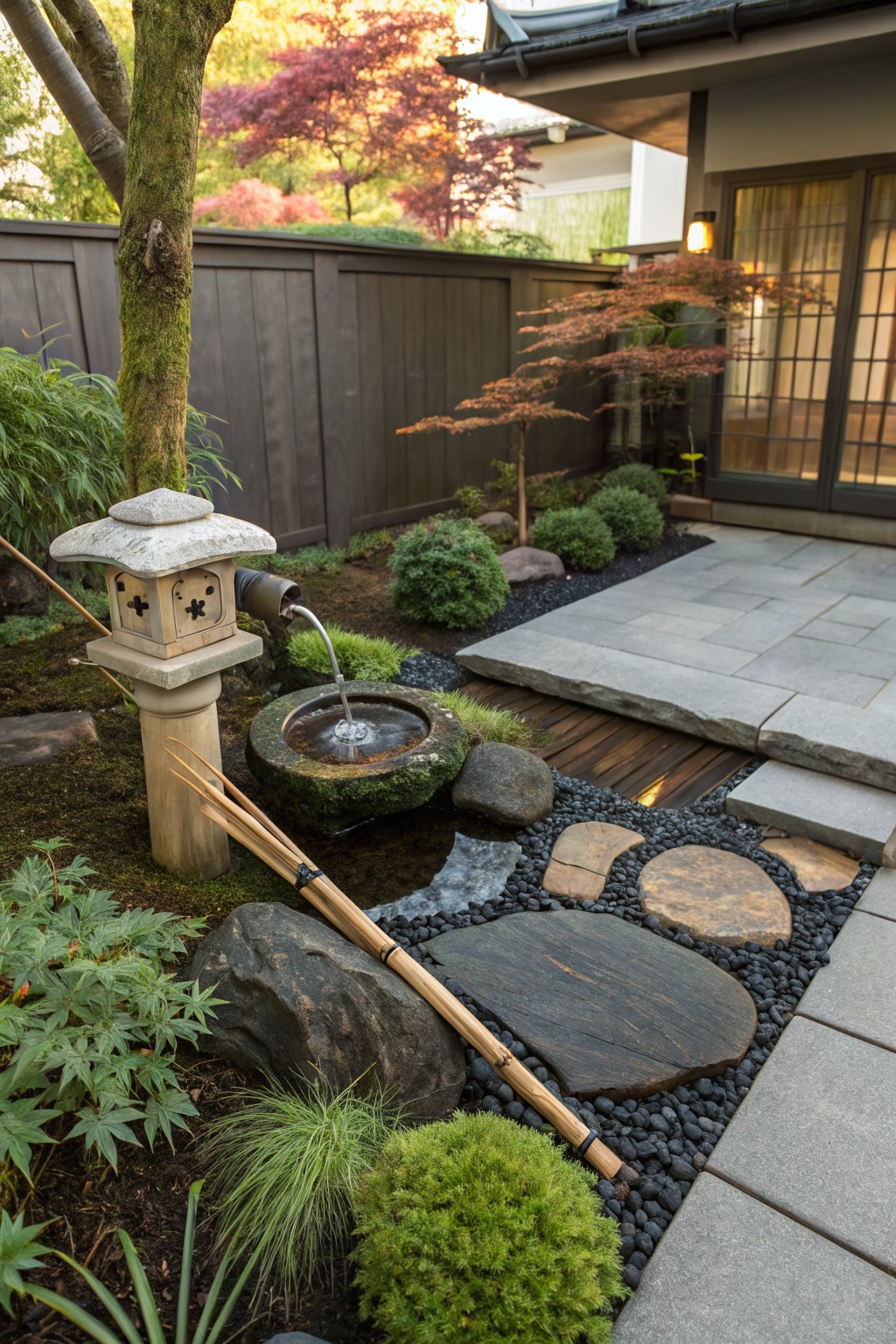
One simple way to get that dramatic contrast is filling garden beds with rich black mulch around a fountain like this stone lantern. The dark mulch sets off the green ferns and mossy rocks right away. It pulls your eye to the plants and water without needing bright flowers everywhere.
Try this in a side yard or courtyard next to your patio. Use black pebbles for edging to keep it neat, and add a few larger boulders for scale. It suits Asian-inspired spots or any modern yard wanting calm focus. Just avoid overcrowding the bed so the black stays bold.
Black Mulch Beds Lining a Pool
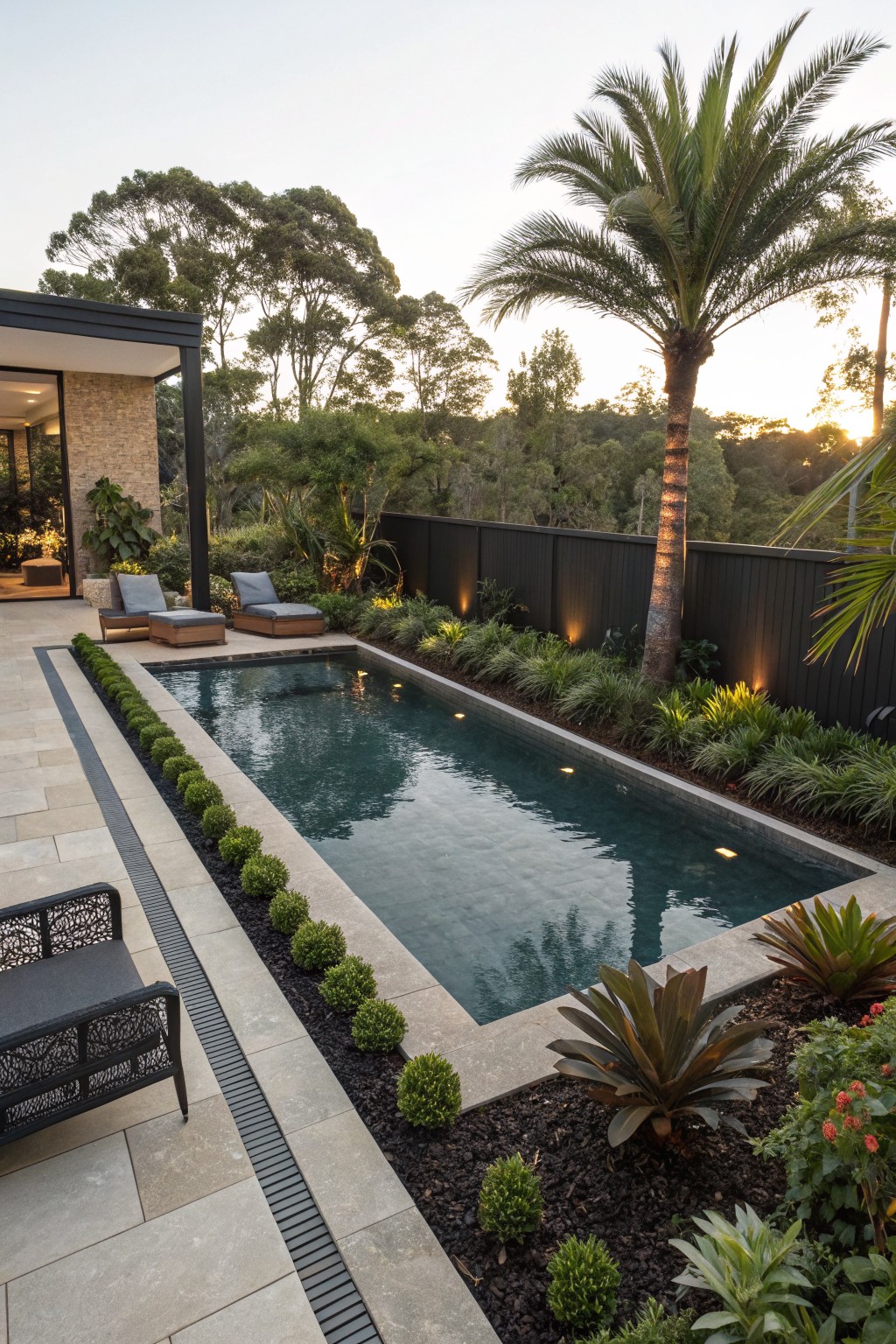
Black mulch works well in straight beds running the length of a narrow pool. The dark color pops against light pavers and green plants like boxwoods, giving the space a clean, modern edge. It keeps things simple while adding that strong contrast people notice.
Try this along lap pools or skinny designs where you want low upkeep. Line up the same shrubs for rhythm, and it fits homes with sleek outdoor areas. Just make sure the beds drain well so mulch doesn’t wash into the water.
Stone Path Edged by Black Mulch Beds
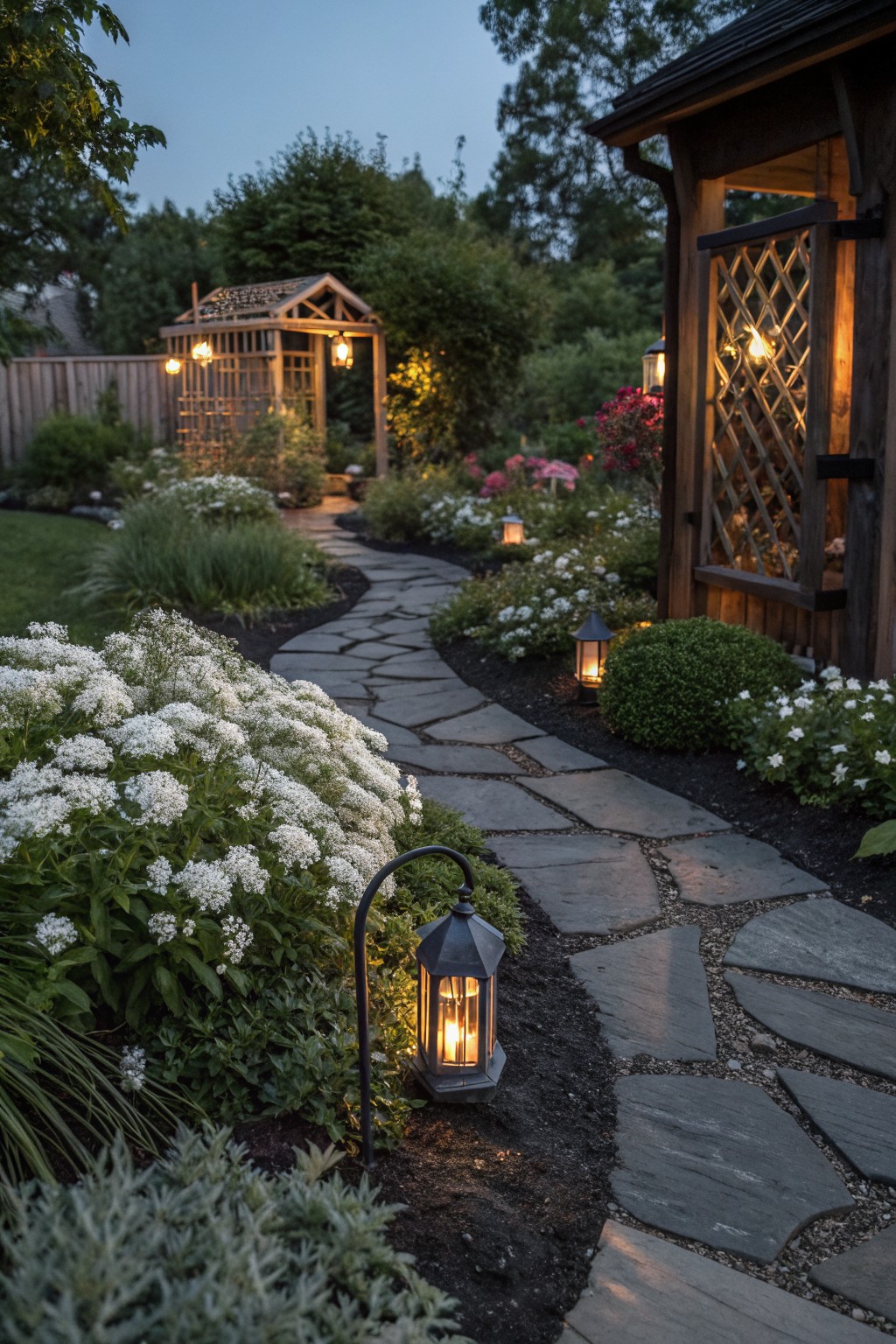
Black mulch works great in flower beds that hug a winding stone path like this. The dark color sets off white blooms and sets up a strong contrast that pulls your eye right along the walk. Lanterns along the edge keep it going into the evening. Simple but it makes the garden feel put together.
Try this in a backyard where the path leads to a shed or pergola. It suits most homes with some yard space. Stick to light flowers against the black mulch. Watch the path width so it stays walkable. Keeps things low maintenance too.
Terraced Beds with Dark Mulch
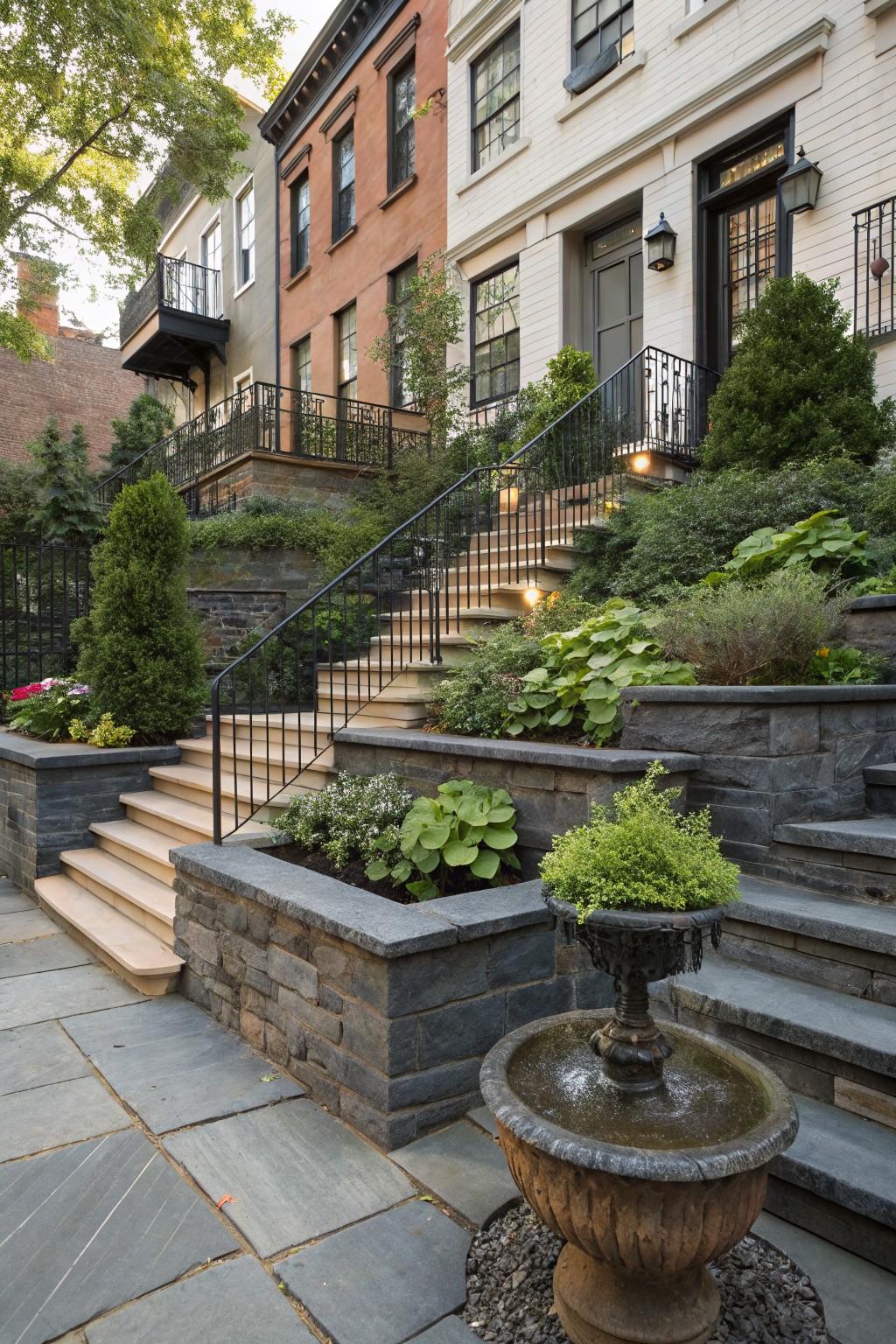
One simple way to handle a sloped front yard is building stone terraces with flower beds tucked into the walls. Here, rich black mulch fills those beds, holding back the soil while the dark color sets off green hostas and ferns. It pulls your eye right up the stairs to the house door.
This works best on townhouses or older homes with steep lots. Keep plantings simple so they don’t block the path. Add a fountain like this one at the bottom for a quiet water sound. Just make sure the stone matches your steps.
Curved Black Mulch Flower Beds
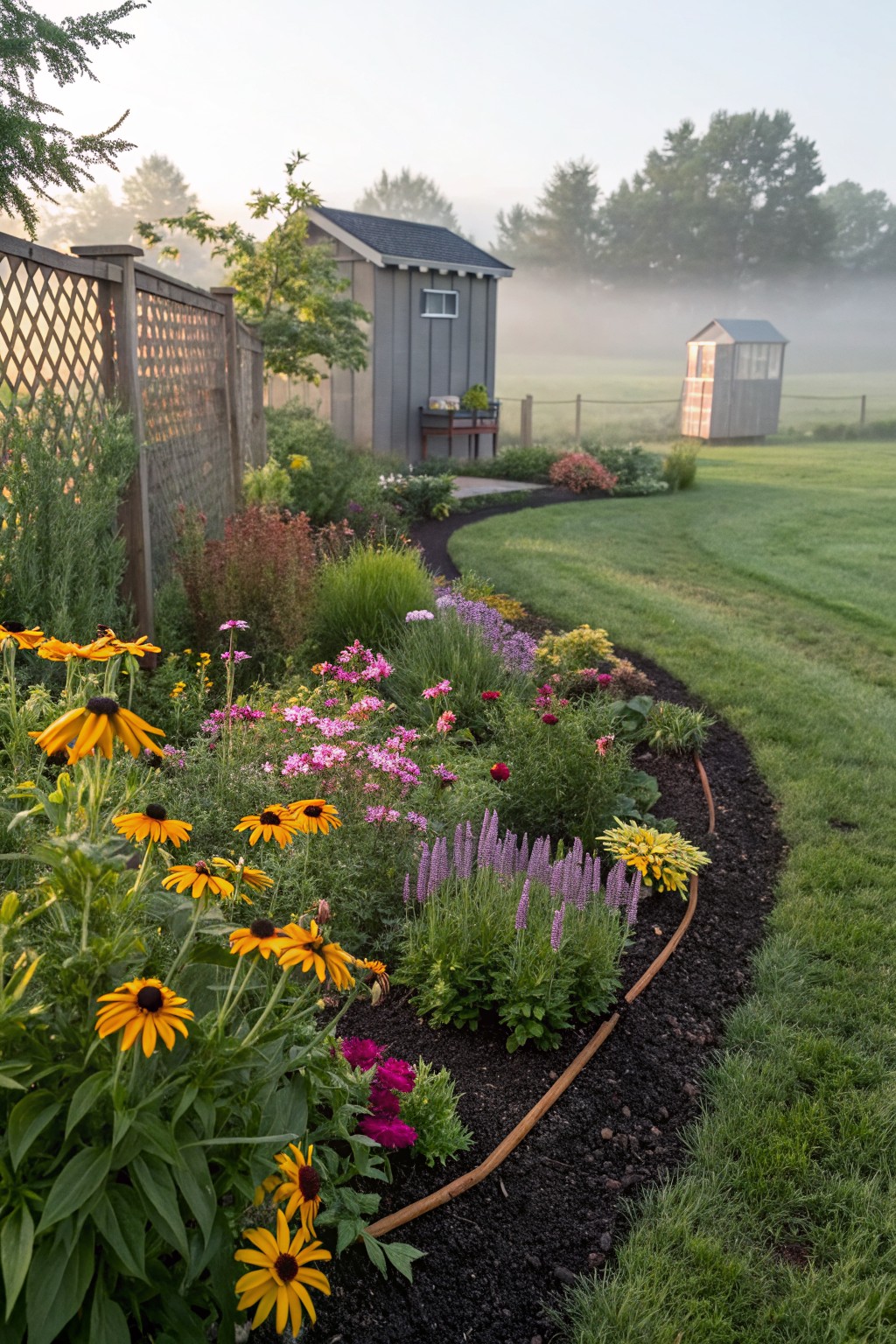
Rich black mulch works great for outlining a curved flower bed like this one. The dark edging sets off yellow black-eyed Susans, pink blooms, and tall lavender spikes. It pulls the colors forward against the green lawn and adds clean lines to the whole yard.
You can set this up along a fence or yard edge where you want some structure. Plant tough perennials that come back each year. Refresh the mulch now and then. It suits most home gardens… especially if you like low-key drama.
Black Mulch Beds Along Stone Paths
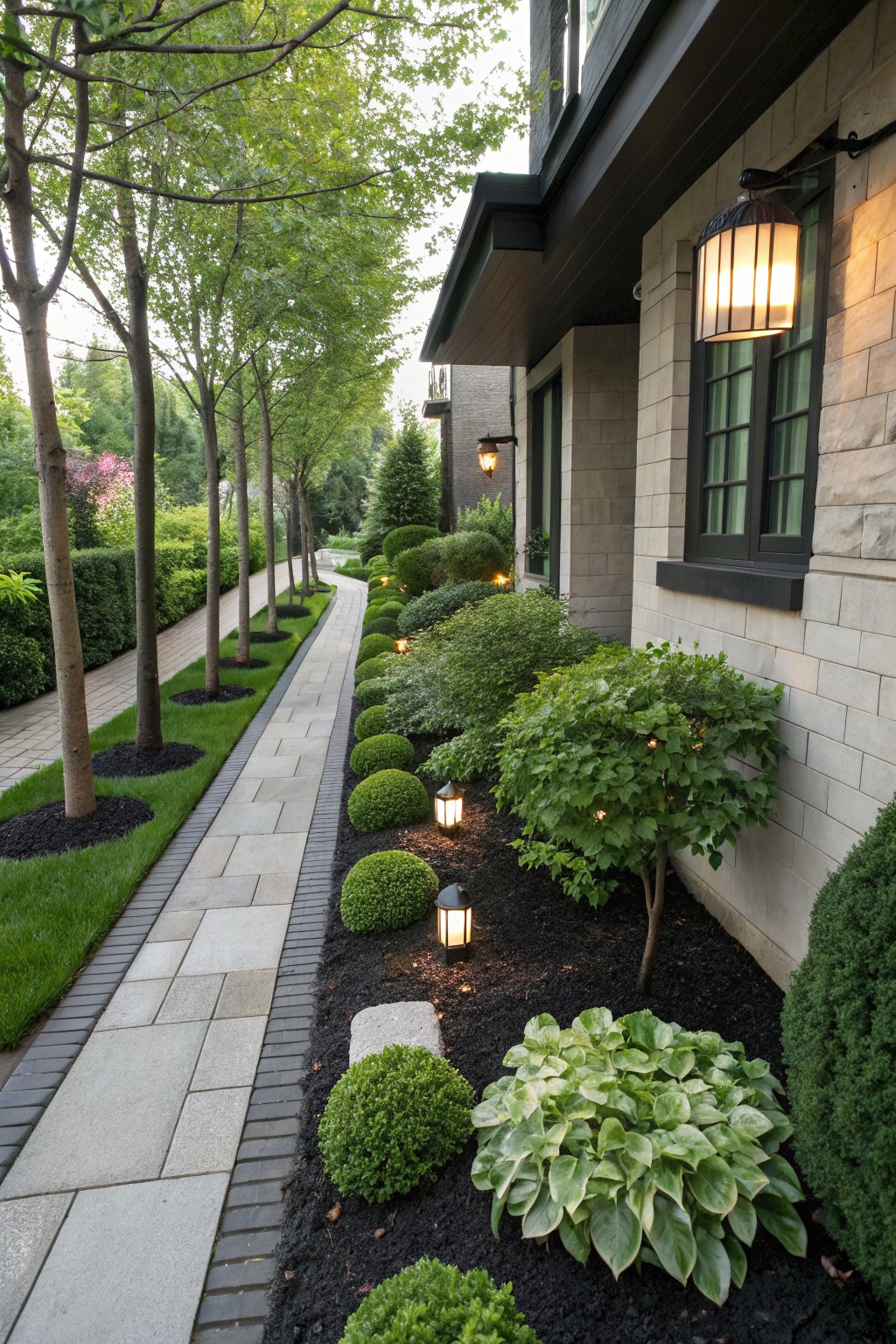
Black mulch works well in flower beds that run right next to a stone walkway. It gives a sharp contrast against the pale pavers and the green grass strip on the other side. Plants like rounded boxwoods and those big hosta leaves stand out more, and the dark beds tie into the house’s light brick without overwhelming things.
You can pull this off on side paths leading to a backyard or garage entry. Stick to simple curves in the bed shapes, keep plants low and mounded, and tuck in a few lanterns for light at night. It stays neat year-round… just refresh the mulch every spring.
Dark Mulch Beds Line the Front Entry
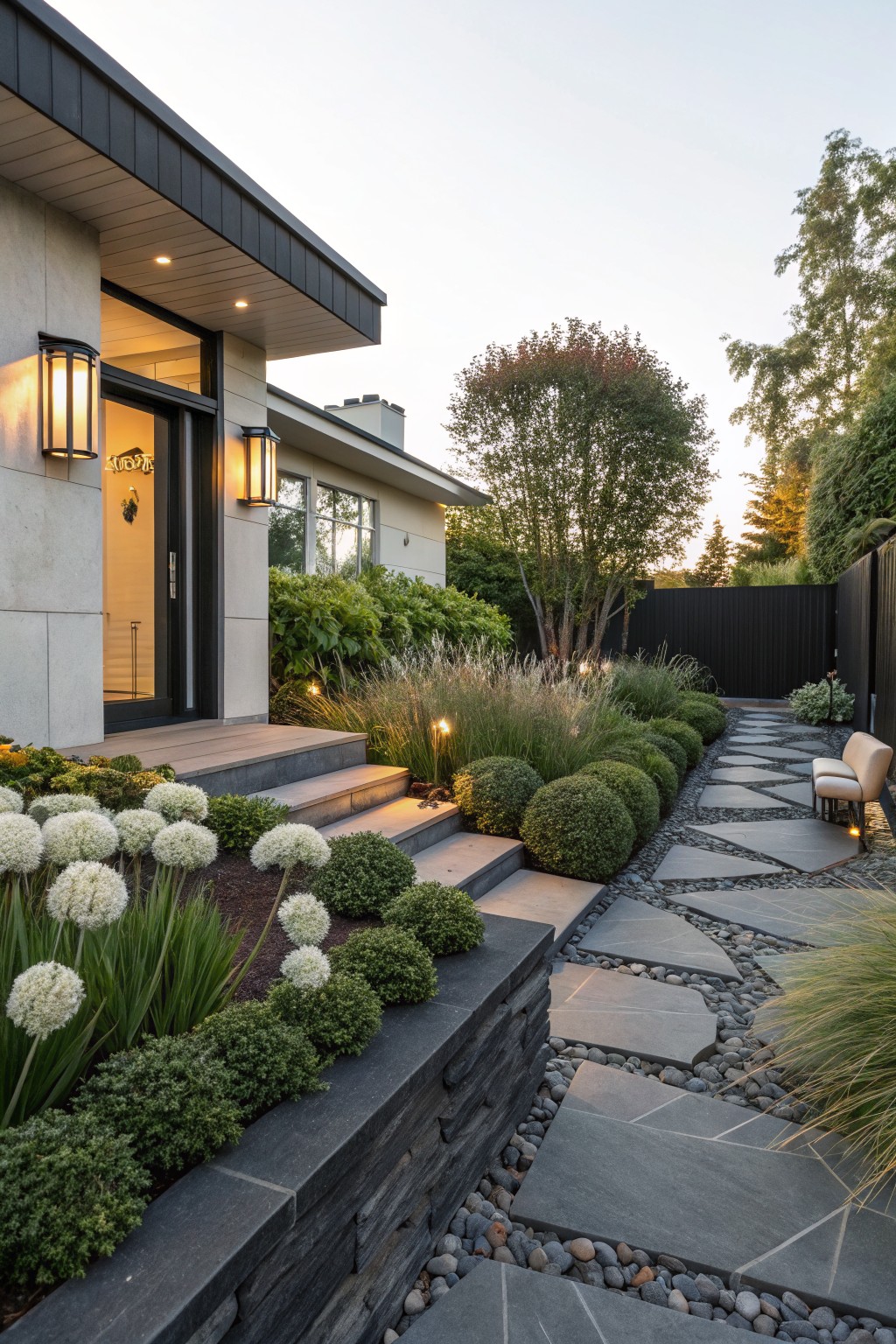
One simple way to add punch to your front yard is dark mulch in the flower beds right by the house steps. Here, black pebbles fill raised beds edged in dark stone, letting white puffy flowers and round boxwood shrubs stand out sharp against the light house siding. It pulls the eye up the path without much fuss, and the gravel stays tidy year round.
This setup works best on smaller lots or modern homes where you want clean lines. Plant low grasses and big white blooms like alliums in spring, then let the mulch handle the rest. Keep beds no wider than three feet so they don’t overwhelm the walkway, and add a few path lights for evenings.
Black Mulch in Raised Beds
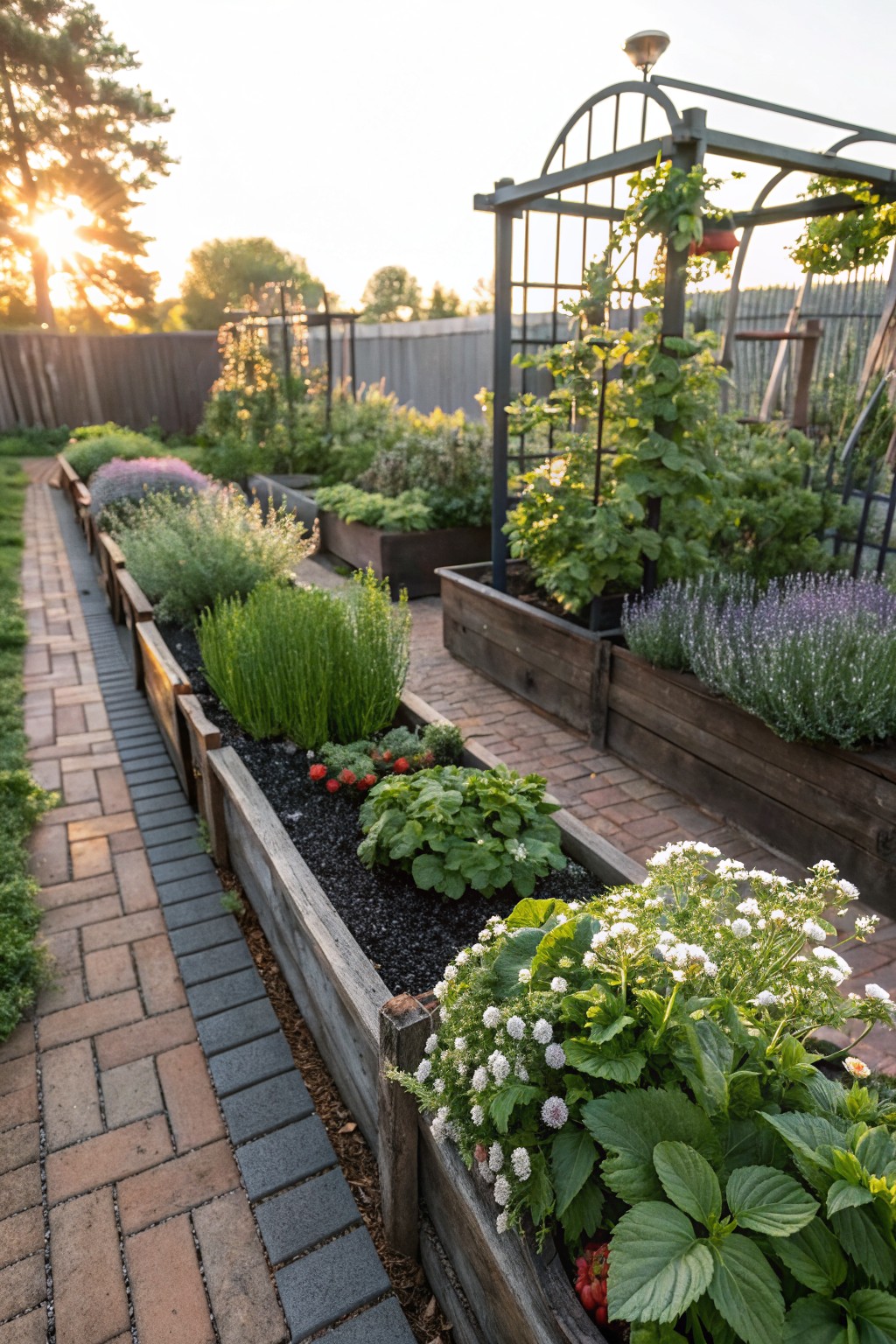
One simple way to get that rich contrast is filling raised wooden beds with black mulch. Here the beds run right along a brick path, packed with herbs, lavender bushes, and strawberry plants. The dark mulch sets off all the greens and flowers so they stand out sharp against it. Keeps things neat too, without much weeding.
These work best in a side yard or along a walkway where you want definition. Build the beds from rough cedar planks, maybe two feet high, and layer soil over gravel at the bottom. Top with a couple inches of black mulch. Suits most homes, even rentals if you keep it simple. Just check drainage so roots don’t drown.
Frequently Asked Questions
Q: How deep should I spread the black mulch?
A: Go for 2 to 3 inches deep across the bed. That depth smothers weeds and holds in moisture without drowning roots. Keep it away from plant stems by a couple inches.
Q: Does black mulch fade quickly in the sun?
A: It lightens some after a rainy summer or harsh sun. Freshen it up each spring with a thin top layer. You’ll hold onto that bold contrast all season.
Q: Will black mulch attract bugs to my flower beds?
A: Nope, quality black mulch from bark repels pests about the same as lighter kinds. Stick to fresh bags and rake it smooth to cut hiding spots.
Q: Can I use black mulch around veggies too?
A: Sure, it works great for raised veggie beds. The dark color warms soil a touch faster in cool springs. And it cuts down on splashing mud onto leaves.
