

Black-eyed Susans can bring a sunny garden to life, but they look best when their height and spread suit the space around them.
I find that grouping them along a path or repeating them through a border often feels more settled than scattering them across the yard.
Their golden flowers catch the eye first, so nearby foliage, edging, and taller plants help the garden feel balanced rather than crowded.
The best layouts also leave room for the flowers to fill out over time without blocking a walkway or swallowing smaller plants.
I’d save a few of these ideas to adapt to the light, soil, and shape of your own garden.
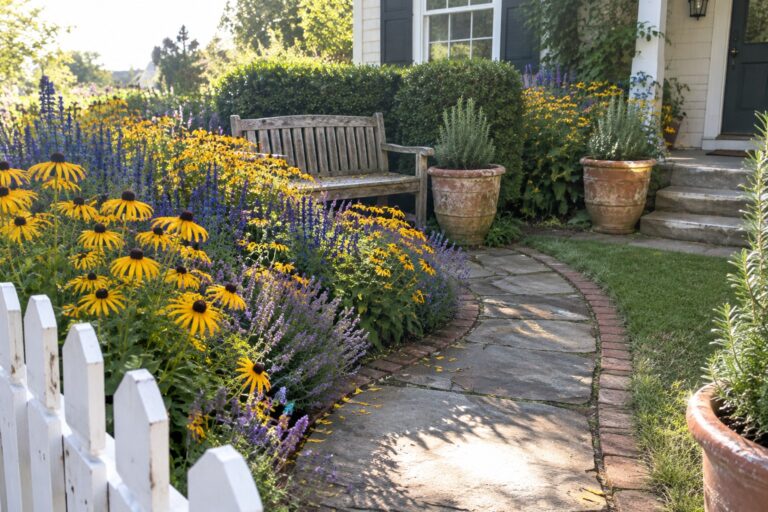
Use a Curved Path to Lead Through the Garden

A gently curving path makes a flower bed feel like part of the garden rather than a strip along the lawn. Here, the stone walkway winds past black-eyed Susans and purple flowers, giving the planting room to spill naturally toward the edge.
This approach works well in sunny front gardens where you want an easy route to the door and room for flowers along the way. Keep the path wide enough to walk comfortably, and leave a little space between the stones and taller plants so they do not crowd the walkway.
Use Curving Paths to Shape a Wildflower Garden

A gently curving path gives a wildflower bed a clear shape while letting the planting feel loose and natural. Black-eyed Susans work well along its edges, where their bright flowers can spill toward the gravel without blocking the route.
Leave enough room to walk comfortably, and keep the path edge easy to maintain. This approach suits sunny gardens with space for spreading plants; a narrow border may need a straighter, simpler path.
Use Black-Eyed Susans Along a Garden Path

Black-Eyed Susans make a sunny path feel cheerful and easy to follow. Planting them in a long bed gives the flowers room to spread while keeping the garden’s edge clear.
They work well beside a walkway near the house, especially when a simple metal border keeps soil and plants from spilling onto the paving. Leave enough space for the flowers to fill out, and keep the path wide enough to walk comfortably.
Use Black-Eyed Susans Around a Garden Dining Area

Black-Eyed Susans can make an outdoor dining spot feel connected to the garden without crowding the table. Their bright flowers work especially well along the edge of a gravel patio, where they add color while leaving the seating area clear.
Plant them in a broad bed beside the dining space, with enough room for the clumps to spread. A sunny spot suits these flowers, but keep them back from chair legs and walkways so they are easy to use and maintain.
Use a Dry Creek Bed to Edge a Flower Garden

A dry creek bed gives a flower border a clear edge without needing a solid wall or formal edging. The rounded stones create a simple transition from the planting area to the lawn, while the black-eyed Susans still have room to spread.
This approach works well in a sunny garden where you want a defined border and a place for rainwater to move through. Keep the bed wide enough to hold the stones in place, and use sturdy edging if the surrounding soil tends to wash into it.
Build Black-Eyed Susans Into Layered Garden Beds

Layered beds let black-eyed Susans stand out without leaving the garden looking bare after their main bloom. Their bright flowers work especially well in front of low stone retaining walls, where the sturdy wall gives the planting a clear edge.
Use the tallest flowers toward the back of a bed and shorter plants near the front, leaving enough room for each to spread. This approach suits sloped yards, though it’s worth choosing plants with different bloom times so the beds stay interesting through the season.
Plant Black-Eyed Susans in Broad Garden Beds

Broad, informal flower beds let black-eyed Susans make a strong show without requiring a fussy layout. Their golden blooms look especially at home in generous clusters, with small clumps of blue-green grass breaking up the flowers.
This approach suits sunny beds along a house or garden path. Leave enough room for the flowers to spread, and use a few low-growing plants near the edge so the bed meets the gravel neatly.
Plant Black-Eyed Susans Along the Entry Steps

Black-Eyed Susans can make a front entrance feel cheerful without needing a complicated planting plan. Set them in loose groups along the steps, then use compact shrubs nearby to keep the flowers from spilling across the walkway.
This approach works well where a path or steps lead straight to the door. Leave enough room for people to walk comfortably, and repeat the flowers on both sides for a tidy look.
Let Black-Eyed Susans Spill Along a Patio Edge

A flower bed that runs right up to the patio makes the hard surface feel connected to the garden. Black-Eyed Susans suit this kind of border well, and low, spreading flowers can soften the edge without hiding the path.
Plant them along one side of a patio, leaving enough room for the flowers to lean or spread without making the paving difficult to use. A few clumps among other plants will look more natural than a tight, unbroken row.
Use River Rocks to Edge a Flower Bed

A dry creek bed made from river rocks gives a flower bed a clear edge while adding a bit of texture. It works especially well beside a walkway, where the stones can separate the planting area from the pavement.
Use a mix of rock sizes to keep the bed from looking too uniform, and leave enough room for the plants to grow without spilling into the path. Black-eyed Susans are a good fit for the planting nearby, since their sunny blooms stand out against the gray stones.
Add Garden Lights Along a Flower Bed

A simple string of outdoor lights can make a flower bed feel like part of the garden after sunset. Here, the bulbs follow the line of the bed, while Black-Eyed Susans bring bright color along the edge.
Use sturdy posts to support the lights and keep them clear of plants and the path. This works well beside a walkway or garden border, but leave enough room for flowers to spread without crowding the bulbs.
Use Black-Eyed Susans in Garden Beds Beside a Patio
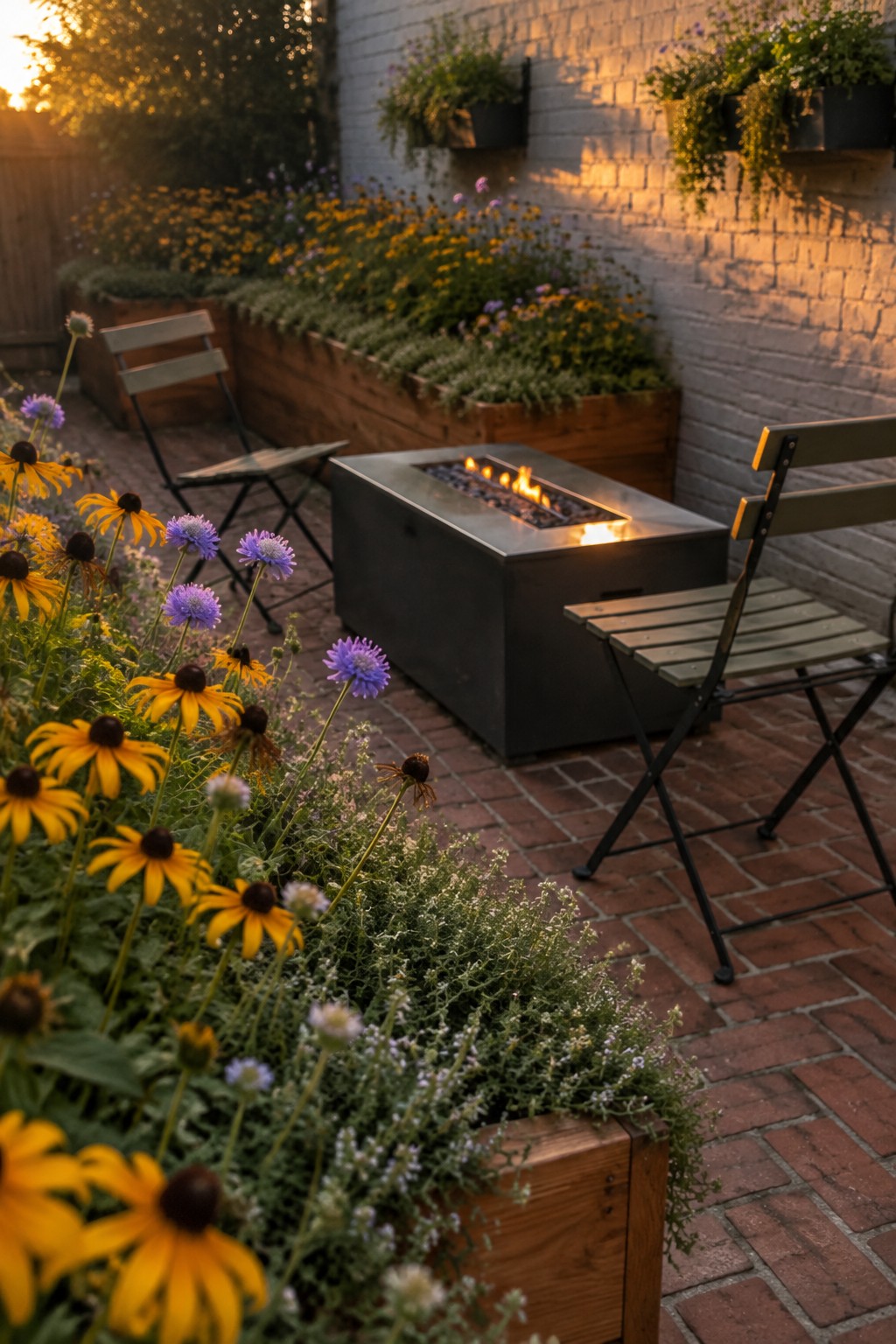
Black-Eyed Susans can make a patio feel connected to the garden when they grow in beds along its edge. Their bright flowers bring color close to the seating area without taking up space on the patio itself.
Plant them in a sunny bed beside a brick path or seating area, leaving enough room for people to move comfortably. Mix in a few other flowers for a longer season of blooms, but keep the path edge clear.
Create a Coastal Garden With Native-Looking Plant Layers

Black-eyed Susans look at home in a loose planting where grasses and smaller flowers share the bed. This layered approach feels less formal than a row of single plants, and it gives the garden interest at different heights.
Use the taller grasses toward the middle or back, then let black-eyed Susans and low-growing flowers fill the front. This works especially well in a sunny, sandy spot; leave enough room between plants for them to spread without crowding the path.
Repeat Black-Eyed Susans Along a Long Garden Bed

Repeating the same flower along a garden bed gives a long border a clear rhythm. Here, black-eyed Susans fill the spaces between clipped shrubs, so the planting feels organized without looking too formal.
This approach works well beside a lawn or path where the bed can be seen from a distance. Plant the flowers in generous groups, and leave enough room between them and the shrubs so both can grow without crowding.
Layer Black-Eyed Susans Into a Raised Garden Bed

Black-Eyed Susans work well as the taller layer in a raised bed, where their bright blooms can rise above lower flowers and leafy plants. This arrangement gives a sunny garden a full, relaxed look without needing a formal pattern.
Plant them toward the back or center of a bed, then leave room in front for shorter flowers to spill over the edge. A wooden raised bed suits a patio or small yard, but keep the plants from crowding nearby seating or paths.
Use Stepping Stones to Make a Gravel Garden Path

A stepping-stone path gives a gravel garden a clear route without covering the whole area in solid paving. The open gravel lets low plants grow along the edges, while larger stones make the walk easier to follow.
Set the stones firmly and leave comfortable, even steps between them. This approach works well in a sunny, dry garden, where black-eyed Susans can add color beside the path without crowding it.
Grow Black-Eyed Susans in Raised Beds Along a Garden Path

Raised beds make it easy to give a sunny garden a clear structure while keeping flowers close to the path. Black-Eyed Susans suit this setup well, adding bright color along the edges without hiding the walkway.
Use sturdy beds beside a brick or stone path, and leave enough room for plants to spread without narrowing the route. A mix of Black-Eyed Susans and lower flowers can keep the beds full while leaving the path easy to use.
Frequently Asked Questions
Q: How much sun do black-eyed Susans need to flower well?
A: Give them a spot with at least six hours of direct sun a day. They can handle a little afternoon shade, but too much shade often means fewer flowers and floppy stems.
Q: What plants look good beside black-eyed Susans?
A: Pair them with purple coneflowers, ornamental grasses, or blue salvia for a sunny, relaxed border. Leave a little breathing room so air can move around the plants and you can reach them for trimming.
Q: Should I deadhead black-eyed Susans?
A: Snip off faded flowers to keep the bed looking tidy and encourage more blooms. Leave some seed heads in fall if you’d like birds to have a snack.
Q: Do black-eyed Susans come back every year?
A: Many varieties are perennial and return each year, while some are short-lived or grown as annuals. Check the plant label, and let a few flowers go to seed if you want new seedlings to fill in.
