

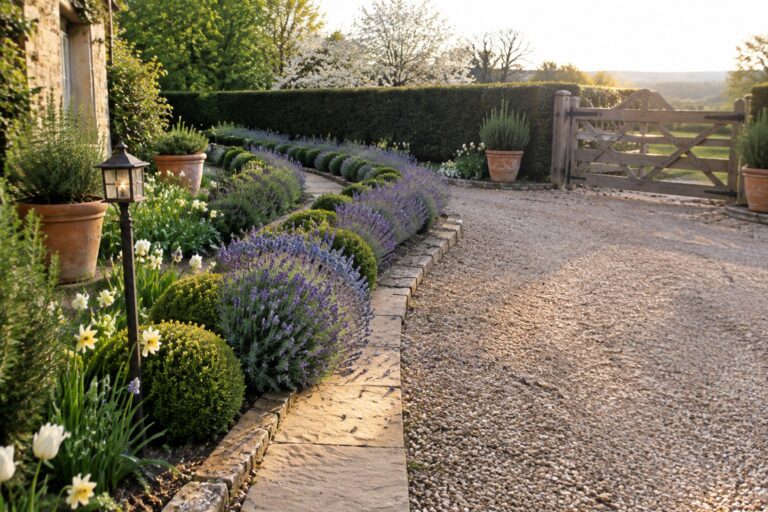
Lavender can soften the hard edge of a driveway or path, but the planting needs enough room to grow without narrowing the route.
I find that the most successful borders balance the flowers’ loose shape with clear edges and practical spacing.
Sunlight, soil, and foot traffic all affect where lavender will thrive, so it helps to plan around the way people actually move through the garden.
A border that looks neat at planting time may spread into the path as the plants mature.
The ideas ahead offer useful ways to shape a lavender edge, from simple repeated rows to more layered planting.
I’d start by testing the layout on paper, then adapt the spacing to the path and growing conditions at home.
Use Lavender To Edge A Curving Path
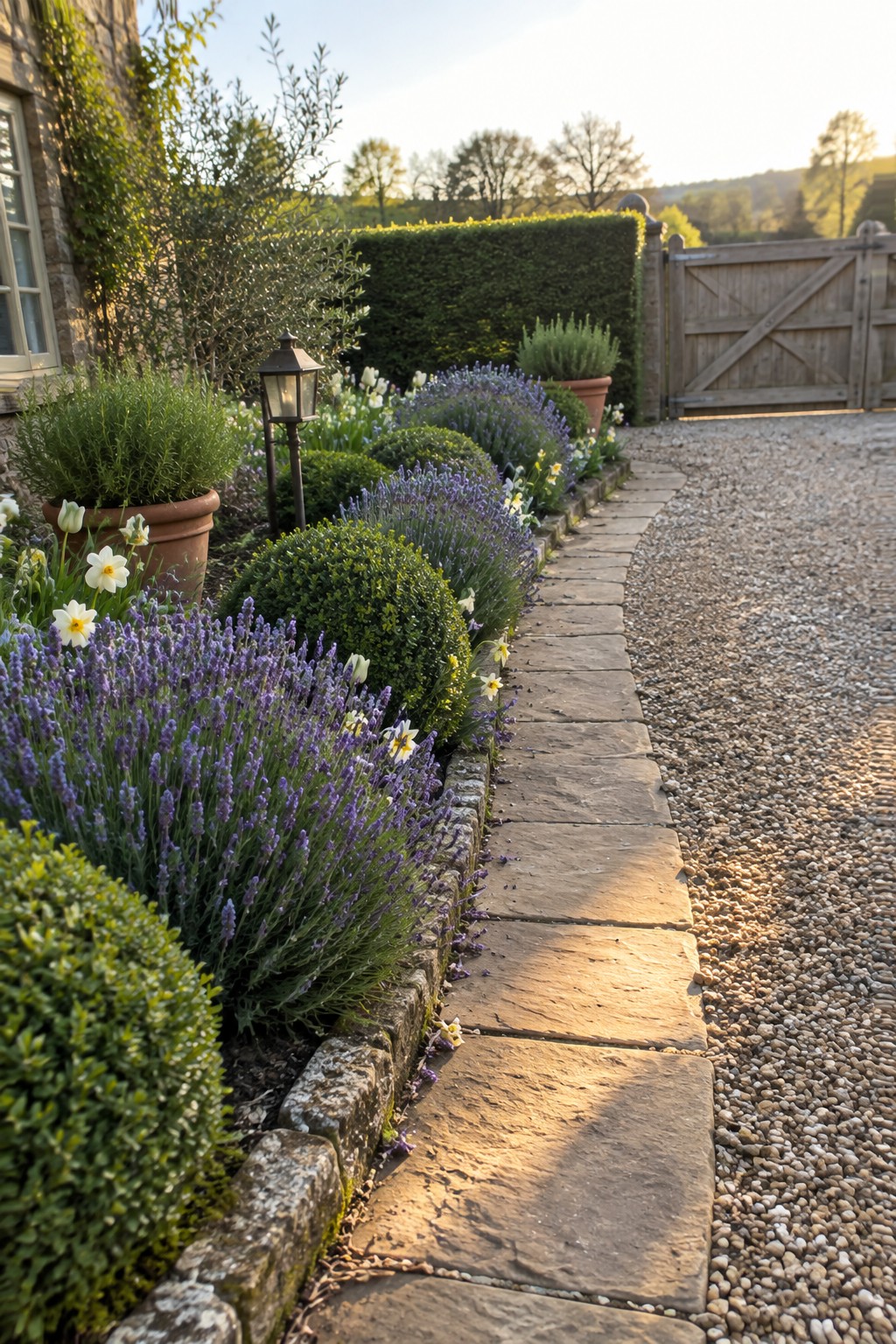
A lavender border gives a garden path a clear edge without making it feel formal. Its purple flower spikes also bring color close to the walkway, while low, rounded shrubs can add a little structure behind them.
This idea works well along a stone or gravel path, especially where the route curves through a planting bed. Leave enough room for lavender to spread, and trim it after flowering so it does not spill too far onto the path.
Lavender Borders Along Garden Paths
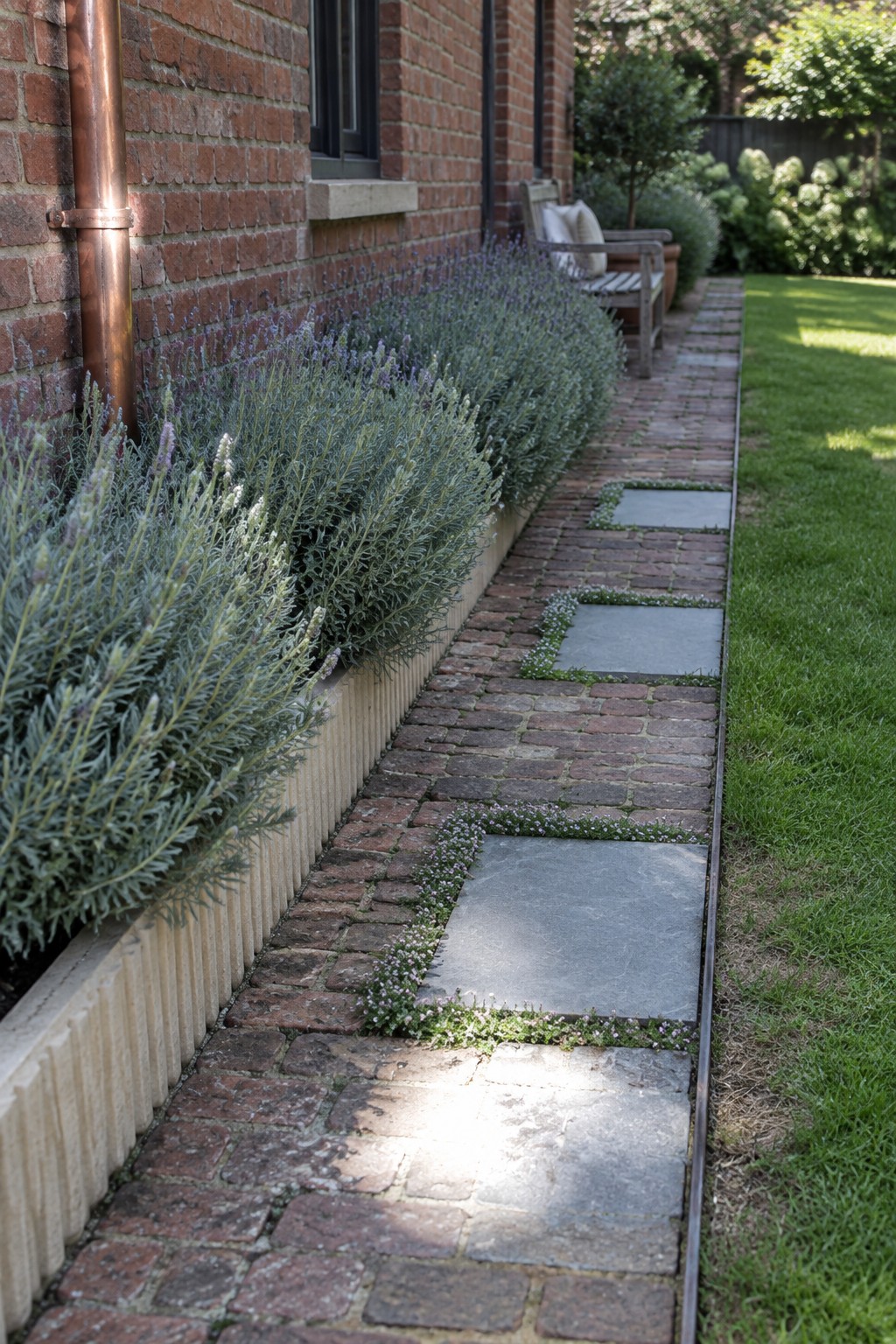
A continuous lavender border gives a garden path a clear edge while keeping the planting relaxed and full. The soft, silvery foliage and purple blooms look especially at home beside old brick, where they make the route feel settled rather than newly laid.
Use lavender along a sunny path with well-drained soil, leaving enough room for mature plants to spread. A narrow brick strip beside the border helps keep the path defined, but avoid planting lavender where water tends to collect.
Use Lavender to Define a Gravel Driveway
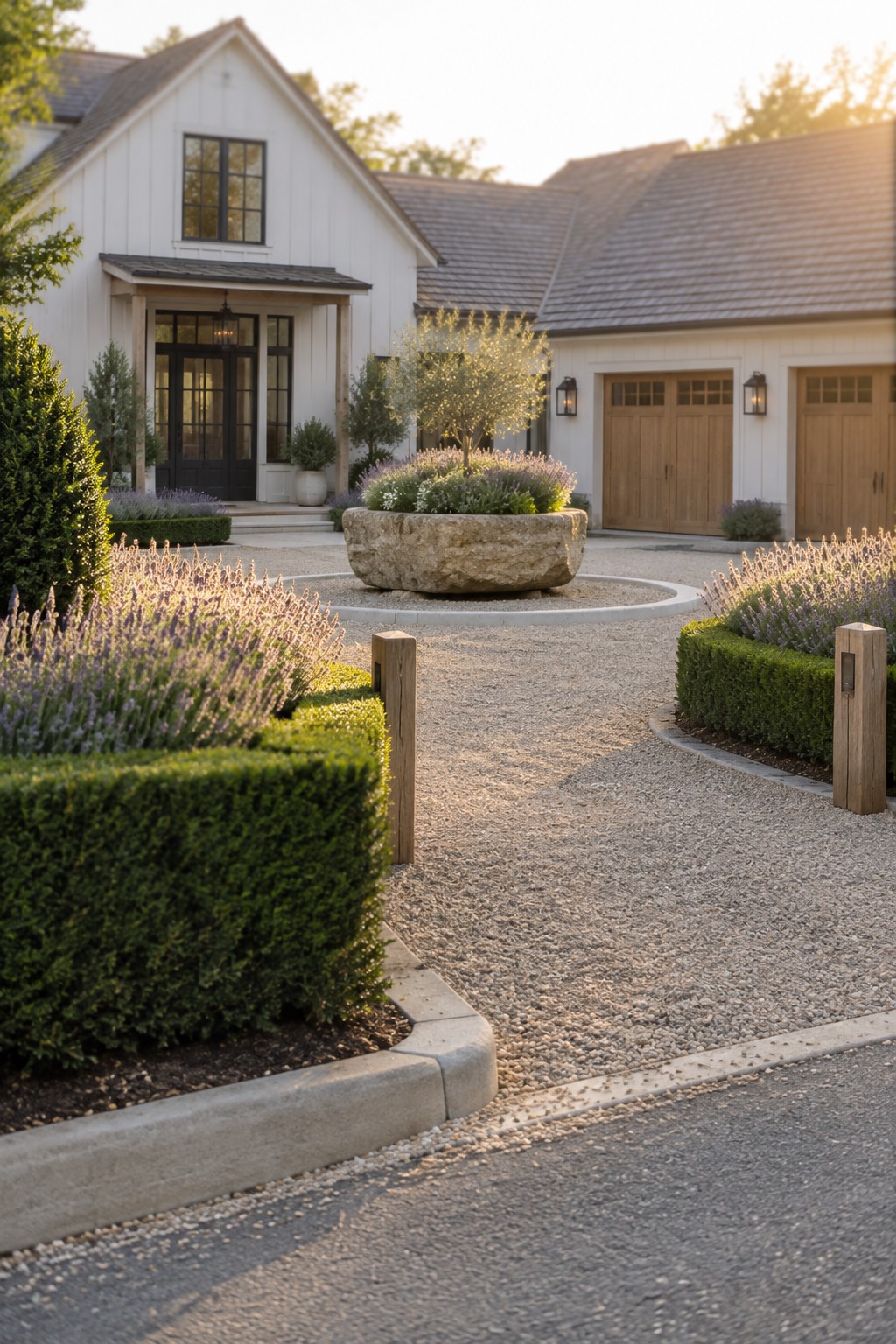
A gravel driveway can feel more finished when lavender marks its edges. The repeated planting gives the route a clear shape while keeping the surface simple and easy to maintain.
Plant lavender in a continuous border beside the drive or path, leaving enough room for it to spread without spilling into the gravel. Low clipped hedges can help keep the planting tidy, especially near an entry.
Use Lavender To Edge A Garden Path
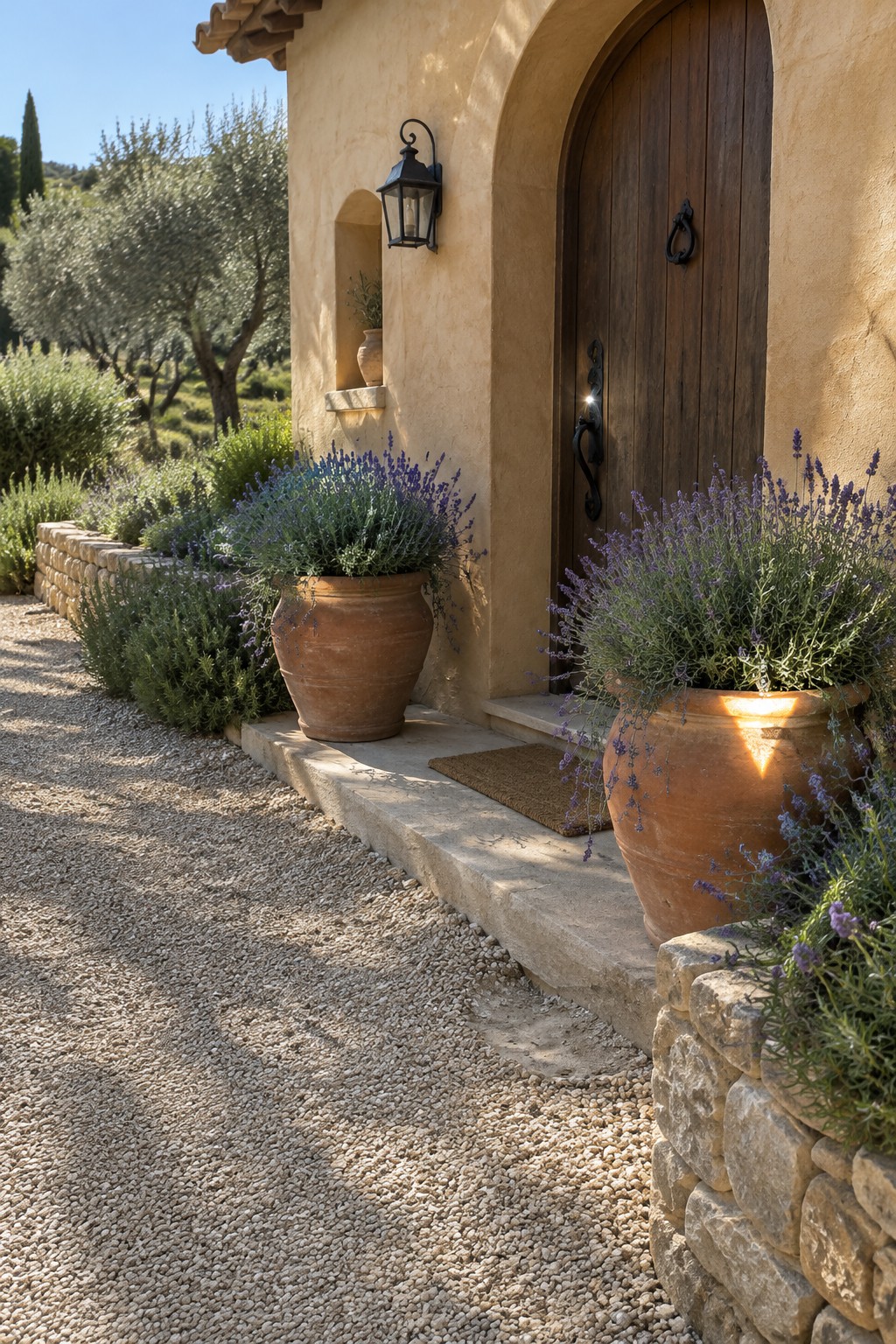
Lavender makes a useful border along a gravel path, giving the route a clear edge without making it feel too formal. Its loose shape suits gravel and stone, and the purple flowers bring color right to the walkway.
Plant it in a sunny spot with well-drained soil, leaving enough room for each plant to spread. It works especially well beside a stone or gravel path, but avoid planting it where water tends to collect.
Add Lavender Along a Stone Garden Path
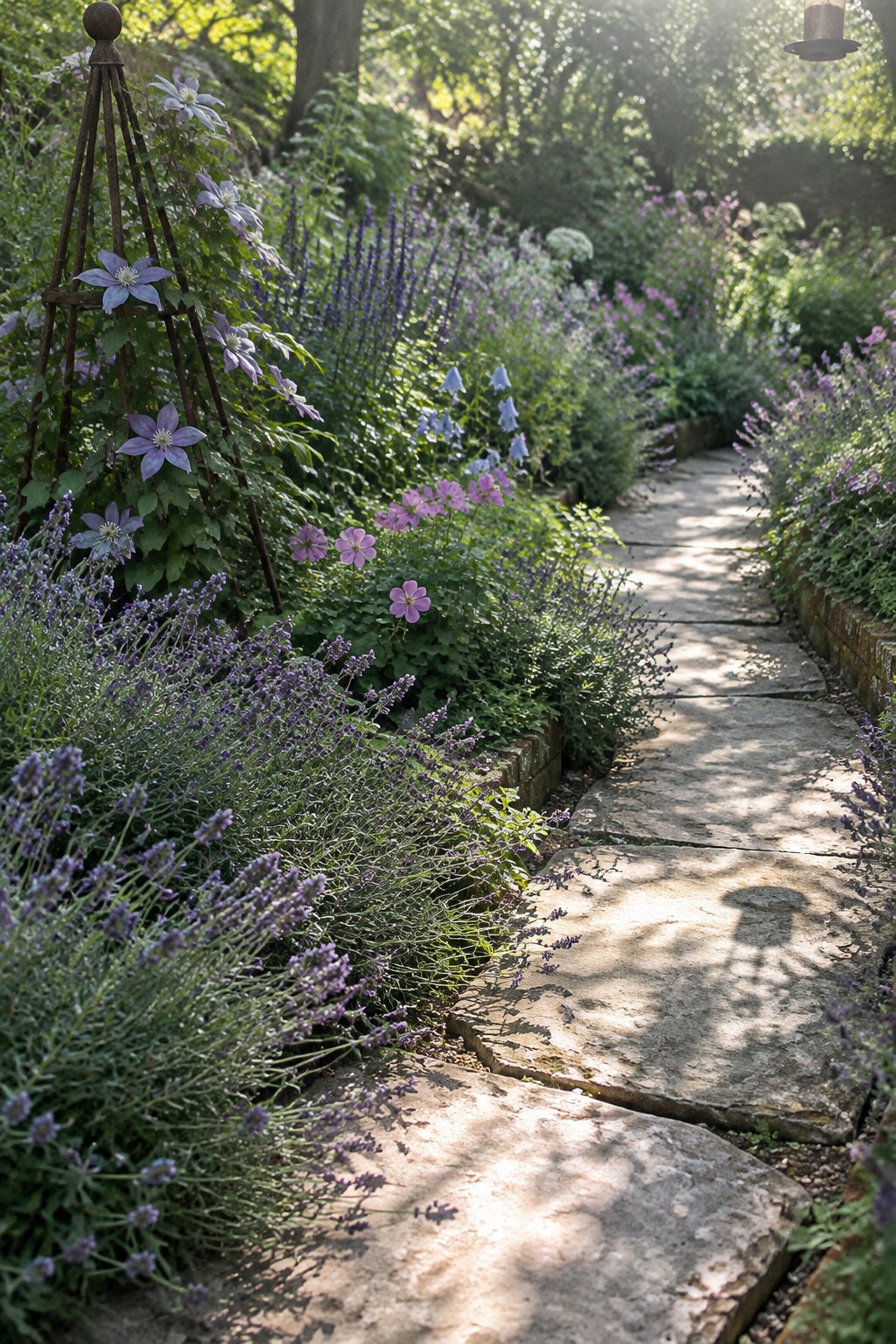
A lavender border can make a stone path feel like part of the garden rather than a route cut through it. Letting the plants grow in loose, continuous drifts gives the path a softer edge without hiding the paving.
This approach suits a winding path through a cottage-style garden. Leave enough room for lavender to spread, and keep plants trimmed back from the stones so the walkway stays easy to use.
Use Lavender Strips To Break Up A Concrete Driveway

Long concrete slabs can feel plain, but narrow planting strips give a driveway a softer, more garden-like look. Here, lavender runs between the walkway slabs, with gravel around the plants for a tidy edge.
This approach works best where there is room for a wide path and the lavender can get plenty of sun. Leave enough space between the plants and the walking surface so they do not spill onto the concrete as they grow.
Let Lavender Lead the Way Through a Garden
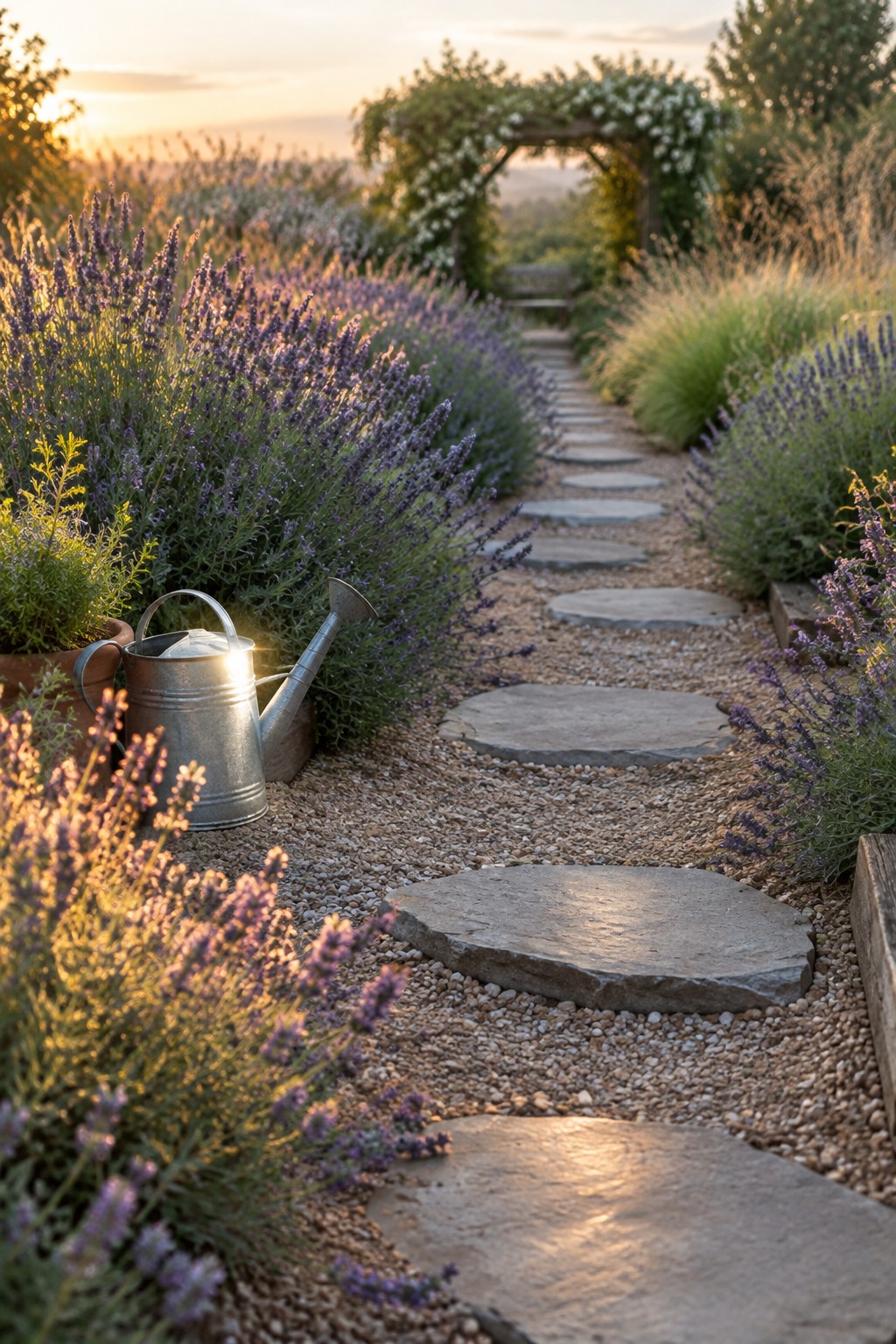
Lavender planted in generous borders can make a garden path feel like a destination, not just a way through the yard. The repeated purple blooms give the route a clear edge, while the gravel and stepping stones keep it practical.
This approach suits informal paths where you want plenty of planting without losing a usable walkway. Leave enough room for plants to spread, and keep the stepping stones easy to reach so the path stays comfortable to walk.
Plant Lavender Along a Stone Path
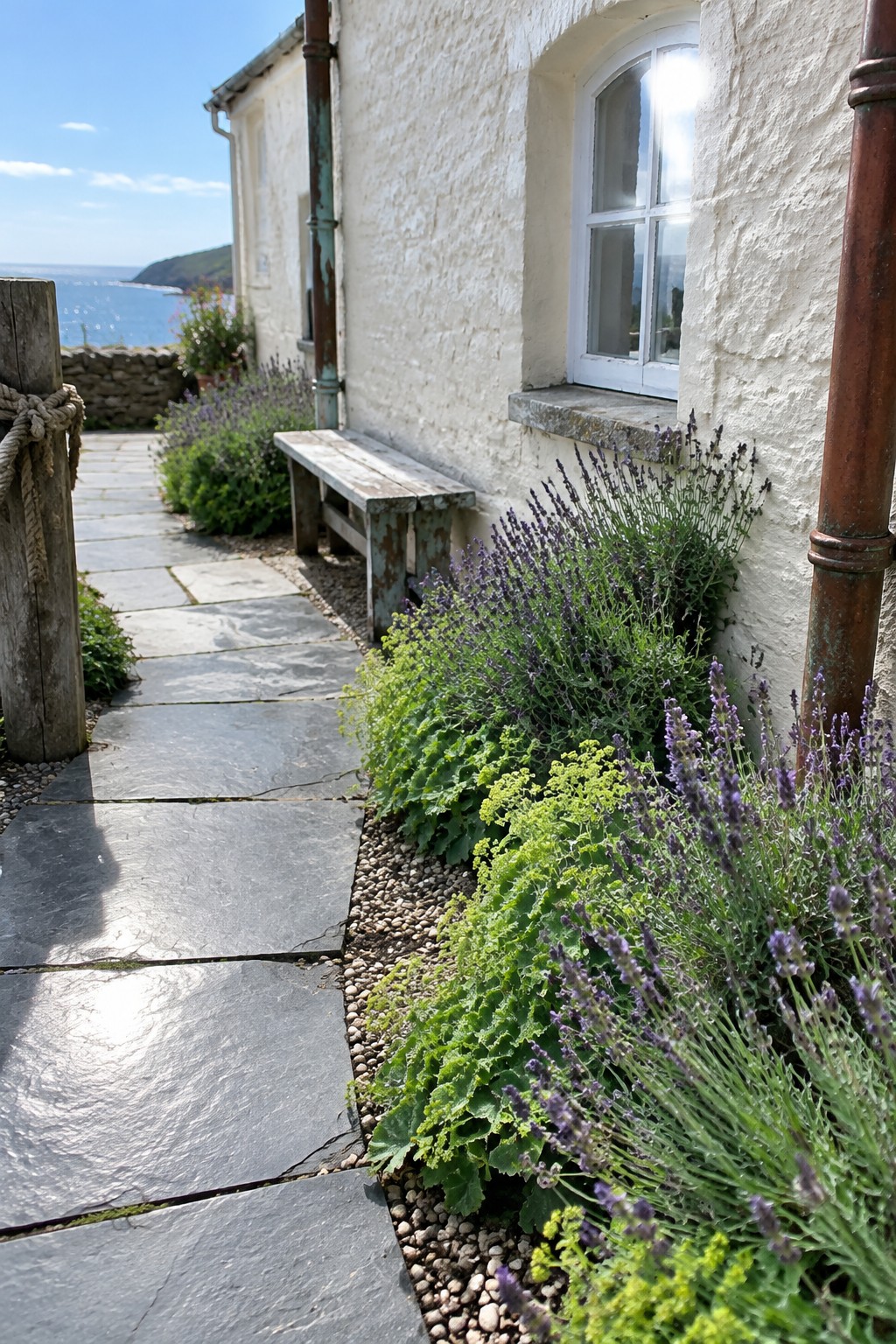
A narrow lavender border can make a stone path feel like part of the garden rather than just a way through it. The flowers follow the edge of the paving, while low greenery fills the space closer to the ground.
This approach suits a cottage garden or a path beside a sunny wall. Leave enough room for plants to spread without covering the stones, and use gravel along the bed edge to help with drainage.
Use Lavender To Edge A Stone Walkway

A stone path feels more settled when lavender runs along its edges. The repeated purple blooms give the walkway a clear border, while clipped green shrubs add a tidy shape without taking over.
This approach works well on paths leading to a front door, especially where the stones have an uneven, traditional look. Leave enough room for lavender to spread, and keep it out of the main walking area so the path stays easy to use.
Edge a Pebble Path With Lavender
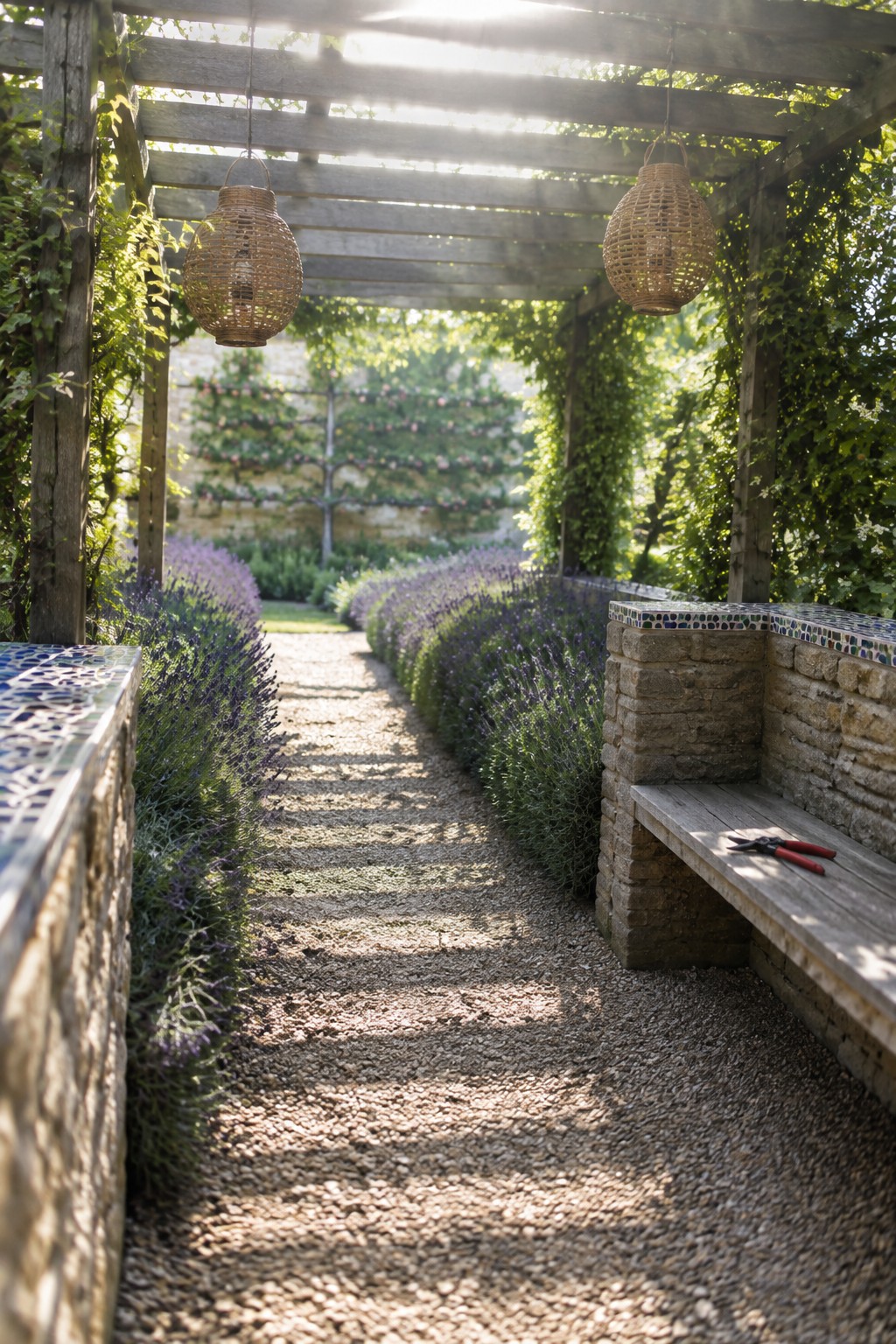
Lavender planted along a path gives it a clear edge and keeps the route easy to follow. Here, the rows of purple blooms soften the gravel and bring a bit of color to a simple walkway.
This idea works well on garden paths where the planting beds can give lavender enough room to grow. Leave space between the plants and the path so mature stems don’t spill too far across the walking surface.
Use Lavender To Edge Large Stepping Stones

Lavender is a good choice for edging a garden path because it softens the hard edges of stone without hiding the route. The broad, irregular stepping stones here sit neatly among low purple plants, giving the path a relaxed look.
Use this approach where the path has enough width for lavender to spread without crowding the stones. Leave a little room between plants and paving, and trim them back when needed to keep the walking surface clear.
Use Lavender To Edge A Straight Entry Walk
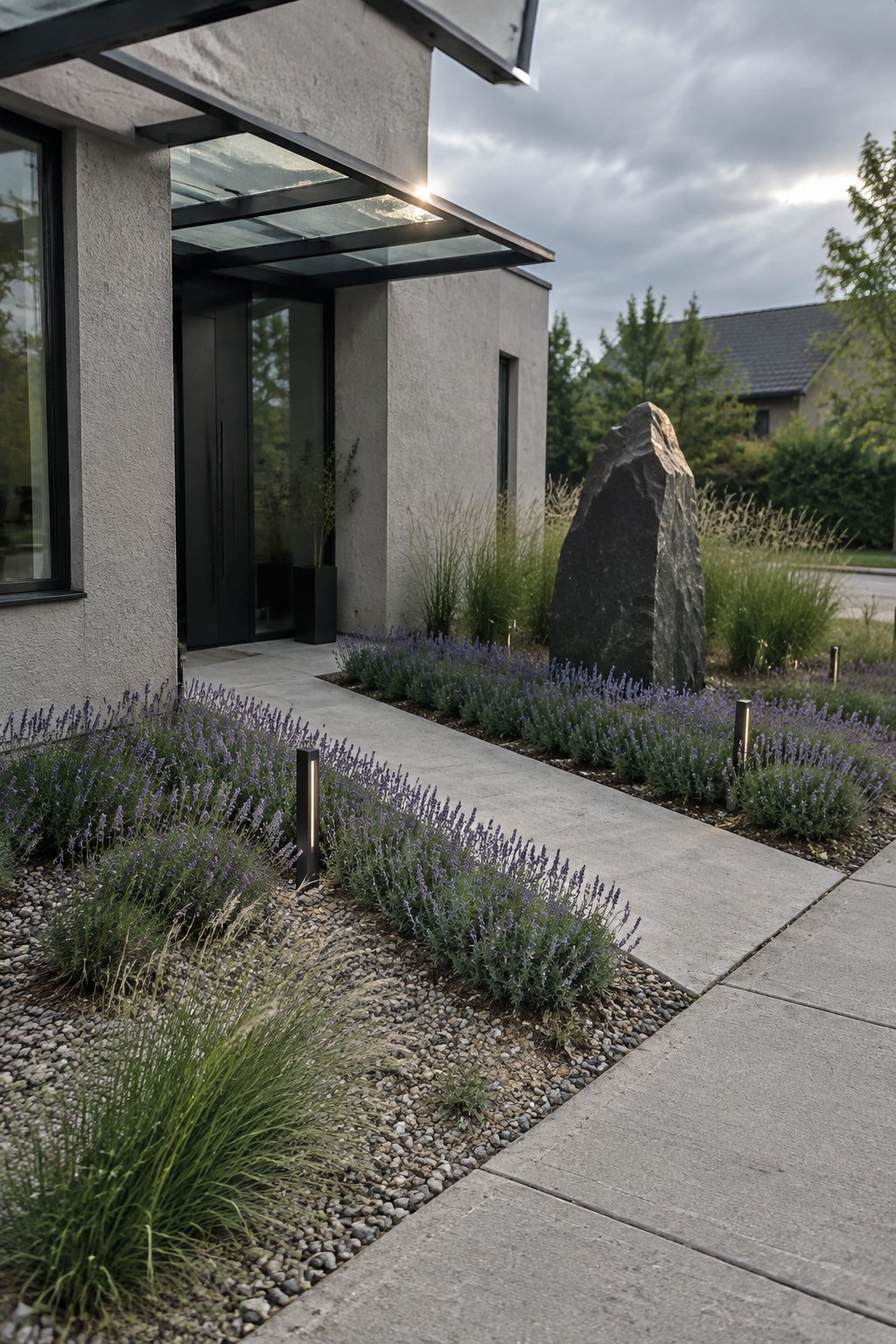
Lavender planted along a straight walkway gives the entrance a clear, orderly border without making the path feel formal. The repeating low mounds add color beside simple concrete paving and suit a modern home especially well.
Keep the plants in a continuous strip and leave enough room for them to spread without spilling onto the walking surface. Gravel between the planting and path can help with drainage and make upkeep easier.
Use Lavender To Mark The Edge Of A Gravel Drive

A lavender border gives a gravel drive a clear edge while keeping it connected to the garden. Its low, rounded growth sits neatly beside the path, and the purple flowers stand out among taller grasses and other plantings.
This approach works well on a curving drive or garden path where a crisp hard edge might feel out of place. Leave enough room for lavender to spread, and keep it back from the driving surface so loose gravel does not crowd the plants.
Use Lavender To Line A Narrow Garden Walk

A narrow path can feel more settled when lavender runs along its edges. The planting marks the route without taking away from the open walking space, and it suits a small courtyard where a wider border would crowd the way.
Leave enough room for plants to spread without spilling over the path. Here, raised rust-colored beds hold the lavender neatly in place, a useful approach when the walkway is narrow or the ground needs clear edging.
Use Lavender To Line a Garden Walk

A gravel path feels more settled when lavender runs along its edges. The repeating bands of purple flowers help mark the route while keeping the planting bed connected to the walkway.
For a similar look, plant lavender in a continuous border beside a garden path, leaving enough room for mature plants to spread without spilling over the walking surface. It works especially well along a gently curving walk, where the planting helps the route feel clear.
Use Lavender To Edge A Stone Path
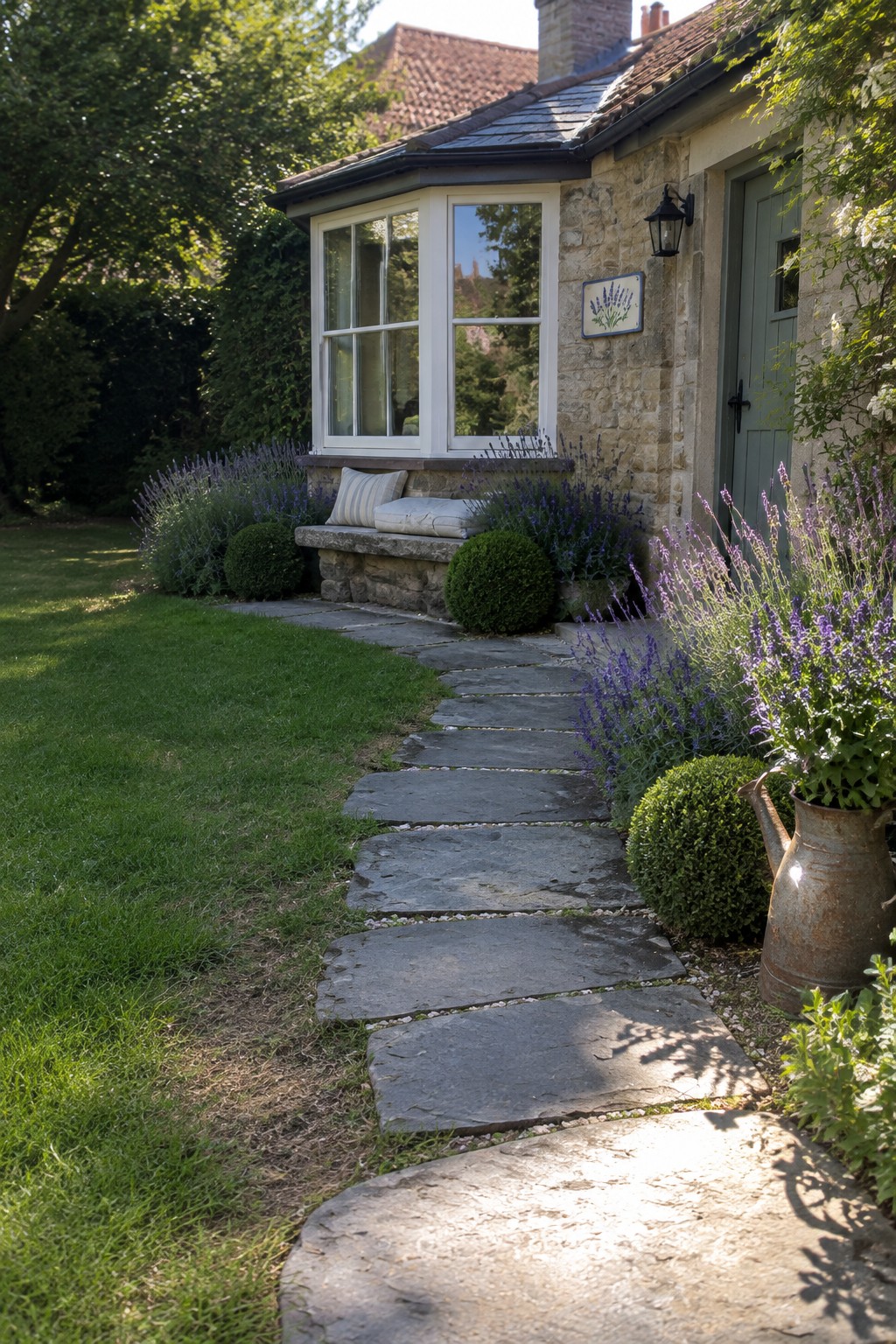
Lavender makes a useful border for a stone path, helping define the route without making it feel too formal. Its loose shape suits irregular paving, and the purple flowers add color along the edge.
Plant it where the path gets plenty of sun and the soil drains well. Leave enough room for the plants to spread so they do not crowd the stepping stones.
Frequently Asked Questions
Q: How far apart should I plant lavender along a driveway or path?
A: Space plants about 18 to 24 inches apart, depending on the variety, so they have room to spread without leaving large gaps. Check the mature width on the plant label, since compact types can sit closer together.
Q: Will lavender grow beside a driveway where the soil is dry and gravelly?
A: Usually, yes. Lavender likes sharp drainage and can handle dry soil once established, but it still needs regular watering during its first growing season.
Q: How do I keep lavender from spilling onto a narrow path?
A: Choose a compact variety and give it a light trim after flowering to keep its shape tidy. Avoid cutting into the woody base, where lavender may not grow back well.
Q: Can I plant lavender along a shaded garden path?
A: Lavender needs several hours of direct sun to flower well and stay healthy. If the path is mostly shaded, try a sunnier border instead.
