


I’ve watched wisteria climb and bloom in so many yards over the years, and it reliably brings a gentle romance to plain fences or patios.
I skip planting it near downspouts or fragile sheds since the roots push hard and cause trouble down the line.
Gardeners do best when they guide the vines up strong wooden frames that blend right into the landscape.
That setup lets the purple cascades hang gracefully without swallowing the whole space.
The side-yard pergola design stands out as one to try.
Wisteria on an Arched Entry Porch
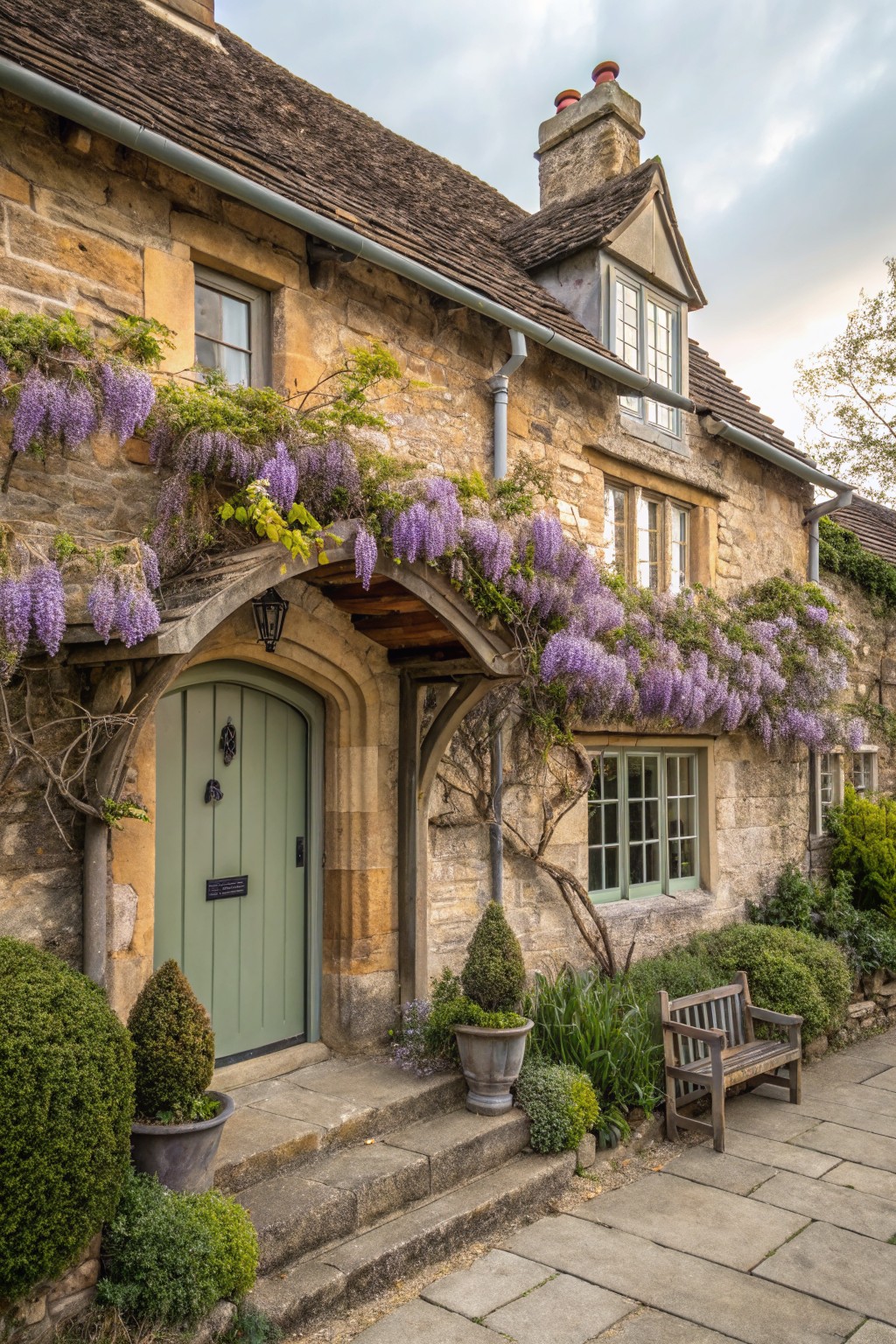
Wisteria works so well when it climbs up and over an arched porch like this one. The purple clusters hang right at eye level by the door. It turns a simple stone entry into something straight out of a storybook. Folks notice it right away.
Put this on homes with character. Stone or brick cottages take to it best. Train the vines along the arch supports early on. A green door keeps things calm under all that bloom. Just prune back each year so it stays tidy… and light enough for the porch.
Porch Pergola Covered in Wisteria
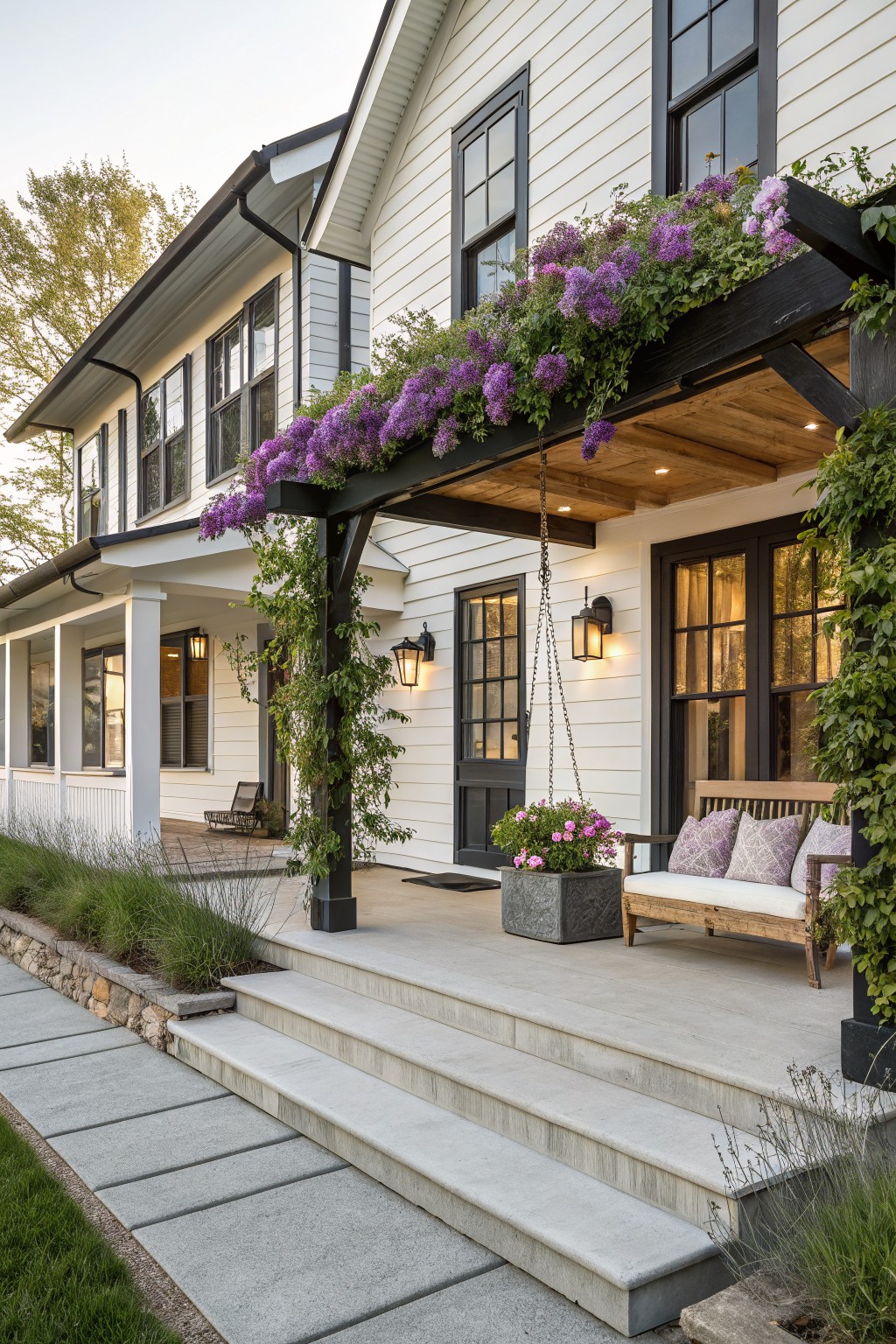
A simple pergola over the front porch lets wisteria vines climb and drape down in thick purple clusters. It turns the entry into something special without much fuss. The dark wood beams hold up the weight and make those blooms pop against a light house exterior. Folks notice it right away from the street.
Try this on homes with a bit of yard space and good southern exposure for the vines to thrive. Build the pergola sturdy, maybe 10 feet wide to cover steps and a bench. White clapboard siding pairs well, but watch the roots. They spread, so plant away from the foundation. Works best where you want shade in summer too.
Patio Pergola Covered in Wisteria
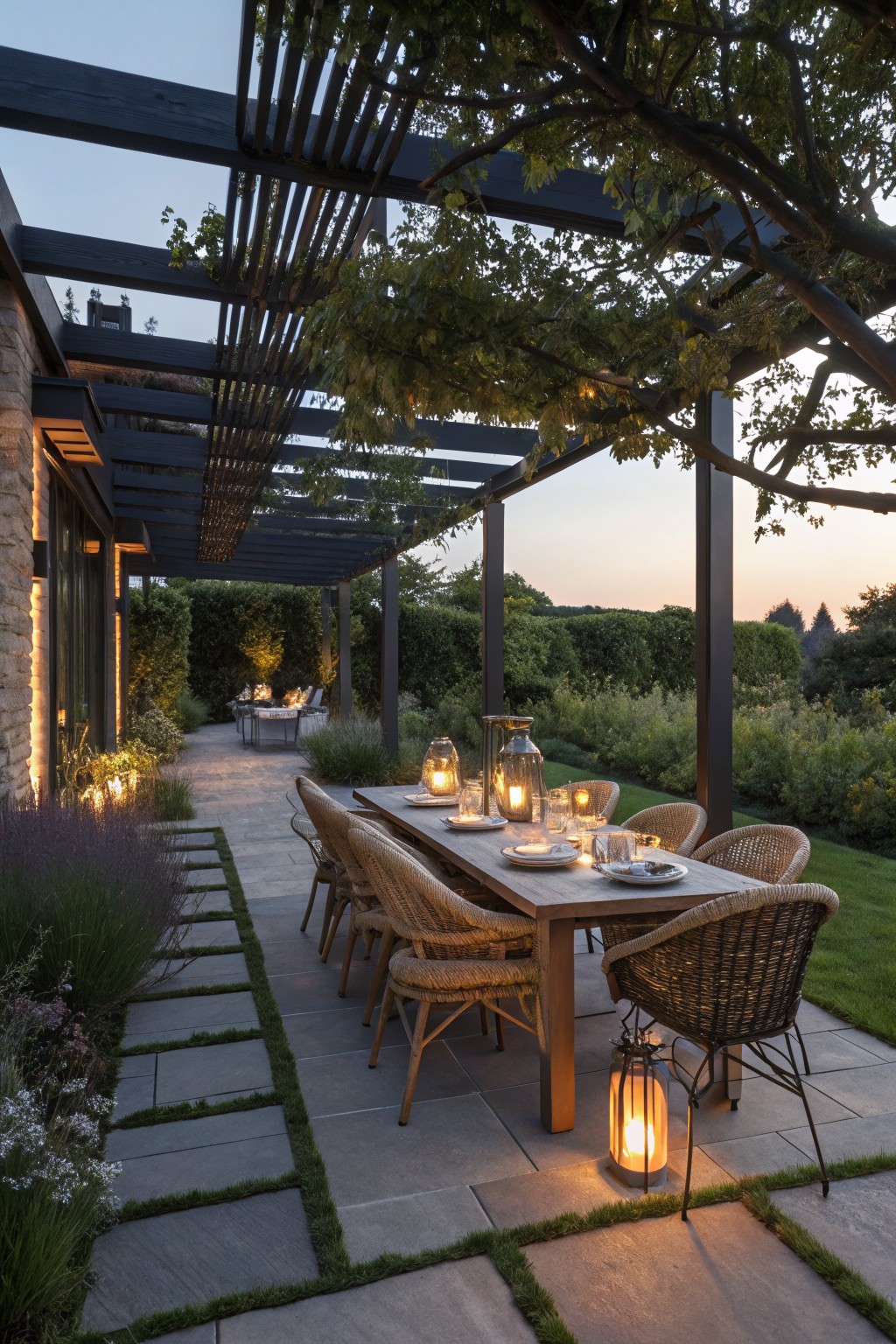
A pergola draped in wisteria makes a perfect spot for outdoor meals. The vines hang down through the slats, giving shade and those soft purple blooms in season. It turns a simple patio into something special without much fuss.
Run it along the house wall on stone pavers, like here with a long table and chairs. Add low plants along the edges for privacy. This works best in a side yard with some sun, on homes that have room for the structure. Keep the vines trimmed back each year.
Wisteria Draping Porch Roofs

Wisteria growing along a porch roof lets the blooms hang down in thick cascades. You see it here covering the overhang above the seating area. The purple flowers stand out nice against a light house color like this seafoam green. It makes the porch feel shaded and tucked away, even with an open view out front.
Try this on homes with deep porches that face a yard or water. Run sturdy wires or trellis along the eaves for the vines to climb. Keep pruning to control the weight… wisteria gets heavy when blooming. It fits older cottages or coastal places best, where you want that old-time garden look.
Wisteria Draping Townhouse Steps

A big wisteria tree like this one takes a plain townhouse stoop and turns it into something special. The purple blooms hang right over the steps and railing. It softens that formal stone facade without hiding it. Folks walking by stop to look. The tree grows along the iron fence too. Keeps the sidewalk feeling open.
This works best on row houses or narrow city lots with a few steps up to the door. Pick a sturdy vine that won’t crack the stone. Train it early to arch over the entry. Stone or brick homes take it well. Just prune after bloom or it gets wild. Suits older neighborhoods.
Wisteria on a Front Entry Arbor

Letting wisteria drape over a wooden arbor at the front door turns a plain entry into something special. The cascading purple blooms soften hard stone walls and add that old-world cottage feel without much fuss. It’s a simple way to make the house entrance feel welcoming right from the path.
This setup suits stone or brick homes with a bit of porch space. Build the arbor sturdy enough for the vine’s weight, and train it along the beams each spring. Stone pavers underfoot keep it practical, and a few pots of low plants fill in the edges nicely.
Wisteria Draping Over Balconies

Wisteria trained to spill over balcony railings turns a plain exterior into something special. Those long purple blooms hang down like curtains, framing the space below without crowding it. On a stone building like this, with wrought-iron details, it fits right in and adds that old-world feel folks love.
Pick a sunny spot on the facade where the vine can climb up first. Let it grow over the railing on upper levels, maybe add a simple table underneath for morning coffee. Works great on row houses or apartments in town. Watch that it doesn’t get too heavy, though. Prune yearly.
Wisteria on a Poolside Pergola

A wooden pergola draped in blooming wisteria makes a natural canopy over the pool. The purple cascades hang down just right, giving shade for lounging without closing in the space. It ties the yard together, especially with the clean lines of a low-slung house nearby.
This works best in sunny backyards where you want some cover during the day. Build the pergola sturdy, since wisteria vines get heavy over time. It suits modern or ranch-style homes with room for a pool or patio. Just prune the vines yearly to keep the blooms coming.
Wisteria Archway Over a Narrow Path
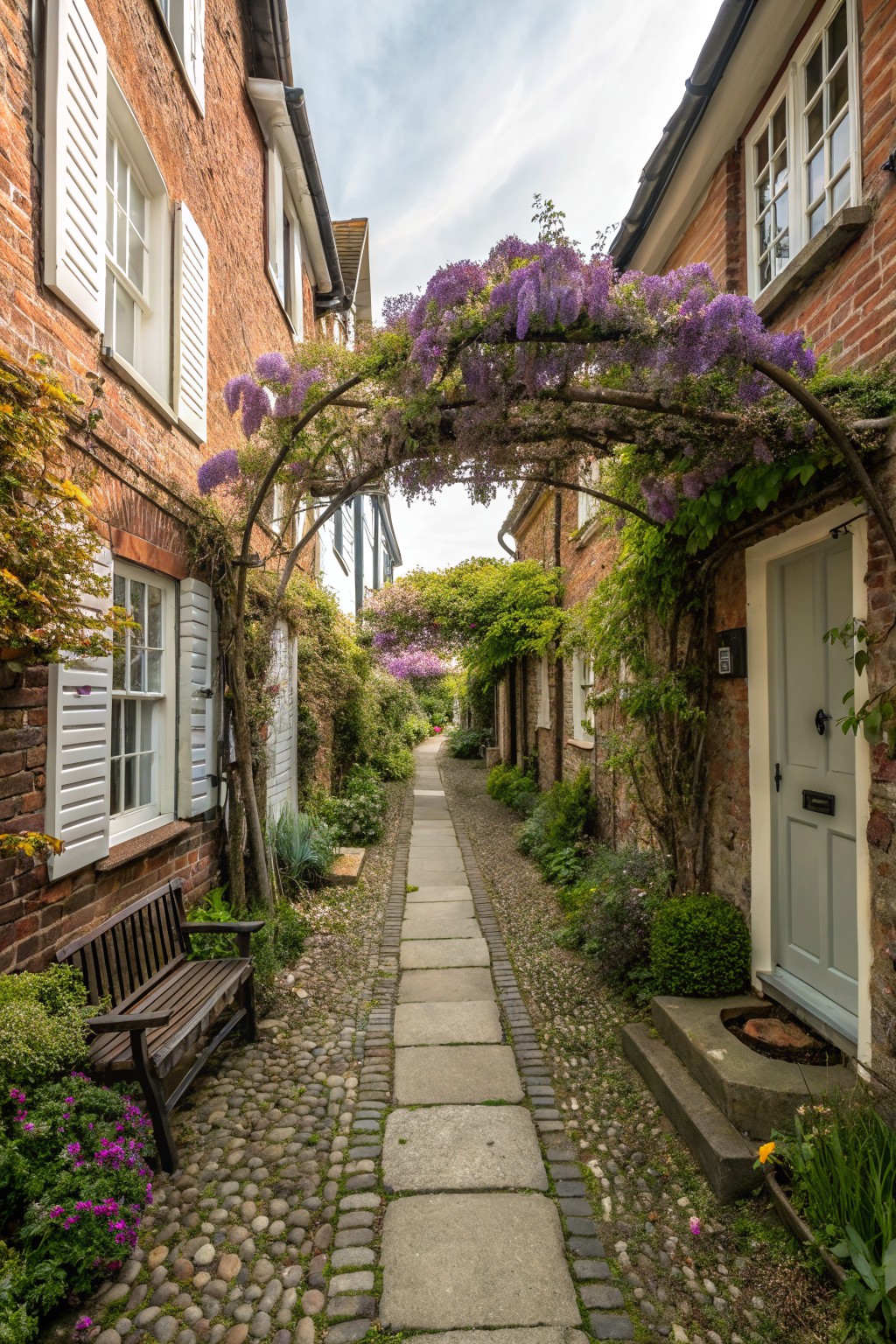
A wooden archway covered in blooming wisteria turns a tight walkway into something special. The purple flowers hang down thick over the path, giving shade and color in one go. It fits right in with brick house walls and simple plantings along the edges.
Put one up in a side yard or alley between buildings. It works best on cottage-style homes where space is narrow. Train the vines young, and prune every year to keep the shape. A bench nearby makes a nice spot to sit under the blooms.
Wisteria on Veranda Porches
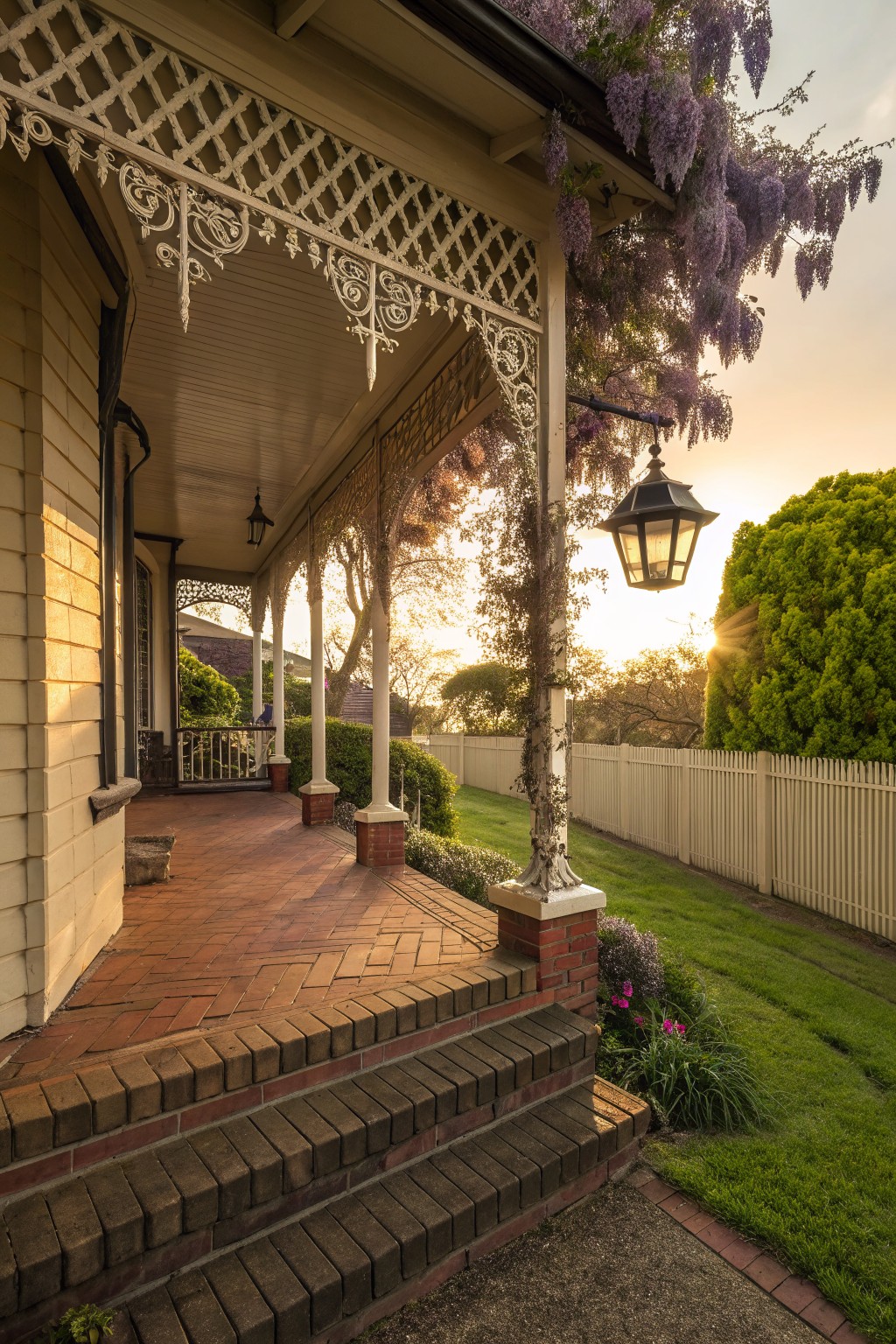
Nothing beats the look of wisteria vines spilling over a veranda porch. The purple blooms hang down along the white lacework edges, softening that old-house charm and giving the front entrance a cozy feel right away. It’s simple but turns heads, especially in the evening light.
Try this on homes with detailed porches like Victorians or older bungalows. Plant the vine at the corner post, train it up, and let the flowers cascade naturally. Keep an eye on growth though. Prune back hard each winter or it can get too heavy on the wood.
Hanging Wisteria from a Pergola

One nice way to bring wisteria into your yard is letting it hang from a wooden pergola like this. The purple blooms drop down in long clusters right over the garden path. It softens that plain wood fence and ties into the stone and gravel below. Folks like how it adds color without crowding the space.
Put a pergola like this along a walkway to your door or patio. It suits smaller yards with a path or even a simple gravel area. Asian style homes take to it best, but any quiet corner works. Keep the beams strong. Wisteria vines grow thick over time.
Wisteria Pergola on a Rooftop Terrace
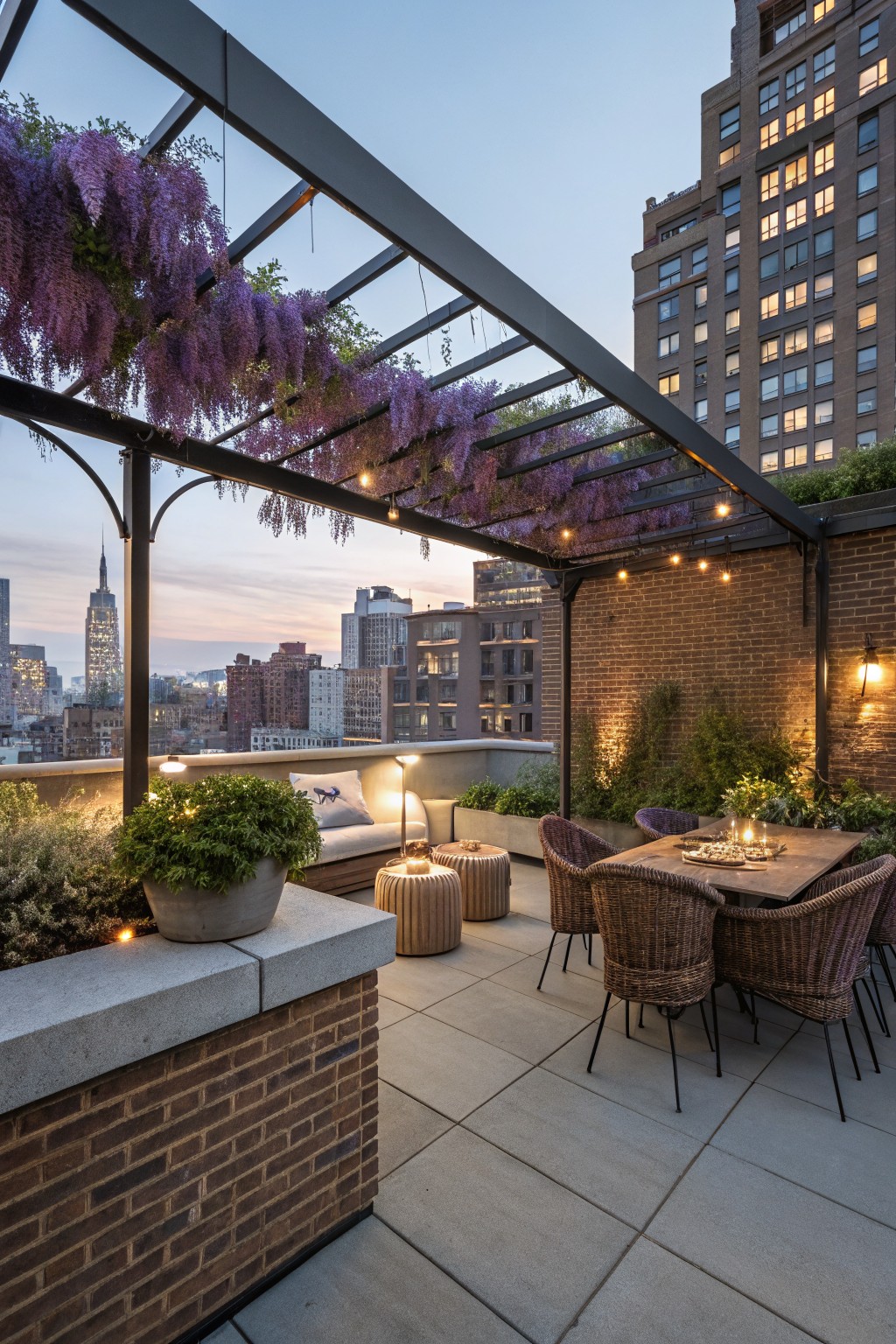
A simple black metal pergola draped in purple wisteria turns a city rooftop into a cozy spot for evenings outside. The vines cascade thickly overhead, offering dappled shade while letting you peek at the skyline. It’s that easy cover that makes the space feel private yet open.
Put one up on a balcony or flat roof where you want outdoor seating without losing the view. Go with sturdy metal posts to handle the vine weight, plant the wisteria to climb fast, and tuck in a table and chairs underneath. Works best on modern brick buildings… just check your building rules first.
Pergola Covered in Wisteria

A wooden pergola like this one makes a perfect frame for wisteria. The arched structure sits right over the path to the door, with pink blooms hanging down thick. It turns a plain walkway into something special, especially on an older cottage. The rough wood fits right in with the garden plants.
You can add one in most yards that have room for a short path. Pick sturdy posts and beams, then train the wisteria up and over. It works best on homes with soft walls like stucco. Just keep the vines trimmed so they don’t pull things down… and give it a year or two to fill in.
Pergola Covered in Wisteria
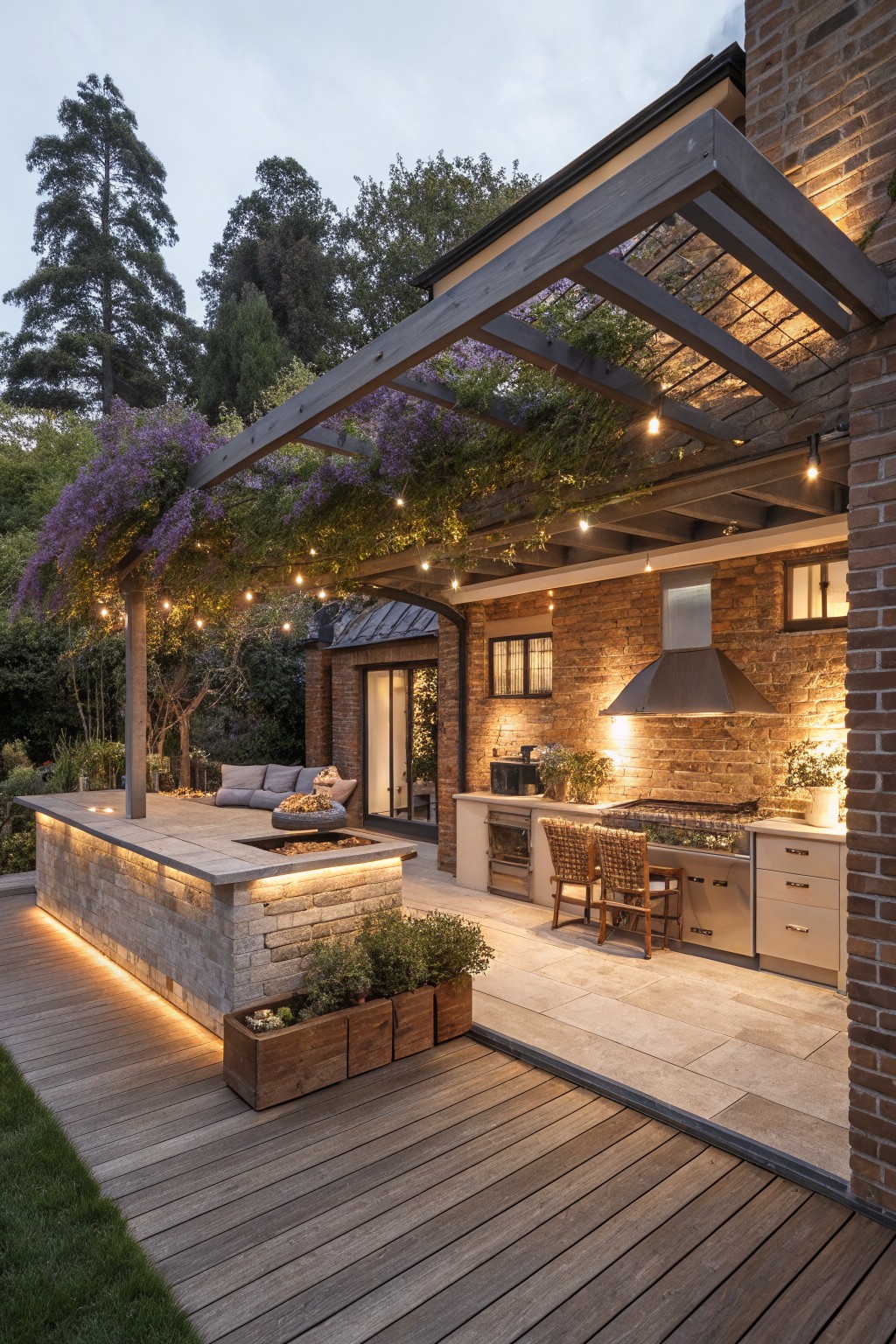
A pergola like this one, heavy with cascading wisteria blooms, turns a backyard patio into a cozy spot for evenings outside. The purple flowers drape down and soften the open wooden frame, letting dappled light through while keeping things shaded. It’s simple but pulls the eye right away.
Put one over an outdoor kitchen or seating area where you spend time in good weather. It suits homes with a deck or stone patio next to the house. Pick a strong wood frame that can handle the vine’s weight over time, and train the wisteria up the posts young.
Portico Covered in Wisteria

Wisteria climbing a classical portico turns a simple stone entry into something out of a storybook. The vines wrap the columns and let loose cascades of purple blooms right over the doorway. It softens all that solid architecture without hiding it.
Try this on traditional homes with columned porches, like Georgian or colonial styles built from stone or brick. Plant sturdy wisteria at the base of each pillar, train it upward, and prune back hard each winter. Keep an eye on the weight, though. Older porticos might need some support.
Frequently Asked Questions
Q: How do I prune wisteria to get the best blooms?
A: Snip back those long, whippy stems in late winter to just a few buds. This pushes energy into flower production instead of leaves. You’ll love the fuller cascades come spring.
Q: What’s a sturdy support for training wisteria over an archway?
A: Build or buy a heavy pergola with thick wooden beams. Wisteria gets heavy when loaded with blooms, so anchor it deep into the ground. Train the vines loosely at first, and they’ll weave their magic over time.
Q: Will wisteria hurt my fence if I plant it right next to it?
A: Keep it at least 10 feet away to avoid cracks and twists. But plant close to a pergola or arbor instead. That way it drapes romantically without the damage.
Q: How much water does young wisteria need?
A: Soak it deeply once a week the first summer. Cut back as it roots in. Deep roots mean less fuss later.
