

Coneflowers can bring a sunny border to life, but they work best when their height, color, and spacing fit the rest of the garden.
I like how their sturdy stems give a planting bed structure while still leaving room for softer grasses and other flowers.
Along a path or fence, a thoughtful mix of varieties can guide the eye and keep the layout from feeling flat as the season changes.
They also draw bees and butterflies, so I look for ways to plant them where pollinators can reach the blooms without crowding walkways.
The ideas ahead offer practical ways to adapt coneflowers to different sunny spots, from a small border to a broader garden bed.
Use a Curved Path to Shape the Flower Bed
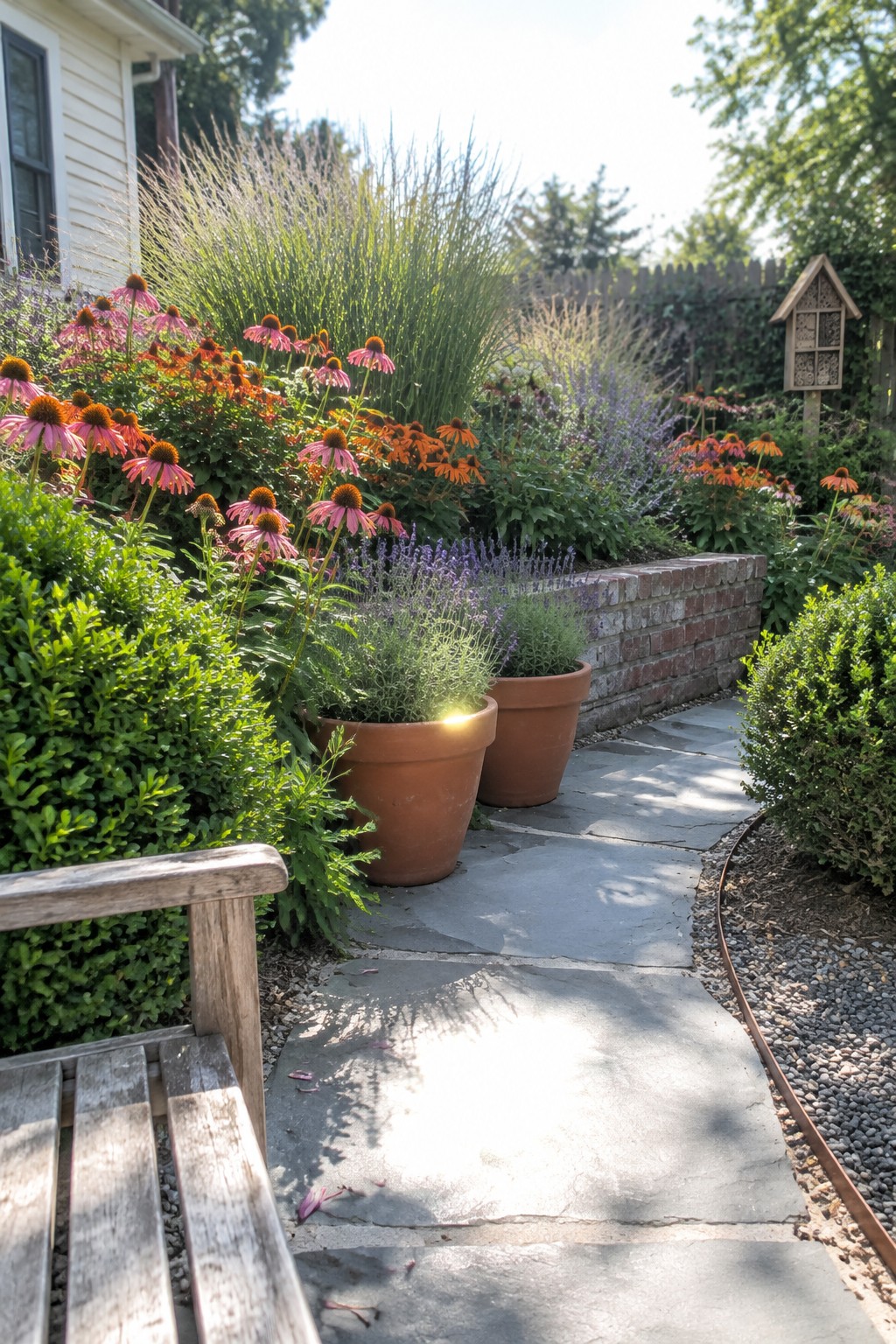
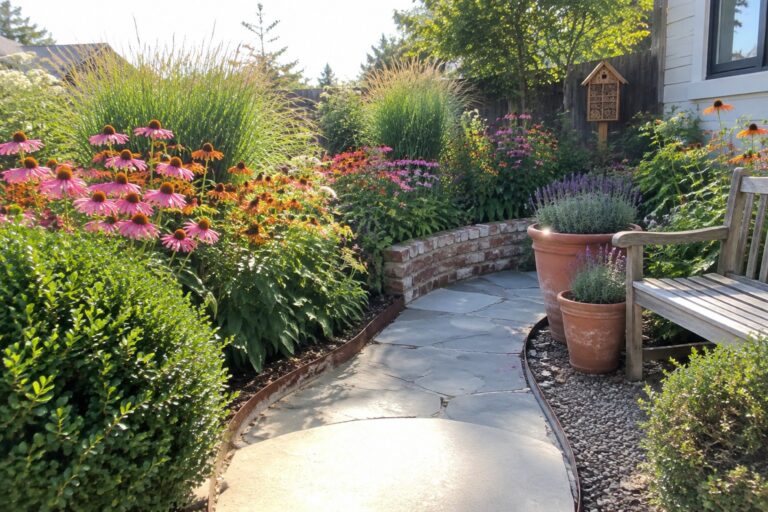
A gently curving path gives a coneflower bed a more natural shape than a straight walkway. It also lets the flowers spill along the edge, so the planting feels connected to the route through the garden.
Use large stepping stones or pavers and leave enough room to walk comfortably as plants fill out. Pink and orange coneflowers suit a sunny border like this, while taller grasses can add a simple backdrop without crowding the path.
Use a Stone-Edged Path Through the Flower Bed
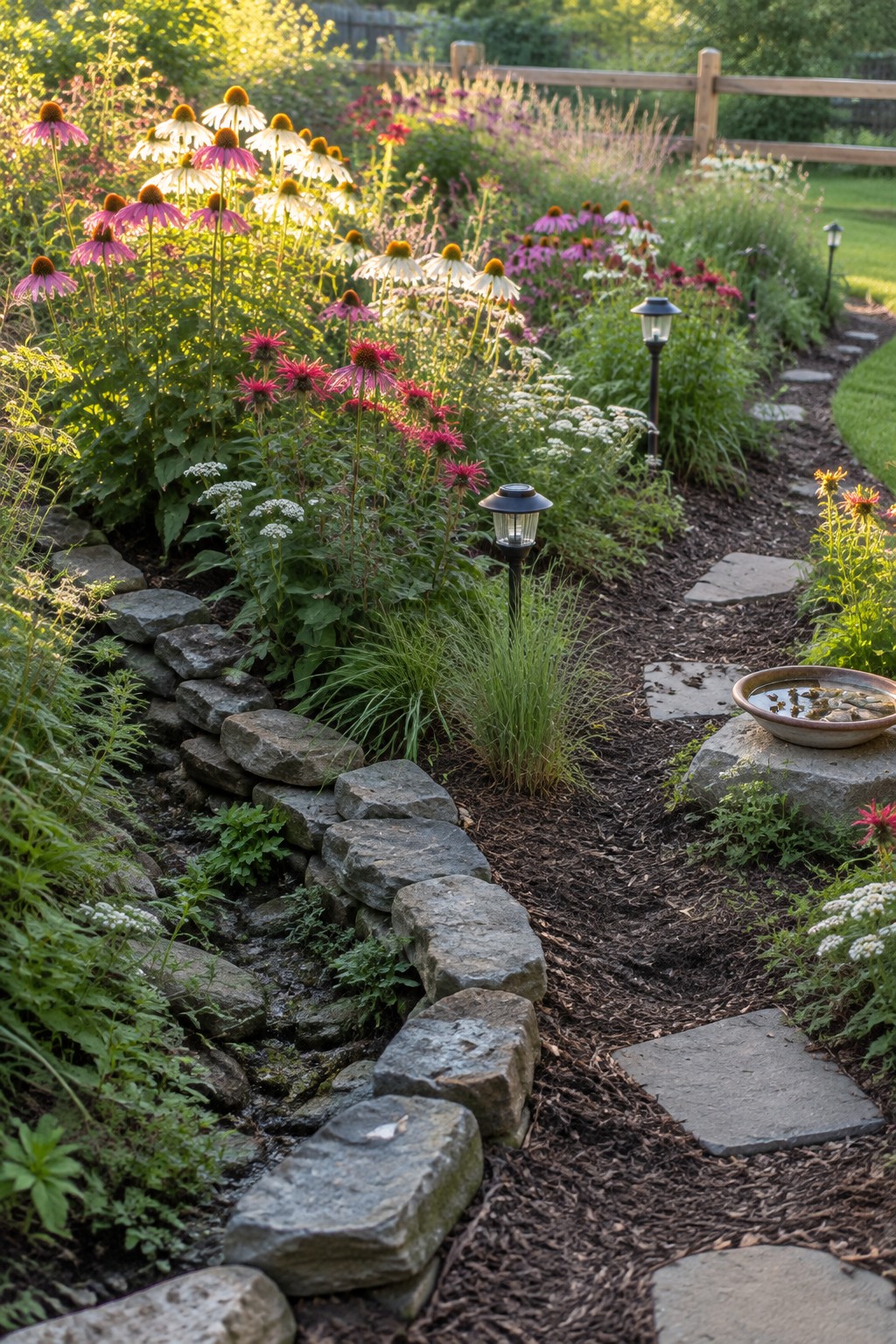
A simple stone edge can give a full-sun flower bed a clear shape without making it feel too formal. Here, the path follows a low border of rough stones, keeping the planting area distinct while letting the flowers spill naturally around it.
This approach works well in informal gardens where you want a defined route through dense planting. Choose sturdy stones that sit securely, and leave enough room along the path for plants to spread without crowding the walking surface.
Create a Curving Coneflower Bed Along the Path
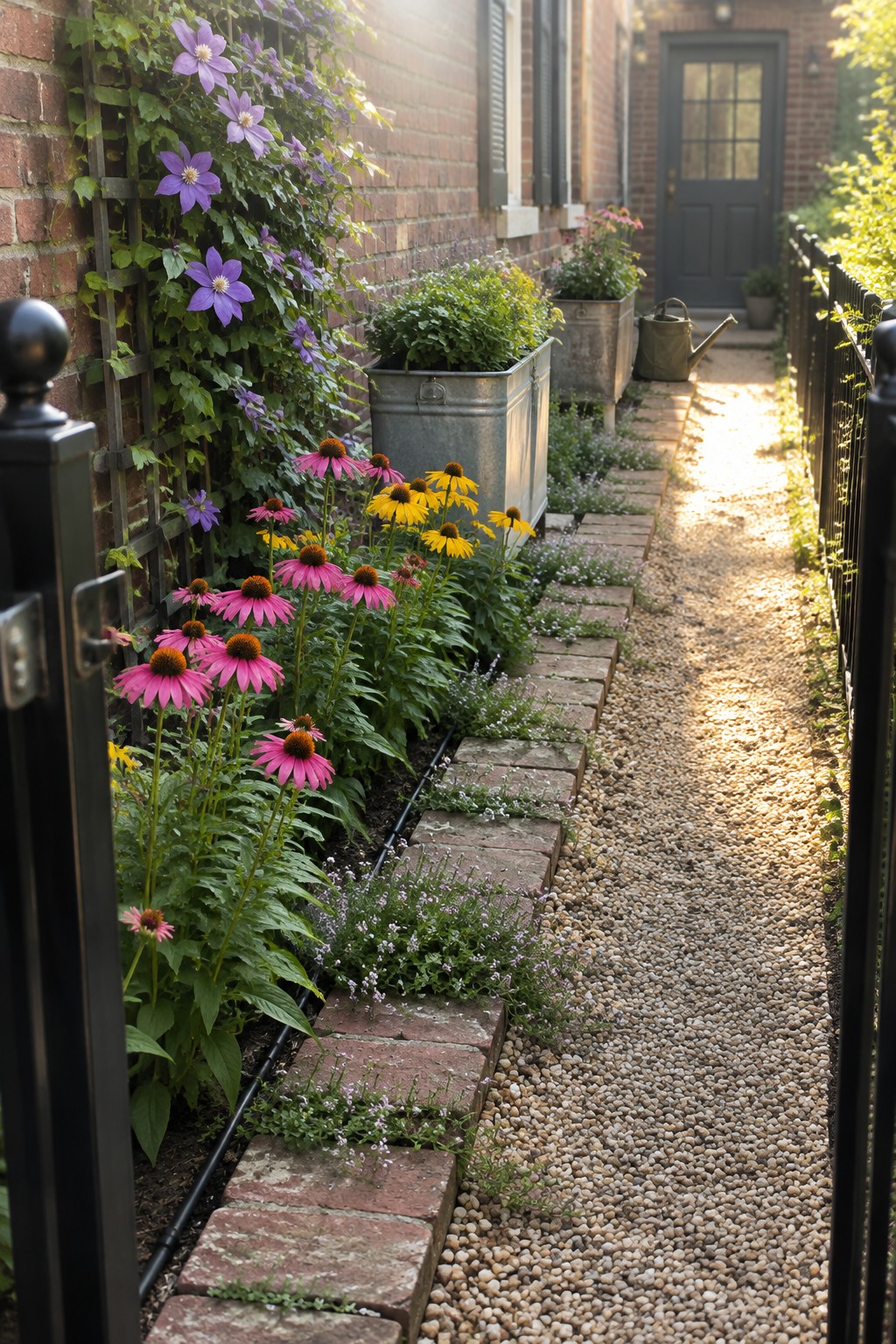
A flower bed beside a narrow path makes coneflowers easy to enjoy up close while keeping the walking route clear. Their bright blooms also bring color to a small side garden without needing a large lawn or deep planting area.
Use a gentle curve rather than a perfectly straight bed edge, and leave enough room for mature plants to spread. Coneflowers do well in full sun, and a brick path gives the bed a neat boundary; just keep plants from leaning into the walkway.
Use a Curved Raised Bed for Coneflowers
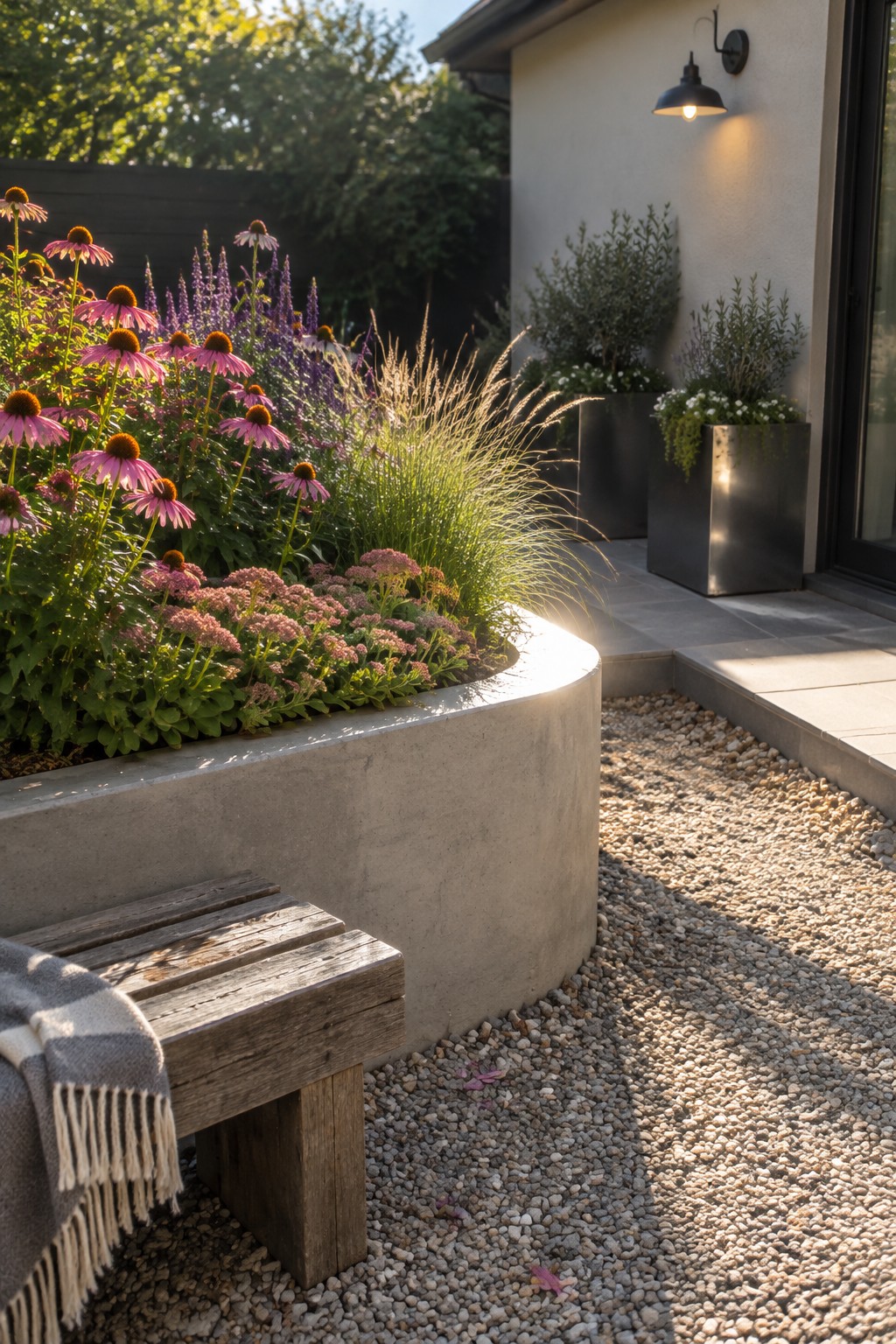
A curved raised bed gives coneflowers room to spread while keeping the planting edge neat. Here, the rounded concrete border also makes the flower bed feel like a clear part of the garden rather than a loose patch of plants.
This idea works well beside a path or entry where you want flowers close by without blocking the route. Plant coneflowers in loose groups, and leave space for their mature width so the bed stays easy to care for.
Layer Coneflowers Along a Stone Garden Edge
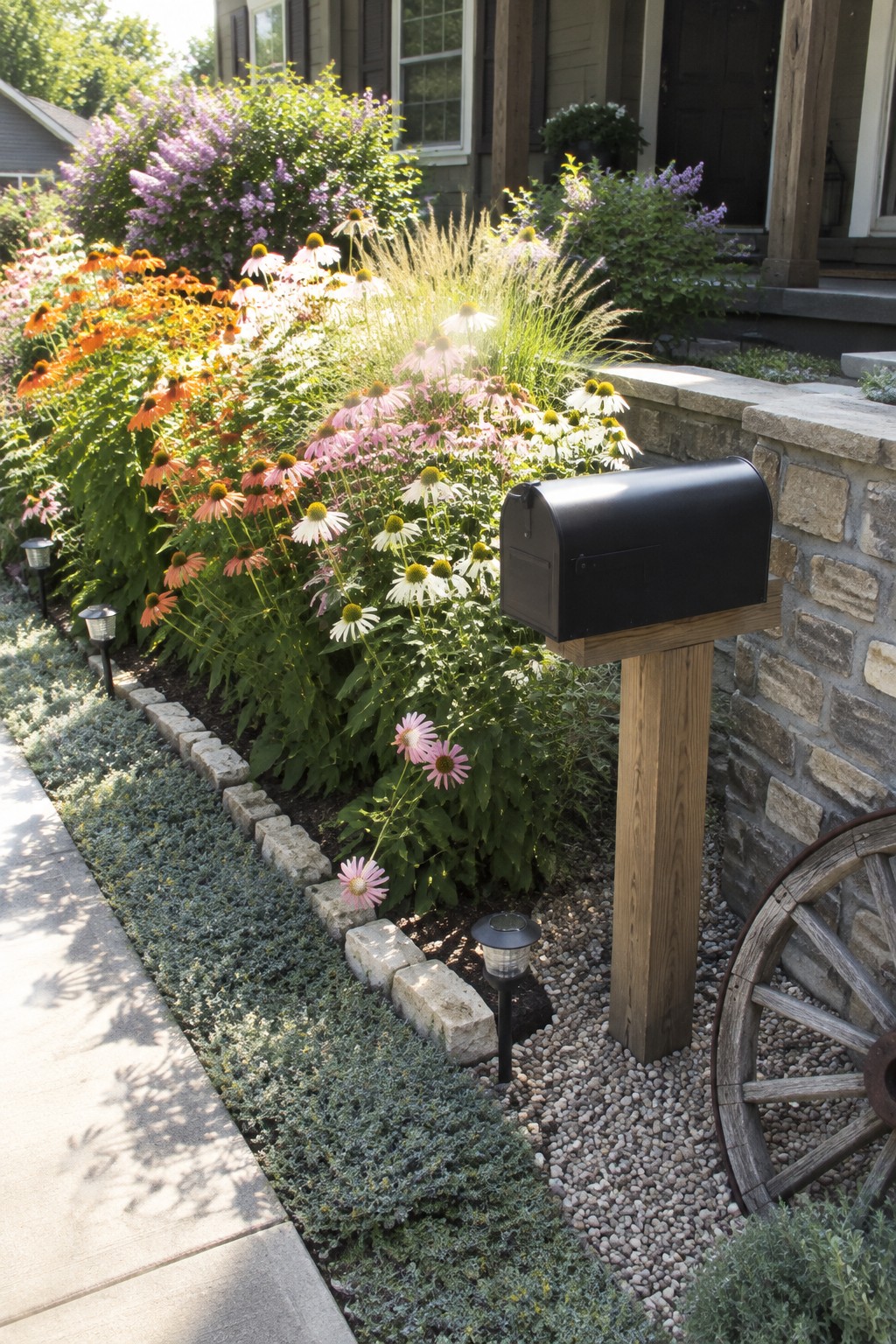
A low stone border gives a coneflower bed a clear shape without making it feel formal. It also helps separate the flowers from nearby gravel or groundcover, so the planting looks tidy even as it fills in.
Use a similar edge along a sunny walkway or beside a low retaining wall, and plant coneflowers in loose groups behind it. Leave room for the flowers to spread, and keep the border low enough that it does not block the plants.
Layer Coneflowers Along a Stone-Edged Bed
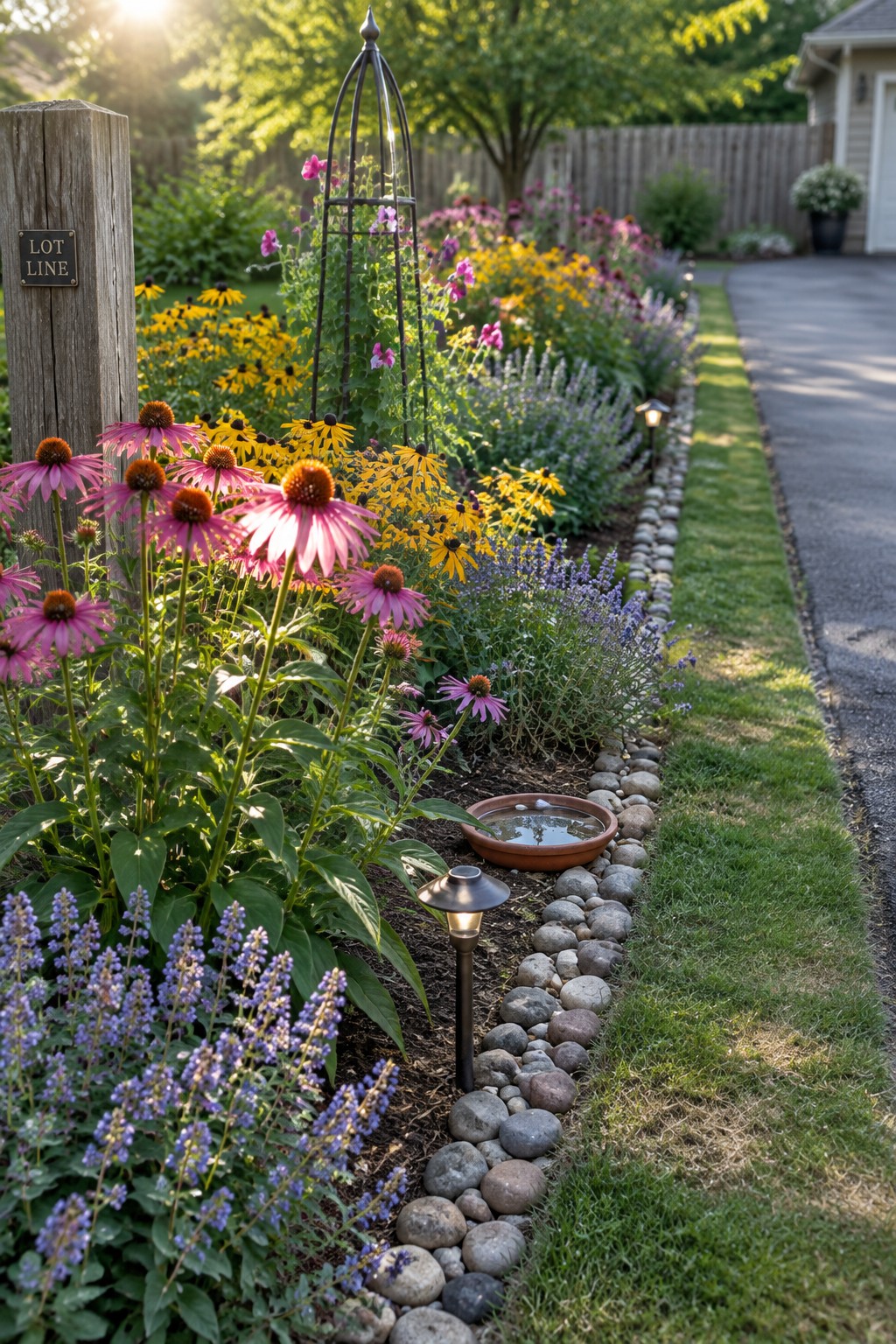
A layered flower bed lets coneflowers stand out while making room for other pollinator-friendly plants. Taller flowers can grow toward the back, with shorter blooms near the edge, so the planting feels full without hiding the plants behind it.
Use this approach along a lawn or driveway where the bed can be viewed from the side. A line of rounded stones helps mark the boundary, but keep the edge low so it does not block flowers or make garden upkeep harder.
Plant Coneflowers Along a Patio Edge
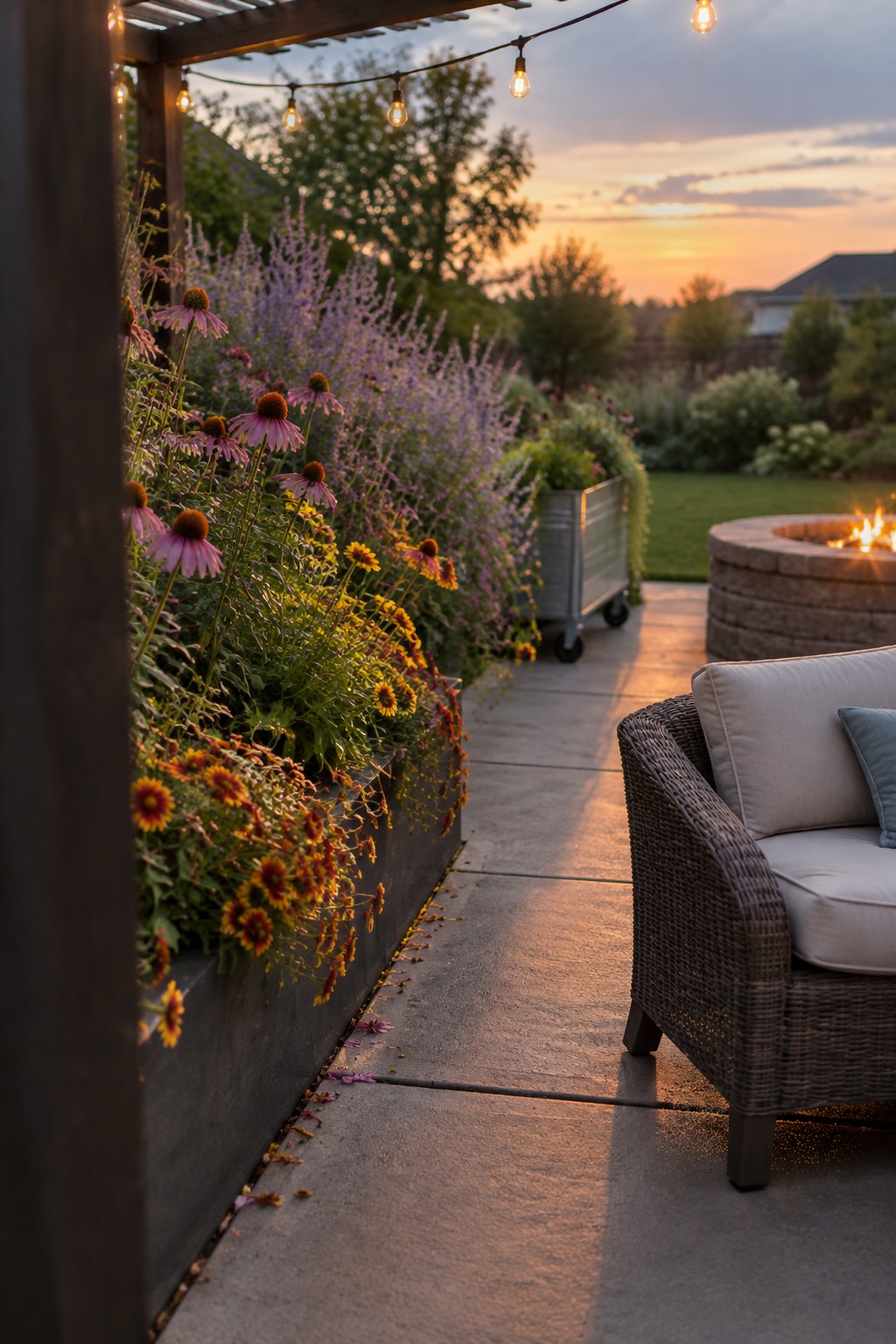
A long flower bed beside a patio lets coneflowers fill the space without taking over the seating area. Here, the raised planter keeps the planting in a clear line, while the mix of flowers gives pollinators a generous stretch of blooms to visit.
This idea suits a sunny patio where you want flowers close by but still need a clear path for walking. Leave enough room between the bed and the furniture, and choose a planter deep enough for healthy roots. Keep taller plants toward the back so they do not spill into the walkway.
Add a Bench Beside a Pollinator Garden
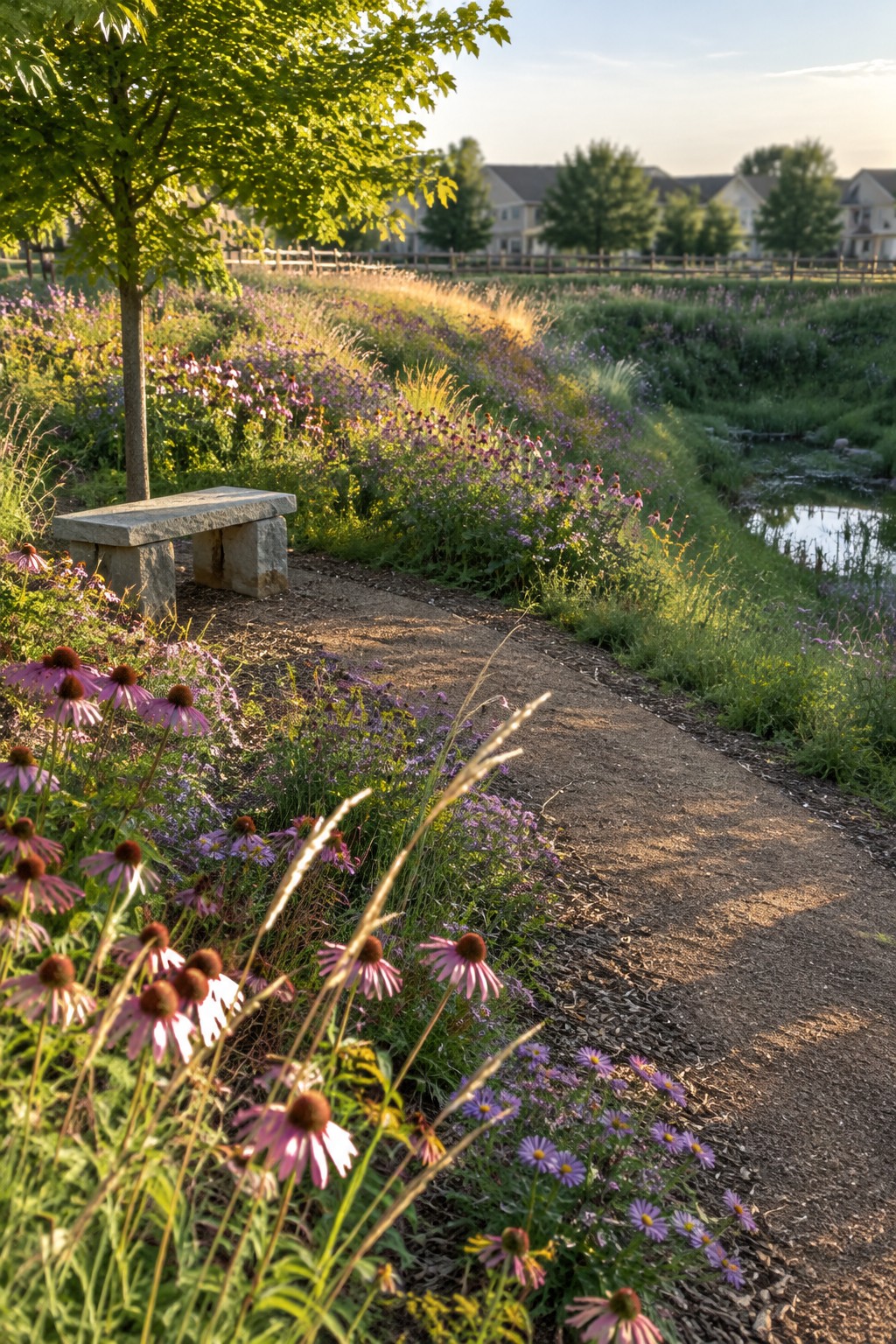
A simple bench makes a sunny coneflower garden a place to pause, not just something to look at. Set beside the planting, it gives visitors a spot to enjoy the flowers and watch pollinators without stepping into the bed.
Use a sturdy stone or weather-resistant bench near a path, leaving enough room for plants to spread. This works well in a larger flower garden where the seat feels connected to the planting but does not block access.
Use Raised Beds to Organize a Coneflower Garden
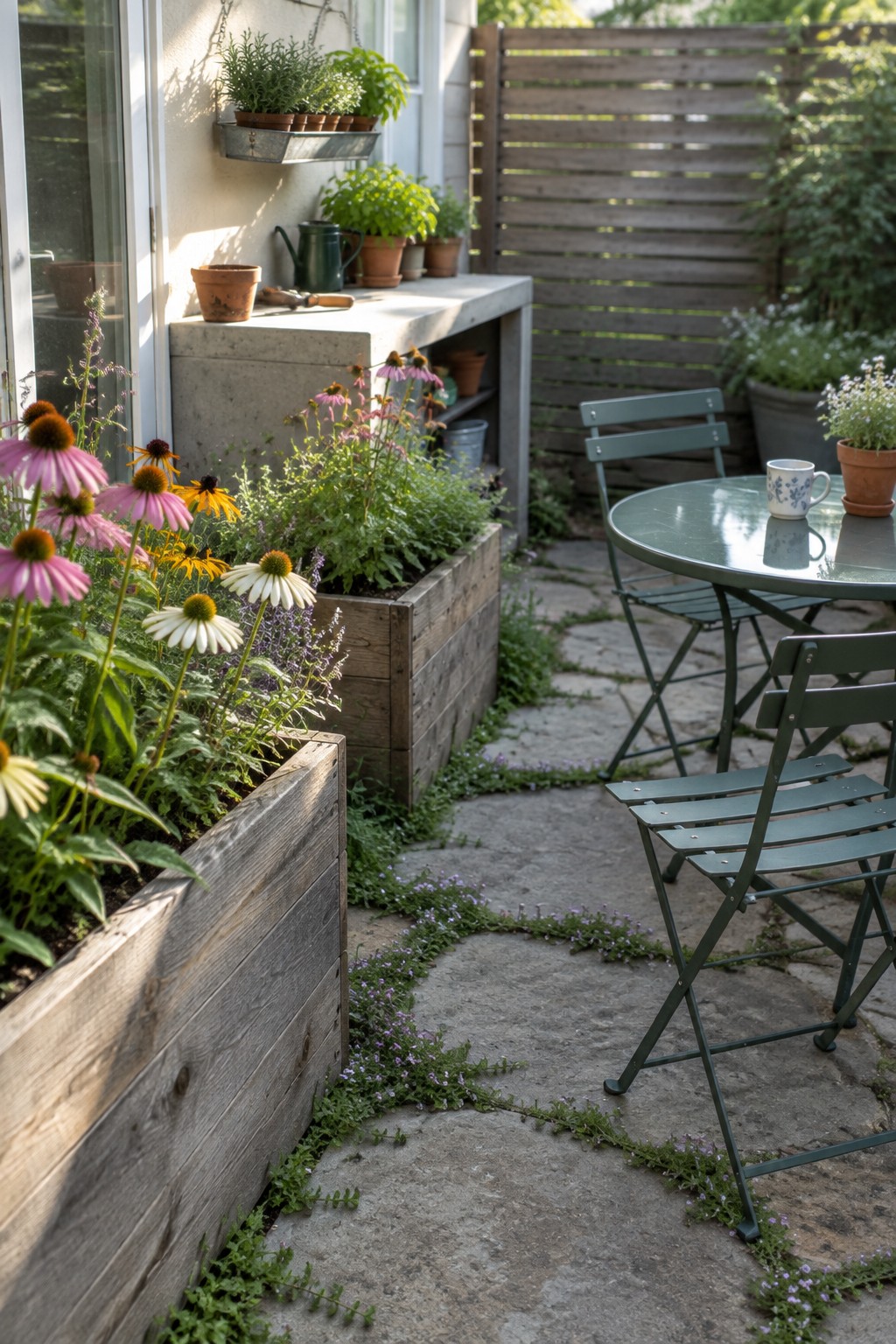
Raised beds give a sunny pollinator garden a clear shape and keep flowers from spreading into the walking area. Here, weathered wooden sides hold a dense mix of coneflowers and other plants beside a stone patio.
This approach works well in small yards where planting space is limited. Leave enough room between the bed and seating or paths, and choose sturdy, rot-resistant wood for the sides.
Grow Coneflowers in Porch Planters
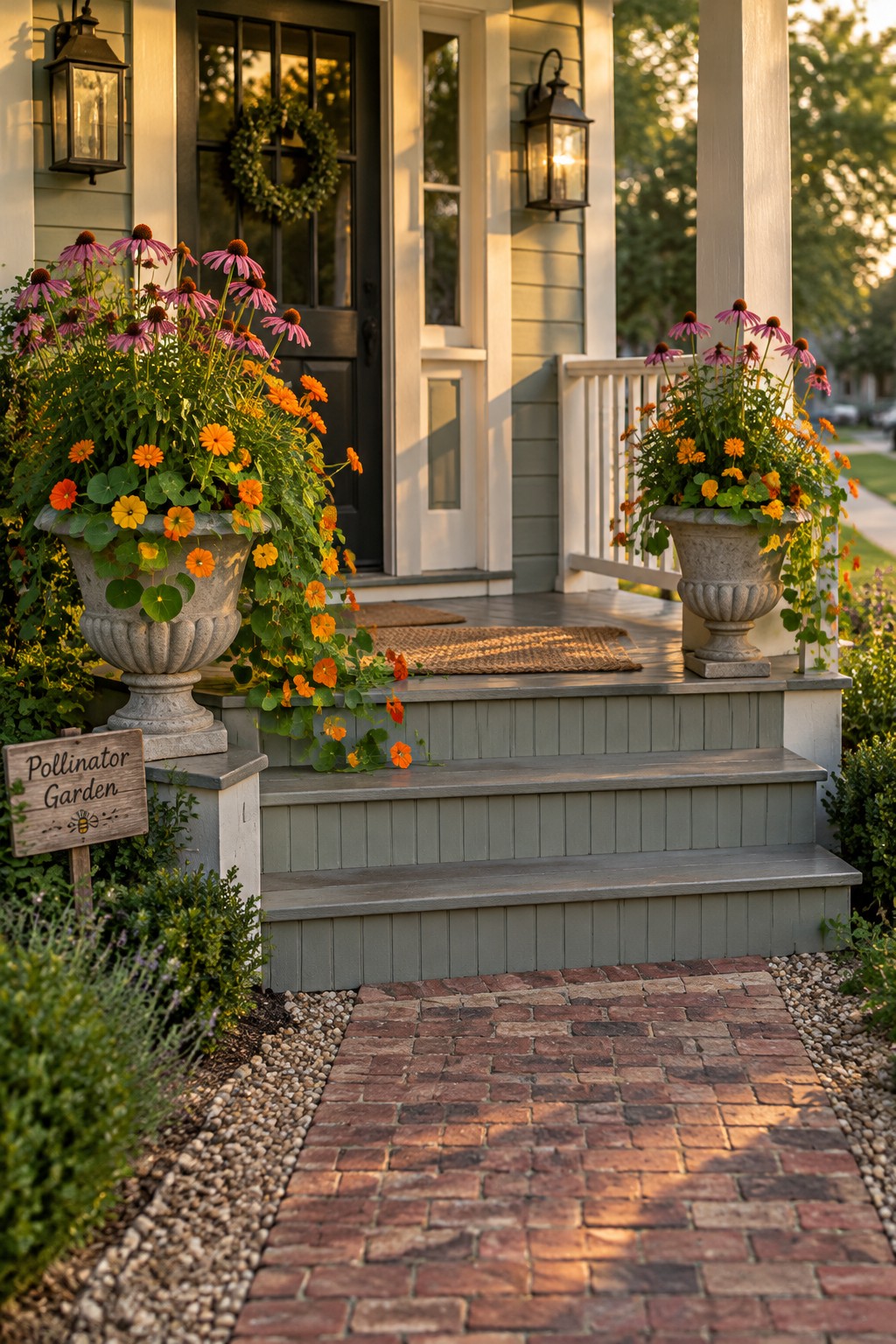
Large urns make it easy to bring pollinator-friendly flowers right to the front entry. Coneflowers can share a planter with lower, spreading blooms, giving bees and butterflies flowers to visit without needing a full garden bed.
Use a roomy container with drainage and place it where it gets plenty of sun. A pair of planters can suit a porch or steps, but leave enough space for people to walk comfortably.
Use a Gravel Edge for a Pollinator Garden
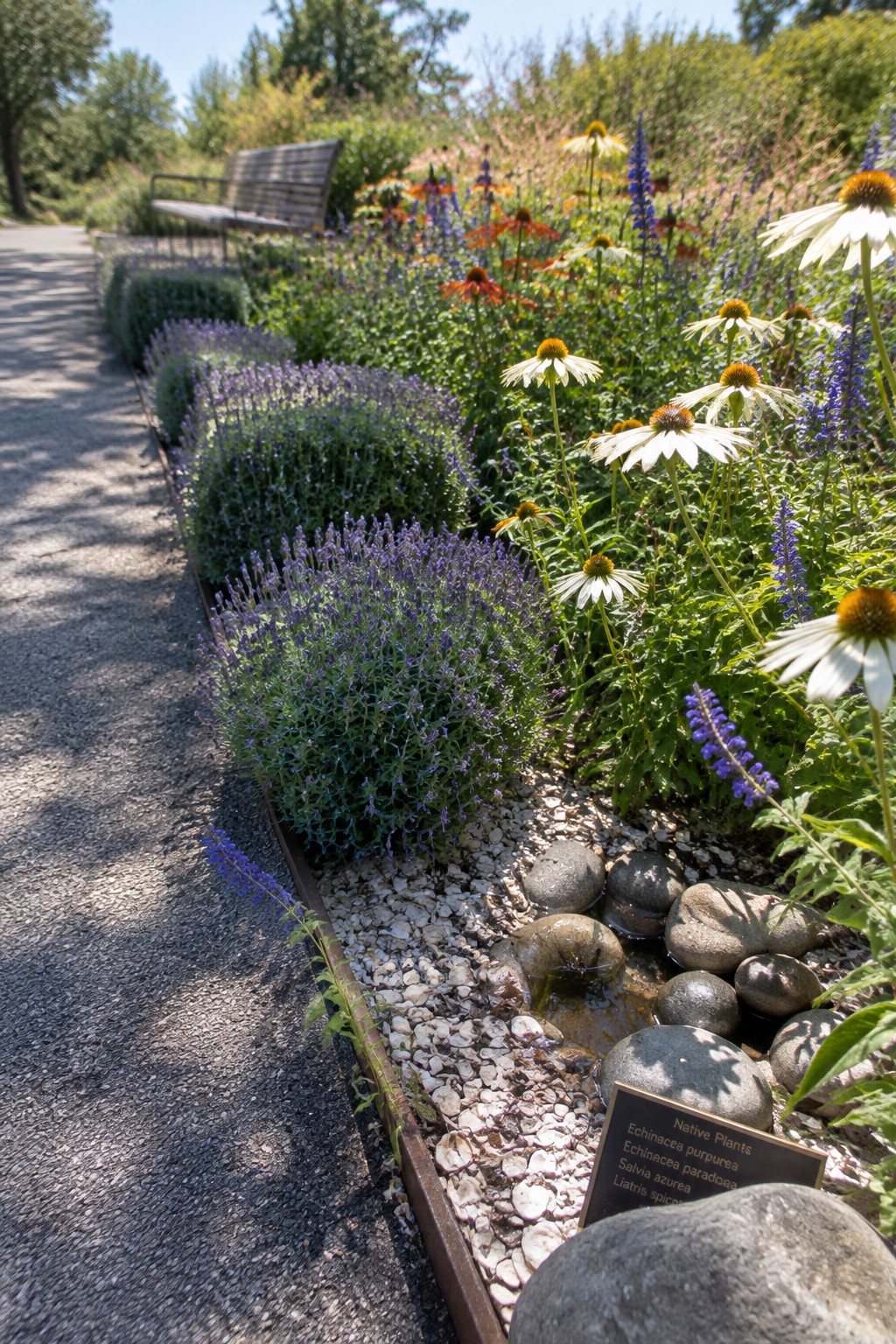
A gravel strip edged with smooth stones gives a flower bed a tidy border without making it feel too formal. It also helps separate the planting from nearby paths, so the garden stays easy to walk beside and care for.
This approach suits a sunny path where you want plenty of room for flowers such as coneflowers. Use stones that are large enough to stay in place, and keep the gravel edge clear of plants that spread quickly.
Use Raised Planters to Organize a Pollinator Garden
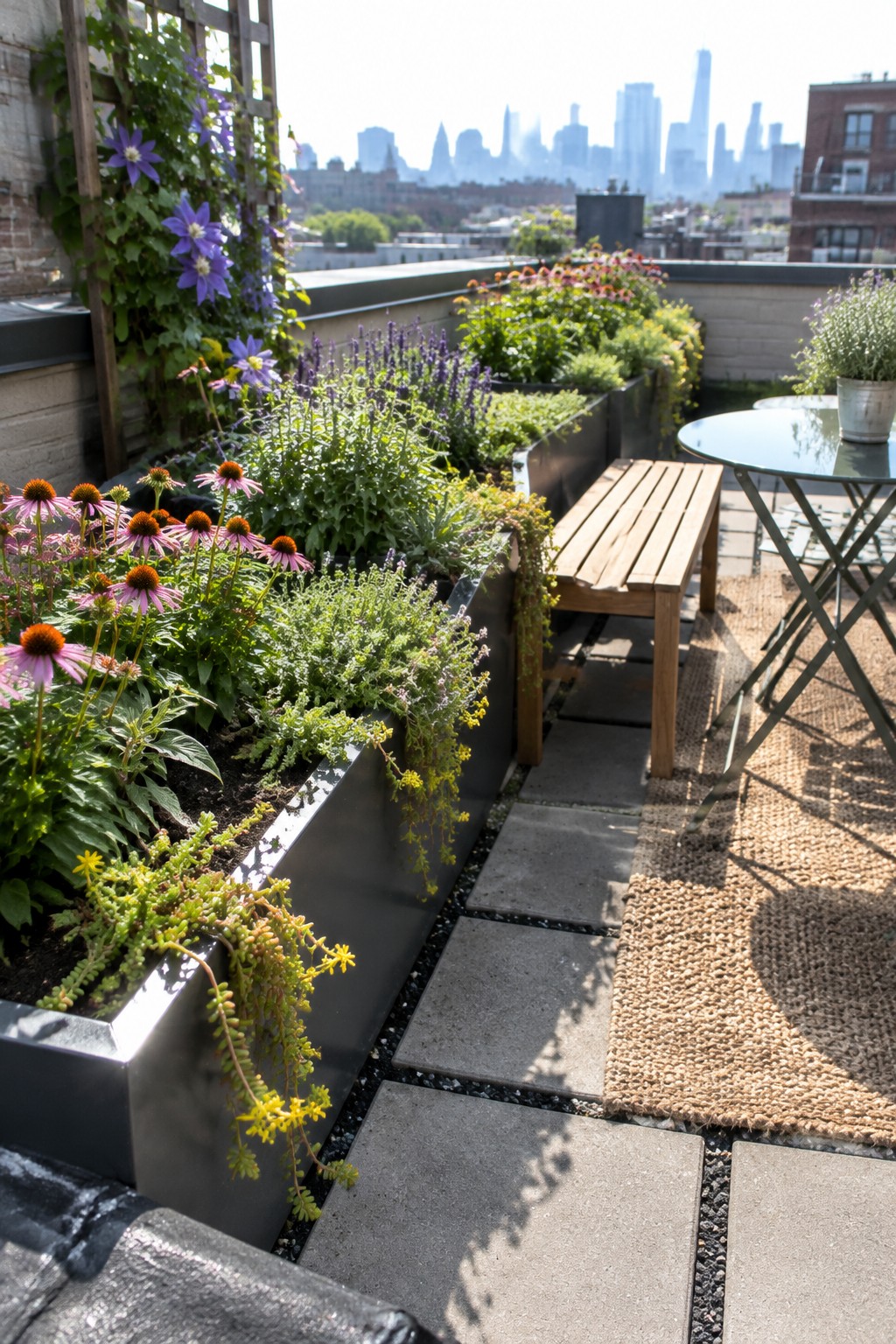
Raised planters give a sunny garden a clear shape and make it easier to group flowers by height. Coneflowers can take the front or middle of a long bed, where their blooms stay visible and pollinators can reach them.
Use sturdy planters in a spot that gets several hours of sun, and leave enough room for the plants to spread. A narrow path between beds helps with watering and deadheading without trampling nearby flowers.
Plant a Pollinator Bed Along the Street
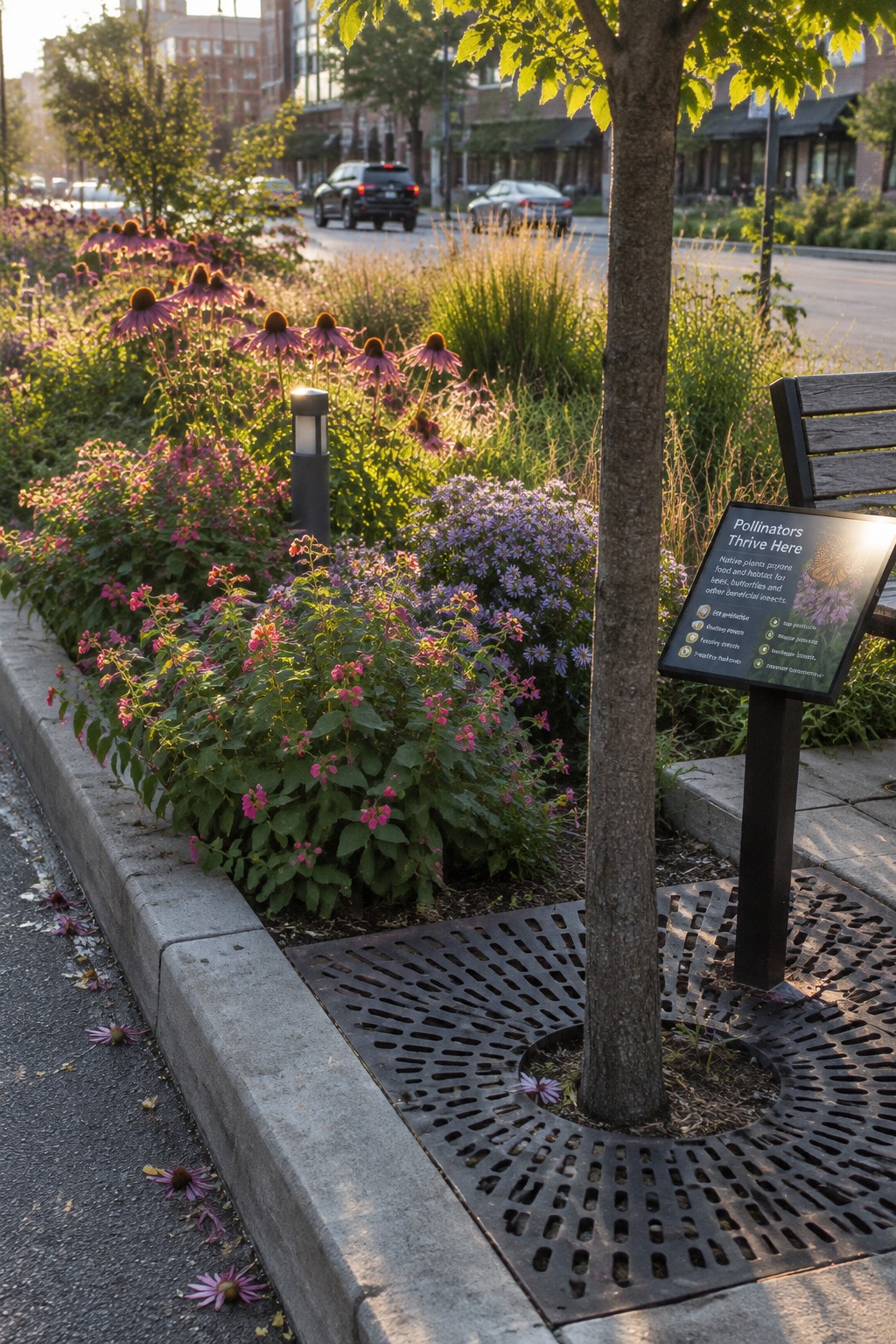
A street-side flower bed can turn an ordinary planting strip into a useful pollinator garden. Coneflowers stand out among lower flowers and grasses, giving the bed a simple layered structure while offering bees and other pollinators a place to feed.
Choose sun-loving plants that can handle the conditions beside a sidewalk or road, and leave enough room for them to spread without spilling into the walking area. A clear curb edge helps keep the planting tidy, while a small sign can explain why the garden is there.
Add a Mulch Path Between Coneflower Beds
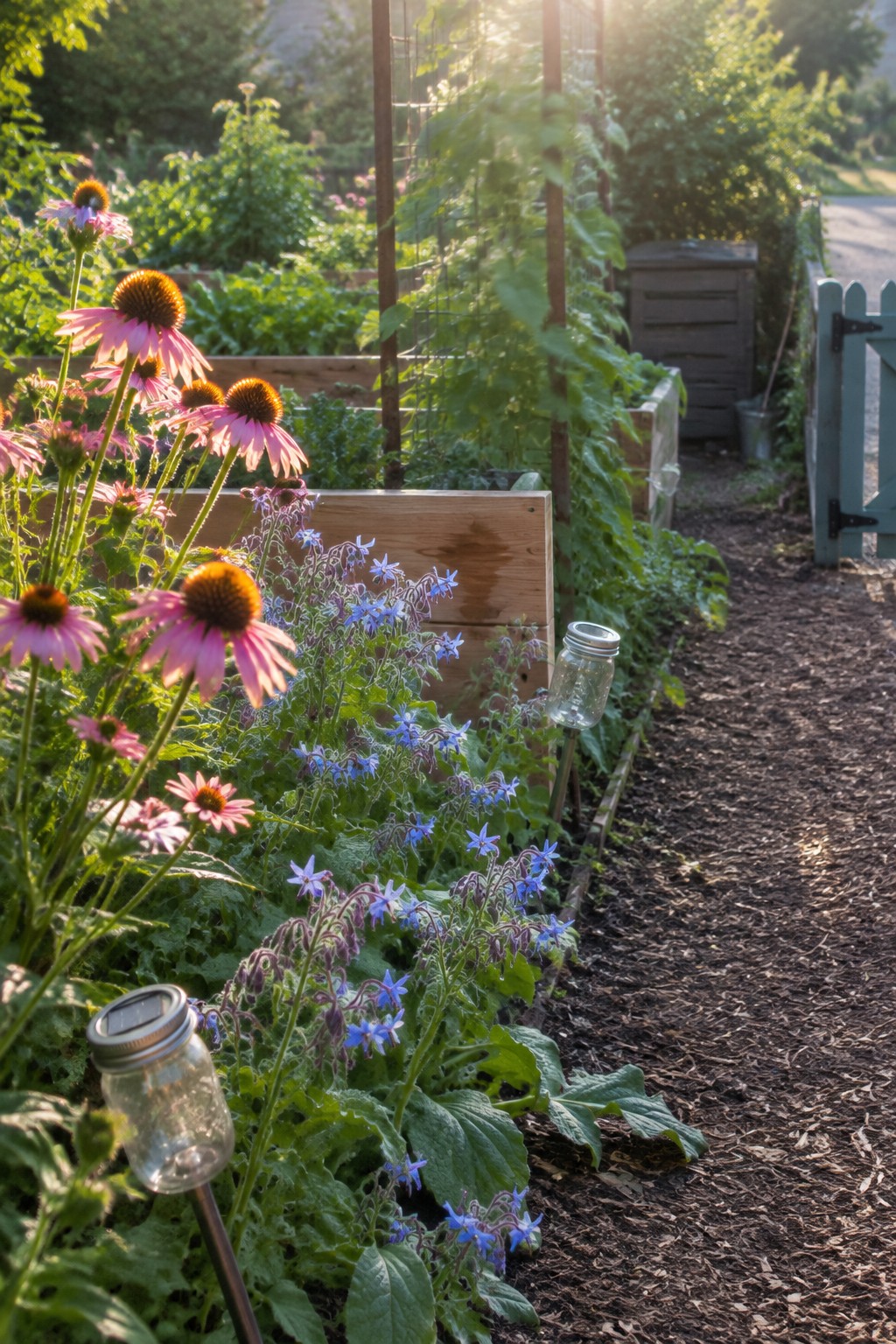
A simple path can make a sunny pollinator garden easier to enjoy and care for. Here, the wood-chip walkway runs beside a flower bed, giving the plants room to spread without making the garden feel difficult to navigate.
Use mulch or wood chips to define a clear route through or alongside a planting area. Keep the path wide enough for a wheelbarrow, and leave coneflowers plenty of space along the edges so their flowers do not spill across the walking surface.
Let Coneflowers Border a Garden Path
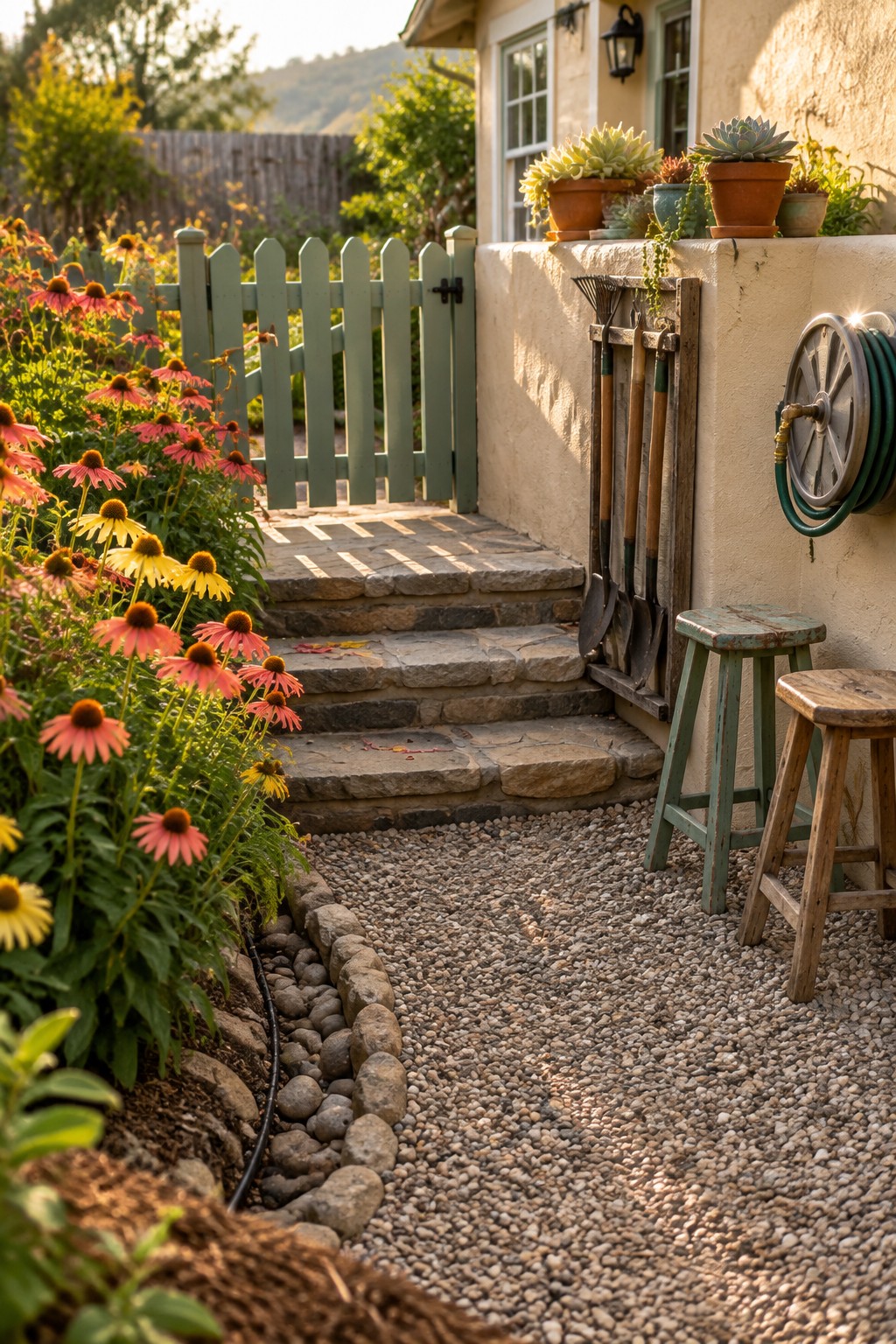
A narrow gravel path can make a sunny flower bed easier to enjoy and maintain. Coneflowers planted along its edge bring color close to the walkway while leaving a clear route through the garden.
Use larger stones to keep gravel from spilling into the planting bed, and leave enough room for plants to spread without narrowing the path. This approach suits side yards and cottage gardens where a simple path can make the most of a small space.
Use a Low Wall to Define a Coneflower Bed
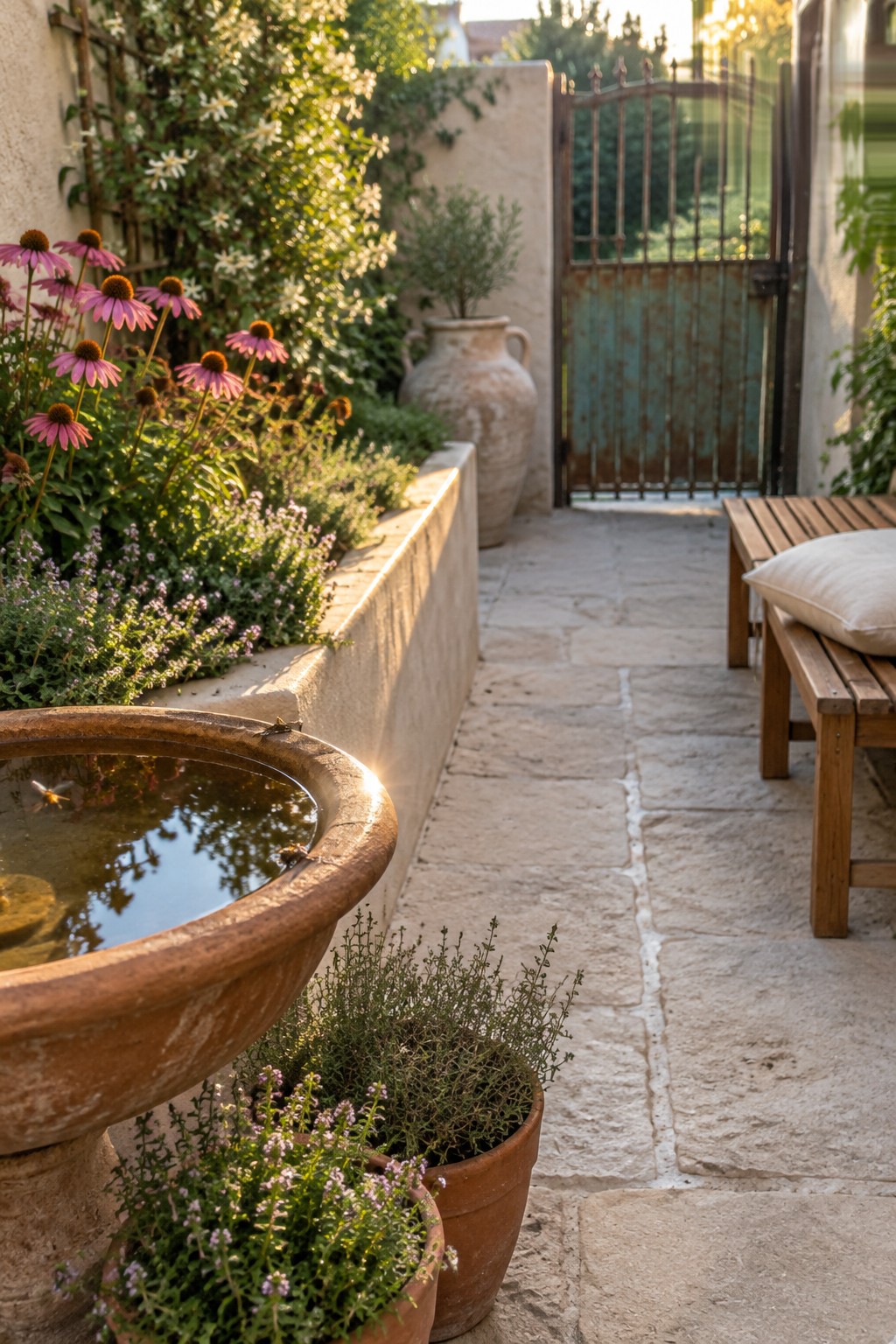
A low stone wall gives a flower bed a clear edge while keeping it connected to the path beside it. This works especially well for coneflowers, which can grow in a generous sunny border without spilling into the walkway.
Use a similar wall to separate a planting area from a narrow courtyard path, and leave enough room for plants to spread. Coneflowers can share the bed with other sun-loving flowers that attract pollinators.
Let Coneflowers Spill Along a Stone Path
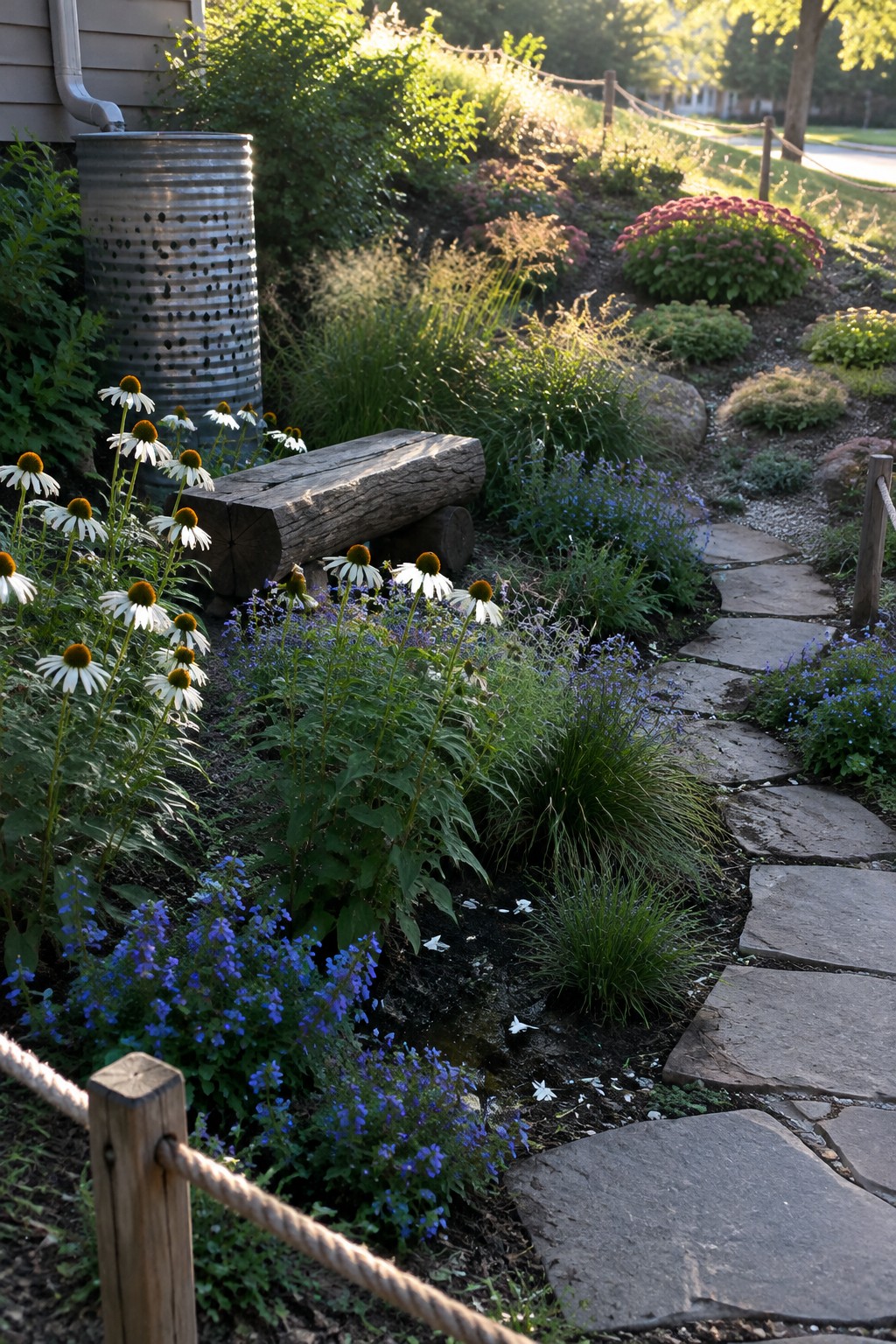
A winding stone path can make a sunny pollinator garden feel easy to wander through. Coneflowers planted in loose groups beside the stones bring color close to the route without making the planting feel too formal.
Leave enough room for plants to spread so they do not crowd the walking surface. This approach suits cottage-style gardens and informal side yards, especially where the path curves through an existing flower bed.
Plant Coneflowers Around a Pool Seating Area
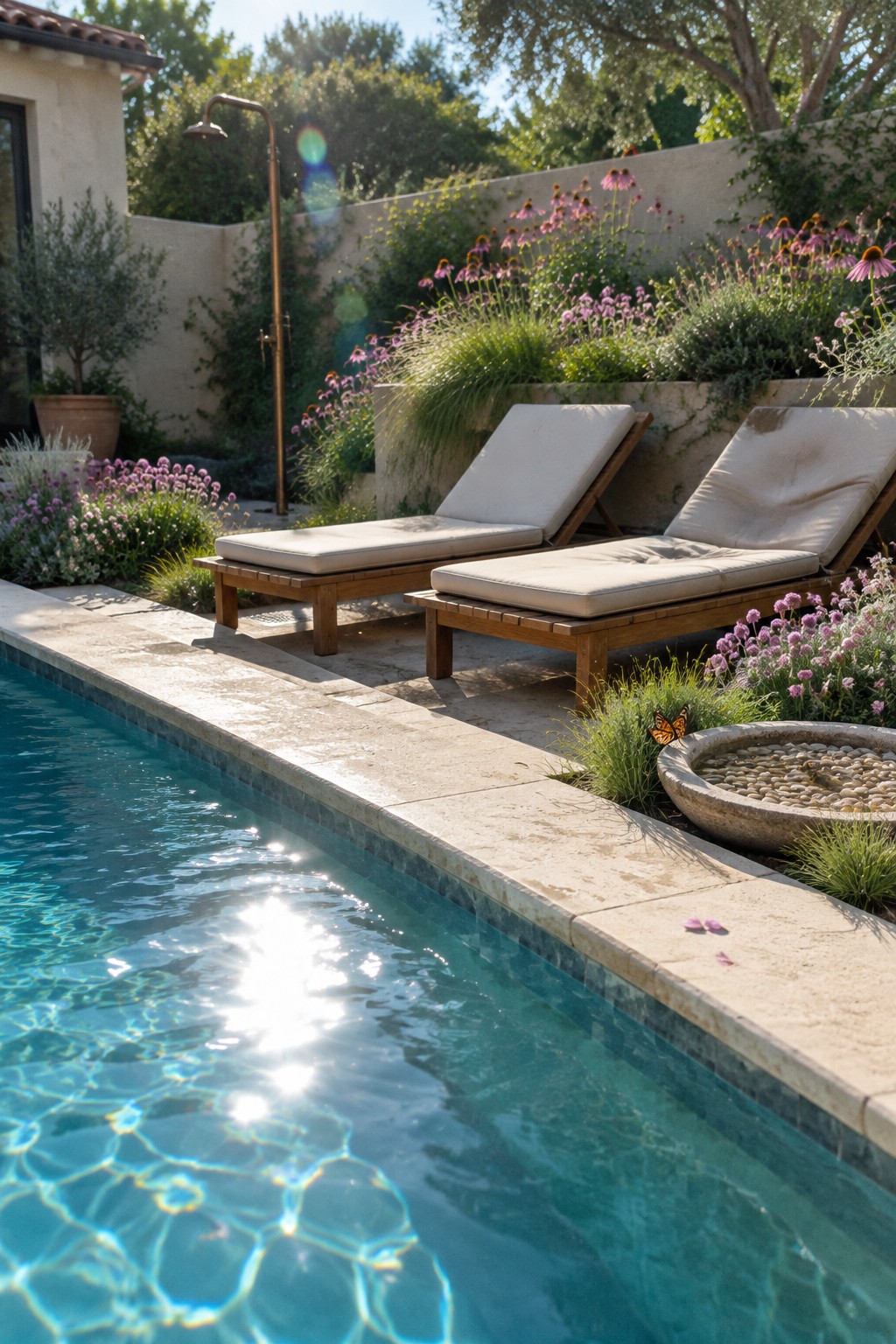
Coneflowers can bring pollinator-friendly planting right up to an outdoor seating area. A generous bed beside the pool makes the loungers feel part of the garden, rather than set apart from it.
Use a raised or clearly edged bed to keep plants from spreading onto the paving. Leave enough room for chairs and a clear walking route, and choose sunny spots where the flowers can grow well.
Welcome Pollinators With a Coneflower Border
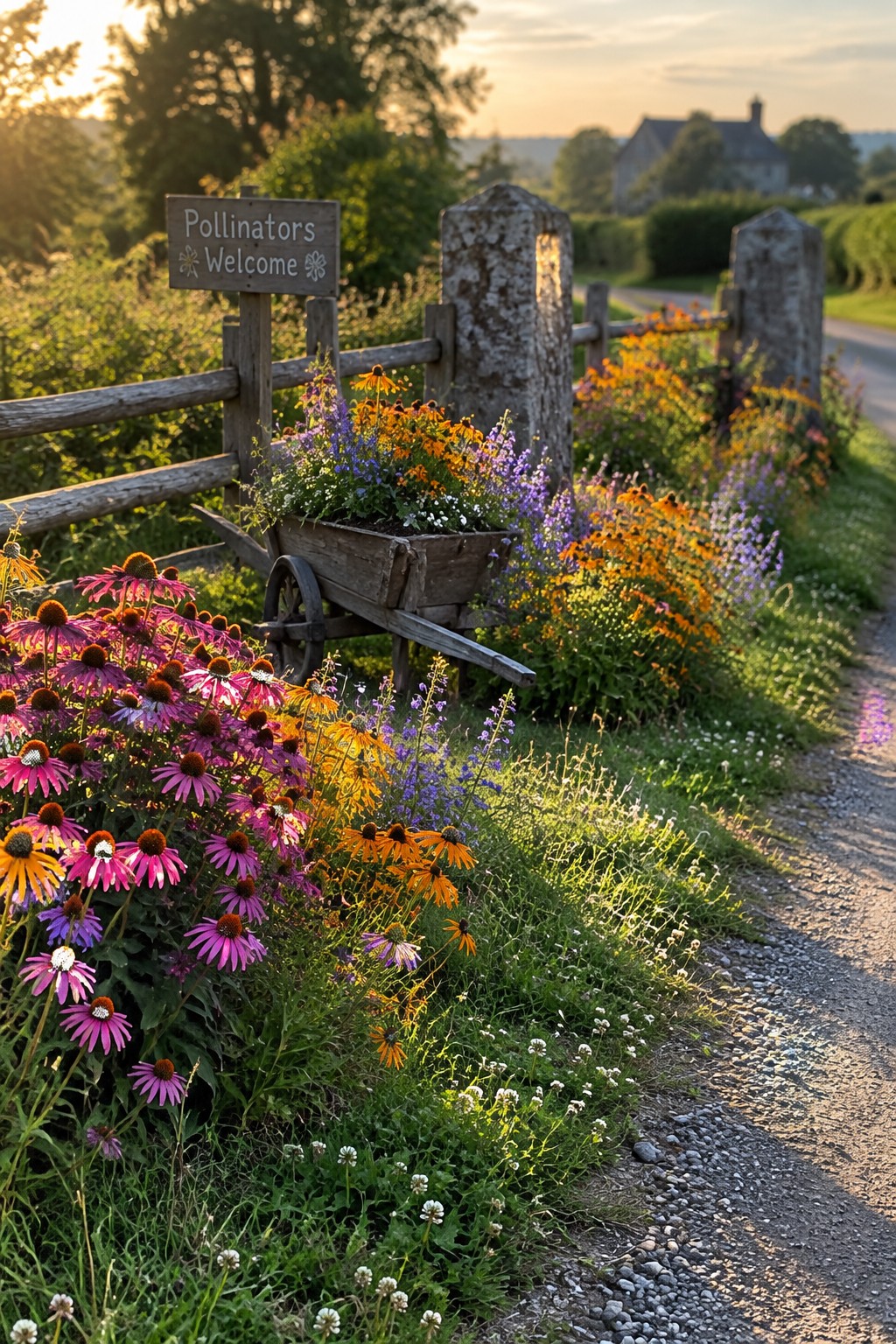
A sunny path can be a good place for a pollinator garden, especially when coneflowers spill along its edge. The flowers make the route feel connected to the garden, while the path still gives visitors a clear way through.
Plant coneflowers in a generous strip beside a gravel or stone path, leaving enough room for them to spread without narrowing the walking space. Mix in a few other flowering plants for a longer season of color, and keep taller growth trimmed back from the path.
Frequently Asked Questions
Q: How much sun do coneflowers need to bloom well?
A: Aim for at least six hours of direct sun a day. They can handle a little afternoon shade, but too much shade often means fewer flowers and floppier stems.
Q: What should I plant with coneflowers to attract more pollinators?
A: Pair them with other sunny, nectar-rich flowers that bloom at different times, such as salvia, coreopsis, or asters. That gives bees and butterflies a longer stretch of food, while the mix of shapes and heights keeps the bed lively.
Q: Do I need to deadhead coneflowers?
A: Deadhead spent blooms if you want a tidier look and more flowers. Leave some seed heads standing in fall, though, and birds can snack on them through winter.
Q: Can coneflowers grow in clay soil?
A: Yes, as long as the soil drains reasonably well. If water tends to sit after rain, mix in compost and plant them slightly above the surrounding soil.
