

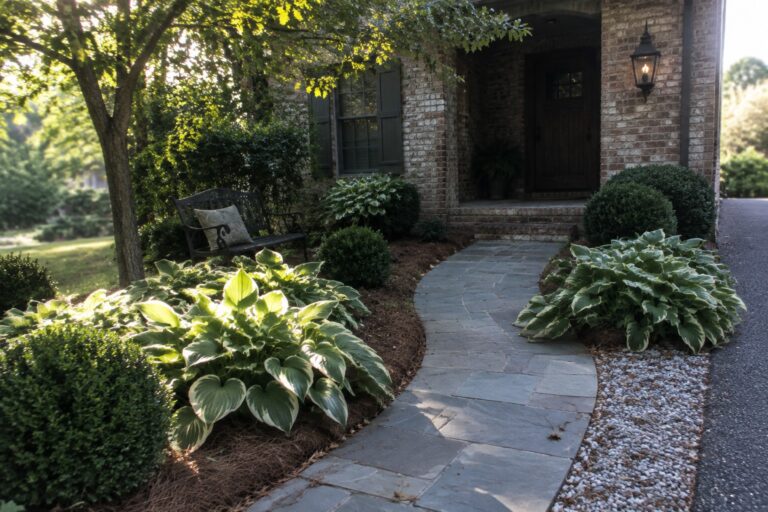
Hostas can soften the front of a house, but they look best when their size and placement suit the space around them.
I find that a clear planting shape matters as much as the plants themselves, especially near steps, paths, and the foundation.
Mixing leaf sizes and shades can add depth without making a small entry feel crowded.
A neat edge or a few carefully placed companion plants can help the bed feel connected to the house rather than tacked on.
I’d start with ideas that fit your light, walkway, and room for the plants to spread over time.
Use a Curving Stone Path Through Hostas
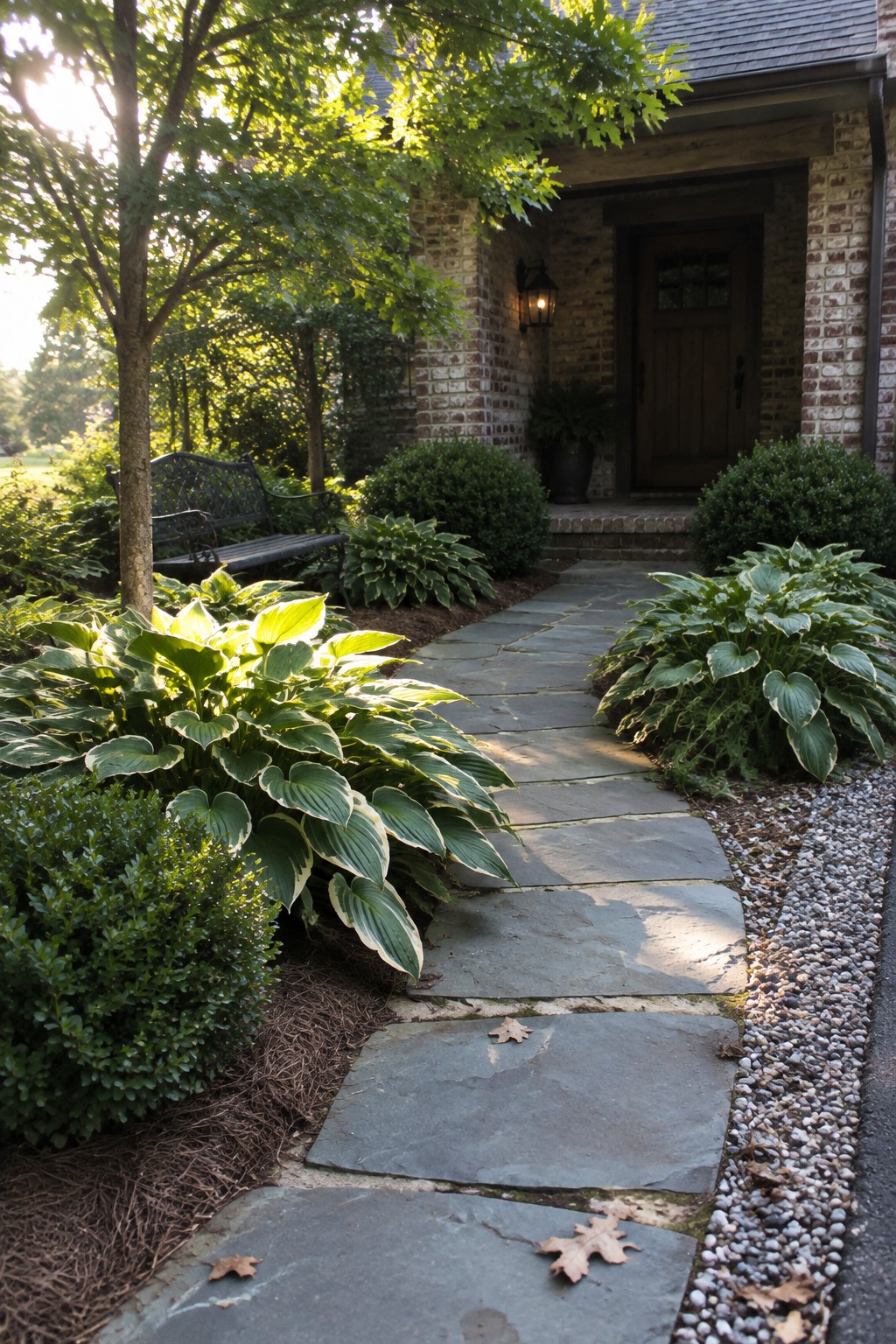
A gently curving path makes a front garden feel less like a straight route to the door and more like part of the landscape. Large stone stepping slabs look at home beside hostas, whose broad leaves soften the path edges.
Use this idea where there is enough room for a gradual curve, and leave comfortable space to walk between the plants. Hostas suit shaded entry gardens, but choose a path surface with a steady footing and keep leaves from spilling across the walking area.
Use Hostas to Edge a Gravel Walkway
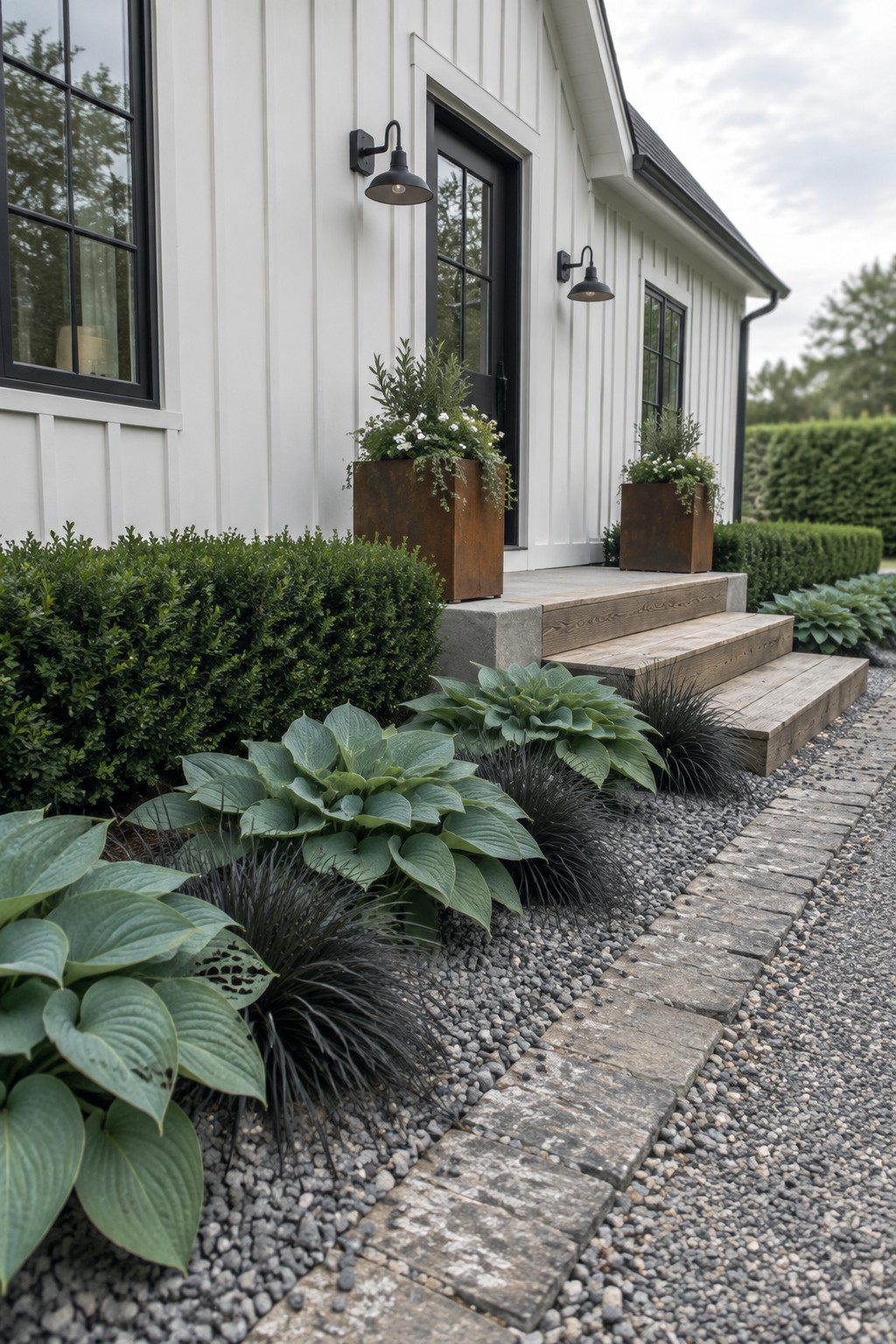
Hostas make a gravel path feel more settled and intentional. Their broad leaves create a clear planting edge, while the gravel keeps the walkway simple and easy to maintain.
Plant hostas in small groups along the path, leaving enough room for their leaves to spread without covering the walking surface. They work especially well in a partly shaded front yard, and a low stone border can help keep the gravel in place.
Use a Stone Path to Organize the Planting
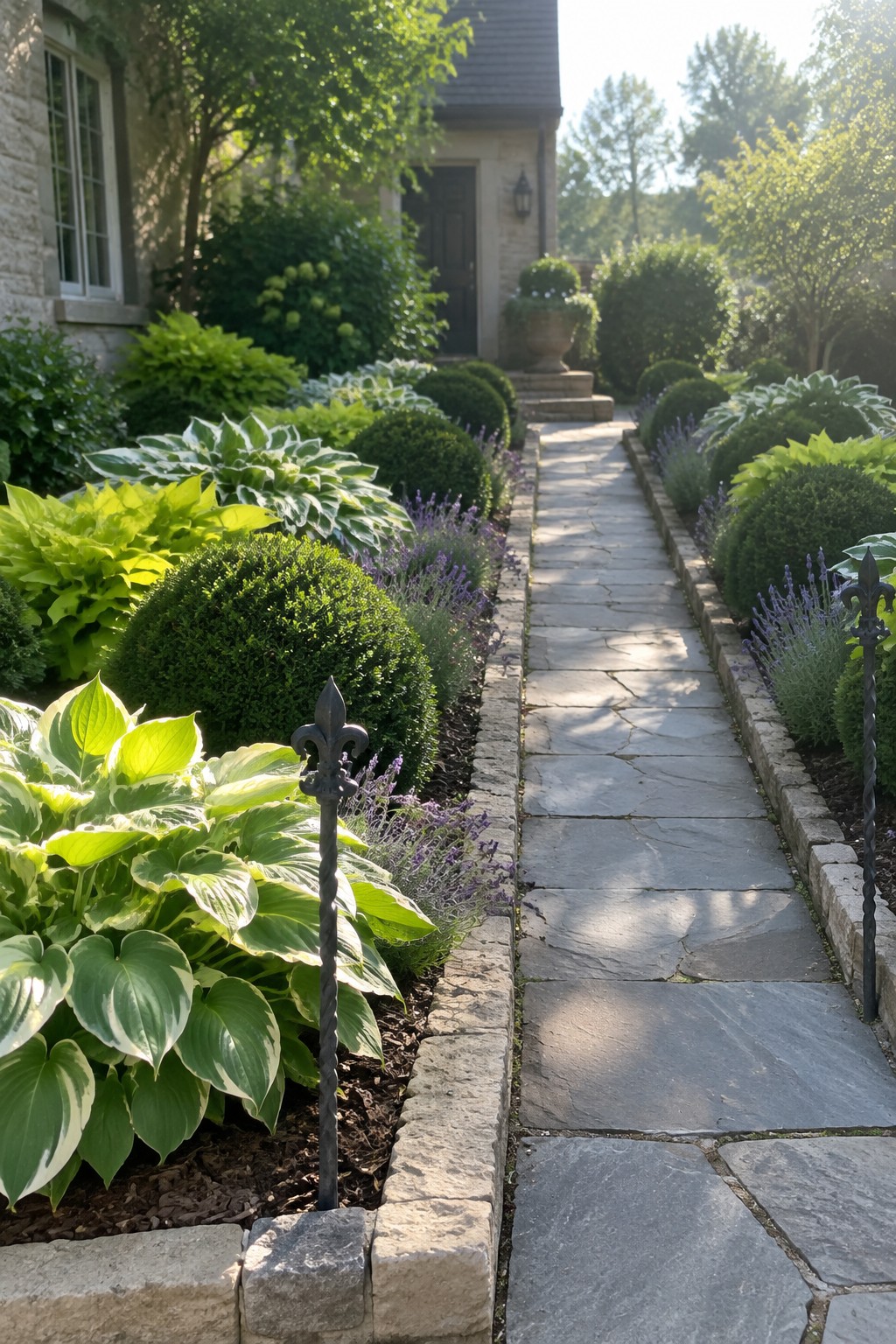
A straight stone path gives a front garden a clear route to the door and helps the planting feel orderly. Low stone edging keeps the beds neat, while hostas can fill the space beside the walk with broad leaves.
This approach suits homes with a traditional entry and works well when you want a defined walkway without a large paved area. Choose hostas that fit the light and leave enough room for mature plants so they do not spill onto the path.
Use a Curving Path to Shape the Garden
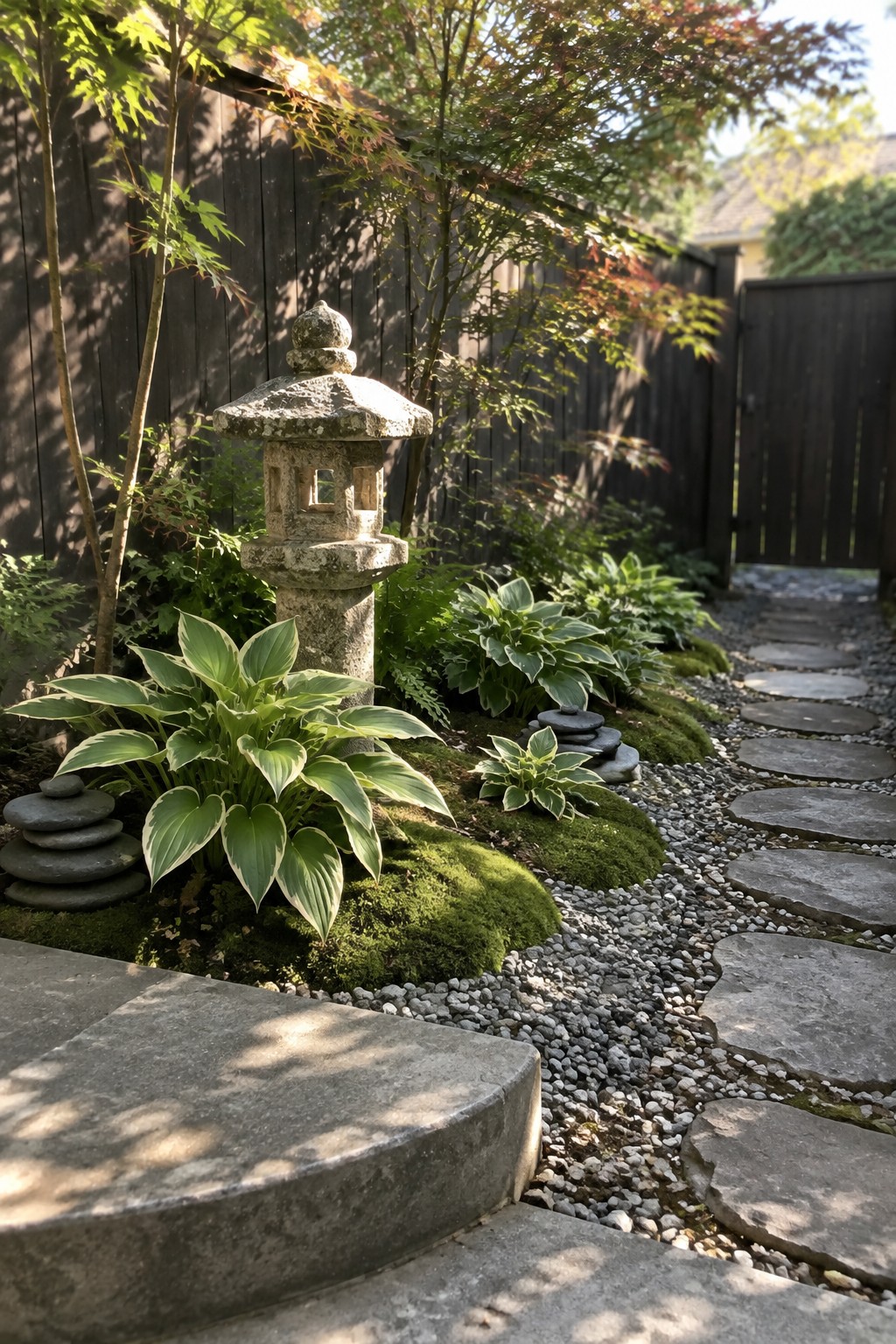
A gently curving stepping-stone path gives a small garden a more relaxed layout than a straight route. It also lets planting beds sit alongside the walkway, so hostas can be part of the path’s edge rather than tucked away on their own.
Try this approach near a front entry or along a narrow side yard, using stones set into gravel for a simple, easy-to-maintain surface. Keep the hostas close enough to the path to enjoy their leaves, but leave room for them to spread without crowding the walkway.
Use a Stone Path to Shape a Hosta Bed
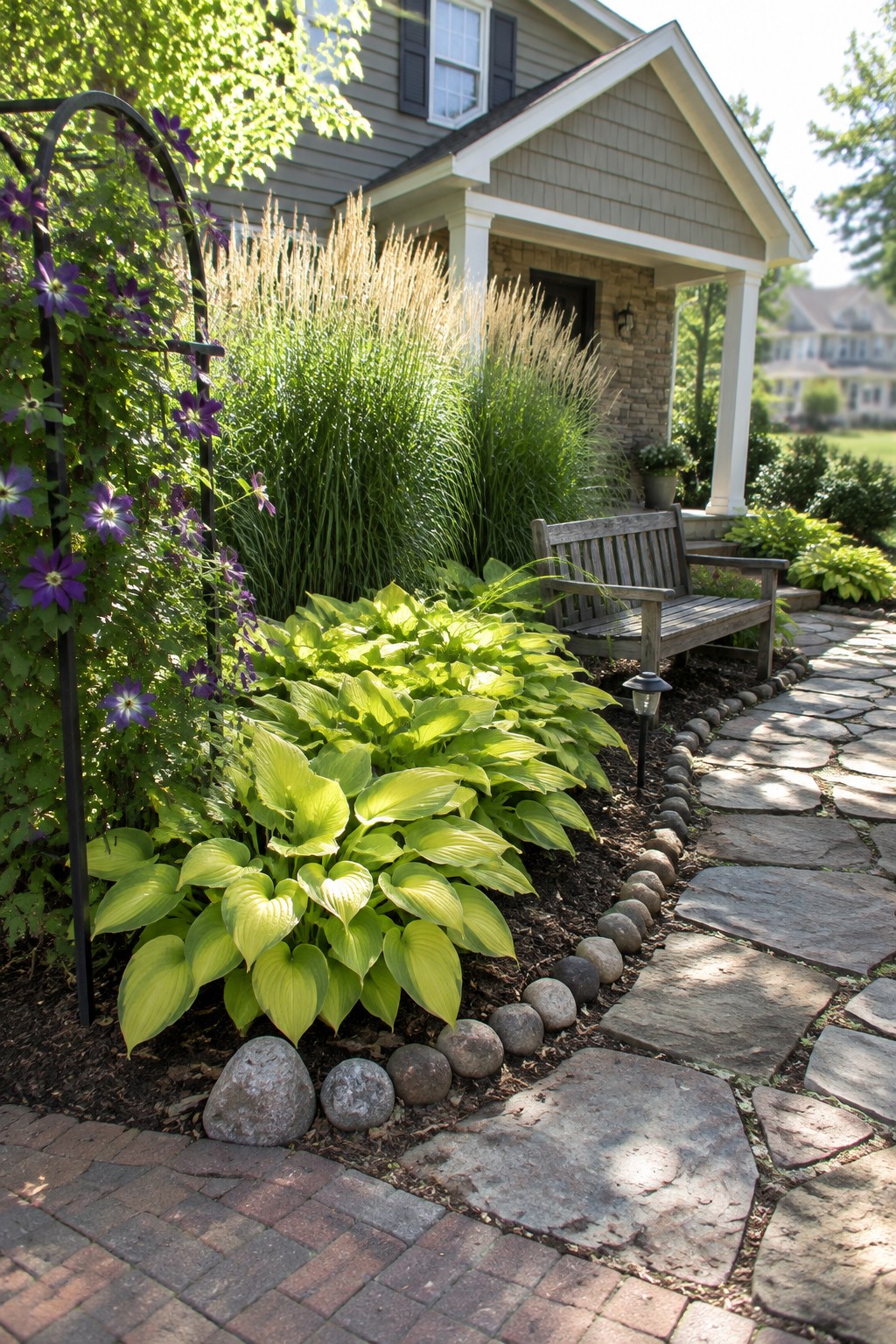
A stone path can give a front garden a clear route while letting the planting remain the main feature. Here, the irregular slabs and rounded edging stones define the bed without making it feel too formal.
This approach works well beside an entry or along the front of a house, especially where hostas fill a broad planting bed. Leave enough room between the path and the plants so leaves do not spill across the walking surface as they grow.
Plant Hostas Along a Gravel Entry Path
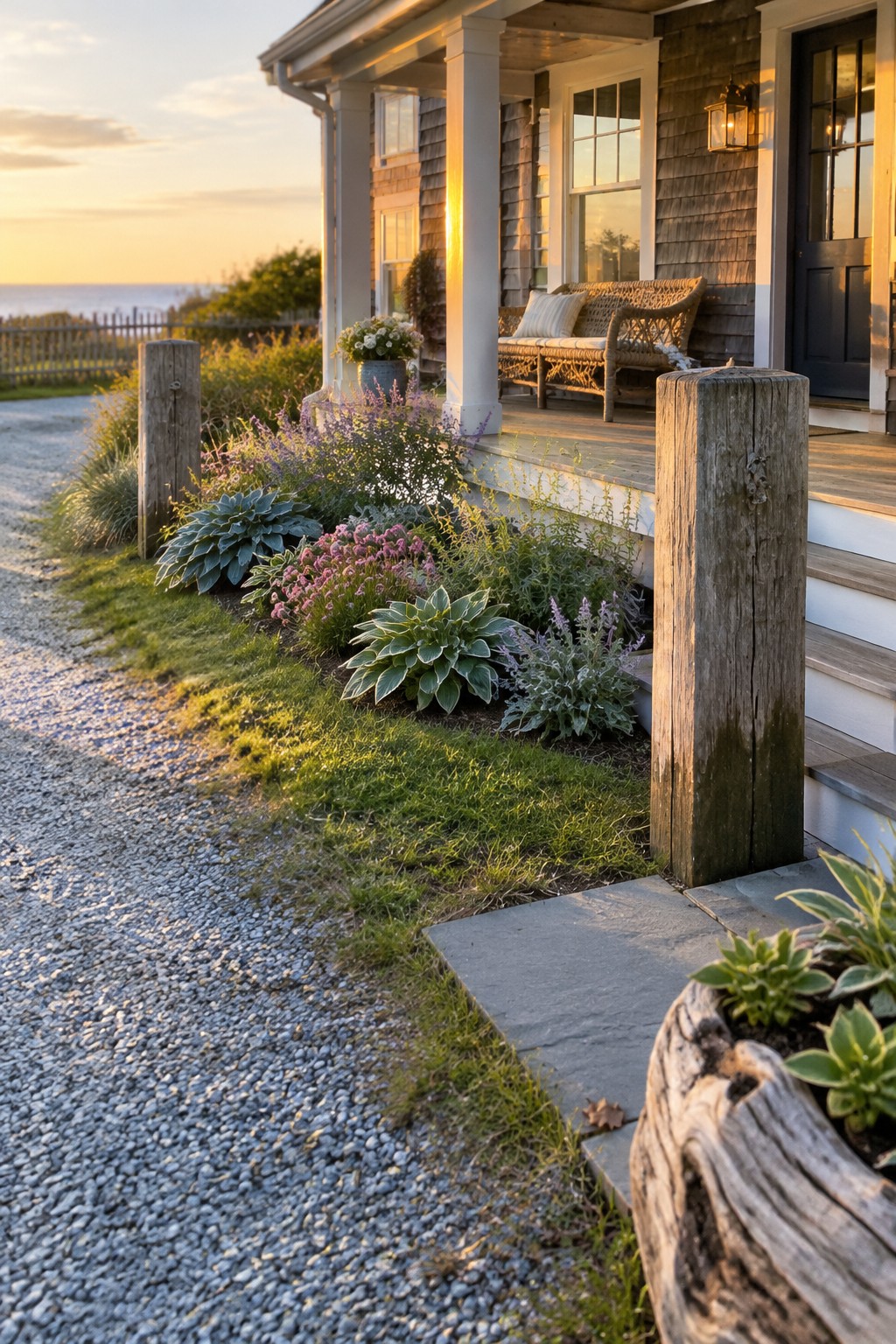
A gravel walkway can feel more settled when a planted border runs beside it. Broad hosta leaves bring a clear edge to the path and make the front garden look planned without needing a formal layout.
Use hostas along a walkway near the porch, leaving enough room for them to spread without spilling into the walking space. Mix in a few flowering plants for variety, but keep the hostas as the main leafy layer.
Use Rounded Shrubs to Shape a Hosta Bed
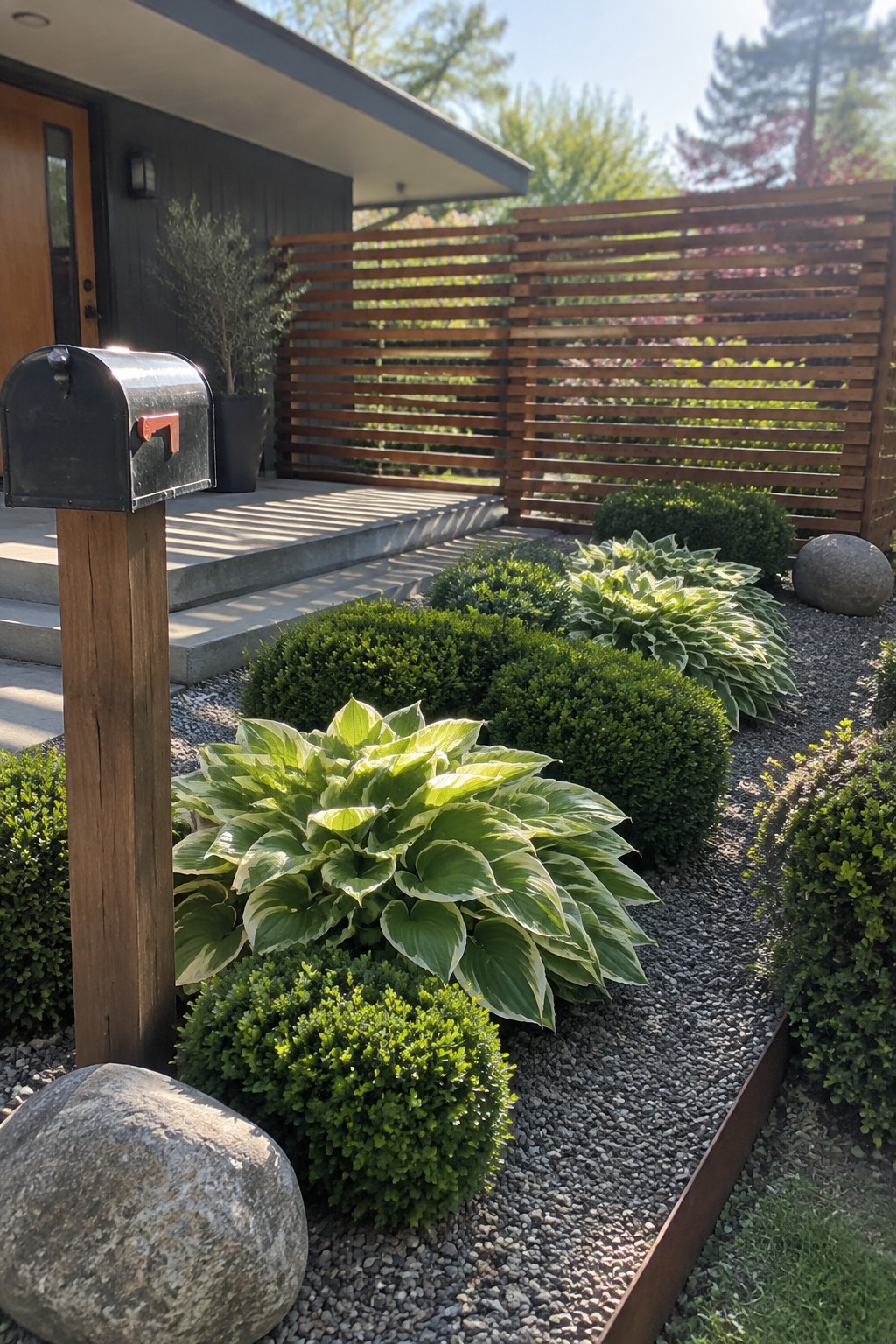
Rounded evergreen shrubs give a hosta bed a tidy structure, while the broad leaves add a softer, fuller layer. This mix looks especially neat in a front yard where you want the planting to feel planned without relying on a lot of flowers.
Plant the shrubs in small groups and leave enough room for hostas to spread between them. A gravel mulch can keep the bed looking orderly, but make sure the soil beneath it stays moist enough for the hostas.
Use a Low Brick Edge to Define a Hosta Bed
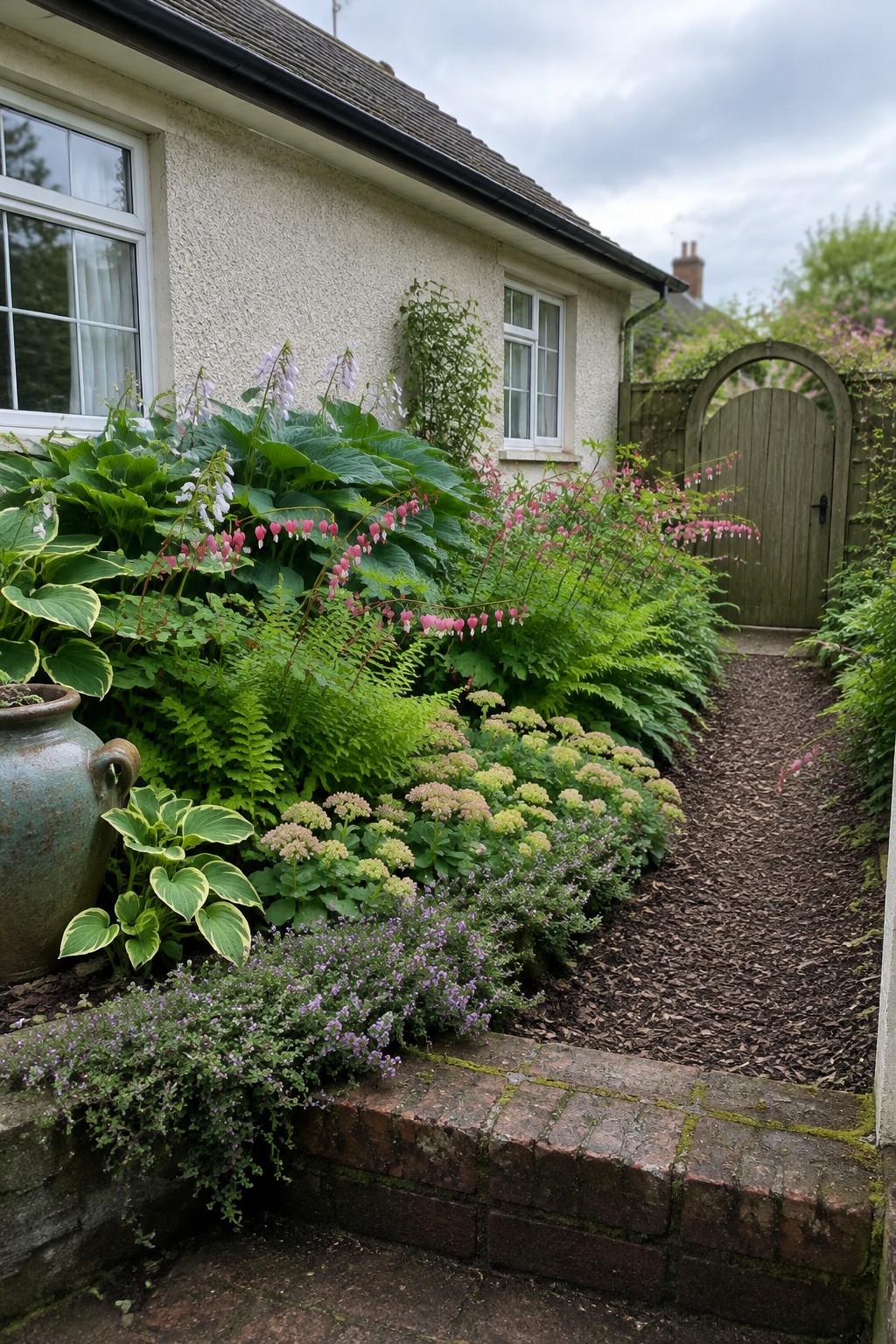
A low brick edge gives a hosta bed a tidy boundary without making the garden feel formal. It also separates the planting from the paved area, so the leaves and flowers can spill forward while the edge keeps the bed’s shape clear.
Use this idea where a garden meets a small patio or walkway, and choose bricks that suit the house and paving. Keep the wall low enough to see over, and leave room for hostas to spread rather than crowding them against the edge.
Plant Hostas Along a Raised Brick Bed
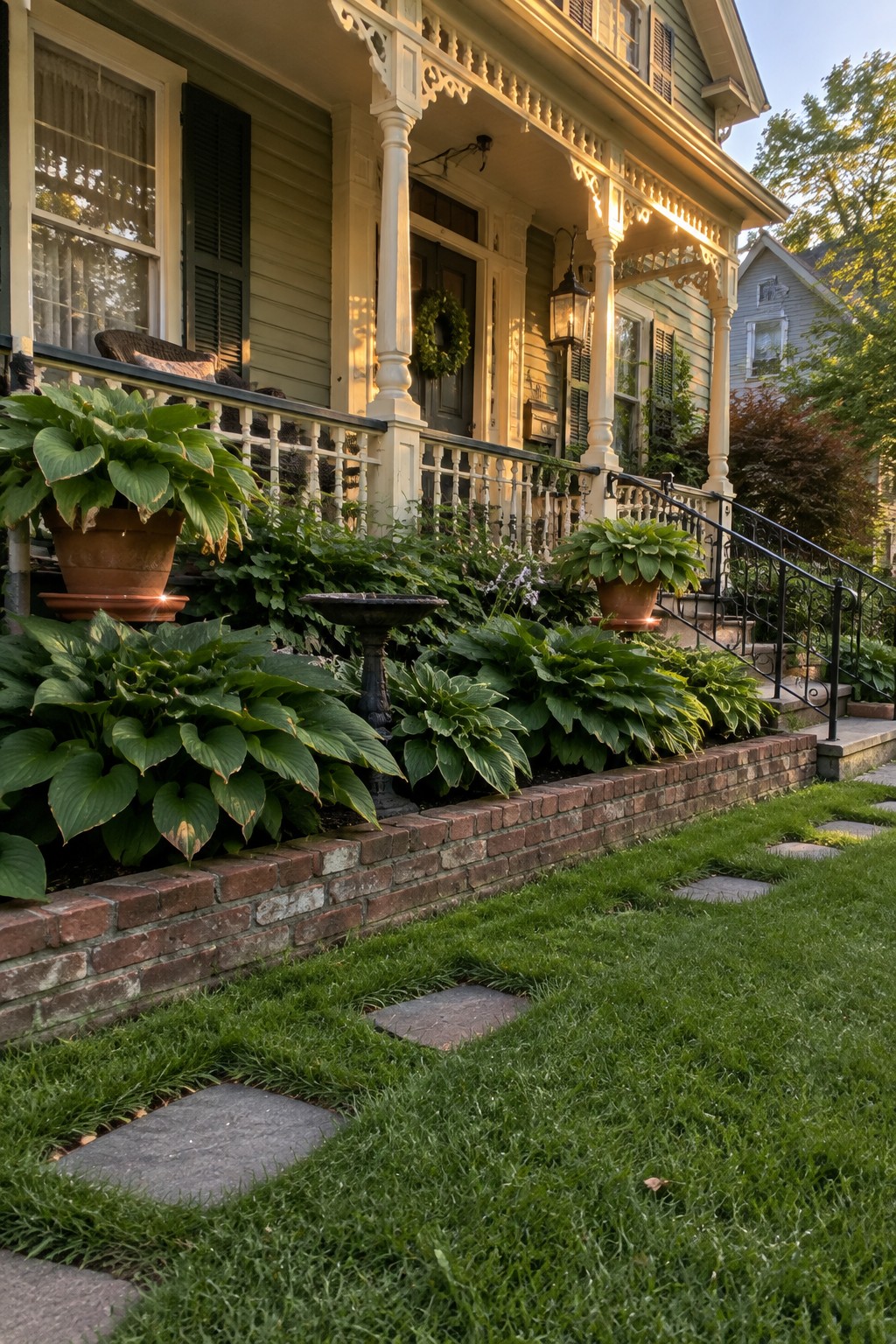
A low brick wall gives a hosta bed a clear edge and helps keep the planting in place beside the front walk. The broad leaves fill the space neatly, so the border looks established without needing lots of different plants.
This approach works well along a porch or sloping front yard. Keep the wall low enough that it does not hide the hostas, and leave room for the plants to spread as they mature.
Use a Gravel Path Beside a Layered Hosta Bed
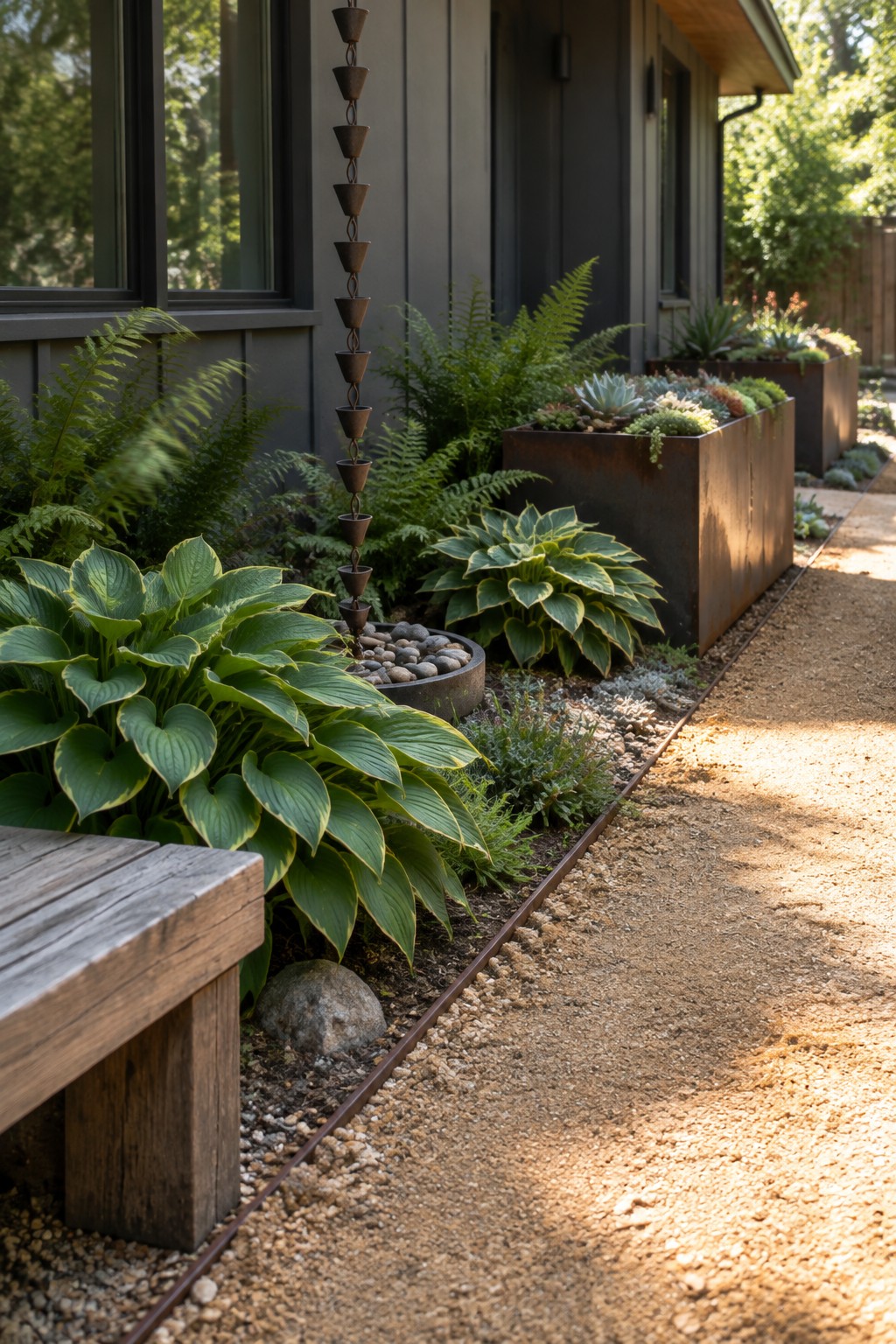
A gravel walkway can make a front garden feel tidy without making it look too formal. Hostas planted along the edge give the path a soft border, while taller ferns behind them add another layer of greenery.
This layout works well beside a shaded house where grass may struggle. Use edging to keep gravel from spilling into the planting bed, and leave enough room for the hostas to spread without narrowing the walkway.
Build a Raised Hosta Bed Near the Entry
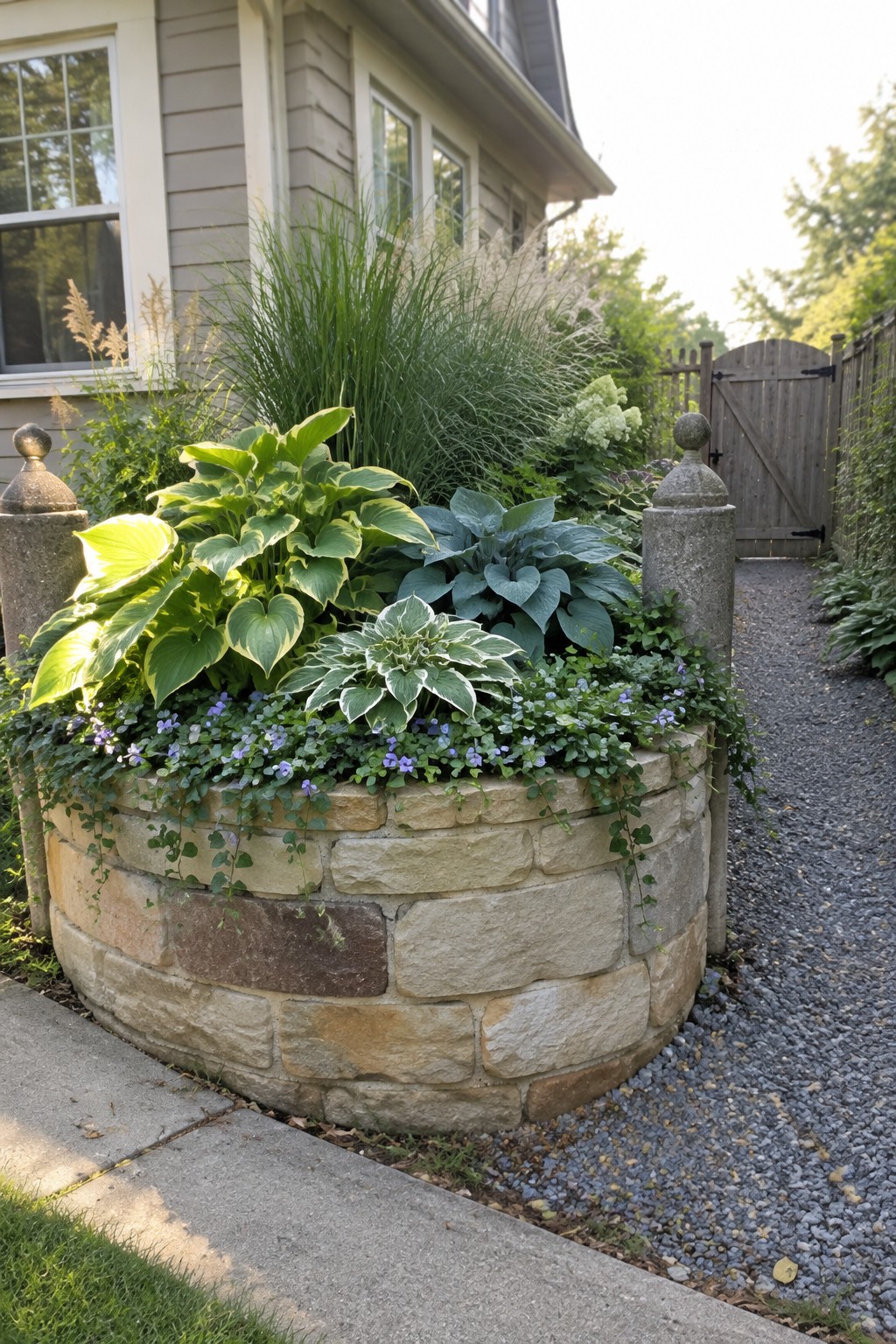
A curved raised bed gives hostas a clear place to grow and makes a small entry garden feel organized. The stone wall lifts the planting above the path, so the broad leaves are easy to see without spreading into the walkway.
This approach works well beside a house or along a narrow gravel path, especially where the ground slopes or needs a defined edge. Use sturdy wall stone and leave enough room for hostas to fill out over time.
Use Hostas Along a Stone Entry Walk
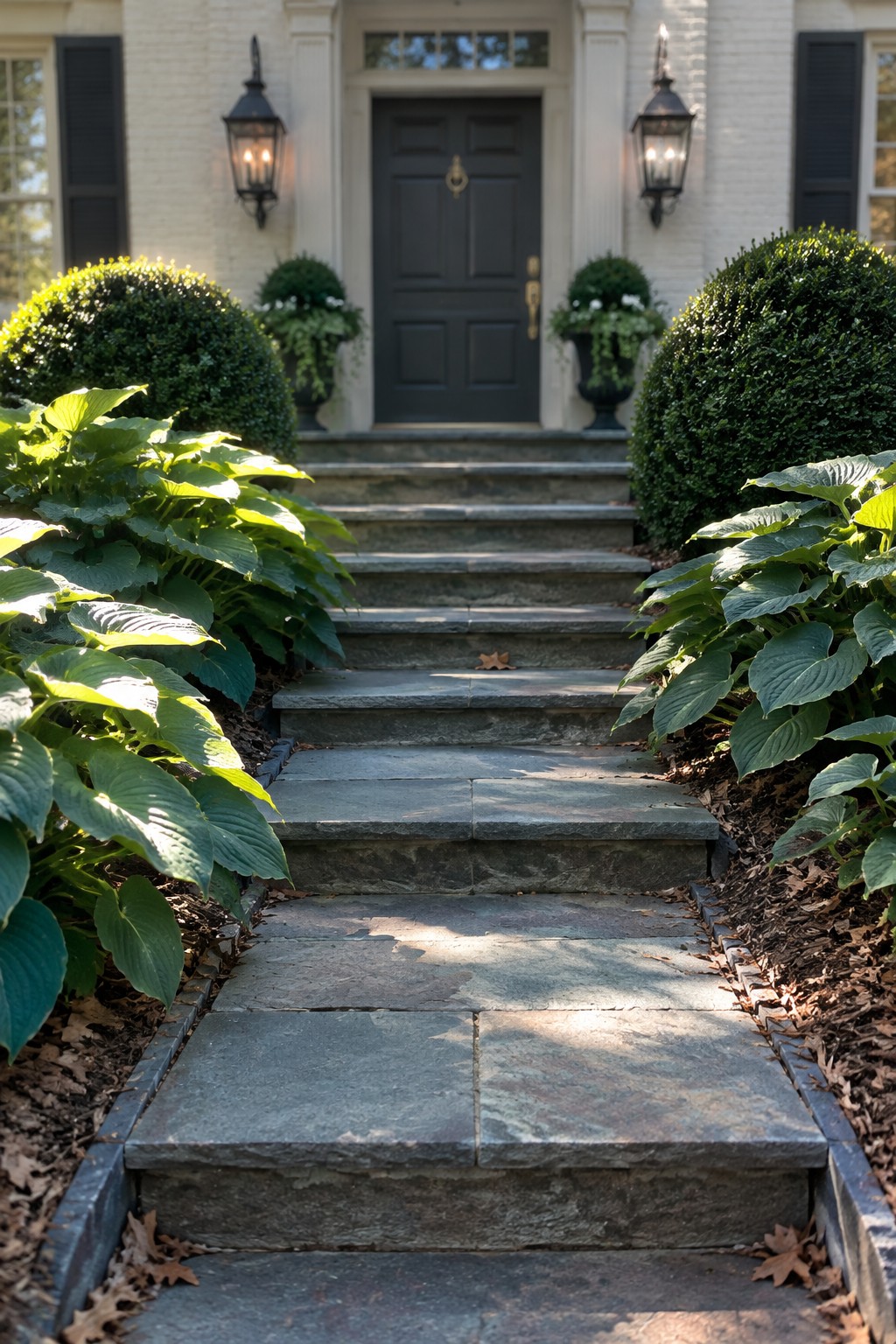
A stone walkway can give a hosta bed a clear shape while making the front entrance easier to reach. The broad leaves bring plenty of greenery beside the steps, and the path keeps the planting from feeling like it spills onto the route to the door.
Use hostas along a front walk that gets partial shade, leaving enough room for mature leaves to stay off the stones. Choose a path width that feels comfortable to walk on, especially near the steps.
Plant Hostas in Layers Along the House
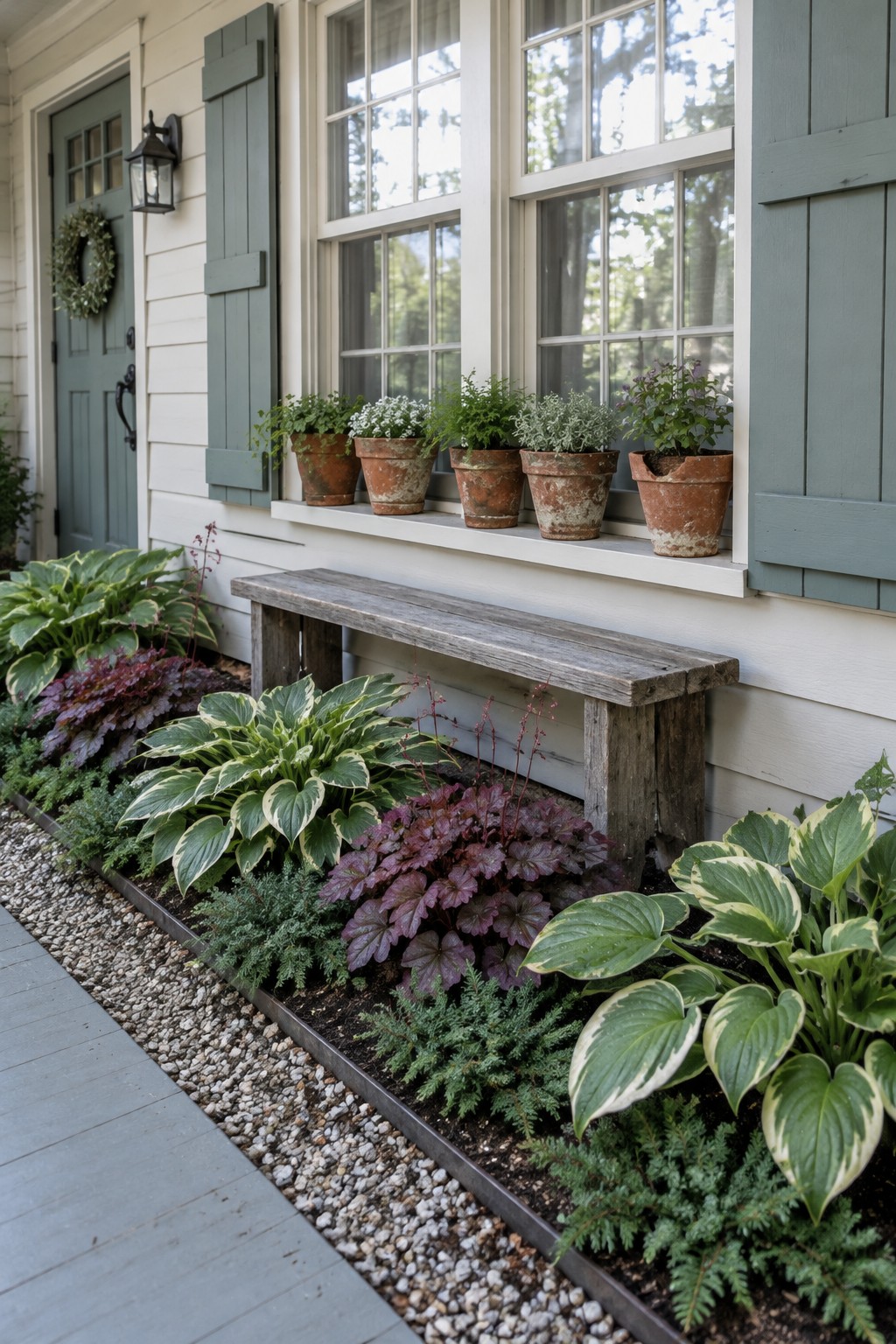
Layering hostas and other shade plants along the front of the house gives a planting bed a fuller look without making it hard to maintain. Broad hosta leaves stand out against finer groundcover, and the different heights keep the bed from looking like one solid row.
Use larger hostas near the front where their leaves can spill toward the edge, then tuck smaller plants behind them. This approach works well along a shaded foundation, but leave enough room for the plants to spread and for access to the house.
Use Stone Steps to Manage a Sloped Hosta Garden
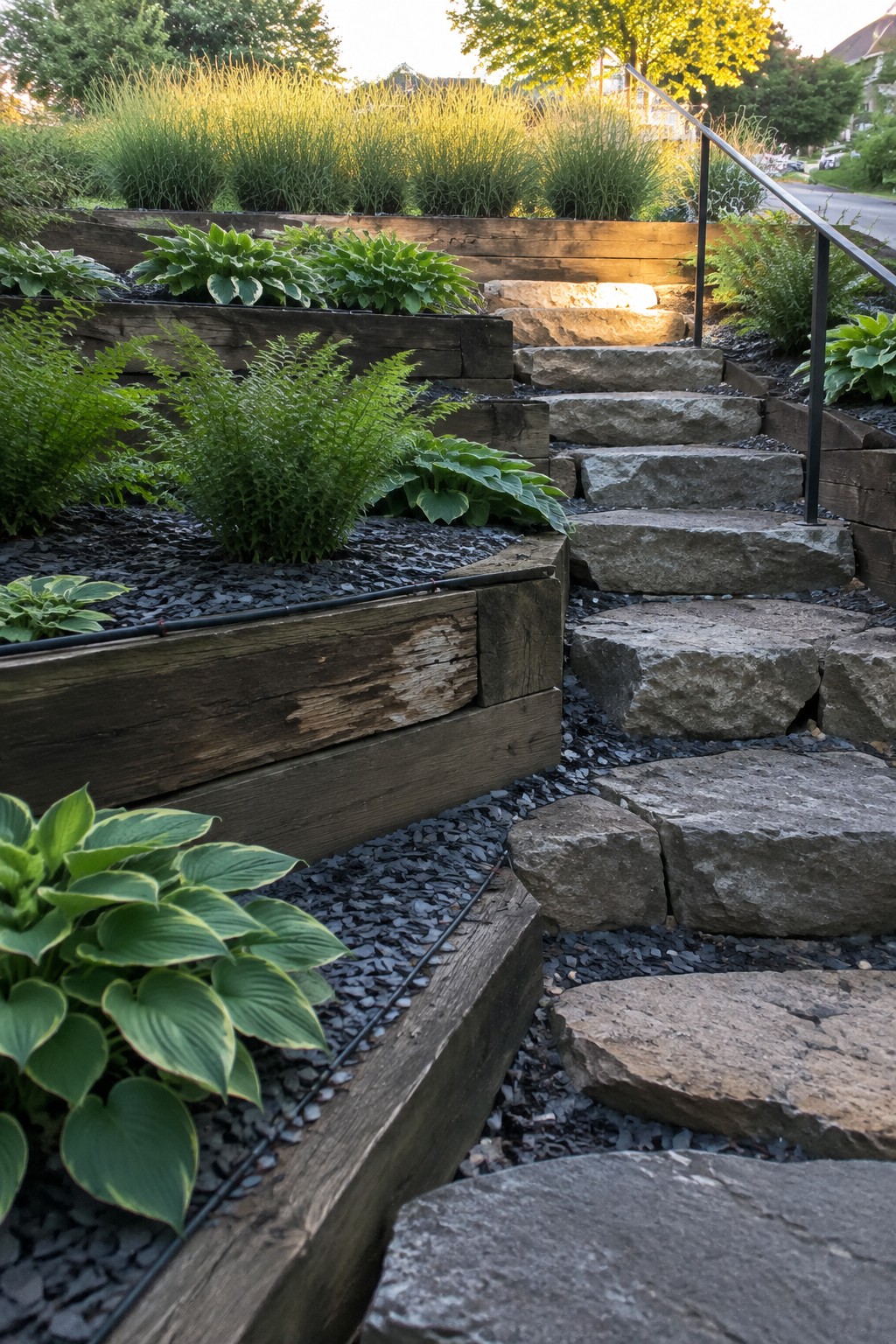
Stone steps make a sloping front garden easier to walk through while giving the planting beds a clear structure. The broad, irregular treads feel at home beside timber retaining walls and leafy hostas.
For a similar yard, set the steps into the slope and keep the rise comfortable and consistent. Hostas work well along the edges, especially in partly shaded areas, but leave enough room for the plants to spread without narrowing the path.
Use a Raised Entry Bed for Hostas
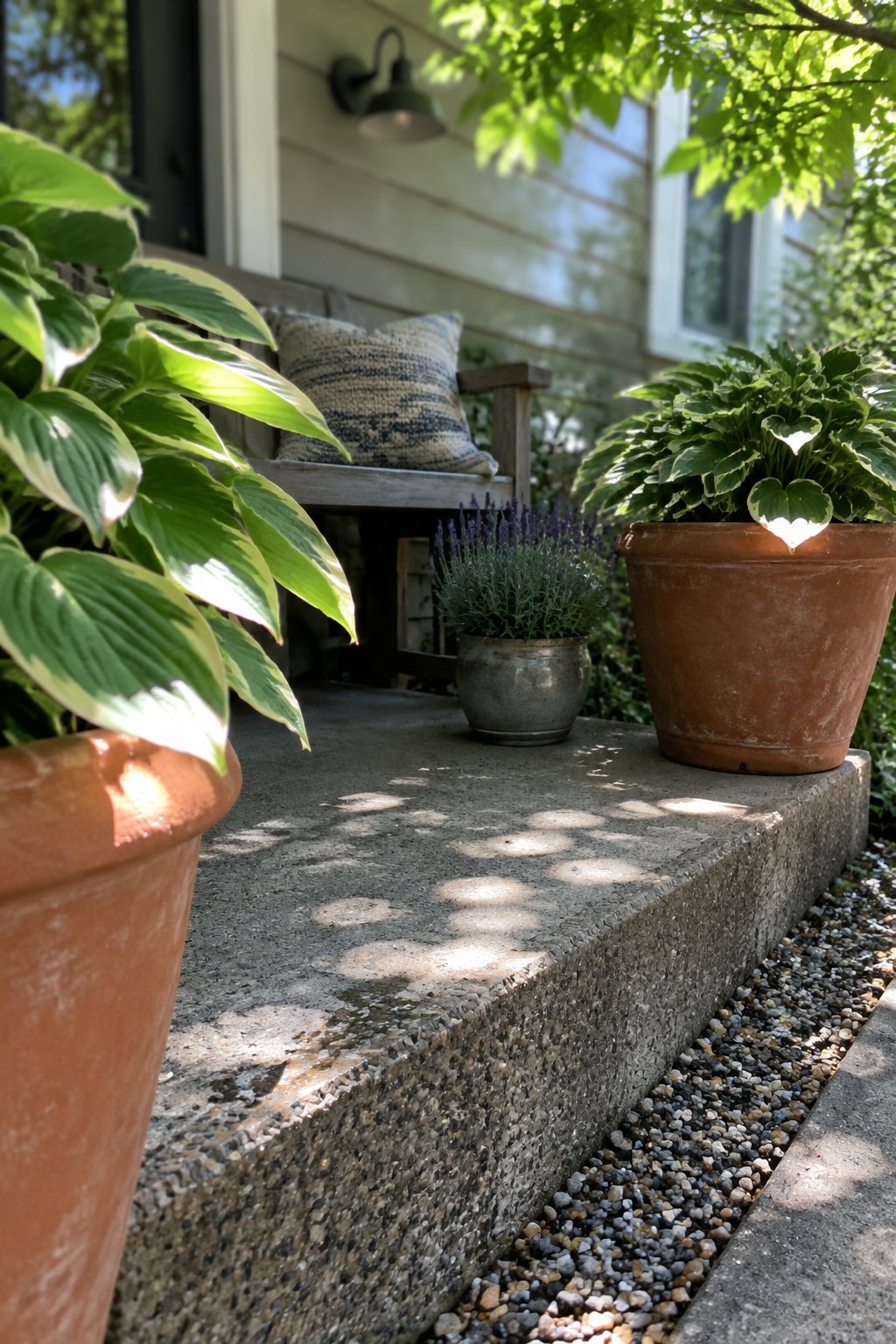
A raised planting bed can give hostas a clear place near the front entry without needing a formal border. Here, the broad concrete step lifts the pots above the gravel, keeping the planting easy to see and the walkway open.
Use this approach when the entrance has a sturdy landing or low retaining edge. Hostas work well in the raised area, especially where they get some shade. Leave enough room on the step for people to pass comfortably.
Use a Curved Brick Walk Beside a Hosta Bed
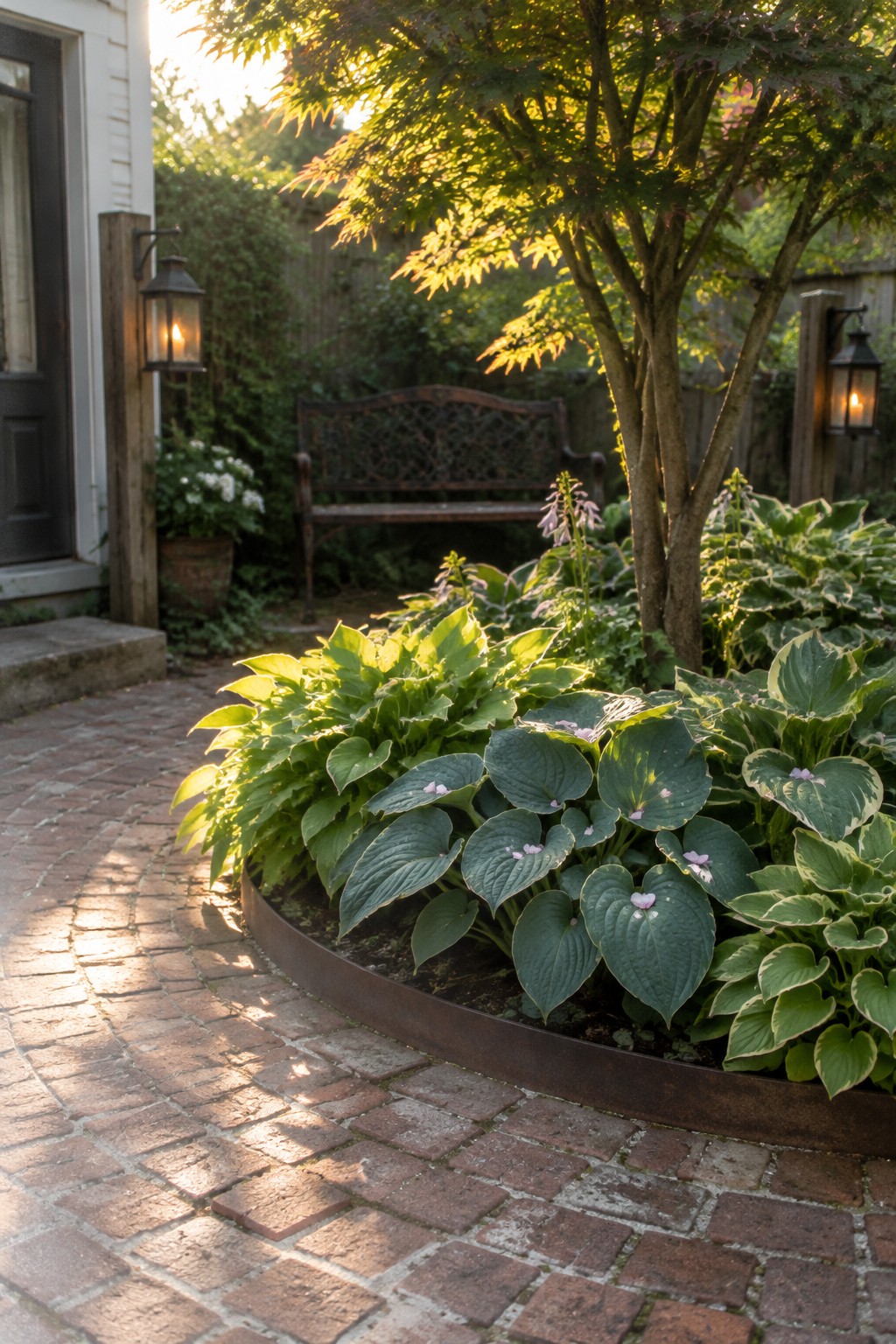
A gently curving brick walk gives a hosta bed a clear shape without making the garden feel too formal. The path follows the planting rather than cutting straight through it, so the leafy border stays together and the route to the door feels natural.
This approach works well in a small front garden where a straight path might leave awkward corners. Set the bricks on a firm base and leave enough room for hostas to spread without spilling across the walking surface.
Use Hostas to Line a Concrete Entry Walk
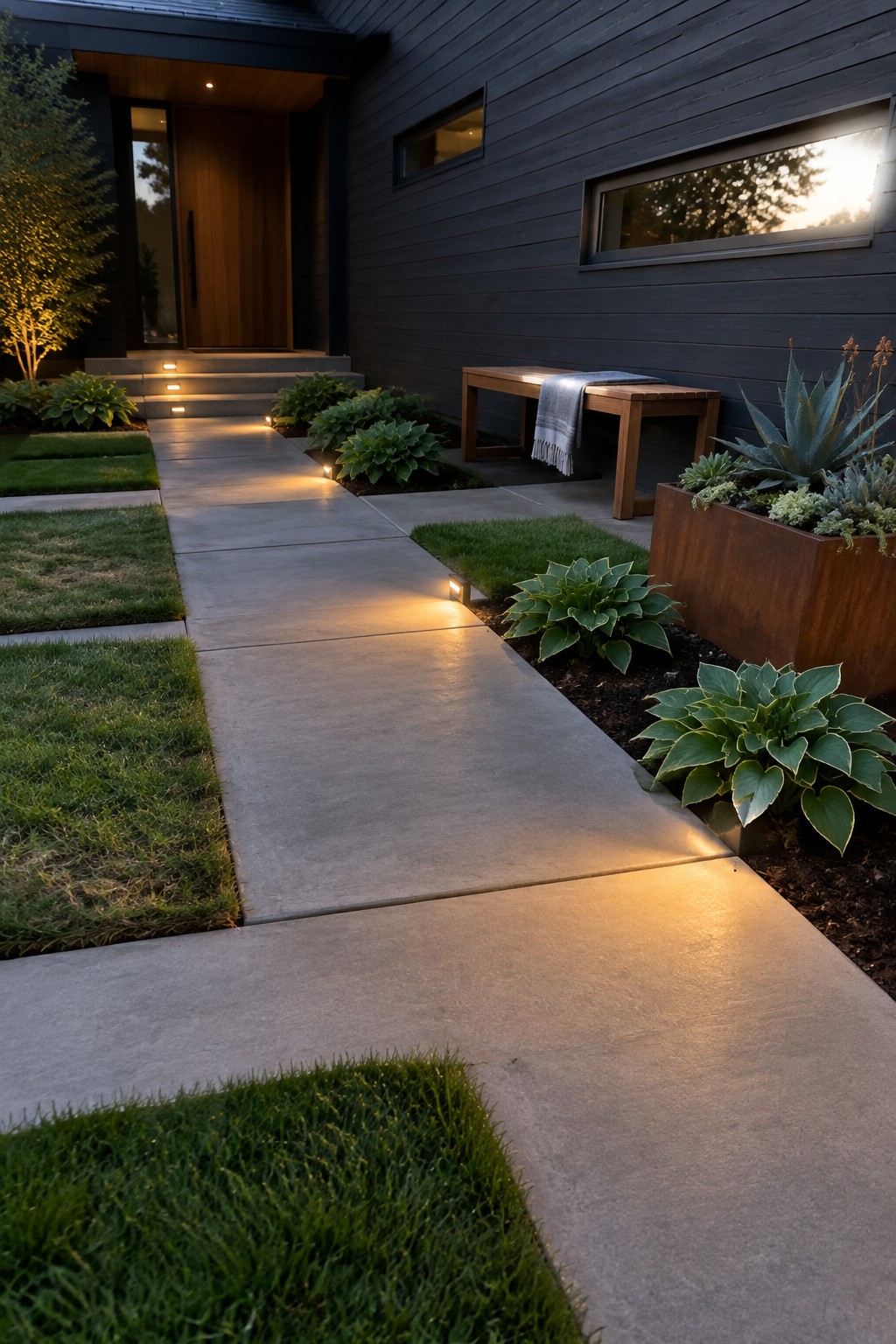
A straight concrete walk gives hostas a clear place to grow without crowding the route to the front door. Their broad leaves make a simple path feel more established, while the clean edges keep the planting from looking untidy.
Plant hostas in small groups along one or both sides of the walk, leaving enough room for them to spread. This works especially well near a modern entry, but keep plants trimmed back from the paving so the path stays easy to use.
Frequently Asked Questions
Q: Can I plant hostas right along the front of my house?
A: Yes, as long as the spot gets the right amount of shade and the soil drains well. Leave a little space between the plants and the wall so air can move around the leaves and you can reach the siding.
Q: Which hostas work best near a front walkway?
A: Choose compact varieties so their leaves don’t spill across the path. Keep larger hostas farther back, where they can add height without crowding visitors.
Q: How do I keep hostas from looking bare in winter?
A: Hostas die back after frost, so pair them with evergreen shrubs or ground cover nearby. That way, the front bed still has some structure when the leaves disappear.
Q: Do hostas need much care once they’re planted?
A: Not much. Water them during dry spells, and remove damaged leaves as needed. Watch for slugs, which can leave ragged holes in the foliage.
