

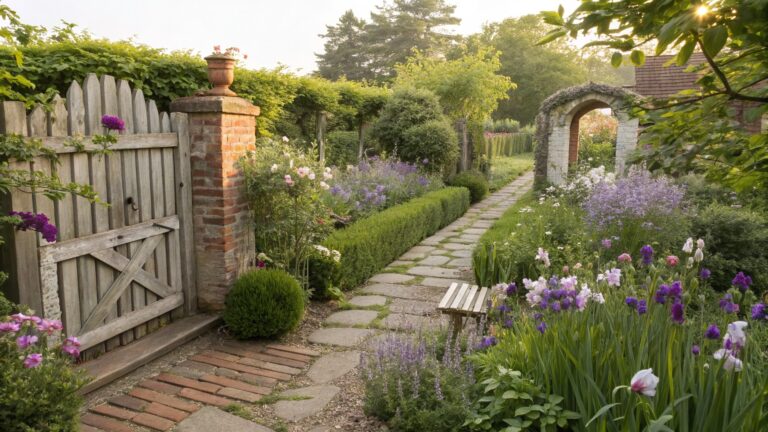
I’ve found that irises excel at adding height to garden beds without making them feel crowded, especially when you cluster them thoughtfully along borders or paths.
In my backyard, planting them in drifts along a walkway created a natural rhythm that draws the eye forward and ties the whole layout together.
Garden visitors always comment first on those upright spikes rising above the greenery, giving the space a sense of order amid the sprawl.
A simple edging with irises around a lawn edge is one setup I’d adapt again for how it shapes the yard over seasons.
They mature into reliable structure that low-maintenance gardens need.
Iris-Lined Brick Garden Path
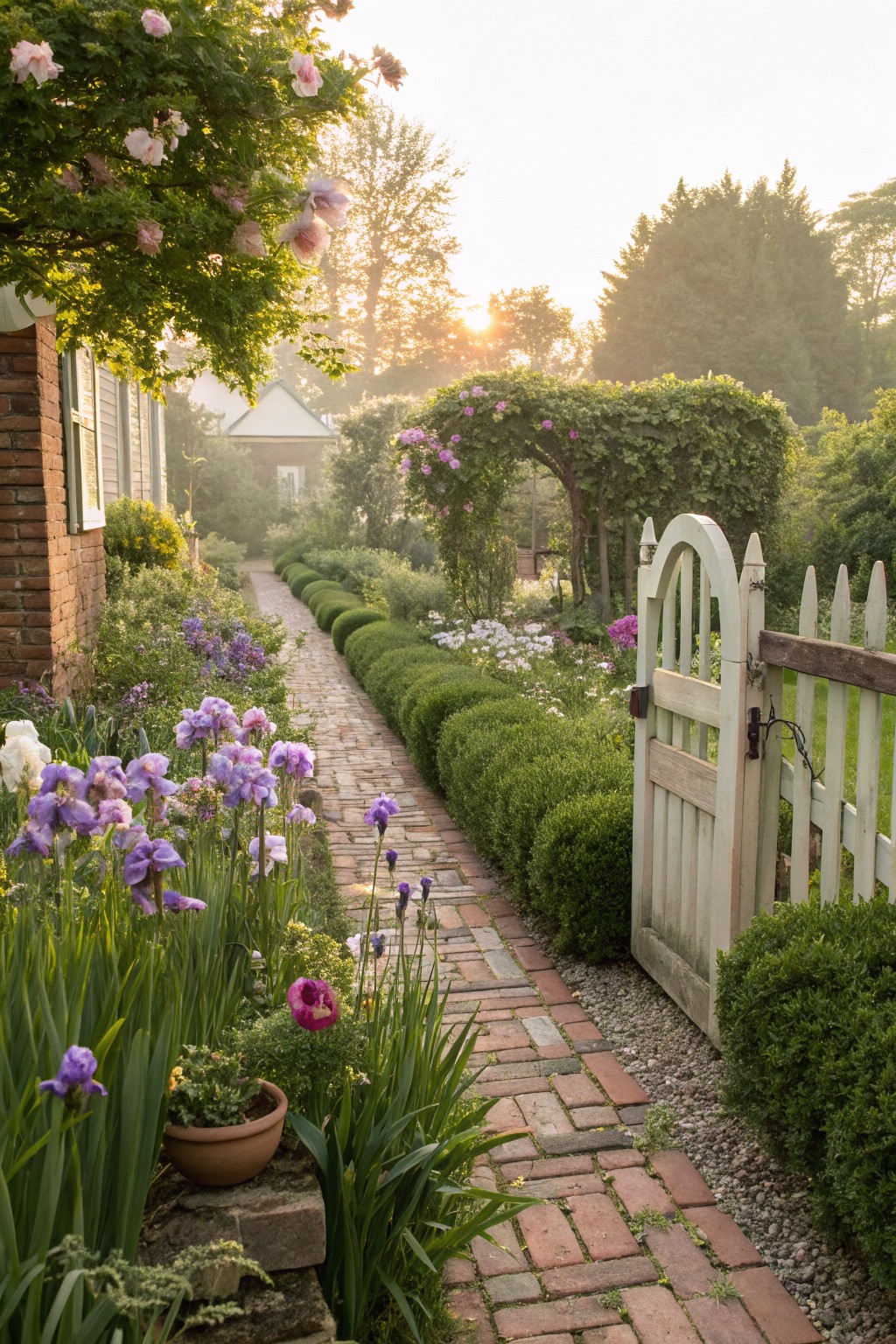
One simple way to work iris into your yard is along the edges of a brick walkway like this. The tall purple blooms stand out against the path, giving height and a pop of color right where you walk. Paired with low boxwood hedges on both sides, it keeps the look structured and easy to follow.
This path idea fits cottage-style homes or any spot leading to a gate or side door. Plant the iris close to the bricks for that lined effect, but leave room for the hedges to fill in. Just pick a sunny stretch, since iris needs it to bloom well.
Symmetrical Iris Beds Along a Garden Path
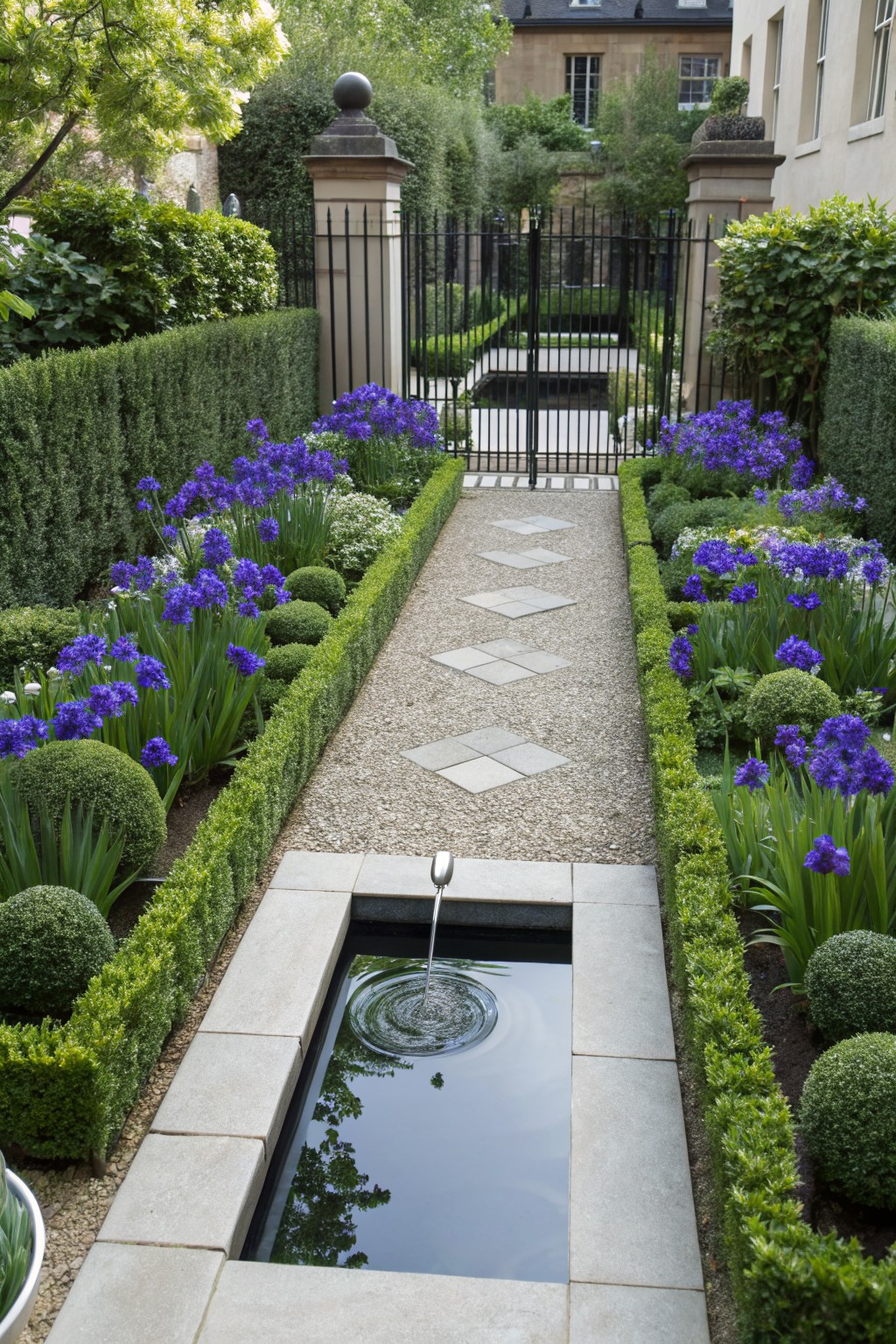
One straightforward way to add height and color in a formal garden is planting irises in matching beds on both sides of a central path. The tall purple blooms here stand out against low boxwood hedges, drawing the eye straight ahead. That simple repetition creates a sense of order and makes even a narrow space feel grand.
You can pull this off in a backyard walkway or side garden where you want some structure. Go for bearded irises in full sun, and use the boxwoods for year-round green. Keep the path gravel or stone for easy upkeep. It suits older homes with that traditional look.
Winding Path Lined with Iris Blooms
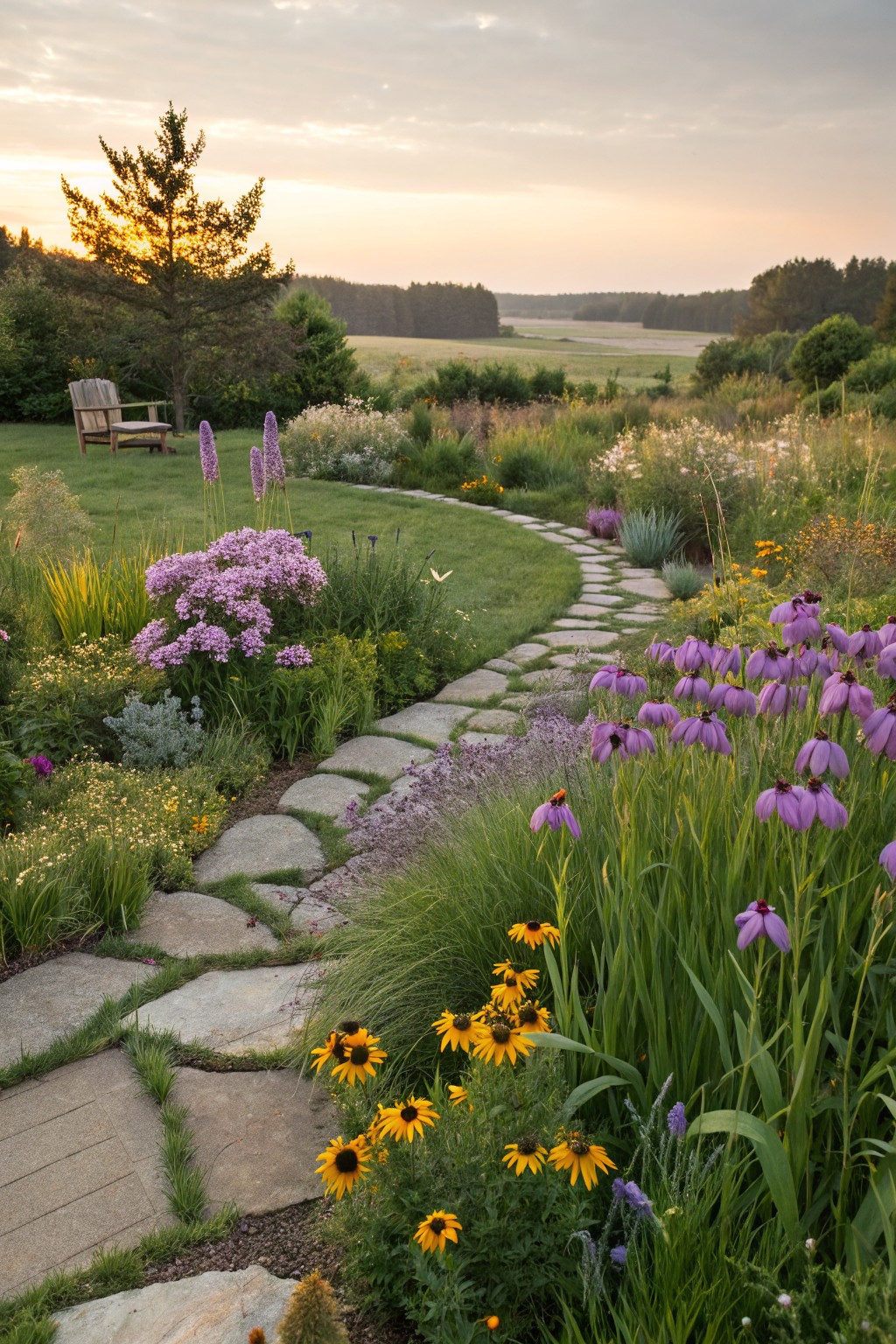
A simple stone path that curves gently through the garden makes for easy walking and pulls your eye right to the tall iris flowers along the edges. Those purple blooms stand out against the green grasses and lower plants. It gives height without much fuss. The path keeps things open yet defined.
This setup works well in a backyard border or side yard where you want some structure. Plant irises in clumps along one side, mix in sunflowers or sedums for color all season. Use flat stones set in grass for a natural look. It suits sloped spots too. Just keep the path wide enough for two people.
Iris Blooms Edging a Stone Path
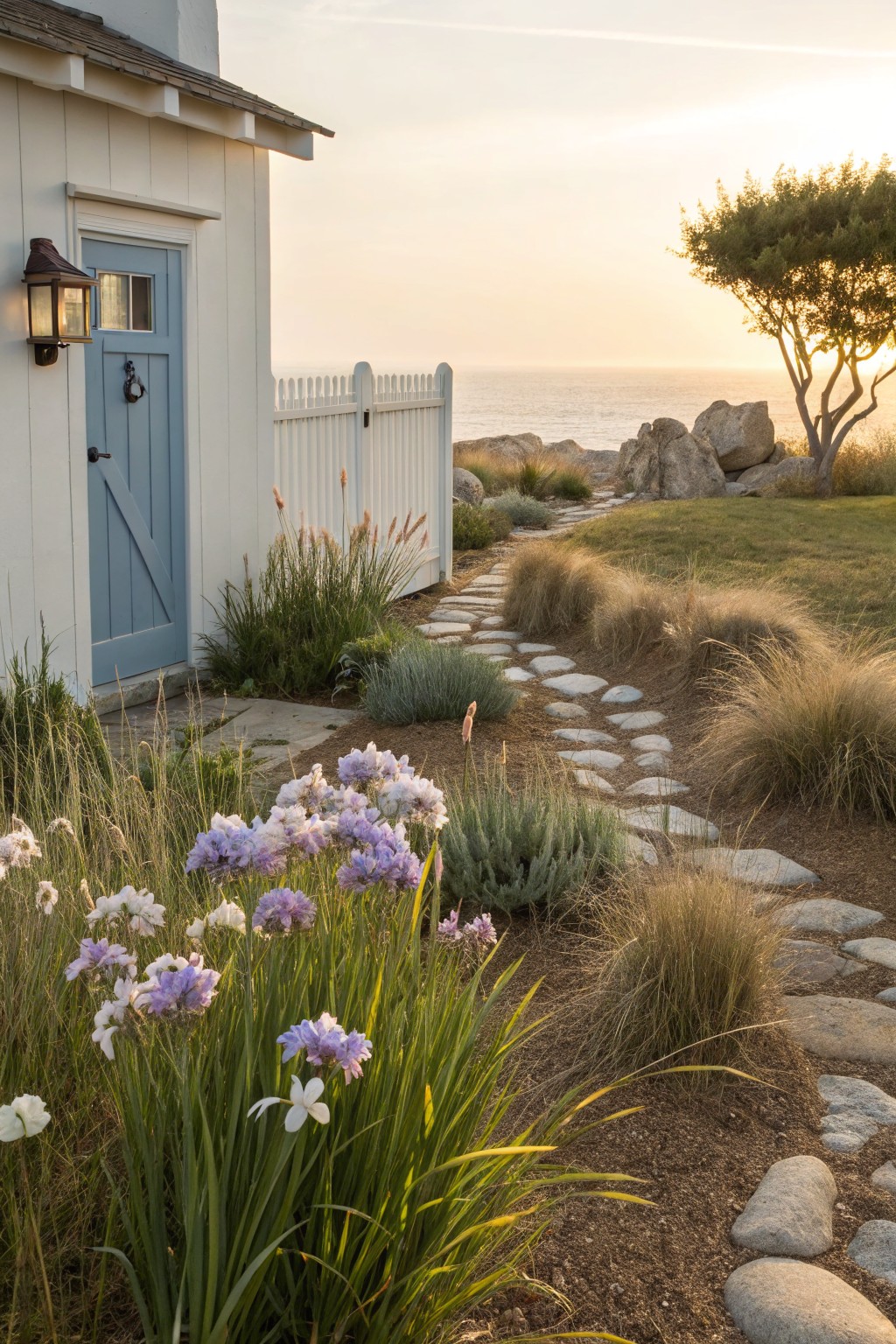
Tall iris clusters planted right along a winding stone path bring easy height and color to a simple garden walk. The purple blooms stand out against the soft grasses and mulched beds, without taking over the space. It’s a natural way to guide the eye toward a backyard spot like a shed or gate.
This works well in sunny coastal yards or any low-water garden. Plant the irises in loose groups every few feet, mixed with drought-tolerant grasses. They handle salt air fine… just space the stones to avoid trampling the roots.
Terraced Iris Beds on Slopes
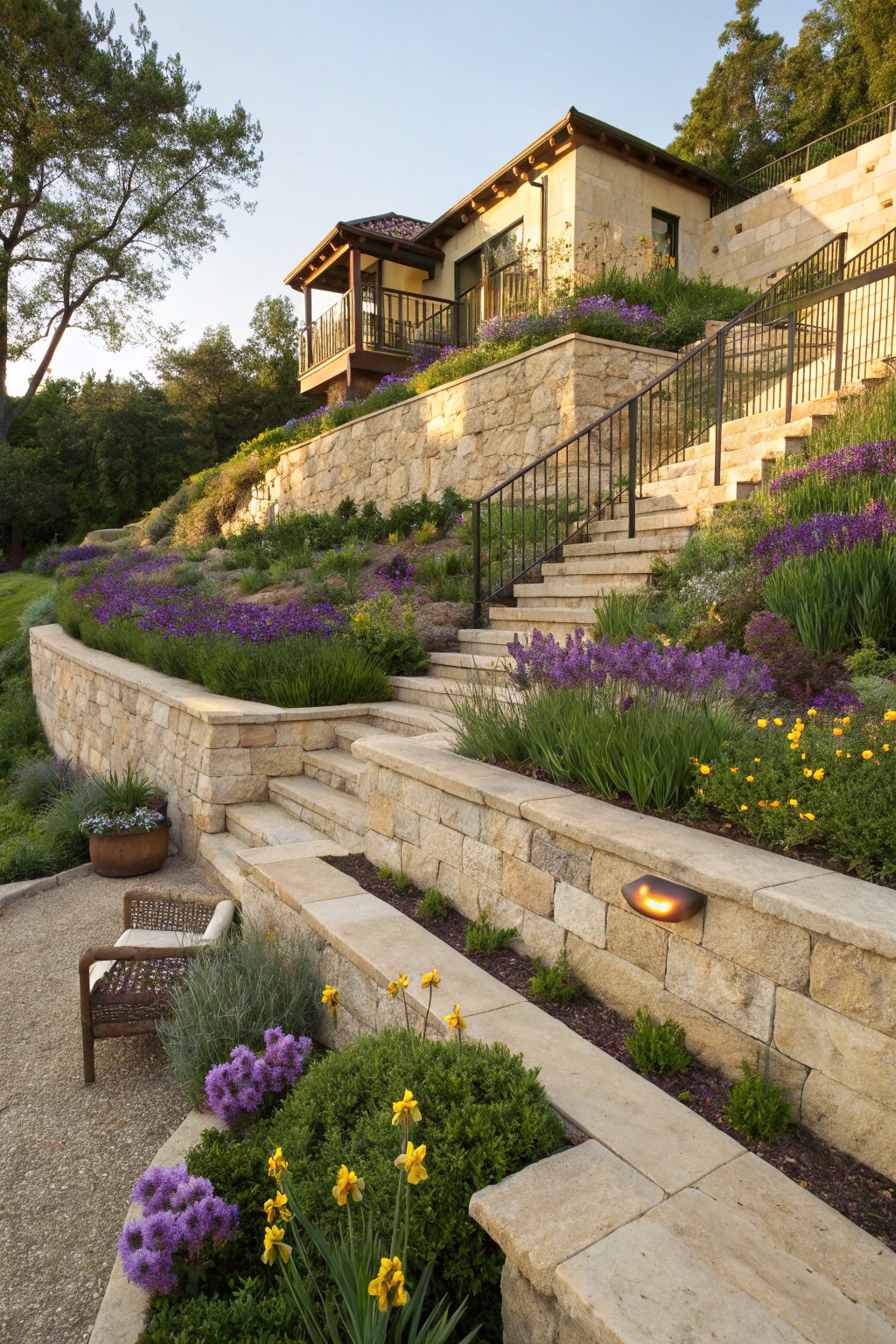
Slopes can be tough to landscape but terracing them with stone walls turns the problem into a feature. Fill those level beds with irises for instant height and color. The tall purple spikes stand out against the stone and mix nicely with lower plants along the stairs. It makes the whole hillside feel structured and alive.
This idea suits homes on hills where flat yard space is limited. Build sturdy walls first for safety and drainage then plant irises in groups for impact. They come back each year so it’s low effort once established. Just keep the beds mulched to hold moisture. Works on any sunny slope.
Iris-Lined Water Channel Path
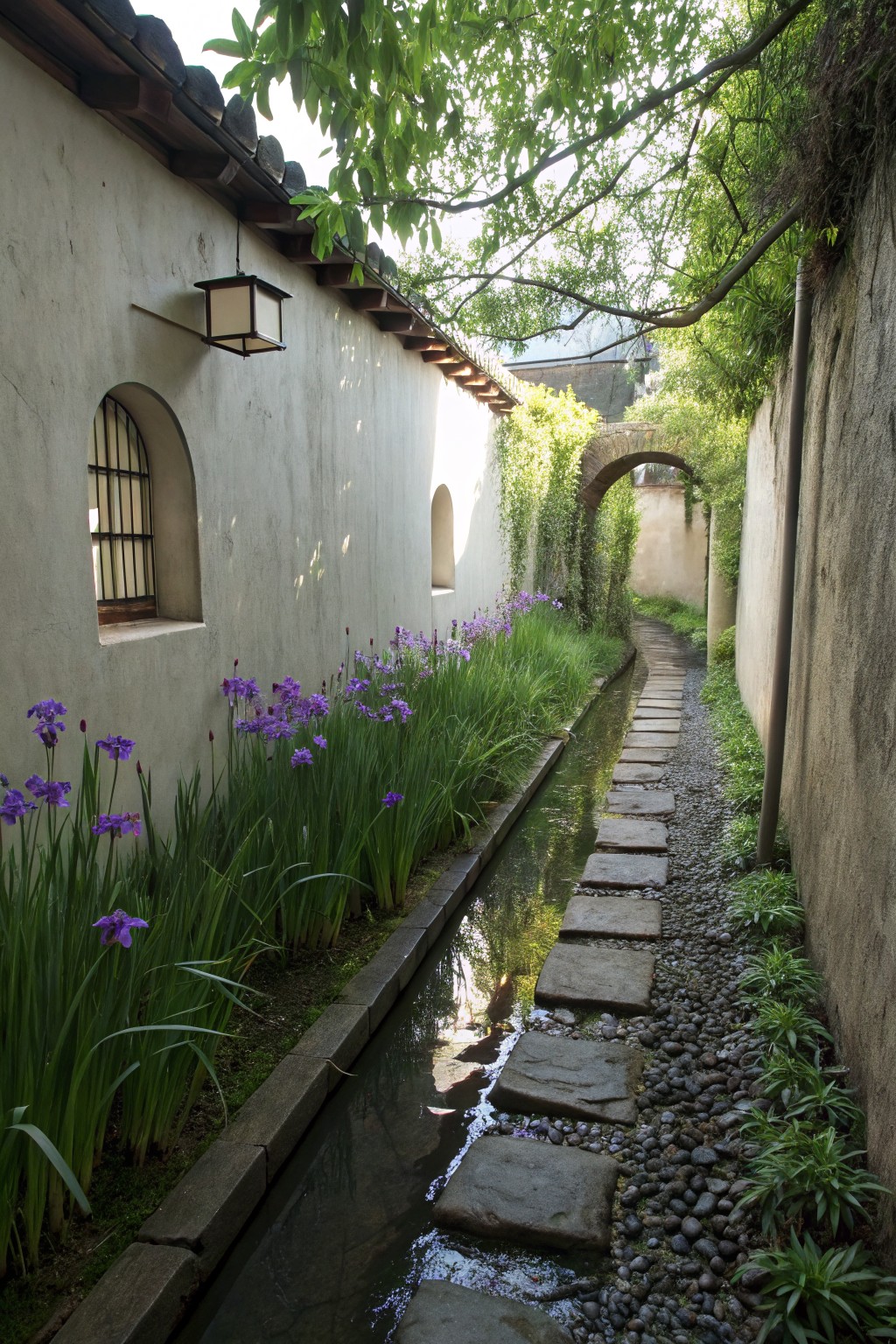
A narrow water rill runs right alongside stepping stones, with tall iris plants tucked along the edge. Those purple blooms stand out against the green blades and stone, giving height and a pop of color to guide you through the space. It turns a plain walkway into something peaceful, almost like a garden stream you can stroll beside.
This works well in skinny side yards or courtyards where you want low upkeep but real impact. Plant the irises close to the water for reflection, space the stones just far enough to step easily, and keep the beds mulched. Skip it if your spot floods often… irises like steady moisture but not soggy roots.
Tall Irises Along a Pond Edge
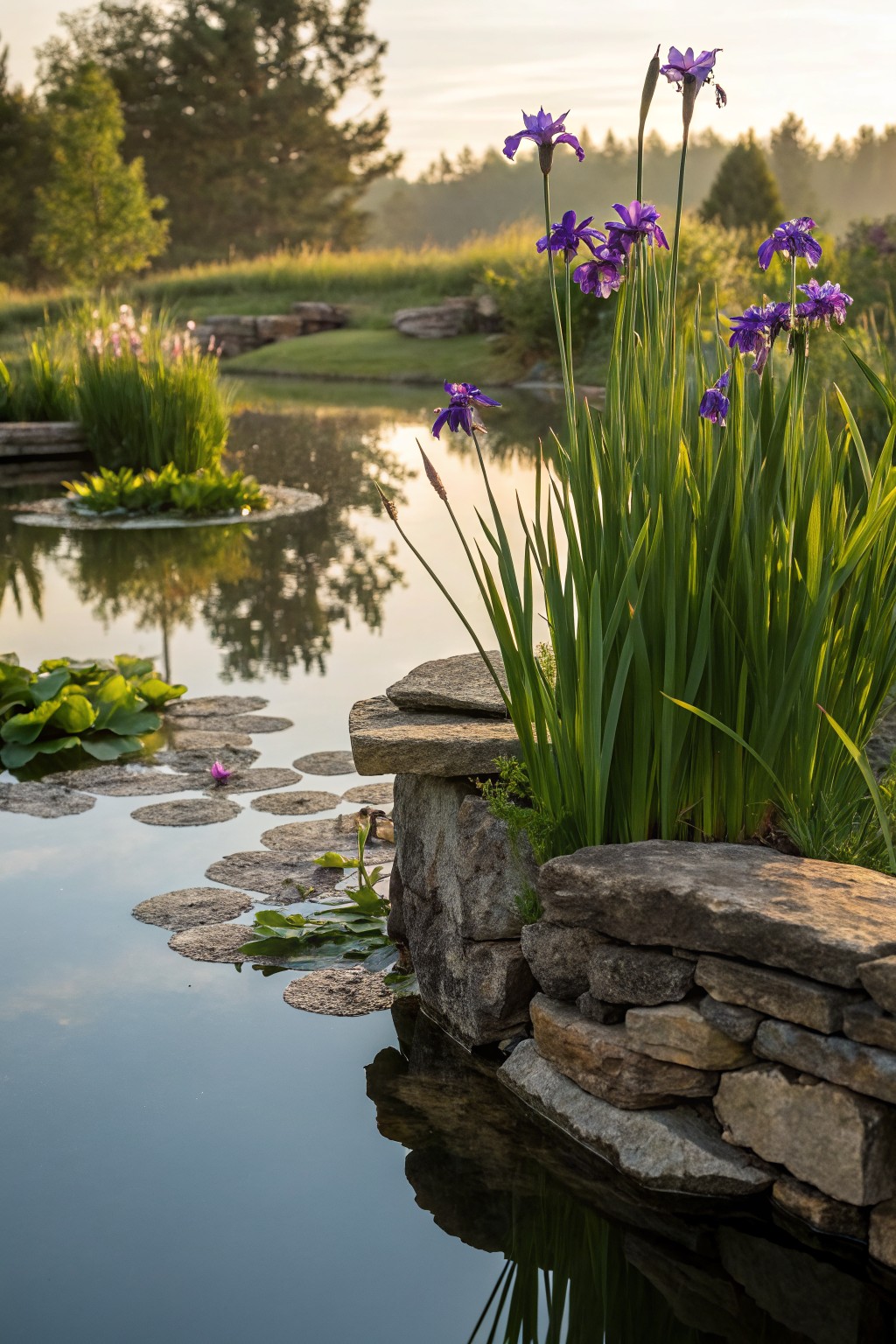
Tall irises work so well planted right along a pond’s stone edge. They shoot up with those strong green leaves and purple blooms that stand out against the flat water and low lily pads. The height pulls your eye up and gives the garden some natural structure without much fuss.
This setup fits a backyard water garden or any moist spot near a patio. Plant them in clusters where the soil holds water, paired with shorter water plants below. Keep the bed edged clean with stone or brick to let the irises take center stage. Avoid super dry areas though, or they won’t thrive.
Raised Iris Beds Along Pool Edges
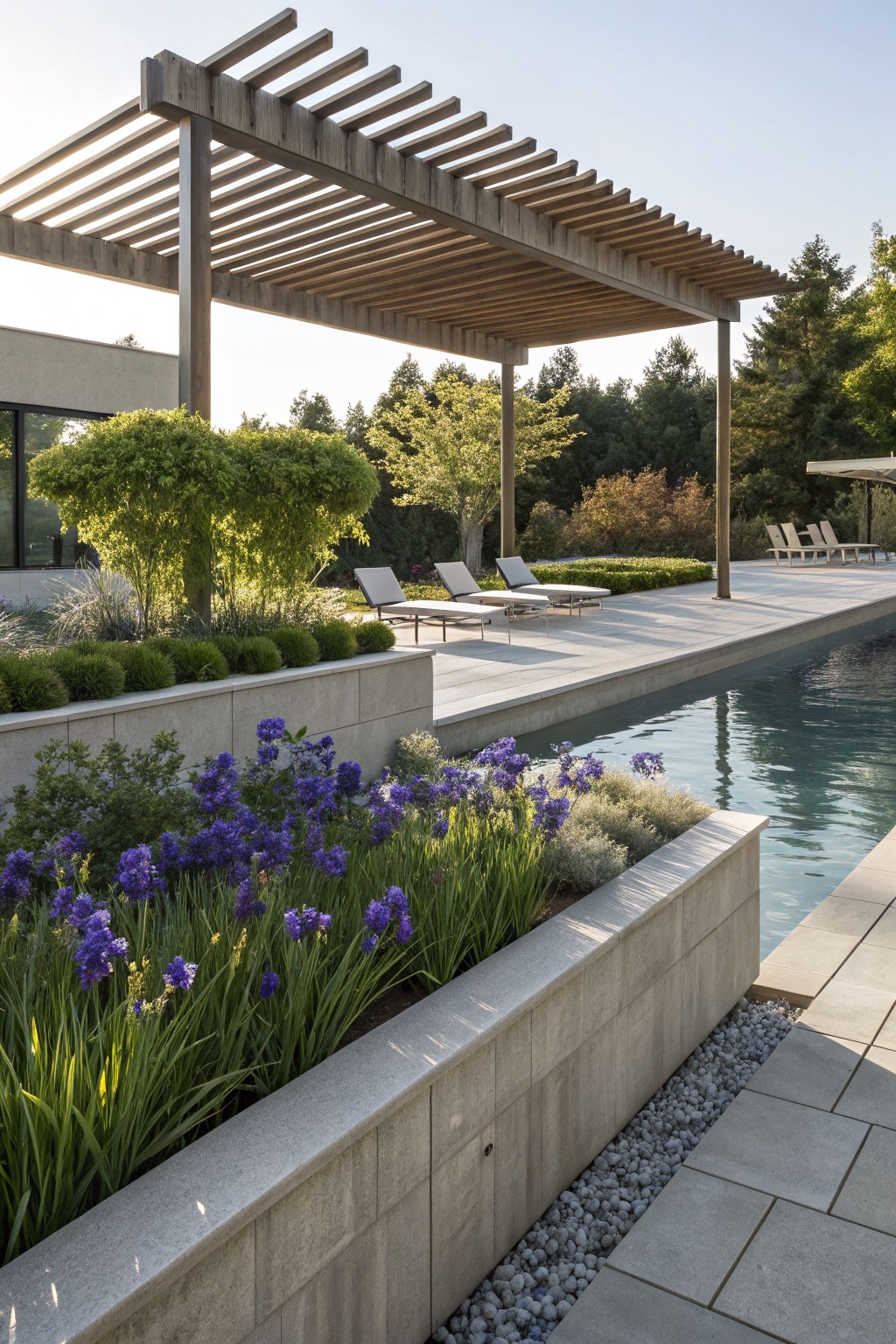
One simple way to add height and color to a pool area is planting irises in raised stone beds right along the edge. Those tall purple blooms stand out against the water and concrete decking. They give the space some life without crowding the clean lines. In this setup, the irises mix with grasses and low shrubs for a natural flow.
This works best around modern pools or sleek patios where you want a bit of garden feel. Use beds about two feet high to keep plants safe from splashes. Pick iris varieties that handle full sun. It suits homes with simple architecture… just keep the beds narrow so they don’t eat up lounging room.
Tall Irises Line a Narrow Path
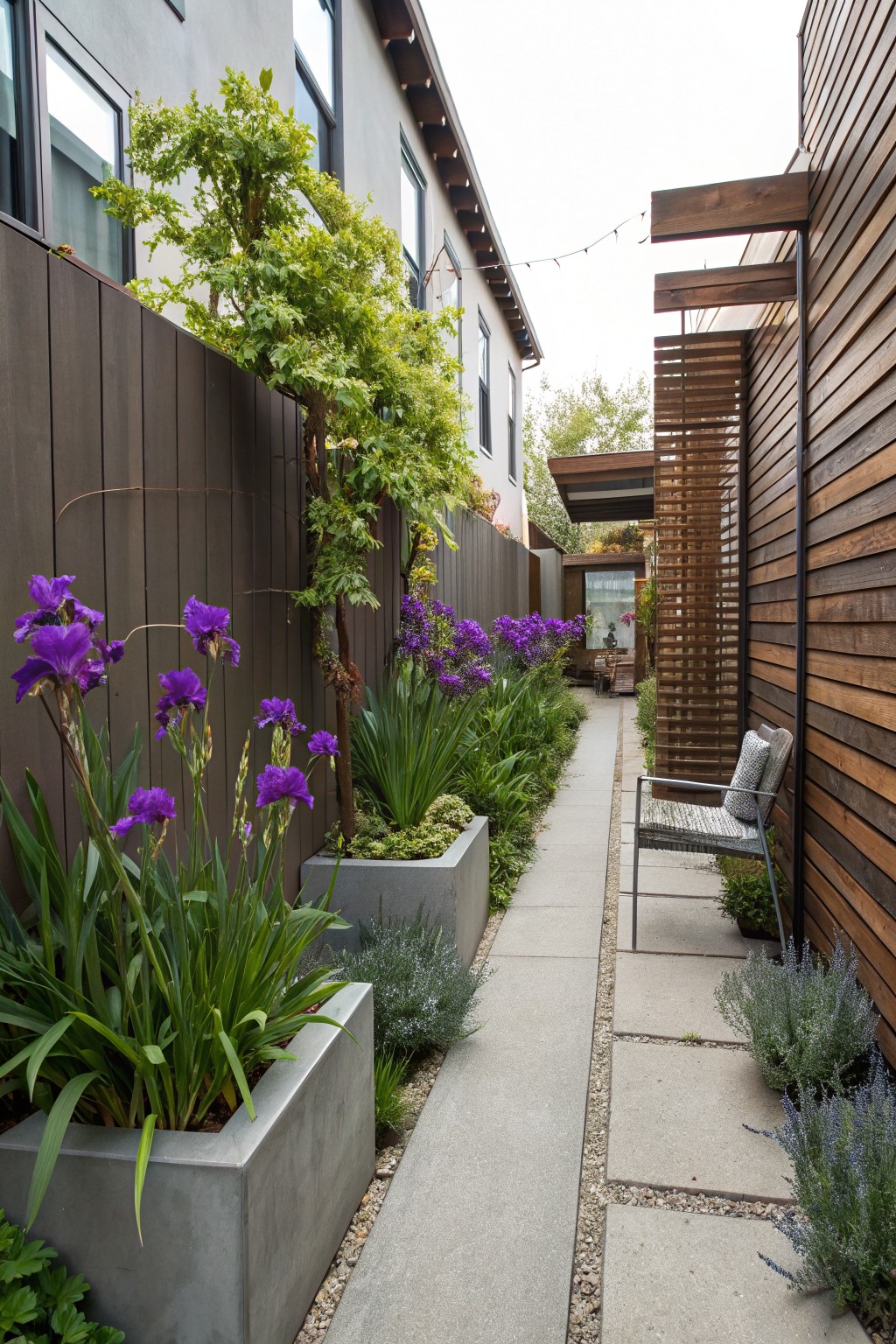
One simple way to make a skinny side yard feel taller and more alive is to plant irises right along the path. Those upright purple blooms stand out against the plain concrete walkway and dark wood fences. They pull your eye up and forward, turning what could be a dull passage into something with real rhythm and color.
This works best between houses or along a garage where space is tight. Go for big concrete planters if the ground is tricky, and mix in some low lavender or grasses at the base to keep soil simple. It suits modern setups like this one, but watch the sun, irises need it to push up those strong stems each spring.
Driveway Edged with Iris Beds
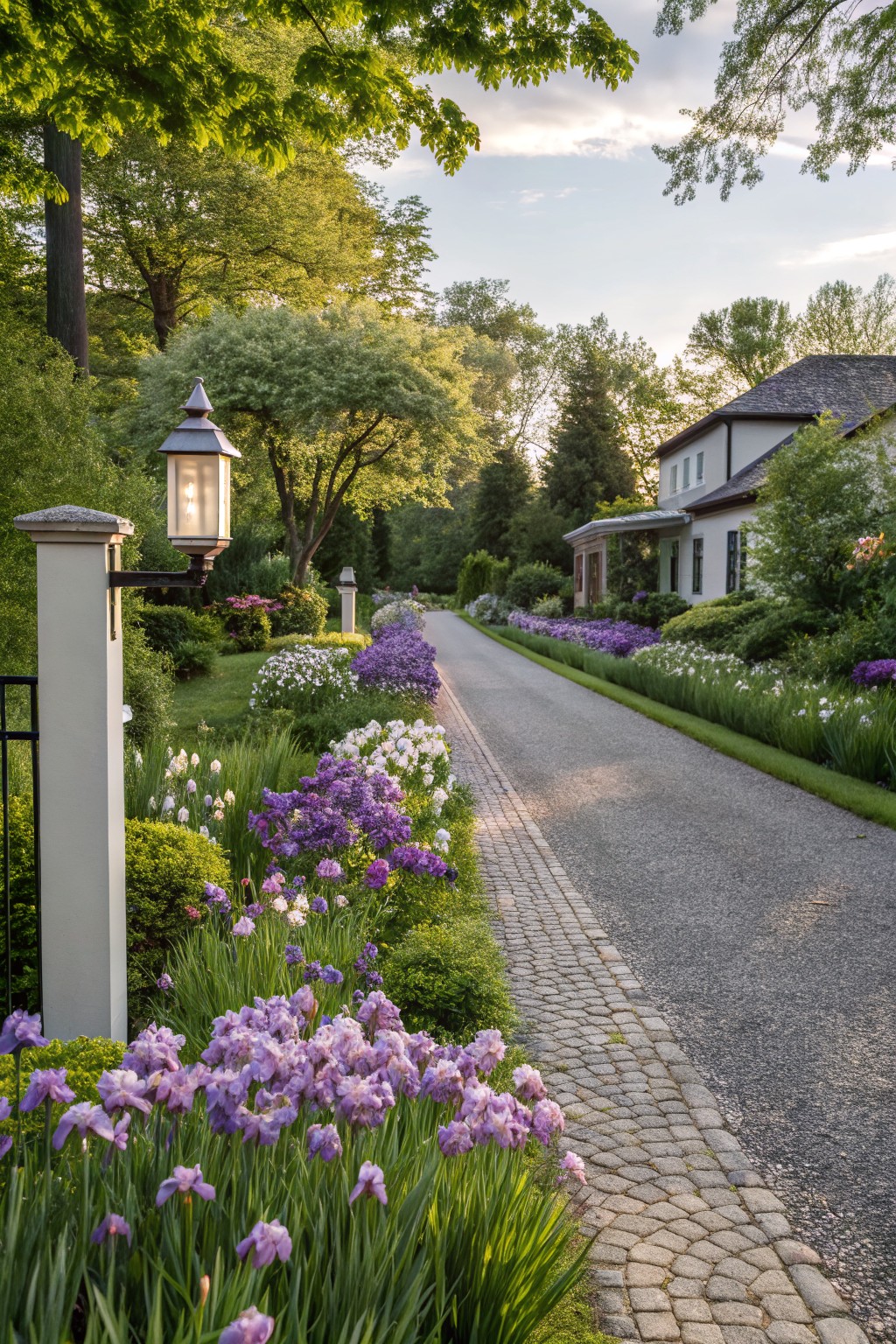
One straightforward landscaping move is edging a driveway with iris beds. The tall purple blooms stand out against a simple gravel path, bringing height and steady color through spring. Stone lanterns add a bit of formality without overdoing it.
This setup suits homes with a long, straight approach where you want some structure up front. Plant the irises tight along the edges for that full border look. They handle partial shade from nearby trees well, and once rooted, they mostly take care of themselves.
Tall Iris Pots Beside the Front Door
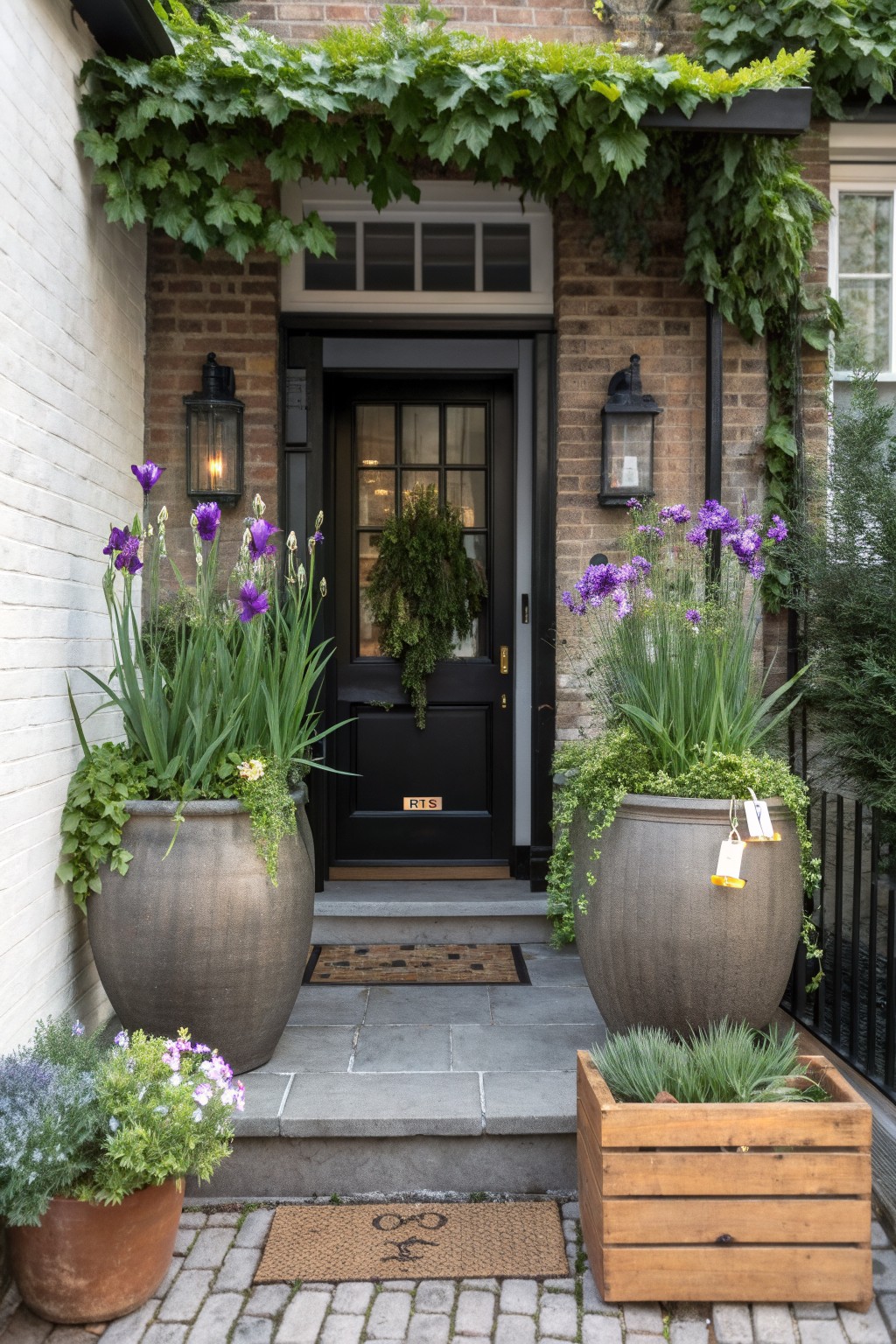
Big pots of tall purple irises planted right next to the steps make a simple welcoming touch at this entry. The flowers add height without crowding the space, and their color pops against the brick wall and black door. It’s a straightforward way to dress up a plain doorway.
This works well on townhouses or older homes with a few steps leading up. Go for oversized pots that match your siding, like these gray ones, and group a few trailing plants around the base if you want. Keep it to irises in bloom season so it stays low fuss.
Potted Irises for Narrow Urban Gardens
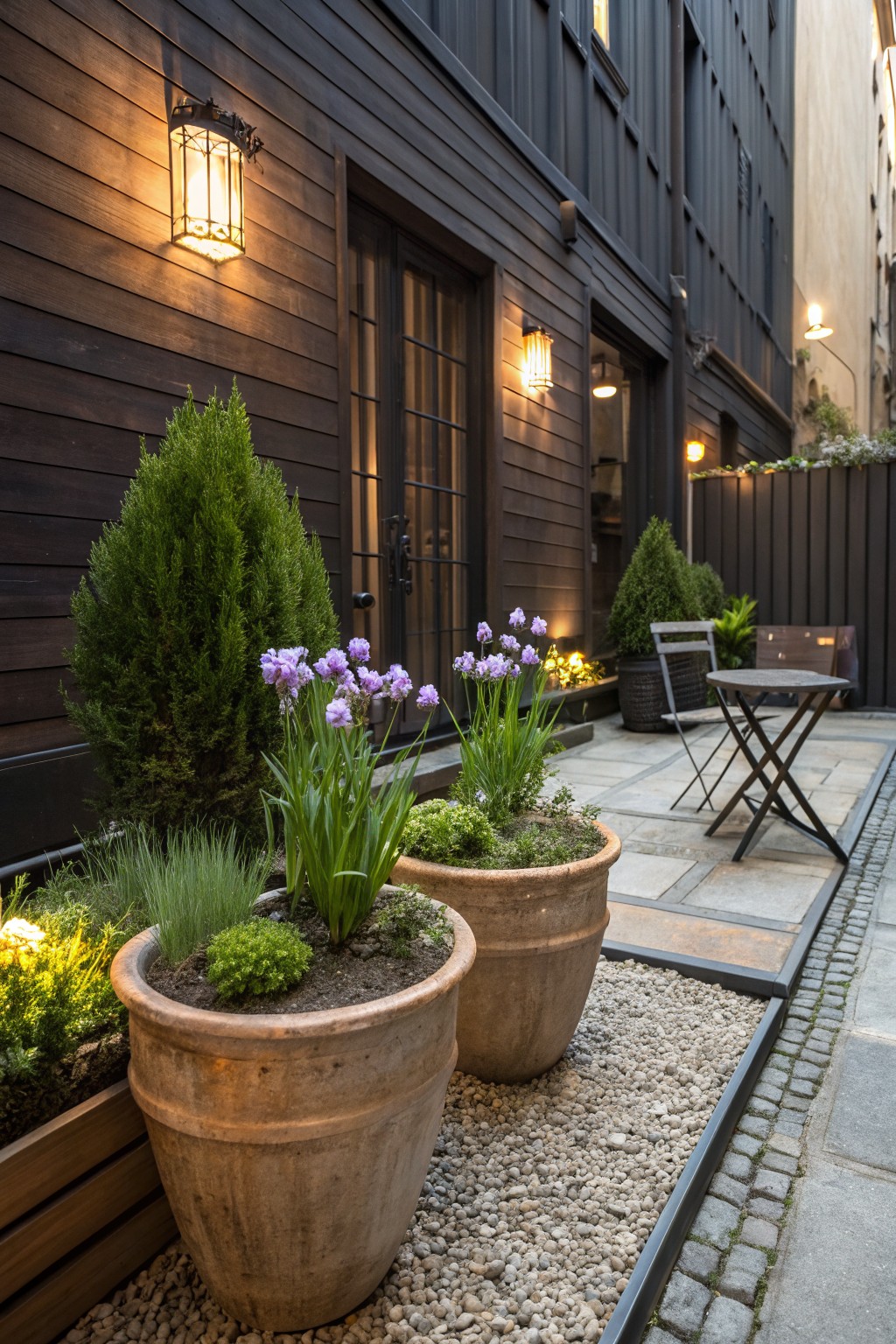
Large terracotta pots make irises stand out in tight spots like this courtyard between buildings. The tall purple blooms rise up against the dark wood walls, pulling the eye and adding real color without taking up much ground space. It’s a straightforward way to get height from flowers in places where planting beds won’t fit.
Try this in side yards, alleys, or balconies where you want garden feel but have limited room. Go for bigger pots to let the irises really show, and tuck gravel or tiles around them for clean edges. It works well with simple seating nearby, keeps things low fuss, and holds up in city settings.
Iris Accents Beside a Garden Bench
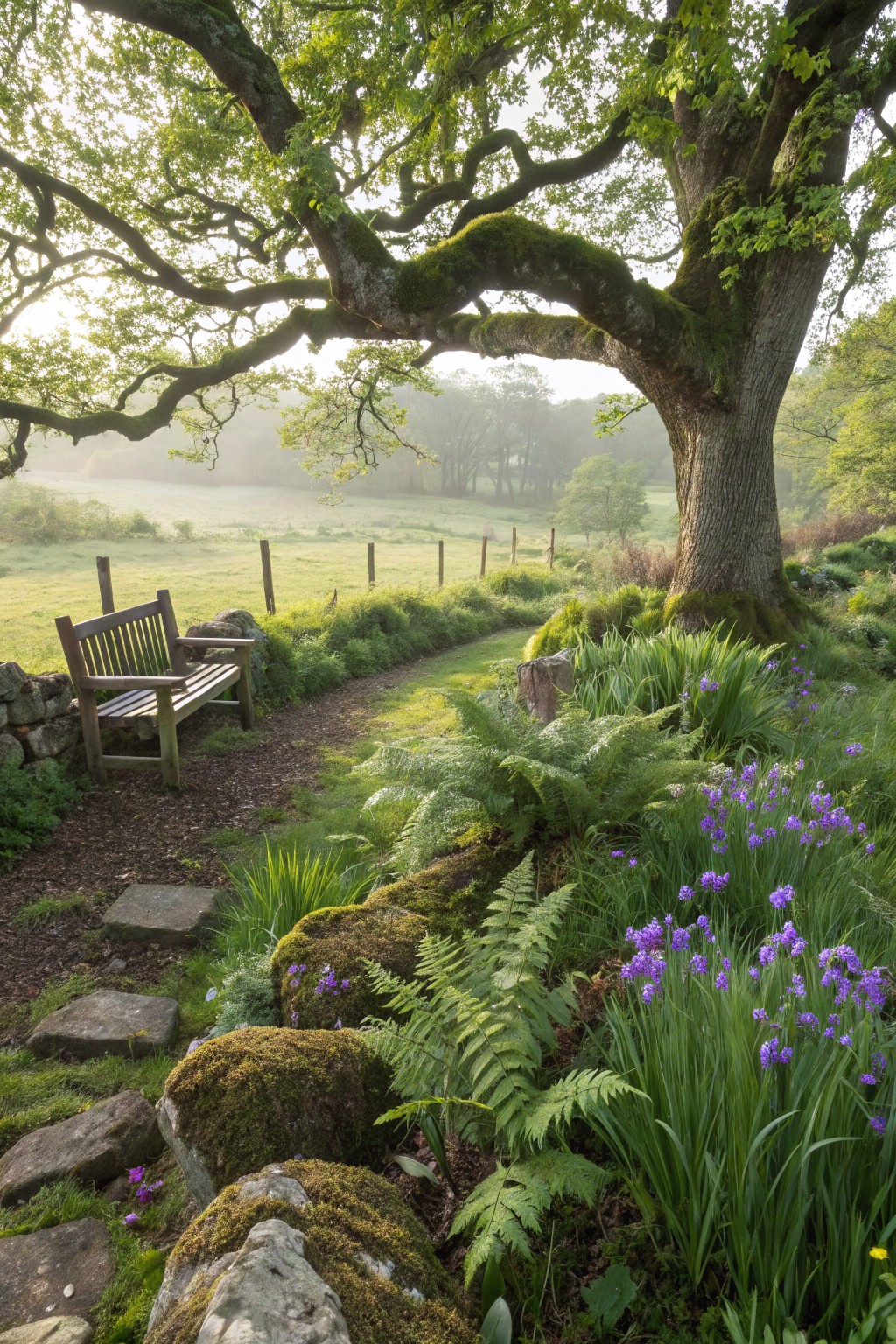
One simple way to add height and color to a woodland garden is planting clusters of purple irises right along the edge of a path that leads to a bench. Here, the tall iris stems pop against low ferns and mossy rocks, drawing the eye up while keeping everything feeling natural and tucked away. That bench becomes more than just seating. It turns into a quiet spot worth lingering in.
This works best in shadier spots with dappled light from big trees overhead, like under an oak. Plant the irises in loose groups amid the ferns for easy layering, and use stepping stones for the path. It’s great for cottage gardens or rural yards. Watch for damp soil though. Irises like it well-drained.
Irises Along a Brick Garden Path
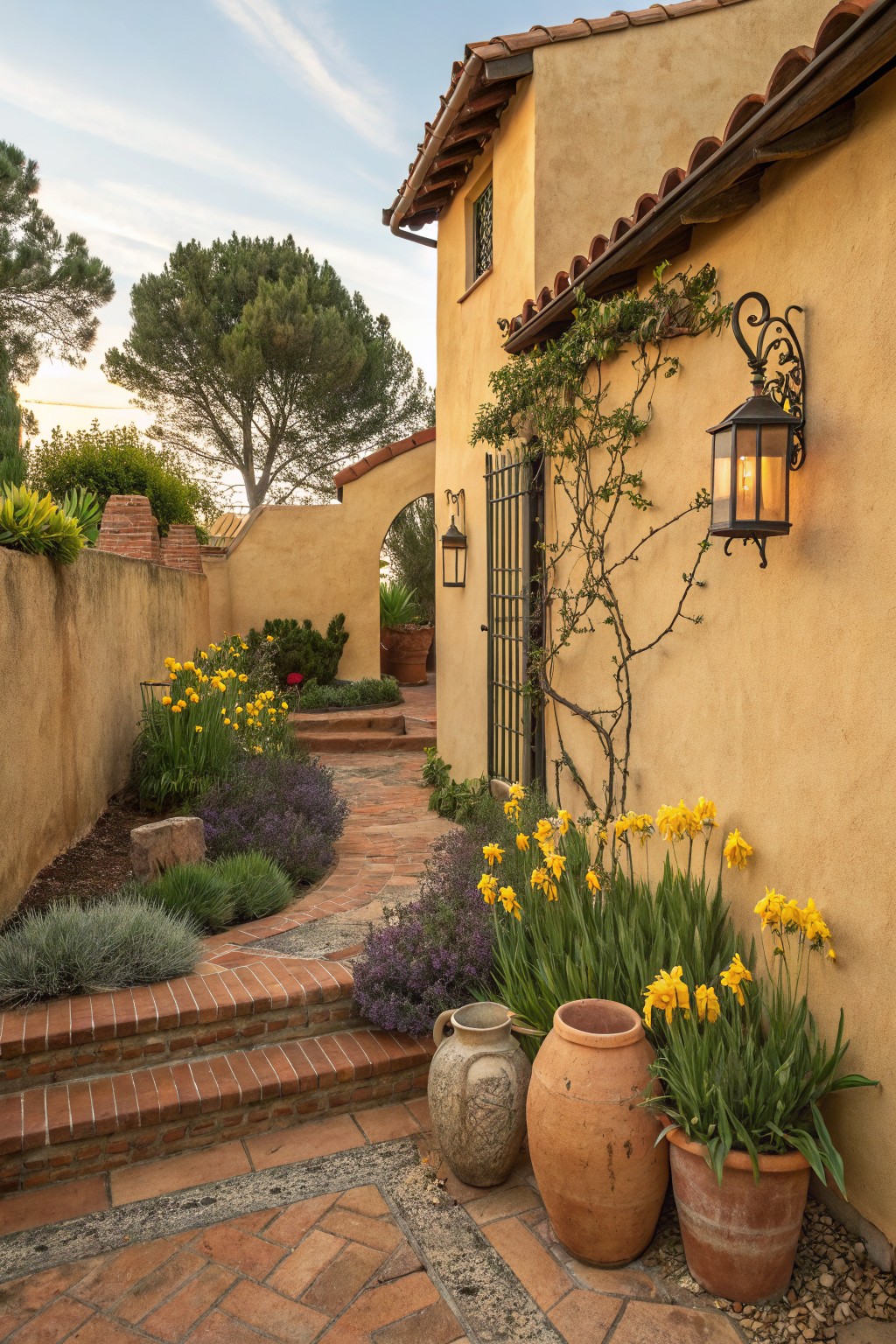
One straightforward landscaping idea here is planting irises right along a brick path. The tall yellow blooms add height and color as you walk through, standing out nicely against plain stucco walls. A few big terracotta pots nearby keep it simple and repeat the warm tones.
This approach fits narrow courtyards or side yards that lead to a door. Edge the path with iris beds for flow, or cluster them in pots by steps… low fuss once established. It suits sunny, dry spots best, like in Mediterranean gardens.
Curved Pathway Edged in Irises
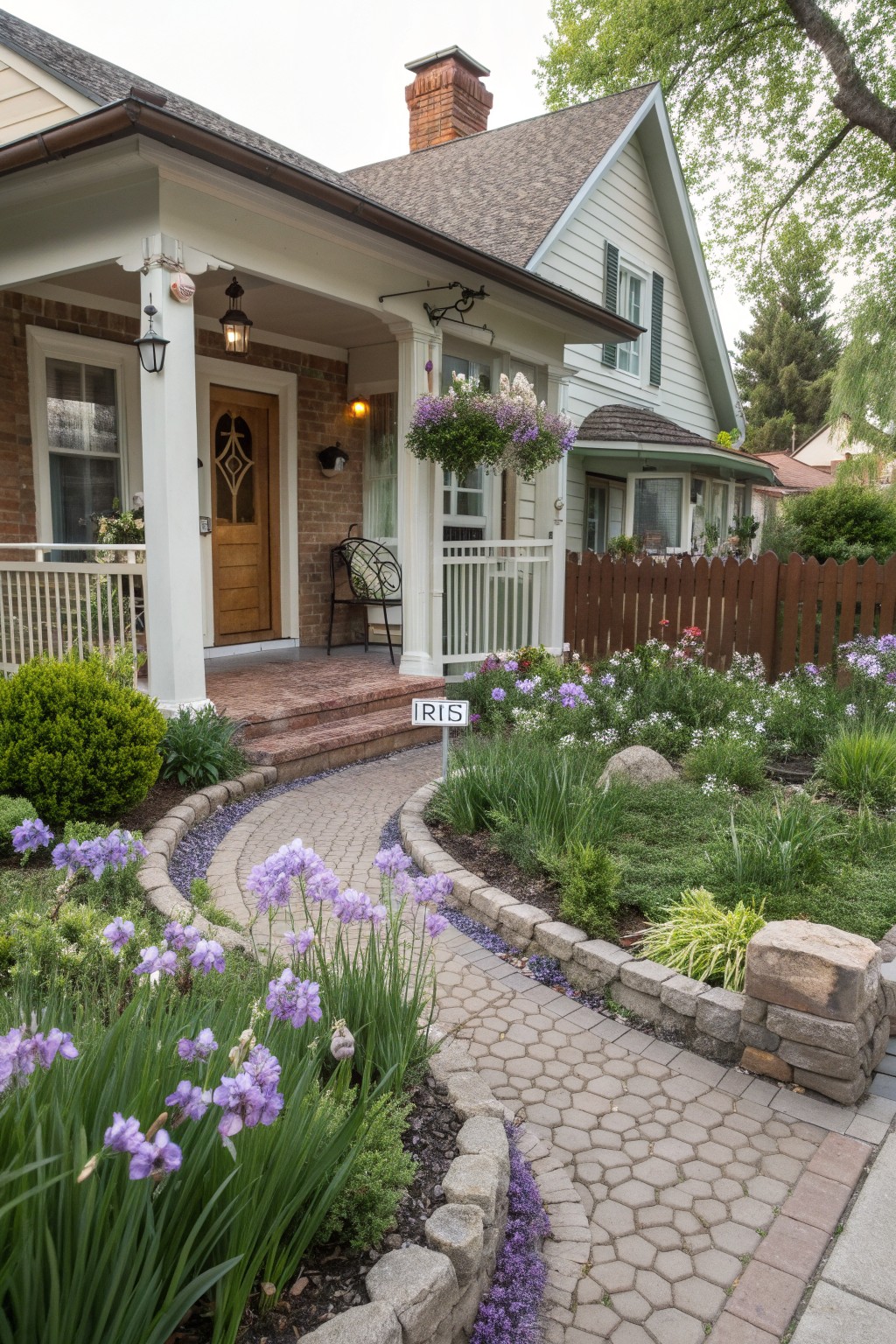
A simple curved path like this one makes the walk to your front door feel special. Purple irises line both sides, adding height and color without much fuss. The stone edging keeps everything neat, and the gentle curve pulls your eye right to the house. It’s a quiet way to boost curb appeal, especially on smaller front yards.
You can try this in any sunny spot near the entry. Plant the irises close to the path edge so they sway over it a bit. Use gravel or pavers that match your house stone. It works great on older homes with porches. Just keep the bed mulched to cut down on weeding.
Irises Lining Stone Paths
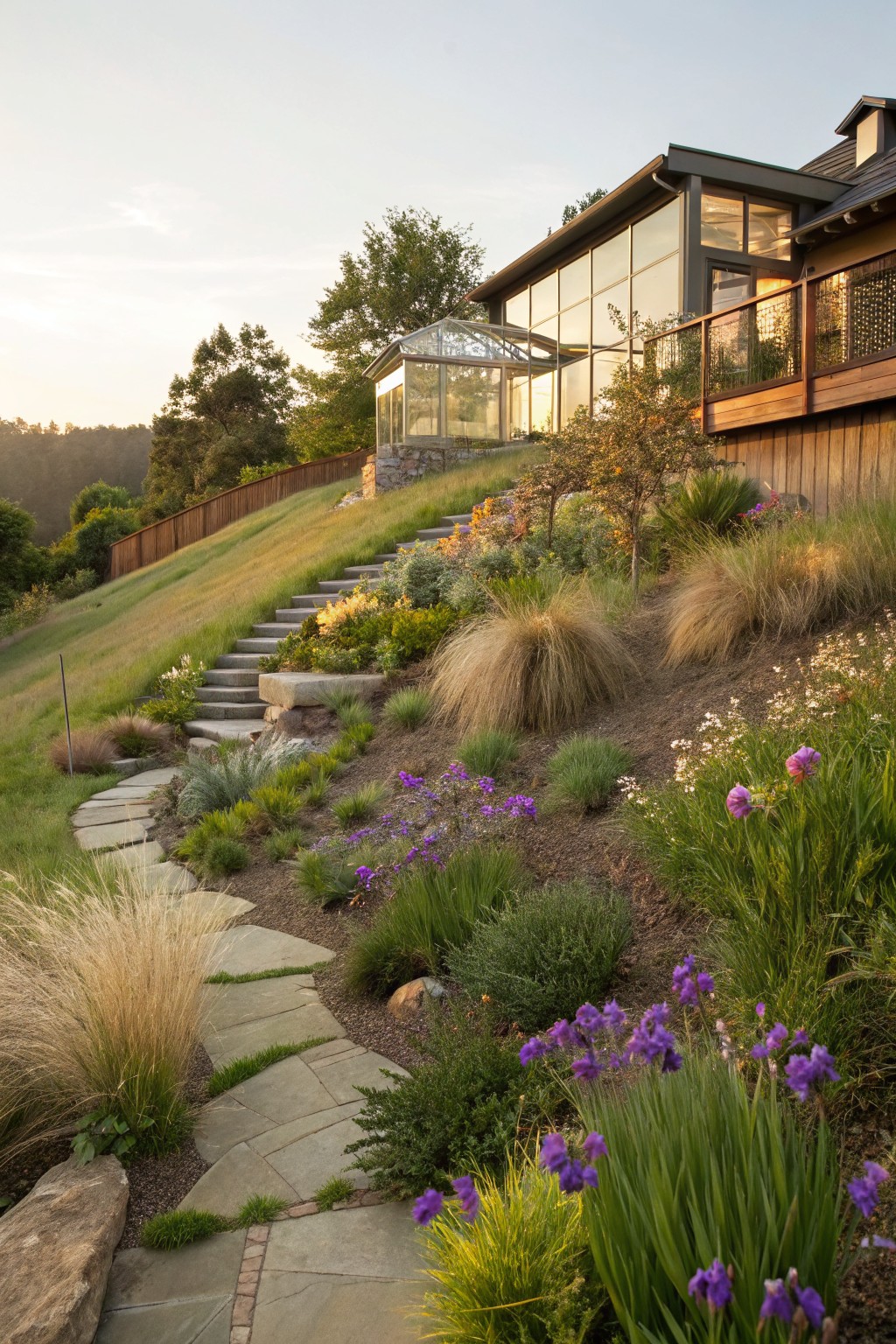
A winding stone path like this one works great on slopes. Tall purple irises pop along the edges, mixed in with grasses and low shrubs. They bring height and that splash of color right where you walk, making the garden feel alive without being too busy.
Try this in your backyard hill or entry approach. Plant the irises in loose groups near path turns, about every few steps. Pair them with tough grasses that handle dry spots. It suits modern homes with clean lines… keeps the look natural and easy to maintain.
Tall Irises Along Concrete Walls
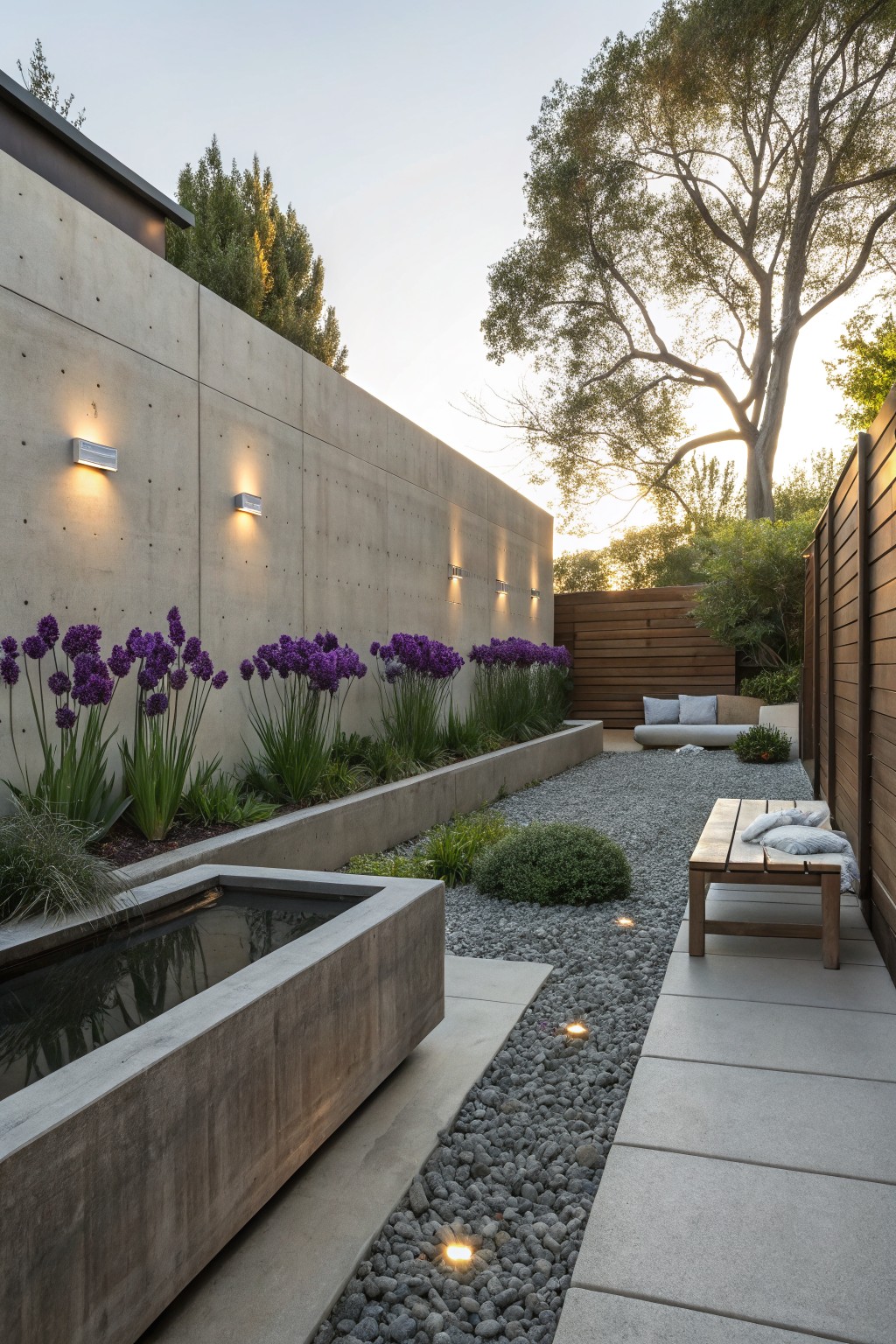
Planting tall irises right against concrete retaining walls gives a simple way to add height and color to a plain backyard space. The purple blooms pop against the smooth gray surface, making the area feel taller and more alive without needing a lot of extra plants. It’s a clean look that fits modern setups.
This idea shines in narrow yards or courtyards where you want structure but not clutter. Line the beds along the walls, keep them raised for good drainage, and run a gravel path down the middle. It suits low-maintenance gardens around concrete homes… just make sure the irises get full sun.
Outdoor Fire Pit with Iris Plantings
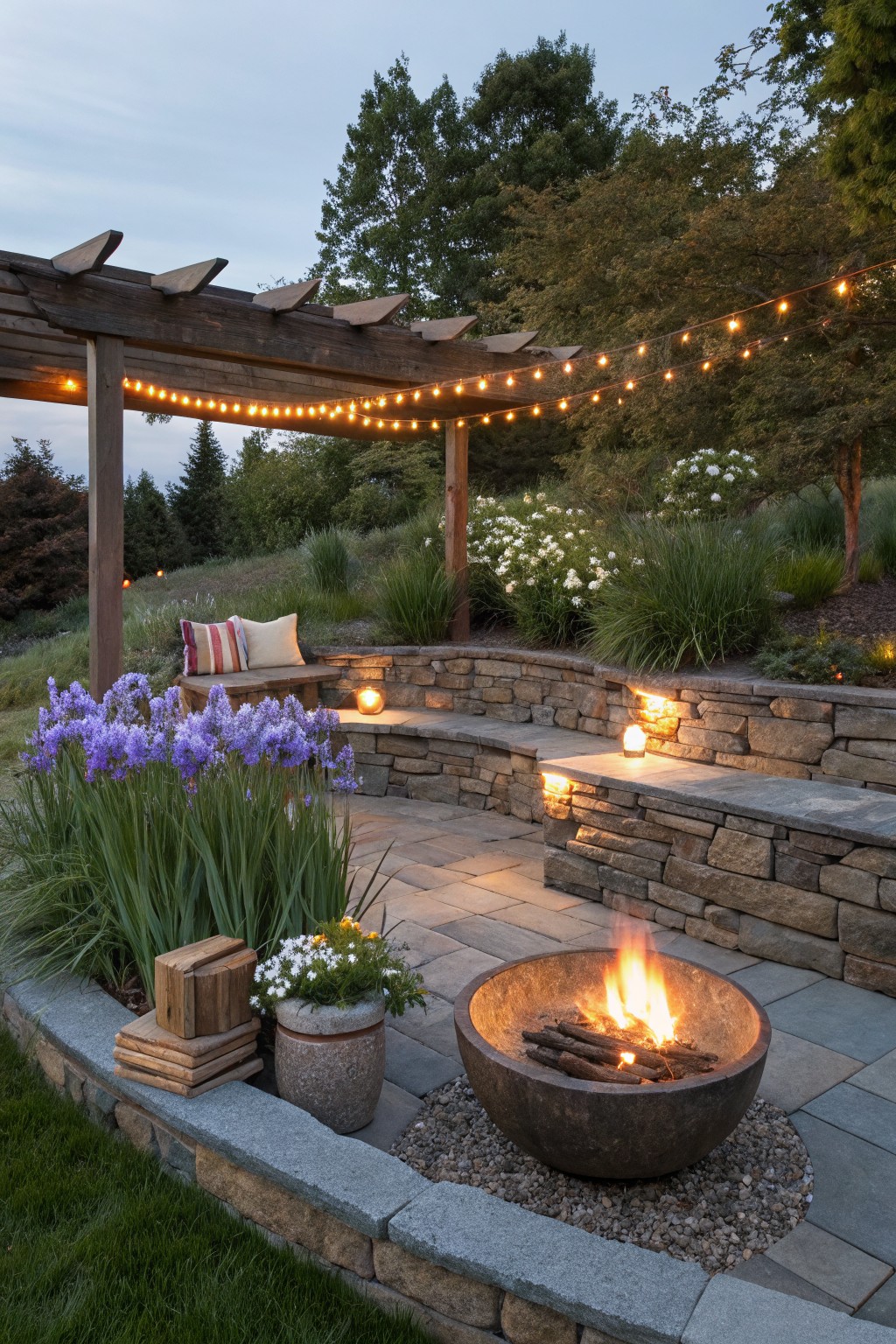
Tall iris clusters work great right next to a stone fire pit patio like this. The purple blooms add real height and a pop of color against the hard edges of the pavers and walls. They soften things up without taking over, and at dusk with the fire going, it all feels cozy and pulled together. People notice how the flowers draw the eye to the seating spot.
Put irises along the base of low stone walls or beds around your fire pit area. They suit sloped backyards best, where the tiers give some natural levels. Go for repeat clusters every few feet to build rhythm. Just keep the bed edges neat so the stone stays crisp… and trim spent blooms to keep it looking fresh through summer. Works on most home sizes if you have some sun.
Raised Planters Full of Irises
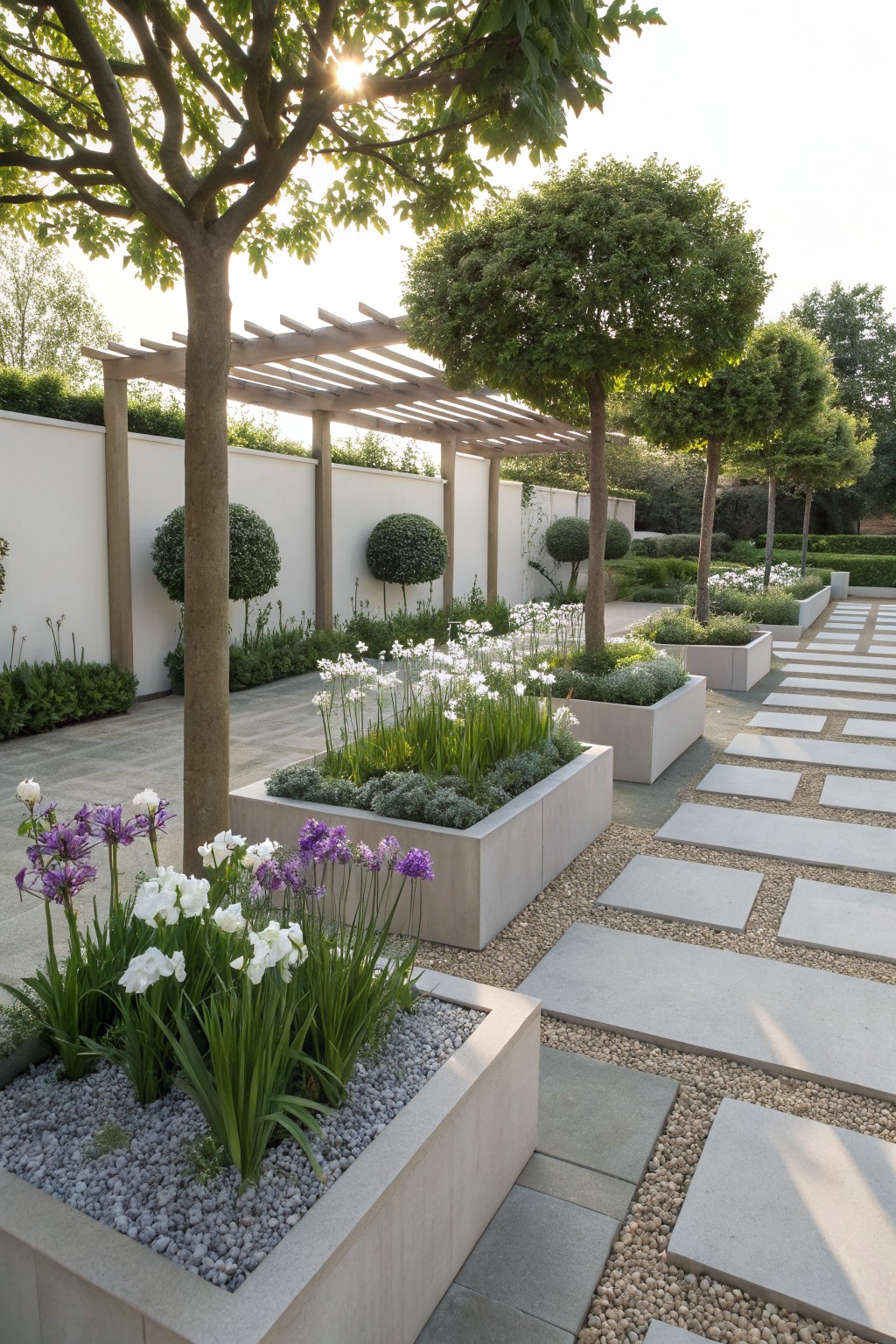
One straightforward way to work irises into your yard is with raised concrete planters like these. They hold tall purple and white blooms mixed with grassy greens, giving real height right where you walk by. The setup keeps everything neat against clean white walls and adds color without much fuss.
Place these along a path or patio edge in a modern garden. They suit smaller spaces or spots near the house, where you want structure but not a wild flower bed. Go for gravel mulch at the base to keep it low maintenance, and pick planters wide enough for the iris roots to spread.
Stone Steps Lined with Iris Clusters
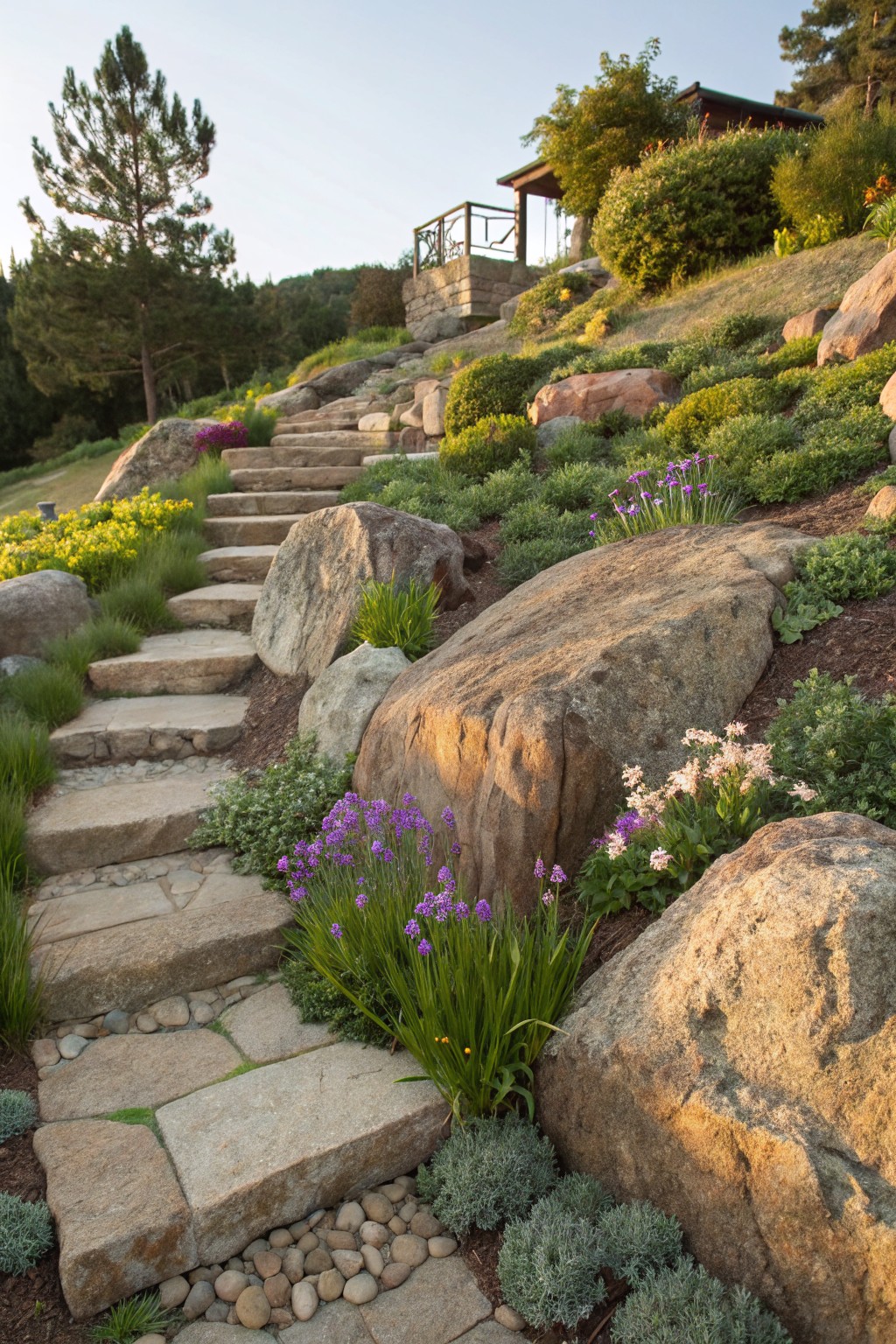
Wide stone steps like these make climbing a slope feel natural and easy. Big boulders hold everything in place and add a rugged look. Purple iris clusters tucked right along the edges and spilling over the rocks bring in height and color that lasts through spring. It’s a simple way to turn a steep spot into something pretty.
This setup suits hillside yards or any place with a drop in grade. Plant the irises in pockets of soil between stones where they get good sun and drainage. They’ll spread over time without taking over. Keep it low key by not overcrowding the steps themselves.
Colorful Irises Along Entry Steps
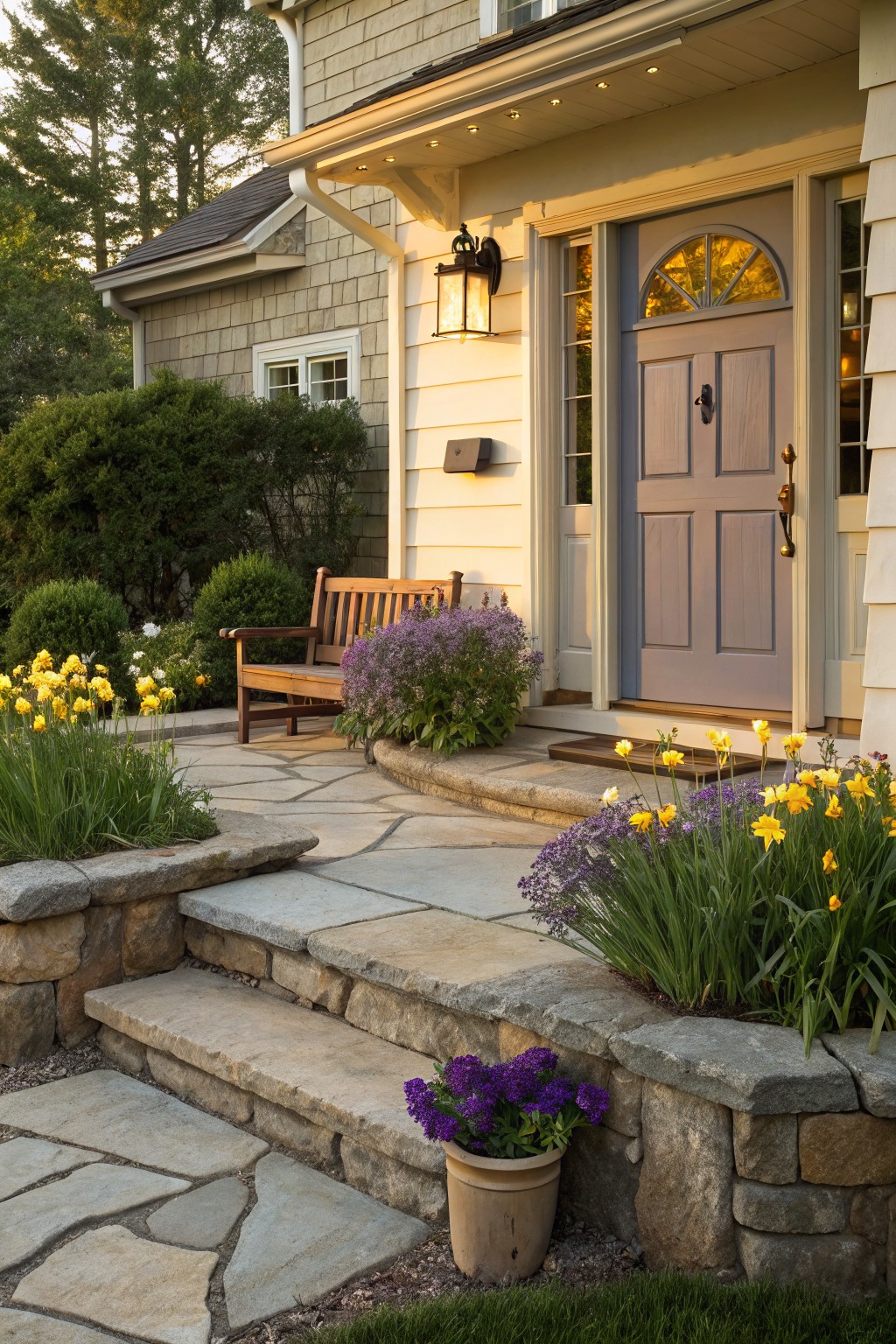
One simple way to make a front entry feel more welcoming is planting irises right along the stone steps. Here yellow and purple varieties fill beds tucked against the low retaining walls and spill onto the flagstone path. They add height without crowding the walk and bring color that pops against the neutral house siding. It’s a low fuss spot for these perennials since the hardscape keeps things neat.
Try this on any house with a few steps up to the door. It works best where you have some sun and well drained soil along the edges. Mix yellow and purple for contrast or stick to one shade if you want calmer vibes. Just keep the beds edged so the path stays clear for foot traffic.
Iris Accents Around Balcony Seating
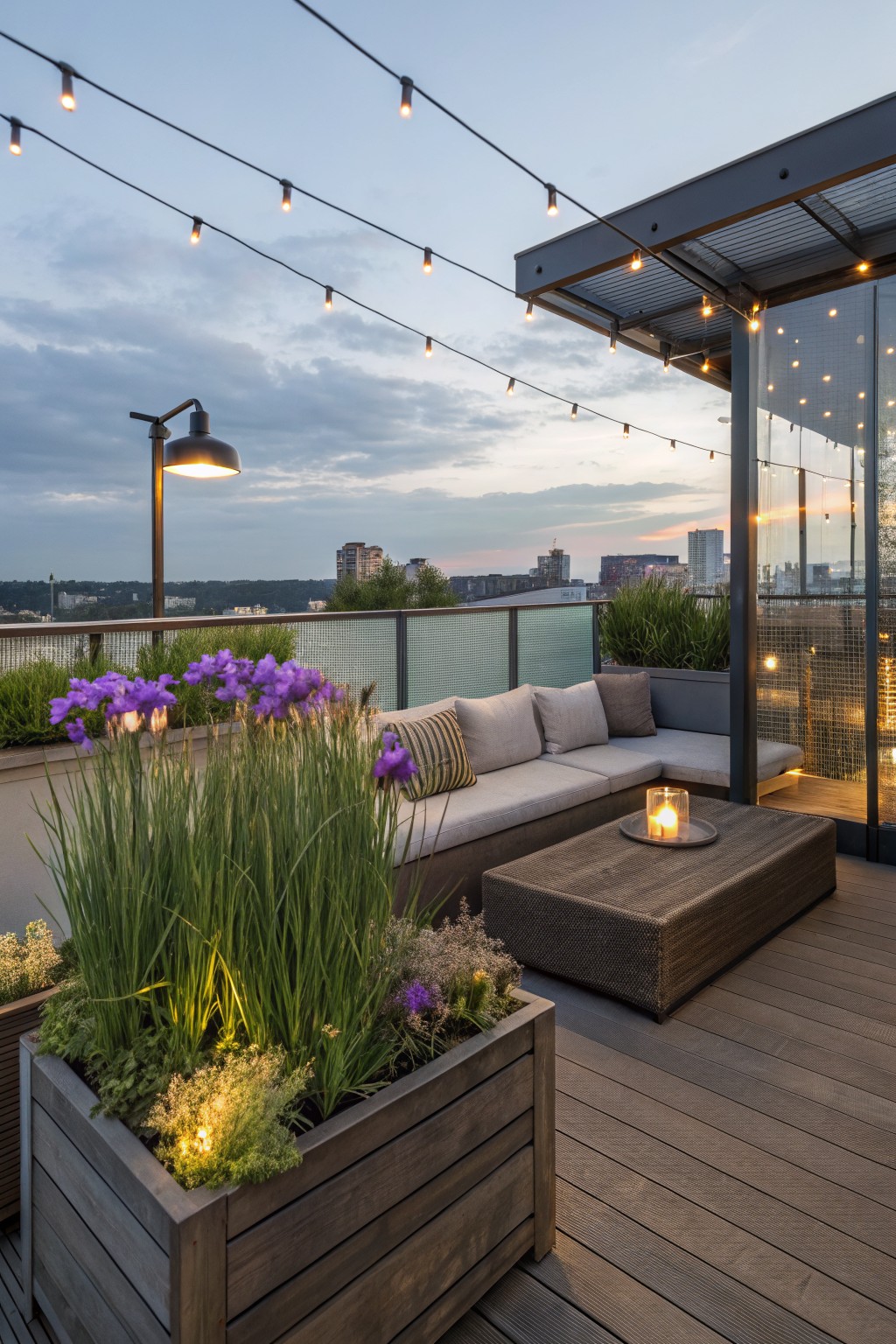
Tall iris clusters work great around balcony seating like this. They bring some real height to a flat rooftop deck without crowding the space. The purple blooms pop against the gray tones of the city view and metal railing. It keeps things feeling open but adds that bit of garden color folks notice right away.
Try this on any urban balcony or terrace where you want low-maintenance height. Plant irises in wooden boxes right by the sofa or low table. They do well in containers with good drainage. It suits modern apartments best. Just trim back after blooming to keep it neat.
Frequently Asked Questions
Q: When should I plant irises to match those tall border ideas?
A: Go for late summer or early fall. That timing lets roots dig in deep before winter slows things down. Spring works too if your ground isn’t frozen.
Q: How much sun do irises really need for all that color payoff?
A: They thrive in full sun, at least six hours a day. A bit of afternoon shade helps in super hot spots. You get the tallest spikes and brightest blooms that way.
Q: What’s the easiest way to divide irises from the clump ideas?
A: Dig up the whole clump every three to four years in summer. Shake off old dirt, cut the fans apart with a sharp knife, and replant the healthy ones right away. Fresh soil keeps them pumping out height and flowers.
Q: Can I mix irises with other plants like in the layered looks?
A: Pair them with low growers like hostas or daylilies at the base. And… keep companions from crowding the iris base. That setup builds real drama without stealing the show.
