

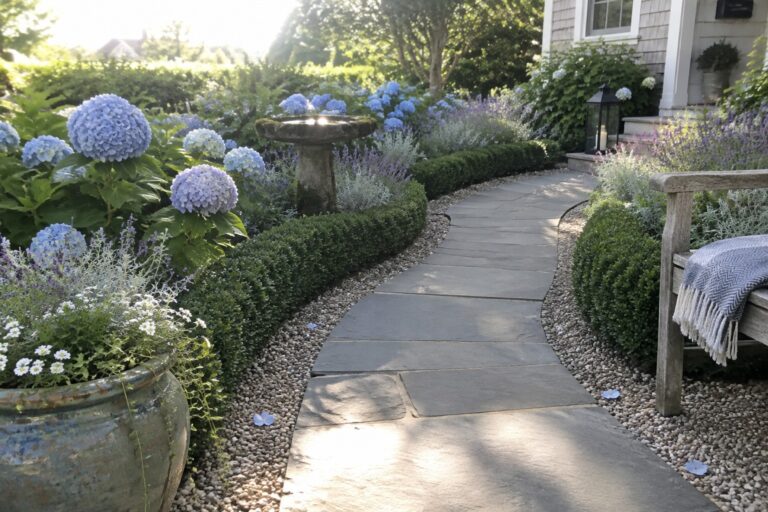
Blue hydrangeas can bring a cool, settled feel to a garden, but their color looks best when the surrounding planting has enough contrast and structure.
I find that the first thing people notice is often the shape of the bed, so paths, edging, and the height of nearby plants matter as much as the blooms.
Pairing hydrangeas with foliage in different shades of green can keep a blue-heavy planting from feeling flat, while repeating a few plants helps the layout feel connected.
Some combinations also shift with the seasons, which is worth considering when choosing spots near a walkway, foundation, or sitting area.
I’d start by testing the ideas that suit your soil, light, and garden shape, then adjust the spacing as the plants grow.
Use Blue Hydrangeas Along a Garden Path
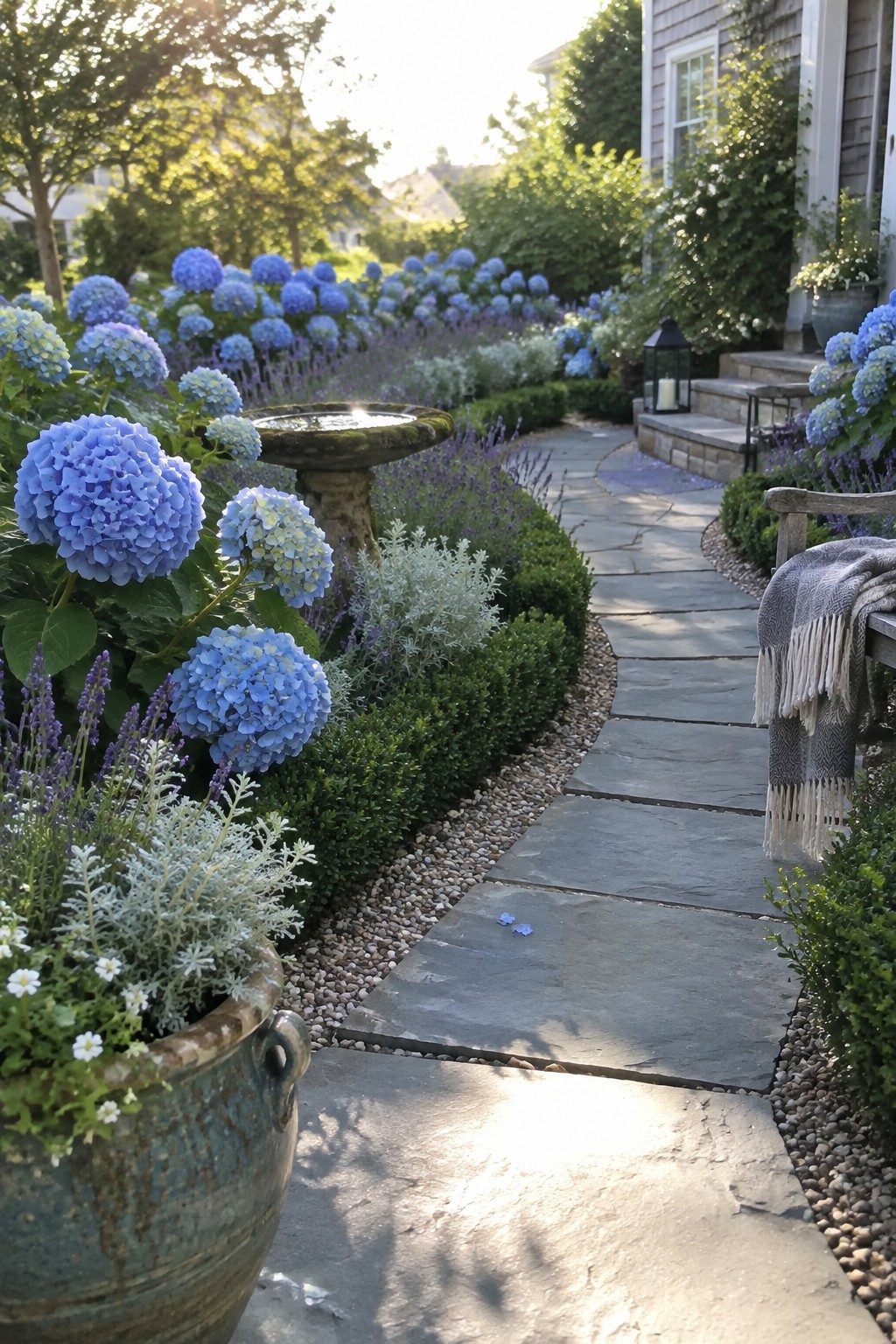
A stone path through blue hydrangeas gives a flower bed a clear shape and makes it easier to enjoy the garden up close. The broad blooms bring color along the route without needing a formal planting pattern.
Use this idea where a path curves through a side yard or leads to a garden entrance. Leave enough room for the hydrangeas to grow without crowding the stones, and repeat them along the route for a steady look.
Use Blue Hydrangeas Along a Simple Garden Path
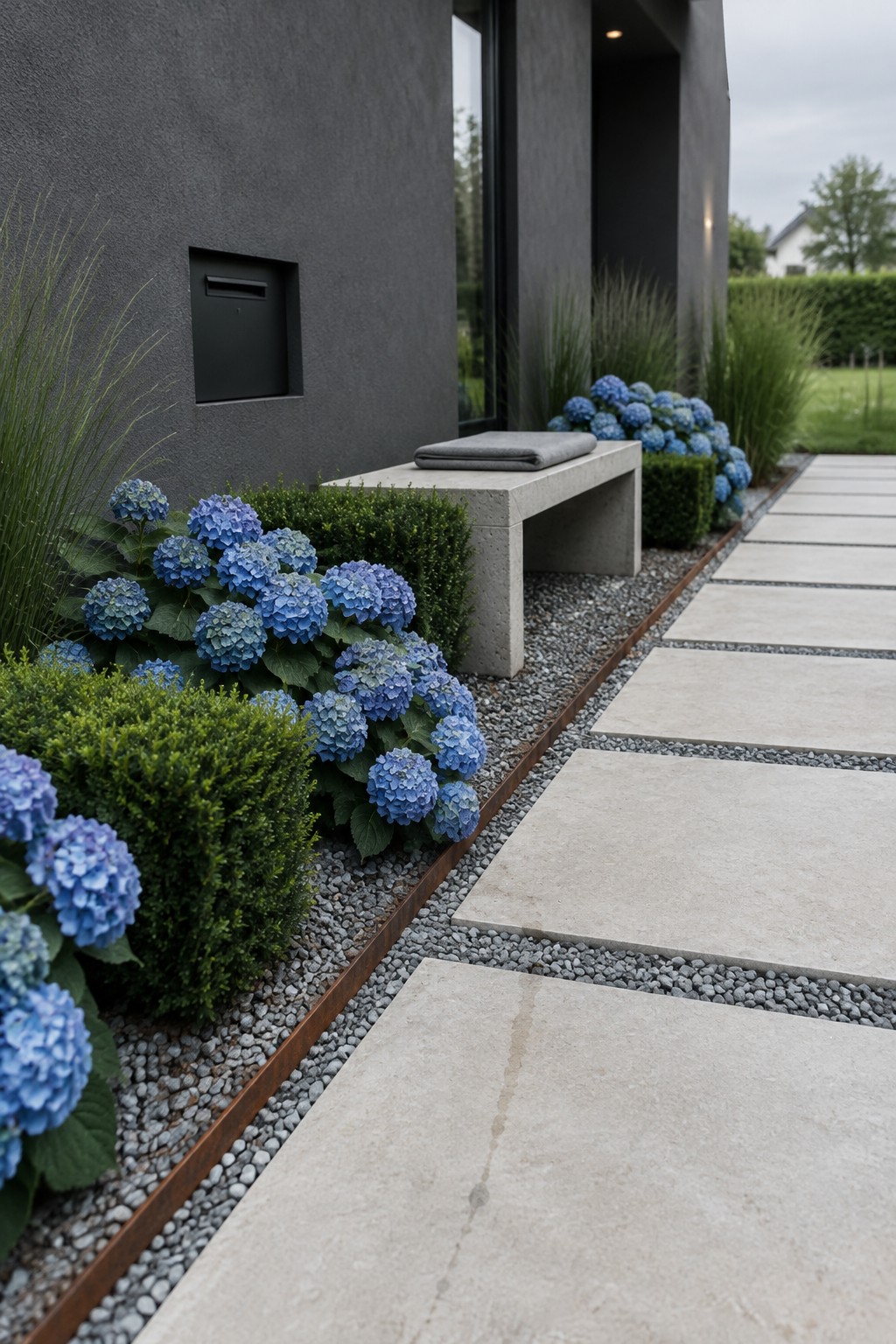
A row of blue hydrangeas can make a garden path feel more settled and easy to follow. The broad flower heads bring color close to the walkway, while a narrow gravel bed keeps the planting tidy.
This approach works well beside a modern home, especially when you keep the path clear and give each shrub room to grow. Repeat the hydrangeas along one edge rather than scattering them through the yard.
Let a Garden Path Wind Through Hydrangeas
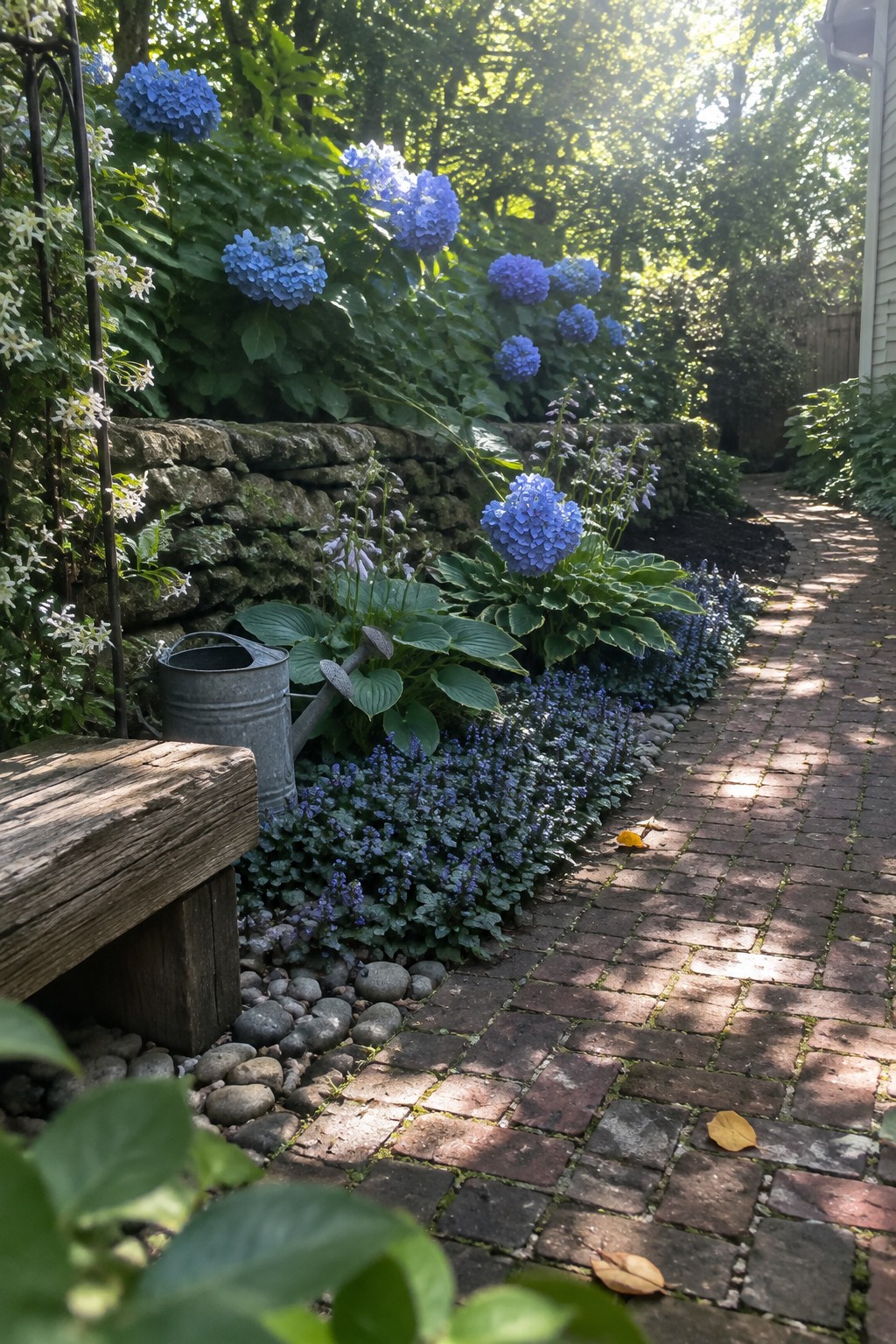
A gently curving brick path gives blue hydrangeas room to spill along its edges without making the garden feel crowded. The changing line also makes a narrow side yard feel a little less like a passageway.
This layout works well where you want a clear route through a planting bed. Keep the path wide enough for comfortable walking, and leave space for hydrangeas to grow without covering the bricks.
Layer Blue Hydrangeas Along Garden Steps
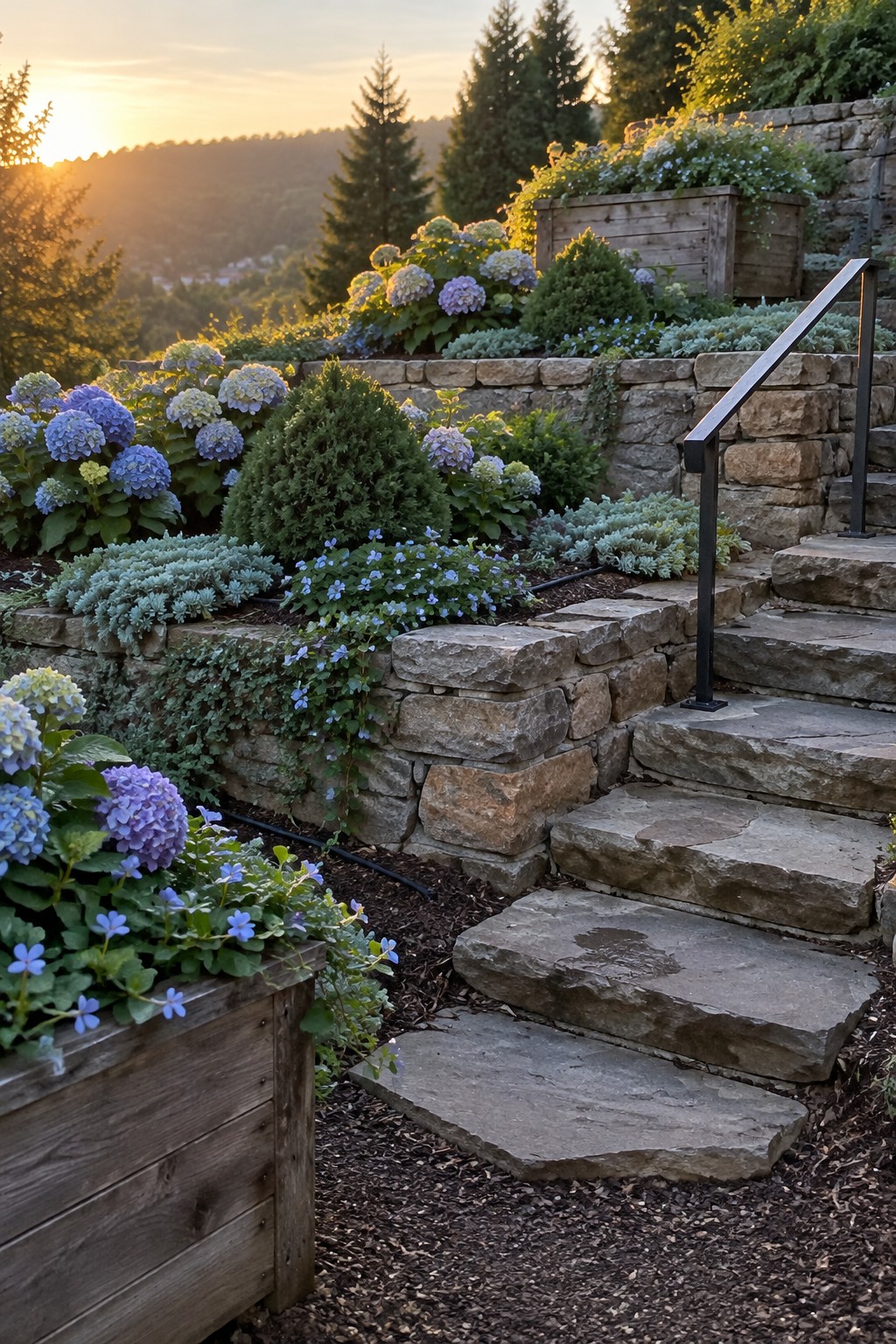
Blue hydrangeas look especially at home in a terraced garden, where broad flower clusters fill the beds beside a stone path. Planting them in layers lets the flowers show from different levels without blocking the route through the garden.
Use the steps as a guide for arranging the beds, keeping taller hydrangeas back and lower plants near the path. This works well on a slope, but leave enough room for the shrubs to spread and keep the walking surface clear.
Use Blue Hydrangeas to Set Off a Patio Fire Pit
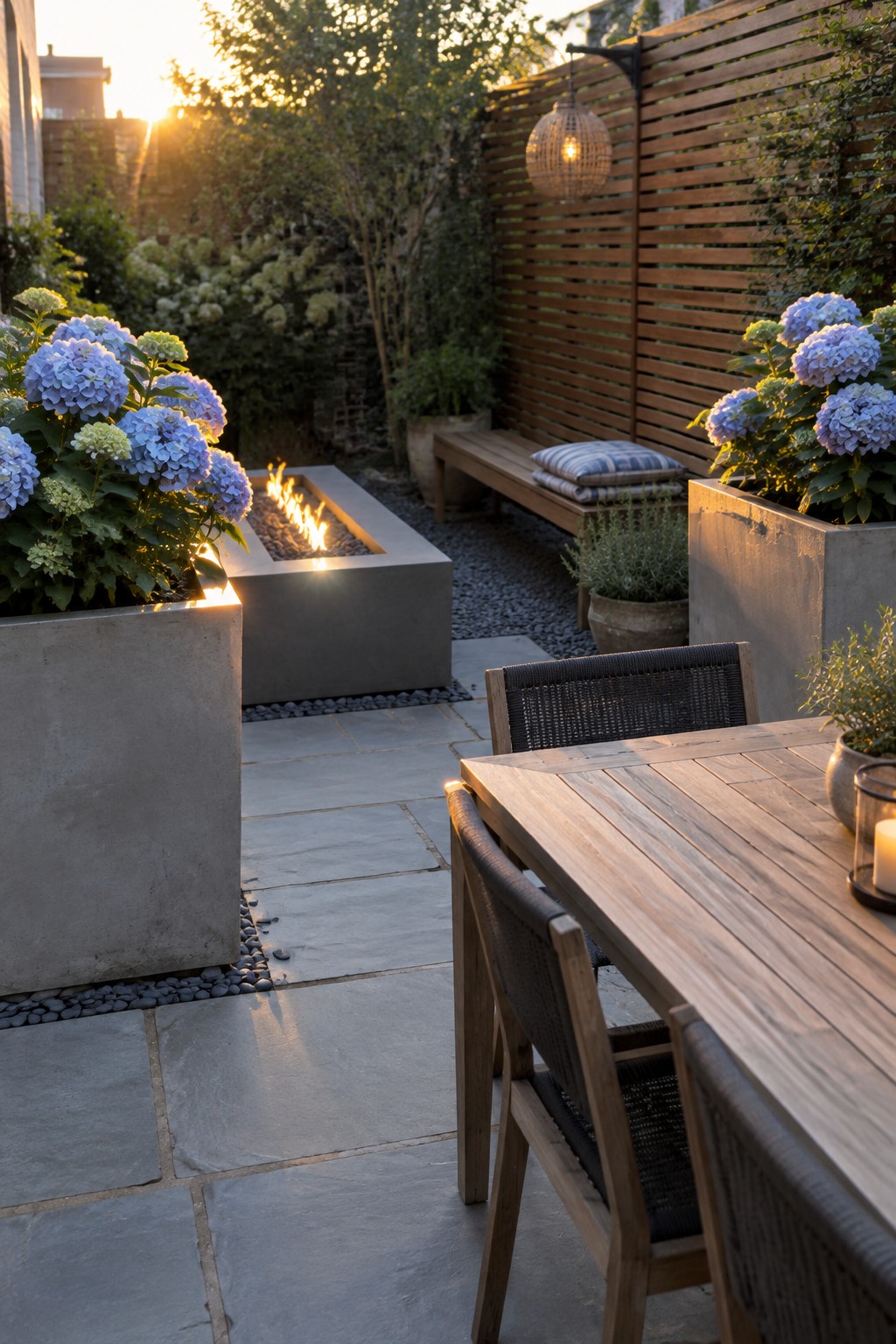
A small fire pit can give a patio a clear place to gather, and blue hydrangeas bring color close by without crowding the seating area. The contrast between the soft blooms and simple stone planters feels easy to live with.
For a similar setup, place hydrangeas along the patio edge and leave enough room for a clear walking route around the fire pit. This works well in a compact garden where you want a defined sitting area without filling every open spot with furniture or plants.
Plant Blue Hydrangeas Along a Pool Border
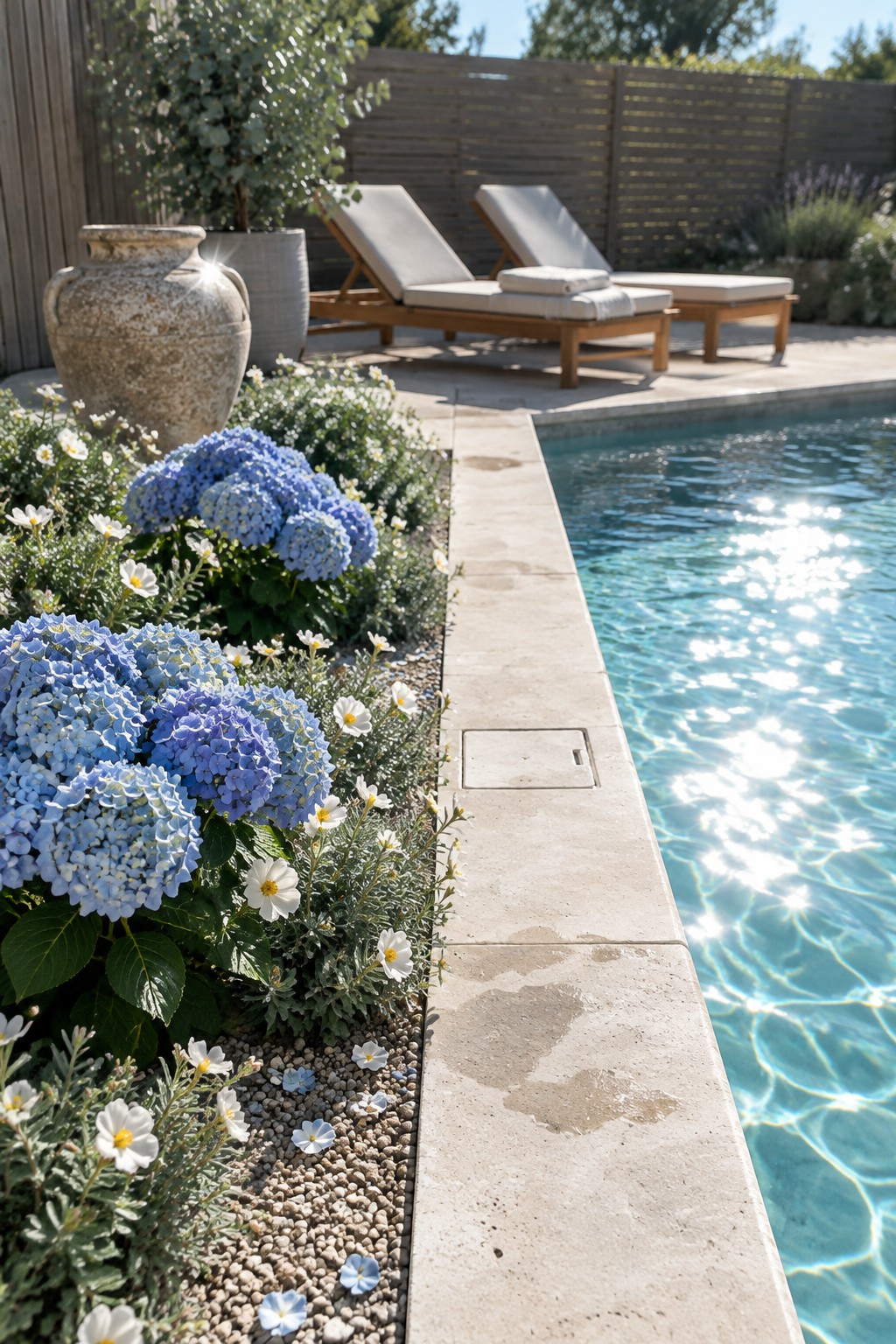
A flower bed beside a pool can make the hard edge feel more at home in the yard. Blue hydrangeas bring broad patches of color, while smaller white flowers help fill the space between them.
Keep the bed narrow enough that plants do not spill onto the pool deck, and choose varieties suited to the site’s sun and moisture. This approach works especially well where a simple strip of planting can soften a long pool edge.
Plant Blue Hydrangeas Along the Entry
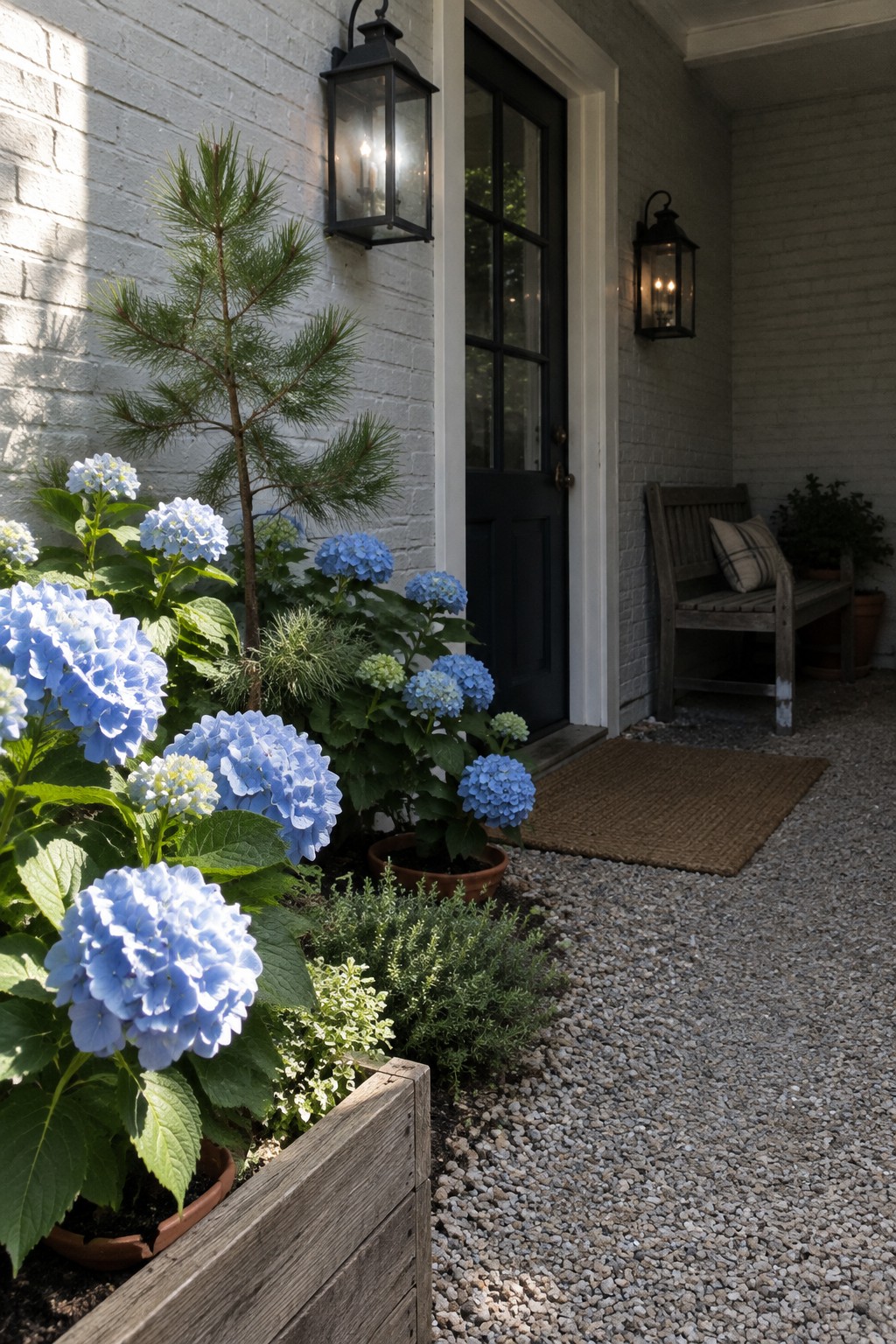
Blue hydrangeas make a welcoming border for a front entry, especially when they fill a defined bed beside the path. Their rounded blooms bring plenty of color without needing a complicated planting plan.
Use them along a porch or doorway where the bed gets suitable light, and leave room for the shrubs to spread as they mature. A small evergreen can add a little height and keep the border from looking bare between bloom seasons.
Edge a Blue Hydrangea Bed With a Curved Border
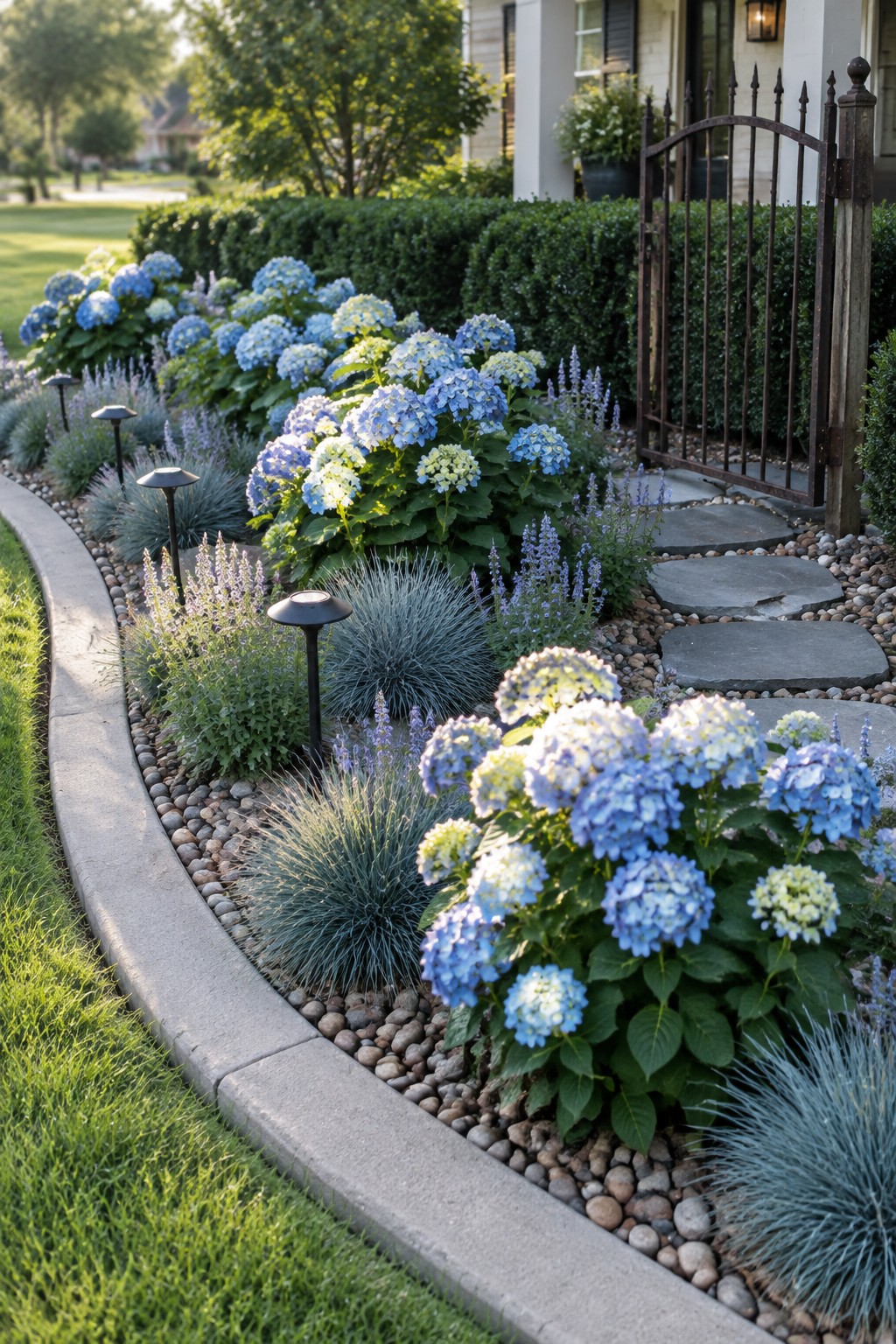
A curved border gives a hydrangea bed a clear shape and keeps the planting from looking like a row of separate shrubs. Here, a low concrete edge follows the lawn, giving the blue flowers a tidy boundary.
This idea works well beside a front walk or along a broad lawn. Choose a border material that suits the house, and leave enough room inside the edge for hydrangeas to spread as they mature.
Plant Blue Hydrangeas Around a Garden Pool
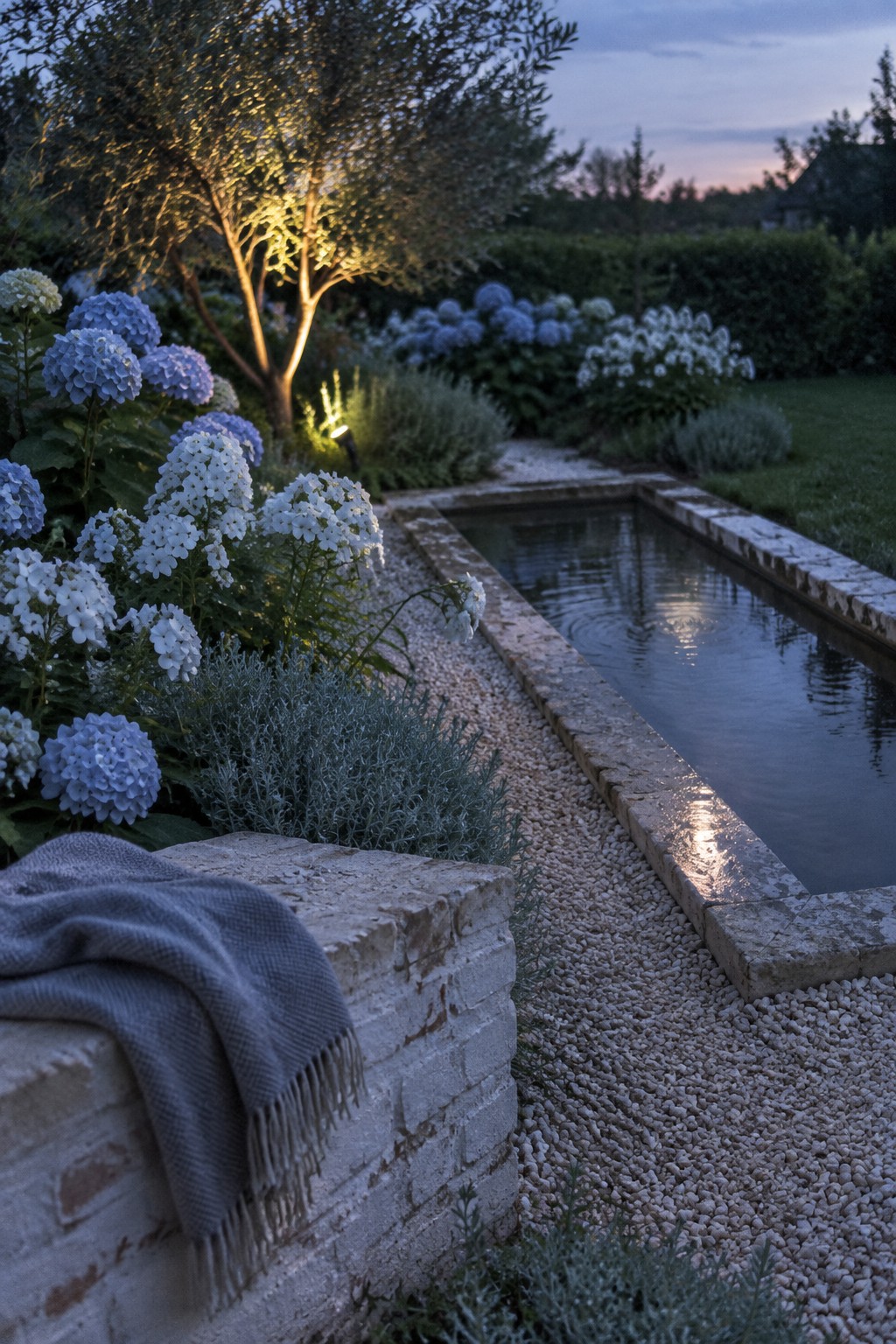
A small garden pool can give a flower bed a clear edge and a practical purpose. Blue hydrangeas suit this kind of setting well, especially when they soften the stone border without covering it.
Leave enough room between the plants and the pool for access and upkeep. Hydrangeas work best where they get some afternoon shade and consistent water, so check the site before planting along a sunny, exposed edge.
Use Blue Hydrangeas to Define an Outdoor Dining Area

Blue hydrangeas can make a patio dining spot feel tucked into the garden without closing it off. Planting them along one side of the seating area gives the table a leafy edge and brings the cool flower color close to where people gather.
This works especially well beside a stone patio or a simple outdoor dining set. Give the shrubs enough room to grow, and keep the path around the table clear so the flowers don’t crowd the chairs.
Mix Blue Hydrangeas Into a Gravel Garden Bed
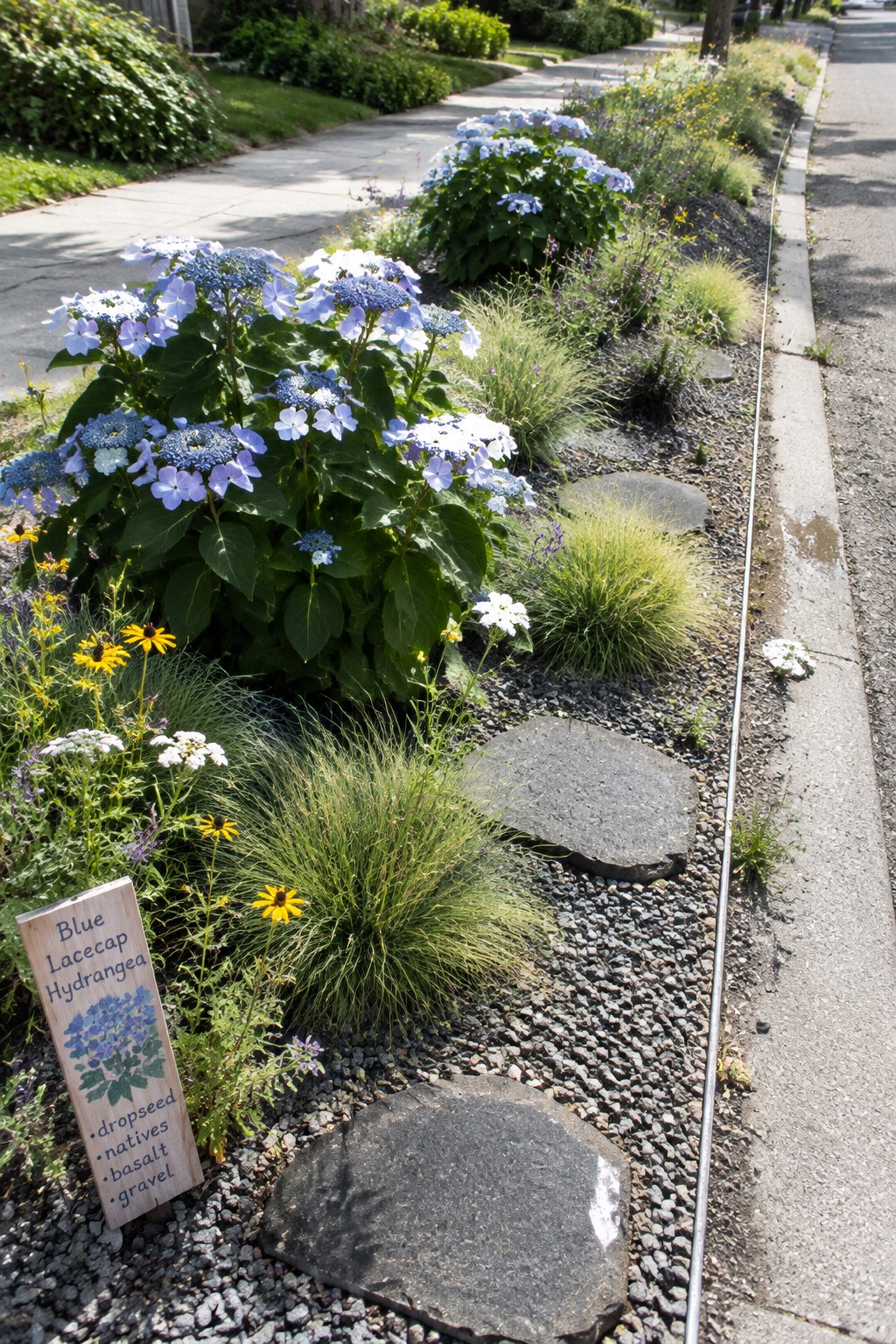
Blue hydrangeas can stand out in a gravel bed without making the planting feel too formal. Their rounded flower clusters bring a fuller shape to the garden, while the open gravel keeps the layout easy to maintain.
Use hydrangeas as the main plants, then leave space for grasses and smaller flowers to fill in around them. This approach suits a sunny sidewalk bed, but check the hydrangeas’ light and moisture needs before planting, since gravel can dry out quickly.
Add Blue Hydrangeas Along a Shaded Stone Walk
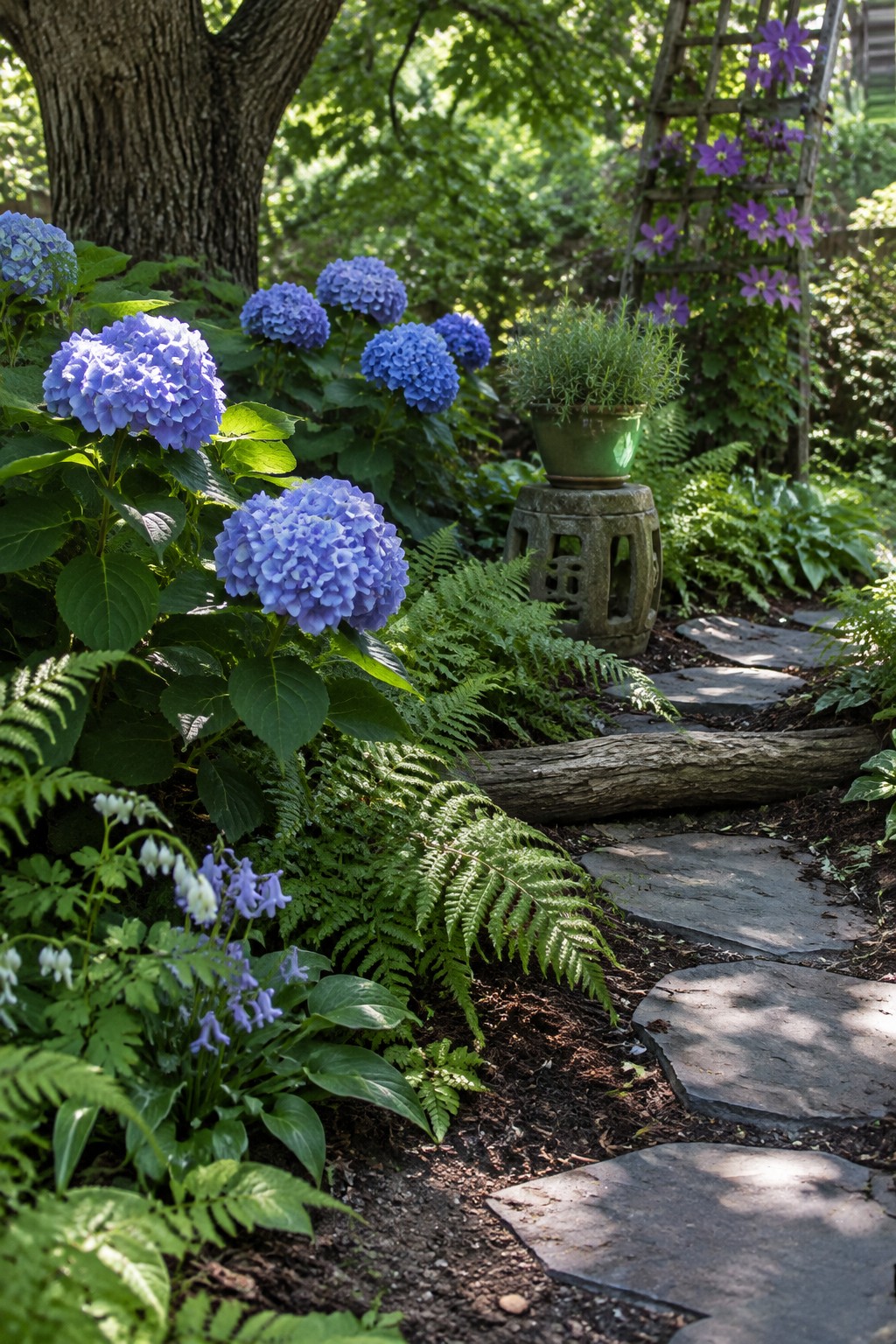
Blue hydrangeas make a garden path feel lush without needing a formal border. Their rounded flower heads stand out against leafy plants, while the stone walkway keeps the planting from feeling overgrown.
This approach suits a shaded or partly shaded garden where hydrangeas have room to spread. Set them along one side of the path, and leave enough space for the plants to mature without spilling onto the stones.
Plant Blue Hydrangeas Beside a Coastal Boardwalk

Blue hydrangeas can make a garden path feel settled into the landscape rather than simply laid across it. Planting them in generous clumps beside a boardwalk gives the route a clear edge, while ornamental grasses add a looser layer behind the flowers.
This approach suits a seaside garden, where a raised wood path can cross sandy or uneven ground. Leave enough room for plants to spread without narrowing the walkway, and choose varieties that can handle the site’s sun, wind, and soil.
Plant Blue Hydrangeas Along a Narrow Garden Walk
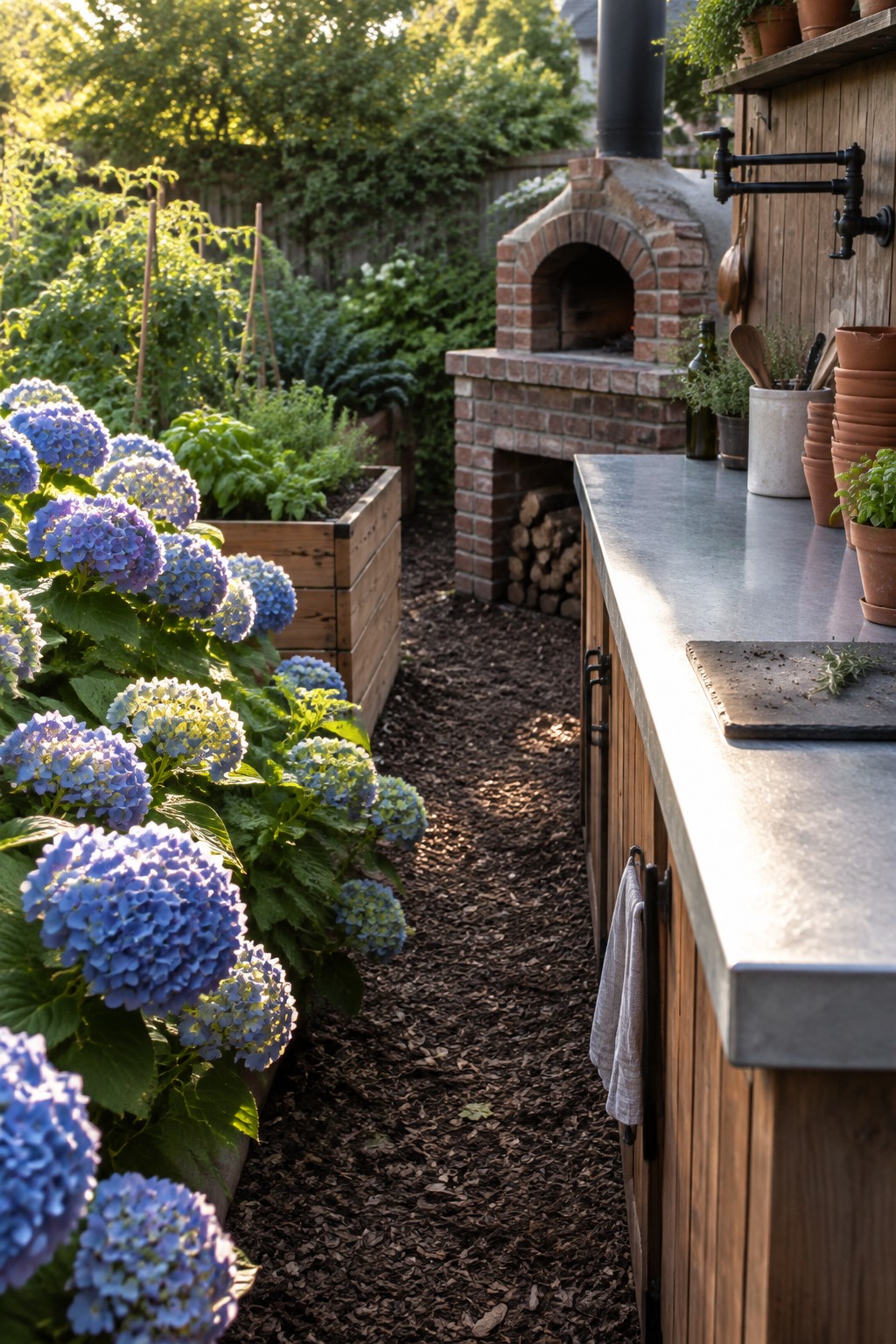
Blue hydrangeas can line a narrow garden walk and give it a clear, leafy edge. Their rounded flower heads make a strong border, while the path stays open and easy to follow.
This works well in a side yard or other tight space where a wider bed would crowd the walkway. Leave enough room for the plants to spread, and keep the path surface simple, such as mulch or gravel.
Grow Blue Hydrangeas in Raised Planters
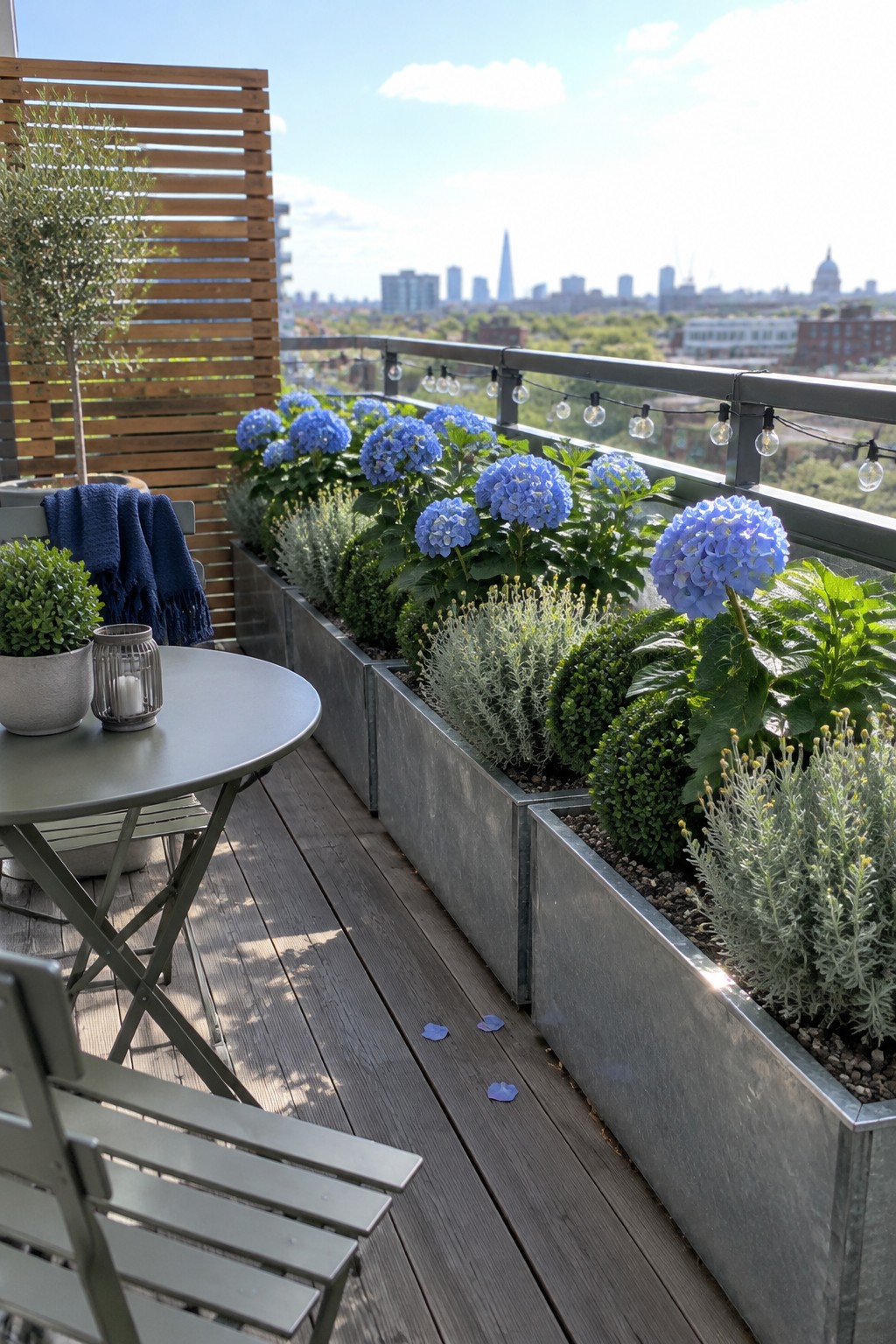
Raised planters make it easy to bring blue hydrangeas to a balcony or rooftop where there may be little space for a garden bed. A row of containers also gives the flowers a clear edge and keeps the planting close to the seating area.
Choose deep, sturdy planters with good drainage, since hydrangeas need room for their roots and regular watering. Leave enough space between plants for air to move through the leaves, and check that the balcony can support the weight of the filled containers.
Plant Blue Hydrangeas Along a Pool Border
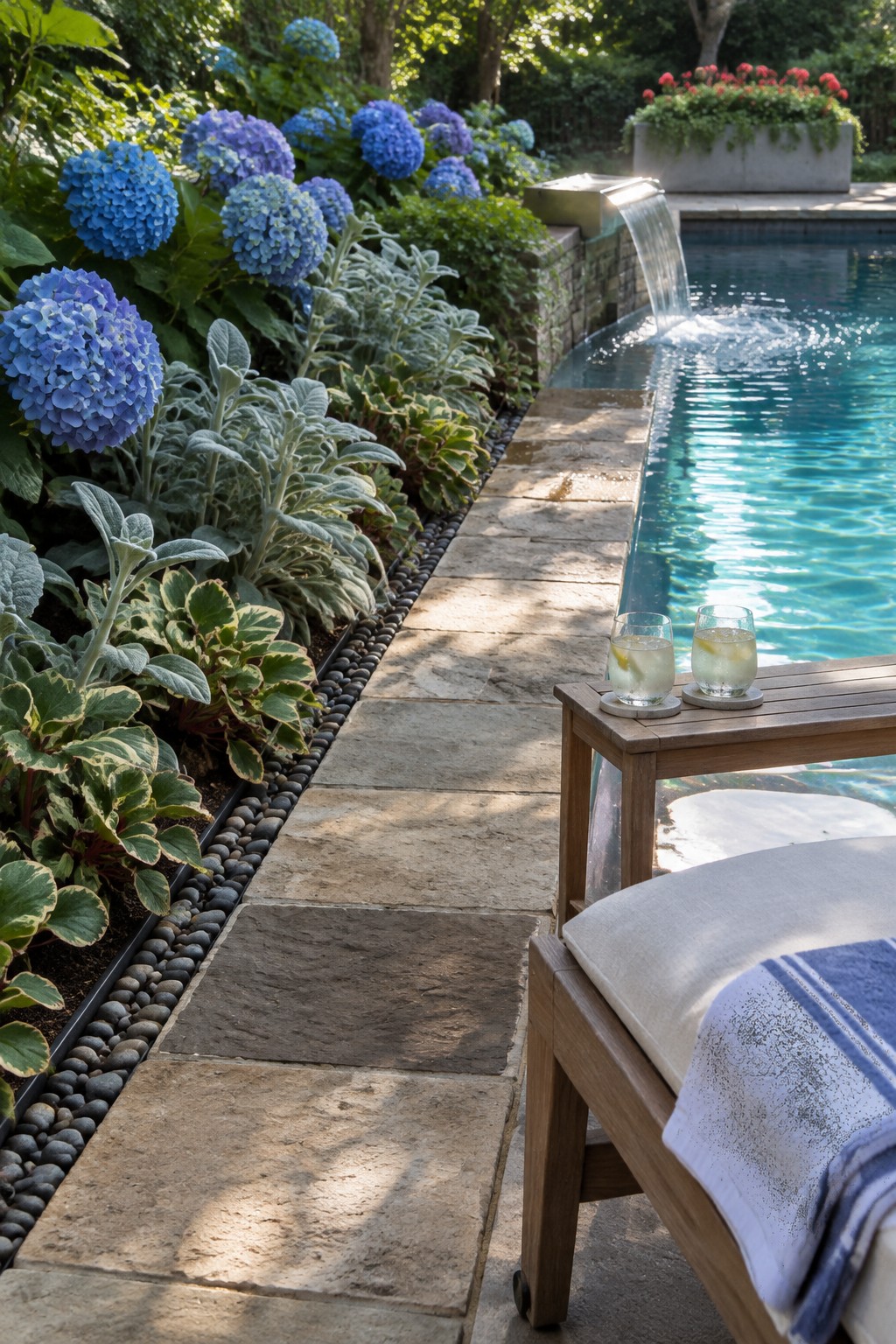
A flower bed beside a pool can make the hard edge feel more connected to the garden. Blue hydrangeas bring a cool band of color, while a narrow strip of smooth stones keeps soil and foliage separate from the stone coping.
Leave enough room for plants to grow without spilling onto the walkway or dropping too many leaves into the water. This approach suits pools beside a garden bed, especially where hydrangeas get some shade and regular moisture.
Use Blue Hydrangeas to Line a Curving Stone Walk
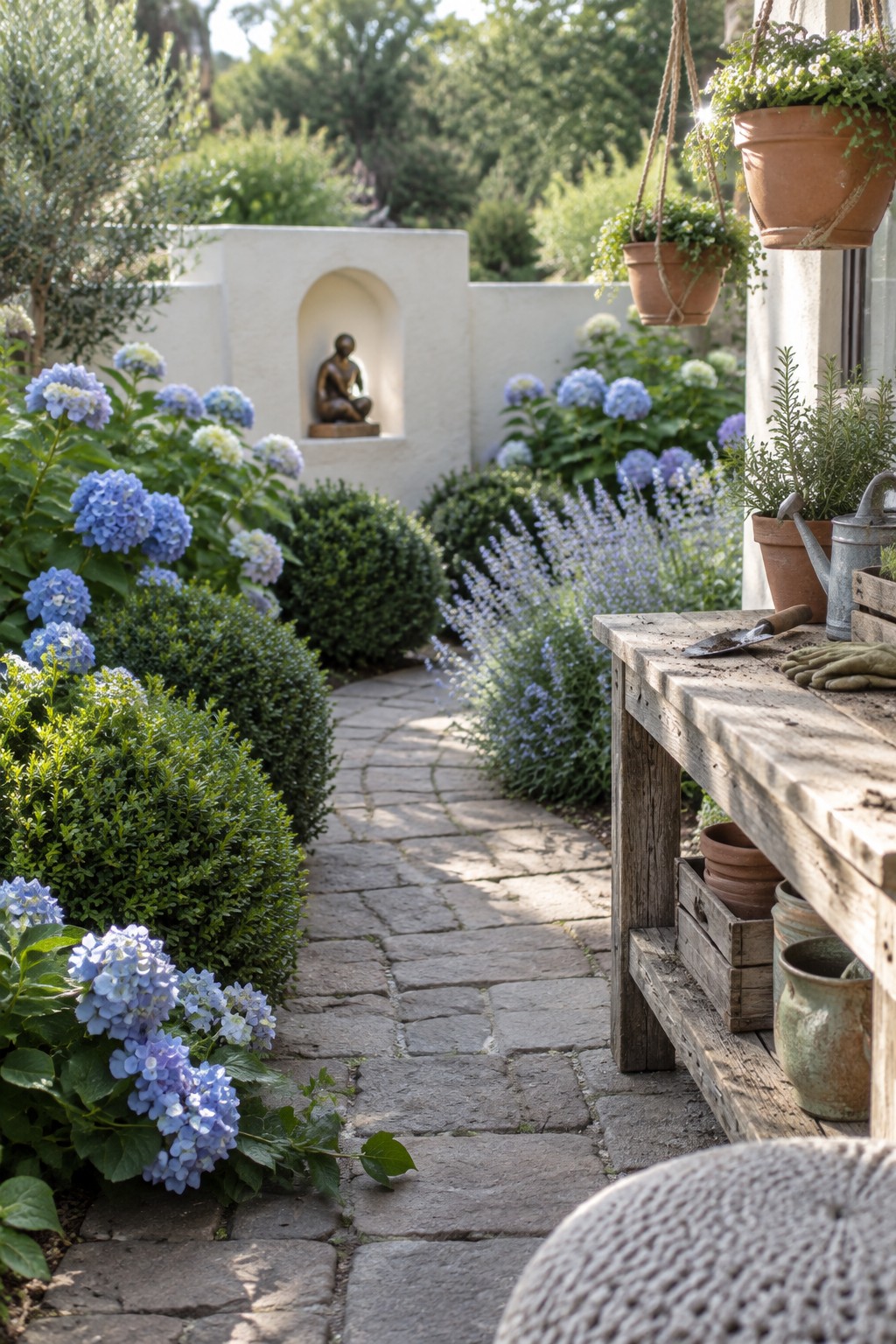
A gently winding path gives a hydrangea bed a clear shape and makes a small garden feel like somewhere to wander. Blue blooms along the edge also bring color right up to the route without hiding the stonework.
This approach works well where there’s room for a path to curve between planting beds. Leave enough space for hydrangeas to spread, and keep their foliage from crowding the walking surface.
Frequently Asked Questions
Q: How much sun do blue hydrangeas need to keep flowering?
A: Most blue hydrangeas do well with morning sun and afternoon shade, especially in hot climates. Too much harsh afternoon sun can scorch the leaves and dry out the soil quickly.
Q: Can I keep blue hydrangeas blue if my soil is alkaline?
A: Blue flowers need acidic soil with available aluminum, so alkaline soil can shift blooms toward pink. A soil test can show what you’re working with, and a soil acidifier may help, but make changes gradually.
Q: What plants look good beside blue hydrangeas?
A: Try white astilbe, ferns, or hostas for a cool, leafy contrast. Choose plants with similar shade and moisture needs so the bed is easy to care for.
Q: Why are my hydrangeas wilting even though I water them?
A: Hydrangea leaves can droop in midday heat, then perk up as temperatures cool. If they stay wilted, check the soil and water deeply when the top inch feels dry.
