

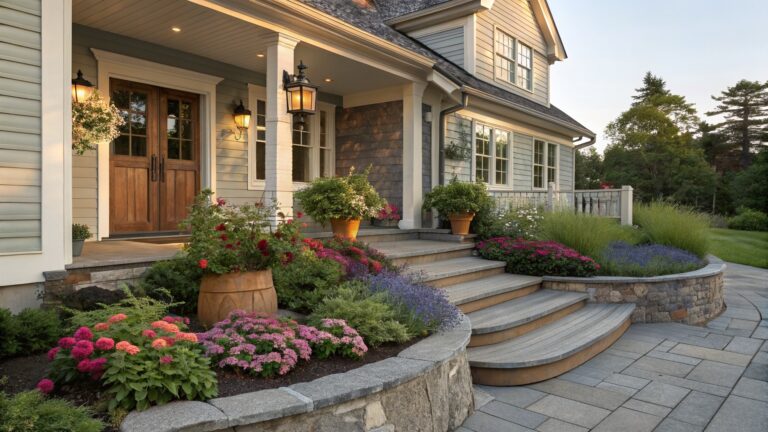
I always notice front porch flower beds first when scouting neighborhoods for landscaping ideas that actually hold up. They frame the entry with layers of plants that draw your eye up the steps while edging keeps everything from spilling over onto the walk. Good ones balance perennials for structure with annuals for color pops. Last summer I tried a curved layout like one in here, and it changed how my porch feels from the street. These examples show how beds evolve over seasons into something neighbors remember.
Layered Flower Beds Along Curved Steps
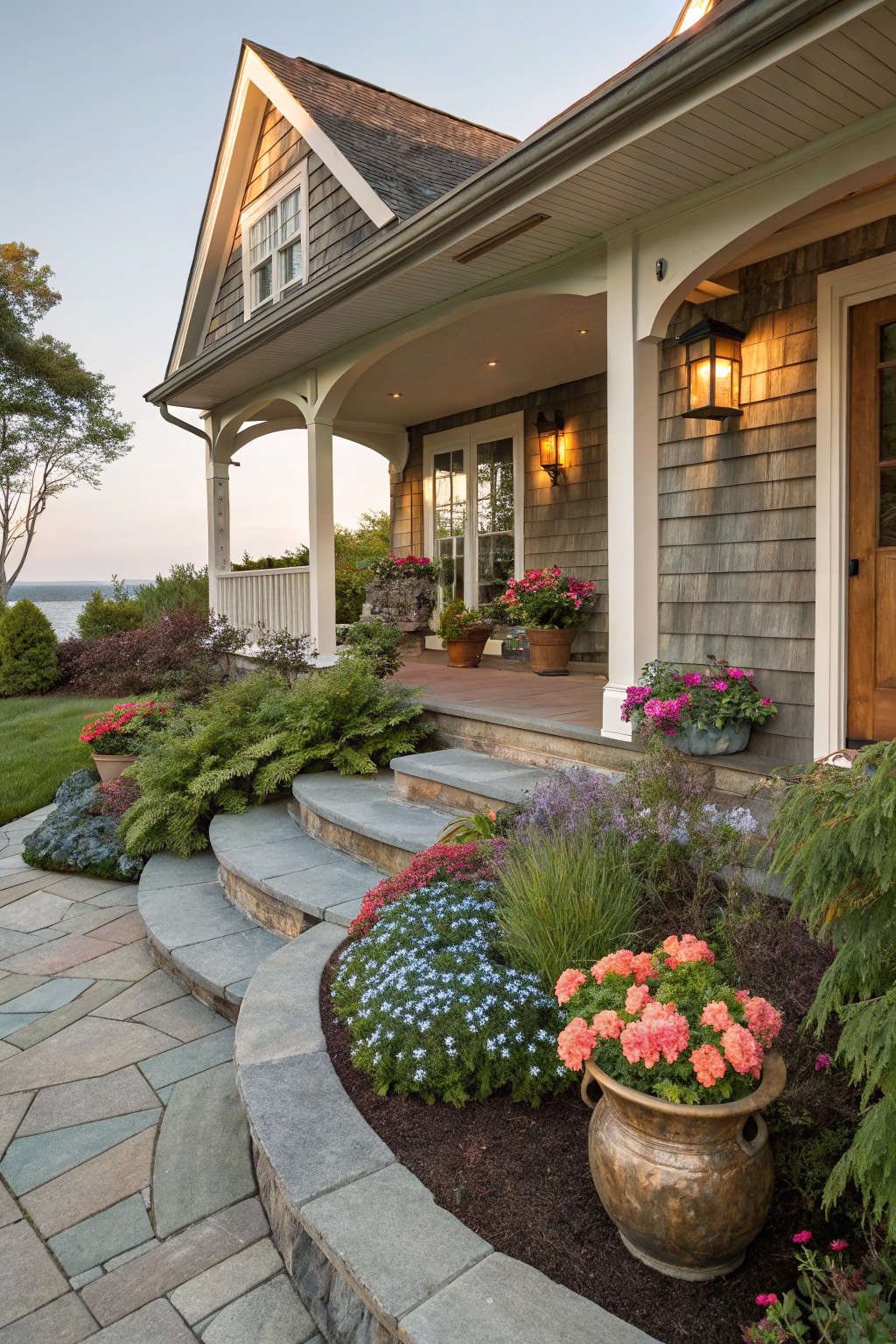
One simple way to boost curb appeal is layering flower beds right along curved steps to the front porch. The beds follow the stone curve perfectly, with low walls holding back ferns, grasses, and colorful blooms like pinks and oranges. A big bronze pot sits at the base for extra height. It makes the walk up feel easy and pulls you right to the door without looking forced.
This setup fits sloped lots or any entry where straight steps feel too stiff. Pick low-maintenance plants that mix heights and textures, and keep the beds mulched to cut down on weeding. It suits shingle houses or craftsman styles, but watch the scale, bigger homes need fuller beds to match.
Flower Beds Edging a Winding Path
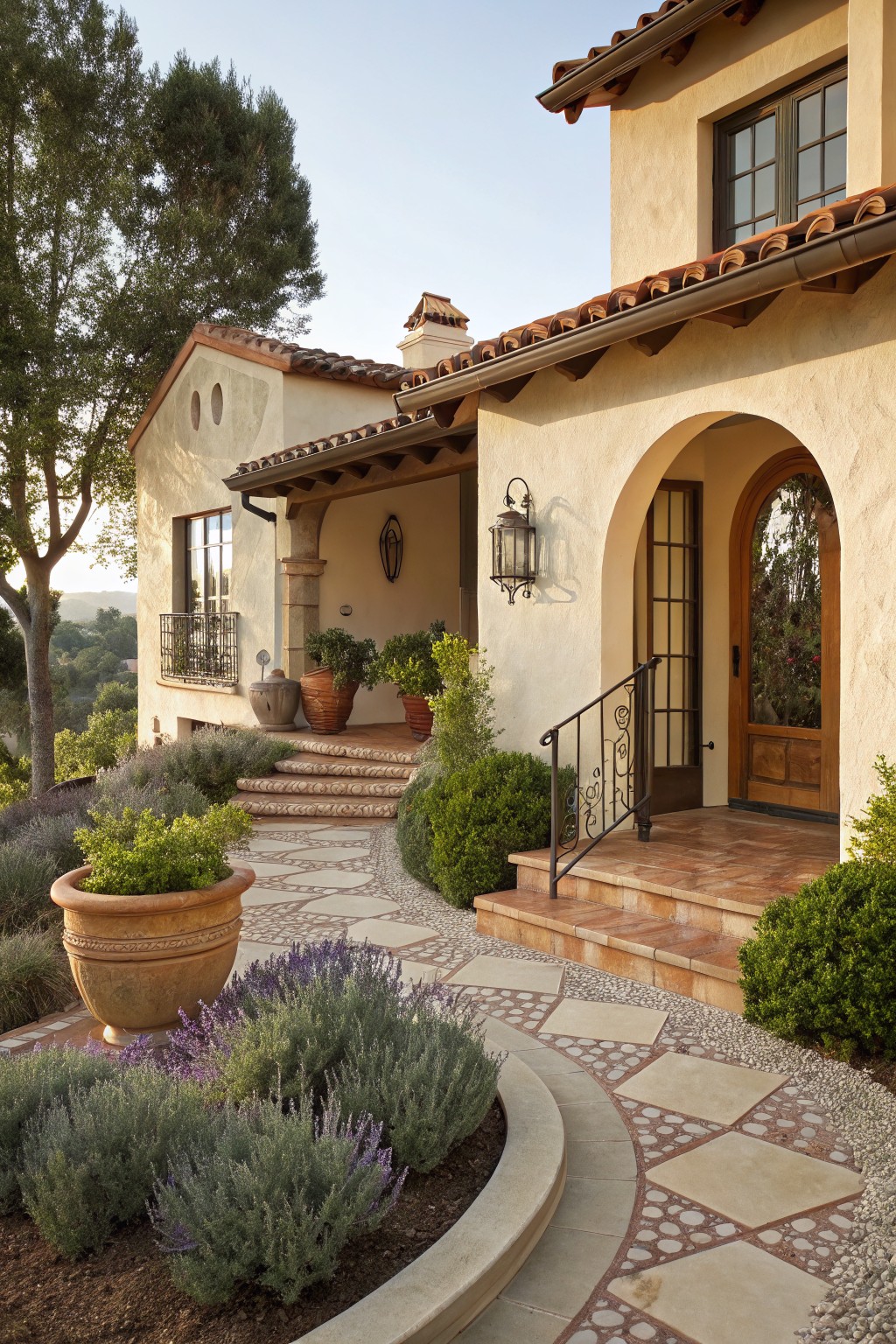
A curving stone path set in gravel makes its way up to the front porch, with low lavender beds and terracotta pots tucked right along the edges. It feels natural and pulls you forward gently, especially with the mix of green shrubs and those big orange pots adding pops of color. On a house like this stucco one, it ties the yard right into the entry without much fuss.
This works well for sloped front yards or anywhere you need to guide people to the door. Use tough plants that don’t need much water, like lavender or boxwood. Keep the beds mounded a bit for shape… suits Mediterranean or ranch-style homes best, and it’s pretty low upkeep once established.
Lush Planting Beds Along Curved Porch Steps
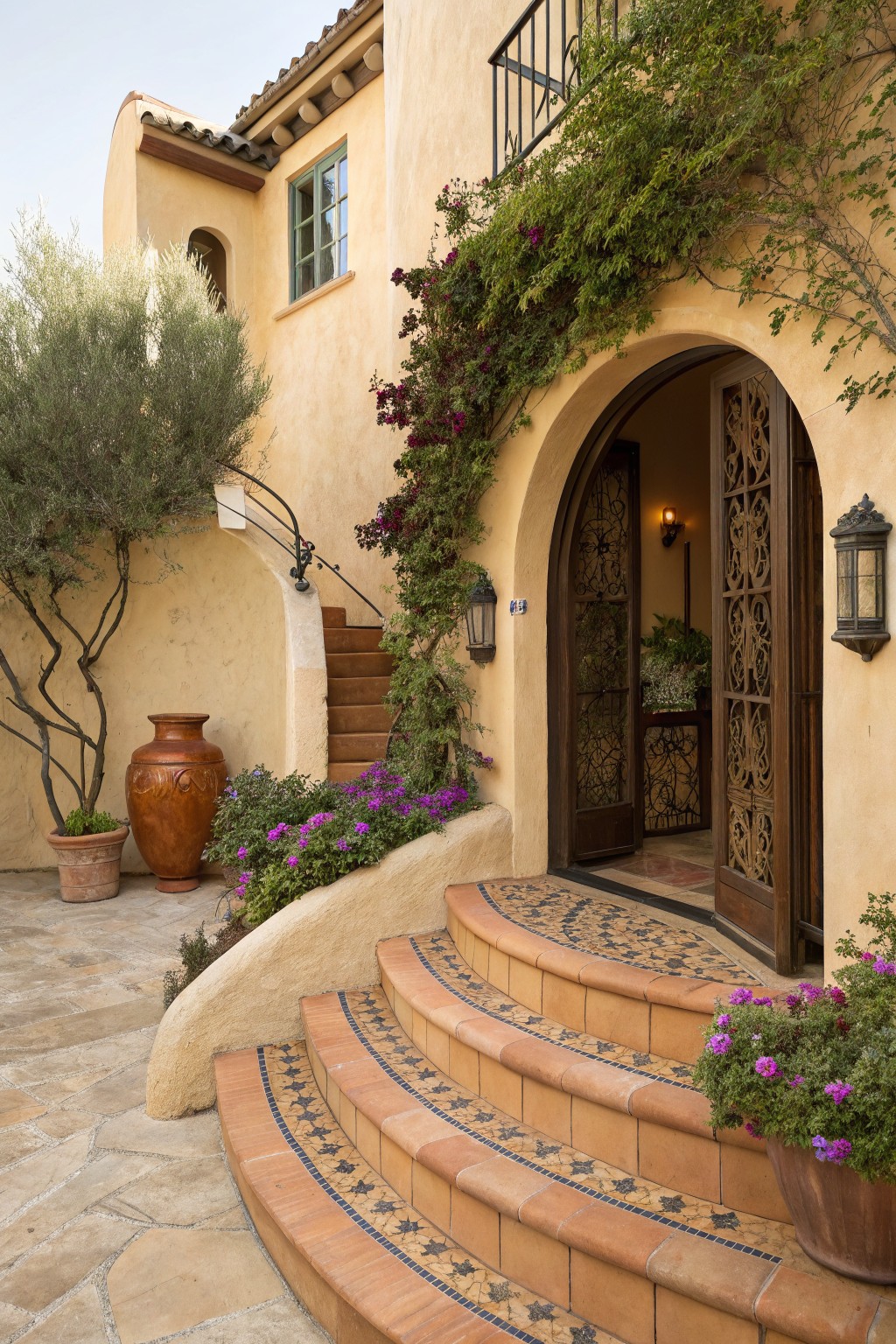
Climbing vines and low flower beds work great here to hug the curve of these terracotta steps leading up to the entry. The purple bougainvillea spills over the archway, while small plants fill in right along the edges. It softens the stucco walls and pulls your eye straight to the door without much fuss.
This kind of planting suits warmer climates, especially on homes with that Spanish or Mediterranean look. Go for drought-tough choices like lantana or ice plant in the beds, and big olive trees in pots nearby. Just keep things trimmed back from the door so it stays practical… and water less near the foundation to avoid issues.
Brick Steps with Layered Flower Beds
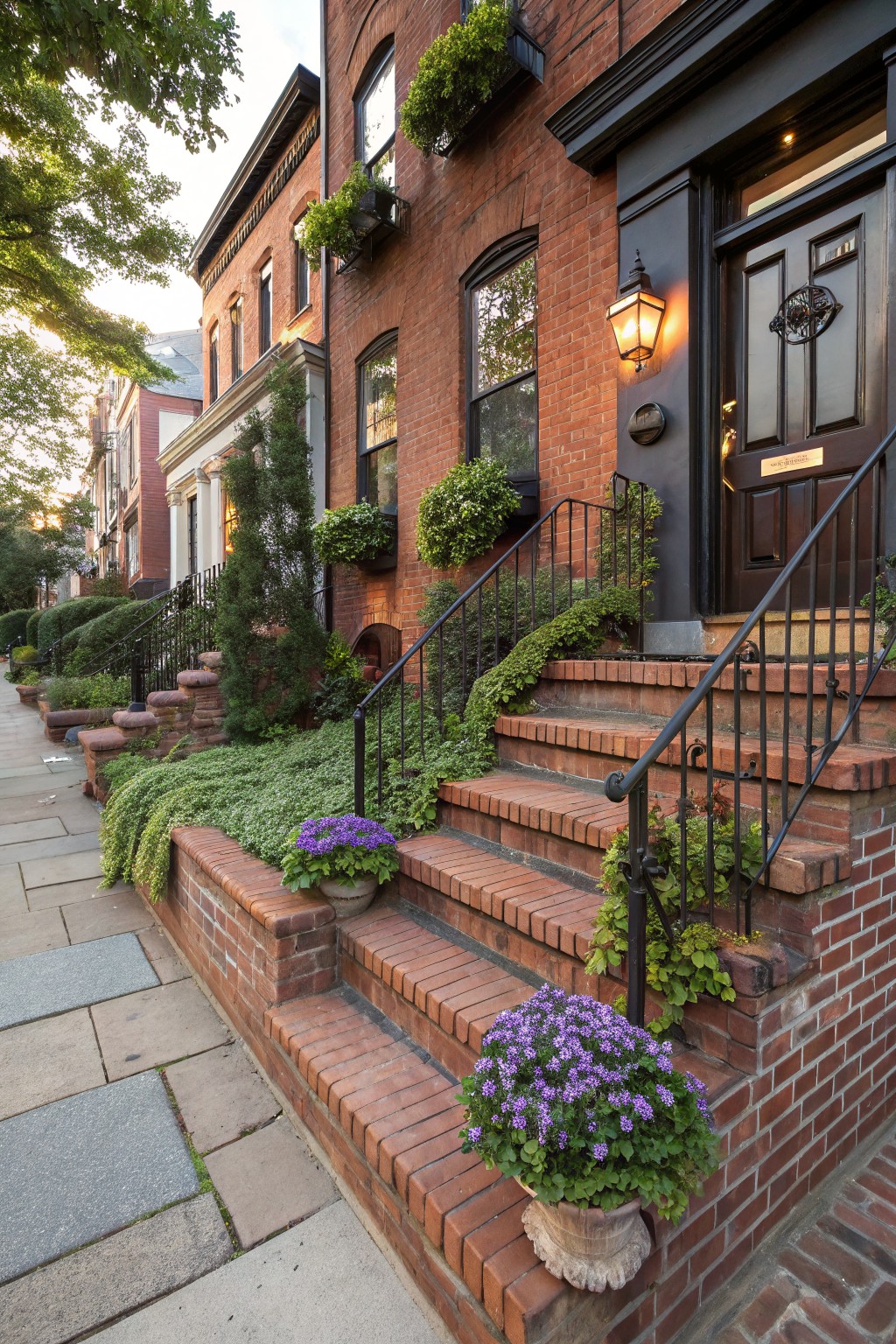
One simple way to make a front stoop feel more welcoming is to tuck flower beds right into the brick steps. Here, low brick walls along the sidewalk hold trailing ground cover and plump purple mums in pots sit on the step edges. It softens all that hard red brick without hiding the house’s classic lines. The plants add color and life exactly where people notice first, when walking up.
This works best on older rowhouses or townhomes with straight-up steps. Build the beds with matching brick or stackable blocks to keep the look tied together. Choose tough bloomers like asters or sedum that handle foot traffic and some shade from overhanging trees. Just keep the path clear so no one trips. Easy upkeep, big payoff in curb appeal.
Gravel Path Lined with Tall Grasses
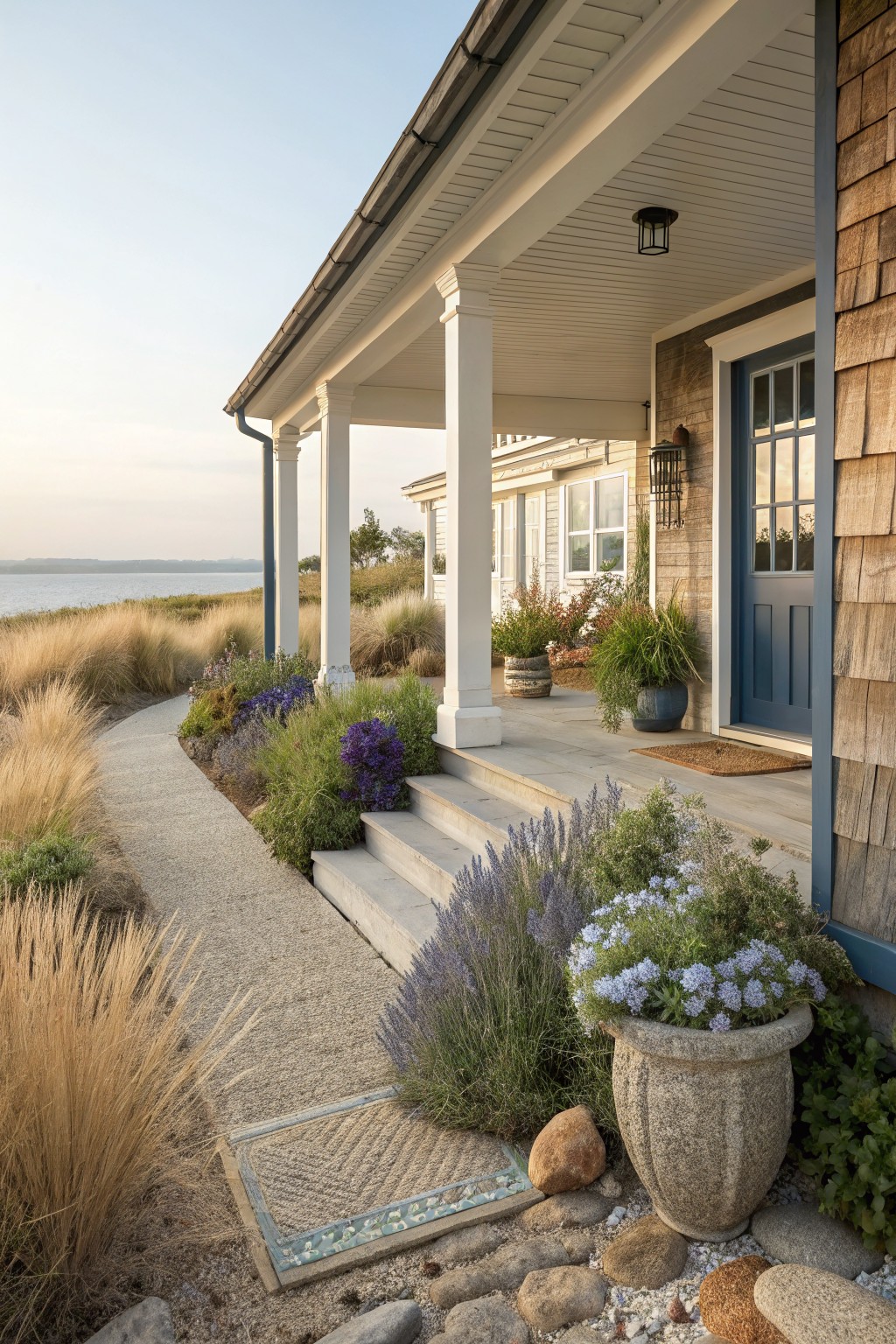
A gravel path like this makes a gentle lead-in to your front porch. Tall grasses line both sides, with low plants tucked in here and there. It feels natural, especially near water or dunes. The loose stones and swaying blades keep things from looking too stiff, and it points the way to the door without shouting.
This works best on homes with a casual vibe, like beach cottages or farmhouses. Use easy grasses such as fountain grass or maiden grass for the edges. Drop in lavender or catmint close to the steps for some purple pops. Skip fussy edging. Just let it curve a bit, and mulch the beds to hold it together.
Tulips Line Entry Steps
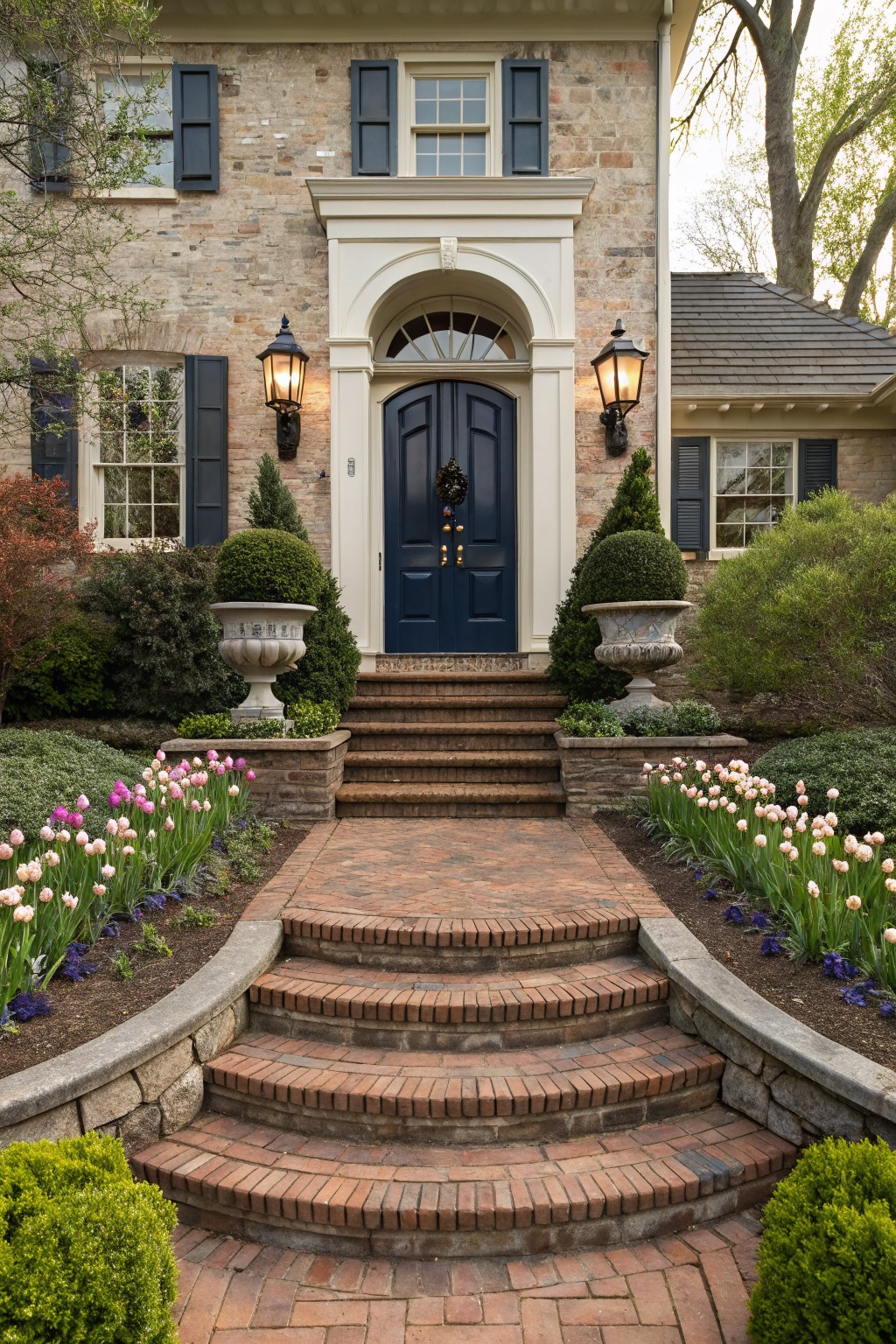
Pink and white tulips packed into low beds hug these brick steps right up to the front door. That simple move adds fresh color in spring and guides folks naturally toward the house. Boxwood topiaries in urns keep things neat on the sides.
Plant tulip bulbs in fall along any steps or path where you want seasonal punch. It works great on older brick or stone homes like this one. Just use low stone edging to hold soil back and mix in some perennials so it’s not empty later. Avoid super steep spots though.
Boxwood Borders Around Porch Steps
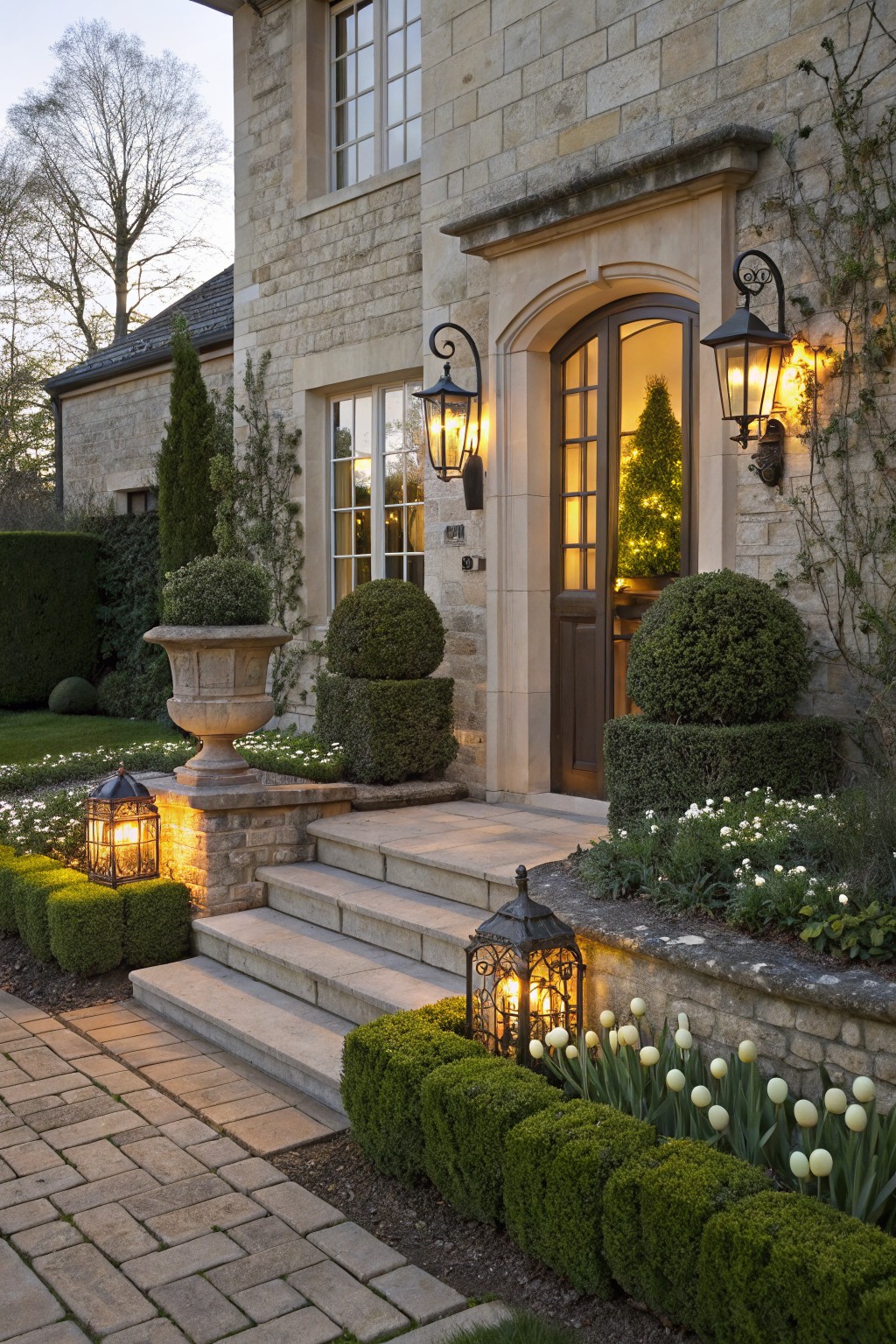
Boxwood borders like these work so well along front porch steps. You see neat squares and balls of clipped boxwood right up against the stone edges, with low beds of white tulips filling in the front. It keeps everything tidy and structured, while the bulbs add that fresh spring pop without overwhelming the look. Those lanterns tucked into the beds help too, lighting up the path at dusk.
Try this on homes with stone or brick facades, especially if you want low upkeep. Boxwoods stay green year round, and you can swap tulips for other bulbs or annuals. Just make sure to trim the boxwoods a couple times a year… it pays off for that polished entry feel. Suits formal gardens or even smaller lots.
Stepping Stone Paths in Gravel Gardens
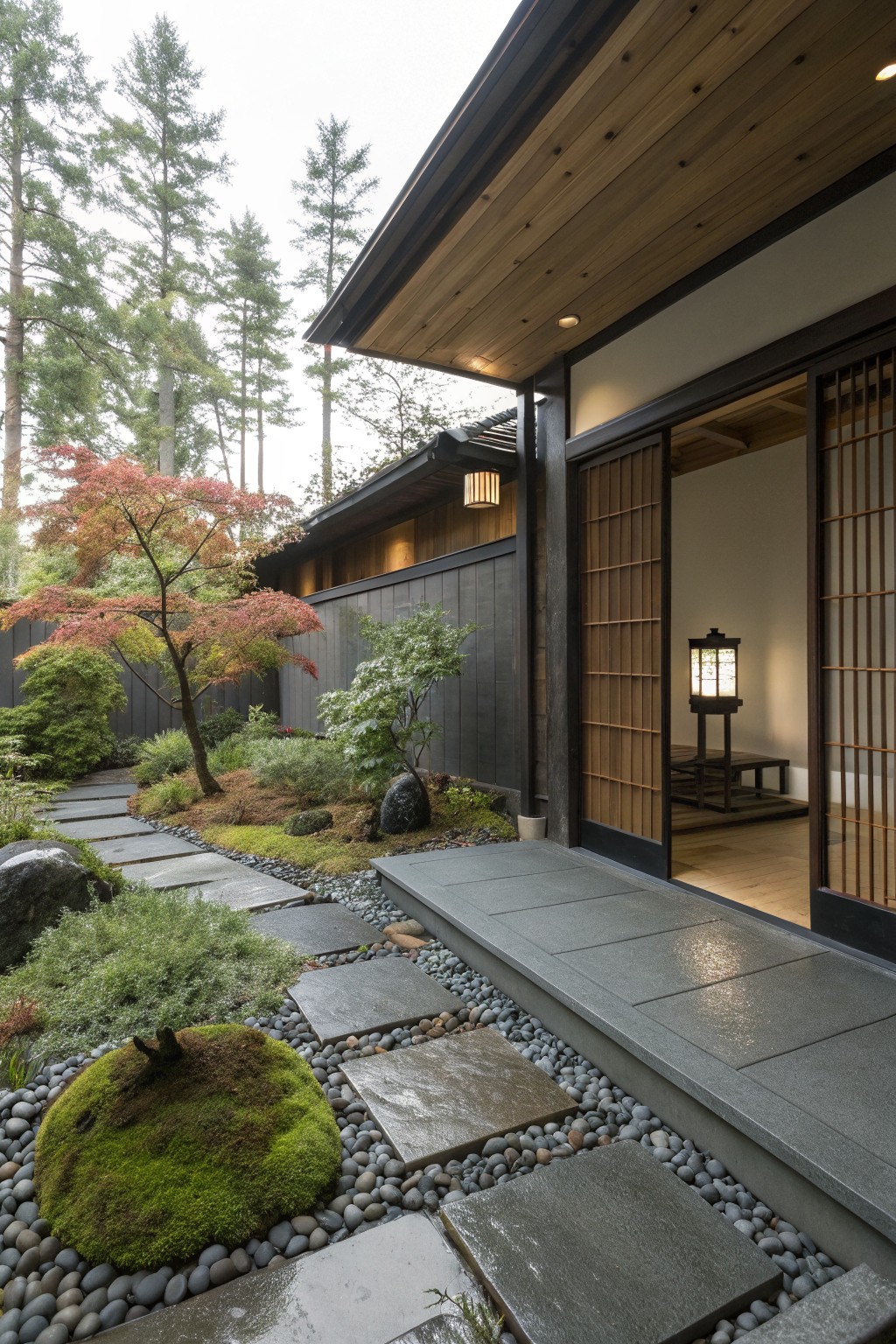
A simple path made from rough stone slabs set right into gravel works great for leading folks to your front door. Here you see it winding past mossy boulders and low plants, keeping things open and easy to walk. No fussy mowing. Just a quiet, natural line that pulls your eye forward without trying too hard.
Try this in smaller yards or spots with some shade where grass struggles. Pick smooth river rocks for the gravel base and space the stones so you step naturally. It fits homes with a clean modern look or even older ones aiming for calm. Skip it if you have heavy foot traffic though. Feet might shift the gravel over time.
Concrete Steps with Built-In Planters
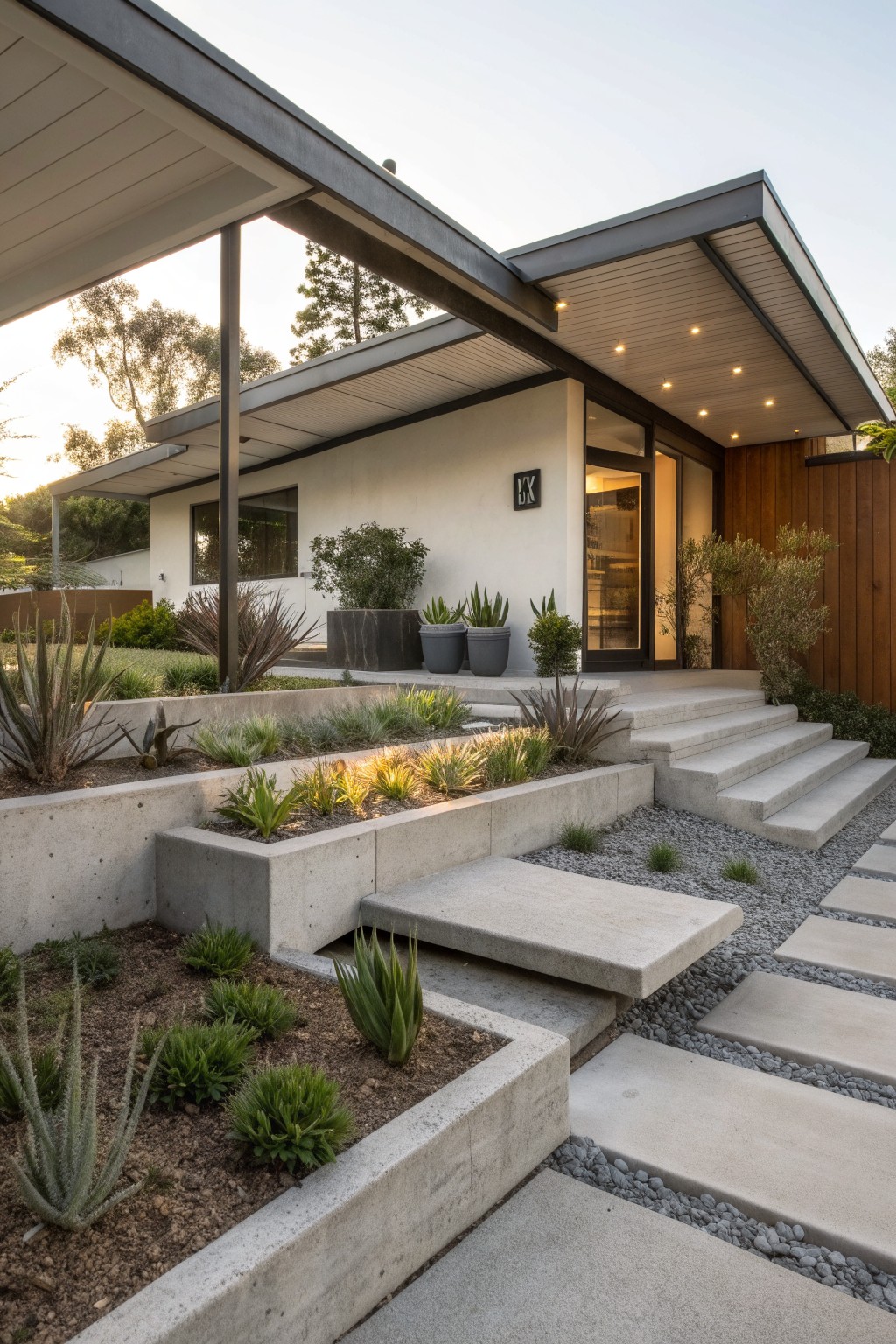
Concrete steps like these turn a basic entry into something with real structure. The built-in planters hold succulents and grasses that spill over just right, leading the eye up to the door without much extra planting around. It’s a simple way to blend hardscape and plants, especially on a slope.
This works best where you have some grade change to play with. Pick tough, low-water plants to match the concrete look. Suits modern homes or any spot needing curb appeal without high upkeep. Just size the beds to fit the steps. Too narrow and it feels off.
Tall Foxgloves Beside the Porch
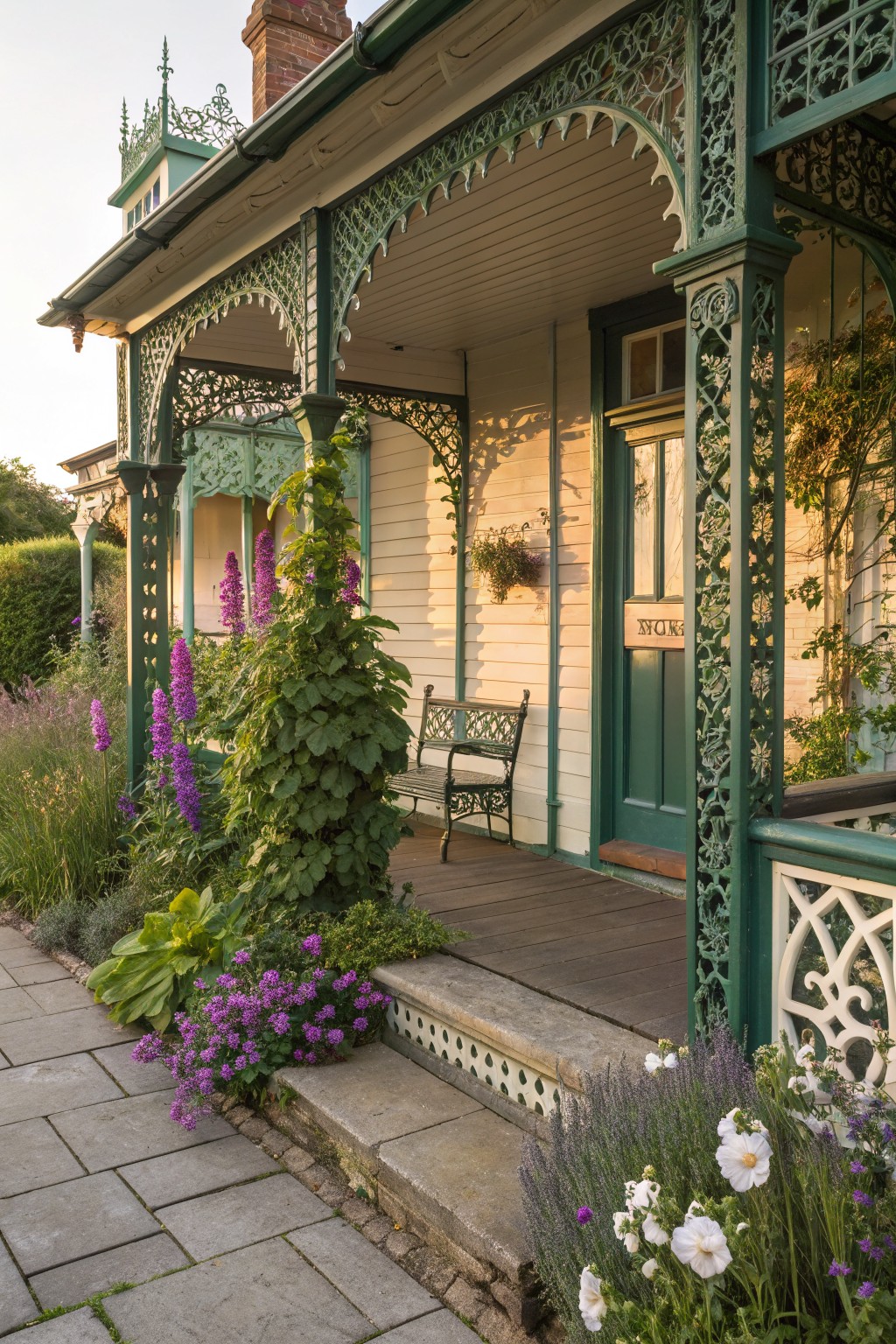
Tall purple foxgloves planted close to the porch posts catch the eye right away. They rise up to match the height of the green ironwork, tying the plants to the house structure in a natural way. That vertical repeat makes the whole entry look taller and more put-together. A simple bench on the porch and some hanging pots keep it from feeling too busy.
You can pull this off on any home with a raised porch or steps. Go for foxgloves or similar spikes in the back of the bed, then layer shorter stuff like lavender out front. It suits cottage-style places or older houses best. Just make sure the spot gets some afternoon shade, or the tall ones might flop.
Flanking Front Steps with Wooden Planters
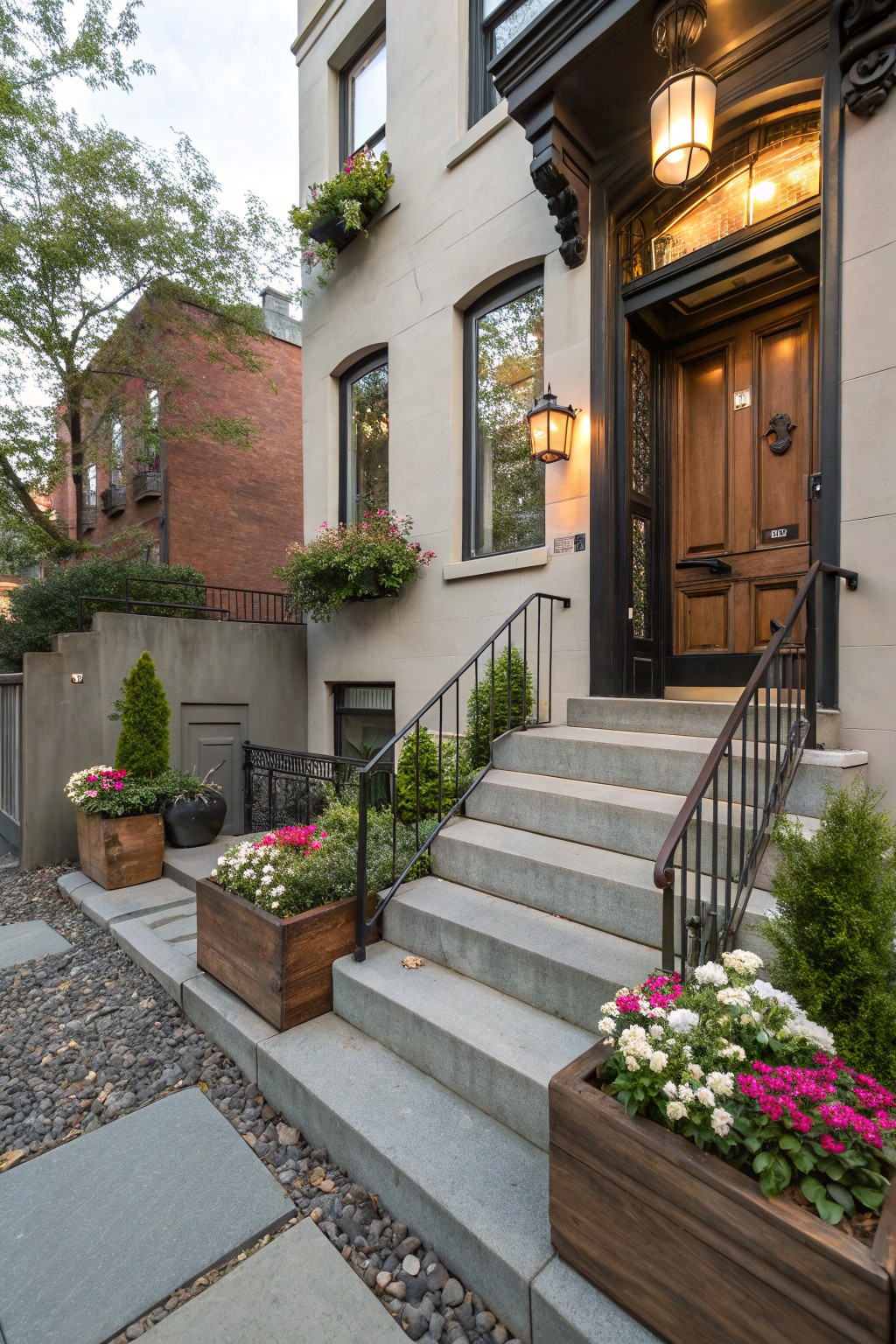
One simple way to make your front entry more welcoming is to line the stairs with wooden planters full of flowers. In this setup, sturdy wood boxes sit right along the concrete steps, holding a mix of pink and white blooms that spill over just a bit. It softens those hard edges and draws the eye up to the door without much fuss. People notice it right away, and it feels put-together even on a basic townhouse facade.
You can pull this off on most any entry with stairs, especially older row houses or urban spots where space is tight. Pick low wood planters that match your siding, fill them with easy annuals or perennials that bloom a long time, and keep the plants in a couple colors for punch. Watch the height so they don’t block the path, and refresh them seasonally to keep it looking fresh.
Layered Plants Flanking Porch Steps

One simple way to make a front porch feel more welcoming is layering plants along the steps. You see low plants hugging the base, then taller ones filling out the middle, and shrubs up top near the porch. This setup softens those stone steps without hiding them. The mix of greens and pops of color, like pink flowers and purple blooms, pulls your eye right up to the door. It works because it adds life where the hard surfaces meet.
Try this on homes with clean lines, like craftsman or stone facades. Pick tough perennials and small shrubs that match your zone, nothing too fussy. Keep the beds edged neat with stone or mulch to tie into the steps. It suits sloped entries best, but watch for overcrowding. Space plants so they have room to grow.
Boxwoods Flanking the Porch Path
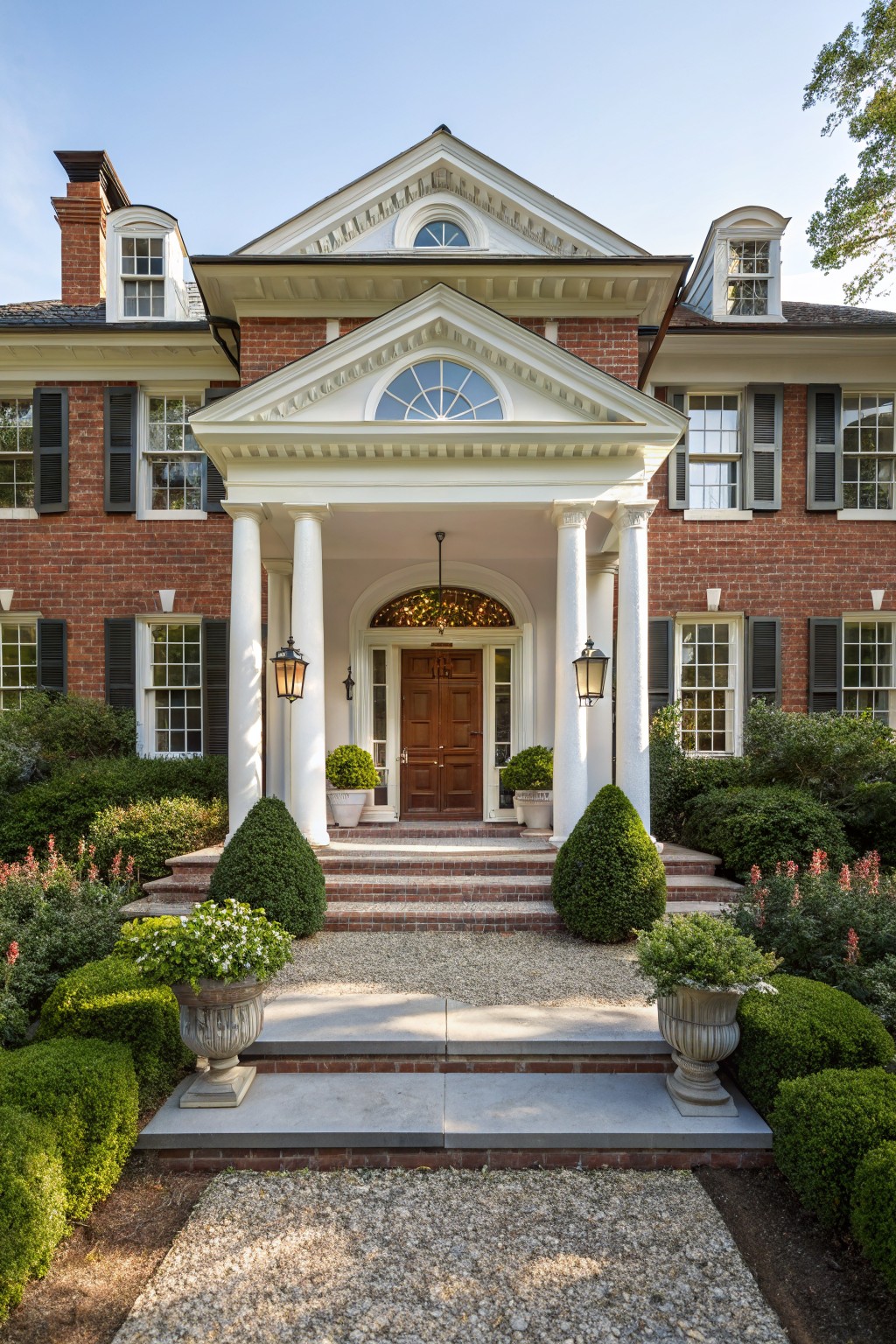
Boxwoods shaped into neat rounds sit on both sides of the entry path here. They line up perfectly with the house steps and give everything a tidy, formal feel. Paired with a few colorful flowers poking up nearby, they make the front yard look put-together without much fuss.
This works best on homes with straight lines like colonials or brick houses. Set the boxwoods in simple beds edged with stone, then tuck in perennials for color in summer. They stay green all year, so the look holds up. Just trim them once a season to keep the shape.
Raised Planters Flanking Porch Steps
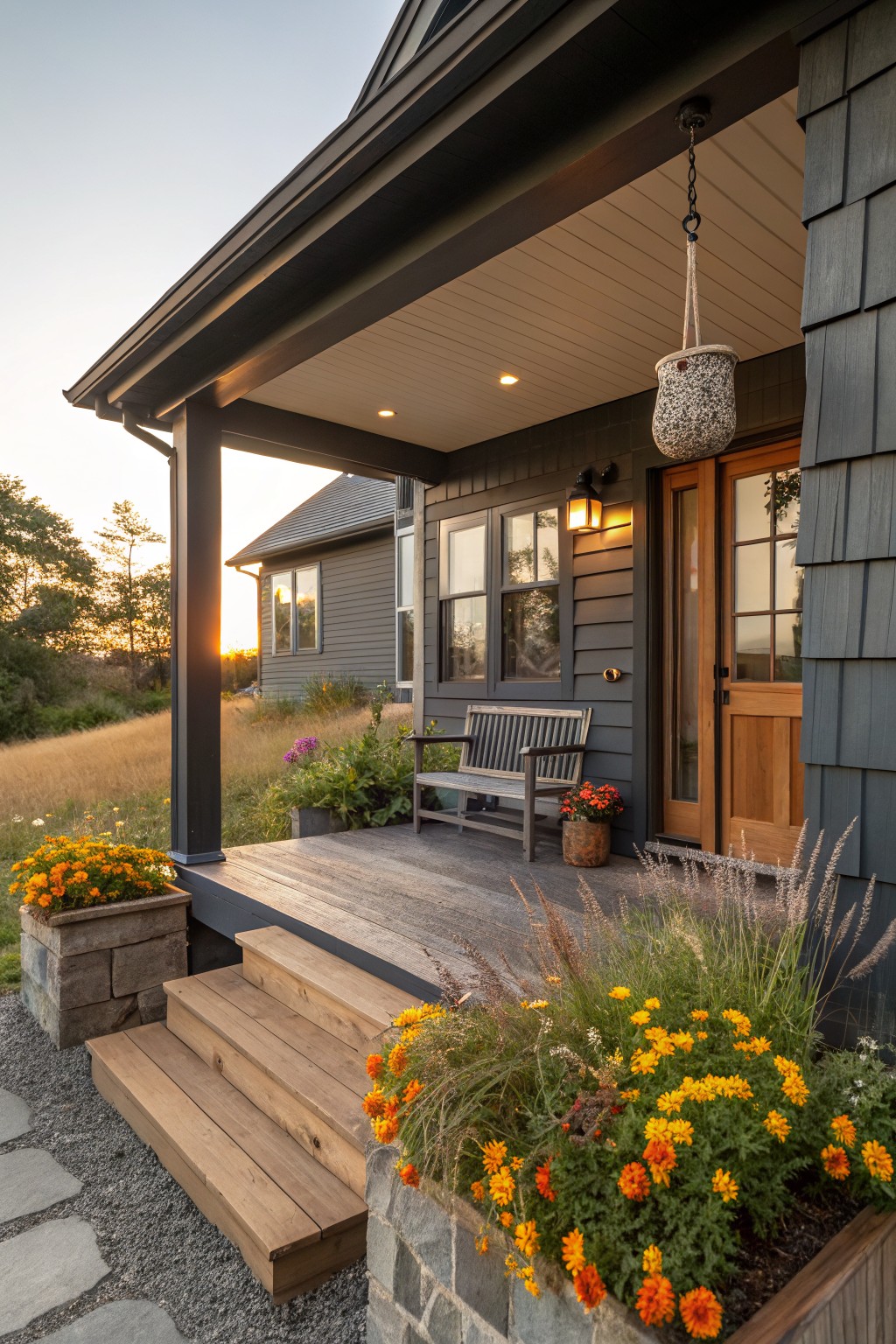
One straightforward way to boost curb appeal is to place raised planters right beside your porch steps. Here, sturdy stone bases hold back the soil and frame wooden steps nicely. They’re packed with orange marigolds that pop against the dark gray siding. This setup guides people to the door without much fuss.
These work best on homes with a bit of slope or gravel paths like this one. Pick plants that bloom late in the season for color into fall. Stone keeps things low-maintenance… just refresh the flowers yearly. Suits craftsman or modern farmhouse styles where you want planting without big garden beds.
Rock Gardens Around Front Entry Steps
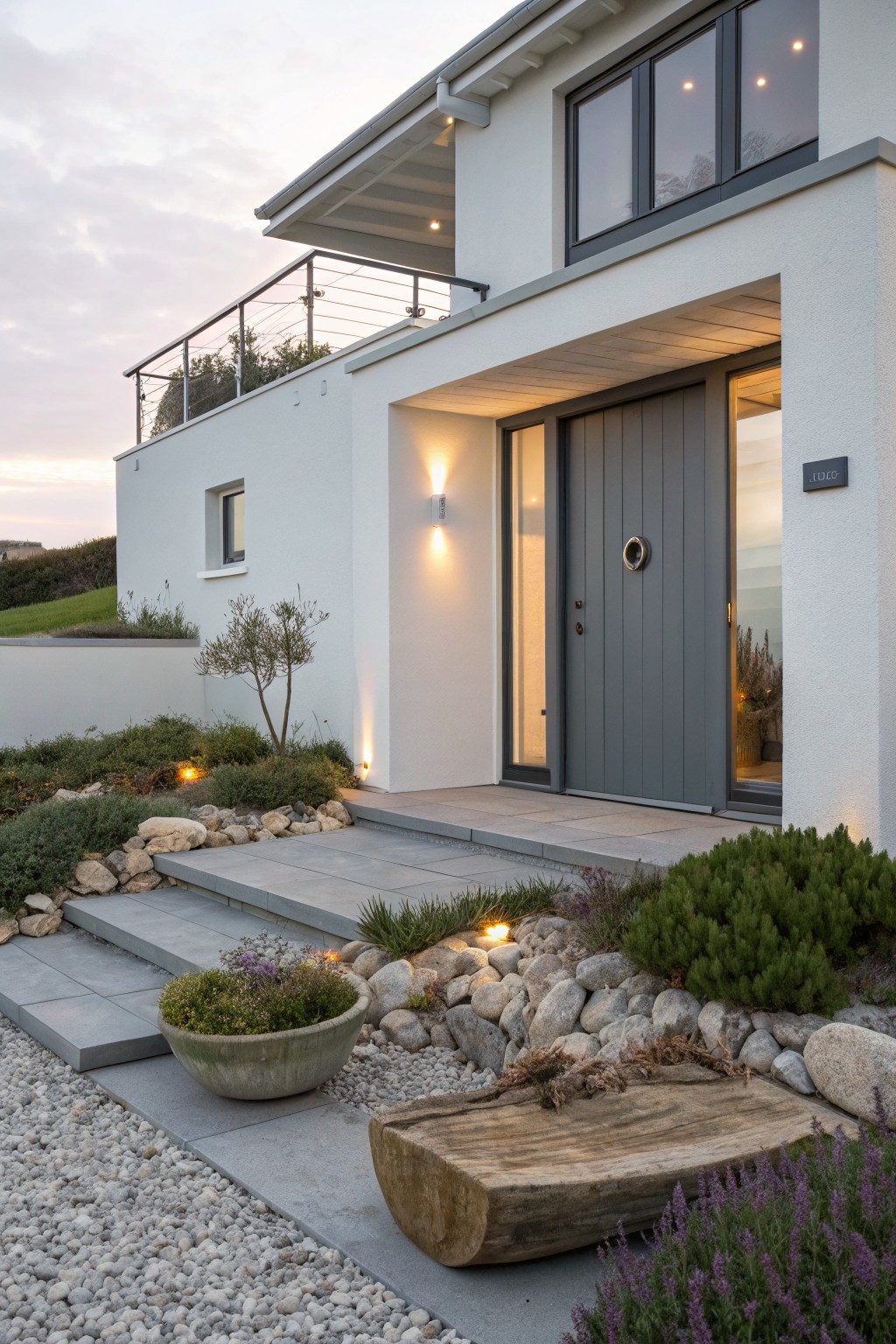
One smart way to handle front porch landscaping is filling the beds with rocks and gravel instead of just mulch or grass. It gives a clean, rugged look that fits modern homes like this white stucco one. The larger stones mixed with pebbles add texture without needing constant weeding or watering. A big pot with heather softens it just enough.
This works best where you want low upkeep, like on slopes or in drier spots. Layer in low shrubs like lavender for some green, maybe toss in a weathered log for interest. It suits contemporary houses but could tone down fancier ones too. Keep the rocks in neutral tones to blend with stone steps.
Hydrangeas in Curved Beds by the Front Steps
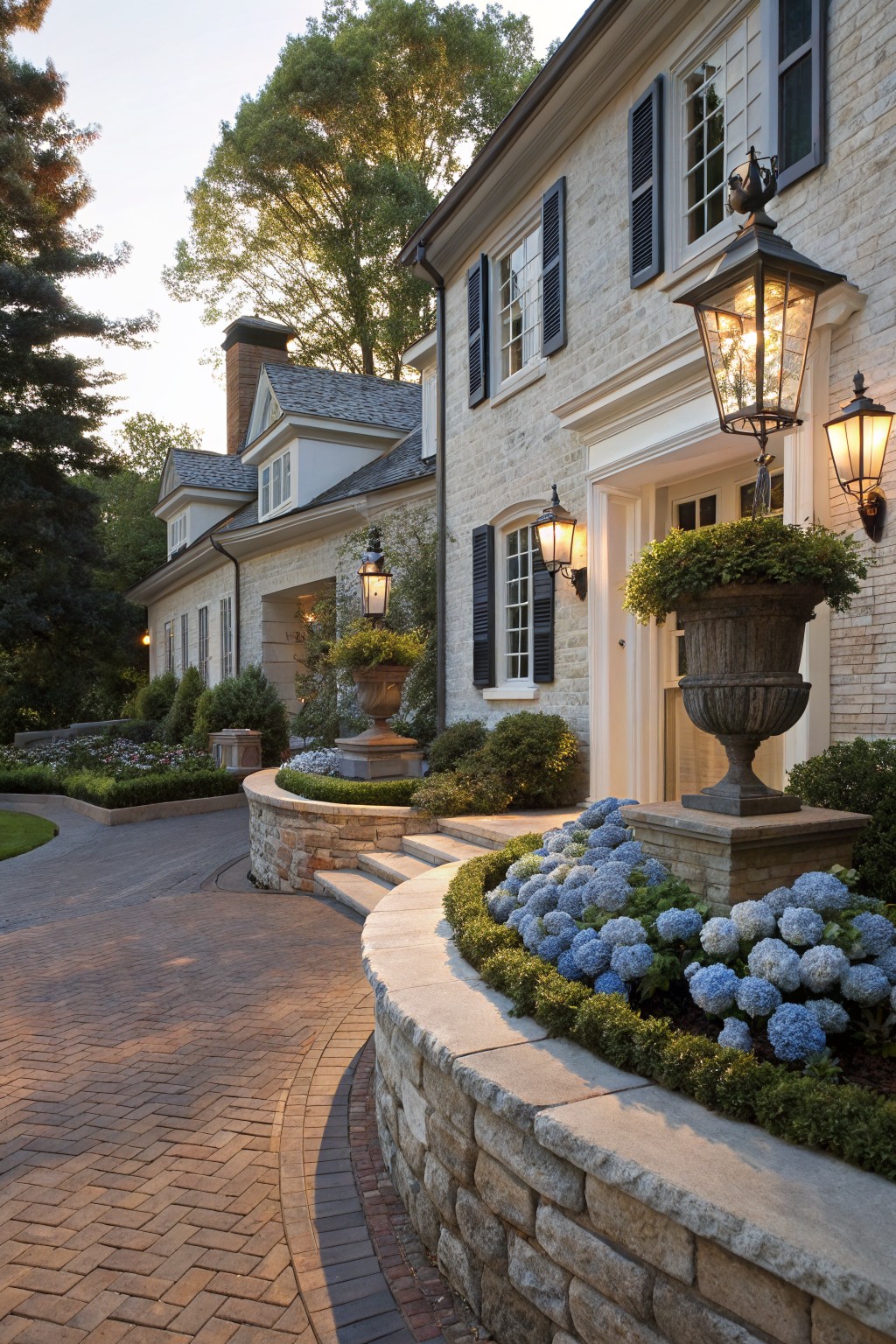
Big clusters of blue hydrangeas tucked into a curving bed along a low stone wall make this front entry path stand out. The flowers spill over just right, softening the hard edges of the brick walkway and stone without overwhelming the house. It’s a simple way to add color and texture right where people first see your home.
Try this on homes with a driveway curve or short set of steps to the porch. Mophead hydrangeas fill out fast and bloom reliably in partial sun. Pair with basic stone edging to keep focus on the blooms. Suits classic brick or stone houses best. Just trim back in spring to stay neat.
Colorful Pots Line the Front Steps
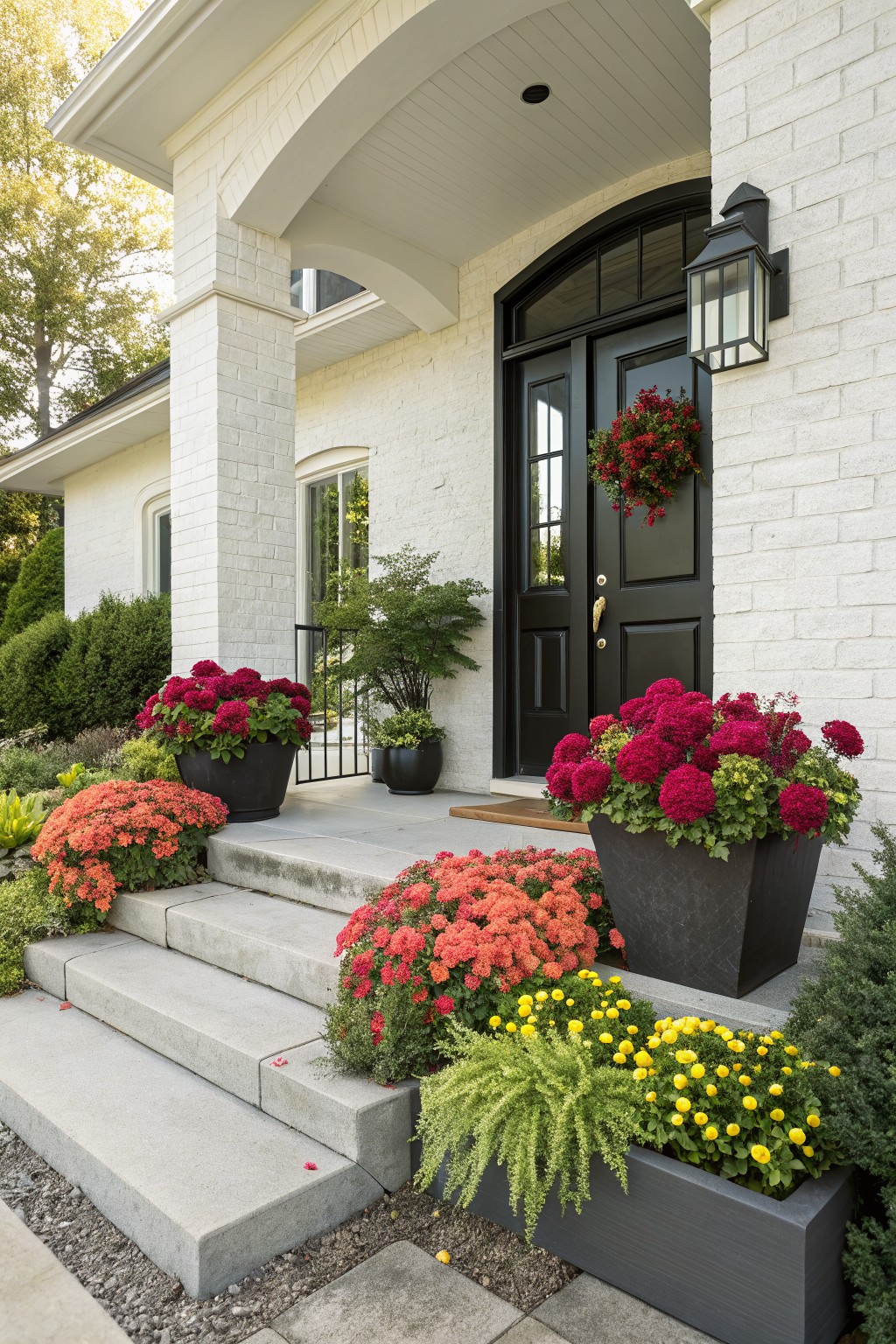
One simple way to make a front porch pop is lining the steps with big pots of bright flowers. Here, tall black containers hold clusters of red mums and orange mums, set right along the concrete stairs. They pull the eye up to the door without much fuss. The white brick house keeps things clean, so those bold colors really stand out and feel welcoming.
This works best on a straightforward entry like this, where the steps are wide enough for a few large pots. Pick tough bloomers like geraniums or mums that last through fall. Space them evenly, maybe three or four down the side. Keep the pots the same style for unity, but mix bloom colors if you want more play. It suits most homes, even rentals, since pots are easy to move.
Frequently Asked Questions
Q: Can I create one of these flower beds without spending a ton of money?
A: Grab budget-friendly annuals like zinnias or cosmos from a local nursery. Reuse old bricks or stones for edging instead of buying new. That punchy color comes quick and cheap.
Q: How do I stop weeds from taking over my front porch bed?
A: Spread landscape fabric over the soil first. Cover it with two inches of mulch right after planting. Check weekly and yank out anything that sneaks through.
Q: What plants work best if my porch sits in partial shade?
A: Hostas and astilbe add texture and bloom reliably there. Mix in some heuchera for pops of color. They handle low light without fuss.
Q: How often should I water these flower beds to keep them thriving?
A: Water deeply once or twice a week, depending on rain. Stick your finger in the soil; if it’s dry two inches down, give it a good soak. Morning is best to cut down on evaporation.
