

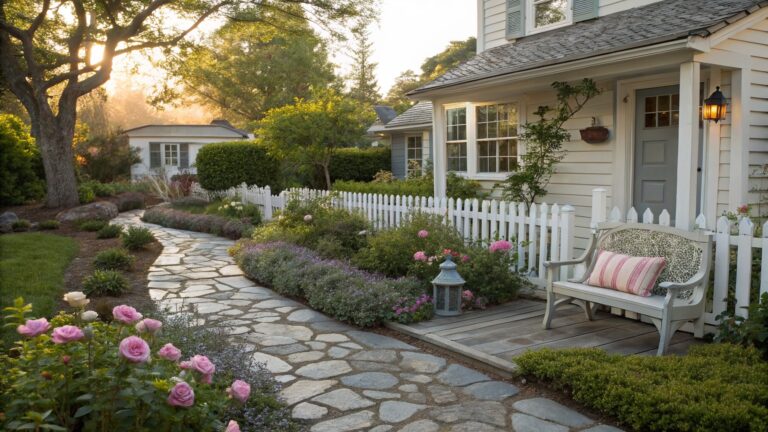
I’ve noticed how lavender transforms garden paths into something truly sensory when you edge them just right, drawing you in with both color and scent.
In my own yard, I planted clusters along the stone walkway leading to the back patio, and over a couple of years, they’ve filled out to soften the whole layout without overwhelming it.
The fragrance hits people first as they approach, but it’s the way the plants structure borders and beds that keeps the space feeling balanced season after season.
Grouping them near benches or arbors makes everyday spots more usable, turning quick visits into relaxed pauses.
One setup with layered heights along a fence changed how I use that side yard completely.
Lavender-Lined Garden Path
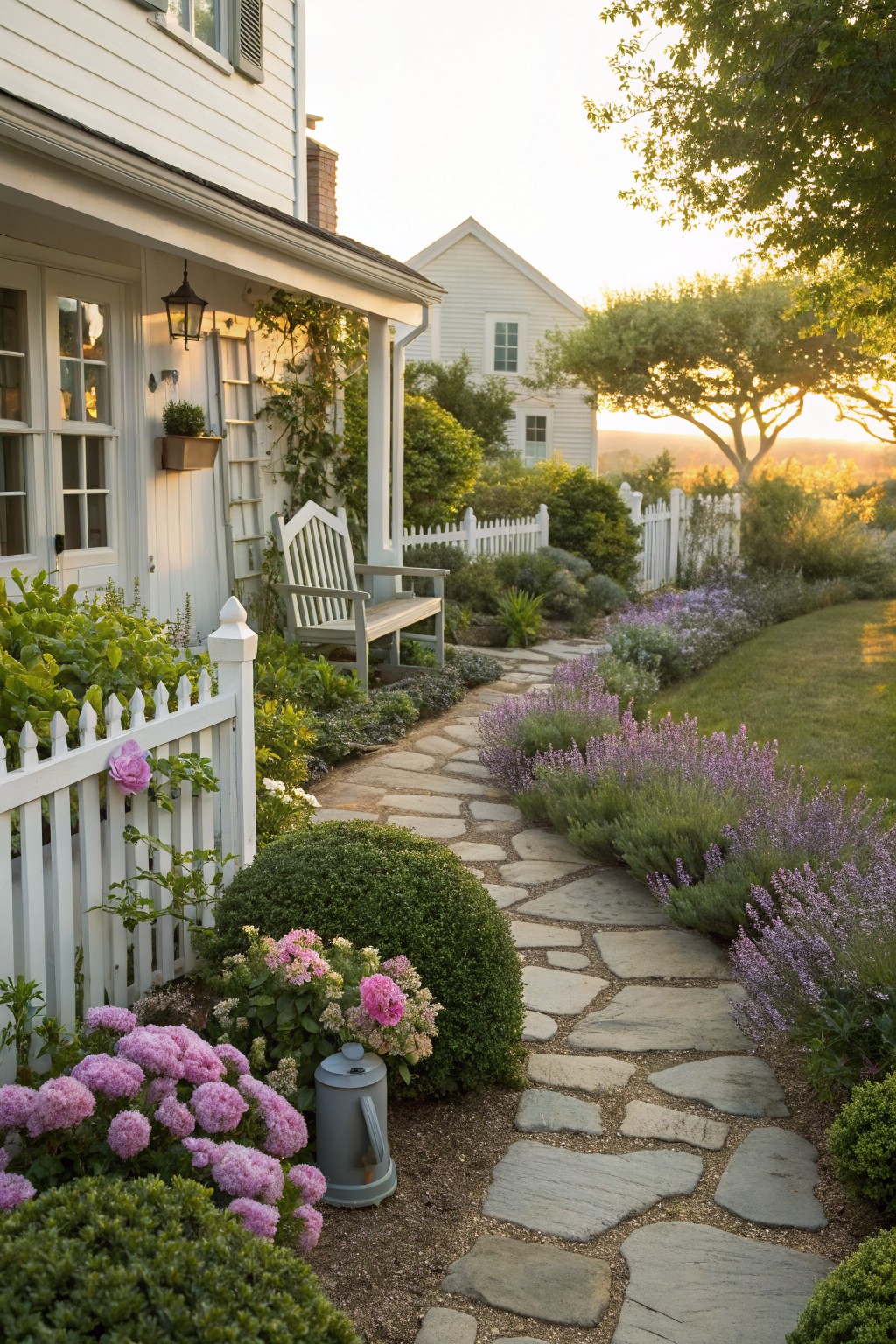
One simple way to bring lavender into your yard is along a winding stone path like this. The purple blooms hug the edges, mixing with other low plants to guide you right to the house. That fragrance hits as you walk, and it keeps things looking full without much fuss.
Plant lavender in full sun spots next to paths in cottage-style yards or relaxed front gardens. Pair it with tough shrubs and perennials for year-round shape. Just trim it back after blooming to stay neat, and it works great near porches where you pass by often.
Vertical Lavender in Wall-Mounted Pots
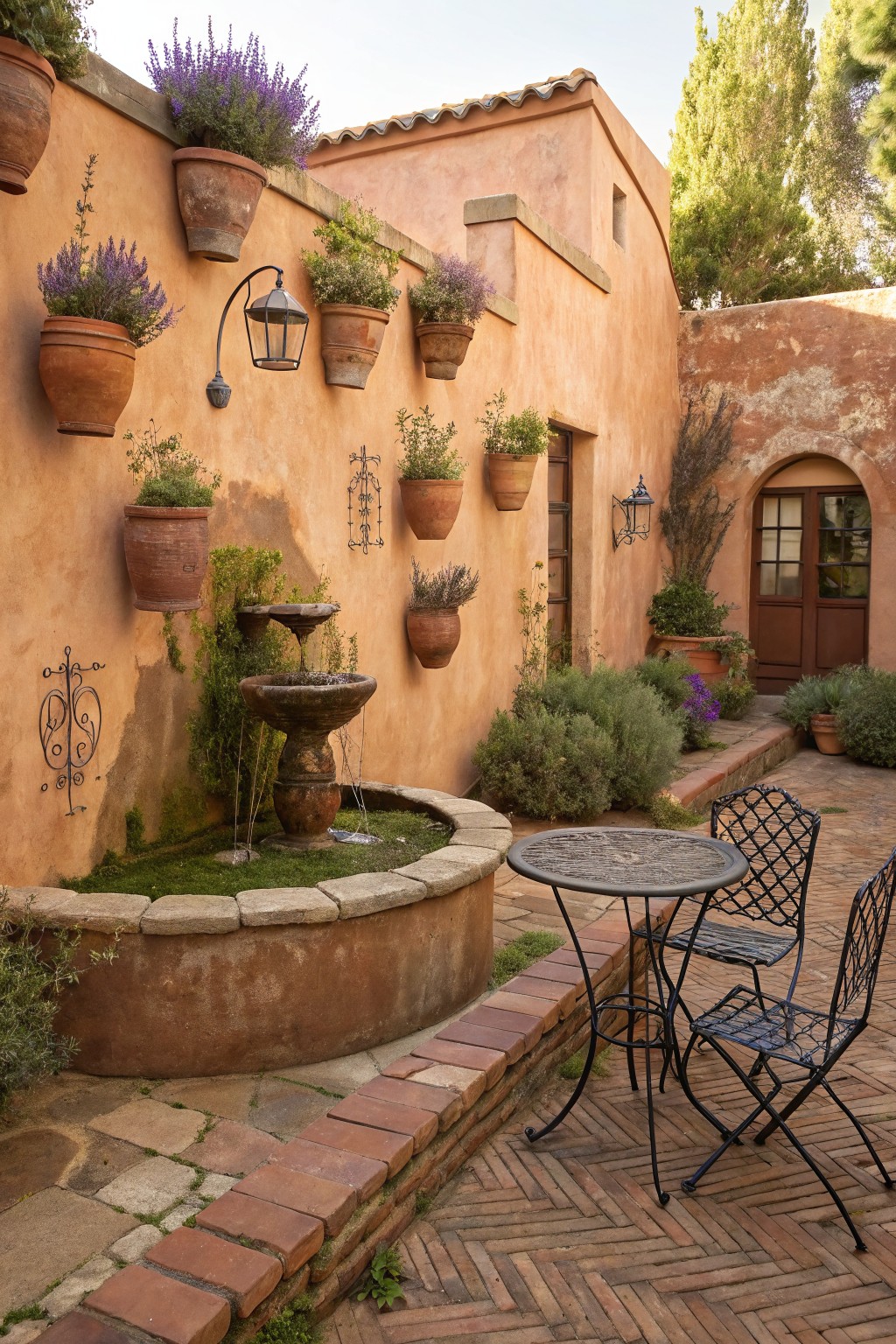
One simple way to pack fragrance into a small outdoor space is filling terracotta pots with lavender and mounting them straight on the walls. Those earthy pots overflowing with purple blooms turn a plain stucco wall into a living tapestry. You get the scent right at nose level, especially nice near a fountain or seating spot.
This setup fits courtyards or patios best, where ground space is tight. Hang the pots at different heights using strong brackets, and plant in full sun. It suits Mediterranean-style homes or anywhere dry and warm. Just water sparingly to keep the lavender happy.
Lavender Lining Hillside Stone Steps
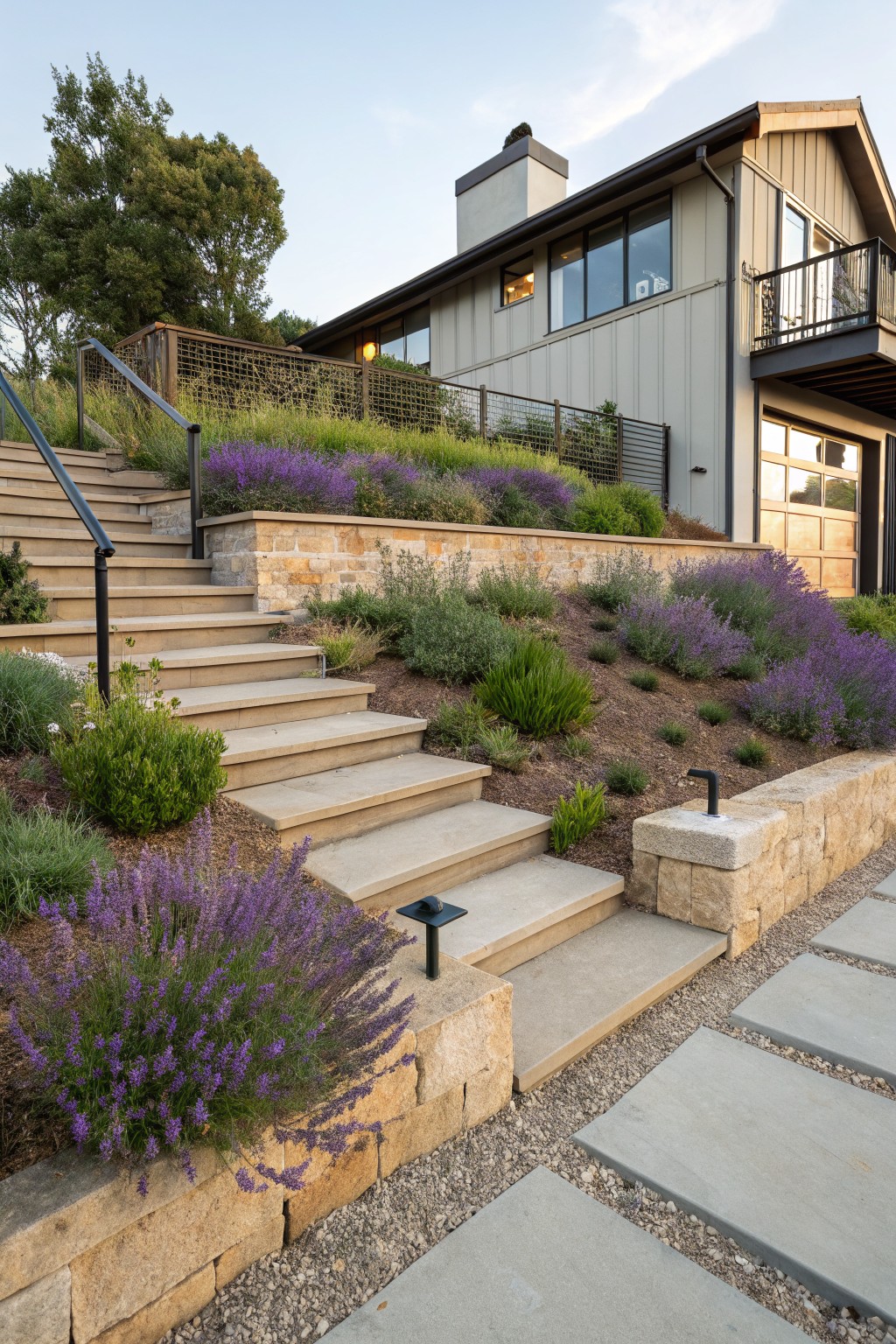
One simple way to handle a sloped yard is planting lavender right along stone steps and retaining walls. It turns a basic path into something that smells good and looks full of color without much fuss. The purple flowers spill over the edges of the warm stone, making the climb up to the house feel easier and more welcoming.
This works best on hills where you need to terrace the ground anyway. Pick a sturdy lavender variety that handles dry spots well, and plant it in loose clusters so it mounds naturally. Keep the beds edged clean with the stone to avoid a messy look. It’s great for modern or rustic homes, and the fragrance hits you every time you walk up.
Lavender-Lined Garden Path
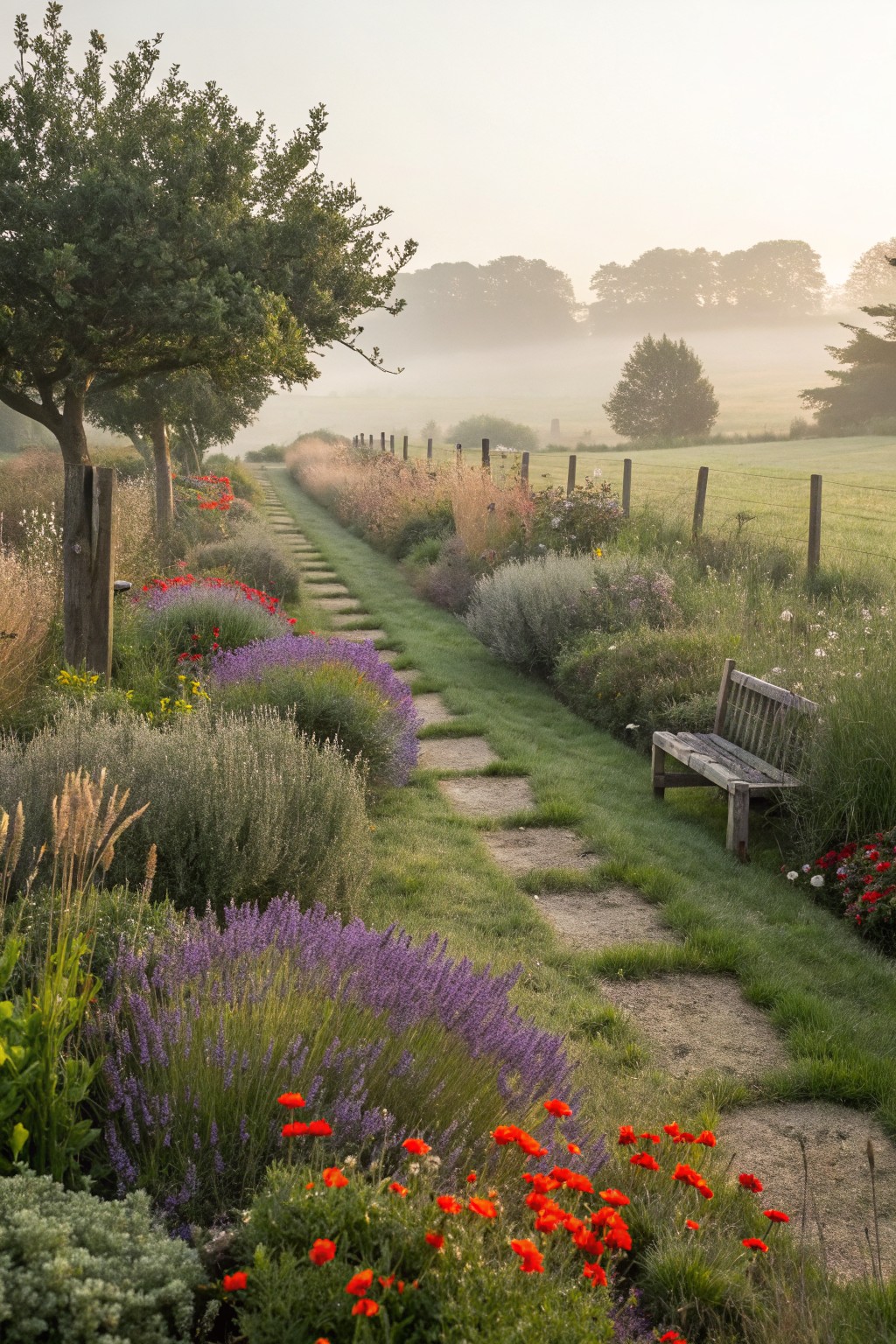
A simple stone path like this, edged tight with lavender on both sides, turns a plain walkway into something you actually want to use. The bushes stand tall enough to brush your shoulders as you go by, releasing that clean scent right when you need it most. Add a bench halfway along, and you’ve got a quiet spot built right in.
This works best in narrower spaces, like beside a fence or running back to a shed. Lay down stepping stones or gravel so it’s low fuss to put together. Plant the lavender dense at first, then let it fill out over a couple seasons. Just trim it back yearly to keep the path clear.
Lavender Borders Along Patio Edges
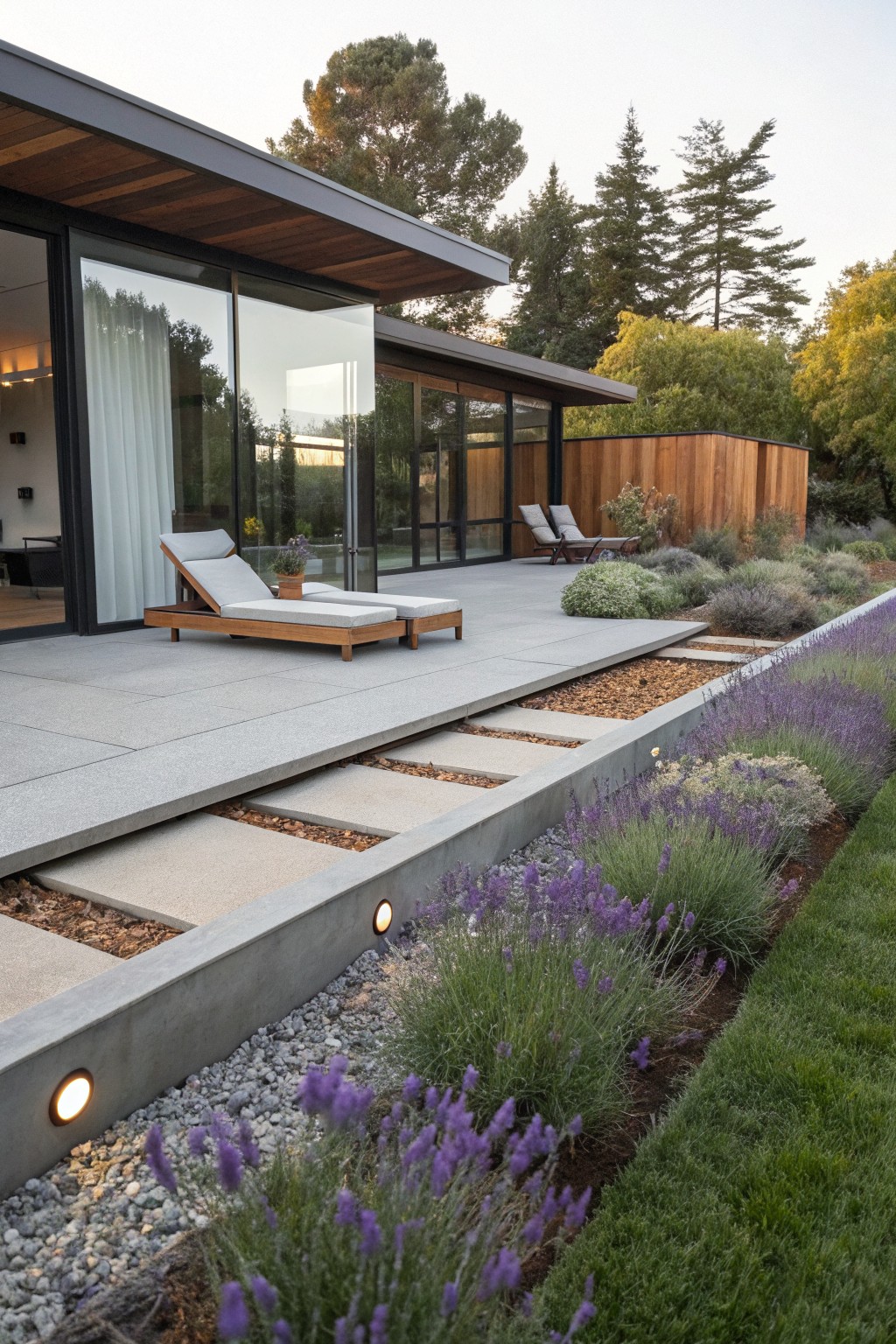
One simple way to add fragrance and color to your outdoor space is planting lavender right along the edge of a concrete patio. It softens that hard surface nicely and creates a pretty divide between the patio and the lawn. The purple blooms stand out against the gravel mulch in the raised bed, and you get that lovely scent every time you walk by.
This works best on modern patios like this one, where the clean lines of concrete meet a simple grass yard. Plant it in a low raised bed with good drainage to keep the roots happy. It’s low maintenance once established, but trim it back after blooming to keep the shape tidy. Great for sunny spots near the house.
Raised Beds for Lavender Planting
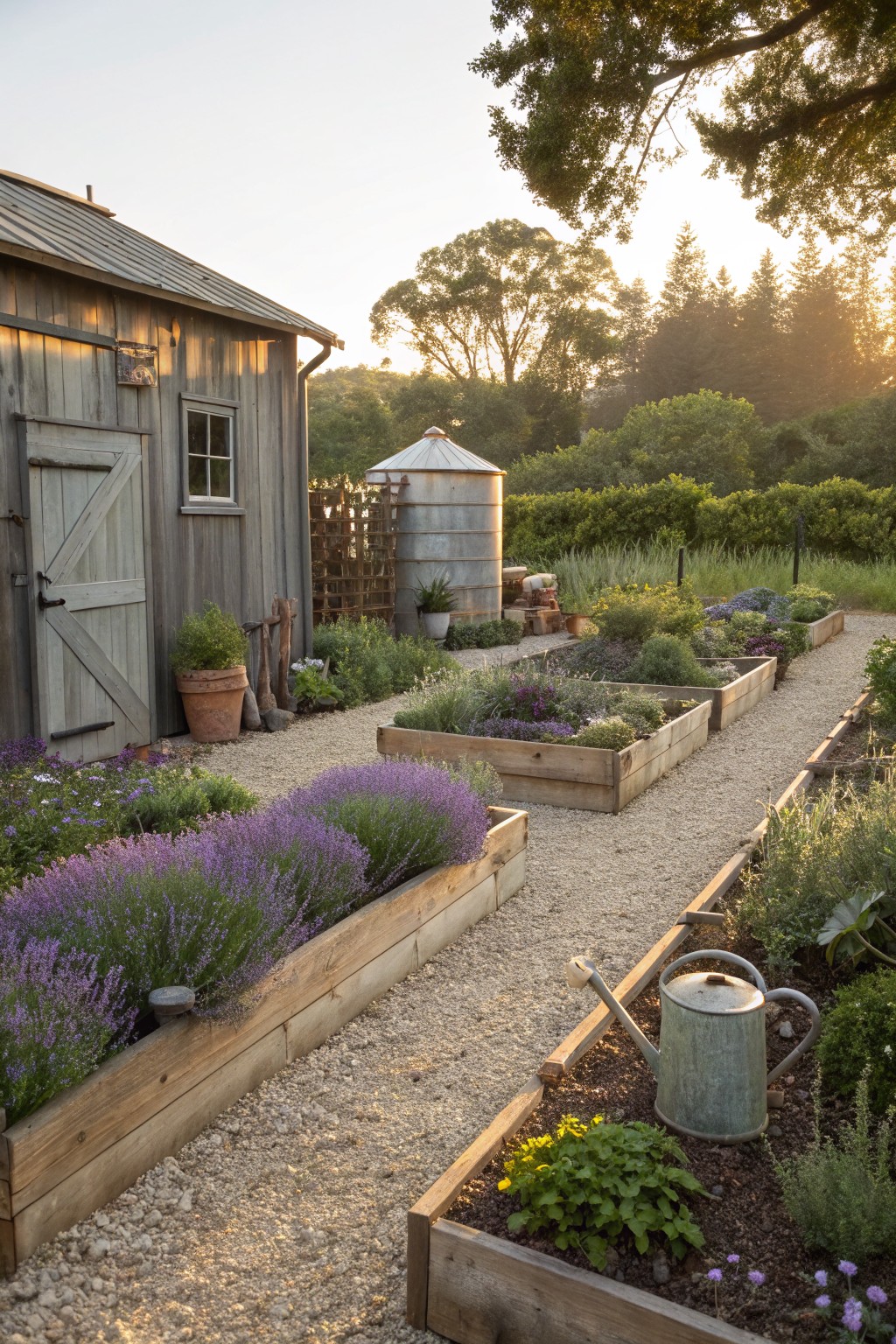
Raised wooden beds like these make lavender gardening straightforward and pretty. You fill them with plants that spill over the edges a bit, and the fragrance hits you right away when you walk the path between. It keeps everything organized without much fuss, and the wood ages nicely to fit a country yard.
Line up a few beds along a gravel walkway, maybe by a shed for tools. This setup suits herb mixes too, and it’s easier on the back than ground-level planting. Just make sure the spot gets good sun, since lavender loves that.
Potted Lavender on a Balcony Terrace
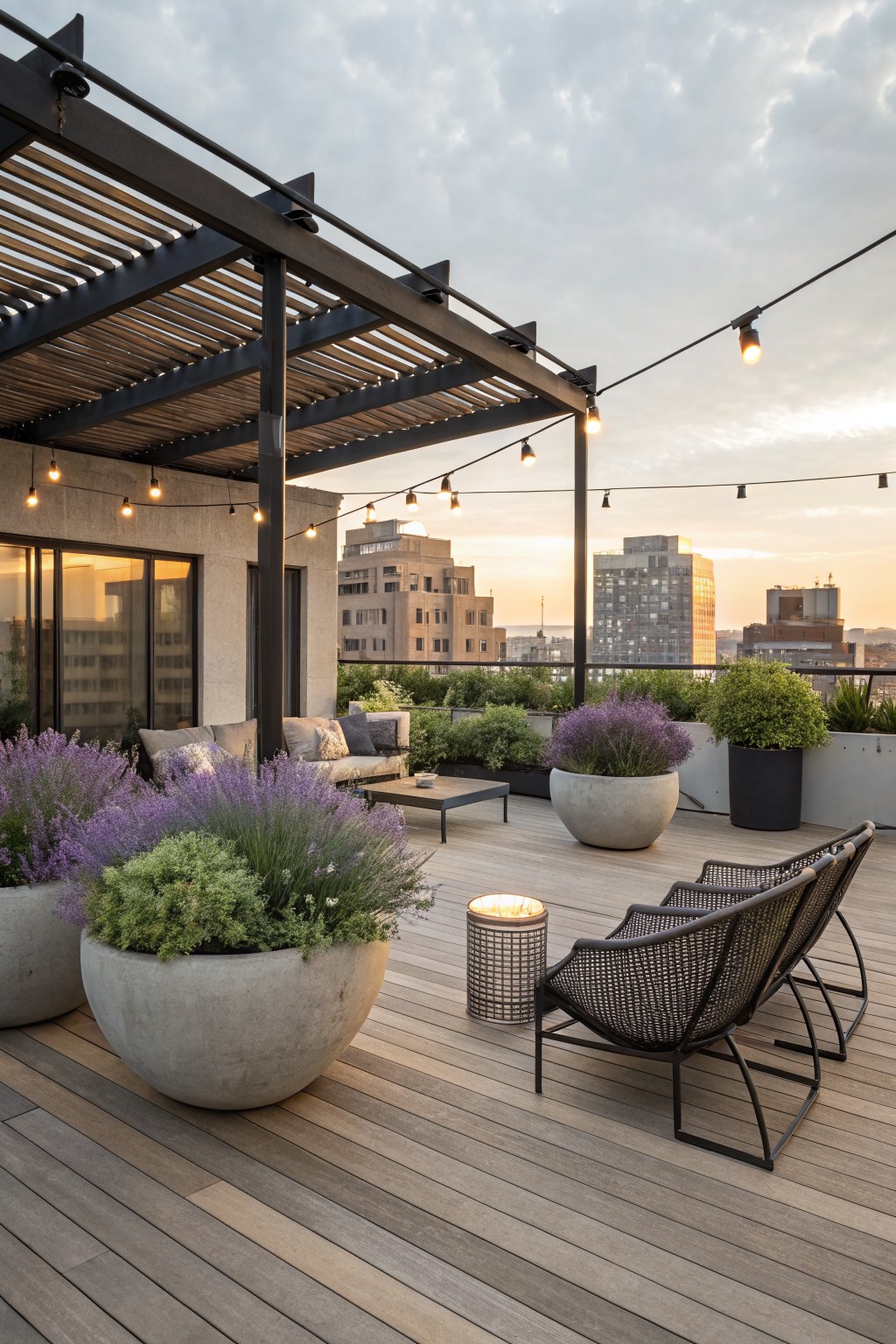
Big concrete pots stuffed with lavender make a balcony terrace feel like a private garden spot right away. The soft purple flowers hug the seating area without crowding it, and that fresh scent hits you every time you step out. Add a simple pergola overhead and some string lights, and you’ve got a place to unwind that smells as good as it looks.
This idea fits best on rooftops or wide balconies in the city, where space is tight but you want some green. Go for oversized pots so the plants don’t tip in the wind, and stick to tough lavender varieties that handle sun and dry spells. Keep the seating low-key with woven chairs and a wood table. Just make sure the deck can hold the weight of those heavy pots.
Potted Lavender Around the Pool
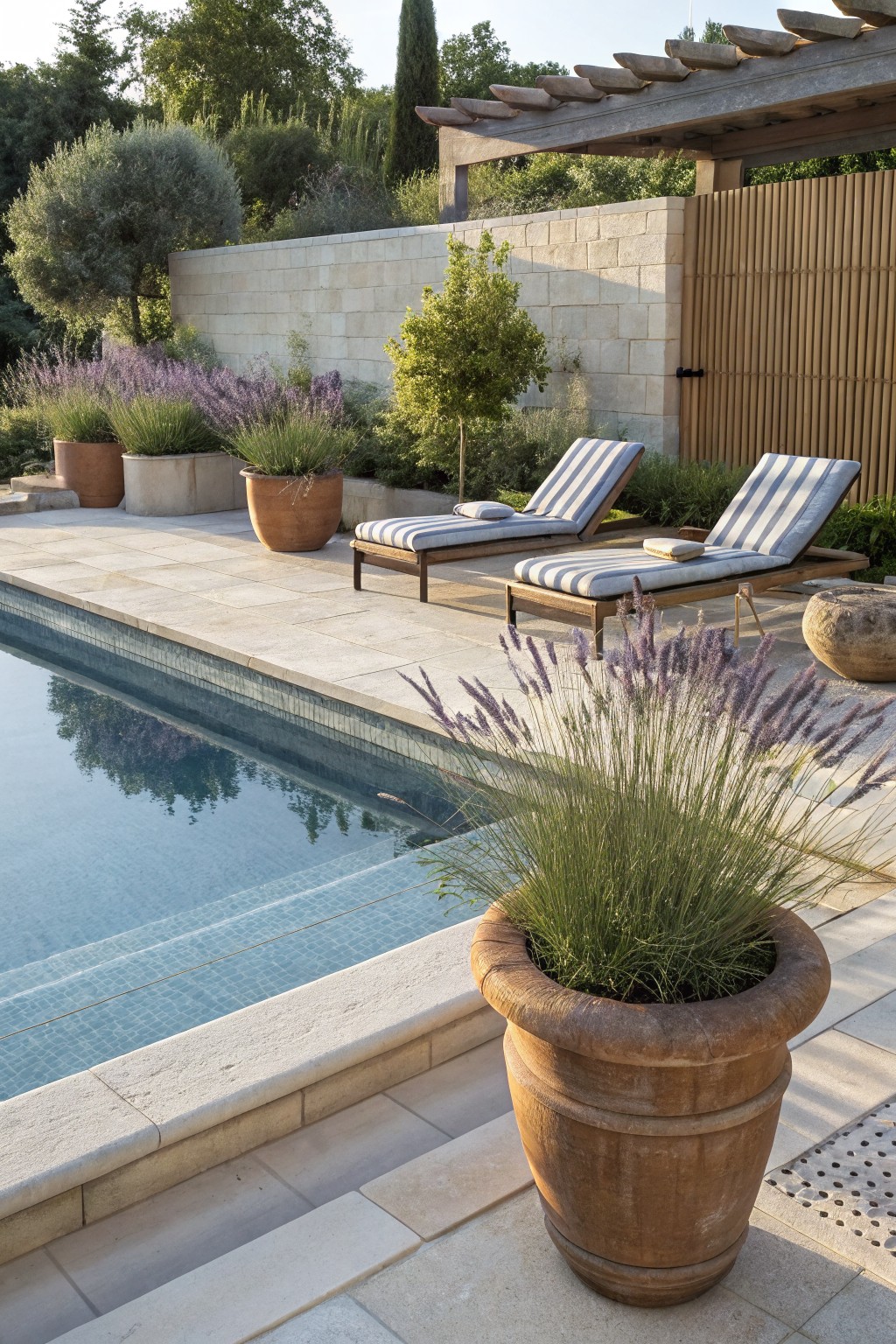
One easy way to bring lavender’s scent right where you relax is to set large pots of it along the pool edge. In this setup, the tall purple blooms sit in simple terracotta pots next to striped loungers on a stone deck. It adds a soft touch to the hard lines of the pool without much work, and that fragrance hits you as you lie back.
This works best in sunny spots like a backyard pool or terrace where you want low upkeep. Go for big pots to keep the plants upright and full, and group a few together for more impact. It suits homes with a clean modern look or something Mediterranean. Just make sure the pots drain well so roots don’t sit wet.
Lavender Edging a Central Tree Planter
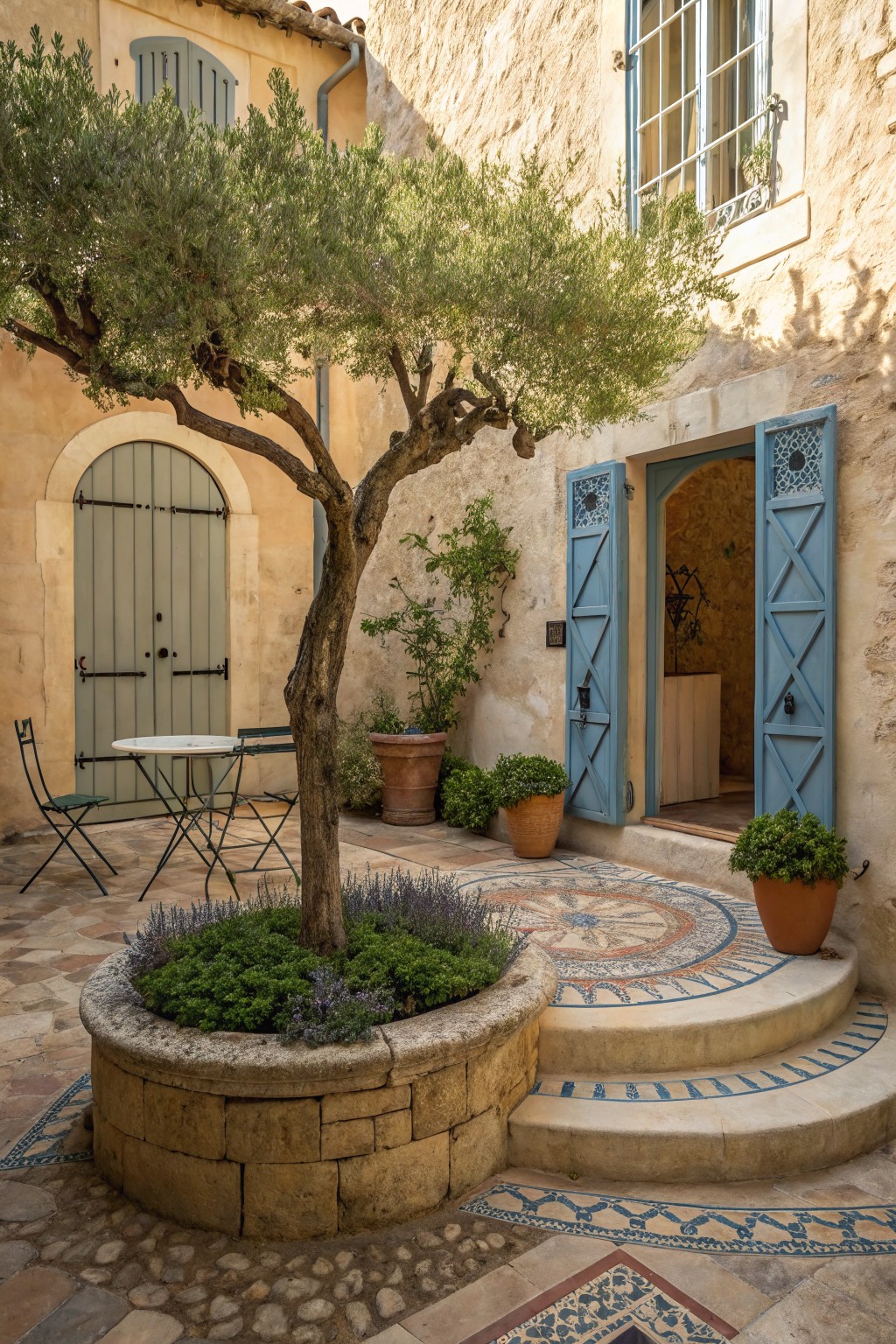
A simple way to add fragrance and structure to a small courtyard is planting lavender right around the base of a central tree. Here an old olive tree sits in a raised stone planter, with low lavender bushes tucked in along the edge. It keeps things neat, releases that calm scent when you brush by, and ties the planting to the stone walls without much fuss.
This setup works best in tucked-away spots like entry courtyards or patios near the house. Pick a tough tree like olive or something local that won’t outgrow the space. Add a few pots nearby for more lavender if you want extra smell, but keep the circle simple. It suits older stone homes or dry climates… low water needs all around.
Lavender-Lined Stone Pathway
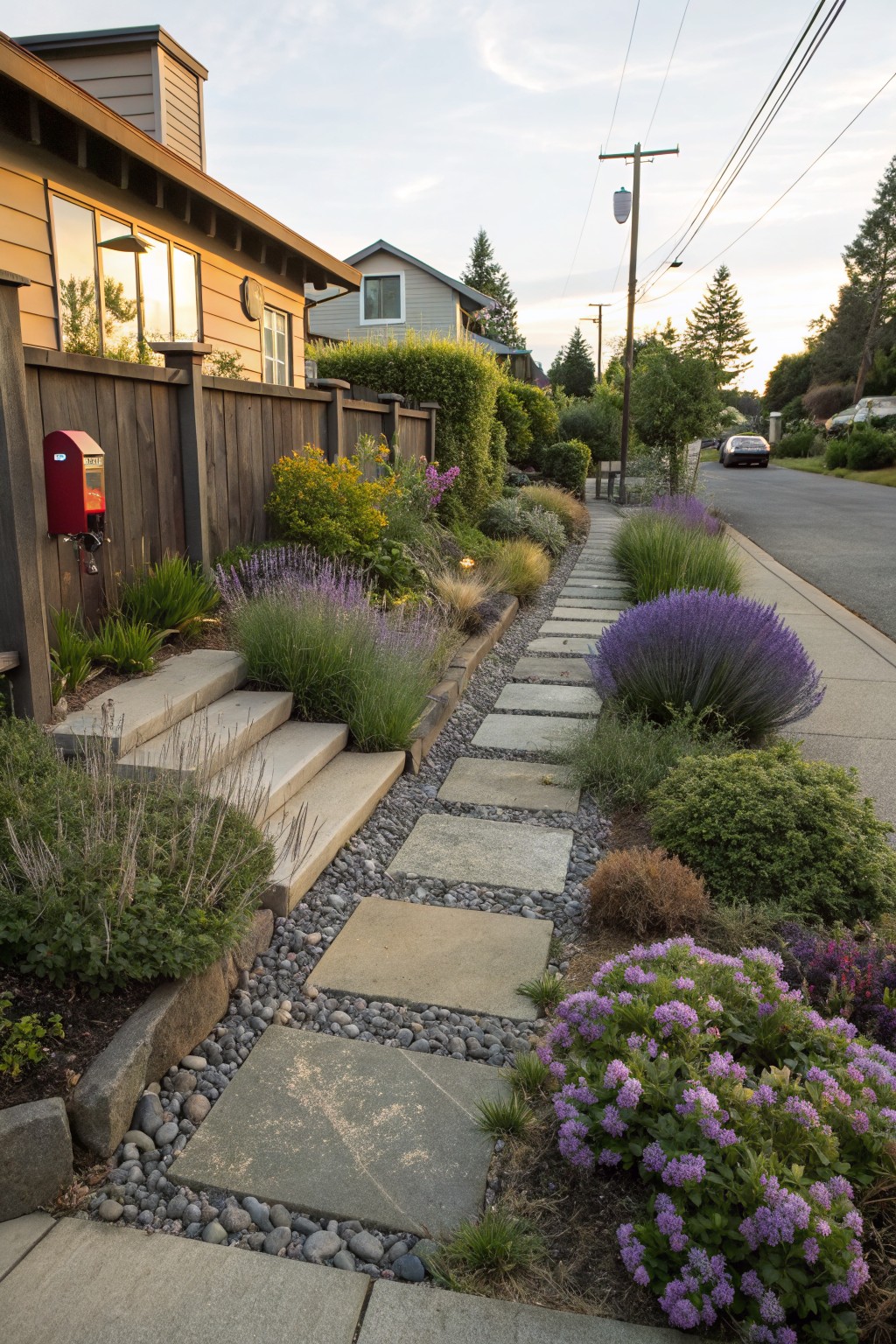
One easy way to add fragrance right where you need it is a stepping stone path edged with lavender plants. Here the large gravel-set pavers lead up to the house entry, with bushy lavender and tall grasses filling the borders. It smells great when you brush past on the way to the door. Plus these plants stay tidy without much fuss.
This setup works best along a side yard or front walk on homes with a simple wood fence like this one. Go for drought-tough varieties that match your zone, space the stones unevenly for a natural feel, and keep the gravel beds mulched. Skip tight spots though. The path might feel too narrow there.
Garden Path Bordered by Lavender
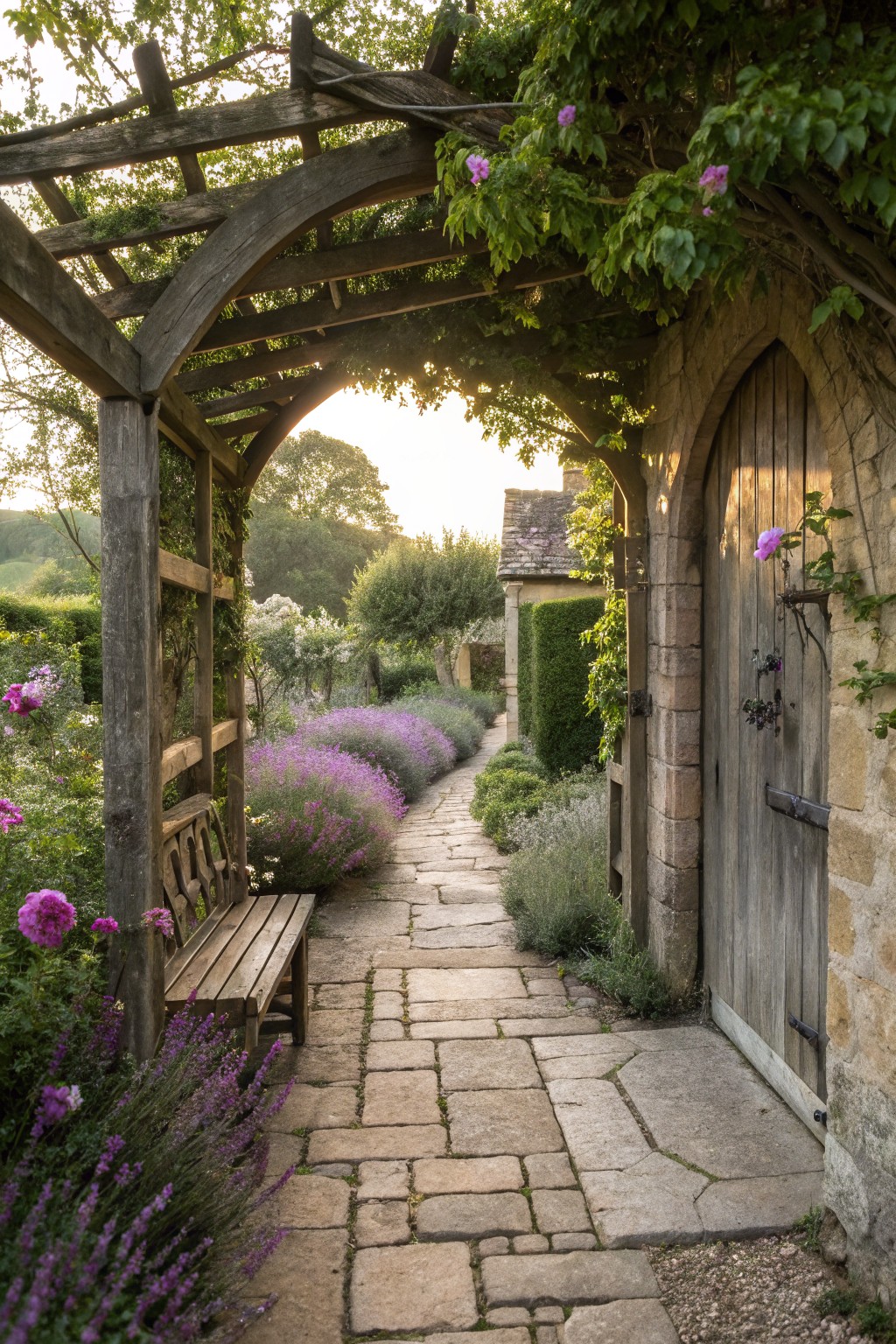
A stone path winding through borders of tall lavender makes for an easy garden stroll. The plants hug the edges close, releasing fragrance with every step. That soft purple color repeats along the way, keeping things calm and pretty without much fuss.
Try this in a side yard or leading to a potting shed. It suits older homes with stone or brick walls. Pick a sunny spot since lavender needs it, and space plants so the path stays walkable. A bench halfway along gives a spot to sit and enjoy.
Stone Pathways Lined with Lavender
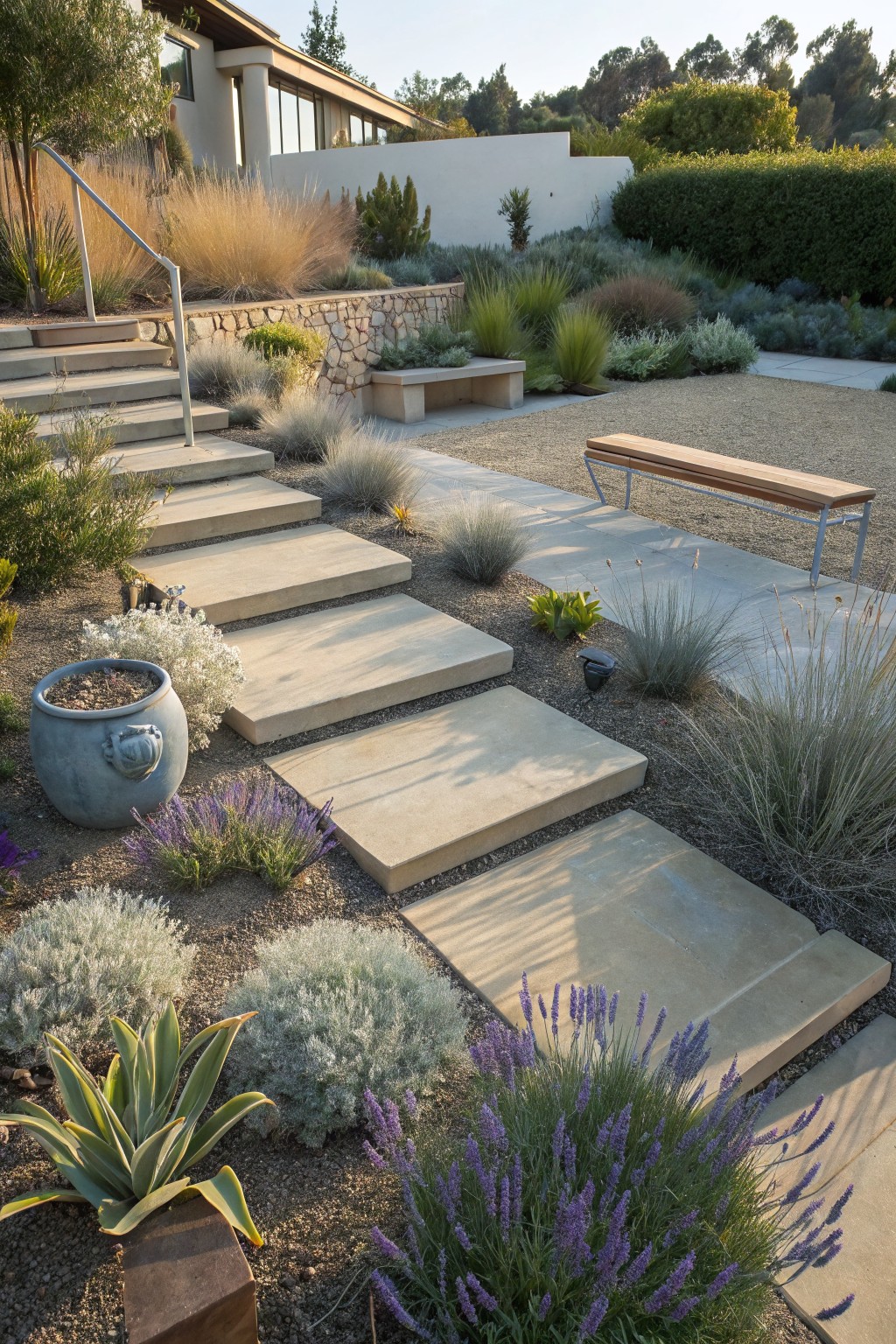
Wide stone slabs make up this simple pathway and steps, edged right along with clumps of lavender and soft grasses. The lavender adds that nice fragrance every time you walk by, and it mixes well with the drier plants like agave without needing much water. It’s a calm way to lead people up to the house.
You can pull this off in sunny yards or entry areas, especially where low upkeep matters. It fits modern homes with clean lines. Just plant the lavender a bit back from the path edge so feet don’t crush it, and gravel between keeps weeds down.
Lavender-Lined Stone Pathways
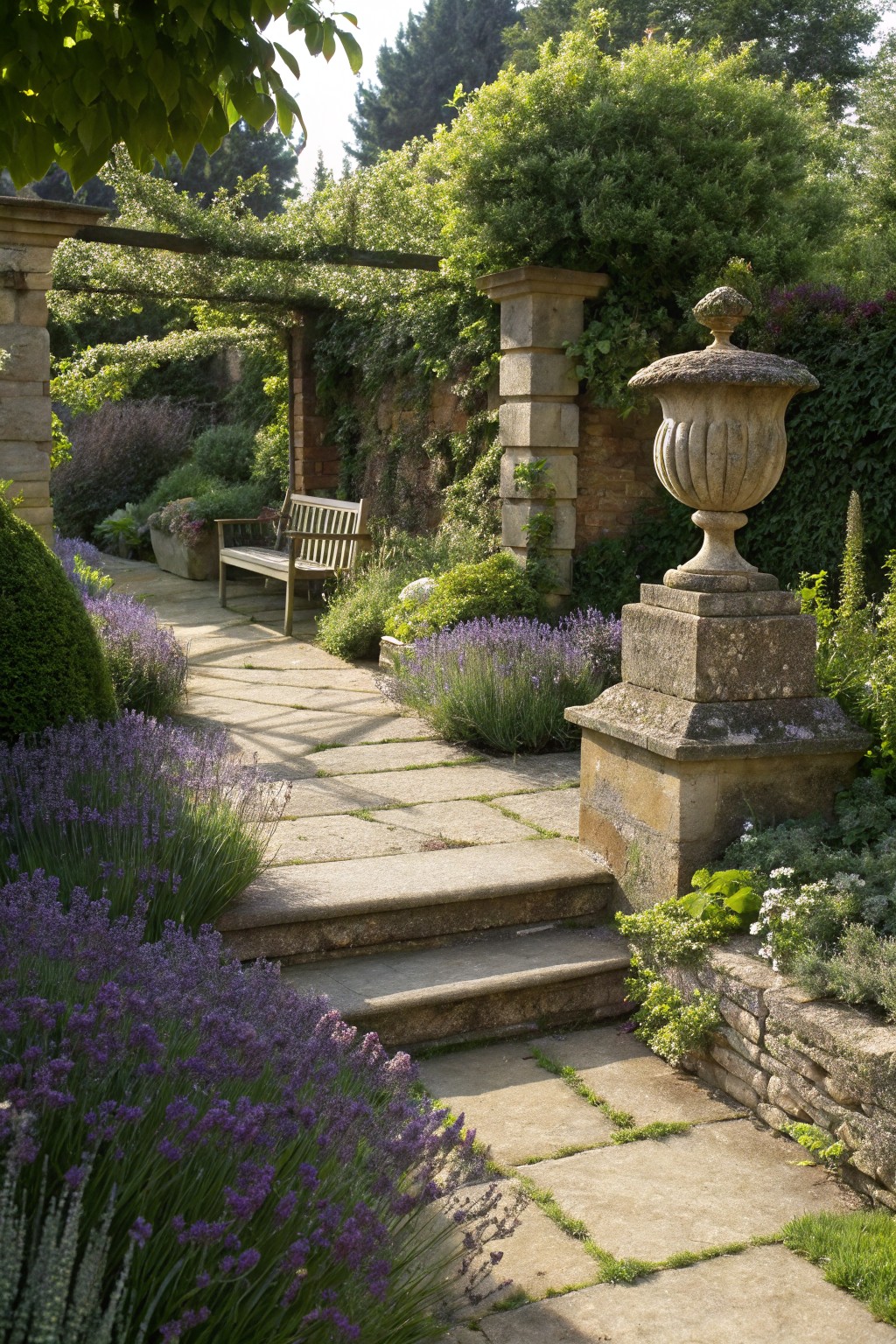
A stone path edged thickly with lavender makes for one of the easiest ways to add scent and color to a garden walk. You step onto the flat slabs and right away the purple flowers brush close, releasing that clean herbal smell with every pass. It pulls you along naturally toward a spot to sit, like that bench tucked at the end here.
Plant lavender in loose rows along both sides of a simple flagstone or paver path, keeping the beds mounded a bit for height. This setup shines in sunny side yards or entry approaches where foot traffic is light. Go easy on the mulch to let the stones show through, and trim the plants once a year to keep the path clear.
Bordering Patios with Lavender
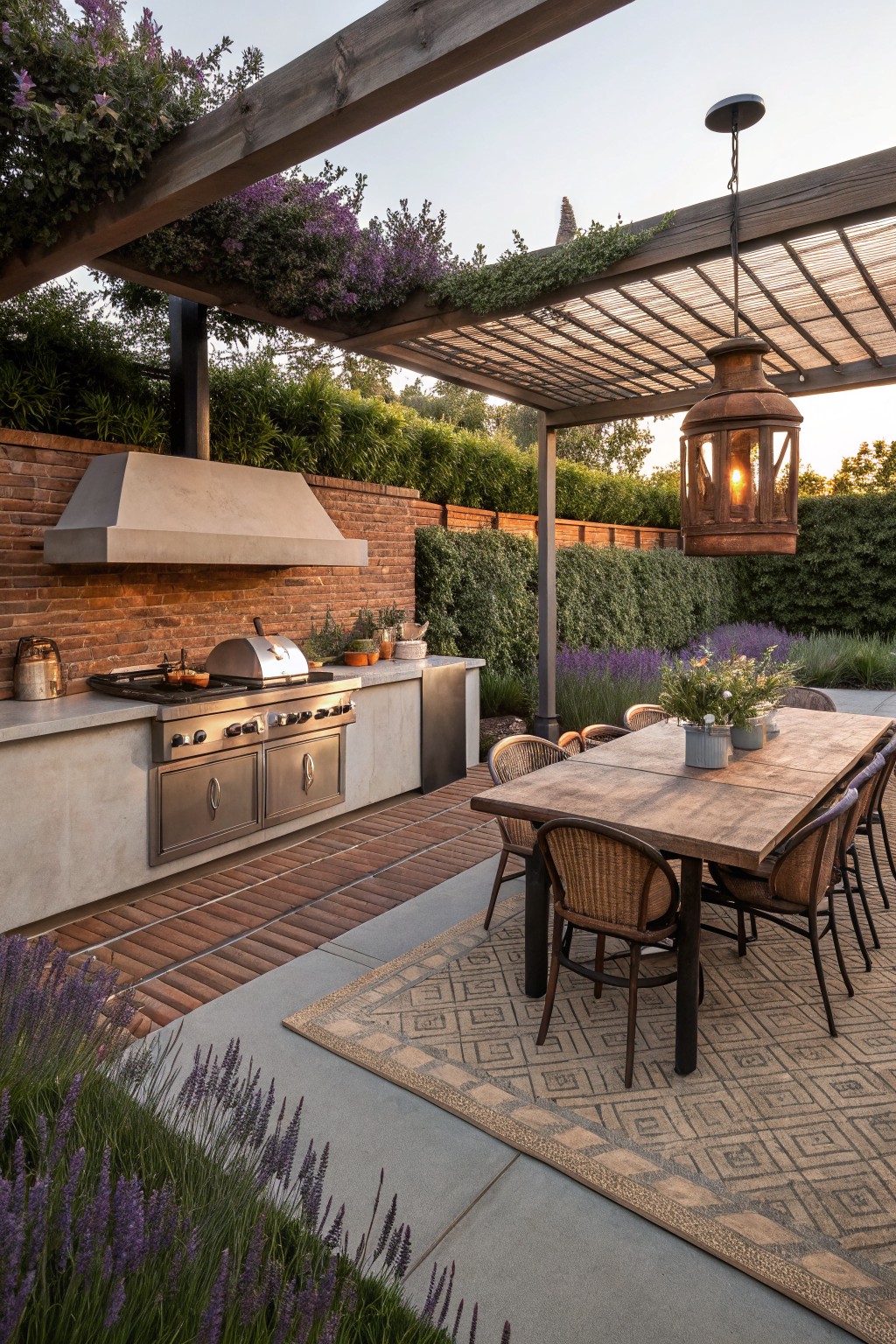
Lavender makes a good border plant around patios because it stays low and neat while filling the air with scent. In this setup, rows of it run along the concrete edges near the outdoor kitchen and dining table. The purple blooms pick up nicely on the warm brick and wood tones, and it hides the hard lines without crowding the seating area.
Plant it where it gets full sun and good drainage, like along a sunny patio or walkway. It fits casual backyard spots with grills or simple tables, and once it’s going, you barely need to touch it. Keep the beds mulched to hold in moisture, and trim back after blooming to keep the shape tidy.
Path to a Garden Bench Through Lavender Beds
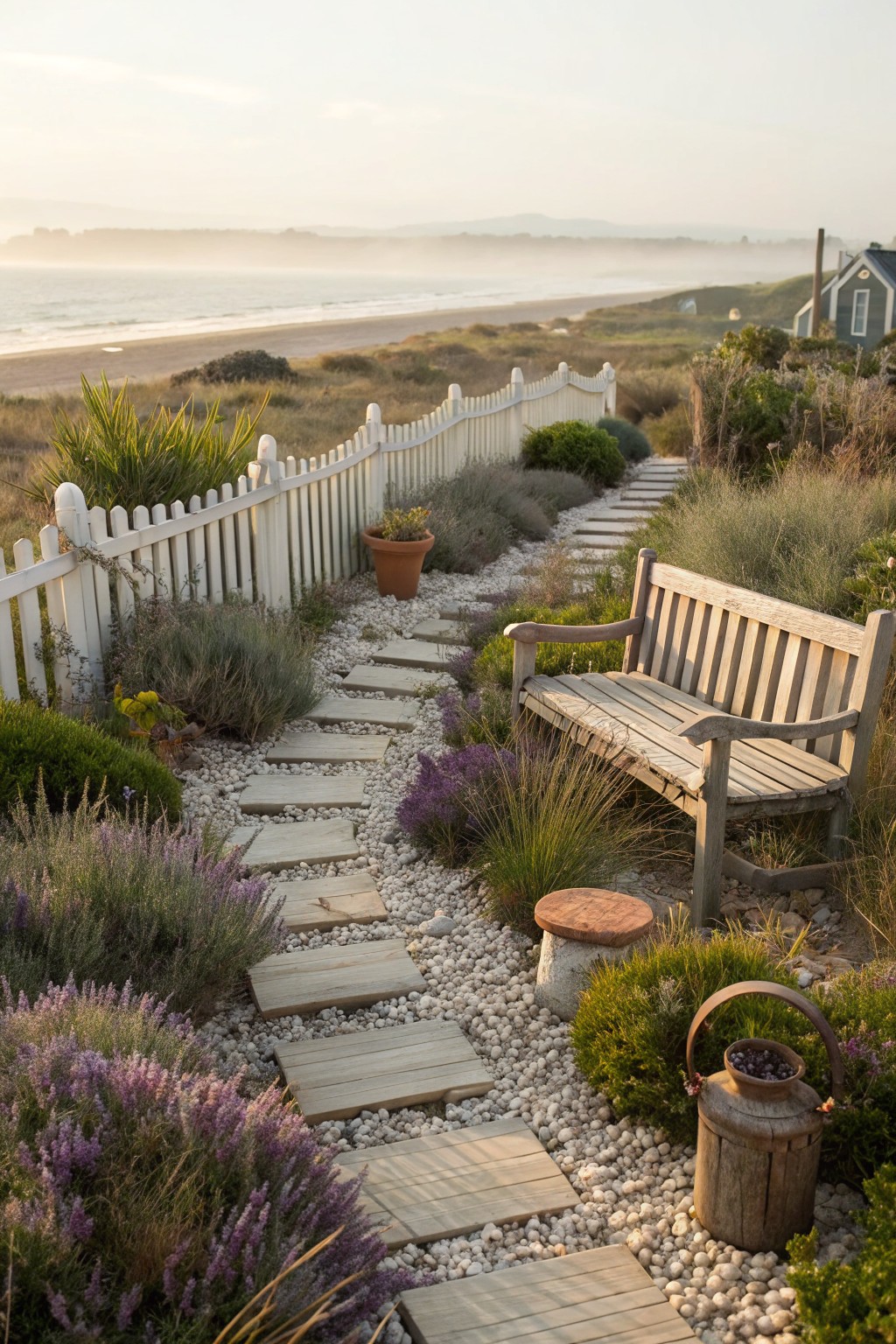
One easy way to add calm to your yard is a simple path like this one. It uses rough wood and stone slabs laid right into gravel, with lavender bushes and tall grasses tucked along the edges. That setup guides you slowly to a plain wooden bench, and the fragrance hits just right as you walk. It’s relaxing without much work.
Put this in a sunny side yard or along a fence where you want a quiet spot to sit. It fits older homes or coastal places best, since lavender loves dry soil and the plants stay tidy. Skip it in shady areas, though. Just keep the gravel fresh and trim the edges once a year.
Lavender Pond Borders
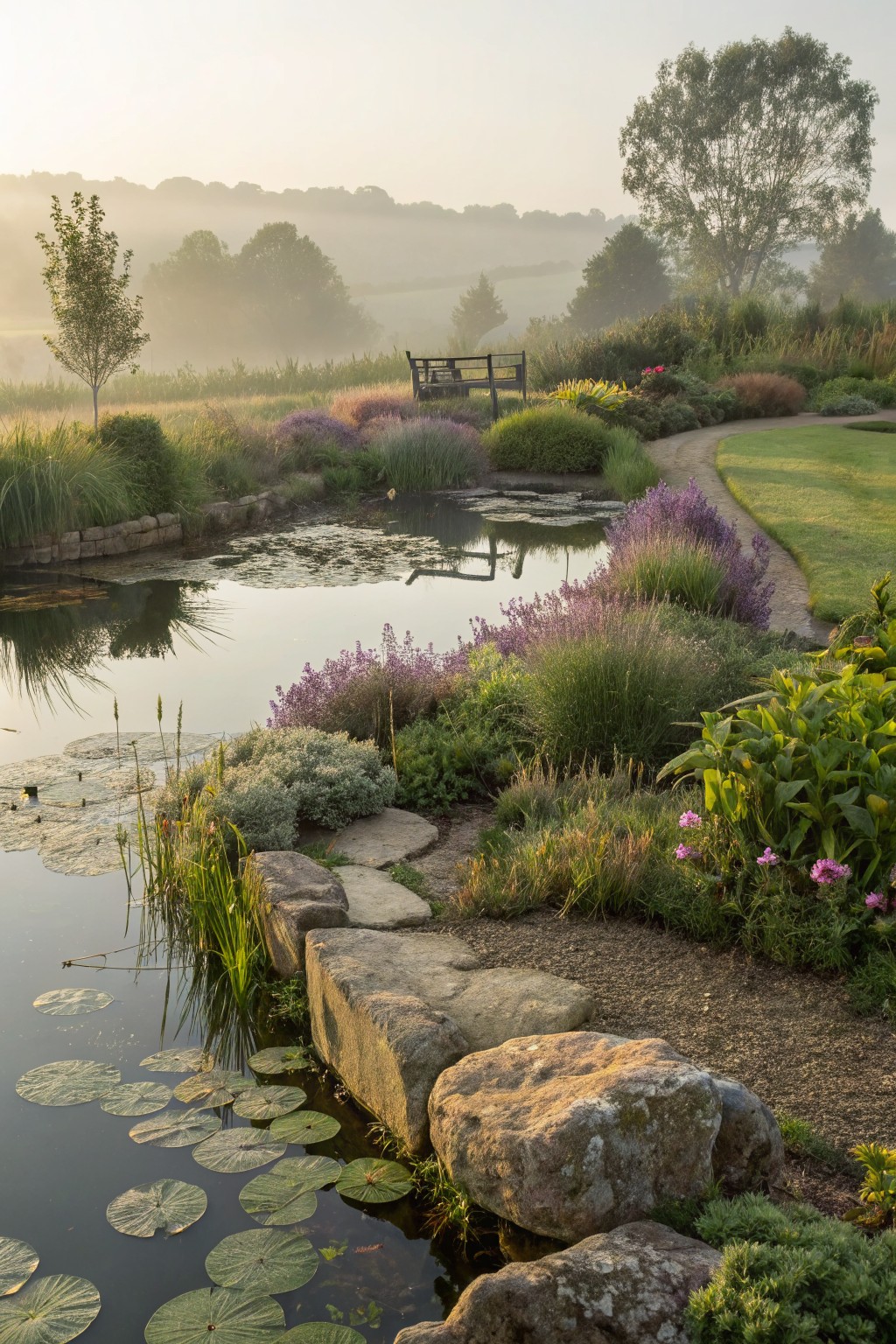
One simple way to bring lavender into your garden is to plant it right along the edge of a pond. The soft purple blooms mix with tall grasses and reeds, giving off that nice fragrance while framing the water. A few big stones and stepping paths keep it all looking natural, and it works great in misty mornings when everything feels extra peaceful.
You can try this in a backyard corner or any spot with decent sun for the lavender to thrive. Keep the plantings layered, taller stuff in back, and add a bench nearby for sitting. Just make sure the pond edge doesn’t get too soggy… lavender likes its feet dry.
Lavender Planters Line a Balcony Terrace
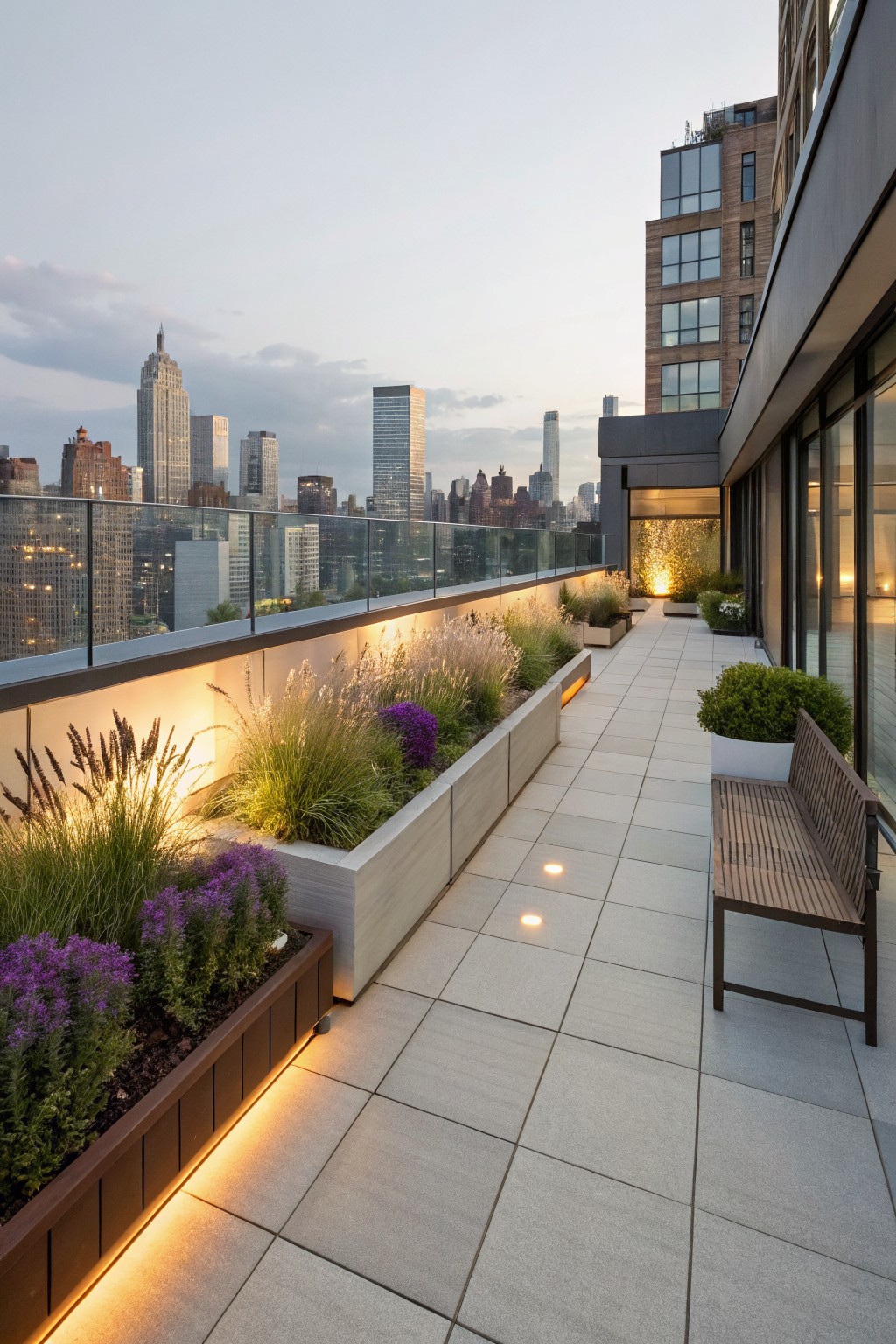
Tall lavender bushes and waving ornamental grasses tucked into sleek linear planters make this balcony feel like a private garden path. The purple flowers pop against the grasses, and built-in lighting along the edges gives a soft glow as the sun sets. It’s a simple way to add fragrance right where you walk, even with a busy city skyline in view.
This works best on slim urban balconies or rooftops where space is tight. Line one side with matching planters, maybe add a bench at the end for sitting. Pick tough lavender varieties that handle wind and sun. Keep the path clear for easy access, and the scent will drift indoors too on breezy days.
Lavender-Lined Curved Paths
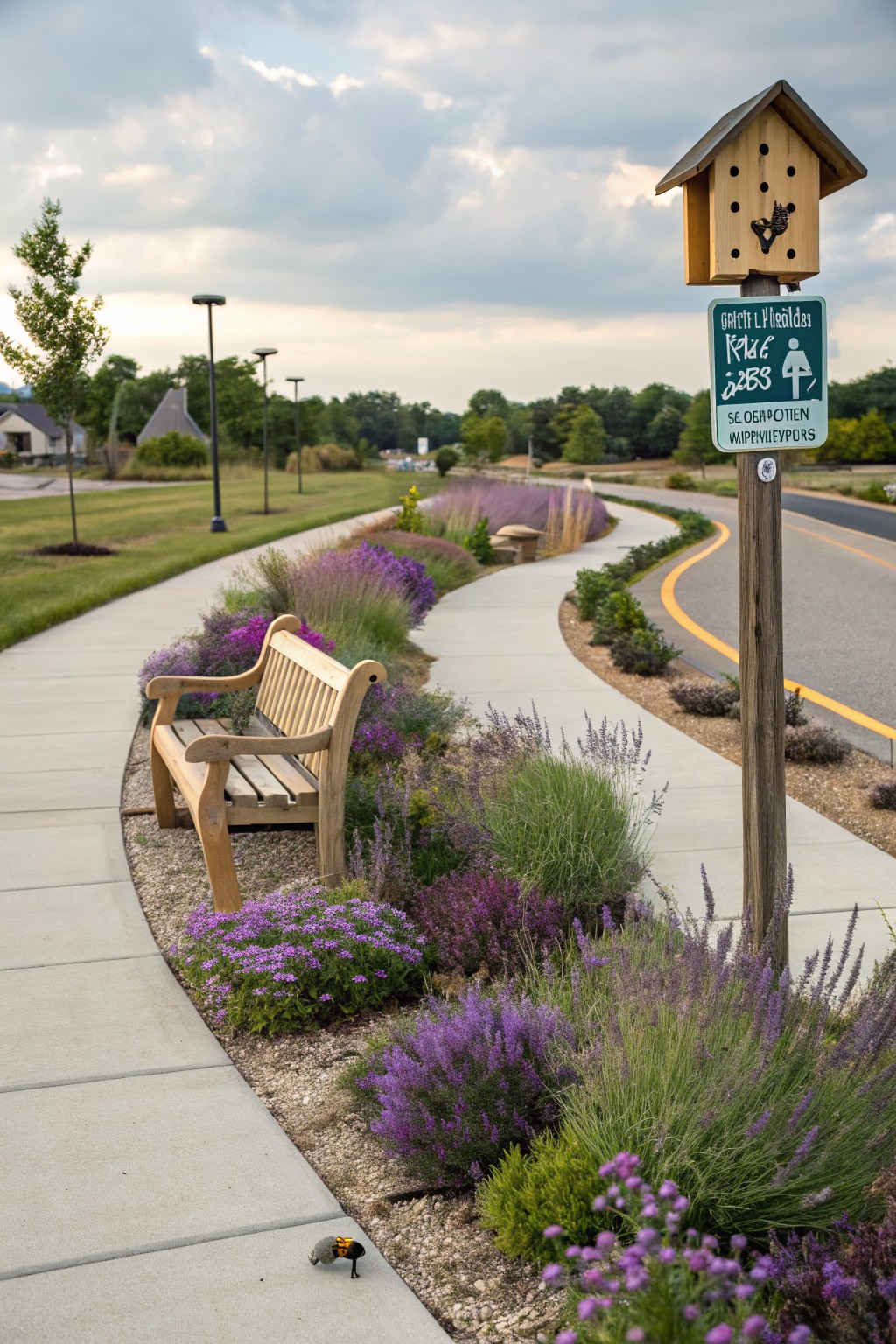
One simple way to bring lavender into your yard is along a curved walking path. The soft purple flowers massed right at the edge release their scent every time you pass by. That gentle bend in the path makes it feel more like a stroll than a straight shot. Add a bench nearby and you’ve got a spot to sit and enjoy it all.
These paths work great in side yards or community green spaces where you want low-key beauty without much fuss. Plant lavender in drifts along both sides for that full effect, maybe 2 to 3 feet wide beds. Keep the gravel edging neat so it doesn’t creep onto the walk. Just trim back once a year… easy enough for most yards.
Lavender Planters Line a Narrow Path
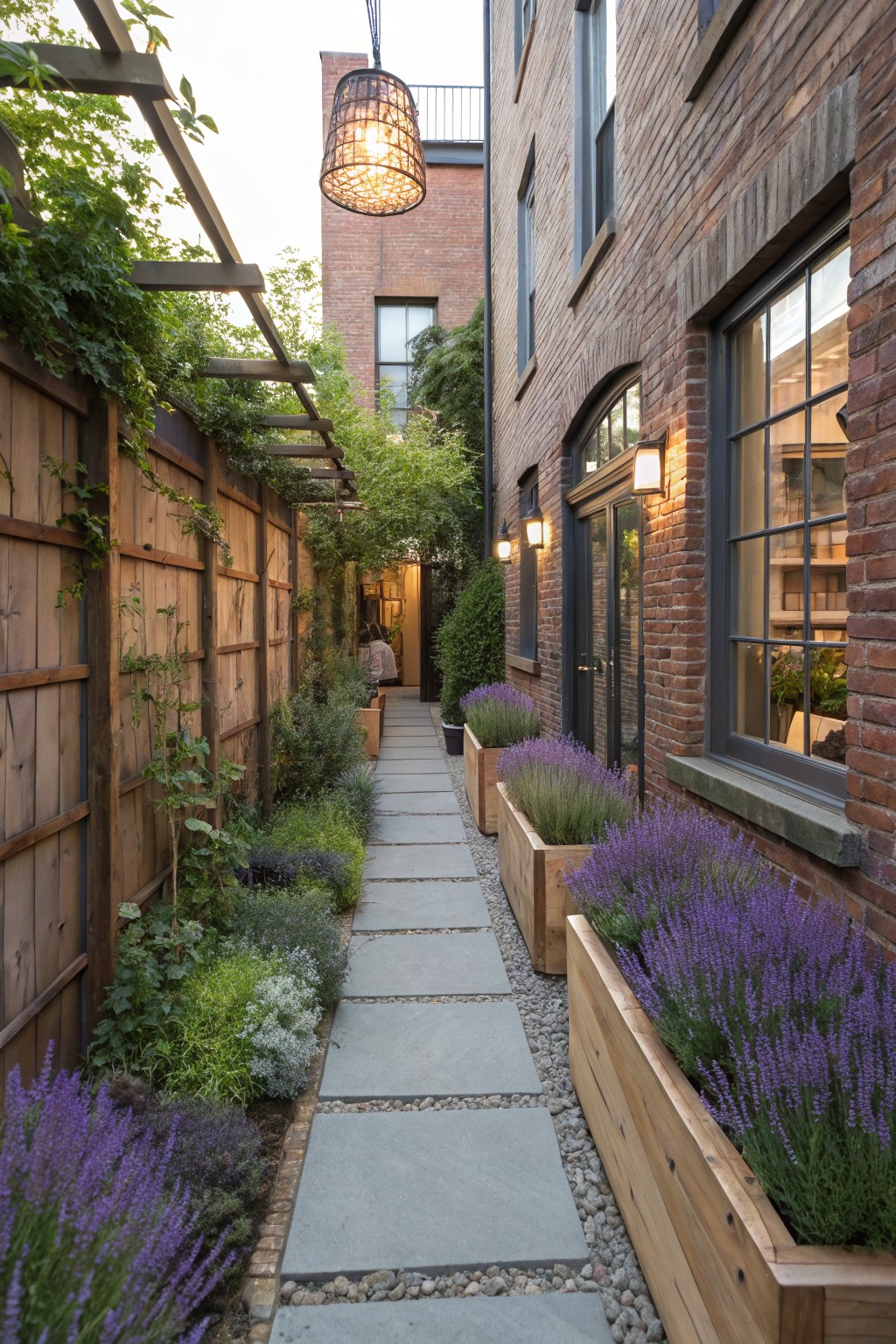
One straightforward idea for tight garden spots is filling raised wooden planters with lavender right along the walkway. That setup fills the air with scent every time you pass by, and the soft purple spikes add color without crowding the space. It fits nicely in side yards where you want low fuss but real charm.
Try this between fences or brick walls, like in urban back alleys. Go for sturdy cedar planters about two feet high, planted with sun-loving lavender types that don’t need much water. Stone pavers down the middle keep it walkable, and a bit of gravel on the sides handles runoff just fine.
Lavender Beds Along Retaining Walls
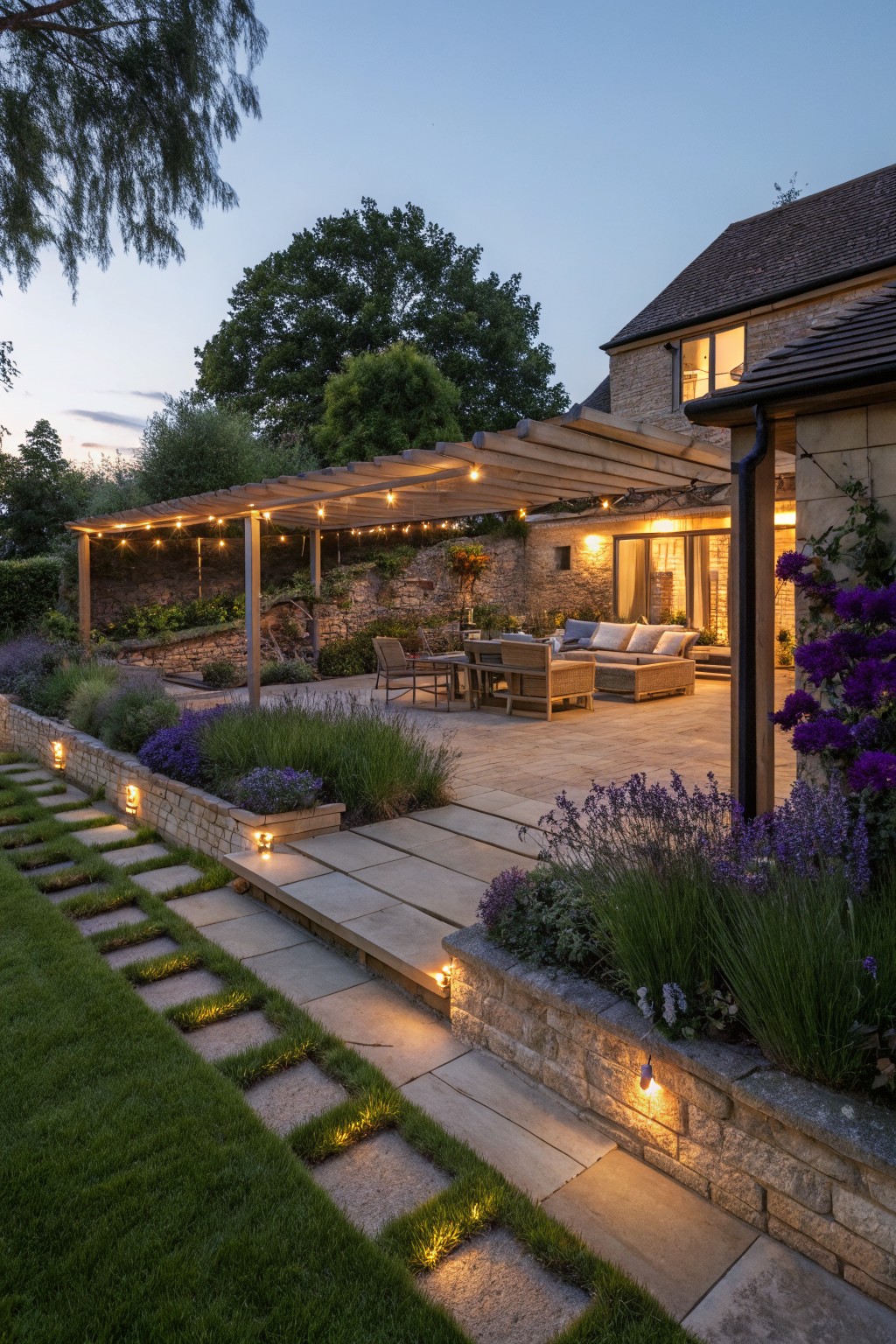
One simple way to work lavender into your yard is planting it right in low stone retaining walls. You get those soft purple blooms and that fresh scent close to where you walk or sit outside. It ties the hard stone right into the garden without much fuss, and the plants spill over a bit for a natural look.
This works best on sloped spots like this terraced setup. Pick tough varieties that handle dry soil, and pair them with grasses for some height. Keep the beds narrow so you can trim easy from the path side. Just watch for too much shade under pergolas.
Lavender-Lined Entry Path
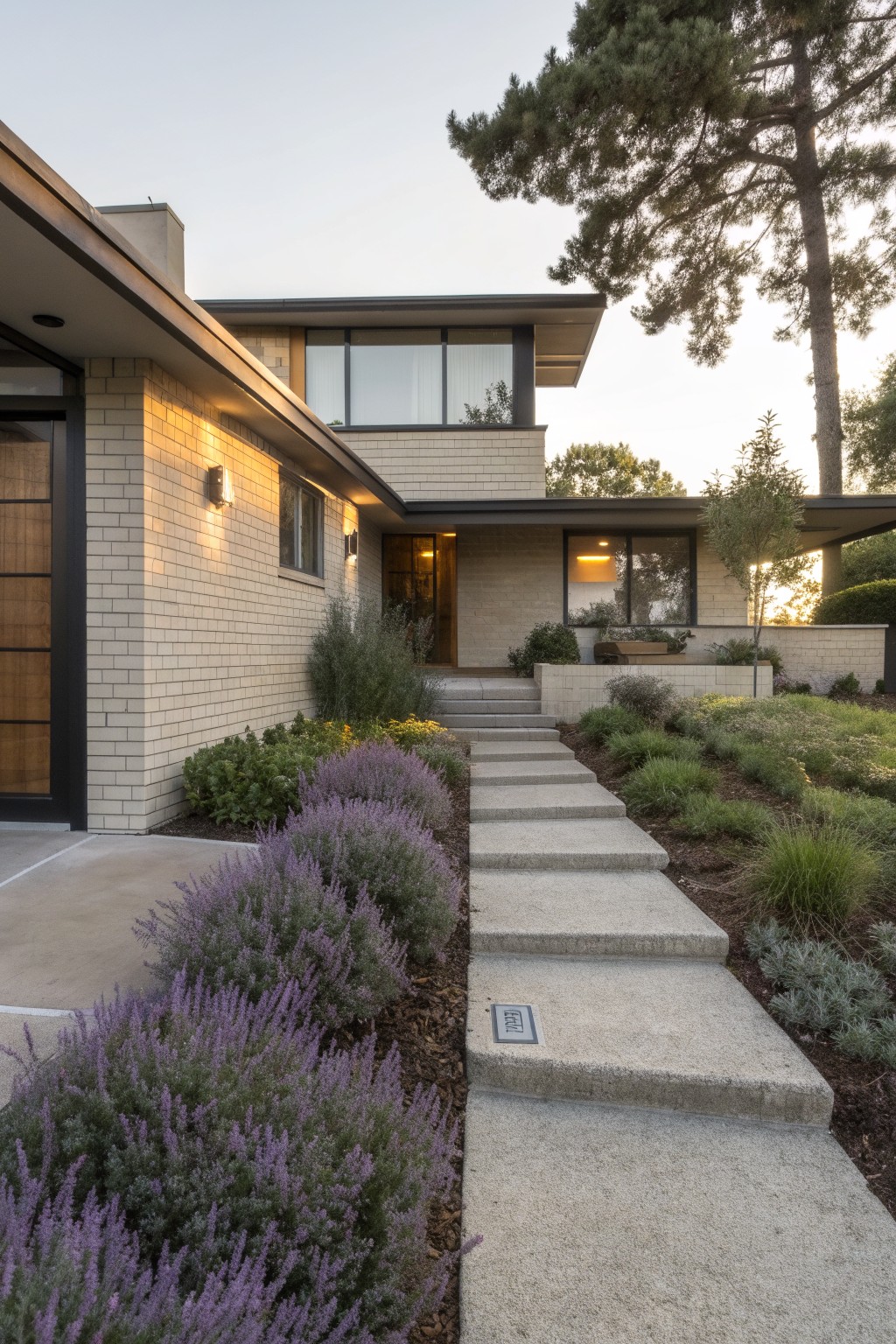
One easy way to bring lavender into your front yard is along the path to your door. Here, low lavender bushes run right next to the concrete steps, filling the air with that calm scent every time you walk up. It pulls the house and garden together without much fuss, and the purple flowers add a soft color pop against the plain walkway.
This works great for modern homes or any entry that needs a welcoming touch. Plant the lavender close to the path edge so it’s easy to brush against, but leave room for mulch or gravel to keep weeds down. It’s low upkeep once established, though you’ll want full sun and good drainage to keep the plants happy.
Patio Edges Lined with Lavender
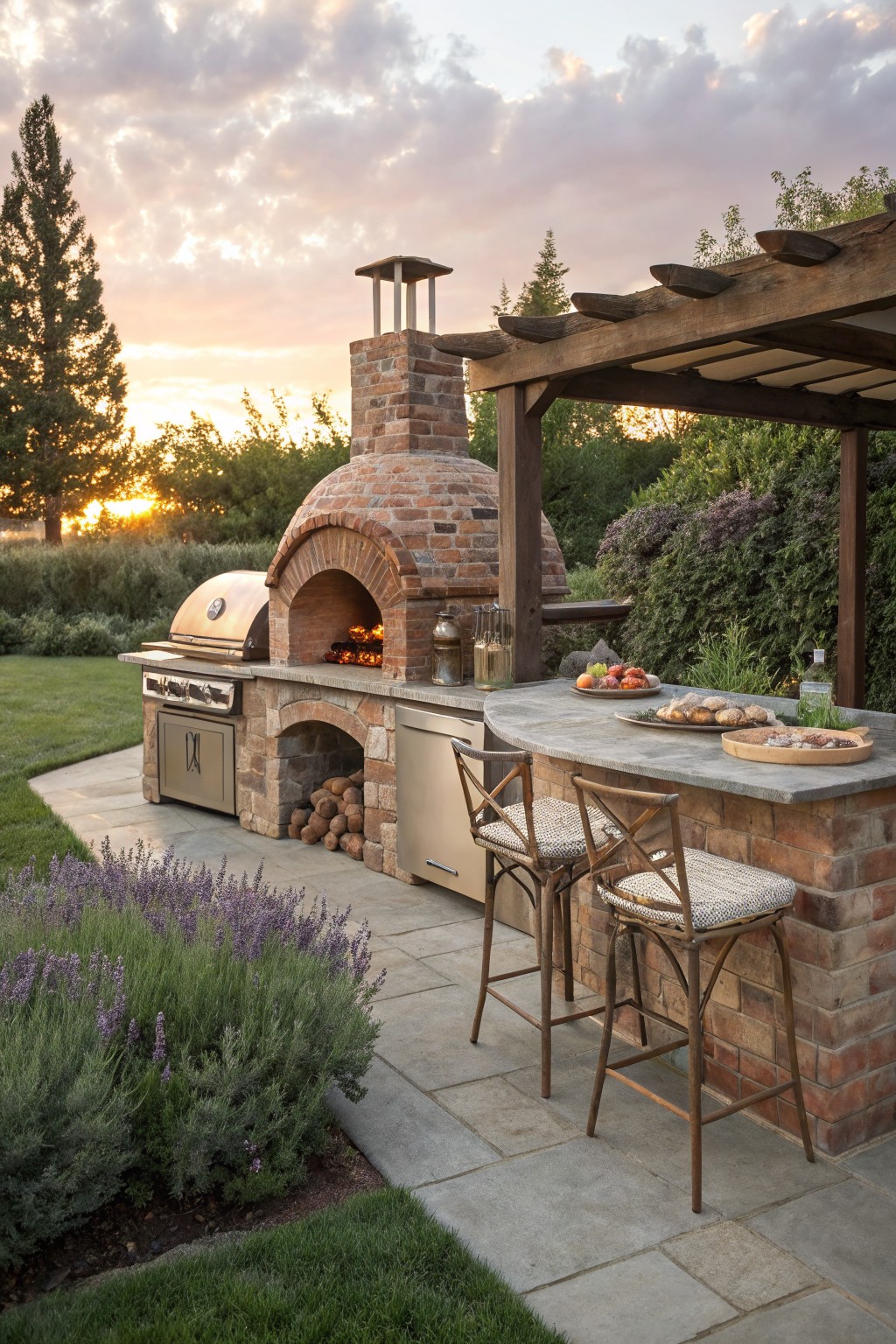
One simple way to bring fragrance right to your outdoor kitchen is lining the patio edges with lavender, like you see here along this stone path next to the brick oven and bar. The soft purple spikes add color without overwhelming the space, and that light scent wafts up whenever you walk by or sit down for a meal. It keeps things calm and pretty, tying the hard surfaces to the garden.
Try this around any paved patio or seating area with good sun. Space the plants about a foot apart in a neat row, and they’ll grow to knee height over time. Suits relaxed backyard setups best, but watch for deer if you’re in a rural spot. Easy to maintain, too.
Frequently Asked Questions
Q: How much sun does lavender really need to thrive?
A: Plant it in spots with full sun, at least six hours a day. Less light makes stems stretch and flowers fade. Pick south-facing areas for the strongest scent.
Q: Can I grow lavender in pots on my patio?
A: Go for it with large containers that drain well. Mix in gravel for sharp drainage and water sparingly. Turn pots weekly so every side gets sun.
Q: What’s the best way to prune lavender after blooming?
A: Cut back spent flowers and one-third of the green growth right away.
Q: Will lavender survive cold winters in my zone?
A: Hardy types like English lavender bounce back with a layer of mulch over roots. Trim dead tips in spring. And skip heavy pruning in fall, it stresses them.
