

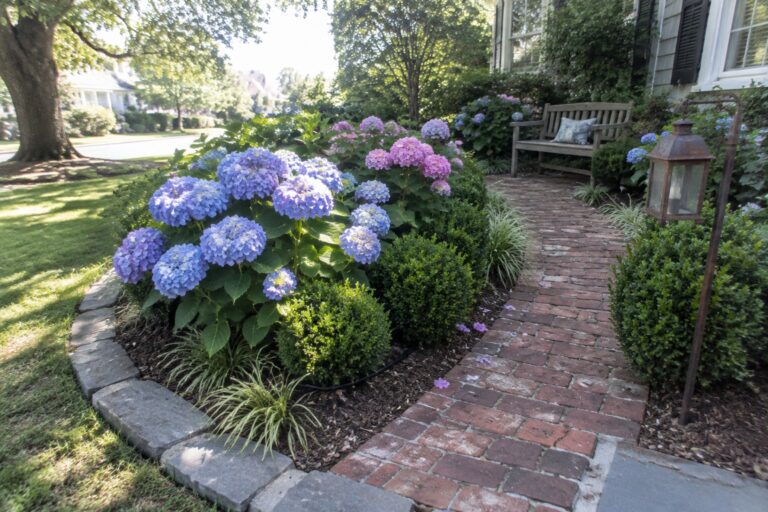
Hydrangeas can give a garden bed plenty of color, but they work best when their size and placement suit the space around them.
I’ve found that paths, edging, and the shape of nearby shrubs matter just as much as the flowers when a planting needs to look tidy through the season.
Choosing hardy varieties and grouping plants where their light and water needs match can also keep upkeep manageable.
Some beds benefit from a simple sweep of hydrangeas, while others need evergreen structure or a clear edge to keep the layout from feeling crowded.
I’d start by saving the ideas that fit your yard’s conditions, then adapt the spacing and plant choices to how you actually use the garden.
Use Hydrangeas Along A Curving Garden Path
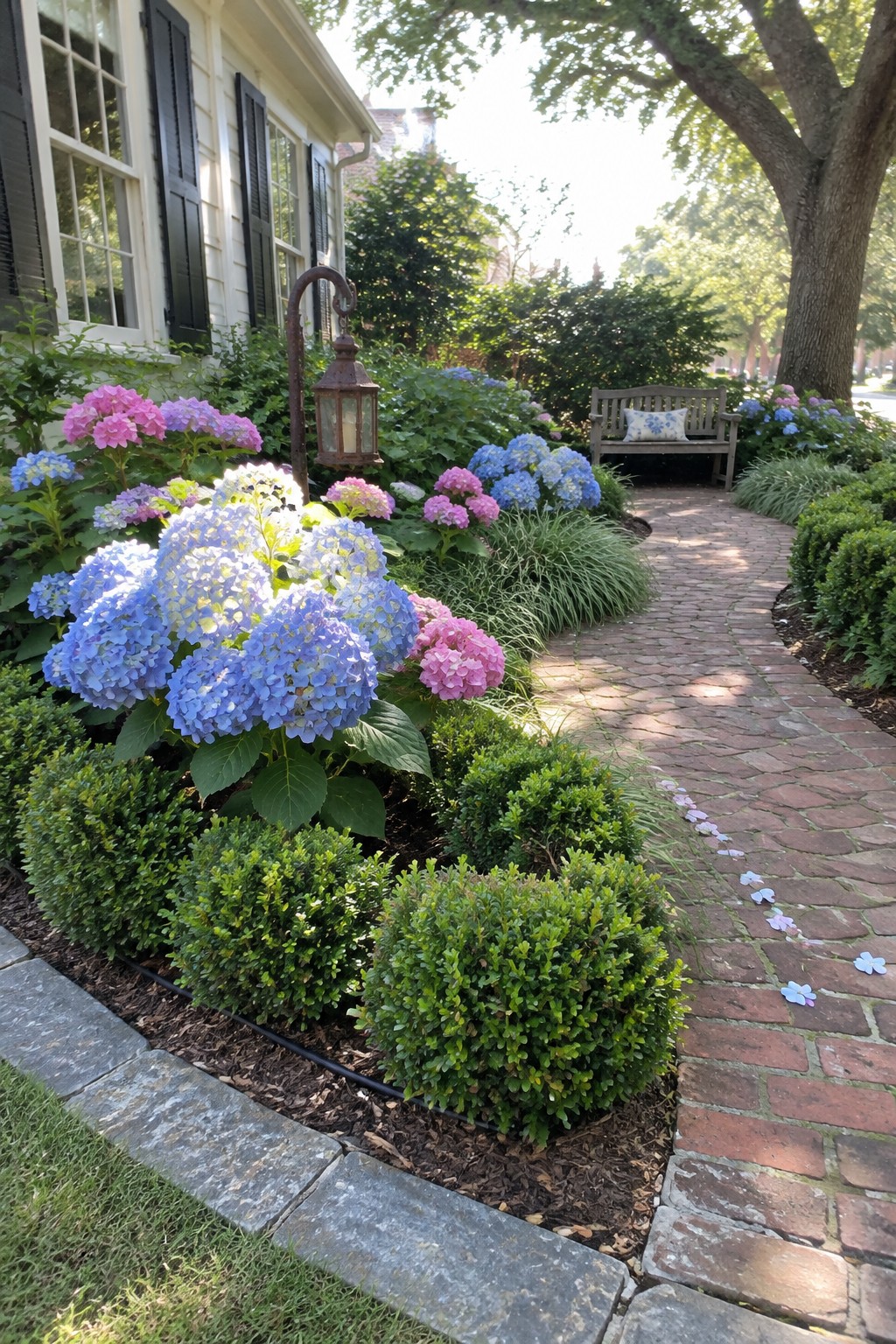
A gently curving path lets hydrangeas feel like part of the garden rather than a row of plants beside a walkway. Here, blue and pink blooms fill the bed along the brick path, while compact shrubs define the edge.
For an easy-care version, plant hydrangeas in groups and leave enough room for them to reach their mature size. A clear path edge makes trimming and weeding simpler, and the route works well in a side yard or garden leading to a bench.
Use Curved Planting Beds Along a Walkway
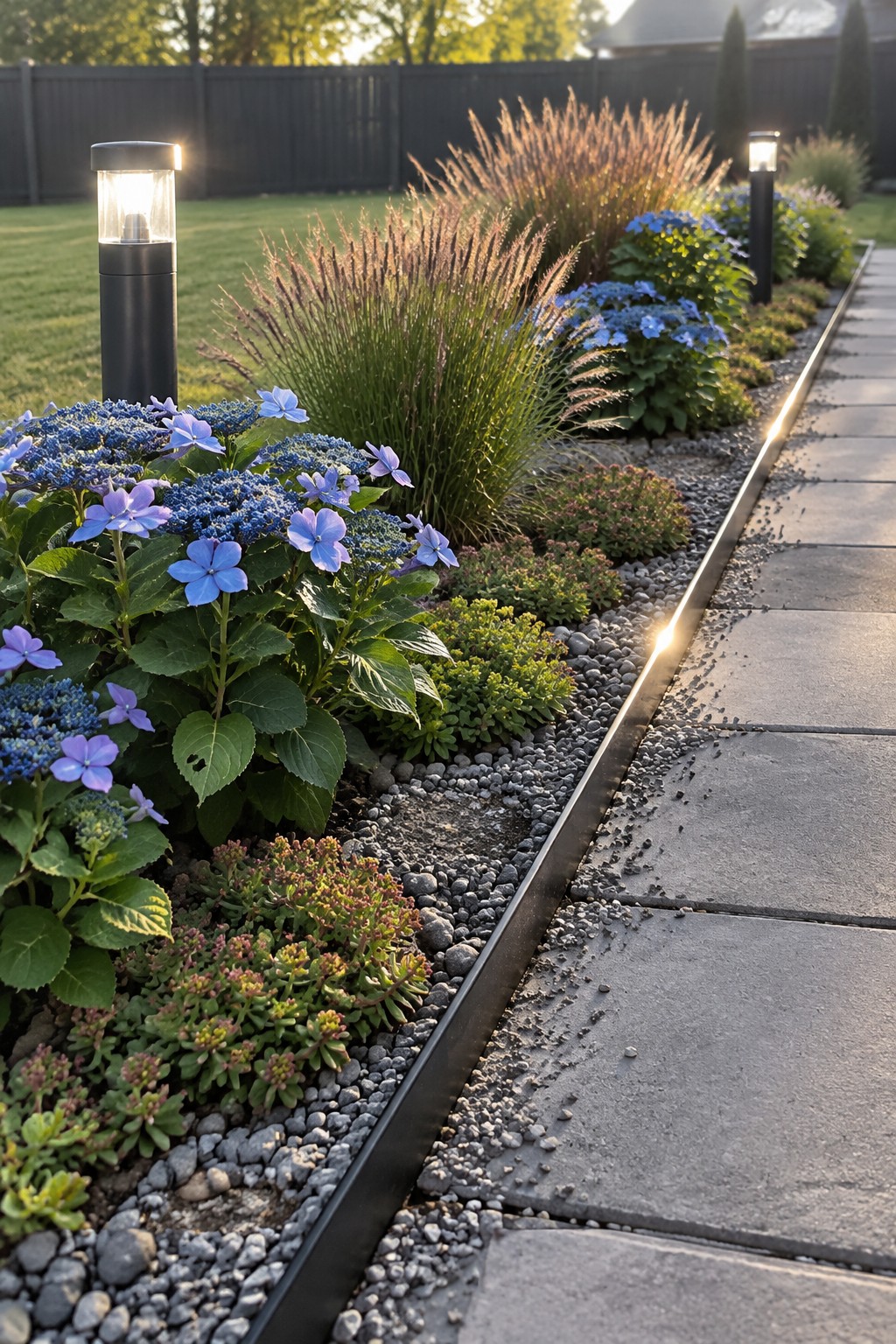
A planted border beside a walkway can make a garden bed feel settled without requiring a complicated layout. Repeating a few dependable plants, such as hydrangeas and low groundcover, gives the bed a steady rhythm, while ornamental grasses add height.
Keep the taller plants toward the back and leave enough room for hydrangeas to spread. A gravel mulch can help limit weeding, but make sure the bed has good drainage and the plants suit the amount of sun it gets.
Shape Hydrangea Beds Along a Garden Path
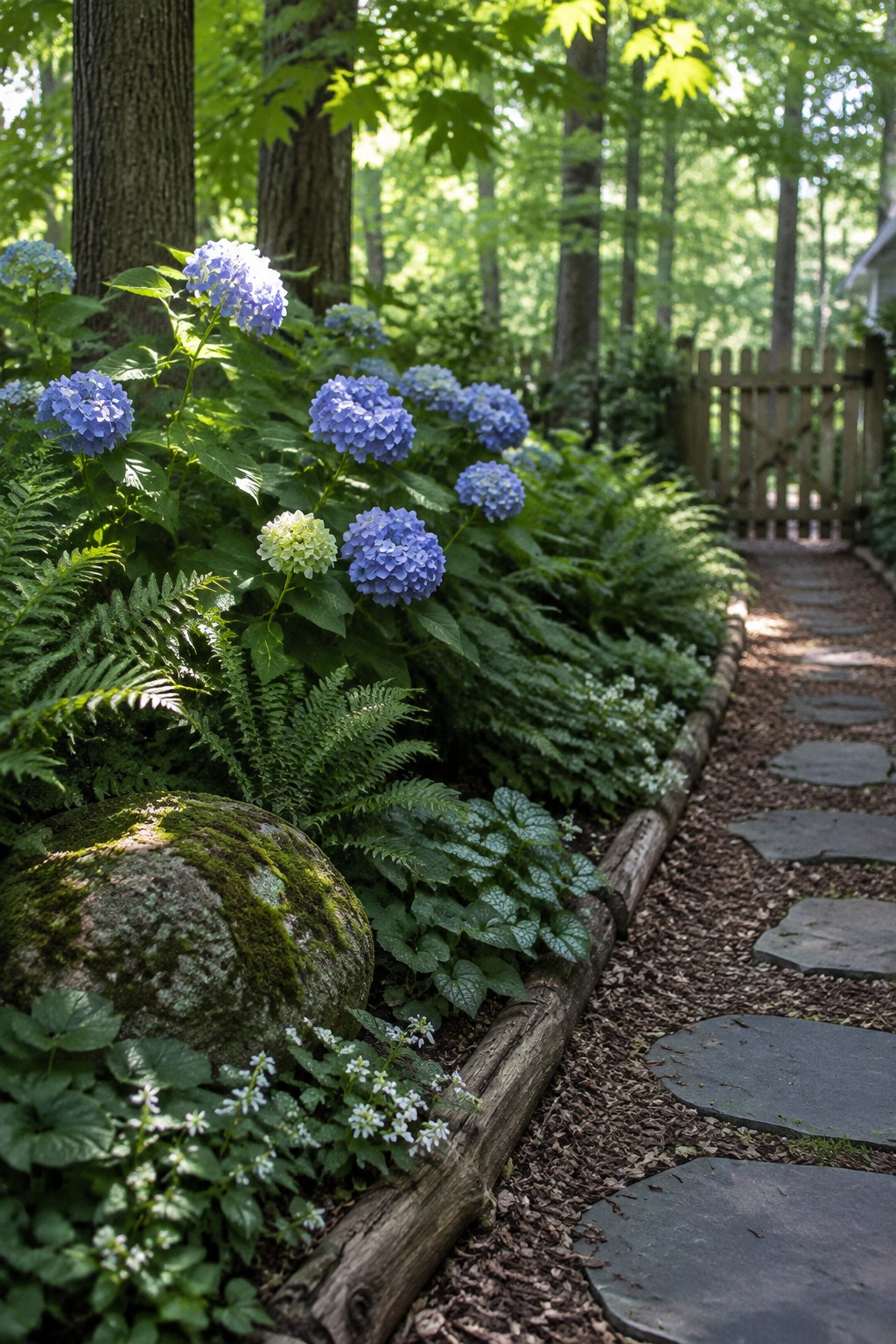
A curving garden bed can make hydrangeas feel like part of the path rather than a row of separate plants. The blooms bring color close to the walkway, while low groundcover fills the spaces between shrubs and helps the bed look settled.
Use this layout beside a path where there is room for hydrangeas to spread without narrowing the route. A simple timber edge can keep mulch and plants in place, but leave enough space for the shrubs to grow to their mature size.
Repeat Hydrangeas Along a Garden Bed
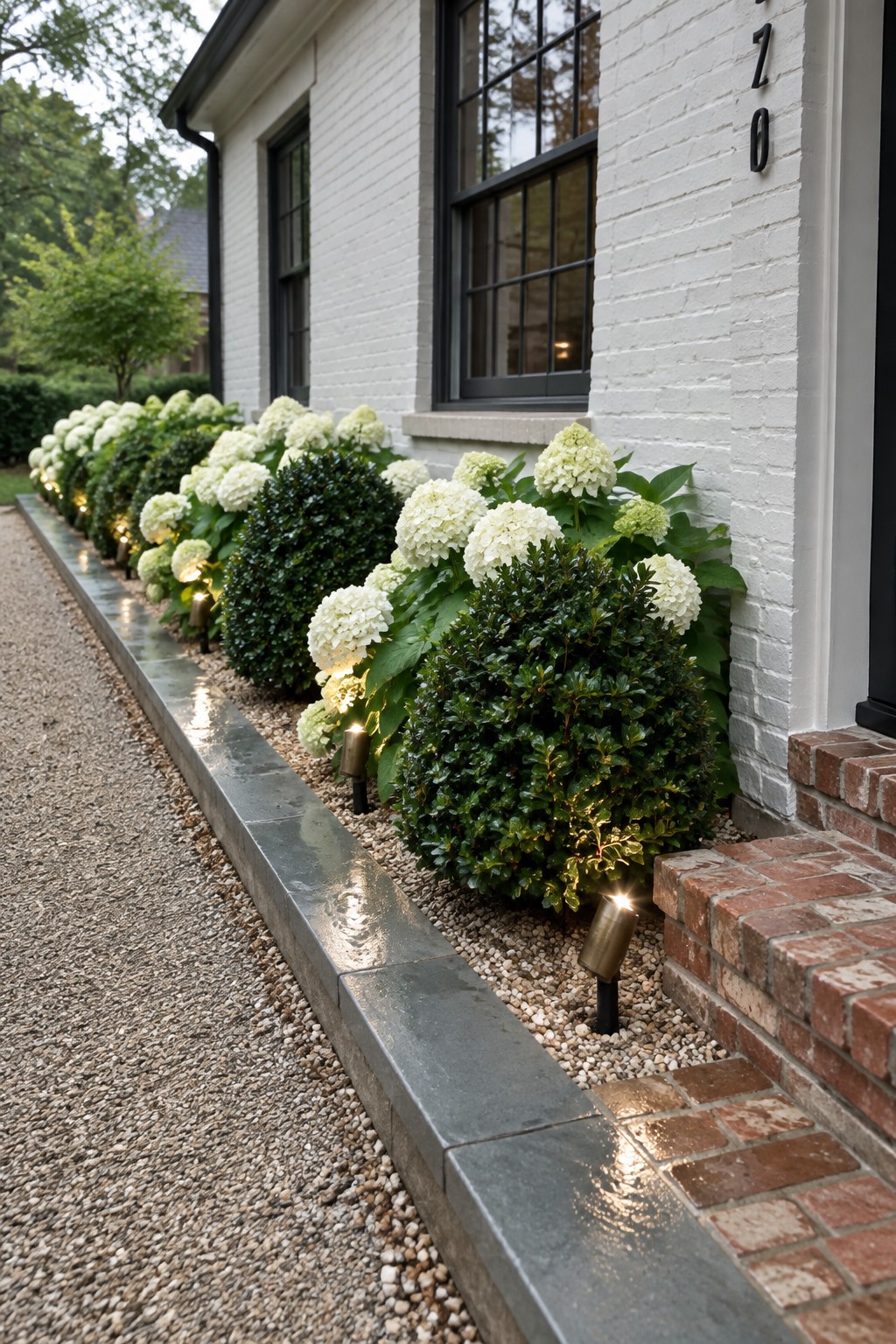
Repeating the same hydrangeas down a narrow bed gives the planting a tidy rhythm and makes the garden feel planned without adding much fuss. Here, white blooms sit among compact evergreen shrubs, so the bed keeps its shape even when the flowers are not at their best.
This approach suits a foundation bed beside a path or driveway. Choose hydrangeas that fit the space at their mature size, leave room for airflow, and use mulch or gravel to help limit weeds.
Use Hydrangeas In A Simple Raised Bed
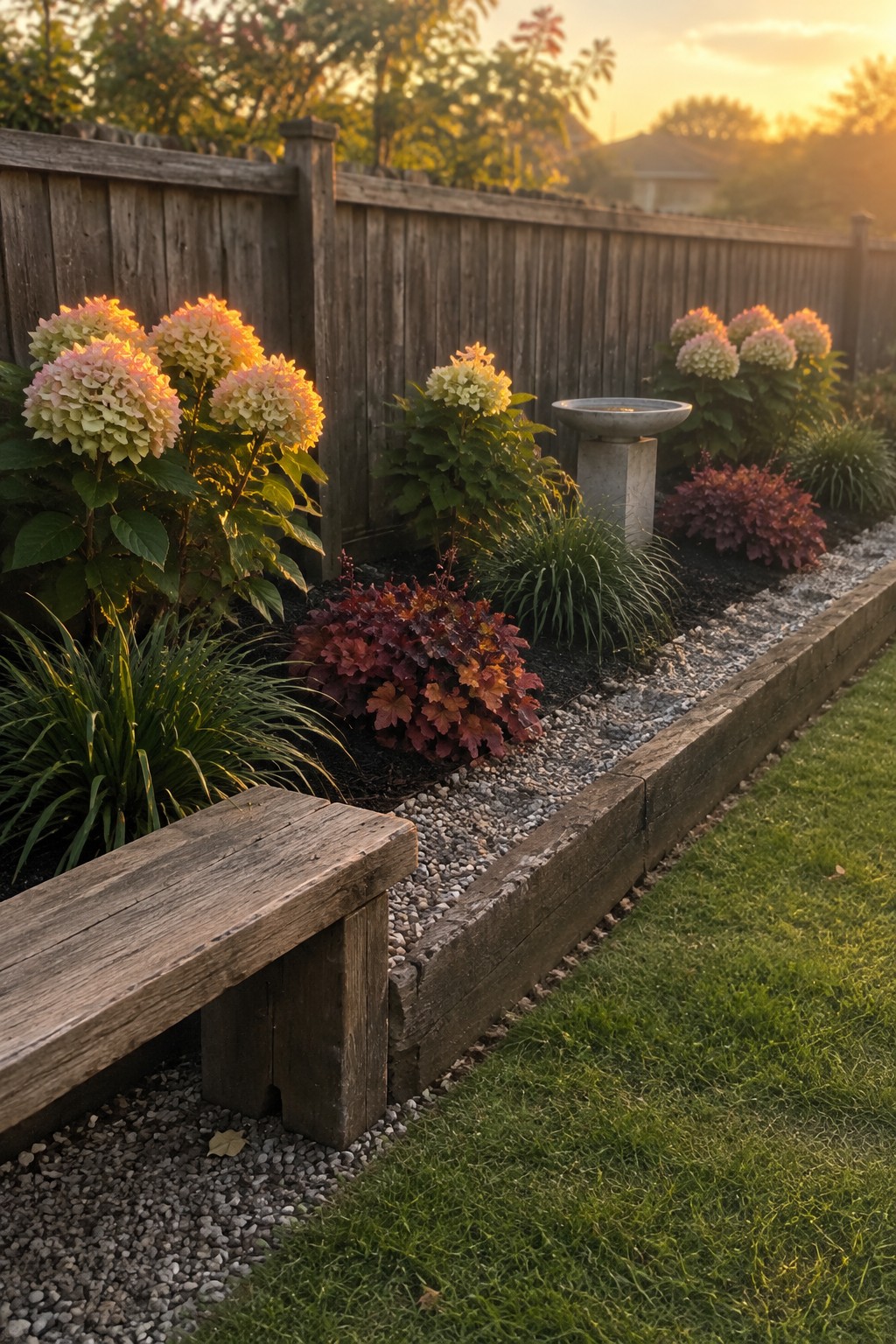
A raised bed makes it easier to keep hydrangeas grouped and the garden edge tidy. Repeating a few shrubs along the fence gives the planting a clear shape without requiring a complicated layout.
Use a timber border to separate the bed from the lawn, and leave enough room between plants for their mature size. Gravel can help keep the edges neat, but the hydrangeas will still need regular watering and an occasional prune.
Keep Hydrangeas in a Defined Bed
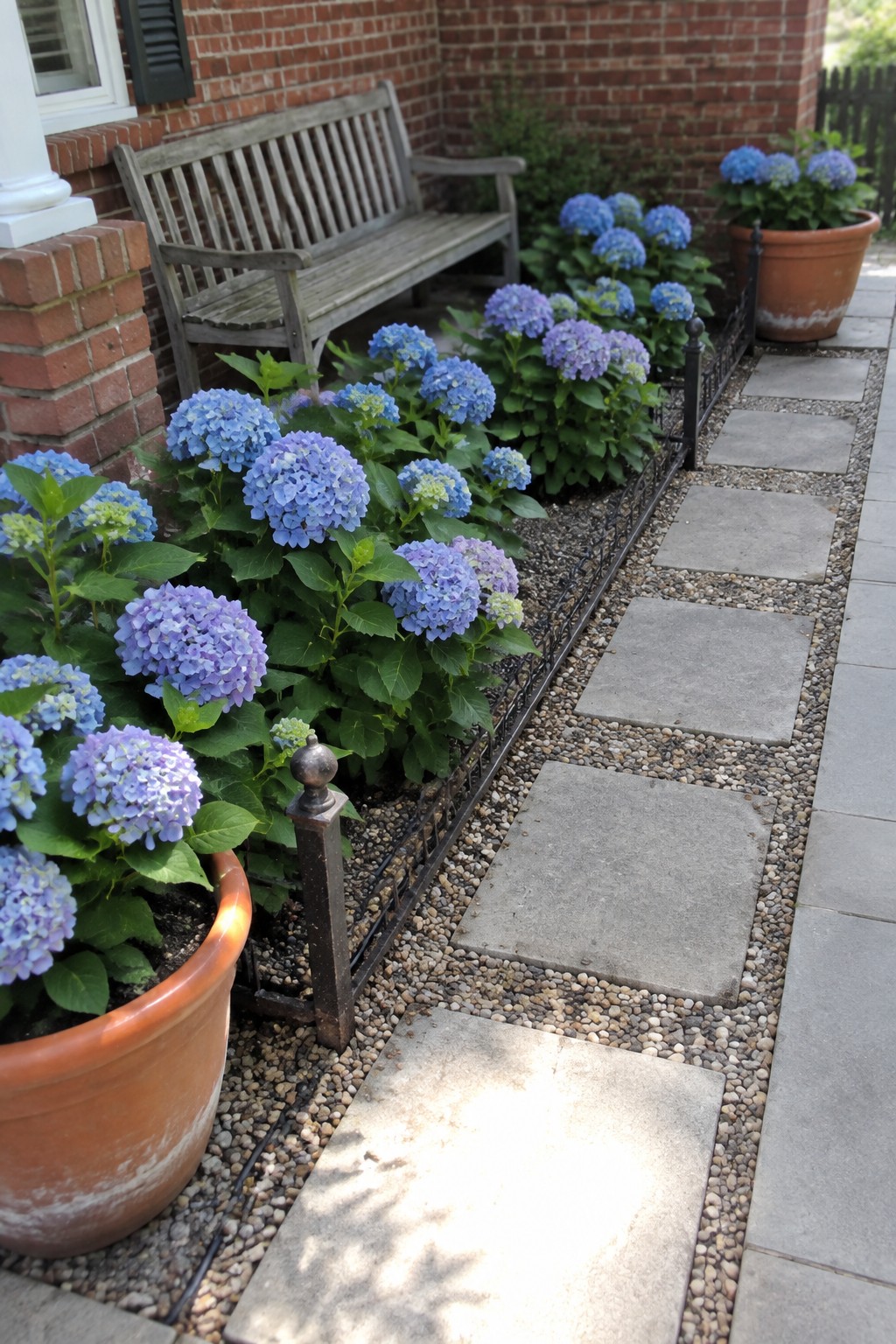
A simple border helps a hydrangea bed look tidy without making the planting feel formal. Here, low metal edging separates the flowers from the gravel path, so the plants can spread while the walking route stays clear.
This works well along a narrow side yard or beside a house where space is limited. Leave enough room for mature hydrangeas, and keep the edging low so it contains the bed without hiding the plants.
Build Hydrangea Beds Into a Terraced Slope
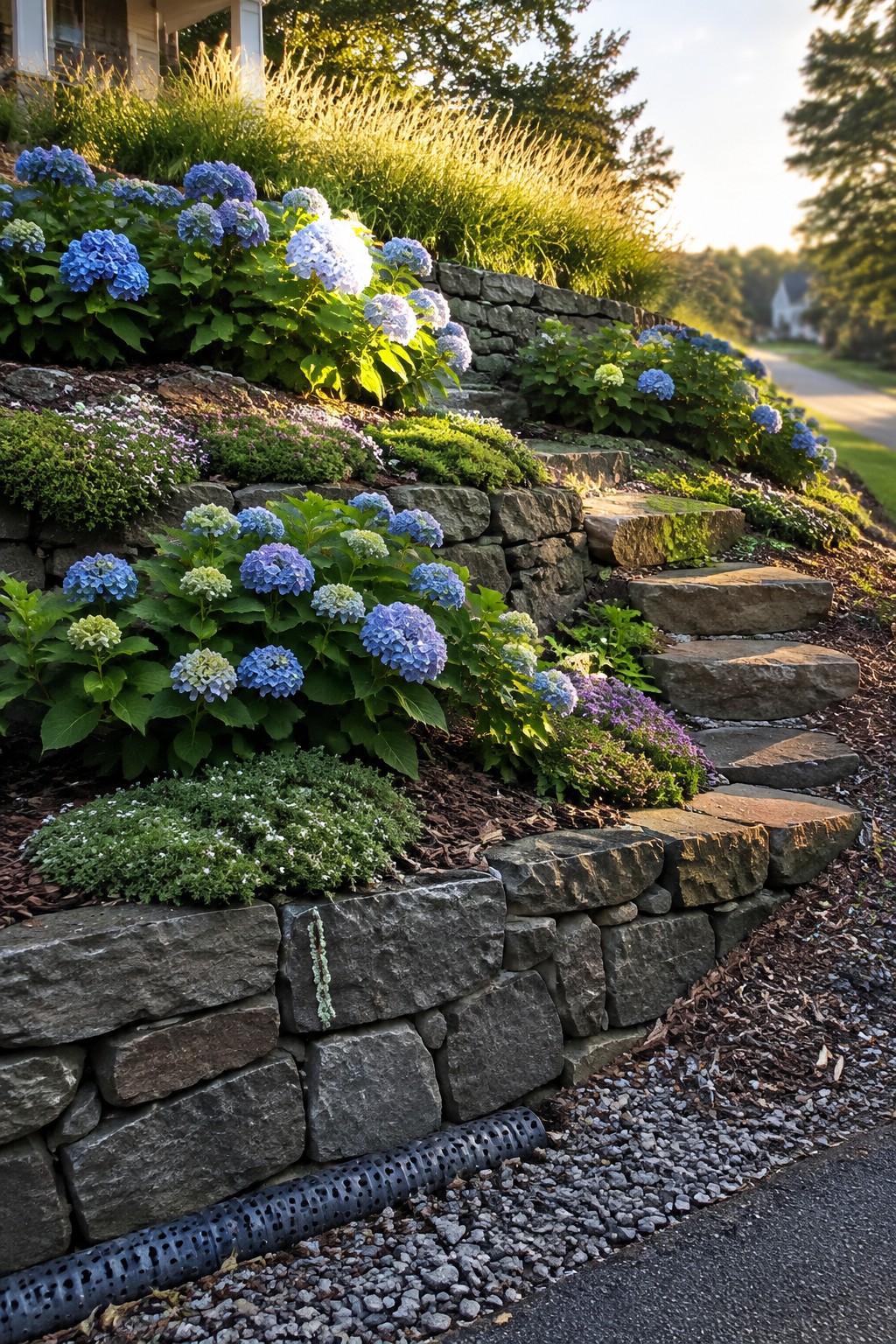
Terraced stone walls make a sloped garden easier to plant and maintain. Hydrangeas grow well along the upper edges of the beds, where their broad leaves and rounded blooms fill the space without needing a complicated planting scheme.
Use sturdy stone to hold each level and leave room to reach the plants for pruning and watering. This approach works best on a slope with enough space for wide planting areas, rather than narrow strips that are hard to tend.
Plant Hydrangeas in a Gravel Garden Bed

Hydrangeas can bring color to a gravel bed without making the whole garden feel fussy. Here, the rounded blooms sit among airy grasses, which gives the planting a relaxed shape and leaves plenty of open ground between the house and path.
This approach works well beside a porch or along a walkway where a tidy edge matters. Use gravel that drains freely, and choose hydrangeas suited to the amount of sun the bed gets. Check that they receive enough water during dry spells, especially while they are getting established.
Add a Bench Along a Hydrangea Bed
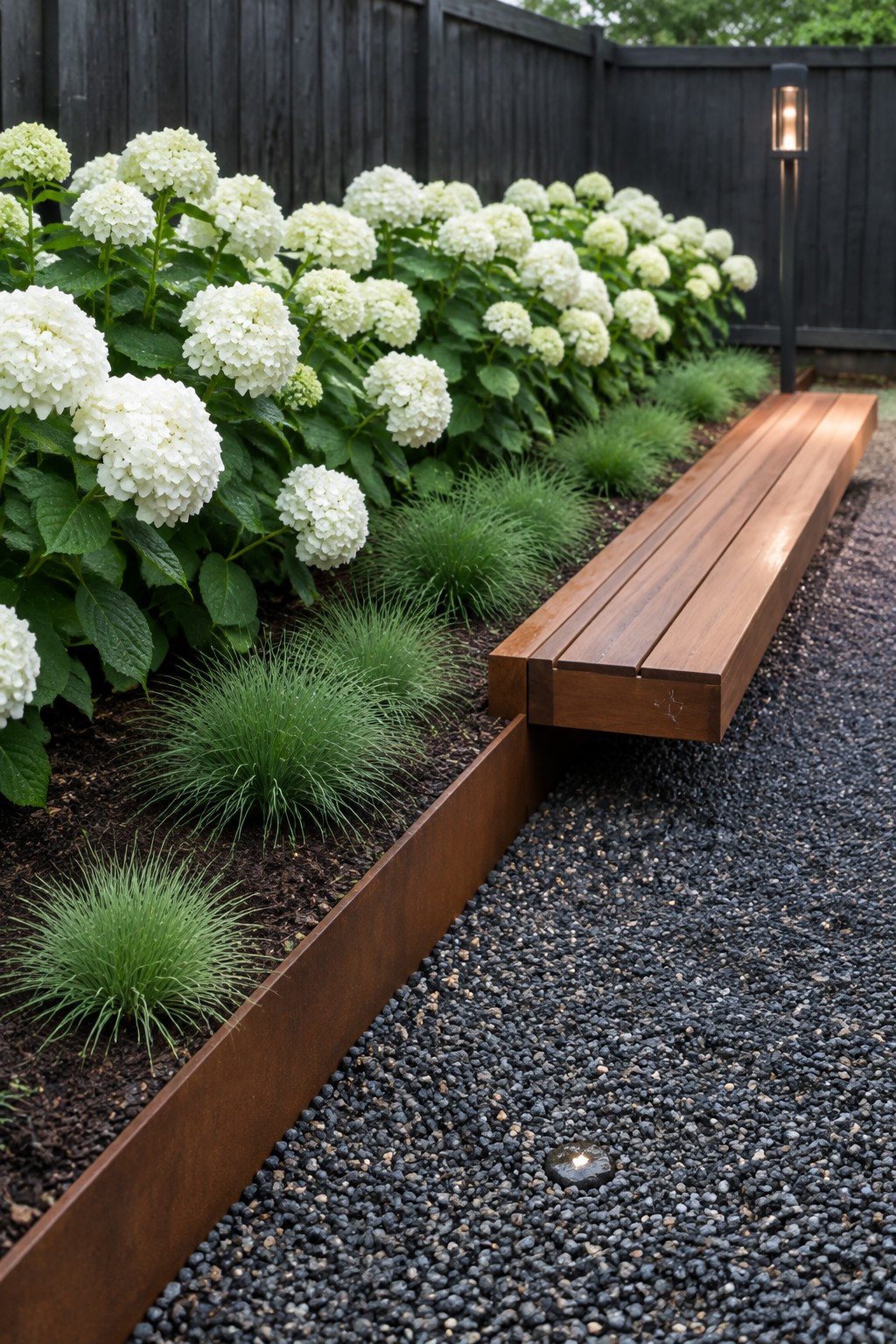
A built-in bench at the edge of a hydrangea bed gives the garden a useful place to pause without taking space away from the planting. The straight timber seat also makes a clear border between the flowers and the gravel path.
This works well in a narrow side yard or along a path you use often. Keep the seat simple and leave enough room for hydrangeas to spread, so they do not crowd the walkway as they grow.
Add Hydrangeas Along a Garden Stream
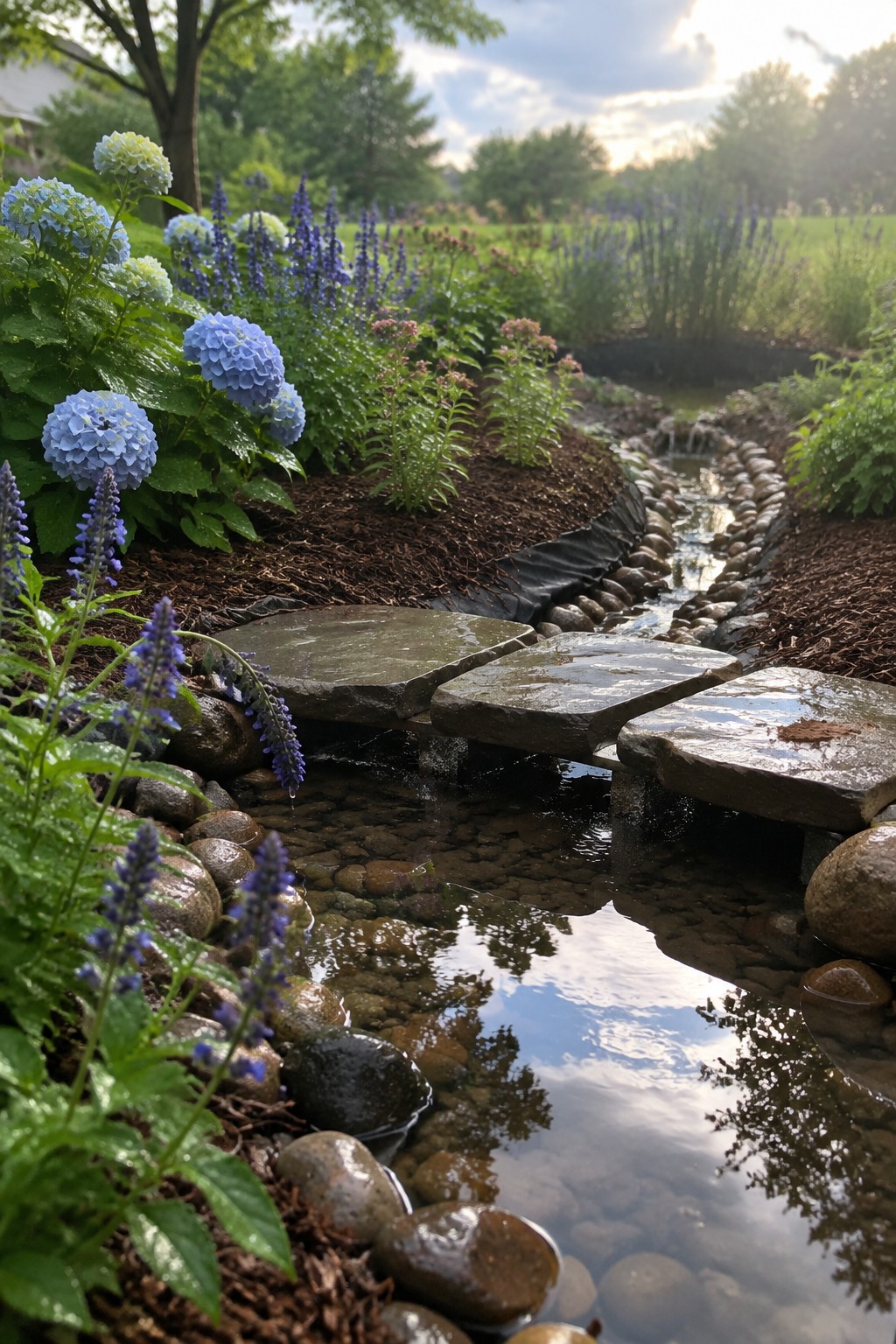
A small stream can give a garden bed a clear shape without needing a formal border. Hydrangeas planted along the bank bring broad leafy mounds and rounded blooms to the water’s edge, while a few upright flowering plants add variety.
This idea suits a naturalistic yard where you want the water feature to feel part of the planting. Keep hydrangeas set back from the stream so their roots aren’t constantly wet, and choose a variety that fits the available space to limit pruning.
Repeat Hydrangeas Along a Sidewalk Bed
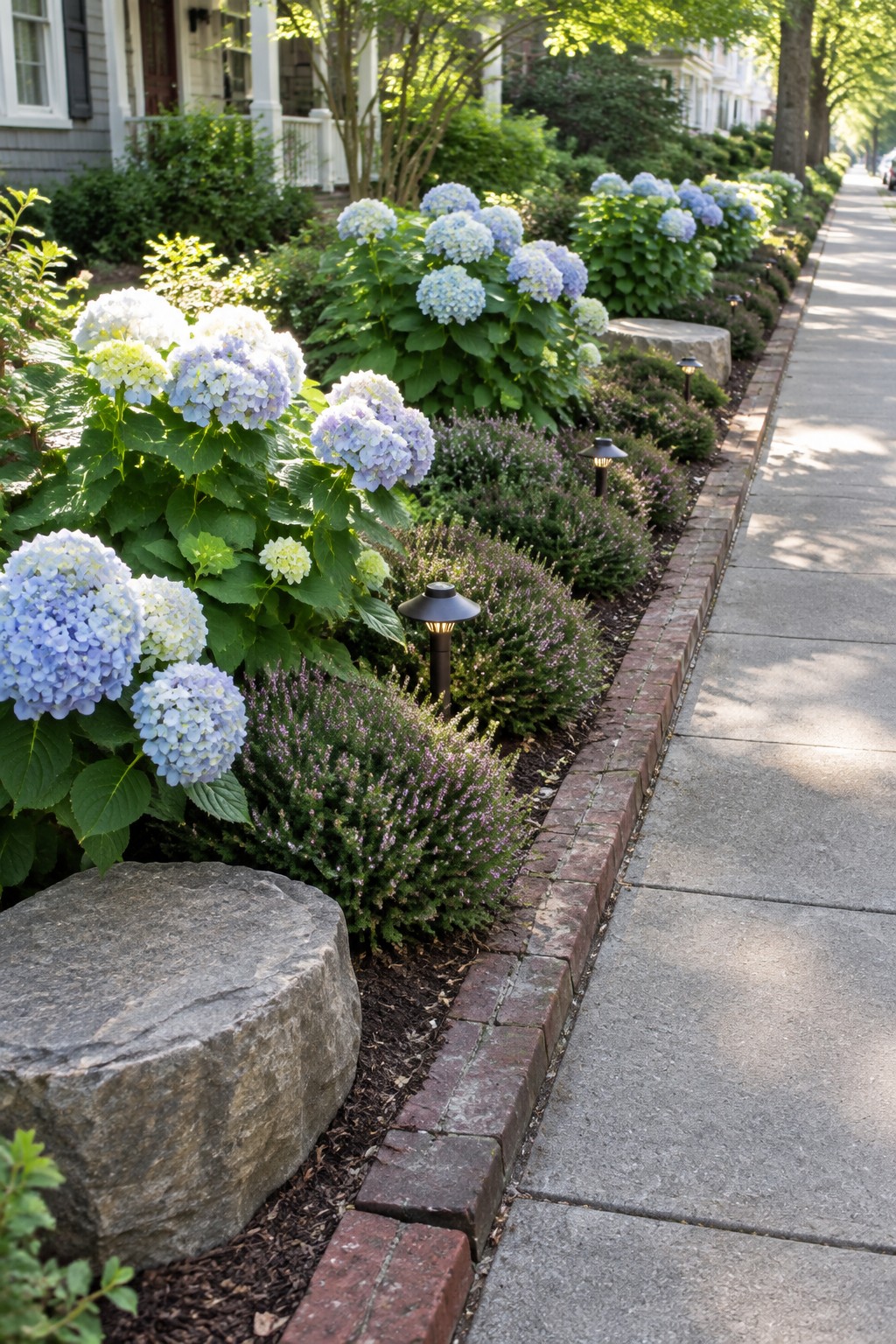
A long sidewalk bed can feel easy to care for when the planting follows a simple rhythm. Repeating hydrangeas gives the border a consistent look, while lower groundcover fills space between the larger shrubs.
This layout works well beside a front walk or along the side of a house. Leave enough room for hydrangeas to reach their mature width, and use brick edging to keep mulch and soil from spilling onto the pavement.
Use Hydrangeas Along a Narrow Garden Walk
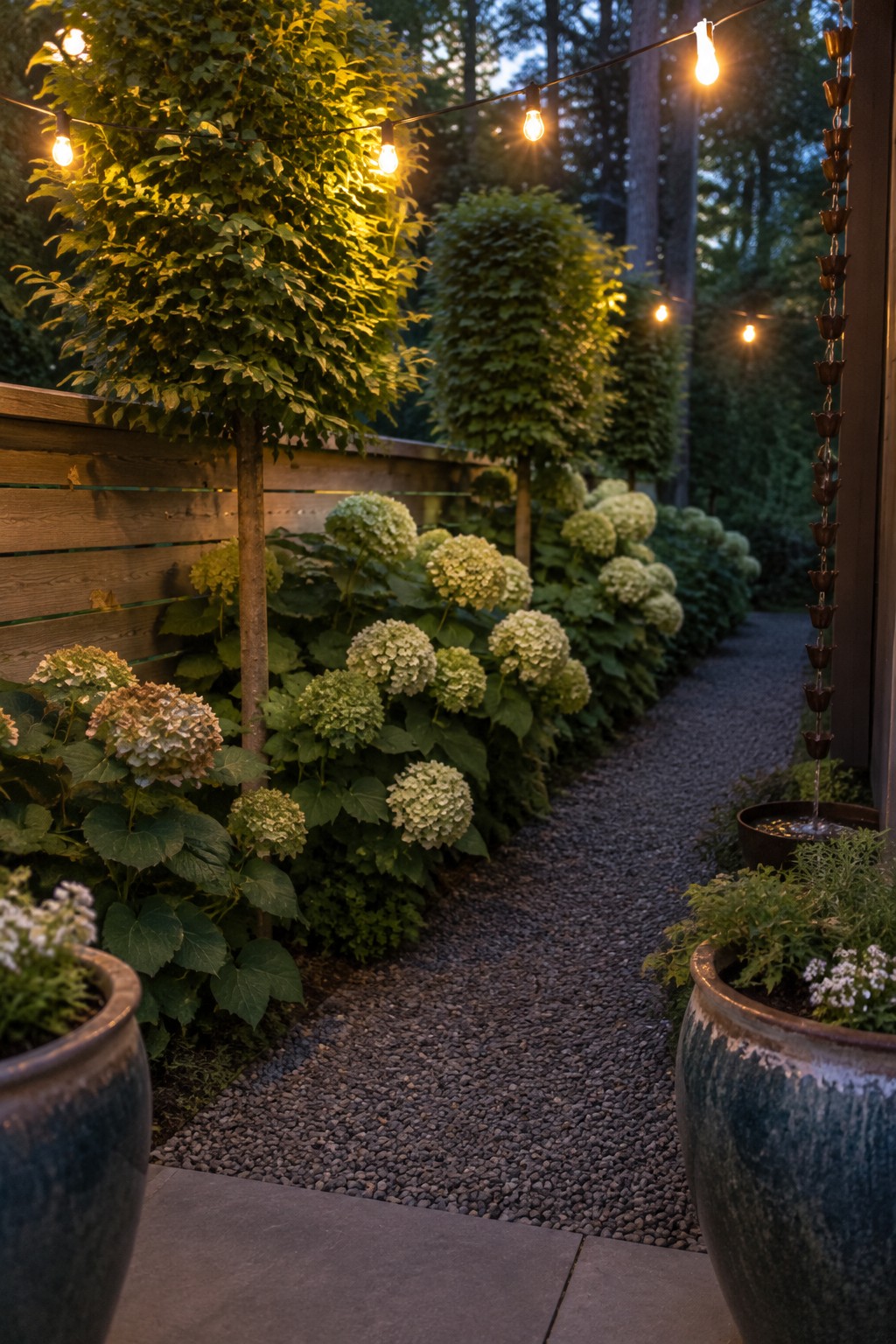
A gravel path bordered by hydrangeas makes a simple garden route feel settled and easy to follow. Repeating the same flowering shrub along the edge gives the bed a clear rhythm without needing lots of different plants.
This approach works well beside a fence or in a side yard where space is limited. Leave enough room for hydrangeas to spread, and choose a gravel size that’s comfortable to walk on and easy to keep tidy.
Use Hydrangeas in Large Pots Along a Patio
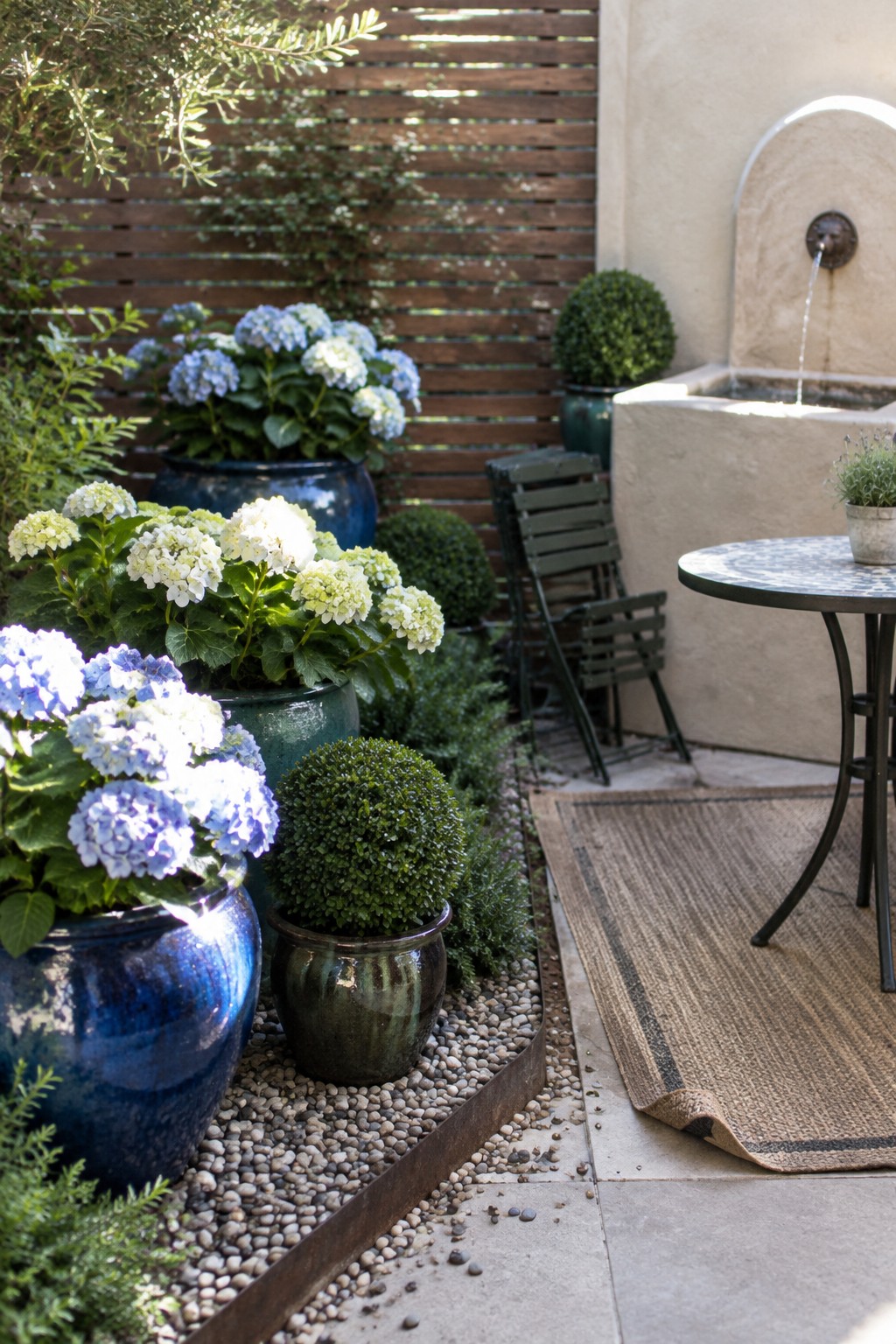
Growing hydrangeas in generous pots is a simple way to bring flowers close to an outdoor seating area without creating a new garden bed. The blue and white blooms add color, while the containers keep the planting neat and easy to manage.
Choose pots with drainage holes and enough room for the roots, then set them where they get the light that suits your hydrangea variety. Container plants dry out faster than garden beds, so check the soil regularly, especially in warm weather.
Use Hydrangeas to Define a Curving Garden Bed
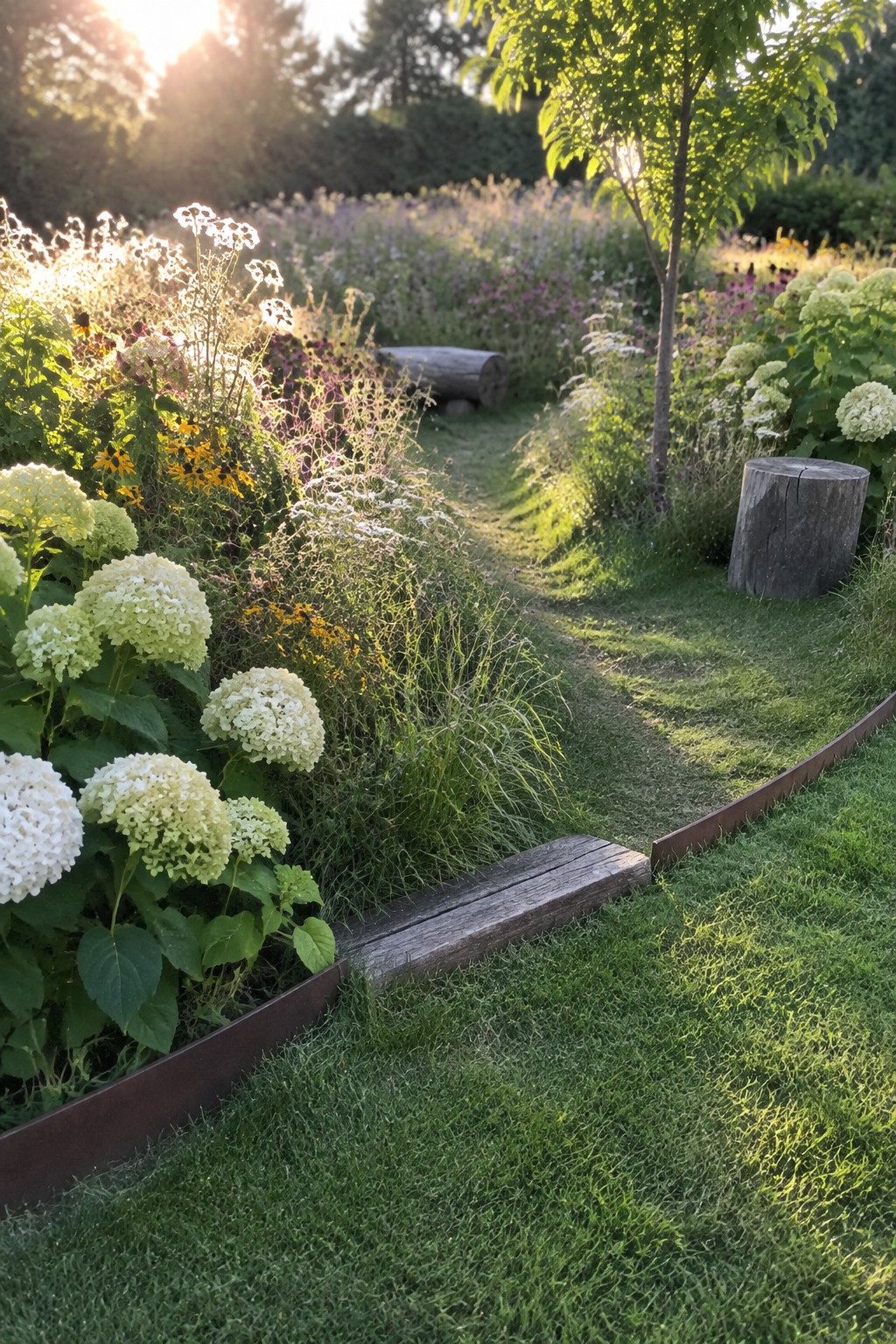
A curved bed edge gives hydrangeas a clear place in the garden while letting the planting feel less formal. Here, a low metal border follows the path, keeping the lawn tidy beside the flowers.
Use this approach where a straight bed would feel too stiff, such as along a winding garden walk. Leave enough room for hydrangeas to spread, and keep the edge easy to trim around.
Use Wall-Mounted Planters for a Small Hydrangea Bed
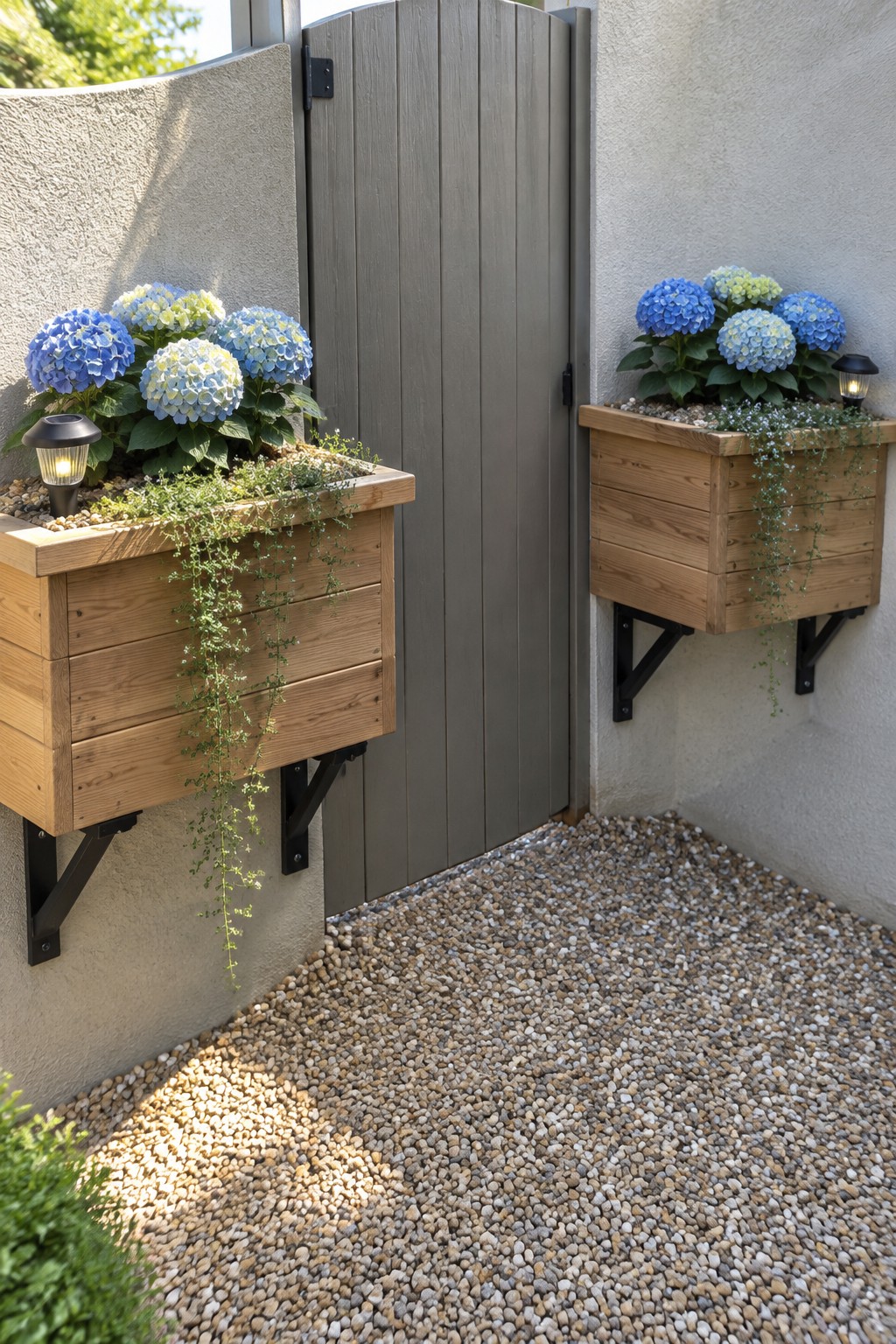
Wall-mounted planters make it possible to grow hydrangeas where there isn’t much room for a traditional garden bed. The plants sit above the gravel, leaving the ground clear and giving a narrow side yard a bit of greenery without taking up walking space.
Choose sturdy, well-secured planters deep enough for hydrangea roots, and make sure they have drainage. A spot near a gate or along a side wall can work well, but check how much sun it gets and water regularly since containers dry out faster than garden soil.
Add a Water Feature Beside Hydrangea Beds
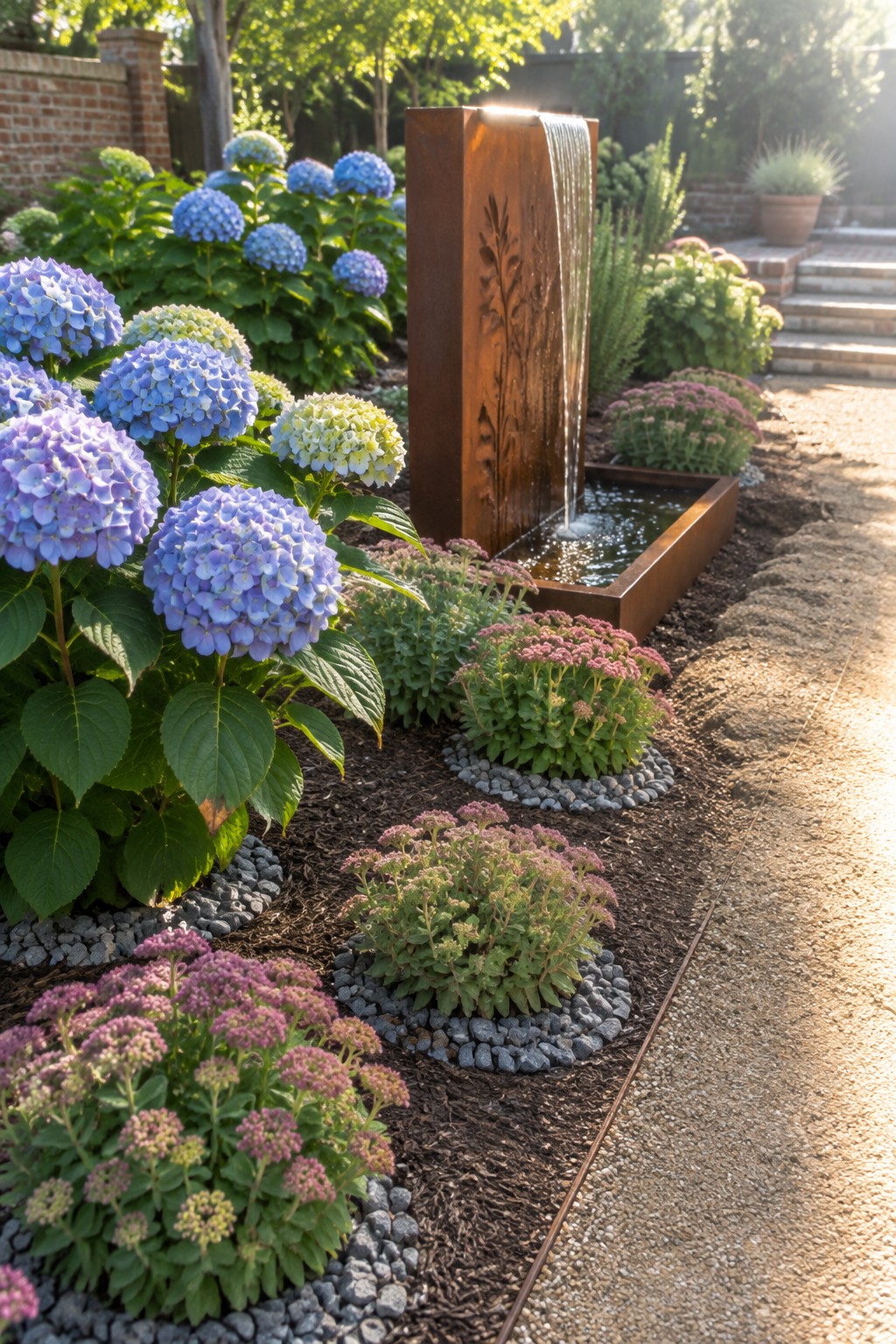
A small, recirculating fountain can give a hydrangea bed a clear focal point without making the planting feel complicated. The steady sound of water is a nice bonus, and a simple design can be easier to care for than a large pond.
Place the fountain where it can be seen from a path or nearby window, and leave enough room to reach the pump for cleaning. Blue hydrangeas work well nearby, while a gravel border can help keep mulch from washing into the basin.
Use Hydrangeas to Fill a Curved Front Garden Bed
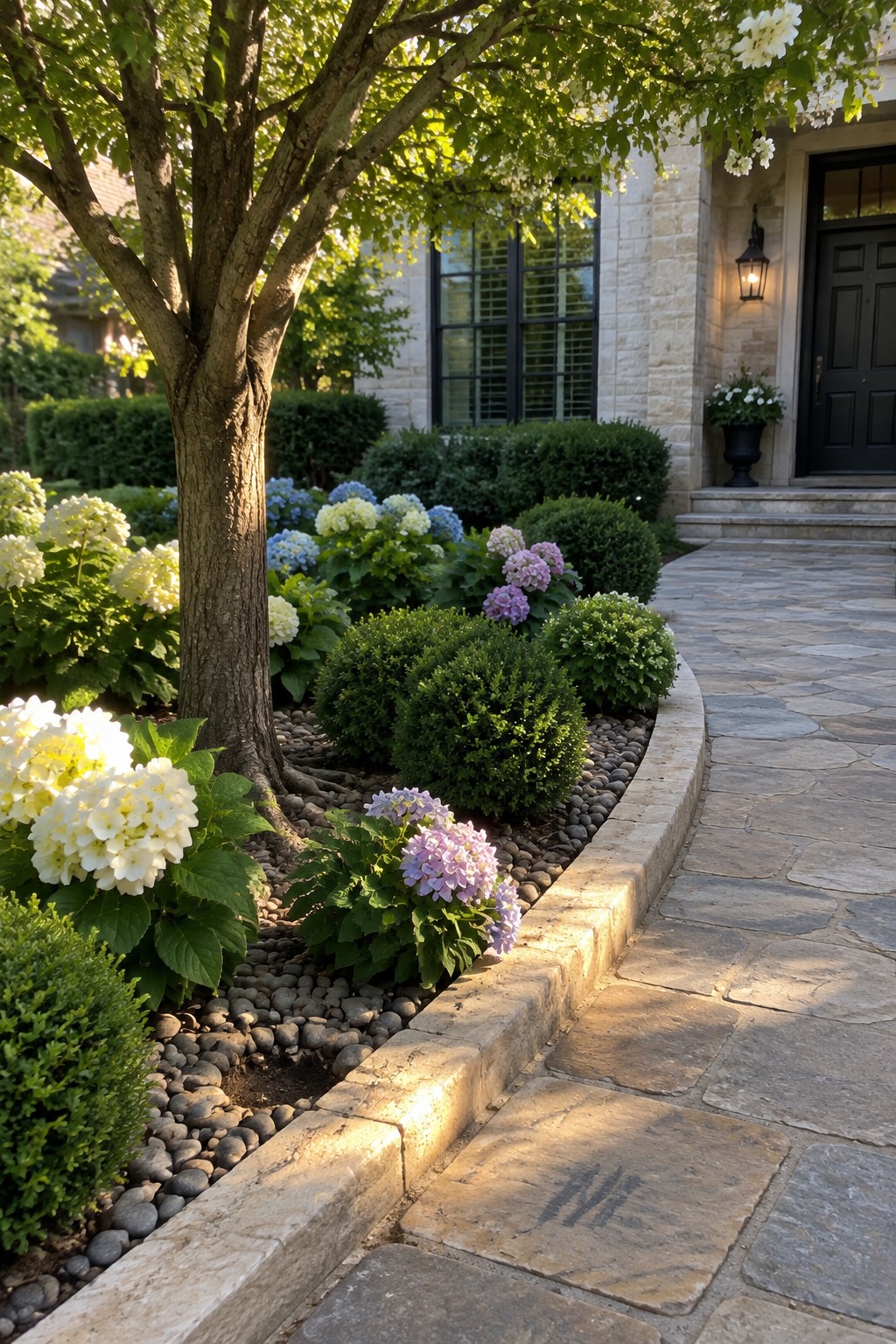
A curved bed can make a front walk feel more connected to the garden. Hydrangeas work well here because their rounded blooms bring color along the edge without needing a complicated planting plan.
Follow the curve of the path with hydrangeas, leaving enough room for them to spread as they mature. A few compact shrubs between the larger plants can help fill gaps, but keep the bed simple so pruning and upkeep stay manageable.
Grow Hydrangeas in Long Planter Beds
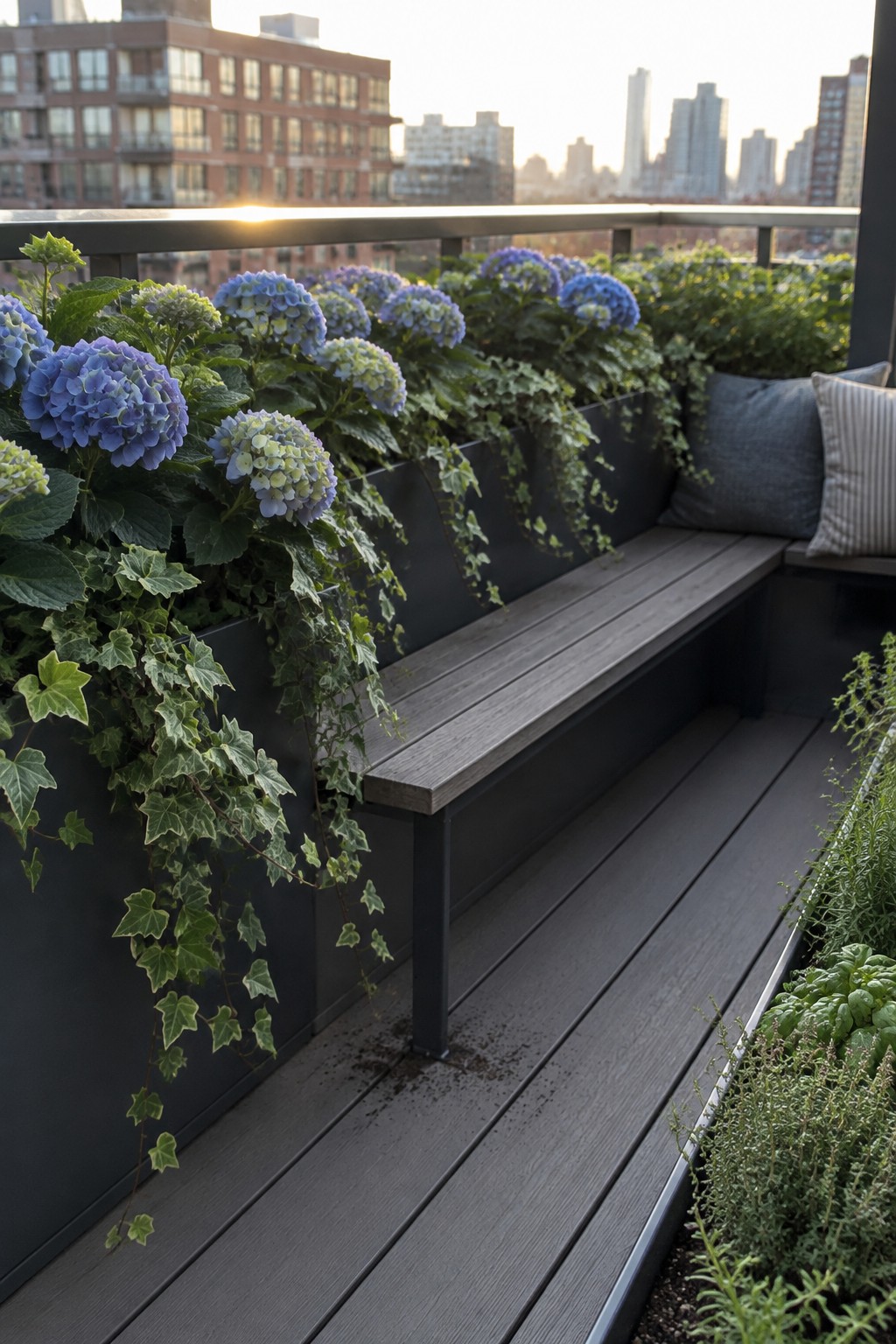
Long built-in planters are a practical way to grow hydrangeas on a balcony or deck. The continuous bed gives the shrubs room to spread while keeping their foliage and flowers contained along the edge of the seating area.
Choose compact hydrangea varieties and leave space between plants for airflow and mature growth. A planter with good drainage is essential, and a drip line can make watering easier during dry spells.
Use Hydrangeas Along a Defined Driveway Bed
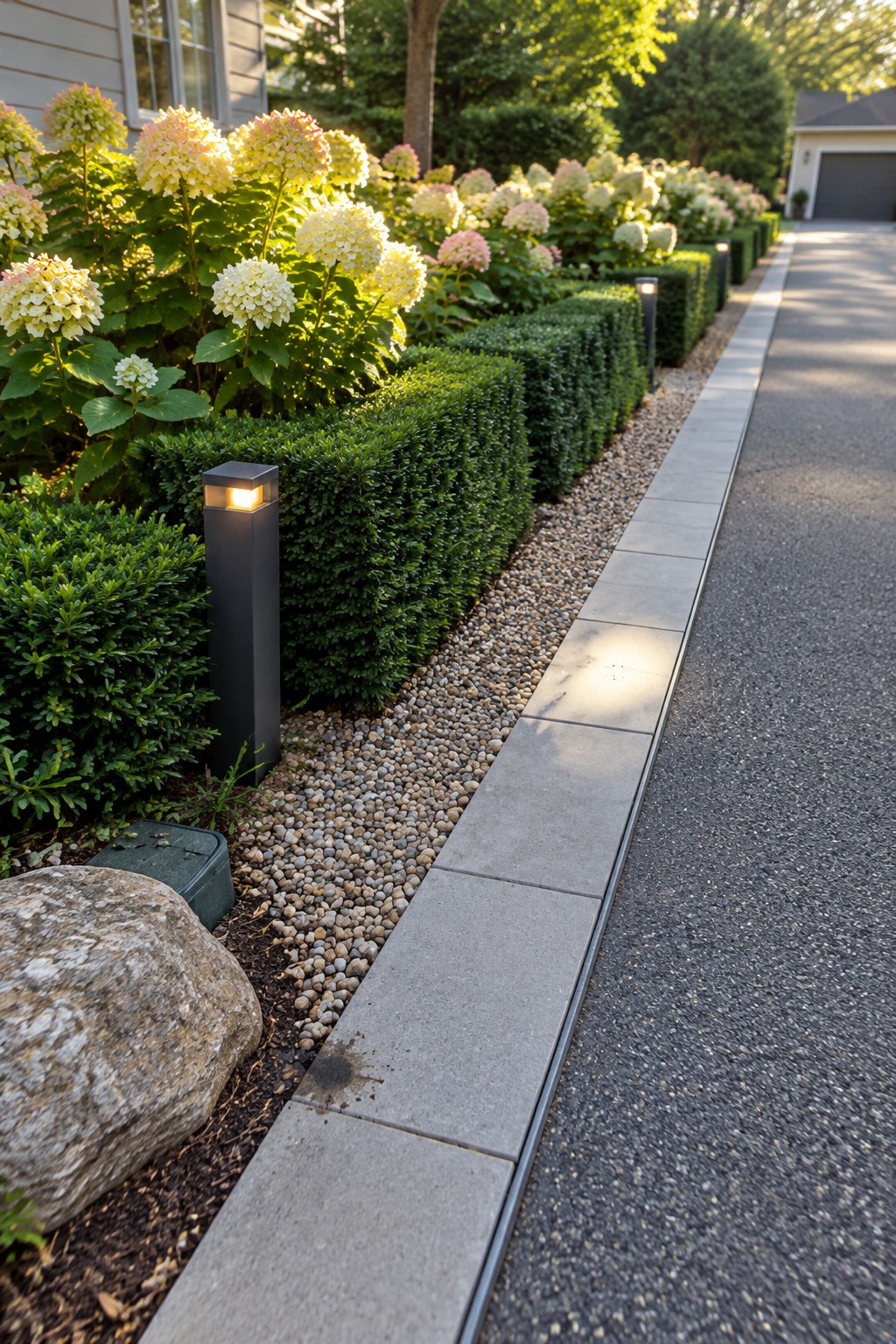
A neat edge can make a hydrangea bed easier to manage. Here, clipped low hedges and a narrow strip of gravel keep the planting separate from the driveway, while hydrangeas bring color above the tidy border.
This approach works well beside a driveway or front walk where plants might otherwise spread onto the pavement. Use a durable edging material and leave enough room for the hydrangeas to grow, so trimming and access stay simple.
Use Hydrangeas Around a Garden Water Feature
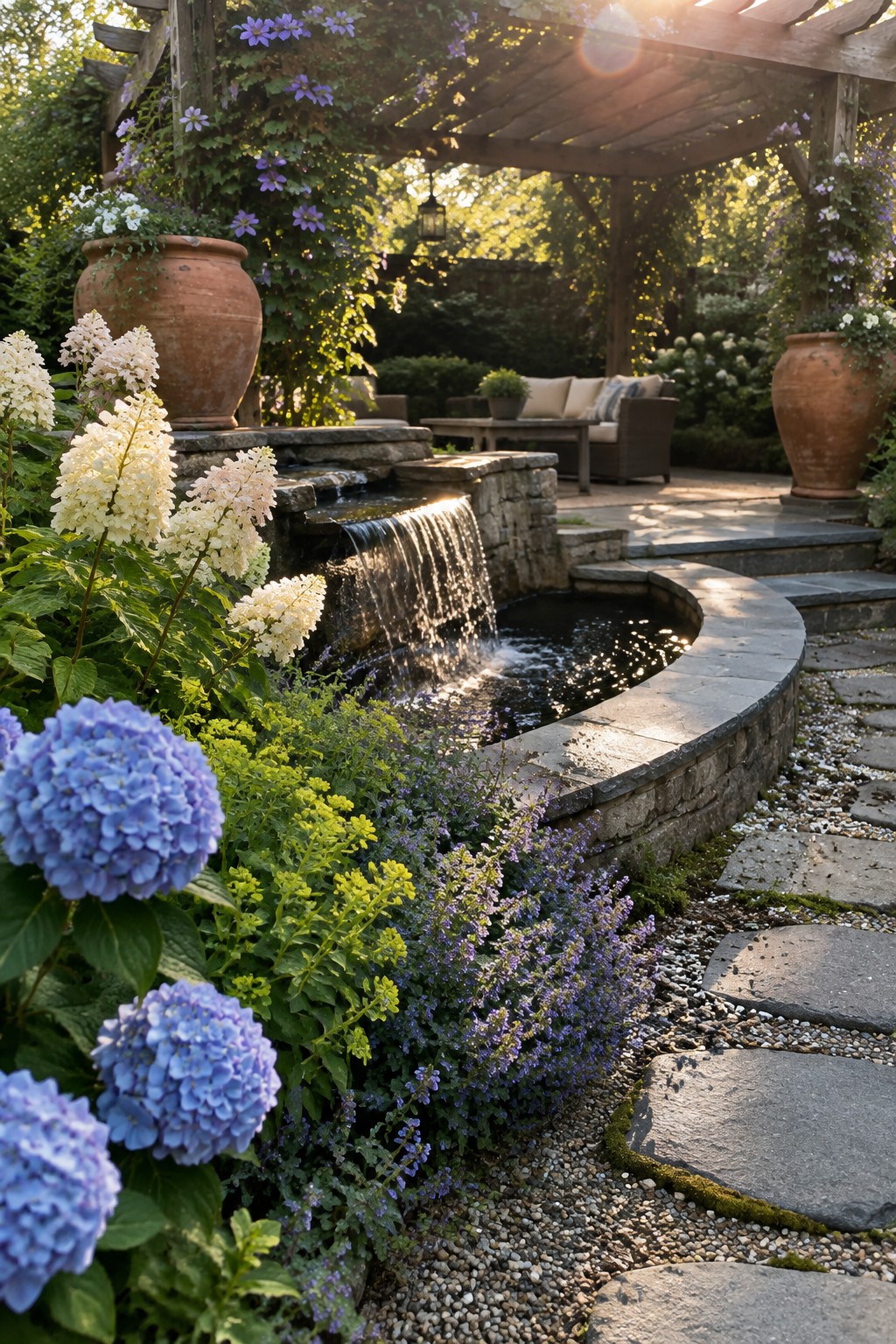
A small waterfall can give a garden bed a clear focal point without needing a lot of extra decoration. Planting hydrangeas nearby helps the water feature feel part of the garden rather than an isolated stone structure.
Leave enough room around the feature to reach it for cleaning and upkeep, and choose a spot where water won’t keep the hydrangea roots soggy. This approach suits a garden with a natural stone edge or a tucked-away seating area.
Frequently Asked Questions
Q: How much sun do hydrangeas need in a low-maintenance bed?
A: Most do well with morning sun and afternoon shade, especially in hot areas. Panicle hydrangeas can handle more sun if the soil stays evenly moist.
Q: Can I plant different hydrangeas together without making the bed hard to care for?
A: Yes. Choose varieties with similar light and water needs, then leave enough room for their mature size so you won’t have to prune them back constantly.
Q: How often should I water newly planted hydrangeas?
A: Water deeply when the top inch of soil feels dry, checking more often during hot or windy spells. Once the plants are established, they usually need less attention.
Q: Do hydrangeas need to be pruned every year?
A: Not necessarily. Many look good with just a quick cleanup of dead or damaged stems, and panicle hydrangeas can be pruned in late winter if you want to shape them.
