

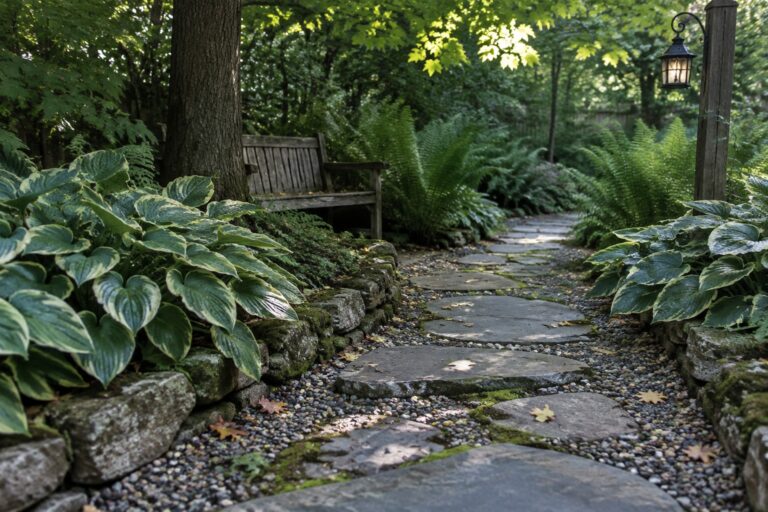
Shady paths can feel a little bare when the edges are left undefined, but a well-planted border gives the walkway shape and makes it feel connected to the rest of the garden.
I like hostas for this job because their broad leaves soften hard path edges, and their different sizes and colors can bring structure to spots where flowering plants may struggle.
The key is to leave enough room for people to pass comfortably while letting the foliage fill out over time.
A mix of leaf shapes, heights, and simple edging can make the same shady strip feel either neat or relaxed.
I’d look for ideas that suit the path’s width and light, then adapt the planting distances to the space I actually have.
Use Stepping Stones Through Hosta Borders
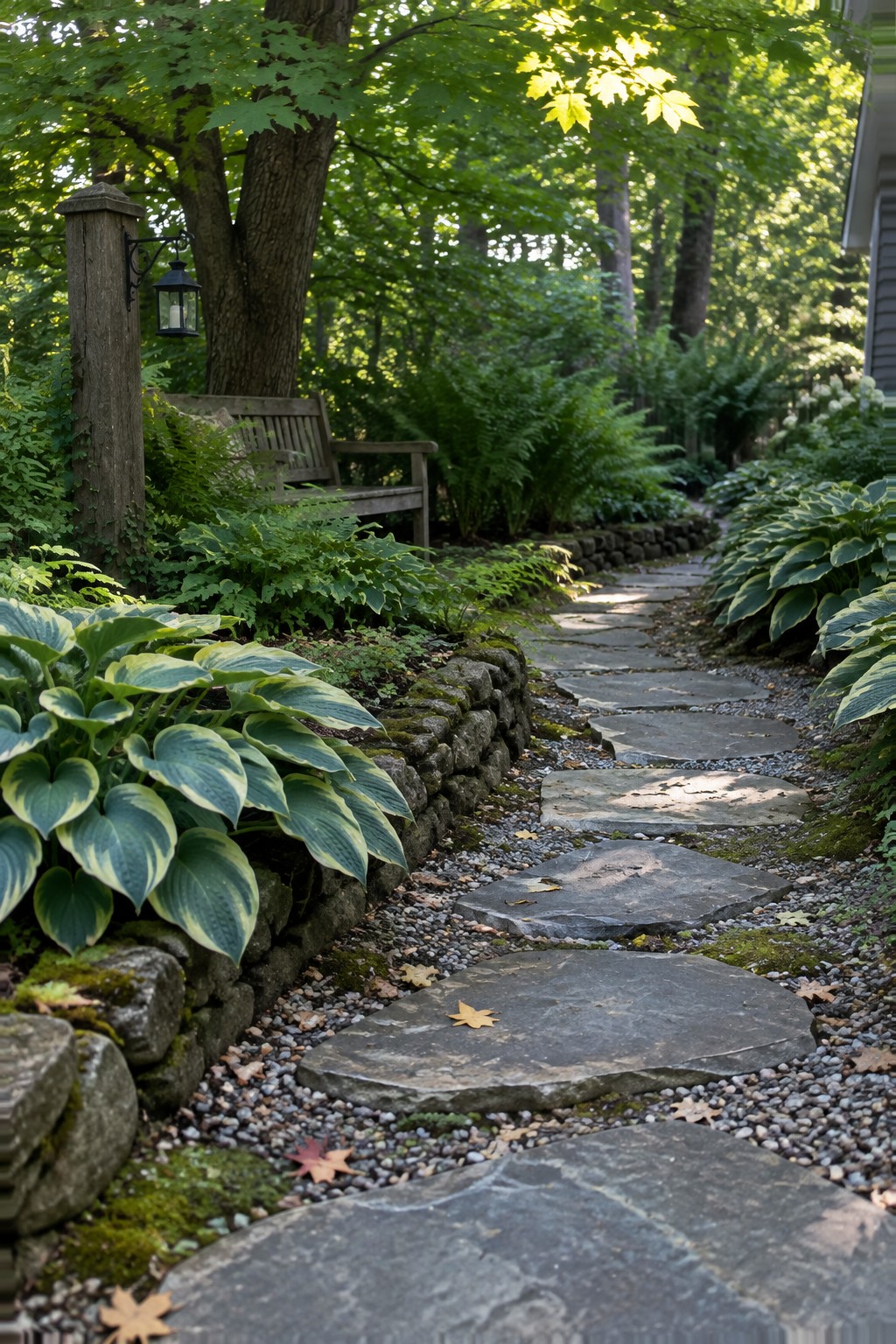
A stepping-stone path can make a shady garden easier to walk through without taking up much room for paving. Broad hosta leaves along the edges give the route a clear border, while the stones leave space for gravel and moss between each step.
This approach works well on a winding side-yard path or anywhere a solid walkway would feel too heavy. Set the stones at a comfortable stride and keep hostas back from the edges so their leaves don’t crowd the walking surface.
Brick Paths With Hosta Borders
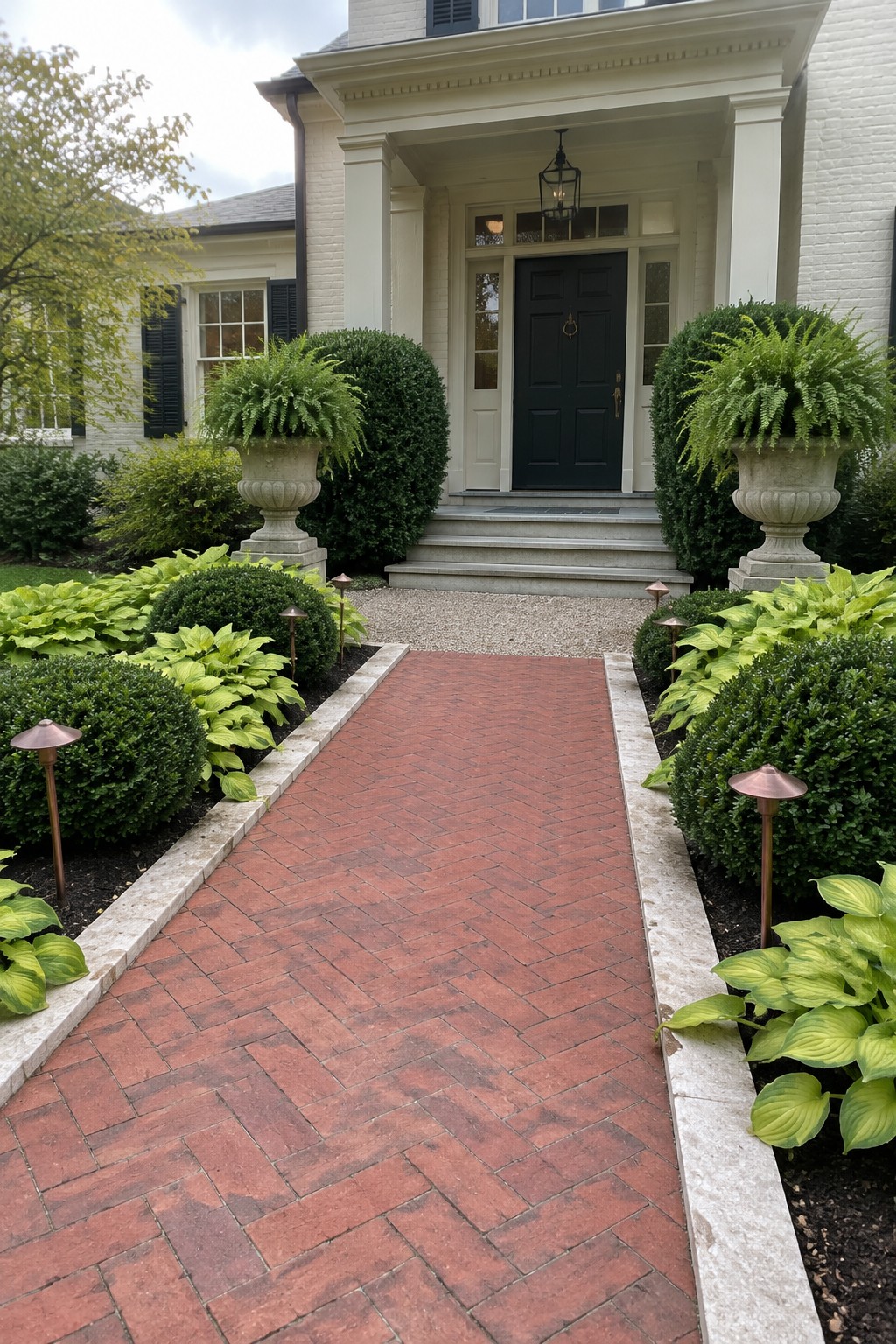
A brick walkway can give a shady garden a clear route to the front door, while hostas bring leafy color along the edges. The firm path also makes the planting beds feel tidy without needing a lot of flowers.
Use hostas in groups beside the brick, leaving enough room for their leaves to spread without covering the walking surface. This approach suits a traditional entry, but make sure the path stays wide and the edging is stable.
Use Large Stepping Stones Through Hosta Borders
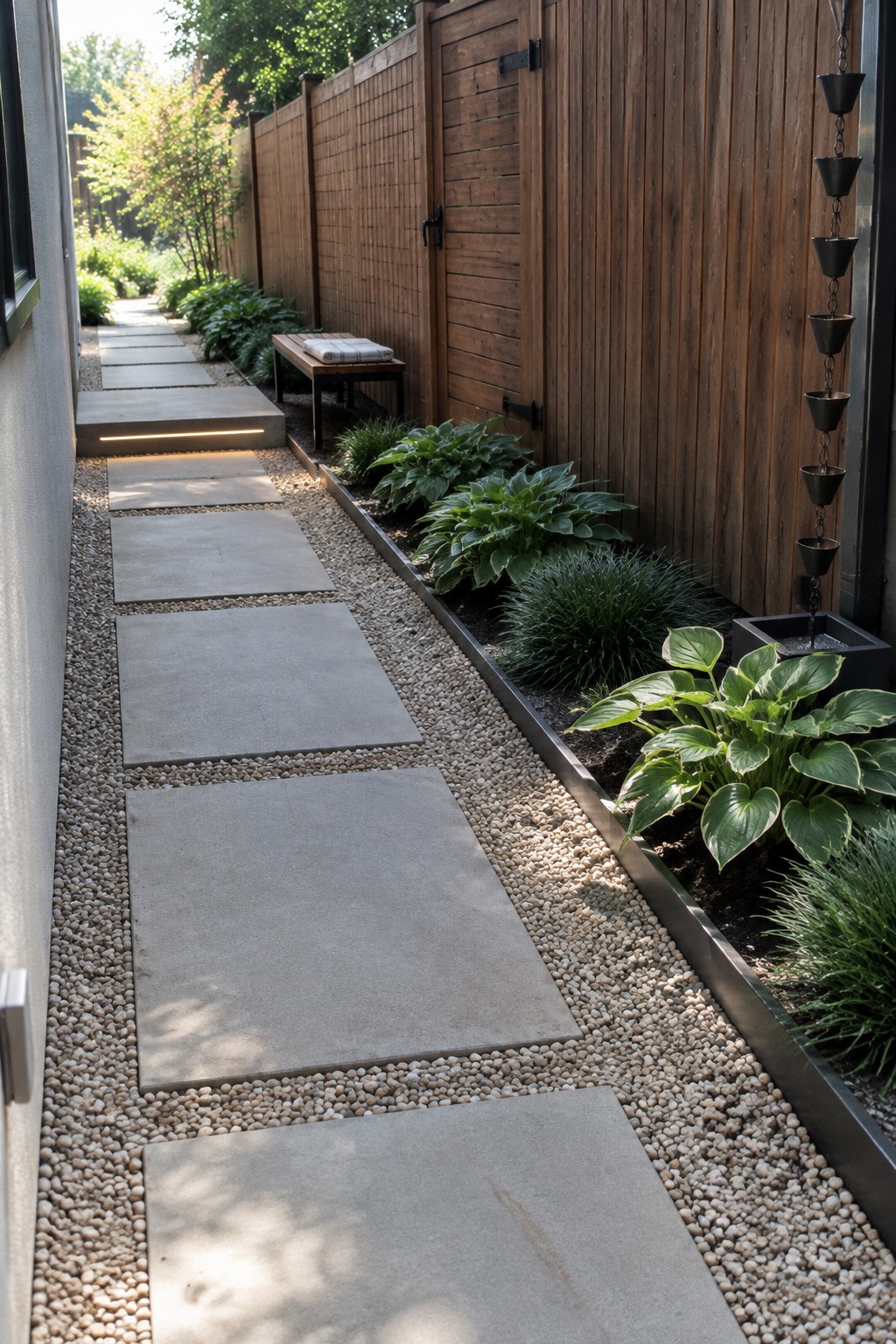
Large stepping stones make a narrow garden path easier to walk while leaving room for planting on either side. Hostas are a good fit along a shady route because their broad leaves give the border a fuller look without needing many different plants.
Set the stones far enough apart for a comfortable stride, and keep the gravel or soil around them level to avoid awkward steps. This approach works well in side yards and other tight spaces, where a clear path matters as much as the planting.
Use Hostas Along a Winding Stone Path
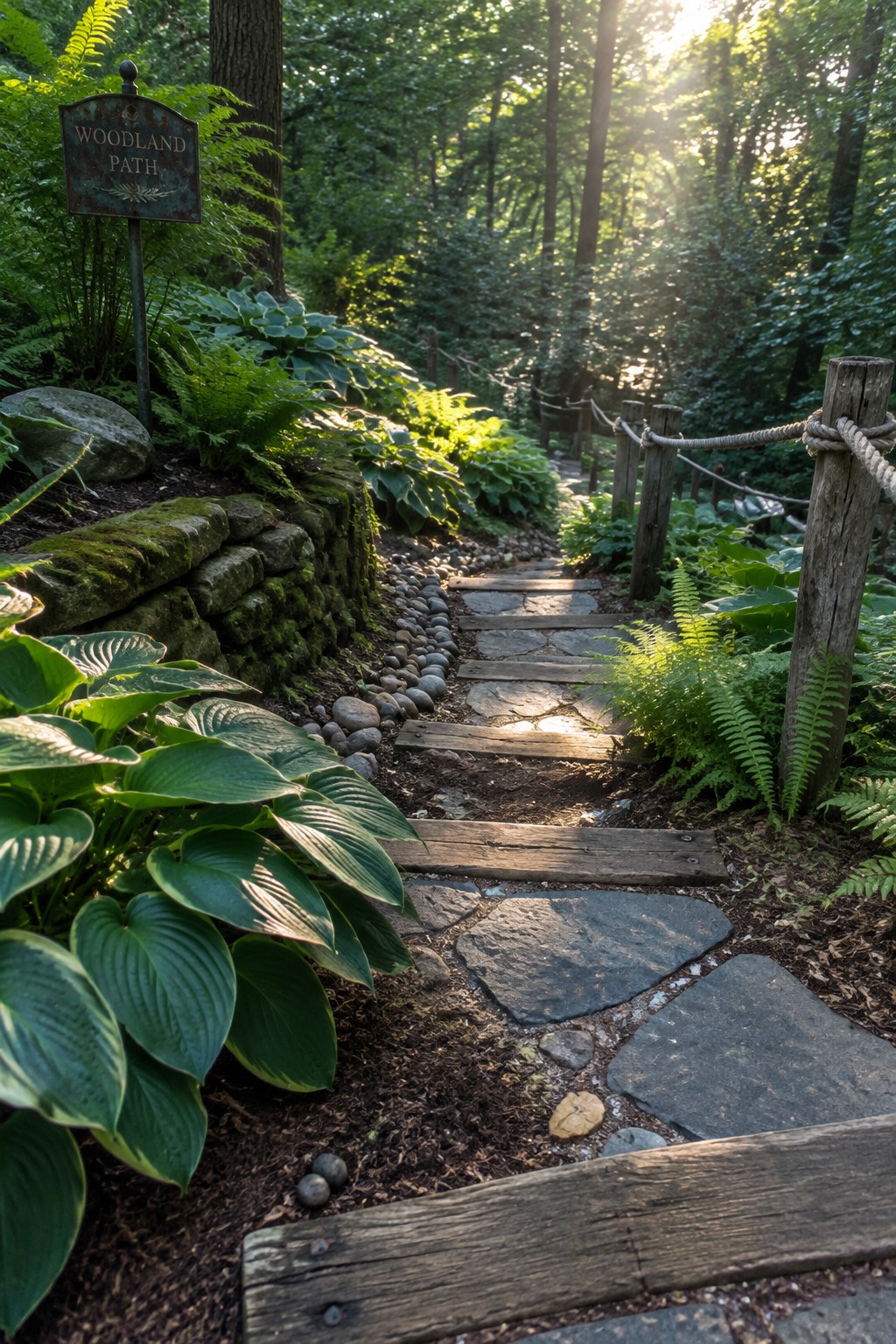
Hostas make a shady path feel like part of the garden rather than a route through it. Their broad leaves give the planting a steady edge, while irregular stepping stones keep the walkway from looking too formal.
Plant hostas in loose groups along the path, leaving enough room for them to spread without covering the stones. They work especially well beneath trees, but choose varieties suited to your local conditions and allow for a clear, easy-to-walk surface.
Add Hostas Along a Gravel Garden Path
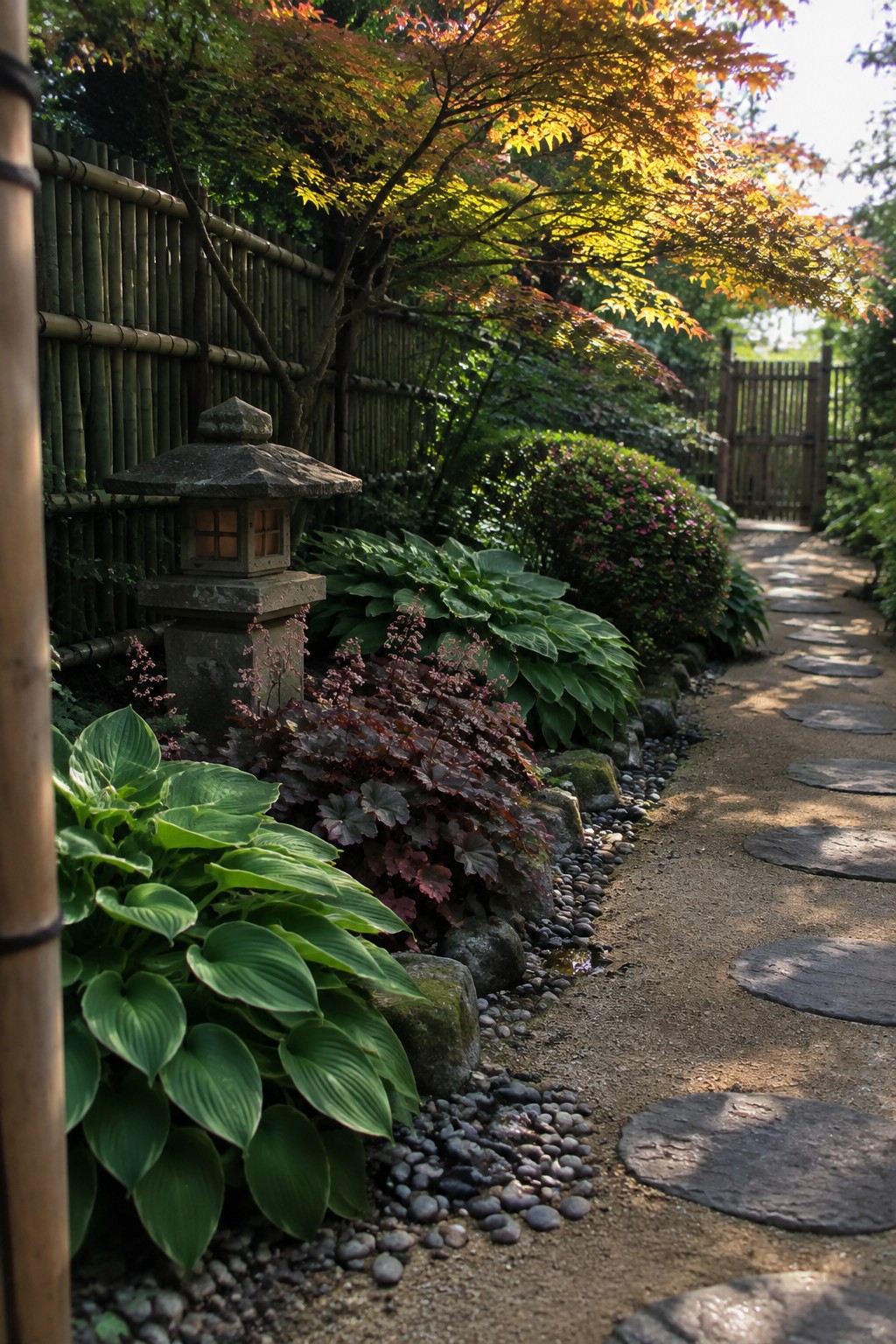
A gravel path edged with hostas is a practical choice for a shady garden. The broad leaves make a clear border, while the gravel gives water a place to drain and is easy to shape around planting beds.
Use larger hostas along the path’s edge, leaving room for them to spread without narrowing the walking space. A few stepping stones can make the route easier to cross, especially where gravel tends to shift.
Use Brick Pavers for a Shady Garden Path
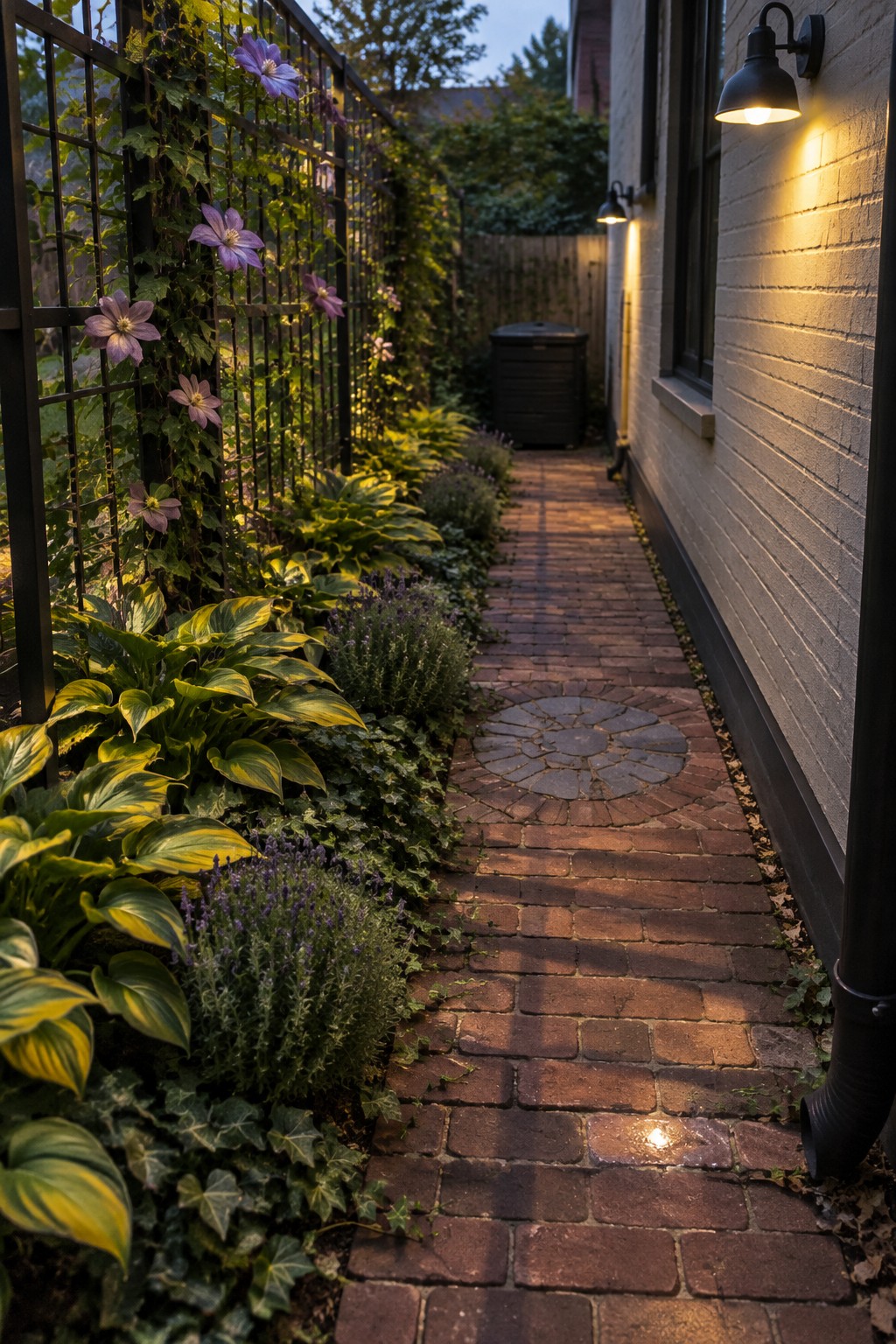
Brick pavers make a practical path through a narrow planting bed, and their warm color works nicely beside leafy hostas. A simple curve in the paving can keep a long walkway from feeling too straight.
Leave enough room for hostas along the edge without letting their leaves crowd the walking surface. This approach suits a side yard or other shaded walkway, especially when the bricks are set firmly and kept level.
Use Hostas Along a Gravel-Set Stone Path
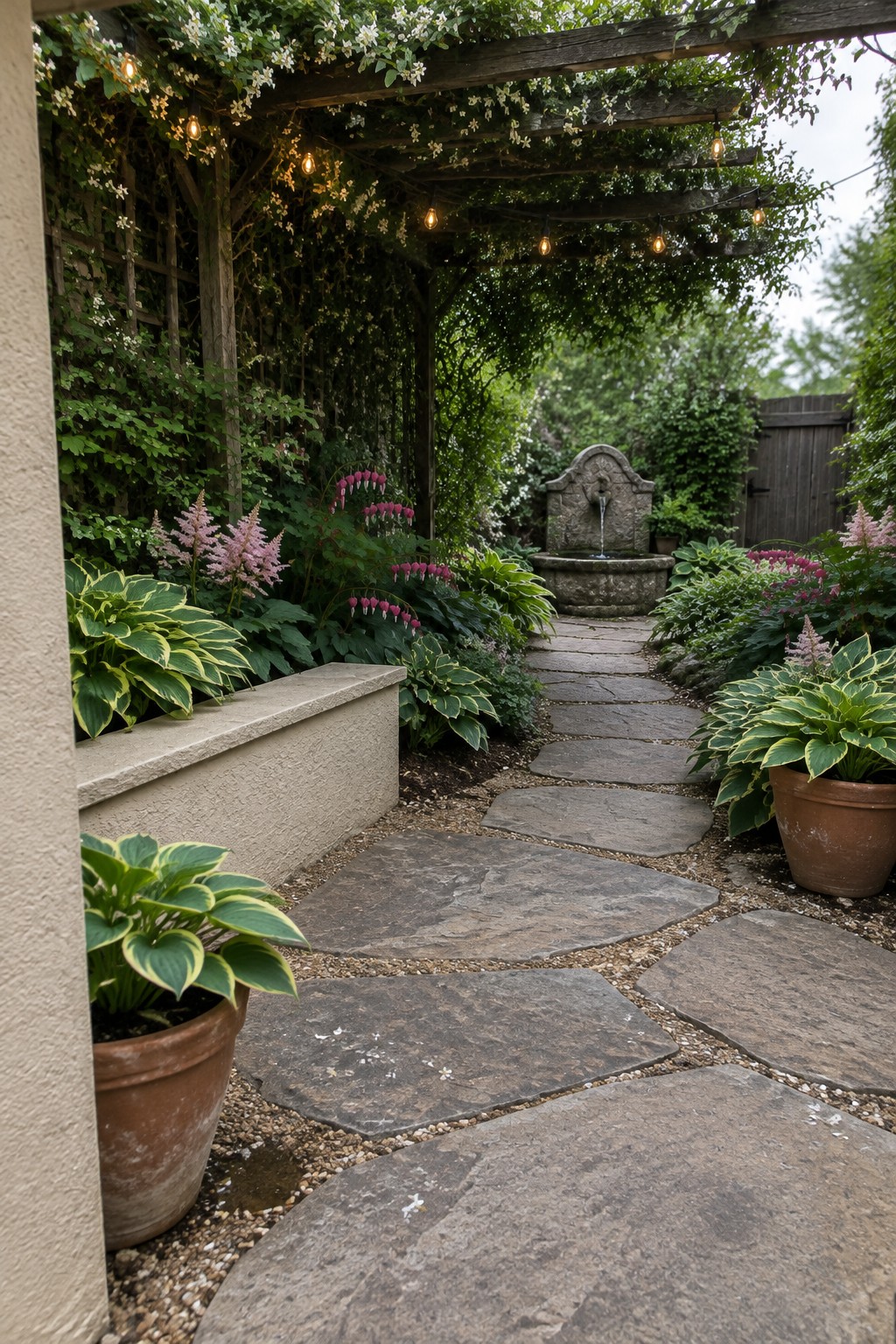
A stone path with small gravel between the slabs gives a shady garden a clear route without taking over the planting. Hostas work well along the edges, where their broad leaves can fill the border and soften the transition to the path.
Use this approach where you want a sturdy walkway that still feels informal, especially in a narrow garden. Leave enough room for hostas to spread, and keep them trimmed back from the stones so the path stays easy to walk on.
Use Curved Gravel Paths Through Hosta Borders
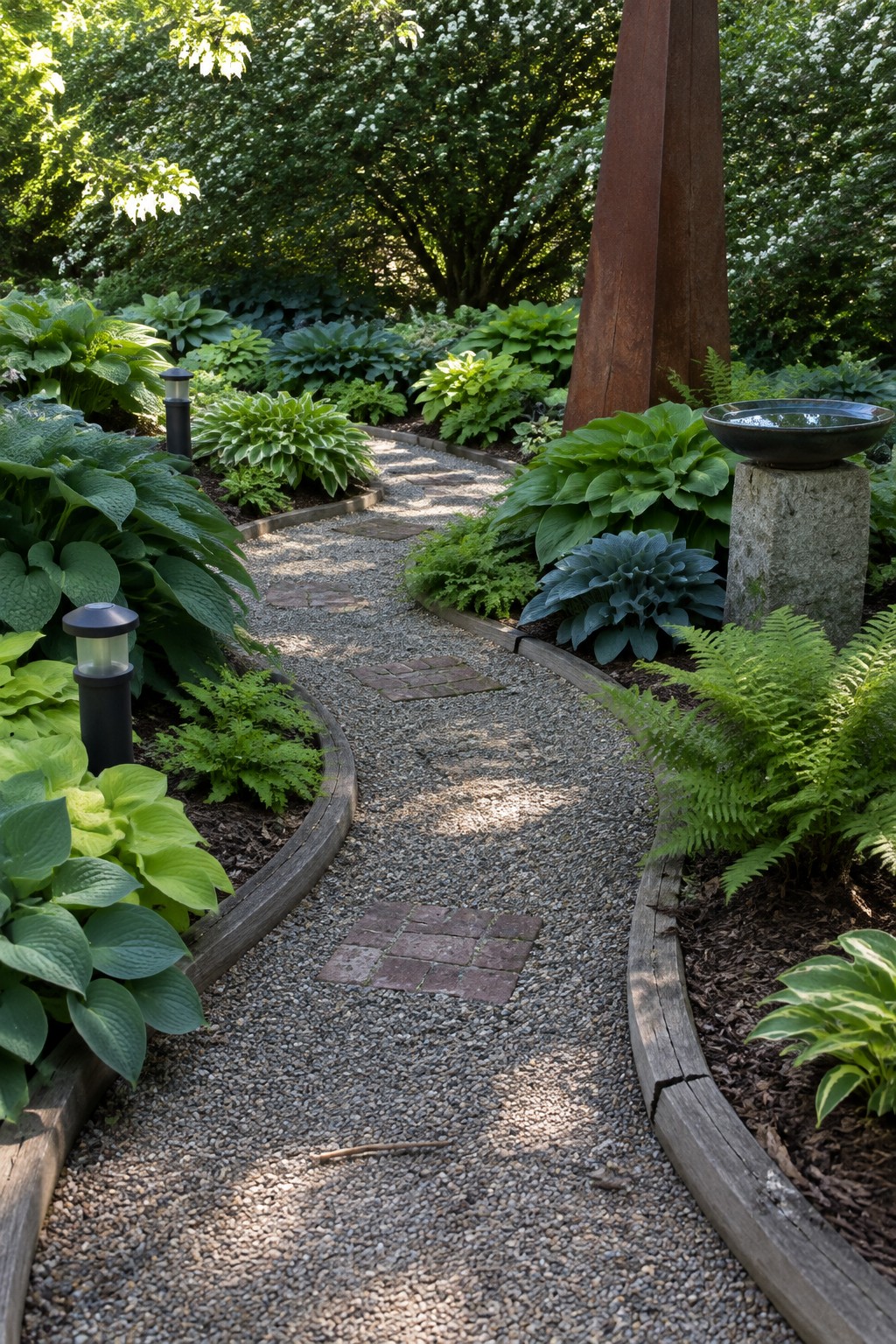
A curved gravel path lets hostas line a walkway without making the route feel too formal. The changing direction gives a small garden a more natural layout, while the gravel keeps the surface simple and practical.
Use timber edging to keep the gravel in place and the planting beds tidy. This works well on a shady side path or a garden walkway, but leave enough width for comfortable walking and choose compact hostas near the edge.
Build a Shady Path With Stone Steps
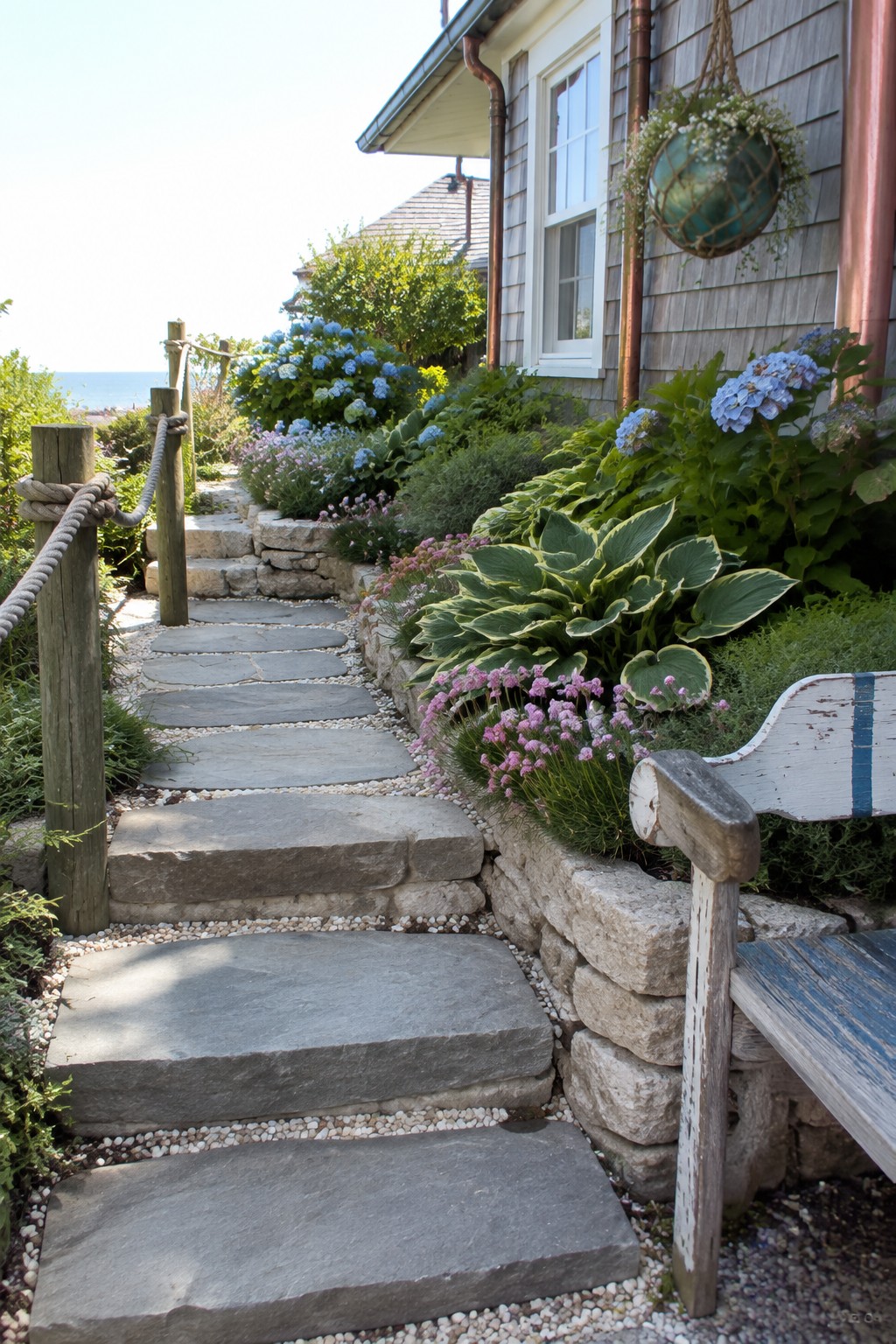
A stone path can make a sloped garden easier to walk through while giving hostas a clear place to grow along the edge. The broad, flat steps feel steady underfoot, and the plants fill the border without crowding the route.
Use this approach on a gentle slope where a level path would be awkward. Set the stones securely and leave enough room between them for hostas to spread, especially near the steps.
Use Broad Stone Slabs for a Shady Garden Path
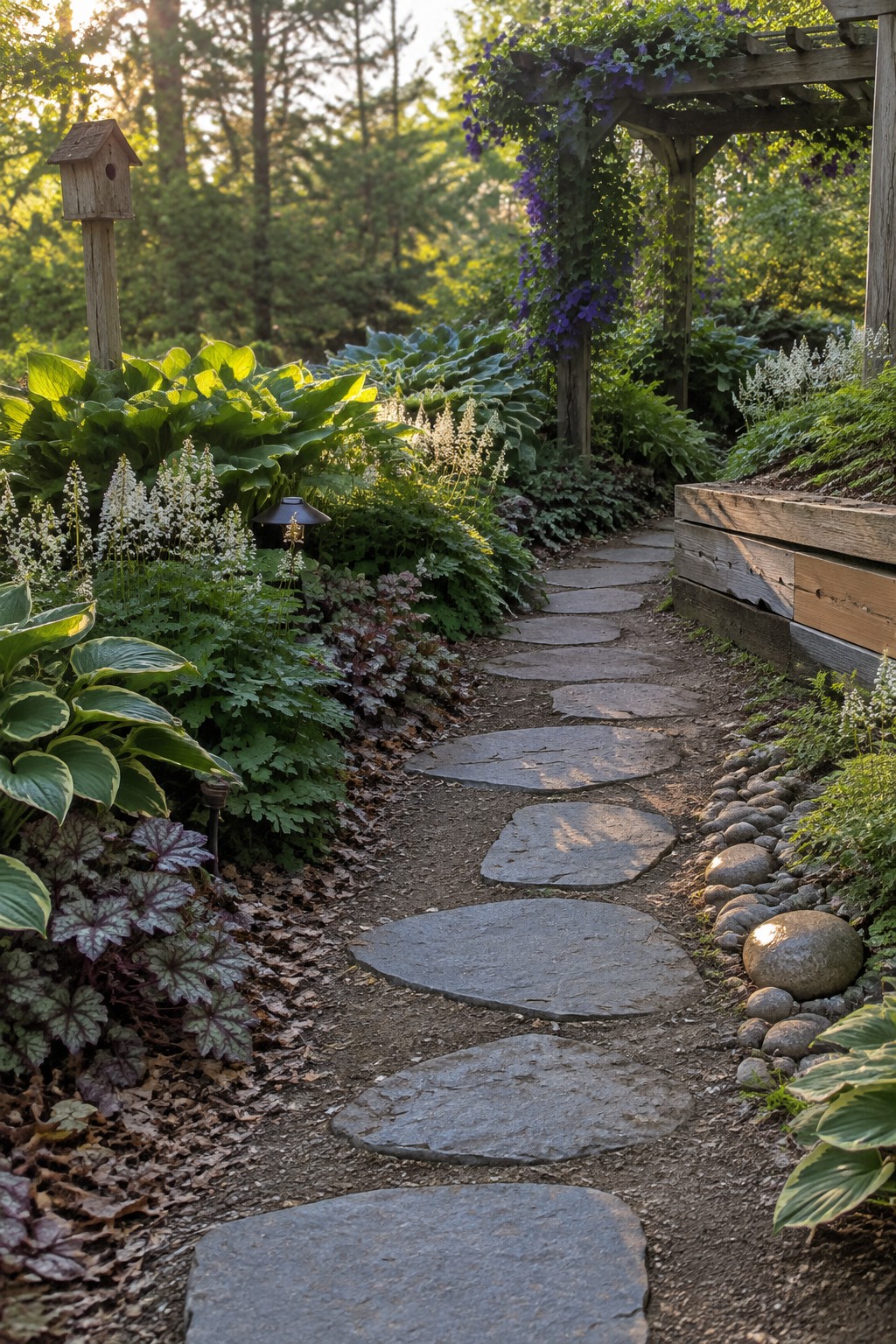
Large, irregular stone slabs make a comfortable walkway through a shady garden while leaving room for hostas to fill the edges. The wide stepping surface feels easier to follow than a line of small stones, especially where plants grow close to the path.
Use this approach on a gently curving route through a planting bed, and leave enough space between hostas so their leaves do not cover the stones. A simple dirt or gravel base can help keep the slabs steady over time.
Use Gravel to Shape a Shady Hosta Border
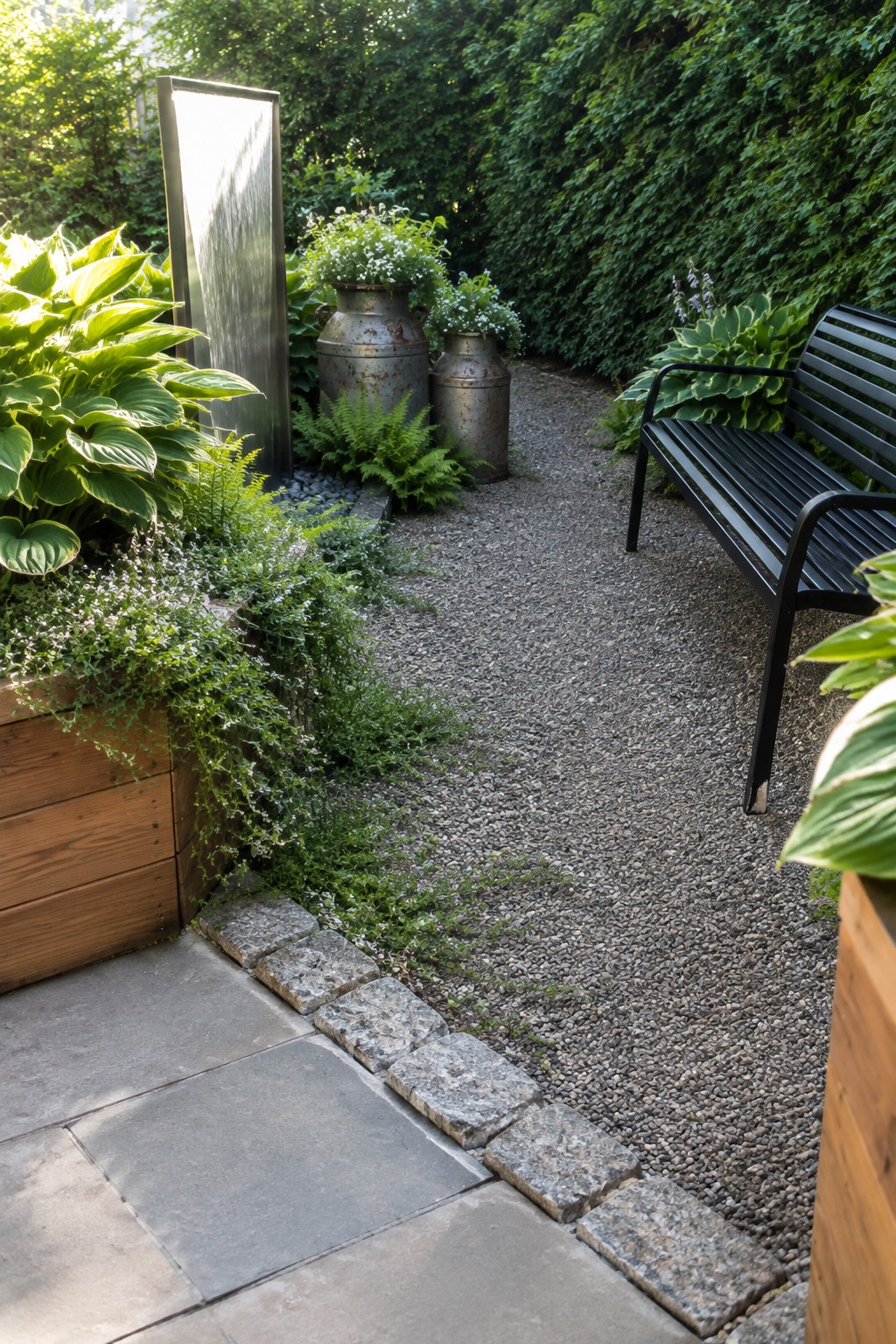
A gravel path gives a shady garden a clear route without taking attention away from the planting. Its loose surface works well beside broad hosta leaves, and a simple stone edge helps keep gravel from spreading into the bed.
Use this approach where a path needs to curve between established plants or fit into a narrow side garden. Choose compactable gravel for steadier footing, and keep hostas set back enough that leaves do not spill across the walking area.
Add Hosta Borders Along a Stepping-Stone Walkway
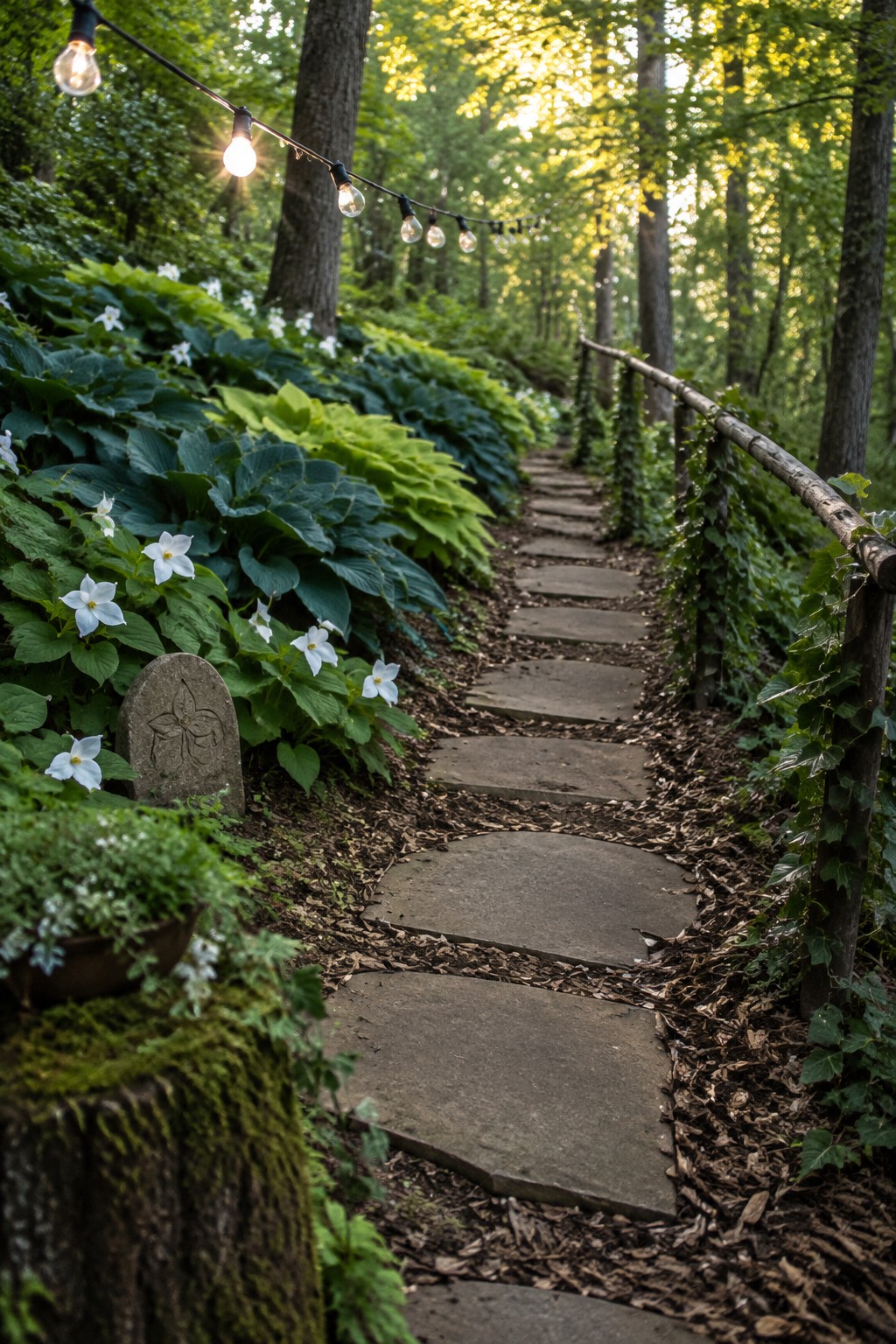
Hostas make a shady walkway feel like part of the garden rather than a route cut through it. Their broad leaves fill the edges around irregular stone steps, while small flowers can add a lighter touch.
Leave enough room for the hostas to spread without crowding the path. This works especially well in a wooded or shaded yard, but choose a clear, stable route so the plants do not spill over the stones.
Create A Garden Path That Leads To Water

A stepping-stone path can make a shady garden feel easy to wander through, especially when it curves toward a pond or another focal point. Broad stones set into grass give the route a relaxed look without making it feel like a formal walkway.
For a similar effect, let hostas edge the path and use larger stones where people are likely to step. Keep the route wide enough to walk comfortably, and leave room around the plants so they do not spill over the stones as they grow.
Use Hostas Along a Flagstone Patio Path
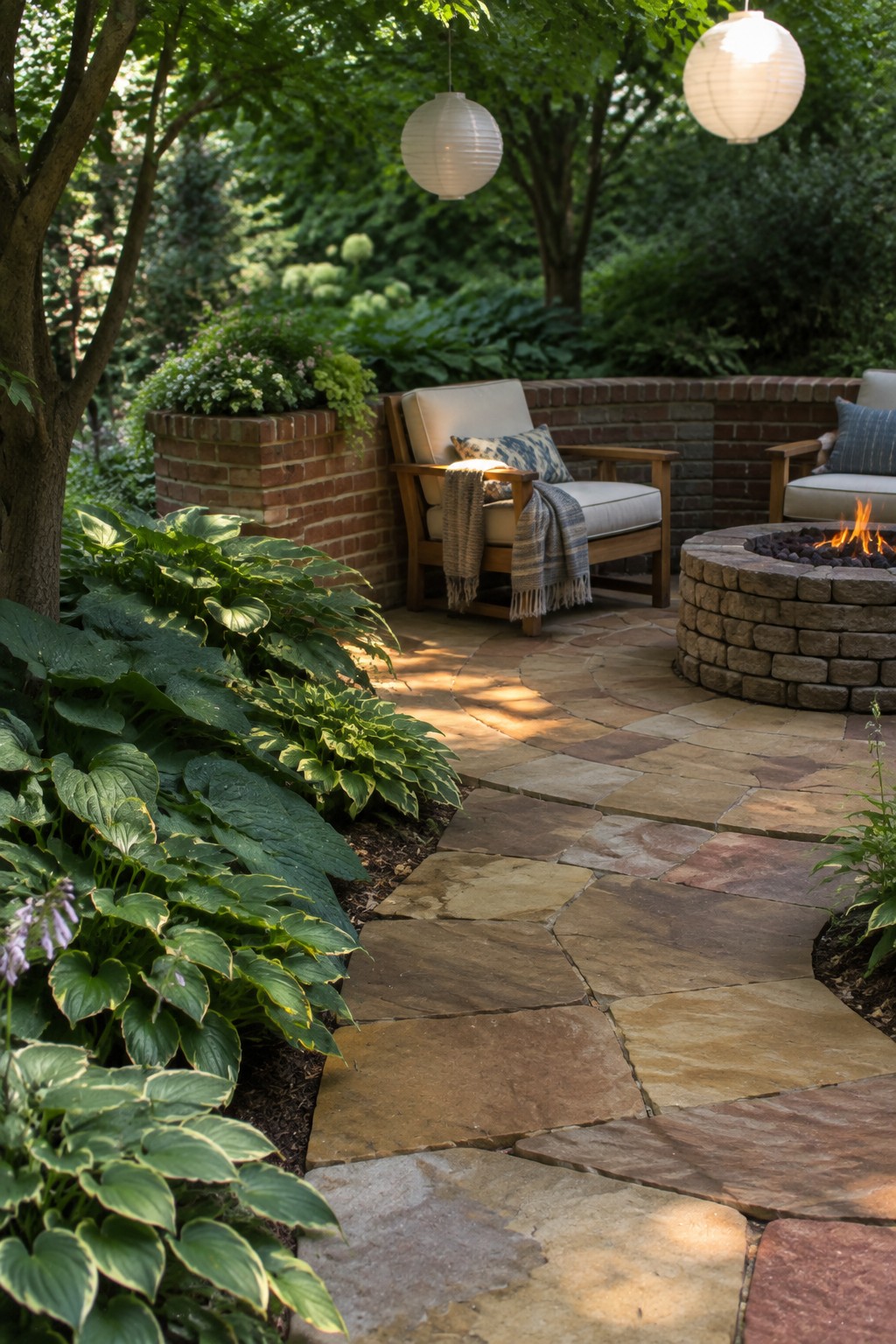
A flagstone path can make a shaded garden feel easy to move through without taking away its relaxed, leafy character. Hostas planted along the edge help the hard surface sit naturally within the garden.
Leave enough space for the hostas to spread without covering the walking surface. This approach works well where a path leads to a patio or seating area, especially in a shady garden.
Use Hostas to Edge a Stepping-Stone Path
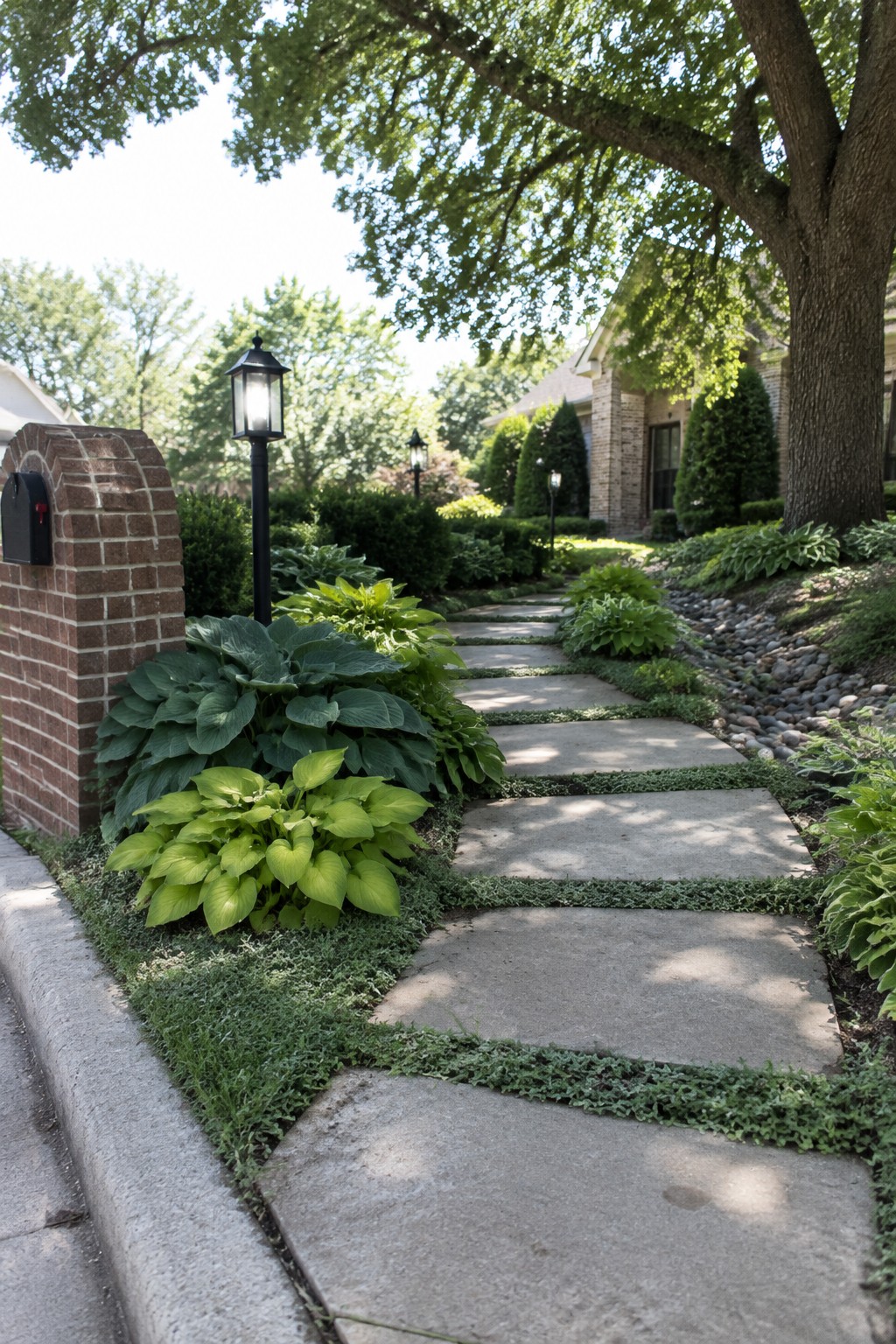
Hostas make a shady walkway feel like part of the garden rather than a route cut through it. Their broad leaves create a soft border along the large concrete stepping stones, while the gaps between stones keep the path from looking too formal.
Plant hostas in repeating groups along the edges, leaving enough room for their mature leaves and for easy walking. This works especially well beneath trees, where lawn can be difficult to maintain. Keep the plants from spilling over the stones so the path stays clear.
Add Raised Hosta Beds Along a Garden Path
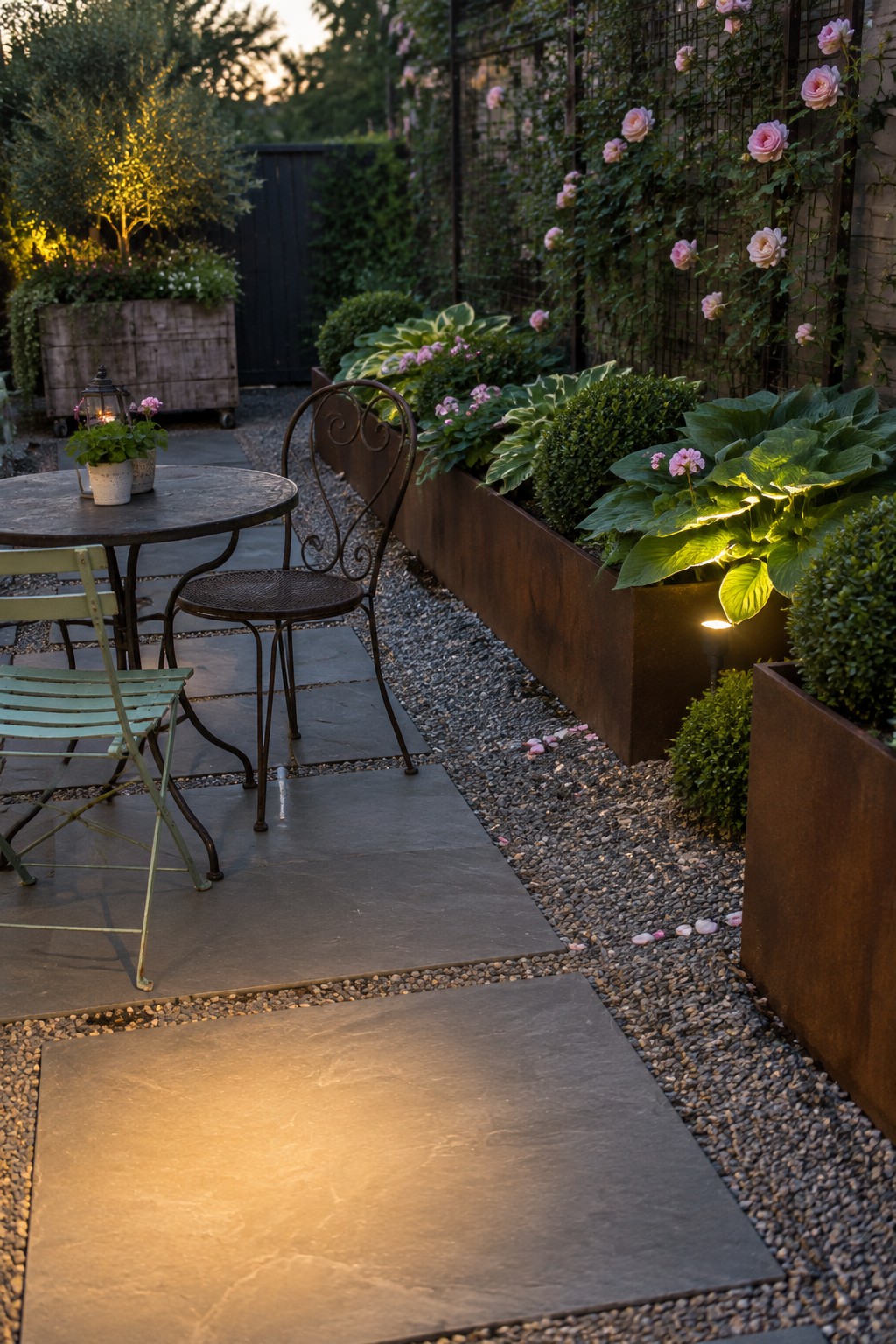
Raised beds can give a shady path a clear edge while making hostas easier to enjoy. Their broad leaves fill the planting area, and the raised sides keep the border looking tidy beside the paving.
Use this approach where a narrow walkway needs definition or where the soil is difficult to improve. Metal or timber beds both work, but leave enough room for hostas to spread without crowding the walking surface.
Frequently Asked Questions
Q: How far apart should I plant hostas along a walkway?
A: Check the mature width on the plant tag, then leave enough room for each hosta to fill out without spilling too far onto the path. Smaller varieties can sit closer together, while large hostas need more breathing room.
Q: Will hostas grow in dry shade under trees?
A: They can, but tree roots often compete with hostas for water. Water new plants regularly, and add a layer of mulch to help the soil stay moist without piling it against the crowns.
Q: How do I keep hostas from blocking a narrow path?
A: Choose compact varieties and plant them a little farther back from the walkway edge. If leaves still flop into the path, divide the clump or move it in early spring or fall.
Q: What can I plant between hostas for color?
A: Ferns, heucheras, and spring bulbs add contrast without crowding the shade garden. Leave enough space for the hostas to reach their full size.
