


Hydrangeas bring generous color to a woodland bed, while ferns soften the ground beneath them and make the planting feel settled.
I find these combinations work best when taller shrubs frame the space without crowding paths or hiding smaller plants.
A loose canopy of trees, repeated leafy shapes, and a clear edge can make the garden feel cohesive rather than overgrown.
The balance matters because hydrangeas need room to spread, and ferns look most natural where the soil stays cool and moist.
I’d save a few layouts to adapt to your shade, slope, and existing trees.
Use Stepping Stones to Guide a Woodland Path

A stepping-stone path gives a woodland bed a clear route without covering too much of the ground. The irregular stones feel at home among ferns and hydrangeas, and they make it easier to walk through the planting without trampling it.
Set the stones far enough apart for a comfortable stride, and let plants grow along the edges rather than crowding the walking surface. This approach suits a shaded garden, especially where a winding route is more practical than a straight paved walkway.
Use Stone Edging to Shape a Woodland Bed

A low stone edge gives a woodland planting bed a clear shape without making it feel too formal. It also keeps the gravel path separate from the plants, which is helpful in a garden where ferns and hydrangeas spread into one another.
Use stones of varied sizes for a relaxed look, and set them firmly so the edge stays in place. This approach suits paths through shaded gardens, but leave enough room for plants to grow without spilling onto the walking surface.
Use a Curving Stone Path Through Woodland Beds

A gently curving path lets a woodland-style garden feel like a place to wander, rather than a row of plants beside a walkway. Here, large stepping stones sit among rounded pebbles, while hydrangeas and ferns fill the beds along the route.
Use this approach where you want to move through a planted area without cutting a wide, formal path. Leave enough space between stones for comfortable steps, and choose ferns or other groundcover that can tolerate the site’s shade and moisture.
Let a Garden Path Lead Through the Planting

A gently curving gravel path gives a woodland-style bed a clear route through the garden without making it feel too formal. Hydrangeas and ferns along the edge bring the planting close to the walk, while the path stays easy to use.
This approach works well beside a house or in a narrow side yard where a straight path might feel stark. Keep the surface firm underfoot, and leave enough room for plants to spread without spilling across the walking area.
Layer Ferns and Hydrangeas Along a Garden Path

A narrow stone path can make a woodland-style bed easier to move through without making the planting feel too formal. Ferns and hydrangeas along the edges give the route a soft, layered look while keeping the stones easy to see.
Use this idea where a path needs to pass through a lush bed or connect a patio to a quieter part of the garden. Leave enough room for the plants to spread, especially hydrangeas, so they do not crowd the walking surface.
Use Large Stone Slabs for a Woodland Garden Path

A path made from broad stone slabs gives a planted garden a clear route without making it feel too formal. The open joints leave room for a little moss or groundcover, which suits a woodland-style bed.
Use this approach where you want to walk through dense planting without trampling ferns or flowers. Set the slabs firmly and leave enough width for comfortable footing, especially if the path gets regular use.
Layer Ferns and Hydrangeas Along a Garden Path

A brick path can make a woodland bed easier to walk through without taking attention away from the planting. Let hydrangeas spill along one side and use ferns to fill the lower spaces, so the path feels tucked into the garden rather than separate from it.
This approach works well beside a house or fence, where the planting can grow in a long, layered bed. Leave enough room for the hydrangeas to spread, and keep foliage from crowding the walking surface.
Layer Hydrangeas and Ferns Around a Garden Path

A narrow path can feel like part of a woodland bed when plants grow close along its edges. Hydrangeas bring rounded flowers near the front, while taller ferns add a leafy backdrop.
Use this layered planting beside a curving path where you want a tucked-away garden feel. Leave enough room for plants to spread so they do not crowd the stepping stones.
Use Timber Steps to Manage a Woodland Slope

Timber risers make a sloping garden easier to walk through while keeping the path simple and natural. Here, the steps sit among ferns and hydrangeas, so the path feels like part of the planting rather than a separate feature.
For a similar bed, set the risers firmly into the slope and keep each step comfortable to climb. This approach works especially well where a narrow path needs to connect different levels, but make sure water can drain through the soil between steps.
Use a Gravel Path to Connect Woodland Planting
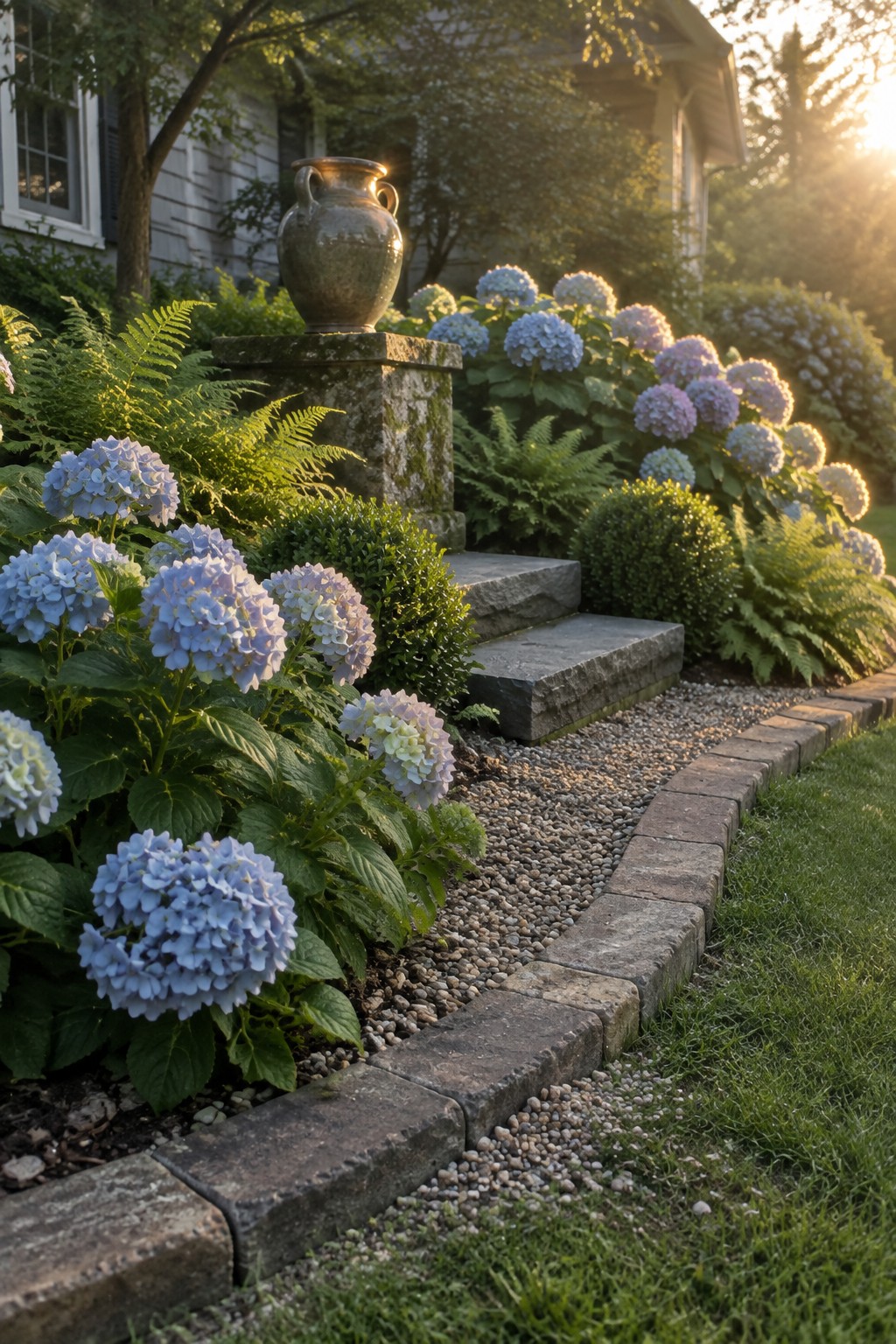
A narrow gravel path can make a densely planted garden easier to move through without taking attention away from the flowers. Here, a curved border of stone blocks gives the path a clear edge, while hydrangeas and ferns fill the bed beside it.
This approach works well in a cottage or woodland-style garden, especially where a path needs to wind between established plants. Choose compact gravel and a firm, low border to keep stones from spilling into the lawn or planting bed.
Use a Woodland Path to Organize the Planting
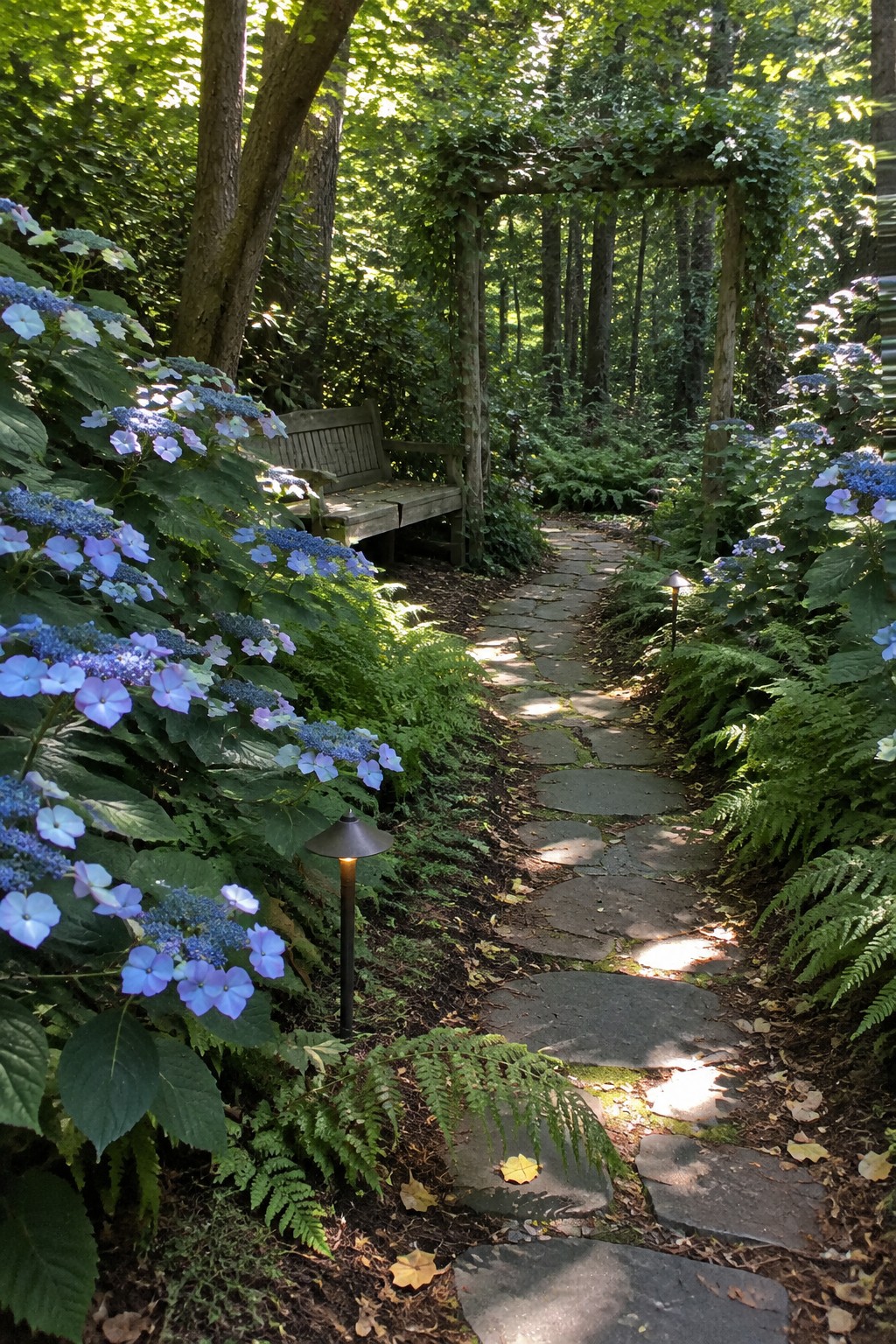
A simple stone path gives a woodland bed a clear route through dense planting. Ferns and hydrangeas can grow along its edges without making the garden feel like one unbroken mass of foliage.
Use broad, irregular stones for a relaxed look, and leave enough space between plants to keep the path easy to walk. A narrow garden path like this works well in a shady yard, especially when it leads to a small place to sit.
Use a Stone Bench as a Garden Viewpoint
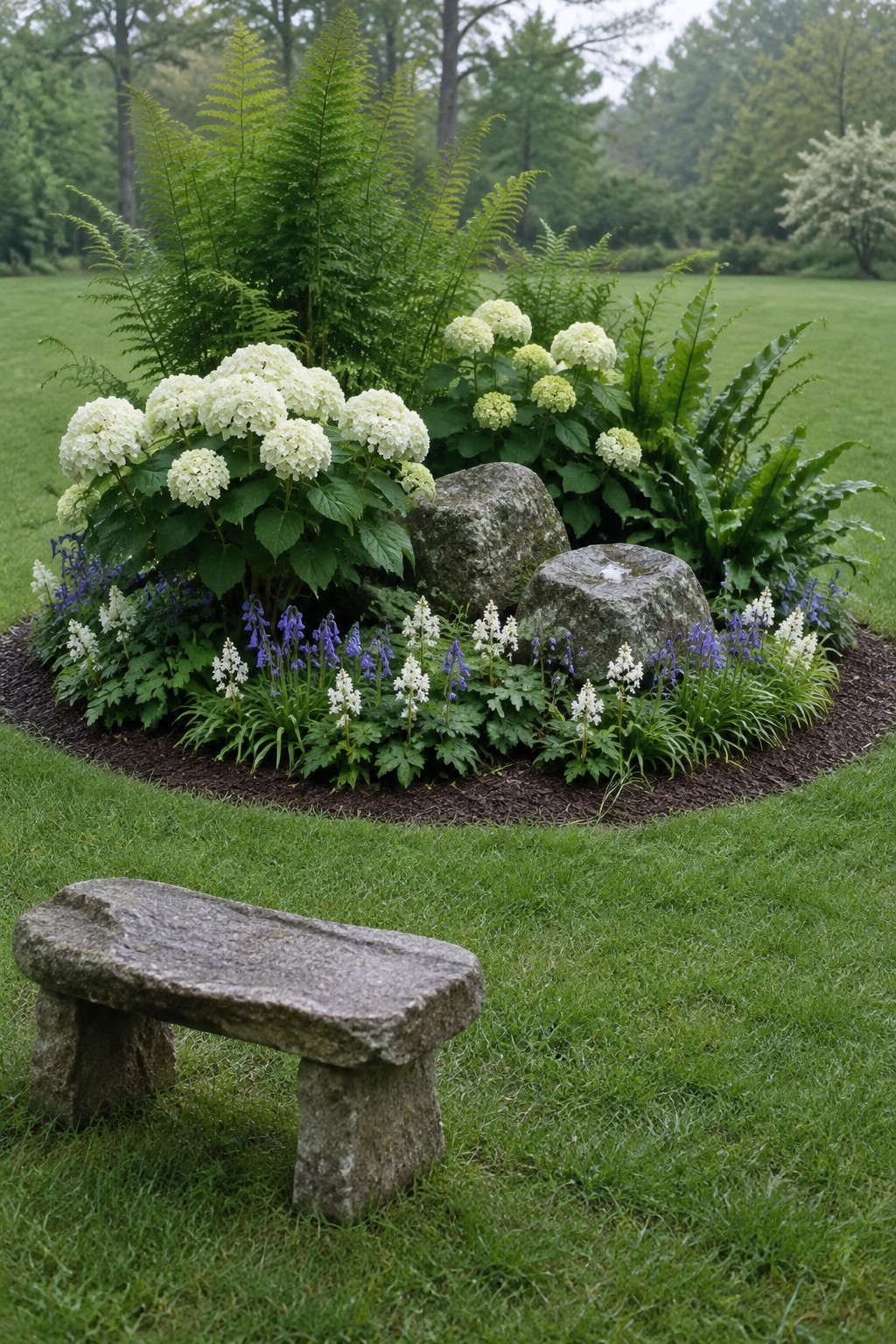
A simple stone bench gives a woodland-style bed a place to pause and enjoy the planting. Set just beyond the curved bed, it makes the garden feel connected to the lawn without taking attention away from the ferns and hydrangeas.
Use a sturdy, weather-resistant bench where there’s a clear view of the garden, and leave enough lawn around it for easy access. Stone suits a natural planting style, though it can feel hard and cold, so choose a comfortable seat height and a spot with some shade.
Use a Trellis to Add Height to a Woodland Bed
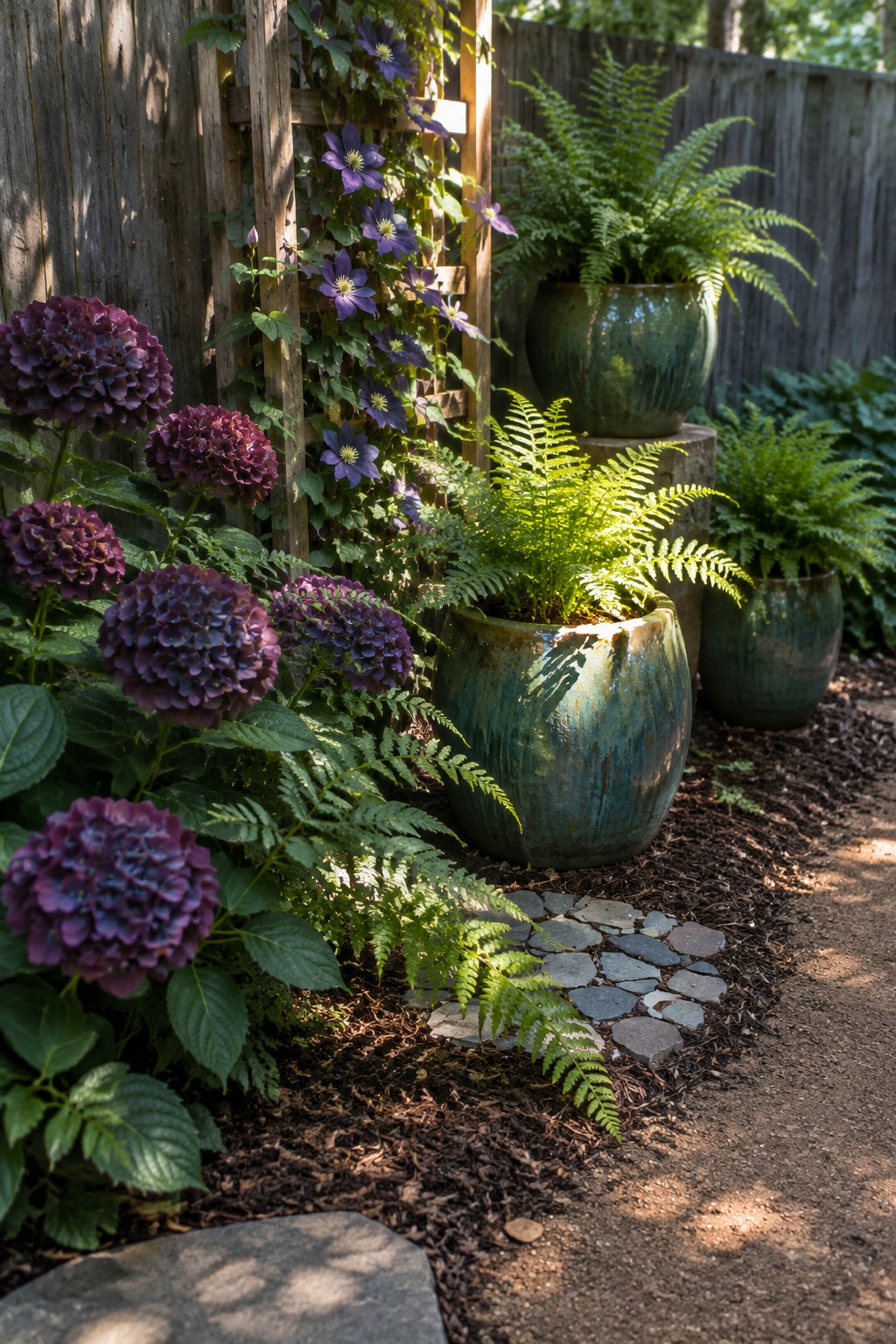
A trellis gives a woodland bed a little vertical structure without taking up much ground space. Letting a flowering vine climb it also brings blooms up near eye level, while ferns and hydrangeas fill in below.
This works well in a narrow bed along a fence or in a shaded corner that needs more shape. Choose a trellis sturdy enough for the mature vine, and leave room around its base so nearby plants do not crowd it.
Use Hydrangeas to Define a Garden Path
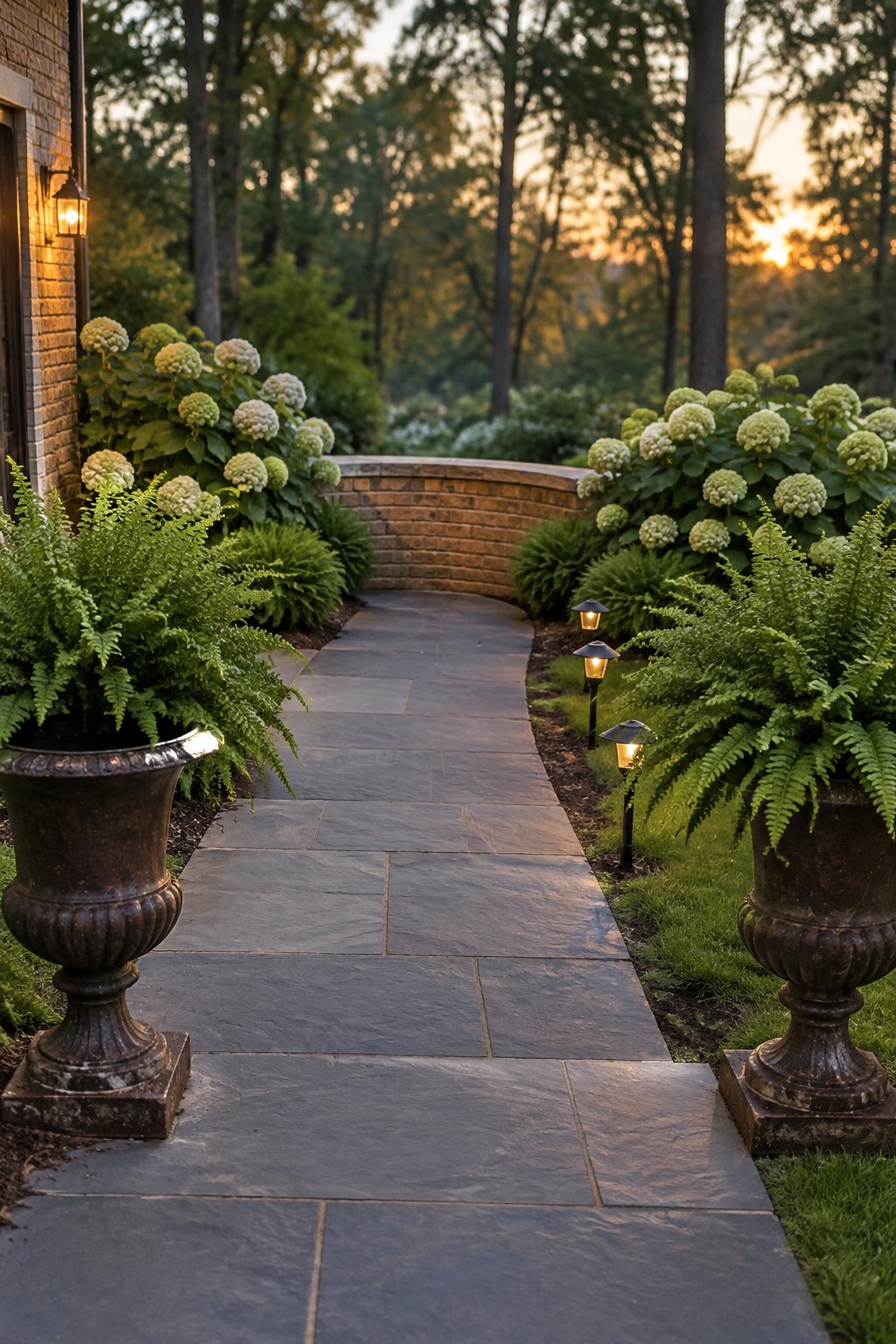
Hydrangeas can give a woodland path a clear edge while ferns fill in the lower layer. The rounded blooms bring a little structure to the planting, and the path still feels tucked into the garden rather than separate from it.
For a similar look, plant hydrangeas in groups along the wider parts of a stone walkway and use ferns near the edges. Leave enough room for mature plants so they do not crowd the paving or narrow the route.
Let a Dry Creek Path Wind Through Woodland Beds

A shallow, stone-filled path can guide people through a woodland garden without relying on a solid paved walkway. The mix of rounded pebbles and flat stepping stones gives the route a natural look, while ferns and hydrangeas make the edges feel planted rather than formal.
Use this approach where rainwater tends to collect or where you want a path that blends into the garden. Set the larger stones securely and keep the route easy to follow, especially where the ground is uneven.
Build a Raised Bed With a Stone Retaining Wall

A low stone wall can give a woodland planting bed a clear edge and hold the soil in place. It also creates a sturdy border for ferns and hydrangeas to spill toward the path.
This approach works well on a sloped or uneven yard where a flat planting area would be hard to maintain. Keep the wall low enough to sit comfortably beside, and choose plants that suit the amount of shade in the bed.
Make a Woodland Bed Feel Like a Garden Room
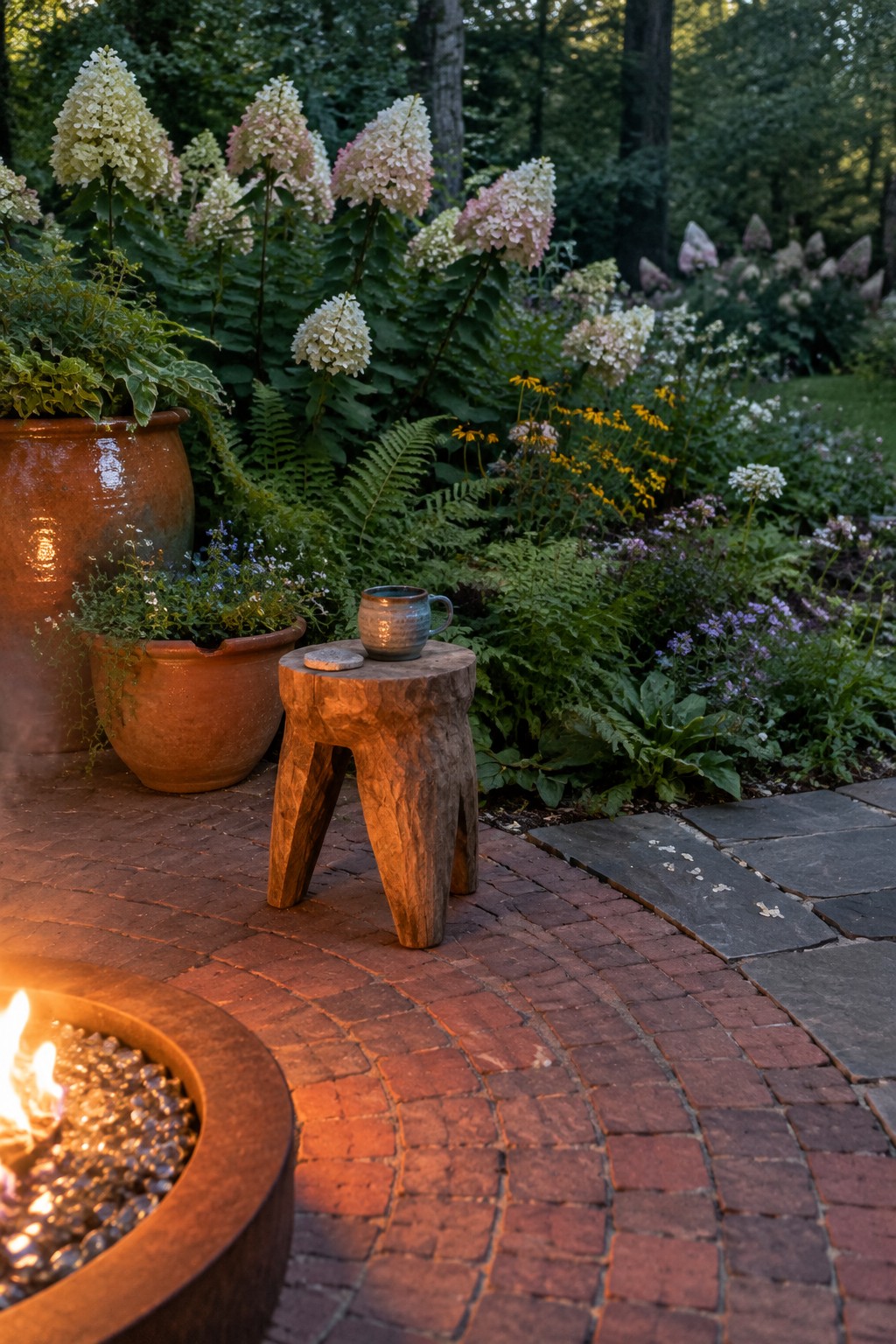
A small fire pit patio can give a woodland planting bed a useful place to pause. The curved brick paving makes a clear sitting area, while hydrangeas and ferns keep the garden feel close by.
For a similar setup, leave enough paved space to move around the fire pit safely, and use the planting to soften the edge of the patio. This works especially well where a garden path opens into a quiet seating spot.
Use a Narrow Path to Link Woodland Planting
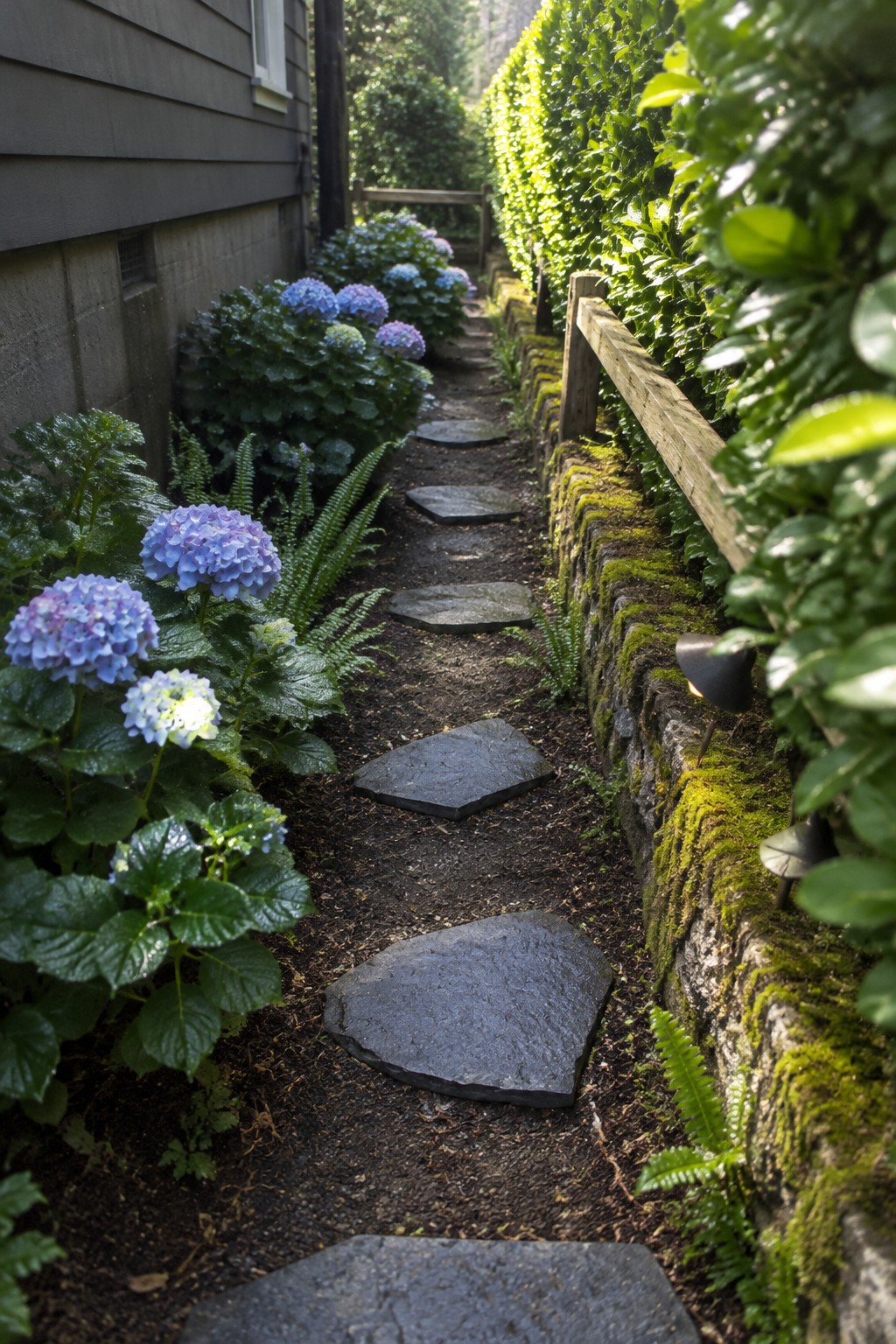
A narrow stepping-stone path gives a woodland bed a clear route through the planting. Here, large irregular stones sit among hydrangeas and ferns, making the walk feel tucked into the garden rather than separate from it.
This approach works well in a side yard or other tight space where a wide paved path would take over. Leave enough room between the stones for an easy step, and keep the surrounding plants trimmed back from the walking surface.
Make a Small Seating Spot Part of the Garden
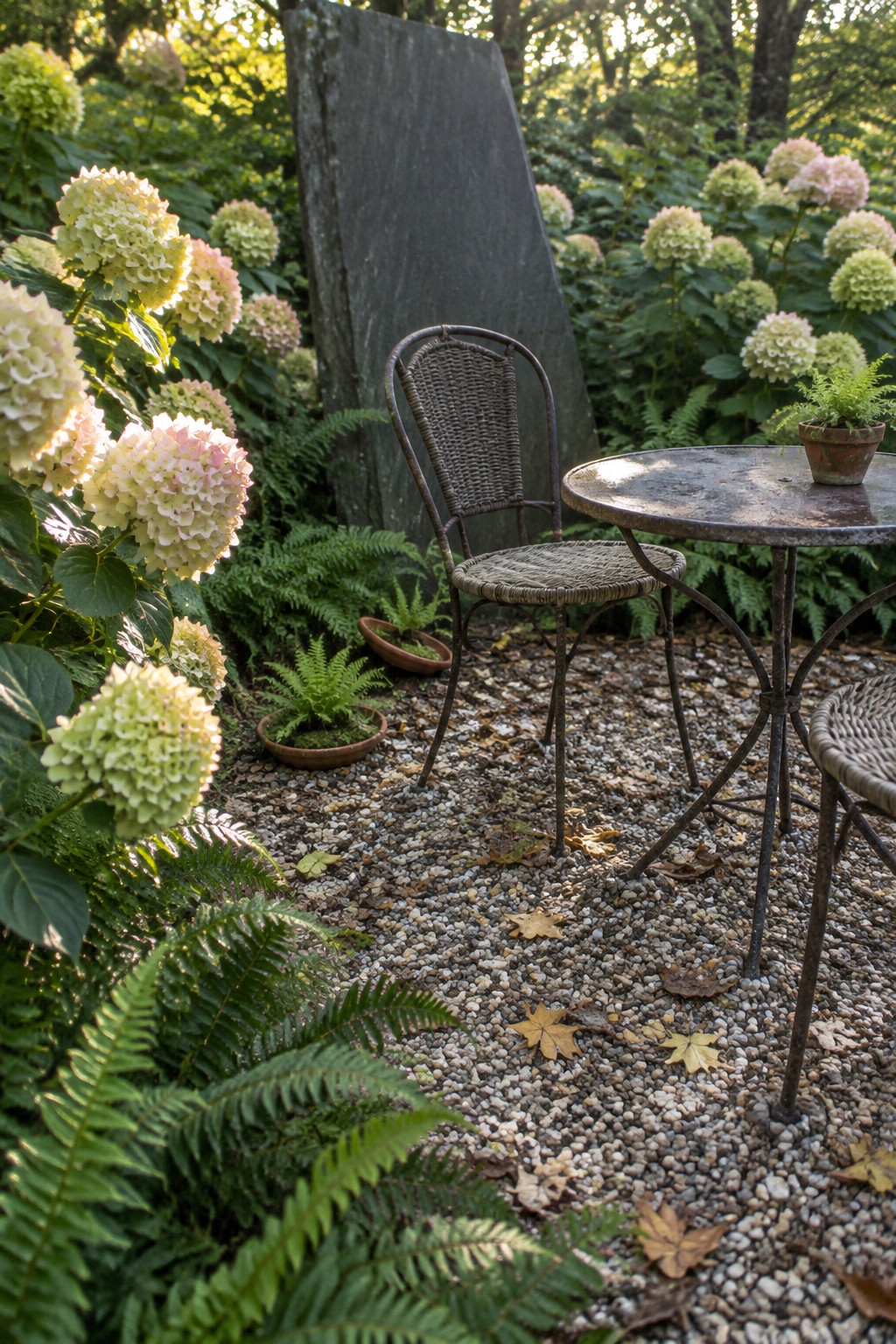
A simple seating area can give a woodland garden a useful place to pause without taking over the planting. A small gravel clearing keeps the setup informal, while nearby ferns and hydrangeas make it feel connected to the garden.
This works well in a quiet corner where the ground is fairly level. Keep the furniture compact and leave enough room to move around it, especially if the gravel path also serves as a route through the beds.
Frequently Asked Questions
Q: Can hydrangeas and ferns grow together in the same bed?
A: Yes, as long as the bed has the right light and soil for both. Many hydrangeas and ferns do well in partial shade with evenly moist, well-drained soil, so they make natural companions in a woodland-style planting.
Q: How much sun should a hydrangea and fern bed get?
A: Aim for morning sun or dappled light, with protection from strong afternoon sun. Too much shade can mean fewer hydrangea blooms, while hot sun can scorch fern fronds and stress hydrangeas.
Q: What can I plant under hydrangeas besides ferns?
A: Try shade-loving ground covers such as hostas, wild ginger, or foamflower. Leave a little space around each hydrangea’s stem so air can circulate and you can water easily.
Q: How do I keep the bed looking good through dry spells?
A: Water deeply when the soil starts to dry, especially while plants are getting established. A layer of leaf mulch helps hold moisture and suits the natural woodland feel.
