

White hydrangeas can soften a garden, but they need the right setting to look at home rather than scattered across the yard.
I find they work best when their rounded blooms have room to stand out alongside plants with different shapes, heights, and foliage.
A path, low border, or grouping of shrubs can give the planting a clear structure, while changes in sun and soil will shape how the flowers grow over time.
Some of the most useful approaches balance generous blooms with practical details like spacing, edging, and plants that keep the garden interesting beyond hydrangea season.
I’d start with the layouts that suit your yard’s light and scale, then adapt the combinations to make the space feel considered through the year.
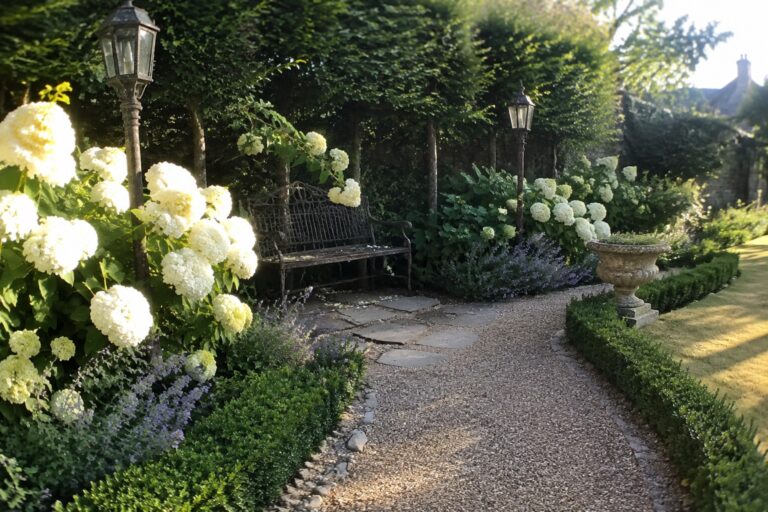
Use a Curved Gravel Path to Shape the Garden

A curved gravel path gives a garden a clear route without making it feel too formal. Here, pale stepping stones break up the gravel, while white hydrangeas mark the edge of the planting bed.
This approach works well in a cottage-style garden or a narrow side yard. Keep the curve gentle so the path is easy to walk, and use firm edging to stop gravel from spilling into nearby plants.
Use White Hydrangeas Along a Garden Path
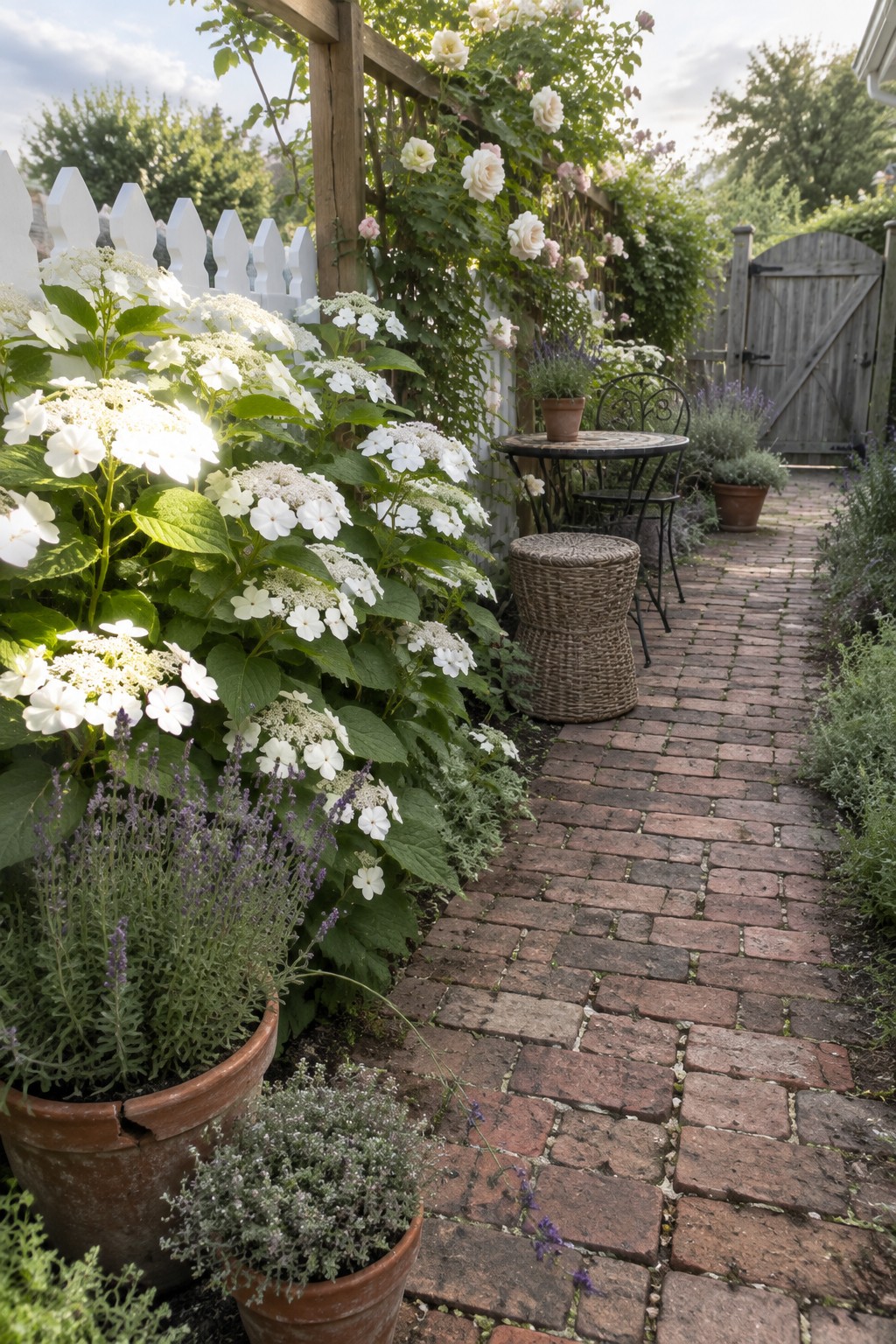
A brick path feels more settled when the planting beside it has a clear shape. White hydrangeas make a generous border that guides the way without needing a formal hedge, and their broad clusters of flowers give the path a consistent look through summer.
Plant them in a bed wide enough for mature shrubs, leaving room so they do not spill across the walkway. They work well along a fence or beside a cottage garden path, especially with space between plants for air and easy pruning.
Use Hydrangeas to Define a Formal Garden
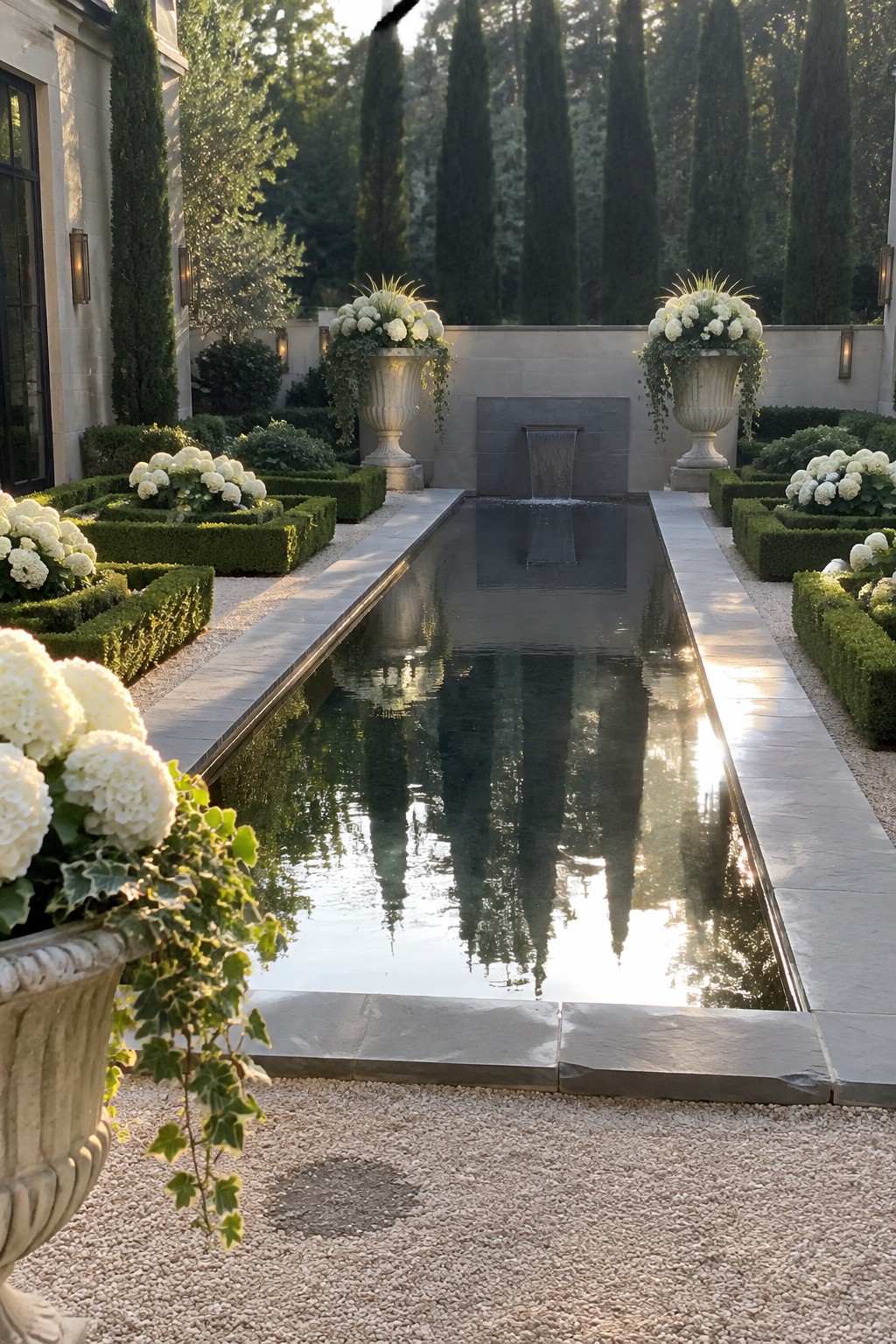
White hydrangeas can help give a formal garden a clear, orderly structure. Here, clipped boxwood beds and rounded flower clusters repeat along a narrow reflecting pool, making the planting feel planned rather than scattered.
Use this approach in a long courtyard or beside a straight garden path, where repeated beds can guide the eye. Keep the hydrangeas in defined sections and leave room for their mature spread so the boxwood edges stay neat.
Use White Hydrangeas Around a Patio Seating Area
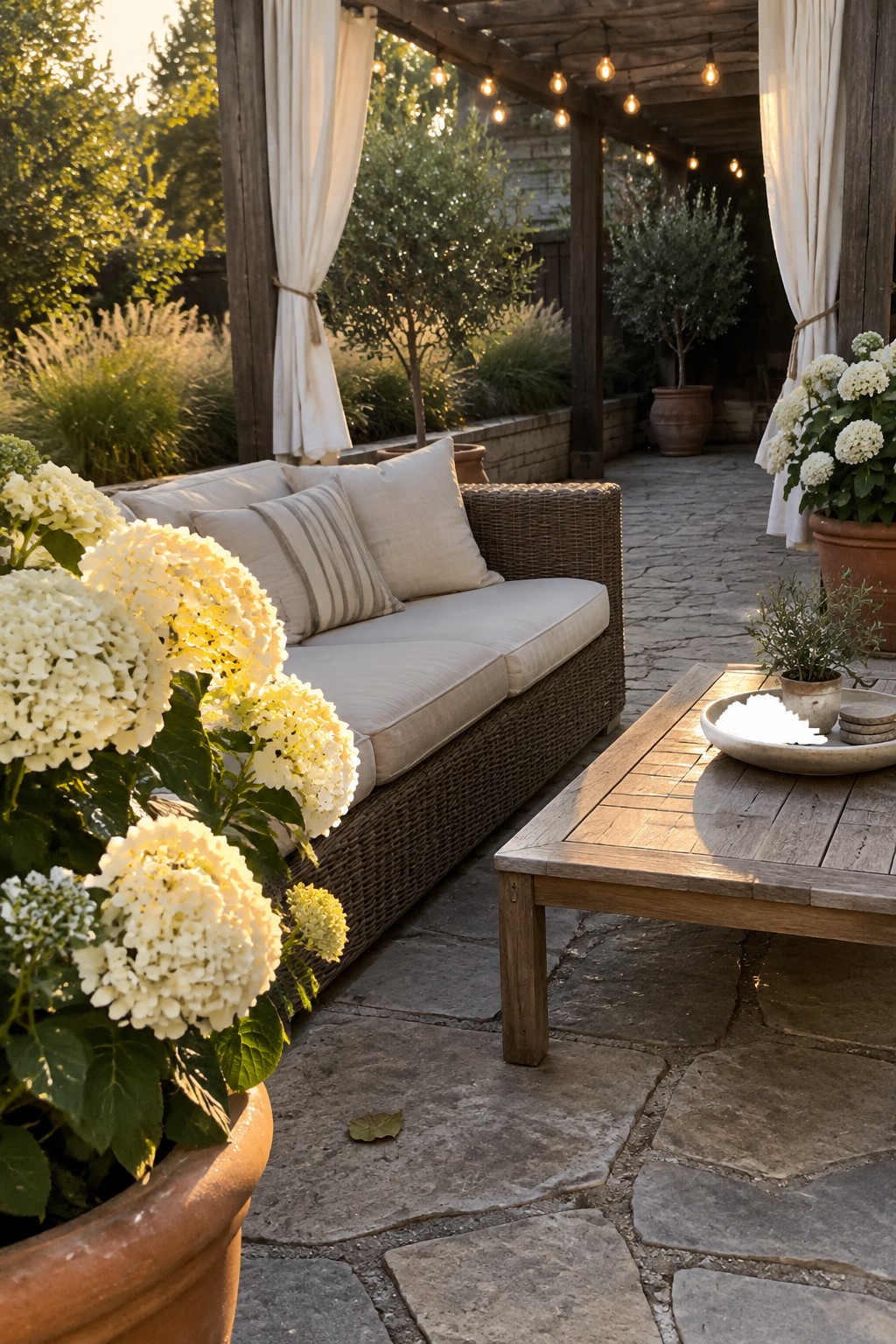
White hydrangeas can make a patio feel more settled without needing a large flower bed. Planting them near the seating area brings the garden close to where people spend time, and their rounded blooms stand out against darker outdoor furniture.
Use a few plants along the edge of a stone patio or beside a pergola, leaving enough room for the shrubs to grow. They work especially well near a plain seating area, but avoid crowding paths or hiding the furniture.
Create a Garden Path With Stepping Stones
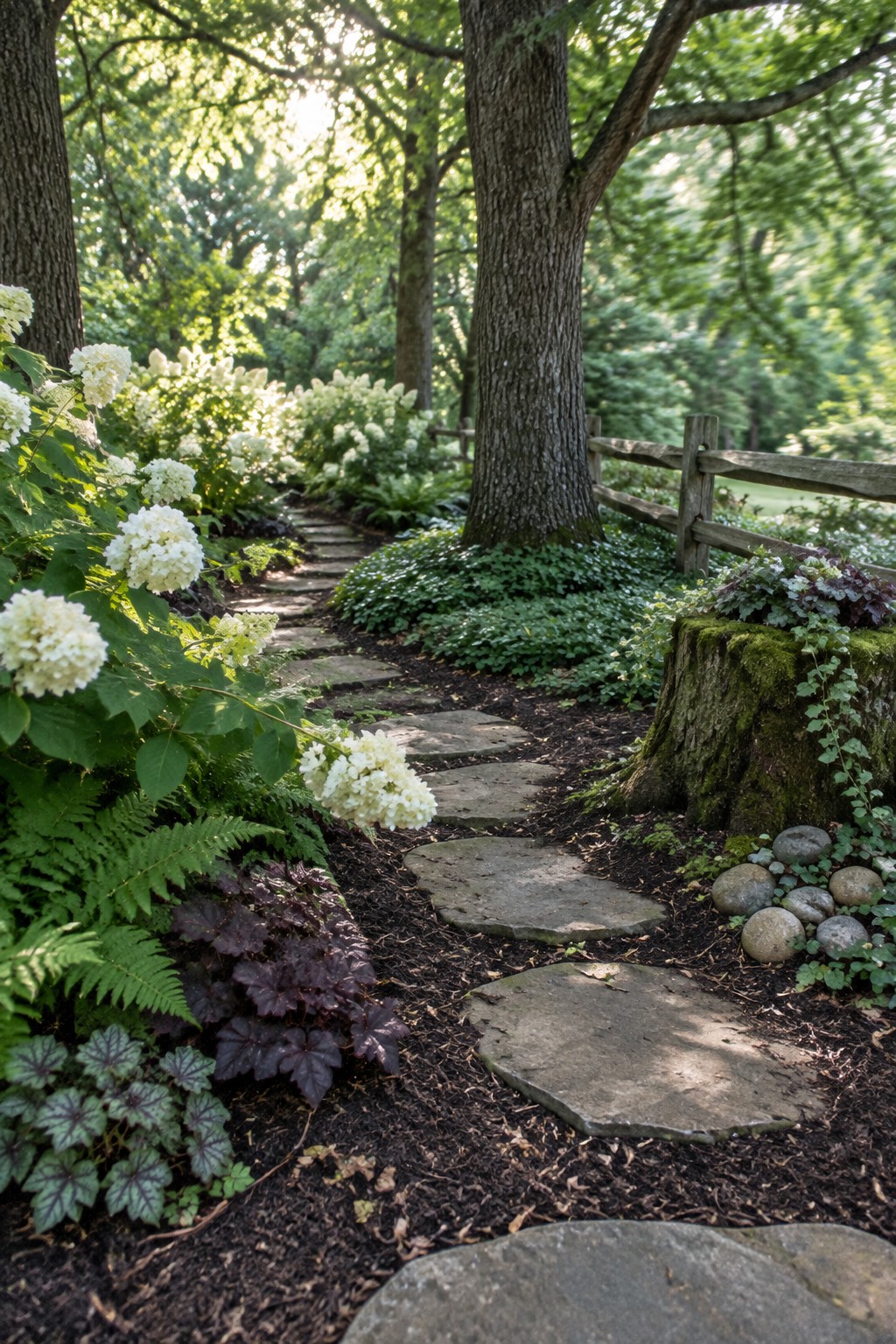
A stepping-stone path gives a garden an easy route through planted areas without taking over the whole space. White hydrangeas beside the stones help the path feel settled into the garden rather than set apart from it.
Use broad, irregular stones for a relaxed look, and leave enough room between them for a comfortable stride. This works especially well in a shaded garden, where a solid paved walkway might feel too heavy.
Add White Hydrangeas Beside a Pool
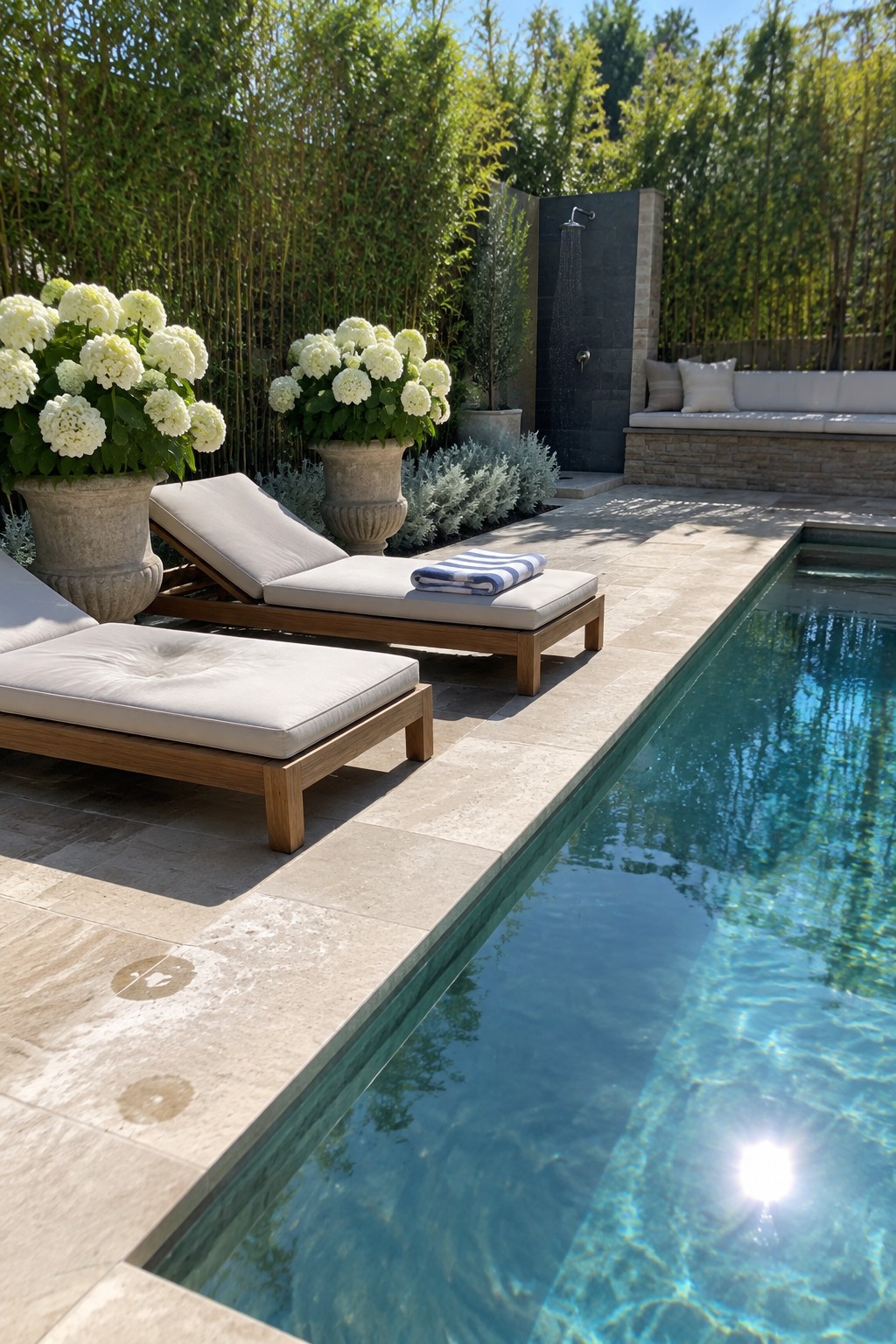
White hydrangeas bring a garden feel to a pool area without needing a large flower bed. Their rounded blooms stand out beside the simple stone paving and make the hard edges of the pool feel less stark.
Use them in large pots along a fence or at the edge of a patio, where they can add color without crowding the walkway. Hydrangeas need regular water, so choose containers with good drainage and keep them within easy reach of a hose.
Build a Garden Around Stone Terraces
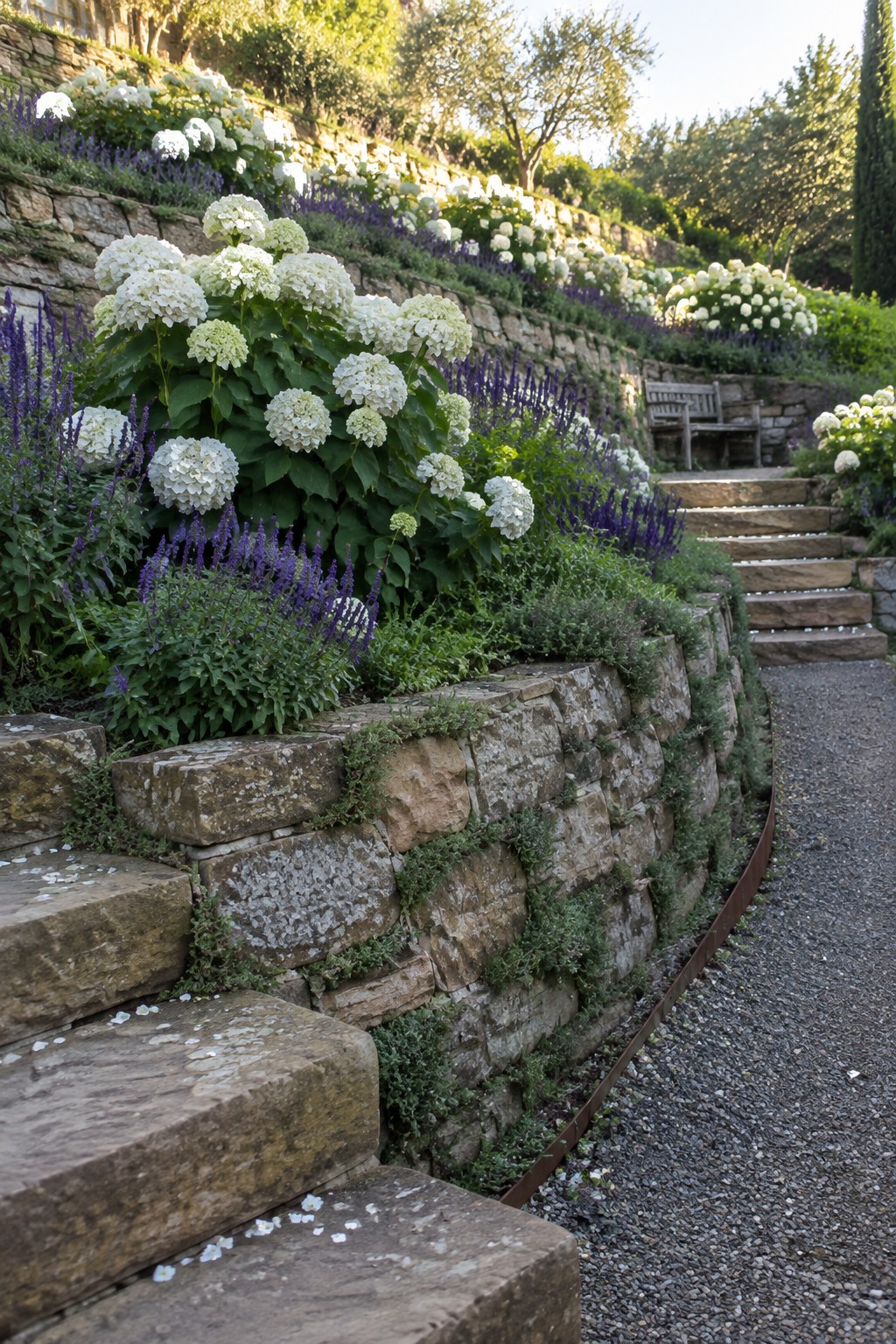
White hydrangeas can bring a soft, full look to a sloped garden, while stone retaining walls make the planting easier to organize. Repeating the shrubs along several levels helps the garden feel connected rather than like a collection of separate beds.
Use this approach on a hillside where a single planting bed would be difficult to maintain. Leave enough room for the hydrangeas to spread, and use steps to give clear access between levels.
Use White Hydrangeas in Large Garden Pots
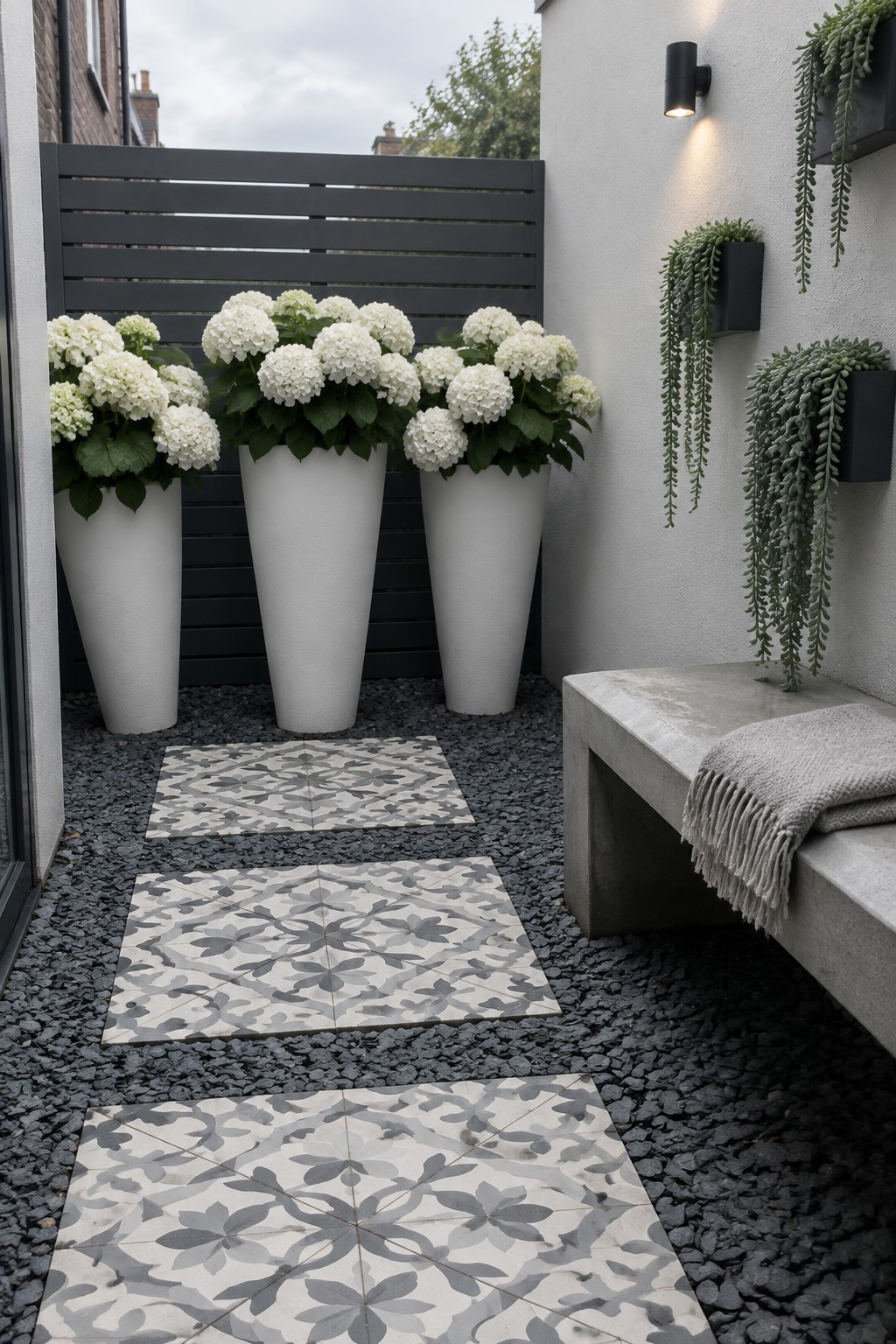
Large pots make white hydrangeas useful in small gardens where there isn’t room for a full planting bed. Grouping a few matching planters gives the flowers a clear place in the layout and keeps the arrangement tidy.
This works well in a narrow courtyard or along a fence. Choose sturdy pots with good drainage, and leave enough space between them for the hydrangeas to grow without crowding the walkway.
Layer White Hydrangeas Along a Garden Path
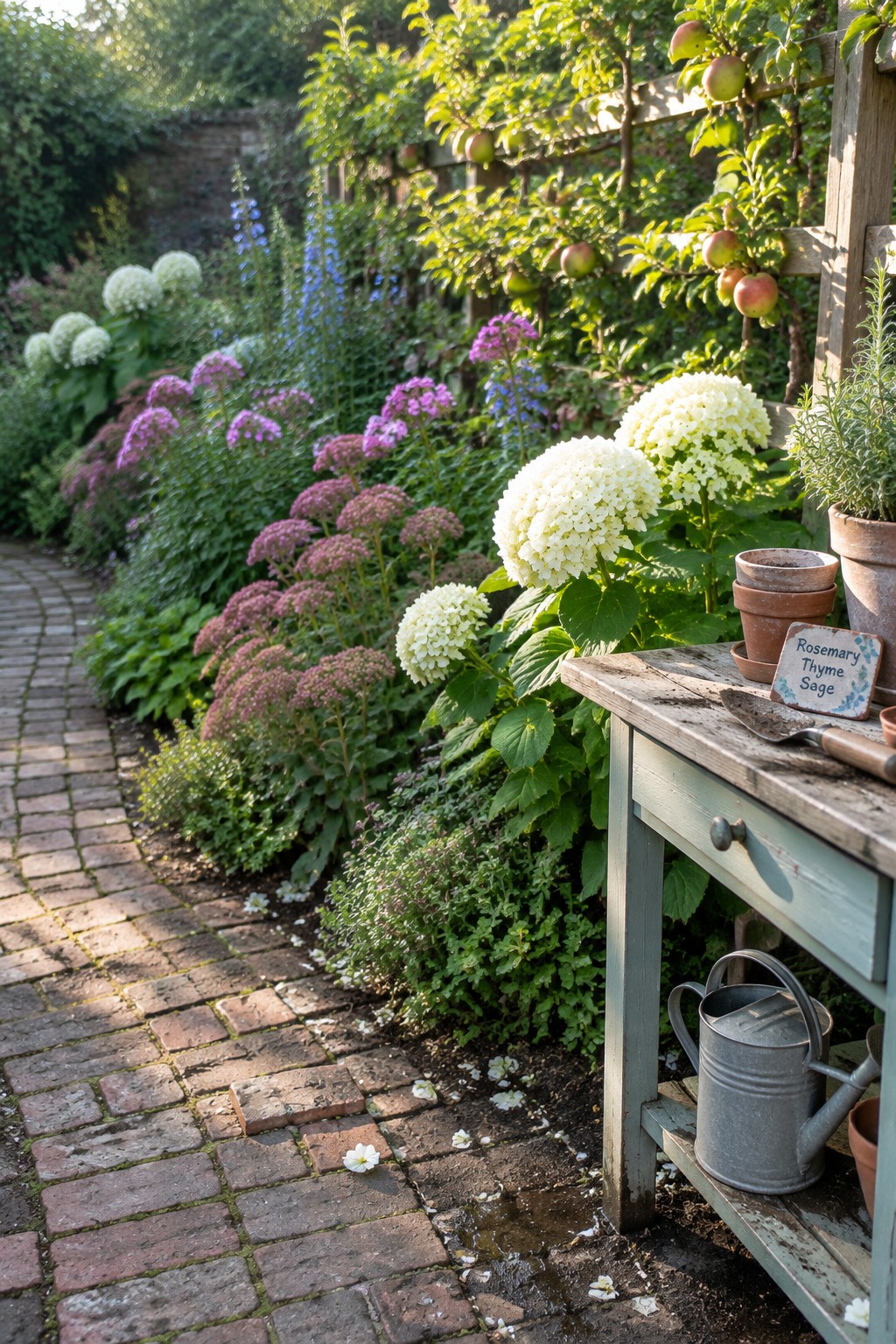
White hydrangeas are a good choice for the front of a layered garden bed. Their broad flower heads stand out against taller purple blooms and leafy plants, while the path keeps the planting easy to enjoy up close.
Plant them along a winding brick path, leaving enough room for the shrubs to spread without spilling onto the walkway. They work especially well in cottage-style gardens, but keep the tallest plants toward the back so the hydrangeas remain visible.
Use White Hydrangeas in Raised Garden Beds
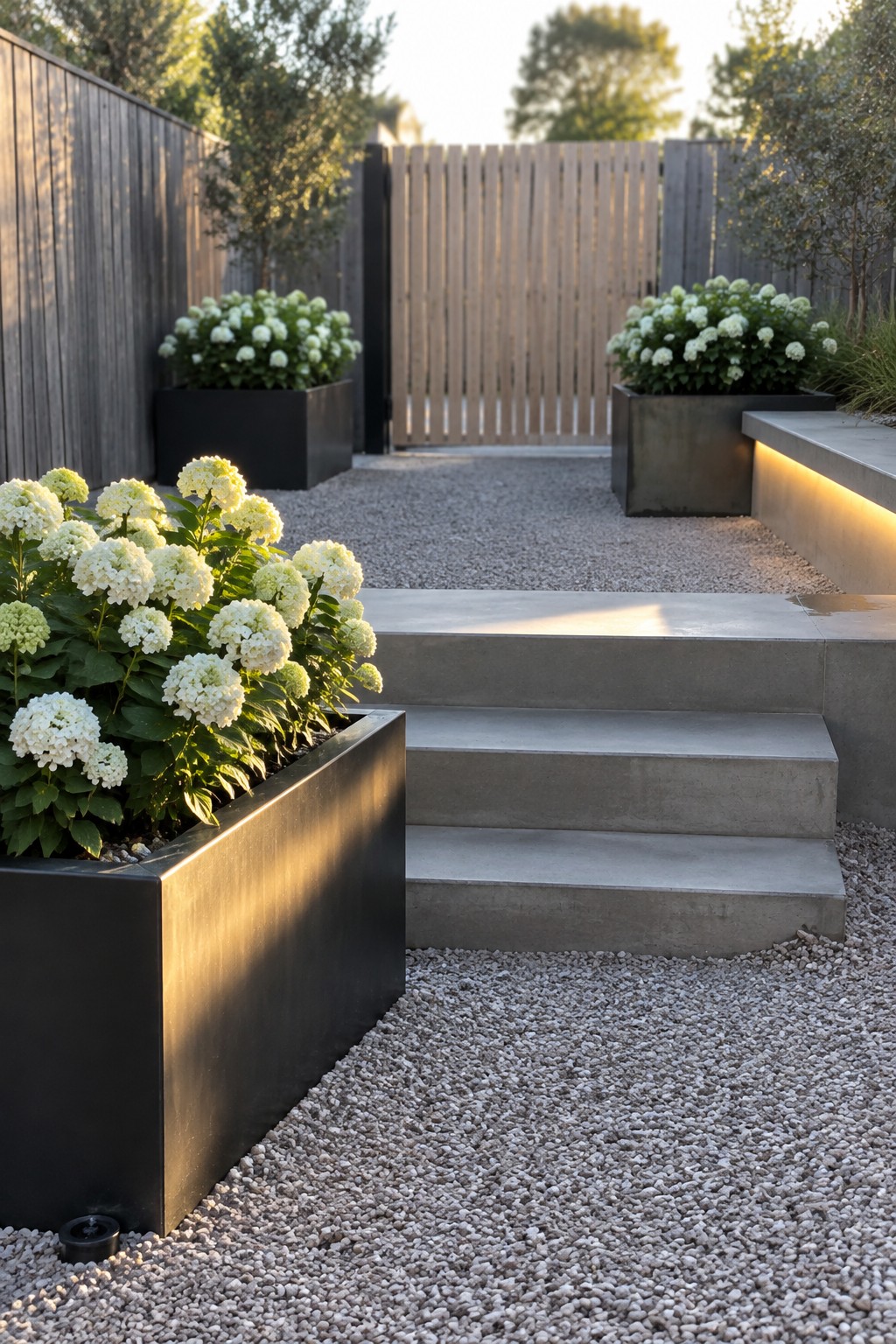
Raised planters give white hydrangeas a clear place in a gravel garden, so their blooms stand out without the planting feeling scattered. A dark planter also makes the pale flowers easy to notice.
This approach works well in compact yards where in-ground beds are limited. Choose planters deep enough for the shrubs’ roots, and leave room for them to grow rather than packing them tightly together.
Use Garden Lighting to Highlight White Hydrangeas
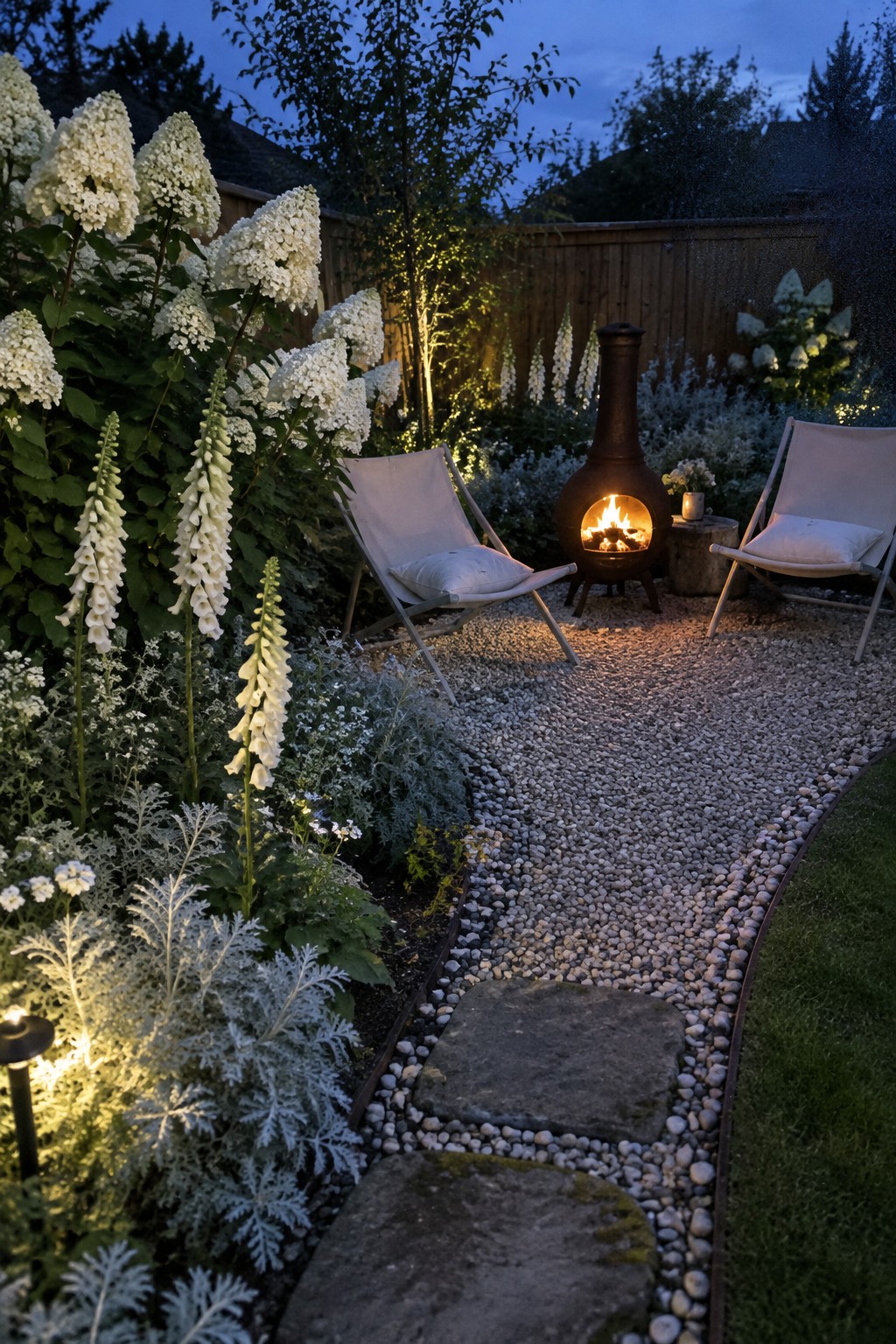
Lighting low in the planting bed can make white hydrangeas stand out after dark. A few small fixtures aimed toward the flowers bring out their shape without needing to light the entire garden.
Place lights where they reach the blooms without shining into nearby seating or a neighbor’s yard. This works especially well along a path or near a fire pit, where people can enjoy the garden in the evening.
Line a Narrow Garden Walk With White Hydrangeas

White hydrangeas in large pots can bring a clear rhythm to a narrow side garden. Their rounded blooms stand out against a leafy privacy wall, while the containers keep the path open and the planting easy to manage.
Set the pots along one edge of the walk, leaving enough room to pass comfortably. This approach suits side yards where in-ground beds are limited; choose sturdy containers with good drainage, since hydrangeas need regular water.
Use White Hydrangeas to Layer a Sloped Garden
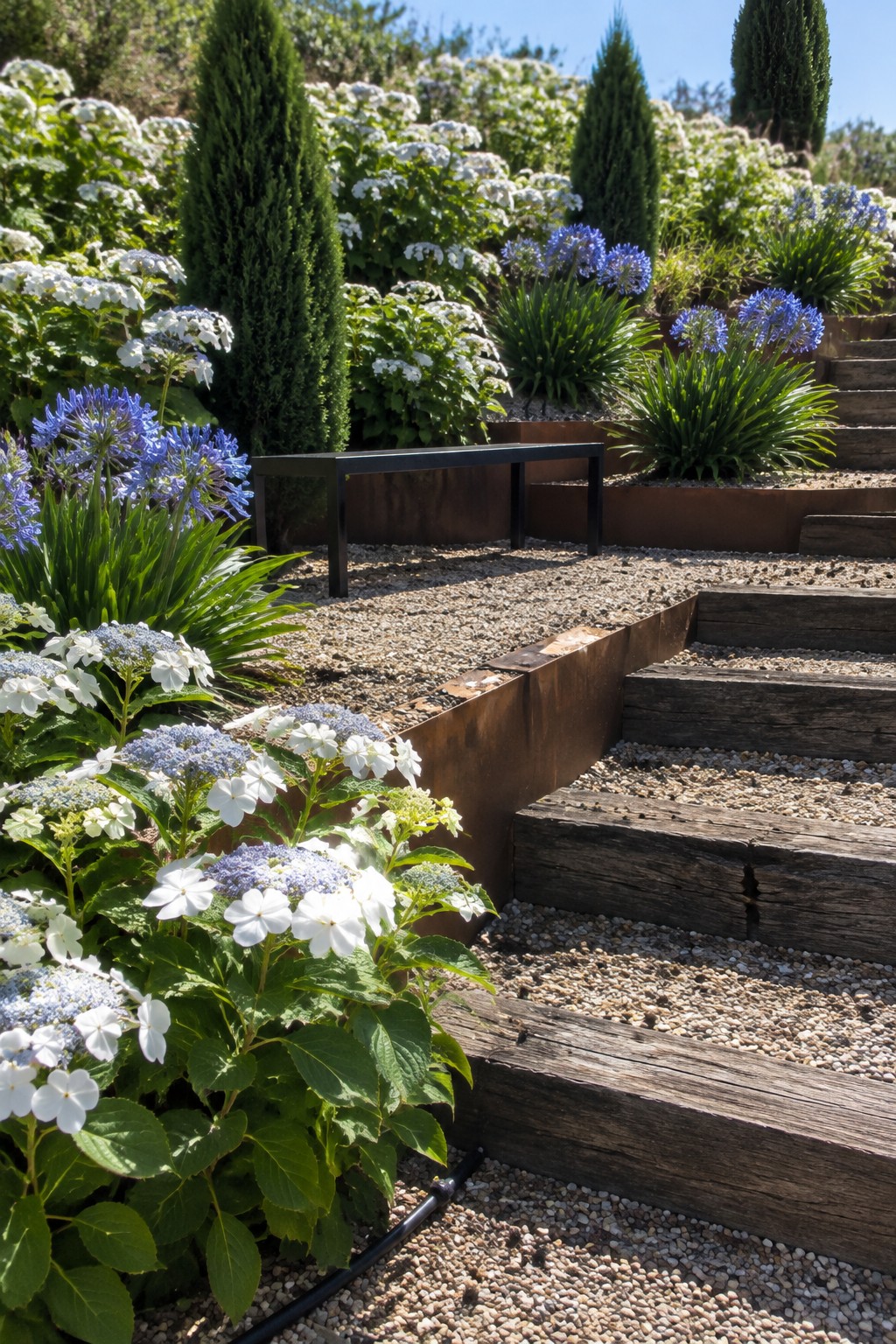
Layering planting beds along a slope gives white hydrangeas room to spread without hiding the plants behind them. Repeating the white blooms across several levels also makes the garden feel connected, rather than like a collection of separate beds.
Use low retaining edges to hold the planting areas in place, and keep paths or steps clear and easy to walk on. White hydrangeas work well toward the front of a layered bed, where their flowers are easy to see.
Use a Garden Arch to Mark the Entrance
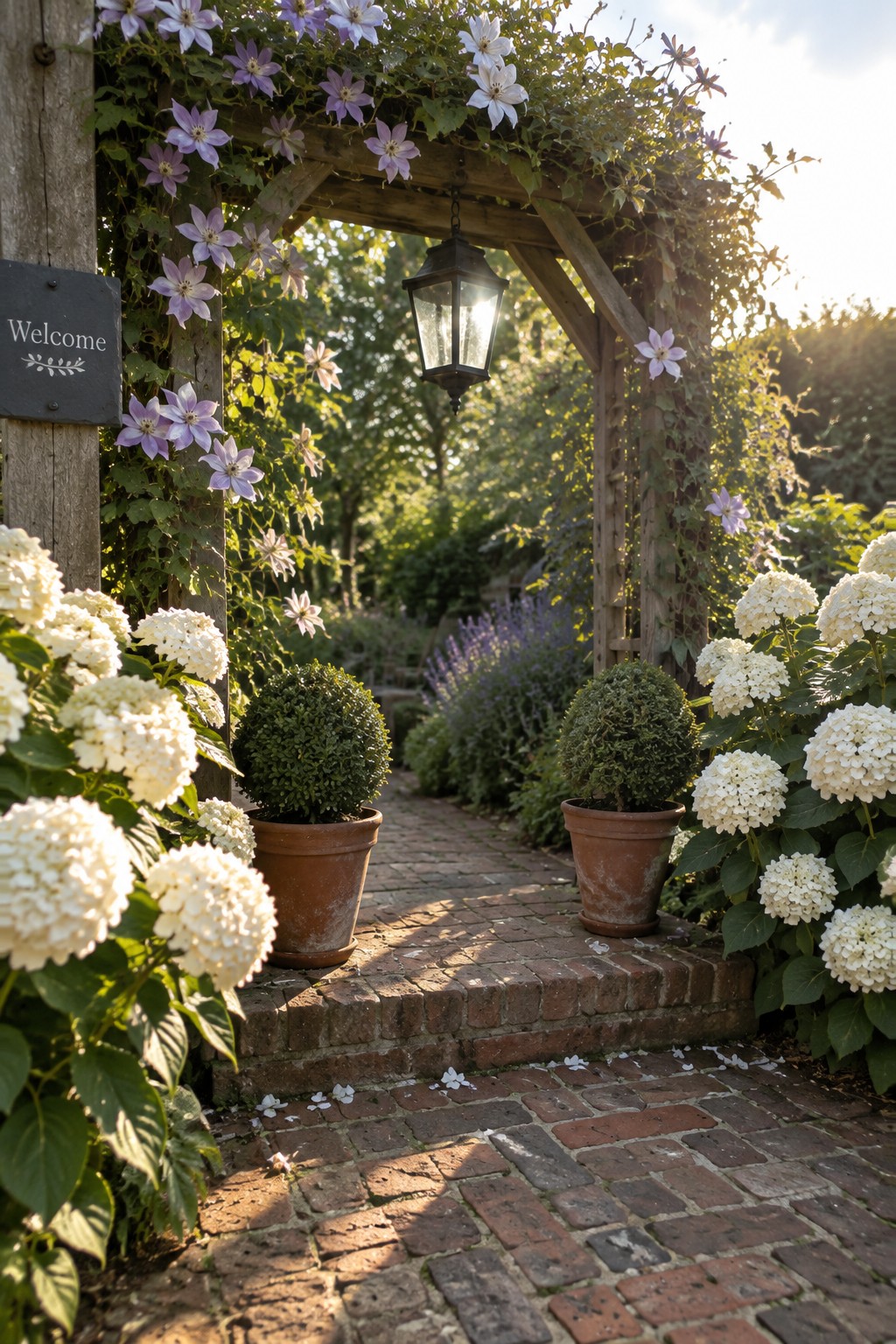
A flower-covered arch gives a garden path a clear starting point and makes the entrance feel distinct from the rest of the yard. White hydrangeas planted nearby add a fuller border without competing with the arch’s flowering vines.
This works well at the entrance to a cottage garden or along a narrow walk. Keep the path wide enough to pass through comfortably, and leave space around the arch posts so plants do not crowd the walkway.
Use Raised Beds to Organize Coastal Plantings

Raised beds give a garden a clear edge and make it easier to group white hydrangeas with lower-growing plants. The pale wood also suits a coastal setting without competing with the flowers.
Use this approach beside a walkway or along a boundary where you want the planting to feel contained. Leave enough room for hydrangeas to spread, and choose sturdy, weather-resistant boards for exposed spots.
Use White Hydrangeas to Edge a Gravel Garden Walk

White hydrangeas make a gravel path feel more like a planned garden walk. Their rounded blooms repeat along the edge, giving the route a clear shape without needing a tall or solid border.
This works well on a narrow path beside a wall or a row of trees. Leave enough space for the shrubs to spread, and keep their leaves from spilling too far onto the gravel so the walkway stays easy to use.
Let a Mown Path Wind Through Garden Plantings
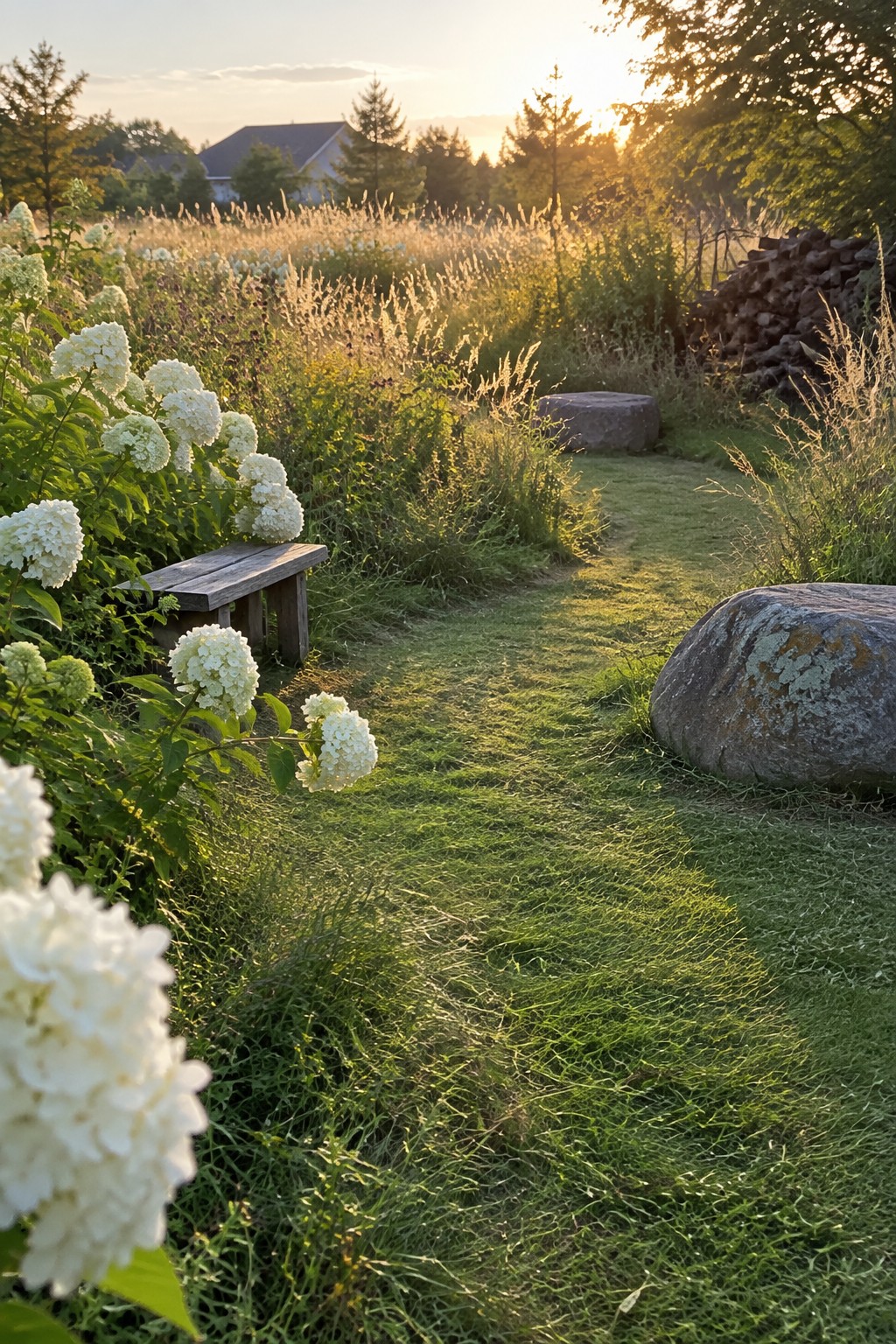
A simple path cut through taller planting gives a garden a clear route without making it feel too formal. Here, the mown grass leads past white hydrangeas and meadow-like growth, making the space easier to walk through while letting the planting stay loose.
This approach works well in a larger yard or beside a natural-style garden bed. Keep the path wide enough for comfortable walking, and mow it regularly so it remains easy to follow.
Add White Hydrangeas to a Rooftop Seating Area
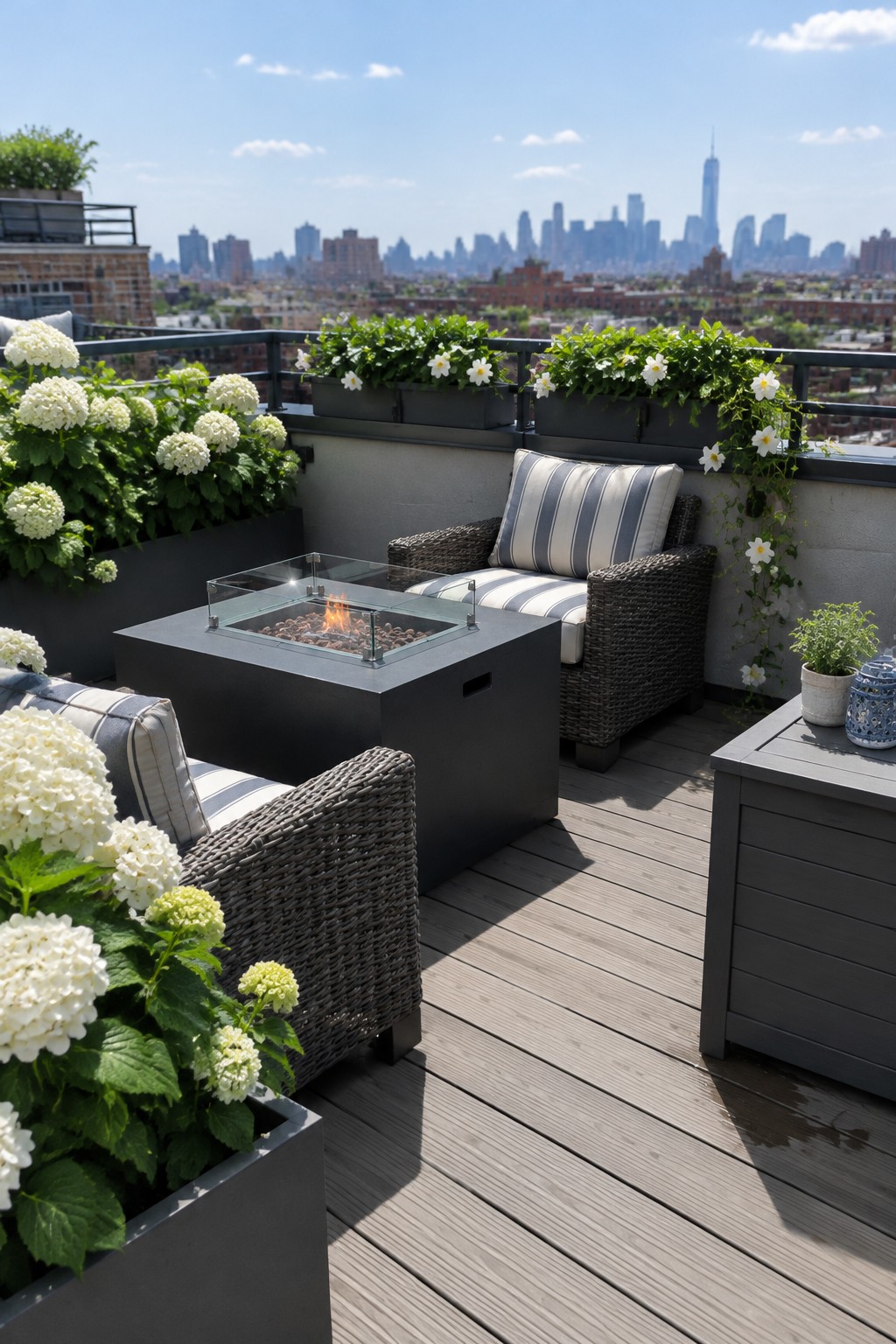
White hydrangeas can make a rooftop seating area feel more like a garden without taking up the whole deck. Planted in large containers along the edge, they bring greenery and flowers close to the seats while keeping the center open for walking.
Choose sturdy planters that can handle rooftop conditions, and make sure they have good drainage. A few compact plants near the chairs can echo the larger hydrangeas without crowding the seating.
Use Gravel to Set Off Formal Garden Beds

A broad gravel path gives a formal garden a clear, open center while keeping the flower beds easy to see. White hydrangeas stand out against the pale stone, and clipped hedges help the planting feel orderly without making it stiff.
This approach suits a traditional garden where you want room to walk and pause. Keep the gravel edge neat, and repeat the same path material through the main garden so the layout feels connected.
Plant White Hydrangeas Around a Garden Tree
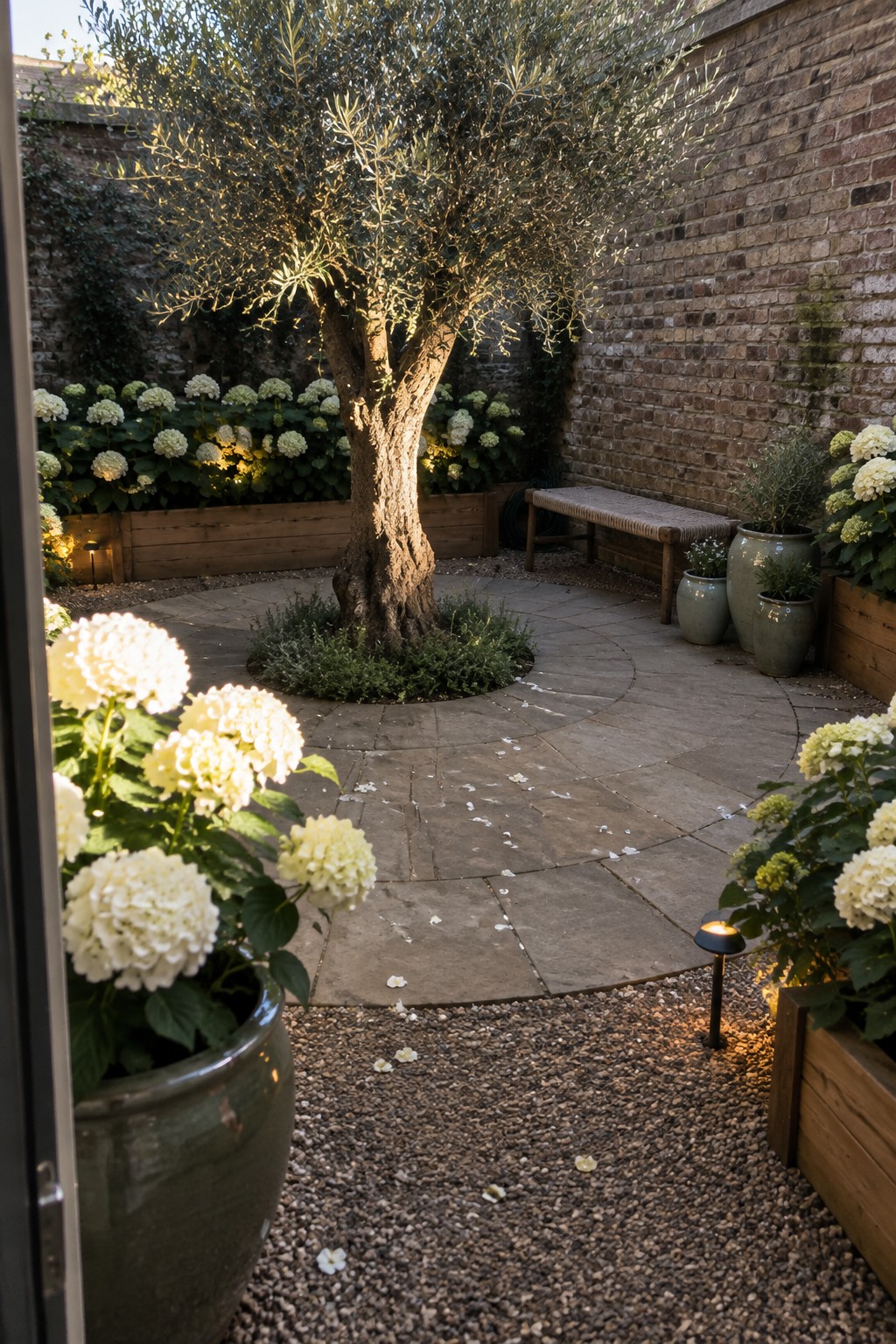
White hydrangeas can make a mature tree feel like the natural center of a small garden. Their rounded flower heads create a clear contrast with the tree’s trunk and canopy, while a simple paved area keeps the planting from taking over.
This works well in a courtyard where space is limited and one established tree can shape the layout. Leave room around the trunk for a low planting ring, and keep the hydrangeas far enough back that they do not crowd the tree’s roots.
Use Stone Edging to Define Hydrangea Beds
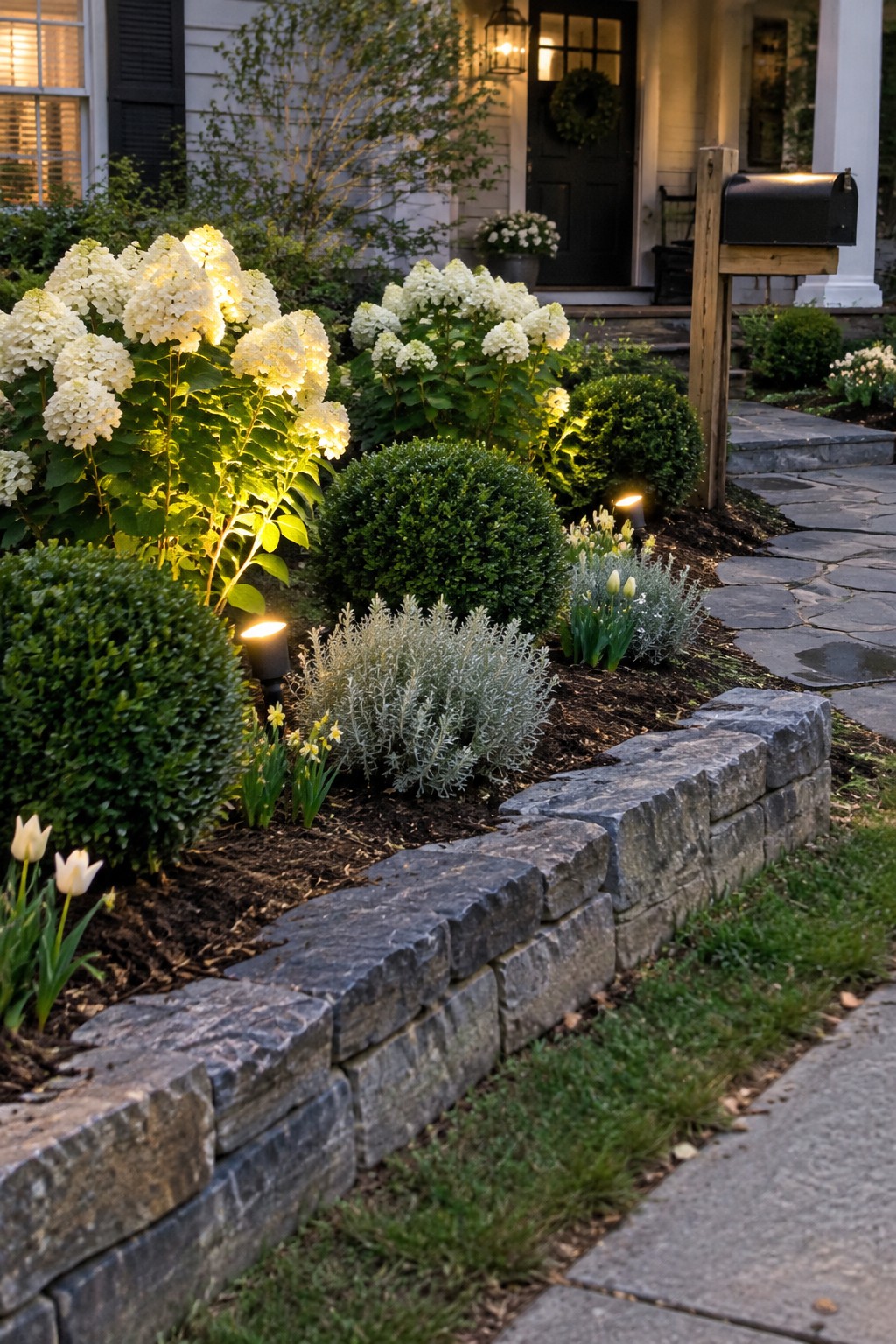
A low stone retaining wall gives a garden bed a clear edge and helps it sit neatly beside a walkway. White hydrangeas work well in this kind of bed because their rounded blooms stand out against the darker stone and greenery.
Use the same approach on a sloped or uneven front yard, where a short wall can hold back soil and make planting easier to organize. Leave enough room for shrubs to mature, so the flowers do not crowd the path.
Frequently Asked Questions
Q: Where should I plant white hydrangeas so their blooms stand out?
A: Place them where they contrast with darker greenery, a fence, or a garden wall. Near a path or entry, they’re easy to enjoy up close, too.
Q: Can white hydrangeas grow in full sun?
A: Some can, but most appreciate afternoon shade, especially in hot climates. If the leaves droop or scorch during summer, try a spot with more shade and keep the soil evenly moist.
Q: What can I plant with white hydrangeas?
A: Ferns, hostas, and ornamental grasses make good companions because their foliage adds texture around the blooms. Choose plants with similar light and watering needs so the bed is easier to care for.
Q: How do I keep white hydrangea blooms looking fresh?
A: Water deeply when the soil starts to dry, and remove faded flower heads if you prefer a tidy look. A layer of mulch helps hold moisture through warm weather.
