


I’ve noticed that the flower beds which pull a yard together best start with a solid base that defines their curves and borders cleanly.
Black rocks handle that role well because their dark tone contrasts sharply with soil and greenery, shaping the layout without needing constant refresh.
I put them in around my side yard beds last spring, and they held the edging firm even as perennials filled out over summer.
They make pathways feel more intentional too, guiding the eye through the space naturally.
One or two here might fit right into a real garden refresh.
Black Gravel Beds Around Stone Patios
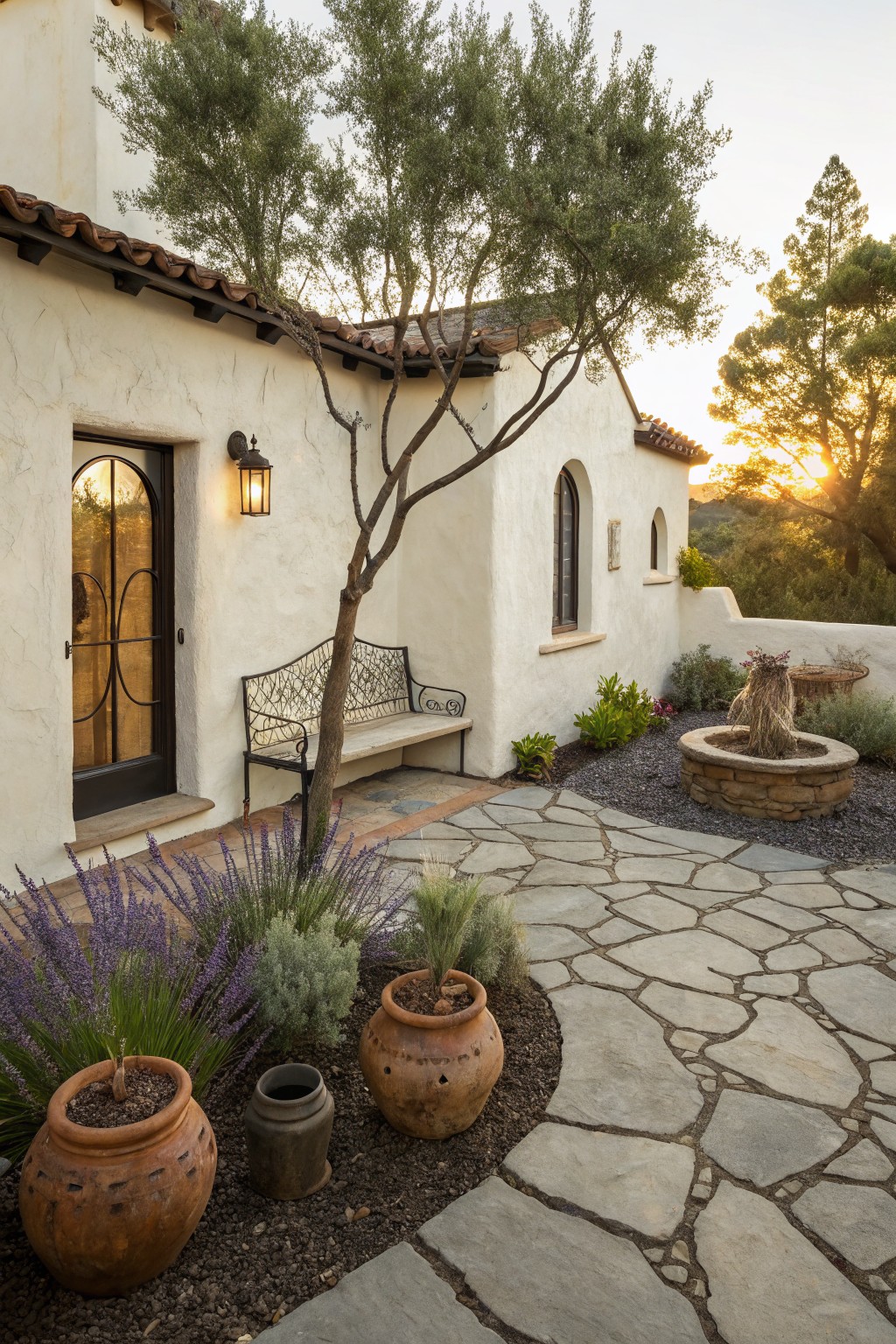
Black gravel works great as mulch in these loose, curving beds tucked right up against a flagstone patio. The dark rocks make sparse plantings like lavender and grasses pop without much upkeep. Large terracotta pots sit in the mix, giving scale and a bit of earth tone warmth that ties into the stone paths.
You can pull this off in any sunny courtyard or side yard, especially where water is tight. Edge the beds with the patio stones or low walls to keep gravel in place. Stick to tough, mounding plants so the black shows through… it keeps things clean and lets the hardscape lead.
Slate Paths Filled with Black Pebbles
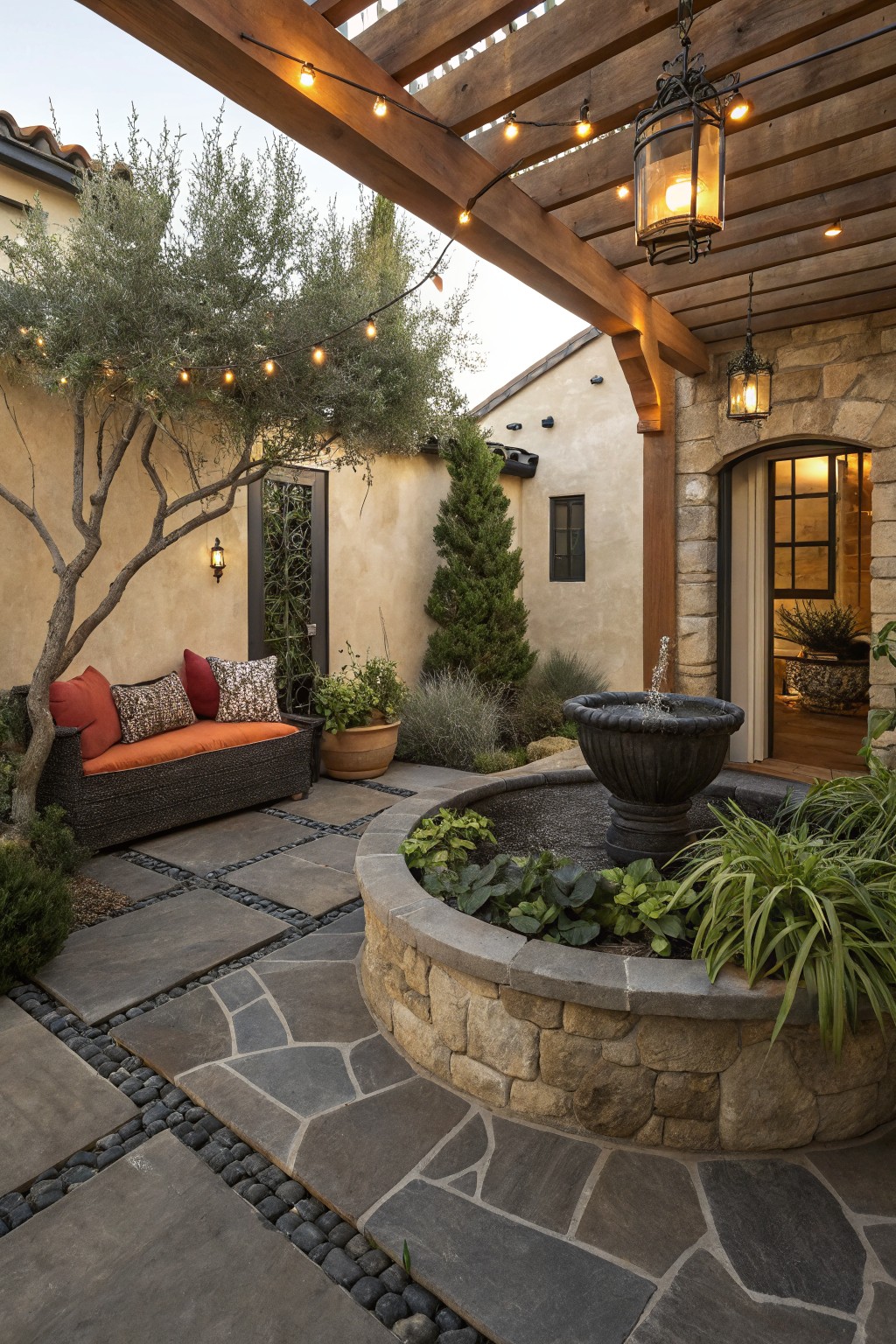
One simple way to make landscaping beds stand out is filling the joints between slate pavers with black pebbles. You see it here around a central fountain bed, where the dark slate slabs mix with those small black rocks for a clean, rugged path. It gives a strong contrast against the green plants and light stone walls, without much upkeep since weeds struggle to grow in tight pebble fills.
This works best in courtyards or patios near the house, like a tucked-away spot for evening sits. Lay irregular slate for a natural feel, tuck black pebbles in the gaps, then edge planting beds right along the path. It suits stucco homes or drier yards… just keep the pebbles topped up now and then.
Stepping Stones in Black Rock Beds
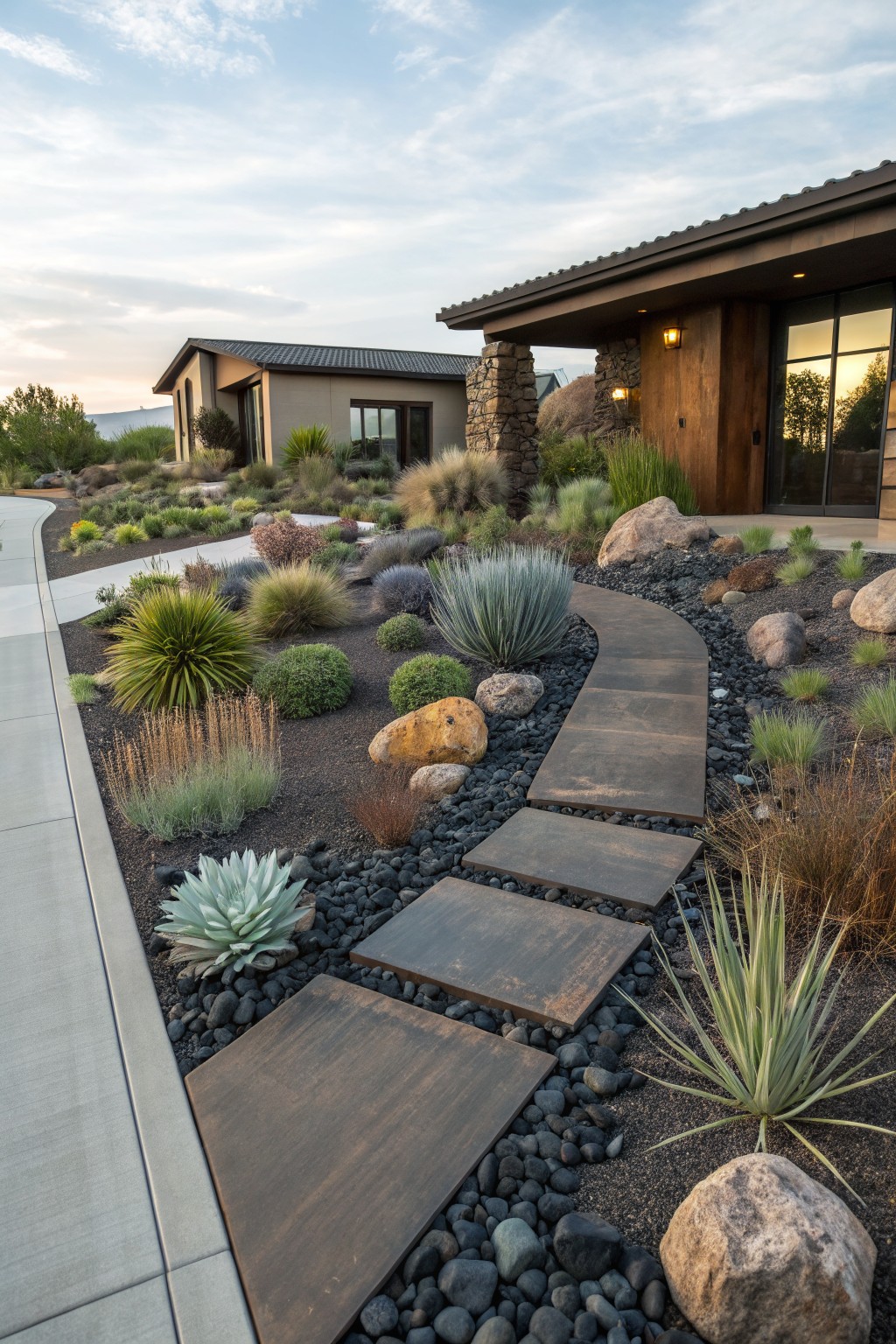
Large dark stepping stones set into black gravel make a simple path that pulls a rock garden together. The wide slabs here curve through the mulch, edged by boulders and tough plants like agaves. They add just enough structure so the bed doesn’t feel messy, while keeping the low-water look clean and modern.
Try this in front yards where you want to guide people to the entry without a full sidewalk. Use gravel two inches deep around the stones, tuck in a few big rocks for weight, and add spiky grasses or succulents. It suits dry climates best and stays neat with little upkeep.
Black Gravel Beds with Meandering Stone Path
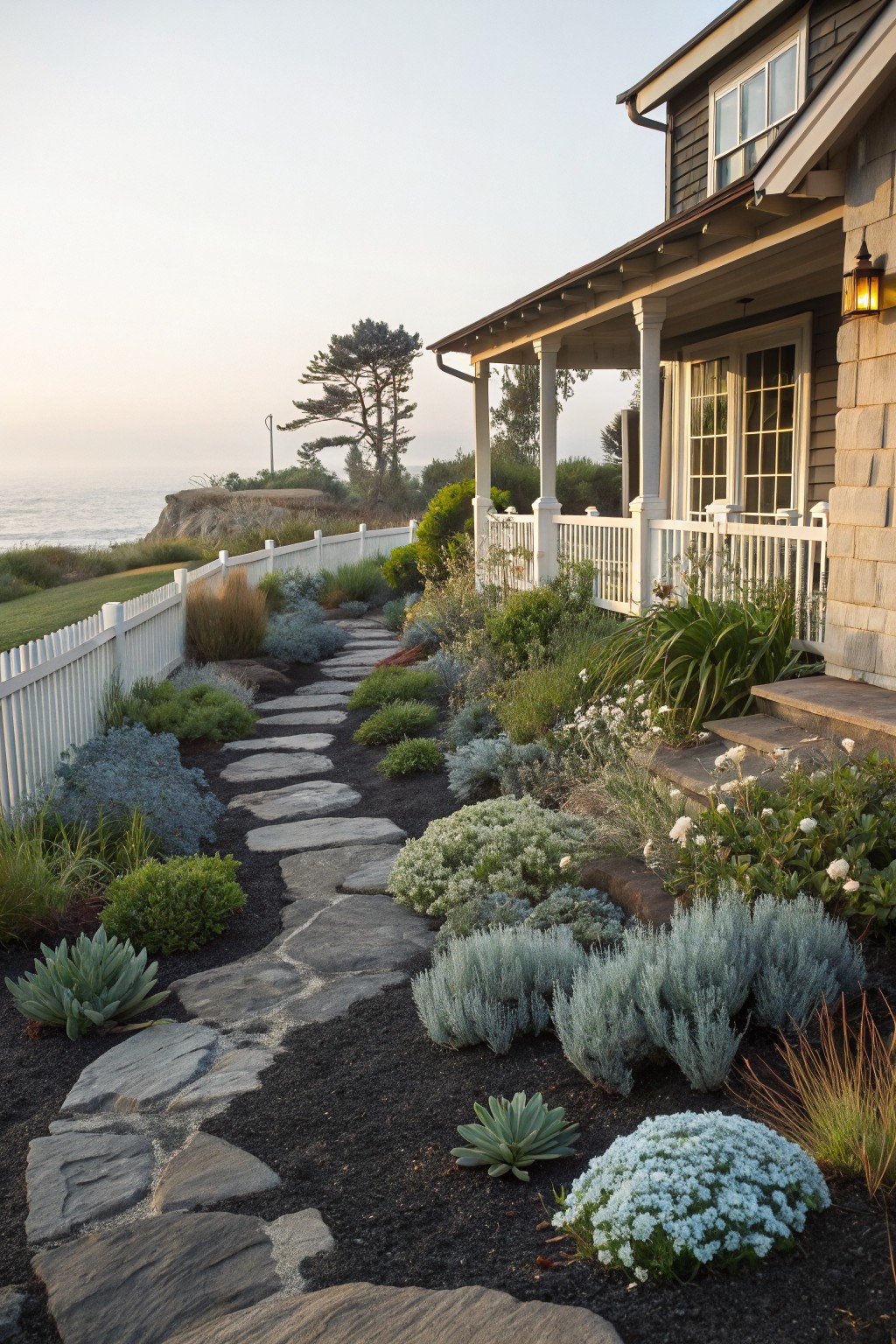
One simple way to make a garden path feel more interesting is to set large, rough stepping stones into black gravel mulch. The dark gravel fills curved beds around the stones, and low silvery plants tuck in along the edges. It pulls your eye right up to the house without much fuss. That contrast between the black base and light plants keeps things clean and lively.
This works best in sunny, dry spots where you want low upkeep. Think coastal yards or slopes that need erosion control. Lay the stones loose first to get the curve right, then fill with gravel and drought-tough plants like agave or lavender. Skip it on shady lots, though. The black can look too heavy without good light.
Boxwood Spheres Line the Entry Path
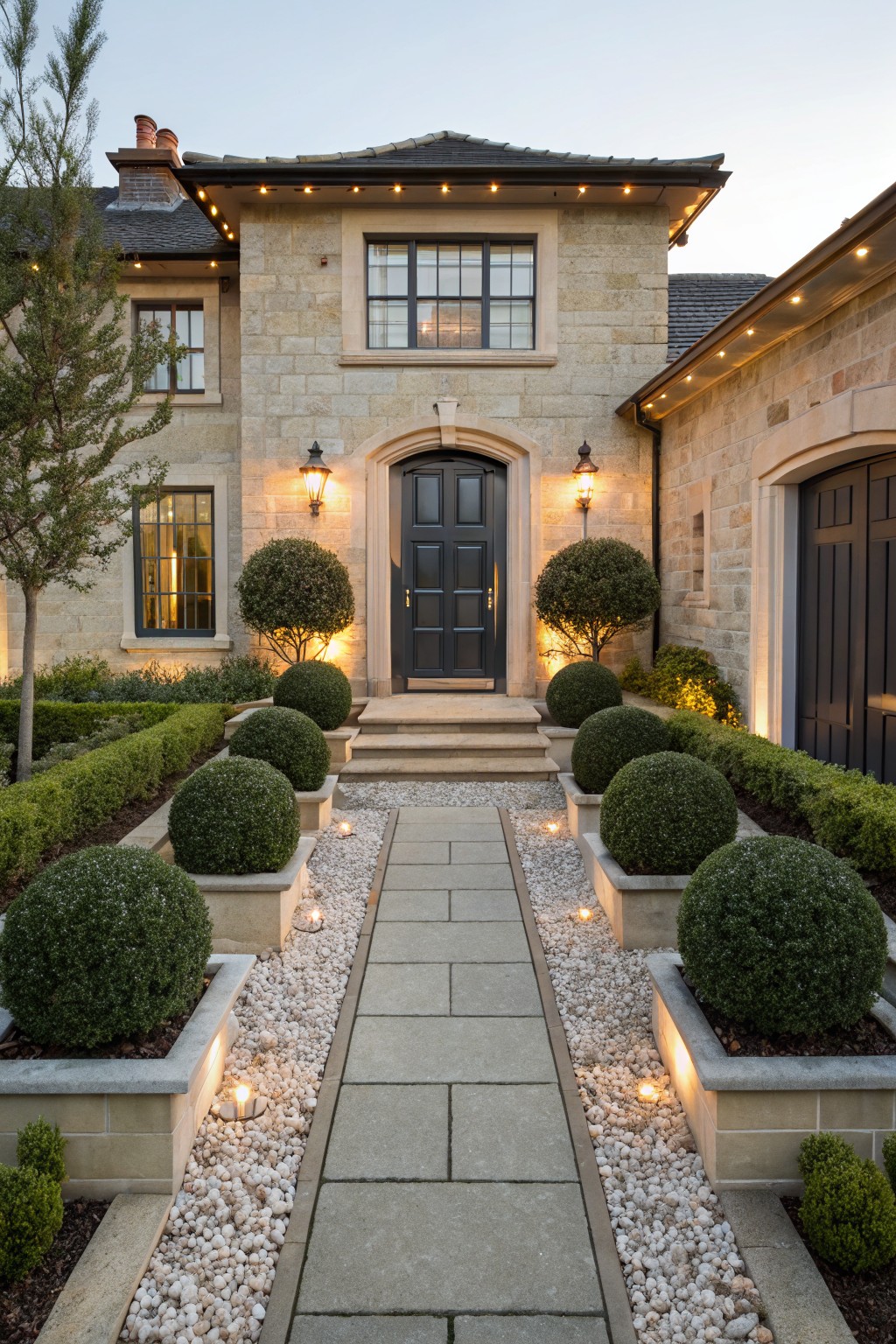
One simple way to make a front walkway feel special is lining it with matching boxwood spheres planted in raised stone beds. Here the round green shapes sit in square planters right along the stone pavers, with pebbles tucked into the borders. That repetition creates a nice rhythm as you walk up, and it keeps things neat without much color or fuss. The spheres pick up on the house’s stone without competing with it.
You can pull this off in any front yard with room for a path, especially if your home has a classic or stone look. Trim the boxwoods a couple times a year to hold the shape… easy enough. Skip flowers if you want low upkeep, and the pebbles help with weeds. Just make sure the beds drain well so the roots stay happy.
Black Rock Mulch for Poolside Beds
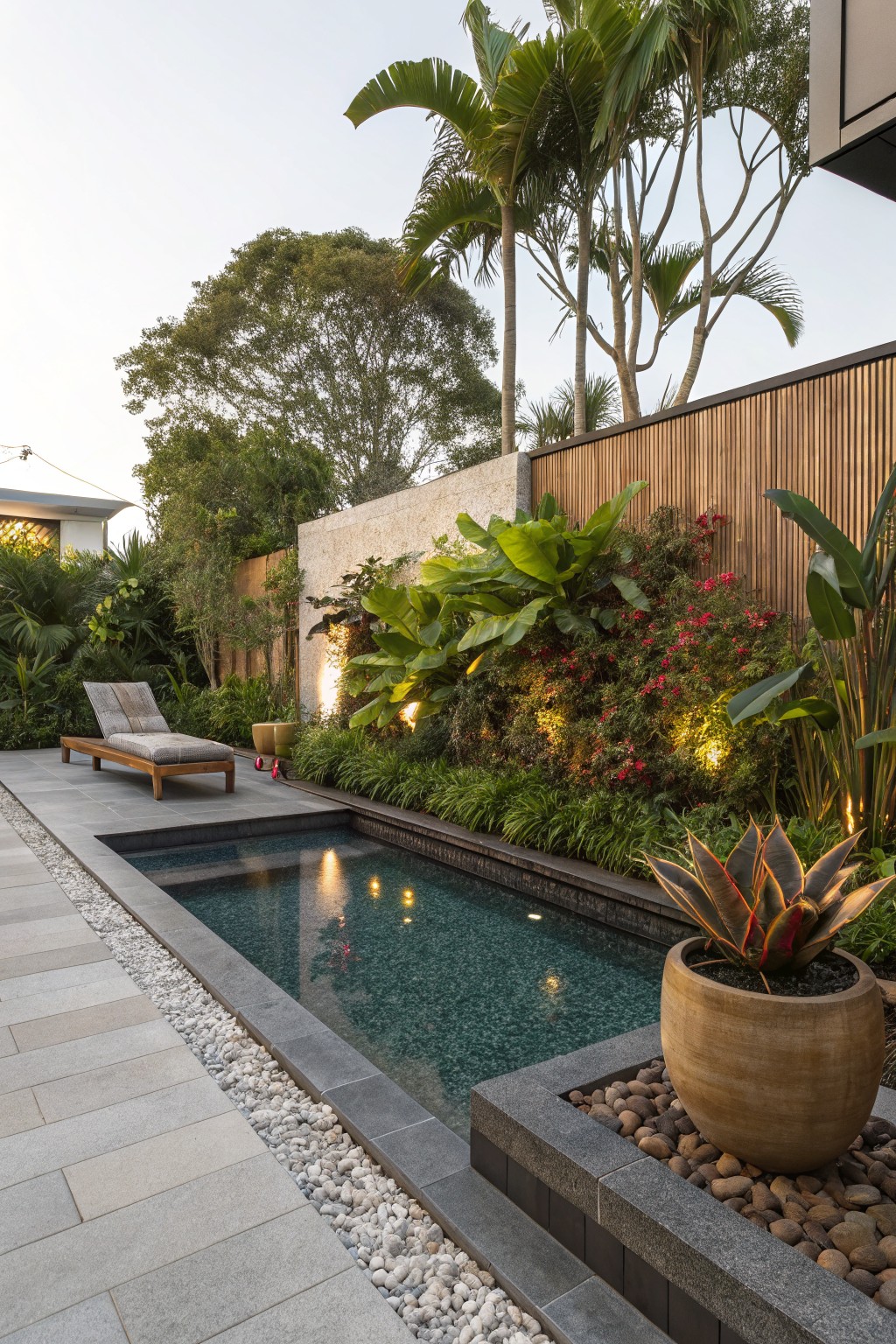
Black rock mulch works great right up against a pool like this. It fills the beds with dark pebbles that make the tropical plants stand out. Those big banana leaves and colorful agaves pop against the black without much upkeep. The pool edge ties right into it too.
You can use this in a compact backyard with a small plunge pool. Just lay down landscape fabric first then add the rocks around your plantings. It suits warm climates or modern yards. Keep an eye on drainage so the pebbles stay put after rain.
Black Rock Beds Edged with Stones
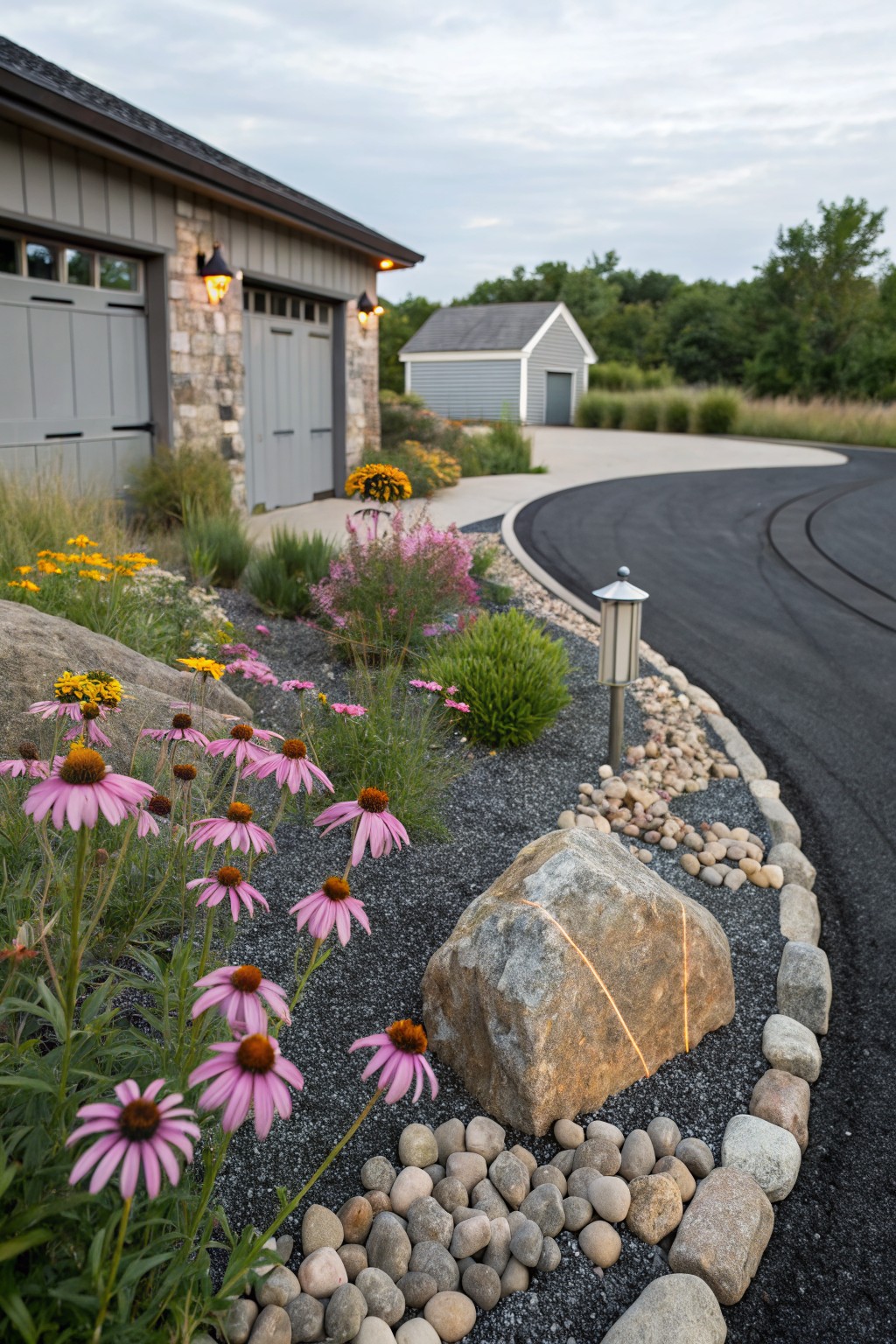
One simple way to make flower beds stand out is to fill them with black rock mulch and edge them neatly with pebbles and bigger stones. In this setup, the dark gravel lets bright pink coneflowers and yellow blooms pop right out. It keeps things clean and low-maintenance too, without the mess of wood chips.
These beds work great along driveways or walkways where you want curb appeal without much upkeep. Pair tall perennials with low grasses around a large boulder for some height. They suit homes with a mix of modern and natural looks… just make sure the rocks match your soil type so weeds stay down.
Garden Paths Edged in Black Rocks
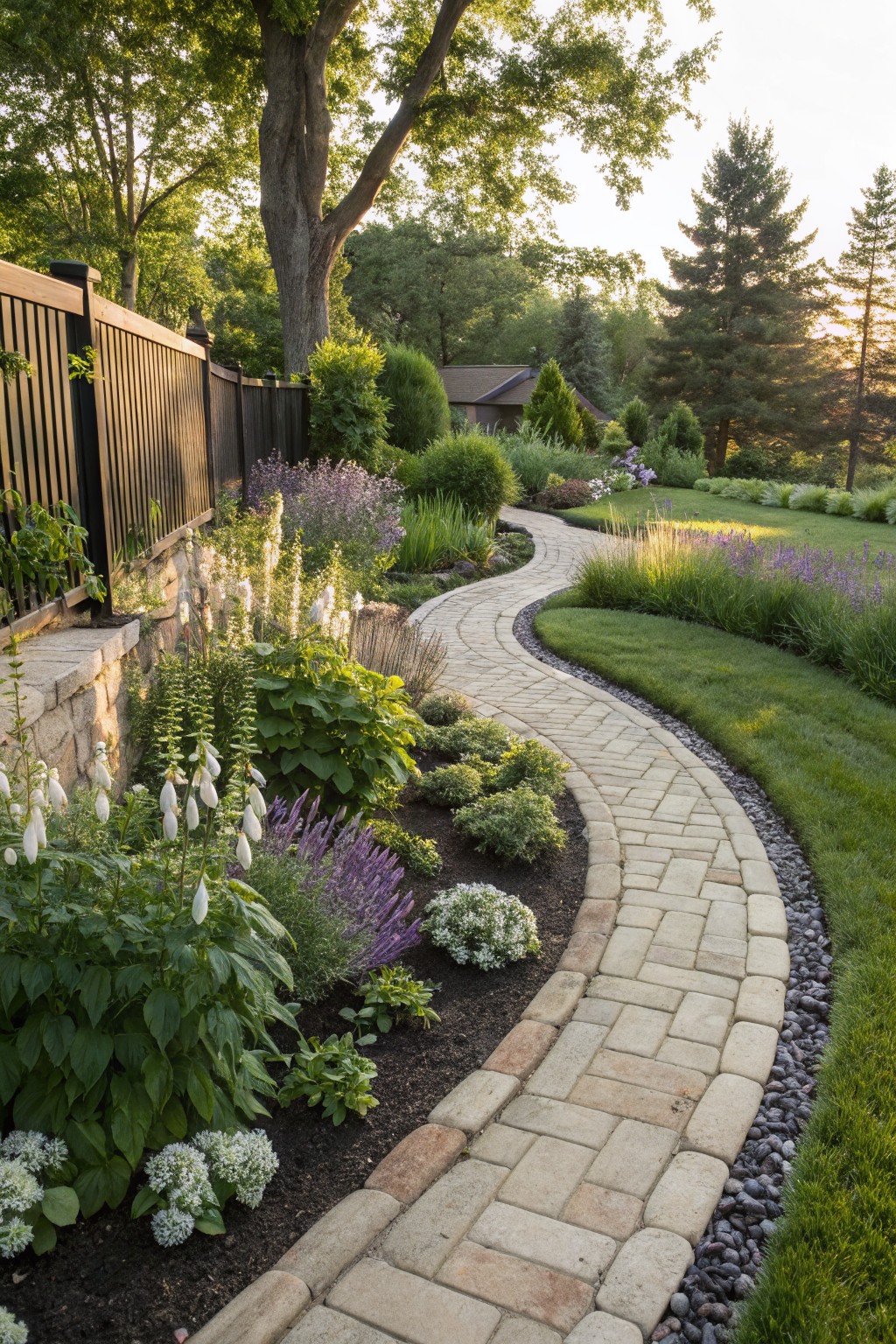
One clean way to make flower beds pop is edging them with black rocks along a winding path. Here the dark stones hug the curves of a brick walkway, setting off white foxgloves and lavender without overpowering the plants. It keeps everything tidy and adds that nice contrast folks notice right away.
This works best on paths that meander through side yards or toward a fence gate. Go for it in full sun where drought-tough plants grow well. Set the rocks a few inches deep so they block weeds, and refresh the mulch nearby each spring.
Black Rocks Along Winding Garden Paths
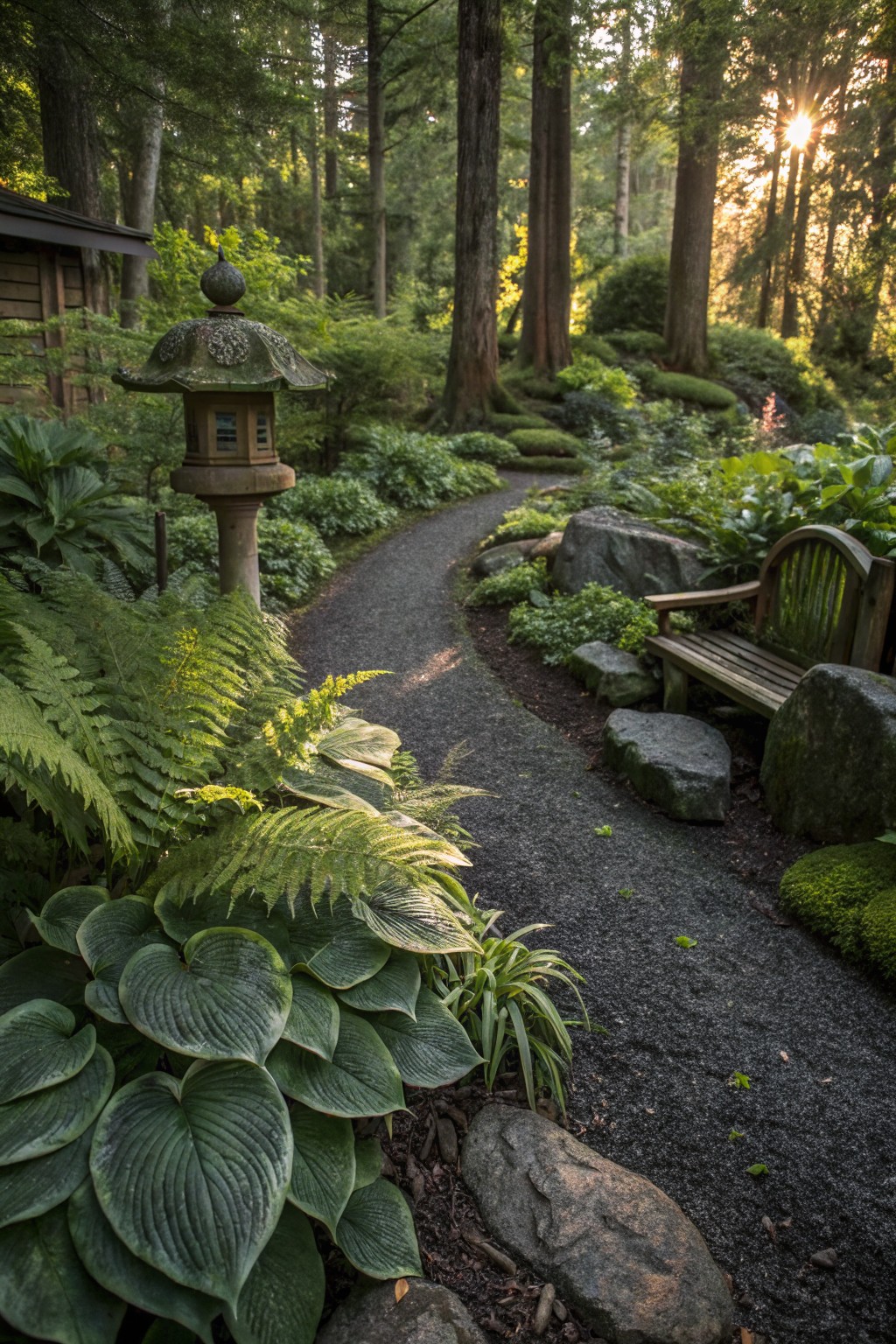
One simple way to make your flower beds stand out is to line paths with black rocks. They create a clean edge that lets the plants take center stage. In this setup, the dark stones hug a gravel walkway, contrasting nicely with the bright green ferns and hostas. That sharp line keeps everything looking tidy without much upkeep.
You can pull this off in shaded woodland spots where ferns and big-leafed plants thrive. Scatter the rocks around bed edges or mix them into mulch for definition. They work best in moist areas, holding up to rain and blending with mossy vibes. Just avoid sunny, dry yards, since the look shines in cooler, damper gardens.
Black Rock Mulch with Agave Clusters
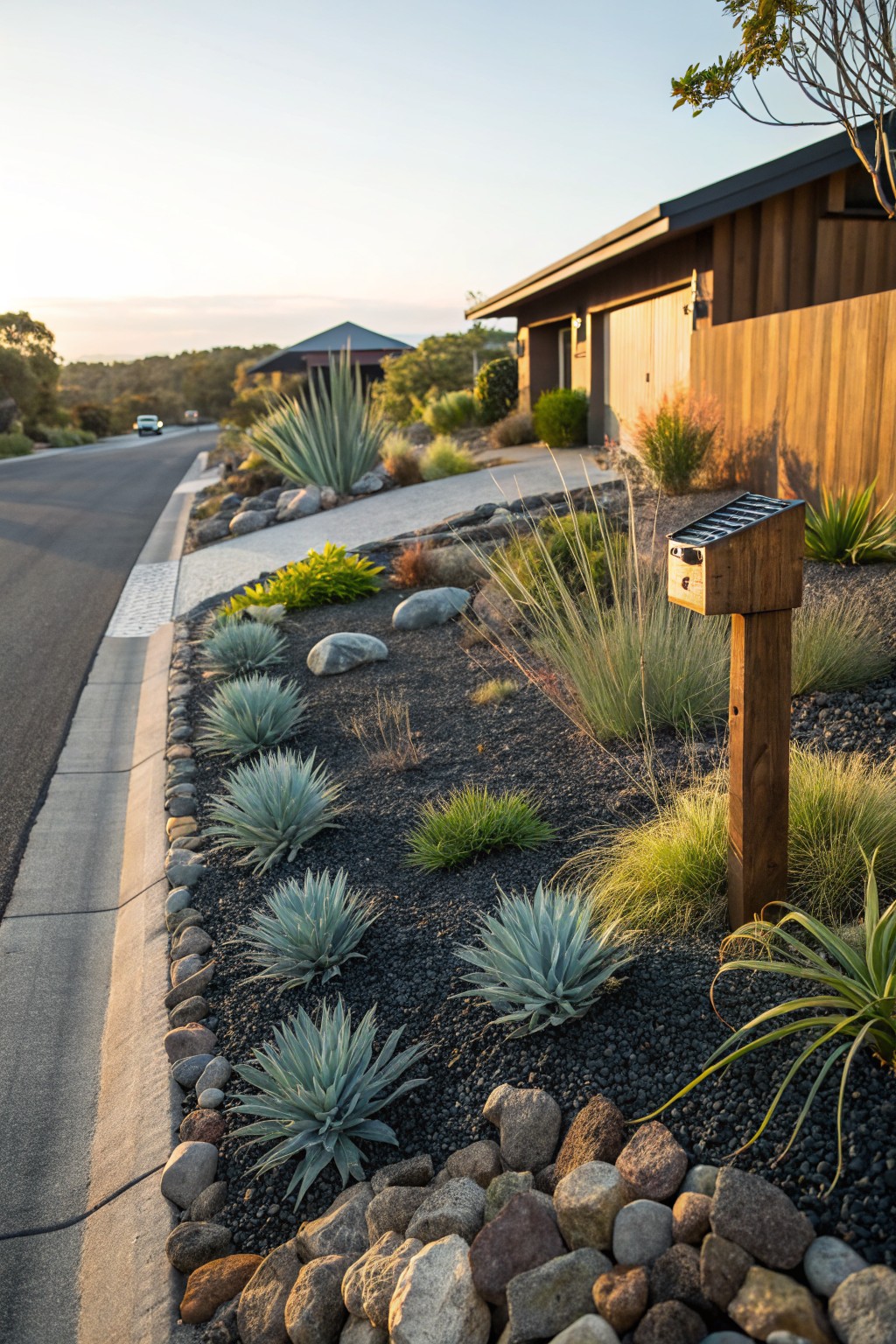
Black rock mulch sets off agave plants in a simple way that catches the eye from the street. The dark gravel pulls focus to those spiky blue-green leaves and mixes in well with clumps of grasses and a few larger stones. It’s clean and tough. No constant weeding or watering needed, which keeps the bed looking good year round.
Put this along your driveway or street edge where you want easy curb appeal. It fits modern homes with wood accents or any spot that’s dry and sunny. Cluster the agaves for rhythm, then top with two inches of gravel over good draining soil. Skip it in shady areas, though. The plants won’t thrive.
Dark Stone Paths Defining Flower Beds
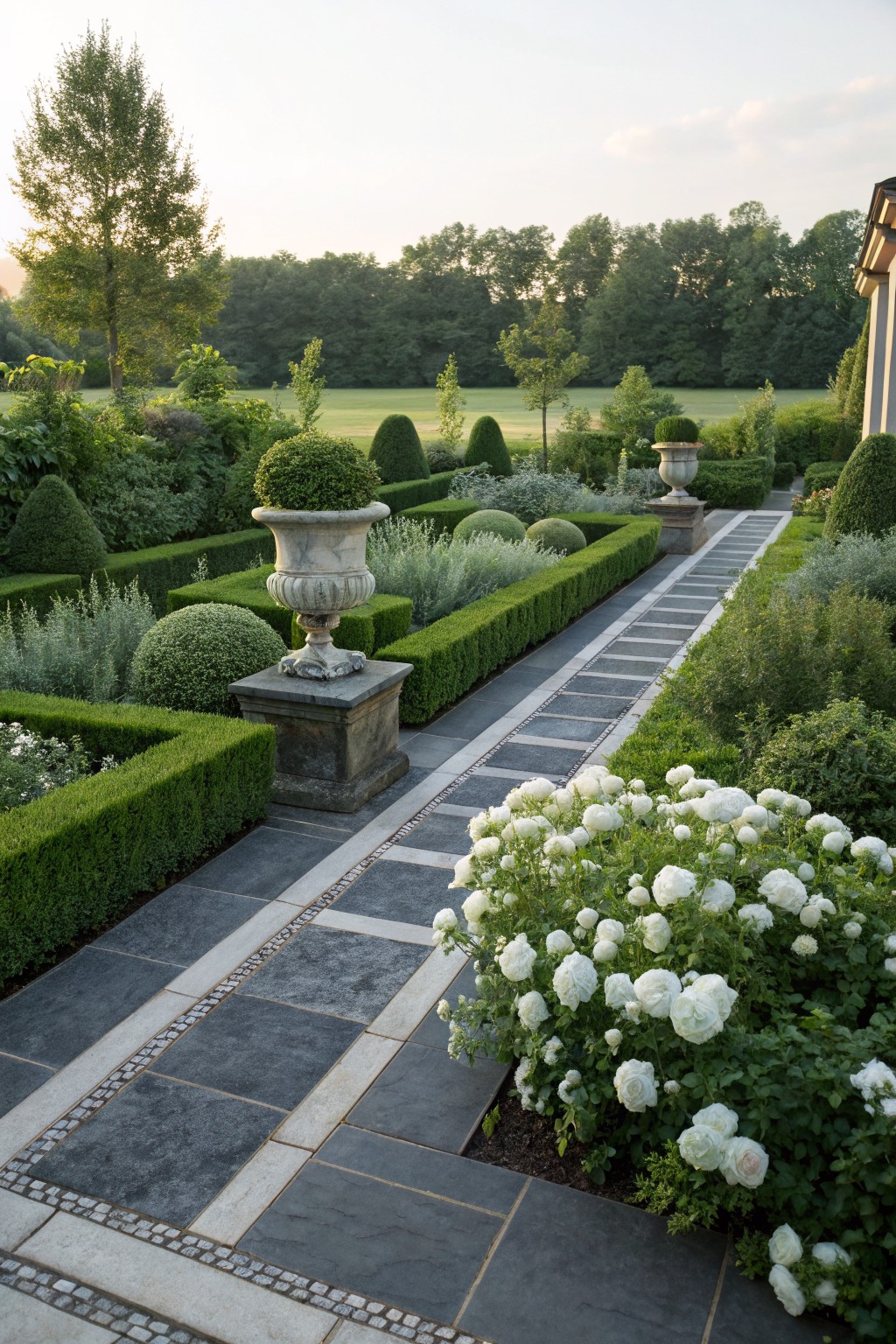
A simple dark slate walkway like this cuts right through a formal garden setup. With its black tiles and light borders, it stands out against the green boxwood hedges and sets off those fluffy white roses perfectly. The contrast makes the flower beds pop without much fuss. Neat urns add some height along the way.
Try this in a backyard with straight lines and clipped plants. It suits older homes or places wanting that classic look. Just edge the path cleanly and plant pale blooms nearby for the best effect. Keeps everything looking sharp and easy to walk.
Black Rocks Around Tropical Flower Beds
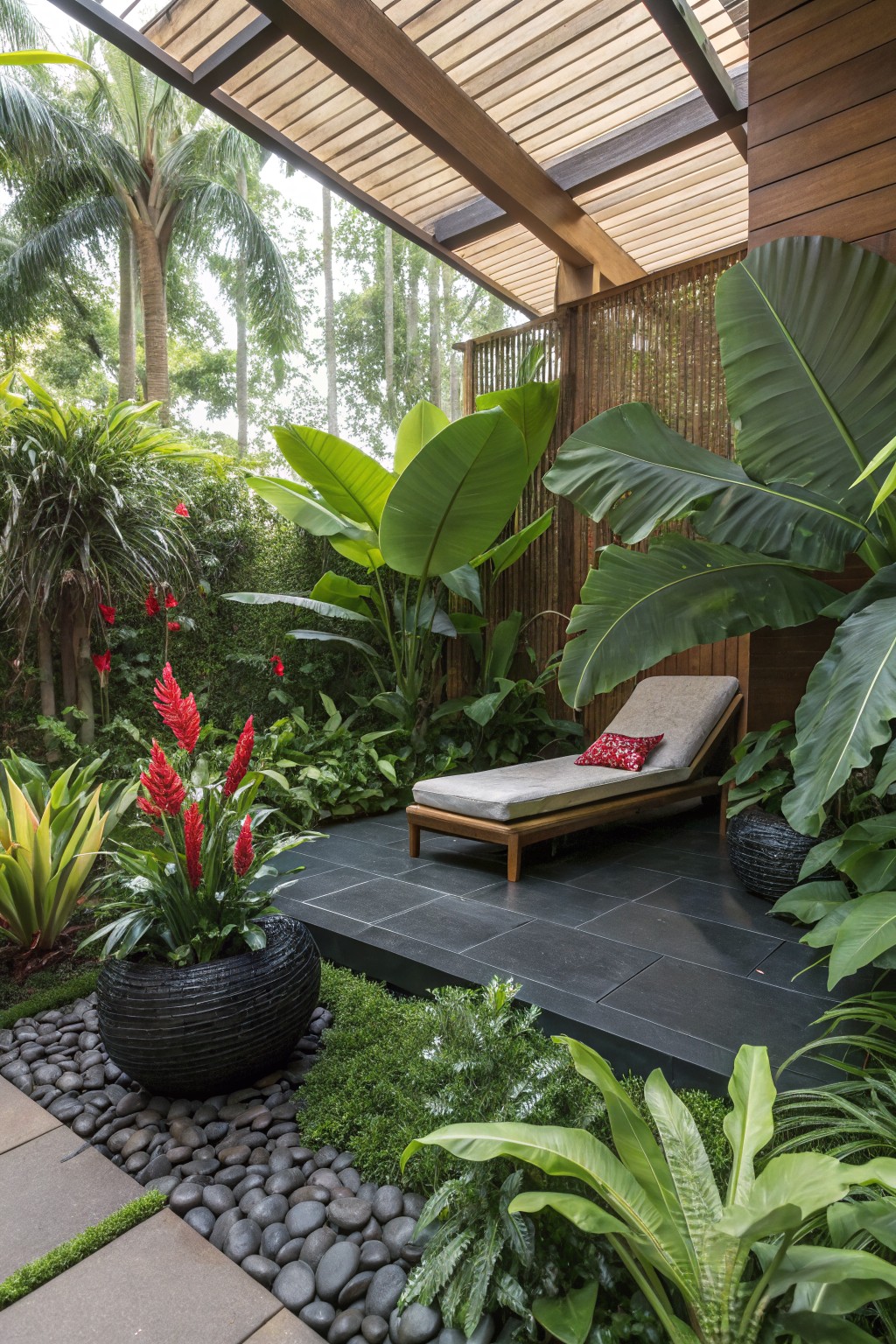
One simple way to make garden beds stand out is filling them with black river rocks around bright plants like those red heliconias and big leafy greens. The dark pebbles create strong contrast that pulls your eye right to the flowers and leaves. It keeps things clean too, since rocks don’t need mowing or much upkeep.
Try this along a patio edge, like the black slate area here with its lounge chair setup. It fits modern homes in warm spots or anywhere you want low-water planting. Watch the scale, though. Smaller rocks work better in tight beds so they don’t overwhelm the plants.
Black Rock Beds Edging Stone Paths
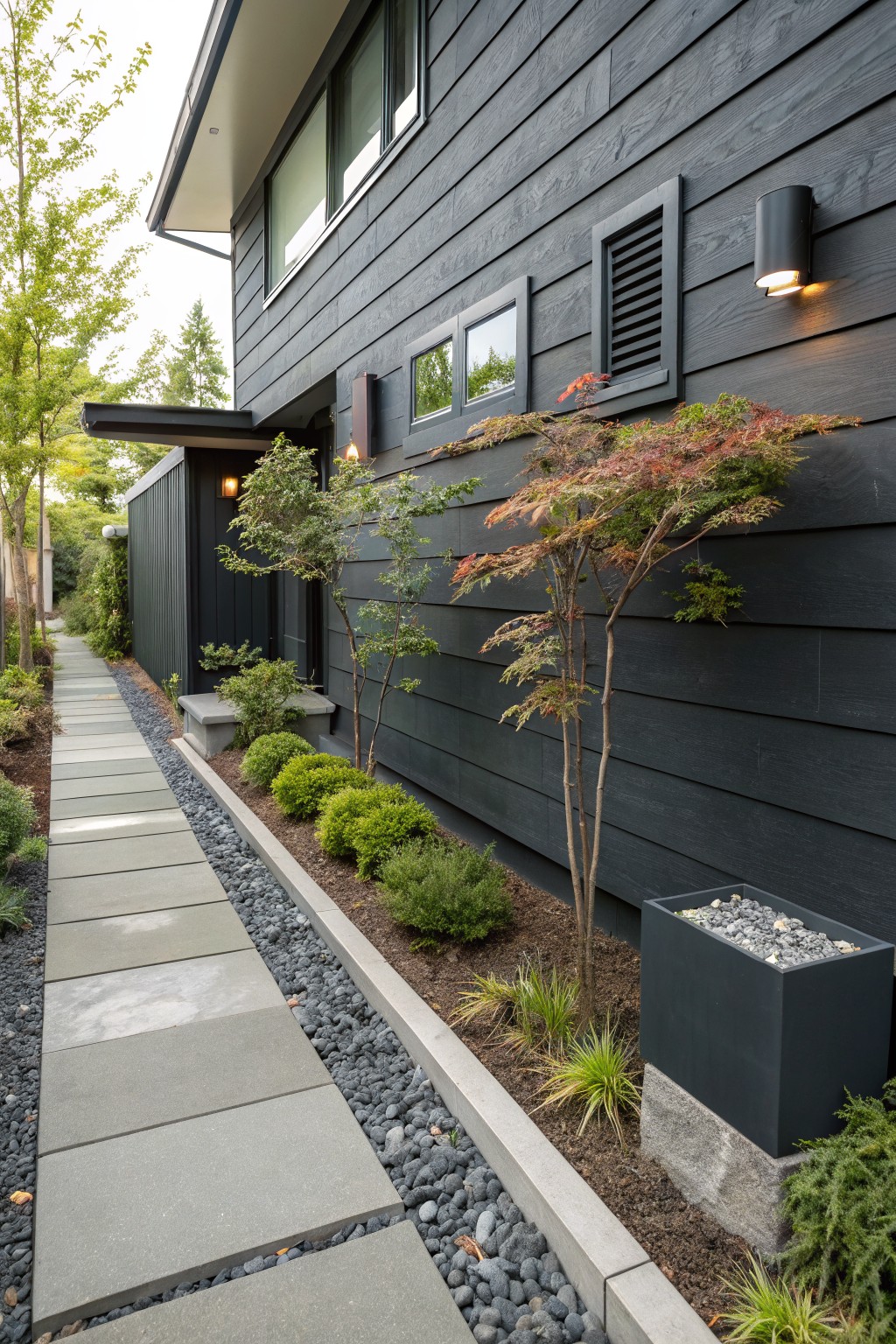
One clean way to handle side yard landscaping is filling narrow beds with black river rock right along a concrete paver walkway. Here the dark pebbles tie right into the house’s black siding. A couple Japanese maples and some shrubs poke up through the rocks for color without taking over.
This keeps things low-maintenance and sharp-looking. Plant sparsely so the rocks show through. It suits modern homes or any spot needing a simple lead-in to the door… just watch that weeds don’t sneak in.
Black Rock Mulch in Linear Terrace Beds
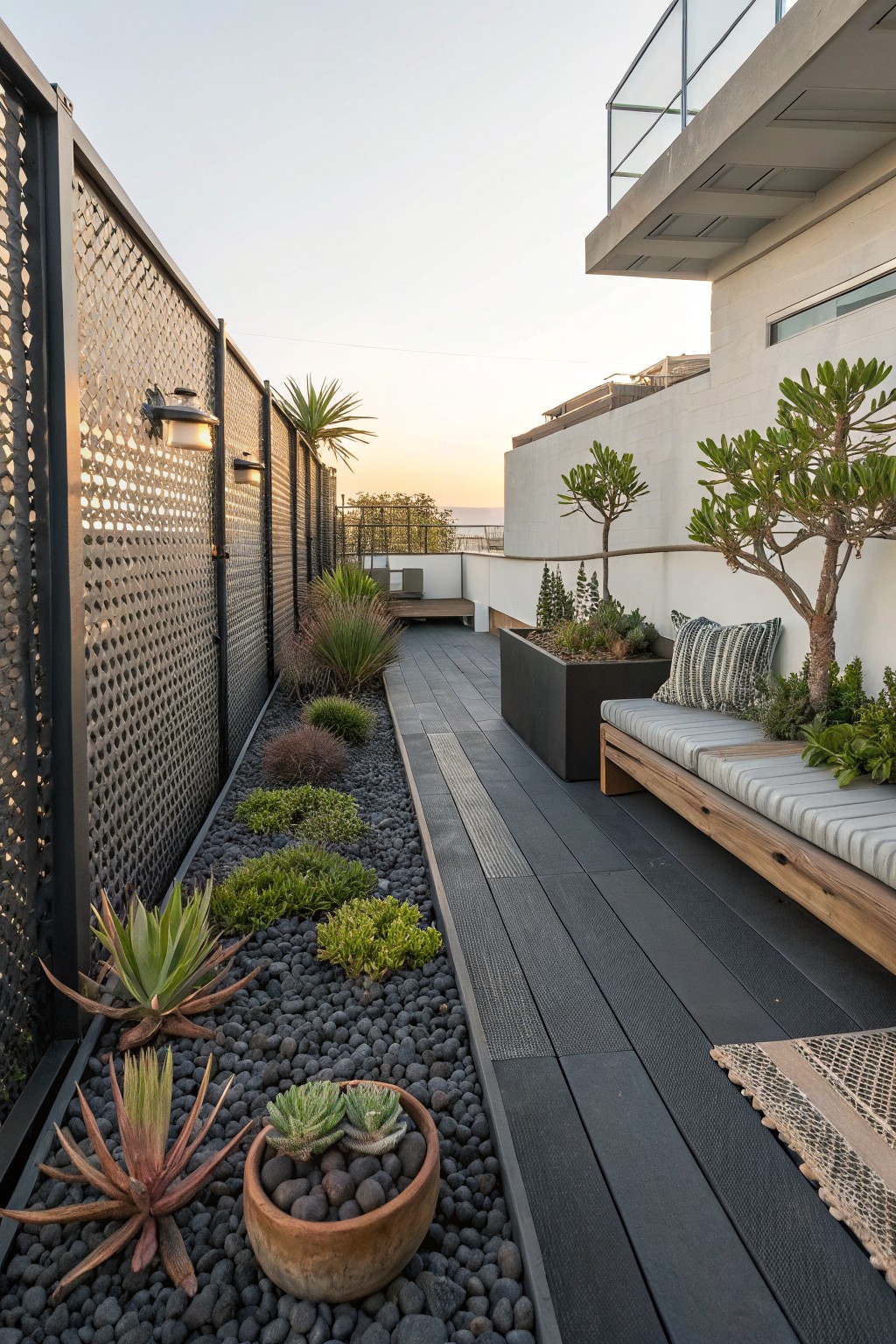
Black rock mulch fills these narrow planting beds along a terrace path, making the succulents and agaves stand right out. The dark pebbles give a sharp, tidy edge that matches the black decking underneath. It’s a simple way to add texture without much upkeep.
This setup fits rooftop terraces or sunny patios where space is tight. Pick drought-tolerant plants like those spiky agaves, layer in some gravel over soil or fabric, and keep it to one side of the path. Avoid overplanting… lets the rocks do the talking.
Bollards That Double as Planters
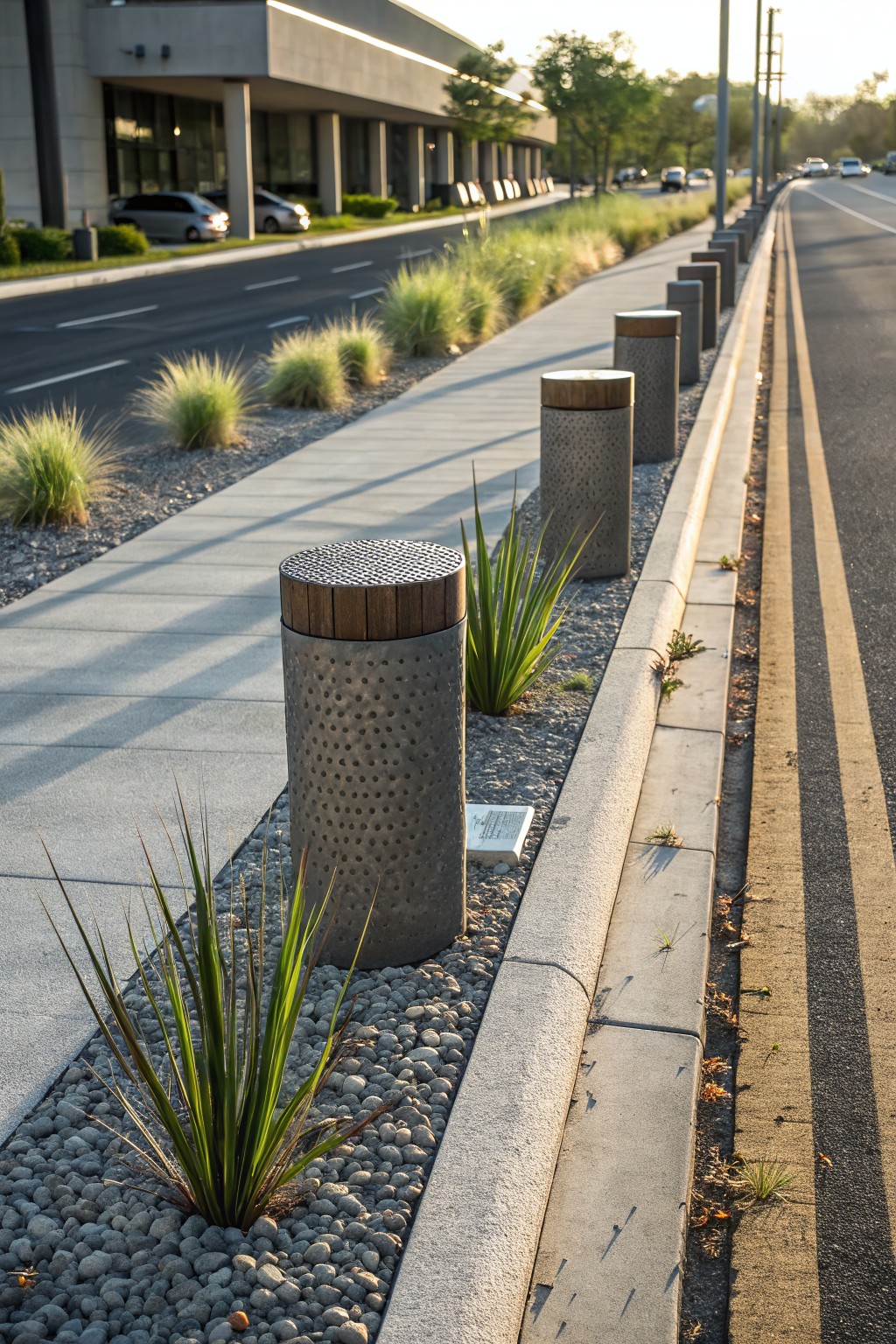
These concrete bollards with wood caps aren’t just barriers. They pull double duty as planters, filled with gravel mulch and tough grasses like yucca. The perforated sides let plants peek through for a rugged look that fits right along a walkway. It keeps things simple and modern without much upkeep.
Put them to work edging streetside paths or parking areas near a modern building. Go for drought-tolerant plants so you aren’t watering all the time. Skip softer flowers here. They hold up best in full sun spots where low maintenance counts.
Winding Stone Paths in White Flower Beds
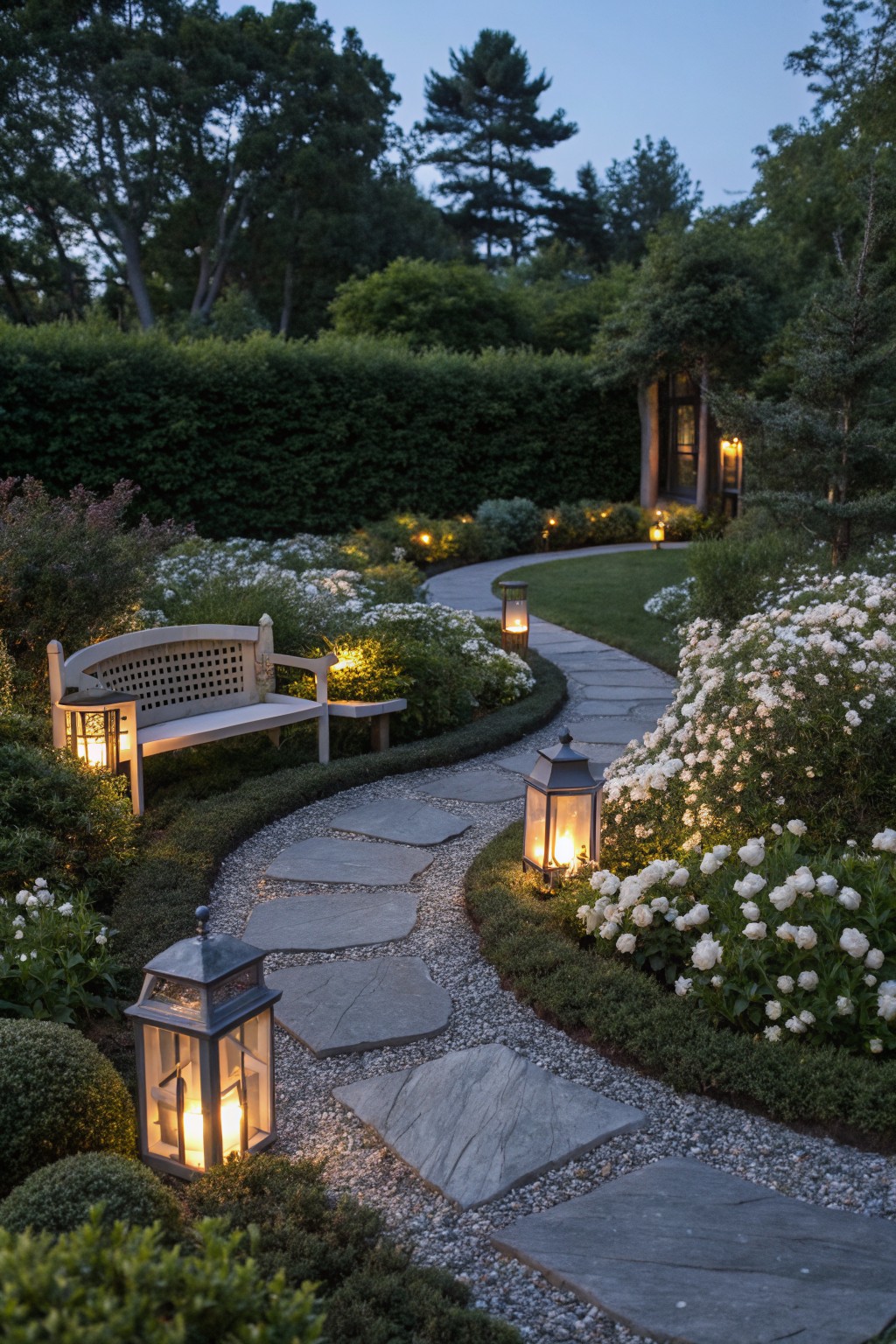
A simple winding path made from dark, irregular stone slabs set into light gravel cuts right through these lush white flower beds. It keeps things tidy while letting the blooms spill over just enough for a soft, natural edge. The lanterns placed along the way add a glow that makes the whole setup come alive come evening, without overdoing the lights.
You can pull this off in a side yard or backyard border where you want a quiet walking route. Pick stones in slate or basalt for that dark contrast, and plant low white flowers like alyssum or sweet alyssum for easy fill. Skip straight lines. Curves invite a slower stroll, and it fits most home styles as long as the beds aren’t too narrow.
Frequently Asked Questions
Q: How do I stop weeds from popping up through black rocks?
A: Roll out landscape fabric over cleared soil first. Cut slits for your plants. Dump on rocks two to three inches deep, and weeds stay buried.
Q: What flowers make black rocks really stand out?
A: Pick vivid blooms like orange zinnias or hot pink salvia. Cluster them tightly for bold punches of color. The dark rocks make those hues glow.
Q: Do black rocks work in shady yards too?
A: They sure do. Hostas and ferns thrive there, with their leaves popping green against the black. Just ensure good drainage underneath.
Q: How often do I need to refresh the rocks?
A: Rake them smooth every spring. Top up with a fresh inch after a couple years. Keeps everything sharp.
