

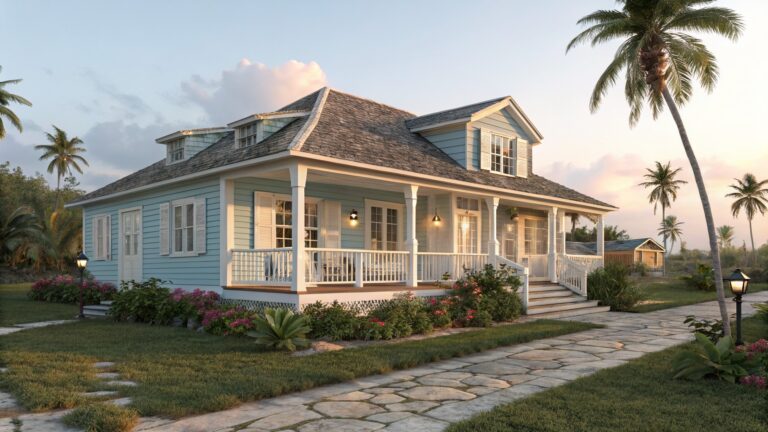
I’ve always liked how hibiscus plants add that splash of tropical vibrancy to a backyard without demanding too much fuss. They shine brightest when you position them against plain backdrops like stone walls or mulch beds that keep the focus on their big, bright blooms. Overplanting them close together usually backfires though, turning what should feel lush into a jumbled mess. I planted a few along my side path a couple years back, spacing them out with ferns underneath, and it made the whole area feel wider and more alive. Some of these setups stand out enough to try in your own space.
Hibiscus Beds by the Porch
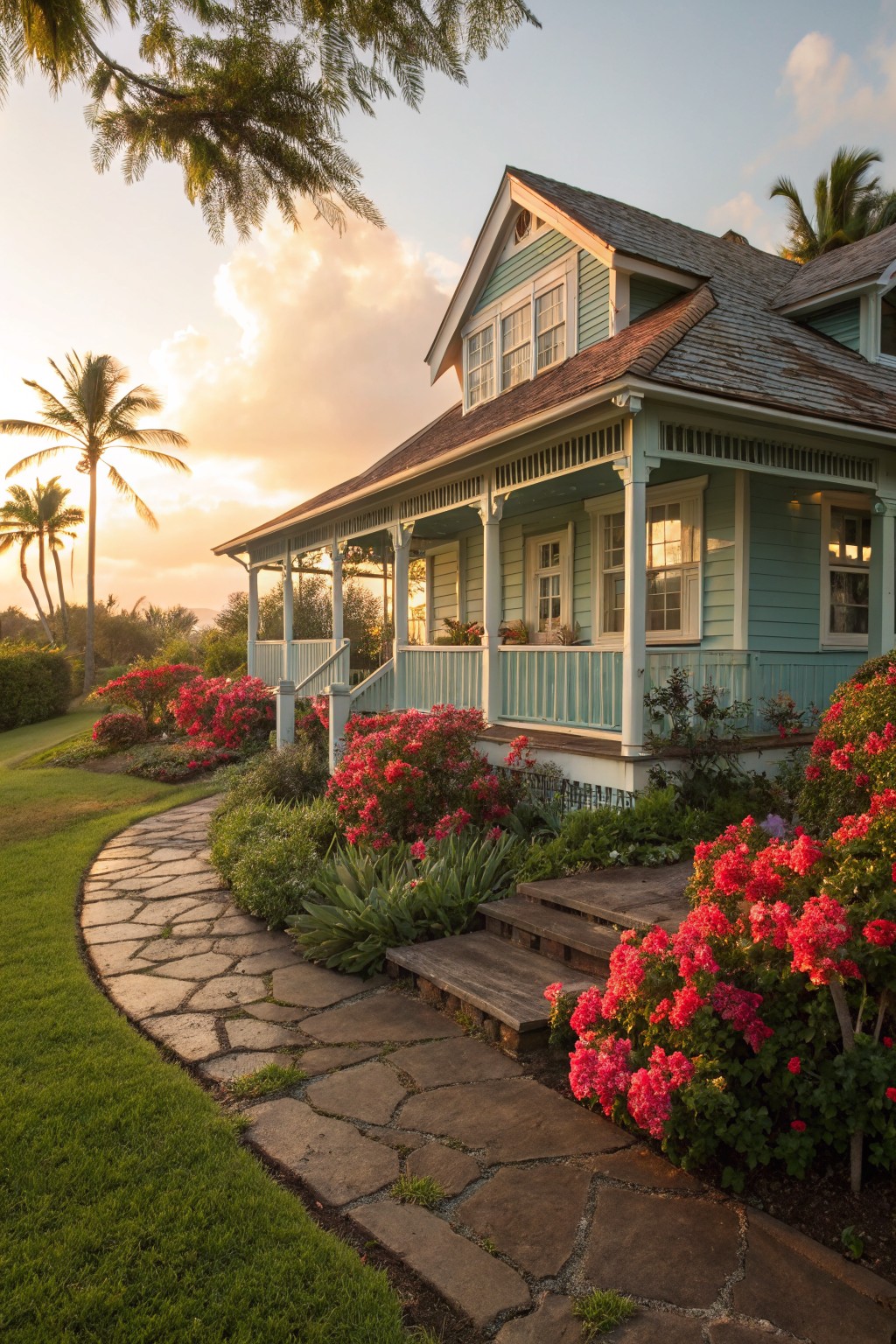
One simple way to bring tropical color right to your front door is planting hibiscus in low beds along the porch base and entry steps. Here the red blooms sit thick and full against a light blue house siding, making the whole approach feel alive and welcoming without much fuss. Folks notice it first thing, and it ties the porch to the yard in a natural way.
This works best on homes with a raised porch or deck where you have room for bushes a couple feet high. Plant them where they catch morning sun, space them close for that full look, and pick hardy varieties if your winters dip low. Keep the beds mulched to hold moisture, and shear back after blooms fade to stay tidy.
Hibiscus Planters Line the Front Path
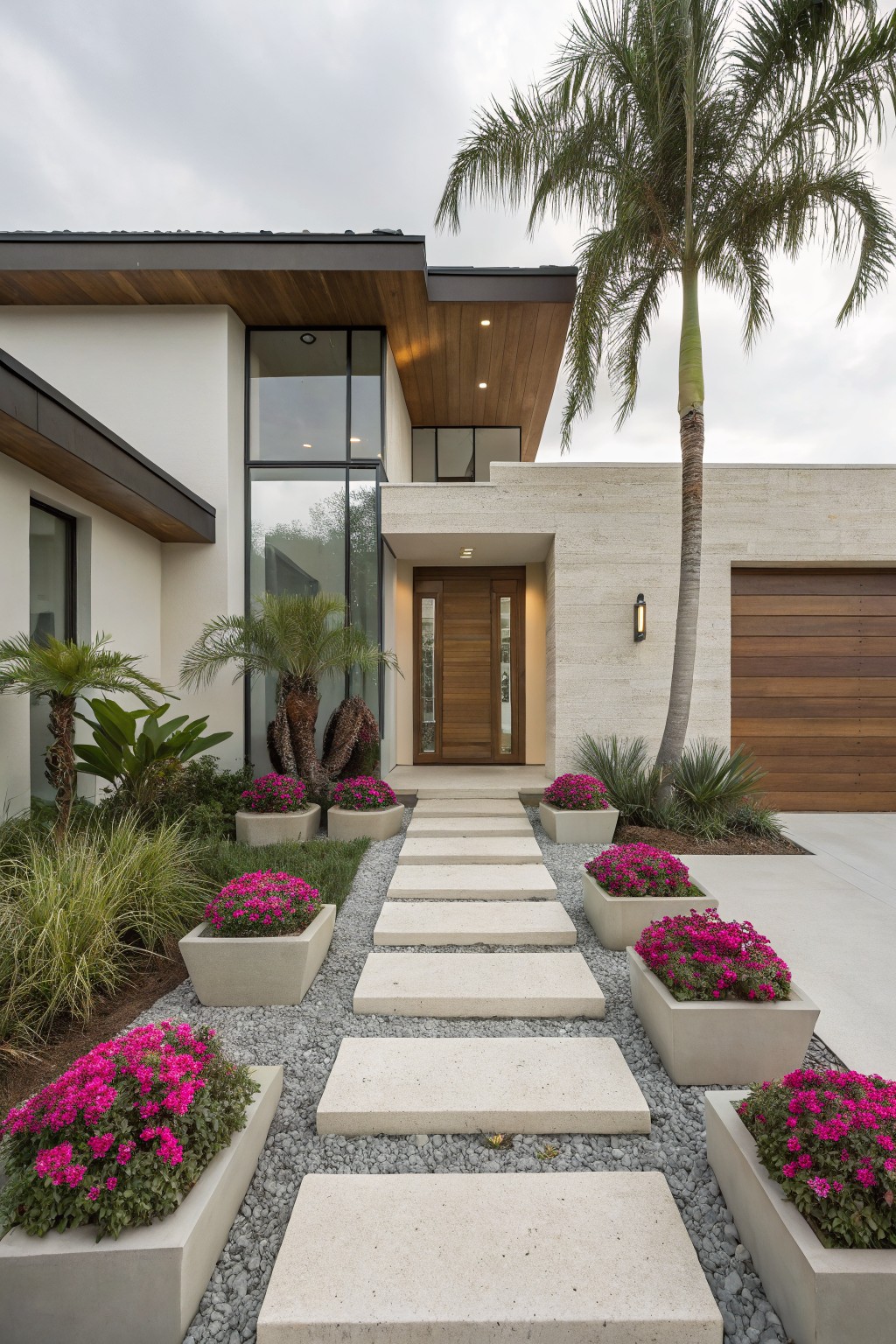
Large concrete planters filled with bright pink hibiscus make a simple statement along this stone walkway. They stand out against the gravel strips and pale house walls. The bold flowers add that tropical touch without much fuss. It’s a clean way to welcome folks right up to the door.
Try this on a straight path to your entry. It suits modern homes or any place with room for big pots. Go for sturdy concrete ones that won’t tip in wind. Plant hibiscus that handle your sun and water. Keep the path wide enough to walk easy. Just watch they don’t block the door.
Hibiscus Pots on Porch Steps
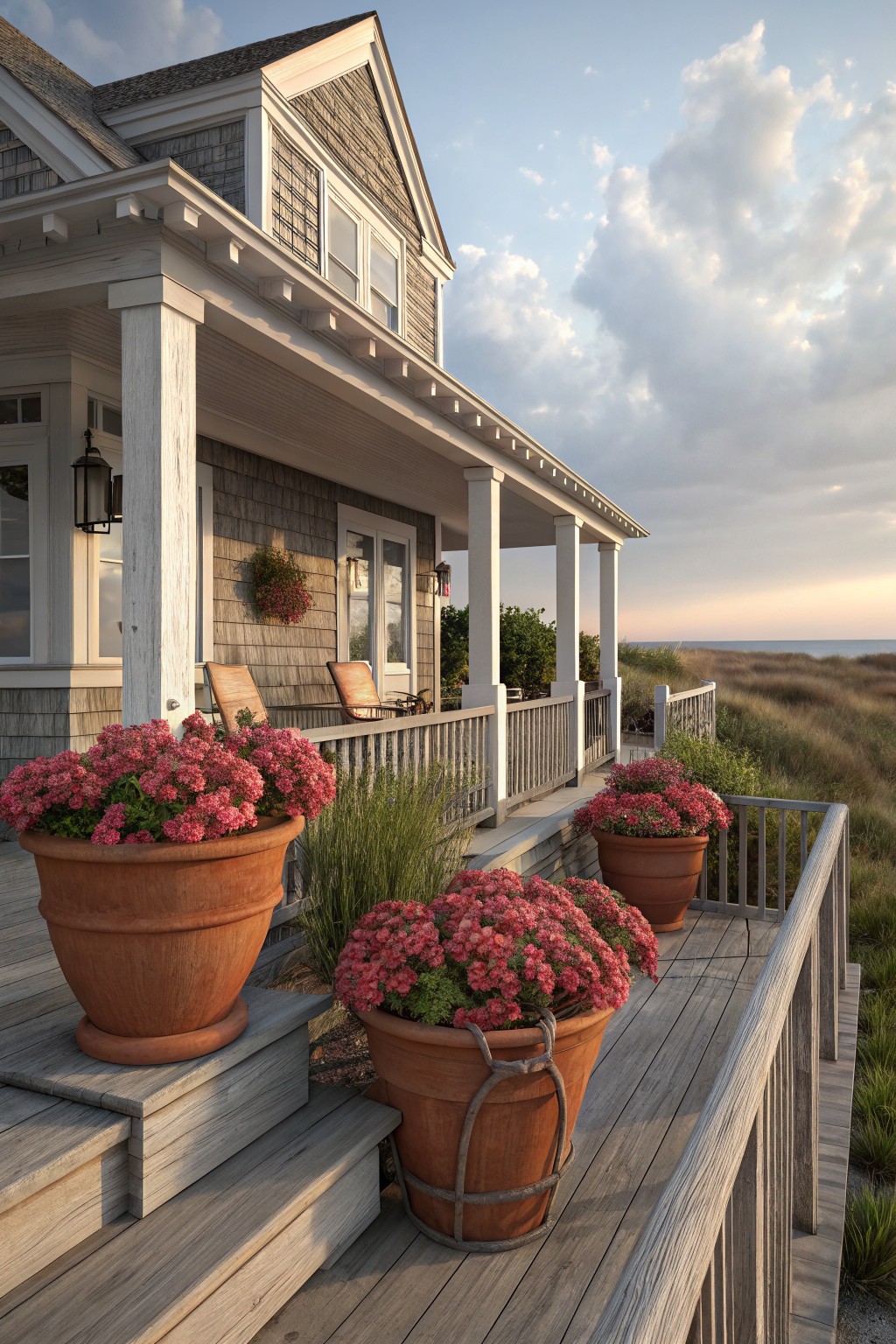
Big pots of hibiscus work great on porch steps. They bring bold color right where people first see your home. The pink blooms pop against neutral siding and wood decks like this one. It’s a simple way to add life without much planting work.
Put them on wider steps or along deck edges where they won’t trip folks. Suits beach houses or cottages with room out front. Go for terracotta pots to match the warm tones. Watch that they get sun but not too much wind.
Hibiscus Climbers on Brick Walls
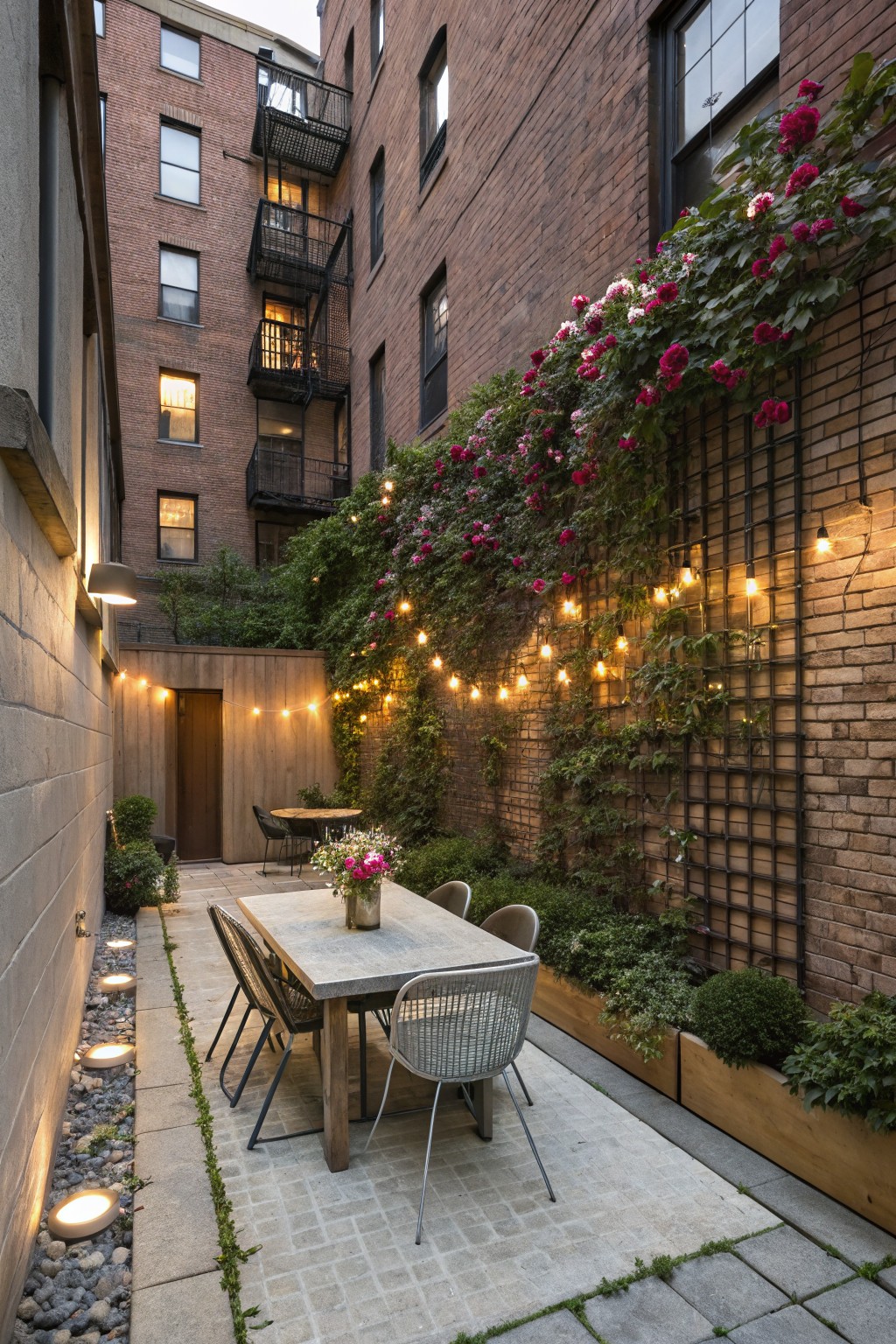
One simple way to bring tropical flair to a city backyard is letting hibiscus vines climb right up a brick wall. They cover the rough surface with big pink blooms and green leaves. That turns a plain alley or courtyard into something lush and private. Here the vines follow a black trellis and mix with string lights for evenings.
These climbers work best in narrow spots with full sun on the wall. Train them early on a sturdy metal or wood frame so they don’t pull away. Brick homes from the early 1900s take to this well. Just keep the base trimmed so you have room for a table nearby.
Balcony Decks with Potted Hibiscus
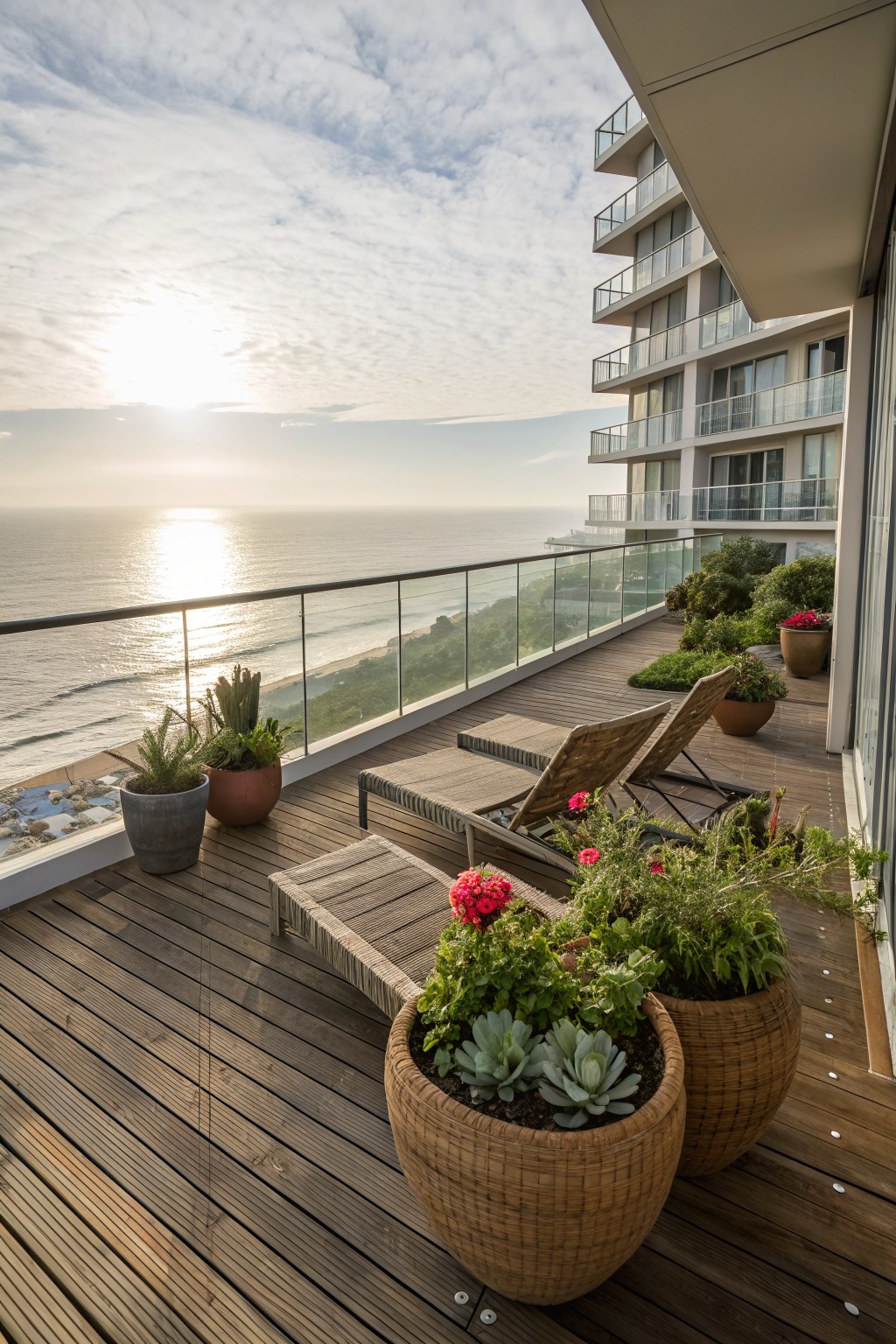
Big pots of hibiscus work great on balcony decks like this one. The red blooms stand out on the wood, mixing right in with other plants and chairs. It turns a high spot into your own tropical spot, especially with a view out front.
Put these on sunny balconies in apartments or beach houses. Group a few large ones near loungers, add succulents for low upkeep. Wind can be an issue up high, so pick heavy pots that won’t tip.
Hibiscus Beds Along the Porch
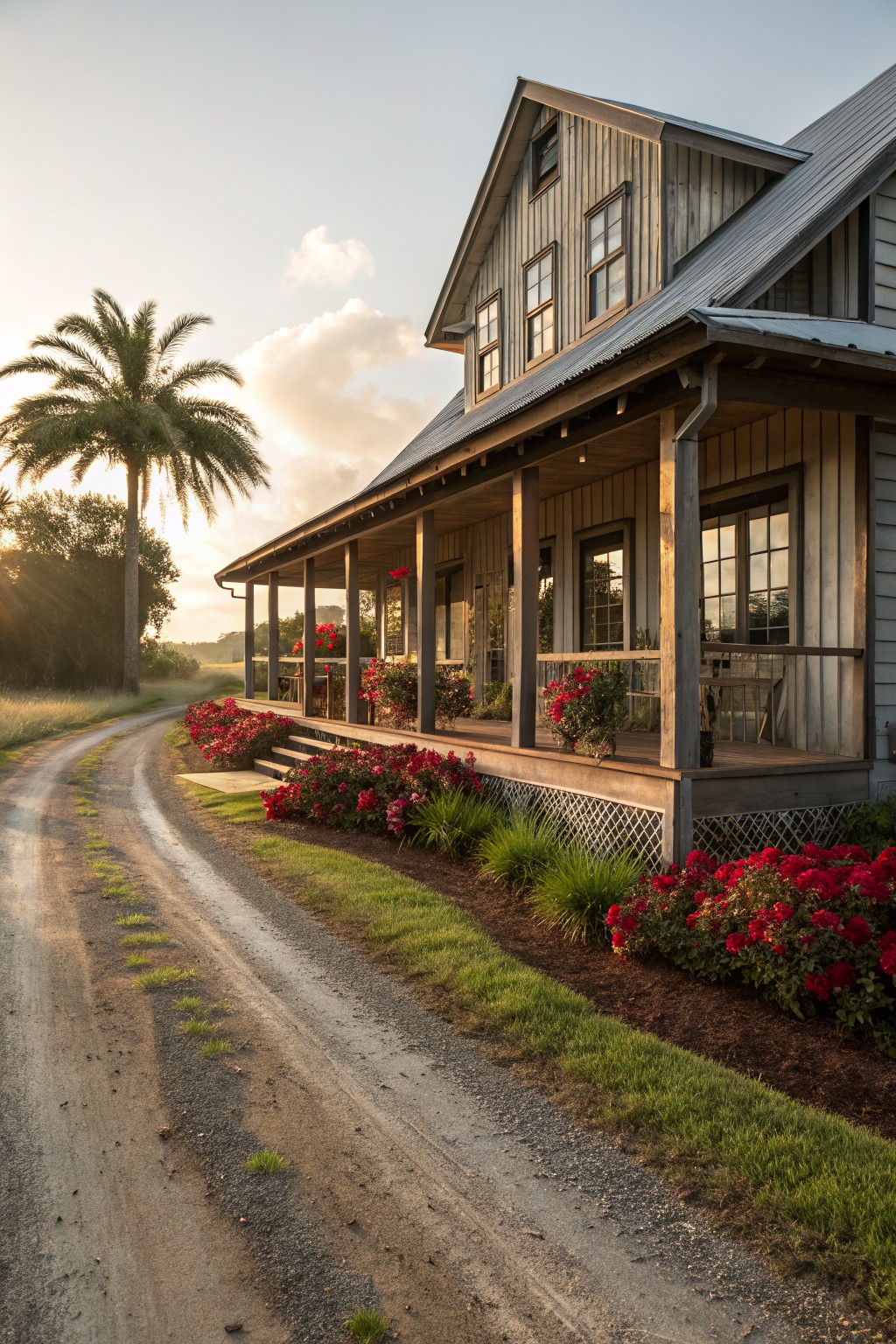
Planting hibiscus right at the base of your porch posts and steps gives a home that instant tropical touch. The big red flowers pop against plain wood siding. They make the entry feel more welcoming without much work.
This setup suits older farmhouses or cabins with open porches. Line the flower beds along the foundation and up to the driveway. It grows well in full sun spots. Just trim back in spring to keep paths clear.
Terracotta Pots of Hibiscus by the Front Door
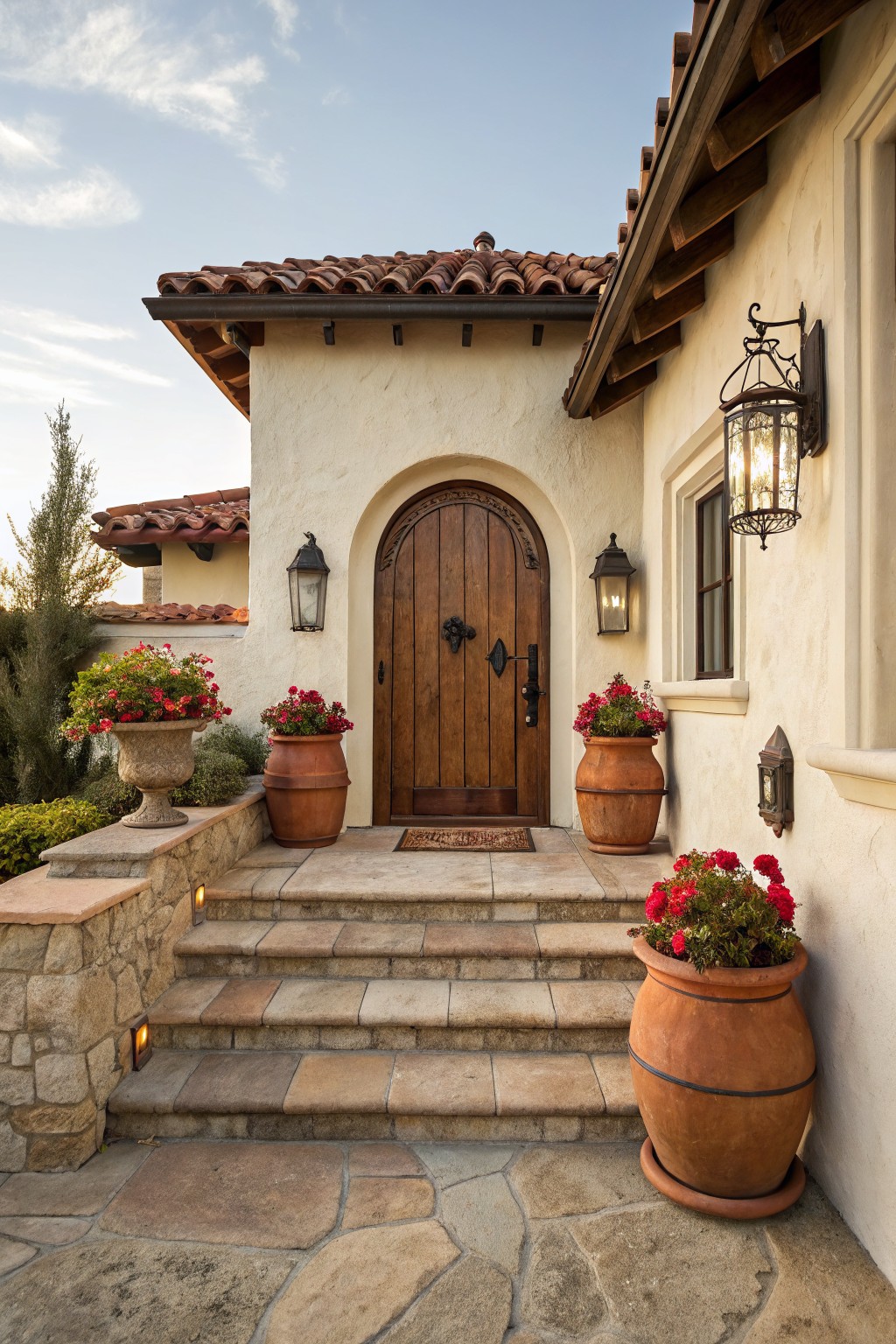
One simple way to add tropical color right at your entry is with large terracotta pots of hibiscus planted on either side of the door. Those bright red blooms pop against the plain stucco wall and warm wood door. They give the whole front a lively feel without much work.
Put these pots on a porch or landing where they get full sun. They suit Southwestern or Mediterranean homes best, or any place with stone steps leading up. Just make sure to water them regular since hibiscus like it moist, and move them inside if frost comes.
Garden Path Lined with Hibiscus
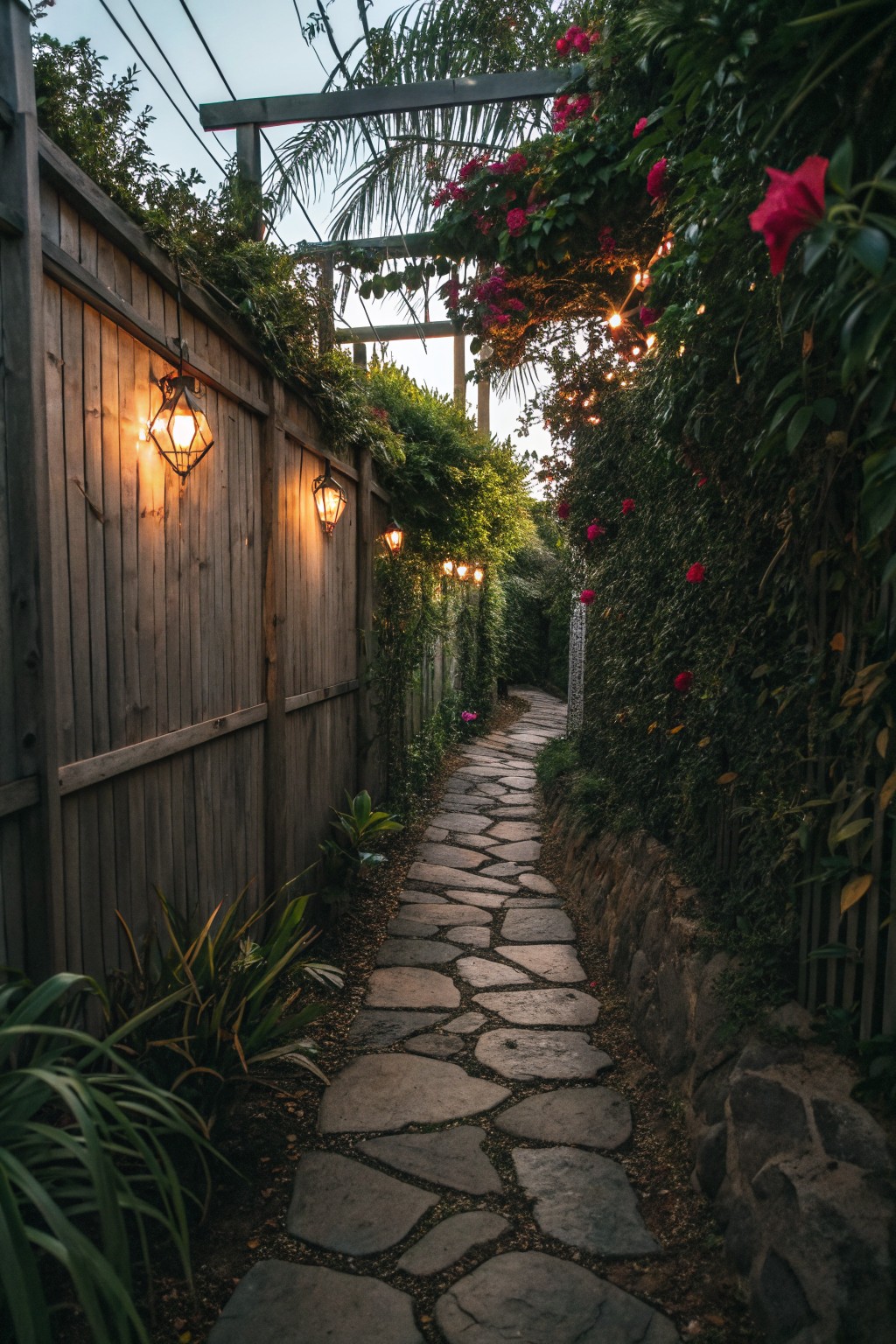
One straightforward way to work hibiscus into your yard is along a narrow stone path. The plants grow thick on both sides, filling out fences with green leaves and those big red flowers. Add a few lanterns or string lights, and the path turns cozy after dark. It gives a tropical feel without taking much room.
This setup fits side yards or spots between houses. It suits smaller lots where you want privacy and color. Plant hibiscus close to the path edge, but trim back now and then to keep walking easy. Works on most soil if you water regular.
Rooftop Terraces with Hibiscus Planters
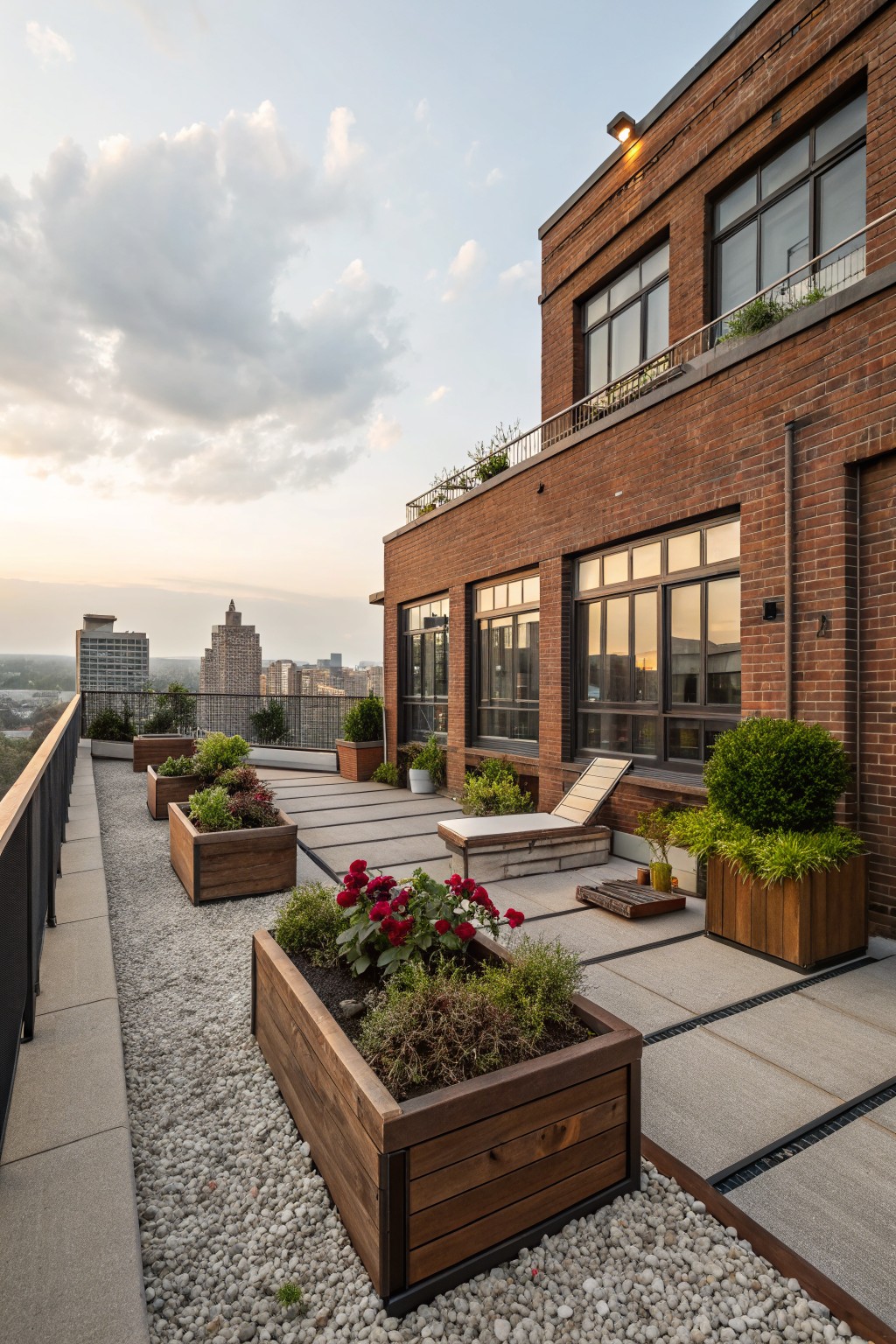
Wooden planters like these make a rooftop terrace feel like a real garden. They hold hibiscus plants with those bright red blooms that stand out against the gravel path. It’s a simple way to add tropical color up high where soil is tough to manage. The raised boxes keep everything neat and let roots drain well.
This setup works best on city apartments or lofts with flat roofs or big balconies. Line up a few large planters along one side to guide foot traffic. Pair hibiscus with low greens for year-round interest. Just check your building’s weight limits first. Skip it on windy spots unless you secure the boxes tight.
Brick Path Lined with Flower Urns
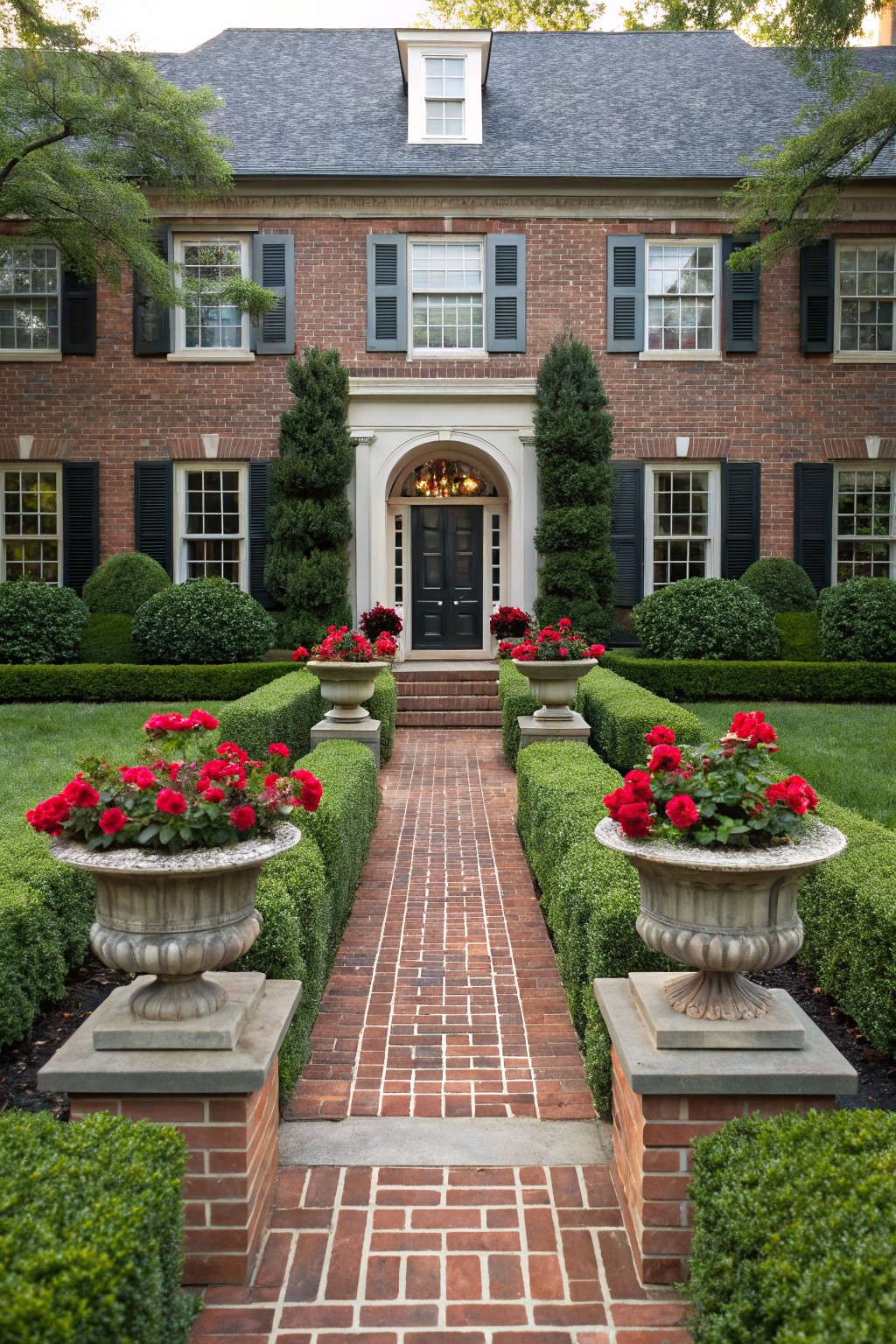
A simple brick walkway like this one gets a big lift from large urns planted with bold hibiscus. The red blooms spill over the edges just right, adding color right where you need it most, at the front entry. Paired with neat boxwood hedges, it keeps things formal but punches up the look with that tropical feel.
This setup works best on traditional homes with straight lines and symmetry. Set the urns at the path’s edge, maybe two or three on each side leading to the door. Keep the hibiscus trimmed back a bit so they don’t block the walk. It’s low fuss once established, and it suits yards with some sun for those flowers to thrive.
Garden Pergola with Climbing Hibiscus
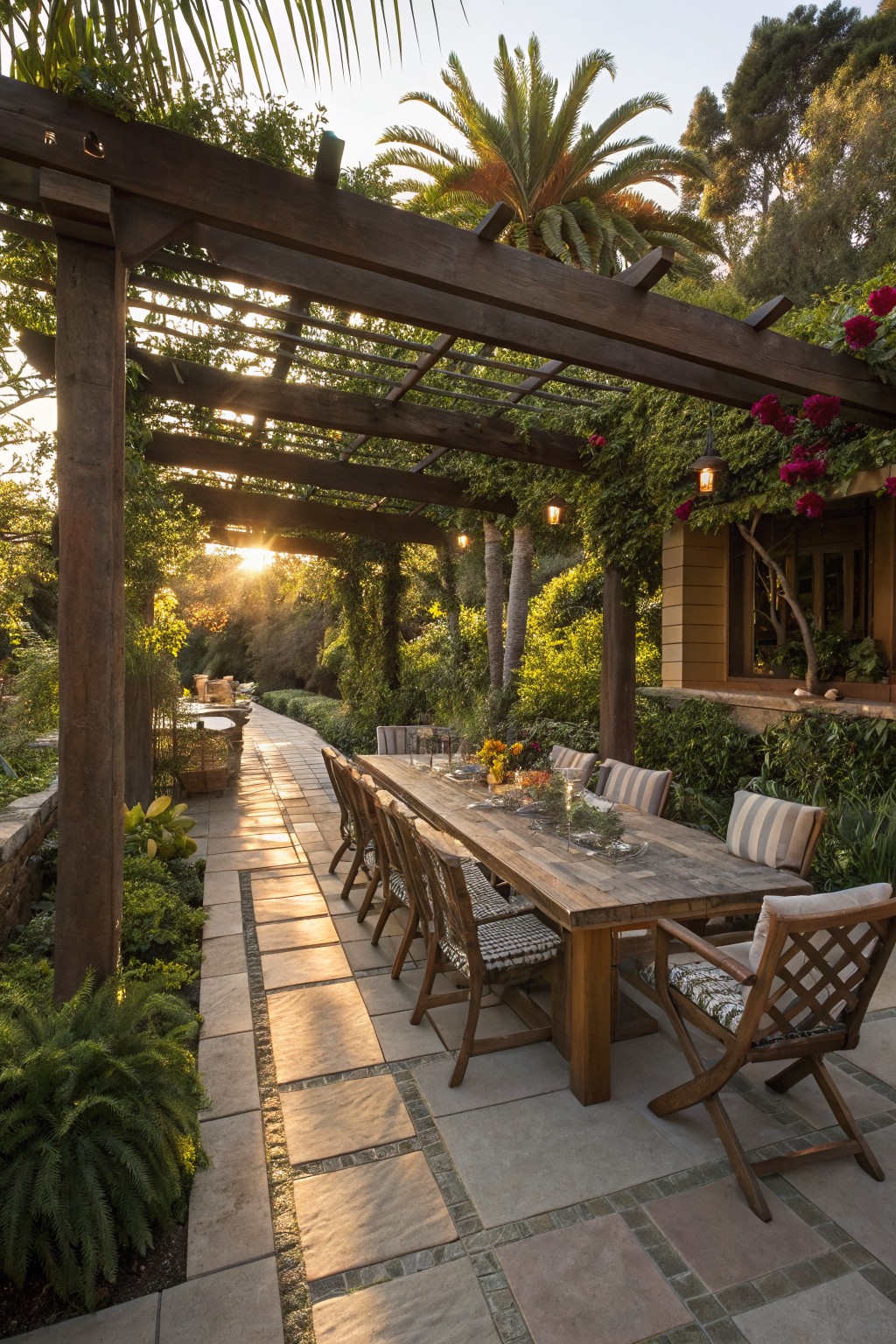
Nothing beats a sturdy wooden pergola trained with hibiscus vines for easy tropical shade. Those big red blooms climb right up the beams, adding color and cover without much fuss. It turns a simple pathway into a shaded walkway that feels like a resort spot.
Set it up along a stone path to your patio table, like in backyards with room for plants. Suits homes in warmer spots where hibiscus grows well year-round. Keep an eye on pruning so the vines don’t block too much light at meals.
Lava Rock Walls Edged with Hibiscus
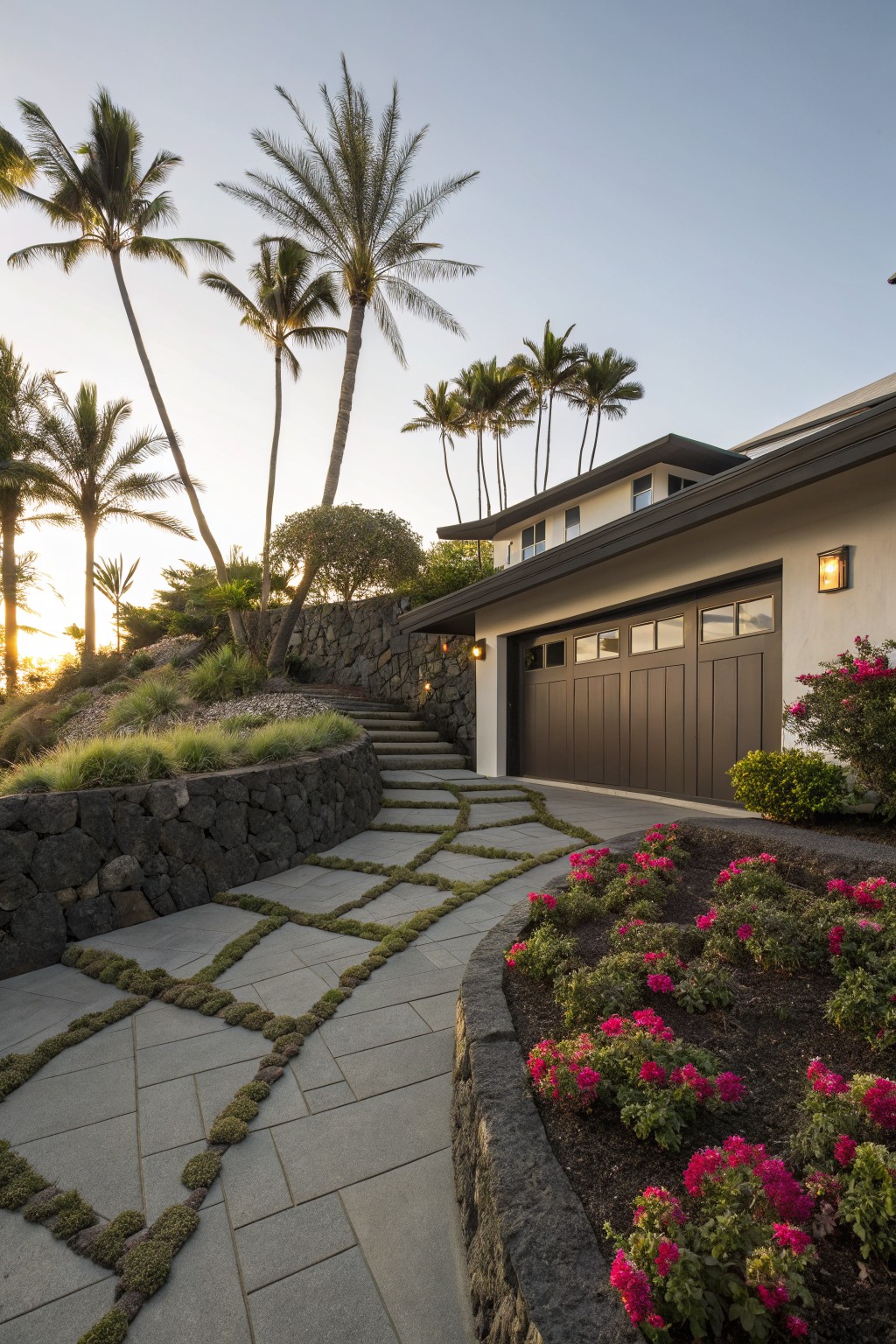
Planting hibiscus along the base of lava rock walls gives a strong tropical touch. The dark stones set off the red flowers nicely, and it looks natural on a hillside like this one. That contrast pulls the landscaping right up to the house.
You can do this where slopes call for retaining walls, maybe leading to a garage or side entry. It suits warmer spots with good sun. Just mulch the beds to hold moisture, and trim back if they get too bushy.
Fire Pit with Hibiscus Edges
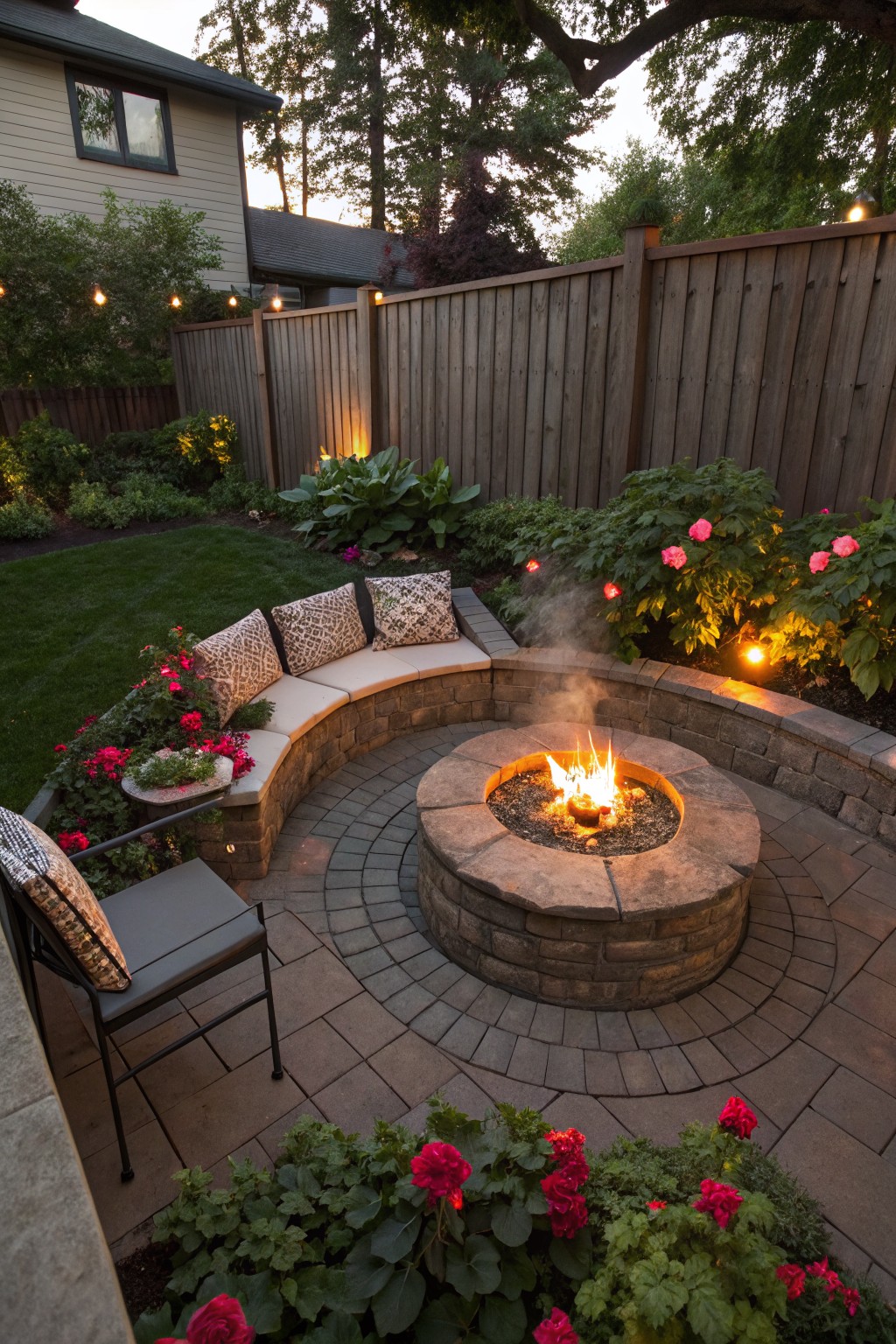
A simple stone fire pit in the middle of the backyard pulls everyone together on cool evenings. What makes it special here is the hibiscus plants tucked right along the edges. Those big red blooms add a splash of tropical color without taking over the space. They soften the hard stone and bench, making the whole spot feel warm and lived-in.
This setup works great in average-size yards where you want a dedicated hangout area. Plant the hibiscus in beds around the pit and bench so they grow up and frame it naturally. It fits most homes, from ranch styles to two-stories. Just keep the plants watered and trimmed back in winter, or they might get too bushy.
Hibiscus Climbers on Cottage Walls

A simple white cottage like this one gets a big lift from hibiscus vines trained to climb right up the walls. Those bold pink blooms spill over the slate roof and soften the plain stucco look. It pulls in that tropical feel without much fuss.
You can do this on older homes with textured walls, especially if there’s full sun along the side or front. Start with sturdy climbers near downspouts or eaves, and add big pots at the base for extra color. Just keep the vines trimmed so they don’t overwhelm the door or windows.
Walkway Lined by a Water Channel
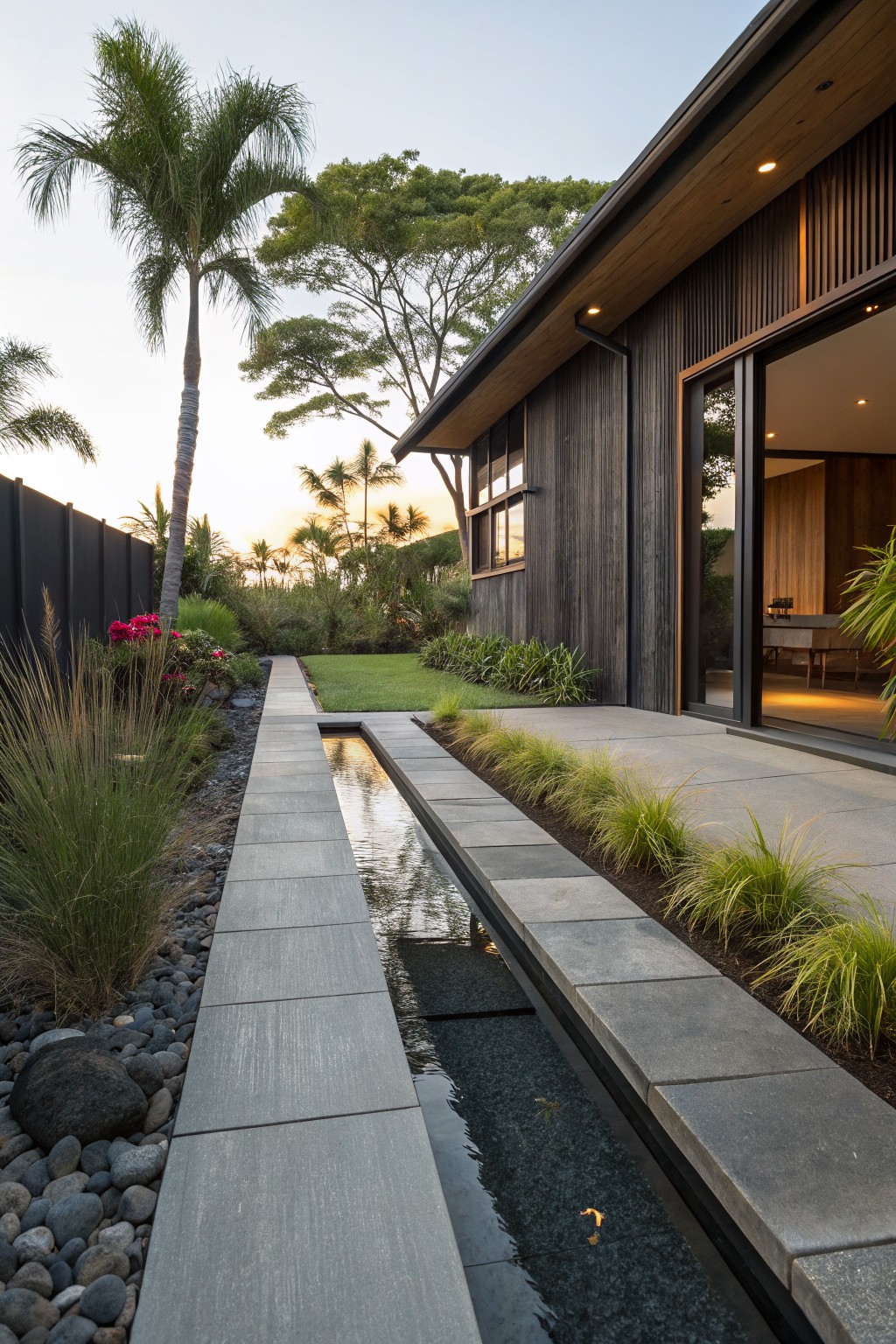
A narrow water channel runs right alongside this paver walkway, giving the path a smooth, flowing guide through the yard. It picks up reflections from the sky or nearby trees, and the quiet trickle adds a bit of sound without being loud. Tall grasses edge one side, while dark lava rocks fill in the other, keeping things simple and tropical.
This setup shines in backyards that lead straight to sliding doors or patios. It fits modern homes with wood siding like this one, or anywhere you want low-fuss landscaping. Plant bold hibiscus nearby for red pops of color. Just make sure the channel slopes enough for good drainage, or it’ll turn into a puddle.
Climbing Hibiscus Trellis
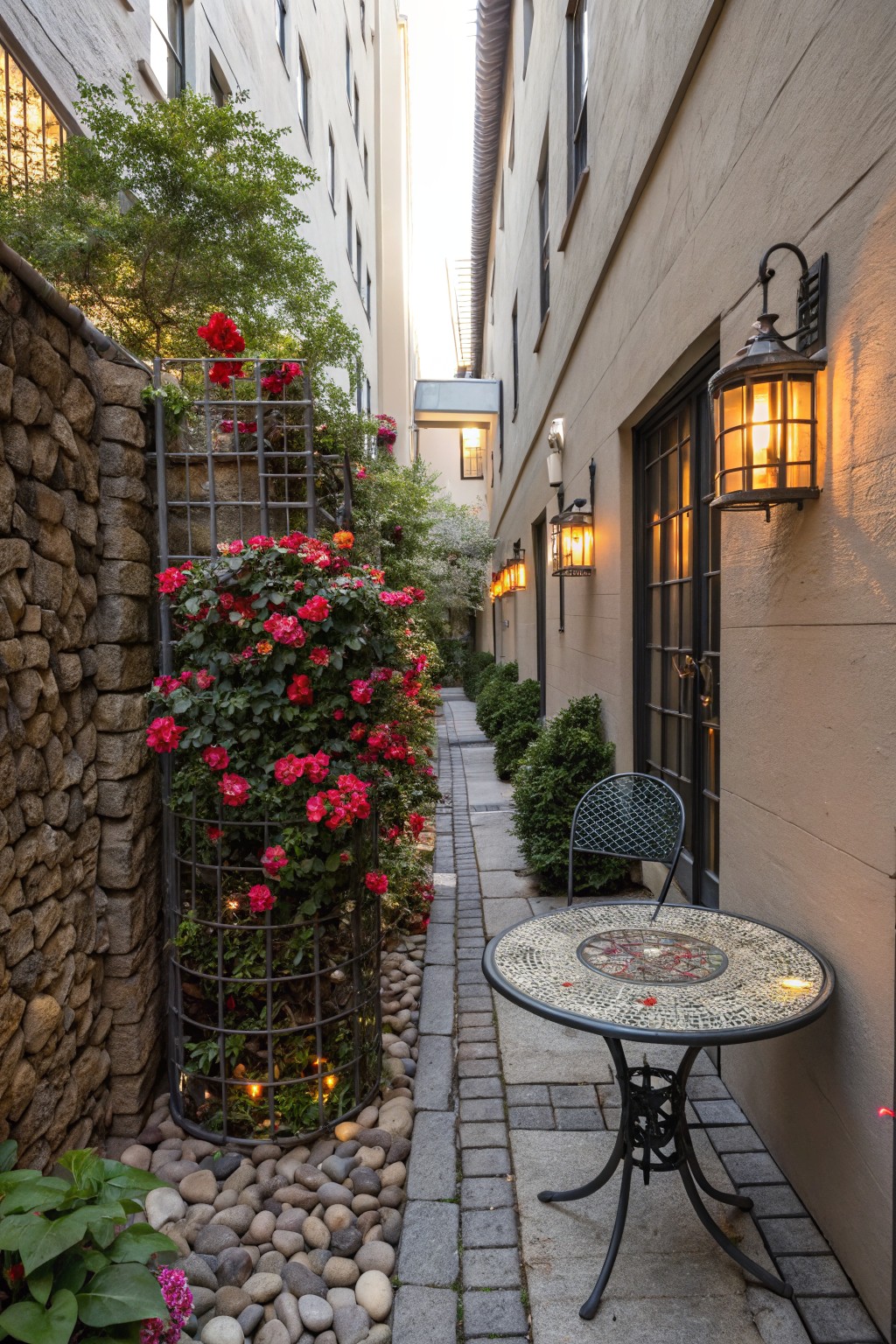
A tall metal trellis wrapped in blooming hibiscus makes a simple way to turn a plain walkway into something tropical. Those big red flowers climb high and fill out the frame fast, giving color and privacy without taking up much room. It’s the kind of planting that feels lush even in a tight spot.
Try this along a side path or between garages where you want some green but don’t have yard space. Pick a sturdy trellis at least seven feet tall, plant hibiscus at the base in good soil, and tie the vines as they grow. String lights wrapped low on the frame help at night. Suits townhouses or older homes with alleys. Just keep the plants watered through dry spells.
Frequently Asked Questions
Q: How much water do hibiscus really need once they’re planted?
A: Give them a good soak once a week during the growing season, letting the soil dry out a bit between waterings. They hate soggy roots, so good drainage keeps them happy and blooming.
Q: Will hibiscus survive a cold winter in my area?
A: Tropical hibiscus die back in zones below 9, but you can mulch heavily or dig them up and store indoors like houseplants. Hardy types bounce back from roots in cooler spots.
Q: What’s the best spot in my yard for these bold hibiscus?
A: Pick a sunny corner that gets at least six hours of direct light daily. They thrive against fences or as privacy screens where their big leaves pop.
Q: How do I prune hibiscus without messing up the tropical vibe?
A: Trim right after the main bloom flush in late winter or early spring. Cut back leggy stems by a third to encourage bushy growth and more flowers.
