

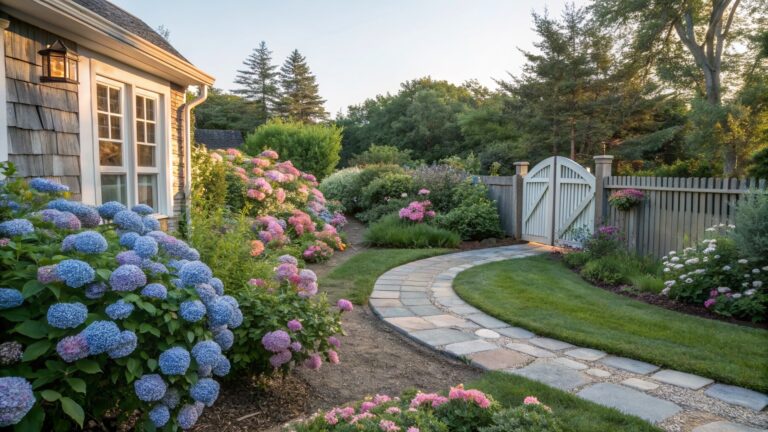
I’ve noticed how hydrangea borders really define a yard’s layout when they grow full and structured over a few seasons. In my garden, I shifted some plantings away from the main path after they started spilling over, which opened up the walkways nicely. Those lush edges catch your eye right away on approach, guiding views through the planting beds and along subtle curves. Pairing them with sturdy edging keeps the whole border intact through rain and wind, letting colors pop without mess. A couple of these layered approaches feel worth adapting in real soil.
Hydrangea Borders Along a Winding Path
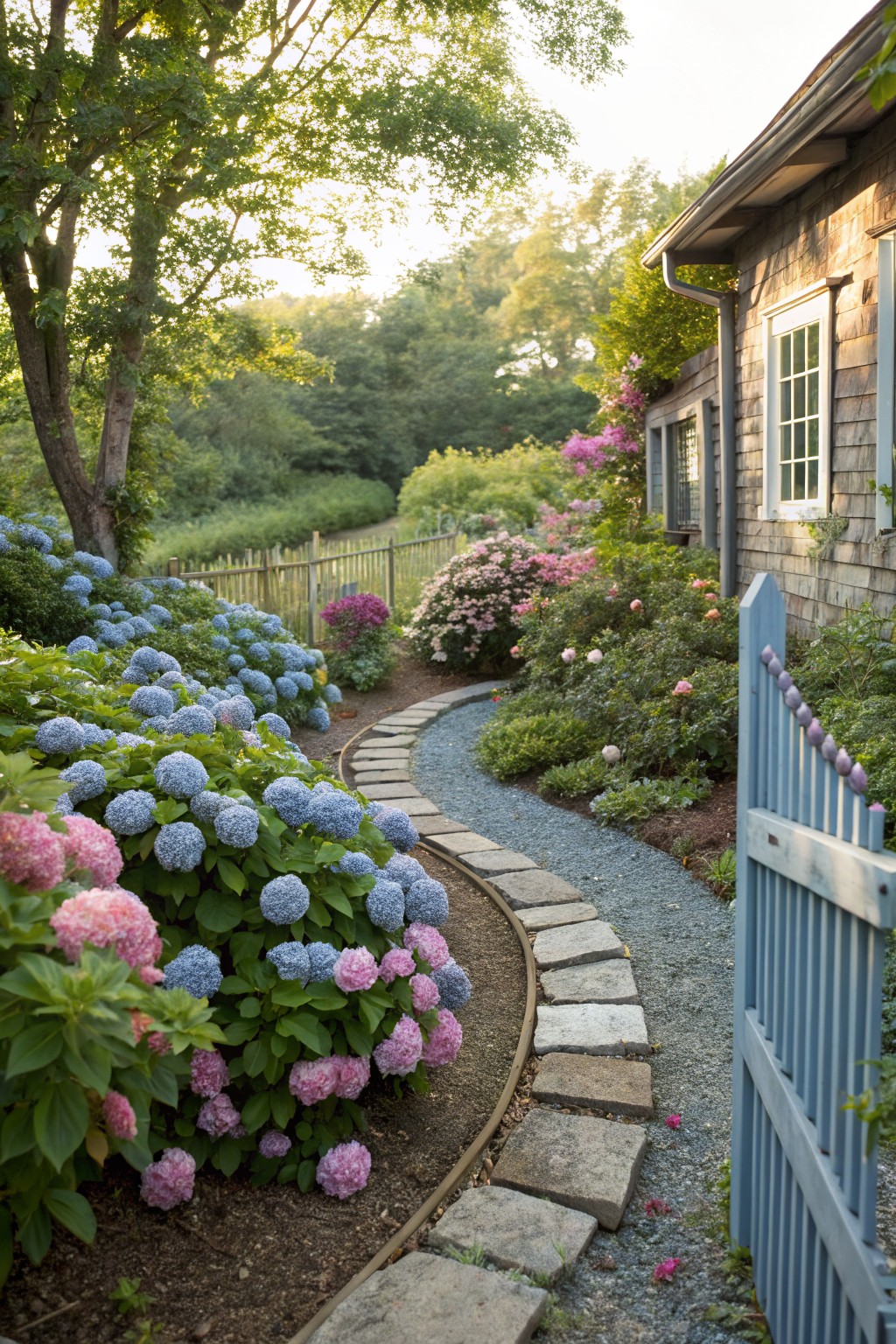
One simple way to use hydrangeas is lining them thick along a curving stone path like this. The big blue and pink blooms fill out the edges nicely, making the walk feel tucked in and colorful. It turns a plain walkway into something you actually want to stroll.
This works best in side yards or narrow spaces next to the house. Go for mophead varieties that mound up well, and space them close for fullness. Keep the path gravel-edged to let the plants take center stage… just watch for too much shade, since hydrangeas like some morning sun.
Hydrangea Barrels Edge a Gravel Path
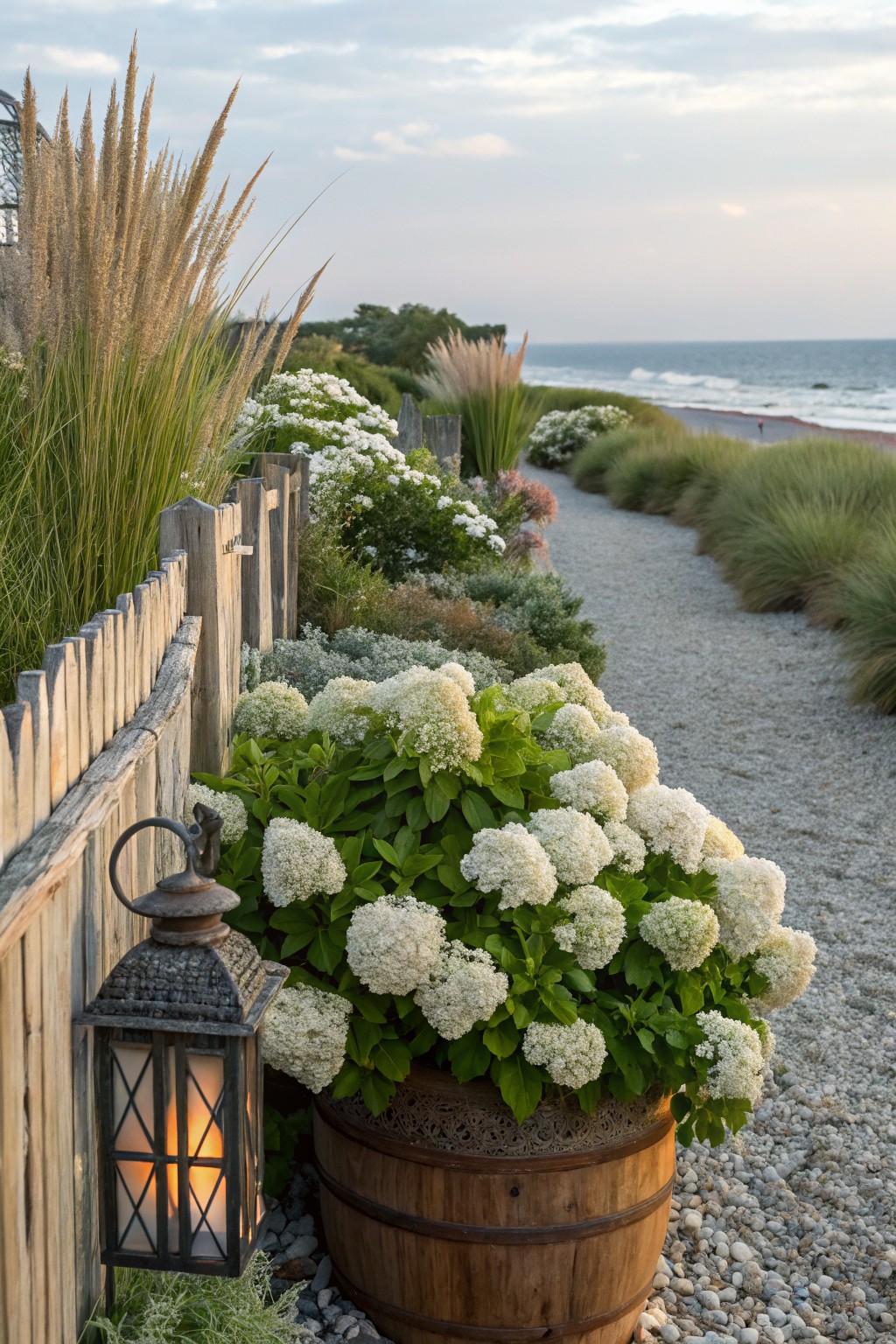
One simple way to build out a garden border is to drop big hydrangeas into wooden barrels right along the path. Those fluffy white blooms fill the space fast, and they hold their own next to tall grasses without taking over. The barrel keeps things loose and movable, which fits a casual walkway like this one.
Put them where you need quick height and color in a sunny spot with decent drainage. They work great for coastal yards or cottage edges leading to a patio or beach steps. Watch for too much afternoon sun though… it can fade the flowers early.
Full Hydrangea Borders Along Driveways
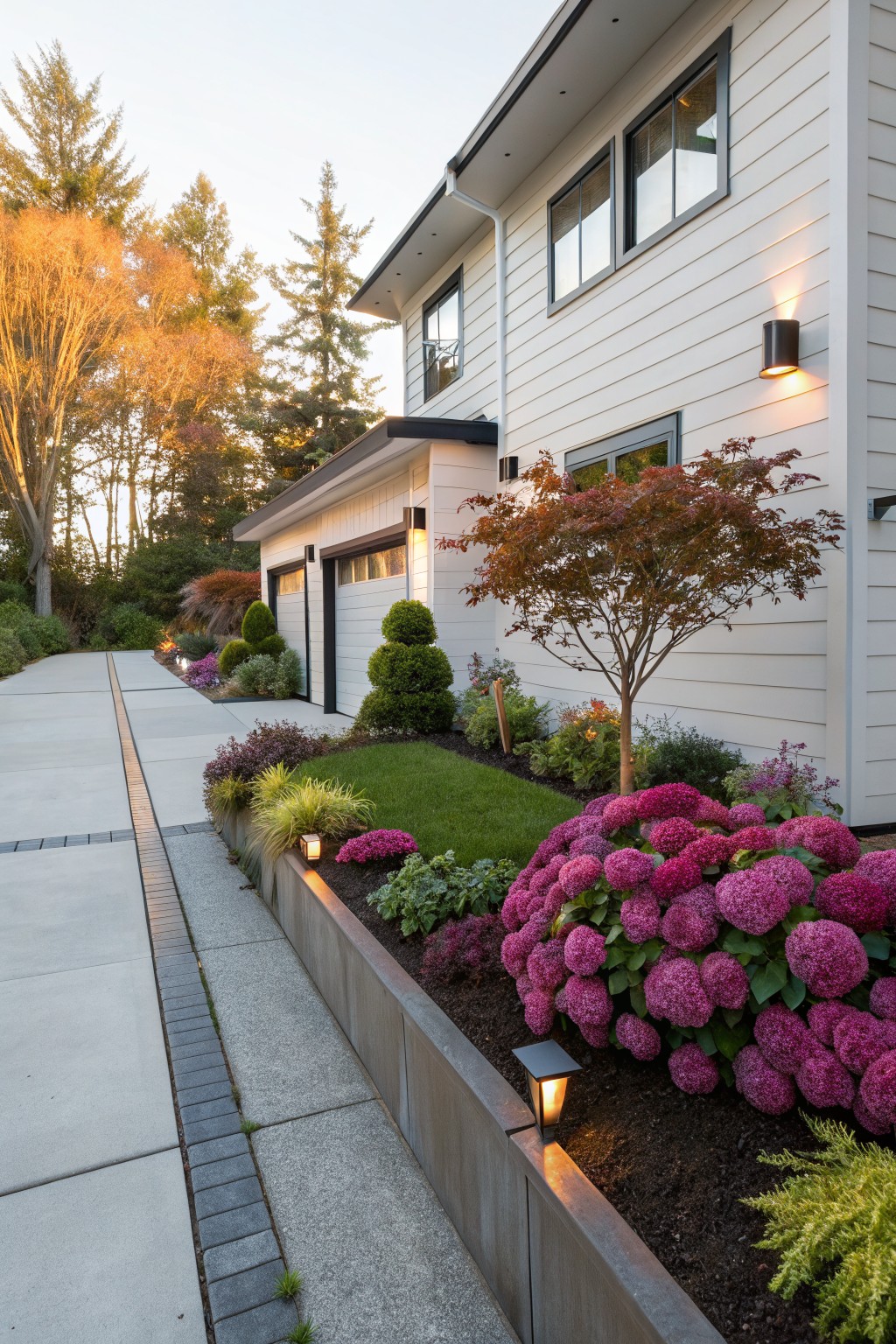
Big pink hydrangea blooms fill raised beds right next to the driveway here. They create soft, colorful edges that make the whole front yard feel more alive. Paired with the clean white house and garage, the flowers stand out without overwhelming things.
This works well on straight driveways or side paths where you want low upkeep but lots of impact. Build simple concrete raised beds, plant mophead hydrangeas for that mounded shape, and add a few grasses nearby. It suits modern homes best… just ensure good drainage so the roots stay happy.
Hydrangea Borders Along Porch Steps
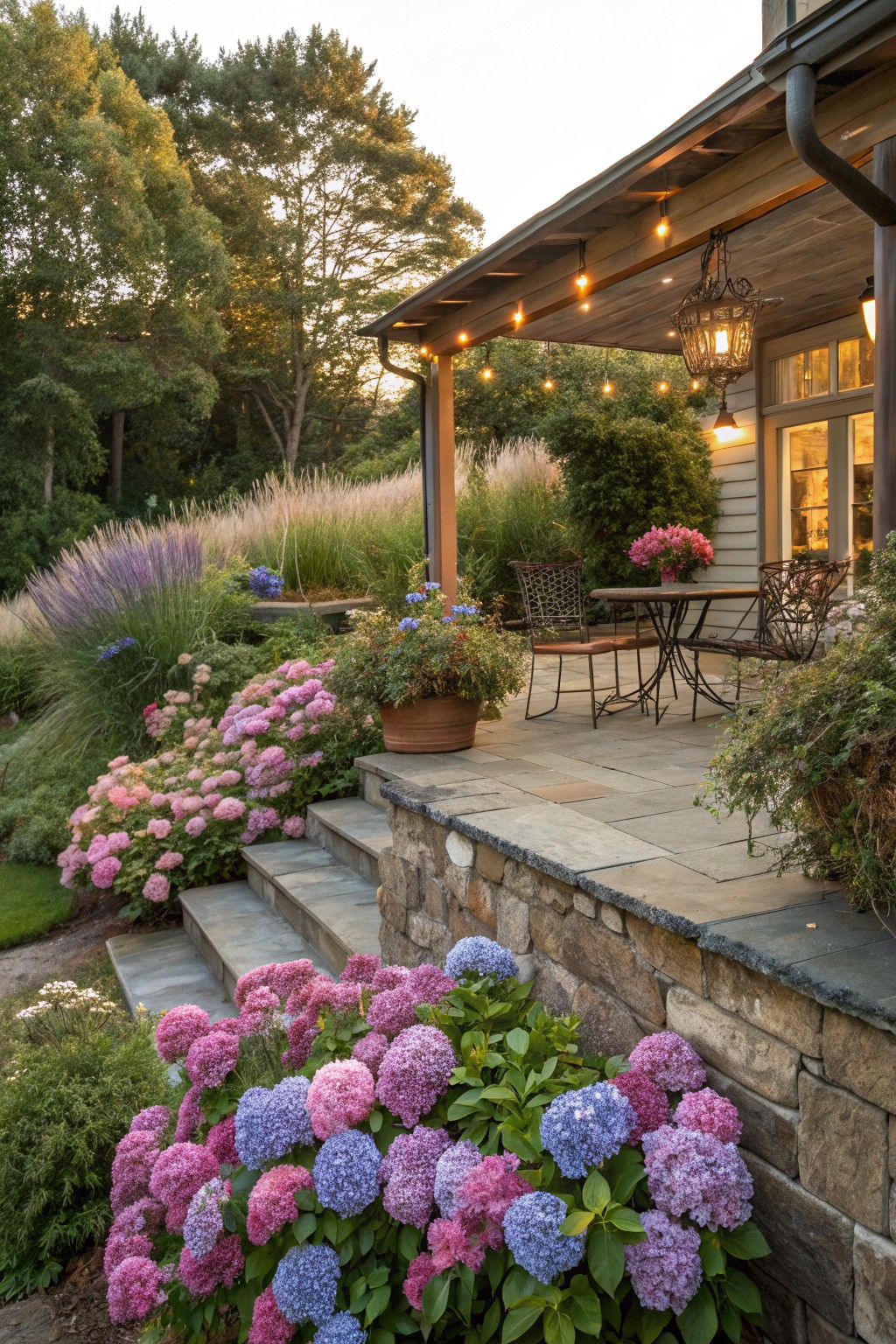
One simple way to build a full border is planting hydrangeas right along stone steps that lead to a porch. Here, big clusters of pink and blue blooms fill in around the edges, making a soft transition from yard to seating spot. It keeps things colorful without much fuss, and the plants hug the hard edges nicely.
This works best on sloped lots or raised patios where you want to soften stonework. Go for larger varieties that mound up quick, and mix a couple shades like these pinks and blues. Just make sure the steps get some sun, or pick shade-tolerant types. Fits older homes with that cozy backyard feel.
Hydrangeas Edging Stone Steps
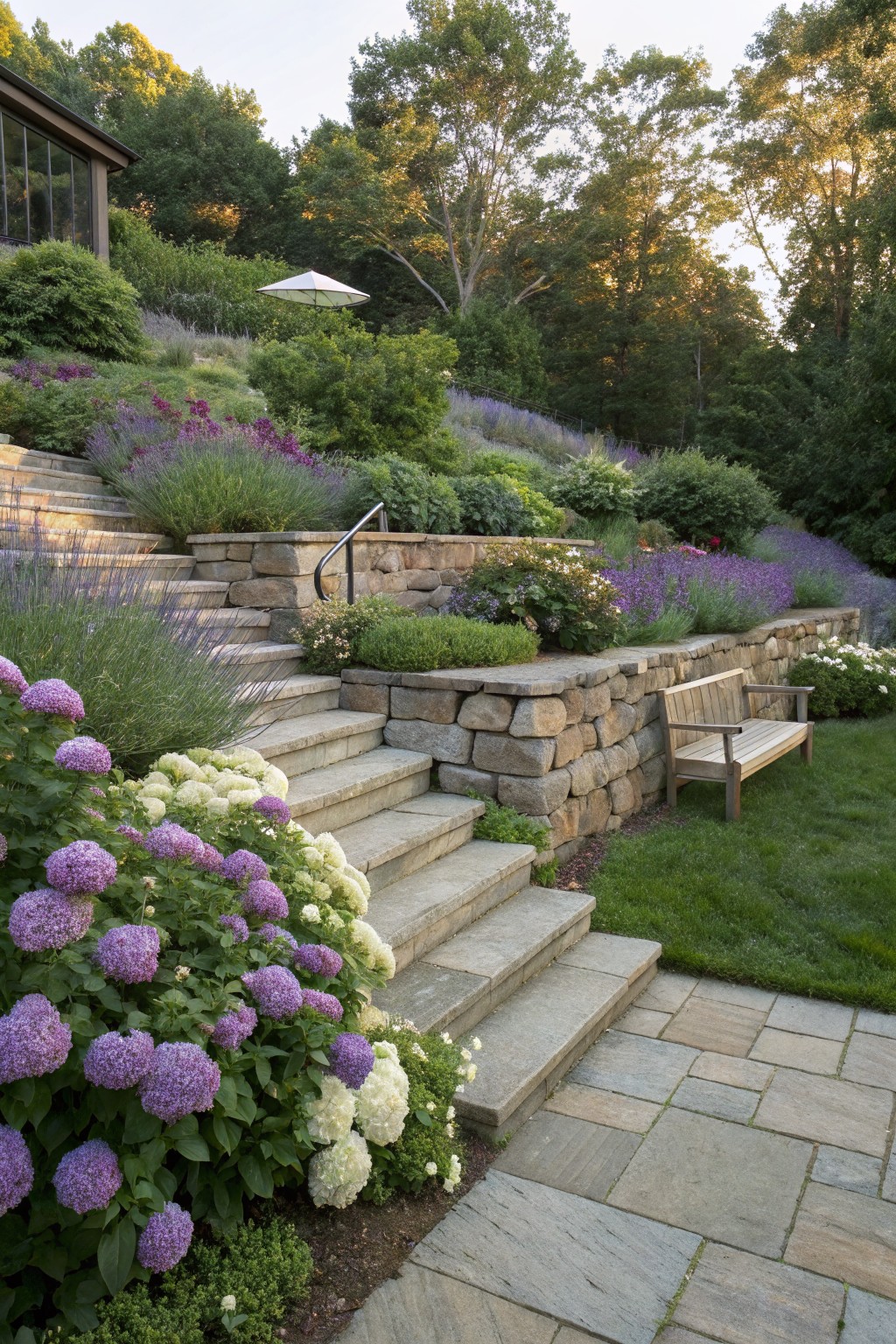
One simple way to handle a sloped yard is to line stone steps with hydrangeas. The big purple mopheads here tumble over the edges alongside lavender and white blooms. It turns a basic walkway into a full border that holds soil in place and adds color without much fuss.
These plantings work best where you need to connect a house to the garden below. Tuck them against retaining walls for support, and they fill out over time. Suits most home styles, especially if you want low upkeep once they’re going. Just keep the soil moist.
Hydrangea Borders Along a Garden Path
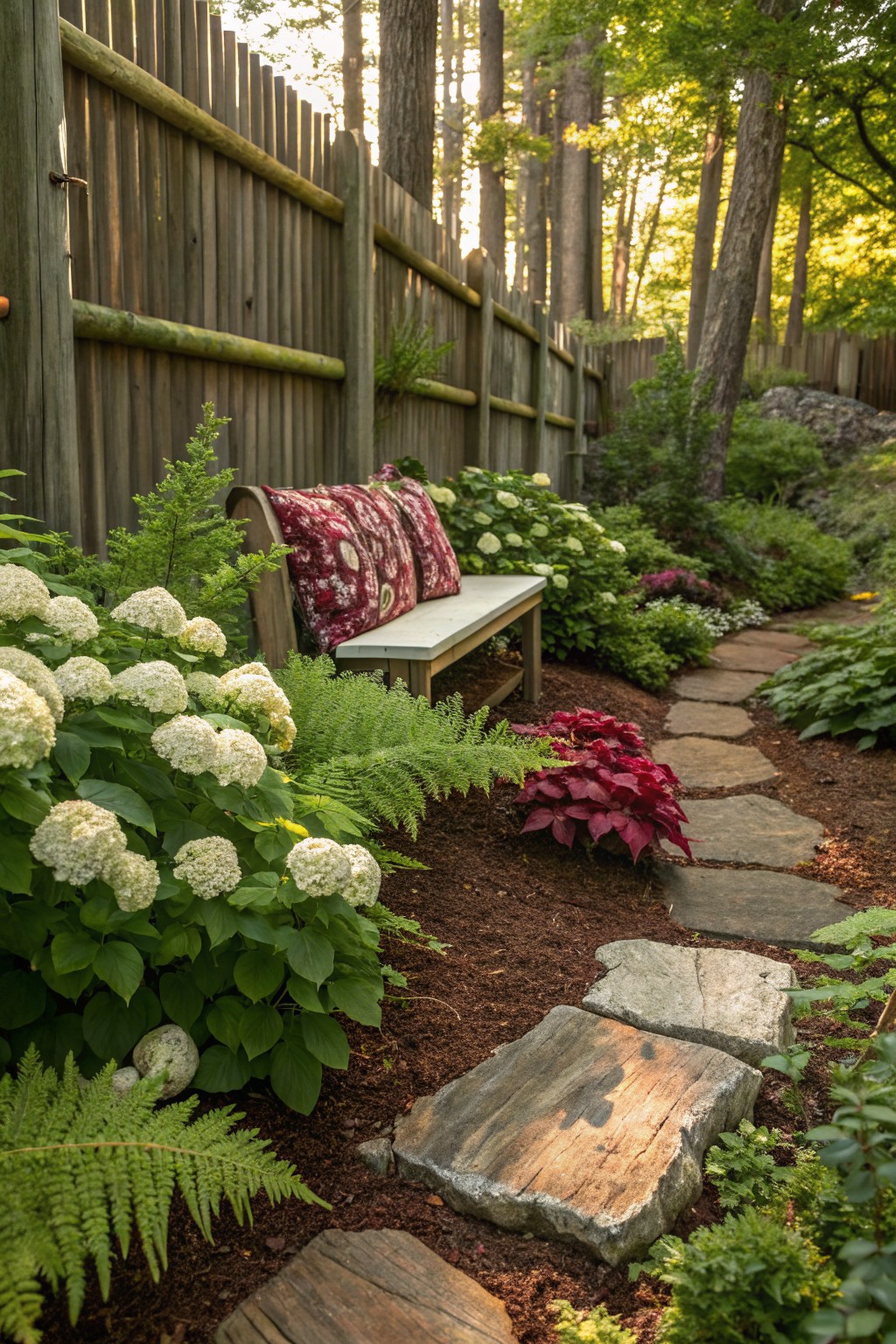
One straightforward way to work hydrangeas into your yard is lining them along a winding path. The big clusters of white blooms fill out the edges nicely and give the walk a soft, full look that pulls you forward. Paired with ferns right next to them, it keeps things green and textured even when the flowers fade.
Plant these in partial shade where the trees filter the light. They suit backyard borders on wooded lots best. Stepping stones keep it practical, and ending at a simple bench makes a spot to sit and enjoy. Just watch the soil stays moist.
Lush Hydrangea Borders Frame the Entry Path
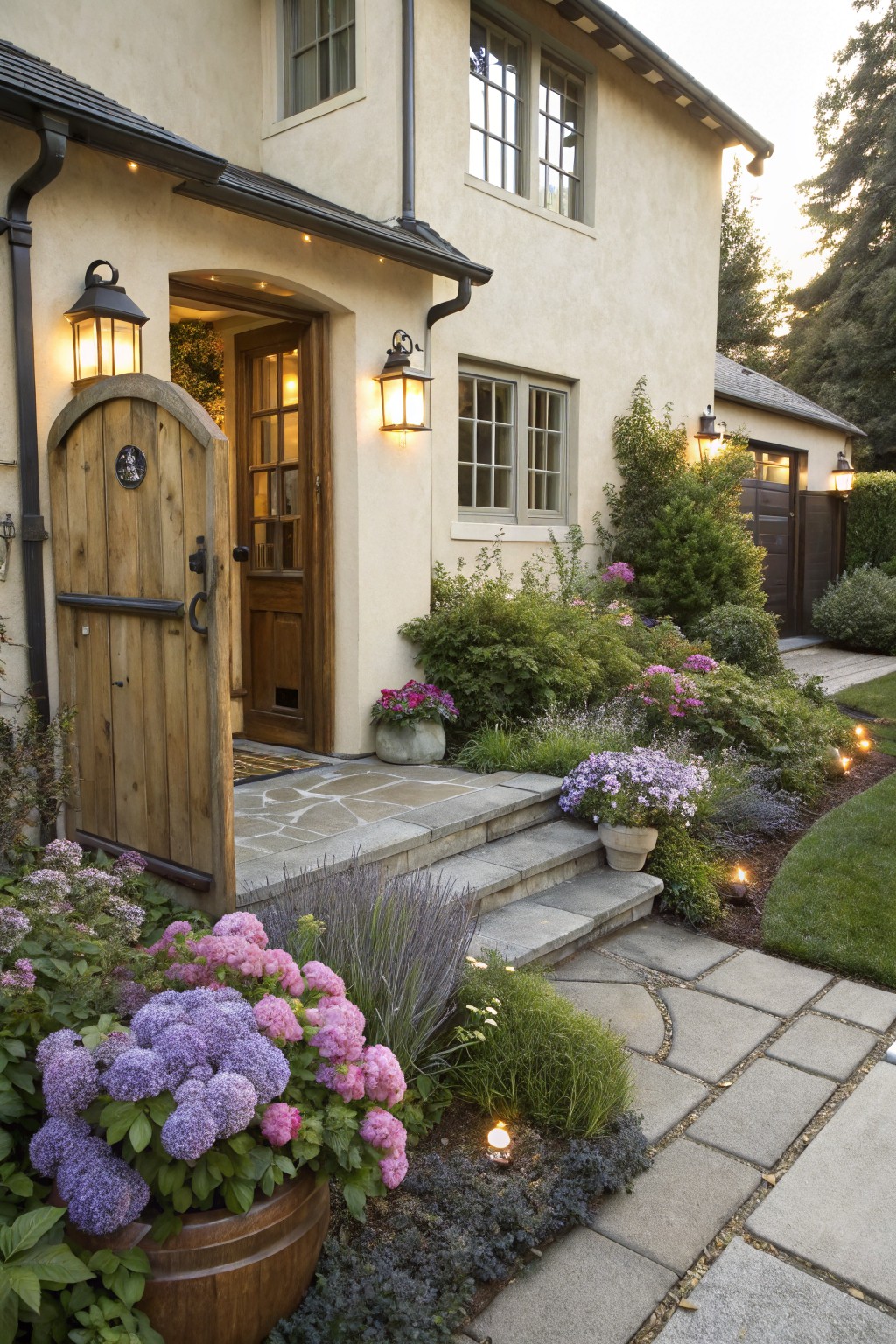
Big clusters of hydrangeas make such a full, colorful statement right at the front door. Here, mophead blooms in shades of blue and pink spill out from a wooden barrel planter, mixing with smaller beds along the stone steps. It’s a simple way to draw the eye up to the house without much fuss. The plants fill out the space nicely, giving that welcoming garden feel on approach.
Plant these in spots with partial shade near paths or entries, where they get morning sun but protection later. They suit cottage-style homes or softer exteriors like stucco. Just keep the soil moist and acidic for the best colors, and prune lightly after blooming to keep them bushy next year.
Lush Hydrangeas Edging Stone Stairs
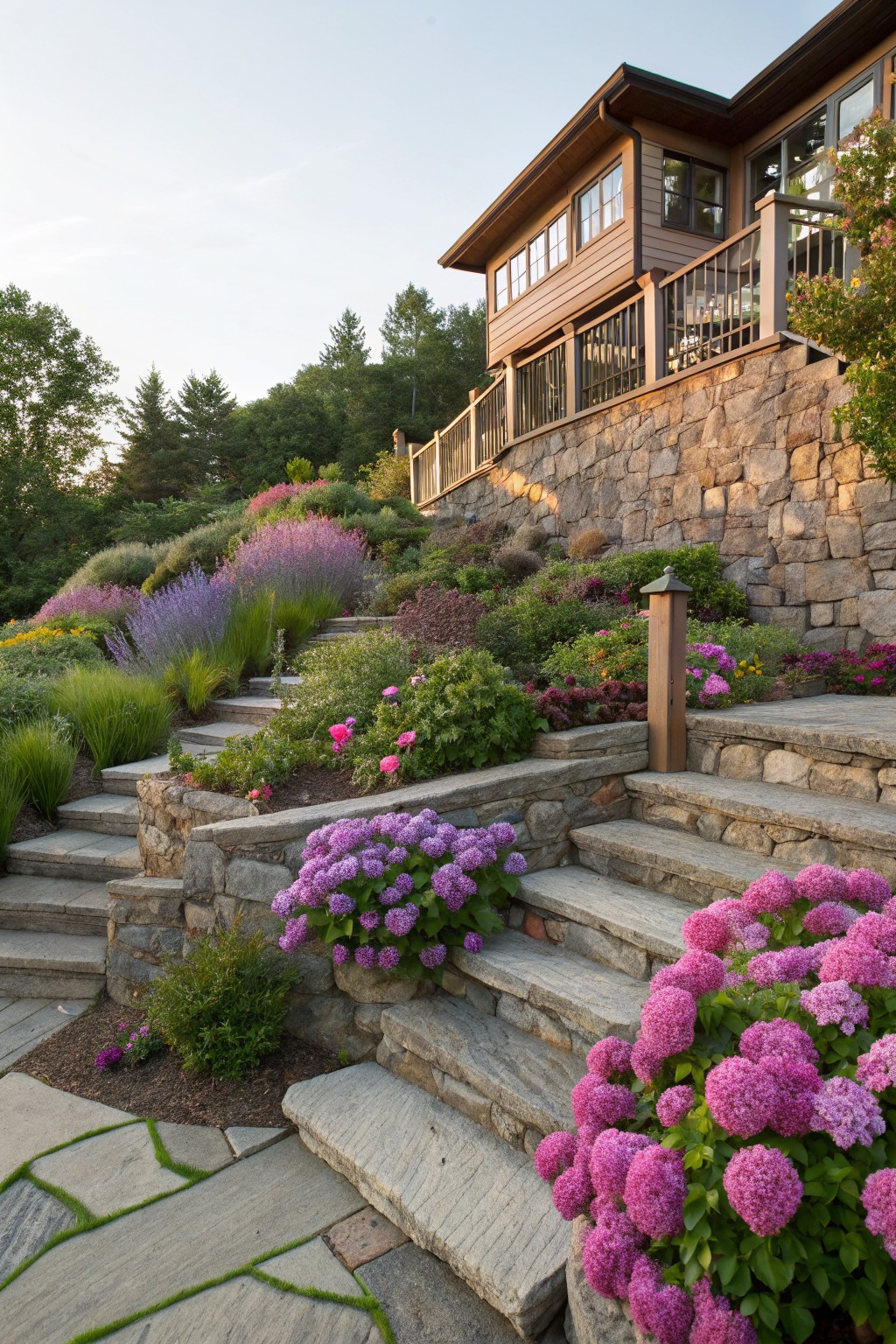
Stone stairs like these make a sloped yard feel more welcoming when you tuck hydrangea bushes right along the edges. The big pink blooms hug the steps and spill out a bit, turning a plain walkway into a colorful border that draws your eye upward. Paired with some lavender nearby, it keeps things full without overcrowding.
This works best on hillsides where you already have retaining walls or terraces. Plant the hydrangeas in the narrow beds next to the stairs, and let them grow to soften the stone. It suits homes backed by woods or in hilly areas, just make sure the spot gets enough sun for those blooms to pop each summer.
Hydrangea Borders Along a Narrow Path
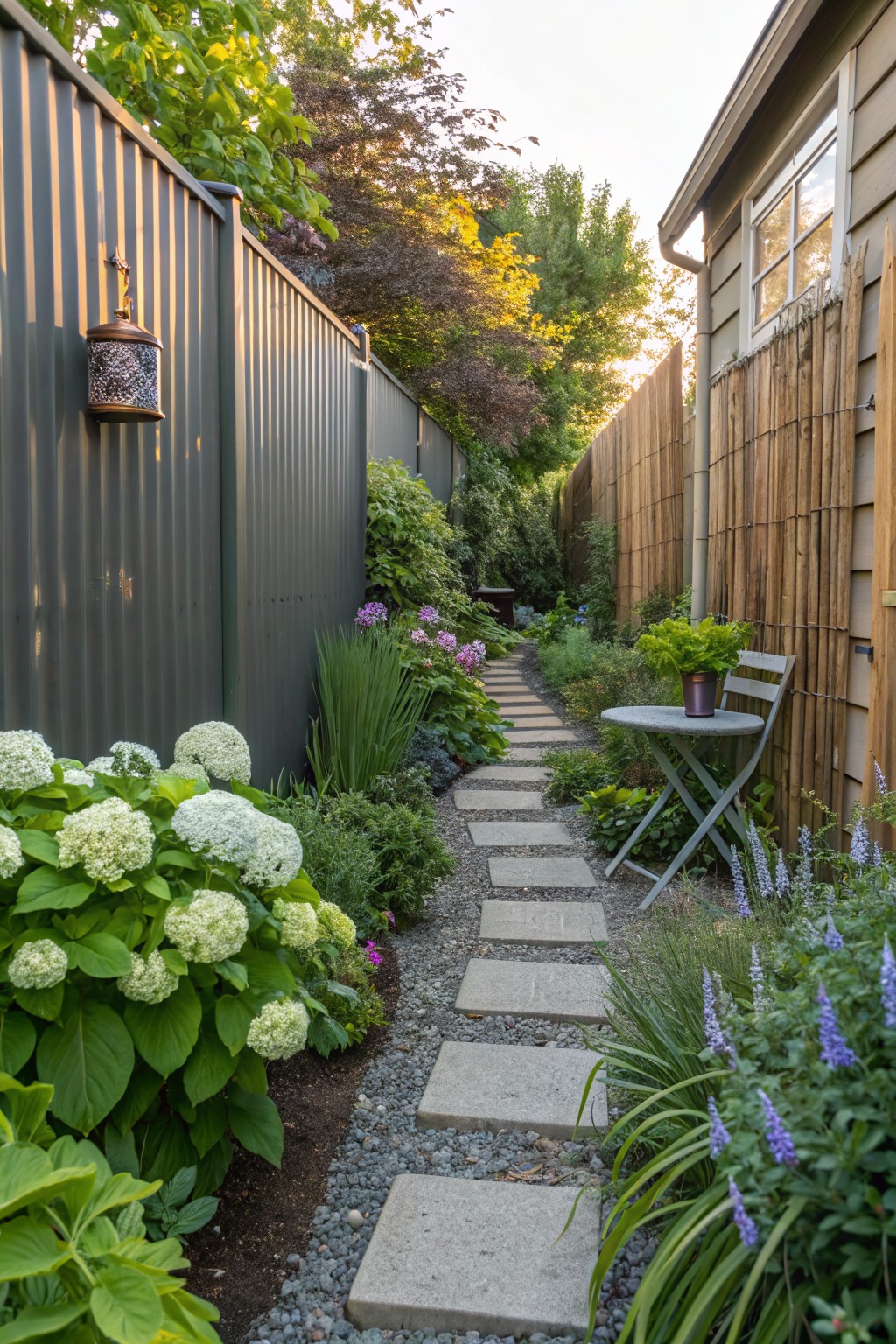
Big hydrangea bushes make a narrow walkway feel full and welcoming without crowding the space. Planted tight along both sides, those fluffy white blooms create a lush tunnel effect that draws you right through. Paired with simple stepping stones, it keeps the path practical while the plants do the color work.
This setup shines in side yards or alleys between house and fence, where you want privacy and prettiness on a budget. Go for big-leaf varieties that mound up nicely, and tuck in spikes of purple flowers for contrast. Watch the soil moisture though. Hydrangeas like it even and damp.
White Hydrangeas Along a Barn Wall
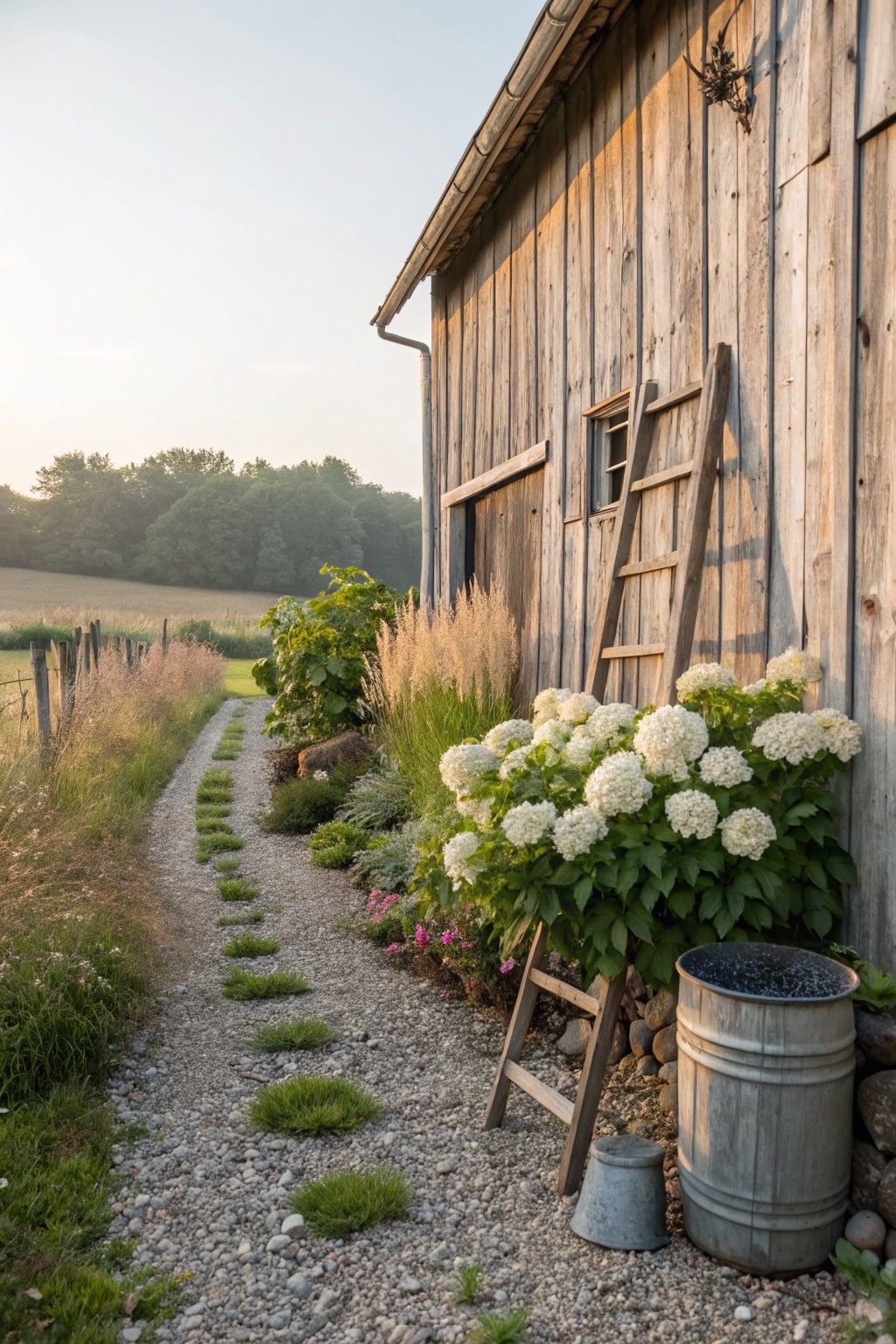
Big white hydrangeas planted tight against a weathered barn create a full border that softens the wood planks. Those huge blooms and broad leaves fill the space without much fuss. A gravel path right there makes it easy to walk by and enjoy.
This setup fits older farmhouses or cottages with sheds on the side. Go for mophead varieties that get tall enough to hug the wall. Mix in some tall grasses nearby for rhythm. Just keep the path clear so it stays useful.
Hydrangeas in Tall Concrete Planters
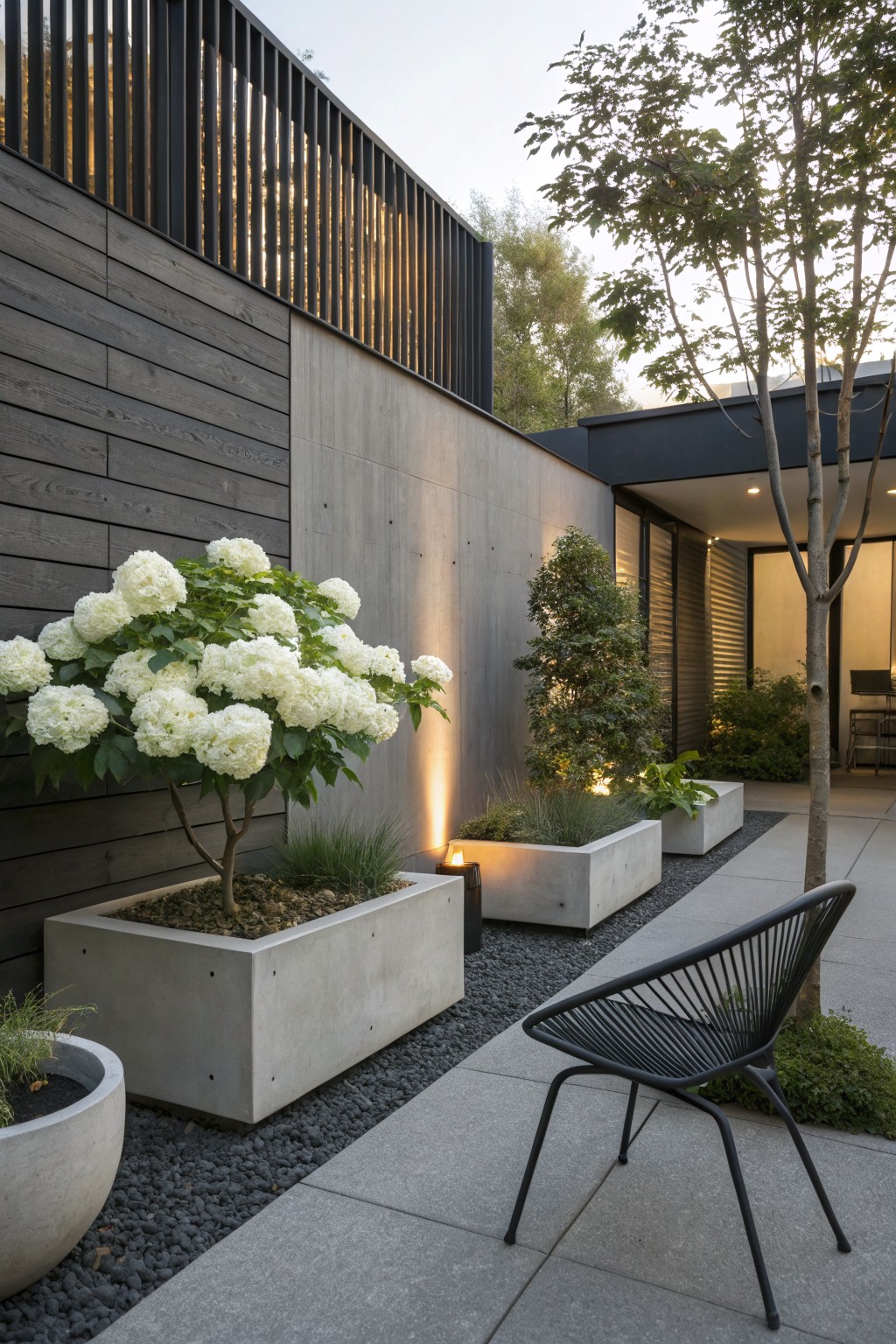
A big white hydrangea bush planted in an oversized concrete box makes a strong border against a plain wall. You get that full, lush look without needing much ground space. The concrete keeps things modern and simple, while the fluffy blooms add softness where it’s needed.
This works well in courtyards or along patios near the house. Pick a planter at least as tall as the mature hydrangea so roots stay happy. Go for white varieties if you want clean contrast with grays and woods. Just make sure it gets some afternoon shade to keep the flowers lasting.
Raised Beds Line Garden Paths
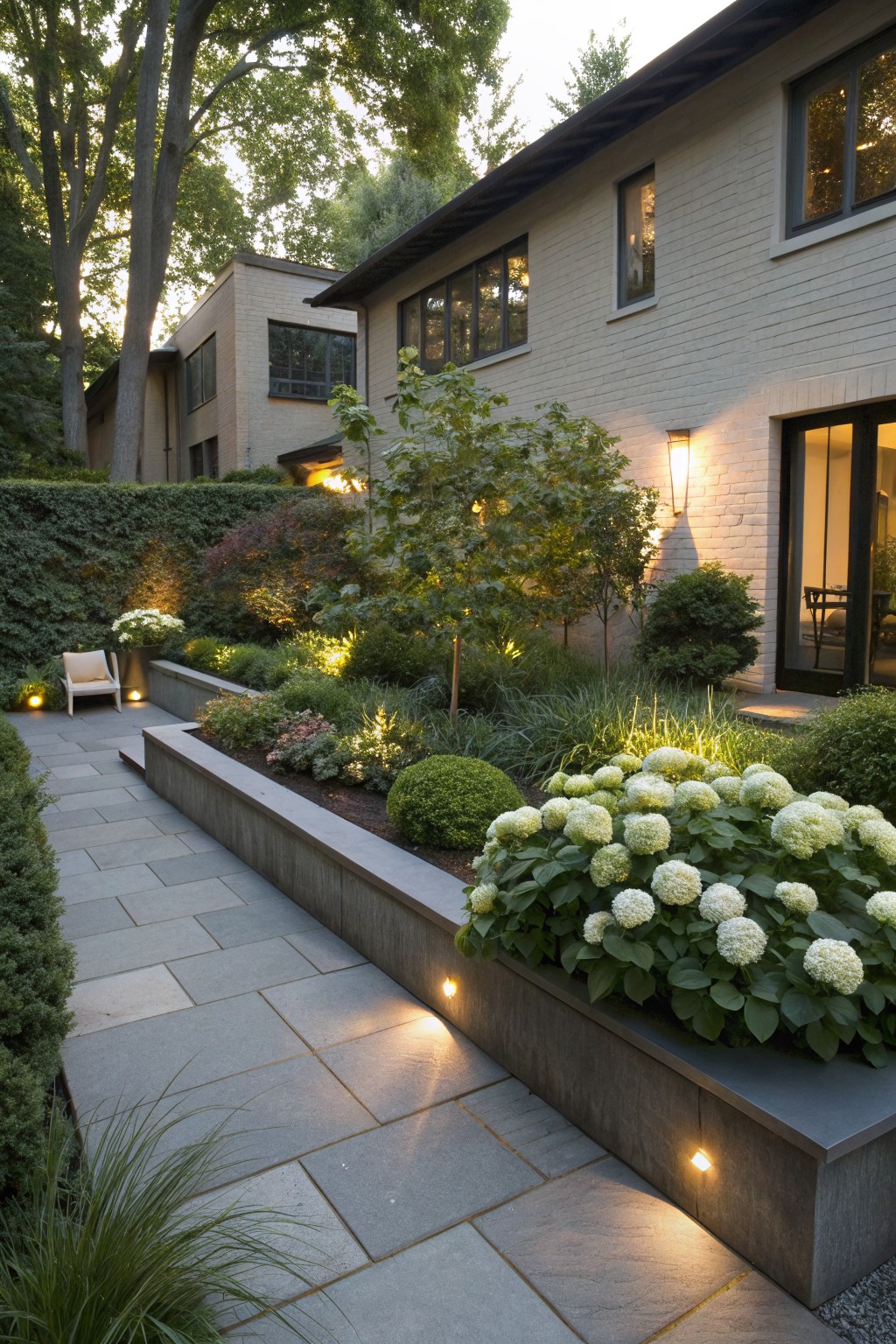
Raised concrete beds packed with white hydrangeas run right alongside this stone walkway. They give a full border of blooms that feels structured yet soft. The plants mound up nicely against the hard edges. And those built-in lights make it practical after dark.
Try this where you need to define a path without losing flower power. It suits side yards or entries on any style house. Go knee-high for easy reach. Just watch soil drainage so the roots stay happy.
Garden Paths Bordered by Lush Hydrangeas
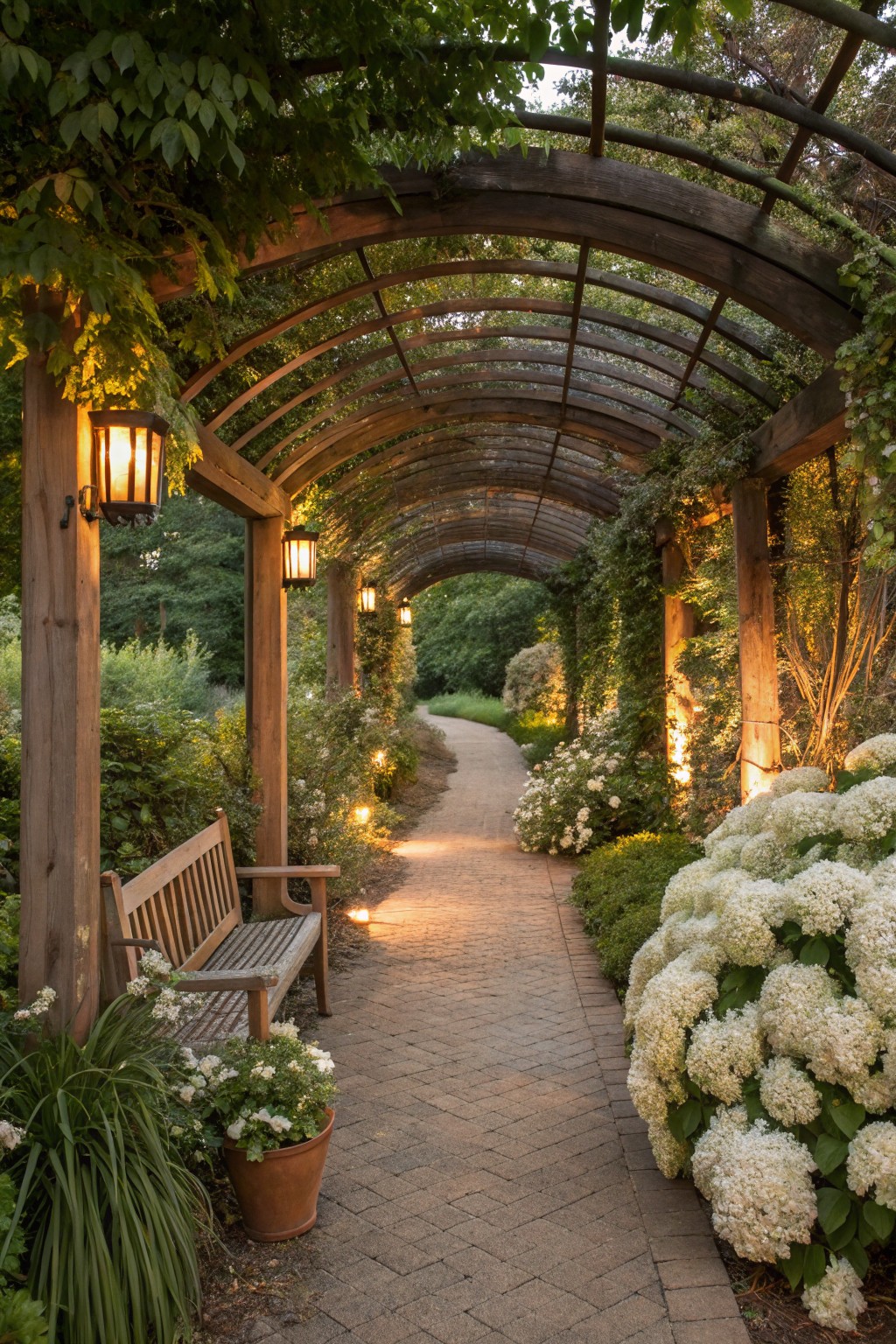
One straightforward way to work hydrangeas into your yard is lining a path with them on both sides. The big clusters of white blooms here edge a simple brick walkway that runs under a wooden arbor draped in vines. It gives the path a full, enclosed feel without much fuss, and those lantern lights make it nice for evening walks.
This setup fits backyards with some shade, where hydrangeas do their best. Plant them close to the path edge so they soften the hard lines, and maybe tuck a bench in along the way. Keep an eye on watering though. Those heavy flower heads droop fast if things dry out.
Terraced Hydrangea Beds on a Slope
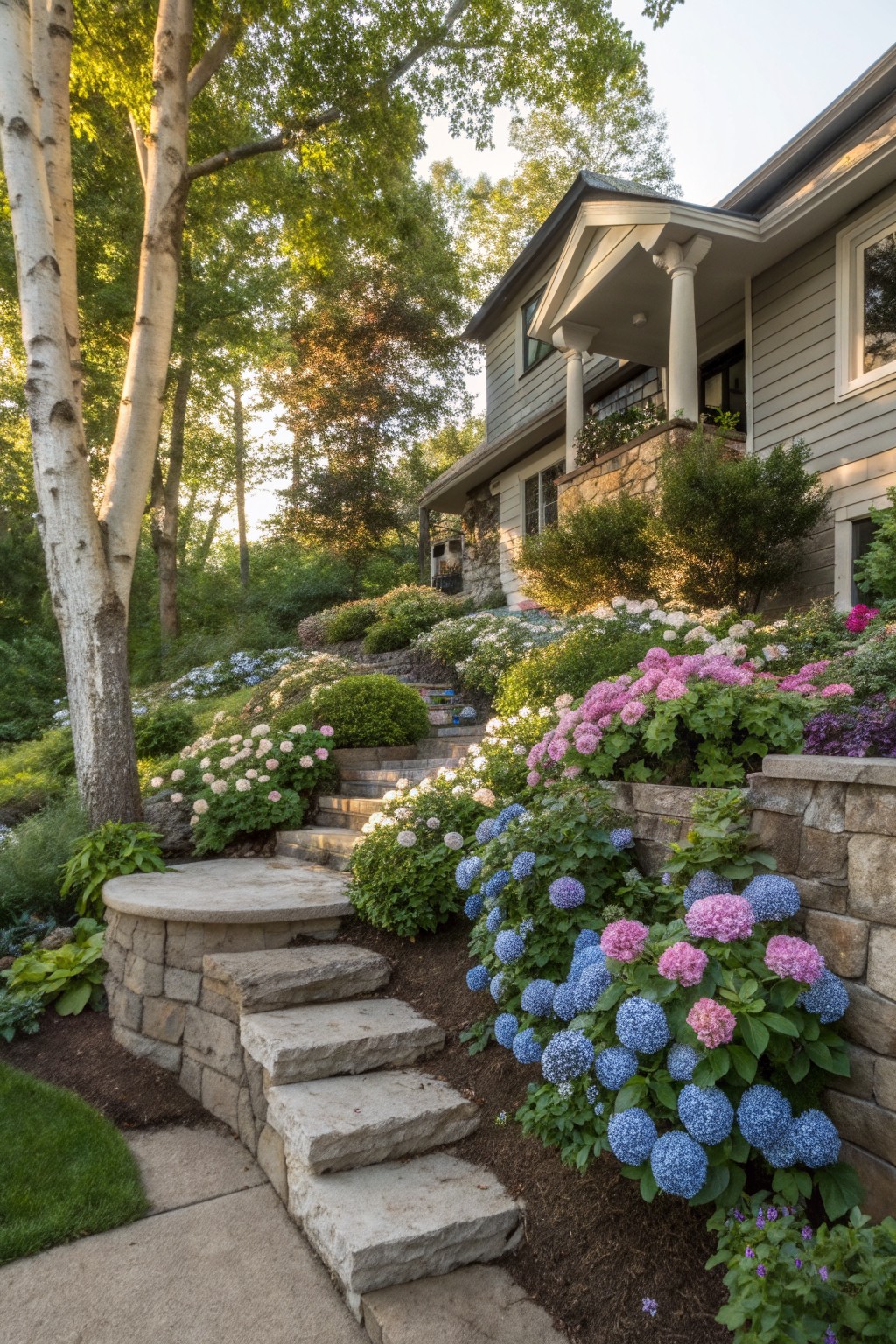
One solid way to handle a sloped yard is terracing it with stone walls and steps, then filling the beds with hydrangeas. You get these big, full borders that climb right up to the house, packed with pink, blue, and white blooms all summer. It makes the walk to your front door feel special, and the plants help hold the soil in place without much fuss.
This works best on moderate slopes where you want low upkeep but lots of color. Build the walls sturdy, maybe 2 to 3 feet high, and plant bigleaf or panicle types that bush out nicely. Keep them watered the first year… they’ll take off after that. Suits a craftsman-style home like this one, tucked into wooded spots.
Hydrangea Borders Along Stone Steps
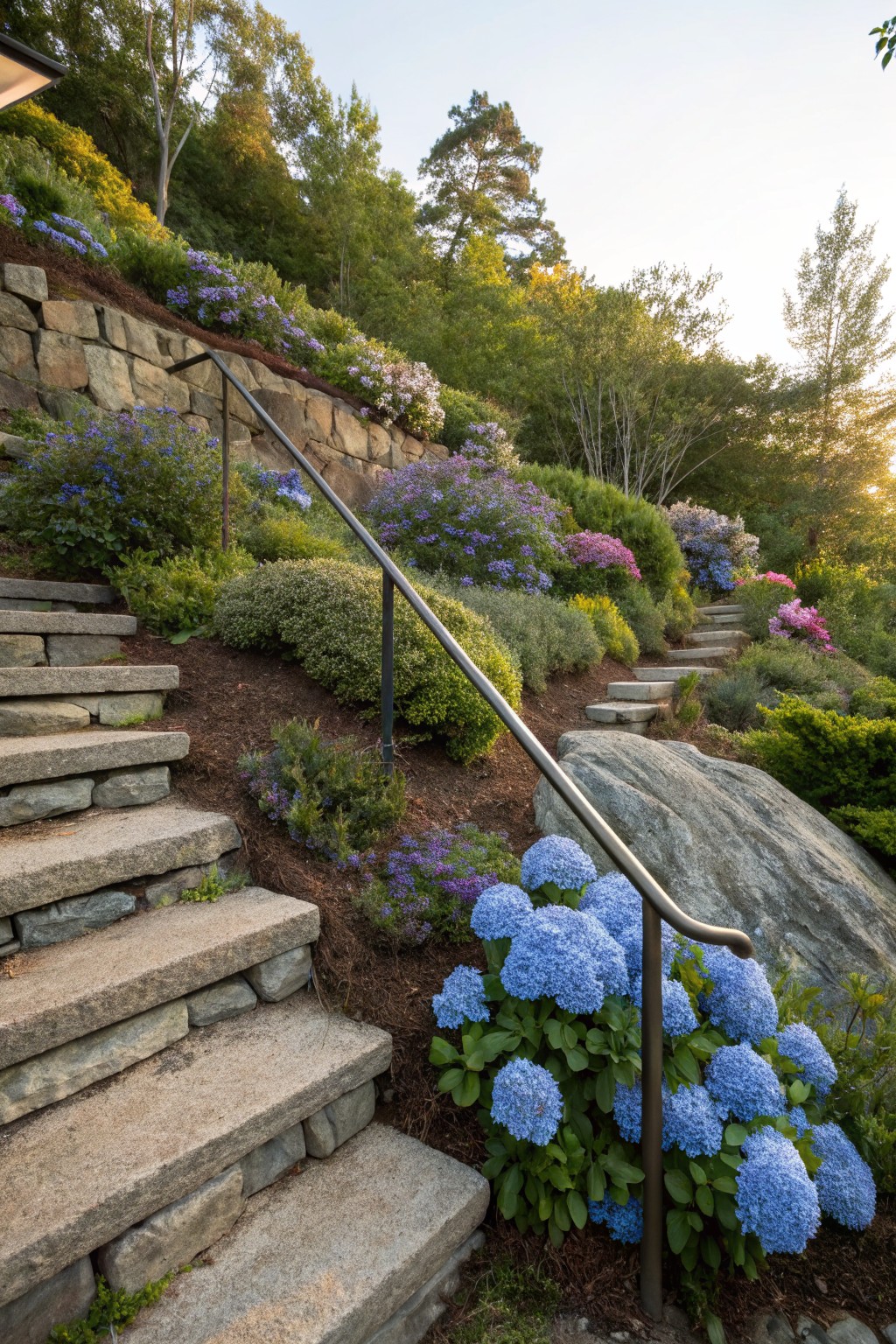
Stone steps like these make a steep slope feel welcoming when you tuck hydrangea borders right alongside them. The big blue blooms pop against the rough granite edges, filling the beds with color that draws your eye up the path. It’s a simple way to handle tough terrain without it looking bare or boring.
This idea fits sloped backyards or side yards where you need practical steps but want garden interest too. Layer in smaller flowers and shrubs around the hydrangeas for fuller borders, and add mulch to hold soil in place. Just pick shade-tolerant varieties since steps like this often sit under trees.
Lush Hydrangeas for Patio Borders
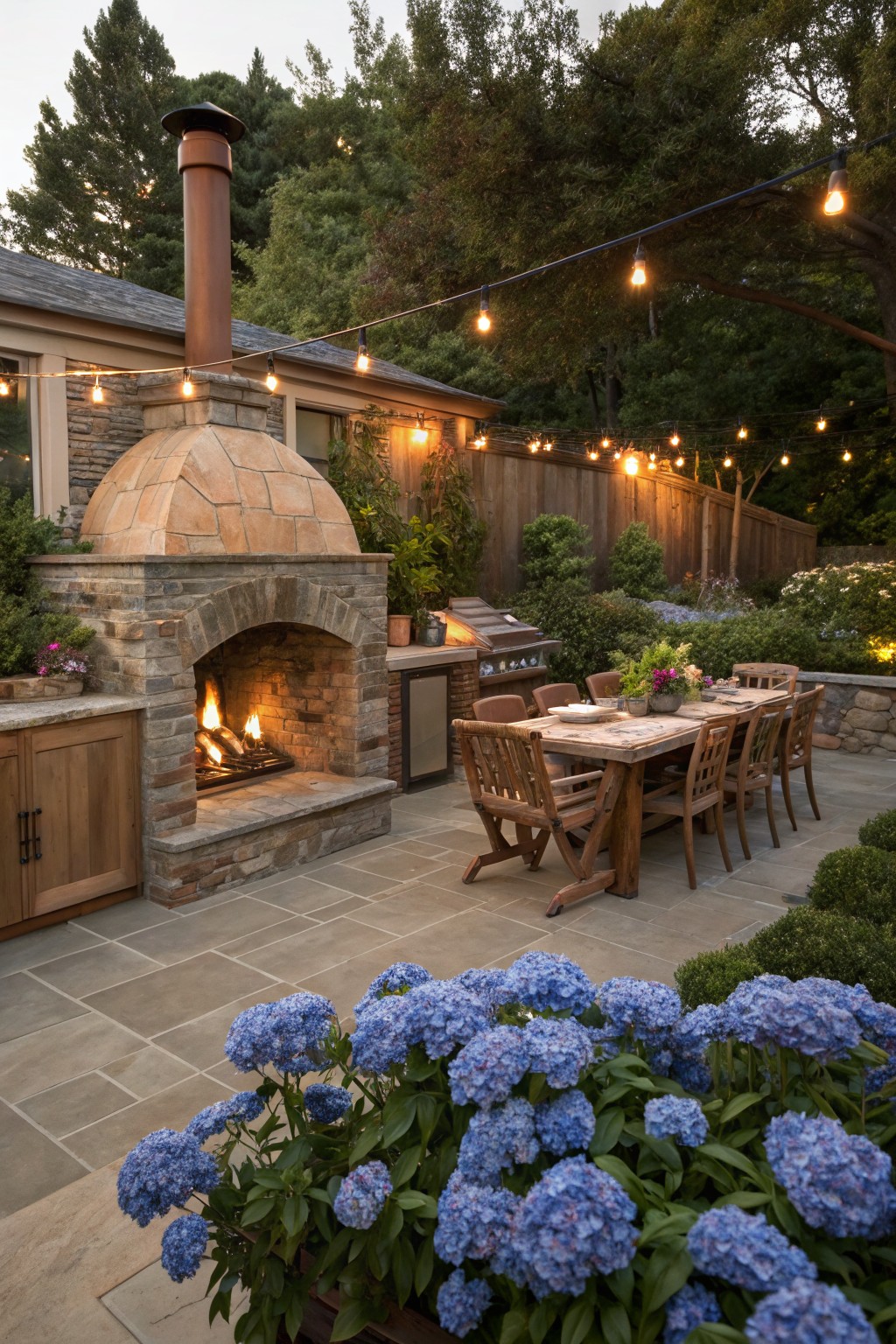
Big clusters of blue hydrangeas work well planted right along the edge of a stone patio. They bring full, colorful blooms that soften the look of hard surfaces like pavers and nearby fireplaces. In this setup, the hydrangeas sit in a large container and add a natural pop without crowding the dining space.
You can use them where a patio meets a lawn or walkway, especially in spots with some afternoon shade from trees. They suit casual backyards and hold up in mild climates. Keep the soil moist for best blooms, and prune lightly after flowering to keep the border tidy.
Raised Planters for Lush Hydrangea Borders
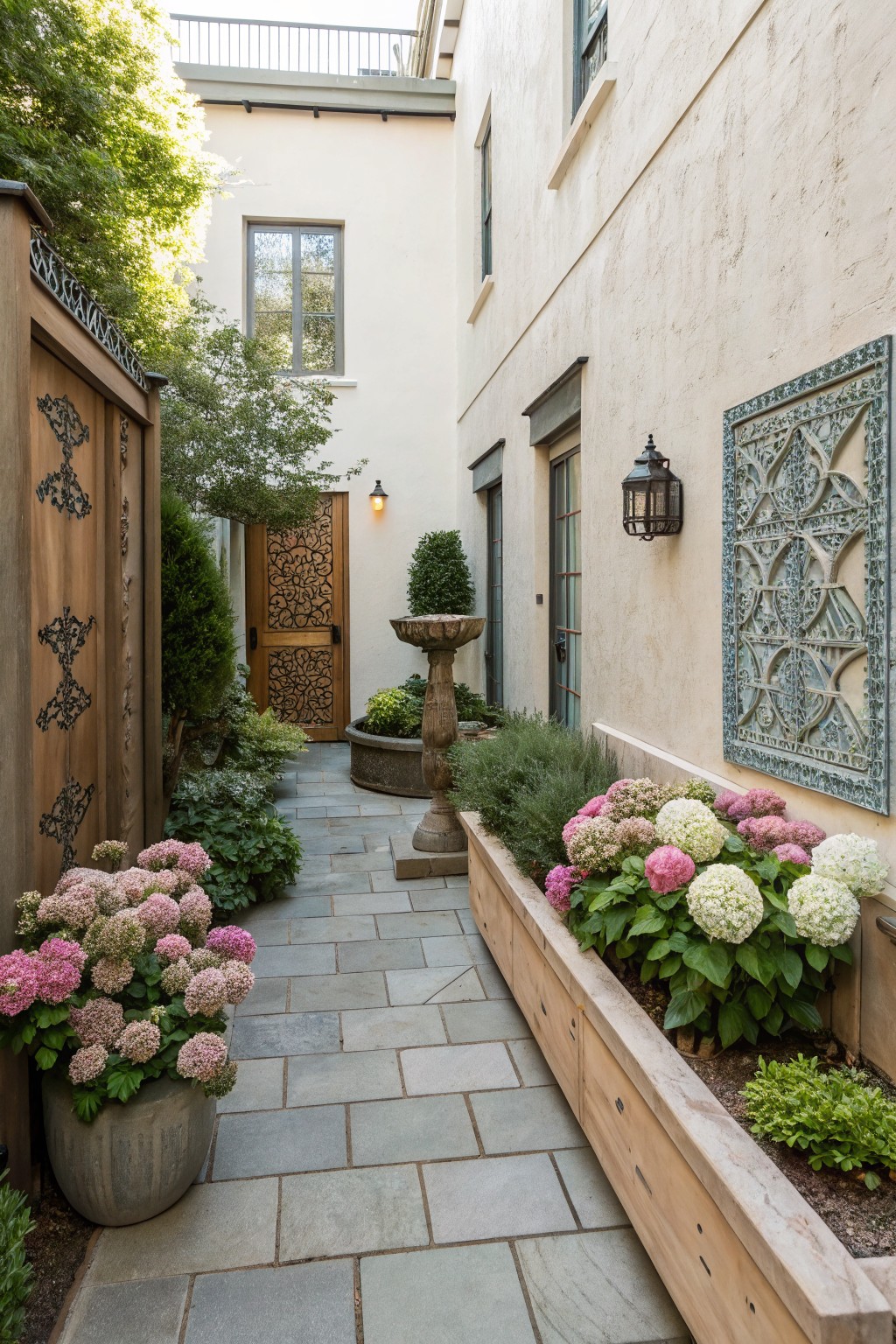
One simple way to fill out a narrow walkway is with raised wooden planters packed full of hydrangeas. They line both sides here, spilling over with pink and white blooms that make the path feel wider and more welcoming. The stone pavers keep it practical for walking, while the plants add that soft, colorful edge without crowding the space.
These work best in tight spots like side yards or courtyards where ground planting is tricky. Go for sturdy wood boxes about two feet high, plant a mix of hydrangea colors for interest, and tuck in some low greens at the base. Keep soil rich and water steady… they thrive in partial shade like this setup. Suits older homes with stucco walls nicely.
Oversized Hydrangea Pots Line a Narrow Path
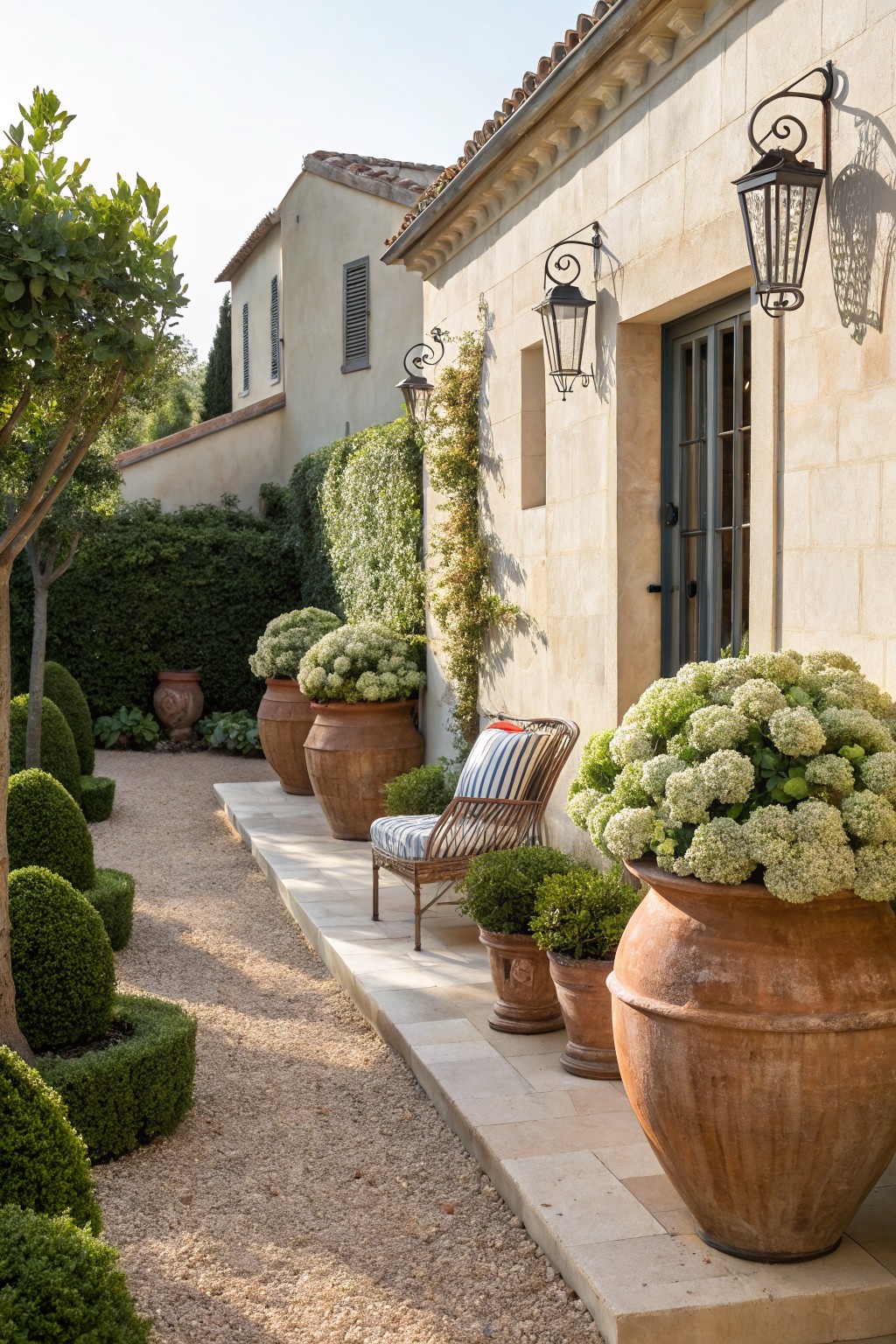
Big terracotta pots overflowing with fluffy white hydrangeas make for some of the fullest borders you’ll see. Placed right along a gravel path next to the house wall, they fill out the space without taking up bed area. The stone steps and simple chair nearby keep it practical.
These pots work best in sunny spots with decent drainage. Line them up against a plain wall or along a side entry where you want color but not permanent planting. Go for aged-looking pots to match older homes. Watch the weight though. They get heavy when full.
Frequently Asked Questions
Q: How far apart do I plant hydrangeas for a full, lush border? A: Space them 4 to 6 feet apart based on the variety. They’ll spread and fill gaps over time. That tight planting creates the colorful wall you’re after.
Q: Can hydrangeas take full sun, or do they flop in heat?
A: Most love morning sun and afternoon shade. Plant heat lovers like Endless Summer where it gets hotter. Water deeply to keep them perky.
Q: What’s the trick to more blooms in my hydrangea border?
A: Feed them with a balanced fertilizer in early spring. Deadhead faded flowers right away. You’ll see nonstop color through summer.
Q: How do I fix yellow leaves on my new hydrangeas?
A: Check for soggy soil first, they hate wet feet. Ease up on watering and add mulch. Green leaves bounce back quick.
