

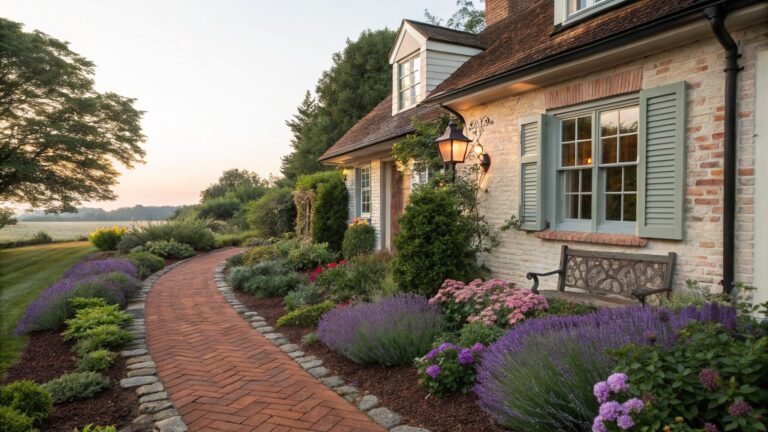
I’ve noticed how a simple layer of mulch in flower beds instantly sharpens the layout of a yard, turning scruffy edges into clean lines that hold their shape through seasons of growth.
It creates that subtle structure around plantings and paths, making the whole outdoor space read as thoughtful rather than random.
In my backyard, I edged a few overgrown beds with fresh mulch last spring, and it pulled the view together in a way basic weeding never could.
Folks walking by often spot those defined borders first, before the blooms even peak.
These approaches make it straightforward to test and tweak what works for your plot over time.
Mulch Beds Framing a Brick Garden Path
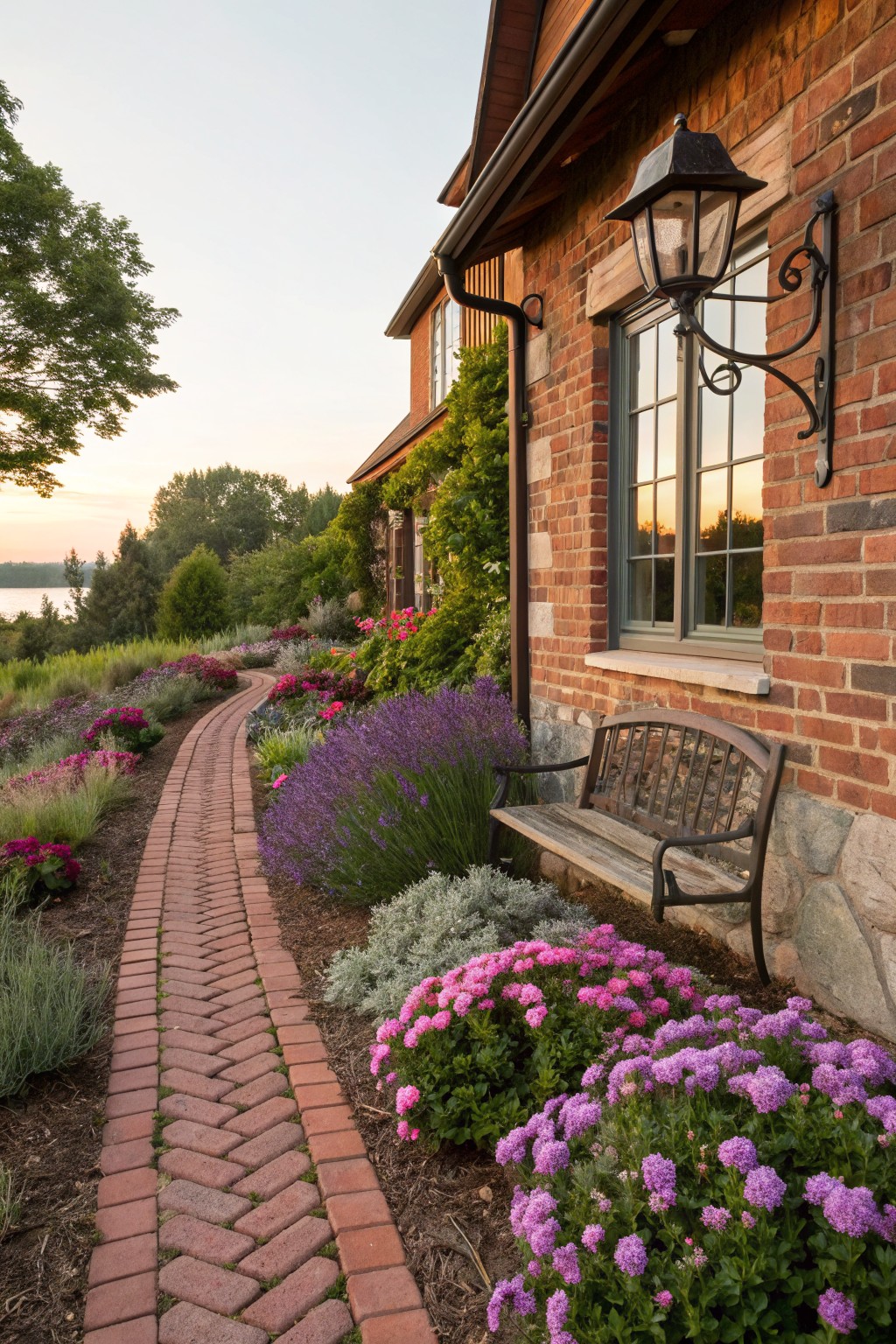
A simple brick path like this winds gently through low mulch beds packed with easy perennials. The lavender and those pink flower clusters hug the edges just right. It pulls you along without trying too hard. And with the house wall nearby it feels tucked in nice.
Grab some mulch and edge a path in your side yard or backyard stroll area. Plant tough bloomers like lavender or ageratums in layers close to the path then taller stuff behind. Works best on a slope or flat spot heading to a seating area… keeps weeding down and color up all season. Skip fancy curves if your space is tight. Straight does fine.
Linear Mulch Beds with Stepping Stones
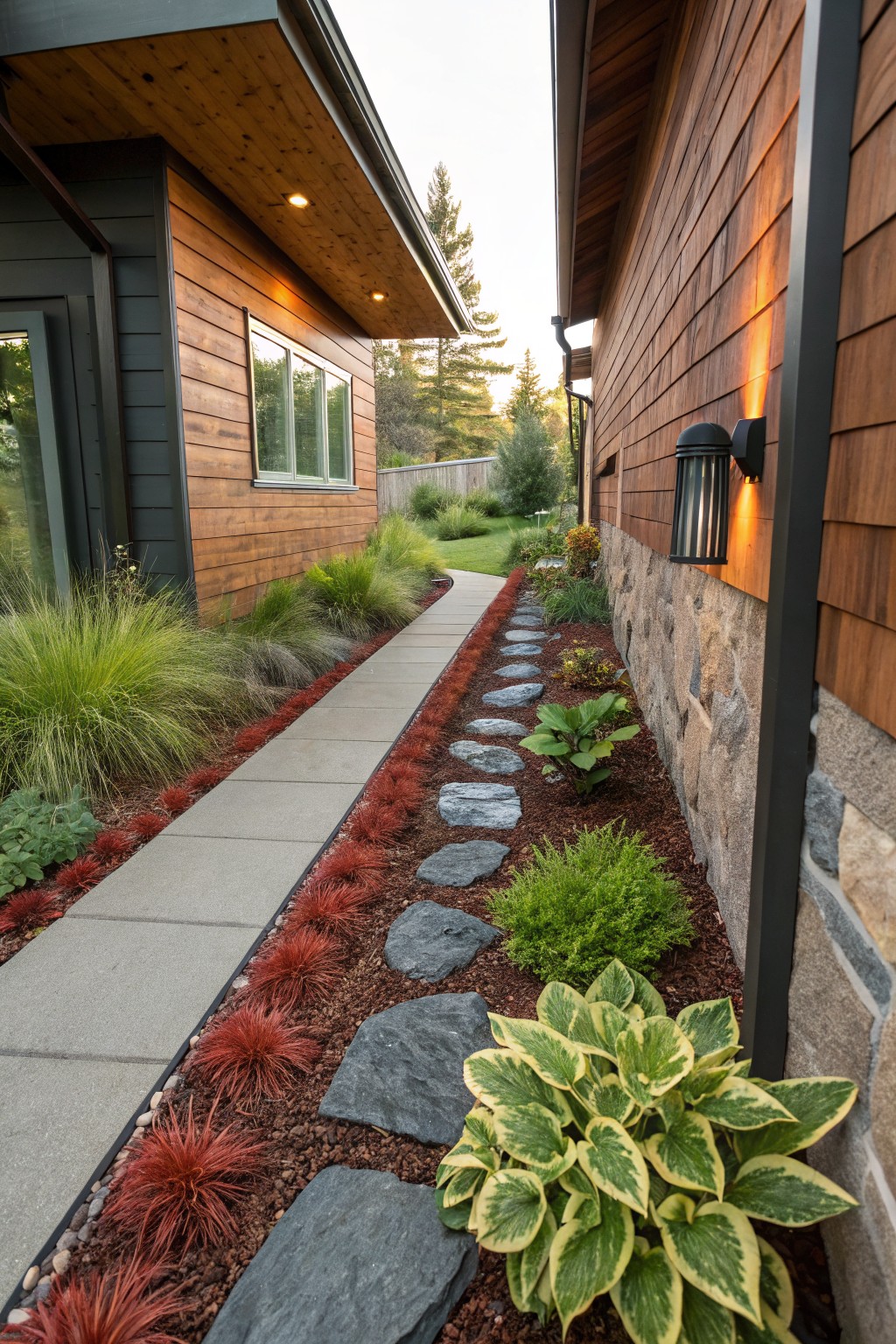
One straightforward way to edge a walkway is with narrow mulch beds packed with low grasses and a few bold plants. Here, red mulch runs right along the concrete path, broken up by flat dark stones that invite you to step off the main walk. It keeps things tidy without much fuss, and the color pops against the gray path and house siding.
These beds work best in side yards or leading to a back door, where space is tight. Grab some bagged red mulch, drop in easy-care grasses and a hosta or two, then set stones where they feel right. Skip overplanting… it stays low-maintenance that way.
Tree Ring Mulch Bed
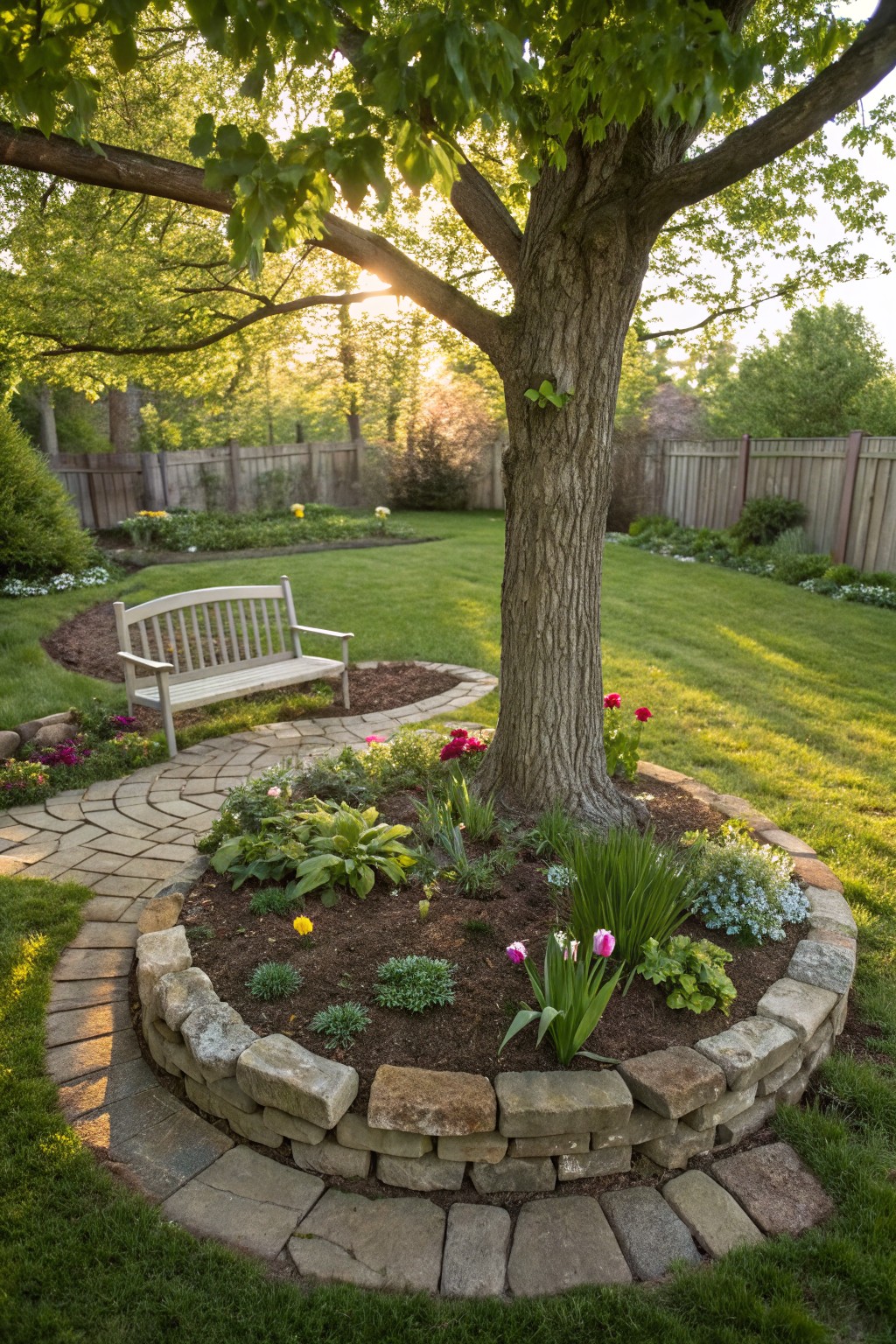
A mulch ring around a tree trunk is one of those straightforward yard updates that pays off quick. You edge it with stones, fill in with mulch, and tuck in some flowers like tulips or hostas. No more mowing right up to the bark, and it gives the tree its own little garden spot that draws the eye without much fuss.
Grab some flat fieldstones or landscape blocks for the circle, spread a few inches of mulch, and plant low-growers that won’t compete with the roots. It fits right into a backyard lawn, especially under bigger trees where grass struggles anyway. Just keep the mulch layer thin near the trunk to avoid rot.
Mulch Beds with Stepping Stone Path

A narrow side yard like this turns into an easy walkway when you fill the beds with mulch and set in rough stepping stones. The mulch keeps weeds down and holds moisture for the plants tucked along the edges. That old watering can adds a folksy touch without trying too hard.
It works best in tight spaces between house and fence, where you want access without mowing. Lay stones where your feet naturally fall, then mulch around low growers like sedum or herbs. Skip fancy edging. Just rake it smooth now and then.
Mulch Beds Along a Walkway
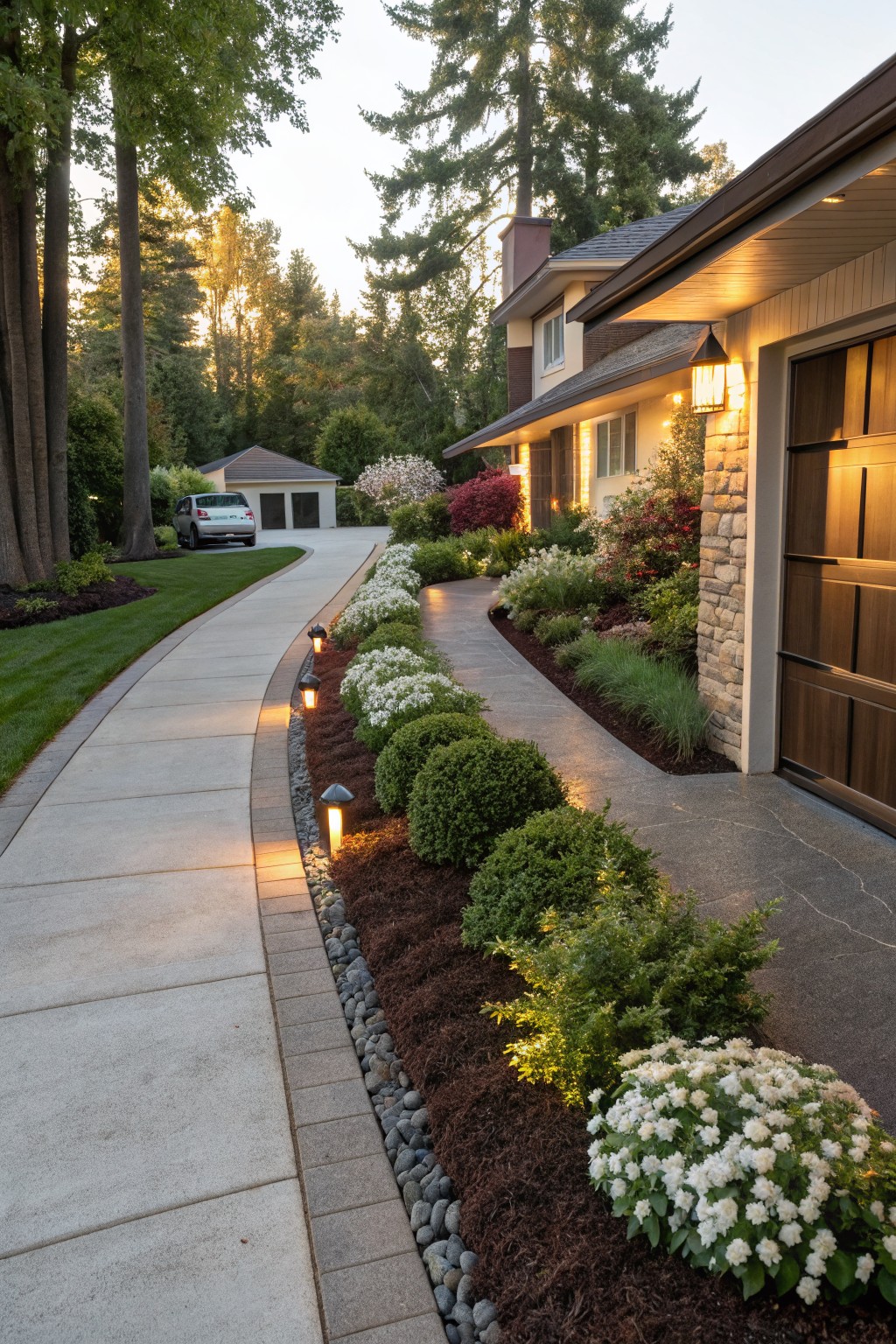
One easy way to refresh your front yard is to line the walkway to your house with simple mulch beds. These beds use low boxwood shrubs for structure, white flowering plants that bloom reliably, and some taller grasses for movement. Dark mulch keeps weeds down and sets off the greens and whites nicely. Path lights tucked in add a soft glow at night without much fuss.
This setup works great for homes with a straight or curving concrete path leading to the garage or front door. Fill the beds with easy-care plants like boxwoods that stay neat and astilbe or alyssum for the flowers. Edge with river rock or bricks to keep mulch in place. It suits most yards, even smaller ones, and gives quick curb appeal. Just keep the scale right so plants don’t block the path.
Mulch Flower Beds Along Beach Paths
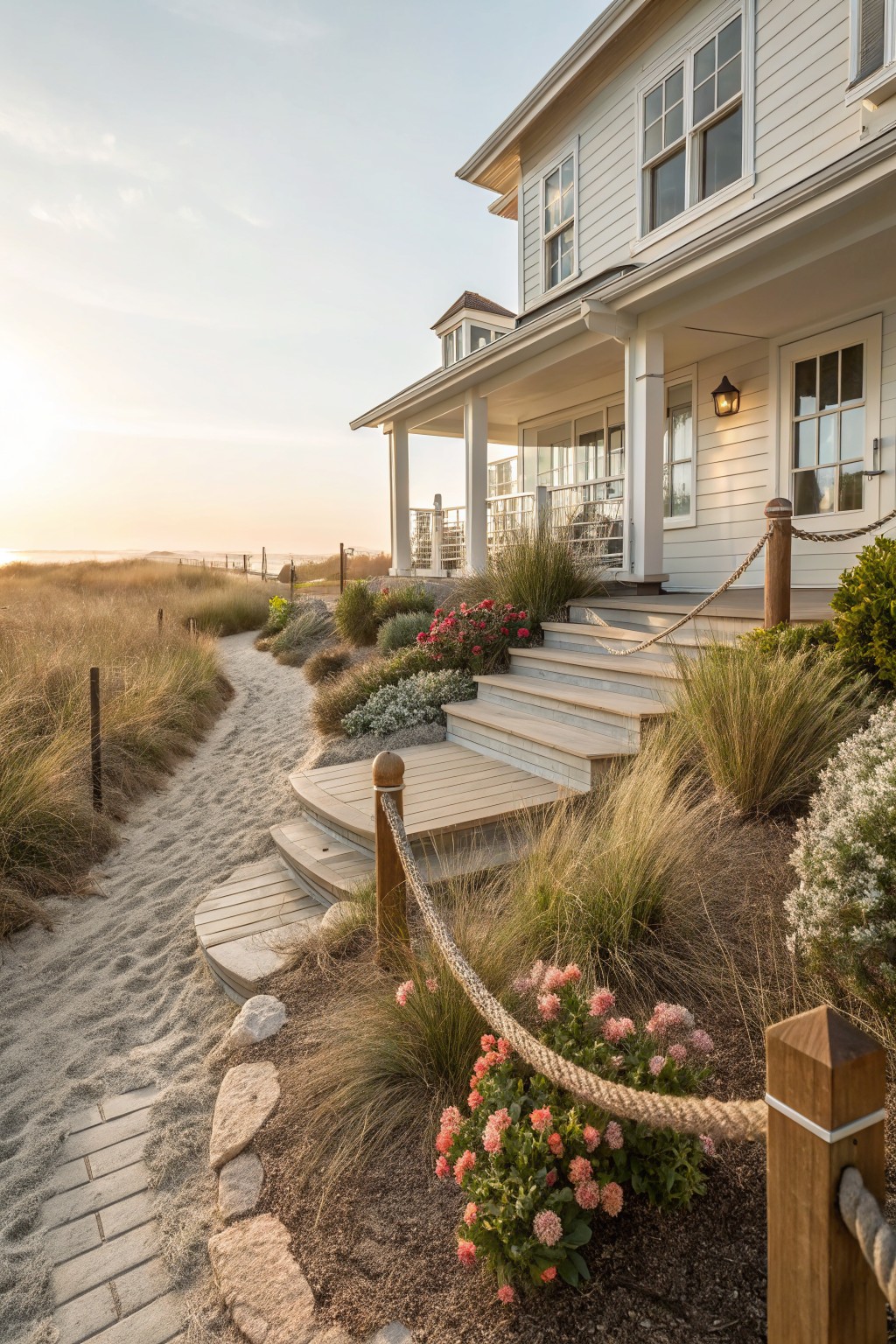
Simple mulch beds packed with tall grasses and pink blooms make a big difference along paths like this one. They hug the sandy walkway and stairs up to the house, giving a natural dune look without much fuss. The grasses sway in the breeze, and the flowers add just enough color to draw the eye without overpowering the scene.
To pull this off at home, dig shallow beds beside your path or steps and fill with affordable mulch. Plant easy-care grasses first for height, then tuck in flowering shrubs or perennials for pops of color. It suits sloped yards near water best, or anywhere you want low upkeep. Skip it if your soil washes out easy, though, or add edging to hold things in place.
Linear Mulch Beds Along a Walkway

Raised concrete planters filled with mulch run right alongside a simple walkway like this. Planted with lavender and a few grasses they create a neat border that feels intentional without much upkeep. The mulch keeps soil in place and weeds down plus that built-in bench makes the space useful.
This works best in narrow side yards or between the house and a fence. Go for tough drought plants that thrive in full sun. Skip anything too thirsty since the mulch helps retain what little moisture there is. Easy to refresh every spring.
Winding Stone Path with Mulch Flower Beds
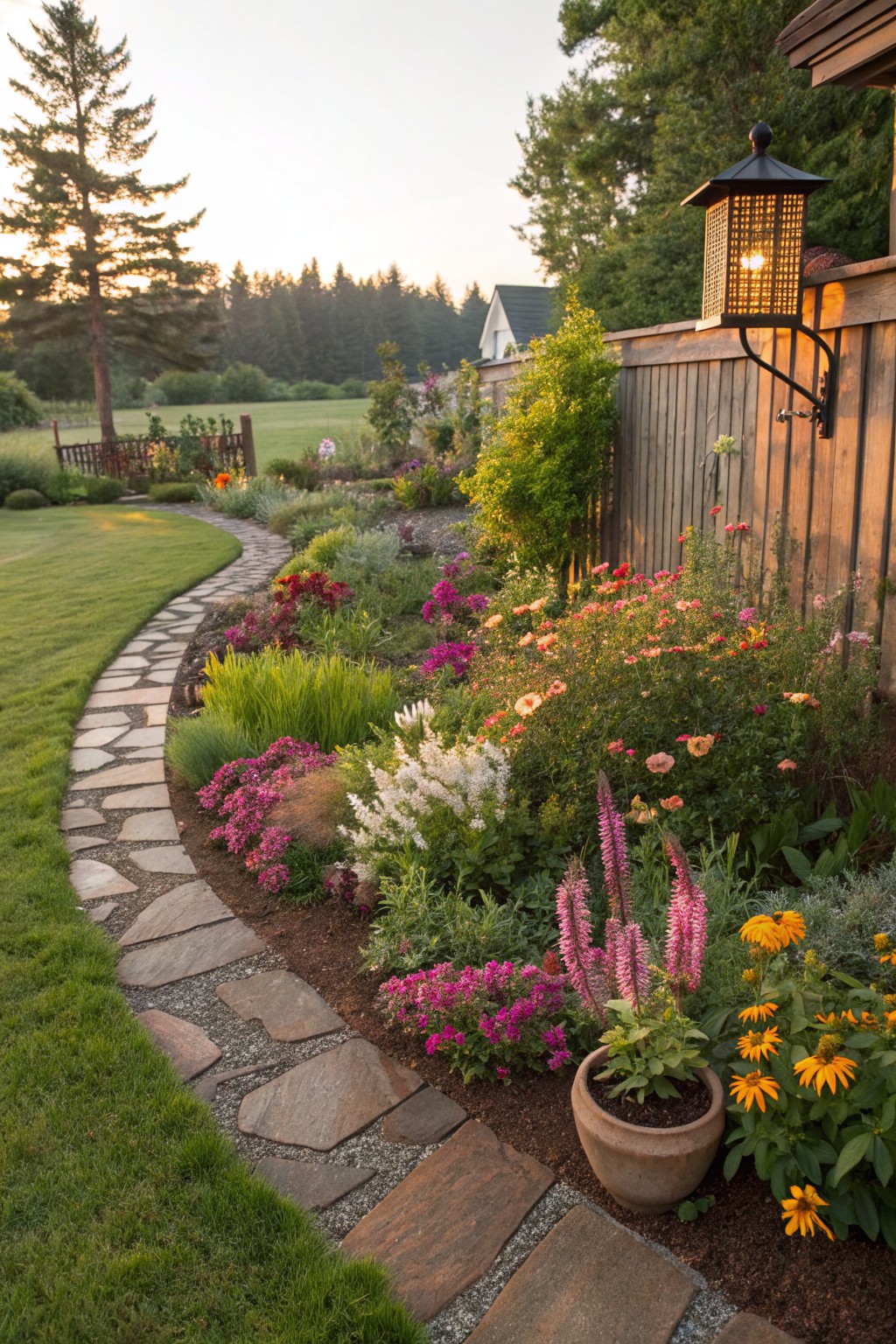
A winding path like this one uses flat stones set into the ground, with mulch-filled beds right along the edges. The curve pulls you through the garden in a natural way. Flowers in pinks, whites, and oranges spill over the mulch without much fuss. It’s low-key but makes a plain yard feel put-together.
You can do this in a side yard or along a fence pretty easily. Pick irregular flagstones for that casual look, then mound up mulch two or three inches deep around tough perennials. Keep the beds narrow so the path stays the focus. Works best where you want some color without daily weeding.
Gravel Mulch Beds with Oversized Pots

Big terracotta pots like these make a poolside planting area feel finished fast. Group a few along the edge, tuck them into gravel mulch beds, and add simple green plants. The gravel keeps weeds down while the pots add height and focus. No fuss, just clean lines that match stone hardscaping.
This works best around pools or patios in sunny spots. Pick tough plants that handle heat. It’s low maintenance for modern yards… suits homes with clean architecture. Watch the pot size though. Too small and they get lost.
Raised Beds Lined with Mulch

Raised beds like these keep your garden organized and simple to tend. The wooden frames hold back the soil and mulch nicely, so plants like herbs and greens stay put without spilling over. A brick path right next to them makes it easy to walk through without stepping in the dirt.
You can build these in any sunny backyard spot, maybe 12 inches high with untreated cedar boards. Fill the bottom with mulch for drainage, then add soil on top. They work great for flowers or veggies, and watch for rot if the wood sits in water too long.
Curved Mulch Beds with Stone Edging
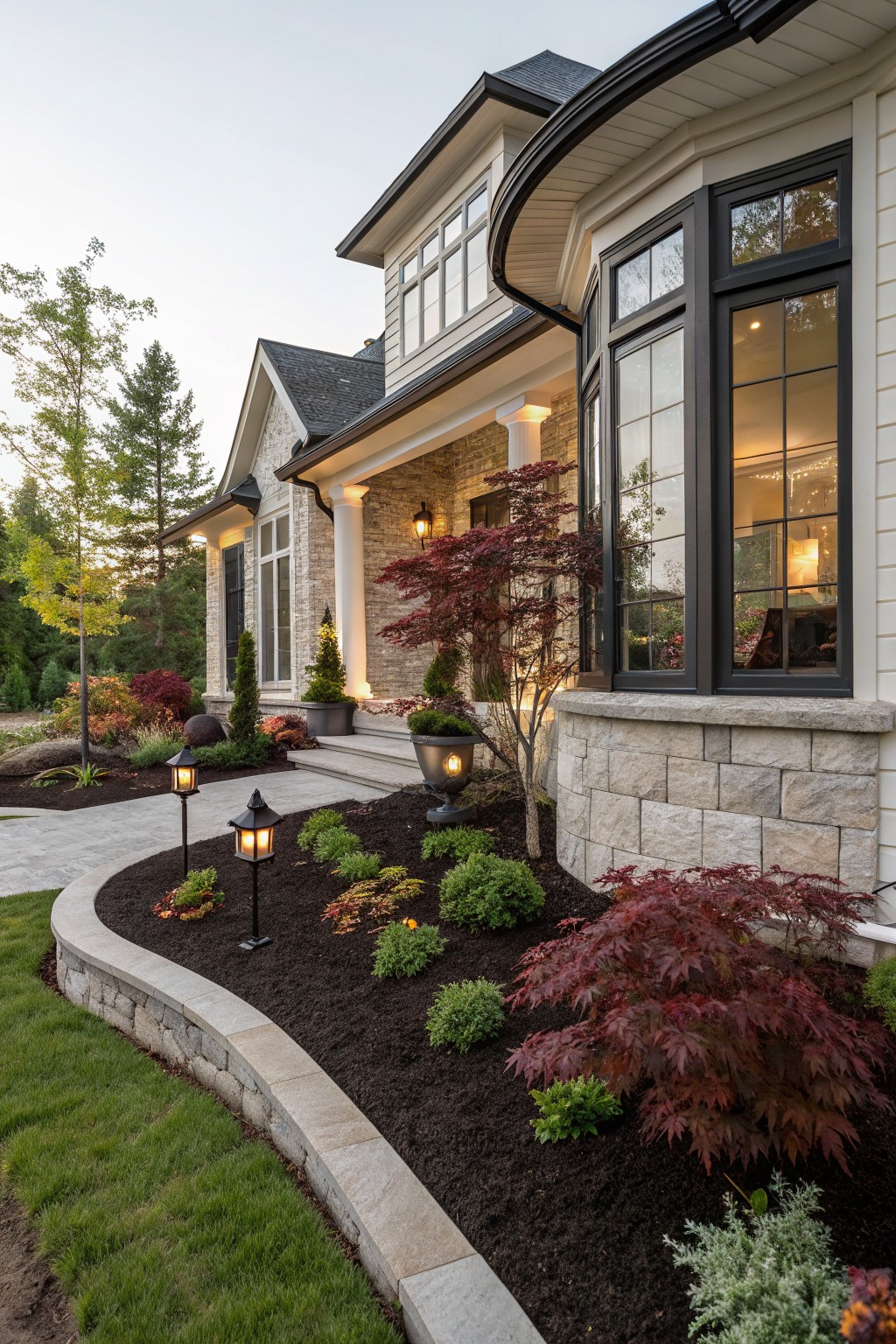
One straightforward way to refresh your front yard is curved mulch beds edged by a low stone retaining wall. It gives the landscaping some nice shape and keeps everything tidy, especially around the entry path. Those deep red Japanese maples stand out against the dark mulch, adding color without much fuss.
This works best on gently sloped spots near the house or driveway. Stack basic stone blocks or use precast ones for the curve, then layer in mulch and a mix of shrubs plus perennials. It suits most homes, holds up year round, and cuts down on weeding if you pick the right plants.
Poolside Pebble Mulch Beds

These narrow planting beds run right along the pool edge, filled with black pebbles and simple grasses or low shrubs. They keep weeds down like regular mulch but look sharper against stone pavers. The setup adds some green without eating up yard space, and it fits that easy tropical feel.
Try this where you have a straight hard edge like a pool or patio. Pick tough plants that handle sun and wet splashes. Just dig a shallow strip, plant sparsely, top with pebbles, and refresh yearly. Suits smaller backyards best, or anywhere you want low upkeep.
Raised Flower Beds Along Entry Steps
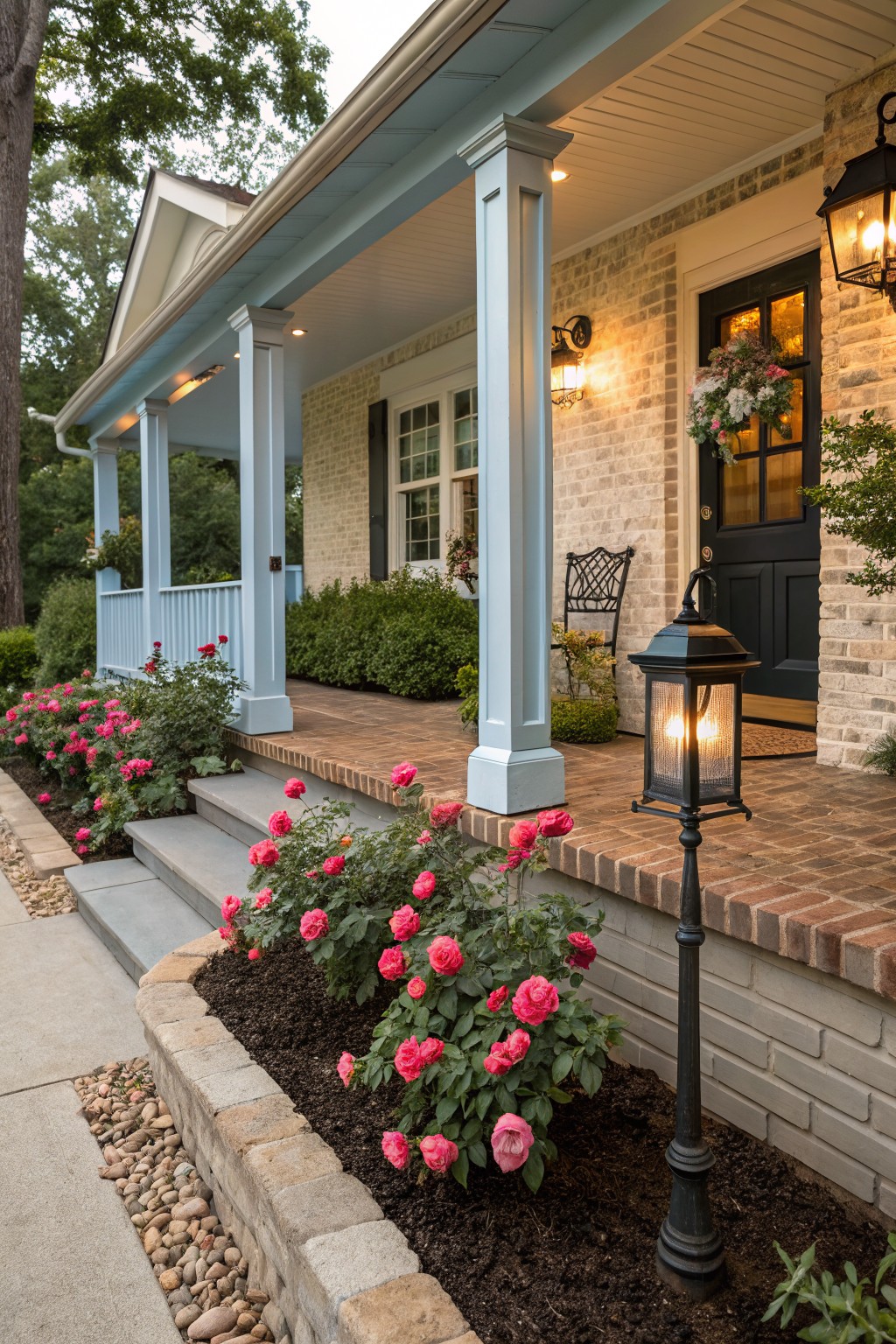
One simple way to boost curb appeal is planting raised flower beds right along your front steps. Here you see them edged in brick and filled with blooming roses that spill over just enough to soften the walk up. The mulch keeps things tidy and low-maintenance, while the plants add that welcoming pop of color without much fuss.
These beds work great on homes with a porch or any entry where you want to draw folks in. Use bricks or stone for the edging if you have some on hand, then layer in mulch and pack it with roses or whatever perennials do well in your zone. Skip the fancy shapes. Just keep them rectangular and hugging the steps. Watch the height so they don’t block the path.
Mulch Beds Along a Curved Path

One easy way to refresh your front yard is to edge a stone path with mulch beds filled with low grasses and small shrubs. This setup guides you right to the door without much fuss. The black mulch keeps weeds down and lets the plants pop, while those simple ground lanterns add a soft glow at night. It feels clean and modern, especially next to a house like this one with wood and dark siding.
You can pull this off in any entry area with a bit of sun. Start by laying down landscape fabric, add the mulch, then tuck in tough plants like fescue grasses or dwarf evergreens that don’t need constant trimming. Skip flowers if you want low upkeep. It works great for narrow side yards too, or anywhere you want that path to stand out without overpowering the house.
Rock-Edged Mulch Beds Along Paths

One straightforward way to refresh a walkway is to border it with mulch flower beds using natural rocks for the edge. The rocks hold back the dark mulch nicely, and you get tidy planting strips that hug the concrete path without spilling over. Low plants like herbs and a small fountain fit right in, keeping it simple and low-maintenance.
This works best next to a house wall or side entry where you want definition without big changes. Grab rocks from a local yard or quarry, lay them along the path edge, fill behind with mulch and easy growers. Suits most homes, especially if you’re after that clean look on a budget. Just make sure the rocks are heavy enough to stay put.
Brick-Edged Mulch Beds

Simple brick pieces laid along garden edges make these mulch beds look sharp and contained. The mulch fills in around plants and trees, holding soil in place while keeping weeds down. A few fallen peaches show how easy it is to harvest right there, and the whole thing stays neat even as things grow.
Set this up along a path next to your house or shed, like by an outdoor sink. It works best in yards with some sun for veggies or flowers. Just level the ground first, or bricks might shift over time.
Stone Path Edged by Mulch Beds

One simple way to handle a sloped yard is with a winding stone path set right into mulch beds. You see the rough-cut stones stepping up through dark mulch, with ferns and hostas tucked in close around them. Those low plants hold the soil in place and keep the path from looking stark. The small path lights add a nice glow for evenings, without much fuss.
This setup works great on hillsides where you want to connect yard levels without big retaining walls. Fill beds with easy shade lovers like ferns or hostas, then mulch heavy to cut down on weeding. Just watch the path slope so it drains well… wet stones get slippery. Suits wooded lots or shady spots best.
Frequently Asked Questions
Q: How deep should the mulch layer be?
A: Layer it two to three inches thick over the soil. This depth blocks weeds while letting plants breathe. Keep it away from stems to dodge rot.
Q: Do I need to remove old mulch or weeds first?
A: Pull weeds by the roots and rake out chunky old stuff. Smooth the soil underneath. Fresh mulch works way better on a clean start.
Q: What mulch holds up best in rain?
A: Grab shredded hardwood or cedar chips. They clump less and last a full season. You’ll refresh less often.
Q: Can I mulch right now in summer?
A: Wait for cooler spring or fall if you can. Summer heat makes it dry out quick. But go ahead gently with deep watering.
