

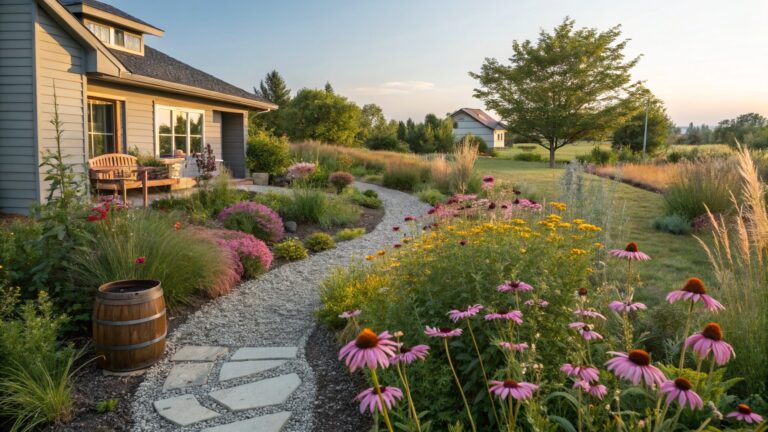
I’ve reshaped parts of my yard with native flowers over the last couple years, focusing on how they fill in around gravel paths and low stone edging to create a natural flow.
People usually spot the busy bees and birds first, drawn in by the blooms that actually belong in our local soil.
Going native means the planting structure builds itself over time, supporting wildlife without me fighting weeds every weekend.
I like how some ideas layer low groundcovers under mid-height perennials, softening yard edges that used to look stark.
That bee balm border along the fence? It quietly turned a dull strip into something humming with life.
Flagstone Path Through Native Flower Beds
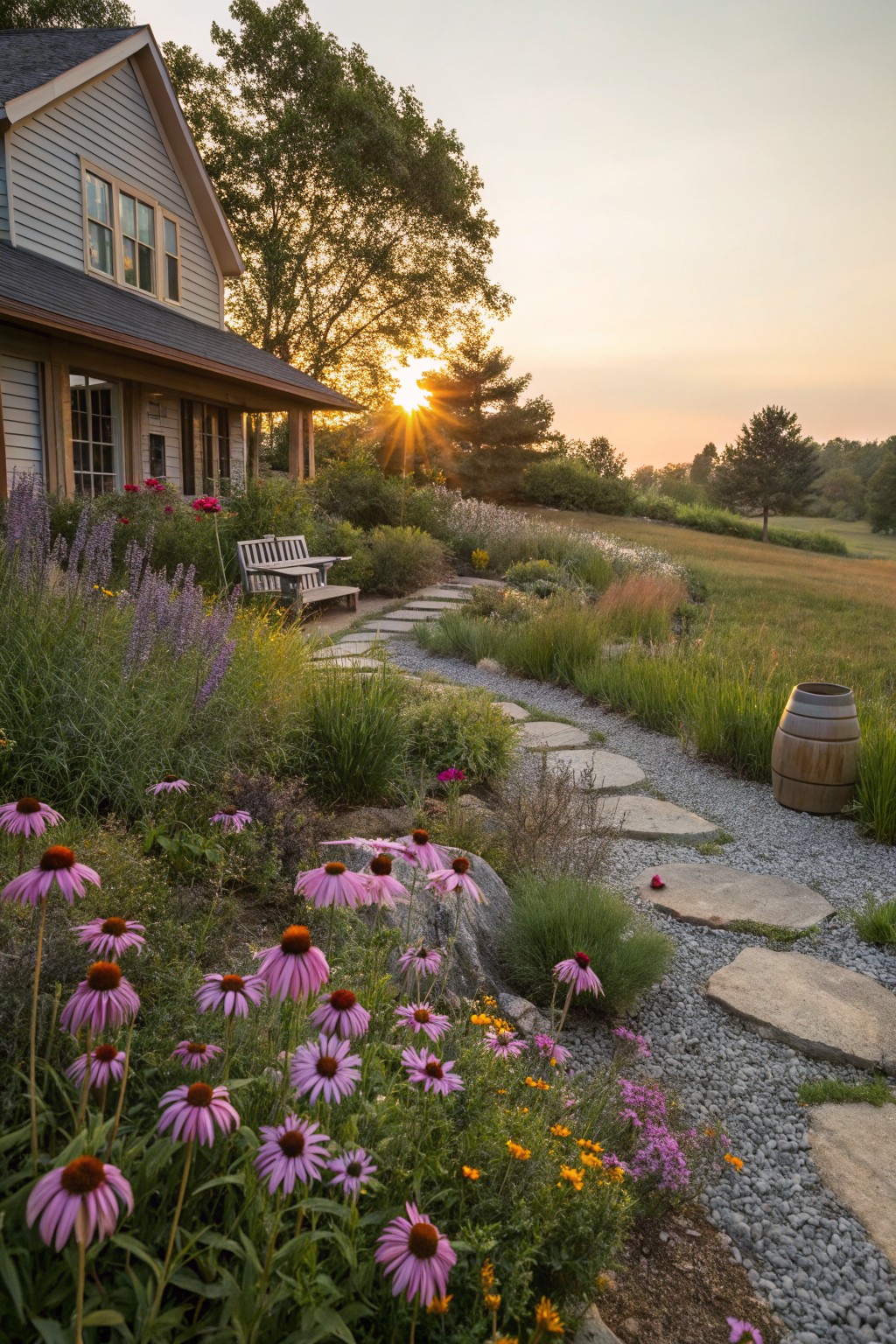
A gentle stone path like this makes your garden feel like an easy stroll into nature. It curves from the porch through thick plantings of coneflowers and tall grasses, pulling you along without trying too hard. Native flowers such as echinacea and liatris pack the beds, giving bees and butterflies plenty to work with all season. The whole setup ties the house to the yard in a quiet way.
Lay irregular flagstones in gravel mulch for good footing and drainage. Tuck in low-water natives around the edges – think black-eyed Susans or prairie dropseed for that wild rhythm. It suits sloped lots or older farmhouses best. Watch the scale though… too narrow a path gets crowded fast.
Stone Path Edged with Native Flowers
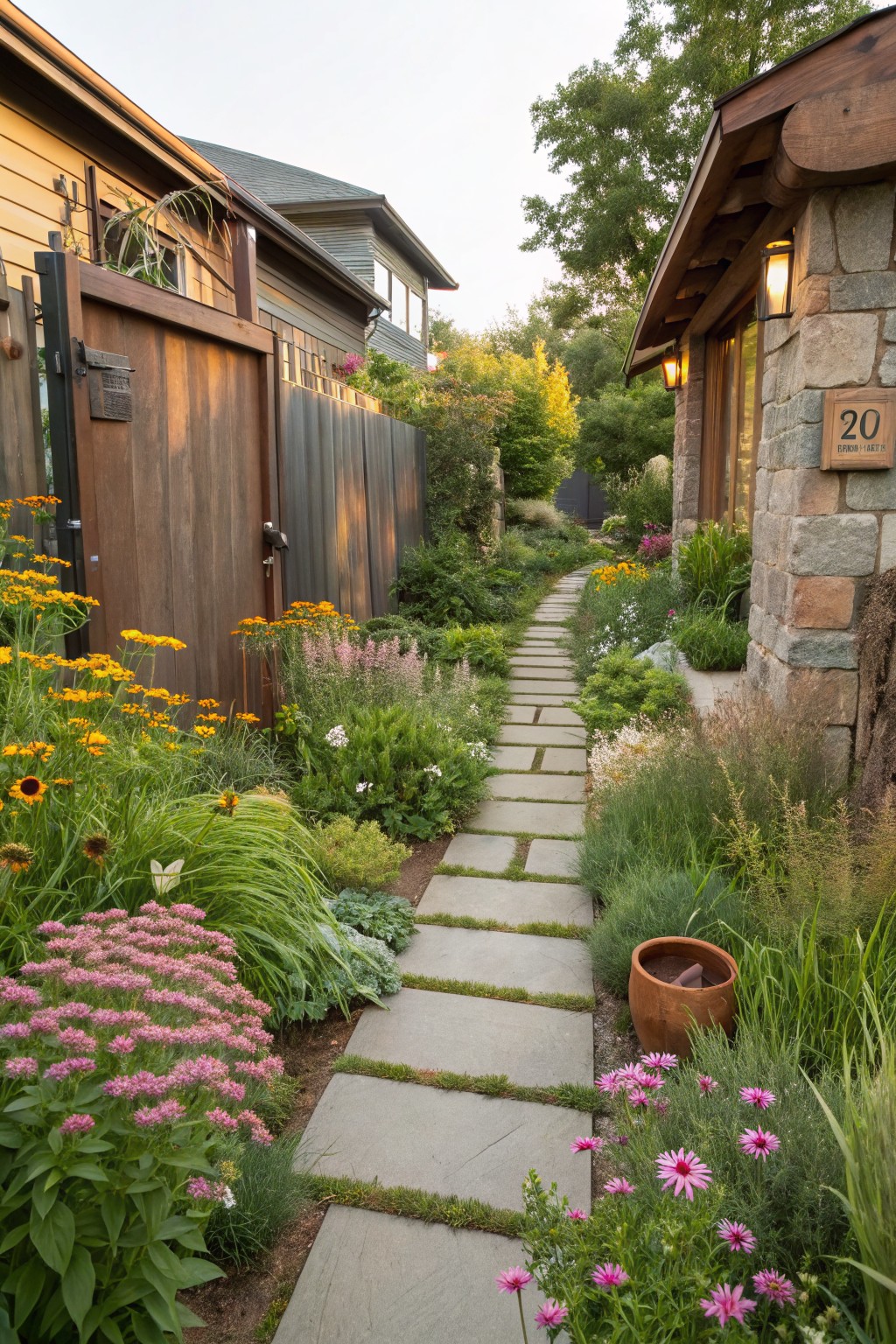
A straightforward stone path like this one works wonders in a side garden or entry approach. It uses wide flagstone slabs set in gravel or moss, with low-growing natives like sedum and black-eyed Susans spilling right to the edges. Those plants pull in pollinators all season, and the path itself stays practical for walking without mowing right up to it.
Try this in a narrow yard between house and fence, where you want color but not fuss. Pick perennials suited to your zone, plant them in loose groups for that full look, and space the stones unevenly so it feels more like nature than a sidewalk. It holds up year after year with just some trimming.
Dry Stream Beds Edged in Native Perennials
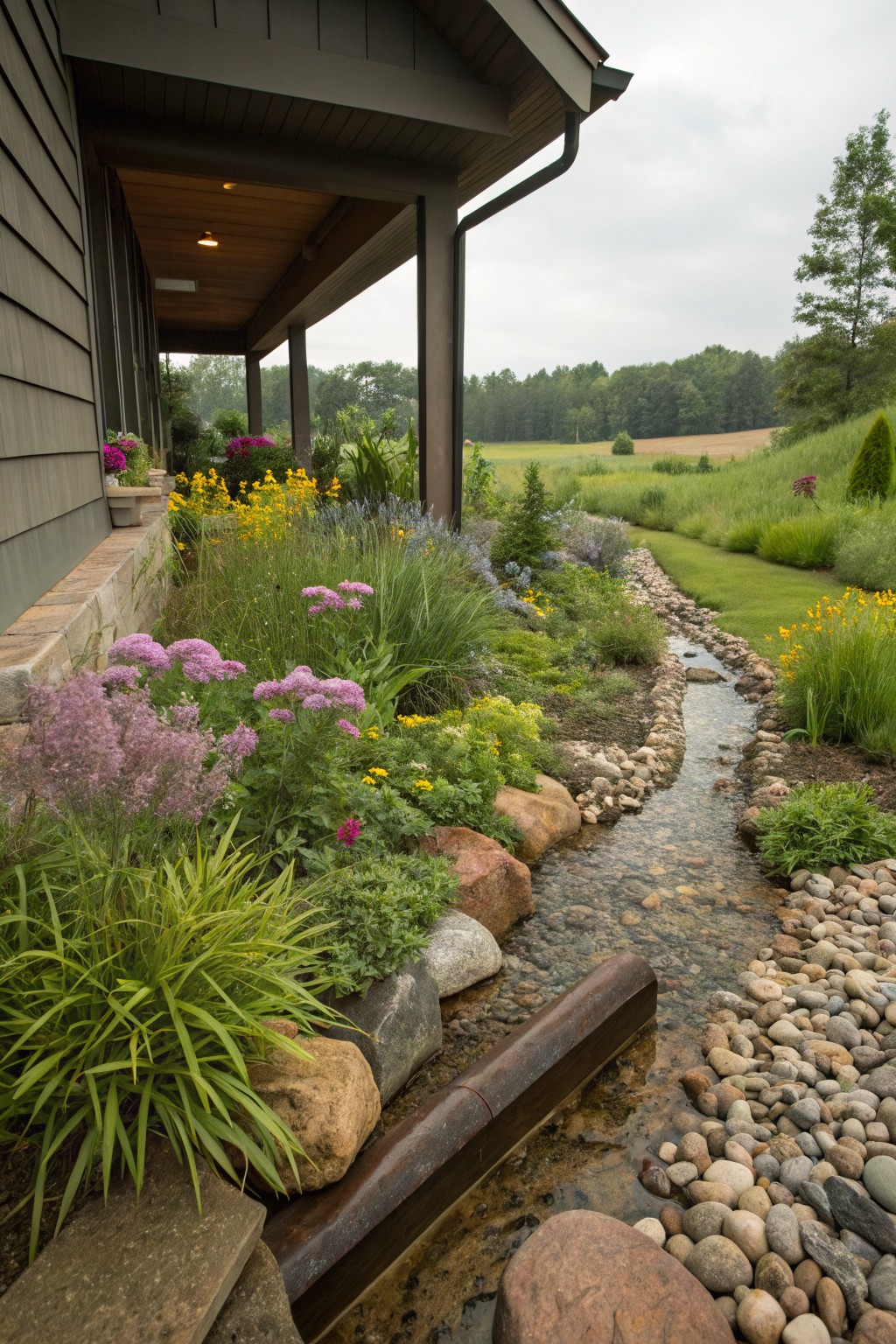
A dry stream bed like this one makes good sense in a yard that gets runoff from the roof or slopes. Line it with smooth river rocks and local stones, then tuck in native flowers around the edges. Those fluffy pink blooms and yellow clusters pull in pollinators without much fuss. It looks like a natural waterway even when it’s dry, and it channels water away from the house foundation.
Set one up along a house wall or through a side garden where drainage is an issue. Pick plants from your region that handle wet feet sometimes, like Joe Pye weed or black-eyed Susans. Bigger boulders add scale… just keep the channel wide enough for real flow in heavy rain. Works on most any lot size.
Raised Planter Beds with Edge Lighting
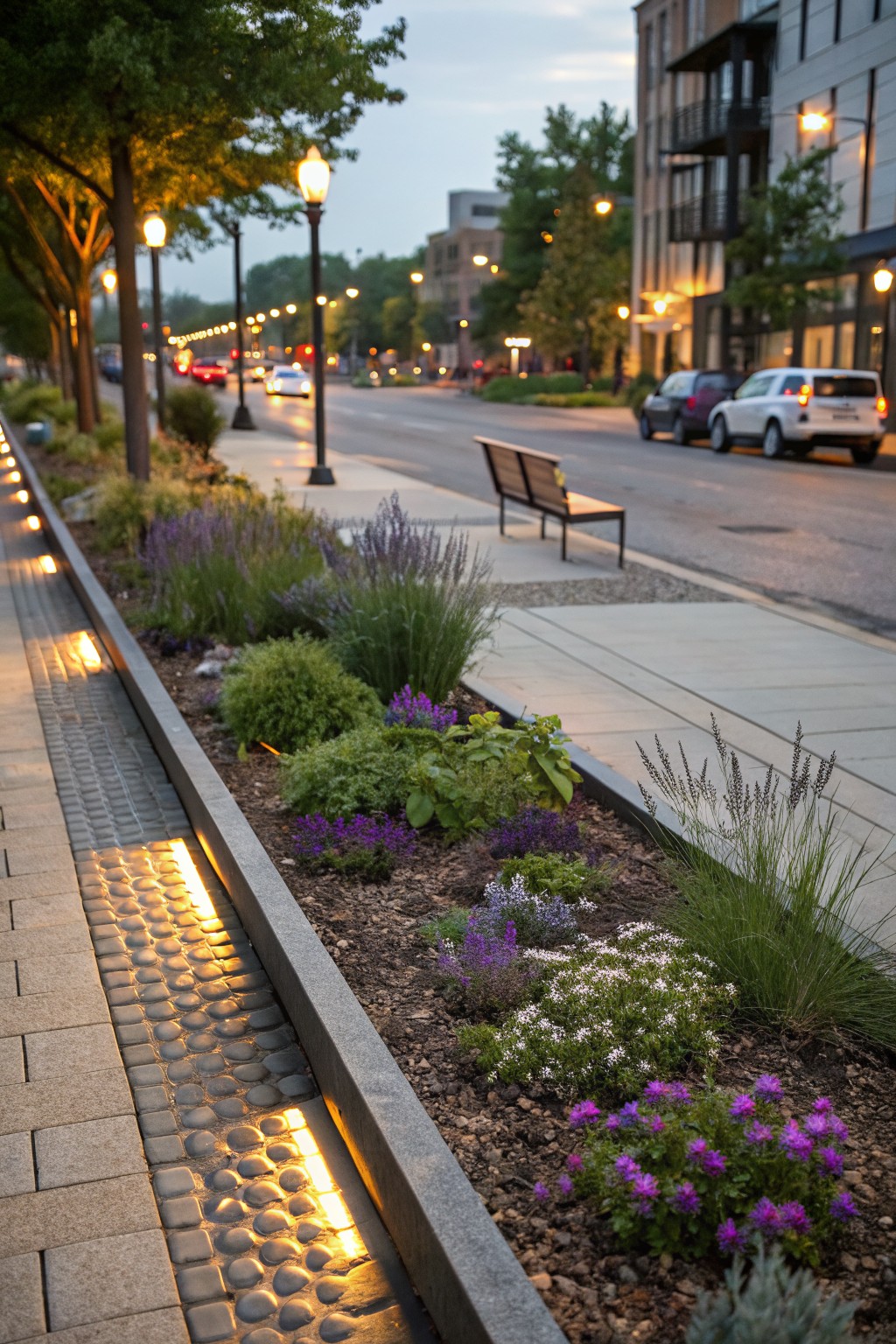
One straightforward way to add native flowers to a walkway is with long raised beds like these. They run right alongside the path, packed with low-growing perennials such as salvia and lavender that draw in bees and butterflies. The real bonus comes from the LED strips tucked into the concrete edging. They cast a soft glow at dusk, making the plants stand out without overpowering the quiet evening feel.
These beds work great next to urban sidewalks, driveways, or side yards where space is tight. Pick tough natives that handle dry spells, and keep the soil simple with gravel mulch. Just watch the lighting placement so it doesn’t wash out during the day. It’s a low-fuss setup that boosts wildlife while lighting the way safely.
Terraced Native Flower Beds with Stone Walls
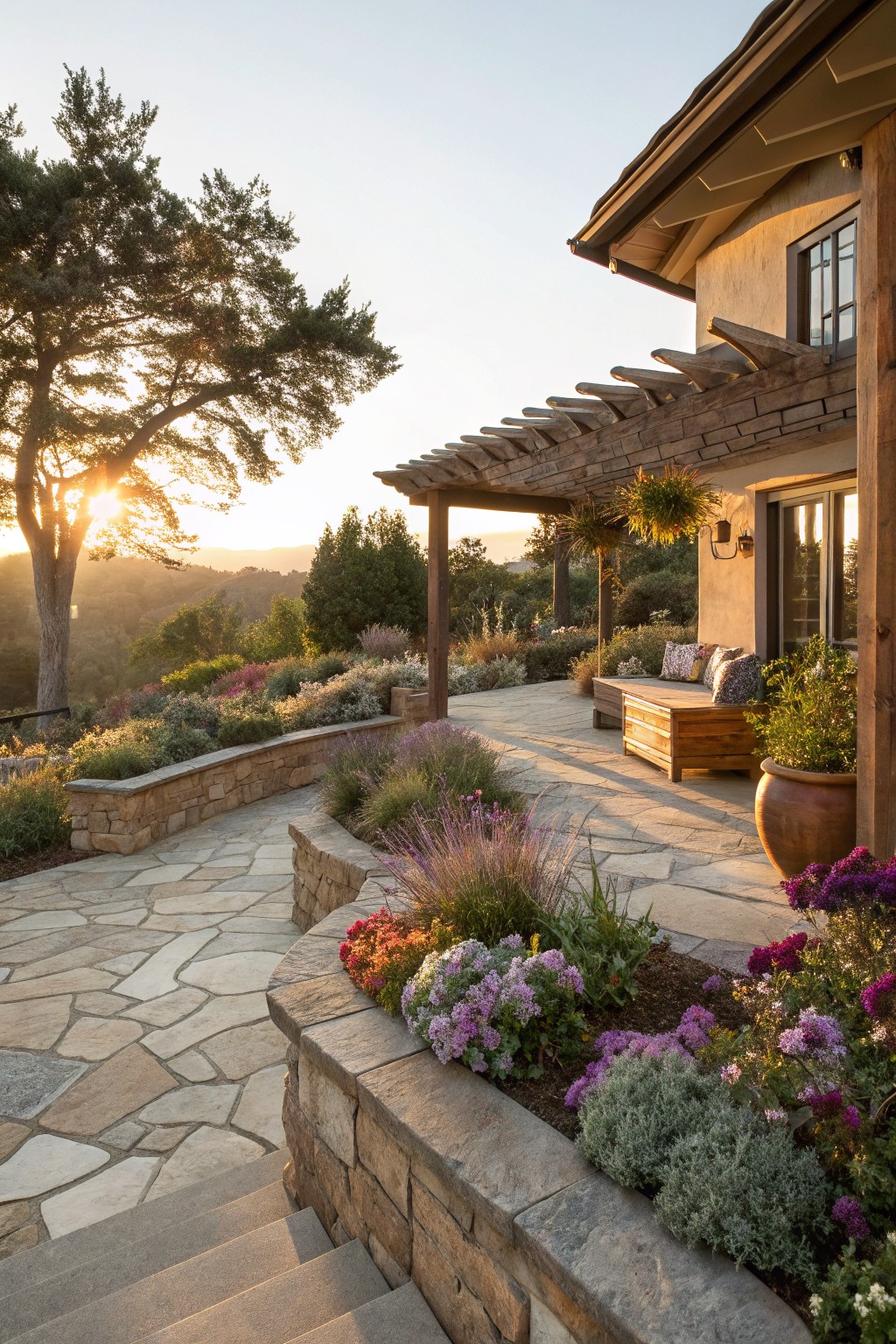
One simple way to work native flowers into your yard is building low stone retaining walls for terraced beds. You fill them with tough local plants like waving grasses, purple lavender spikes, and clusters of daisies. It makes a sloped spot feel stepped and full, plus those flowers draw bees and butterflies without much fuss.
This idea shines on hillsides or anywhere the ground drops off. Pair flagstone steps with the walls for easy walking to a patio or door. Pick natives suited to your area to keep water low and wildlife happy. Just make sure the stones match your house style so it all ties together.
Terraced Stone Path with Native Flowers
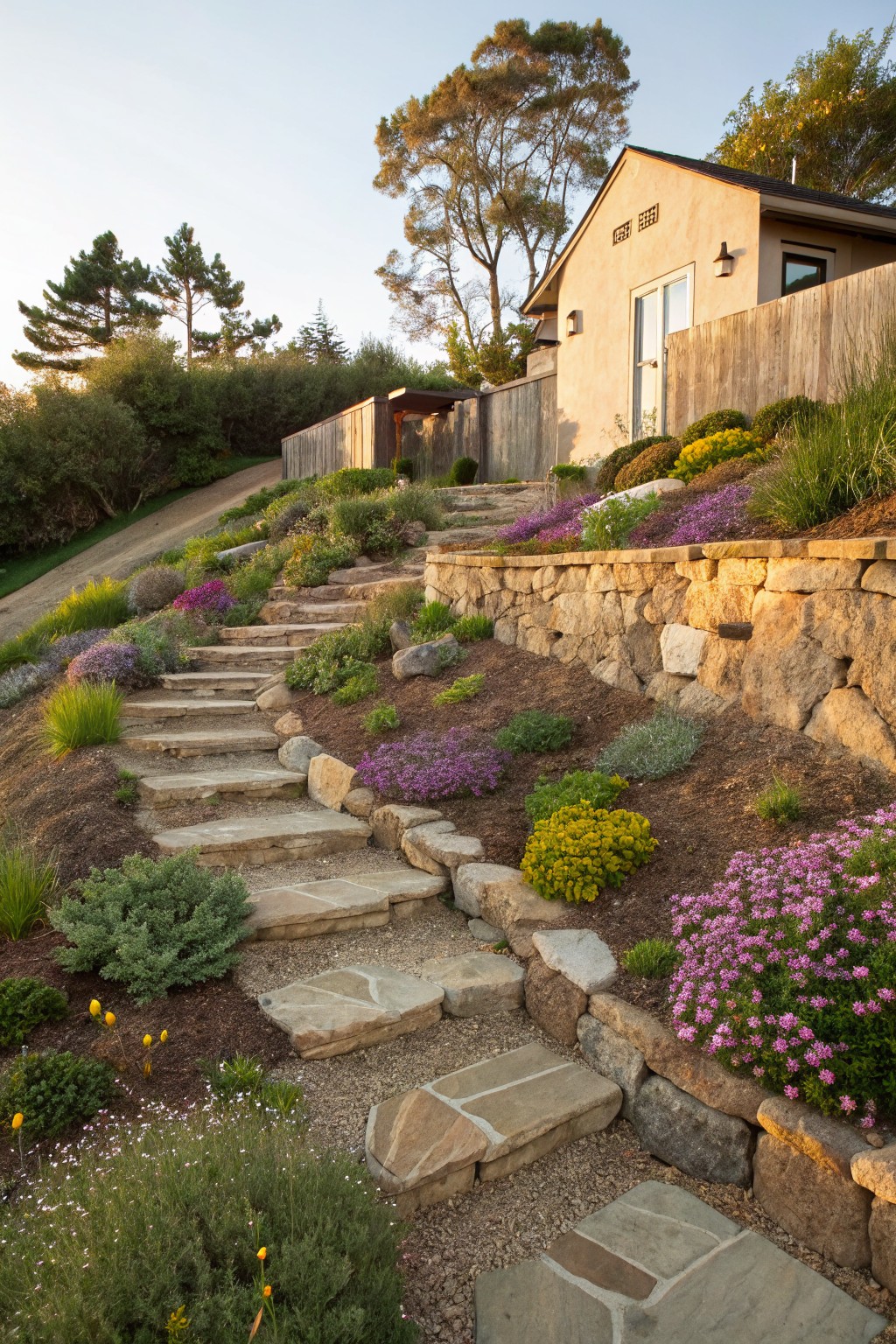
One straightforward way to tame a sloped yard is with a terraced stone path like this. Rough-cut steps lead gently uphill, tucked between dry-stacked walls planted with low native flowers. Think pink thrift, yellow coreopsis, and tufts of grass that draw pollinators without much fuss. It turns a tricky hill into an easy walk that feels part of the land.
This works best on moderate slopes where you want access without big earthmoving. Pick stones from nearby quarries to blend in, and choose flowers native to your region for wildlife help and less watering. Watch the wall height though. Keep them under three feet or add steps behind for safety.
Raised Planter Boxes Line Balcony Edges
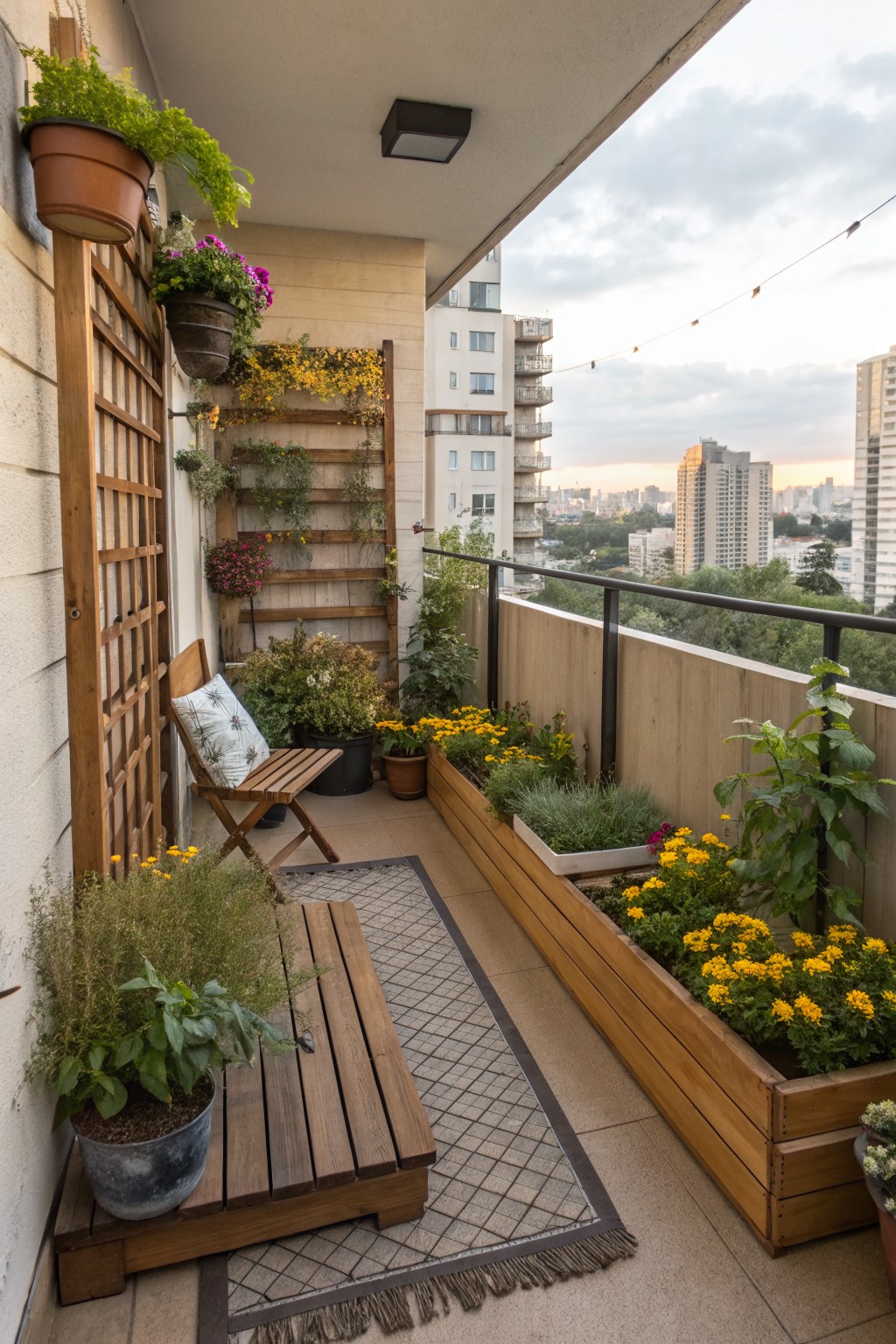
Raised wooden planter boxes running right along the balcony edge make a small space feel full of life. They’re loaded with yellow flowers like marigolds and some herbs that hang over the side a bit. Pick native flowers for these, and you give local pollinators a real spot to visit without taking up floor room.
This idea fits urban balconies or any narrow outdoor spot with good sun. Screw together simple wood frames, set them on the rail base, and plant natives that don’t need much fuss. Add a chair nearby if you want to sit out there. Keep an eye on drainage though, or the roots get too wet.
Rustic Wooden Paths Through Native Gardens
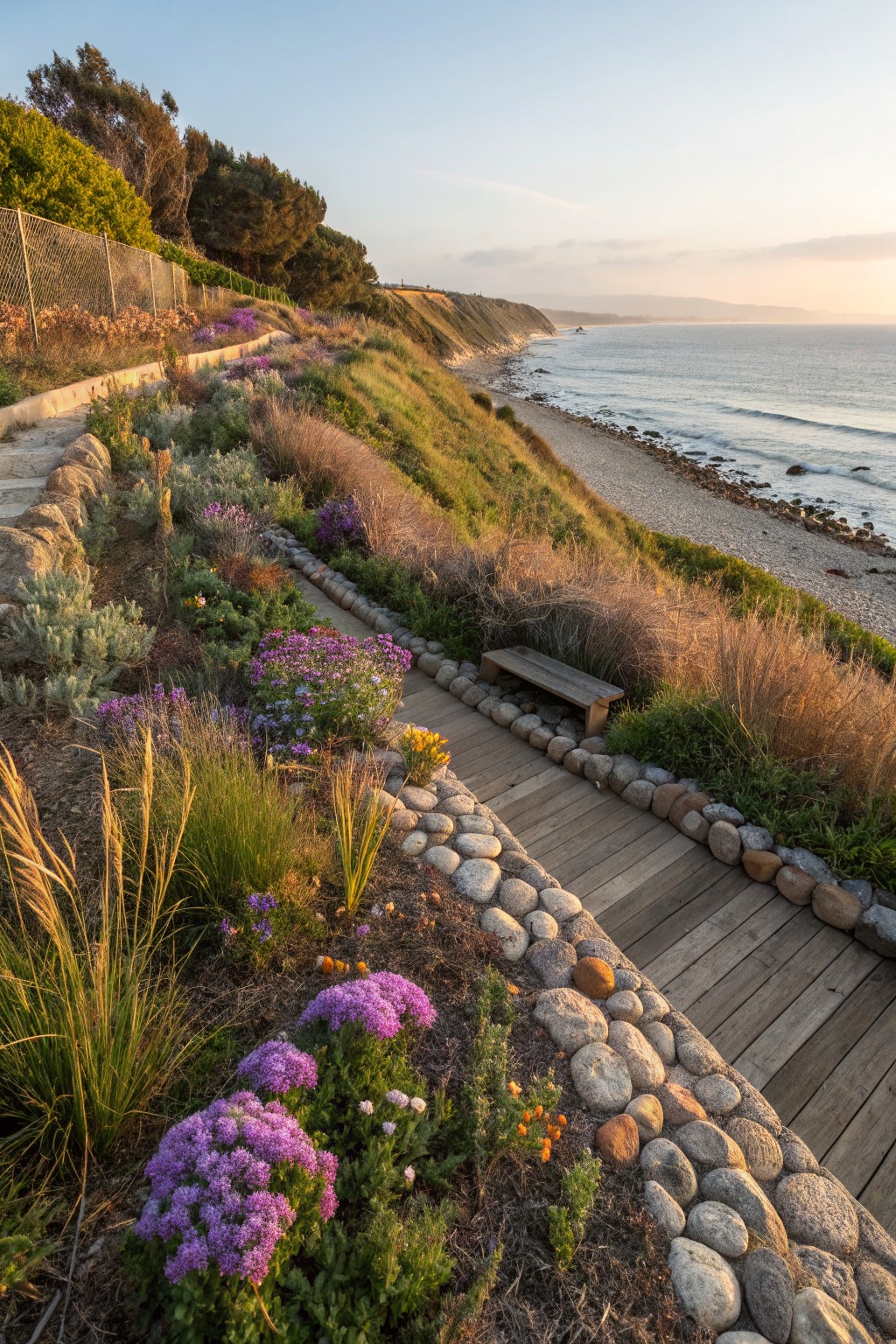
One straightforward way to move through a native flower garden is with a simple wooden boardwalk. It winds gently along the slope, edged by rocks and spilling over with local blooms like those fuzzy purple clusters and tough grasses. This setup lets you walk right up to the plants without compacting the soil, and the natives pull in pollinators all season long.
Try it on hillsides or coastal bluffs where erosion is an issue. Use reclaimed wood for the planks to keep costs down, then tuck in drought-hardy flowers and succulents along the edges. It fits homes with a natural vibe… just watch for wood rot in wet spots and refresh the plants every few years.
Tiered Stone Steps Edged with Native Plants
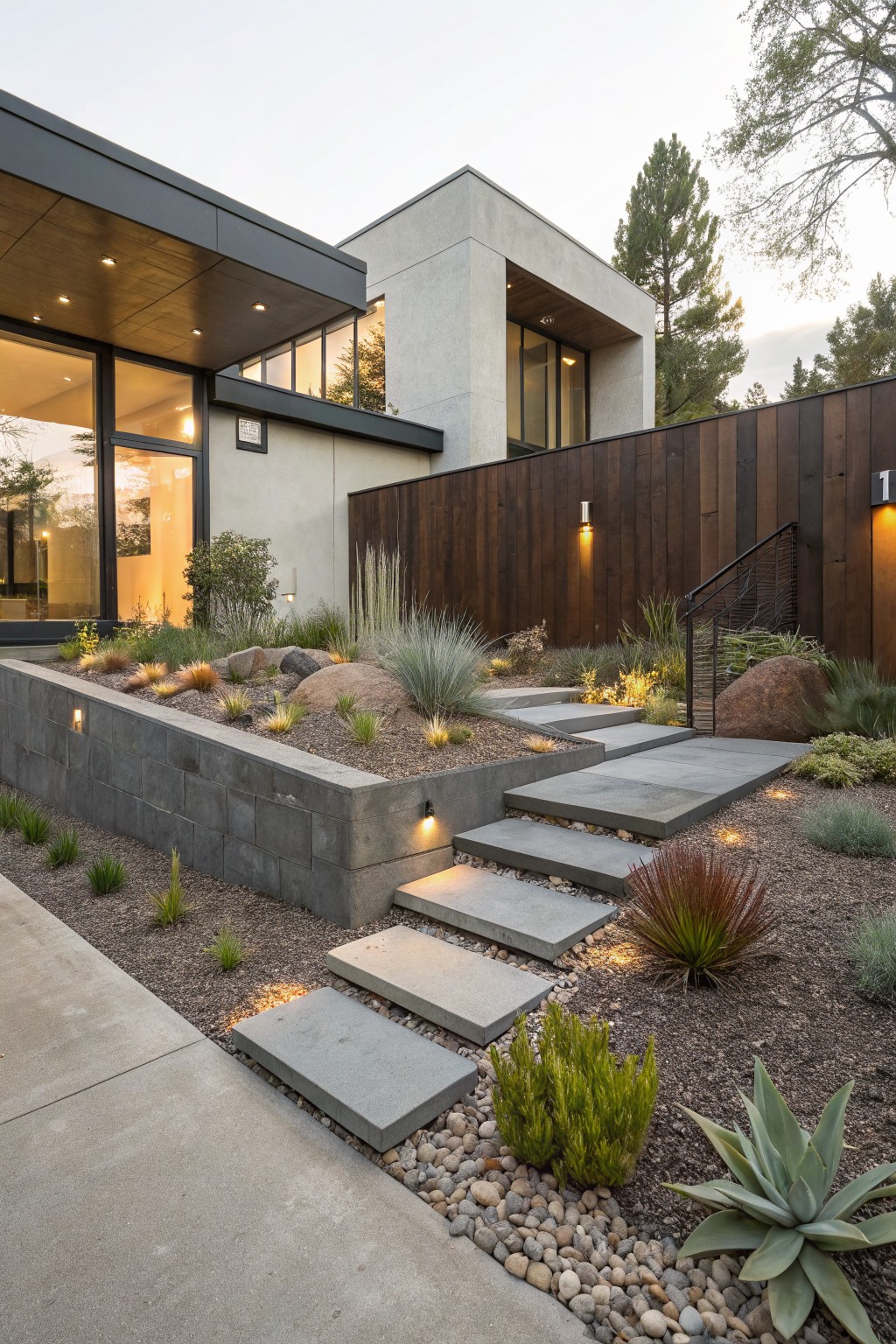
This setup uses wide concrete steps set right into gravel beds filled with tough native grasses, succulents, and agave. The plants cluster naturally around boulders and the low retaining walls, creating a layered look that feels wild but tidy. It’s great for dry areas because these plants pull in pollinators and birds without needing much water or fuss.
Try this along a front path or driveway where you want easy access without mowing. It works best on sloped lots near modern homes, tying the yard to the architecture. Just pick locals like feather grass or yucca that match your zone, and space them loose for wildlife to move through.
Winding Stone Paths with Native Flowers
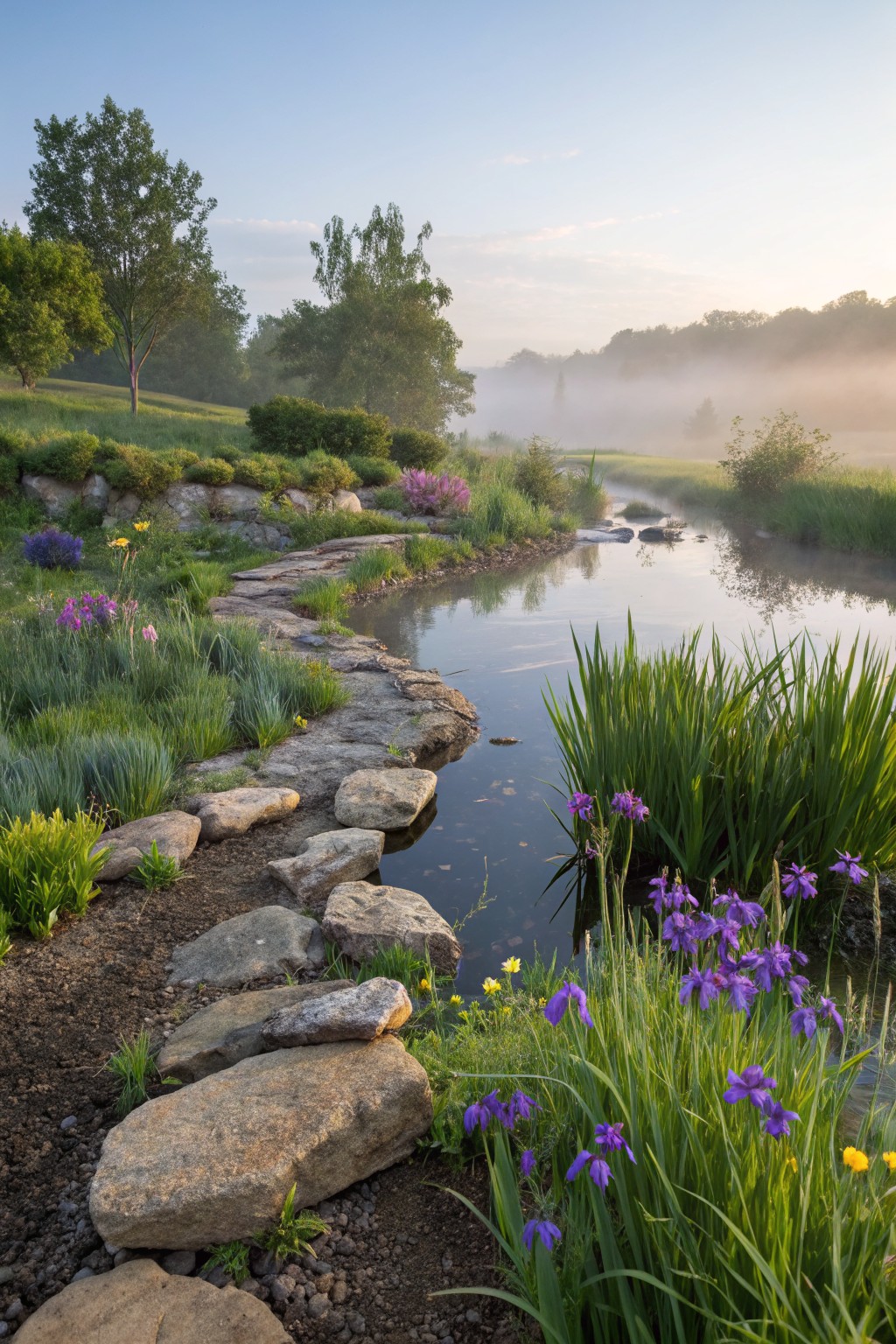
A good way to guide folks through a garden is a simple winding path like this one made from flat natural stones. It hugs the edge of a stream, with purple irises, tall grasses, and pink phlox spilling right over the edges. What makes it work so well is how the path blends into the planting. No harsh lines. The natives draw pollinators and birds, turning the walk into a little wildlife corridor.
Put something like this along a backyard brook or low wet spot. Use stones you source locally to keep costs down and the look authentic. Stick to perennials from your region that handle moisture, like irises or sedges. It’s perfect for average yards… just watch that the stones don’t shift in heavy rain. A gravel base helps.
Native Lavender on Hillside Steps
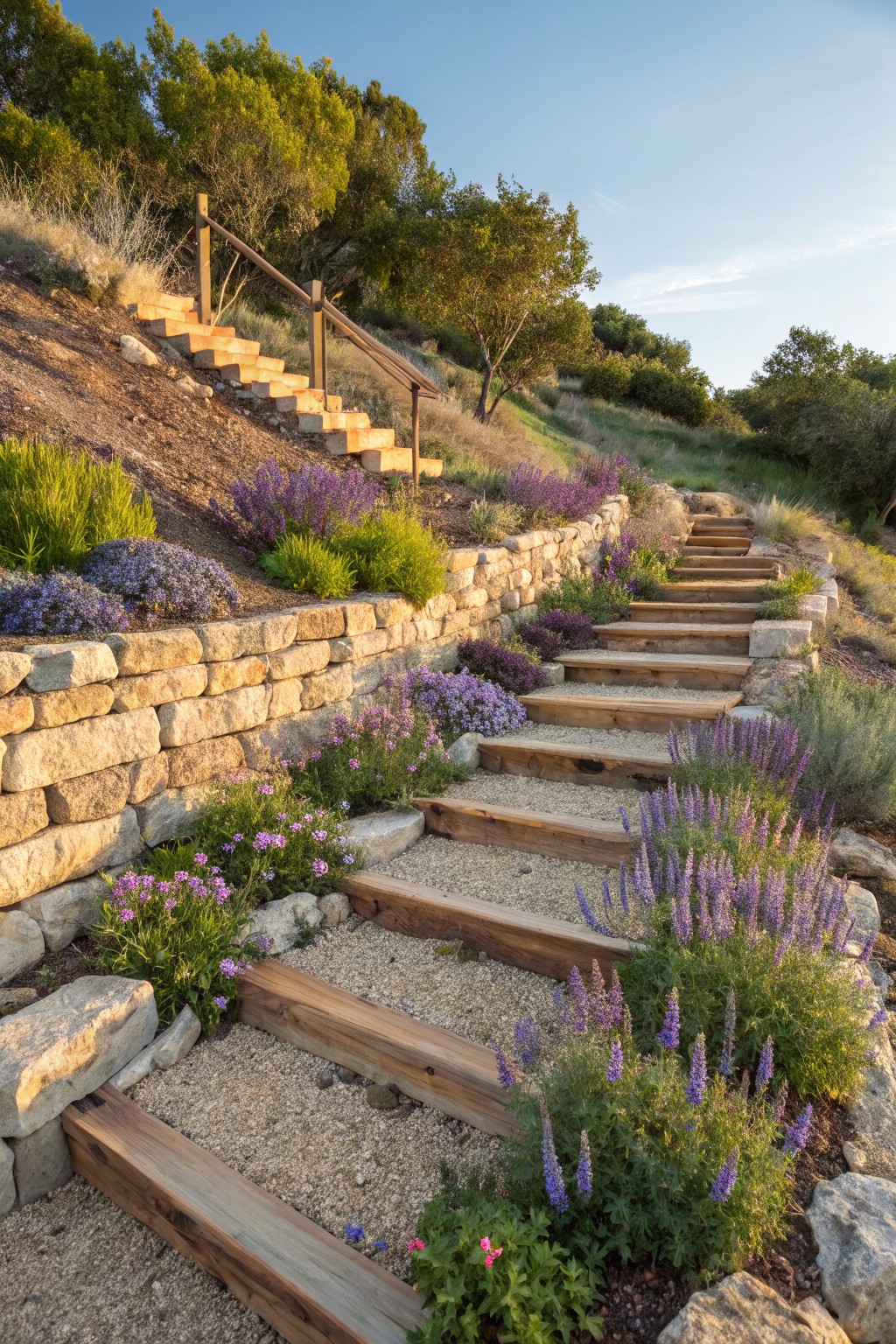
Simple wooden steps like these make a sloped yard workable. Set them into gravel landings with sturdy stone retaining walls on both sides. Tuck in lavender and other native flowers right into those walls. The purple blooms stand out against the rocks and wood. They pull in pollinators too. Keeps the path looking full without much upkeep.
This works best on hills where you need yard access without big retaining walls everywhere. Pick natives for your zone so they thrive on little water. Fits homes in dry areas with natural slopes. Watch the step height though. Keep them even or folks might trip.
Raised Planters Filled with Native Grasses and Flowers
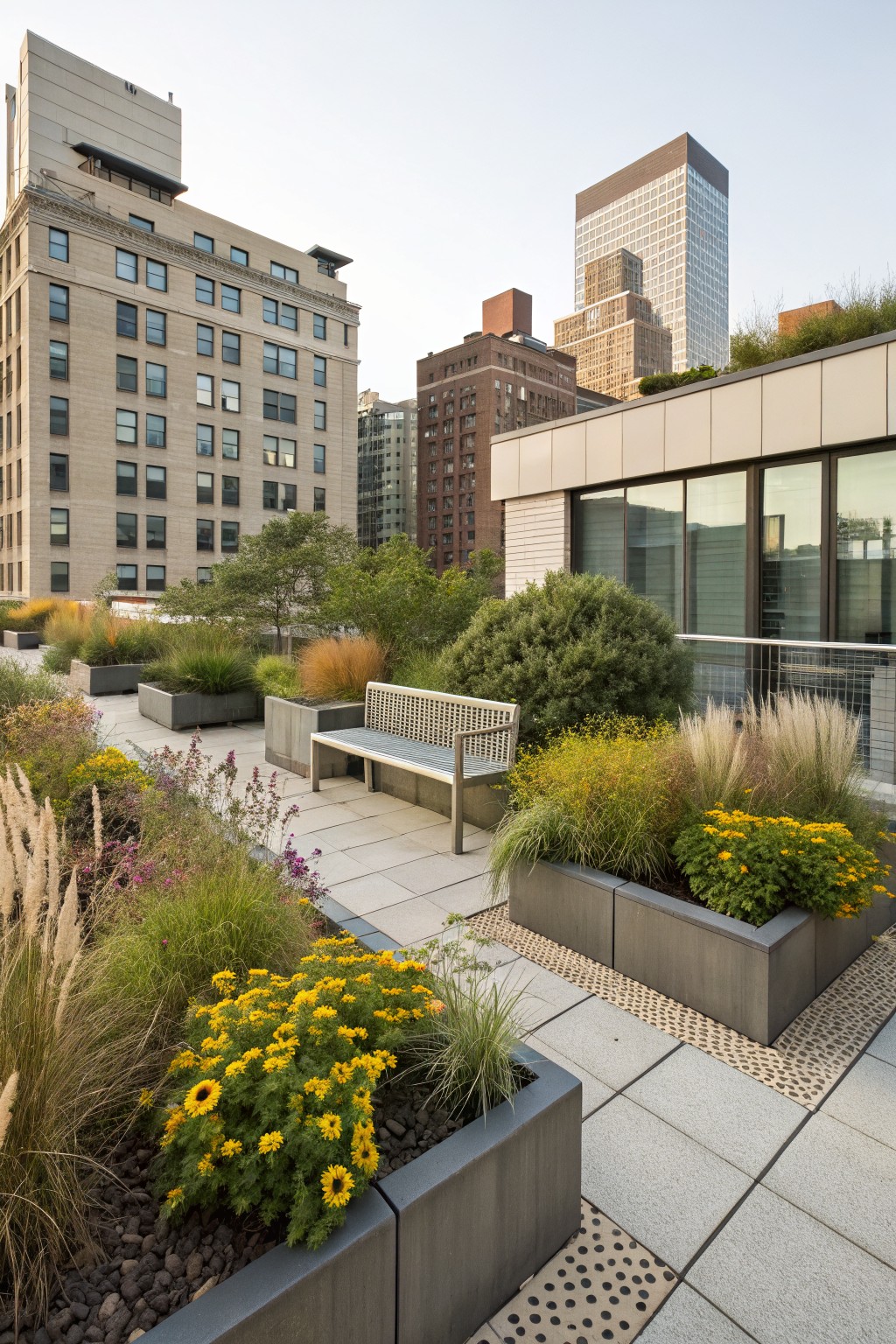
One straightforward way to bring native plants into tight urban spots is with these big raised concrete planters. They’re packed with tall, feathery grasses like switchgrass or little bluestem, mixed with clusters of yellow coreopsis or black-eyed Susan flowers. The grasses give height and movement, while the flowers draw in bees and butterflies. It keeps everything tidy on a hardscaped terrace, no sprawling mess.
This setup works great on rooftops or balconies where soil is shallow. Pick drought-tolerant natives that match your zone, and group them in repeats along paths for rhythm. Add a simple bench like the one here, and you’ve got a low-water spot that feels wild but controlled. Skip fussy edging. Just let the planters do the work.
Garden Path Lined with Raised Beds
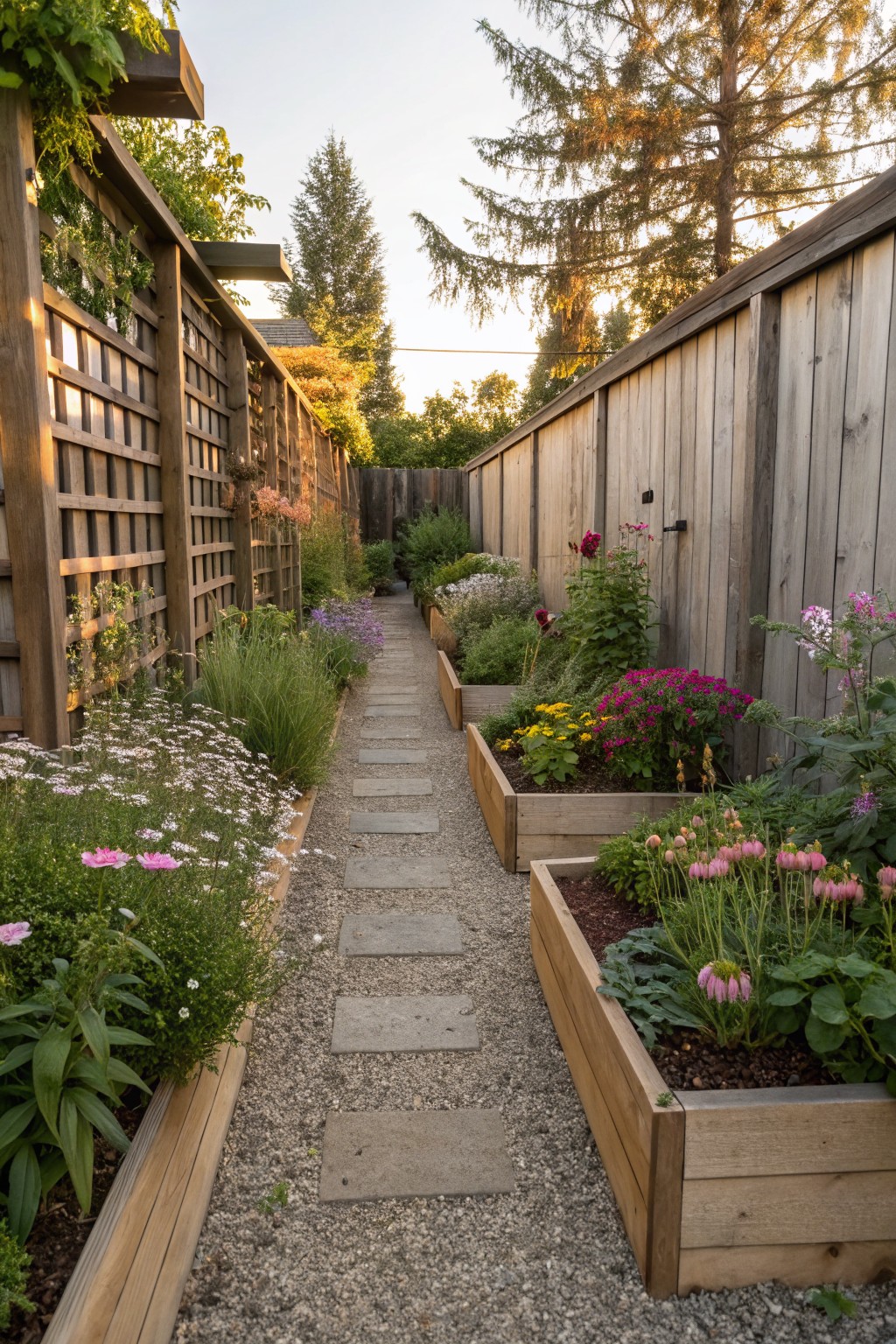
One straightforward way to pack native flowers into a tight space is lining a simple path with raised wooden beds. Here you see gravel stepping stones running between tall planters bursting with perennials like pink coneflowers, white daisies, and yellow marigolds. This layout turns a skinny walkway into a buzzing pollinator corridor. The beds keep soil tidy and make weeding easier while letting flowers layer up for season-long color and wildlife draws.
It works best in side yards or narrow back strips where you want max plants without sprawl. Build beds from untreated cedar to last years and avoid chemicals natives hate. Space them tight to the path for that enclosed feel… just leave room to walk without brushing blooms.
Entry Steps Lined with Native Grasses and Flowers
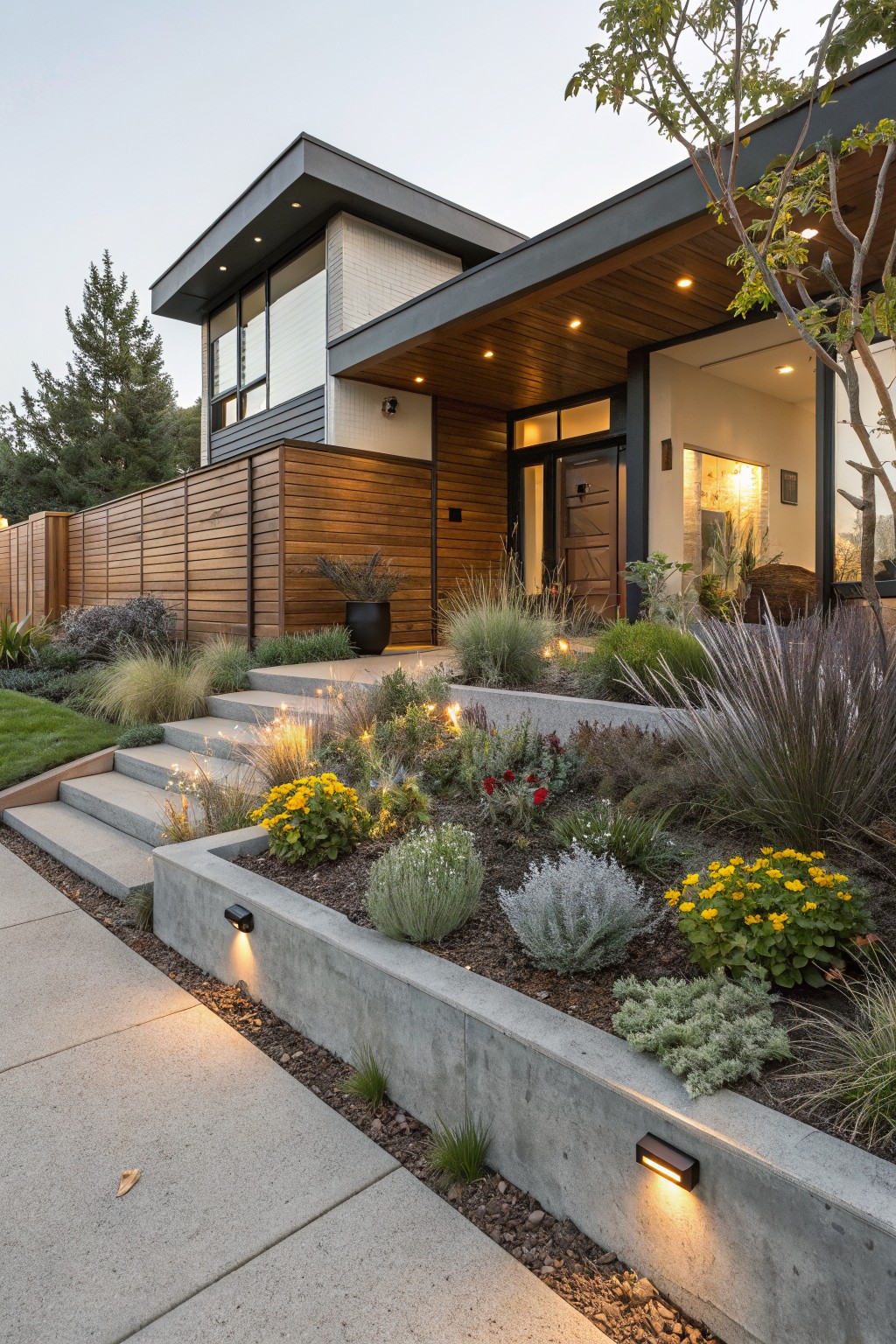
One simple way to make your front entry feel more alive is to line the steps with native grasses and flowers. Here you see tall, feathery grasses mixed with clusters of yellow blooms and low silvery plants tucked into beds along concrete retaining walls. It softens those hard lines without much upkeep, and the natives draw in bees and butterflies right at your doorstep.
This works best on sloped yards or any entry with steps, where you want color and movement but not constant watering. Pick tough locals like deer grass, yarrow, or coreopsis that match your zone. Plant in layers, taller stuff at the back, and add gravel mulch to cut weeds. Just keep the paths clear for easy walking.
Dry Creek Beds with Native Flowers
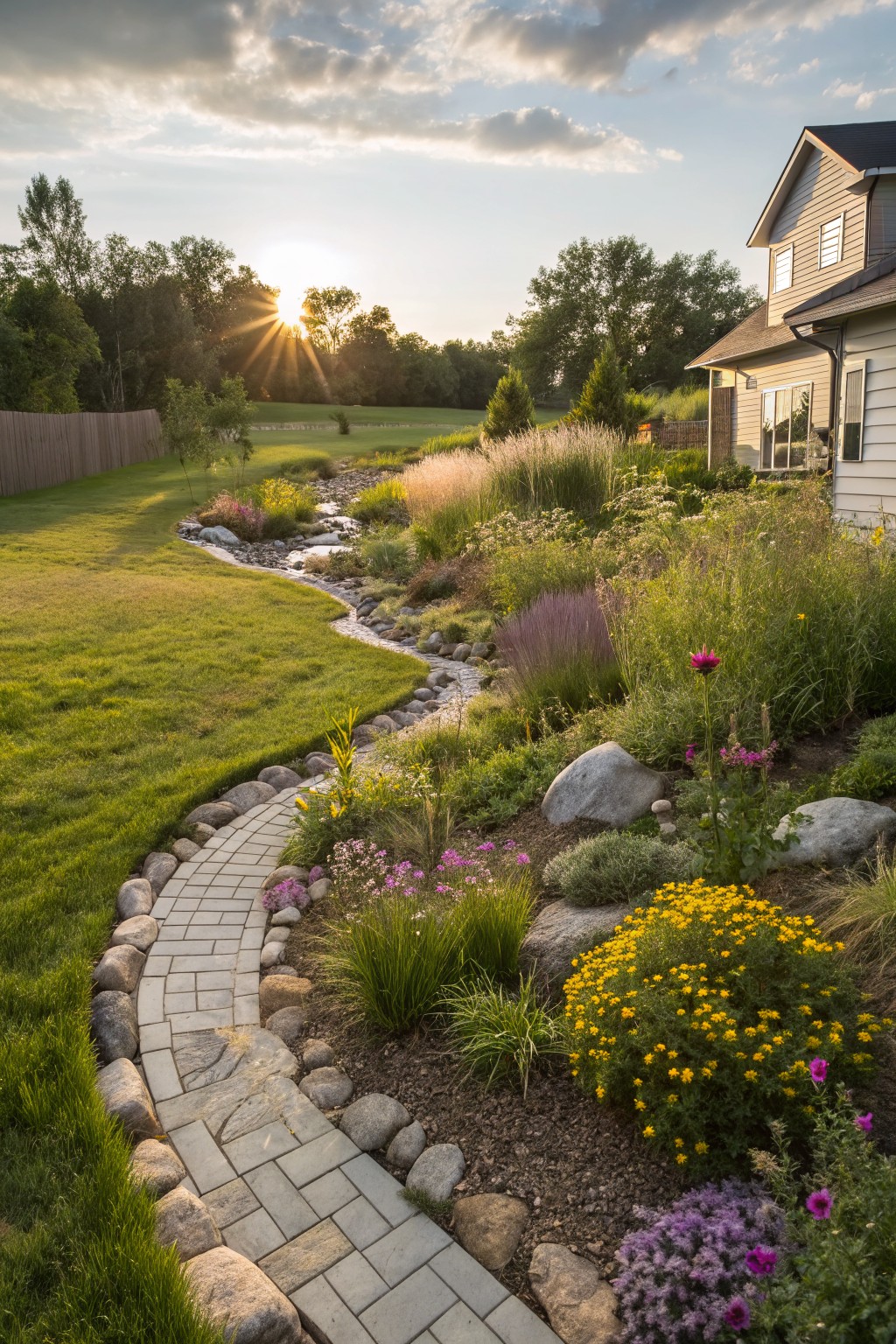
A dry creek bed like this winds through the yard using smooth river rocks to mimic a natural stream. It’s edged with tough native plants such as tall grasses, pink coneflowers, and yellow coreopsis that bloom all season. This setup pulls in butterflies and bees without much upkeep, and it handles rain runoff nicely.
You can add one in any sunny backyard spot, especially where water pools after storms. Start with landscape fabric over soil, pile in the rocks to form curves, then tuck in natives for color and wildlife cover. It fits modern homes or older ones with big lawns… just keep it away from high-traffic paths.
Frequently Asked Questions
Q: How do I pick native flowers that actually grow in my yard?
