


I often see backyards that feel like wasted space simply because everything blends together without any separation.
Creating distinct areas for meals, quiet time, or even storage lets the yard support more of what families actually do outside.
I have found that starting with the main seating spot and then adding a path or screen nearby tends to pull the rest of the layout into place more easily than trying to plan it all at once.
It makes a difference.
Over time those small divisions add up and the yard starts to feel like an extension of the house rather than something separate and unused.
Turn An Empty Backyard Into A Fire Pit Seating Area

A bare concrete slab and patchy grass leave a backyard feeling unfinished and unused. Adding a circular fire pit with surrounding seating gives the space a clear purpose and turns it into a spot people actually want to gather.
This approach works best in medium or larger yards where you can leave enough room to walk around the seating. Start with the fire pit as the anchor, then build simple benches or add chairs around it. Keep the rest of the yard open so the new zone feels intentional instead of crowded.
Turn An Empty Patio Into A Covered Outdoor Dining Area
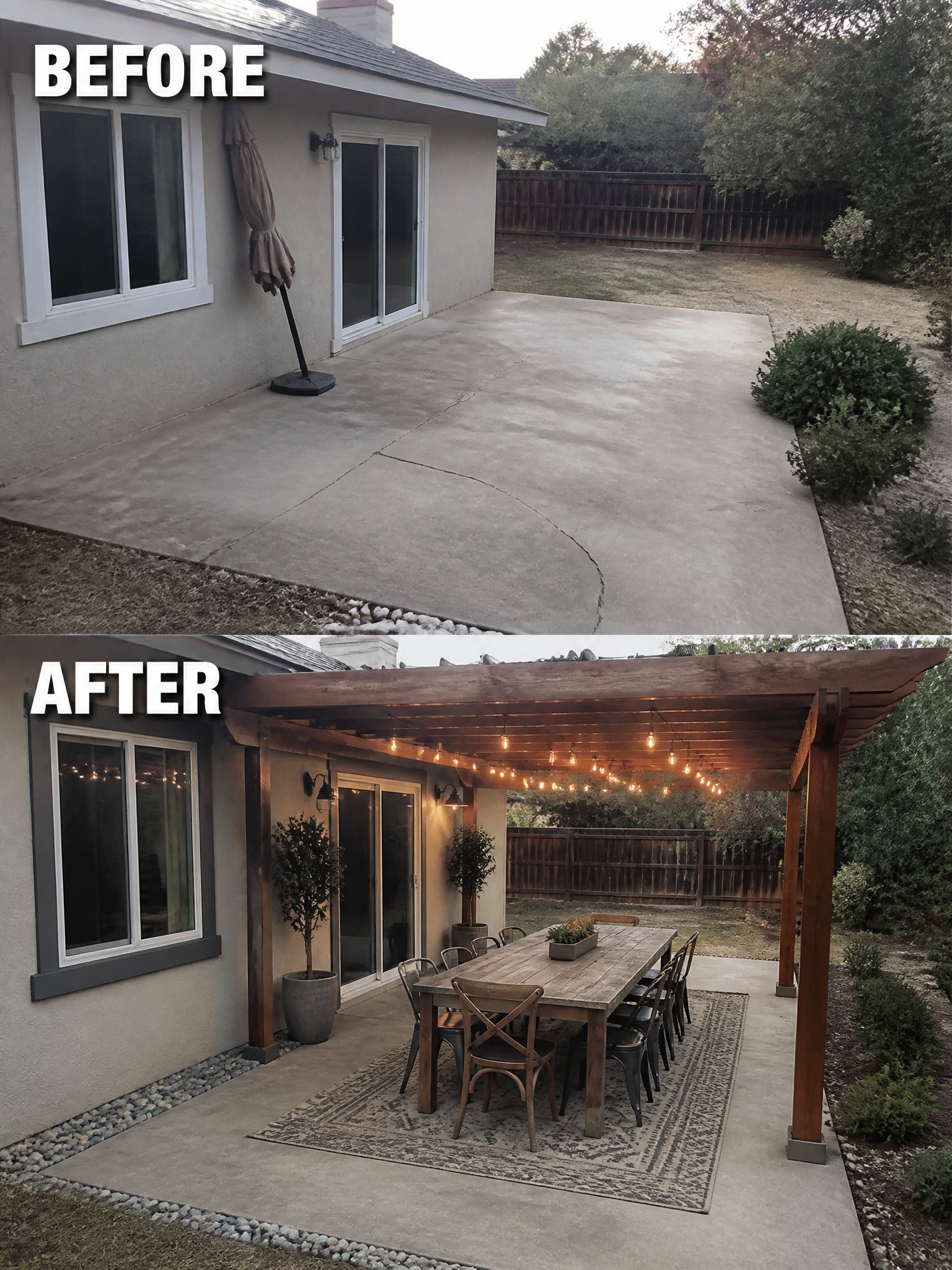
A bare concrete slab often sits unused because it lacks any sense of enclosure or purpose. Adding a simple pergola with overhead lighting instantly gives the space a ceiling and a focal point, so the area feels like a real room instead of leftover pavement. The dining table and rug then anchor everything in one spot.
This approach works best on patios that already have decent size but no shade or boundaries. Start with the structure and lighting before worrying about too many accessories, and make sure the table and chairs leave enough room to walk around them comfortably. The same idea scales down for smaller patios if you keep the furniture modest.
Turn An Overgrown Backyard Into A Defined Play Zone
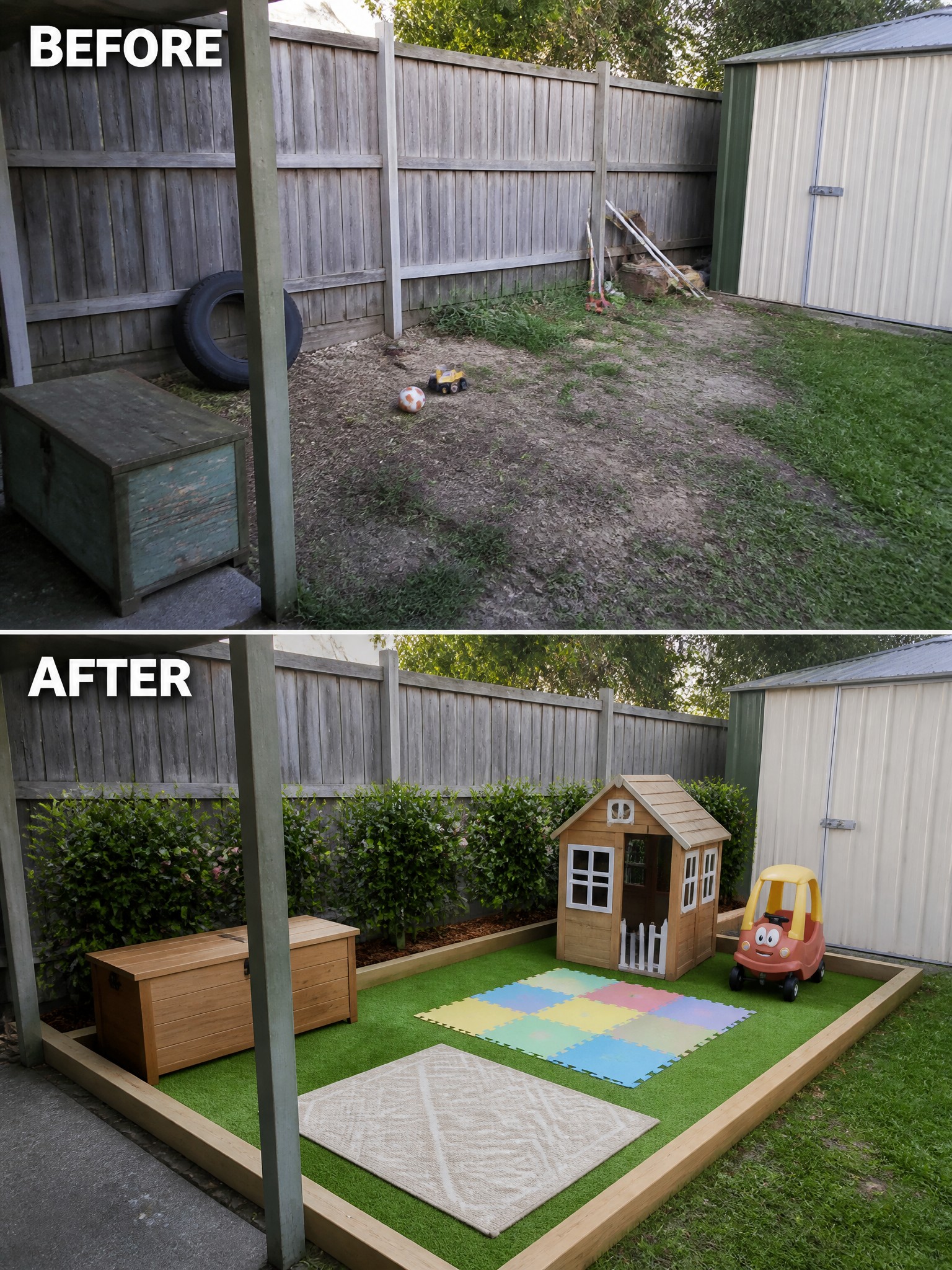
A bare backyard with patchy dirt and random toys scattered around can feel like wasted space. Adding a raised wooden border and filling it with artificial turf creates a clear play area that stays clean and usable no matter the weather. The simple edge keeps everything contained and makes the space feel intentional instead of leftover.
This works well in smaller yards where you want one dedicated zone without covering the whole lawn. Start by clearing the ground and setting a border first, then add the turf. Keep the rest of the yard simple so the play area stands out without crowding the space.
Turn A Bare Backyard Corner Into An Outdoor Kitchen
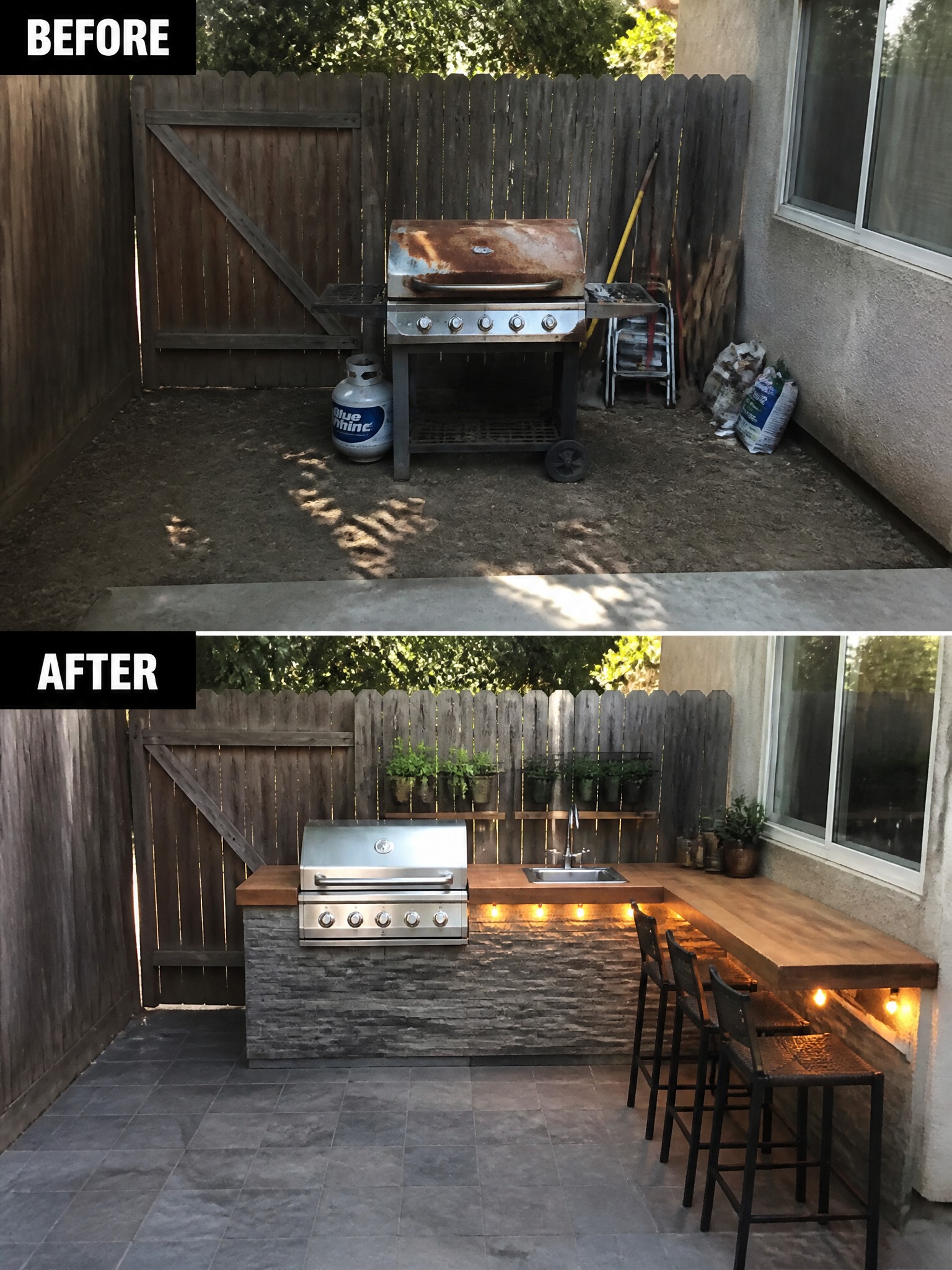
A simple backyard with just dirt and a standalone grill can feel unfinished and hard to use. Building a base around the grill with counters, a sink, and bar seating turns the same spot into a clear cooking and gathering area that actually gets used.
This approach works best in smaller yards where you want one main zone instead of spreading things out. Start with a solid ground surface and a practical counter height, then add seating that leaves room to walk around. Keep the rest of the space open so the kitchen does not feel crowded.
Turn A Bare Backyard Into A Defined Outdoor Zone

A bare dirt yard often feels like wasted space because nothing tells you where to sit or how to use it. Adding a simple circular deck with a gravel border instantly creates a clear room outdoors. The gravel keeps the area contained while the platform gives you a solid, usable surface for a mat or low seating.
This approach works well in small or narrow yards where you want one focused spot instead of spreading things out. Start with the hardscaping first so the zone feels intentional, then add just a few plants or lights around the edge. Keep the rest of the yard simple so the defined area stands out without crowding the space.
Add Raised Beds To Give An Overgrown Yard Clear Structure
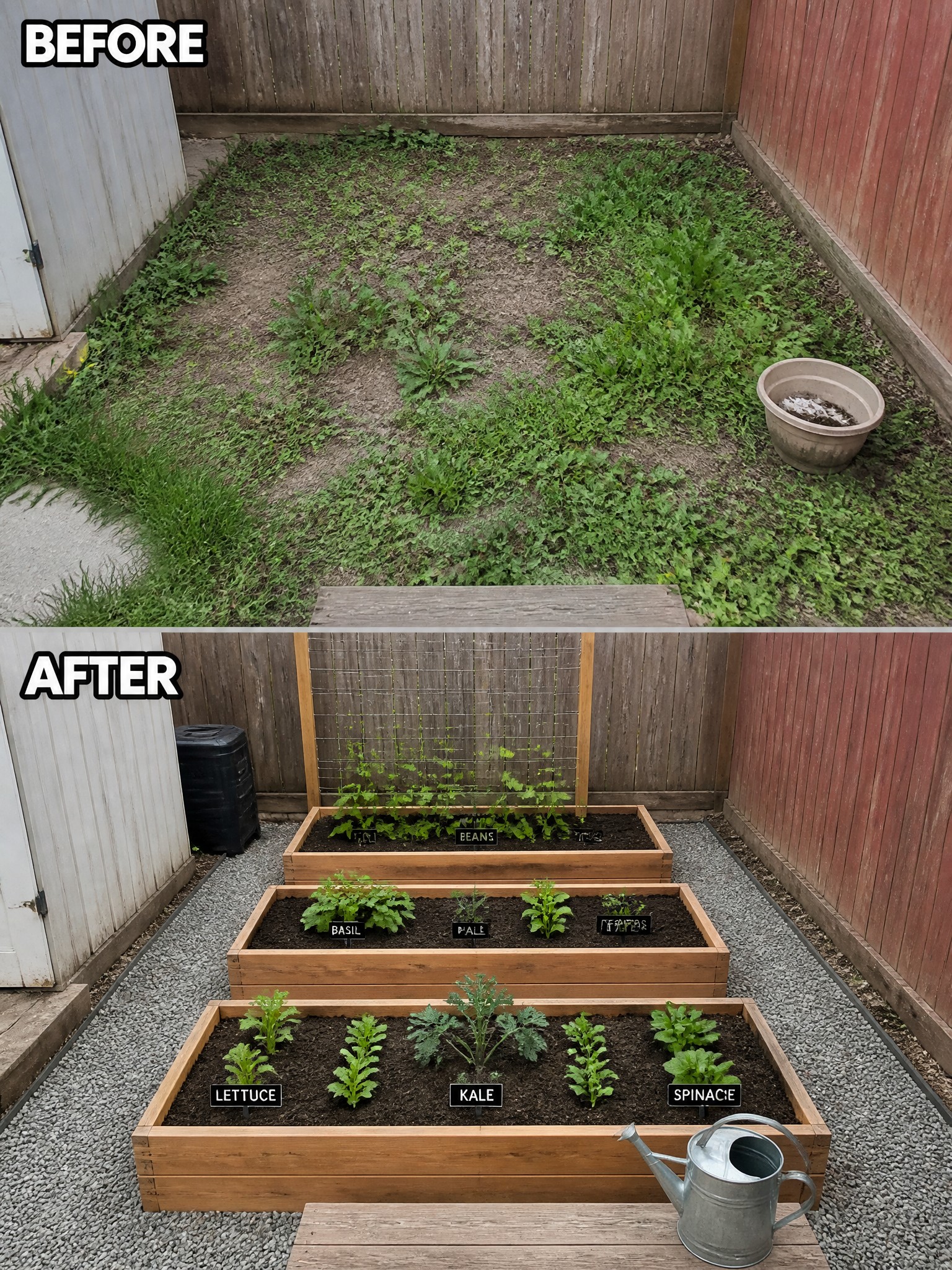
A messy backyard often feels unusable until you give it some shape. In this case, the before photo shows a weedy patch with no real layout, while the after shows how three raised beds turned the same space into a working garden. The beds create straight lines and separate zones, which makes the whole area feel intentional instead of neglected.
This approach works well in small yards where grass is hard to maintain. Start with basic wooden beds and gravel paths to keep things simple, then add plants that suit your climate. It keeps the garden contained so you do not end up fighting weeds across the whole yard.
Create A Hammock Spot In A Bare Backyard Corner
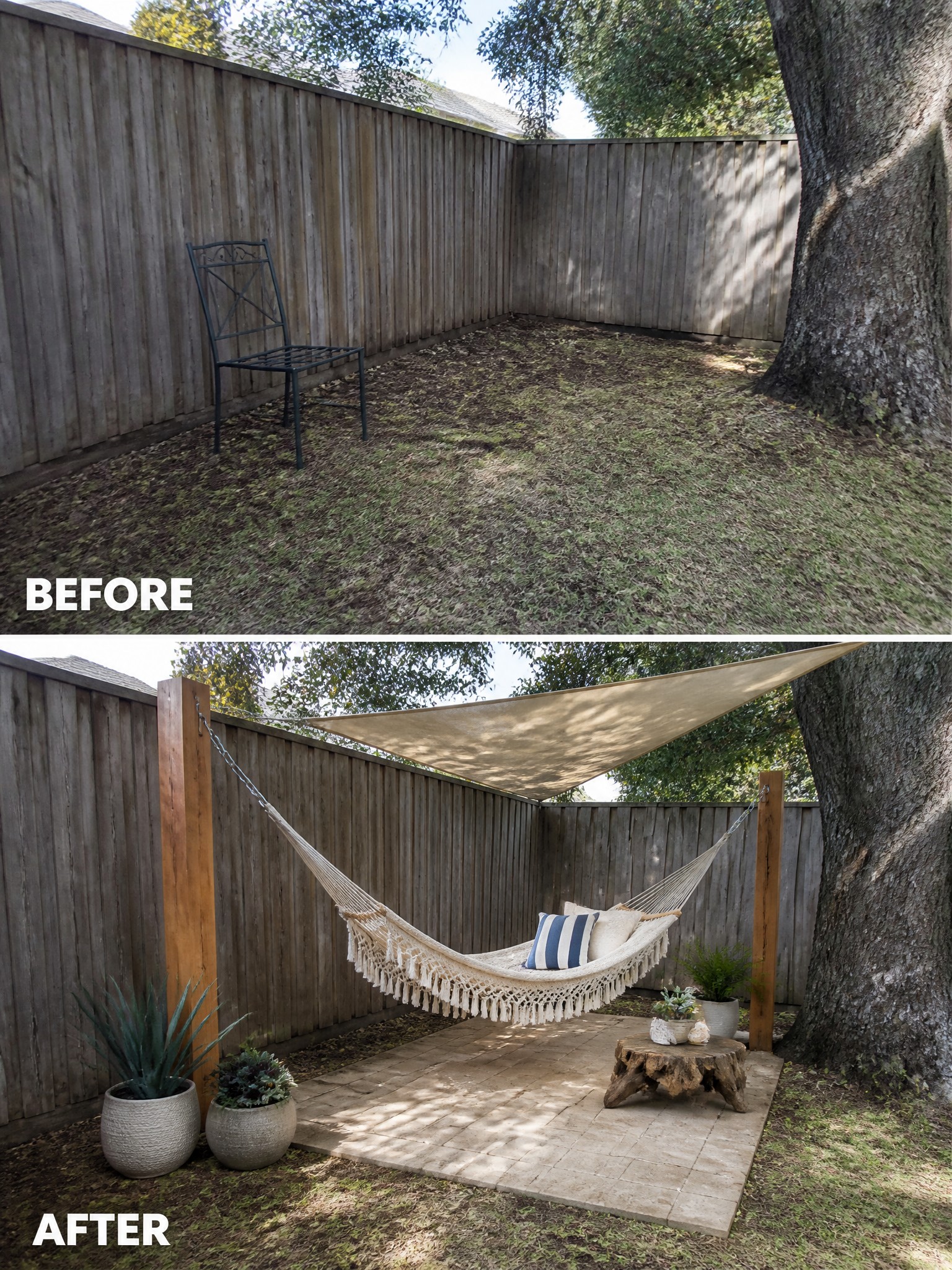
A plain fenced yard with just dirt and one old chair feels like wasted space. Adding two simple posts, a hammock, and a shade sail overhead turns the same corner into a place you can actually use for relaxing. The pavers on the ground give it a solid floor so it feels like a real outdoor room instead of just open dirt.
This idea works best in smaller backyards where you want one clear spot for sitting or lying down without filling the whole yard. Start with the posts and shade for structure, then add the hammock and a couple of potted plants. Keep the rest of the yard simple so the hammock area stays the main focus.
Create A Defined Outdoor Zone In Your Backyard
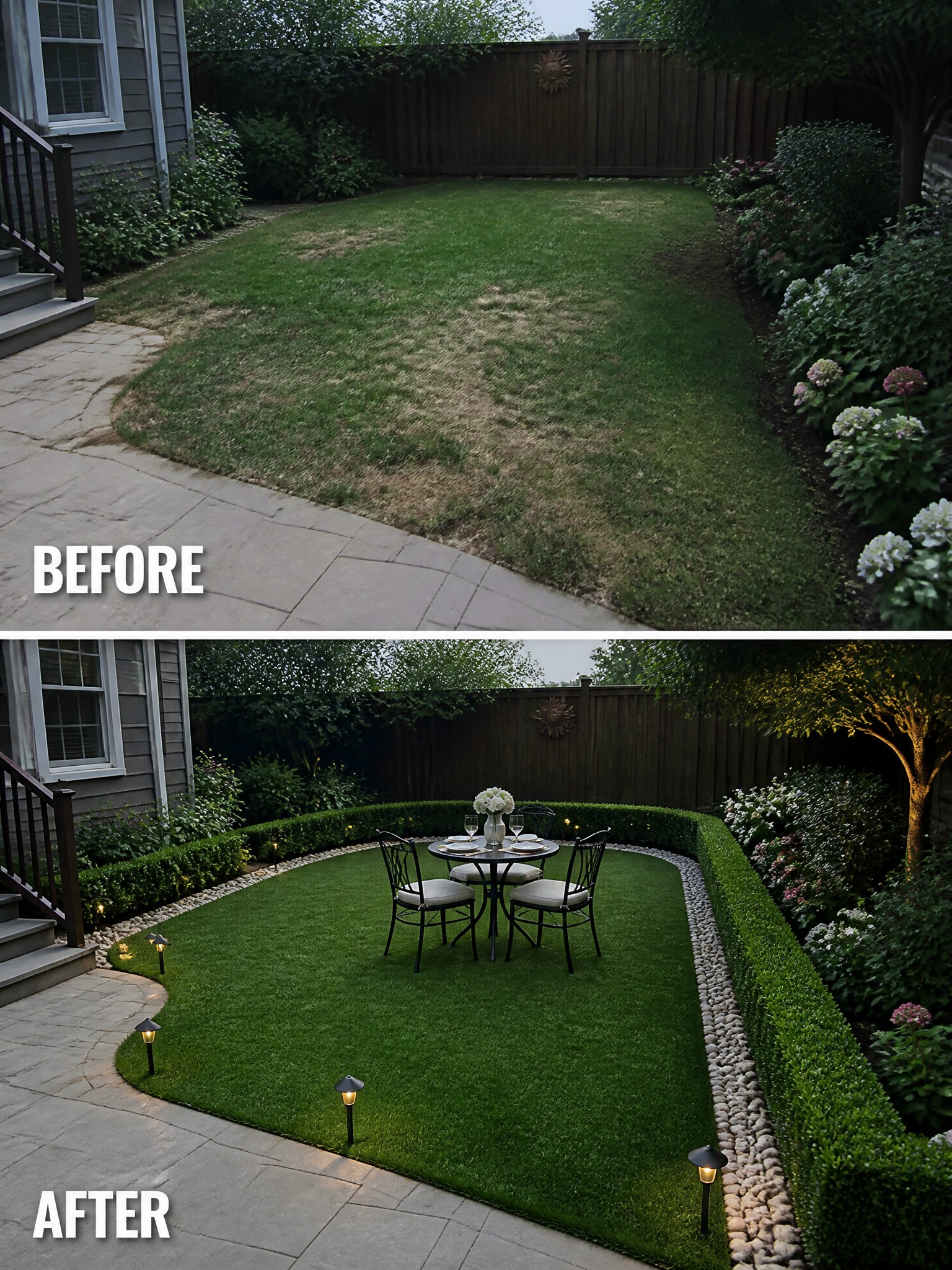
An open lawn often feels like wasted space until you give it clear edges. Adding a simple border of low hedges and river rock turns the grass into a contained area, and placing a small dining set in the middle makes the zone feel intentional rather than leftover.
This approach works well in modest backyards where you want one usable spot without covering the whole lawn. Start with the edging first, then add just enough furniture to match the size of the new zone. Keep the surrounding plantings low so the space stays open and easy to maintain.
Turn A Narrow Side Yard Into A Functional Outdoor Room
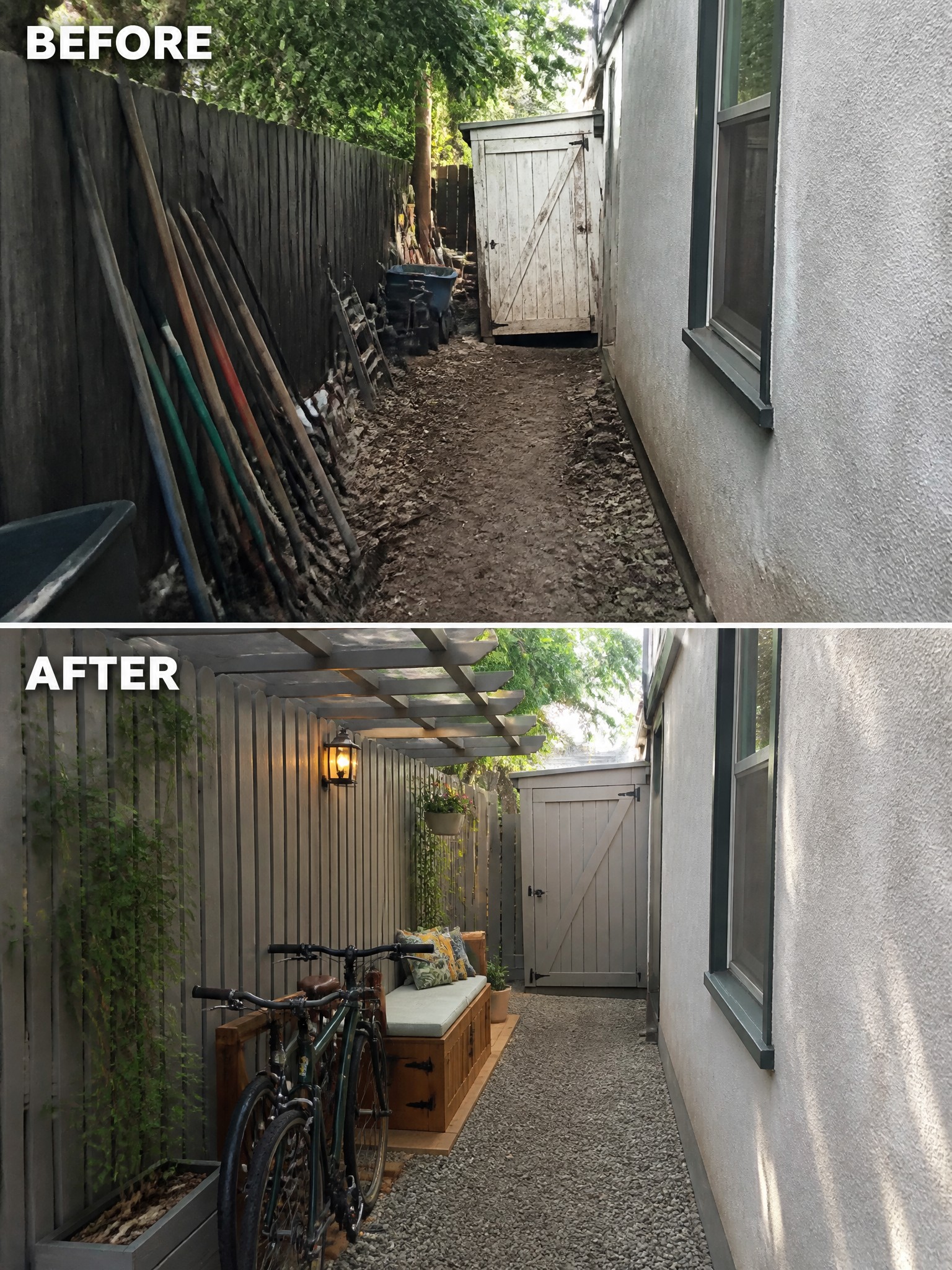
A narrow, cluttered passage between the house and fence often ends up as wasted space filled with tools and debris. Adding an overhead pergola gives the area clear boundaries, while a built-in bench with storage underneath turns the leftover strip into a place people can actually use for seating or parking bikes.
This approach works well in tight urban yards or side passages where there is little room for a full patio. Start by clearing the ground and laying gravel for a clean walking surface, then add one main structure like a pergola to define the zone before bringing in furniture. Keep the scale simple so the space still feels open enough to walk through.
Turn A Plain Pool Deck Into A Seating Area
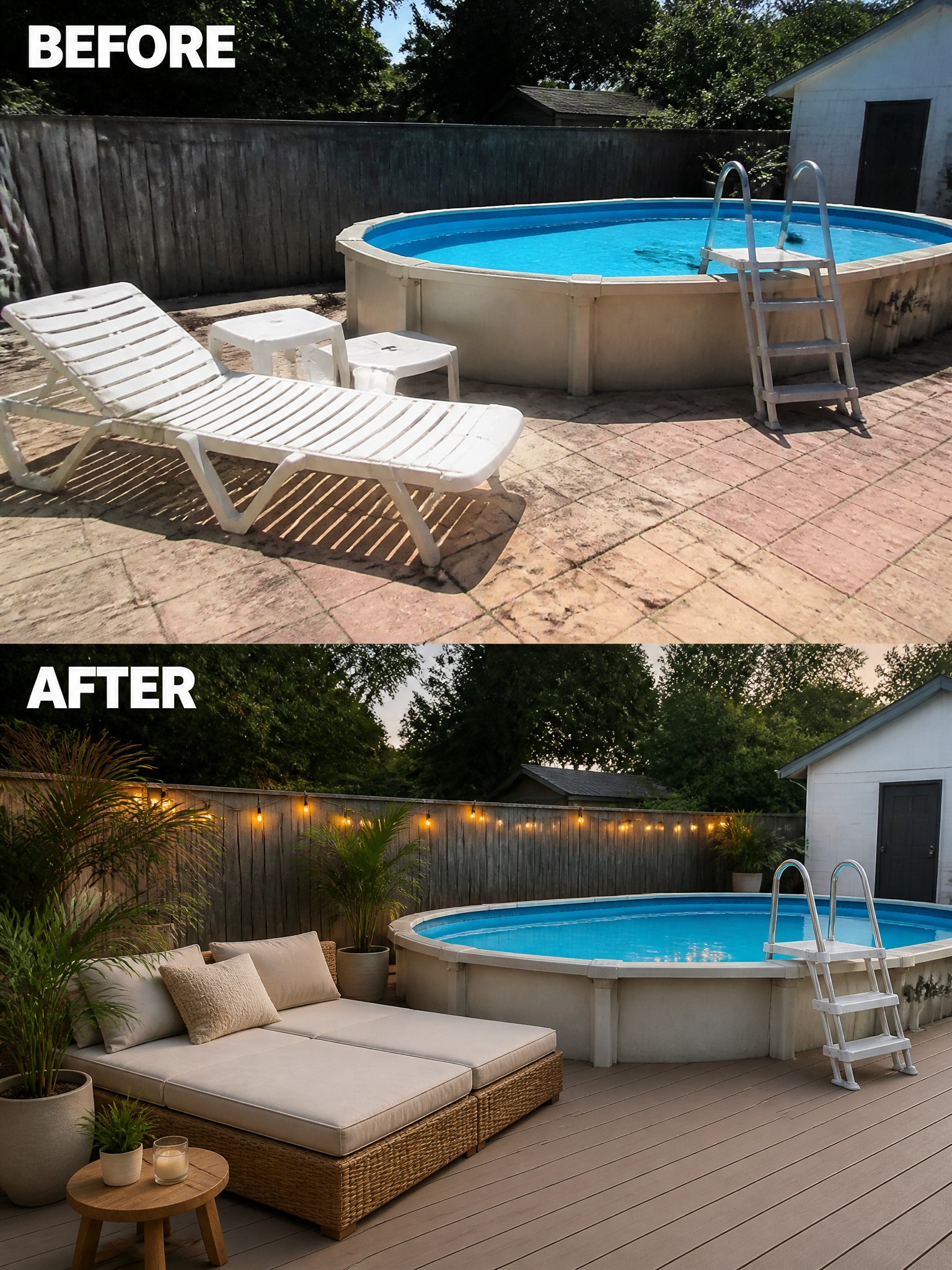
The concrete around this pool felt empty and unfinished, with only one lounge chair and a couple of small tables. Adding a wooden deck and a large sectional with cushions turned the same space into a spot where people actually want to sit and stay.
This idea works well around pools because the seating gives the area a clear purpose without crowding the water. Start with a simple deck or platform if the surface is bare, then choose a few weatherproof pieces that fit the space. String lights along the fence help extend the use into the evening without needing much more.
Create An Outdoor Movie Area In Your Backyard
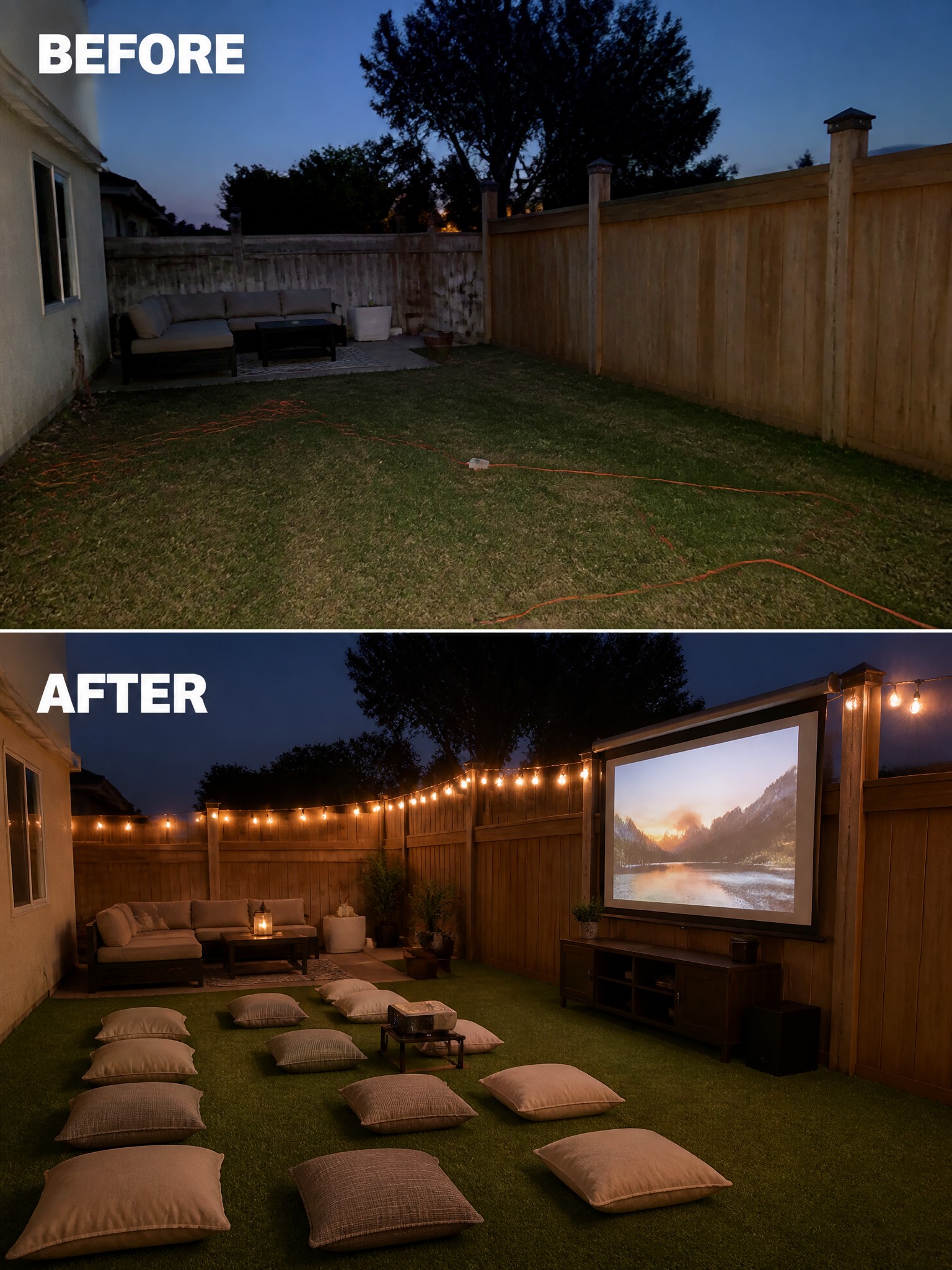
A bare backyard often feels unused because it has no clear focal point or reason to linger after dark. Placing a large projector screen along the fence and adding low seating with floor cushions gives the space a purpose and makes it easy to gather in the evening.
This setup works best in yards that already have a decent lawn or turf surface. Start with the screen placement so the viewing angle stays clear, then add string lights along the fence line to define the zone without major construction.
Define An Outdoor Seating Area With Pavers
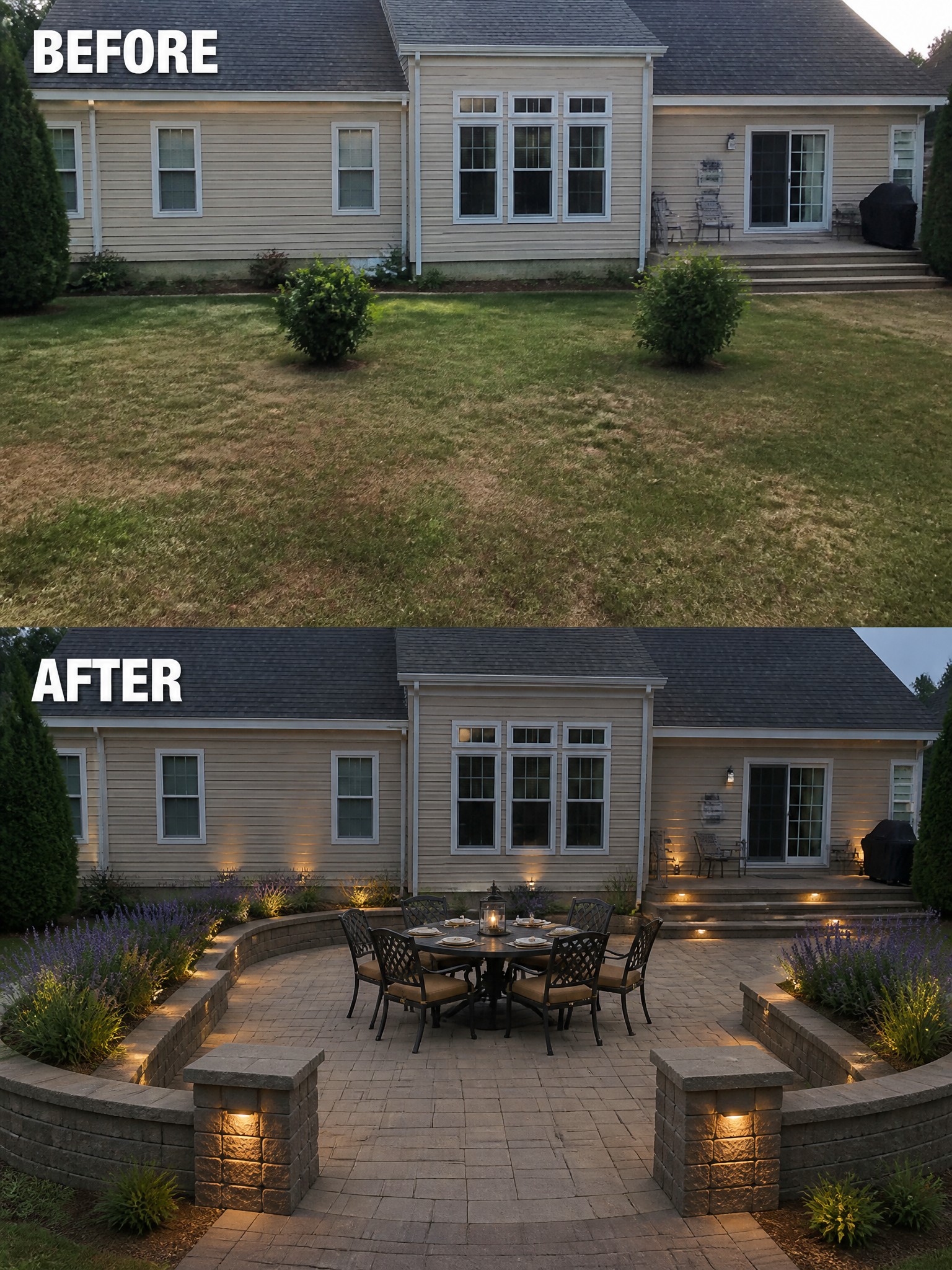
An open lawn often feels like wasted space because there is no clear spot to gather. Adding a paved patio with low stone borders turns that empty grass into a usable room. The before photo shows just lawn and scattered shrubs. The after shows a brick patio, curved retaining walls, and a full dining set placed right where people can sit comfortably.
This approach works best on flat or gently sloped backyards where you want one main gathering spot. Start with the paving and borders first, then add lighting along the edges so the area feels finished at night. Keep the furniture scale modest so the space still has room to walk around.
Turn A Narrow Side Yard Into A Seating Area
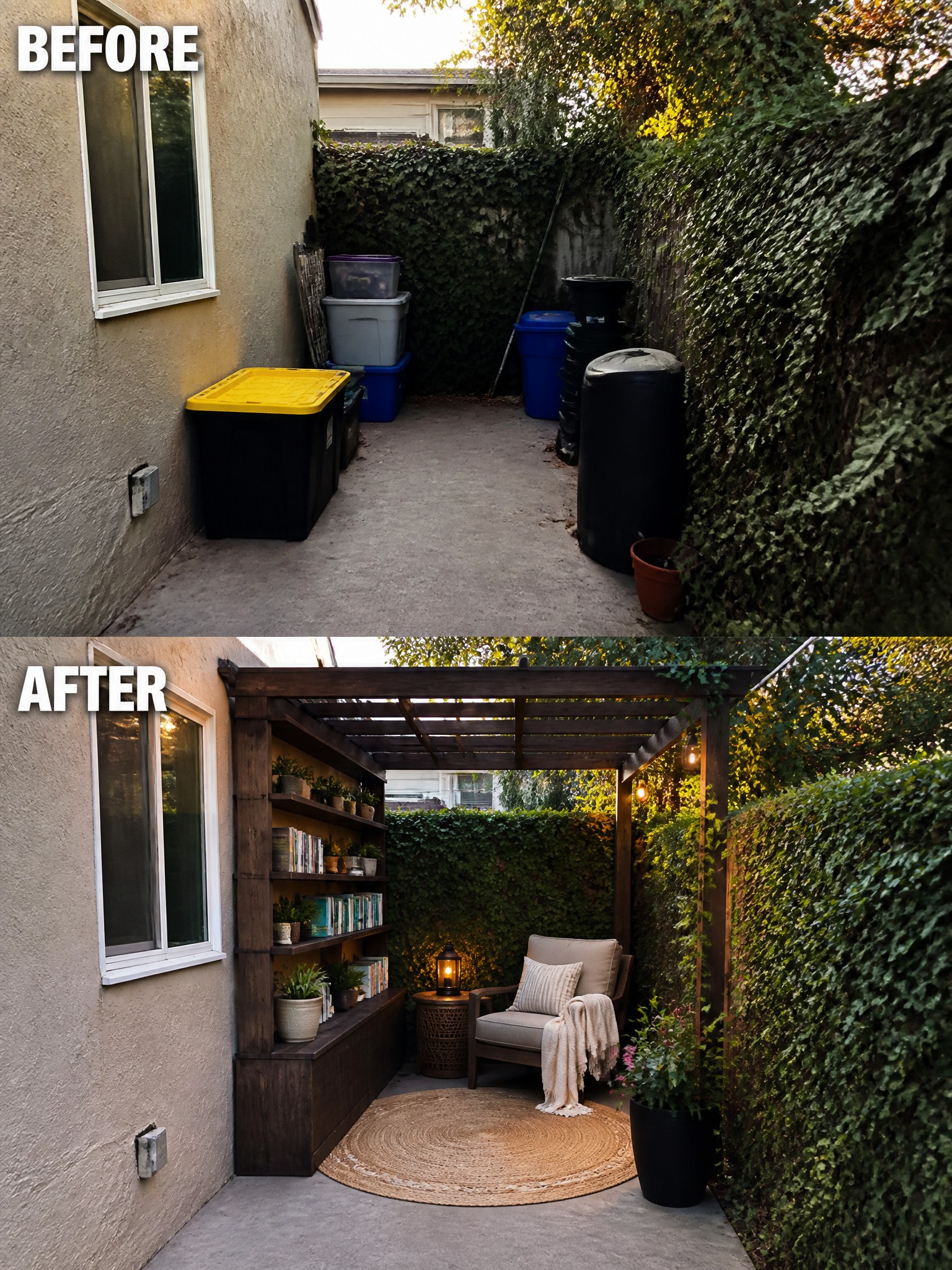
A cluttered side yard full of bins and trash cans rarely feels like a place to spend time. Adding a simple pergola with built-in shelves gave the space clear structure and turned the leftover concrete into a spot that actually works for sitting.
This idea works well in tight backyards or side passages where there is no obvious room for furniture. Start with one main structure like a pergola to mark the zone, then add just enough seating, a rug, and a few plants so the area feels finished without crowding the walkway.
Turn A Bare Backyard Corner Into A Usable Outdoor Room
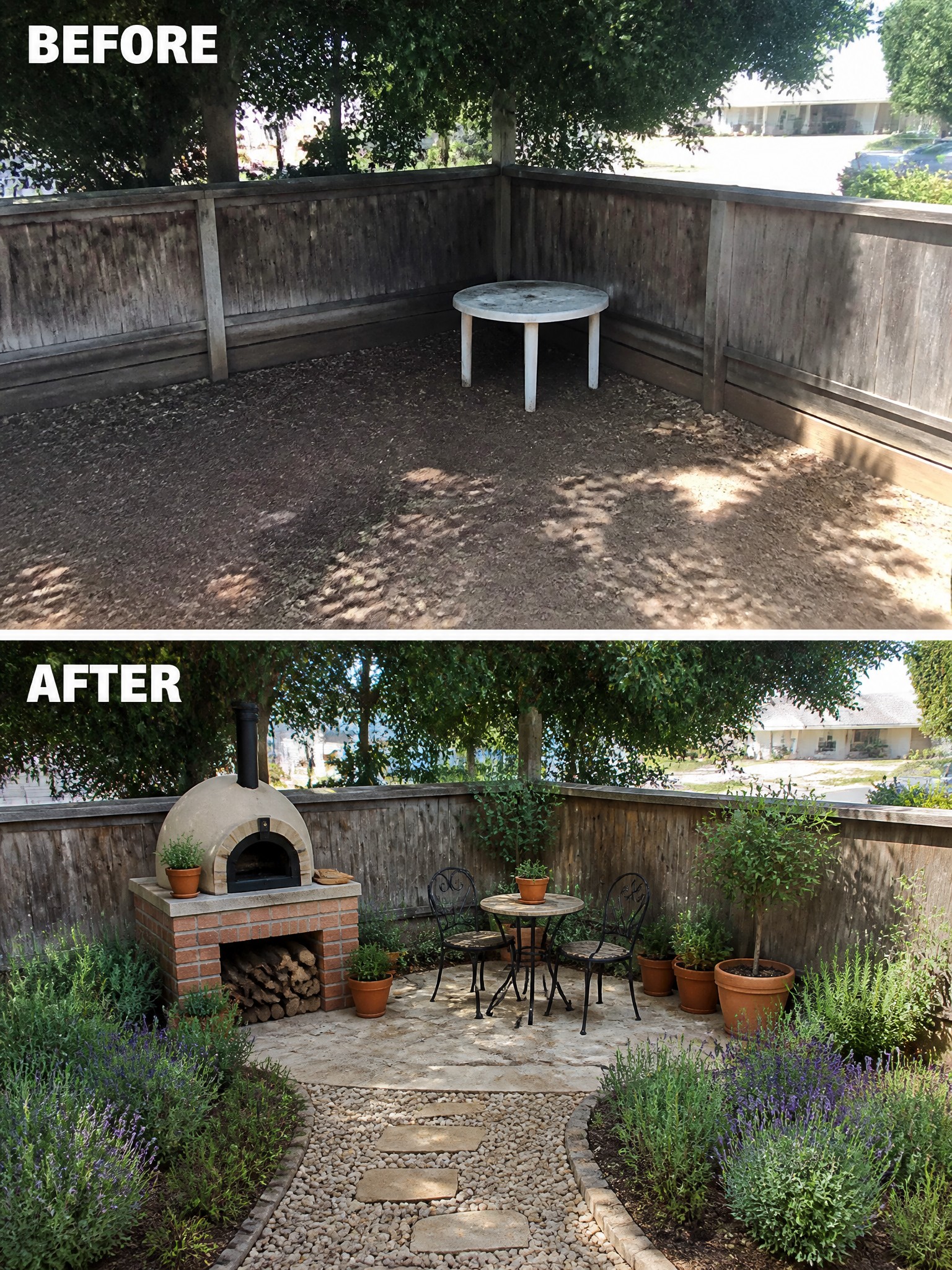
A plain dirt patch with nothing but a single table does not invite much use. Adding a brick pizza oven as the main focal point, along with a simple stone surface and a few chairs, gives the space a clear reason to be there. The oven anchors the area so everything else can sit around it without feeling scattered.
This approach works well in smaller fenced yards where you want one spot that feels intentional. Start with the largest piece, like an oven or fire feature, then lay a path or patio around it. Keep the furniture scale modest so there is still room to walk around the zone.
Turn A Bare Patio Into A Defined Seating Area
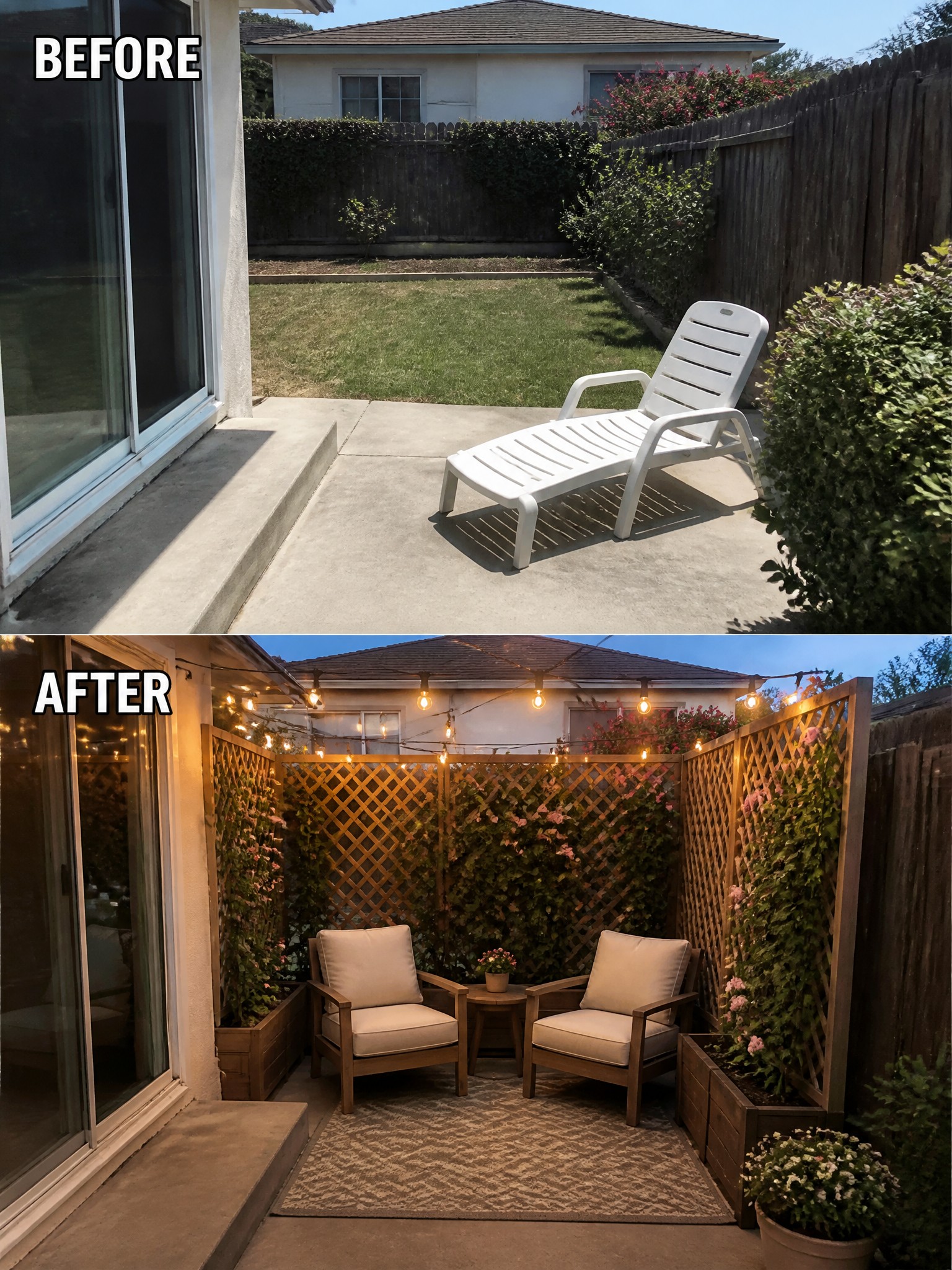
A plain concrete slab often sits unused because it lacks any sense of purpose. Adding a rug, two chairs, a small table, and simple lattice screens gave this space a clear boundary and made it feel like an actual room instead of leftover concrete.
String lights strung across the top add warmth for evening use, while the lattice and planters create privacy on the sides. This idea works best on small patios or decks where you want one focused spot for sitting. Keep the furniture scale modest so the area still feels open enough to walk around.
Use Terracing To Define Zones In A Sloped Yard
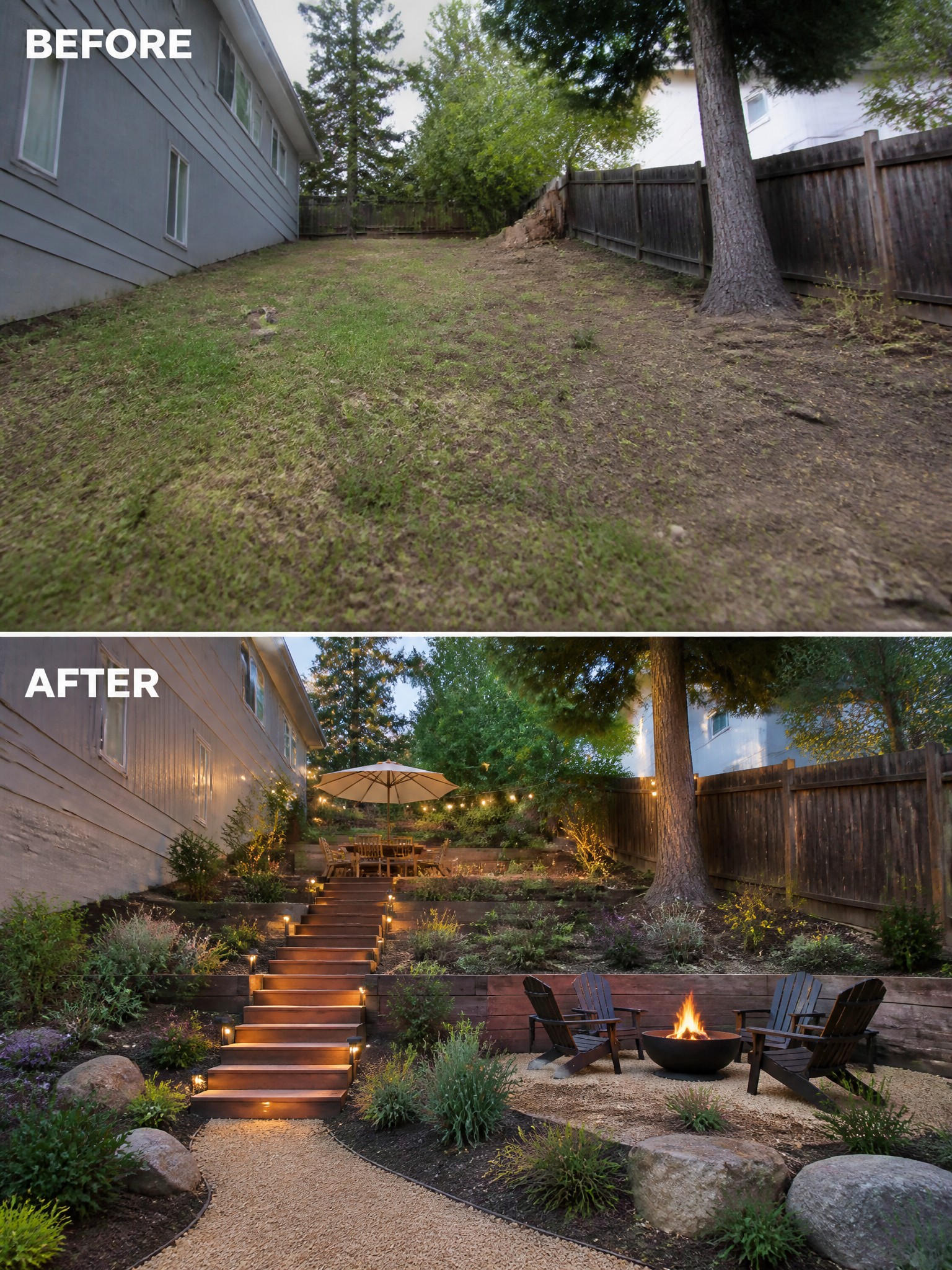
A bare, sloped backyard often stays unused because there is no clear way to move through it or sit comfortably. Adding terraces with stairs and a lower gravel area turns the slope into separate zones, one for dining higher up and one for seating around a fire pit below. The change makes the whole yard feel planned instead of just empty grass and dirt.
This idea works best on yards that drop away from the house. Start by building simple retaining walls and stairs to create flat spots, then place seating and paths in the new levels. Keep the planting simple at first so the structure stays visible. The same approach can turn a steep or uneven backyard into usable space without needing a full redesign.
Turn An Empty Patio Into A Seating Area
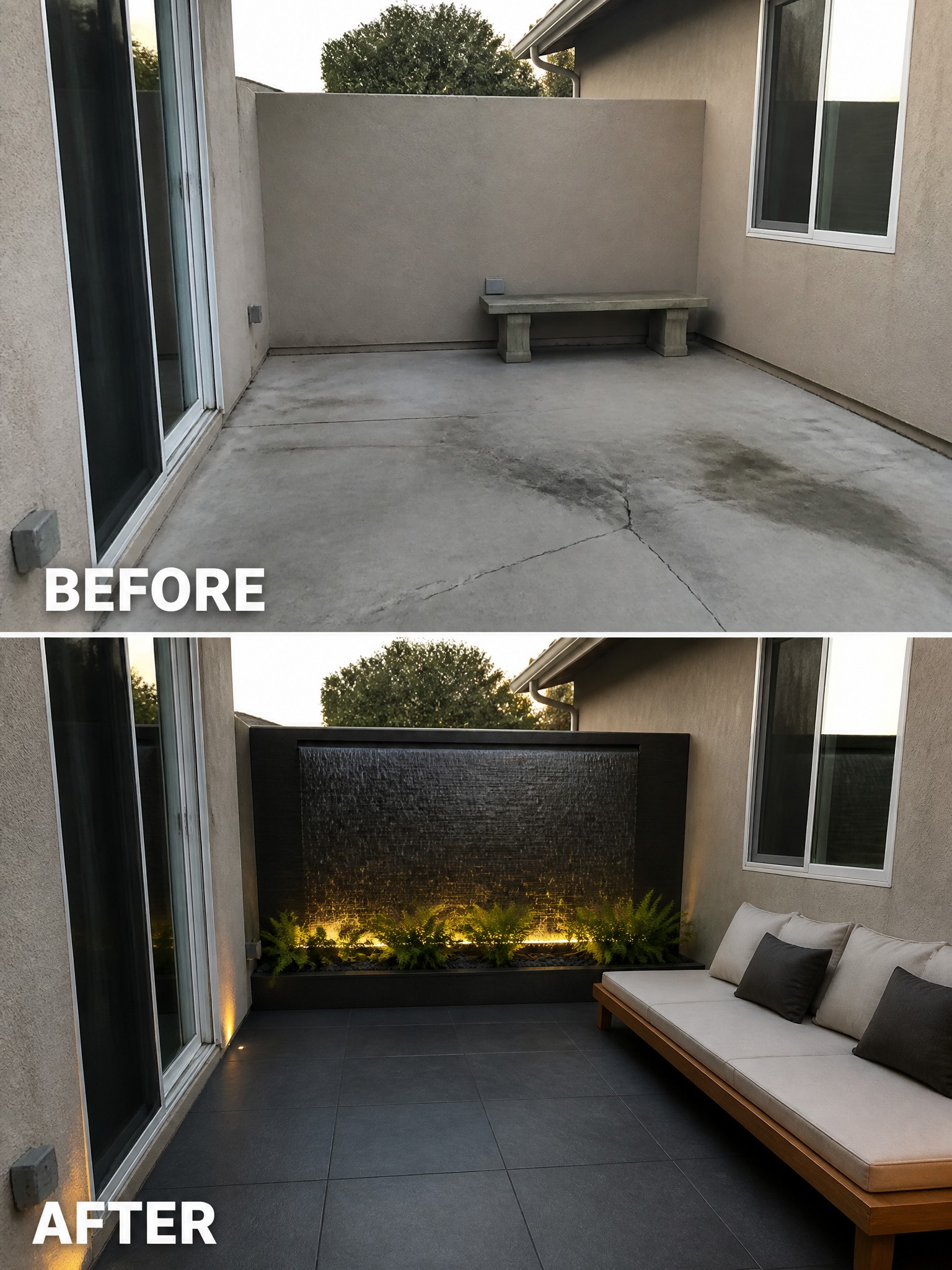
A bare concrete slab often sits unused because it lacks any reason to linger. Adding a water wall on the back side and placing a sofa across from it gives the space a clear purpose and a spot to sit. The floor change to dark tile also helps separate the area from the surrounding house walls.
This idea works best on small side yards or narrow patios where one strong element can define the whole zone. Place the feature on the longest wall, then keep the seating simple and scaled to the space. Avoid crowding the area with too many plants or extra furniture so the water remains the main draw.
Define A Backyard Corner As An Outdoor Workspace
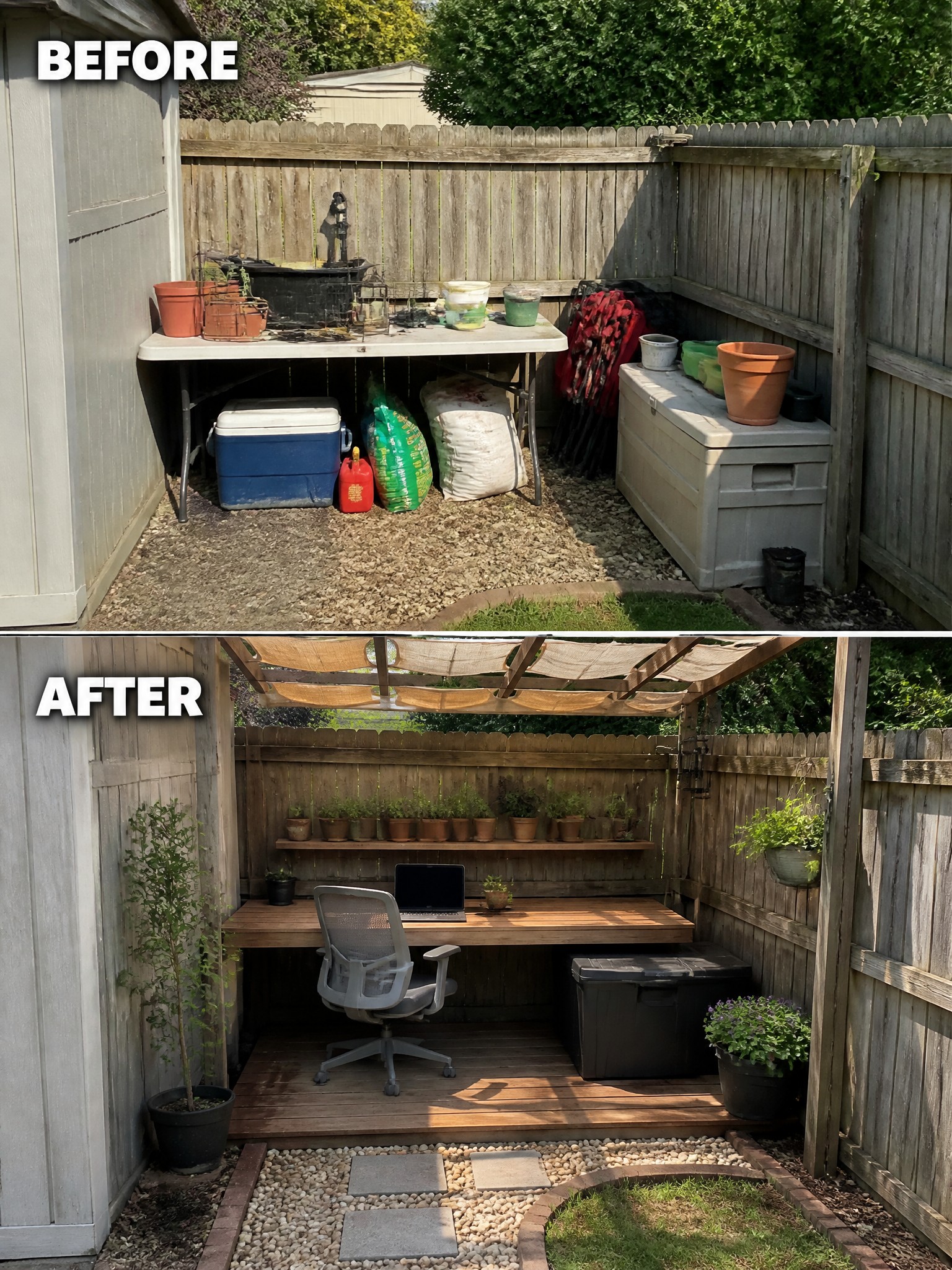
A messy gravel patch next to the shed can become a real workspace once you give it a clear floor and a simple desk setup. Raising the area with decking and adding a desk, chair, and overhead shade turns an unused spot into a place where you can sit and work comfortably.
This works best in smaller yards where you want every corner to serve a purpose. Keep the furniture scale modest, use weatherproof pieces, and leave enough open space around the desk so the area still feels open rather than crowded.
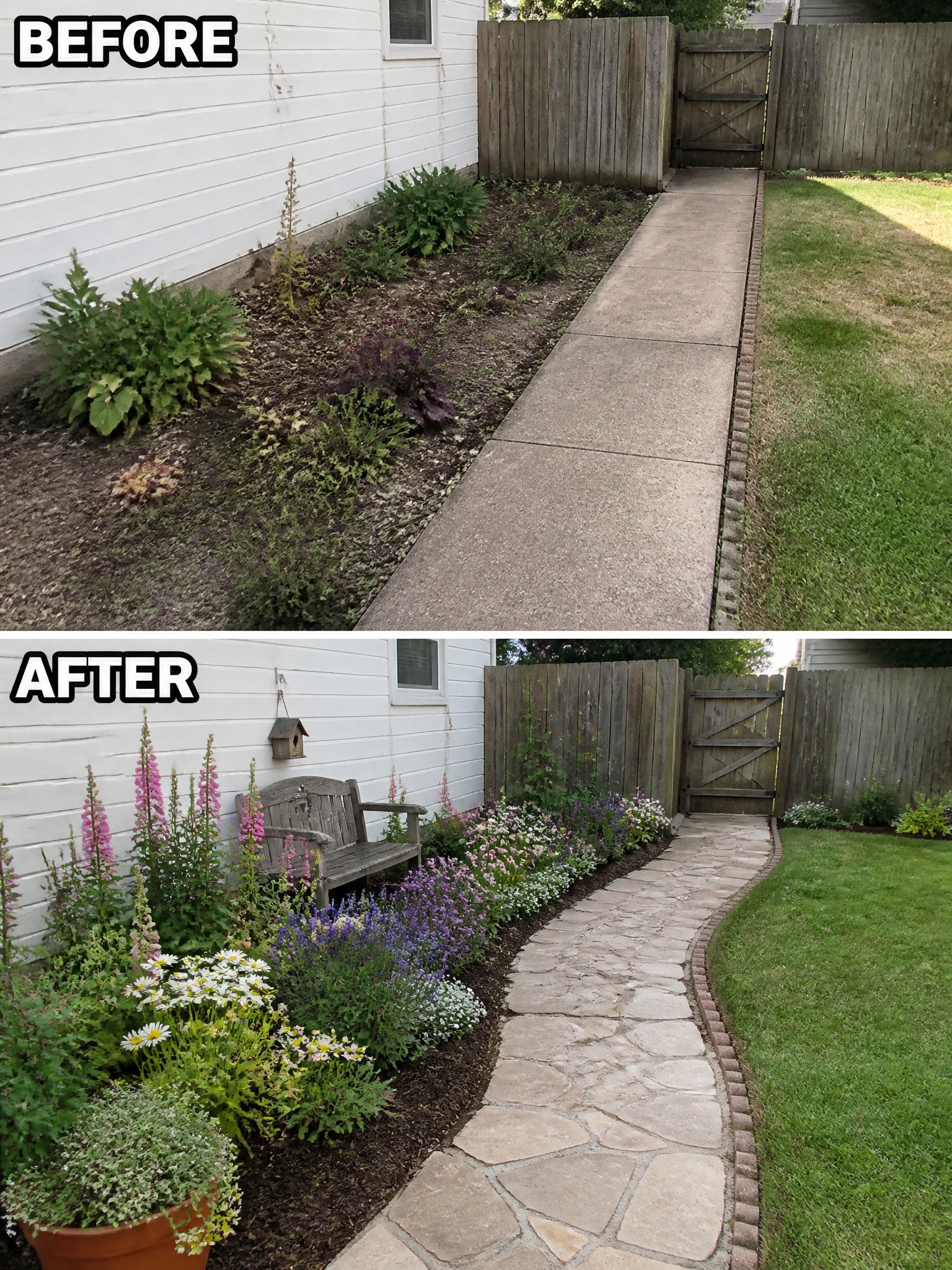
The straight concrete path and weedy beds made the side yard look neglected and unplanned. Switching to a curved stone path with clean edges and filling the beds with layered plants turned the space into something that feels intentional and easy to maintain.
This idea works best in narrow side yards or along fences where the layout needs help. Clear the overgrowth first, then set the path and bed lines before adding plants. A bench or two can help mark the new zones without crowding the space.
Add Decking To Define Outdoor Zones

A cluttered dirt patch with scattered tools rarely gets used. Adding a wooden deck gives the space structure and turns it into separate zones, one for the hot tub and another for the sauna and seating.
This approach works well in small or medium backyards where the ground feels flat and undefined. Keep the deck size practical so you still have room to move around the zones, and choose weather-resistant furniture that can stay outside year-round.
Frequently Asked Questions
Q: Can I add zones if I rent my place?
A: Focus on movable pieces like rugs and potted plants to create boundaries. You can rearrange everything when you move without any permanent changes.
Q: How do I keep kids and pets out of certain areas?
A: Low fences or dense shrubs work well to separate play zones from quiet spots. Train the dog early with positive rewards around the new layout.
Q: What about winter when everything looks bare?
A: Evergreens and sturdy furniture keep the zones looking good year round. Add string lights for cozy evenings even in colder months.
