

I have noticed that many backyards sit empty because there is no clear place to settle in and spend an afternoon.
A simple seating spot with some screening around it can turn the area into part of everyday routines rather than something you walk past.
It is easy to overlook how much difference a clean layout makes.
Once the scattered items are cleared and a couple of paths or borders are added the space starts to feel more settled without any major construction.
I usually test one seating arrangement first before deciding what else might fit.
Add Structure To An Overgrown Backyard
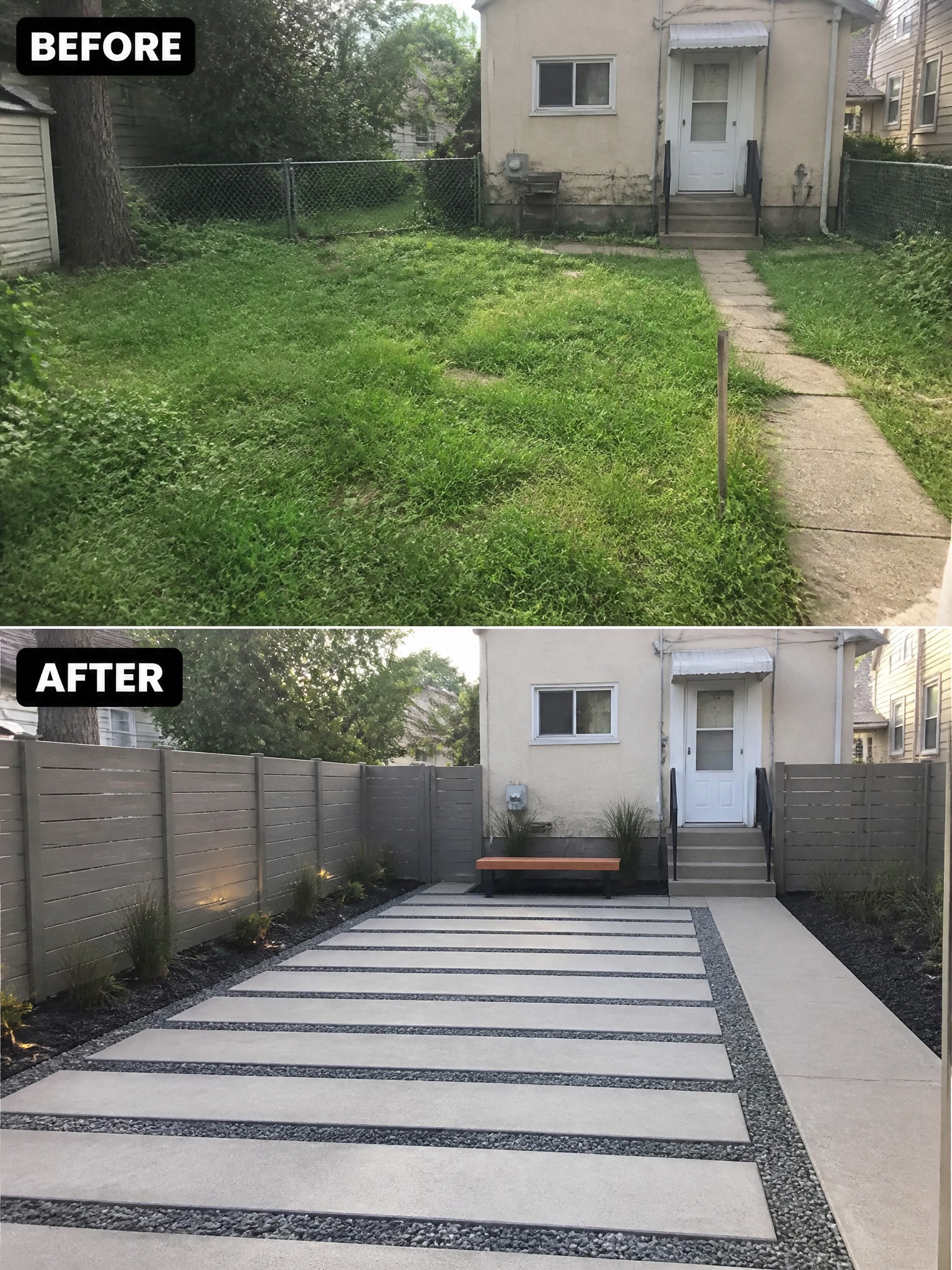
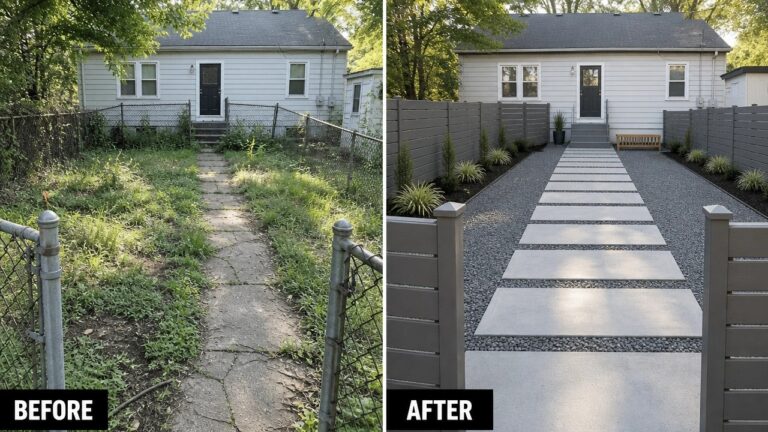
A messy lawn often feels unusable until you give it clear lines. In this case the yard went from tall grass and a plain concrete path to a defined walkway made of large pavers set in gravel. The new borders and fence also keep the space from looking scattered.
This approach works best on small or mid-size yards where you want a simple walking route without losing open ground. Start by clearing the overgrowth, then lay out the path with pavers or stepping stones before adding any plants or furniture. Keep the gravel or mulch edges narrow so the walkway stays the main feature.
Turn An Empty Patio Into A Seating Area
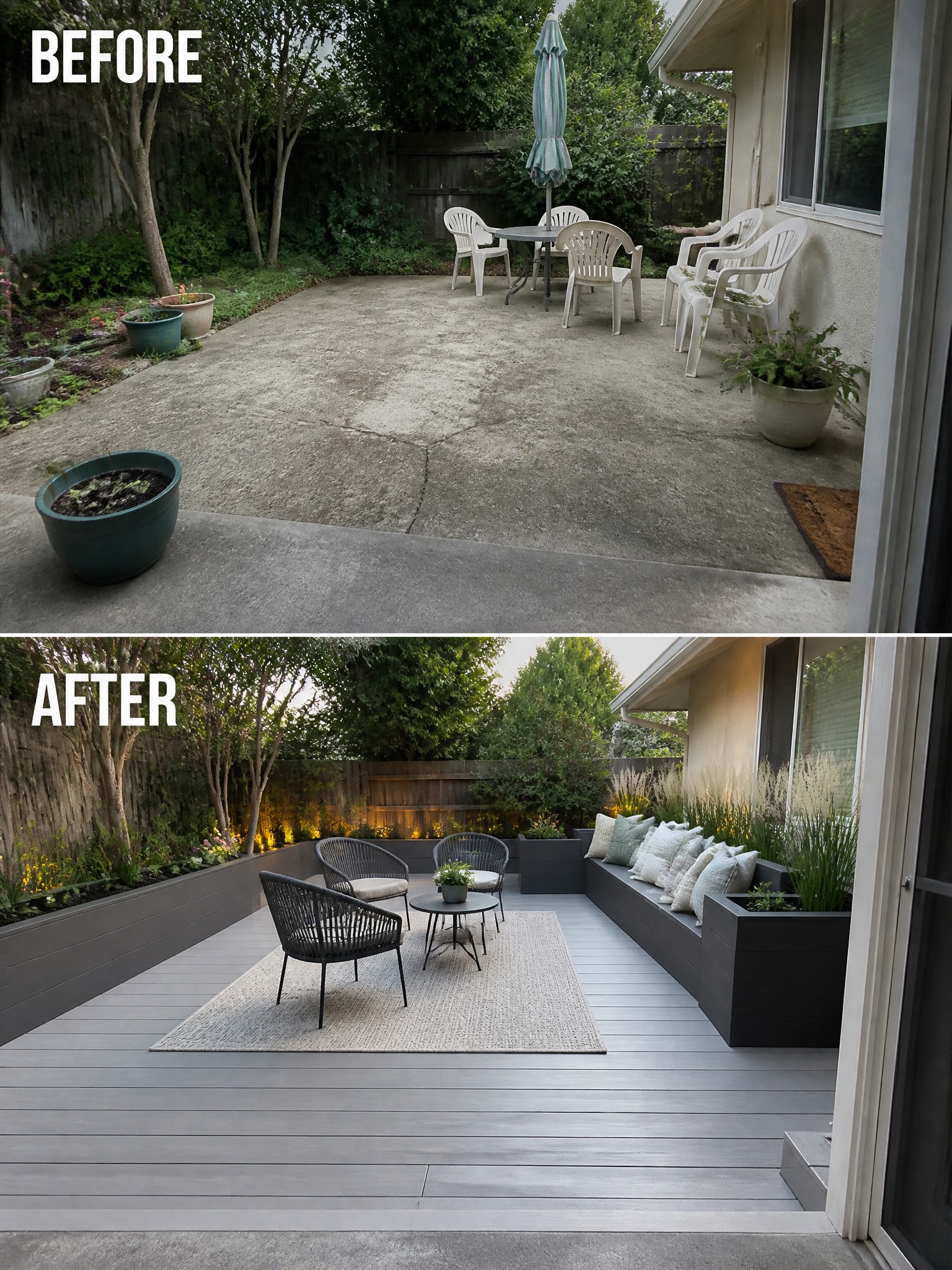
A plain concrete slab often sits unused because it feels like just a hard surface with no purpose. Replacing it with decking and adding a rug, a few chairs, and a small table gave the space a clear reason to be there. The built-in bench along the side added extra seating without taking up floor space.
This idea works best in backyards that already have a fence or wall to create some enclosure. Keep the furniture simple and weatherproof, and leave enough open deck so people can walk around the seating without feeling cramped. Start with the flooring and rug first. Those two pieces do most of the work to make the area feel like a real room.
Add Storage To Organize A Cluttered Backyard Corner
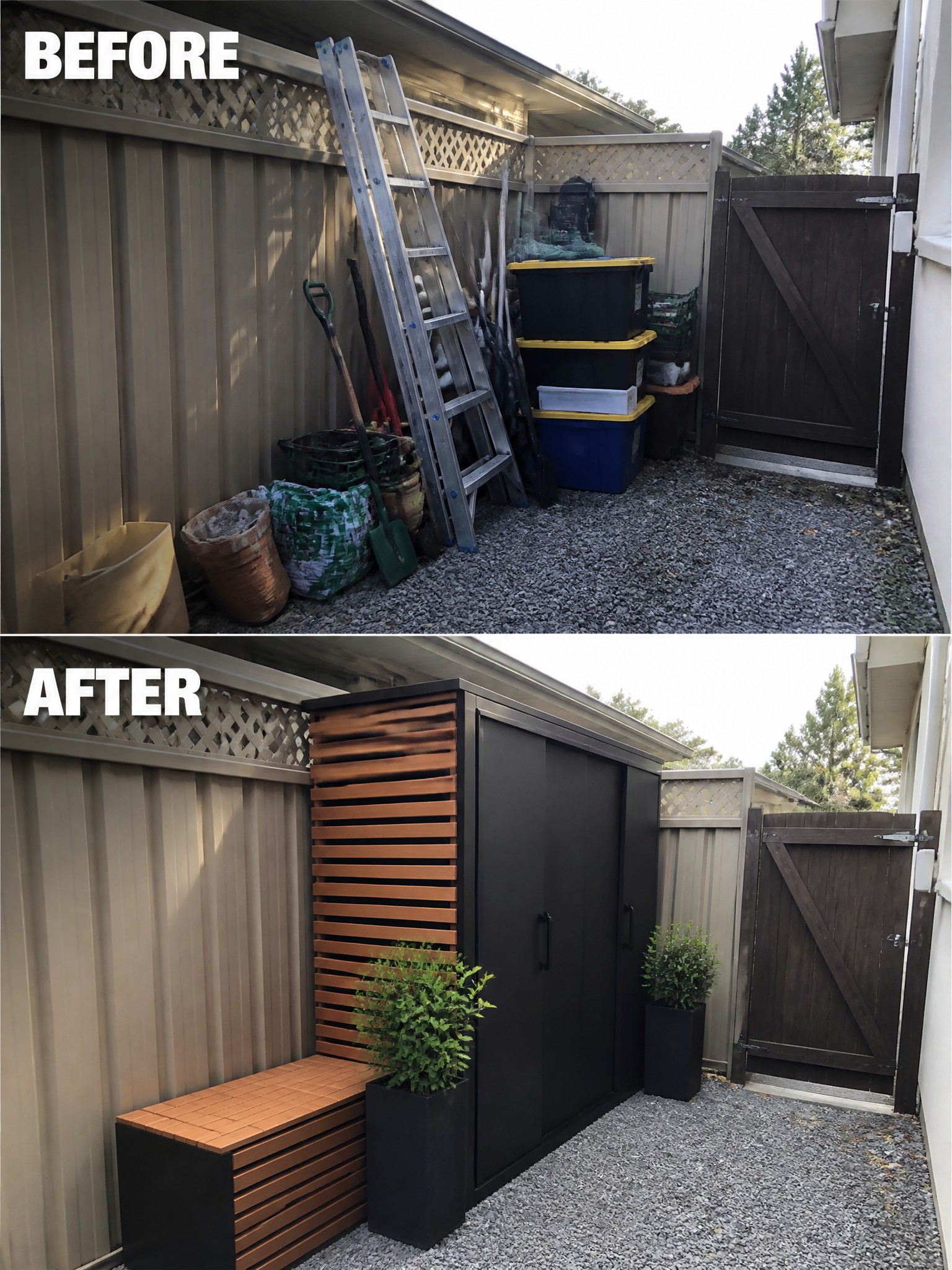
A messy side yard filled with tools, bins, and random gear makes the whole space feel smaller and less usable. Adding a single large storage cabinet gives everything a place to go and instantly opens up the area. The black unit with wood slats blends into the fence while providing plenty of room to tuck things away.
This approach works well in narrow yards or along a fence line where a full shed would take up too much space. Keep the cabinet simple and weatherproof, then add one or two planters if you want a bit of greenery without extra clutter. Focus first on clearing the ground so the new storage actually has room to function.
Define A Backyard Seating Area With A Fire Pit
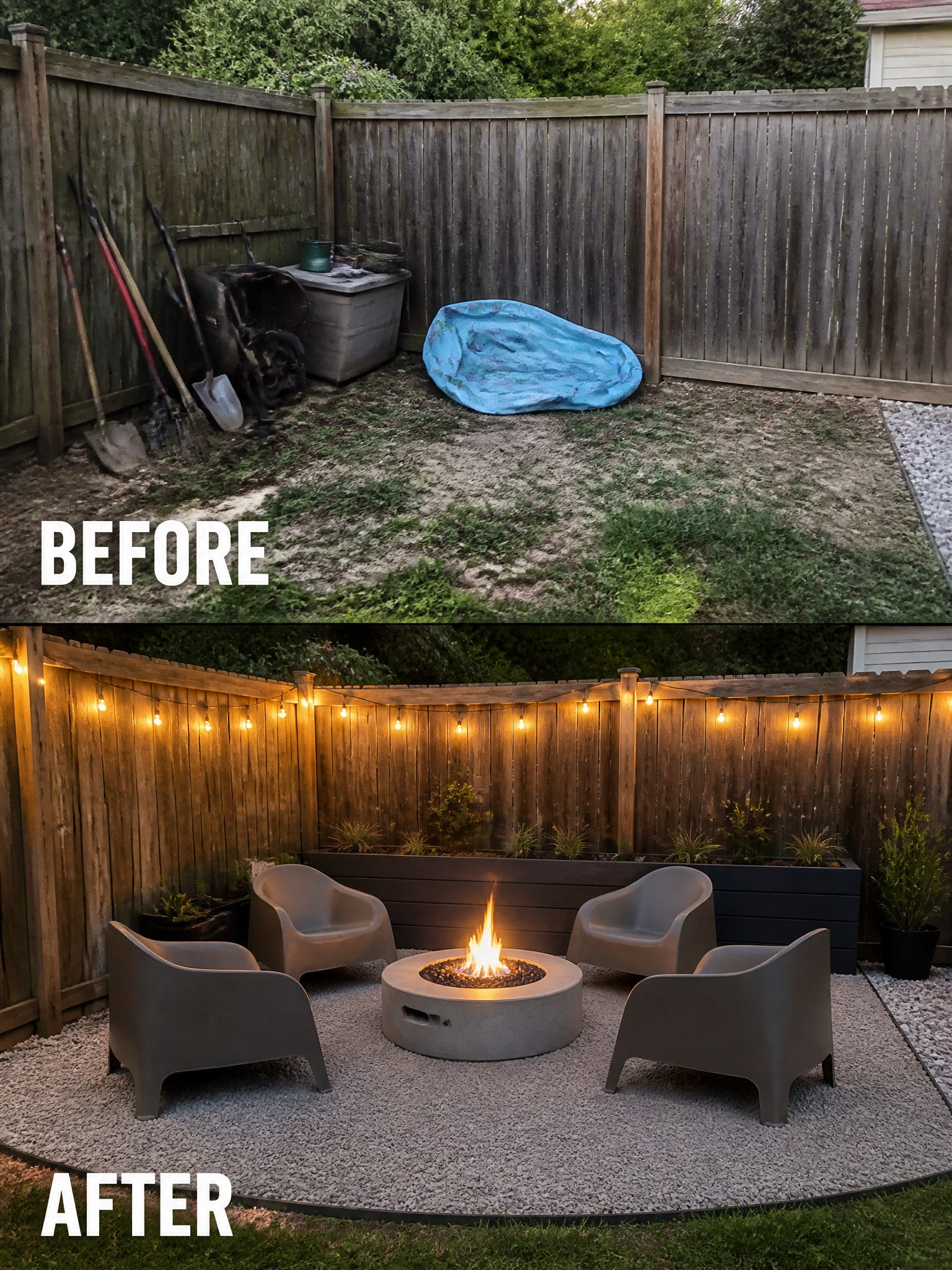
A cluttered yard with tools and uneven ground rarely gets used. Clearing the space and laying down gravel created a level base that instantly made the area feel intentional. Placing the fire pit in the center and arranging chairs around it turned the spot into a place where people actually want to sit.
This approach works well in smaller or average-sized yards where you want one clear gathering spot rather than spreading furniture around. Start with the gravel and fire pit first, then add simple lighting along the fence. Keep the rest of the yard simple so the seating area stays the main focus.
Replace An Old Brick Patio With Large Pavers
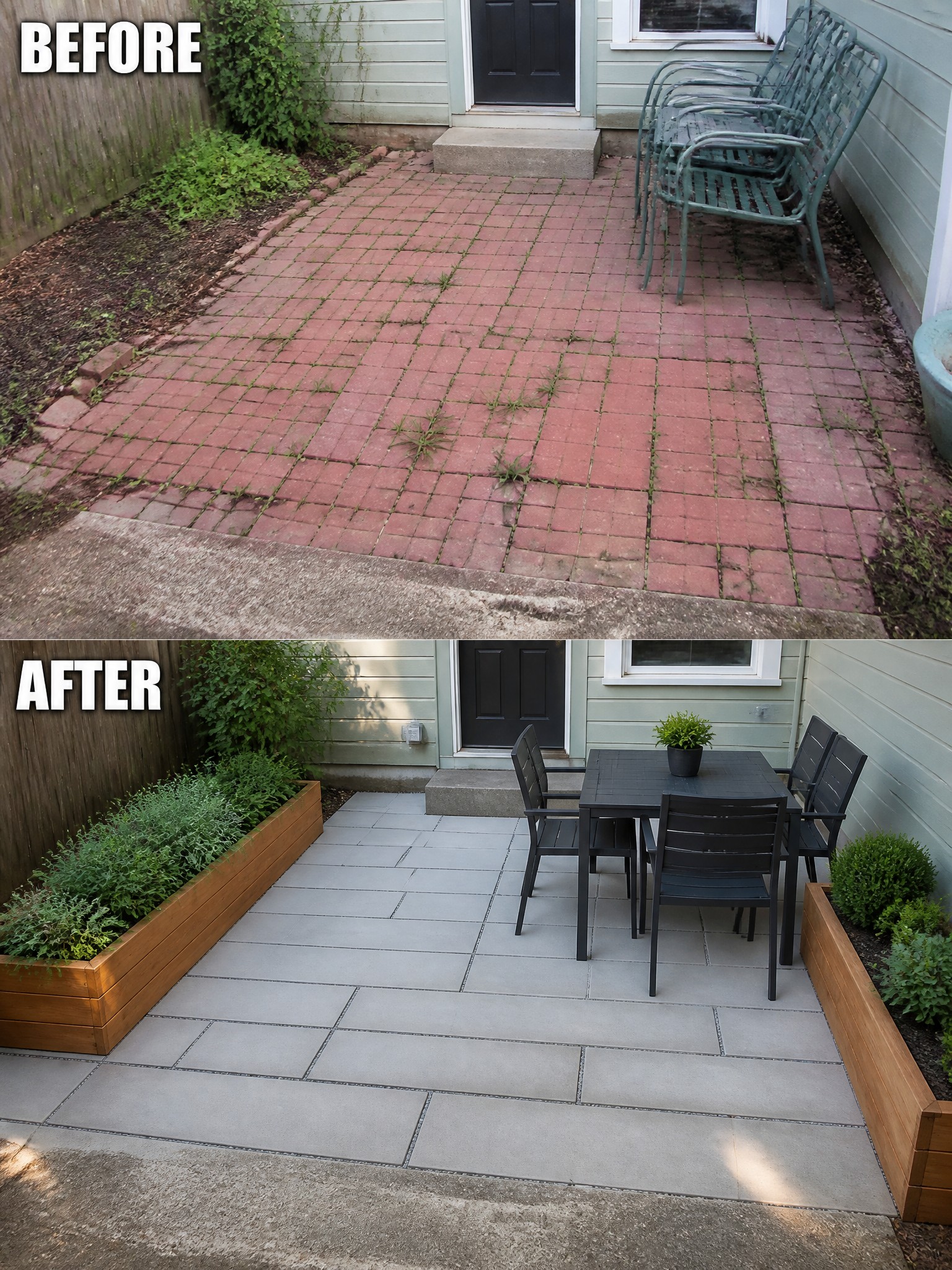
An old brick patio often starts to look tired once weeds take over the joints and the surface feels uneven. Switching to larger pavers gives the space a smoother, more open feel and makes it much easier to keep clean. The raised wooden beds on either side also help frame the area so it reads as one defined outdoor room instead of just leftover ground.
This approach works well in small backyards where you want a simple dining spot without adding too many new features. Start with the hard surface first, then add the planters to keep the edges neat. Choose pavers in a light neutral tone if your house siding is light, and stick with furniture that can stay outside year-round.
Refresh An Old Fence With Paint And Planters
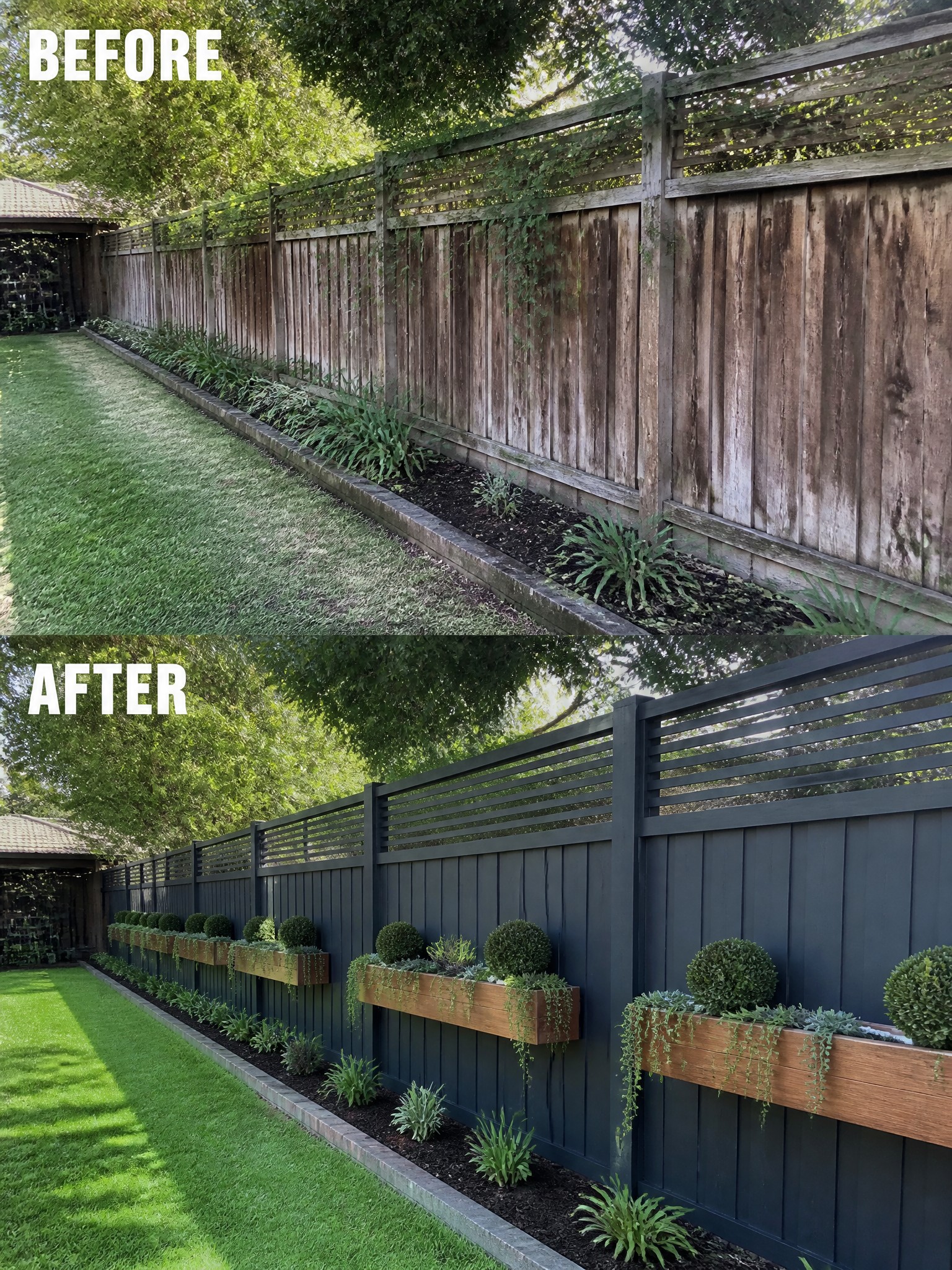
A long fence often becomes the biggest eyesore in a backyard once it starts to weather. Painting it a dark color and adding simple wooden planters instantly pulls the whole border together. The change turns scattered plants and a tired wooden wall into one clean line that feels intentional instead of neglected.
This approach works best along a straight fence where you want low maintenance and a tidy look. Start by choosing a fence color that blends with your house, then space the planters evenly and fill them with a mix of small shrubs and trailing plants. Keep the ground planting simple so the structure of the fence and boxes stays the main feature.
Add Structure To A Sloped Backyard
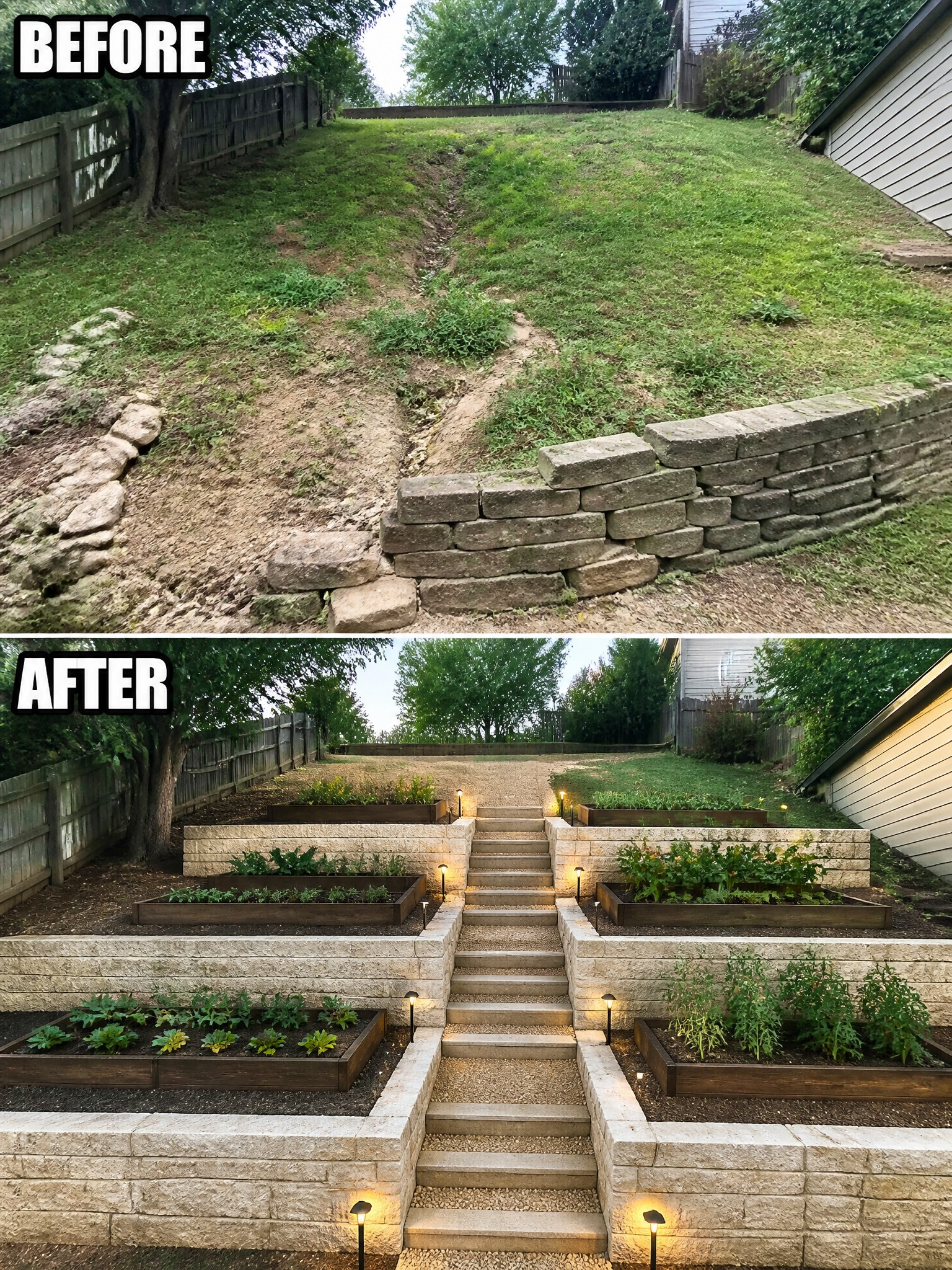
A steep slope with worn paths and patchy grass is difficult to maintain or enjoy. Building stone retaining walls turned the hill into a series of flat terraces that hold raised beds and a clear central path.
This idea works best on yards where the grade makes mowing or planting awkward. Plan the walls around drainage first, keep the number of levels simple, and use the new flat areas for vegetables or low-care perennials rather than trying to fill every inch.
Add Seating And Shade To A Bare Pool Deck
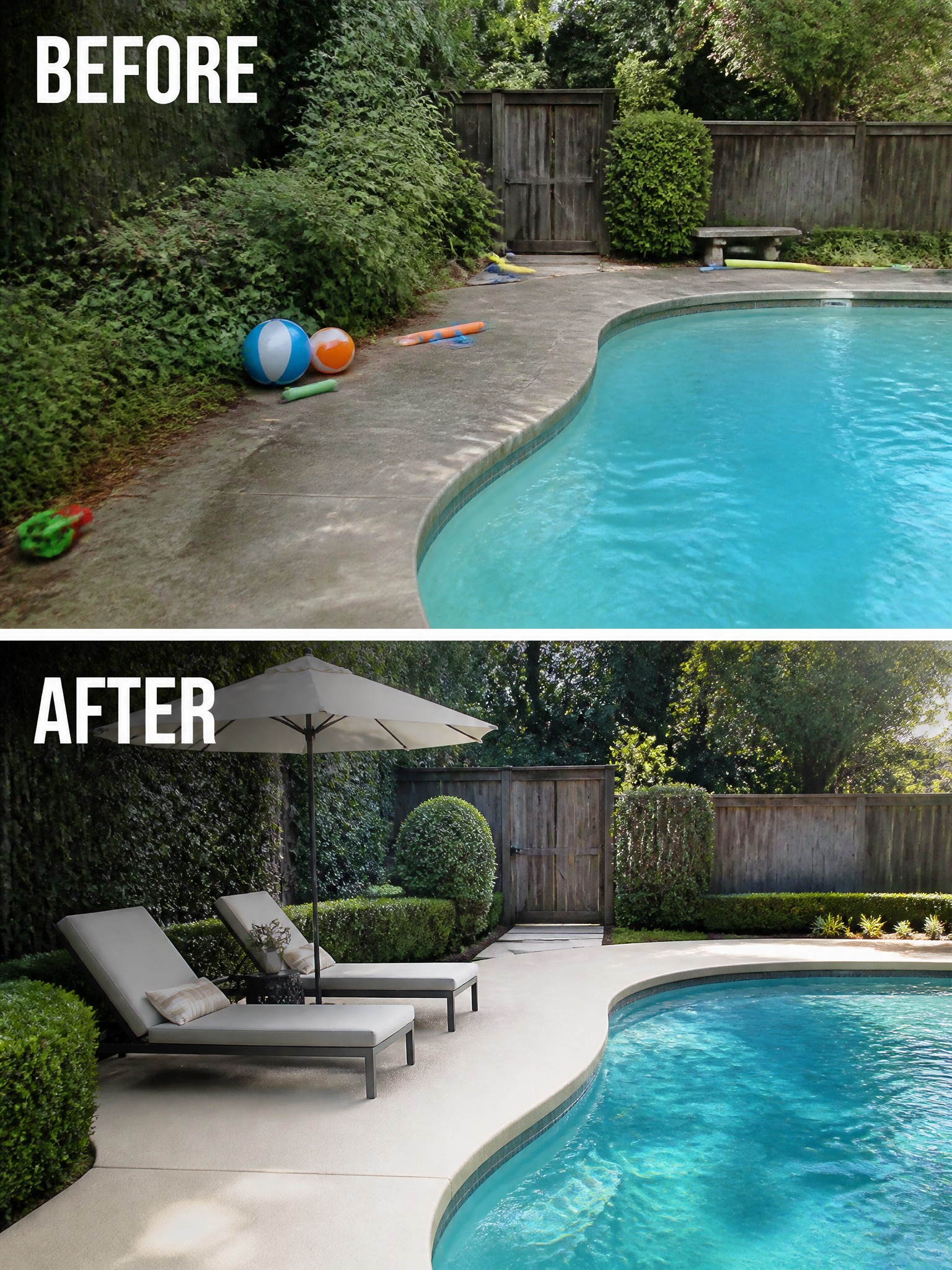
The before photo shows an empty concrete edge around the pool with toys scattered around and nowhere to sit. In the after, two lounge chairs and a large umbrella turn that same stretch of concrete into a simple place to relax.
This works best when you keep the furniture scale modest and focus on shade first. Choose pieces made for outdoor use, place them so they do not block the path around the pool, and make sure the umbrella can be secured against wind. The goal is just to give people a reason to stay outside longer.
Paint And Organize An Old Shed To Refresh Your Backyard
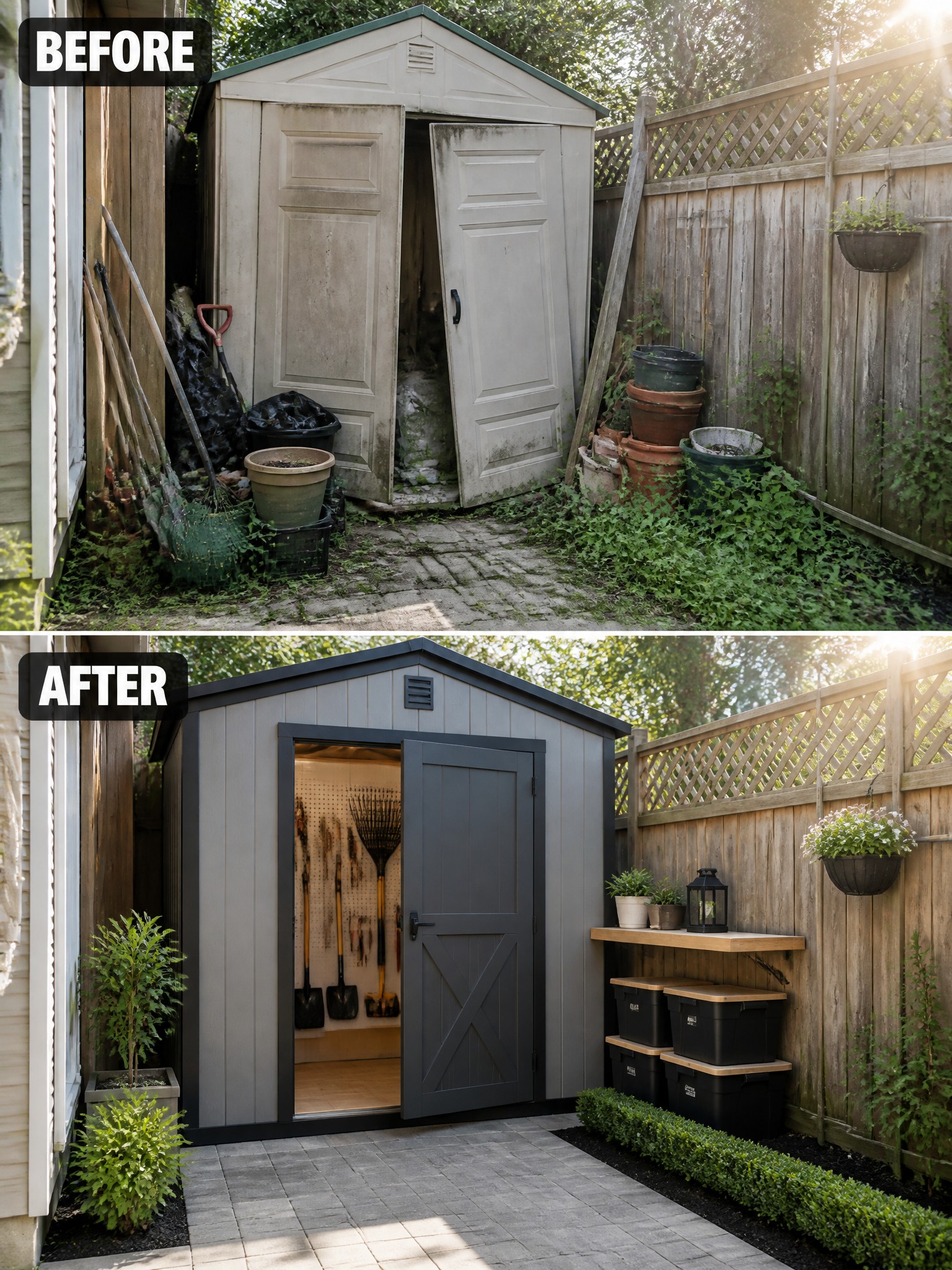
An old shed can quickly become the messiest part of a backyard when the paint fades and weeds take over the area around it. Giving the shed a fresh coat of paint, adding simple storage bins, and clearing the overgrowth turns it from an eyesore into a useful structure that makes the whole yard feel more put together.
This idea works well in smaller backyards where the shed is visible from the house or patio. Start with a thorough cleanup of the surrounding ground before you paint or add any new features. Stick to one or two colors for the shed and bins so the space stays calm instead of feeling crowded.
Add A Pergola To Turn A Bare Patio Into A Dining Area
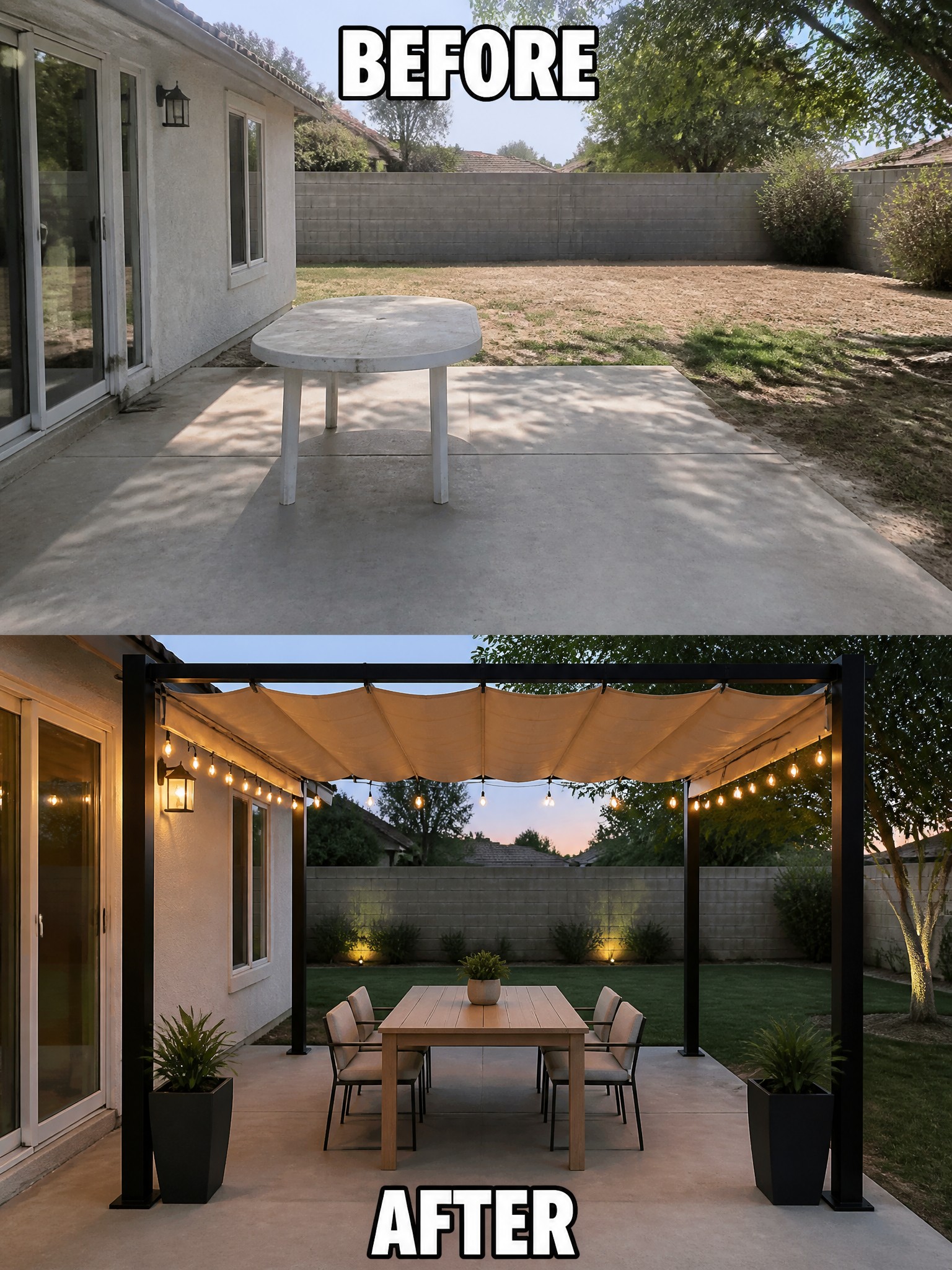
A plain concrete slab often sits unused because it lacks any sense of purpose or comfort. Adding a pergola with a fabric shade immediately defines the space and creates a spot where a table and chairs can stay in place without baking in the sun. String lights hung along the frame add just enough warmth for evenings.
This idea suits homes with a flat patio that already has decent ground but no overhead cover. Keep the furniture scale modest so there is still room to walk around the table, and choose weatherproof pieces that can stay outside without constant moving.
Define A Bare Backyard With Gravel And Boulders

A flat lawn with no clear purpose often ends up looking tired and patchy. Replacing most of the grass with gravel creates defined paths and planting areas that feel intentional and much easier to care for.
This idea works best in dry or sunny yards where grass needs constant water. Clear the lawn first, then use gravel to form gentle curves and set a few large boulders as anchors. Add simple plantings around the edges so the space stays open but no longer feels empty.
Add Structure To An Overgrown Backyard Path
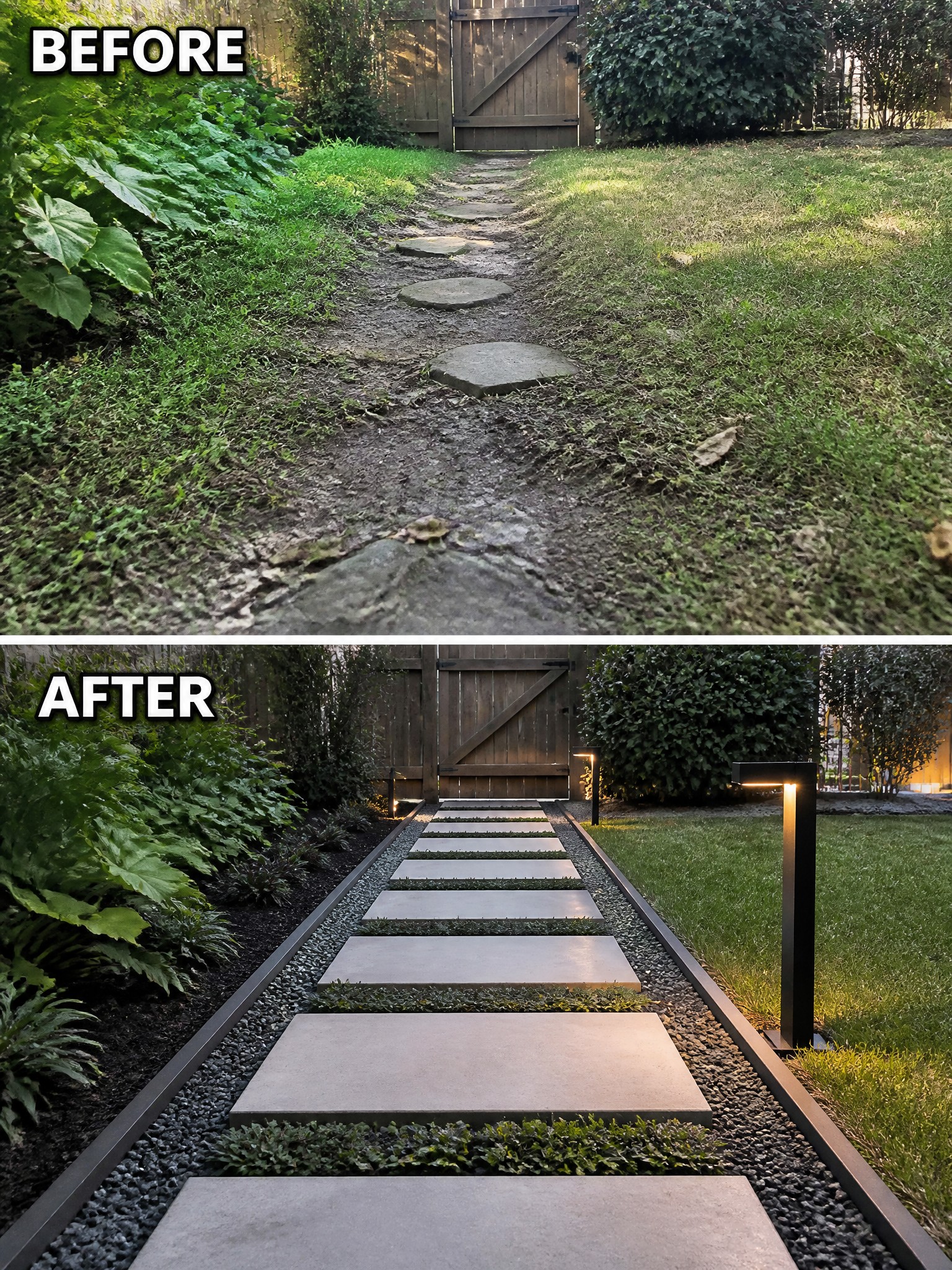
A messy, worn path makes the whole yard feel neglected. In this case, replacing scattered stepping stones and bare dirt with rectangular pavers set in gravel created a clear, easy-to-follow route that looks intentional instead of accidental.
This approach works well in any backyard where the lawn meets a gate or side entrance. Start by clearing the old surface, then lay a simple metal edge and fill with gravel before setting the pavers. The result keeps the space usable while cutting down on mud and weeds.
Add Built-In Benches For Hidden Storage

A backyard filled with scattered toys and random play equipment can feel chaotic fast. The simple fix here was to clear the clutter and run a row of built-in benches along the fence line. The benches give seating while the drawers underneath keep cushions, tools, or kids’ items out of sight. The gravel strip in front helps keep the lawn edge clean and stops grass from creeping under the seating.
This idea works well in smaller yards where you need every inch to serve more than one purpose. Build the benches to match your fence height so they blend in rather than stand out. Use weatherproof materials and simple gray or wood tones so the storage does not become the main feature. Start with the bench layout first, then add plants in pots at the ends once the structure is in place.
Turn A Neglected Pergola Into A Usable Seating Area
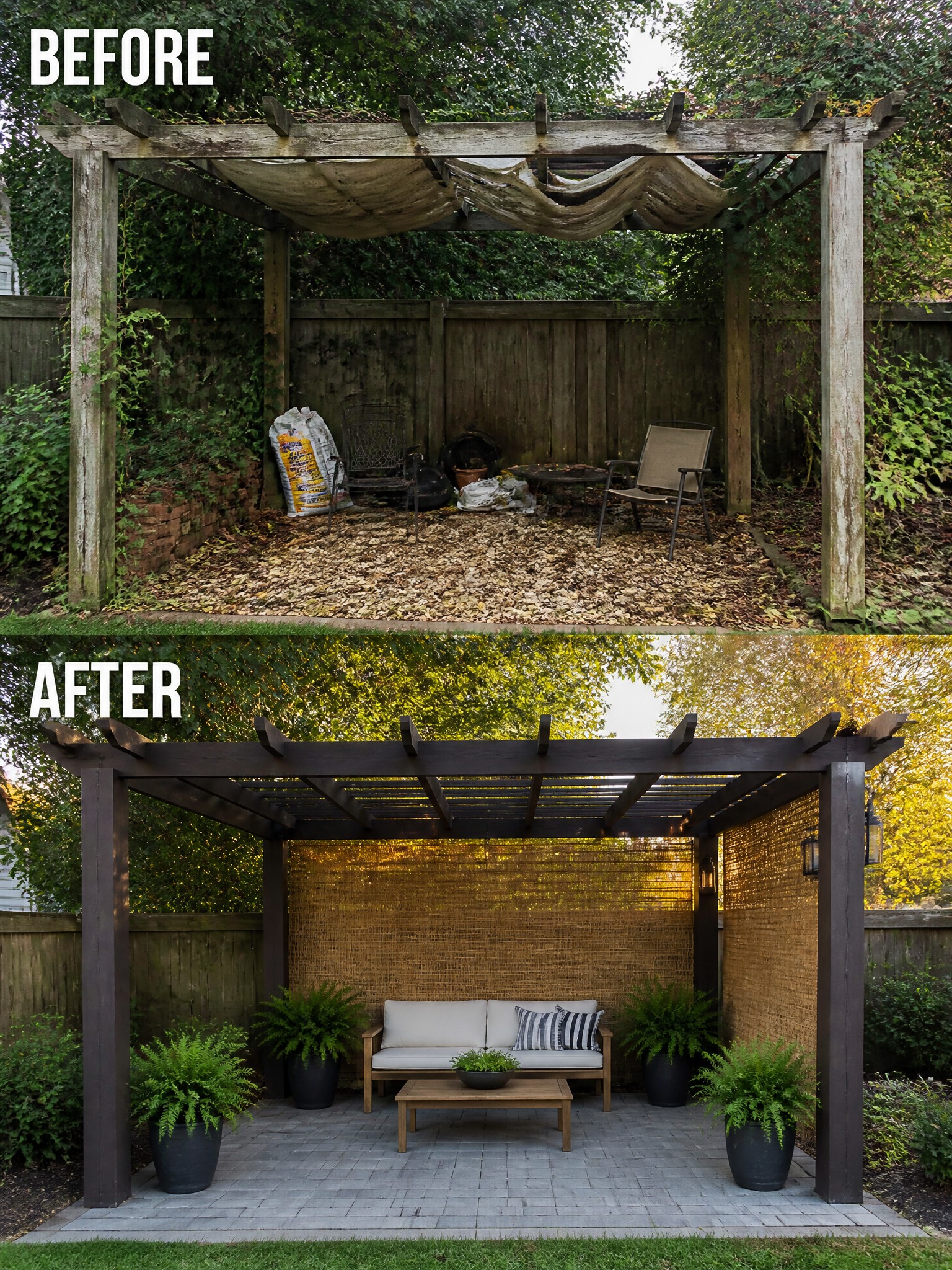
A pergola can easily become a dumping ground when it has no clear purpose. Clearing out the old chairs and debris, then adding a sofa, coffee table, and pavers, turned this one into an actual place to sit and relax.
This idea works best in backyards that already have a covered structure. Focus on weather-resistant furniture that fits the size of the space, and keep the layout open enough for easy movement. Adding a few large planters helps define the edges without crowding the area.
Add Structure To An Overgrown Drainage Area
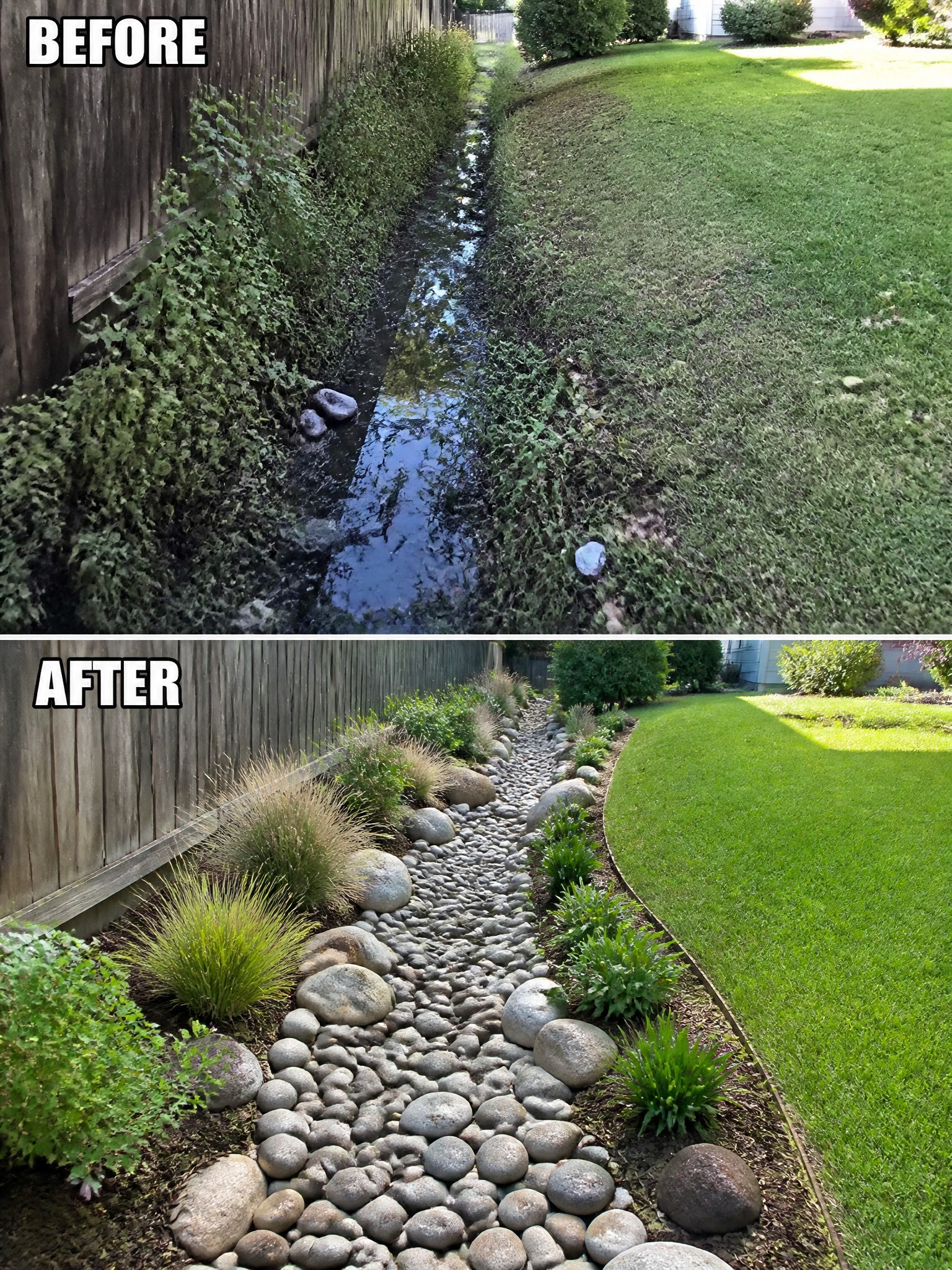
Many yards have a low spot or ditch that ends up looking messy because water collects there and weeds take over. Filling the channel with river rock gives the area a clear purpose while still letting water flow through.
Planting a few grasses and shrubs along the edges helps blend the rocks into the rest of the yard. This approach works best in narrow side yards or along fences where you want something simple to maintain but still finished.
Turn A Bare Balcony Into A Defined Seating Area
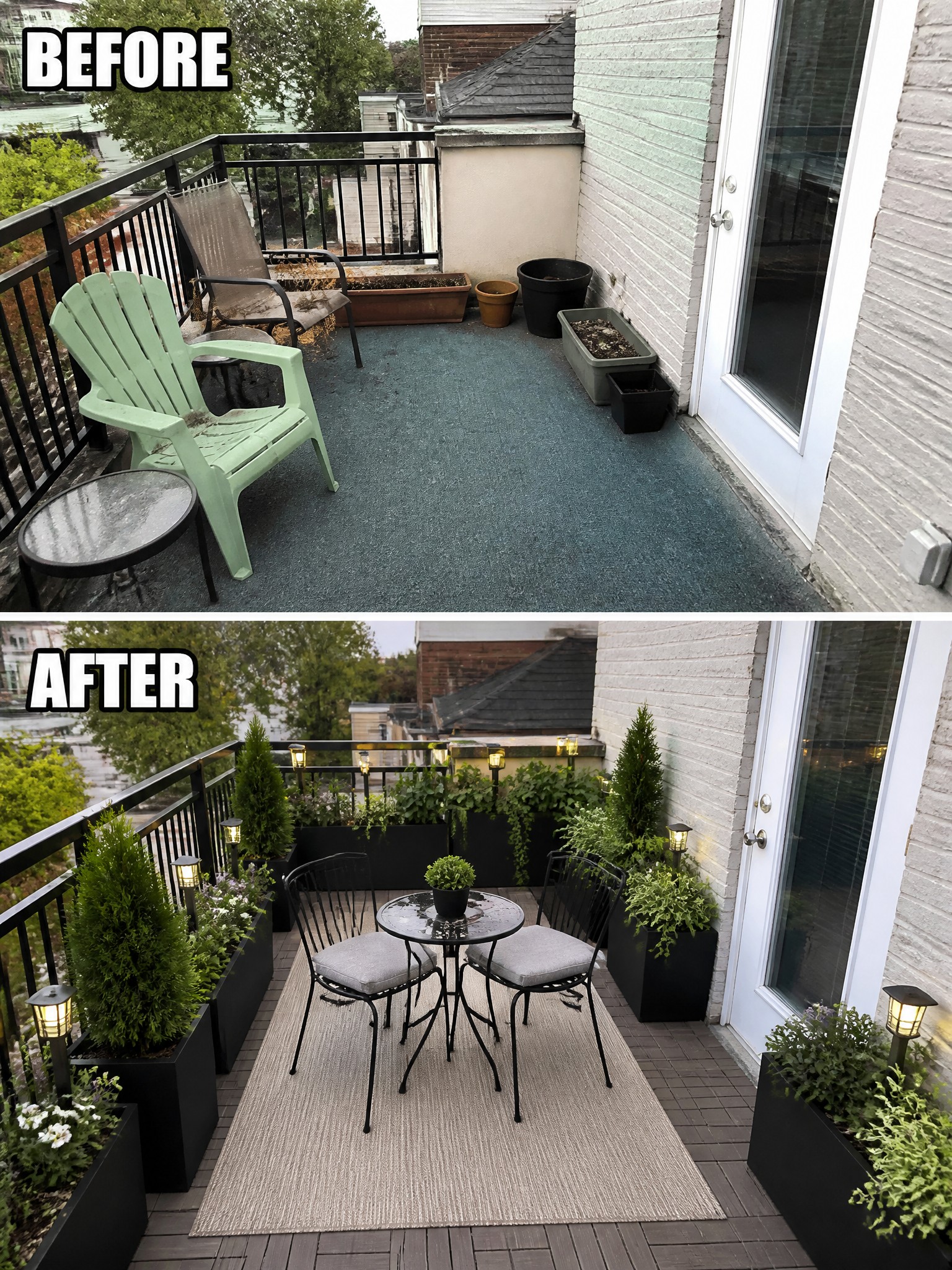
The biggest shift here comes from adding a rug and a set of matching planters to mark off a clear seating zone. What used to be scattered chairs and random pots now reads as one intentional spot because the rug pulls the furniture together and the tall black planters give the edges some structure.
This idea works best on small balconies or patios where the floor feels empty or messy. Keep the furniture scale modest, use a rug to set the boundary, and stick with one or two repeating materials so the space stays easy to move around in.
Turn An Old Patio Into A Simple Seating Area
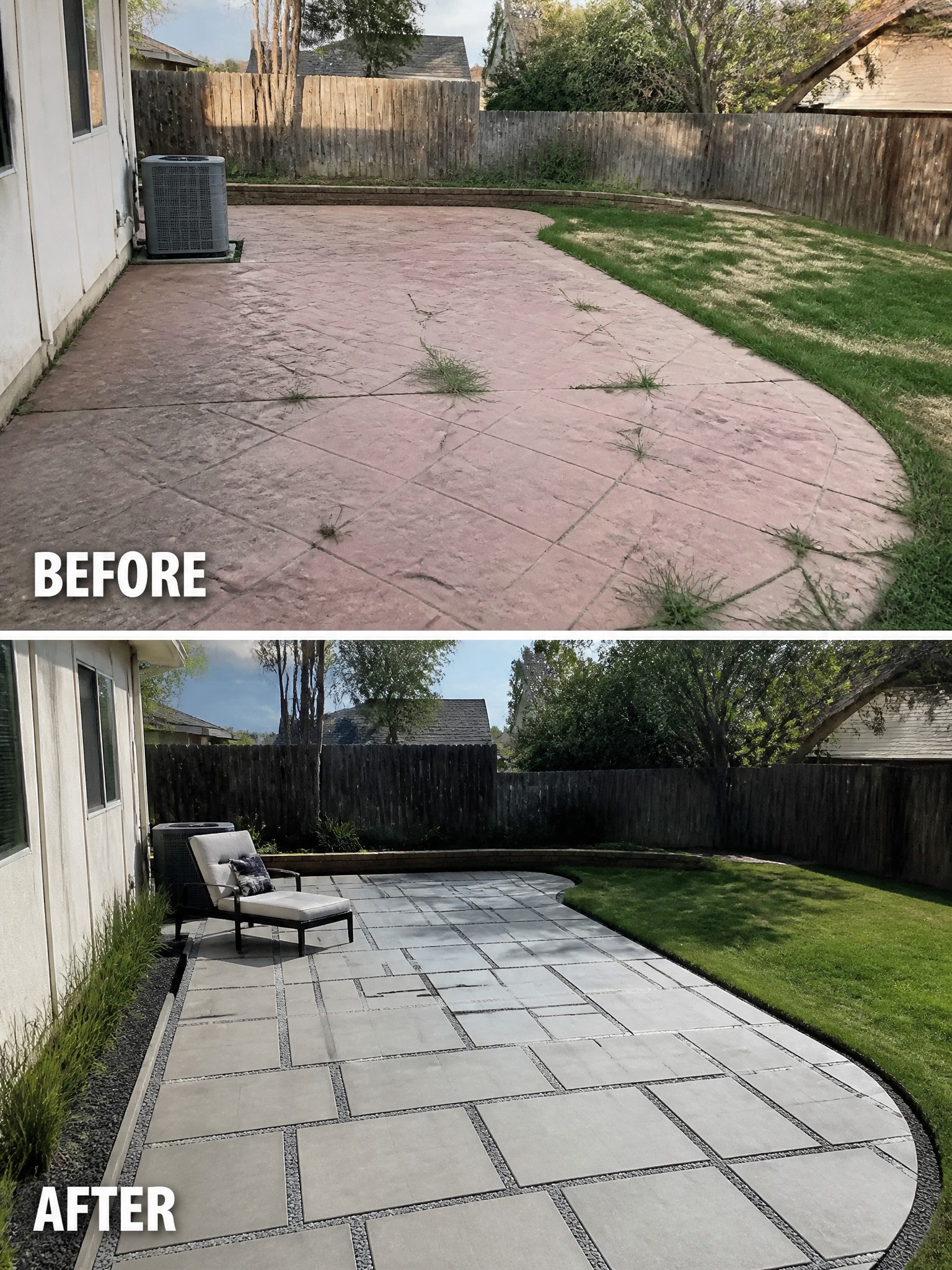
The cracked concrete in the before photo left the space looking neglected and hard to use. New pavers created a level, clean surface that instantly made the area feel like an actual room instead of leftover space. Adding one solid lounge chair gave it a clear purpose without filling it up.
This approach works well in backyards where the concrete is still sound but just looks tired. Start with the surface first, then add only what you need for sitting. Keep the furniture low and weatherproof so the space stays easy to maintain year round.
Add Outdoor Lighting To Make A Backyard Feel Usable At Night
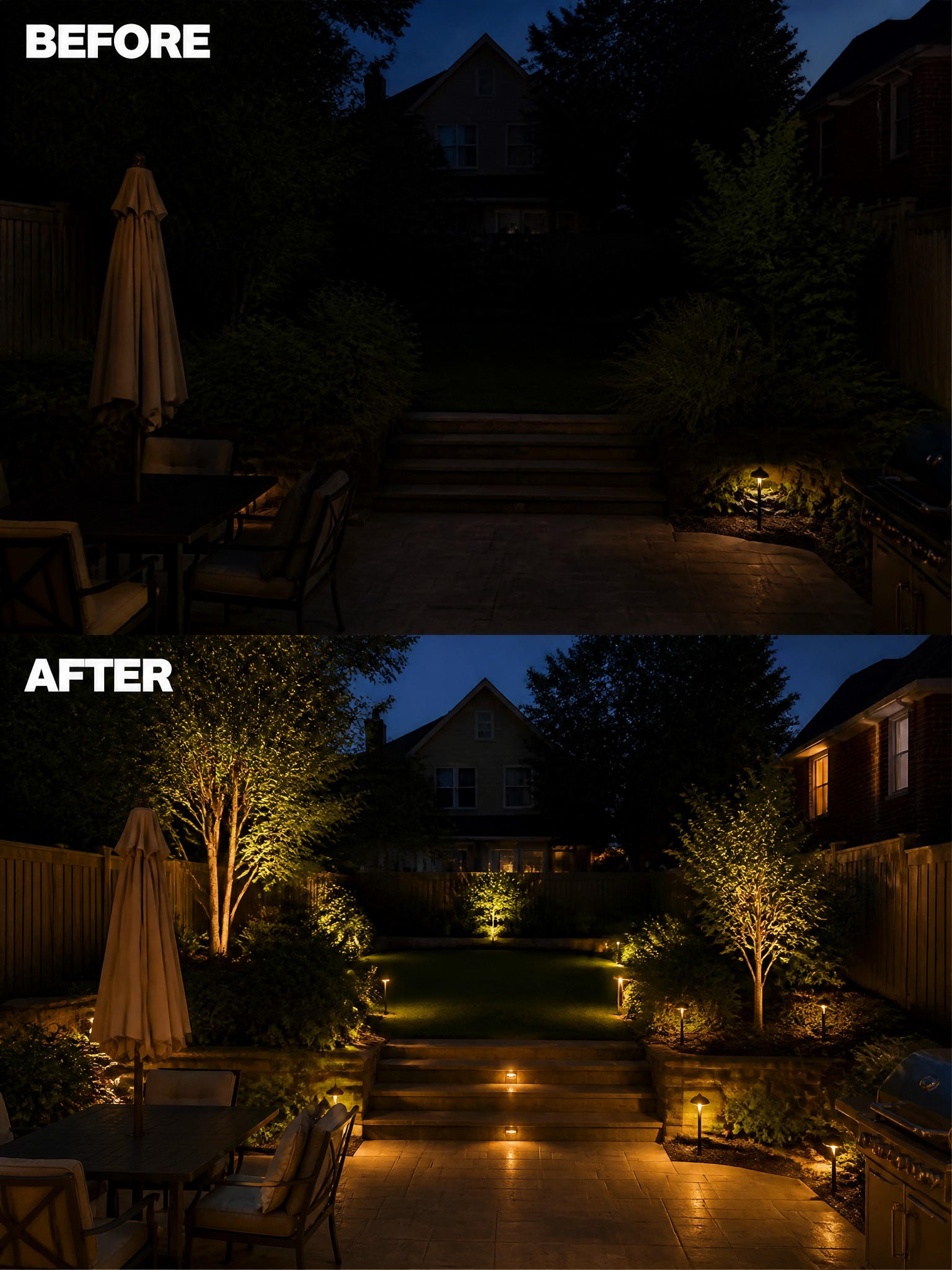
The biggest change here comes from adding layers of lighting across the yard. In the before photo the space goes dark quickly once the sun sets, with only a couple of lights near the steps. The after photo shows how path lights, uplights on trees, and low step lights open up the whole area so it actually feels like an extension of the house after dark.
This idea works best when you start with the main paths and seating zones rather than scattering lights everywhere. Place a few uplights on trees or larger plants to create height, then use smaller fixtures along the edges of the patio and steps. It keeps the yard from feeling closed off once the sun goes down and makes it easier to use the space for dinner or quiet evenings outside.
Use Vertical Gardens To Refresh A Narrow Side Yard
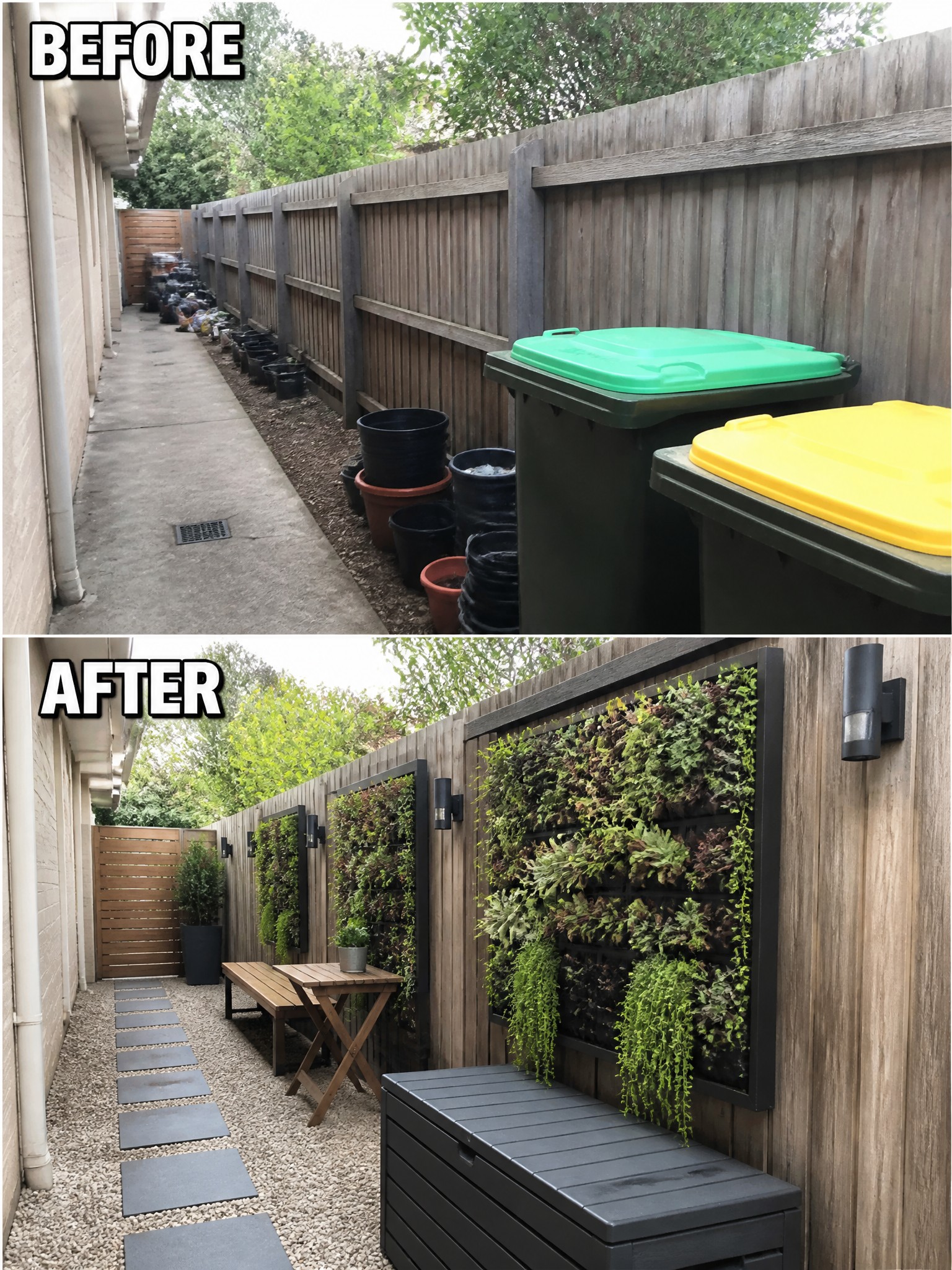
A narrow side yard can easily become a spot for bins and spare pots. Here the fence was turned into the main feature by adding framed vertical gardens, while a gravel path with stepping stones replaced the plain concrete. The result feels much more intentional and gives the space a clear purpose.
This idea suits homes where the side yard is the only outdoor area available. Clear the clutter first, then use the fence for planting rather than trying to add wide beds. A simple bench or storage seat at one end keeps the path open while still making the area feel usable.
Frequently Asked Questions
Q: How do I pick furniture that stays looking sharp without a lot of fuss?
A: Go for pieces in weather resistant materials like teak or powder coated metal. Limit yourself to two or three key items so the space stays open. Wipe them down once a month and store cushions inside when the season ends.
Q: My yard gets heavy foot traffic from the dog. Will gravel still work for a clean path?
A: Choose larger gravel pieces that lock together better under paws. Rake it smooth every couple of weeks to keep the surface even. Edge the path with metal strips so the stones stay put and the lines stay crisp.
Q: What is the easiest way to add lighting without wires running everywhere?
A: Start with a few solar path lights along the main walkway. Add one or two wall mounted spots near the seating area for evening use. They charge during the day and give off enough glow to highlight the clean layout at night.
