

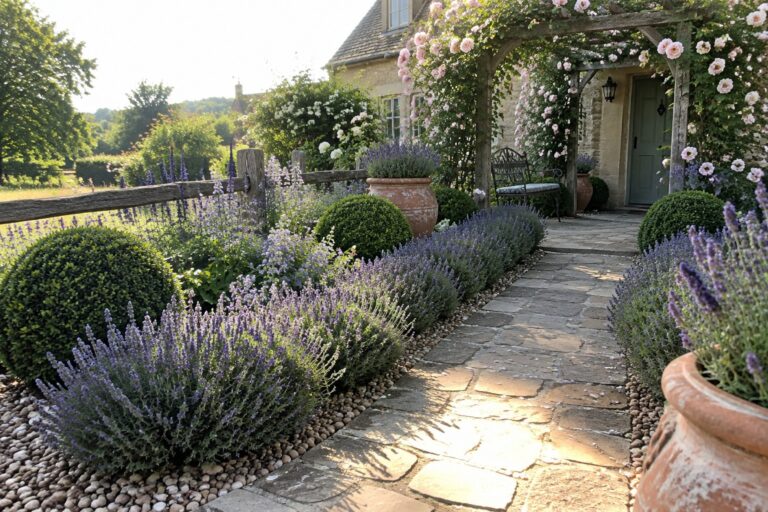
Lavender can bring color, fragrance, and a relaxed feel to a sunny garden, but it works best when its placement suits the space and the plants around it.
I’ve found that the overall layout matters as much as the flowers, especially when paths, borders, and taller plantings help guide the eye through the yard.
In full sun, good drainage and room for air to move can make the difference between lavender that thrives and a bed that looks tired by midsummer.
Some arrangements keep things simple with repeated rows, while others use lavender to soften an edge or mark a garden path.
I’d look for ideas that fit your soil, available space, and preferred level of upkeep, then adapt the details to your own garden.
Use a Curving Stone Path Through Lavender
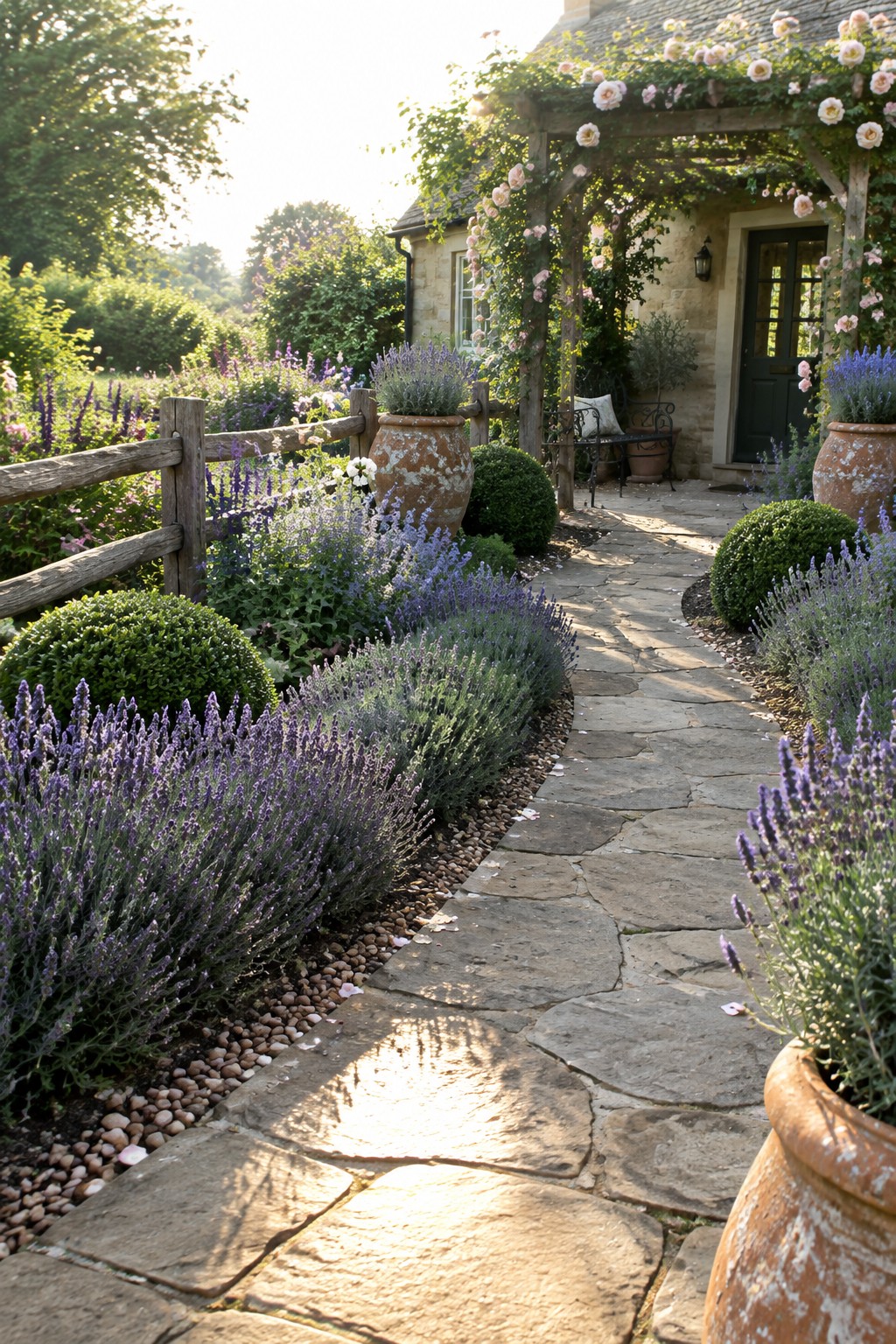
A gently curving stone path gives a sunny garden a clear route without making the planting beds feel too formal. Lavender along the edges brings color and helps define the walkway.
This idea works well in cottage-style gardens and around an entry. Choose durable, nonslip stone, and leave enough room for lavender to spread without narrowing the path.
Use Lavender to Define a Gravel Seating Area

Lavender beds can give a gravel patio a clear edge while keeping the planting relaxed and informal. The purple flowers stand out against pale stone, and the gravel leaves plenty of open space for chairs and a fire pit.
This approach works well in a sunny, dry garden where lavender can get good drainage. Plant it along the sides of a seating area or path, leaving room for mature plants so they do not spill into the walking space.
Use Stone Steps to Lead Through Lavender
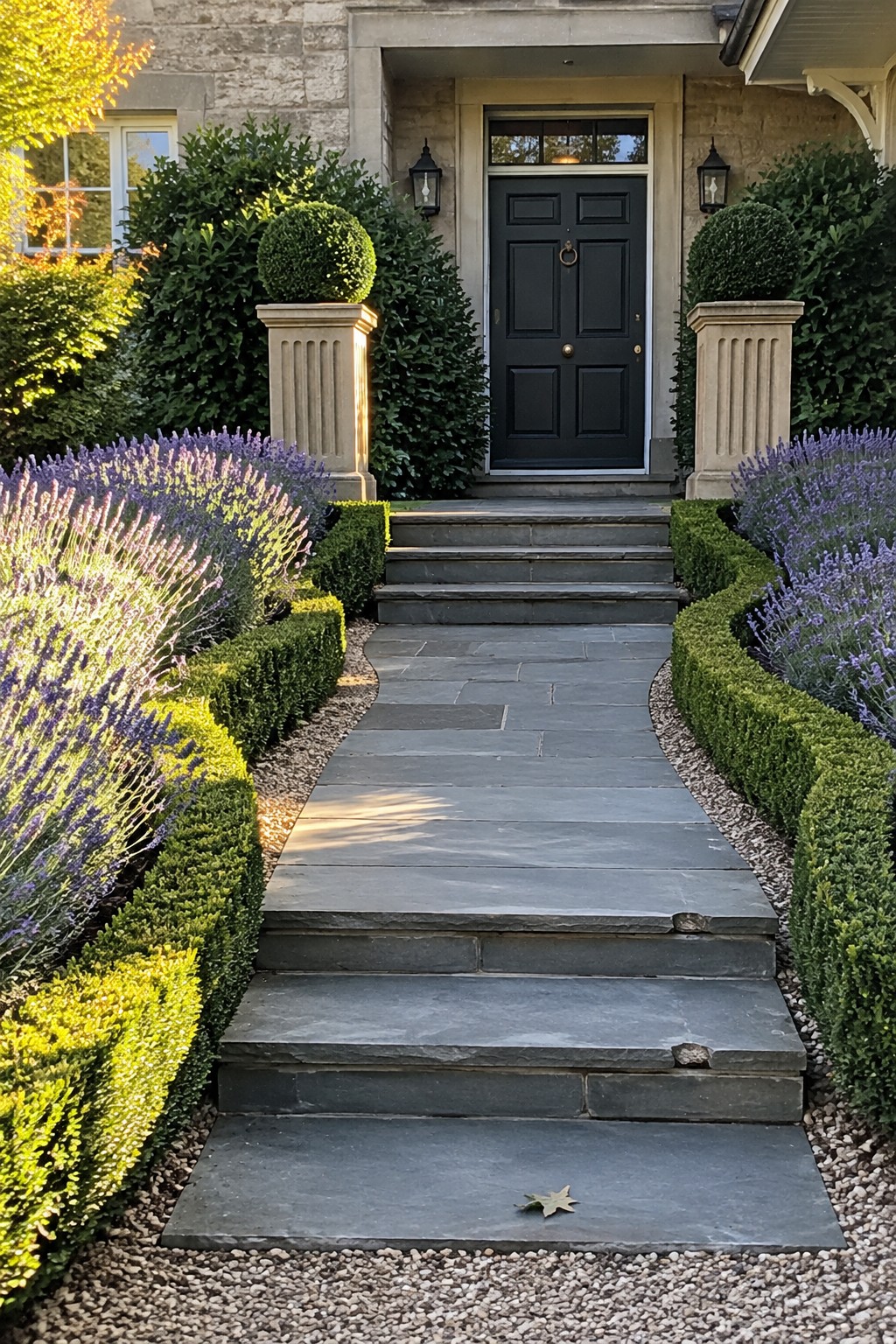
A stone path gives a full-sun garden a clear route to the front door, while lavender along the edges brings color and a soft border. The path also helps keep foot traffic out of the planting beds.
Use broad, stable pavers and leave enough room for lavender to grow without spilling too far across the walkway. This approach suits an entry garden, but leave a little space between the plants and the path so they are easy to trim and walk past.
Use Gravel Paths to Divide Lavender Beds
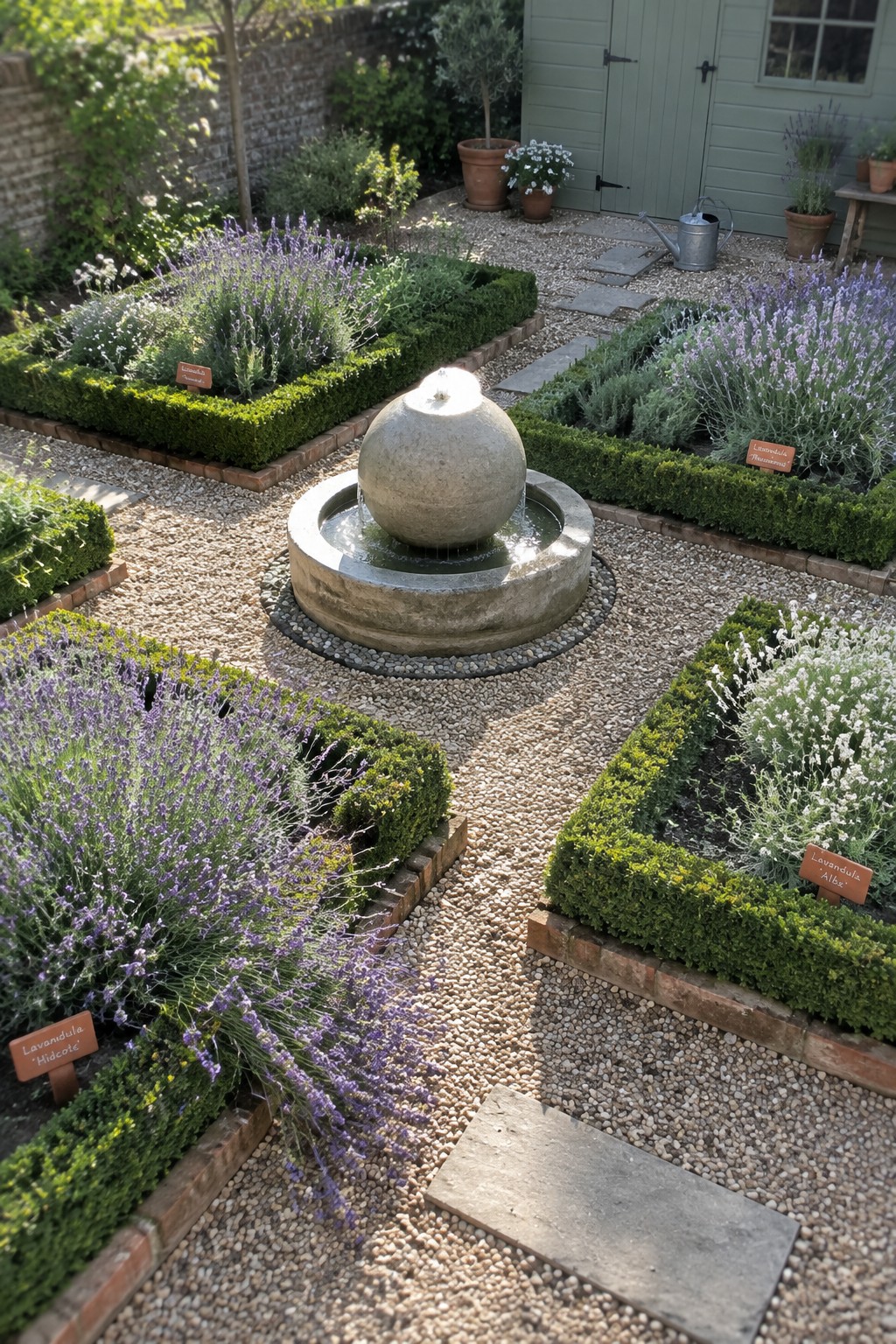
Gravel paths give a lavender garden a clear layout without taking attention away from the planting. They also make it easier to reach the beds for trimming and weeding, while brick edging helps keep gravel in place.
This approach suits a sunny, well-drained garden, especially where you want defined beds and simple routes through the space. Choose a firm gravel that is comfortable to walk on, and leave enough room to reach the plants without stepping into the beds.
Use a Winding Dirt Path Through Lavender
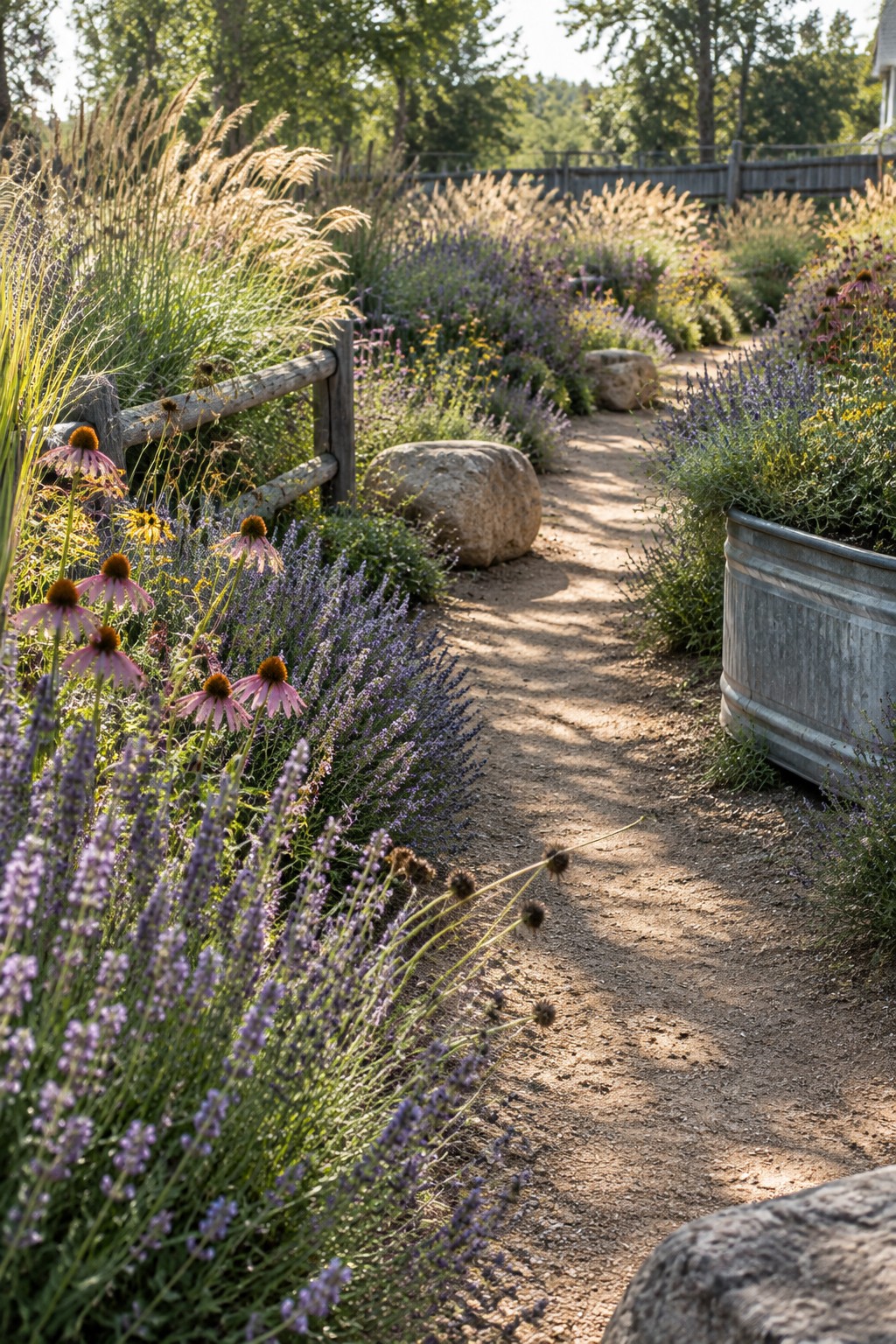
A gently curving path makes a full-sun garden easier to explore and gives the planting beds a clear shape. The packed earth keeps the route simple, while lavender and other flowers can spill close to its edges.
This works well in a cottage-style garden or along a side yard where a straight path might feel too formal. Leave enough room to walk comfortably, and keep taller plants from leaning too far into the route.
Grow Lavender Along the Edges of a Small Patio

A small patio can feel tucked away when lavender grows along its edges. The planting marks out the seating area without closing it in, and the flowers bring color close to the table.
Use raised beds or sturdy containers to keep lavender contained and give it well-drained soil and plenty of sun. Leave enough room for chairs and a clear path, especially in a narrow courtyard.
Build Tiered Lavender Beds Into a Sloped Garden

Terraced beds make a sloping garden easier to plant and maintain. Stone retaining walls hold the soil in place, while the level planting areas give lavender room to grow without crowding the path.
Use this approach where a slope would otherwise be difficult to walk or mow. Choose a sunny spot with good drainage, and leave enough space between the beds and steps to reach plants for trimming.
Use Lavender Along a Garden Path
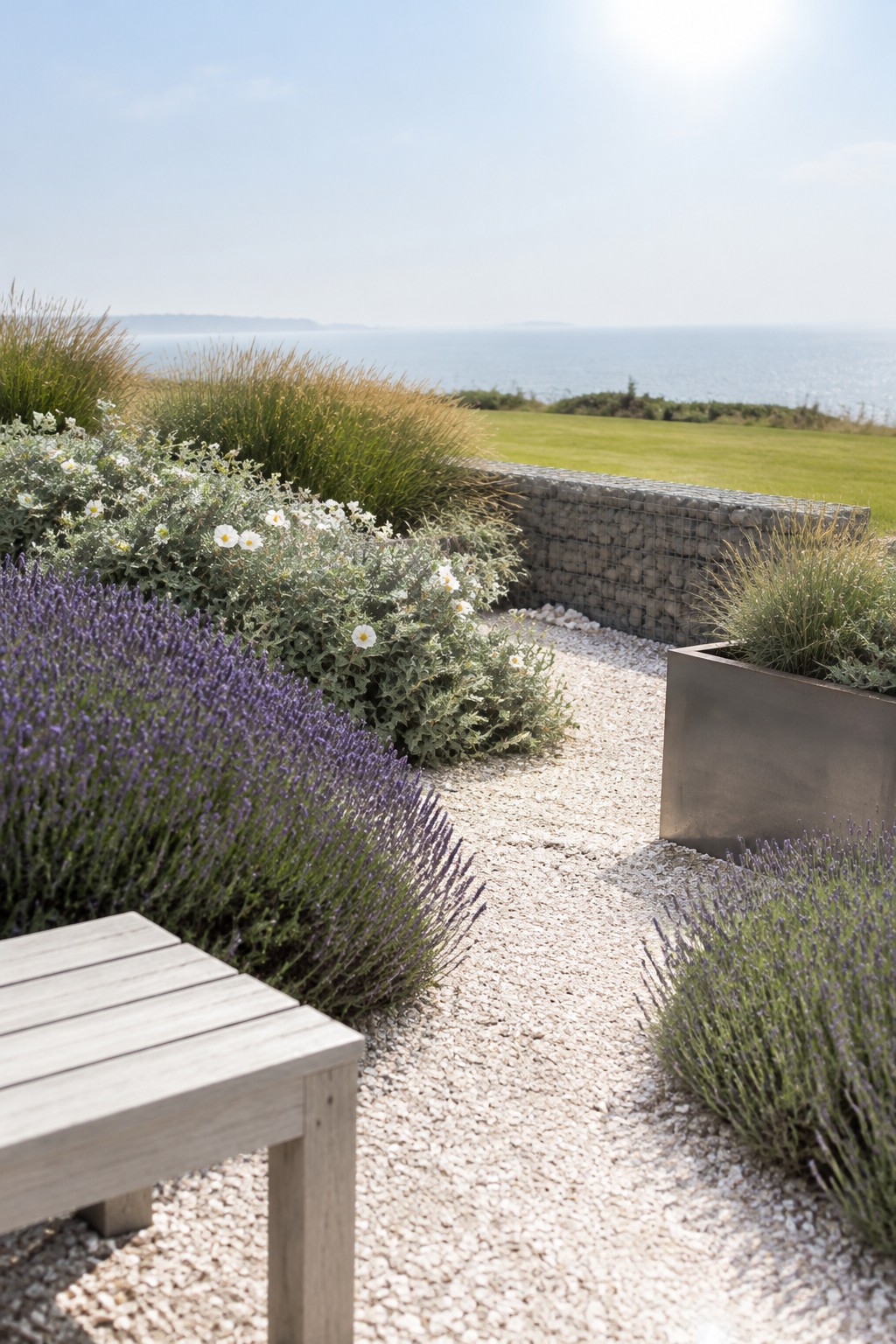
A gravel path is a practical way to move through a sunny garden without cutting across the planting beds. Lavender along the edges helps give the path a clear shape, while its flowers bring color close to the walking area.
Use a free-draining gravel surface and leave enough room for lavender to spread without narrowing the route. This approach works well in coastal or dry gardens, where lavender can enjoy the sun and the gravel helps keep the ground from staying wet.
Plant Lavender Along a Raised Stone Bed

A low stone retaining wall gives a lavender bed a clear edge and keeps the planting in place on a sloping or stepped garden. The purple flowers can spill slightly over the stone, making the border feel less rigid.
This approach works well beside a walkway or near a home entrance. Plant lavender where it gets full sun, and leave enough room between plants for air to circulate as they grow.
Use Rounded Stone Edging Along a Lavender Bed
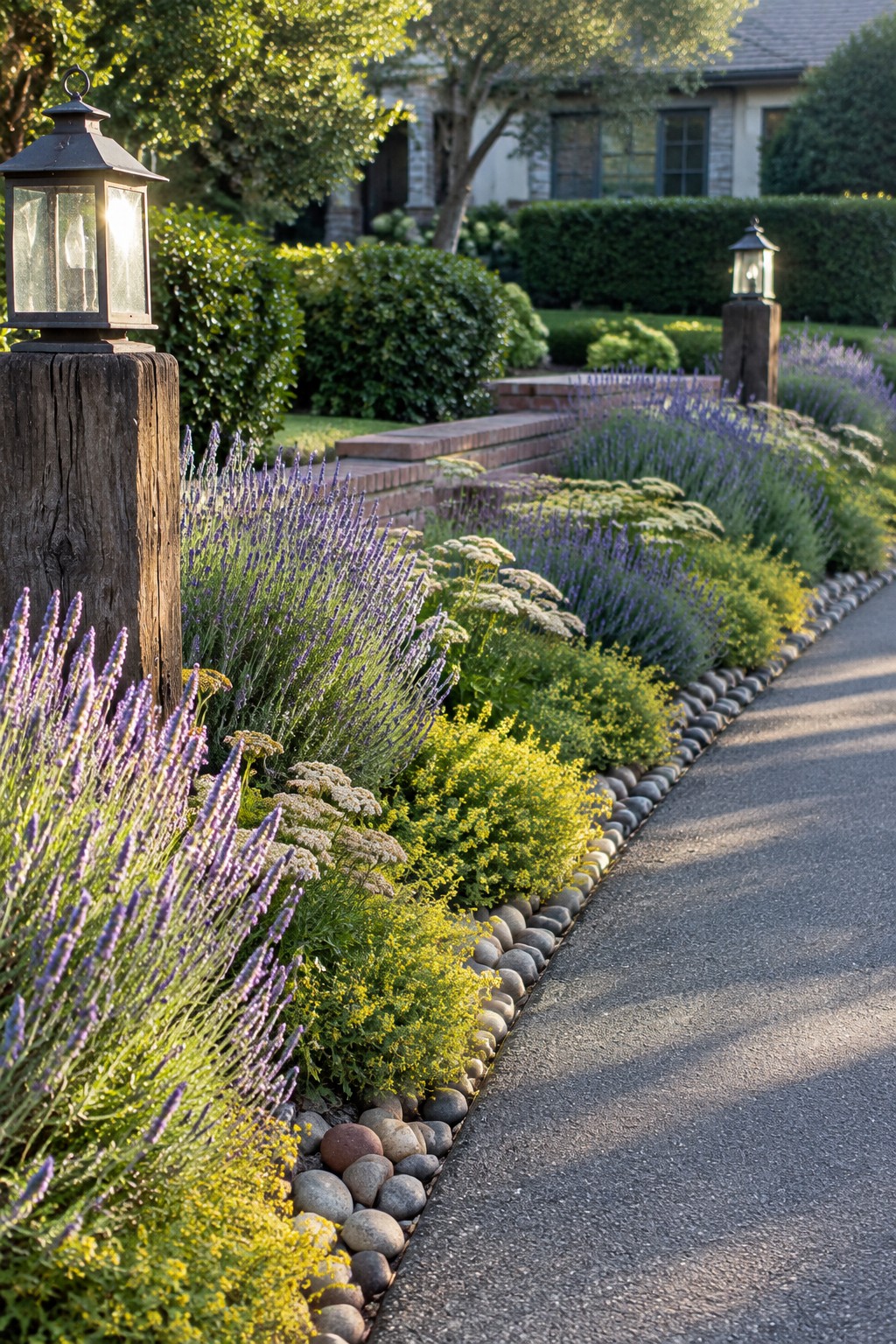
A line of smooth stones is a simple way to separate a flower bed from a driveway. It gives the planting a clear edge and helps keep loose soil and mulch from spilling onto the pavement.
For a full-sun garden, tuck lavender behind the stones and leave enough room for plants to spread as they mature. This kind of edging works well beside a front walk or drive, but avoid burying the stones too deeply or they may disappear into the bed.
Grow Lavender in Raised Beds Along a Garden Path

Raised beds make it easier to organize a sunny garden and keep its planting areas neat. Lavender can fill the edges, where its blooms are easy to enjoy as you walk by.
Use timber beds beside a gravel path, leaving enough room for plants to spread without narrowing the walkway. This layout suits a kitchen garden or a small backyard, but make sure the beds drain well since lavender does not like soggy soil.
Plant Lavender in Layers Along a Fence

Layered planting gives a narrow sunny border a fuller look without needing a wide garden bed. Taller flowering stems at the back and compact lavender in front make good use of the space, while the fence provides a simple backdrop.
Use this layout along a fence that gets plenty of sun, leaving room for plants to spread and for air to move between them. A strip of river stones can mark the bed edge, but keep most of the planting area open for healthy roots.
Use Lavender Beds to Edge a Pool Patio

A narrow lavender bed can give a pool patio a softer edge without taking up much room. The flowers add color beside the pale paving, while the planting keeps the hard surfaces from feeling so bare.
This works best along a sunny boundary where lavender has space to spread without crowding the walkway. Leave enough room between the plants and the paving for maintenance, and choose a well-drained bed so the roots do not stay soggy.
Use Lavender to Edge a Stepping-Stone Path
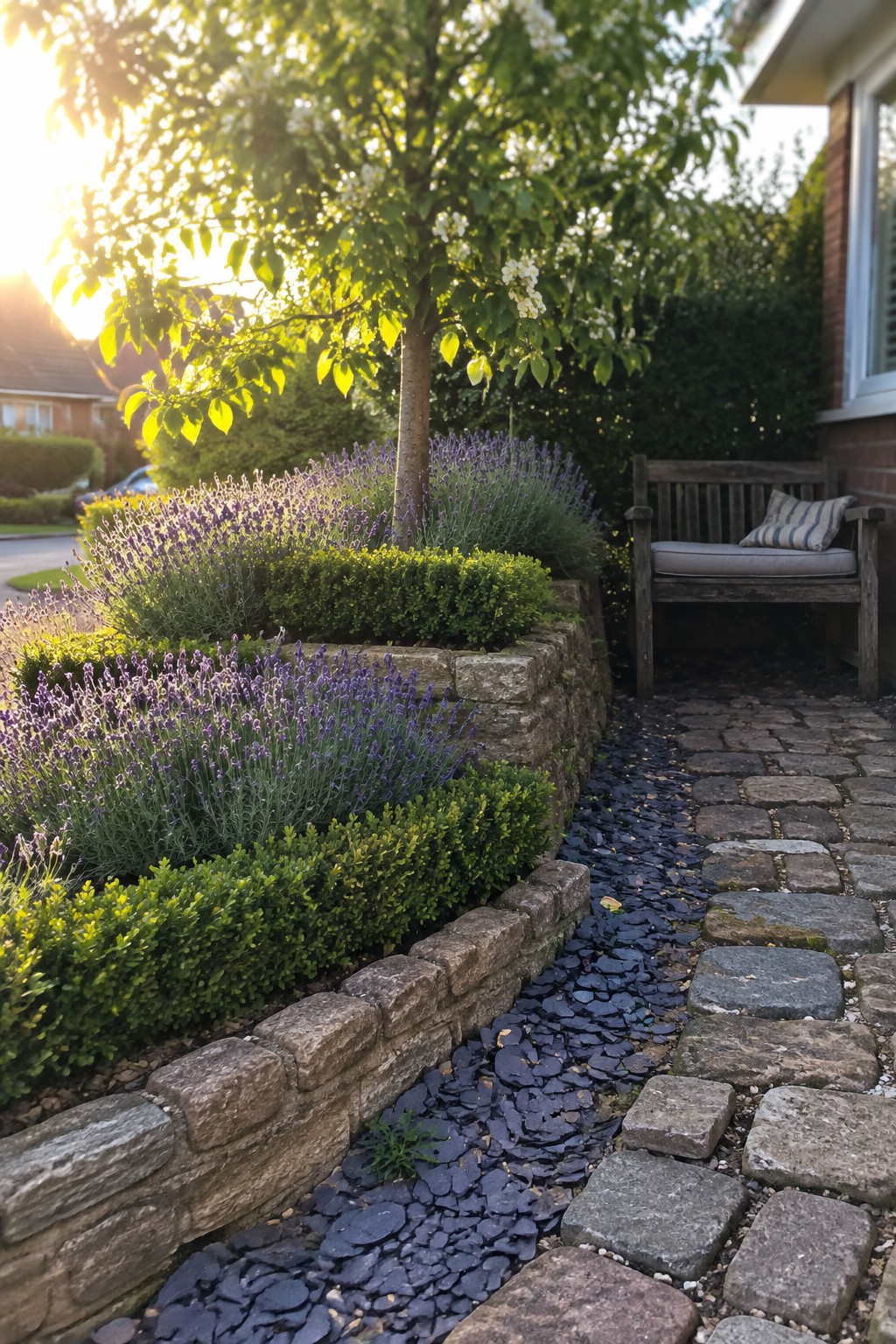
A stepping-stone path can make a lavender bed easier to enjoy and care for. The broad stones give you a firm route through the garden, while lavender planted along the edge brings color close to the walkway.
Leave enough room for lavender to spread without covering the stones, and choose a sunny route with soil that drains well. This approach suits a narrow side garden or a small front yard where a path needs to feel useful without taking up much space.
Use Lavender to Mark a Gravel Driveway

A gravel drive feels more finished when lavender runs along its edges. The planting gives the route a clear shape and adds color without taking away from the open, practical surface.
This approach suits a country home or a long garden entrance. Leave enough room for cars to pass, and plant lavender where it gets full sun and the soil drains well. Trim the plants after flowering so they do not spill onto the gravel.
Use Lavender Planters To Create Privacy On A Terrace
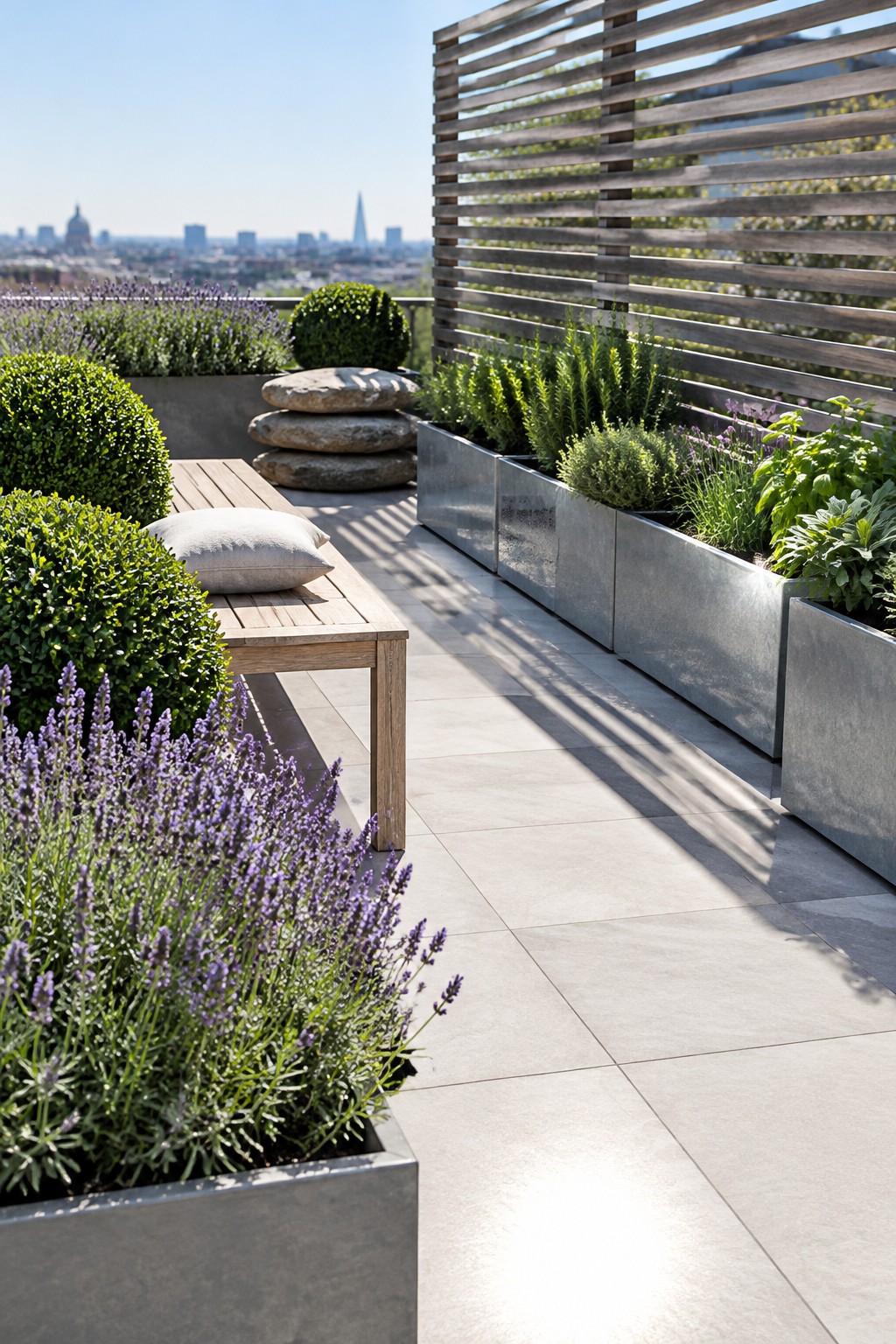
Lavender in raised planters can give a sunny terrace a garden feel while adding a little separation from the surrounding view. Long metal planters along a slatted screen keep the planting in a neat line and make the edge of the space feel more settled.
This setup works well on rooftops or balconies where planting directly in the ground isn’t an option. Choose planters with good drainage, and leave enough room between them for easy access and care.
Use Stone Edging to Shape a Lavender Bed
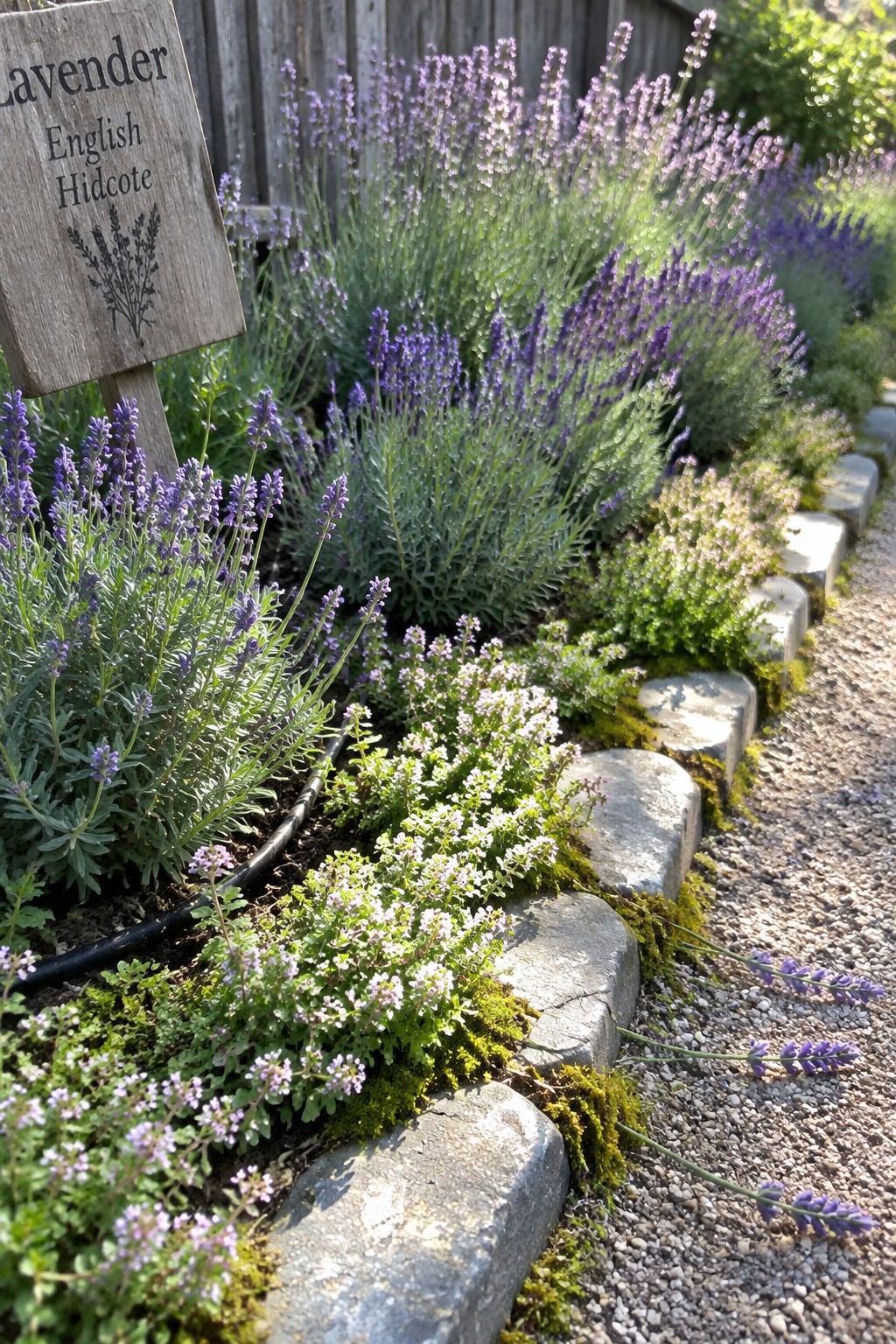
A low stone border gives a lavender bed a clear edge and keeps it distinct from a gravel path. The stones also suit a relaxed garden, where a perfectly straight border might look out of place.
For a similar effect, set larger stones along the bed in a gentle curve and leave enough room for lavender to grow without spilling onto the path. Check that the stones sit firmly, especially on sloped ground.
Add a Narrow Water Channel Along a Garden Path

A slim water channel can give a garden path a clear line to follow, while adding the gentle sound of moving water. Here, the long channel runs beside the paving and rusted steel planters, making the route feel intentional without taking up much room.
This idea works well in a compact courtyard or a sunny garden with a simple, straight path. Keep the channel narrow and easy to clean, and leave enough paving beside it for comfortable walking. Lavender can fill the nearby raised beds, where its flowers and scent sit close to the path.
Let Lavender Spill Along a Narrow Garden Path

A narrow path can feel more established when lavender grows close along its edges. The flowers soften the hard surface and give the garden a clear route without needing a wide paved walkway.
Use stepping stones or reclaimed pavers with enough room for comfortable footing, then leave space for lavender to spread without covering the path. This works well in sunny side gardens and informal cottage-style yards. Keep plants trimmed back where people walk.
Build Stone Steps Into A Sloped Lavender Garden

Stone steps make a sloped garden easier to walk through and give the planting a clear structure. Lavender suits this kind of layout well, since it can grow along the path and across the terraced beds without hiding the route.
Use broad, stable stones and leave enough room between steps for gravel to drain. Plant lavender along the edges, but keep it trimmed back from the walking surface.
Combine Lavender Beds With a Garden Kitchen
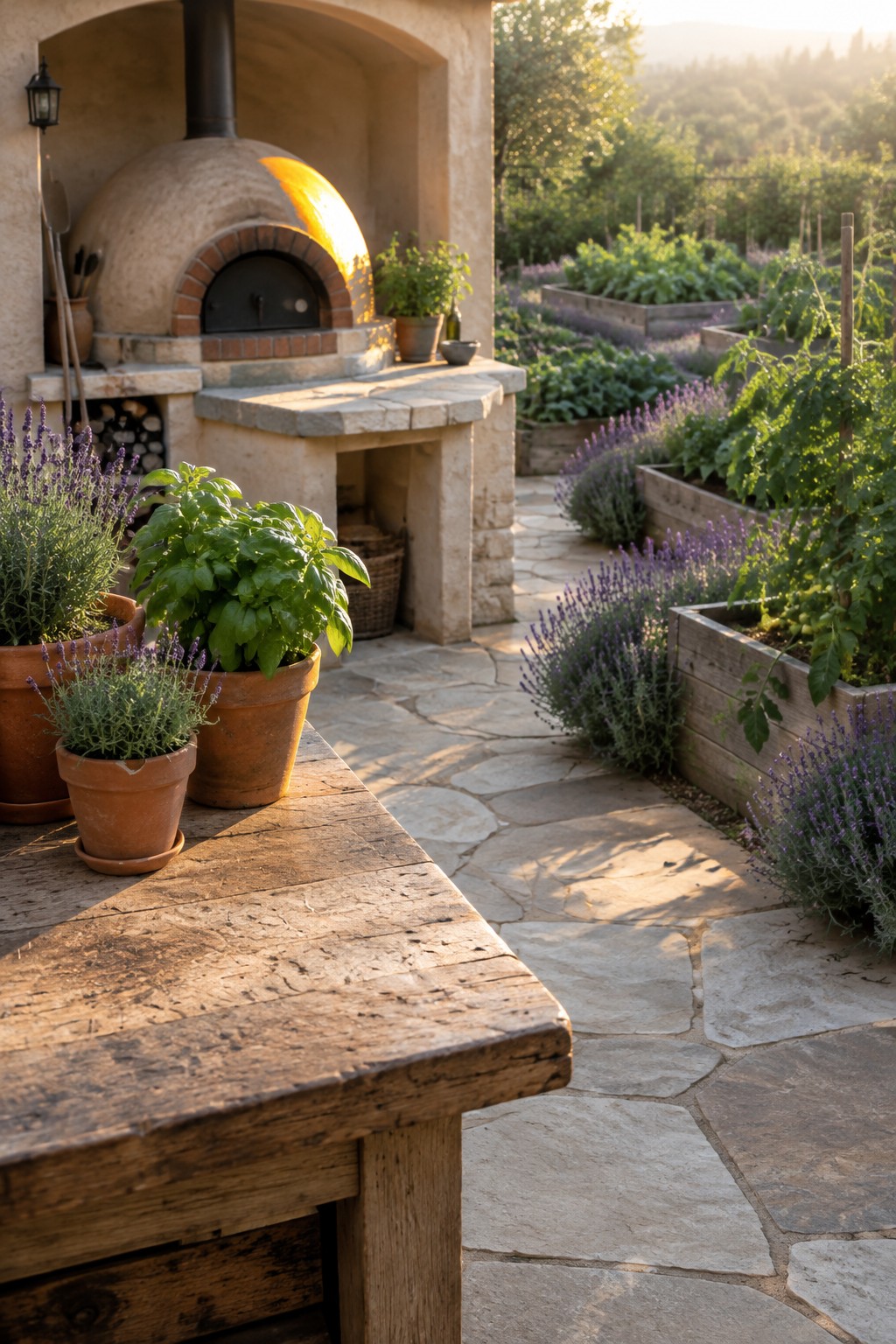
Lavender can help connect a working garden to an outdoor cooking area. Planting it along the edge of a path or raised bed gives the garden a clear shape without making it feel formal. Here, the beds sit beside a stone path near a built-in oven.
This layout works well when you want herbs and vegetables close to the kitchen. Leave enough room for a comfortable path and keep lavender out of the beds where you water thirsty crops often, since it prefers well-drained soil.
Frequently Asked Questions
Q: How much sun does lavender need to bloom well?
A: Aim for at least six hours of direct sunlight a day. In shadier spots, lavender often grows leggy and produces fewer flowers.
Q: What should I do if my garden soil stays wet after rain?
A: Plant lavender on a raised mound or in a raised bed so water can drain away. Heavy, soggy soil is one of the quickest ways to lose a lavender plant.
Q: Can I grow lavender in a pot on a sunny patio?
A: Yes. Choose a pot with drainage holes and a gritty, well-draining mix, and let the soil dry between waterings.
Q: When should I prune lavender so it doesn’t get woody?
A: Trim it lightly after flowering, cutting off the spent blooms and a little of the green growth. Avoid cutting into the old, bare stems, since they may not sprout again.
