


Shade gardens can feel a little flat when the planting relies on foliage alone, so I like using impatiens to bring in color without asking a sunny spot to do the work.
The way I arrange them matters just as much as the flowers, since repeated clusters, clear bed edges, and space for paths help a garden feel considered rather than crowded.
Impatiens also pair well with leafy plants and low borders, which makes it easier to add color around trees, along walkways, or beside a porch.
I would test a small grouping first to see how its color reads against the existing foliage and the changing light.
The best planting plans are the ones that still look balanced as the flowers fill in.
Use Curved Paths to Shape a Shade Garden

A gently curving path gives a shade garden a natural flow and lets flower beds feel like part of the route, not separate patches. Brick pavers work especially well here, adding a practical walking surface that suits an older or cottage-style yard.
Keep the path wide enough to walk comfortably, and use impatiens along the edges where they can brighten shady spots. A gradual curve is usually easier to maintain than a tight one.
Use Raised Beds to Organize a Narrow Garden

Raised beds make a narrow side yard easier to plant and maintain. They give flowers a clear edge while leaving a simple path through the middle, so the space feels orderly without needing a wide lawn.
For a shade garden, plant impatiens along the bed edges where their color can be enjoyed from the path. Leave enough room for mature plants and keep the walkway wide enough to use comfortably. A gravel path with stepping stones is practical, but it needs occasional tidying to keep stones from spreading into the beds.
Use Impatiens to Mark a Garden Path

Impatiens can help a shaded path feel like part of the garden rather than just a route through it. Planting them in generous patches along the edge adds color at ground level, while leafy plants nearby keep the border from looking sparse.
This approach suits a narrow side garden or a path leading to a patio. Choose impatiens for the light conditions, and leave enough room for the path to stay clear as the plants fill out.
Add Impatiens Along a Garden Path

Impatiens can bring bright color to a shaded path without taking over the whole garden. Plant them in small groups along the edge, where their blooms are easy to enjoy and the path still feels open.
Use them in the front of a layered planting, with ferns or other leafy plants behind. Keep the soil evenly moist, and leave enough room for the path’s stepping stones to stay clear.
Plant Impatiens in a Raised Wall Bed

A raised wall bed is a useful way to bring impatiens into a small shade garden. The flowers form a colorful band at eye level, while the built-in edge keeps the planting neat and contained.
This approach works well in narrow courtyards where there isn’t room for a wide garden bed. Choose a spot with shade or filtered light, and leave enough space in the bed for the plants to fill out without crowding.
Use Terraced Beds to Arrange Shade Plants

Terraced planting beds make a sloped garden easier to organize and give flowers room to show. Impatiens can fill the edges with color, while larger leafy plants add a steady backdrop.
Use low retaining walls to create separate planting levels, and keep the path clear enough for easy walking. This layout works well on a hillside where a single flat bed would be difficult to maintain.
Use Impatiens to Dress Up a Shaded Porch

Impatiens can bring reliable color to a shady porch, especially in containers near the entry. Here, white blooms spill over dark planters, making the flowers easy to notice without needing a large garden bed.
Use pots or railing planters where they get bright shade rather than harsh afternoon sun. Water them regularly, and leave room for the plants to spread so the flowers do not become crowded.
Create a Shaded Patio Garden

Impatiens can bring color to a shaded patio without taking up the space needed for dining and seating. Plant them in pots along the edge of the patio or in beds beside a built-in bench, where the blooms stay easy to see and tend.
Use containers to keep flowers close to the seating area, and choose a spot protected from strong afternoon sun. Water regularly, since pots can dry out faster than garden beds.
Plant Impatiens Along a Poolside Bed

A narrow planting bed can bring color right up to a pool without taking over the patio. Impatiens work well in the smaller spaces between shrubs and leafy plants, where their flowers add a bright patch of color in shade.
Use them along a wall or pool edge that gets limited direct sun, and leave enough room for the plants to spread. Choose a few colors that suit the rest of the garden, then water regularly, since impatiens can wilt when the soil dries out.
Layer Impatiens Along a Stone Garden Wall

A low stone wall gives a shade garden a clear edge and a place to layer flowers. Impatiens tucked along the top can add color where the blooms are easy to see, while taller plants behind them keep the bed from looking flat.
This works well in a woodland garden or a small yard with an existing retaining wall. Leave enough room for the impatiens to spread, and choose a spot with shade and moist, well-drained soil.
Plant Impatiens in Balcony Planters

Long planters can turn a narrow balcony edge into a colorful shade garden. Impatiens are a good fit for this setup because they flower in compact clusters and bring color along the length of the bed.
Use a planter that fits securely along the railing, and leave room for the plants to spread without blocking the walkway. Water regularly, since containers can dry out faster than garden beds.
Plant Impatiens Along a Narrow Garden Path

Impatiens can bring steady color to a narrow path without taking up much room. A raised brick edge keeps the flower bed defined, while the plants spill just slightly toward the stepping stones.
This approach works well in a shady side yard or other slim passage. Plant impatiens in a generous band along one side, and leave enough clear space for walking so the path stays practical.
Layer Impatiens Along a Garden Path

Layering impatiens in a raised bed beside a garden path makes a shady walkway feel colorful without narrowing the route. The low flowers fill the front of the bed, while taller plants behind them add a little height and help the planting look full.
Use this approach along a stone or mulch path where the bed has enough width for a few rows of plants. Keep the blooms nearest the edge low so they do not spill over the stepping stones or make the path harder to use.
Layer Impatiens Along a Stone Garden Wall

A raised stone bed is a handy way to bring shade-loving flowers closer to the house. Impatiens spilling over the edge can make a retaining wall feel like part of the garden rather than a hard boundary.
Use this approach beside an entry or along a narrow foundation bed where ground space is limited. Plant impatiens near the front of the bed, and leave enough room behind them for other shade plants without crowding the walkway.
Use Impatiens in Formal Garden Beds

Clipped hedges give a shade garden a clear structure, while impatiens bring color into the open beds. This approach works well when you want flowers to look tidy rather than scattered.
Plant impatiens in simple rows or small blocks inside the hedge borders, leaving enough room for them to fill out. Repeat a few flower colors through the beds for a coordinated look, and choose a spot with shade or gentle morning sun.
Use Impatiens in a Garden Potting Area
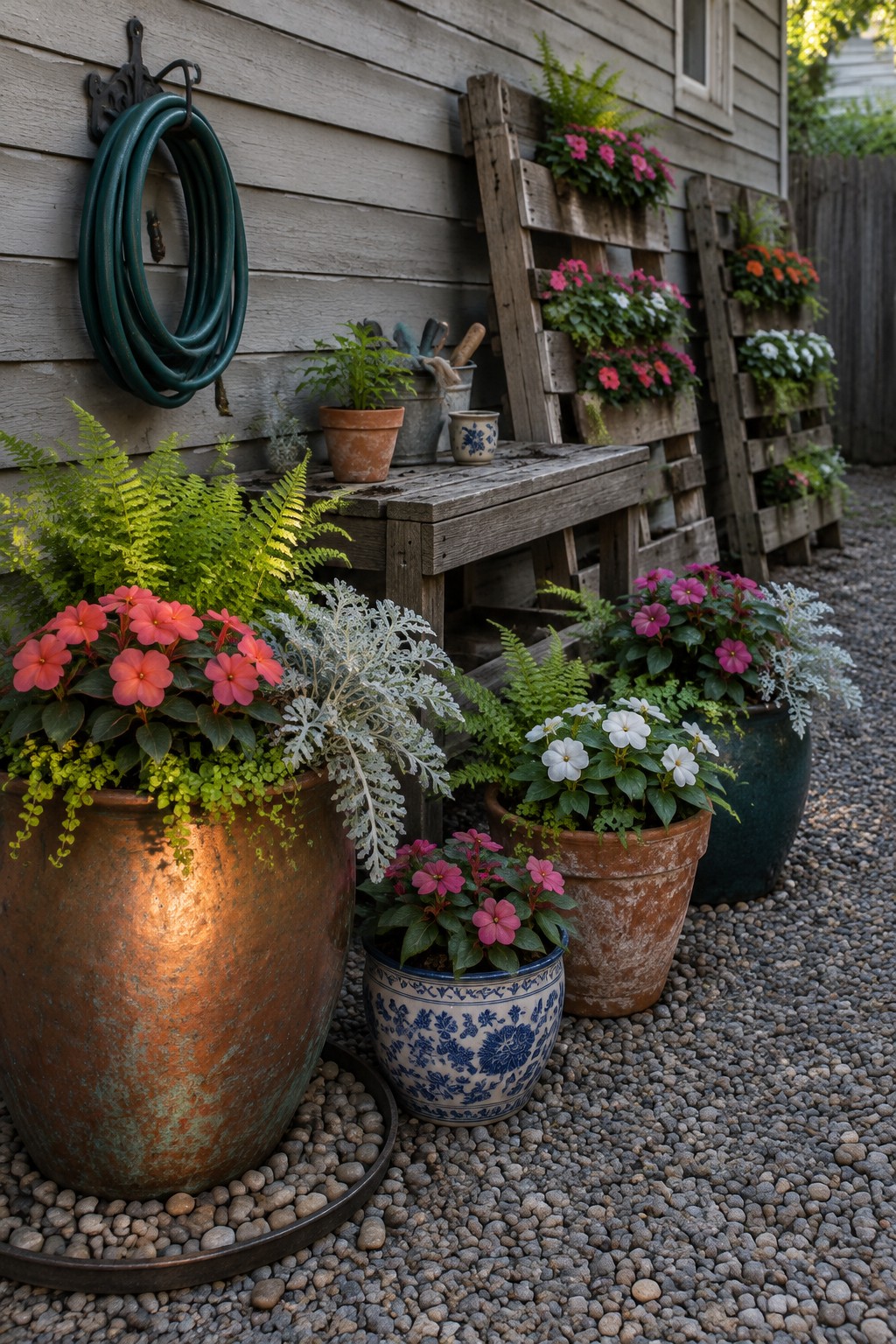
A small potting area can be part of the garden, not just a place to keep tools. Grouping impatiens in containers near a workbench makes it easy to tend them and keeps color close to the spots you pass often.
This idea works well along a shaded wall or in a narrow side yard. Mix pot sizes and leave enough room to reach each one for watering; impatiens are happiest when their soil stays evenly moist.
Add Impatiens to a Shady Stone Garden

Impatiens can bring a steady band of color to the shaded edges of a stone garden. Planting them in a low bed beside a retaining wall helps the flowers stand out without hiding the garden’s stonework.
Use them along a curved wall or patio edge where there’s room for a continuous planting. Leave enough space for mature plants to spread, and keep the soil evenly moist so they keep flowering through the season.
Plant Impatiens in a Long Raised Bed

A long raised bed is a good way to bring color to the edge of a shaded walkway without spreading plants across the paving. Impatiens can fill the front of the bed with blooms, while a few compact shrubs give the planting some structure.
This approach works well beside a modern home or along a narrow path where a defined garden edge helps keep things tidy. Leave enough room for the plants to grow, and choose a bed depth that is easy to water and maintain.
Plant Impatiens in a Narrow Side Yard
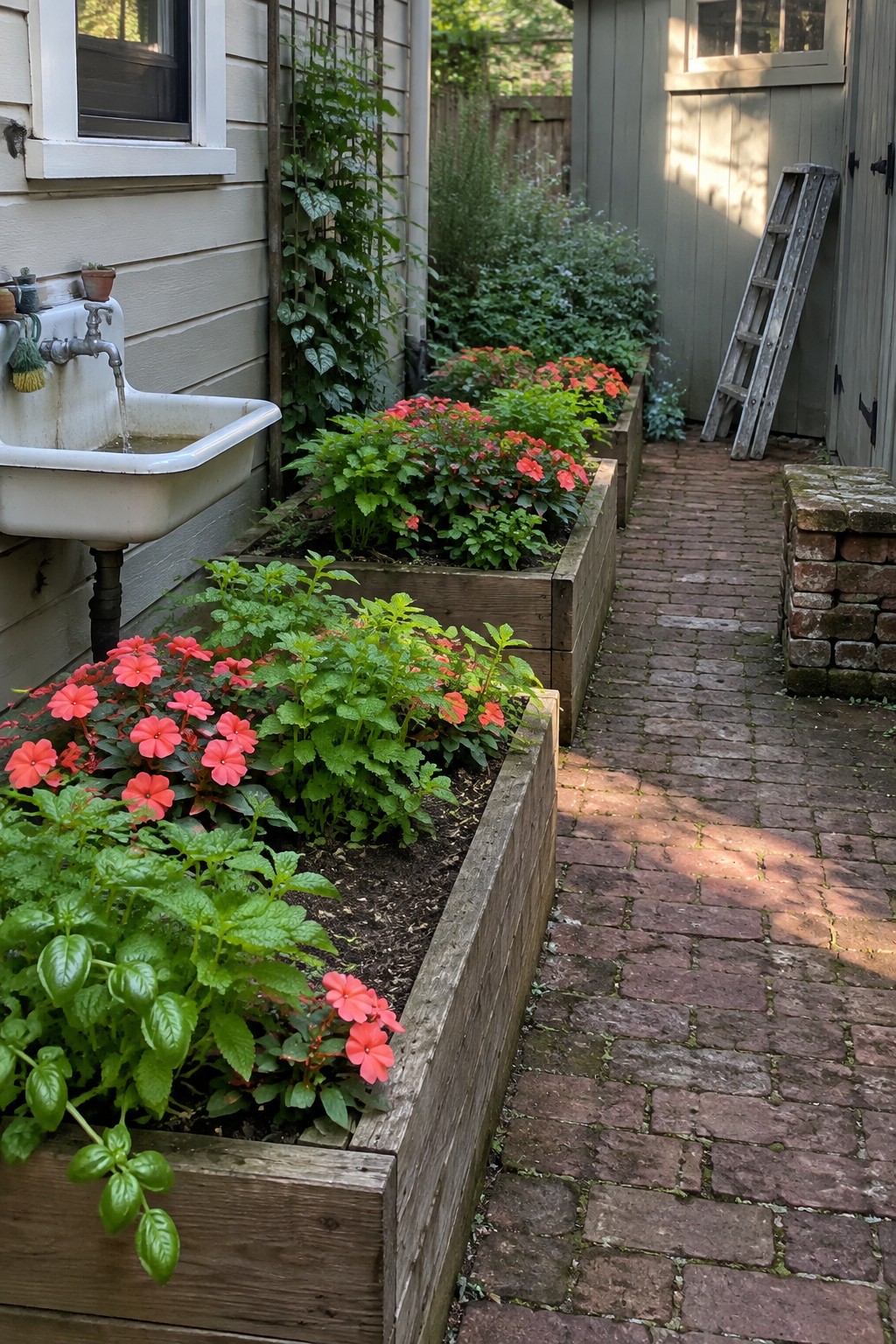
A row of raised beds can make a narrow side yard useful for shade-loving flowers. Impatiens planted in long bands bring color along the route without taking up the walking space.
Use beds that are narrow enough to leave a clear path, and repeat the flowers along the length of the yard for a simple, orderly look. This layout works especially well beside a house where ground-level planting space is limited.
Use Impatiens to Edge a Stone Garden Path

A stone path feels more connected to the garden when low flowers grow along its edge. Impatiens are a good choice for a shady route, where their bright blooms can define the walkway without hiding the stepping stones.
Plant them in a loose border beside the stones, leaving enough room for the flowers to spread without spilling across the walking surface. This approach works well in a narrow side garden or other shaded space where a clear path matters.
Frequently Asked Questions
Q: How much sun can impatiens handle in a shade garden?
A: Most impatiens bloom well in partial to full shade, especially where they get a little morning sun. In hot afternoon sun, their leaves can wilt or scorch, so choose a cooler, sheltered spot.
Q: How often should I water impatiens?
A: Check the soil with your finger and water when the top inch feels dry. Impatiens like evenly moist soil, but soggy roots can lead to trouble.
Q: Can I plant impatiens in containers with other shade plants?
A: Yes. Pair them with plants like coleus or sweet potato vine, and leave enough room for each plant to grow. Use a pot with drainage holes so extra water can escape.
Q: Why are my impatiens not flowering much?
A: Too much shade, dry soil, or crowded plants can all reduce blooms. Try moving the pot to brighter indirect light or giving garden plants a little more space.
