

I like how irises bring color to a garden just as the early season is starting to wake up, but their placement matters as much as their blooms.
A loose row along a path can feel very different from a broad drift near a fence, so I pay attention to how each planting shapes the view and guides movement through the yard.
I also find that pairing irises with plants that bloom at different times helps a bed look considered beyond a few bright weeks.
The ideas that catch my eye are the ones that suit the garden’s light, soil, and existing edges rather than asking the whole yard to change.
Some may be worth adapting in a small border first, especially if you want spring color without making the layout harder to maintain.
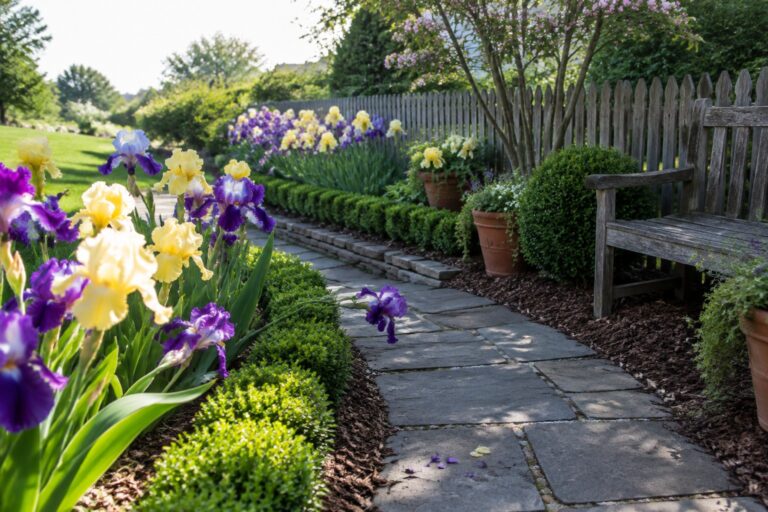
Use a Stone Path to Guide an Iris Bed

A simple stone path makes an iris bed easier to enjoy and easier to reach for weeding or cutting flowers. The curved route also gives a long planting bed a clear shape without taking space away from the flowers.
Keep the path wide enough to walk comfortably, and set the stones firmly so they do not shift. This approach suits a side yard or a garden border along a fence; a low stone edge can help keep soil and mulch in place.
Use Iris Along a Gravel Garden Path
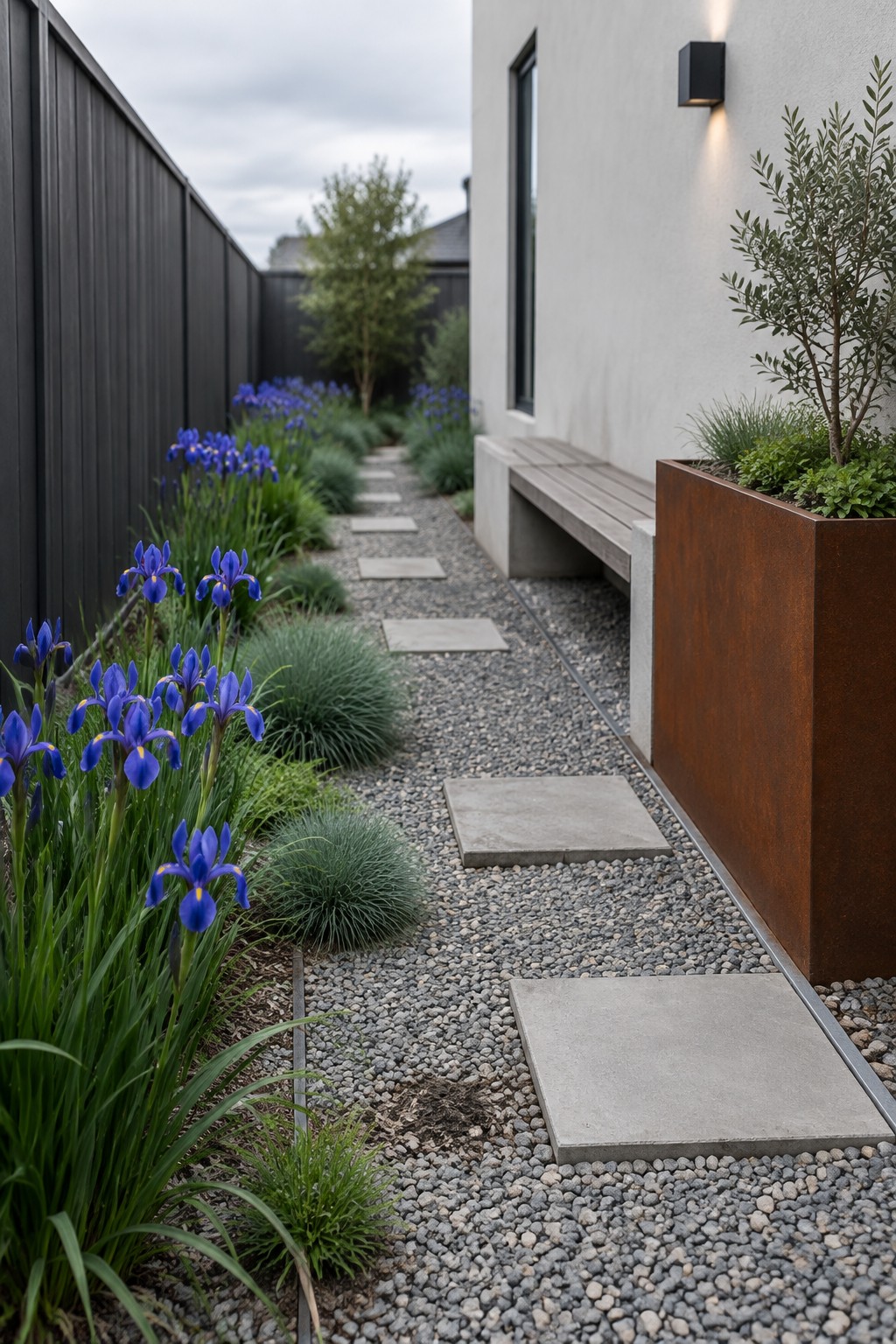
A gravel path with stepping stones gives spring iris a clear place in the garden without making the planting feel formal. The flowers add early color along the route, while the open gravel keeps the walkway practical and easy to maintain.
This idea works well in a narrow side yard or beside a modern home. Plant irises in small groups along the path, leaving enough room for them to spread without crowding the stepping stones.
Use Iris Beds to Define a Formal Garden
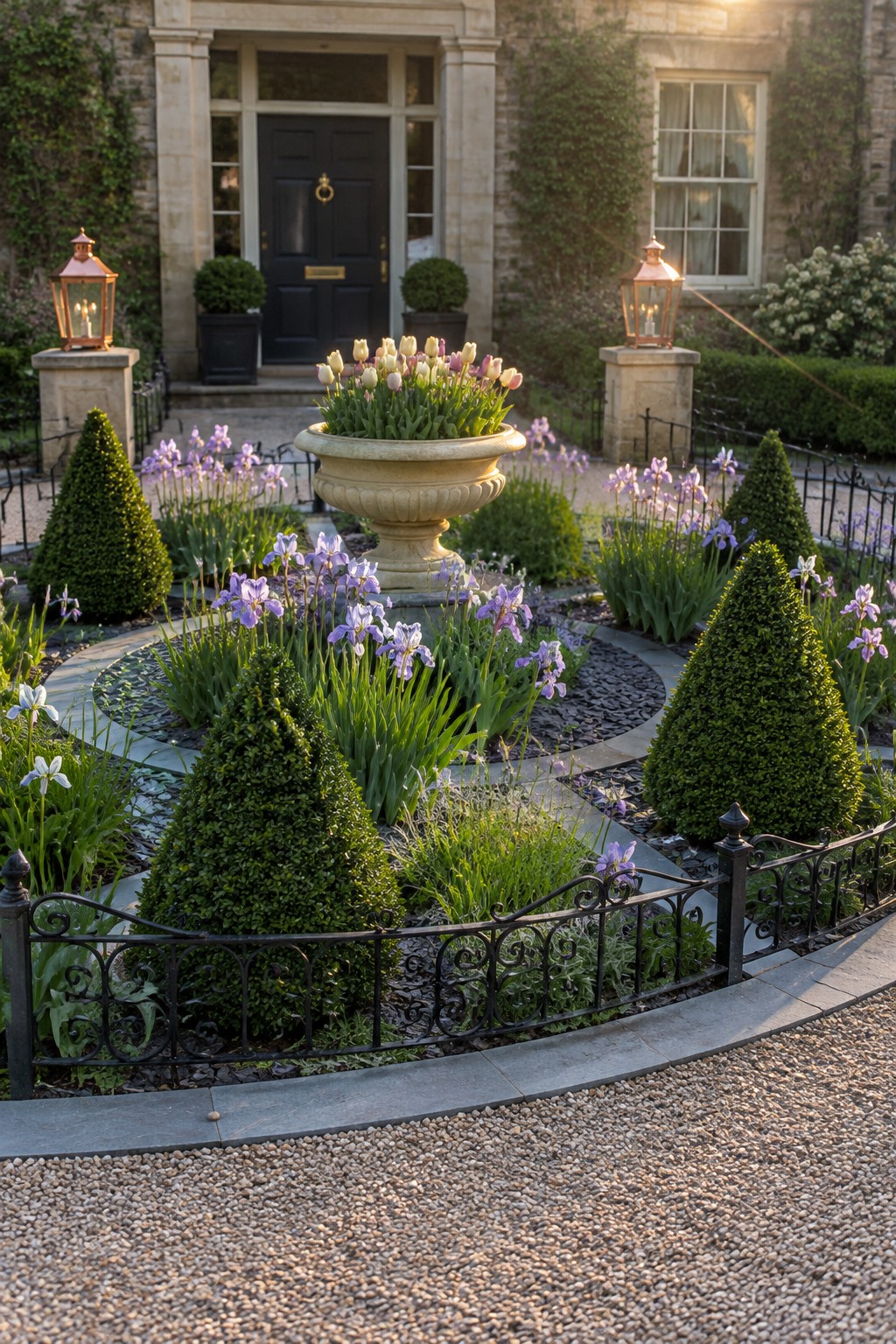
Iris beds can bring early-season color into a formal garden without hiding its shape. Their upright leaves and purple blooms make a clear contrast with clipped shrubs and neat stone borders.
Plant irises in groups along a circular bed or path, leaving enough room for the foliage to spread. They suit traditional entry gardens especially well, but avoid crowding them with taller plants that may shade the blooms.
Use a Winding Path to Guide Iris Plantings

A gently curving path makes an iris bed feel like part of the garden, rather than a row of flowers to look at from a distance. Here, stepping stones pass through clusters of purple and white irises, giving the planting a clear shape and making it easier to enjoy up close.
Try this layout along a slope or in a side garden where a straight walkway would feel stiff. Leave enough room beside the stones for iris leaves to spread, and keep the path firm and level enough for comfortable walking.
Plant Iris Beds Along a Reflecting Pool
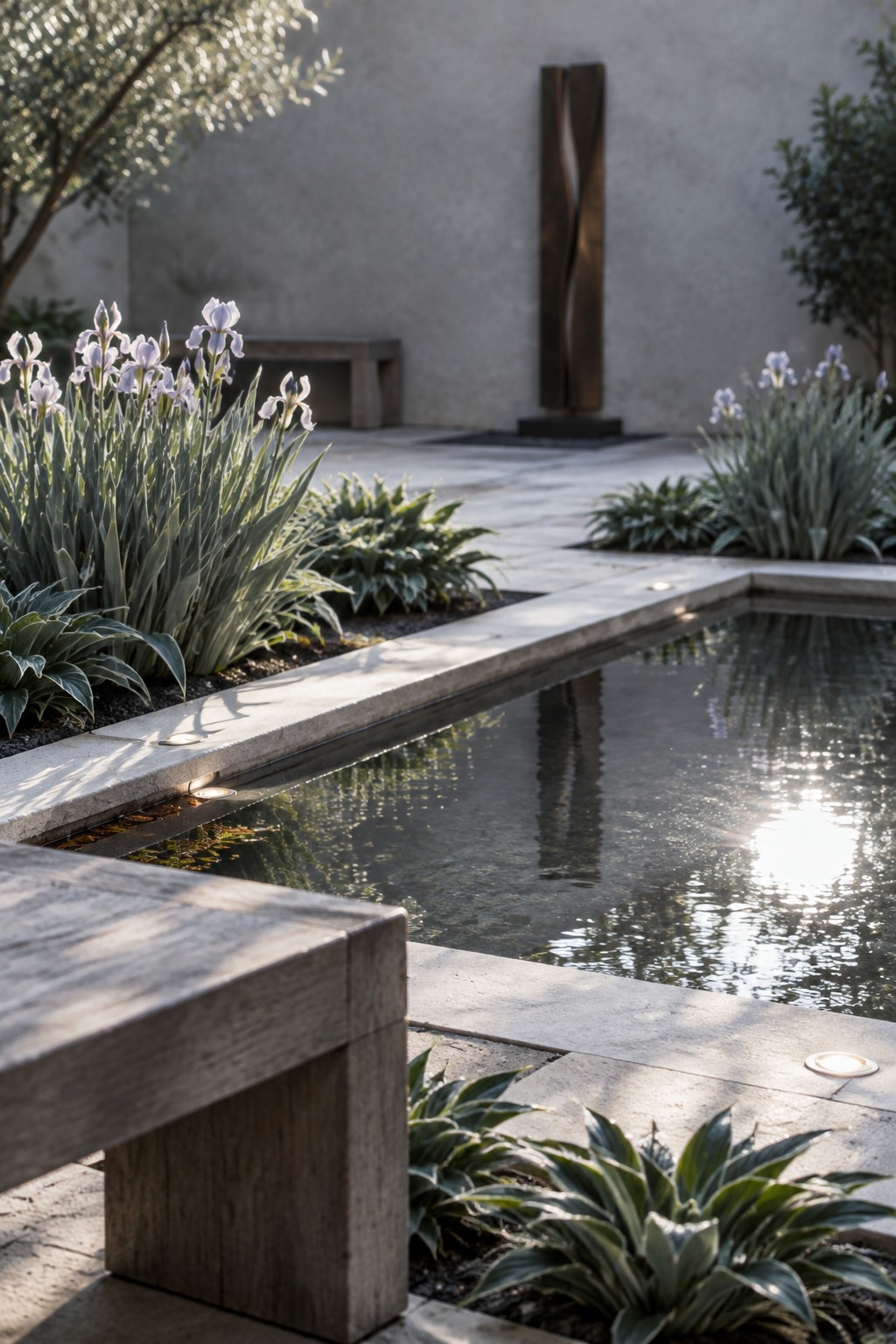
Iris beds can bring early-season color to a garden while keeping the overall layout neat. Planting them beside a reflecting pool lets their upright leaves and pale blooms stand out without filling every part of the yard.
Use a narrow bed along one edge of a pool or other straight water feature, and leave enough room for the plants to spread. A stone border helps keep soil in place, but avoid planting so densely that the irises hide the water.
Use Rocks to Shape an Iris Border
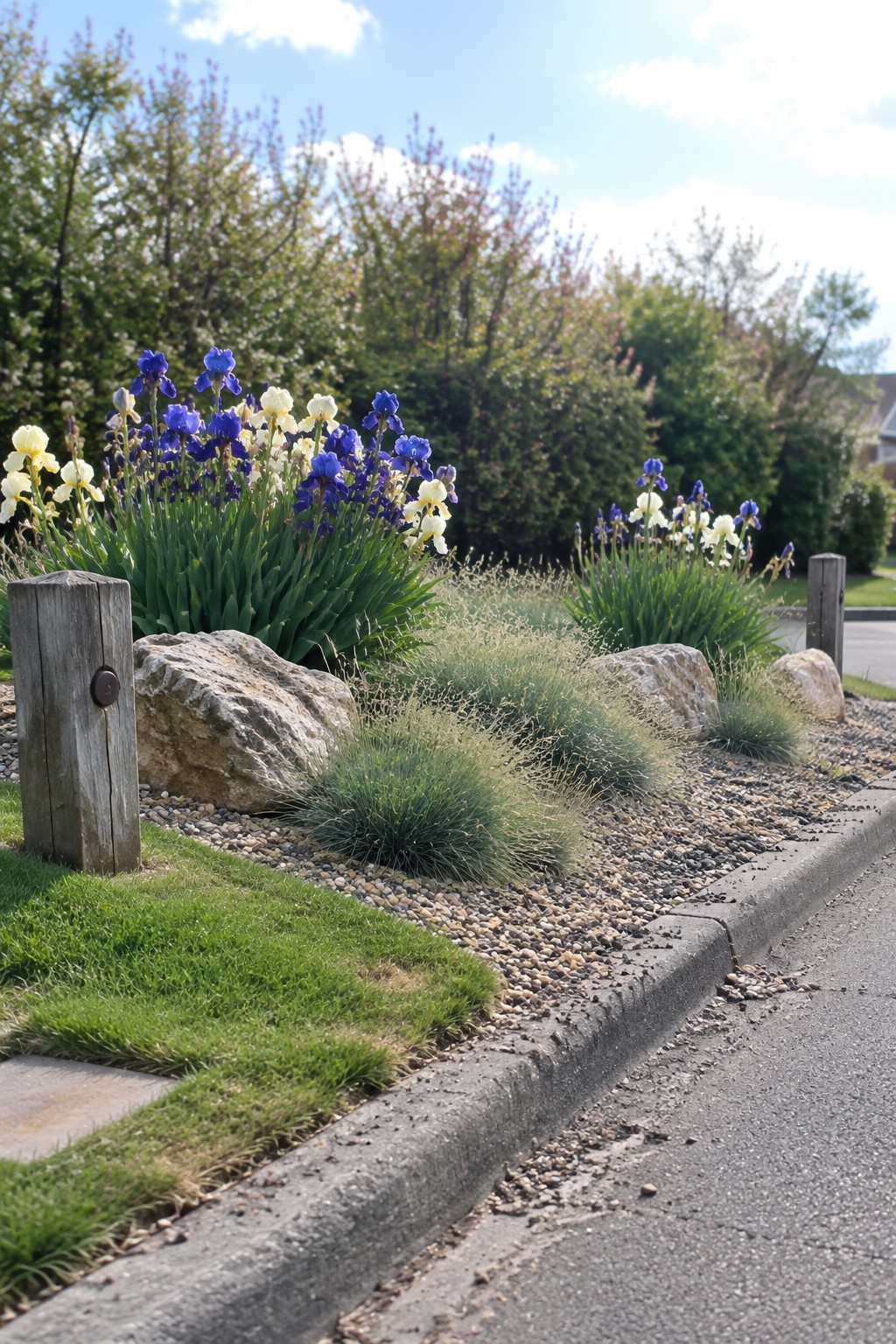
Large rocks help give a gravel garden bed a clear shape, while the irises bring early-season color. The contrast between rough stone and upright flowers keeps the planting from looking too uniform.
Use a few rocks to mark the bed’s edge or break up a broad gravel area, then plant irises in generous clumps nearby. Leave room for ornamental grasses or other plants to fill in later, and keep rocks low enough that they do not crowd the flowers.
Plant Iris Along a Brick Garden Path
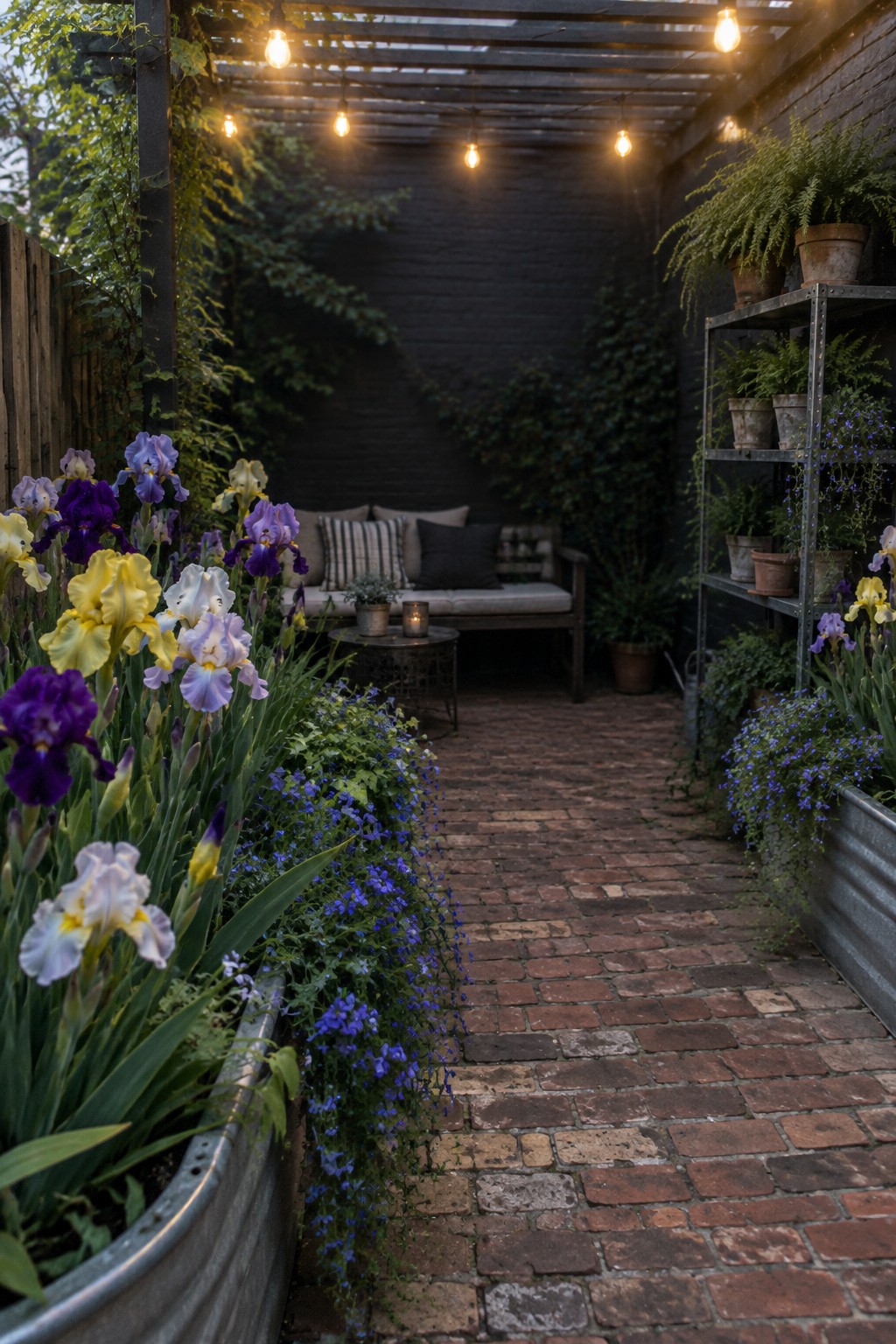
Brick paving gives an iris bed a clear edge and makes a garden path feel like part of the planting plan. Iris blooms stand out beside the warm, varied tones of the bricks, while low flowers can spill slightly over the border.
This approach suits a narrow side garden or courtyard where a straight path leads to a seating area. Leave enough room for iris leaves to grow without narrowing the walkway, and keep the bricks level for easy footing.
Plant Irises Along a Coastal Garden Path

Planting irises beside a garden path gives early-season color a clear place in the landscape. Here, clumps of blue irises line a stepping-stone route, while a simple bench makes the garden feel like a spot to pause.
This approach works well in a seaside garden, where gravel and stone suit the setting and can handle sandy soil. Leave room around each iris clump so the leaves don’t spill across the path as they grow.
Layer Irises Along a Narrow Garden Border

A narrow border is a good place to layer irises among lower flowers and compact shrubs. The taller iris leaves and blooms add height near the front, while the path keeps the planting bed easy to follow and gives the garden a clear edge.
Use this approach along a fence or lawn where space is limited. Leave enough room for iris clumps to spread, and keep the stepping stones clear so the path stays practical.
Add Iris Color Beside a Pool

Planting irises in a raised bed beside a pool brings early-season flowers close to the seating area. The blooms add color without taking up the pool deck, and a raised edge gives the planting a clear boundary.
This works well in a compact backyard where the pool and garden share space. Leave enough room for the irises to grow without spilling onto the walkway, and choose a bed depth that is easy to tend.
Use Iris in Raised Garden Beds
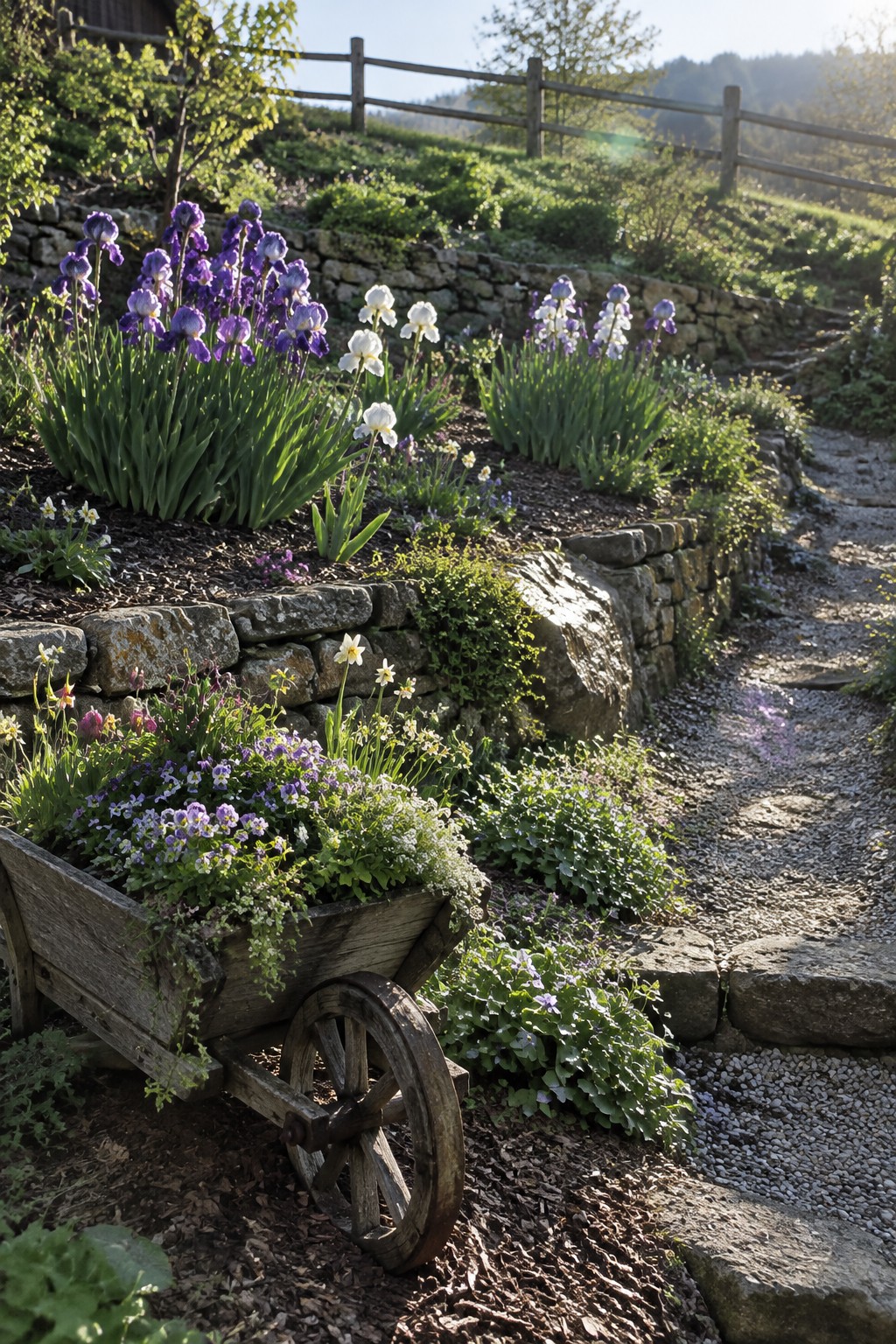
Raised beds let irises stand out while keeping their planting area neat and defined. A low stone retaining wall gives the flowers a clear edge, and the higher soil level can make a sloped garden easier to plant and maintain.
Use this approach on a hillside or anywhere you want to separate flower beds from a garden path. Leave enough room for iris leaves to spread, and make sure the bed drains well, since irises do not like sitting in soggy soil.
Plant Iris Along the Front Steps
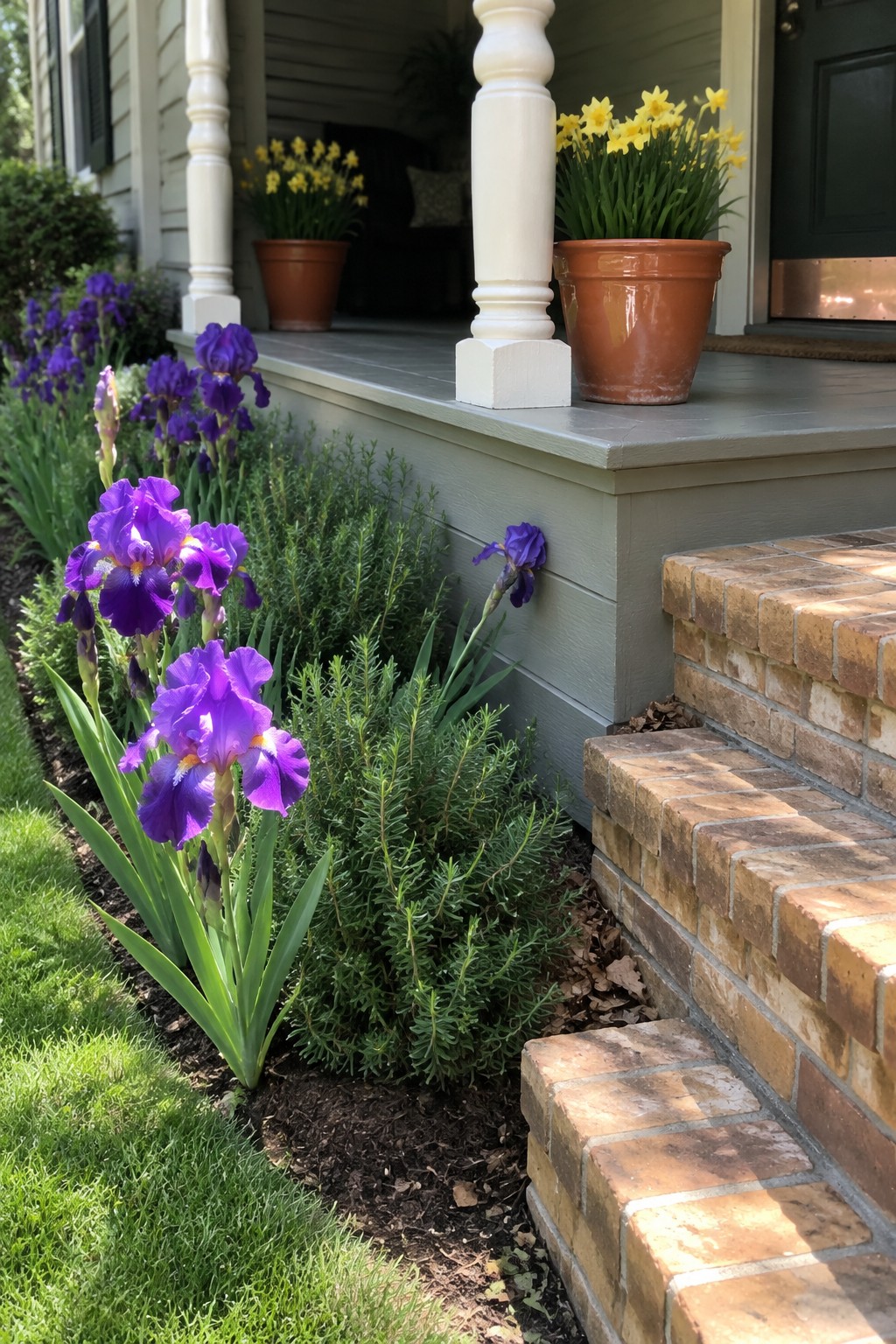
Purple irises can bring early-season color right up to the entrance without taking over the whole garden. Planting them in a narrow bed beside the steps makes the flowers easy to enjoy as you come and go.
Leave enough room for the iris leaves to spread, and keep the bed’s edge clear of the steps so it stays easy to walk through. This approach works well where a front entry has a small strip of soil beside a porch or stairway.
Let Irises Follow a Pebble Garden Path

A narrow path of rounded pebbles and stepping stones gives an iris bed a clear shape without making the planting feel formal. Irises along the edge bring early-season color right beside the walkway, while moss helps the stones sit naturally in the garden.
This approach works well in a small courtyard or along a deck where space is limited. Leave enough room for the iris leaves to spread, and keep the path surface stable so it stays easy to walk on.
Add Irises Along a Neighborhood Walkway

A flower bed beside a sidewalk can make an everyday route feel a little more cared for. Irises are a good choice for this kind of planting, since their upright leaves and early flowers bring color without taking over the path.
Plant them in loose groups along the edge, leaving enough room for the sidewalk and keeping taller grasses farther back. Purple and yellow irises make a simple color mix, and a few smooth stones can help mark the bed’s edge.
Use a Large Pot to Feature Spring Irises
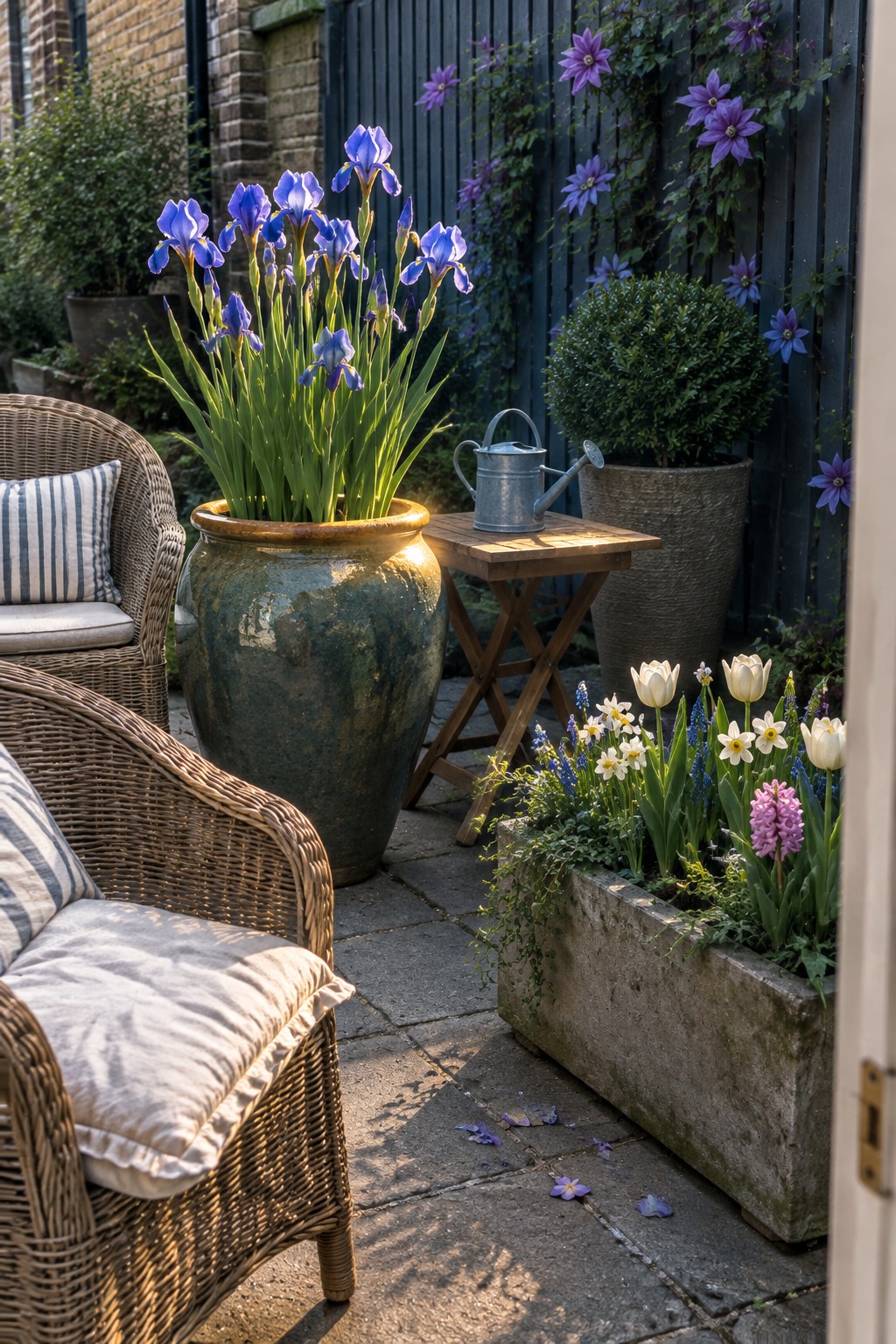
A generously sized pot gives irises a clear place in a small garden, and it makes their early-season color easy to enjoy near a seating area. The tall leaves and purple blooms stand out without needing a large flower bed.
Choose a deep, sturdy container with drainage holes, since irises need room for their roots and dislike sitting in water. Place it where the blooms can be seen from indoors or while relaxing outside, and check the soil regularly because pots dry out faster than garden beds.
Use Irises to Edge a Gravel Drive

A gravel drive can feel more like part of the garden when irises grow along its edge. Their upright leaves and early flowers give the path a clear border without making it feel formal.
Plant irises in a band beside the gravel, leaving enough room for the plants to spread and for the path to stay easy to maintain. A mailbox-side bed like this works well near an entrance, but keep flowers and foliage trimmed back from the driving area.
Grow Irises in Raised Garden Beds

Raised beds make it easy to bring iris color into a small or busy garden. The flowers stand out above the foliage, and the defined bed keeps the planting area neat.
Use a sunny spot with well-drained soil, since irises can struggle if their roots stay wet. A wooden bed like this suits a kitchen garden or narrow side yard, but leave enough room to reach in and divide the plants as they grow.
Plant Irises Along a Raised Garden Border
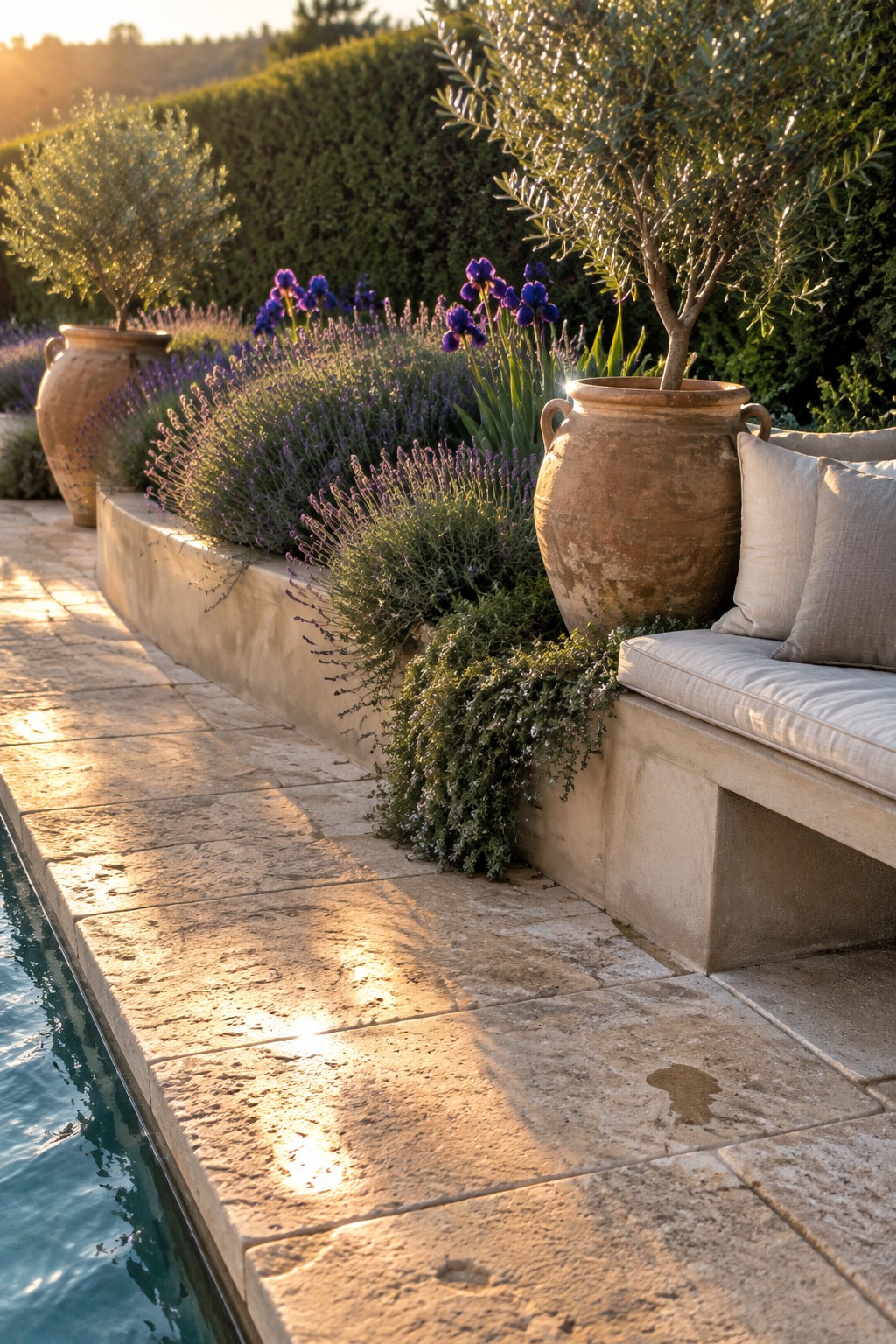
A raised stone border gives spring irises a clear place to grow, while keeping the planting bed separate from the patio or path. Irises stand tall above lower flowers and foliage, so they bring color without making the edge feel crowded.
For a similar look, plant irises in groups along the back or middle of a raised bed, leaving room for their leaves to spread after flowering. Lavender or other low-growing plants can fill the front edge. Check that the bed drains well, since irises do not like sitting in soggy soil.
Plant Irises Along a Rooftop Walkway
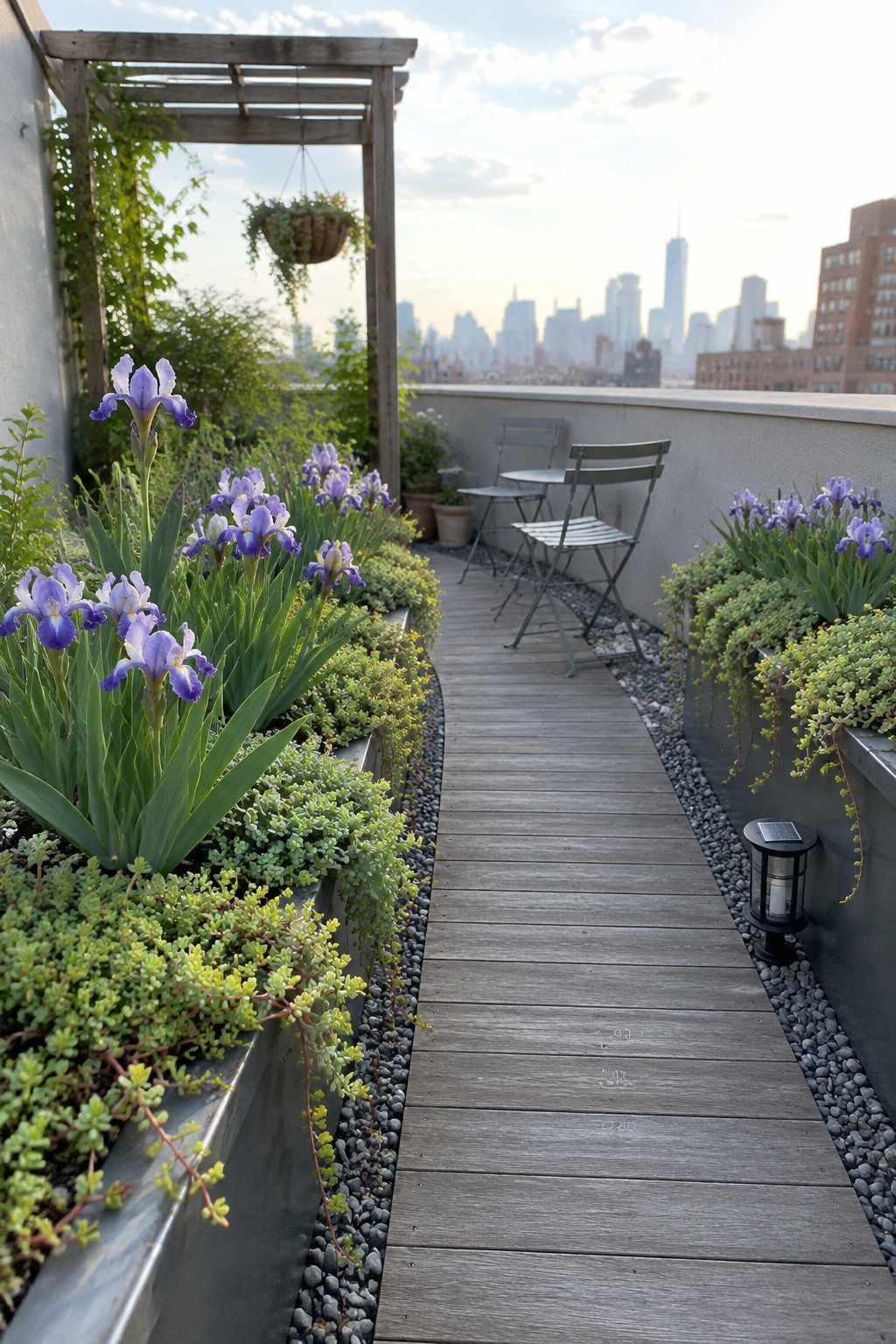
A simple boardwalk can make a rooftop garden easier to move through while giving the planting beds a clear shape. Irises bring early-season color along the route, and their upright leaves keep the border interesting after the flowers fade.
Leave enough room for the irises to grow without spilling onto the walking surface, especially in a narrow garden. A path like this suits a balcony or terrace where planters line the edges and every bit of space needs to work well.
Add Irises Along a Stepping-Stone Stream
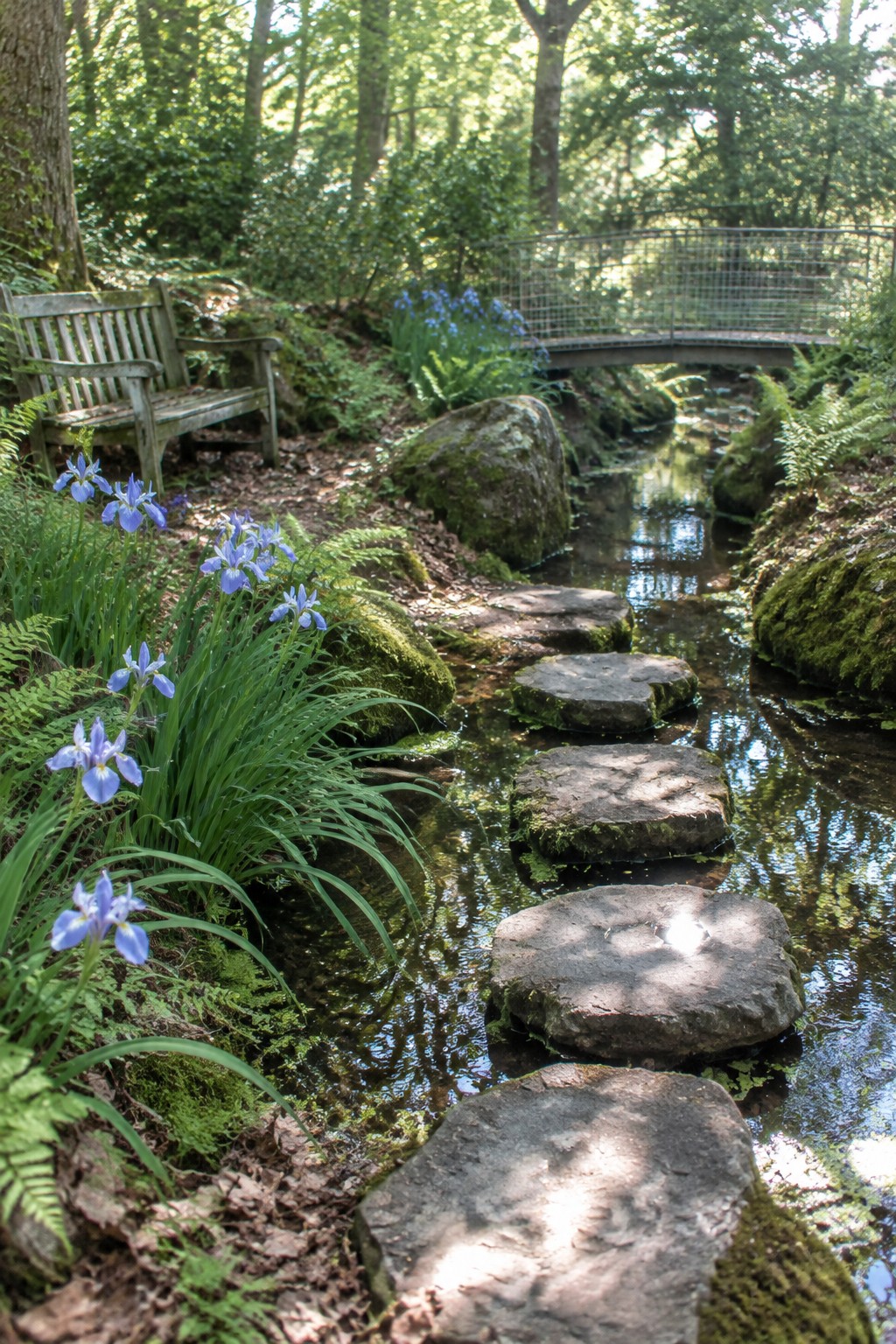
A stepping-stone route can make an iris planting feel like part of the garden path, rather than a separate flower bed. Blue irises beside the stones bring early-season color close to the water’s edge.
Use flat, stable stones where people will step, and leave enough room for iris leaves to grow without crowding the path. This approach works best along a small garden stream or other damp spot with good drainage around the plants.
Frequently Asked Questions
Q: When should I plant irises for spring color?
A: Plant bearded iris rhizomes in late summer or early fall so they can settle in before winter. In spring, plant potted irises once the soil is workable, and keep the crown at soil level.
Q: What can I plant with irises so the bed has color after they bloom?
A: Pair them with daylilies, salvia, or ornamental grasses. These plants fill in as iris flowers fade, while leaving the rhizomes room to enjoy plenty of sun.
Q: Why aren’t my irises blooming?
A: Crowded clumps and too much shade are common causes. Divide older clumps after flowering, and make sure the rhizomes get several hours of direct sunlight.
Q: Can I grow irises in a wet spot in my yard?
A: Some types, such as Siberian iris, handle moist soil better than bearded iris. For bearded iris, choose a well-drained spot because soggy soil can rot the rhizomes.
