

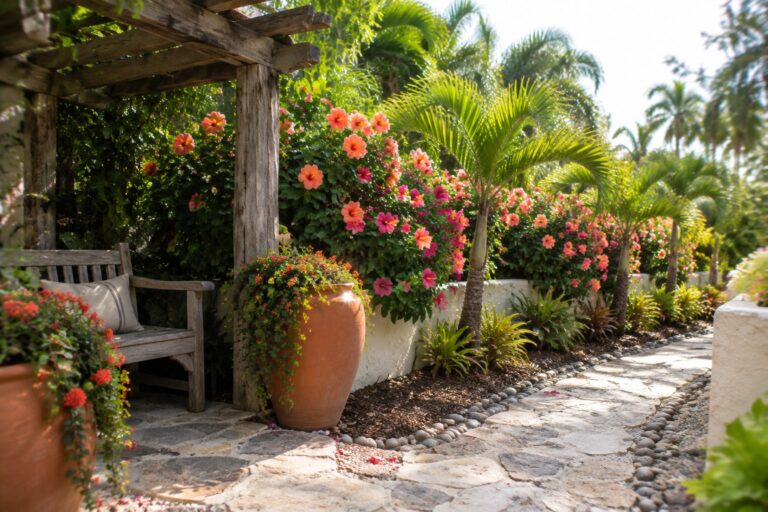
Hibiscus can bring a strong splash of color to a garden, but the planting layout matters just as much as the flowers.
I find these shrubs work best when their size and shape have room to show, rather than being squeezed against a path or crowded by smaller plants.
A clear border, an open stretch of lawn, or a simple grouping near a gate can help the blooms stand out while keeping the yard easy to move through.
It also helps to think ahead about sun, mature growth, and how the garden will look between flowering periods.
I’d save the ideas that fit your space and use them to shape a tropical garden that feels balanced through summer.
Use A Curving Path To Guide The Garden
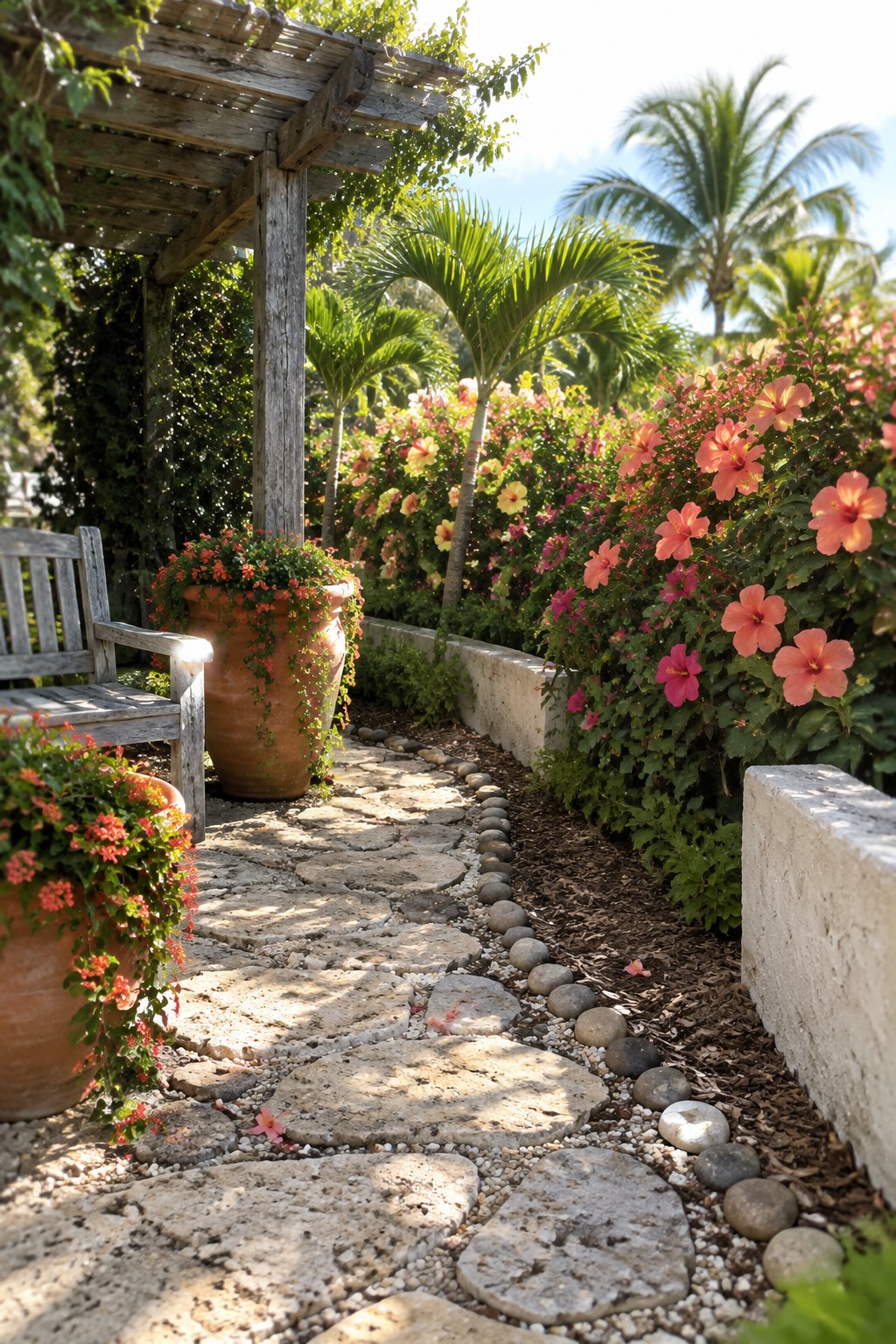
A stepping-stone path can give a flower-filled garden a clear route without making it feel too formal. The gentle curve here suits hibiscus beds, letting the plants spill along the edges while keeping a practical way through.
Use broad, stable stones and leave enough room between them for comfortable steps. This works well in a narrow side garden or a small tropical yard. Keep plants trimmed back from the walking surface so the path stays easy to use.
Plant Hibiscus Along Poolside Seating
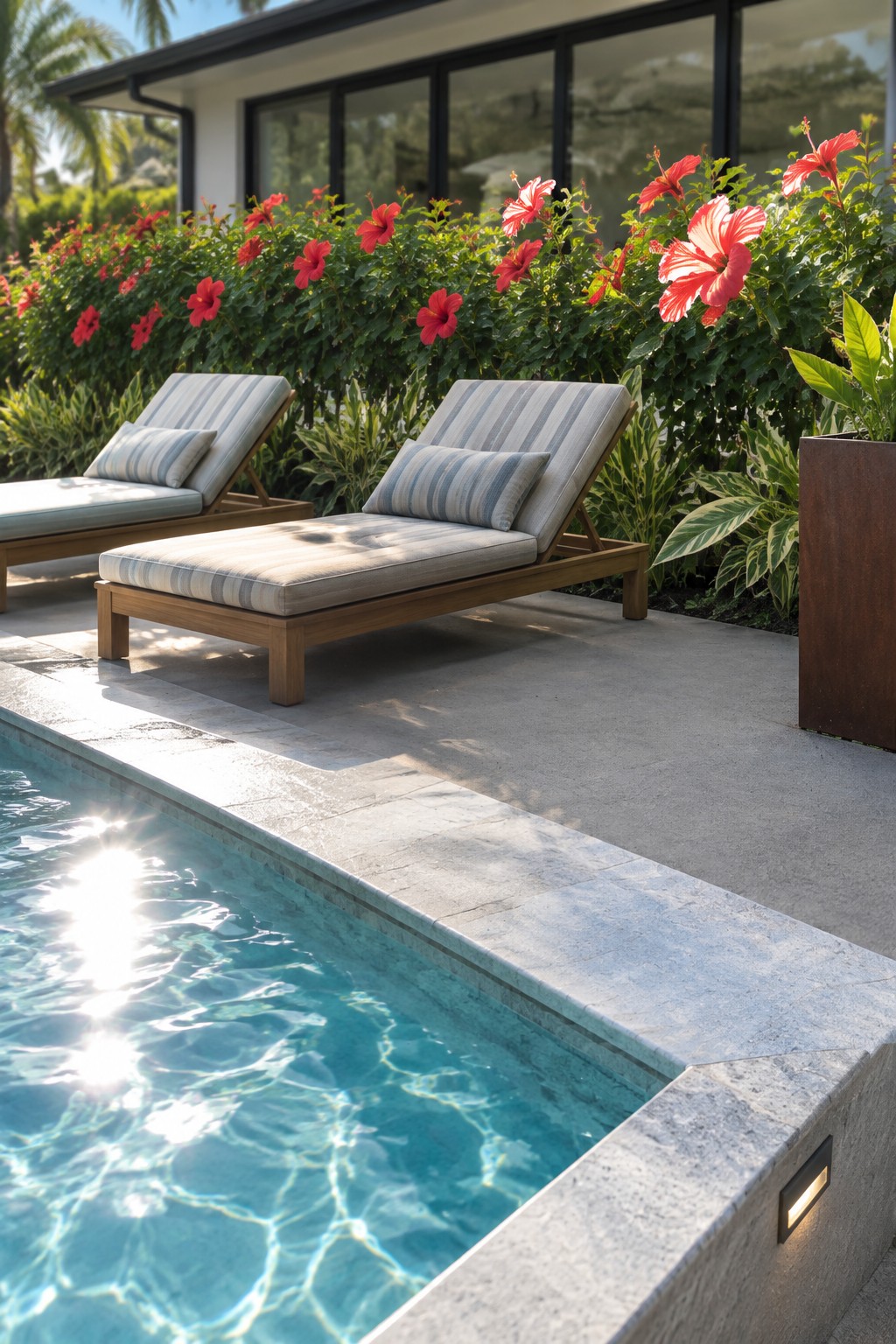
Hibiscus can make a poolside seating area feel like part of the garden, rather than a separate paved spot. A row of shrubs behind the loungers gives the space a leafy backdrop, with bright blooms adding color through the warmer months.
Plant hibiscus along the edge of a patio where it gets plenty of sun, leaving enough room for the shrubs to fill out without crowding the seating. Choose a variety suited to your climate, and keep in mind that fallen petals may need regular tidying near the pool.
Use Hibiscus Pots to Line a Garden Path
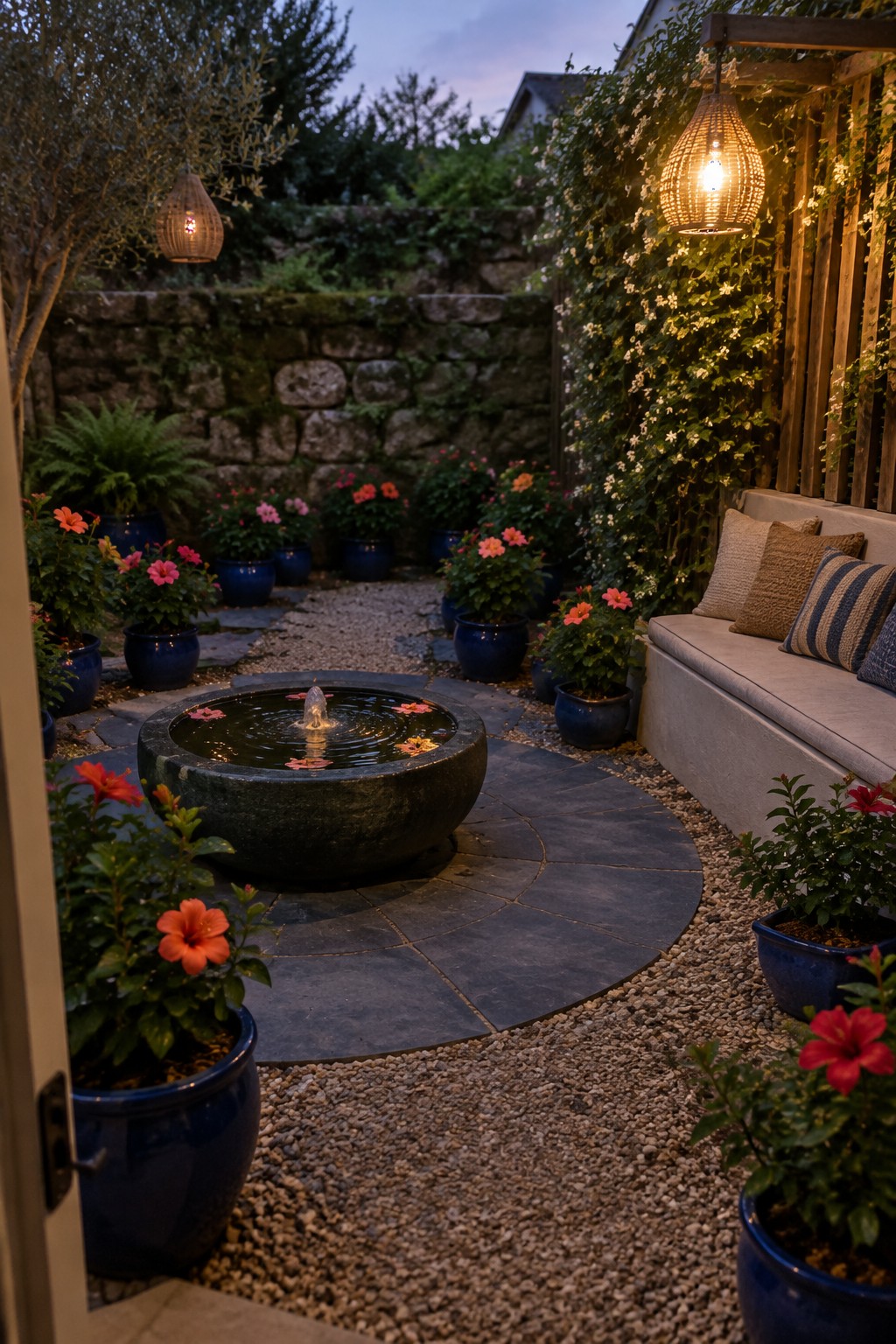
Potted hibiscus can bring color along a path without needing a permanent flower bed. The blue containers make the bright blooms easy to notice, and they can be moved around as the garden changes.
Set pots beside a gravel or stone walkway, leaving enough room to pass comfortably. Use a few larger plants as accents rather than filling every open spot, so the path stays easy to use.
Edge Hibiscus Beds With a Narrow Garden Path

A narrow gravel path can make a small hibiscus garden easier to use without giving up much planting space. A brick edge keeps the flowers in a defined bed, so the path stays clear as the plants grow.
This layout suits a side yard or other tight passage. Leave enough room to walk comfortably, and give hibiscus plants space to spread rather than crowding them against a fence.
Build a Garden Around Stepping Paths
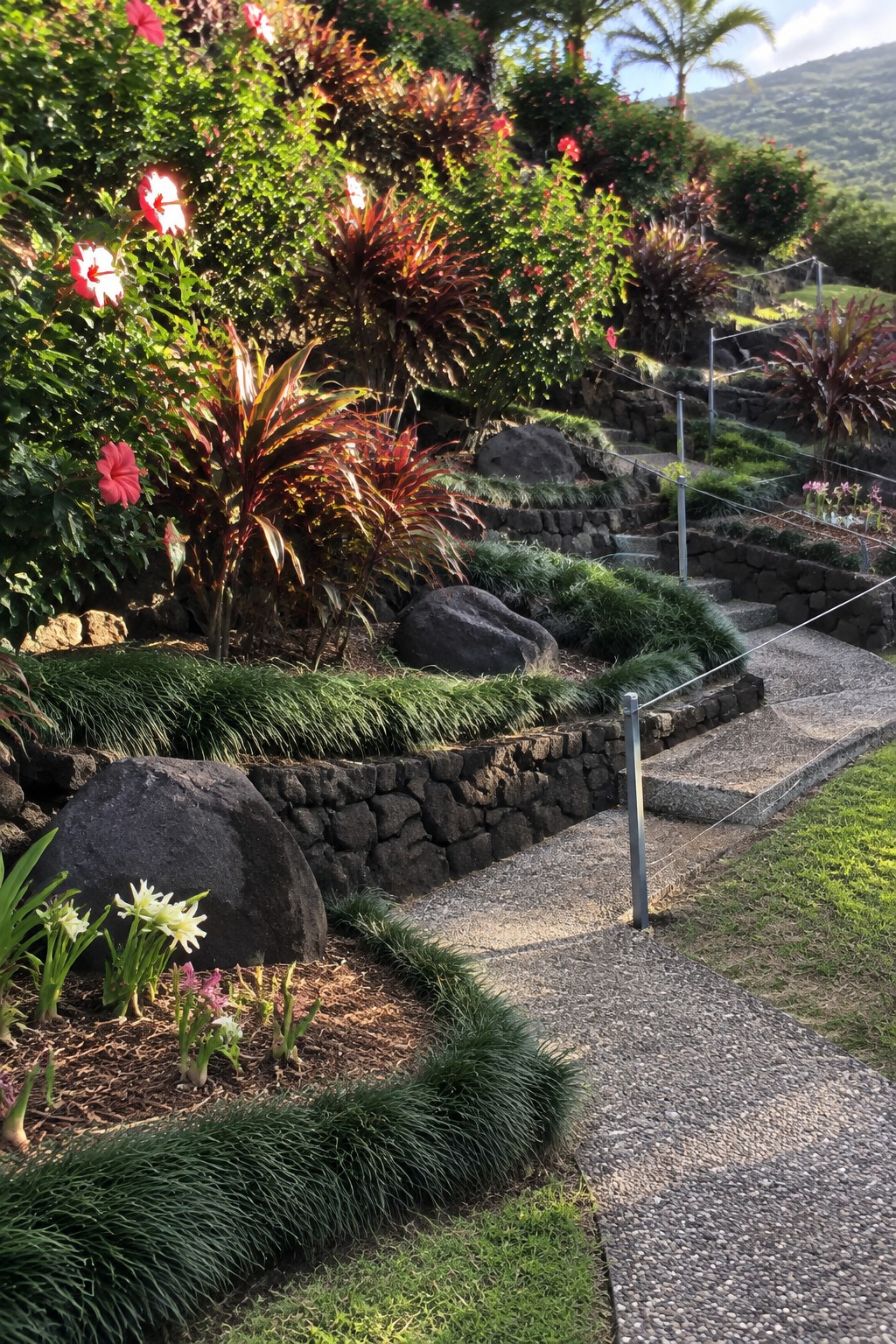
A stepping path can make a sloped garden easier to explore while leaving plenty of room for tropical planting. Here, stone steps wind between raised beds, so the route feels like part of the garden rather than a separate strip of paving.
Use low stone walls to hold the beds in place, and leave enough space beside the steps for hibiscus to grow without crowding the walkway. This approach works well on uneven ground, but keep the path wide and stable enough for everyday use.
Use Hibiscus Hedges for Poolside Privacy

A hibiscus hedge can give a pool area a bit more privacy while keeping the planting colorful. The dense green leaves and coral flowers make a practical screen feel like part of the garden, rather than a plain barrier.
Plant hibiscus along the edge of a pool or patio where it can grow into a continuous border. Leave enough room for the shrubs to spread, and check that the spot gets plenty of sun.
Use Stone Stepping Paths Through Hibiscus Beds
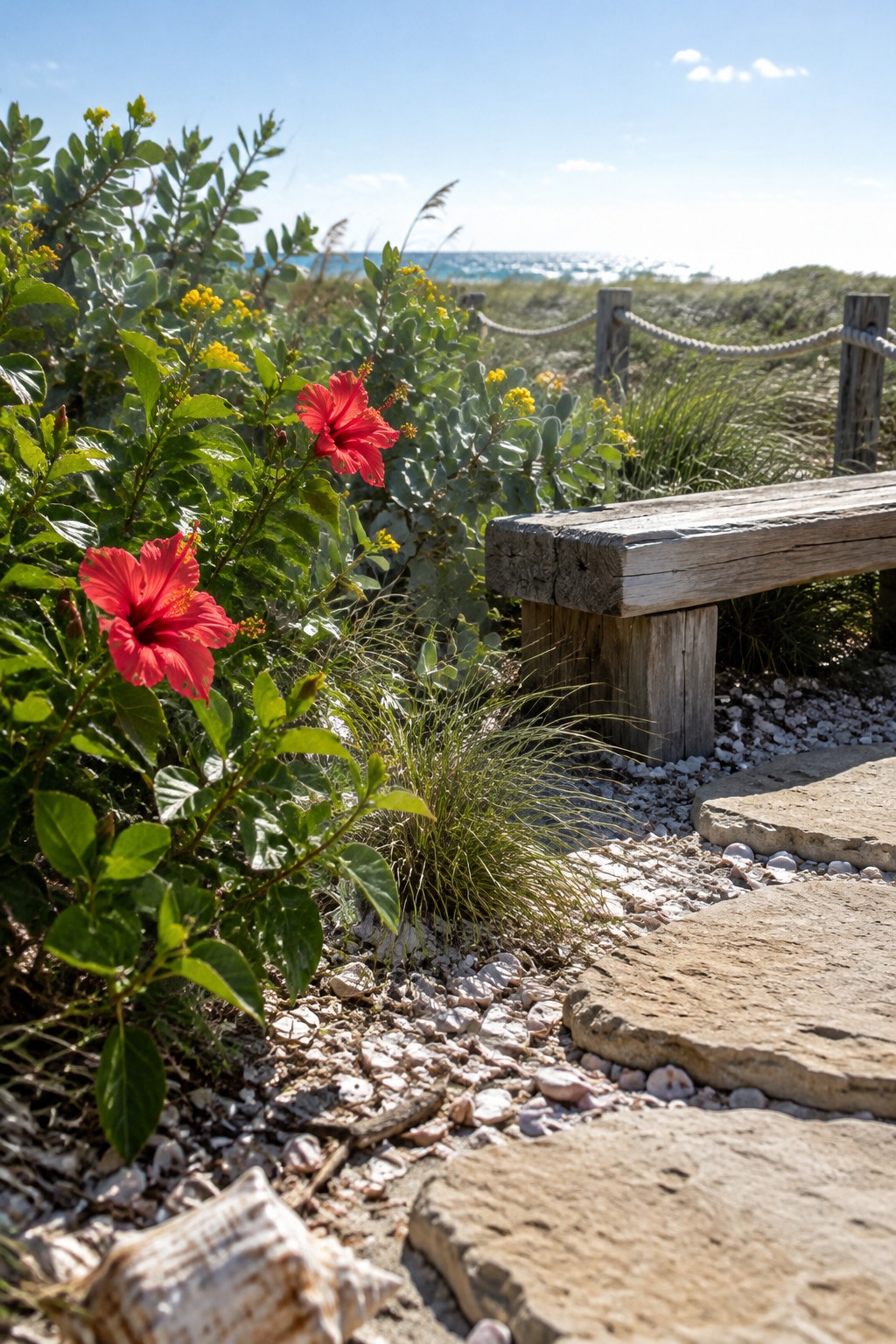
A simple stone path makes a garden easier to walk through without taking up much planting space. Here, irregular stone slabs sit among hibiscus and low coastal plants, giving the route a relaxed, informal feel.
For a similar look, leave enough room between stones for comfortable steps and choose plants that can handle your local conditions. A loose gravel surface around the slabs helps with drainage, but keep it contained so it does not spread onto the path.
Add Stepping Stones Beside a Hibiscus Path

Stepping stones make a garden path easier to use without covering the whole area in paving. Set them through moss or low groundcover, and let hibiscus border the route for a relaxed, tropical feel.
This approach works well in a small garden where a solid paved path might feel too heavy. Choose stones with a steady walking surface, and leave enough room between them for comfortable steps.
Add A Fire Pit To A Hibiscus Garden
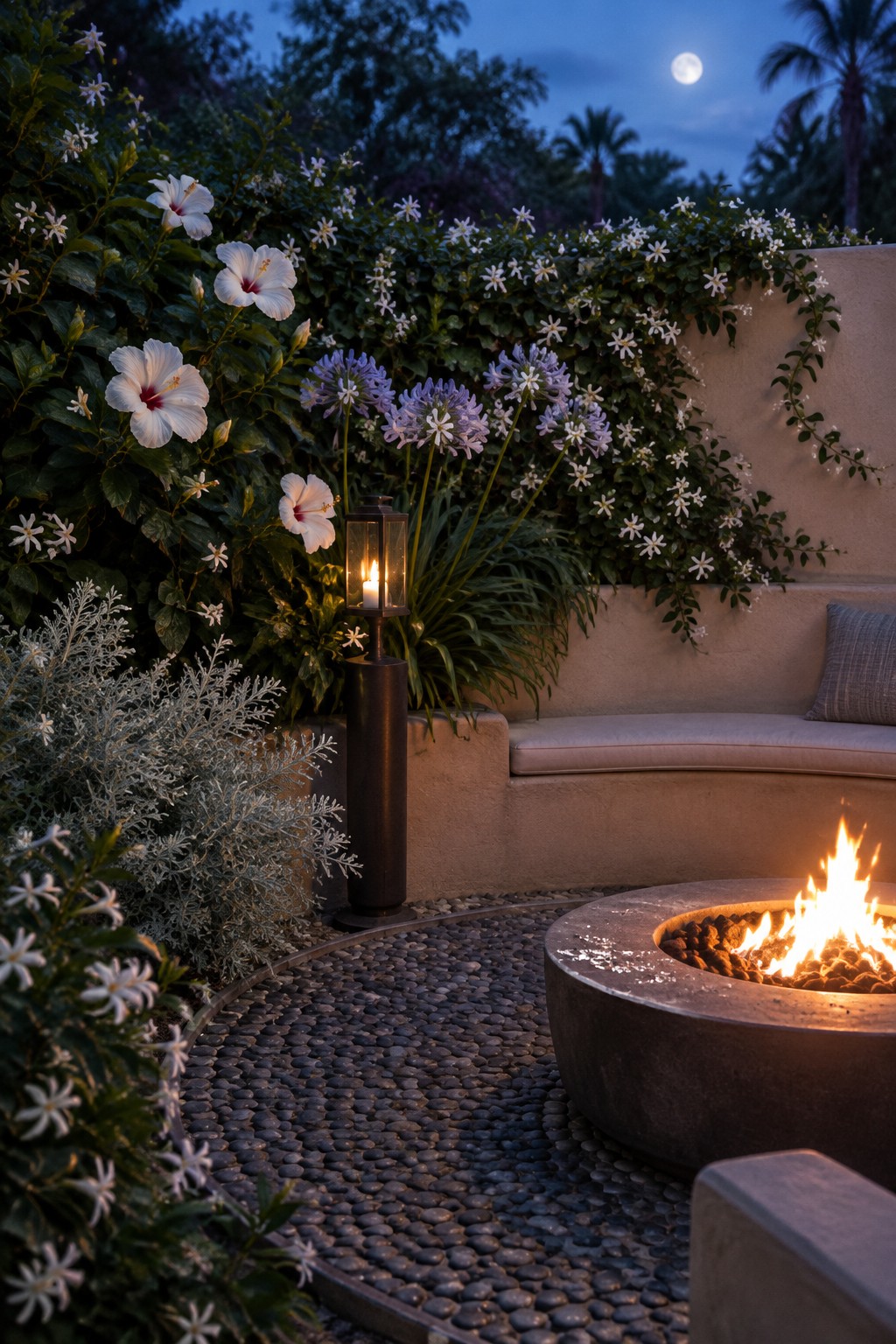
A fire pit gives a hibiscus garden a practical place to sit and enjoy the flowers after sunset. A curved paved area helps make the seating feel like part of the garden rather than a spot set apart from it.
Leave enough room around the fire pit for people to move safely, and keep nearby plants clear of the heat. This setup works well in a courtyard or small patio where a few seats can face the flames.
Make Hibiscus Part of the Patio
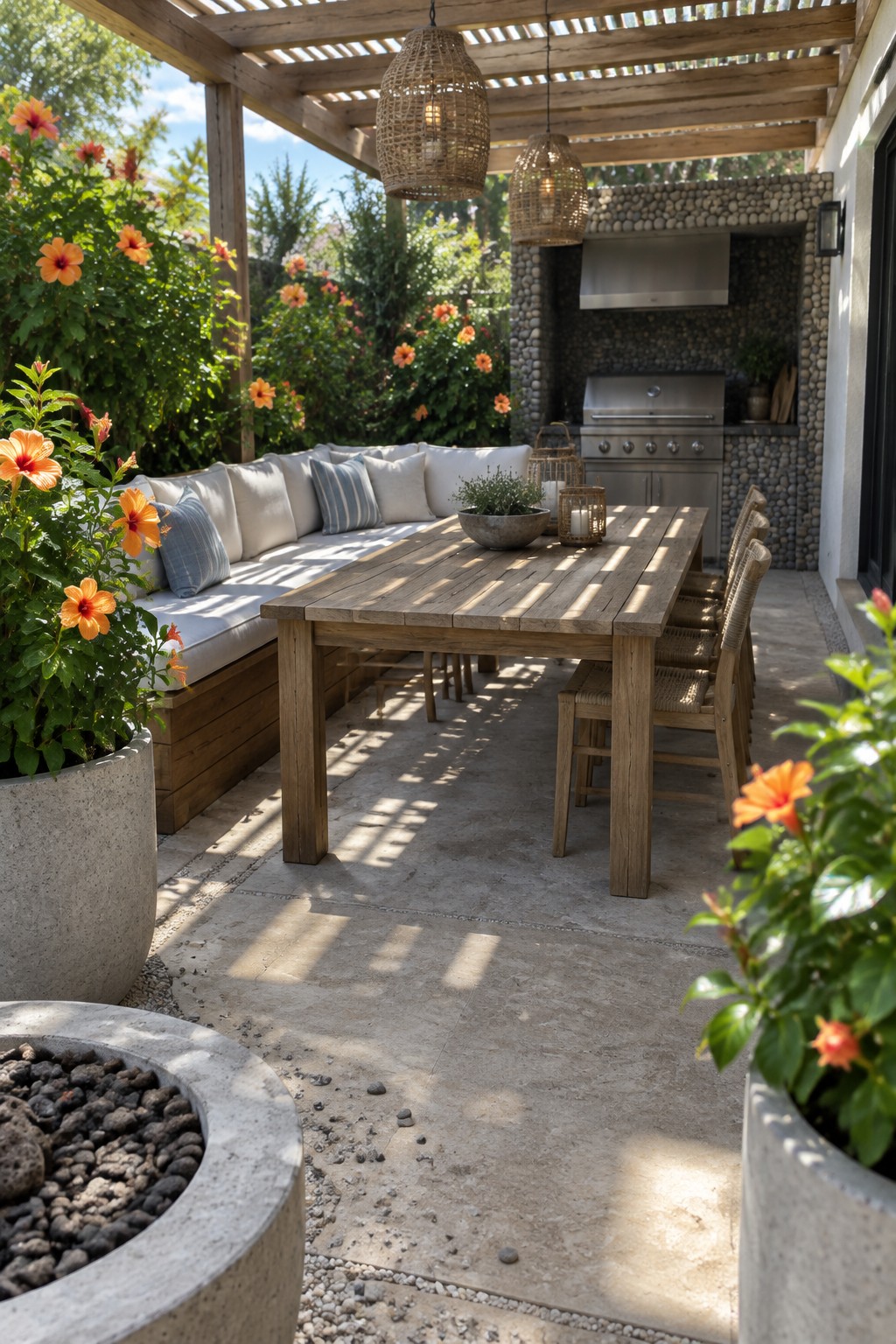
A patio can feel connected to the garden when hibiscus grows close to the seating area. Its bright blooms bring color right to the edge of the space, rather than keeping the flowers tucked in a distant bed.
Use hibiscus in a nearby planter or along the patio border, leaving enough room for people to move around and for the plants to grow. It suits an outdoor dining area like this one, especially when you want a clear place to sit without giving up a lush garden feel.
Use Hibiscus to Make the Front Walk Feel Lush
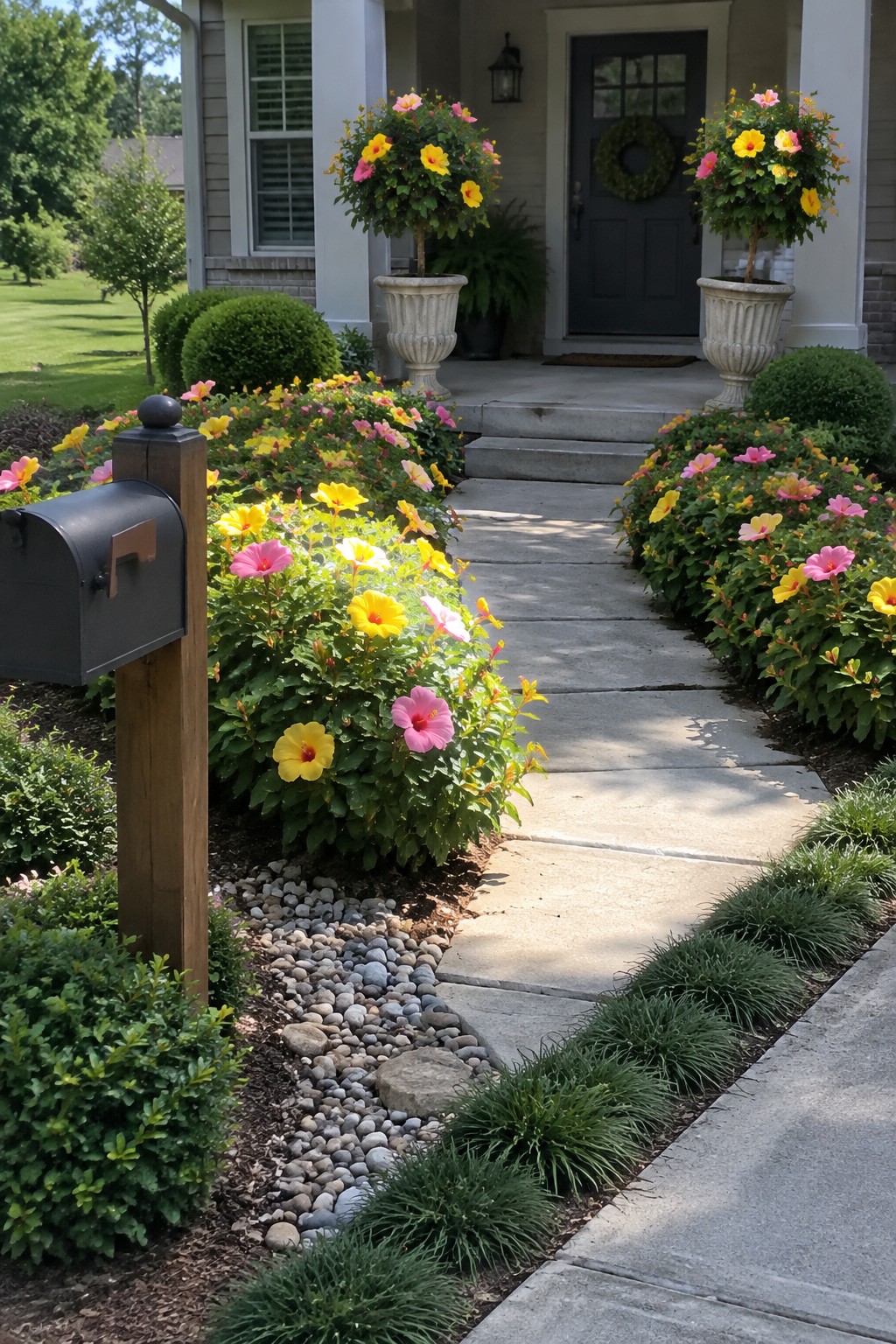
Planting hibiscus along a front path gives the entry a relaxed, tropical feel without changing the walkway itself. The bright flowers make a cheerful border, while the clear paved route still leaves plenty of room to get to the door.
For a similar look, keep the plants in generous beds beside the path and leave enough space for them to spread. Hibiscus suits a sunny entry, but check your variety’s mature size so blooms do not spill across the walking area.
Add Hibiscus Beds Beside an Outdoor Kitchen

Hibiscus beds can make an outdoor kitchen feel more like part of the garden. Planting them along the edge of the cooking and dining area brings color close to the space without taking up room on the counter or patio.
Choose a sunny spot where the plants won’t block a walkway or crowd the seating. A row of hibiscus beside the patio works well, especially when there’s enough space to reach the plants for watering and trimming.
Grow Hibiscus in Balcony Containers

A balcony can hold a surprisingly generous hibiscus garden when you use large pots instead of trying to plant everything in one bed. The containers let you group bright blooms along the edge and move them around as needed.
Choose sturdy pots with good drainage, and leave enough room to reach the seating area. Hibiscus needs plenty of sun, so check the balcony’s light before deciding where to place the plants.
Create Separate Zones in a Hibiscus Garden

A small lawn can give a flower-filled garden a practical open area without giving up the tropical planting. The hibiscus around the edges keep the garden feeling lush, while the grass leaves room for play or a quiet place to sit.
Try this layout in a family garden where a full flower bed might take up too much space. Keep taller hibiscus around the boundary and leave a clear center; a stepping-stone gravel border can help separate the lawn from a sand play area.
Create a Shaded Poolside Seating Area
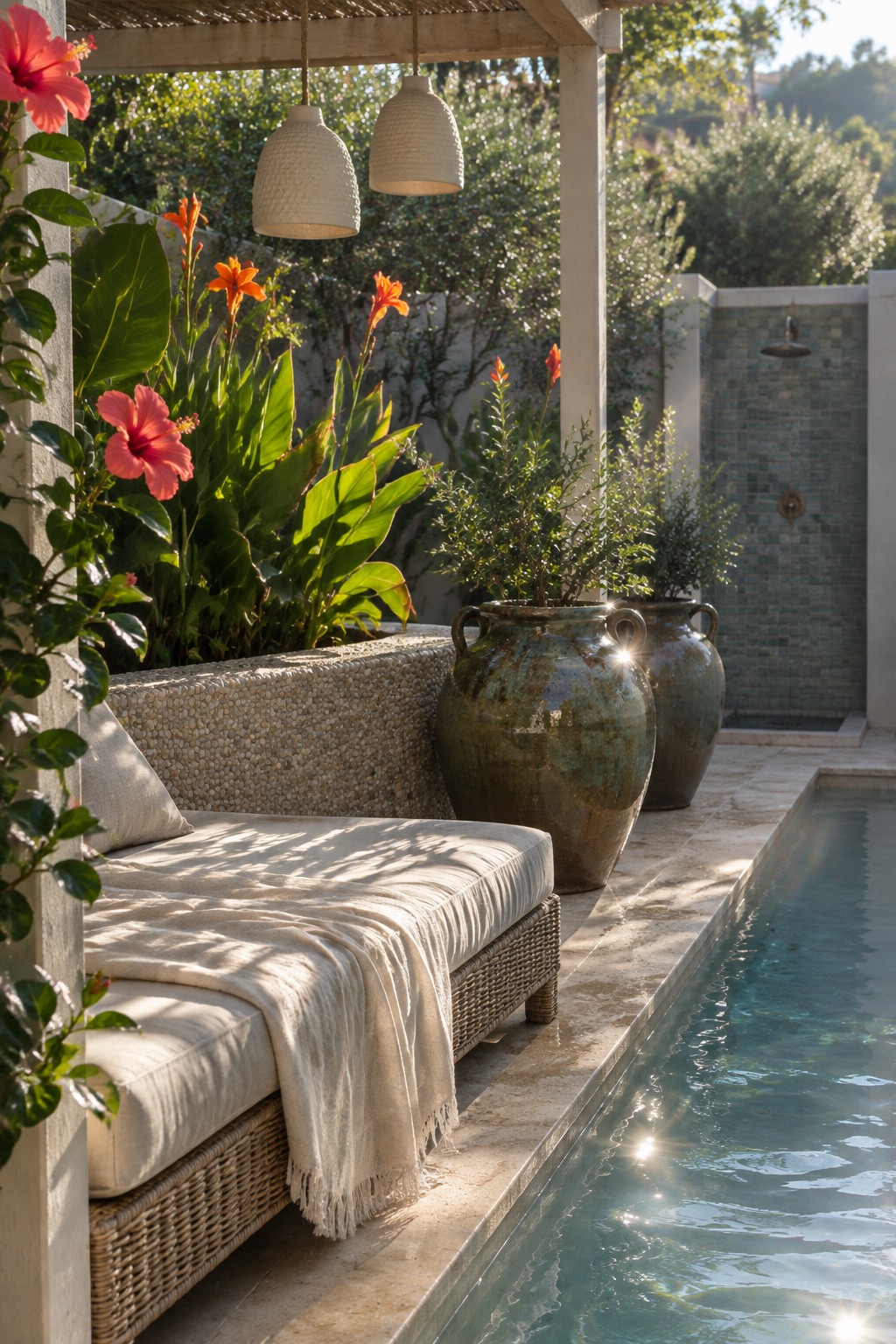
A shaded seating spot beside the pool gives you a comfortable place to enjoy the garden between swims. A pergola and cushioned bench make the area feel settled, while nearby hibiscus adds bright color without taking over the space.
Use this idea in a narrow poolside area where there’s room for a bench but not much else. Keep flowering plants close enough to enjoy from the seat, and leave a clear walkway along the pool edge.
Use Raised Beds To Organize A Hibiscus Garden
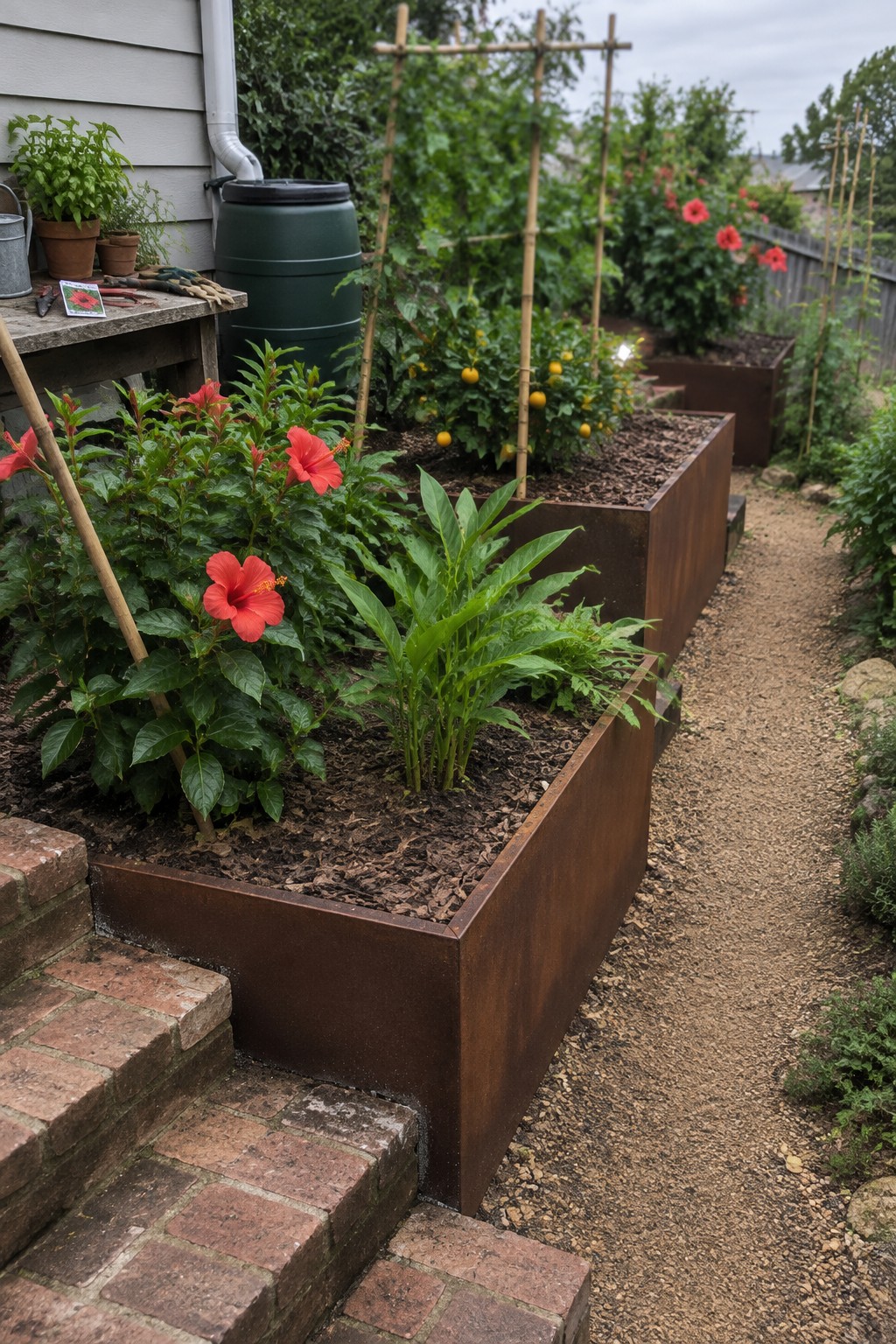
Raised beds give a hibiscus garden a clear structure while keeping the flowers and other plants easy to reach. Here, rust-colored beds hold the planting in distinct rows, so the garden feels organized without losing its lush, informal look.
Use this approach where soil is poor or you want to keep planting areas separate from a gravel path. Leave enough room to walk and tend the plants, and make sure each bed has good drainage.
Use Dark Mulch To Set Off Hibiscus Beds

A dark mulch or gravel surface can make a hibiscus bed look tidy while giving the bright flowers a clear place to stand out. Here, the dark ground also contrasts with the pale agave leaves and the simple stone edging.
Use this approach around established plants where you want less bare soil showing. Keep the mulch away from plant stems, and choose a material that suits your climate and how much upkeep you’re willing to do.
Use Hibiscus to Fill a Raised Poolside Bed

Raised flower beds make it easier to give hibiscus a clear place in a poolside garden. A long bed can hold a generous planting without taking up the deck space needed for seating, and a built-in light along the edge helps mark the boundary after dark.
This approach works well beside a pool or terrace where you want flowers close to the seating area. Choose a bed with good drainage, and leave enough room around it for people to walk comfortably.
Use Hibiscus To Fill Out a Garden Path

A narrow brick path can feel tucked into the garden when hibiscus and smaller flowers grow along its edges. The planting makes the walk feel like part of the garden rather than a route through an empty space.
Keep the path wide enough to walk comfortably, and leave room for hibiscus to spread without covering the paving. This approach suits a cottage-style garden, especially where a winding path leads to a small seating area.
Frequently Asked Questions
Q: Can hibiscus grow in pots if I don’t have room for a garden bed?
A: Absolutely. Choose a pot with drainage holes and place it somewhere sunny, like a patio or balcony. A container also makes it easier to move the plant indoors when cold weather arrives.
Q: How much sun do hibiscus flowers need to bloom well?
A: Give them at least six hours of direct sun a day. In very hot climates, a little afternoon shade can help keep the flowers and leaves from wilting.
Q: What can I plant around hibiscus without crowding it?
A: Pair it with lower-growing plants such as sweet alyssum or trailing verbena, and leave room for air to move around the hibiscus. Crowded plants can make it harder to spot pests and keep the soil from staying damp.
Q: Will my hibiscus survive the winter outdoors?
A: Tropical hibiscus is sensitive to frost, so bring potted plants inside before cold nights set in. If yours grows in the ground, check whether it’s hardy in your area before relying on it to return next summer.
