


Every spring, I start planning tulip beds that hug the curves of our winding paths and soften the edges of raised planters.
They pull the whole yard together when planted in thoughtful drifts, guiding how you move through the space without it feeling staged.
I’ve learned that bold color mixes up front catch eyes first and make the layout read as lively from the street.
Layering tulips with perennials keeps things looking full even after blooms drop, a trick worth tweaking for your own yard size.
Those structured plantings build better gardens year after year.
Tulips Edging a Brick Garden Path
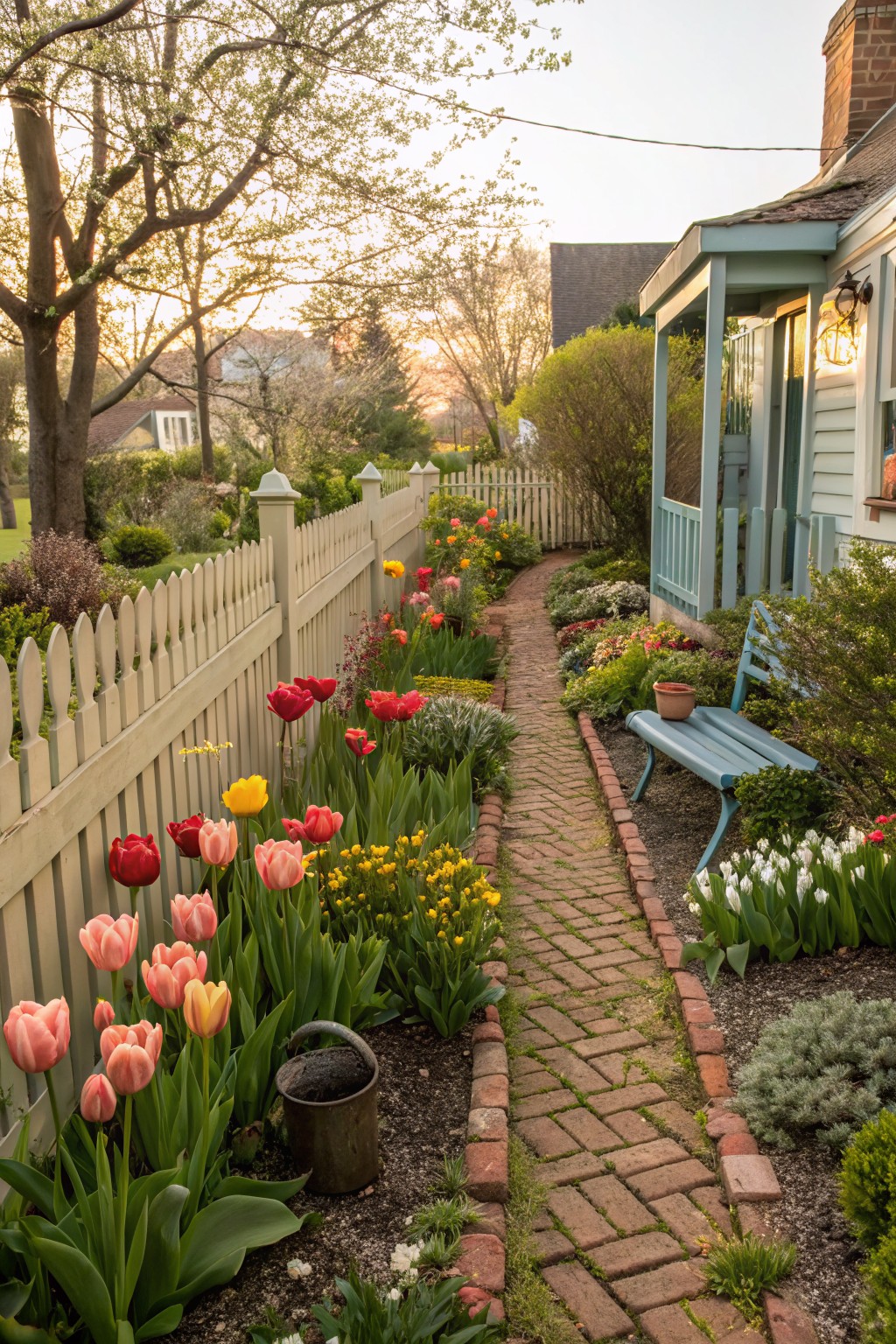
Nothing says spring like a winding brick path lined with tulips. Here, reds, pinks, yellows, and whites massed along both sides create that classic cottage garden feel. The path pulls you gently toward the house, past a white picket fence and a simple blue bench. It’s straightforward but makes every walk through the yard more enjoyable.
To pull this off, lay bricks in a subtle curve leading to your side door or porch. Plant tulips in loose groups rather than straight lines, maybe 20 or 30 bulbs per spot. It suits older homes or cozy lots best. Just dig in some compost first, and watch for rabbits nibbling the greens.
Tulips Line the Entry Path
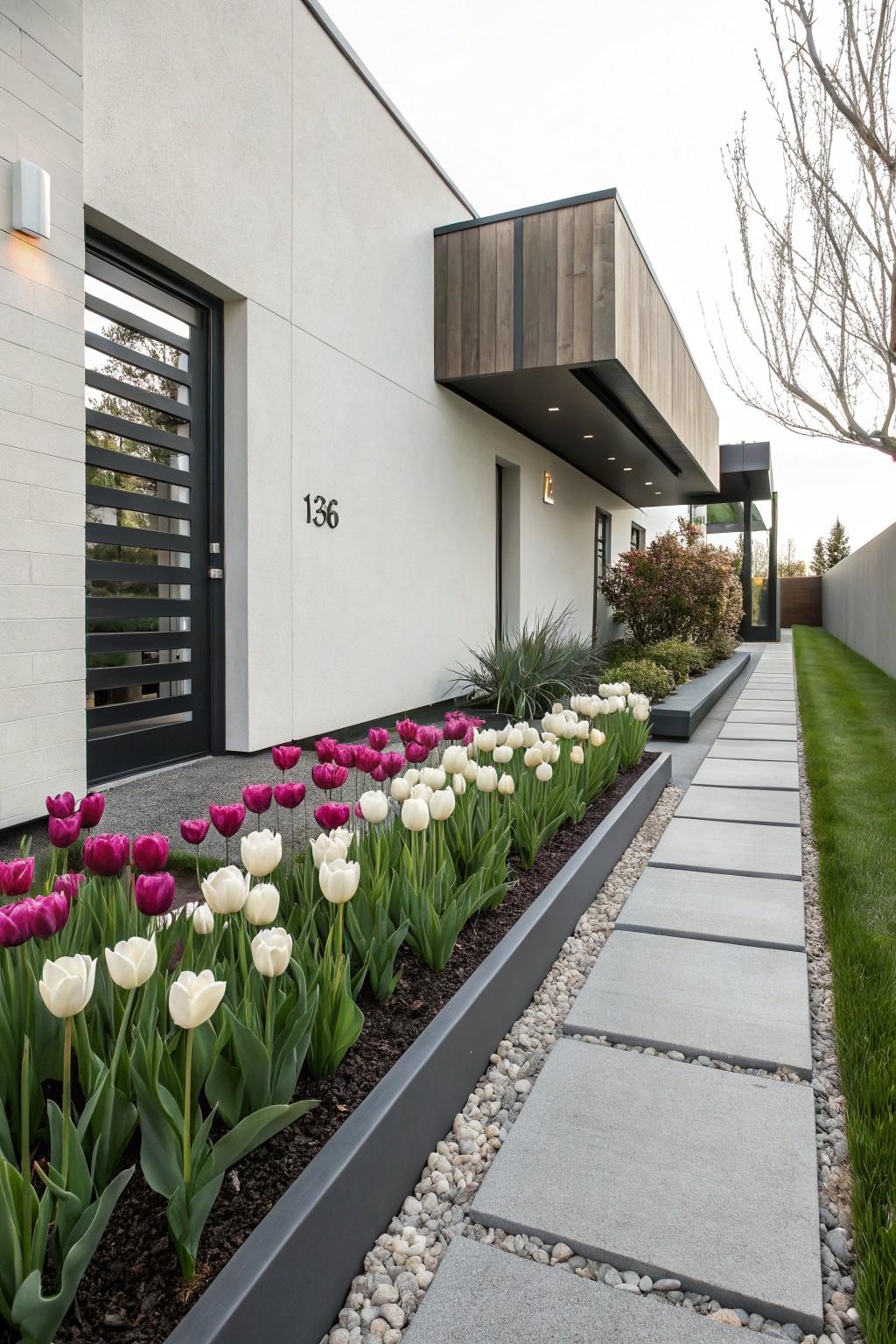
A simple row of tulips runs right alongside the stone walkway here. Pink and white flowers fill a long black metal planter that hugs the path all the way to the door. It pulls your eye forward and adds that first burst of spring color without messing up the clean house lines.
This works best on straight paths near a modern front entry or side gate. Go for a mix of colors in one long bed to keep it easy. Raised edging like this stops soil spill and makes trimming straightforward. Suits smaller yards… just scale the bed to fit.
Potted Tulips Around a Patio Table

A simple way to welcome spring in a small yard is filling big terracotta pots with tulips right around your patio seating. Here, orange tulips stand tall next to a plain metal table and chairs on slate pavers. They add that burst of color people wait for, without needing much ground space. It keeps things easy and focused.
This works best in tight urban courtyards or side yards where you want seating but not a full garden overhaul. Grab oversized pots for impact, plant tulips in clusters of one color or mix pinks and oranges, and tuck them by the table edges. They’ll bloom early and fade gracefully, leaving room for summer pots. Just make sure the pots drain well.
Tulips Lining Wooden Terrace Steps
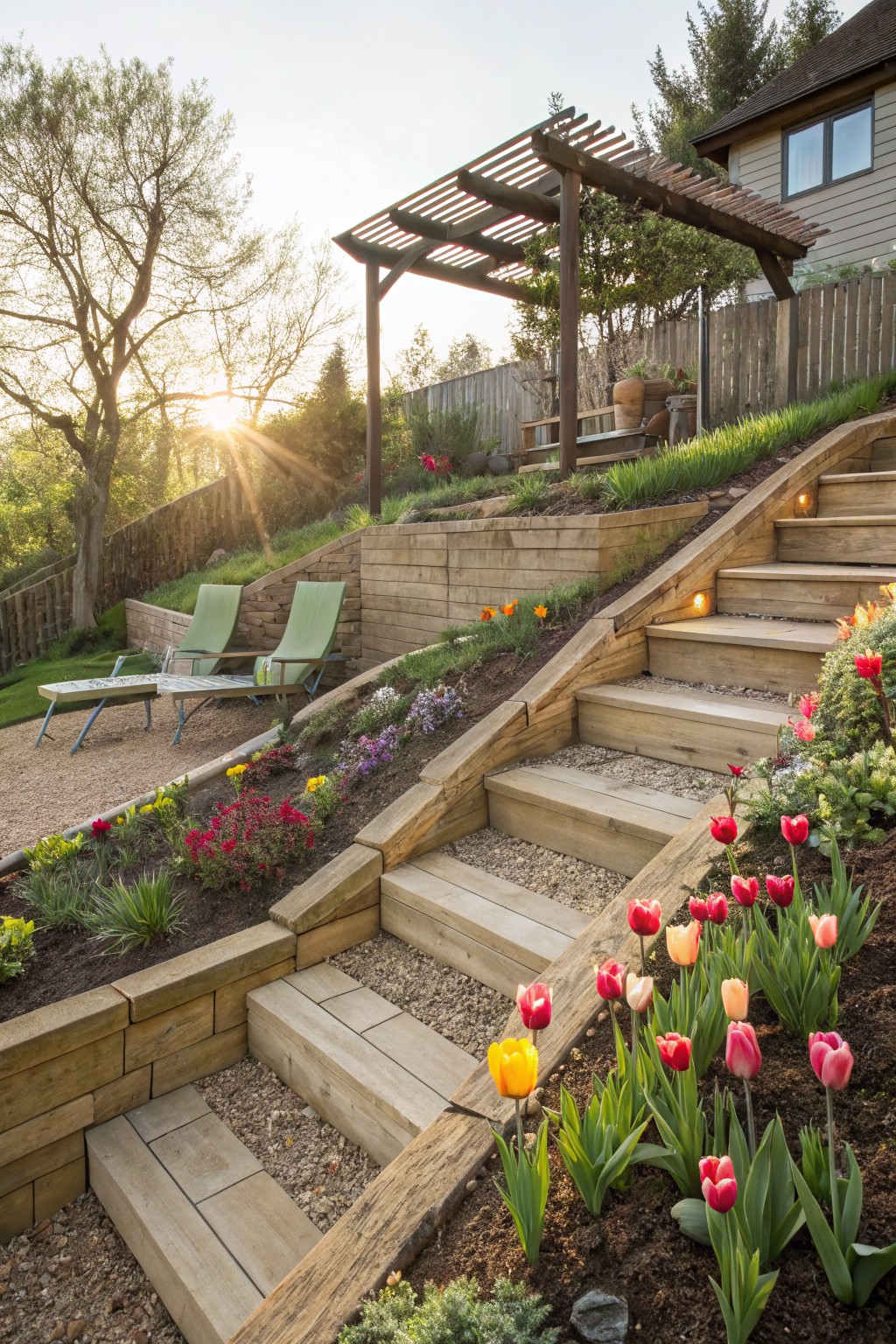
One simple way to add spring color to a sloped yard is planting tulips directly along wooden terrace steps and retaining walls. The reds, yellows, pinks, and oranges stand out nicely against the rough wood. It makes climbing the hill feel more like a stroll through a flower garden.
This setup fits sloped backyards that need sturdy walls to hold back soil. Plant the bulbs in fall, tucking them into pockets at the wall edges and step fronts. Full sun helps them bloom best. Watch for deer if you’re in a wooded area.
Tulips Edging a Sidewalk Path

One simple way to bring spring color right to your doorstep is planting tulips in thick drifts along a walkway. Here, orange tulips mix with grasses and other low plants to line a curving concrete path. It turns a plain sidewalk into something you actually want to walk on. The colors guide your eye forward and make the whole area feel alive.
Try this along the side of your driveway or a front path where people pass by. It suits suburban lots with some road frontage. Go for massed bulbs in beds edged by stone or just mown grass. They’ll fade after bloom, but underplant with perennials to keep it going.
Deck Seating Accented by Potted Tulips
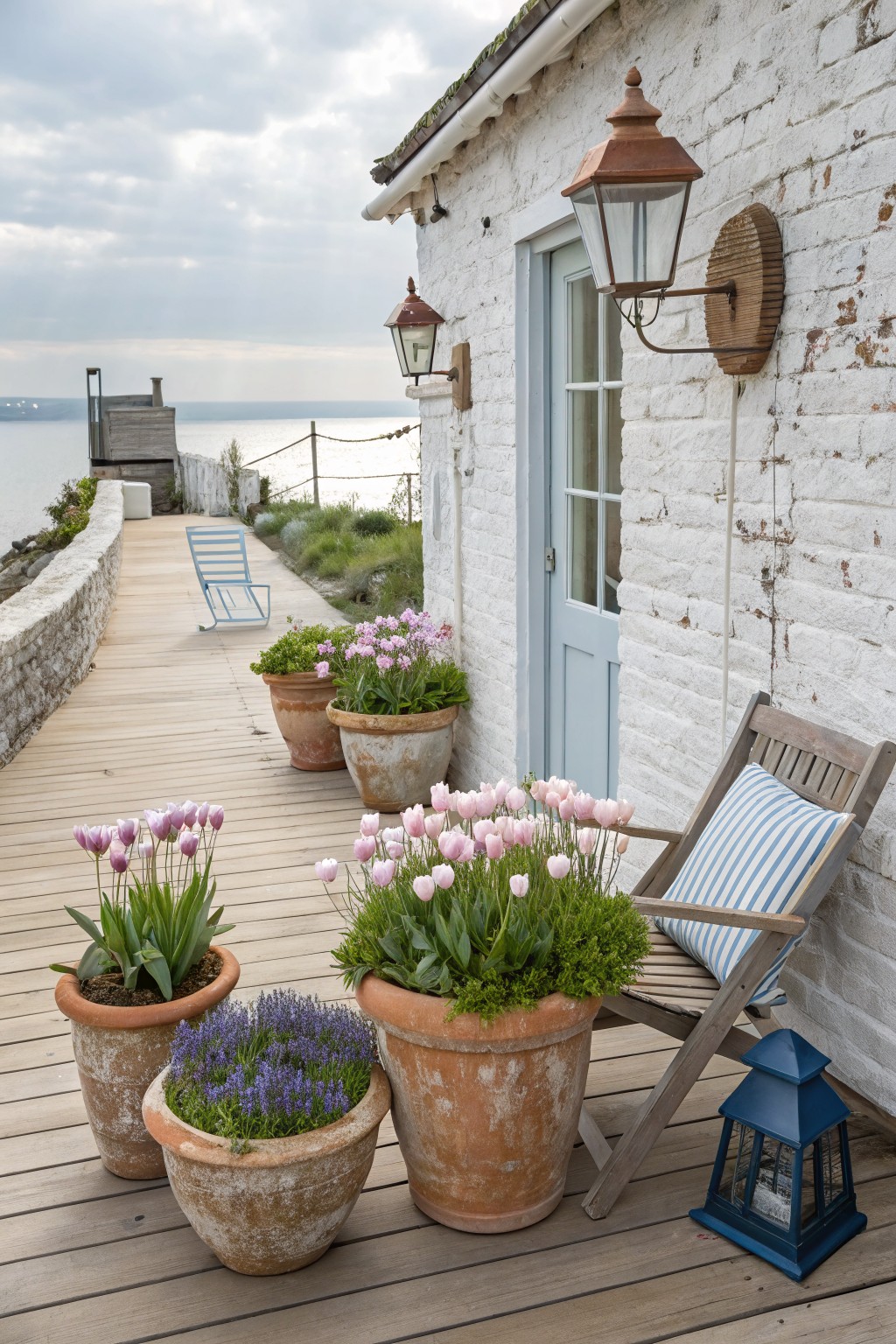
Potted tulips work so well around a simple deck chair like this. The pink blooms spilling out of those weathered terracotta pots add a fresh pop of color right where you sit and relax. It turns a plain wooden deck into a spot that feels lived-in and spring-ready, especially with the sea view stretching out.
Put this idea to work on any narrow deck or cottage porch. Cluster two or three big pots near one or two chairs, mixing tulip colors for more interest. It suits coastal homes or small backyards best, but watch the pots don’t tip in wind—anchor them if needed.
Tulips Along a Brick Garden Path
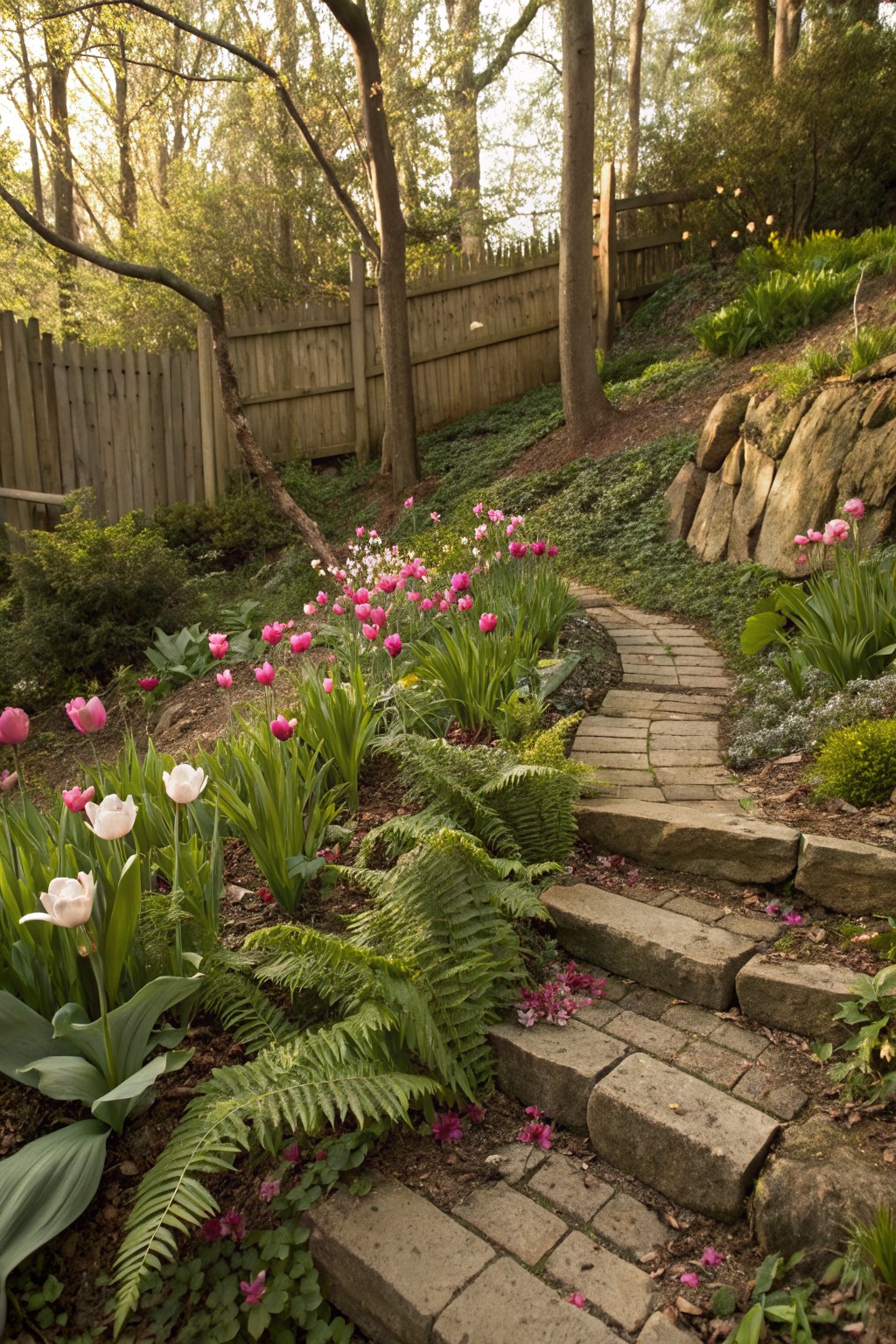
A simple brick path winding through tulip beds like this one turns a basic walkway into a spring highlight. The pink and white tulips pop against the green ferns and hostas, drawing your eye up the slope without much effort. It’s straightforward but feels special, especially when the blooms are at their peak.
To pull this off, lay bricks in a gentle curve through your sloped yard, then plant tulip bulbs in loose groups on either side come fall. Mix in tough perennials that fill in later, like ferns. This fits shady, wooded spots best… watch for drainage on the hill so the path stays put.
Tulips Along Entry Steps
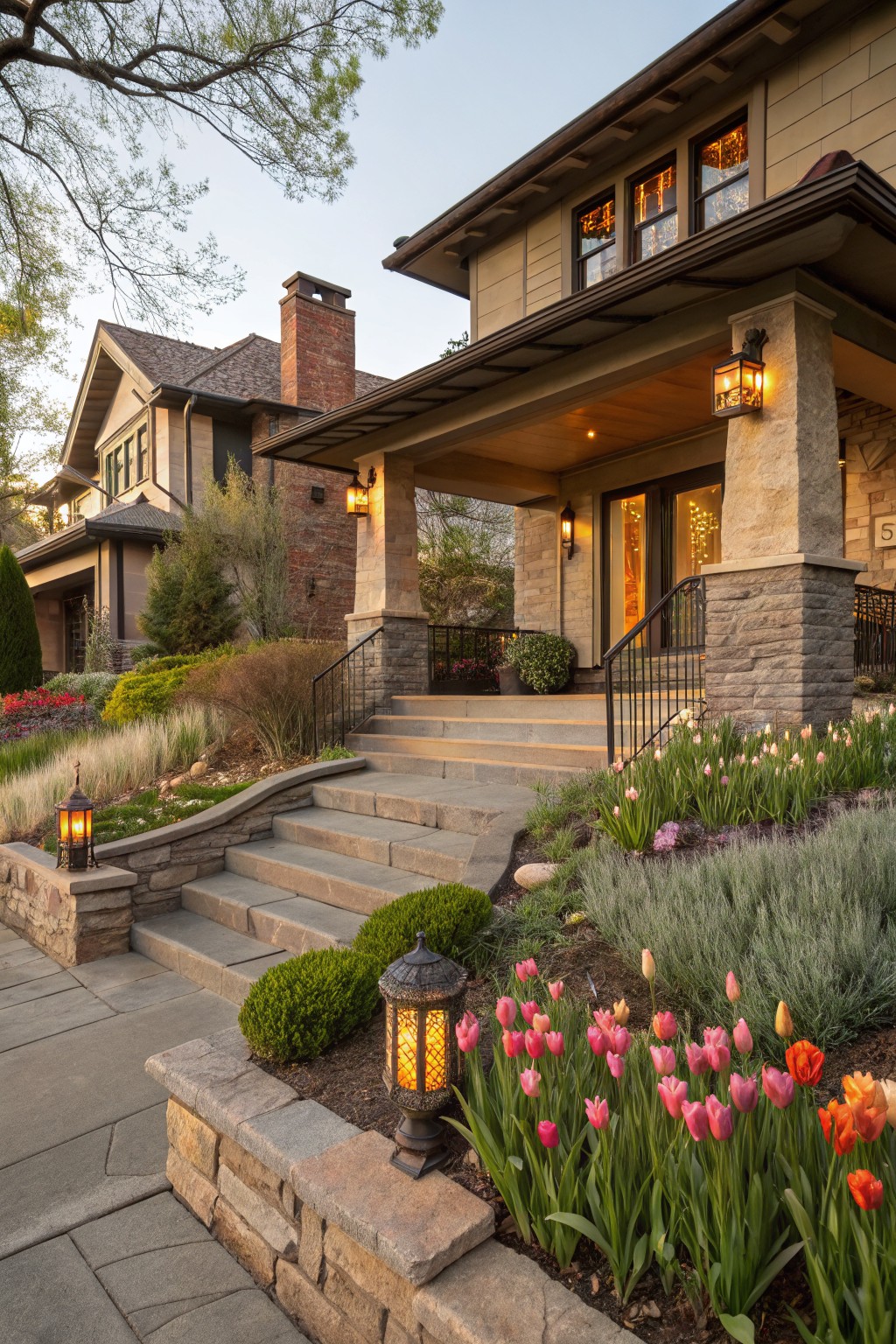
Nothing says spring like a row of tulips marching up beside your front steps. Here they mix pink, red, and orange blooms in tidy beds that hug the stone edges, making the walk to the door feel fresh and lively right away. The colors pop against the neutral house and hard landscaping, without taking over.
Plant them in layers with low shrubs or grasses behind for structure that lasts past bloom time. This setup works great on sloped lots or anywhere steps meet a walkway. Just pick early-, mid-, and late-blooming varieties to stretch the show, and keep the beds edged clean so they stay sharp.
Tulips in Poolside Raised Beds
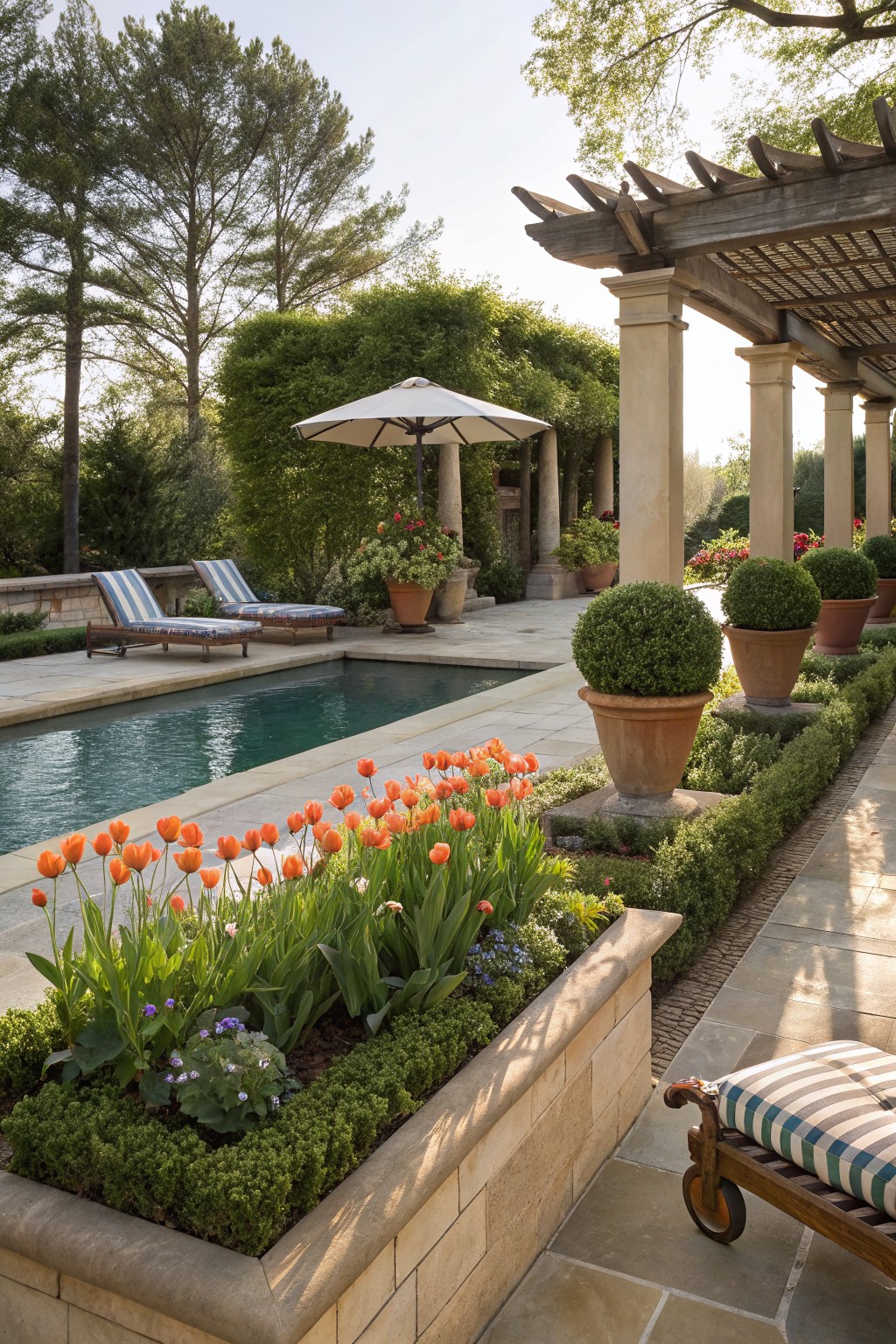
Tulips planted in a long raised stone bed make a bright spring border right along the pool edge. The orange blooms stand out against the water and stone paving. It ties the garden to your outdoor space in a simple way that feels fresh each year.
This works best on formal pools or straight terrace edges where you want color without crowding the area. Fill the bed with tulips and a few low boxwoods for shape. Plant in fall for easy spring show, and pick spots with good sun but solid drainage to keep bulbs happy.
Tulip-Lined Brick Garden Path
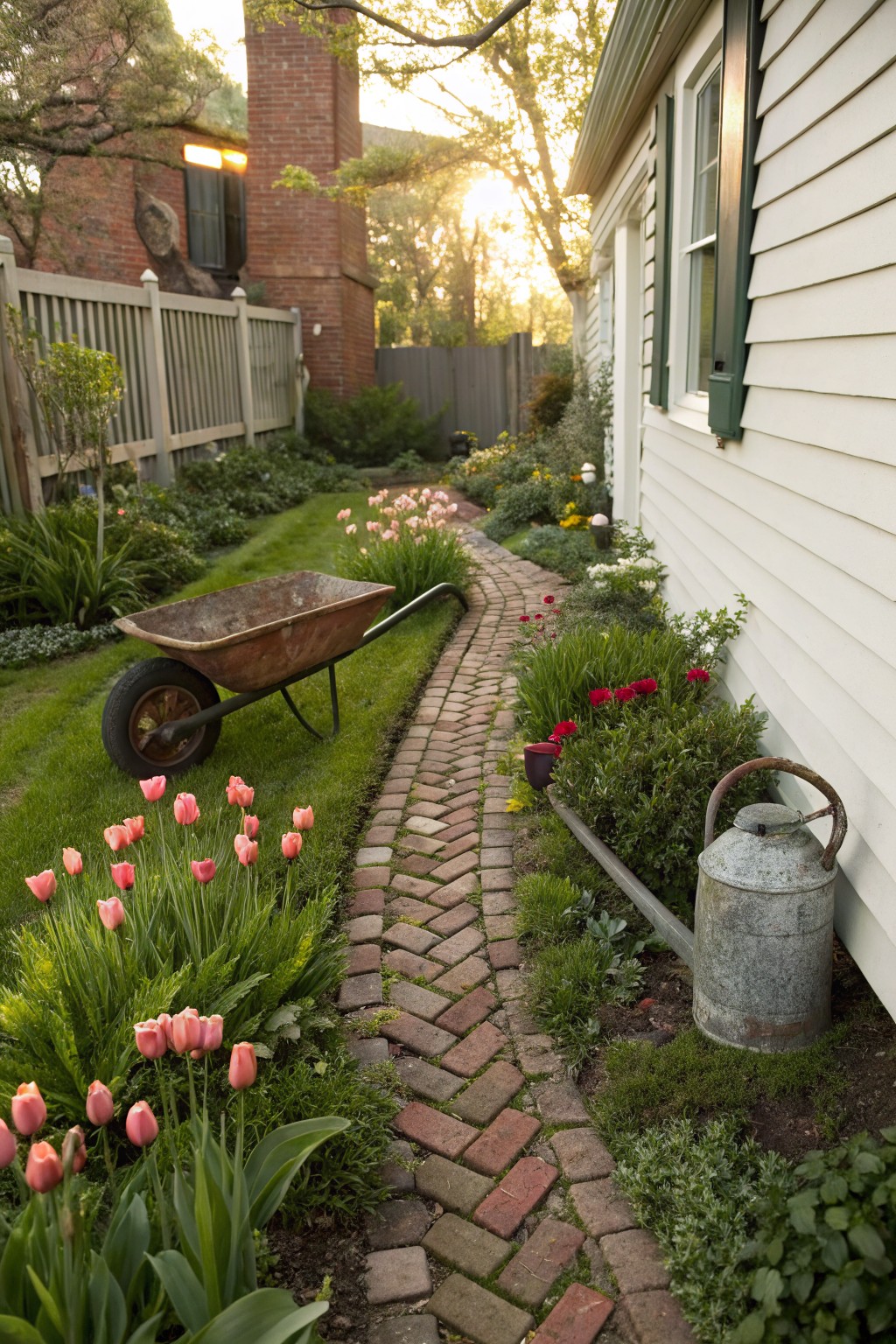
A curving brick path like this one makes a garden feel alive and easy to wander. Tulips in soft pinks edge both sides, mixed with greens and a few other flowers. That old wheelbarrow parked nearby adds a touch of real garden life. It’s straightforward but pulls your eye right through the space.
This works best in narrow side yards or along a house wall where you want to connect gate to door without it feeling too straight. Lay bricks in a loose pattern for character, plant tulips in drifts so they bloom together in spring. Skip fancy edging. Just let the plants spill over a bit… keeps it natural. Watch for moss on those bricks though, in shady spots.
Raised Tulip Beds by the Fence
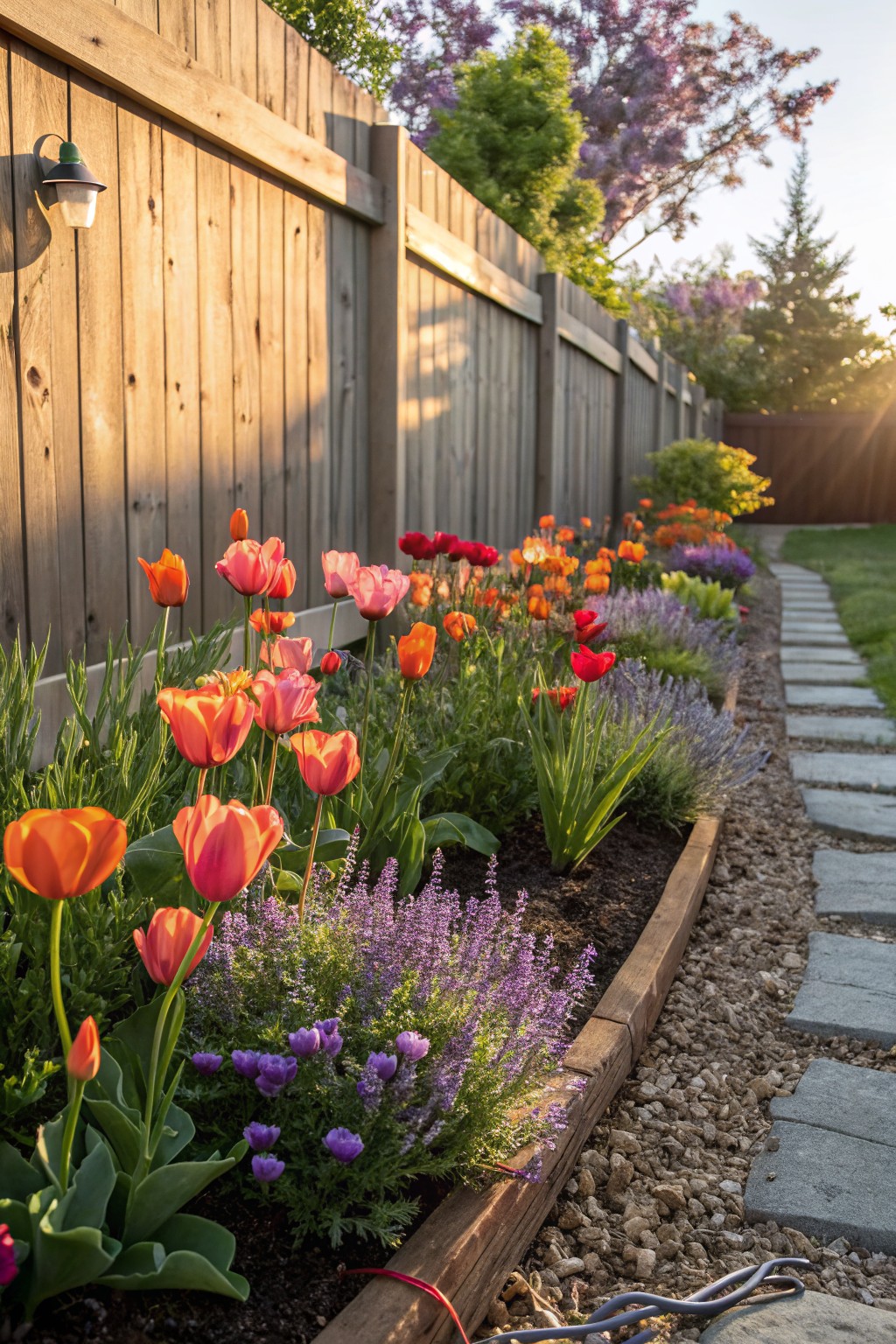
Raised wooden beds tucked right against a backyard fence make a straightforward spot for spring tulips. You see oranges, pinks, and reds blooming thick there, with some lavender mixed in for steady color later on. It’s a simple setup that turns bare fence lines into real eye-catchers, especially with the gravel edging and stone path keeping things neat.
This kind of border works well in average yards, sunny or part-shade, where you want low upkeep but big payoff. Build the beds about a foot high from scrap wood or affordable cedar, plant tulip bulbs in fall groups, and top with gravel to cut weeding. Skip it if your fence gets too much shade… tulips need that sun.
Potted Tulips Beside the Front Door
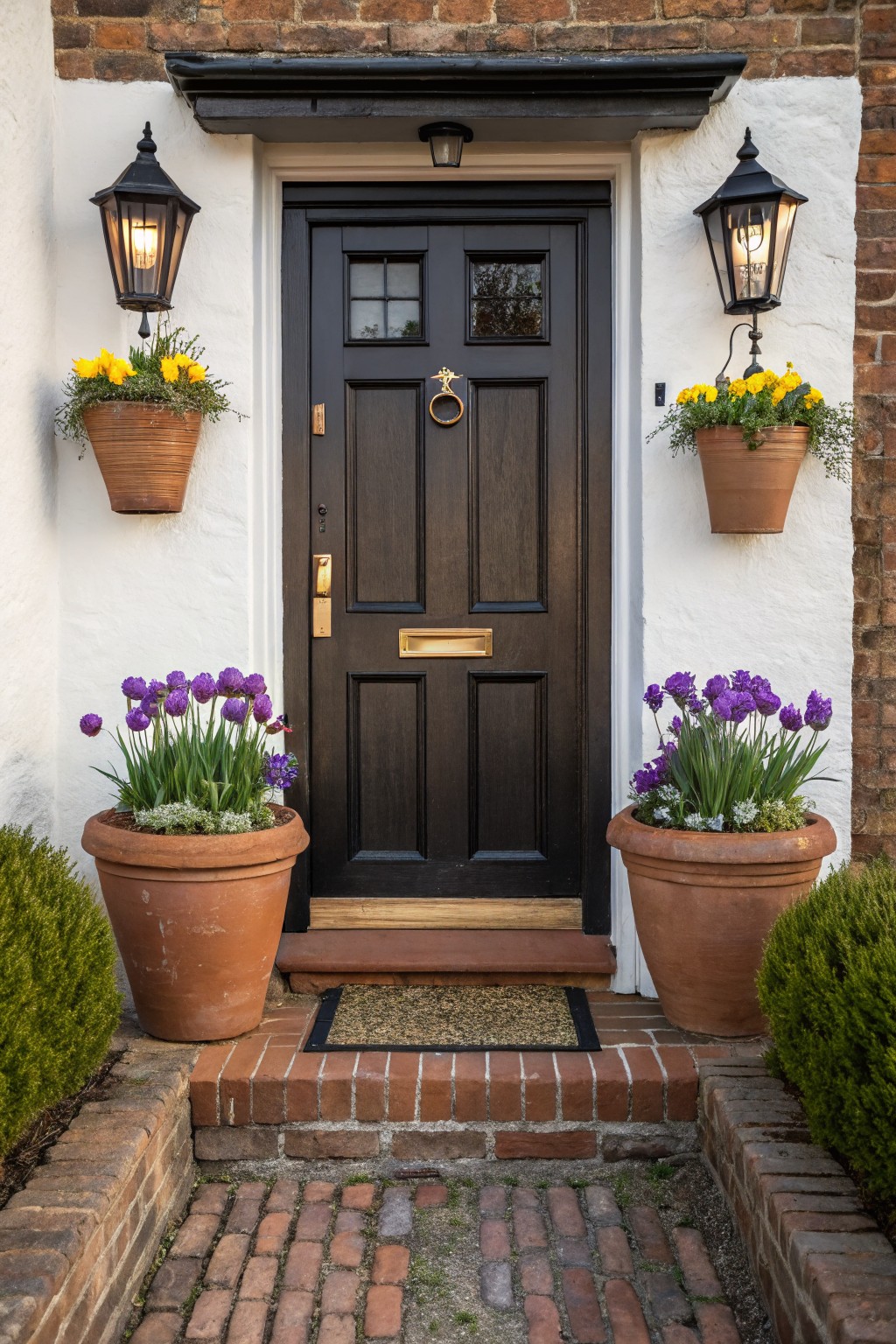
Tulips in pots right next to the front door make a simple welcome for spring. The purple blooms here stand out against a dark wood door and white walls. They add color without much work and fit right into the entry space.
Put matching terracotta pots on both sides of any door for balance. Purple tulips work well on traditional homes like this one. Plant them in early spring so they pop when company arrives. Just deadhead after they fade.
Tulips Lining the Entry Path
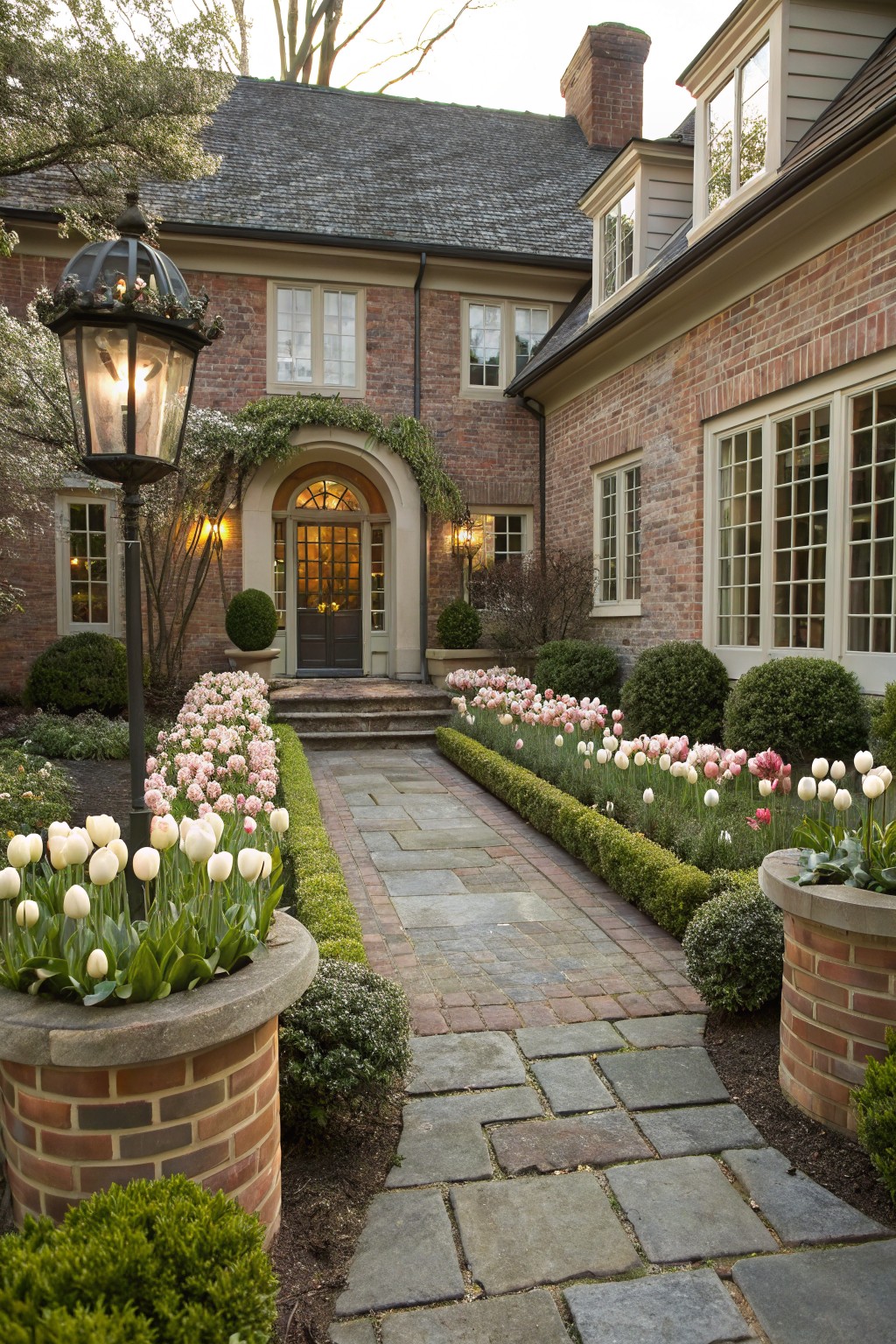
One simple way to welcome spring is planting tulips right along your front walkway. Here pink and white ones fill long borders on both sides of the path, leading straight to the door. They add that burst of color folks notice first, and the neat rows keep it looking tidy instead of wild.
Try this on a straight path with brick or stone pavers. Edge the beds with boxwood for structure that lasts all season. It suits older brick homes best. Pick tulip shades that pick up your door or siding… and plant bulbs in fall for easy repeats.
Boulder-Framed Tulip Path on a Slope
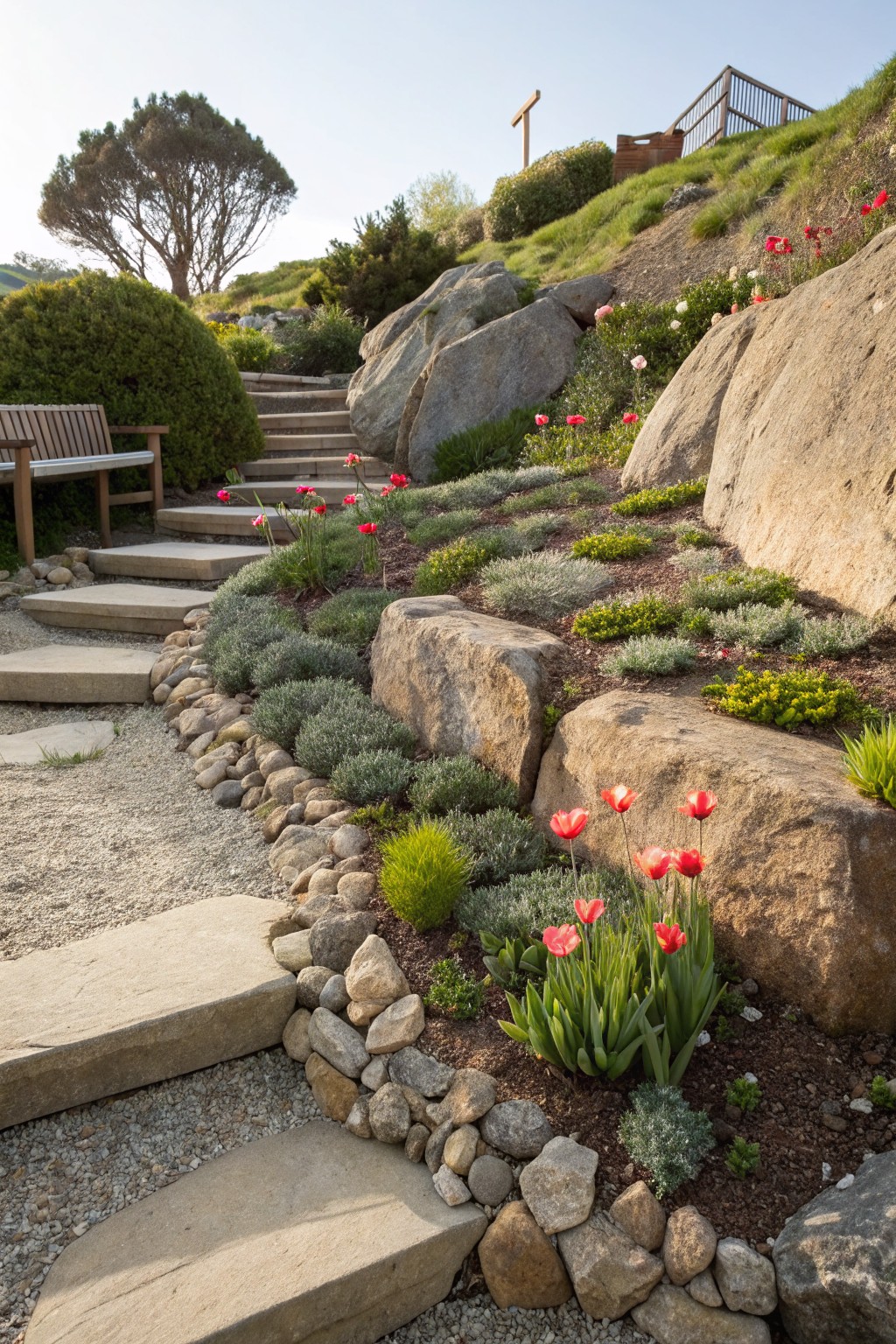
Large boulders act as natural anchors along this stone step path, with red tulips tucked into the plantings for spring color. The mix of rugged rocks, gravel edges, and low shrubs gives the walkway a solid feel that blends right into the hillside. Tulips stand out without taking over, adding that welcome burst when everything else is still waking up.
This works best on sloped yards where you need steps anyway. Pocket the tulips near boulders or along the path edges, and fill in with tough groundcovers that handle dry spots. Suits most homes with uneven ground. Just make sure the stones are set firm to avoid slips after rain.
Winding Stone Path in Tulip Beds
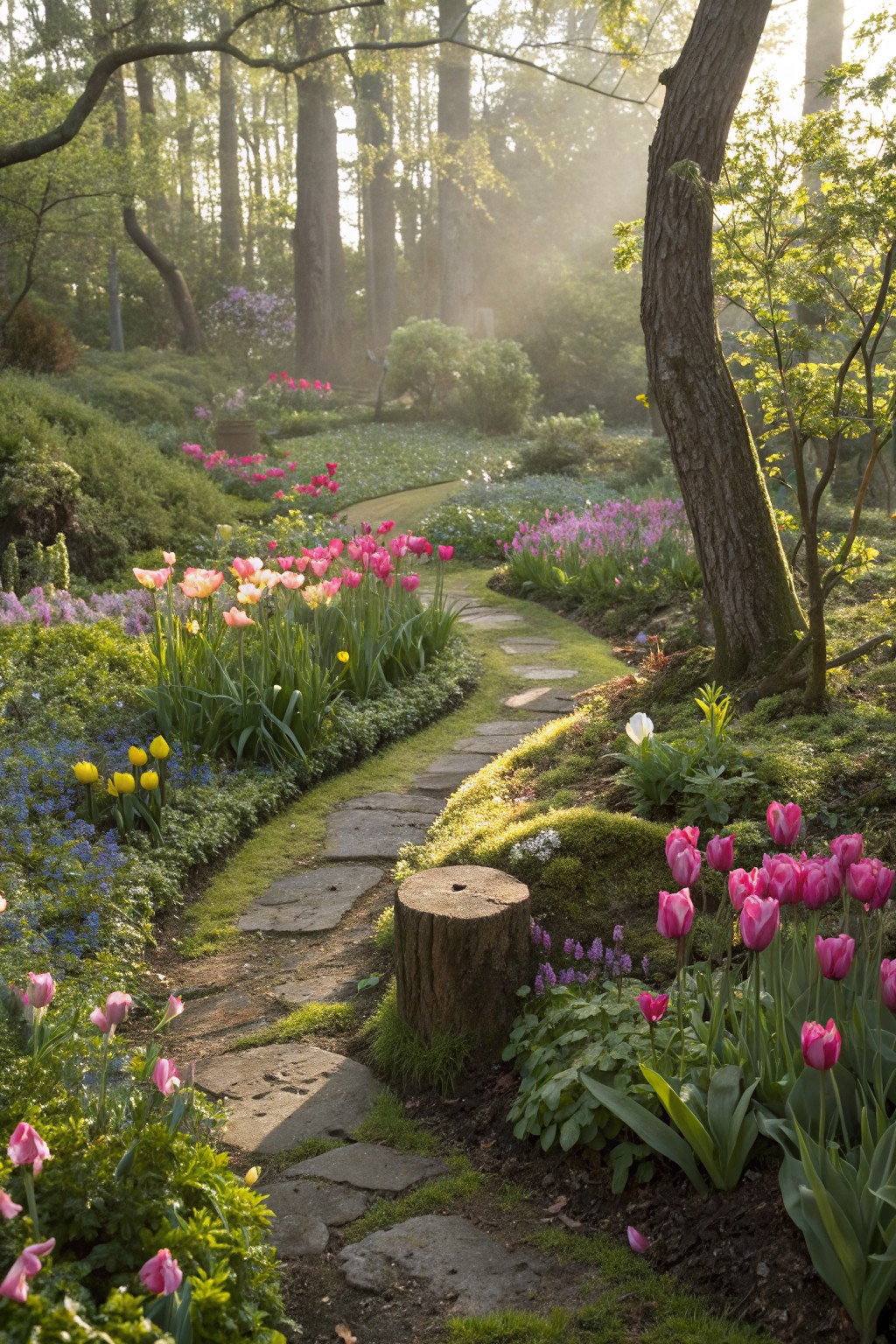
A simple stone path like this winds gently through garden beds overflowing with tulips. The mix of pink, orange, and yellow blooms draws the eye along the curve, making even a small yard feel deeper and more alive come spring. Sunlight hits just right on those mossy stones too.
You can pull this off in shady spots near trees or along a fence line. Plant tulips in loose groups right up to the path edges, maybe add some low greens underneath for year-round interest. It suits older homes with natural yards… just keep the path clear of weeds so it stays walkable.
Frequently Asked Questions
Q: When’s the best time to plant tulip bulbs for spring color?
A: Get them in the ground in fall, from late September to early December depending on your zone. They need that chilly winter rest to build strong roots. Come March or April, you’ll love the payoff.
Q: Do tulips keep blooming all season, or what?
A: Tulips shine for about 6 weeks in spring, then they fade fast. Cut back the spent flowers to tidy up, but leave the leaves until they yellow. That feeds the bulb for next year.
Q: How do I keep squirrels from digging up my new tulips?
A: Sprinkle blood meal or hot pepper flakes over the soil after planting. Squirrels hate the smell. And plant them deep, at least 8 inches, so they stay put.
Q: Can I grow tulips in containers on my deck?
A: Sure, pick big pots with drainage and fill with bulb mix. Crowd in 5 to 7 bulbs per 12-inch pot for a full show. Water weekly until sprouts appear, then ease off.
