

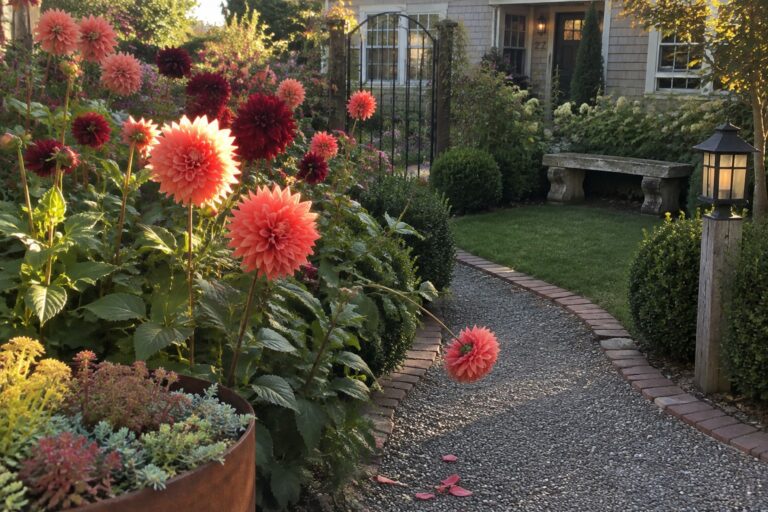
Dahlias can bring a late-summer garden into focus, but they look best when their height, color, and spacing work with the rest of the planting.
I like to give them enough room to show their shape while using grasses, foliage, or lower flowers to soften the edges.
The path, bed borders, and neighboring plants all affect whether a dahlia bed feels settled or crowded as it fills in.
As the season turns, changes in light and cooler weather can shift the balance of the garden, so it helps to plan for more than peak bloom.
I’d save the ideas that suit your space and try them in a way that can grow with the garden.
Use Curved Brick Edging to Shape a Dahlia Bed
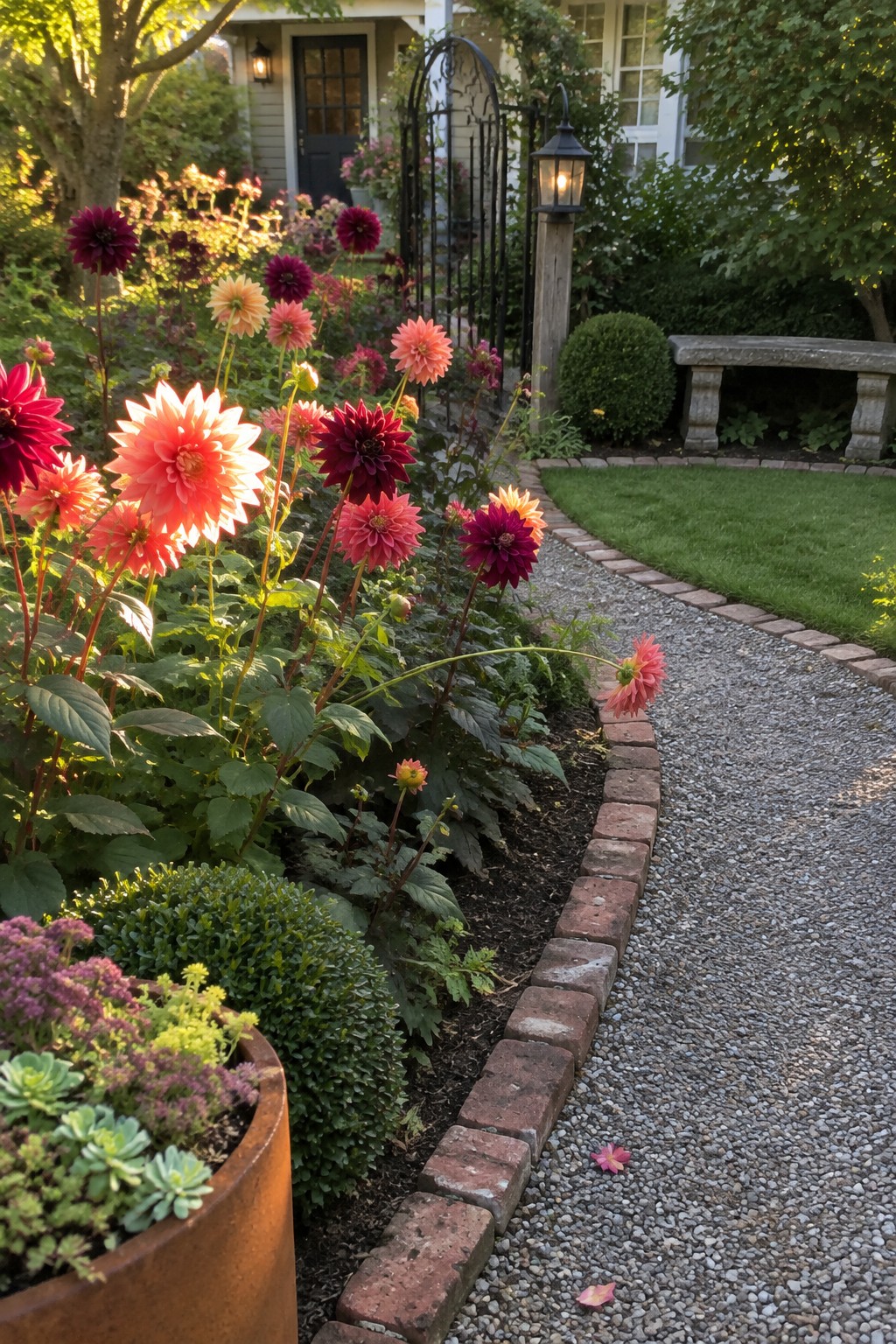
A curved brick edge gives a dahlia bed a clear shape while keeping it distinct from the path. It suits a relaxed garden where tall flowers might otherwise spill into the walking space.
Follow the curve of an existing path, and leave enough room for dahlias to spread as they grow. A gravel path works well beside the brick, but keep the bed wide enough to reach plants for cutting and care.
Use Dahlia Beds Along A Garden Path
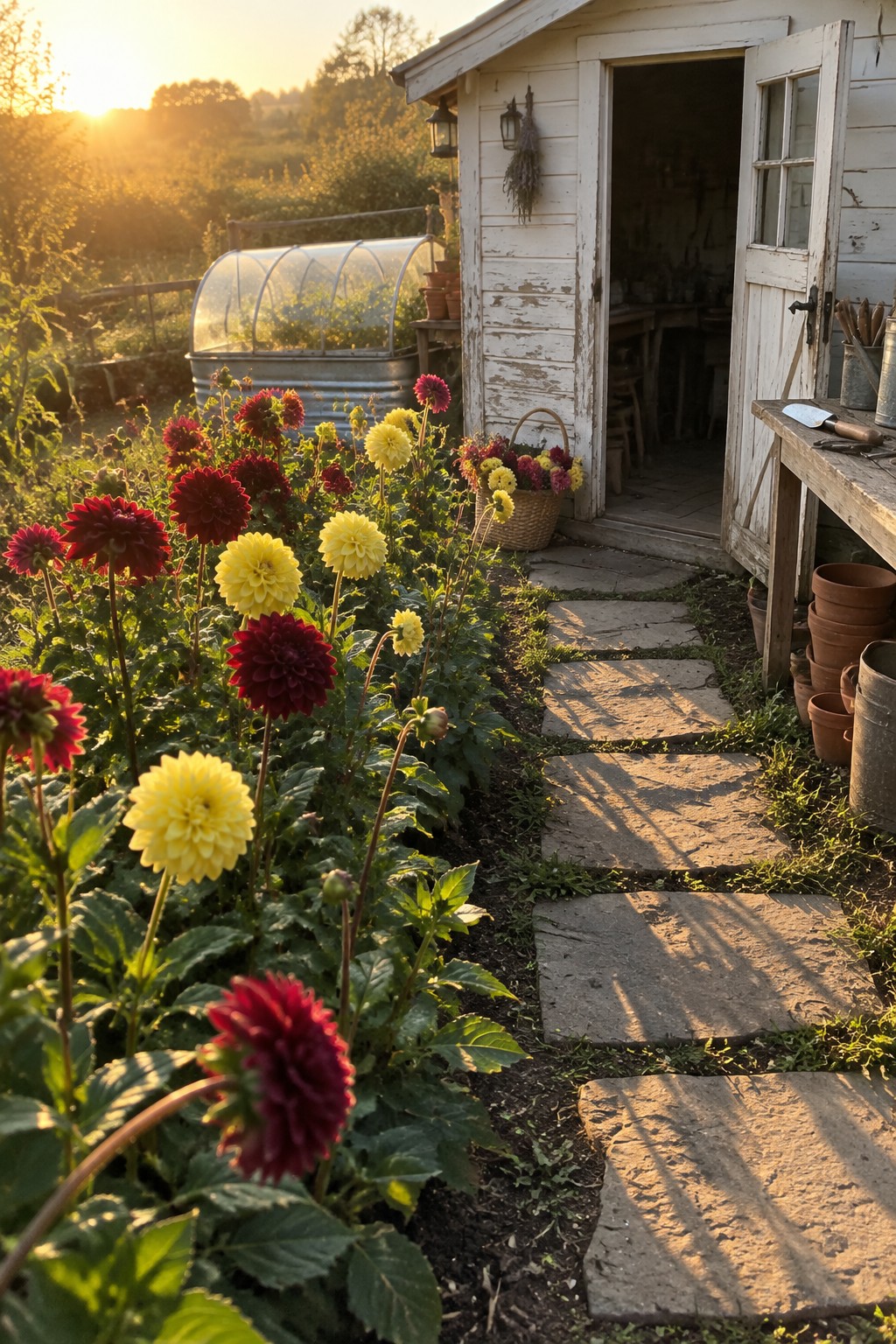
A narrow dahlia bed can make a garden path feel like part of the planting rather than just a way to get from one place to another. The flowers add a clear band of color, while the path gives the bed a tidy edge.
Plant dahlias in generous groups along one side of a walkway, leaving enough room for the plants to spread and for people to pass comfortably. This works especially well on a cottage-style plot, but avoid crowding the path with tall stems.
Use Dahlias in a Layered Garden Bed
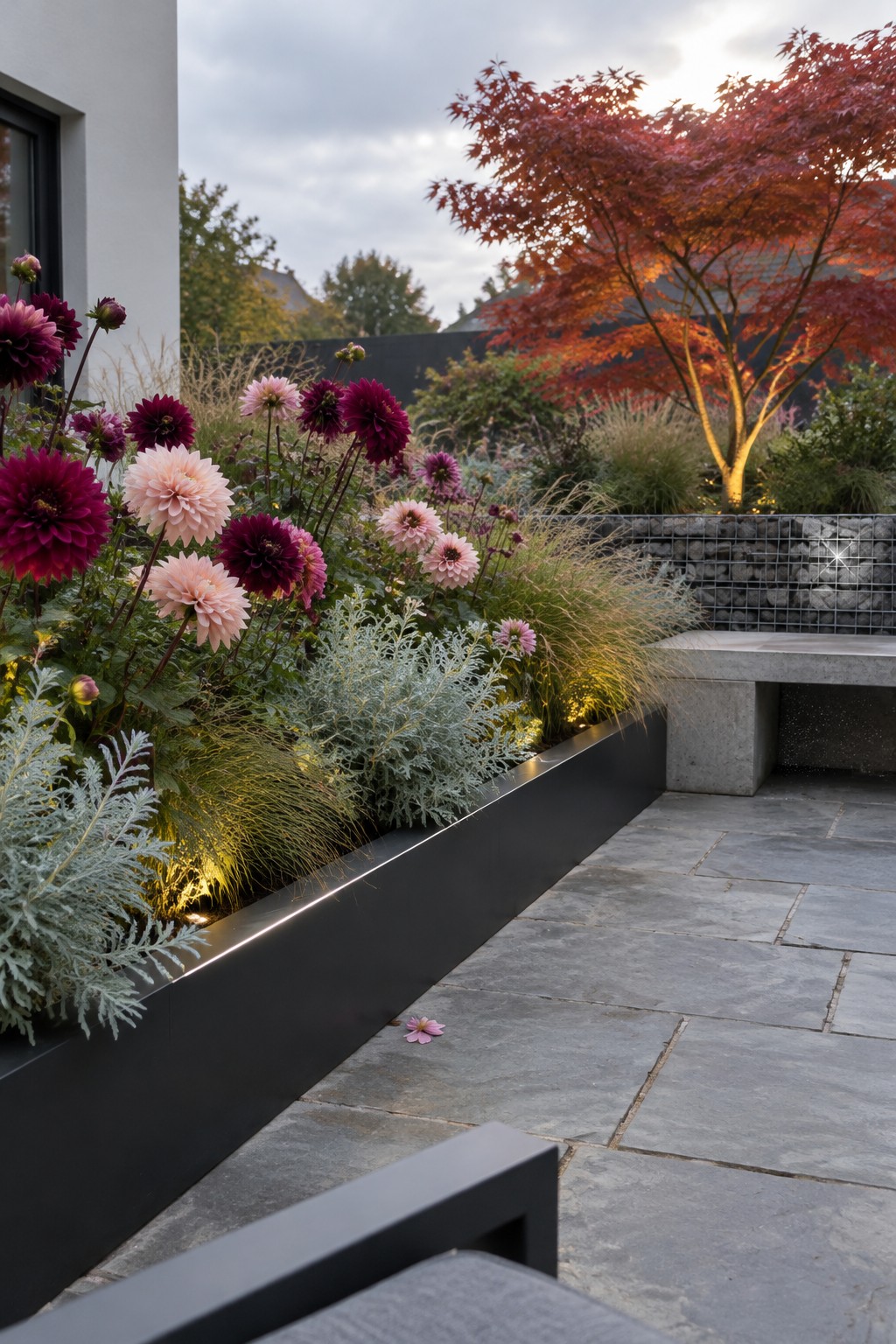
Layering dahlias among grasses and lower-growing plants gives a late-season garden bed a fuller look without making every plant compete for attention. The tall flowers bring color up through the planting, while softer foliage fills in around their stems.
Plant dahlias toward the middle or back of a bed, depending on their height, and leave enough room to reach them for watering and deadheading. Pale foliage and ornamental grasses make good neighbors, but keep the dahlias where they’ll get plenty of sun.
Layer Dahlias Along a Garden Path

Dahlias look especially at home in a layered garden bed, where taller grasses and flowers give them a natural backdrop. The mix feels full without requiring every plant to bloom at the same height.
Use dahlias in the middle of a deep border, with low flowers near the edge and taller plants behind them. A stone retaining wall can define the bed and keep the planting neatly beside a walkway.
Make a Patio Path Through Dahlia Beds
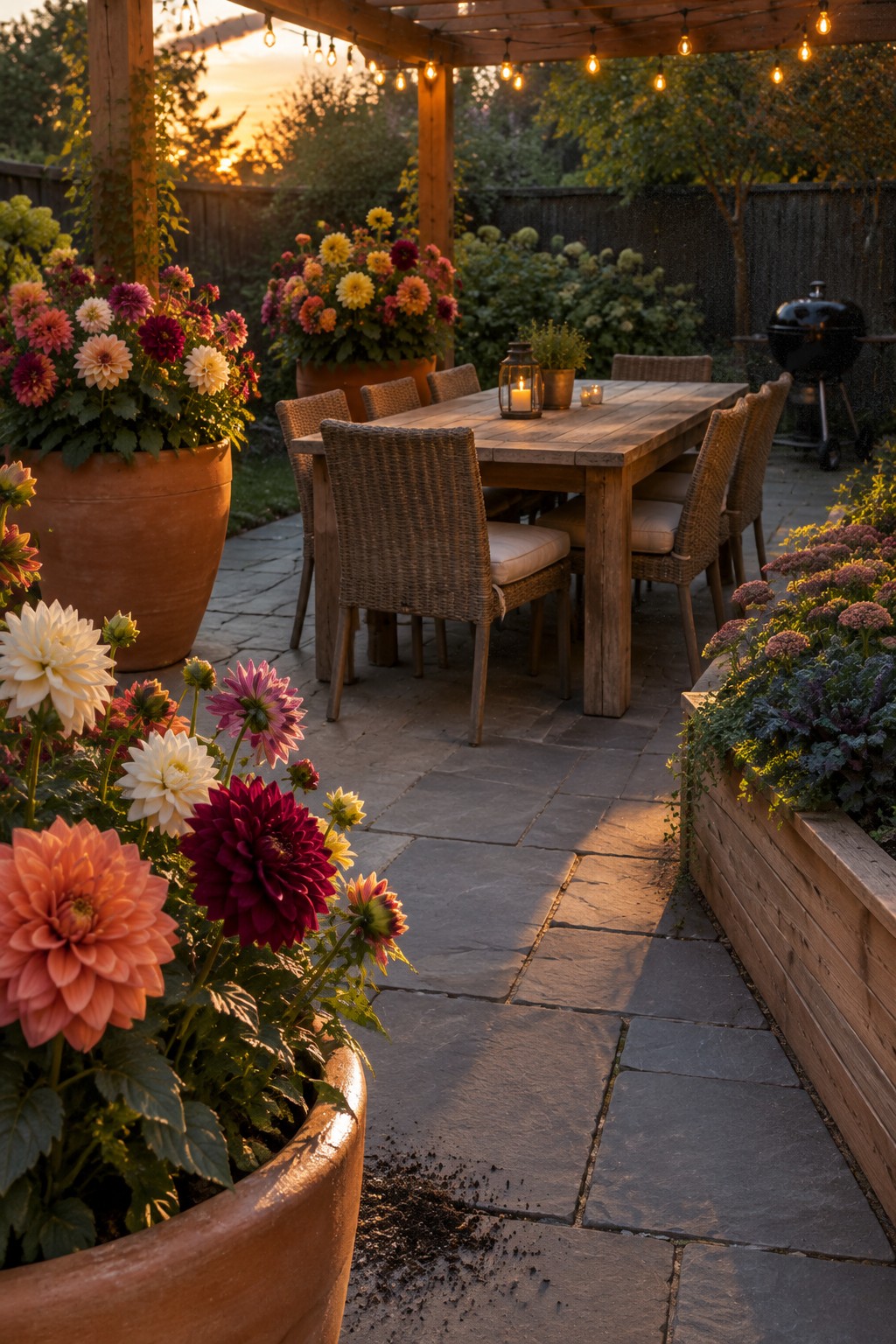
Dahlias can line a patio path and make the walk to an outdoor dining area feel like part of the garden. Keeping the blooms in defined beds lets them stand out without making the route feel crowded.
Leave enough room for people to pass comfortably, especially where the path meets the seating area. Large pots can work beside a patio, but keep them clear of the walking line and choose a spot where the plants get plenty of sun.
Plant Dahlias Near the Front Steps

Dahlias can make an entry garden feel colorful without taking over the whole yard. A raised planter near the steps puts the flowers where they’re easy to enjoy, while leafy plants around them help fill out the bed.
Use this approach beside a front walk or porch, especially where a large flower bed would be hard to maintain. Choose a planter with enough soil depth, and leave room for mature dahlias so the entry stays clear.
Add Stepping Stones to a Dahlia Garden Path
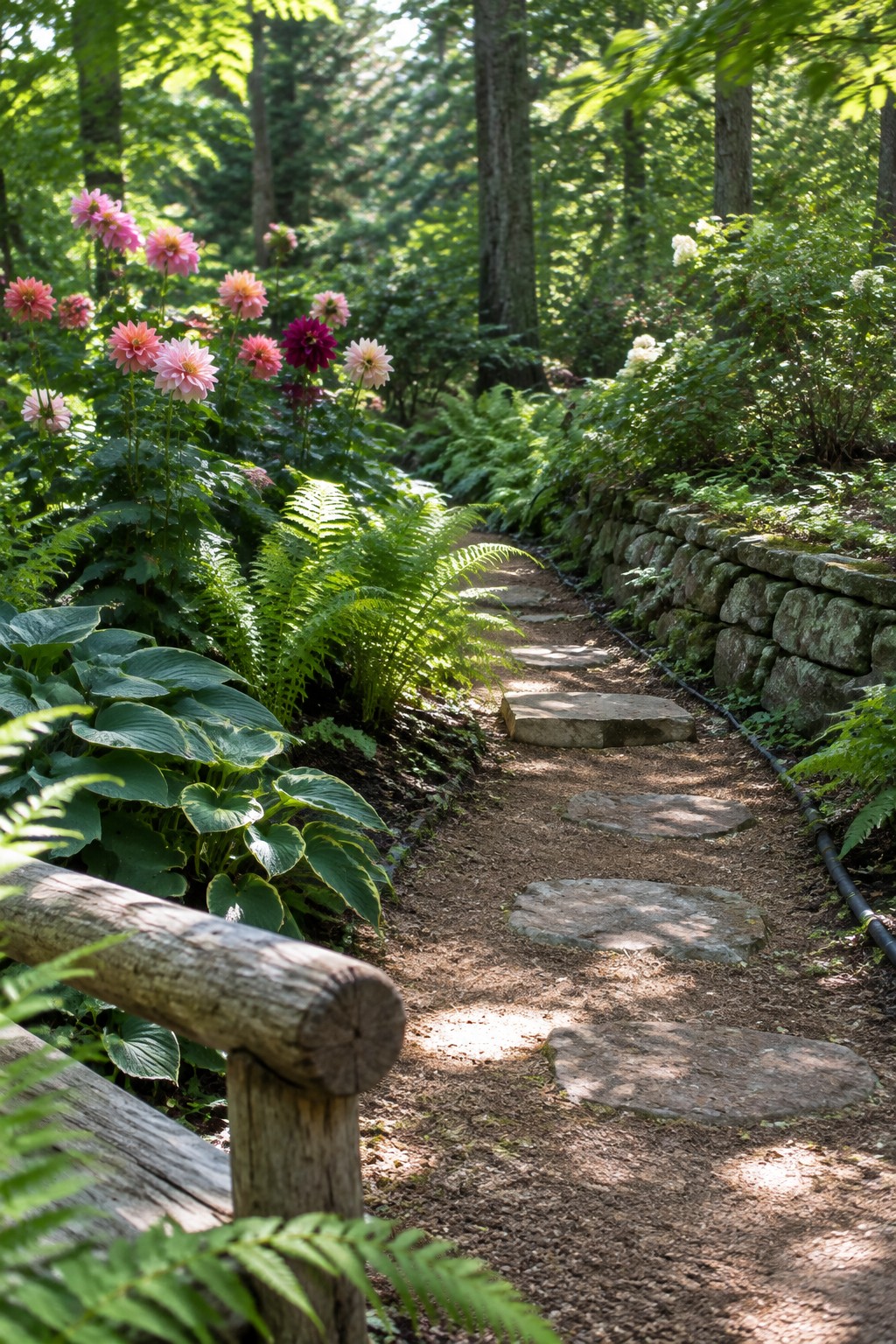
A simple stepping-stone path makes a flower garden easier to walk through and gives the planting beds a clear shape. Dahlias can grow alongside the route, where their blooms are easy to see without blocking the way.
Set the stones far enough apart for a comfortable stride, and leave room for plants to spread as the season goes on. This works especially well on a gentle garden slope, but keep the path stable and wide enough to tend the dahlias safely.
Use a Central Path to Organize Dahlia Beds
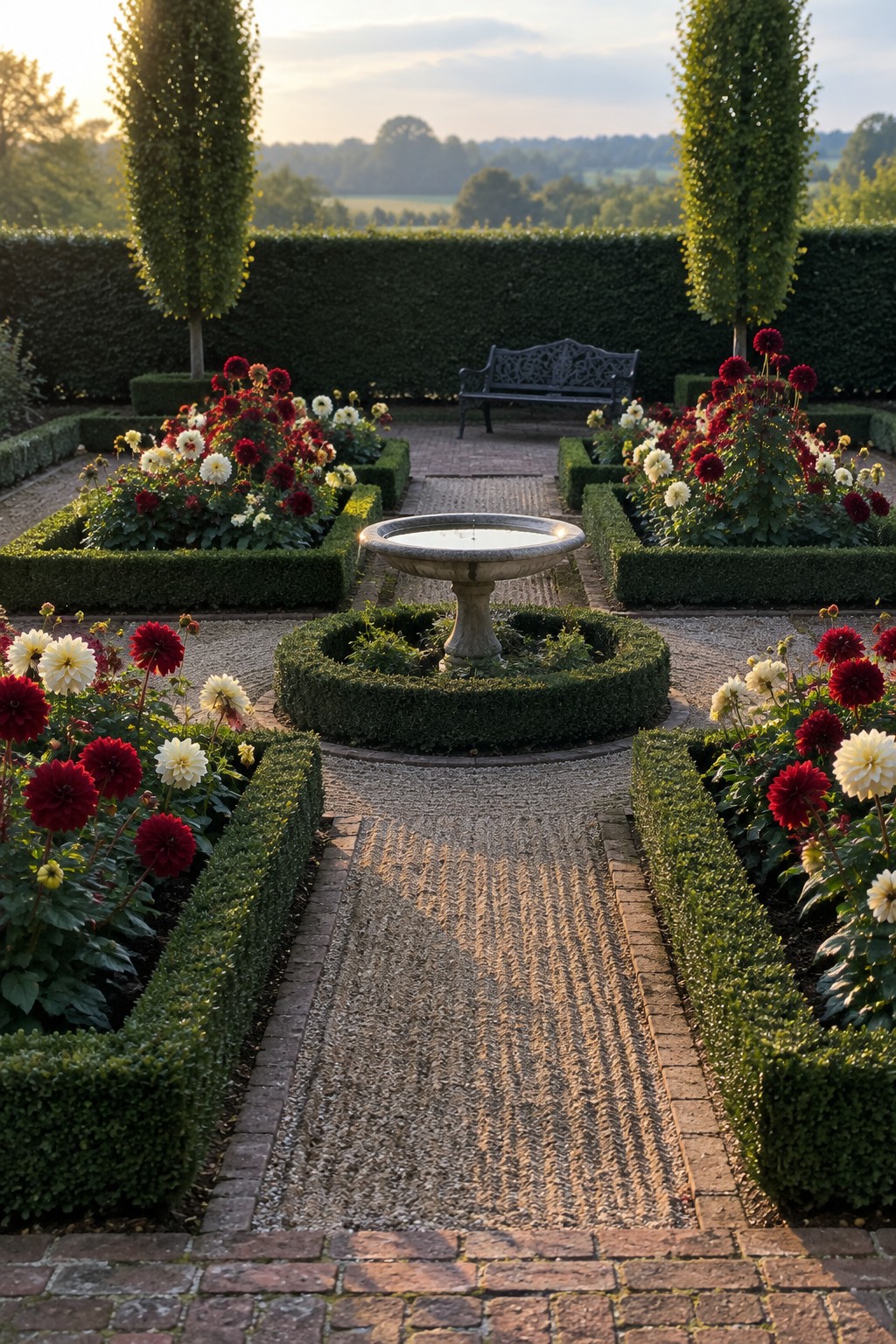
A straight garden path gives a formal layout an easy-to-follow shape. Dahlia beds on either side feel orderly without needing complicated planting patterns, and the path makes it simple to reach the flowers for cutting or care.
This layout works well in a small, symmetrical garden or along a longer border. Keep the path wide enough to walk comfortably, and leave room around the dahlias so their foliage does not spill into the walkway.
Grow Dahlias in Raised Garden Beds

Raised beds give dahlias a clear place in the garden and make a large planting feel easier to manage. Here, timber borders separate the flowers from the lawn, while the tiered layout lets the bed follow a sloped yard.
Use sturdy, well-drained beds where dahlias will get plenty of sun. Leave enough room to reach each plant for watering and staking, and keep the beds deep enough for healthy roots.
Grow Dahlias In Planters On A Small Balcony

Growing dahlias in large planters is a practical way to enjoy their late-season color when garden space is limited. Tall blooms can add plenty of height to a balcony without needing a flower bed.
Choose sturdy, deep containers and give the plants room to grow. A row of planters can also offer some privacy, but leave enough space to reach in and water them regularly.
Use a Stone Path to Guide a Dahlia Garden
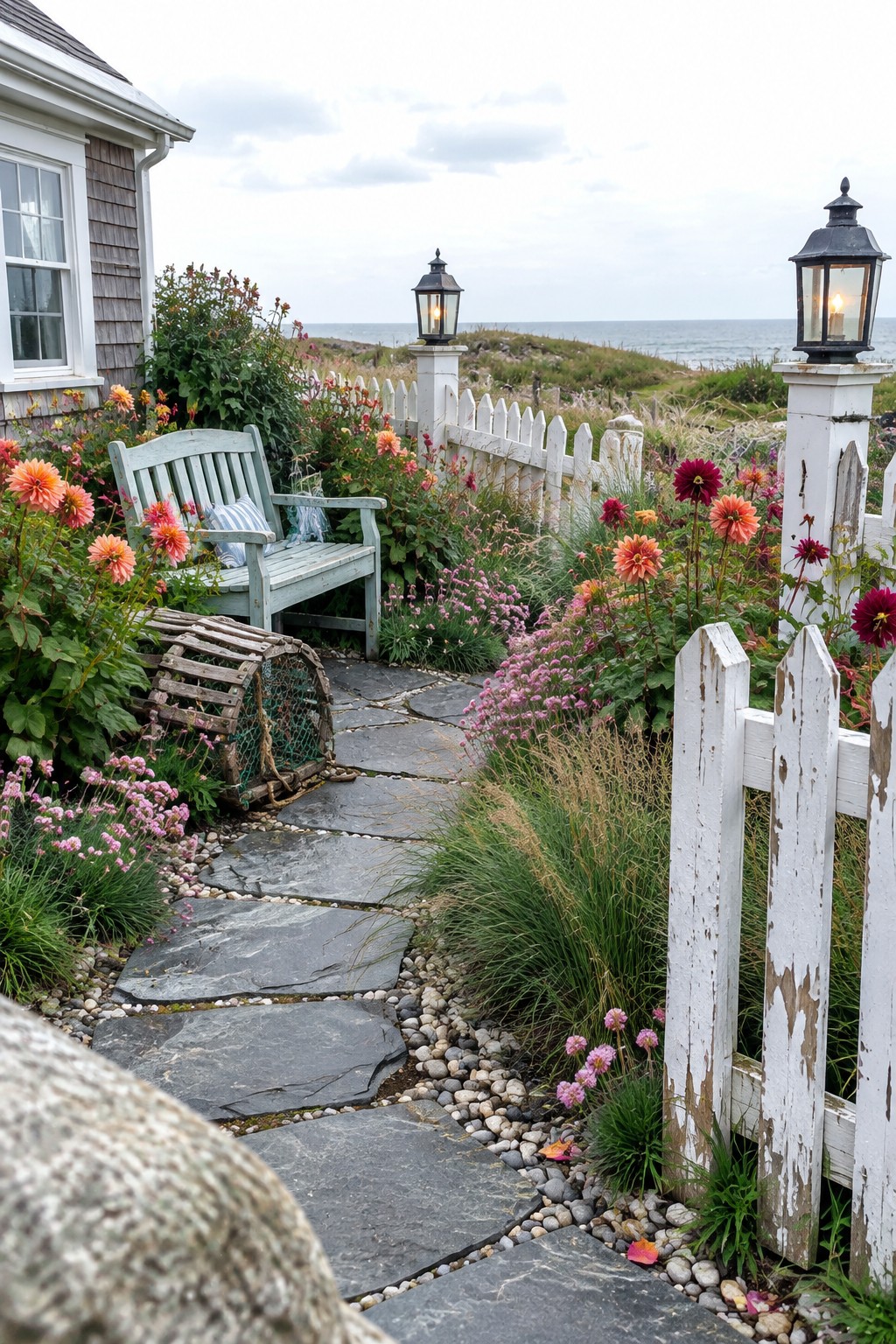
A stone path gives a flower-filled garden a clear route through the planting. It makes the bed easier to enjoy up close, and dahlias along the edges can bring color right to the walkway.
Choose stones with a steady, walkable surface and leave enough room for plants to spill toward the edges without narrowing the path. This approach suits cottage-style and coastal gardens, especially where a simple path can connect a sitting spot to the rest of the yard.
Plant Dahlias Along a Poolside Border
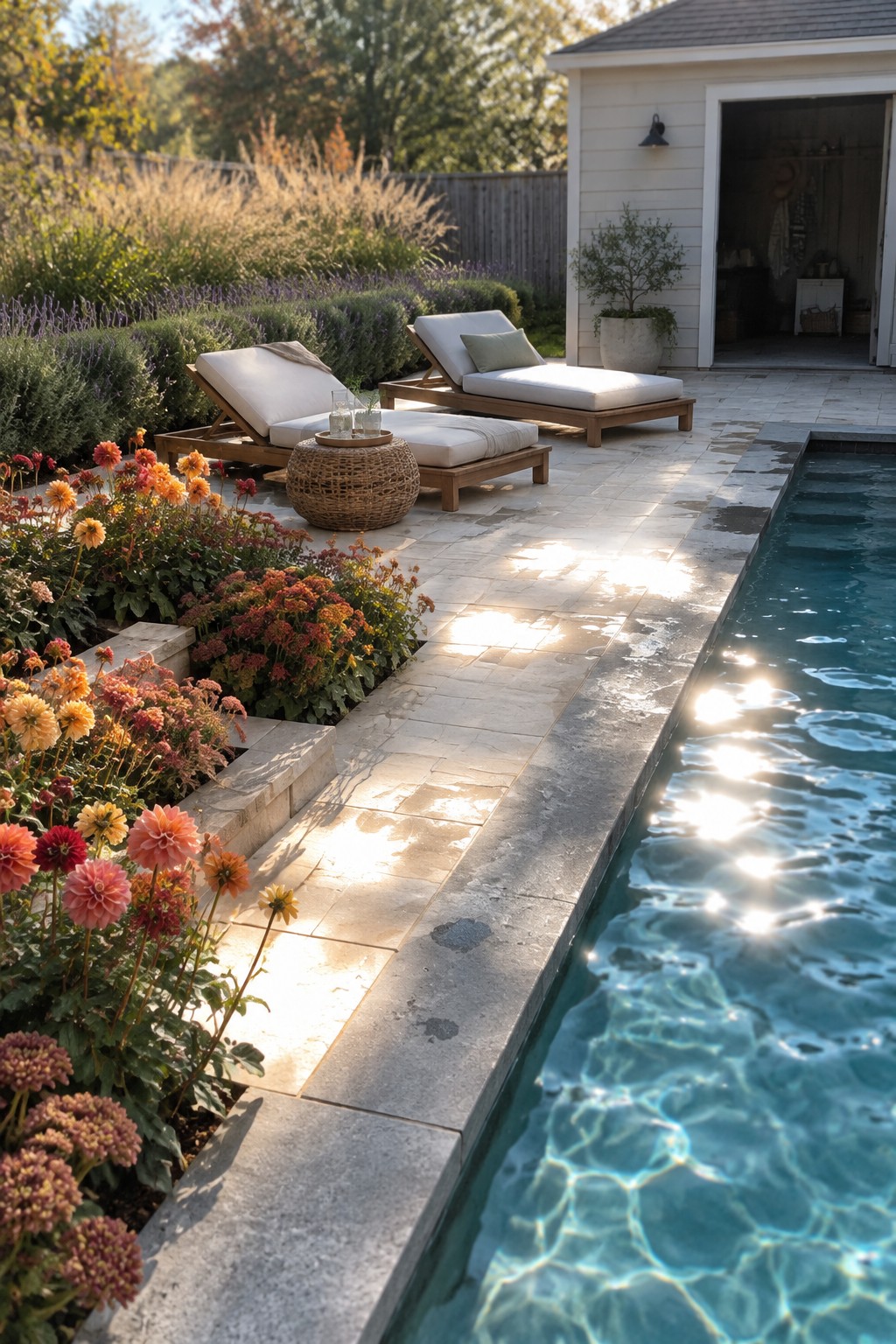
A flower border beside a pool can make the hardscape feel more connected to the garden. Dahlias bring late-season color right up to the paved edge, while a clear strip of paving keeps the pool easy to reach.
Give the plants enough room so flowers don’t lean over the walking area, and check that the bed gets the sun dahlias need. This works best where the border can be watered without splashing leaves and soil onto the pool deck.
Plant Dahlias Along the Front Walk

A generous flower bed beside the front walk makes dahlias part of the approach to the house, rather than keeping them tucked away in the backyard. Planting them in loose groups gives the bed a full, colorful look through late summer.
This works especially well beside a wide path or front steps, where there’s room for tall plants without blocking the way. Leave a clear edge along the walkway, and place shorter plants near the paving so the dahlias don’t spill onto the route.
Use Dahlias to Brighten a Courtyard Border

Dahlias can bring a courtyard garden to life from late summer into fall. Planting them in generous pots along a wall makes their flowers easy to enjoy and gives a small paved space a clear garden edge.
Choose sturdy containers with good drainage, and leave enough room for the plants to grow without narrowing the walkway. A mix of dahlia colors looks relaxed in a cottage-style courtyard, but repeat a few shades if you want the display to feel more orderly.
Train Dahlias Along a Garden Wall
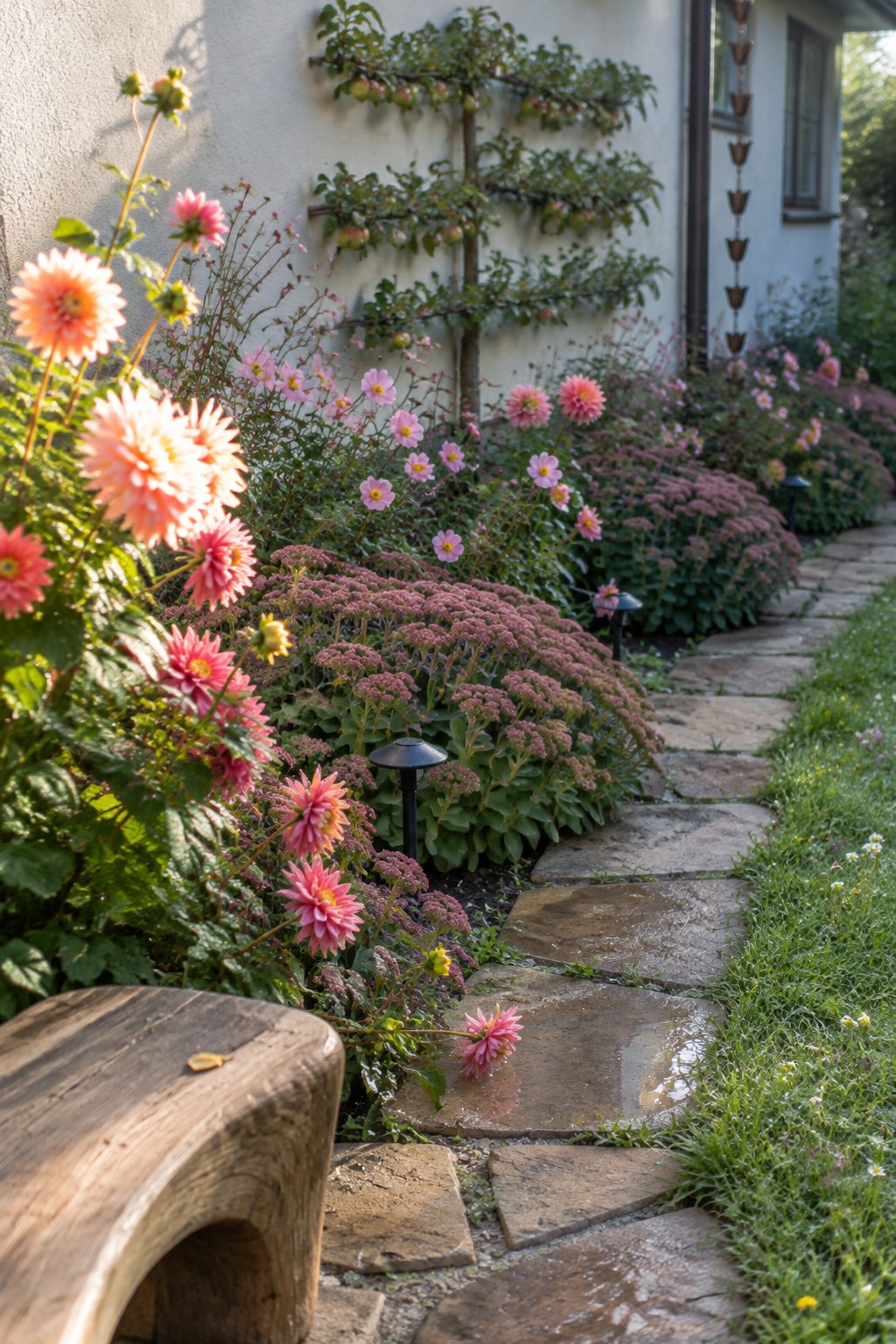
Training dahlias along a wall makes good use of a narrow garden bed and keeps taller stems from sprawling into the path. The planting still feels full, while the stone walkway remains easy to follow.
Set taller dahlias toward the back and leave enough room between plants for air to move through. This approach suits a side yard or a long border beside the house; avoid planting so densely that flowers crowd the path.
Keep Dahlias in a Productive Garden Layout
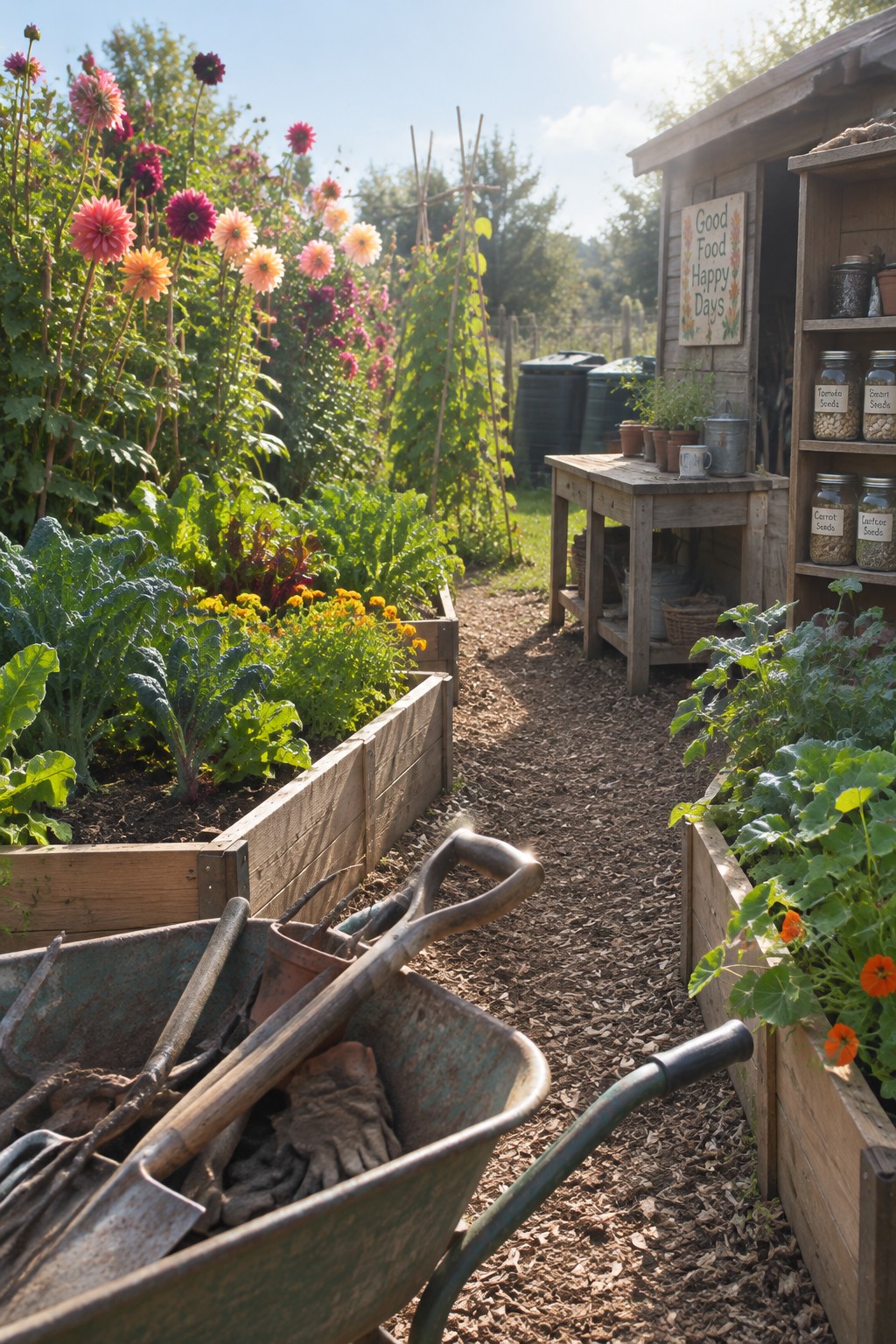
A useful way to grow dahlias is to place them in a mixed garden bed, where flowers share space with vegetables and other plants. The dahlias bring color to the bed without requiring a separate ornamental garden.
Leave enough room for each dahlia to grow and make sure it gets plenty of sun. Raised beds can help define the planting area, but avoid crowding the flowers if you also need easy access for harvesting or care.
Build a Raised Bed for a Colorful Dahlia Garden
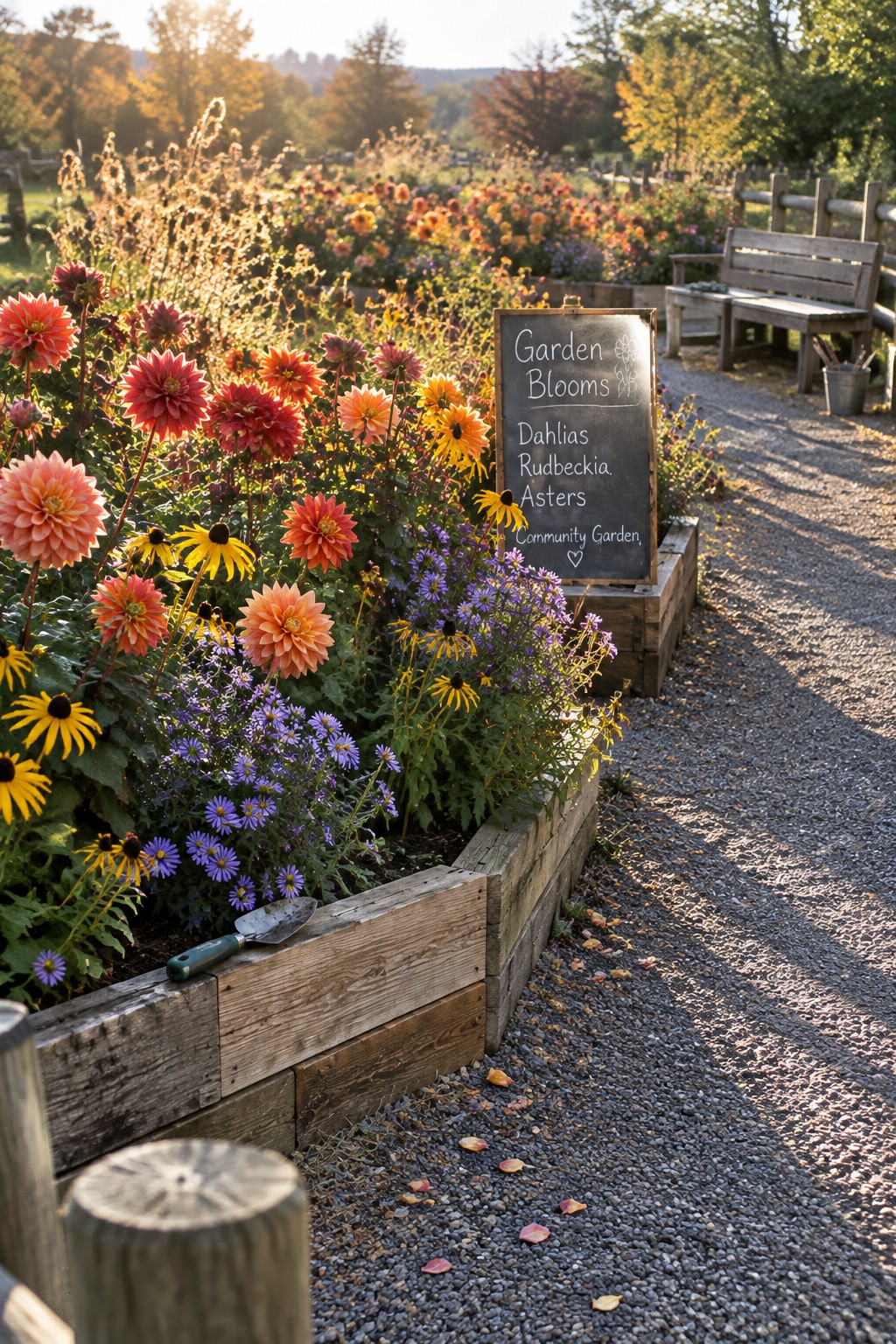
Raised beds give dahlias and other late-season flowers a clear place in the garden. The wooden edges keep the planting area defined, while the mix of flower heights makes the bed feel full without looking crowded.
This setup works well where the soil needs improving or you want a tidy edge beside a path. Leave enough room between plants for air to move, and make the bed wide enough to reach the center for watering and deadheading.
Make Dahlias Part of a Kitchen Garden
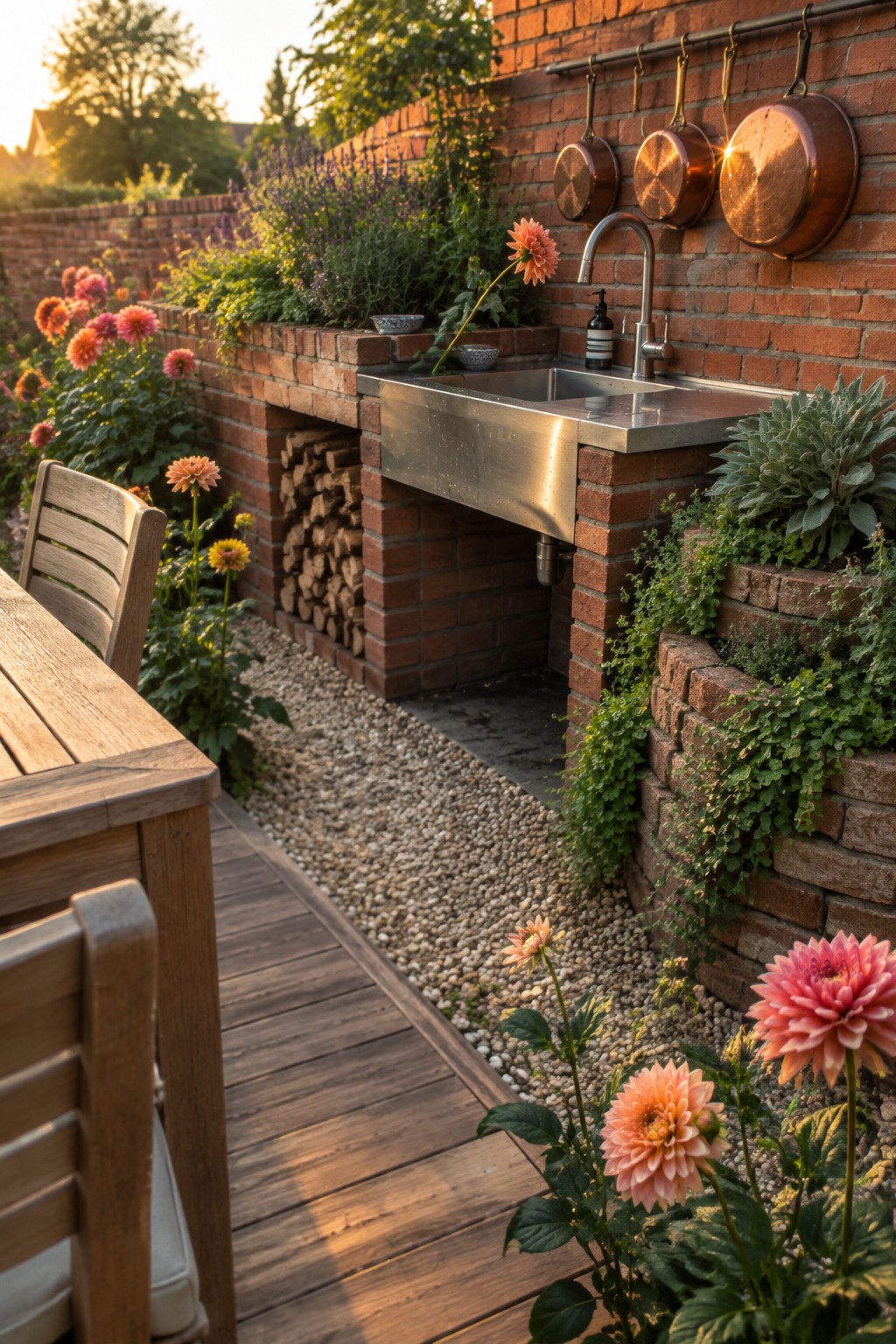
A garden sink built into a brick wall can make a flower garden more useful without taking away from its planting space. Dahlias growing nearby bring color close to the work area, so cutting a few stems or rinsing tools feels like part of tending the garden.
This setup suits a roomy backyard where there is space for both a work zone and flower beds. Keep dahlias within easy reach, but leave enough clearance around the sink and path to move comfortably as the plants grow.
Add Path Lighting Along a Dahlia Garden

Low garden lights can make a flower bed easier to enjoy after dusk and help mark the route through the garden. Here, a small lamp beside the stone path lights the edge of a bed planted with dahlias.
Place low-voltage fixtures along the path rather than among the flower stems, where growing plants can hide them. A few well-spaced lights are usually enough to guide the way without overpowering the garden.
Frequently Asked Questions
Q: How can I keep dahlias blooming into fall?
A: Snip off spent flowers before they turn into seed heads, and keep watering when the soil starts to dry. A light feed during the growing season can help, too, but too much fertilizer may give you leafy plants with fewer blooms.
Q: What flowers look good planted beside dahlias?
A: Ornamental grasses, asters, and salvias pair well with dahlias and bring different shapes and textures to a late-season garden. Leave enough room for air to move between plants so the foliage dries quickly after rain.
Q: Can dahlias stay in the ground over winter?
A: In mild-winter areas, they may be fine with a protective layer of mulch. Where the ground freezes, dig up the tubers after frost blackens the foliage, let them dry, and store them somewhere cool and frost-free.
Q: Why are my dahlias growing lots of leaves but few flowers?
A: Too much shade or nitrogen-rich fertilizer can encourage leafy growth at the expense of blooms. Give dahlias a sunny spot and avoid feeding them heavily with lawn fertilizer.
