

Lavender can bring color and a soft, silvery texture to a sunny garden, but it needs the right spot and enough room to grow well.
I find that gardens look more settled when the planting has a clear shape, with paths, edging, or low borders giving each bed a sense of order.
In dry areas, drainage and spacing matter just as much as the flowers, since crowded lavender can struggle even when the site gets plenty of sun.
The ideas here show different ways to use lavender, from neat rows along a walkway to looser planting that blends with grasses and stone.
I’d start with the layouts that suit your soil and the way you move through the yard, then adapt the details as the plants fill in.
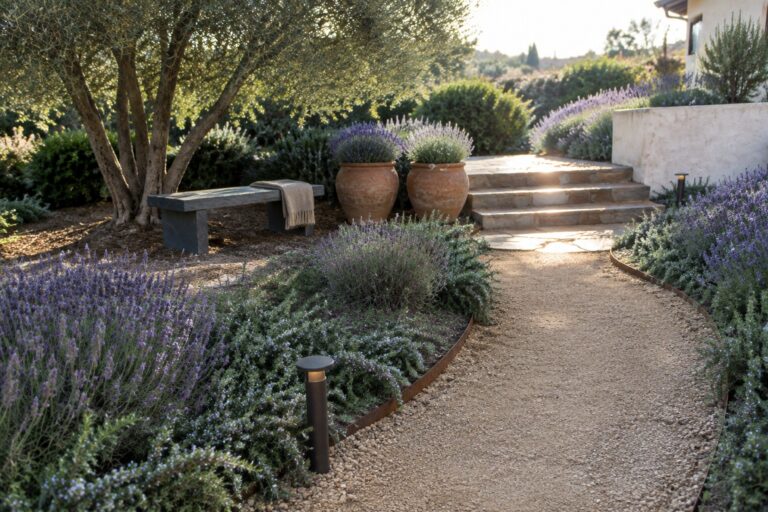
Use Curved Paths to Guide a Lavender Garden

A gently curving gravel path gives a lavender garden a clear route without making the planting beds feel too formal. The shape also lets the flowers sit close to the walkway, where they can be enjoyed as you move through the garden.
For a sunny, dry spot, keep the path wide enough to walk comfortably and edge it with a durable material to hold the gravel in place. Lavender suits the borders well, but leave enough room for mature plants so they do not spill across the path.
Use Stone Paths to Define Lavender Beds
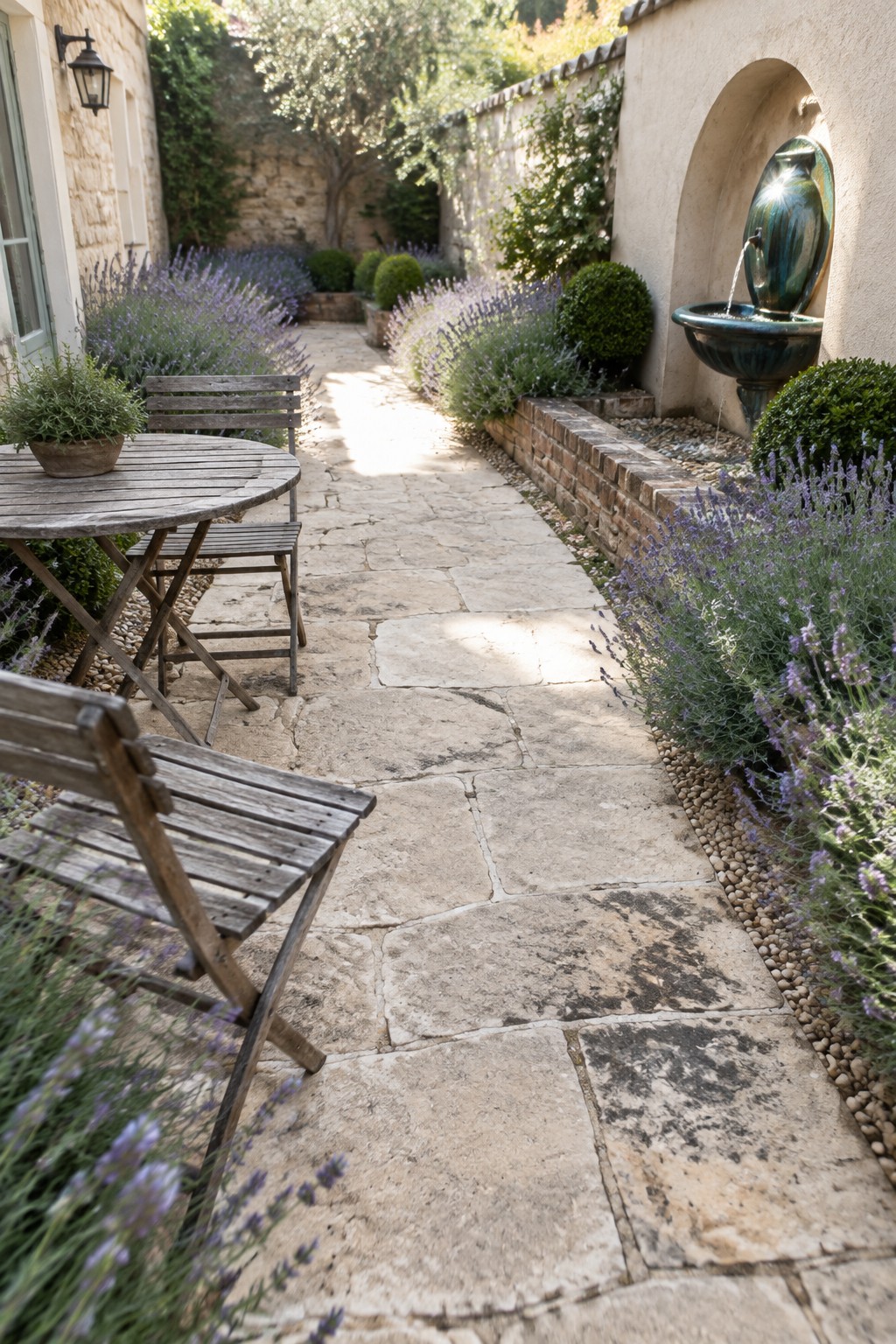
A stone path gives lavender beds a clear shape and makes them easier to walk through and tend. The broad, irregular pavers here leave enough room for the plants to spill slightly over the edges without taking over the walkway.
This approach suits sunny, dry gardens where gravel and drought-tolerant plants are practical choices. Set the stones on a stable base and leave comfortable space between the path and the lavender so the plants are easy to trim.
Use Stone Walls to Create Planting Levels
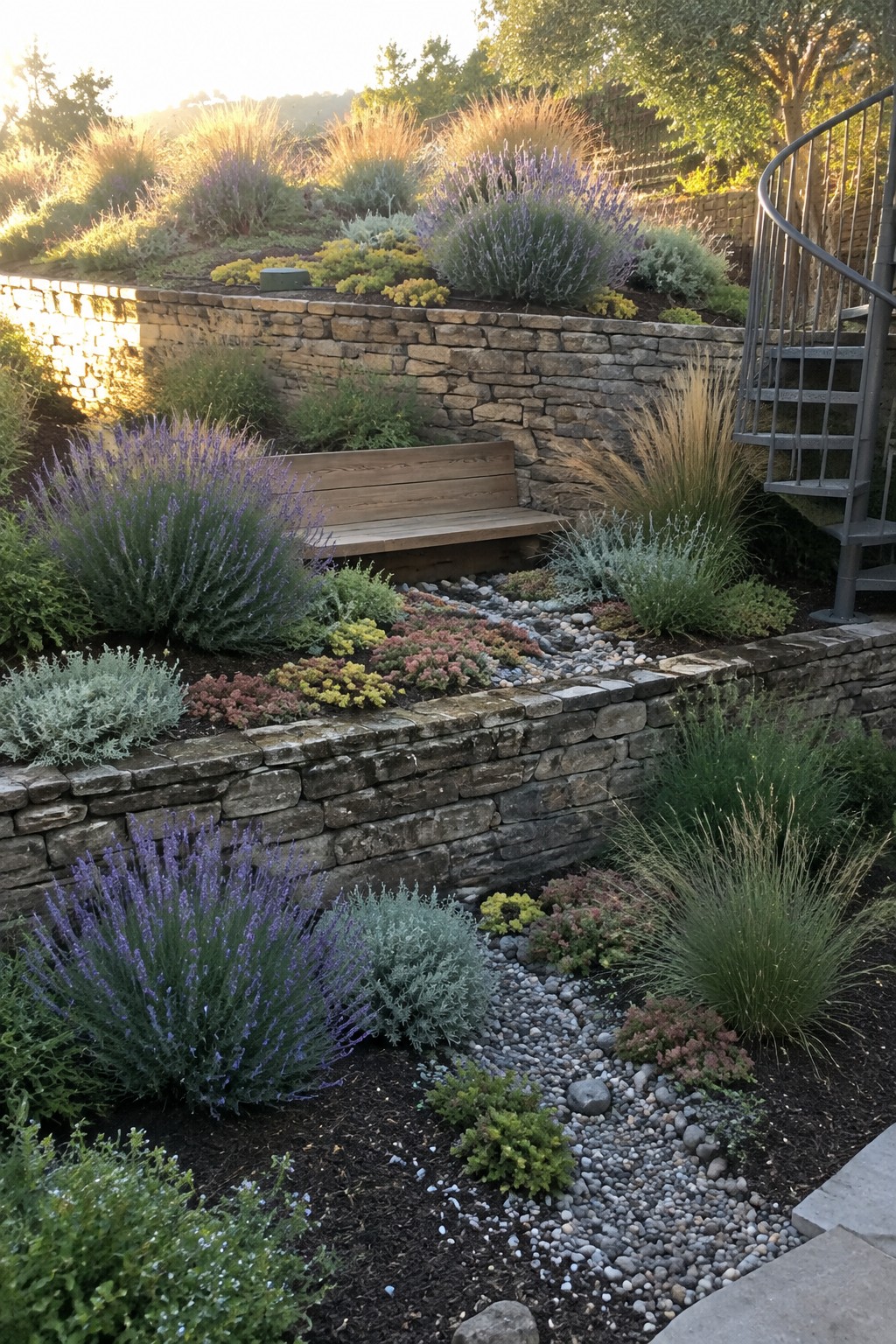
Terraced stone walls make a sloped garden easier to organize and give low-water plants room to grow at different heights. Lavender stands out in this kind of layout, especially when it has space to spread along the edges of each bed.
Use this approach on a hillside where a single long bed would be hard to manage. Add a narrow gravel path to guide water through the planting, and leave enough room between lavender plants for air to circulate.
Use Lavender to Edge a Sunny Patio
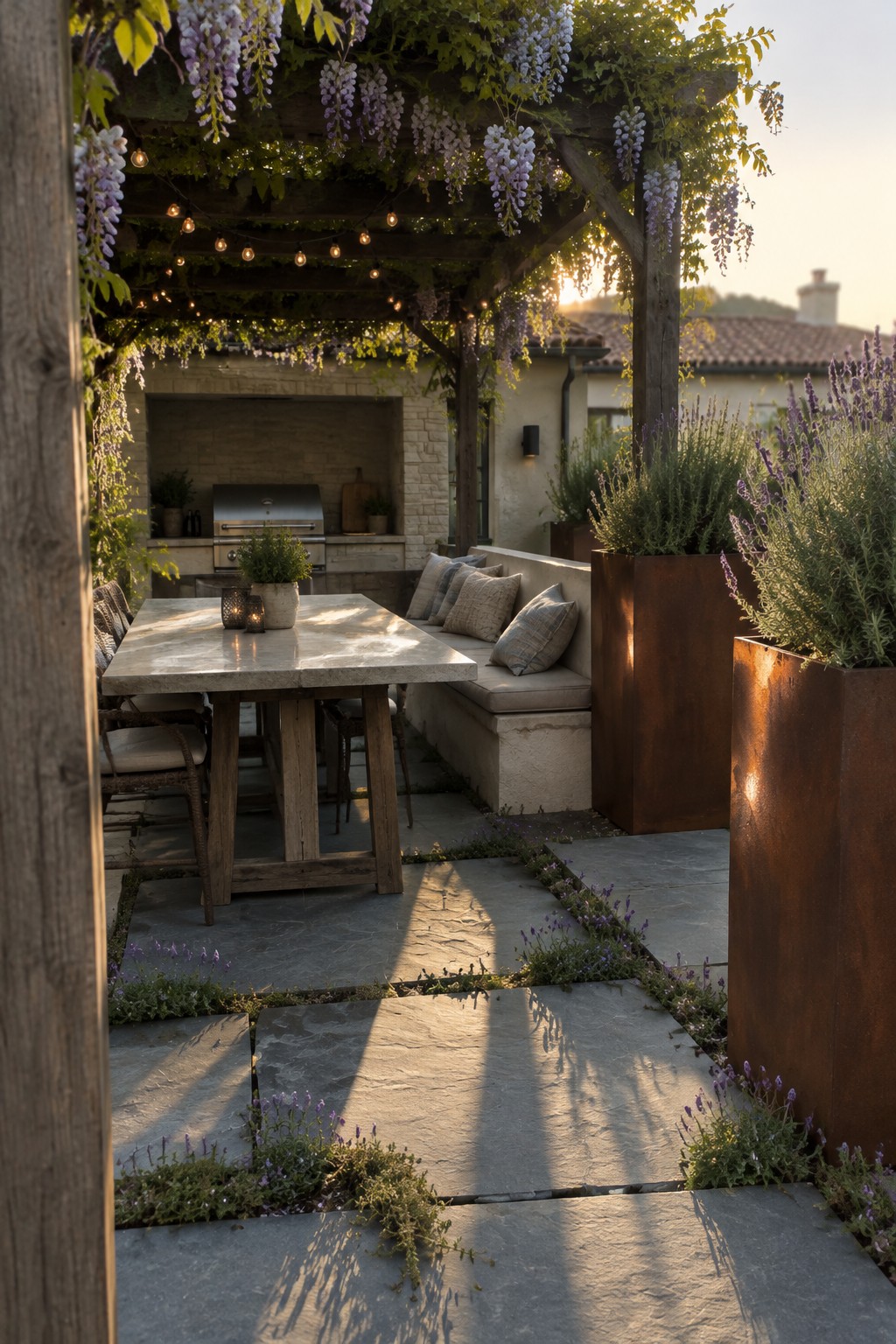
Lavender can do more than fill a flower bed. Planting it along the edges of a patio helps define the space while bringing color and fragrance close to where people sit and eat. It also suits sunny, dry gardens better than many thirstier flowers.
Use a low-growing variety beside paving or along a path, leaving enough room for plants to spread without crowding the walkway. Lavender prefers well-drained soil, so avoid planting it where water tends to collect.
Use Gravel Paths Through Lavender Beds
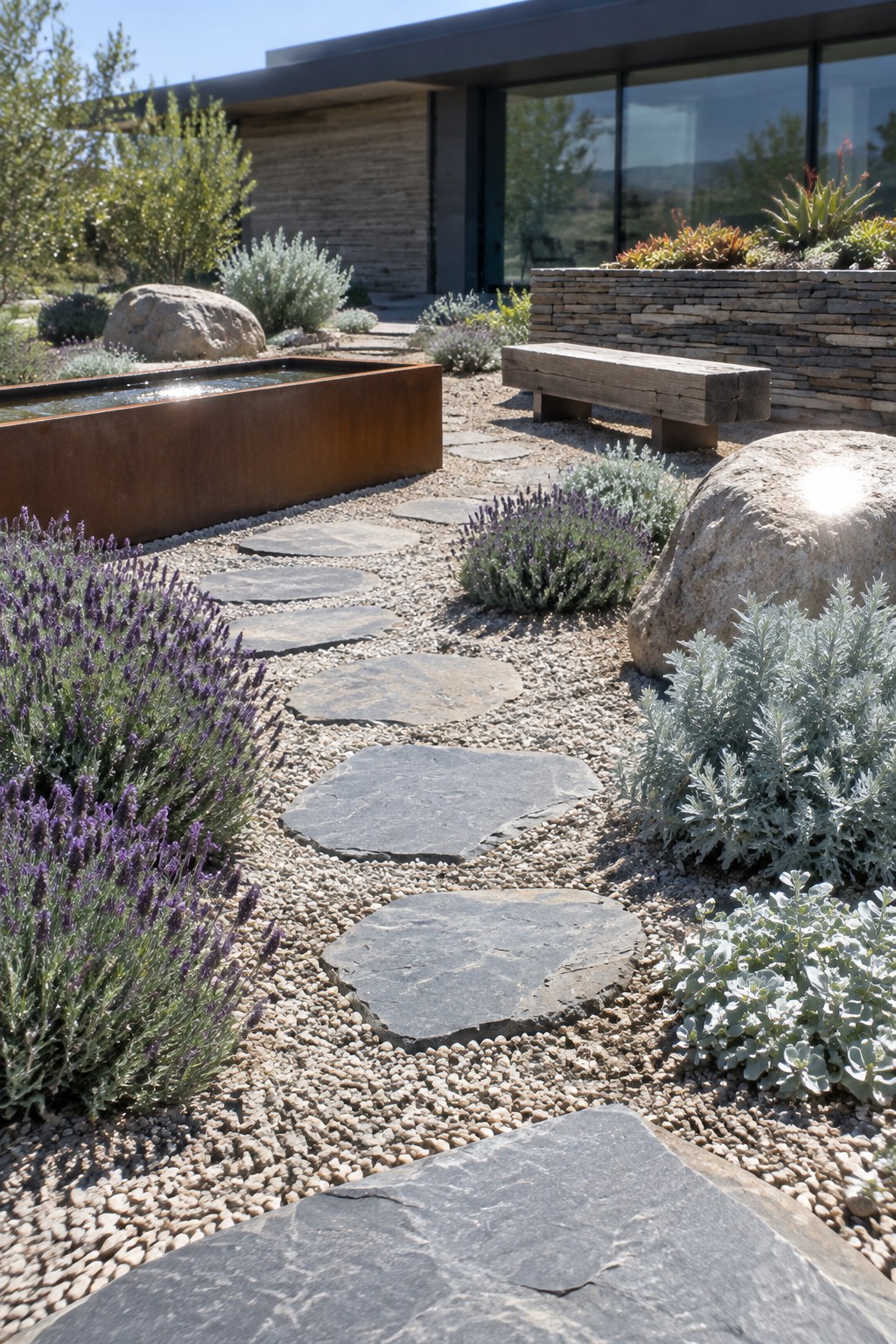
A simple stepping-stone path makes a dry garden easier to walk through while giving the planting a clear shape. Lavender suits this layout well, since it can grow along the edges without needing a lush, thirsty lawn.
Set the stones firmly into gravel and leave enough space for lavender to spread without covering the walking surface. This works especially well in sunny, low-water gardens, where a few plants beside the path can provide color without crowding it.
Use a Straight Path to Organize Lavender Beds
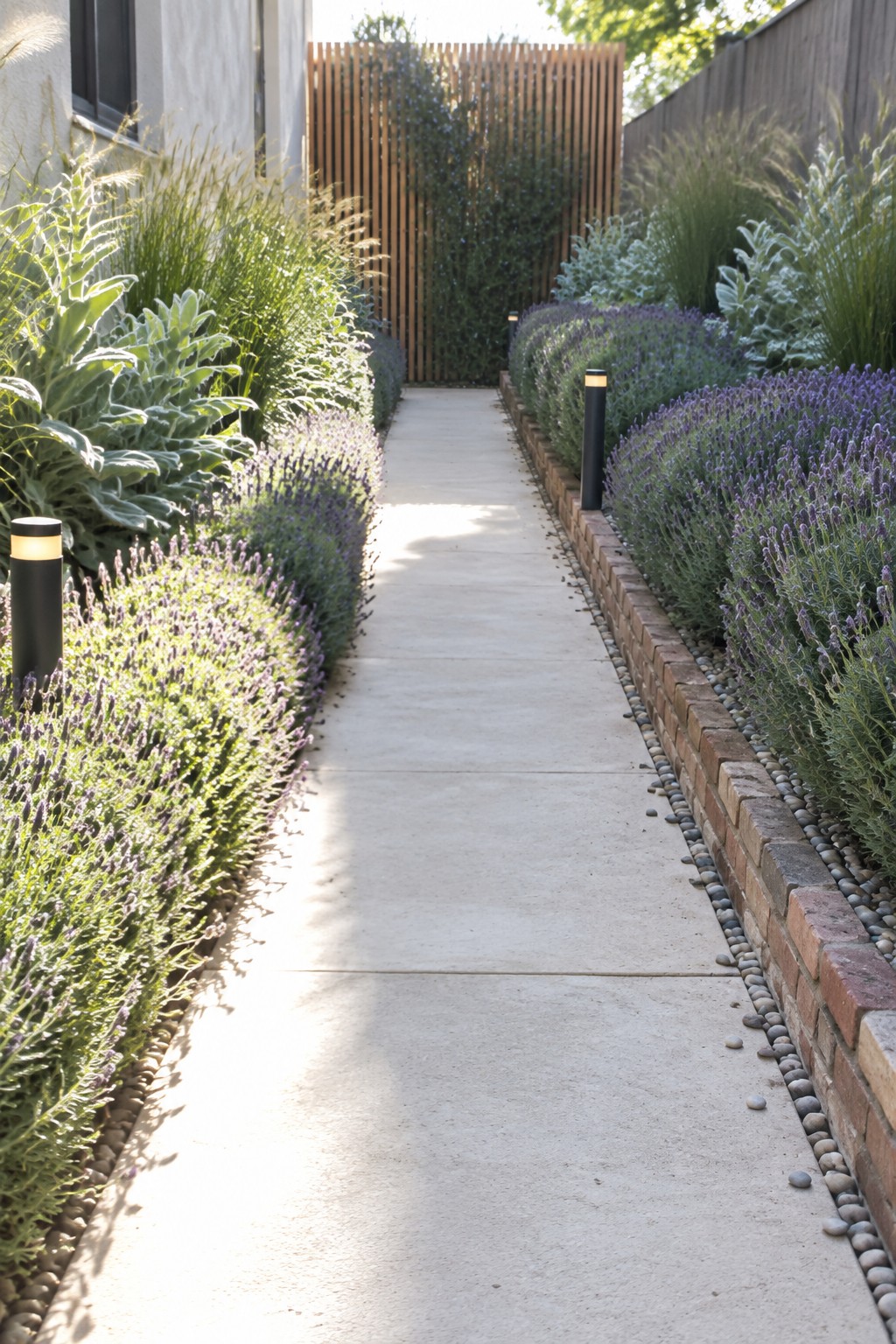
A straight walkway gives a narrow garden a clear route and keeps the planting beds easy to follow. Lavender along both sides makes the path feel settled without needing a complicated layout.
This approach works well in side yards and other sunny, dry spaces. Leave enough room for comfortable walking, and keep the lavender trimmed back so it does not spill onto the paving.
Use Stepping Stones to Lead Through Lavender Beds
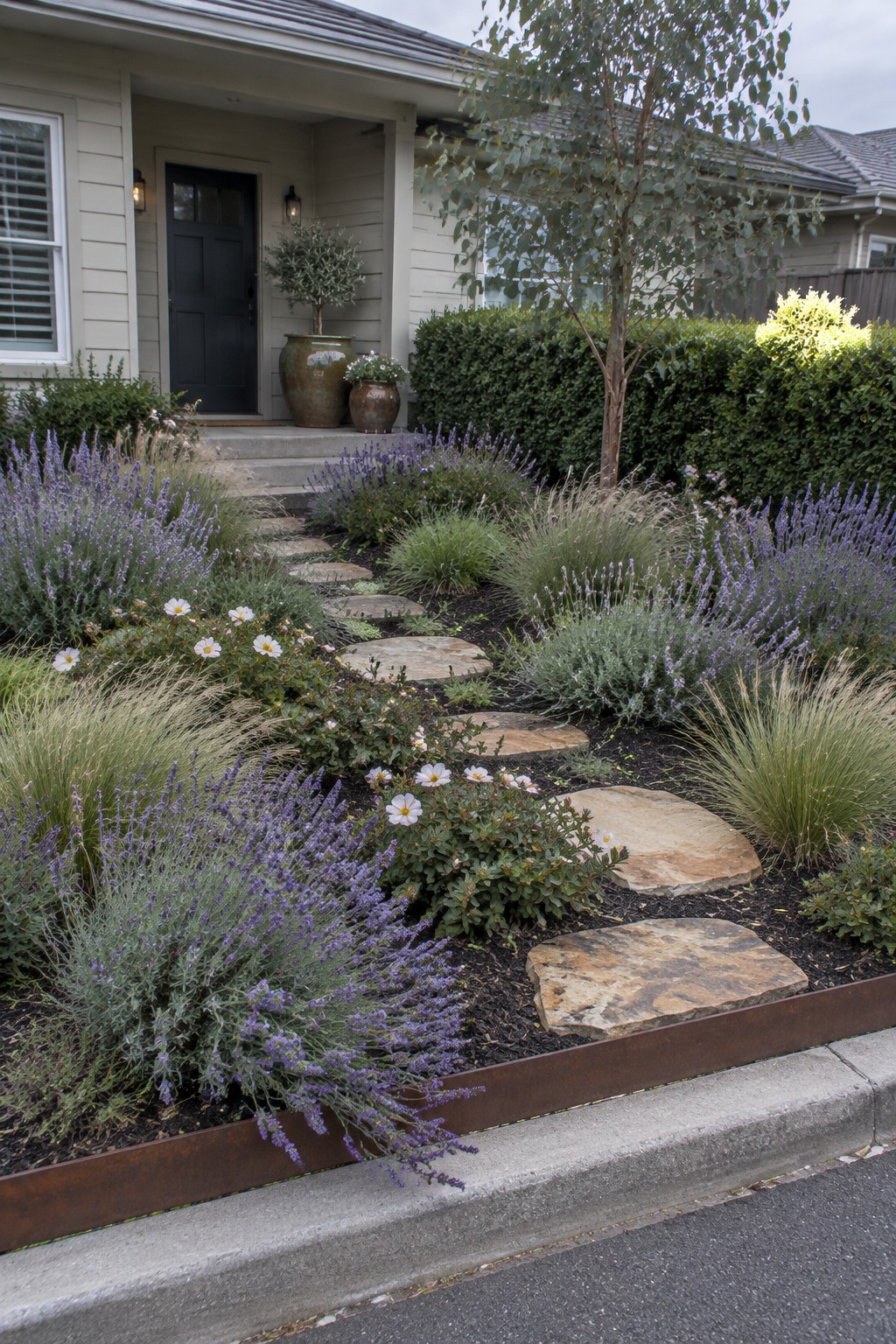
A stepping-stone path makes a planted front garden easier to walk through without giving up much room for flowers. The irregular stone shapes suit a relaxed planting style, while lavender along the route gives the path a clear edge.
Leave enough space between stones for comfortable steps, and set them securely so they do not wobble. This works well in a sunny, dry garden where you want a simple route to the front door without paving the whole bed.
Use Lavender Beds to Connect a Poolside Patio to the Garden

A few generous lavender beds can make a pool patio feel connected to the garden rather than set apart from it. The purple blooms and silvery foliage bring color to the edge of the paving, while the plants suit a sunny spot that drains well.
Plant lavender in gravelly soil beside a path or patio, leaving room for it to spread and for people to pass. It works especially well in dry gardens where you want a clear planting edge without needing thirsty plants.
Use Lavender Planters to Mark a Patio

Large terracotta planters make lavender easy to enjoy right beside a seating area. They add color and fragrance without requiring a dedicated garden bed, and they can help mark the edge of a patio.
Choose sturdy pots with drainage holes and use a free-draining potting mix, since lavender dislikes soggy roots. Place them where they’ll get plenty of sun, and leave enough room around the seating for people to move comfortably.
Use Wood Slices as Stepping Stones

Wood rounds set into a mulched garden path make a simple route through planting beds without covering the whole area in paving. They suit a relaxed garden where lavender and other low plants can grow close to the walkway.
Use thick, stable rounds and set them level so they are comfortable to step on. In a sunny, dry garden, keep lavender near the path edge, where it can be reached for trimming, and leave enough space for the wood to dry after rain.
Grow Lavender in Balcony Planters
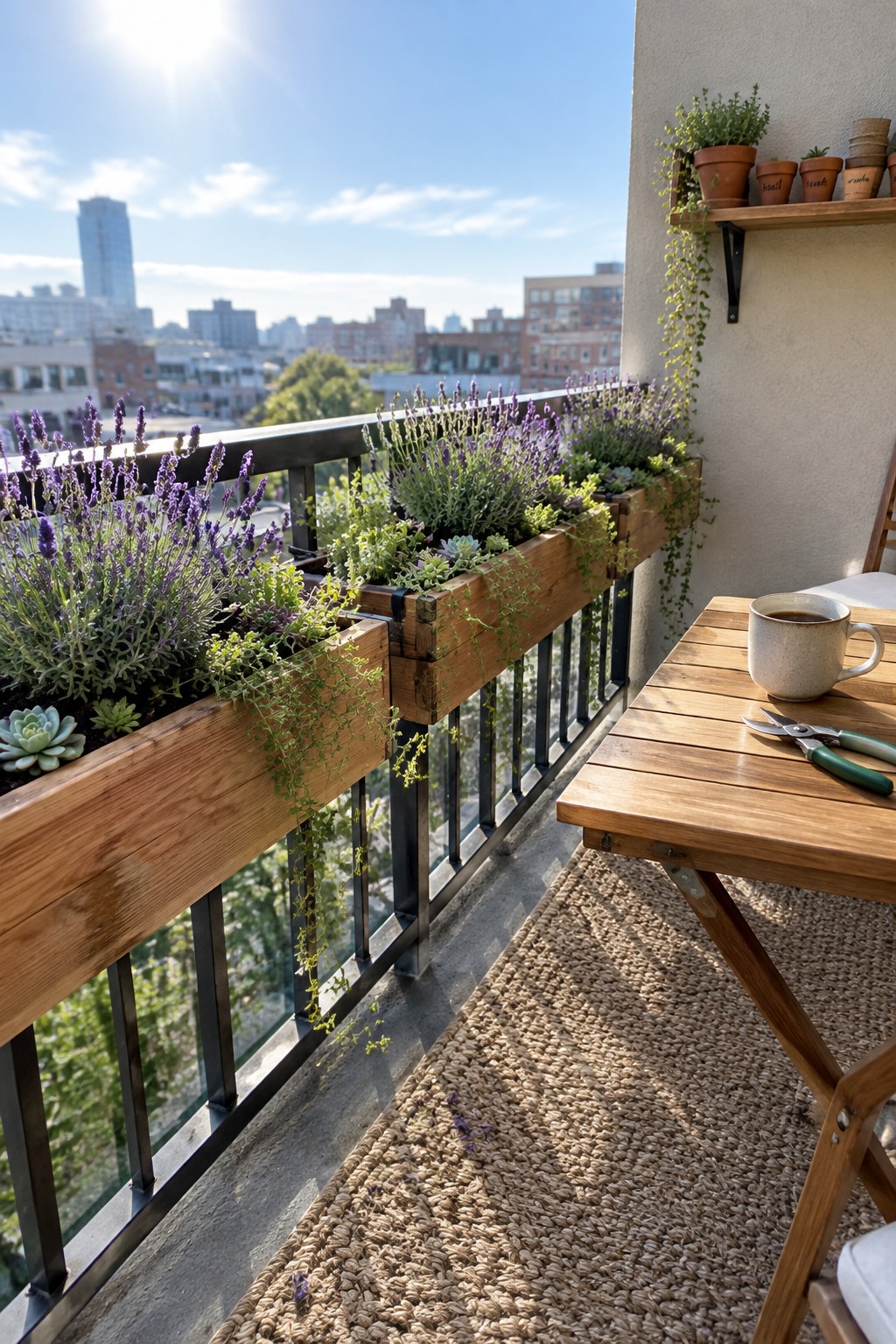
A sunny balcony can make a good home for lavender, even when there’s no room for a garden bed. Long railing planters give the plants space to spread while keeping their flowers close to where you sit.
Choose containers with drainage holes and use a free-draining potting mix, since lavender dislikes soggy roots. A wooden planter attached securely to the railing works well, but make sure it can handle the weight of the soil and mature plants.
Use Lavender to Shape a Gravel Garden Seating Area

Lavender beds can help define a small gravel garden without the need for a formal border. Planting them along the edge of a seating area gives the space a clear shape while keeping the layout open.
For a sunny, dry garden, use gravel as the main ground cover and group lavender near the edges, where it can spill slightly toward the path. A simple wooden bench beside the planting makes the area useful, but leave enough room to walk comfortably.
Add a Fountain as a Garden Focal Point

A small fountain can give a lavender garden a clear center without taking up much room. Its round basin breaks up the planting beds and gives the eye a place to rest among the flowers.
Use a low fountain in a sunny courtyard or enclosed garden, leaving enough space around it to tend the plants. A stone basin suits a traditional setting, but keep the surrounding planting simple so the water feature does not feel crowded.
Use Broad Stone Steps to Connect the Garden to the Entry
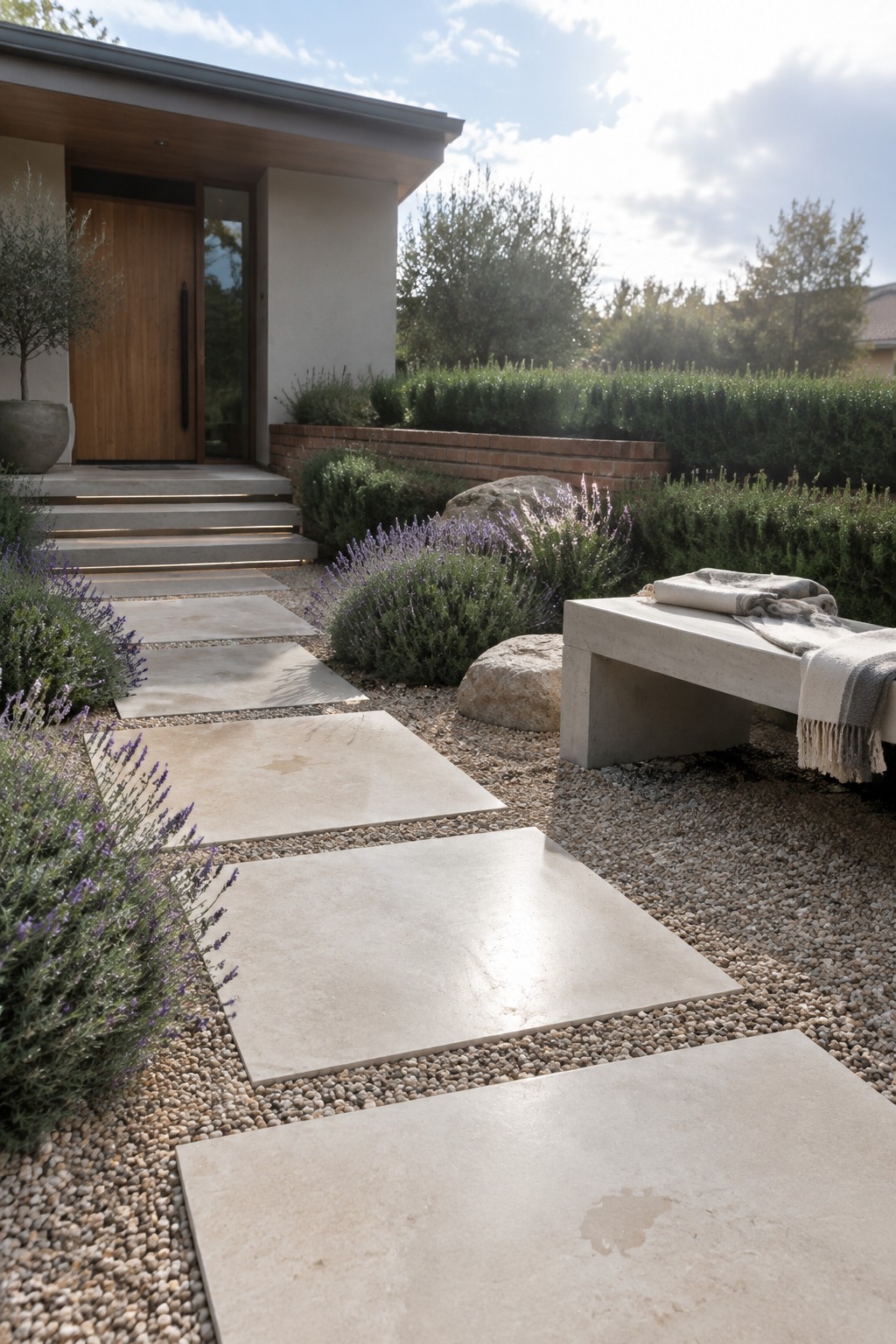
Large stone slabs make a practical path through a dry garden, and their generous size gives each step a clear place to land. Gravel between the slabs lets water drain rather than collecting along the walkway.
Use this approach for a sunny entry where lavender or other drought-tolerant plants can grow along the path. Leave enough space between plants and paving to keep the route easy to walk and the garden simple to maintain.
Use Raised Beds to Organize Lavender Planting

Raised beds give a lavender garden a clear shape and keep the planting separate from the path. Here, a long, low stone bed holds alternating bands of purple and silvery foliage, making the layout easy to follow.
This approach suits a narrow sunny garden where plants might otherwise spill into the walkway. Choose a free-draining soil mix and leave enough room for mature lavender to spread, so the bed stays tidy without crowding the plants.
Build a Lavender Garden Around a Simple Footbridge

A small wooden footbridge can make a sloped lavender garden easier to cross and give the path a clear destination. It also lets a dry garden feel connected without paving over the planting beds.
Use a bridge where a gravel or mulched path crosses a shallow dip, and keep the approach firm and stable. Lavender suits sunny, well-drained slopes, but leave enough room around the bridge for plants to grow without spilling onto the walking surface.
Use Raised Beds to Organize Lavender Planting

Raised wooden beds give lavender a clear structure and make it easier to keep the planting neat. They also suit sunny, dry gardens, where lavender benefits from well-drained soil rather than ground that stays damp.
Use this approach along a gravel path or in a small backyard where you want defined planting areas. Keep the beds wide enough for mature plants, and leave room between them for easy access and airflow.
Frequently Asked Questions
Q: Will lavender grow in heavy clay soil?
A: Lavender struggles when clay stays wet, especially through winter. Plant it on a raised mound or in a gravelly bed so rain can drain away quickly.
Q: How often should I water lavender in a sunny garden?
A: Water new plants when the soil begins to dry out while they settle in. Once established, lavender usually needs little extra water, even in a dry summer.
Q: Can I plant lavender beside roses?
A: Yes, as long as both plants get plenty of sun and the soil drains well. Give them room for airflow, and avoid watering lavender as often as roses if the soil stays moist.
Q: When should I prune lavender so it stays compact?
A: Trim it lightly after the flowers fade, cutting back the green growth but not into the old, woody stems. That keeps the plant neat without making it harder to bounce back.
