

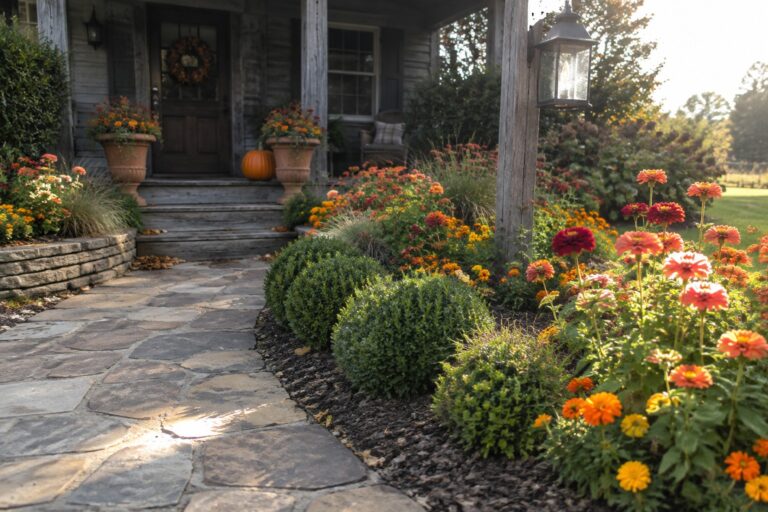
Fall beds can look tired once summer flowers fade, but zinnias and marigolds keep color going well into cooler weather.
I find they work best when their heights and colors are planned around the bed’s shape, rather than planted in a jumble.
A taller row near a fence or wall can add structure, while shorter blooms along the edge keep the planting from feeling crowded.
The first thing people tend to notice is the sweep of color, but clear borders and a path nearby help the whole garden feel intentional.
I’d save a few of these layouts to adapt to the light, space, and flowers already growing in your yard.
Plant Zinnias and Marigolds Along a Garden Path
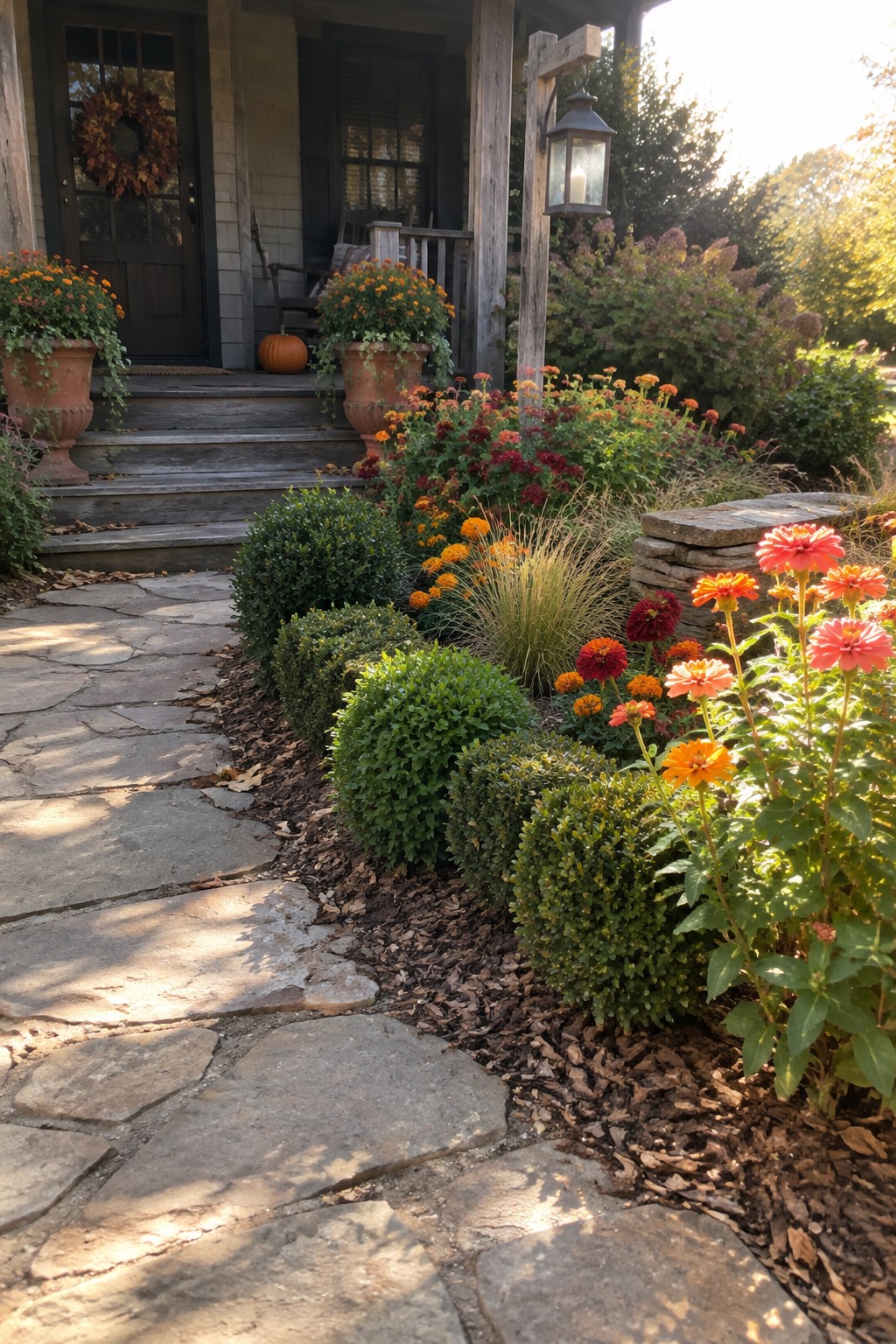
A flower bed beside a path is an easy way to make a walk to the front door feel more cheerful. Zinnias and marigolds bring plenty of color, while rounded shrubs and ornamental grasses give the planting a little structure between blooms.
Keep taller flowers toward the back of the bed and shorter plants near the path, so the walkway stays clear. This arrangement suits cottage-style entries and works well along a curved stone path, but leave enough room for the flowers to spread.
Plant Zinnias and Marigolds Along a Garden Path

A narrow flower bed can make a walkway feel cheerful without taking up much yard space. Planting zinnias and marigolds in loose groups gives the path a lively edge, while a simple timber border keeps the flowers from spreading onto the pavement.
This approach works well beside a house or along a side yard. Leave enough room for the plants to grow and for people to pass comfortably, and mix in a few taller flowers toward the back for variety.
Use A Curving Path Through The Flower Bed

A simple path through a flower bed makes it easier to enjoy the planting and reach each area for care. Here, stepping stones wind beside beds of zinnias and marigolds, giving the garden a clear route without taking space away from the flowers.
Use this idea in a small backyard or along the edge of a larger bed. Set the stones far enough apart for a comfortable stride, and leave room for plants to spread so the path stays easy to use.
Layer Zinnias and Marigolds Along a Garden Path

A stone path can make a flower bed feel like part of the way through the garden, rather than a border you only look at. Zinnias and marigolds suit this arrangement well because their bright blooms bring color close to the path.
Plant taller zinnias toward the back of the bed and keep marigolds nearer the edge, where they are easy to see and tend. Leave enough room for the flowers to spread without covering the stepping stones.
Use Flower Beds to Lead the Way to the Door
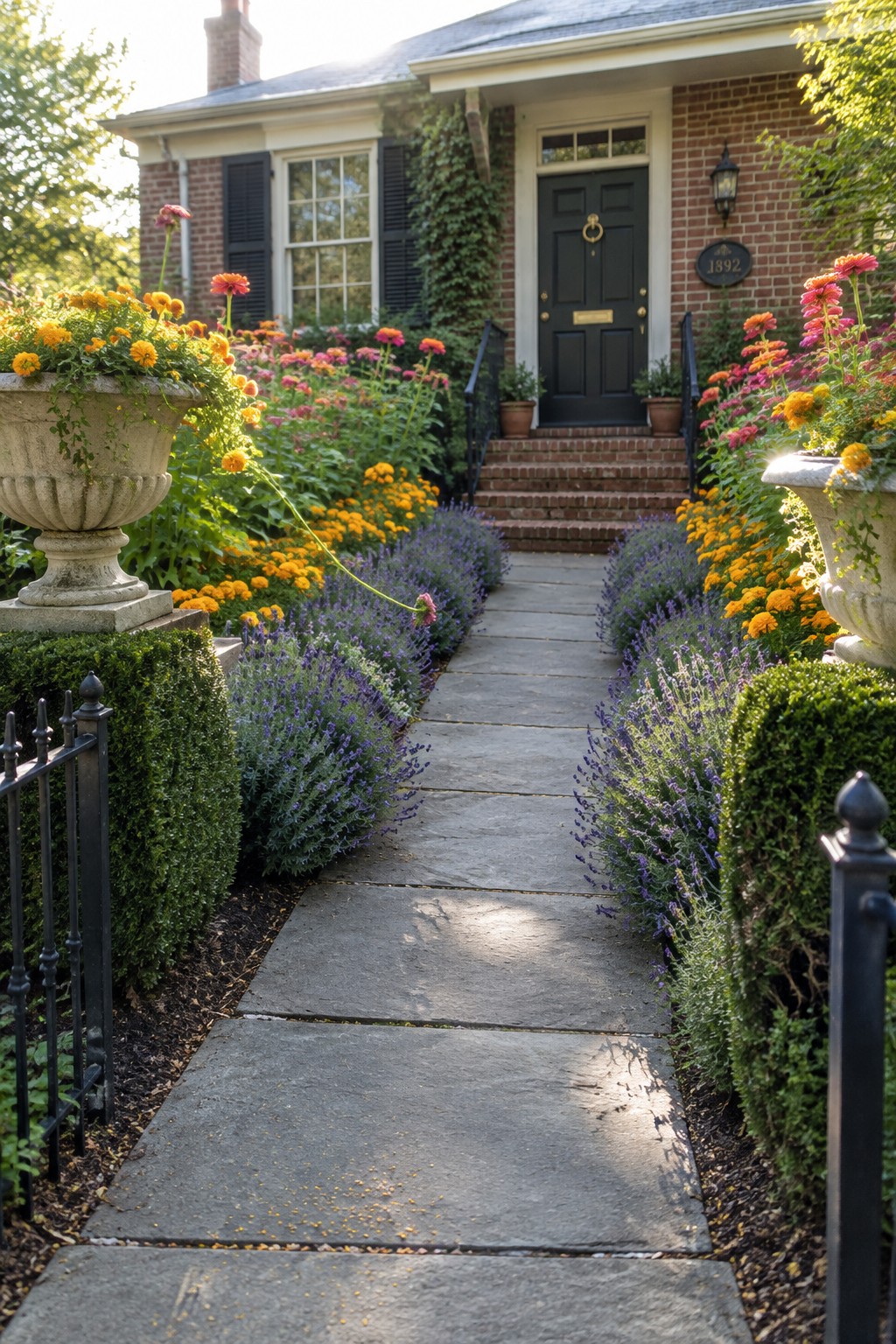
A straight garden path feels more welcoming when flower beds run alongside it. Zinnias and marigolds add bright color near the entrance, while lower purple plants can define the path’s edge without hiding the blooms.
This approach suits a front walk with enough room for planting on both sides. Keep flowers from spilling onto the paving, and leave space for a clear route to the steps.
Use Rusted Steel Edging for a Flower Bed
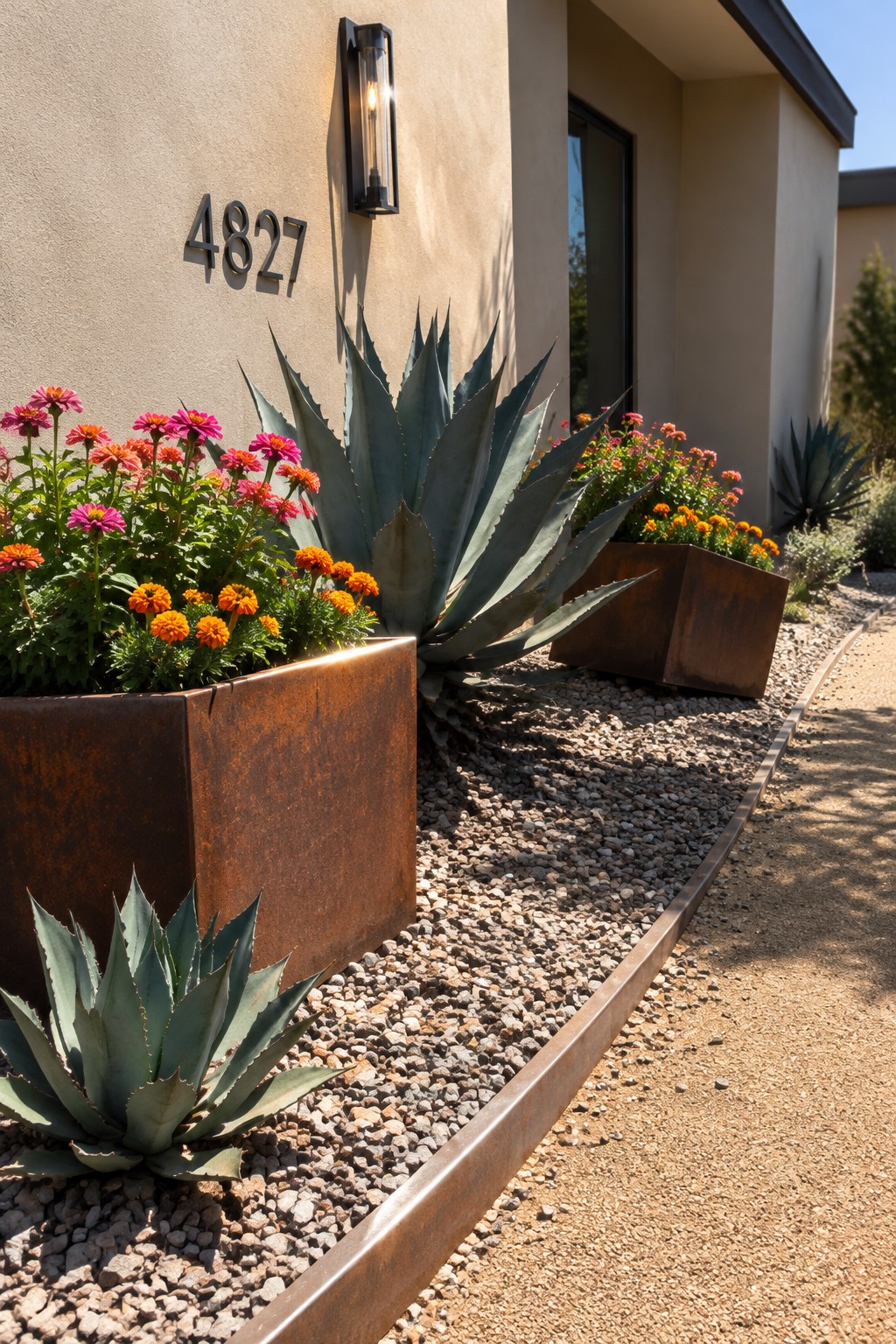
Rusted steel edging gives a flower bed a clear shape and keeps gravel from spilling onto nearby paths. Its earthy color also sits comfortably beside bright zinnias and marigolds without competing with them.
Use it to outline a front-yard bed or separate a gravel planting area from a walkway. Keep the edge low and smooth along curves so it’s easy to maintain and doesn’t make the bed feel boxed in.
Layer Flowers Along a Rustic Fence
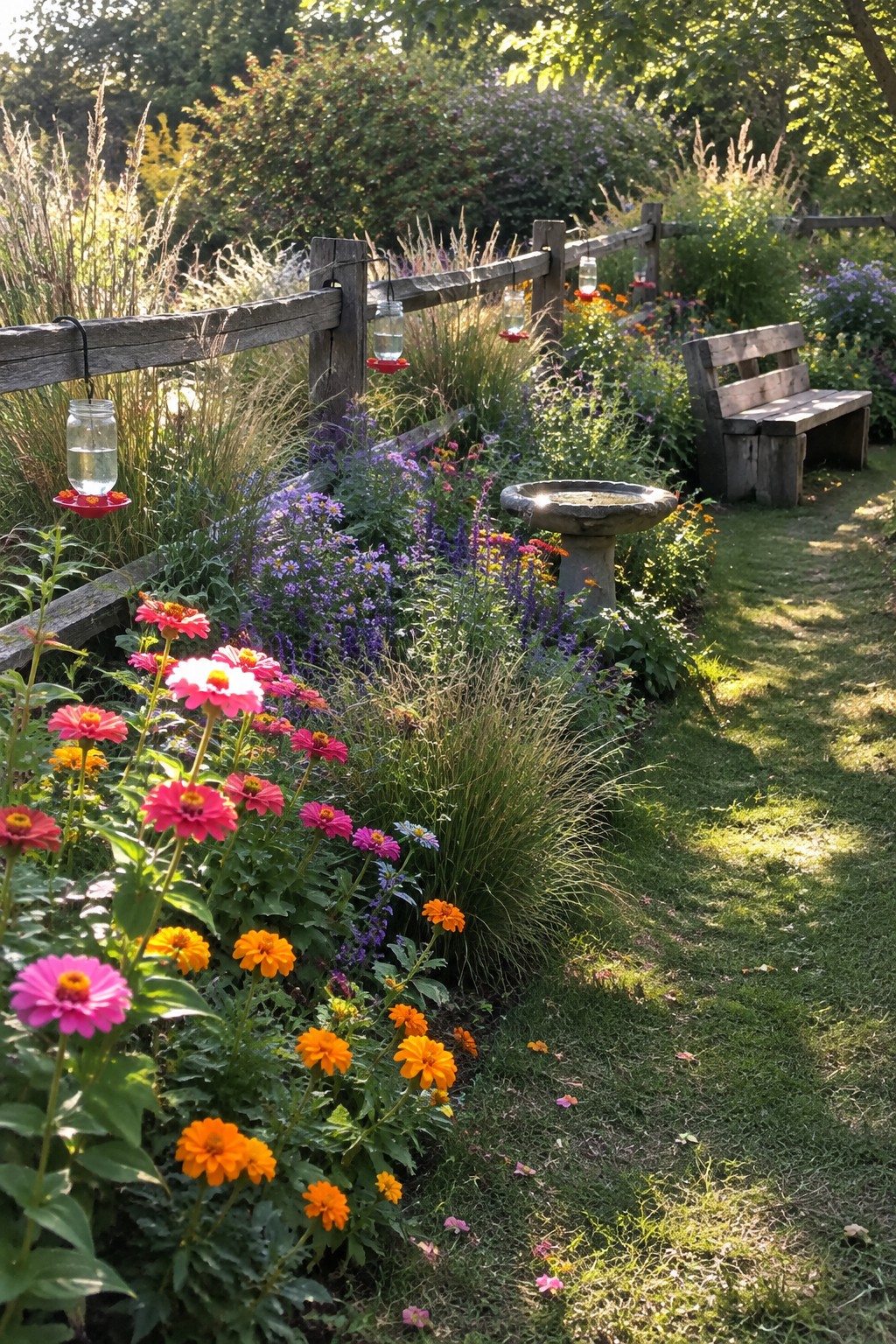
A fence-side flower bed is a simple way to give zinnias and marigolds room to spread while keeping the garden edge defined. Taller ornamental grasses and flowers can sit toward the back, with shorter blooms near the front.
This layout works well along a boundary fence or beside a lawn. Leave enough space to reach the plants for deadheading, and keep the front edge low so the flowers don’t spill across the walking area.
Grow Zinnias and Marigolds in Patio Pots

Growing zinnias and marigolds in containers is a handy way to bring bright flowers close to an outdoor seating area. A few terracotta pots can keep the blooms easy to see and make them simple to move if the patio layout changes.
Choose pots with drainage holes and enough room for the plants to grow. Set them near a table or along the patio edge, but leave a clear path for walking and chairs.
Use Stepping Stones to Break Up a Flower Bed
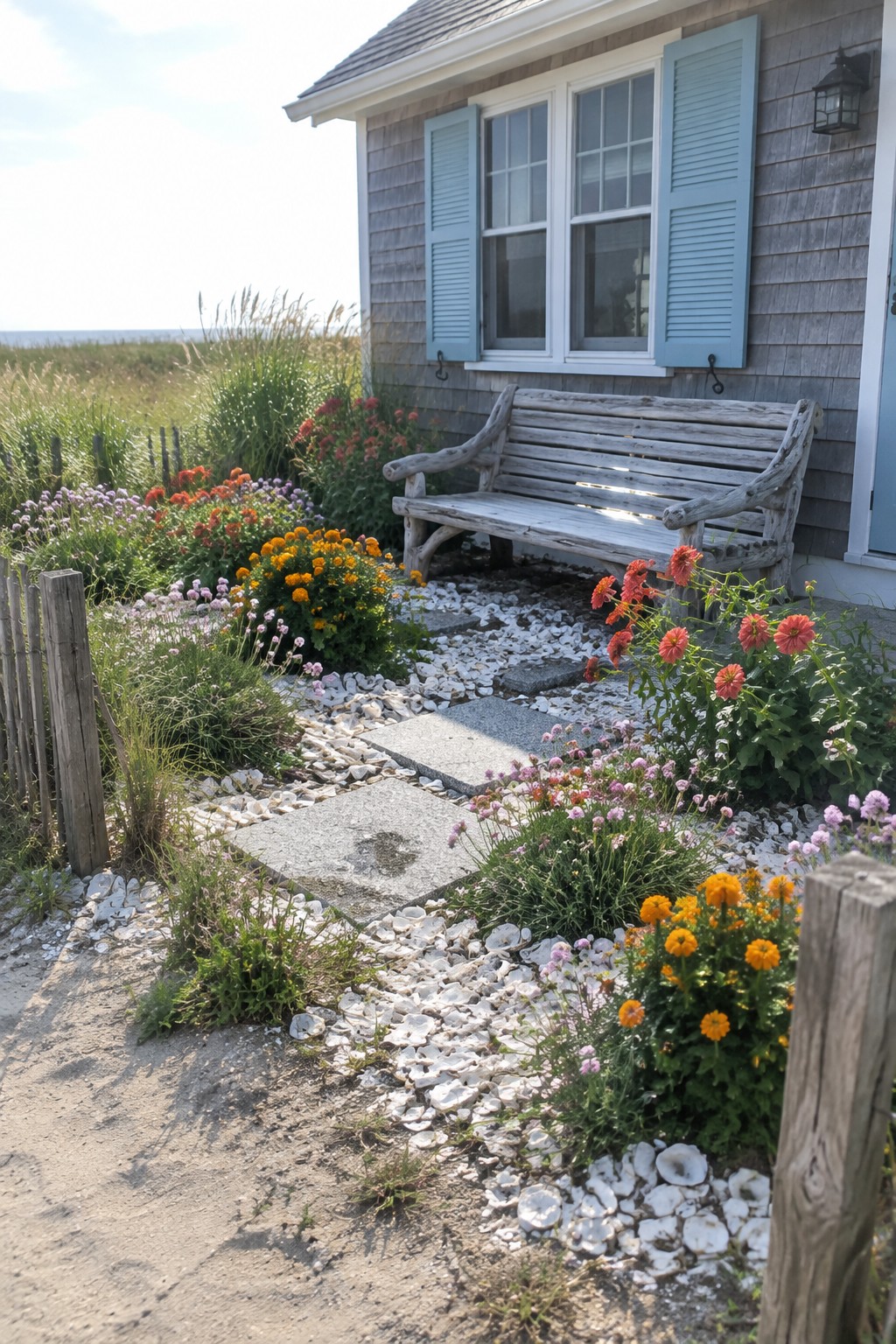
A few broad stepping stones can make a flower bed easier to walk through without taking away from the planting. They give the garden a clear route and leave room for zinnias and marigolds to grow along the edges.
This works well in a cottage-style yard or beside a beach house, especially where a gravel path would feel too wide. Set the stones firmly and leave enough space between them for a comfortable stride.
Use Raised Flower Beds to Define an Entry
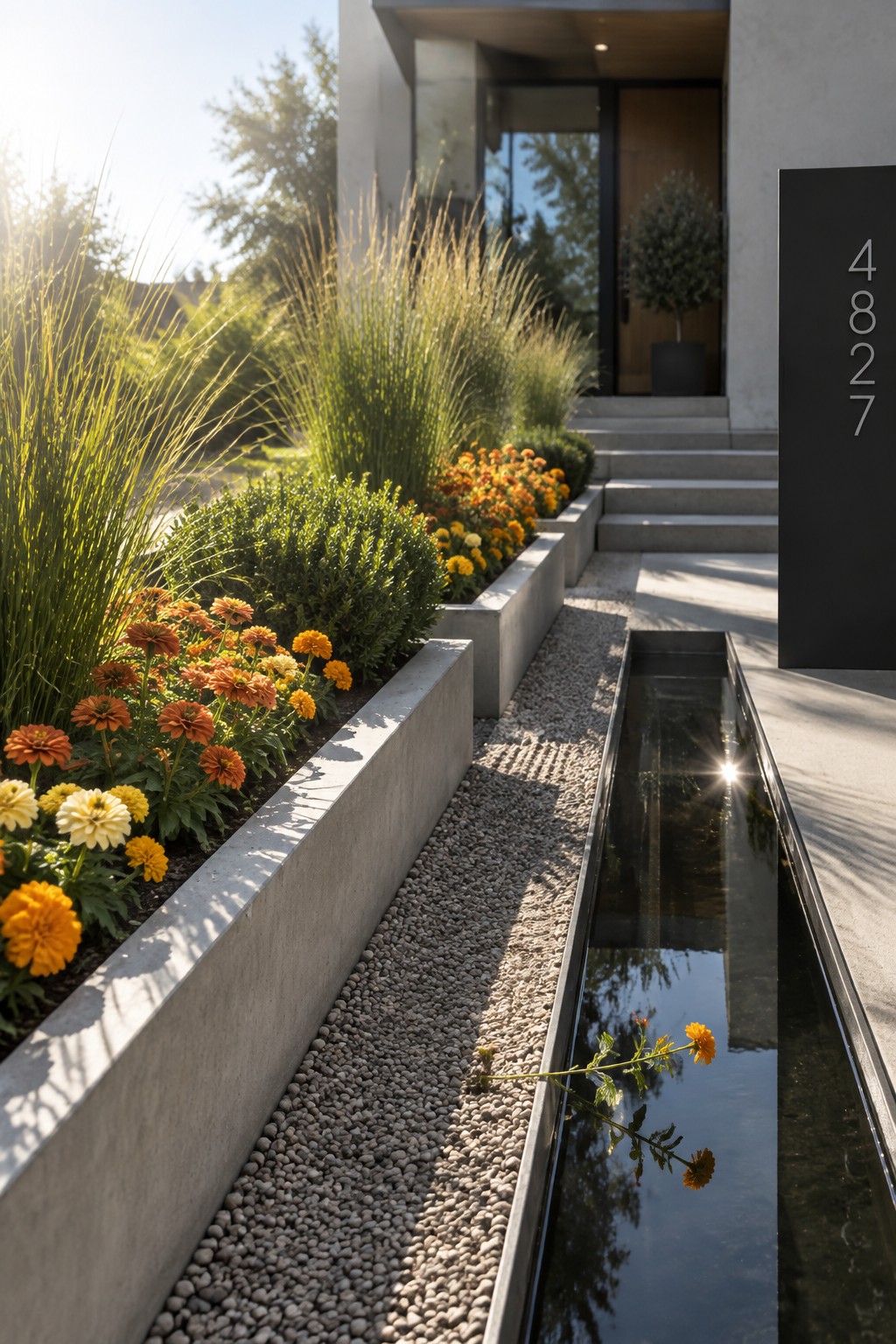
Raised concrete beds give zinnias and marigolds a clear place to grow while keeping the entry planting tidy. The tall grasses add height behind the flowers, so the bed has more than one layer without needing a complicated layout.
This approach works well beside steps or a front walk, especially where the ground slopes or needs a clean edge. Keep the flowers near the front for easy viewing, and leave enough room between the bed and walkway to pass comfortably.
Add a Flower Bed Along the Patio
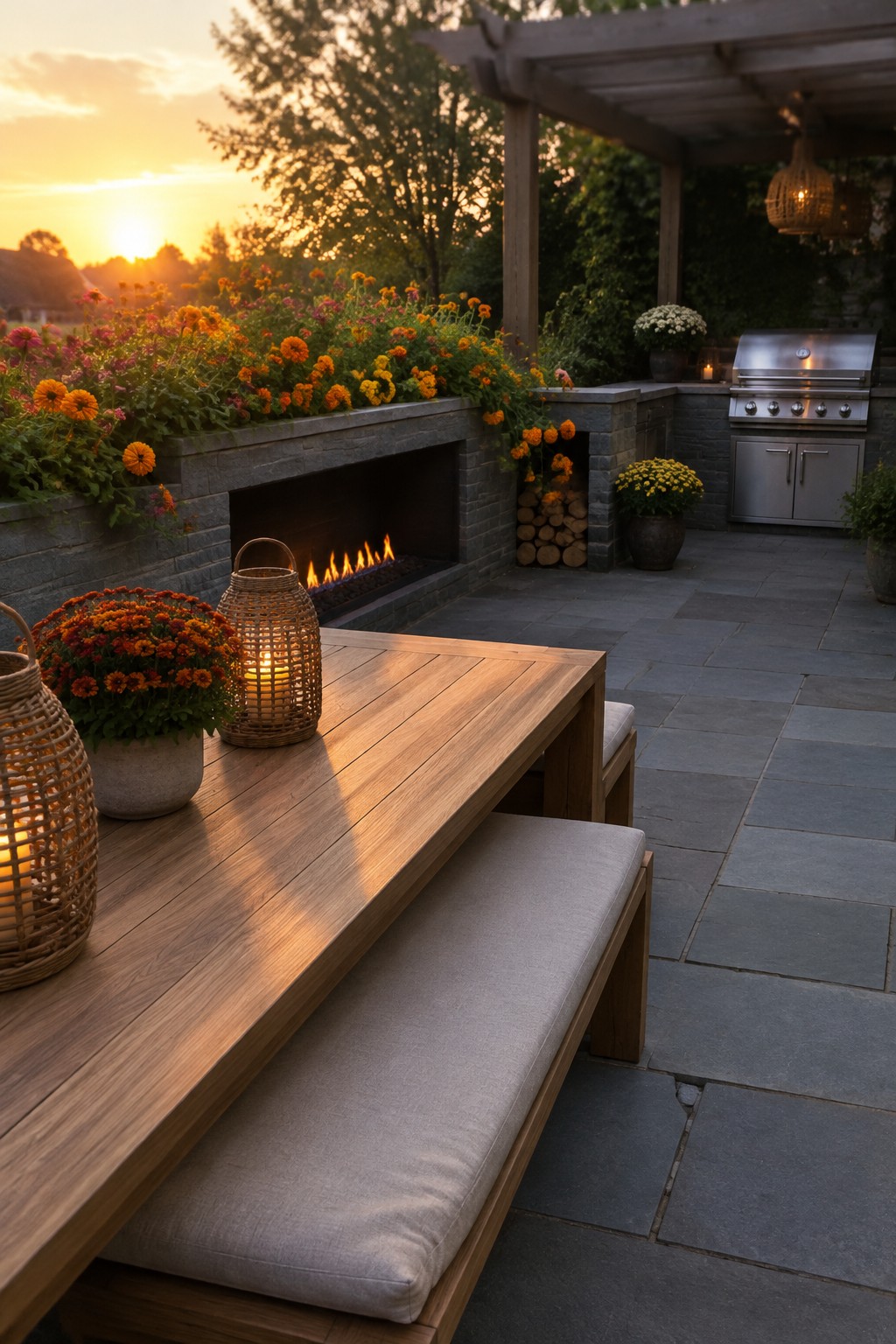
A raised flower bed can bring zinnias and marigolds right beside an outdoor dining area, so the flowers feel like part of the space rather than a separate garden. The stone edge also gives the bed a tidy shape and keeps soil away from the patio.
This works well along a patio wall or seating area where there’s room for a deep bed. Plant taller flowers toward the back and shorter ones near the edge, and leave enough space for people to move comfortably around the table.
Build Terraced Flower Beds With Stone Walls

Terraced beds make it easier to grow zinnias and marigolds on a slope. Low stone walls hold the soil in place and give each row of flowers room to show.
Use this approach on a sloped yard where a flat bed would be difficult to maintain. Plant taller flowers toward the back of each terrace, and leave enough space to reach in for deadheading and watering.
Use a Mulch Path to Separate Flower Beds
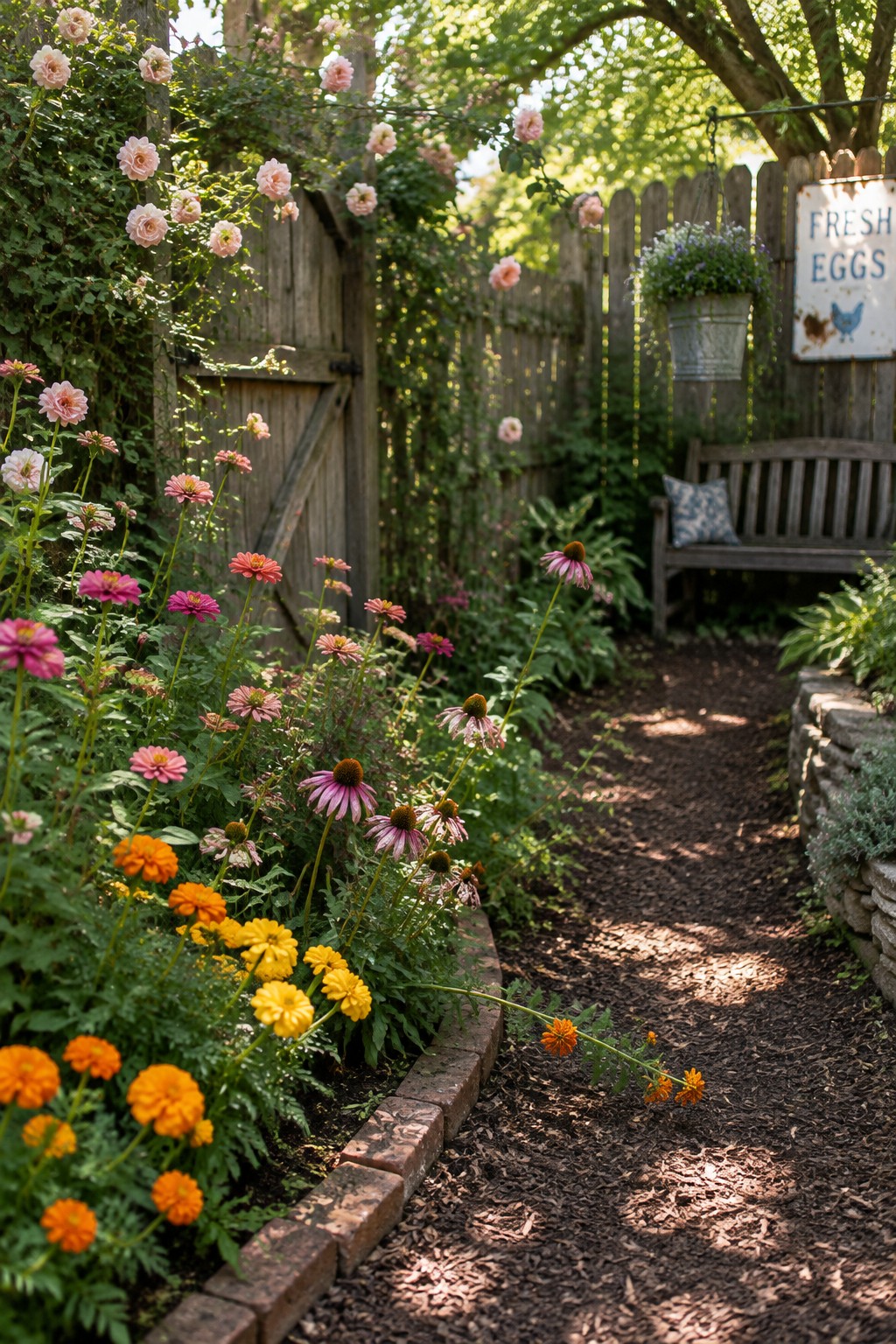
A simple mulch path gives a flower bed a clear shape and makes it easier to walk through and tend. Here, the path runs beside a brick-edged bed of zinnias and marigolds, keeping the planting contained without making the garden feel formal.
This approach works well in a cottage garden or a narrow side yard. Keep the path wide enough to pass through comfortably, and refresh the mulch as it settles so the route stays easy to use.
Add a Flower Bed Along the Pool
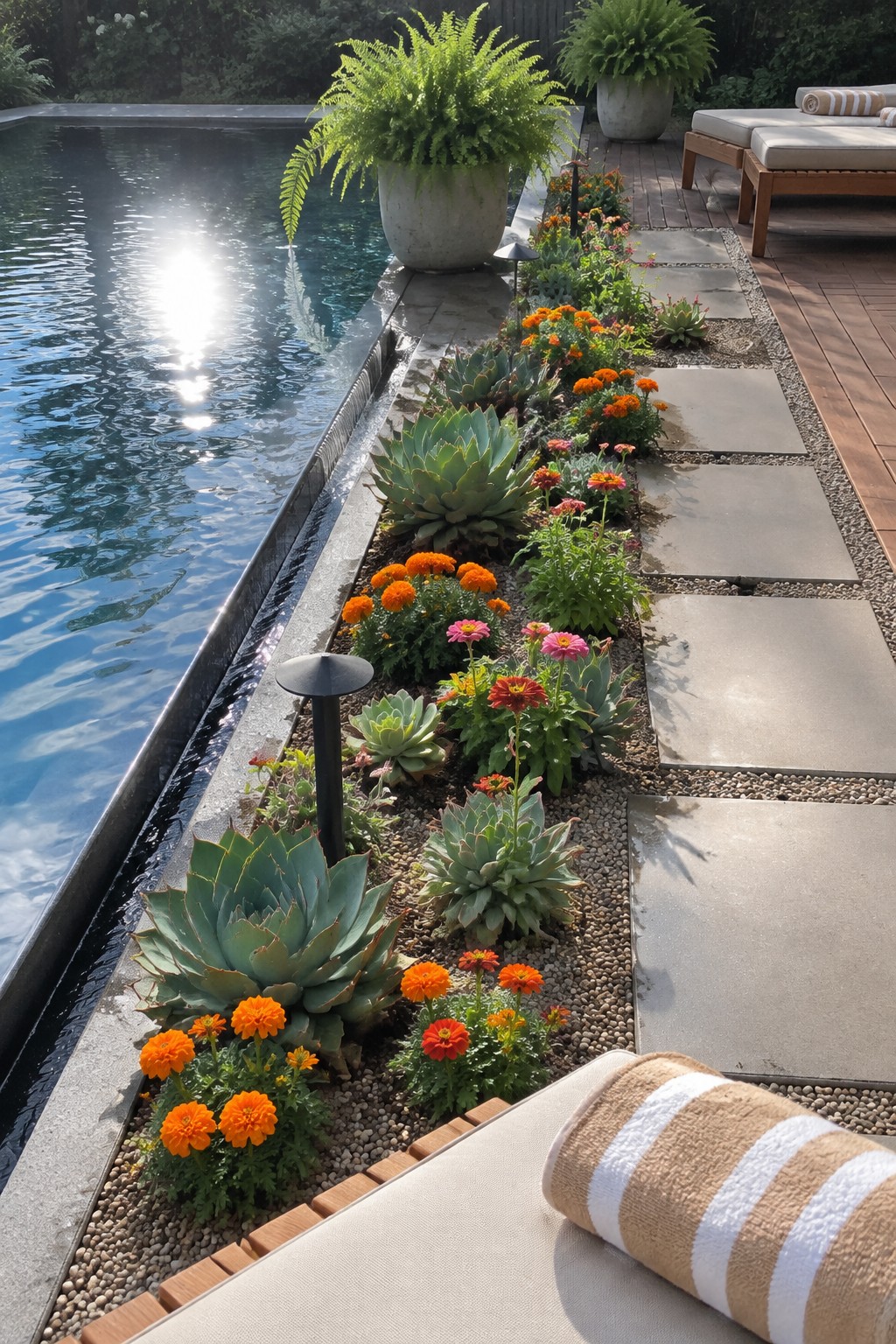
A narrow flower bed can make a pool edge feel more garden-like without taking up much room. Zinnias and marigolds bring bright color beside the water, while larger succulents give the planting a steady shape between blooms.
Keep the bed slim so it does not crowd the pool or block the walking route. This works well along a patio or terrace, especially when gravel or stone edging helps keep soil out of the water.
Use Brick Edging to Define a Flower Bed
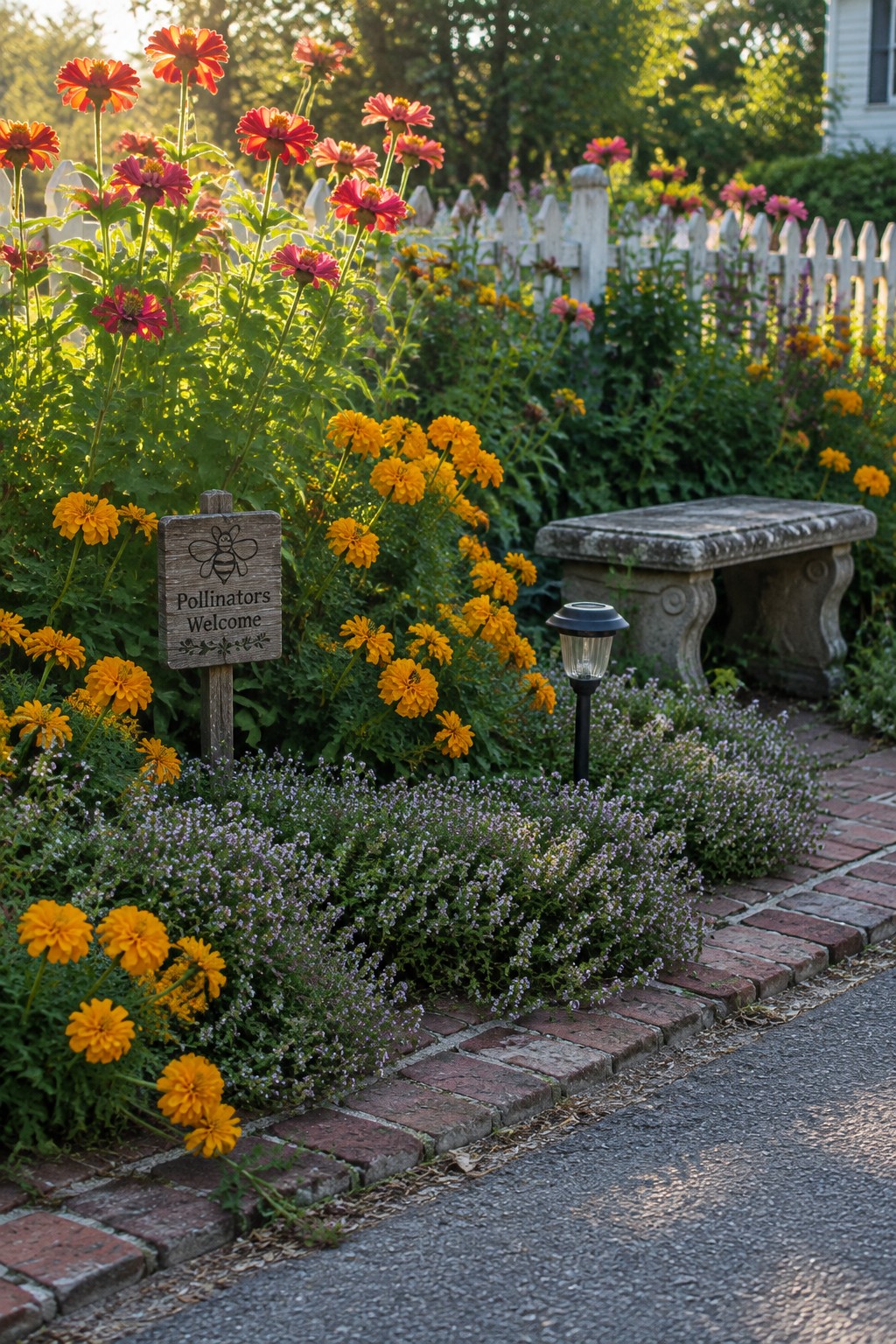
A simple brick edge gives a flower bed a clear shape and keeps it visually separate from the path. It also suits a relaxed cottage garden, where the edging can look a little weathered rather than perfectly new.
Use reclaimed bricks to mark a curved bed beside a walkway, setting them low so they do not compete with the flowers. Zinnias and marigolds can fill the bed behind the edge, with shorter plants near the bricks.
Use Raised Beds for a Community Flower Garden

Raised beds make it easier to give zinnias and marigolds their own clear place in a shared garden. The metal sides keep the planting area neat, while simple labels help visitors see what is growing.
This setup works well in community gardens or smaller yards where you want flowers organized and easy to reach. Leave a comfortable path between beds so people can tend the plants without stepping into the soil.
Frequently Asked Questions
Q: When should I plant zinnias and marigolds for a fall flower bed?
A: Plant them in late summer while the soil is still warm, and check the seed packet or plant tag for how long they need to bloom. If your first frost is close, choose young plants instead of seeds so you can enjoy flowers sooner.
Q: Will zinnias and marigolds bloom after the first frost?
A: They’re warm-weather flowers, so frost usually ends their show. If a chilly night is forecast, cover the bed before sunset and uncover it in the morning, but don’t count on covers to protect them through a hard freeze.
Q: How can I keep the bed looking full as flowers fade?
A: Snip off spent blooms every few days to encourage fresh flowers. Planting a few marigolds around taller zinnias also fills the front of the bed and keeps the color going as individual blooms come and go.
Q: Can I grow zinnias and marigolds in containers for fall color?
A: Yes. Use pots with drainage holes and place them where the flowers get plenty of sun. Check the soil often, since containers dry out faster than garden beds.
