


Dahlias and zinnias bring strong color to a summer garden, but they look best when their height, spacing, and bloom times work together.
I like to place taller dahlias where they can anchor a bed, then use zinnias along the front or beside a path to soften the edges.
The layout matters as much as the flowers, since clear paths and well-defined borders help a colorful planting feel considered rather than crowded.
Small choices, such as repeating one color or leaving room between clumps, can make the garden easier to tend as the plants fill out.
The ideas ahead offer practical ways to adapt these blooms to different beds and yard layouts.
Use a Curved Brick Edge for a Flower Bed
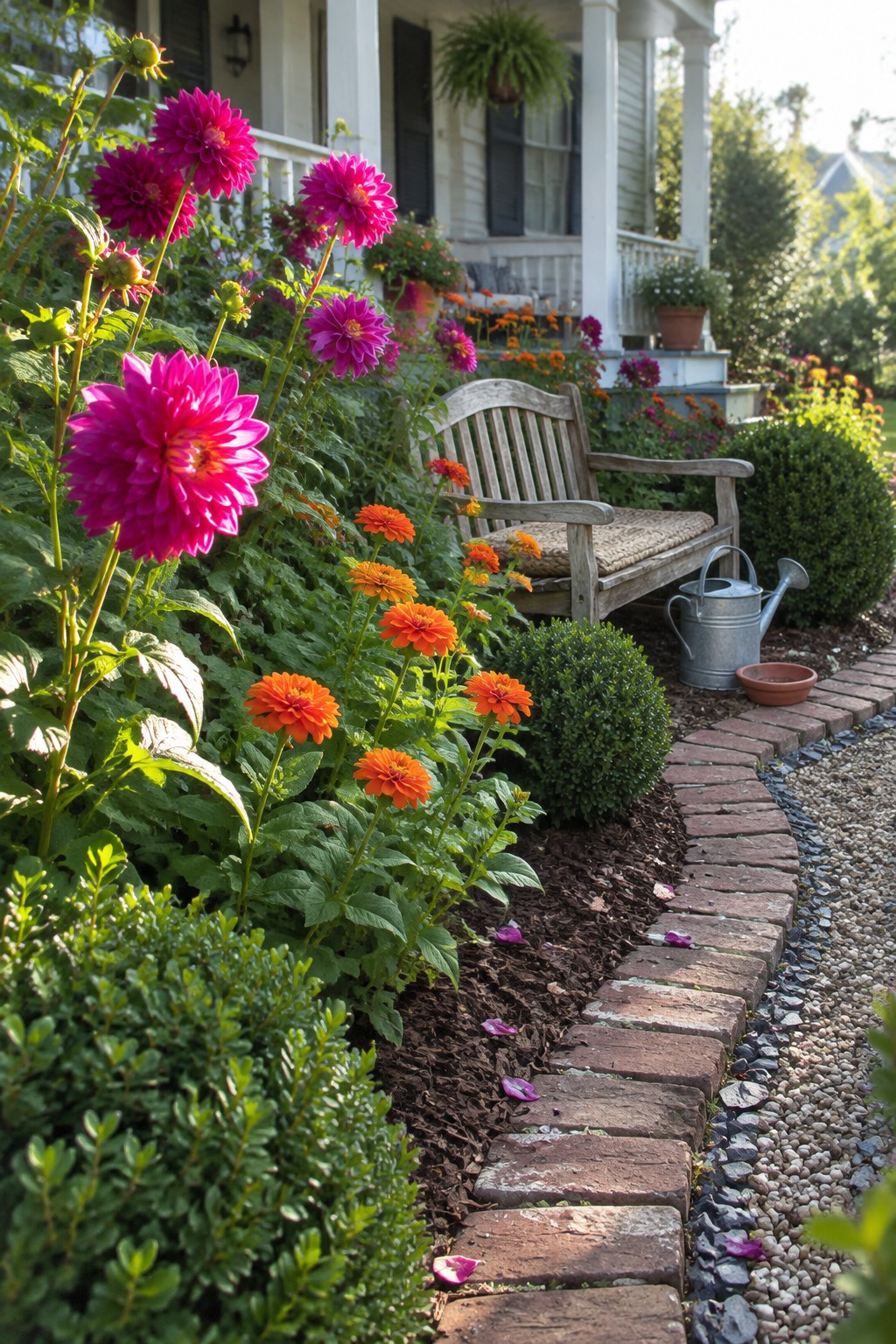
A curved brick border gives a flower bed a clear shape without making it feel too formal. It also keeps the planting separate from the gravel path, so the edge is easy to see and maintain.
This approach works well in a front garden or along a walkway. Set the bricks securely and keep the curve gentle, then plant dahlias and zinnias in generous clusters behind it. That leaves room for the flowers to grow without crowding the path.
Use A Mulched Path To Organize Flower Beds
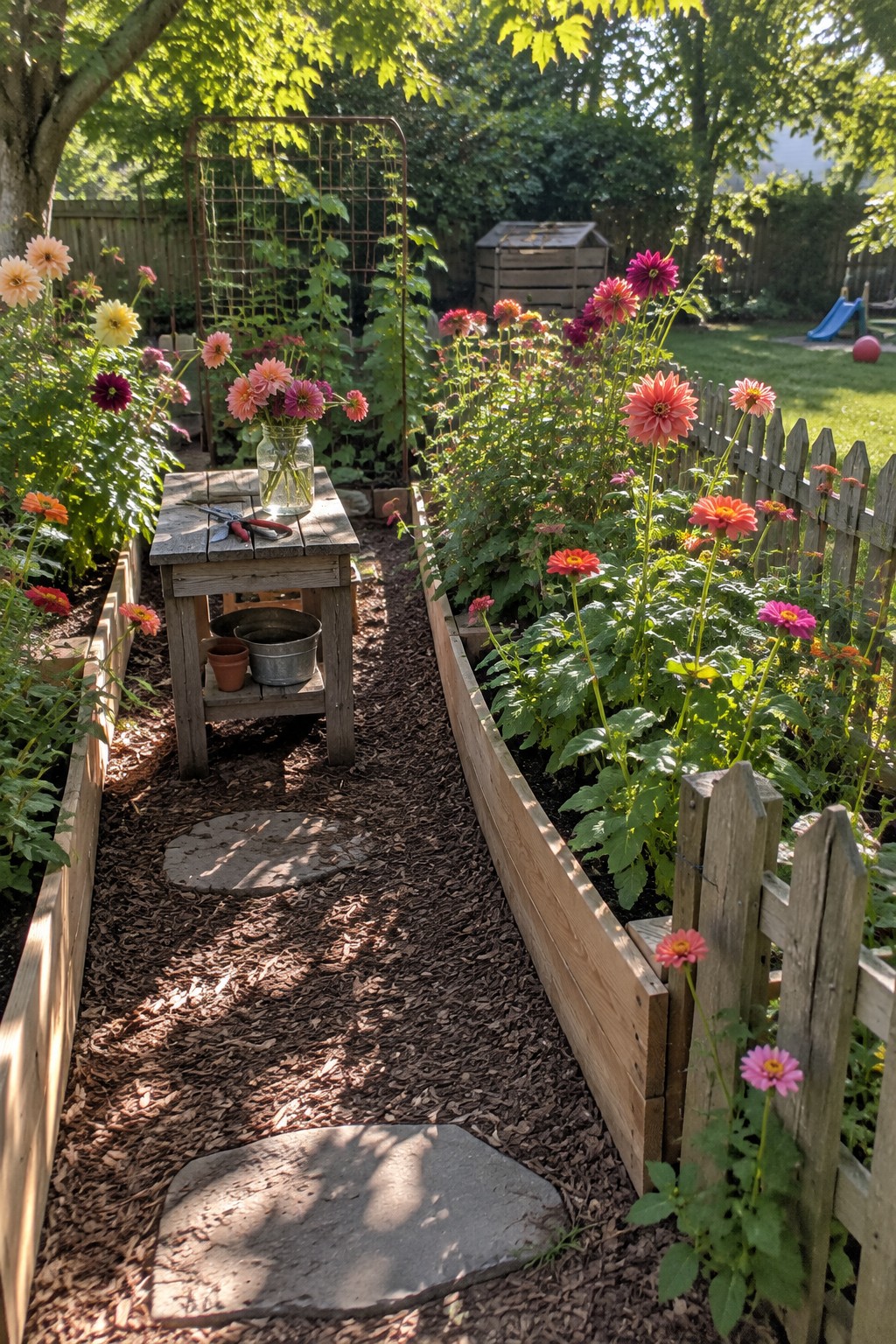
A simple path through the garden makes flower beds easier to reach and gives the planting a clear shape. Here, wood-chip mulch keeps the route informal, while raised beds help contain the flowers.
This approach works well in a backyard where you want to tend plants without stepping into the beds. Keep the path wide enough for a wheelbarrow, and use sturdy edging so mulch stays in place.
Use Stone Steppers to Guide a Flower Garden Path

A stepping-stone path gives a narrow garden a clear route without covering it in solid paving. The open gravel around each stone keeps the walkway informal, while dahlias and other flowers can grow close by.
This approach works well in side yards and other tight spaces where a full-width path would leave little room for planting. Set the stones at a comfortable stride and keep them level, especially if the path gets regular use.
Use Formal Paths To Organize Flower Beds

A clear path gives a flower garden shape and makes it easier to enjoy. Here, gravel walkways run between clipped hedges and beds of dahlias and zinnias, so the flowers feel organized rather than crowded.
This layout works well in a courtyard or a larger, level yard. Keep the path wide enough to walk comfortably, and use low edging plants so they don’t spill over the gravel.
Plant Flowers in Raised Garden Beds

Raised beds give dahlias and zinnias a clear place to grow, making a mixed planting easier to organize and tend. Stone walls also help define the flower beds without taking attention away from the blooms.
This setup works well in a small garden where you want to separate planting areas from the walking space. Leave enough room for a comfortable path, and avoid making the beds so deep that flowers at the back are hard to reach.
Use Gravel Paths to Shape Flower Beds

A gravel path gives a flower garden a clear route without making the planting feel too formal. Its gentle curve helps define the beds and makes it easy to walk among tall summer flowers.
Use a compacted, comfortable-to-walk gravel and add sturdy edging to keep it in place. This approach works well in informal gardens, especially where flowers spill close to the path.
Grow Dahlias and Zinnias in a Raised Garden Bed

A raised bed is a practical way to keep summer flowers together and easy to tend. Dahlias and zinnias can fill it with color, while the defined stone sides give the planting a clear edge.
Use a bed where it gets plenty of sun, and leave enough room for plants to grow without crowding. Taller dahlias can go toward the back, with shorter zinnias toward the front; check the mature heights on plant labels before planting.
Add a Gate to Connect Garden Paths and Steps

A small gate can make a flower garden feel like its own part of the yard. Here, the white picket gate sits between the stone path and the steps, giving the route a clear stopping point before it continues toward the front door.
This idea works well where a path changes level or passes between planting beds. Keep the gate wide enough for easy use, and choose a simple style that suits the house. Dahlia and zinnia beds can grow along the approach without blocking the walkway.
Add a Flower Border Along the Pool
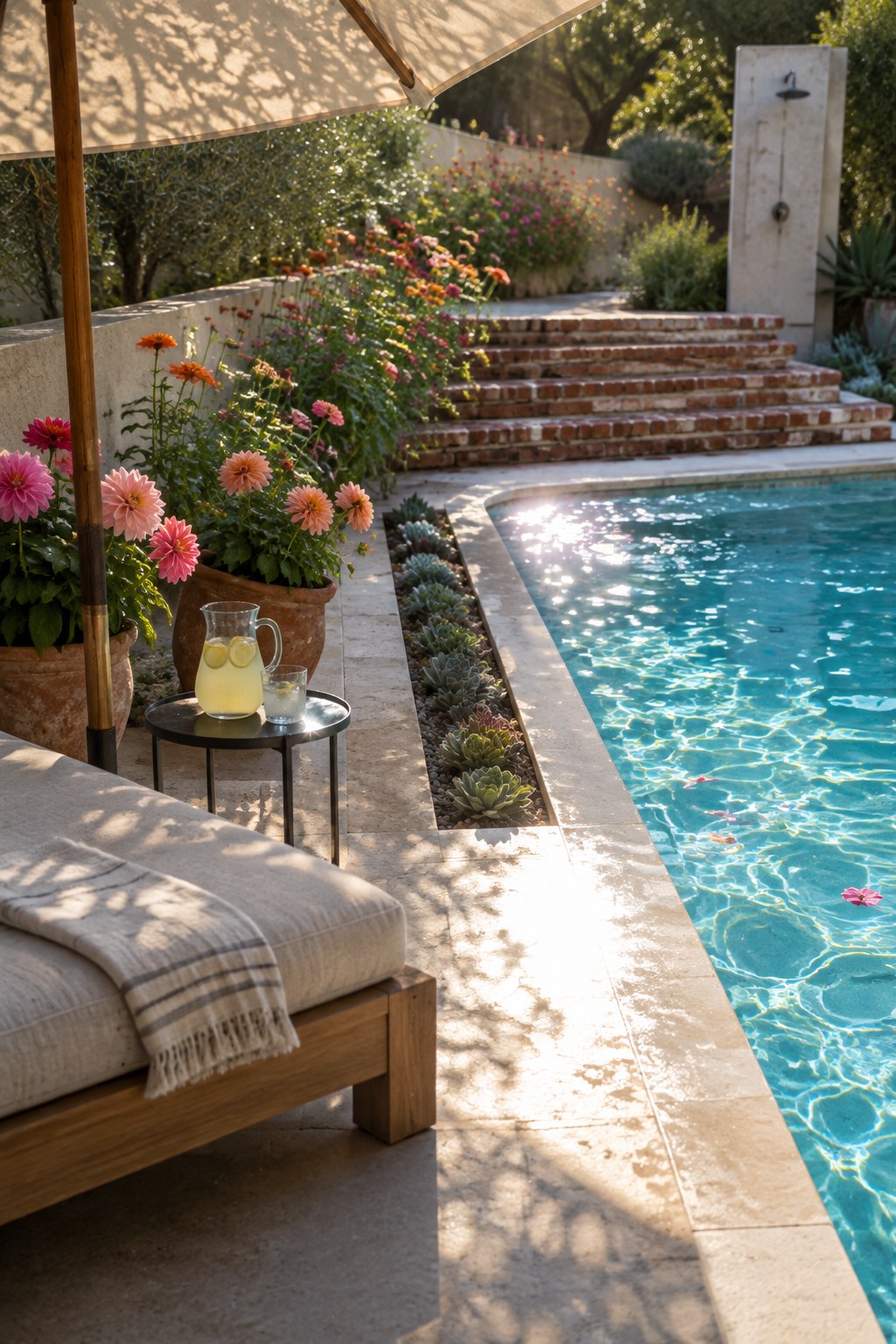
Dahlias and zinnias can make a poolside garden feel colorful without taking up space on the patio. Planting them in a narrow bed along the edge brings the flowers close to the seating area while leaving the pool deck open.
This works well beside a sunny pool where the plants can get several hours of light. Keep the bed set back enough to avoid leaves and petals falling into the water, and choose sturdy edging to separate soil from the paving.
Use Gabion Walls to Terrace a Flower Garden

Terracing a sloped garden with gabion walls makes it easier to plant in distinct levels instead of letting the hillside feel unruly. The stone-filled wire walls also give flower beds a sturdy edge, while wooden steps connect the planting areas.
This approach suits a hillside where a flat lawn would be difficult to maintain. Keep the terraces wide enough for planting and access, and use flowers such as dahlias and zinnias where they’ll get plenty of sun.
Use a Mulched Path to Separate Flower Beds
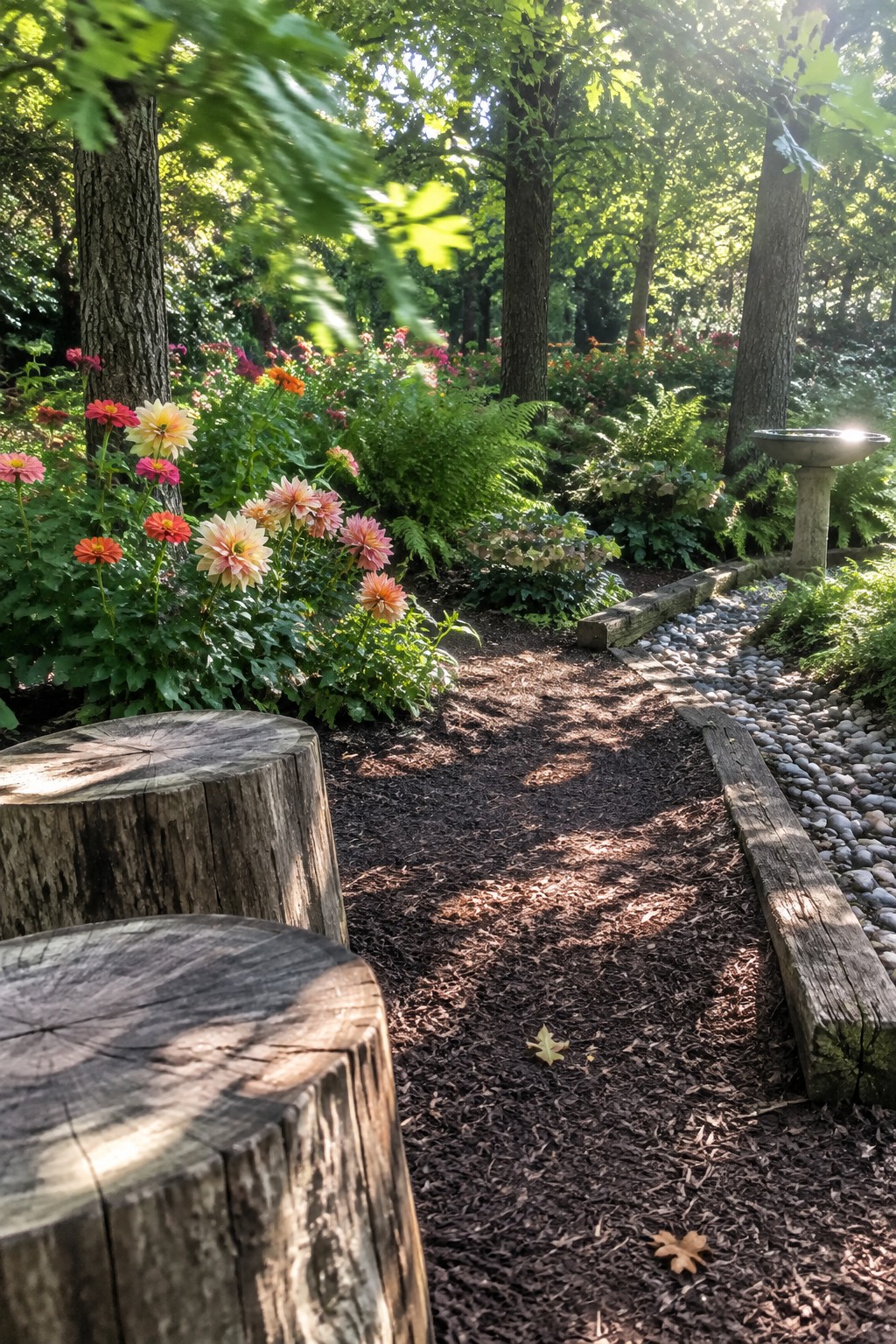
A mulched path gives a flower garden a clear route without taking attention away from the planting. It works especially well in a wooded yard, where a simple dark path feels at home among trees and leafy beds.
Keep the path wide enough to walk comfortably and edge it with sturdy boards or stone to keep mulch from spreading. Dahlias and zinnias can line the sides, but leave room for their stems so the path stays easy to use.
Use Warm Lighting to Enjoy a Flower Garden After Dark

String lights make a narrow garden path useful after sunset, while the flowers remain part of the view. The warm bulbs bring enough light to enjoy the space without needing bright fixtures throughout the garden.
Try string lights above a walkway beside raised flower beds, making sure the supports are secure and the bulbs are rated for outdoor use. Keep the path itself clear and well lit so it stays easy to walk along.
Set Up a Patio for Garden Dining

A patio dining area makes it easy to enjoy a flower garden without giving up a practical place to eat. Here, the wooden table sits close to beds of dahlias and other blooms, so the garden stays part of the view.
This kind of setup works well in a small backyard where the patio meets a planted border. Leave enough room to pull out chairs and walk around the table, and keep flowers low near the seating so they don’t crowd the space.
Layer Dahlias and Zinnias Along a Garden Path

A narrow stepping-stone path can make a flower garden easier to walk through without taking space away from the planting beds. Dahlias and zinnias look especially at home along its edges, where their blooms bring color close to the route.
Leave enough room between plants and stones so the flowers don’t spill across the walking surface. This works well in an informal garden, where a gently winding path can lead visitors through the blooms.
Grow Dahlias and Zinnias in Raised Beds
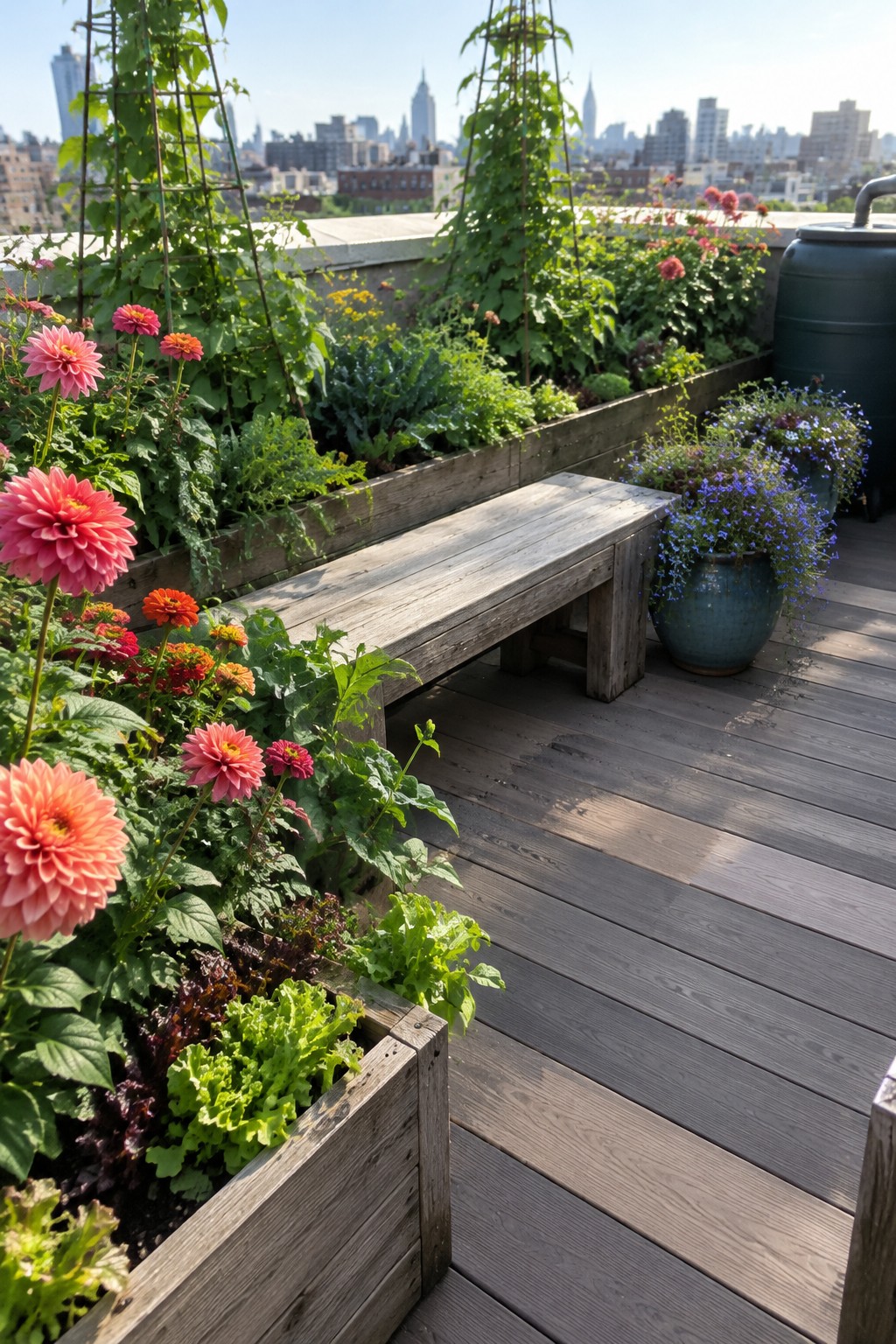
Raised beds make it easier to give dahlias and zinnias their own sunny spot, even on a rooftop or in a small yard. The wooden sides keep the planting area tidy, while the flowers can grow in rich soil that drains well.
Choose a bed deep enough for the roots and leave room to reach in for watering and deadheading. A simple bench beside the bed can make the garden easier to enjoy, but keep the walking space clear as the plants fill out.
Use Stepping Stones to Lead Through a Flower Garden
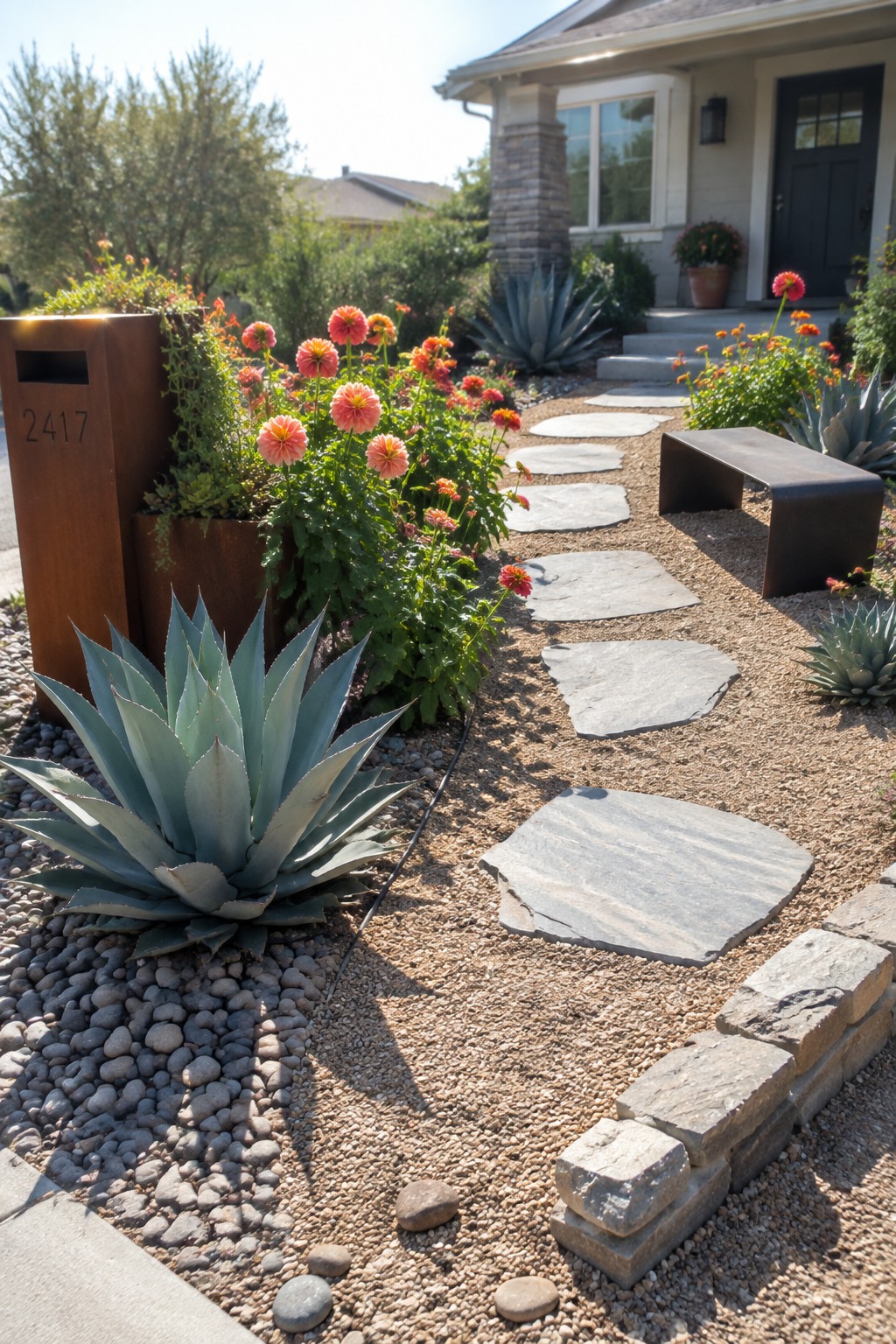
A stepping-stone path makes a gravel garden easier to walk through while giving the planting beds a clear shape. The broad stones feel comfortable underfoot and let flowers grow close to the route without blocking it.
Use this idea for a sunny front yard or another area where you want a defined walkway without laying a solid surface. Set the stones firmly and leave even, manageable gaps between them. Dahlias and zinnias can line the path, with enough room to keep stems from spilling across the steps.
Plant Dahlias and Zinnias Along a Garden Path
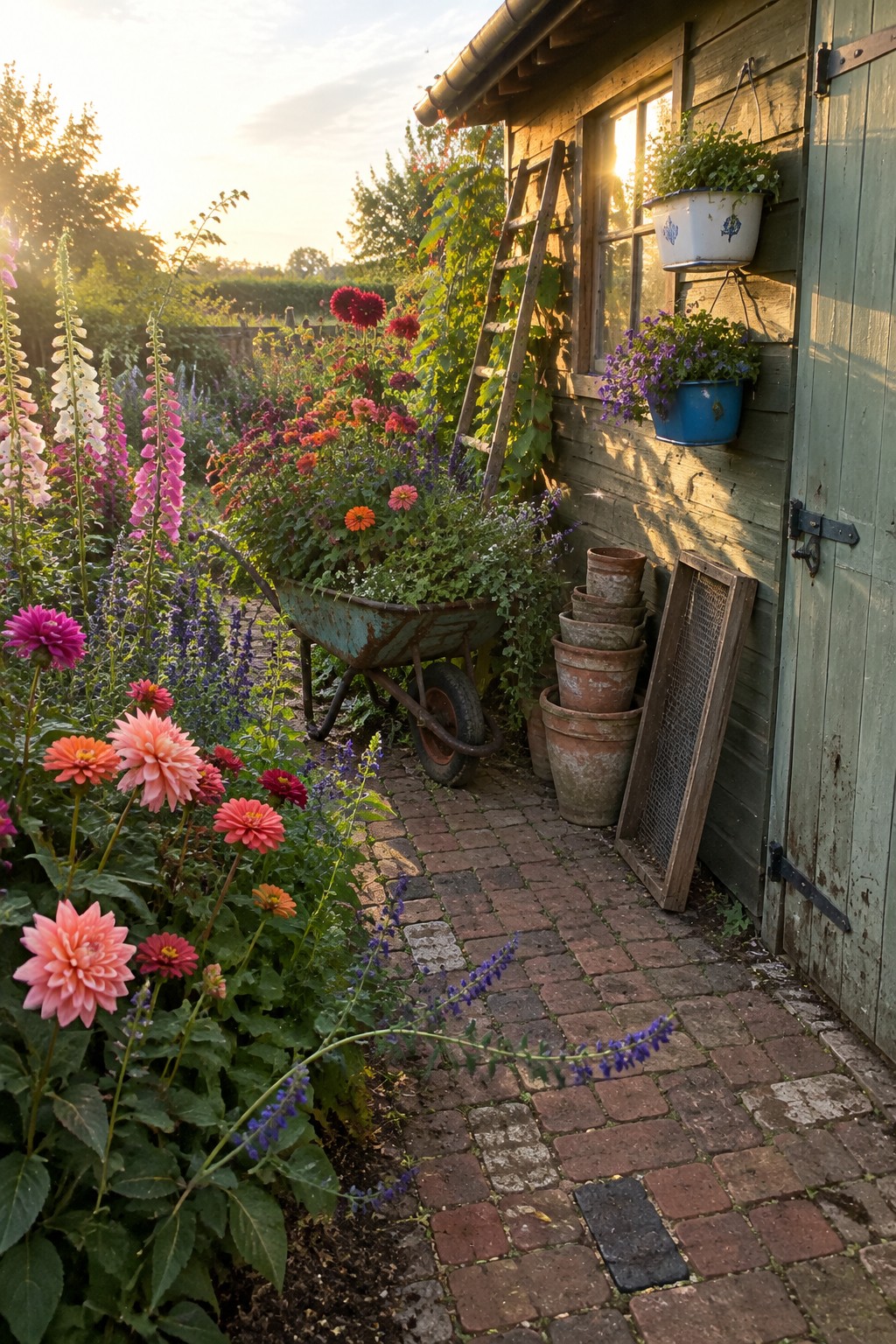
A narrow brick path can make a flower garden easier to enjoy without taking space away from the beds. Letting dahlias and zinnias grow close to the path gives their color a clear place in the garden, while the paving keeps a practical route through the planting.
This approach works well in a cottage-style garden or a small side yard. Keep the path wide enough to walk comfortably, and leave a little room for flowers to spread so they do not crowd the bricks.
Plant a Flower Bed Along the Pool

A flower bed beside a pool brings color right up to the water without taking over the swimming area. Dahlias and zinnias can make a sunny border feel full and lively, while a narrow strip of ornamental grass helps keep the edge looking tidy.
Keep the planting bed back from the pool coping so leaves and petals are less likely to end up in the water. This approach suits a pool with a clear planting edge and works best when you choose flowers that can handle the site’s sun and heat.
Edge a Garden Path With Rounded Stones

A simple stone border gives a garden path a clear edge and helps keep the lawn separate from the flower beds. Rounded stones suit an informal garden, where a crisp, straight edging might feel out of place.
Use stones of a similar size and set them close together along the path. Dahlias and zinnias can fill the bed beside it, but leave enough room for the plants to grow without spilling across the walkway.
Use a Boardwalk Path Through the Flower Beds
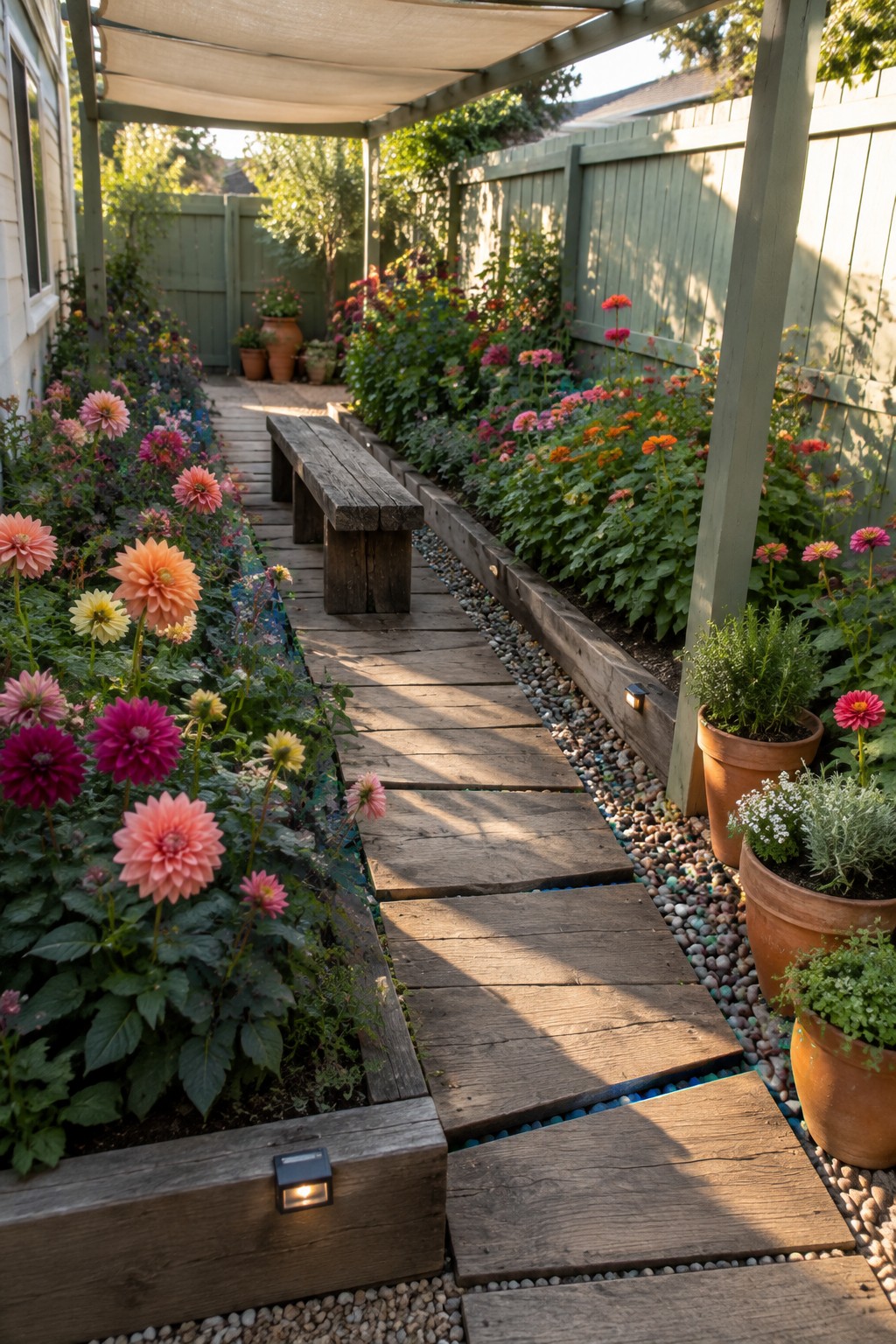
A raised wooden path is a good way to move through a narrow flower garden without stepping on the plants. The broad boards also give the planting beds a clear shape, while keeping the route easy to follow.
This approach suits a compact side yard or any garden where flowers grow close to the walkway. Leave enough room for comfortable passage, and use sturdy, weather-resistant boards so the path stays safe underfoot.
Grow Dahlias in Containers on a Small Patio

Dahlias in large containers make it easier to bring a full flower display to a small patio. The pots keep the plants together along the edge, leaving the main walkway open for everyday use.
Choose containers with good drainage and enough room for the plants to grow, then place them where they’ll get plenty of sun. A balcony or narrow deck can use the same approach, though you’ll want to leave space for chairs and regular access.
Use Garden Lighting to Extend Evening Enjoyment

A simple garden light makes a flower bed easier to enjoy after sunset. Here, the lamp picks out the dahlias and zinnias along the path, so the planting remains a feature even when daylight fades.
Place a low-voltage spotlight where it can illuminate flowers without shining into nearby windows or seating areas. One or two lights are often enough for a small bed, and a timer can keep them from running all night.
Frequently Asked Questions
Q: Can I plant dahlias and zinnias together in the same bed?
A: Yes. Both enjoy a sunny spot and well-drained soil, so they make easy companions. Give dahlias enough room to spread, and place taller varieties where they won’t shade shorter zinnias.
Q: How often should I water them during a hot summer?
A: Water deeply when the soil starts to dry, rather than giving the bed a quick sprinkle every day. Aim water at the soil to keep the foliage dry and help prevent disease.
Q: What should I do if my dahlias grow taller than the zinnias?
A: Add stakes or a support ring while the dahlias are still young, before their stems get heavy. You can also put tall dahlias toward the back of the bed and keep compact zinnias near the front.
Q: How can I keep the flowers blooming through summer?
A: Snip off faded blooms regularly, especially on zinnias, so the plants keep producing fresh flowers. Pick dahlias for bouquets, too, and they’ll reward you with more blooms.
